Unknown's avatar

The SCC serves up a nothingburger

Dominion Energy headquarters, Richmond, VA

When Dominion Energy Virginia filed its latest integrated resource plan (IRP) last fall, critics (including me) complained that the company failed to lay out a cost-effective approach that would meet soaring energy demand from data centers while complying with Virginia’s decarbonization mandate. We hoped regulators at the State Corporation Commission would reject the IRP and demand better of our largest utility.

Instead, they chickened out. 

The SCC’s final order, issued July 15, is short but not really to the point. The order finds Dominion’s IRP “legally sufficient,” while citing previous SCC orders for the proposition that “acceptance” doesn’t mean approval “of the magnitude or specifics of Dominion’s future spending plans.” It would be hard to imagine a less enthusiastic endorsement, and the lack of analysis leaves advocates wondering, where’s the meat?

It’s true that an IRP is “only” a planning document; it doesn’t commit a utility to carrying out the plan, and the SCC still has to approve any project the utility decides to move forward with. But the point of the exercise is to ensure utilities are on the right track; that their demand projections are on target and their plans for meeting demand are realistic, cost-effective and comply with all relevant laws. This needs discussion and analysis, not merely an up-or-down vote.

Admittedly, the SCC has a long history of approving lousy IRPs while directing Dominion to do a better job the next time. That was the case here, too, with the order directing Dominion to do a few things differently in its next IRP, due in the fall of 2026. 

First, the SCC wants to see a 20-year timeline instead of the 15-year period that Dominion used this year, which is all the law requires. It’s an obvious ask, even apart from the fact the SCC cites that the regional grid operator PJM uses a 20-year planning window. A better reason is that we are just 20 years away from Dominion’s 2045 deadline for full decarbonization under the Virginia Clean Economy Act (VCEA), and anything the utility does now will have consequences extending out to that deadline. 

The SCC also neglected to mention that using just a 15-year window, and omitting the 25-year planning period that Dominion included in previous IRPs, allowed the company to avoid showing the economic consequences to consumers of spending money for fossil fuel generation that either will shut down or may become economically obsolete by 2045, long before the plants are paid off. If Dominion thinks it can justify sinking customers’ money into assets it knows will become stranded, we all deserve to see the rationale. 

The order also directs Dominion to include in its modeling at least one pathway that complies with the requirement of the VCEA that carbon-emitting facilities (including any new gas plants) be retired by 2045. This goes beyond obvious: the lack of a VCEA-compliant plan should have prompted the SCC to reject the IRP outright. 

But of course, Dominion claims new gas plants are needed for reliability, which would make them legal under the VCEA in spite of their carbon emissions and questionable long-term viability. Reliability is a red herring, as I’ve argued, and other parties to the IRP case modeled how Dominion can meet demand without building new fossil fuels. Dominion should have been required to prove its case.

But here again, the SCC chose not to engage on the issue. Requiring Dominion to do better next time is as far as it is willing to go. This is unfortunate, but the silence can’t last: in March, Dominion filed for approval of the first of its planned new gas plants. The SCC will have to address need and reliability to make a decision in that case, and it would have been better for all concerned if it had grappled with these questions now.

The order falls short in other ways, as well. While the SCC expresses concern about forecasted rate increases, it doesn’t even mention the data centers that are driving the problem. 

This is astonishing; even before Dominion filed its IRP last fall, the commission ordered the company to supplement the record with an analysis of data center impacts. When Dominion did so, it became clear that all of the load growth (and likely, much of the projected rate increases) results from this one industry. It’s beyond strange that the SCC does not even mention the supplement it ordered, or discuss whether Dominion’s duty to serve truly prevents it from protecting existing customers.

The order also accepts Dominion’s argument that it had to artificially limit the amount of low-cost solar it could include in its modeling, due to the increased difficulty of siting solar projects in Virginia. It’s true that many rural counties have been denying permits to solar projects, even as they approve data centers. But I’ve also heard a Dominion lobbyist tell legislators that permit denials have not been a problem for the company, an assertion that may have persuaded some legislators to vote against bills that would make solar siting easier. It appears Dominion tells legislators one thing and the SCC another. 

The SCC’s order contains a few other requirements for the next IRP, mostly things that really should have been included in this one. The IRP should model Virginia’s return to the Regional Greenhouse Gas Initiative, reflecting a Virginia court’s ruling that Gov. Glenn Youngkin’s withdrawal was unlawful. The IRP should assume Dominion achieves the energy efficiency targets that the SCC itself established for the company. Dominion should include an analysis of impacts on base rates and should share its modeling with utility watchdog Clean Virginia, as well as run modeling based on SCC staff inputs. Long-duration storage, a maturing technology that can replace gas combustion turbines, should be included in the next modeling.

“Do better next time” is a well-worn directive from the SCC to Dominion, but it is deeply disappointing at a time when Virginia is facing an unprecedented surge in demand from data centers and accompanying increases in utility rates. 

It’s disappointing in another way, too: this is the first major ruling from the SCC since two new judges were added to the three-member commission, and all three were appointed by a Democratically-controlled Senate. If there was ever a time for the SCC to get tough with Dominion on its climate obligations, this should have been it. 

No doubt, the problem lies in Dominion’s influence over the entire process. The utility doles out exceedingly generous campaign donations to members of both parties, so the company retains influence no matter who is in power. Not only does this give Dominion sway over who is appointed to the SCC, but commissioners have to be mindful that getting reappointed at the end of their six-year terms depends on how satisfied these Dominion-backed senators are with their rulings. 

As long as Dominion is allowed to shower senators with unlimited campaign cash, the SCC will never be free of the utility’s pernicious influence. 

Meanwhile, though, Dominion’s poor performance, and the SCC’s unwillingness to call it out, demonstrate the necessity of the comprehensive IRP reform legislation that the governor vetoed this spring. The Commission on Electric Utility Regulation is already working on similar legislation for the next session. 

Passing the IRP reform bill may not inject the SCC with greater courage, but it will ensure the commission, and the public, get a fuller look at the facts.

This article was originally published in the Virginia Mercury on July 21, 2025.
Unknown's avatar

Is it too hot for common sense?

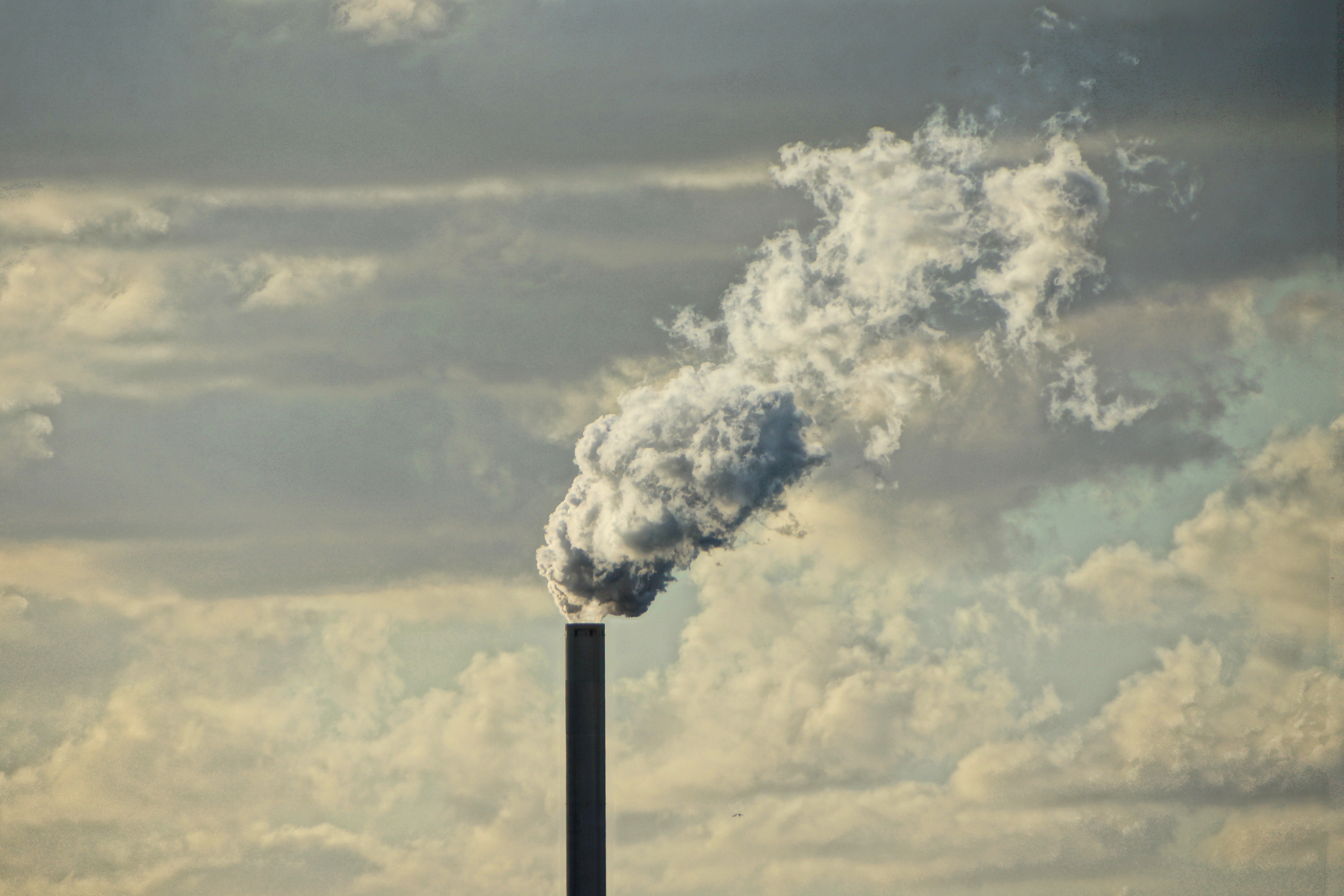
smokestack
Photo credit Stiller Beobachter

Maybe it’s the heat. Heat-addled brains might explain the thinking of many Virginia lawmakers that what we need to do right now is burn more fossil fuels. 

Scientists have documented the way high temperatures affect the brain, impairing cognition and causing impulsivity and trouble concentrating. And this summer is already starting out hot, which is saying something given that 2024 was the hottest year on record, bumping 2023 off its baking pedestal. Scientists say this global fever is the natural result of burning fossil fuels and driving CO2 levels to their highest in millions of years.

Since burning more fossil fuels will drive more global warming, it’s exactly the reverse of what we should be doing.  Yes, but, these state leaders respond, how else are we going to power ever more data centers? 

Northern Virginia is the data center capital of the world, and data centers are notoriously power-hungry. Without them, Virginia electricity demand would be flat, and we could easily meet our electricity needs while gradually decarbonizing along the pathway laid out in the Virginia Clean Economy Act (VCEA).

Instead, Virginia taxpayers subsidize some of the richest corporations in America to the tune of almost a billion dollarsevery year to entice them to rip up land in Loudoun, Prince William and other Virginia counties instead of Atlanta or Dallas. In return, the tech companies keep construction workers busy, underwrite their host counties’ finances, make life miserable for nearby residents, raise everyone’s power bills, drain our rivers and aquifers and pollute our air with enough diesel generators to light up a major city.  

Virginia legislators obviously consider this a fair deal, because that’s what they keep voting for. Whether their constituents agree is another question; the evidence says they don’t.

For anyone just getting up to speed on data center issues, the Virginia Sierra Club’s new report, “Unconstrained Demand: Virginia’s Data Center Expansion and Its Impacts” (to which I contributed), covers the current state of data center development in Virginia and the problems that come with it. Fun fact: More than half of all the nation’s energy consumption attributed to data centers occurs in Virginia. 

That puts a special burden of leadership on our lawmakers. If we allow data centers to undermine our sustainability efforts here, we can only expect a race to the bottom in other states. As Virginia goes, so goes the nation. 

And yet we haven’t heard much outcry from Virginia leaders against the plans of our largest utility to build new generating plants powered by fracked gas. Dominion Energy laid out its plans in its 2024 integrated resource plan as well as a proposal for a 944 megawatts of gas combustion turbines in Chesterfield now pending before the State Corporation Commission. 

Dominion and its allies say more gas is needed for reliability, which could make it allowable under the VCEA. Indeed, “reliability” is a word that fossil fuel advocates frequently toss down like a trump card (in the unpresidential sense but with the same lack of thoughtful analysis). The claim is suspect. Fussing about reliability when your state ranks 24th in the nation for renewable energy is like worrying about the taxes you’ll owe if you win the lottery: we should be so lucky. 

Gov. Glenn Youngkin and Republican legislators are explicit in wanting to see the VCEA repealed and more gas plants built. Democrats defend the VCEA’s goals, but worry about the challenges of implementation and the effect on electricity rates. They all cite data center demand as the reason they contemplate backsliding on clean energy.

I wish I could say that our rich and powerful tech companies were aggressively championing carbon-free energy for their data centers in Virginia, but they are not. I attended a meeting of the Commission on Electric Utility Regulation where legislators were hashing out the problems of too much demand and too little supply. Representatives from the Data Center Coalition stood in the back of the room, observing but refusing to engage. Out of sight, they successfully lobbied against any bills that would slow the data center boom, force them to absorb more of its costs, or require them to source their own clean energy. 

Publicly, many tech companies tout their commitments to decarbonization. Amazon says it even met its goal to run its operations entirely on renewable energy. Yes, and I’m the Queen of Sheba. In fact, these companies are in a fierce competition to develop artificial intelligence as fast as possible. They’d like carbon-free power, but really, they’ll take whatever energy they can get wherever they can get it, and even among the industry’s best actors, climate now takes a back seat

Yet the likes of Mark Zuckerberg and Jeff Bezos would not be significantly worse off if forced to meet their climate commitments. Virginia leaders know – or at any rate, they have been exposed to the information, which I realize is not the same thing – that building new fossil gas generating plants is not just bad for the planet but more expensive than pursuing carbon-free alternatives.

Oh, I know, Congress just yanked back the federal tax incentives that helped make wind and solar as cheap as it is, one of the myriad ill-considered elements of the big beautiful debt bomb Republicans adopted against everyone’s better judgment. (Apparently heat affects spines as well as brains.) With passage of that bill, developers will need to have begun construction on new facilities by this time next year in order to qualify for the existing tax credits. 

There will be a mad rush to get construction underway immediately for facilities in the development pipeline. Thereafter, projects on the margin won’t get built. But others will, because even the loss of federal subsidies won’t destroy solar’s competitive edge against most new-build gas. 

Even so, utilities and their customers will pay higher prices for unsubsidized new renewable energy – as well as for existing fossil fuel generation that will command higher prices in the coming supply crunch. The Clean Energy Buyers Association estimates that commercial electricity costs in Virginia will be about 10% higher after the phase-out of federal incentives. 

A years-long backlog for orders of gas turbines will further squeeze energy supply and drive up prices for fossil power. On the plus side, the lack of available turbines will make fast-to-deploy solar not just the better option, but sometimes the only option.

I’ve never understood the conservative love affair with fossil fuels, when today’s clean technology is cleaner, cheaper and quicker to deploy. Trump would like to crush wind and solar altogether, which would eliminate 90% of the power capacity waiting to be connected to the grid and catapult the U.S into a serious energy crisis. In addition to much higher power prices, observers warn we would likely see a loss of data centers and other energy-intensive industries to parts of the world that are not on a mission to kill low-cost clean energy. 

Well, that would be one way to rid Virginia of the data center scourge.

Fortunately, the worst attacks on solar in Trump’s budget bomb did not survive, but the bill should nonetheless serve as a wake-up call for Virginia leaders. With little time left to secure federal clean energy incentives, our utilities need to acquire all the solar and storage they can right now. With or without data centers, locking in as much fuel-free generation as possible while it’s available at a discount is a prudent move to avoid the coming shortages and escalating costs of energy.

As for the tech companies, lawmakers should embrace the simplest approach to this problem, which happens also to be the one that spares ordinary Virginians from bearing the costs of the data center buildout: shifting responsibility for sourcing electricity onto the companies themselves, and requiring that they live up to their climate claims by making the power they buy carbon-free. 

It’s an approach other states can follow, holding Big Tech to the same responsibility no matter where they put their data centers. Certainly the tech titans can afford it; they just won big with massive tax cuts that our poorest residents will pay for. 

No doubt they will complain. Everyone would like somebody else to pay for what benefits them. But Virginians can’t afford to subsidize Big Tech, and we don’t want to. 

As for those legislators who think we should continue to do it anyway – well, all I can think is, it’s got to be the heat.

This article was originally published on July 8, 2025. On July 7, President Trump signed an executive order directing cabinet members to find more ways to hobble wind and solar energy, including directing the Secretary of the Treasury to interpret “beginning of construction” in a way that requires “a substantial portion” of a facility to have been built in order to qualify for tax incentives, counter to current regulation.

Unknown's avatar

Let’s hear it for the losers!


In Wise County earlier this month I met the candidate daring enough, or foolish enough, to run against the most powerful Republican member of Virginia’s House of Delegates. 

When I walked into the community center in Norton, where I was to give a presentation at the invitation of the Clinch River Coalition, I found a volunteer wrangling wires to plug in the audio equipment. He was introduced to me as Josh Outsey, the man who had taken on the thankless job of Democratic challenger to Del. Terry Kilgore, R-Scott, in this fall’s election. 

Before I could stop myself, I laughed. Terry Kilgore has been in the House for 31 years, and ran unopposed in the last three elections. A politically powerful member of a politically powerful family, Kilgore represents a district that’s over 92% White and voted 83.1% for Donald J. Trump. The 63-year-old lawyer was recently elected House Republican leader.

Joshua Outsey (pronounced OOT-see), 38, is a Black actor, singer and community organizer. As of June 5, Kilgore had raised $469,509, according to the Virginia Public Access Project. Outsey had raised $200. 

Outsey gives a respectable pitch for his candidacy, grounded in both experience and policy. If this were a contest for a seat in a more balanced district, I’d have no business being amused. But no one, least of all Outsey, is under any illusions that he can unseat Kilgore. 

Still, I am filled with admiration. It is one thing to say that democracy works best when voters have choices, and quite another to agree to make yourself that choice against impossible odds. 

I’ve seen up close what even a hopeless campaign can require. A couple or three decades ago, my friend Tom Horton ran for Congress against a well-funded Republican incumbent who was firmly entrenched in Virginia politics. Tom had no trouble securing the Democratic nomination – nobody else wanted it – but he didn’t have money for a staff, and he needed a policy director. I was at home with young children and glad for the mental stimulation, so I signed on. 

Unburdened by any real prospect of success, I had a great time writing position papers based largely on my own opinions. Every once in a while, I would stop and ask myself, “I wonder what Tom thinks about this?” then shrug and plunge on. Very occasionally, Tom would balk at a position I proposed he take, and then we would talk it out.

But mostly, he didn’t have time for that. Poor Tom spent every day of the campaign on the phone trying to raise money. In the evenings he knocked on doors. If he was lucky, sometimes he was interviewed on the radio or got a quote in the paper. It was an uphill slog all the way, and none of it mattered. He lost by about the same wide margin that polls had shown him losing by at the outset of the campaign. 

He had to be disappointed, but Tom told me he loved every minute of it and would run again in a heartbeat, if he didn’t have a family to support.

Maybe this is why I have a special place in my heart for underdogs. People like Tom who try, knowing they are likely to fail, and then indeed do fail, only to pick themselves up and say it was worth it anyway – they are heroes to me. Winners are dull by comparison. 

Outsey is far from being the only sacrificial lamb this election. Democrats are fielding candidates in every House race this fall, including other long-shot seats like those held by Will Morefield, another coalfields delegate who won in 2023 with 85% of the vote, and Minority Leader Todd Gilbert, who won his Shenandoah Valley district by more than 77%.

Republicans are not similarly contesting every seat, but some are taking on Democratic incumbents even in deep blue districts, including a few who are making a repeat appearance on the ballot.

These include retired technology professional Kristin Hoffman, who is challenging McLean Democratic Del. Rip Sullivan for the second time, in spite of losing by 23 points in the last election. A few miles to the east, in another Fairfax County district that voted overwhelmingly for Harris over Trump last fall, retired federal worker Ed McGovern will face Del. Kathy Tran for a third time. He lost by 20 points in 2021 and 30 points in 2023.  

I was unsuccessful in trying to reach these folks, so I don’t know their motivations. Regardless, I salute them.

Running against impossible odds can serve a purpose beyond dedication to the democratic process. Democrat Melody Cartwright told a Cardinal News reporter that she sees running for a second time against Del. Eric Phillips, R-Henry, after losing in 2023 by 40 points, as a way to support Abigail Spanberger’s gubernatorial campaign. She added candidly that forcing Republicans to spend money to defend Phillips’ seat would leave them less money to attack Democrats elsewhere.

Running for office with no expectation of winning can also be a tactic for raising awareness of a neglected cause, as many a Green Party candidate can attest. My colleague at the Mercury, Roger Chesley, recalls a candidate by the name of Gail Parker who ran for various local, state and federal offices seven times between 2006 and 2019. Calling herself “Gail for Rail,” she campaigned on the single issue of promoting light rail. A 2007 Washington Post headline snarkily called her a “One-Track Candidate.” Fair enough, but the record will reflect that Metro now extends out to Loudoun County. 

Deep in the heart of every candidate, of course, is the hope that lightning may strike. The opponent might stumble badly enough, or voters suddenly realize that who they wanted all along was someone just like the scrappy upstart, leading to an upset victory. 

It has happened. In a 2014 primary, libertarian college professor David Brat defeated Congressman Eric Cantor, the House Majority Leader at the time, in an upset that shocked the political establishment and gave hope to long-shot candidates everywhere. Brat won the general election, too, and served two terms.

Brat’s win over Cantor, followed by his loss to a Democrat in 2018 – to Abigail Spanberger, as it happened – demonstrates a final point: the political winds can shift suddenly, and when it happens, the people who benefit are the ones who’ve got their sails ready. 

Democrats have been able to field so many candidates this year because they sense such a shift coming as part of a backlash to the Trump presidency. Republicans say otherwise. Still, no matter which party wins control this fall, the outcome won’t help the longest of long-shot candidates. 

But that’s okay. Just running is a win for democracy.

This article was originally published in the Virginia Mercury on June 30, 2025.