Unknown's avatar

Will Virginia step up for its rooftop solar industry?

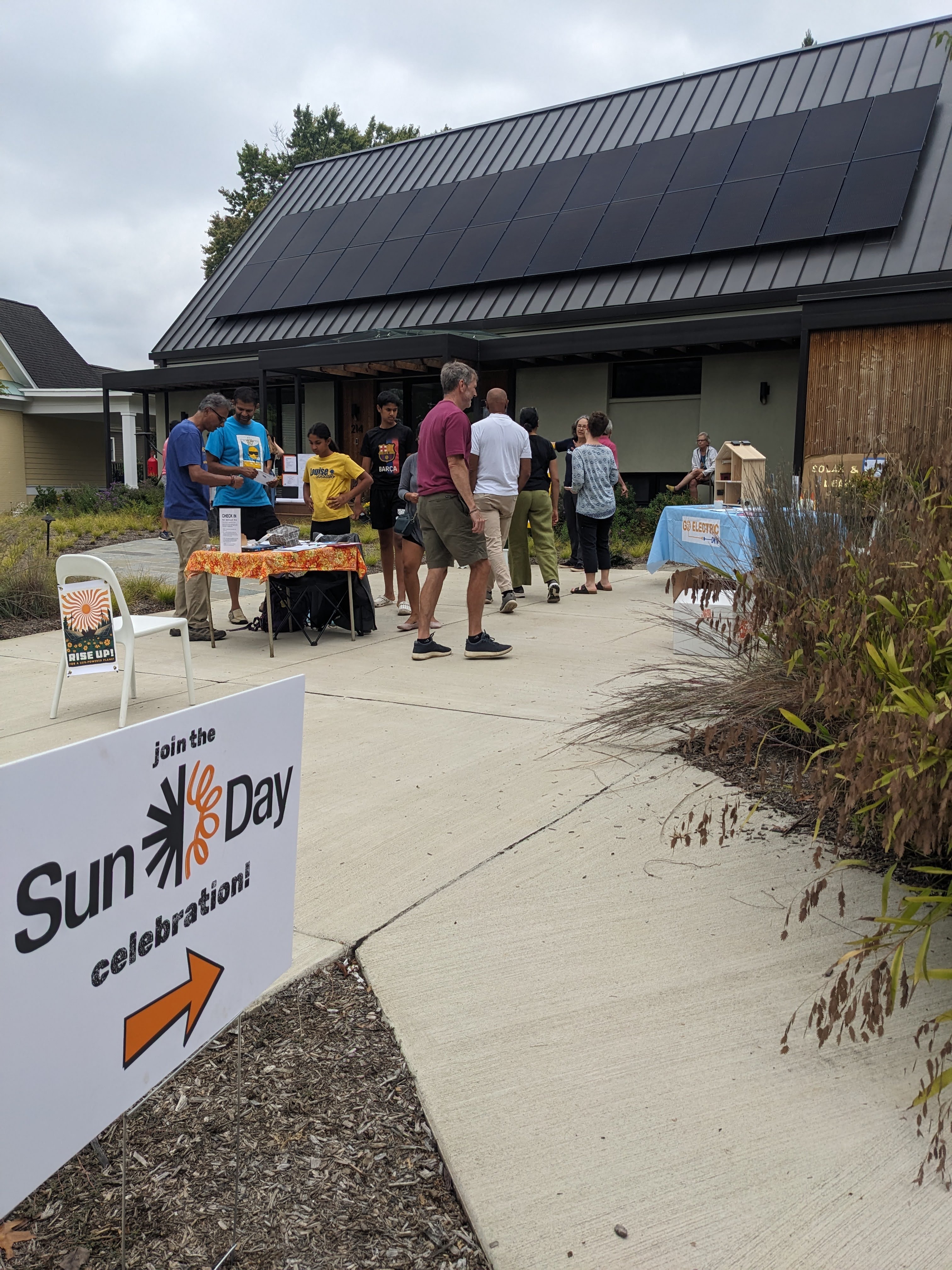
Visitors to a net-zero energy home in Vienna, Virginia learn about solar as part of SunDay, a national celebration of solar energy, on September 21, 2025. Photo courtesy of Meredith Haines.

For solar energy, 2025 is the best of times and the worst of times. It’s the fastest growing energy source in the world and the largest source of new power capacity additions in the U.S. for the fifth year in a row. Even in the absence of tax subsidies, solar is the cheapest source of new electricity in Virginia, and indeed almost everywhere. 

Yet the congressional Republican budget law’s early termination of tax incentives for solar, together with the Trump administration’s determined efforts to restore fossil fuel dominance, make these dark days for the solar industry. The EPA is relaxing pollution standards for power plants and refusing to enforce regulations, and the same law that cut clean energy credits provided tens of billions of dollars in tax subsidies for drilling and mining activities. (What, did you think they wanted to level the playing field?)  

As a result, analysts project a sharp drop-off in solar installations in the coming years, posing a challenge to energy reliability and affordability. With data centers driving up the demand for electricity, the loss of tax credits for solar will mean higher costs for our utilities, and therefore higher utility bills for customers. Virginians who worry about high electricity bills should be very unhappy with the rollback of these incentives. 

How the rollbacks could push solar forward (at least for now)

Ironically, though, the coming end of tax credits has goosed the U.S. solar market in the near term. The industry has never been busier, as companies scramble to get projects completed in time to qualify for the tax credits before they expire. With careful planning, solar developers will be able to stretch tax credit eligibility to cover projects for a few more years, softening the blow for consumers. 

And in the long term, the solar industry feels confident that the technical and cost advantages of renewable energy will win out in America as they continue to do abroad. Politics and policy aside, utility-scale solar is the cheapest, cleanest and fastest-to-build electricity source available in most of the U.S. The technology continues to push efficiencies up and costs down, while protecting Americans from the pollution and fuel costs of coal and gas. With energy storage technologies following the same price trajectory as solar, it is hard to imagine the U.S. willingly turning its back on clean energy for long.

In Virginia, of course, utility solar still faces rural resistance. But having embraced data centers, Virginia will have to find the energy to power them, and price has a way of winning out. 

While the solar industry overall will survive, the loss of federal tax credits is landing hard on the segment that serves homeowners and businesses. The economic case for distributed solar has never been a slam-dunk in Virginia, given the higher costs involved. Now the question is whether it can remain even a reasonable investment.

The Virginia solar industry has grown a lot in the past decade and now includes 199 companies employing close to 5,000 workers, almost double the number employed in coal mining. I haven’t seen numbers specific to distributed solar, but installing solar on rooftops is more labor-intensive than utility solar. More importantly, these jobs tend to be local to Virginia, and most don’t require a college degree. 

Distributed solar is also important to our energy supply and resilience. Sunny rooftops could potentially supply as much as 20% of Virginia’s electricity, yet less than 3% of Virginia homes have solar now, leaving plenty of room for growth. Rooftop solar is also a vital component of community resilience; when batteries are added to solar, buildings can remain powered during storms and other events that take down the wider grid. And of course, solar and batteries can form the basis for virtual power plants that support the grid and reduce the need for utility investments. 

A trifecta of solar success

Three policies have enabled the industry to succeed here, and all three have been subject to attack. The first, of course, is the federal tax credits, which allow owners of solar arrays to recover 30% of project costs through their tax returns. For residential customers, availability of this credit will now expire at the end of 2025. 

The good news is that structuring residential solar installations as leases or power purchase agreements puts projects under a more favorable provision that gives commercial owners of solar panels until July of 2026 to begin construction. This won’t work for everybody, and residential power purchase agreements are currently legal in Virginia only for low-income customers, but it does offer some breathing room. 

The second policy critical for rooftop solar is a Virginia program that lets owners of solar arrays earn money from the sale of solar renewable electricity certificates (SRECs) associated with the electricity they put onto the grid. The Virginia Clean Economy Act (VCEA) requires Dominion Energy Virginia to buy SRECs to meet a small fraction of its renewable energy purchase obligation. Customers with solar who choose to sell their SRECs can offset some of their costs this way, making solar more affordable. (Since SRECs represent the “bragging rights” to solar – the legal right to claim you are powering your home or business with solar – not everyone wants to sell theirs.)

Customers and industry members say, however, that the Virginia SREC market is neither robust nor transparent. The price that Dominion pays for SRECs would have to be substantially higher to overcome the loss of federal tax credits. Some advocates have floated the idea of asking the tech companies to support the distributed solar market through voluntary SREC purchases, which could raise SREC values and help localities build more solar on schools and other public buildings.

A bipartisan-backed bill that Virginia Gov. Glenn Youngkin vetoed this year would have increased the percentage of Dominion’s electricity that must come from distributed solar generation. This would have incentivized more rooftop solar and possibly resulted in higher SREC prices through the normal economics of supply and demand. But so far there is no plan to set a floor on SREC prices.

The third supportive policy for distributed solar is net metering, which ensures that customers of Dominion and Appalachian Power get credited at the retail rate for surplus electricity they supply to the grid. Customers pay the utility only for the net energy they purchase. While this doesn’t make rooftop solar cheaper, it does mean customers don’t actually lose money on their surplus generation, as they would without net metering.

Dominion and APCo have tried repeatedly to undermine net metering, so far without success.

The State Corporation Commission recently rejected a proposal from APCo to replace one-for-one credits with a payment system valuing distributed solar at the utility’s avoided cost for energy – about one-third of retail. The effect on customers would have been severe, making it impossible for most new buyers to recoup the cost of solar panels. In rejecting APCo’s proposal, the SCC cited expert analyses showing that the value of customer-sited solar to the grid and the public equals or exceeds the retail cost of energy. 

Dominion has also filed a proposal to gut net metering in its territory. Its replacement program differs from APCo’s, yet it too results in a greatly reduced compensation rate. The SCC has not ruled on Dominion’s request yet, but it’s hard to see how Dominion could succeed where APCo failed.

Net metering is the rock that Virginia’s rooftop solar industry is built on, so the SCC’s decision preserving the program was critical to the industry’s very survival. Net metered solar will also remain an appealing hedge against rising electricity rates for many people. Still, there is no getting around the fact that losing the 30% tax credit is the kind of blow that can send an industry off a cliff.  

What’s next

What can the industry, or policy-makers, do to counteract the loss of tax credits?

The most obvious step is for the General Assembly to once again pass legislation increasing the requirement for utility SREC purchases (and this time with the governor signing the bill). The bill has other good provisions, like making residential power purchase agreements legal beyond the low-income market, and these will also help the industry. 

Virginia should also consider adopting a streamlined permitting protocol for onsite solar, as states like Florida have done. Some Virginia localities have already adopted automated permitting software, such as SolarAPP+, a free platform developed by the National Renewable Energy Laboratory. Permitting in some other localities, however, reportedly remains so arduous that it adds significantly to costs and delays in installing rooftop solar. 

Speaking of permitting, Virginia could pass a law like Utah’s to allow so-called balcony solar, plug-in solar panels that don’t require professional installation. The kits still require national certification before they can hit the market, however. 

Virginia could devote some emergency preparedness funds to onsite solar and storage at schools and senior centers to make local communities more resilient. These microgrids would save on energy costs for taxpayers and ensure people have a place to go that still has power when the larger grid is down. 

Utilities could once again be tasked with funding solar on low-income housing, as they did in response to Republican-sponsored legislation passed in 2019. Localities could be allowed to require solar panels on parking lots in some new developments, as provided in a bill the governor vetoed this spring. Legislation to increase goals and funding for solar on closed landfills, coal mines and other brownfields would also bring more solar to places where everyone agrees it is welcome. 

Finally, our Department of Energy has done a very good job supporting solar energy through both Democratic and Republican administrations. It could now be asked to convene meetings with the solar industry to plan a pathway to solar on more homes and businesses. They could start with a program of government-backed advertising and outreach to educate more consumers about the value of solar, its cost, and how to hire trustworthy installers. Customer acquisition is one of the biggest costs for solar companies, so reaching potential customers will reduce costs.   

Meanwhile, what can the average resident do? Talk to your elected leaders and candidates and get them to put in pro-solar bills and support the legislation you want to see. If Virginians want more home-grown clean energy,  we need to make it happen.

This article was originally published in the Virginia Mercury on September 25, 2025. It has been updated to correct the date by which construction must commence in order to qualify for federal tax credits.
Unknown's avatar

Five things every Virginia candidate (and voter!) should know about energy

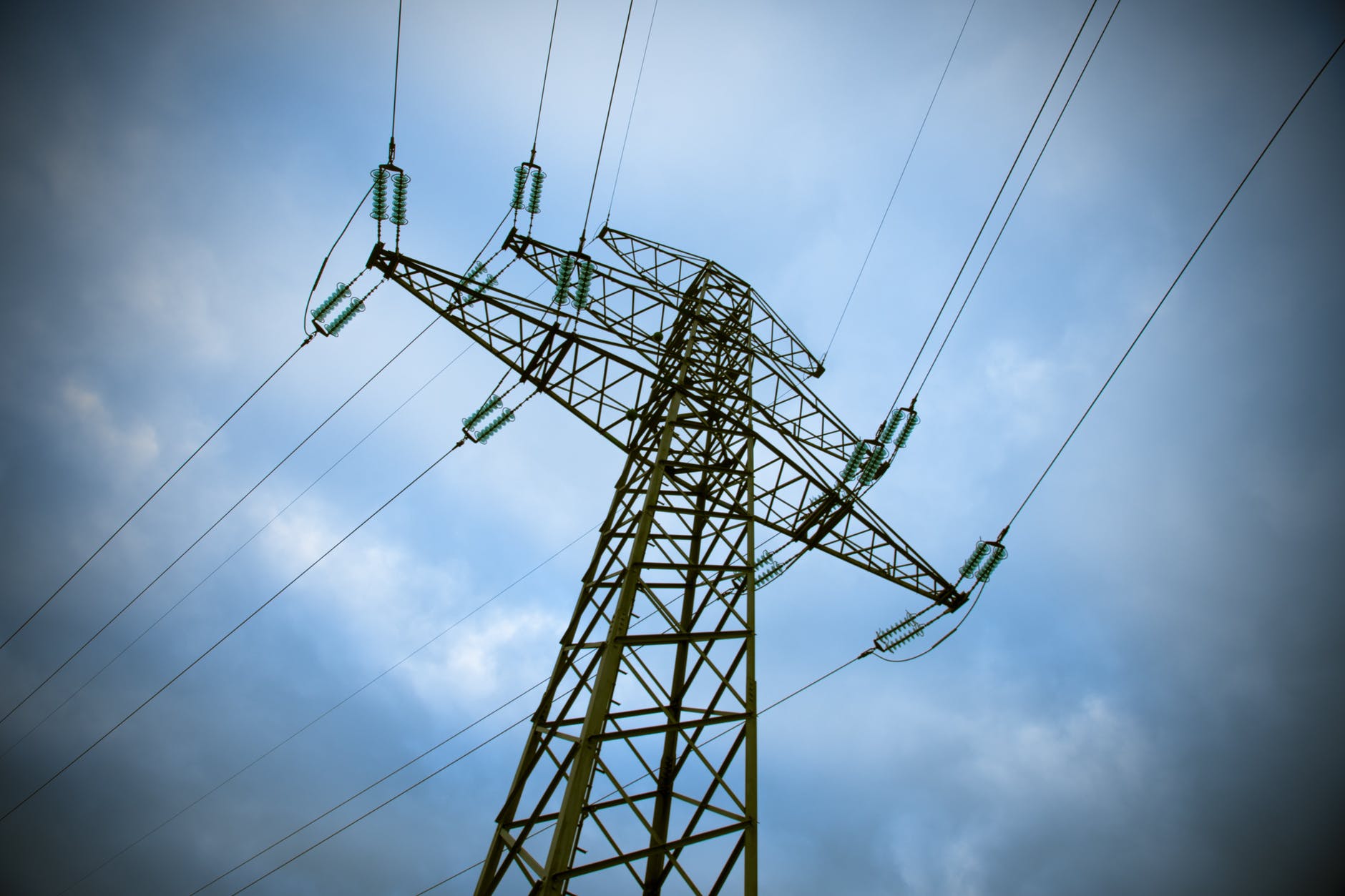
What lights up your life? Photo by Pixabay on Pexels.com

Running for office requires candidates to know about topics they might never have given much thought to. Most Virginia campaigns are won or lost on hot-button issues like taxes, education, reproductive rights, guns and gay marriage, so everyone who runs for office has a position on these questions. This holds true for candidates in this year’s high-stakes races for the state’s executive branch and all 100 House of Delegates seats. 

Inevitably, though, there are topics the average candidate doesn’t completely grasp. Some are narrow and – thankfully – nonpartisan. Where do you stand on Sunday hunting? Should I-81 have more lanes? How do you feel about skill games? Will you vote to save the menhaden, whatever a menhaden is? (It’s a fish, and I encourage you to say yes.)

Other topics affect the lives of every Virginian, but they are, frankly, complicated. One of these is energy. Not only is it hard to get up to speed on energy issues, but technology is changing so rapidly that keeping abreast of developments would be a full-time job. Who would spend that kind of time on such a dreary topic?

Uh, that would be me. 

So here we go: I’m going to cover five things political hopefuls need to know about energy in Virginia before you get to the General Assembly and start passing laws that affect your constituents’ wallets and futures. And for voters, these are things you should ask candidates about before they earn your vote. 

First up:

If you are going to talk about energy, you have to talk about data centers

By now you surely know that Virginia has embraced the most energy-intensive industry to come along since the steam engine launched the Industrial Revolution. Northern Virginia hosts the world’s largest concentration of data centers, which already consume an estimated 25% of the state’s electricity, with massively more development planned. The reason isn’t vacation photos or Instagram cat videos; it’s the competition to develop artificial intelligence (AI).  

After putting tax incentives in place to attract the industry 15 years ago, the General Assembly and the current governor have rejected all attempts to put guardrails on development or make data centers more energy efficient. The subsidies now cost taxpayers a billion dollars per year (and counting). Virginia asks for almost nothing in return. 

Under the best of circumstances, the skyrocketing demand for electricity would put upward pressure on energy prices. But our situation is even worse: Virginia already imports about half our electricity from other states, and the regional grid that we’re part of faces its own energy crunch. 

Grid manager PJM has been so slow to approve new generation that governors from member states, including Virginia Gov. Glenn Youngkin, wrote a letter taking PJM to task and urging it to move faster. But the damage has been done. Supply is tight, electricity prices have risen, and prices will continue to rise unless and until supply catches up.

PJM has decided to fast-track new high-cost, gas-fired generating plants ahead of the cheaper renewable energy projects that make up 95% of the queue. It’s a much-criticized move and seems more likely to increase costs. Once built, fossil gas plants burn a fuel that has doubled in price just over the past year, threatening a repeat of the post-pandemic price surge that Virginia ratepayers are still paying for. And there is no relief in sight, with utilities now having to compete with a doubling of U.S. natural gas exports.

Short of unleashing all the renewable energy stuck in the queue, there is no easy way to protect Virginia residents from higher electricity costs. Dominion Energy, Appalachian Power, and at least one of the electric cooperatives have proposed special rate classes for large-load customers, but that would shield residents from only some of the costs of serving the data centers. 

Utility bills are going up. Dominion Energy is seeking hefty rate increases that would push up residential bills by an average of more than $10 per month in base rates plus almost $11 per month in fuel costs, primarily due to those higher natural gas prices. Coal-heavy APCo has seen even steeper rate increases in the past few years.

Virginia needs new legislation ensuring data centers bear the full expense and risks of serving Big Tech, and they should be required to source their own clean energy. Localities, meanwhile, must be required to evaluate the costs to all Virginians before they issue permits to data centers, including considerations like where the energy will come from, water impacts, and the siting of transmission lines.  

You can’t get from here to there without solar

Virginia wasn’t producing all of its own energy even before the data center rush, and PJM’s problems are now pushing us into a crisis. Our near-term options are limited; new data centers are breaking ground at a breathtaking rate, and only solar can be installed on the timeline needed to prevent an energy shortfall. Even if we were willing to pay for high-priced gas or nuclear plants, developers face a backlog of as long as seven years for gas turbines, and advanced nuclear is still not commercially viable. 

Fortunately, solar is not just the fastest energy source to deploy, it’s also the cheapest and cleanest. Though President Donald Trump blames rising electricity prices on renewable energy, that’s false, just one of many myths the fossil fuel industry has propagated against solar. Nor is solar unreliable, another myth. When solar is paired with battery storage, it can match the rise and fall of demand perfectly.

It’s true, however, that while the great majority of Virginians support solar energy, many rural residents oppose it on aesthetic grounds. Of course, they would also oppose nuclear reactors and gas fracking in their neighborhoods. Legislators should  be sensitive to their concerns – but having chosen to welcome data centers, Virginia leaders can’t just shrug off the need for energy.

We also have to recognize that many farmers need to lease their land for solar in order to keep the land in their family and generate stable income. This should be as important a consideration to lawmakers as the objections of people who aren’t paying the taxes on the farm. Preventing landowners from making profitable use of their land is more likely to lead to the land being sold for development than to it remaining agricultural. 

The good news is that solar panels are compatible with agricultural uses including livestock grazing, beekeeping, vineyards and some crops. Dominion Energy uses sheep instead of lawnmowers at several of its solar facilities in Virginia and plans to expand the practice. The combination is a beautiful synergy: sheep and native grasses improve the soil, and in 30 years when the solar panels are removed, the land has not been lost to development.

While there is no getting around the need for utility-scale solar projects, rooftop solar also has an important role to play. In addition to harnessing private dollars to increase electricity generation, distributed solar saves money for customers and makes communities more resilient in the face of extreme weather.

This year the governor vetoed a bill to expand the role of distributed solar in Virginia. The legislation had garnered strong bipartisan support, so it will likely pass again next year. However, lawmakers will need to go further to encourage customer investments in solar now that federal tax credits will be eliminated for residential consumers at the end of this year.  

Batteries: For all your reliability needs

The fastest-growing energy sector today is battery storage. Batteries allow utilities to meet peaks in demand without having to build gas combustion turbines that typically run less than 10% of the time. Batteries also pair perfectly with intermittent energy sources like wind and solar, storing their excess generation and then delivering electricity when these resources aren’t available.  

Battery prices have tumbled to new lows, while the technology continues to improve. Most lithium-ion batteries provide 4 hours of storage, enough to meet evening peak demand with midday solar. When renewable energy becomes a larger part of Virginia’s energy supply (it’s less than 10% now) we will need longer term storage, such as the iron-air batteries that are part of a Dominion pilot program. This year the governor vetoed a bill that would have increased the amount of storage our utilities must invest in. Given the increasing importance of batteries to the grid, the legislation will likely be reintroduced next year.

Batteries installed at homes and businesses can also play a vital role in supporting the grid. Alone or combined with distributed solar, smart meters and electric vehicle charging, customer devices can be aggregated into a virtual power plant (VPP) to make more electricity available to the grid at peak demand times. Dominion will be developing a VPP pilot program under the terms of legislation passed this year. 

Advanced nuclear is still in Maybeland

The enormous expense of building large nuclear plants using conventional light-water technology has made development almost nonexistent in this century. Proponents believe new technology will succeed with scaled-down plants that can, in theory, be standardized and modularized to lower costs. Many political and tech leaders hope these small modular reactors (SMRs) will prove a carbon-free solution to the data center energy problem. 

It’s hard not to think they’re kidding themselves, or maybe us. Dominion Energy and Appalachian Power plan to develop one SMR each, with Dominion shooting to have one in service in 2035. Not only is this too late to meet today’s energy crunch, but a single SMR would add less energy to the supply side than new data centers add to the demand side each year. Virginia still needs near-term solutions, which means solar and batteries. 

Industry enthusiasts believe the 2035 timeline can be shortened, while critics say SMRs may never reach commercial viability. SMRs have to be able to compete on cost with much cheaper renewable energy, including wind, solar and emerging geothermal technologies, and cost parity is a long way off. The economic case for nuclear reactors also requires that they generate power all the time, including when the demand isn’t there, so SMRs need batteries almost as much as renewable energy does.

Finally, radioactive waste remains a challenging issue, as much (or more) for SMRs as for legacy nuclear plants. The U.S. has never resolved the problem of permanent storage, so nuclear waste is simply kept onsite at generating stations. The risk of accidents or sabotage makes it unlikely that communities will accept SMRs in their midst, especially if the idea is for SMRs to proliferate on the premises of privately-owned data centers near residential areas statewide.  

A nuclear technology with less of a waste problem is fusion energy. A fusion start-up plans to build its first power plant in Virginia in the “early 2030s,” if the demonstration plant it is building in Massachusetts proves successful. While fusion would be an energy game-changer, there are so many uncertainties around timeline and cost that only an inveterate gambler would bet on it helping us out of our predicament. 

Pretending climate change isn’t real won’t make it go away

We don’t have to talk about climate change to make the case for transitioning to carbon-free renewable energy, but global warming hovers in the background of any energy debate like an unwanted guest. If you need a primer or are even slightly tempted to say you “don’t know” whether human activity is responsible because you’re not a scientist, read the Intergovernmental Panel on Climate Change’s summary for policymakers. The continued habitability of the planet is too important for ignorance to be an acceptable dodge – and of course you, as a respectable candidate, would never stoop to such a thing.

Virginia codified its own action plan in 2020 with two major laws. One provides for the commonwealth to participate in the Regional Greenhouse Gas Initiative (RGGI), a multistate compact that uses auctions of carbon emission allowances to incentivize a shift away from fossil fuels and raise money for energy efficiency and climate adaptation. After taking office in 2022,  Youngkin removed Virginia from RGGI – illegally, as a court ruled. Virginia remains outside RGGI while the appeals process continues. 

The second law is the Virginia Clean Economy Act (VCEA), which creates a pathway for Dominion and APCo to transition to carbon-free electricity by 2050. The VCEA includes provisions requiring Dominion and APCo to invest in renewable energy, storage and energy efficiency and make renewable energy an increasing portion of their electricity supply. 

The VCEA contains special provisions for offshore wind, which I haven’t addressed here because  Trump is determined not to allow projects to move forward while he is in office. This is a shame, as there is bipartisan support in Virginia for this industry and the huge economic development opportunities that come with it. Still, Virginia’s Coastal Virginia Offshore Wind (CVOW) project is 60% complete and will start delivering power next year. Eventually, hopefully, it will be remembered as the first of many.

The VCEA also prohibited new investments in fossil fuel plants except under certain conditions. Dominion is currently seeking permission from the State Corporation Commission to build a $1.5 billion, fossil gas-fired peaker plant, citing data center demand and a need for reliability. Local residents, environmental organizations and ratepayer advocates oppose the plant and filed expert testimony showing that solar, storage and other less expensive technologies would better serve consumers.

In what passes for a bombshell in the energy space, Dominion was forced to admit last month that it had not obtained an independent review of the bid process before selecting its own gas plant over resources offered by third-party bidders.

“No regrets” solutions are progressive and conservative

As you’ve probably figured out by now, there is no perfect power source available today. And yet we would need new generation even if we stopped data center construction cold in its tracks – which isn’t in the plans. Solar is the cheapest, cleanest, and fastest source of generation, allowing us to preserve land – and keep options open – for the future. If the data center boom goes bust, having surplus clean energy on the grid will let us eliminate dirty sources faster, while saving money. 

Who would run against that?

First published in the Virginia Mercury on September 15, 2025.

Unknown's avatar

In Puerto Rico, customers are helping to keep the lights on. Could a Virginia program do the same?

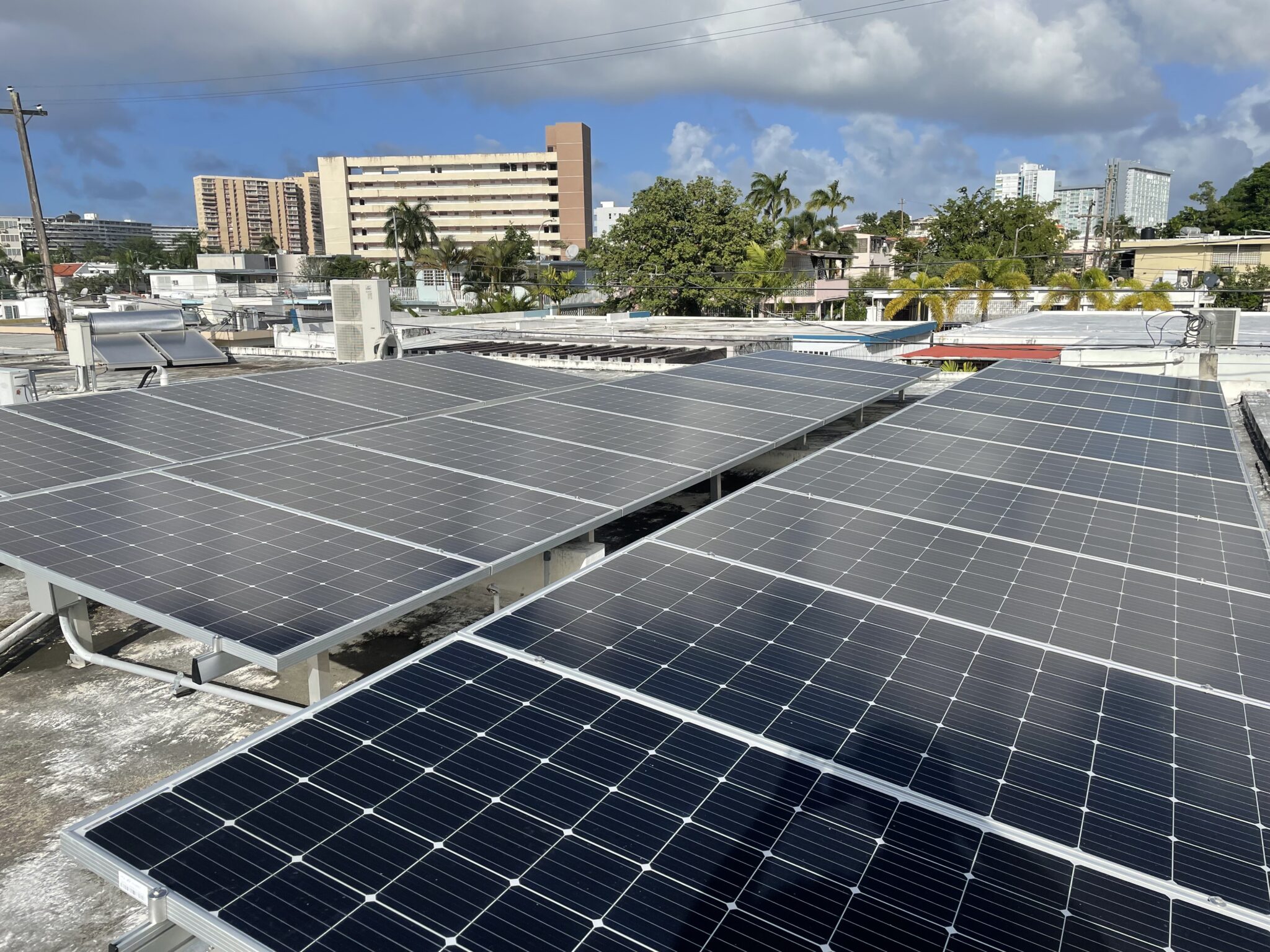
 Rooftop solar panels are helping generate electricity after Hurricane Maria destroyed much of the island electrical infrastructure. (Photo by Aaron Sutch/Solar United Neighbors)

Back in 2017, a hurricane destroyed Puerto Rico’s power grid. The island struggled to rebuild it, with limited success, and continues to experience a severe electricity shortage and frequent power outages. Customers and nonprofits have stepped into the void, installing solar panels on rooftops all over the island and backing them up with batteries. Today, 175,000 households have solar — about 1 in 7  – and at least 160,000 of those also have battery backup. Thousands of new installations go in every month.

The solar and batteries don’t just secure electricity for the customers who install them. Through programs like one managed by the solar company Sunrun, Puerto Rico’s grid can draw on the batteries to provide power in times of emergency, reducing the frequency and duration of power outages for everyone. 

Last month, as hurricane season got underway again, Puerto Rico’s grid operator announced it had reached a “major energy milestone.” In a statement posted on X, LUMA Energy said it “successfully dispatched approximately 70,000 batteries, contributing around 48 MW of energy to the grid.” That’s about as much as a gas peaker plant, with no need for fuel.

Puerto Rico’s experience shows how residents and businesses no longer need to be passive energy consumers. With a well-designed program they can play an active role in keeping the lights on in their communities, and get paid for it. 

This customer participation creates what is called a “virtual power plant” (VPP), sometimes also called a community power plant. The VPP may use battery aggregation, as in Puerto Rico, or demand reduction measures like temporary adjustments to smart thermostats or shifting electric vehicle charging to off-peak times. The more these measures are combined, the bigger the benefit to the grid, and the less a utility needs to invest in new generation to meet peaks in demand. 

VPPs offer such promise that this year Virginia’s General Assembly directed Dominion Energy to develop a pilot program for its customers, to be overseen by the State Corporation Commission. 

HB2346, from Del. Phil Hernandez, D-Norfolk, calls for a program of up to 450 MW to “optimize demand” with distributed energy resources, mainly batteries but also smart thermostats, electric vehicle charging and non-battery storage (e.g., electric hot water heaters). The proposal, due to be filed with the SCC by December 1, must include incentives for at least 15 MW of residential batteries. The legislation calls for stakeholder participation in the development of the VPP, with opportunities for public input. 

Dominion is also tasked with expanding the electric school bus program it began in 2019, which allows the utility to make use of school bus batteries at times of the day when the buses are not needed to transport children. As of March of 2024, Dominion had 135 electric buses in the program, spread across 25 school districts in Virginia. 

The impact of VPPs can be significant. This summer, California’s grid operator conducted an experiment to determine how much customer batteries could contribute to the needs of the grid. More than 100,000 residential batteries across California delivered an average of 535 MW of power from 7 to 9 p.m. on July 29, an output equivalent to that of a coal plant. 

Many other states are also using VPPs. Some are limited to solar-powered battery aggregation, like Xcel’s Colorado program and a new Texas program, while others involve demand response programs using smart appliances – anything that can be turned off and on remotely for short periods. In Michigan, DTE pays electric vehicle owners to charge at off-peak times, while Arizona Public Service’s VPP pays customers for the ability to access their smart thermostats to reduce peak demand.

Vermont’s Green Mountain Power runs two popular battery programs, one for people who own their own batteries and the other that leases batteries to customers. Both allow the utility to draw on the batteries when the power grid requires more capacity. 

While Virginia has not had a VPP program before, appliance-based demand response will be familiar to residents who opted into Dominion Energy’s “Smart Cooling Rewards” program.  Participants allowed the utility to remotely turn their air conditioners on and off for a few minutes at a time on hot days in exchange for an annual $40 payment. This helped the utility shave peak demand without affecting residents’ comfort. 

Dominion ended the cooling rewards program in 2022 and now offers a “Peak Time Rebate” program that rewards customers for reducing energy use during certain times of high energy demand. This program, however, requires residents to take affirmative measures themselves, like adjusting thermostats and delaying laundry. A well-designed VPP program, by contrast, takes the burden off the individual.

Josephus Allmond, a lawyer with the Southern Environmental Law Center who helped to craft the Virginia VPP legislation, told me in an email that he expects school buses and smart thermostats will make up most of Dominion’s program initially, but he’d like to see the residential battery component grow significantly from the initial 15 MW. Even 100,000 aggregated residential batteries would be a minor share of Dominion’s 2.8 million residential accounts, he pointed out.

I emailed Nathan Frost, Dominion’s general manager for new business and customer solutions, to ask for more information about the VPP program. Frost replied only that Dominion is “actively developing our VPP framework and will be engaging stakeholders soon.”    

Stakeholders, including customers themselves, are likely to have a lot to say. Clean energy advocates have long urged that VPPs, distributed generation sources and microgrids can contribute to a more efficient, secure and resilient grid, at less cost to everyone. 

No doubt recentering the grid around customers is too tall an order for a monopoly utility with a profit model based on centralized generation. But from what we’ve seen in Puerto Rico, California and elsewhere, harnessing even some of the power of customer-owned resources is a worthwhile project whose time has finally come.

This article was originally published in the Virginia Mercury on September 2, 2025.

Update: on September 15, Dominion sent this note:

Dominion Energy Virginia is preparing to file a virtual power plant (“VPP”) pilot proposal by December 1, 2025, pursuant to House Bill 2346 and Senate Bill 1100.  As part of this effort, Dominion Energy Virginia is seeking stakeholder input.  Please visit our website at https://www.dominionenergy.com/vpp.  The website contains an overview of the legislation, a timeline, an informational webinar about VPPs and the Company’s plan, and additional information.  We encourage all interested stakeholders to review the materials posted on the website and provide feedback through the link on the website by October 6, 2025.

If you have questions, please contact virtualpowerplant@dominionenergy.com