Unknown's avatar

The bills are back in town

Legislators cue up last year’s vetoed legislation for a new session, but leave us wanting more
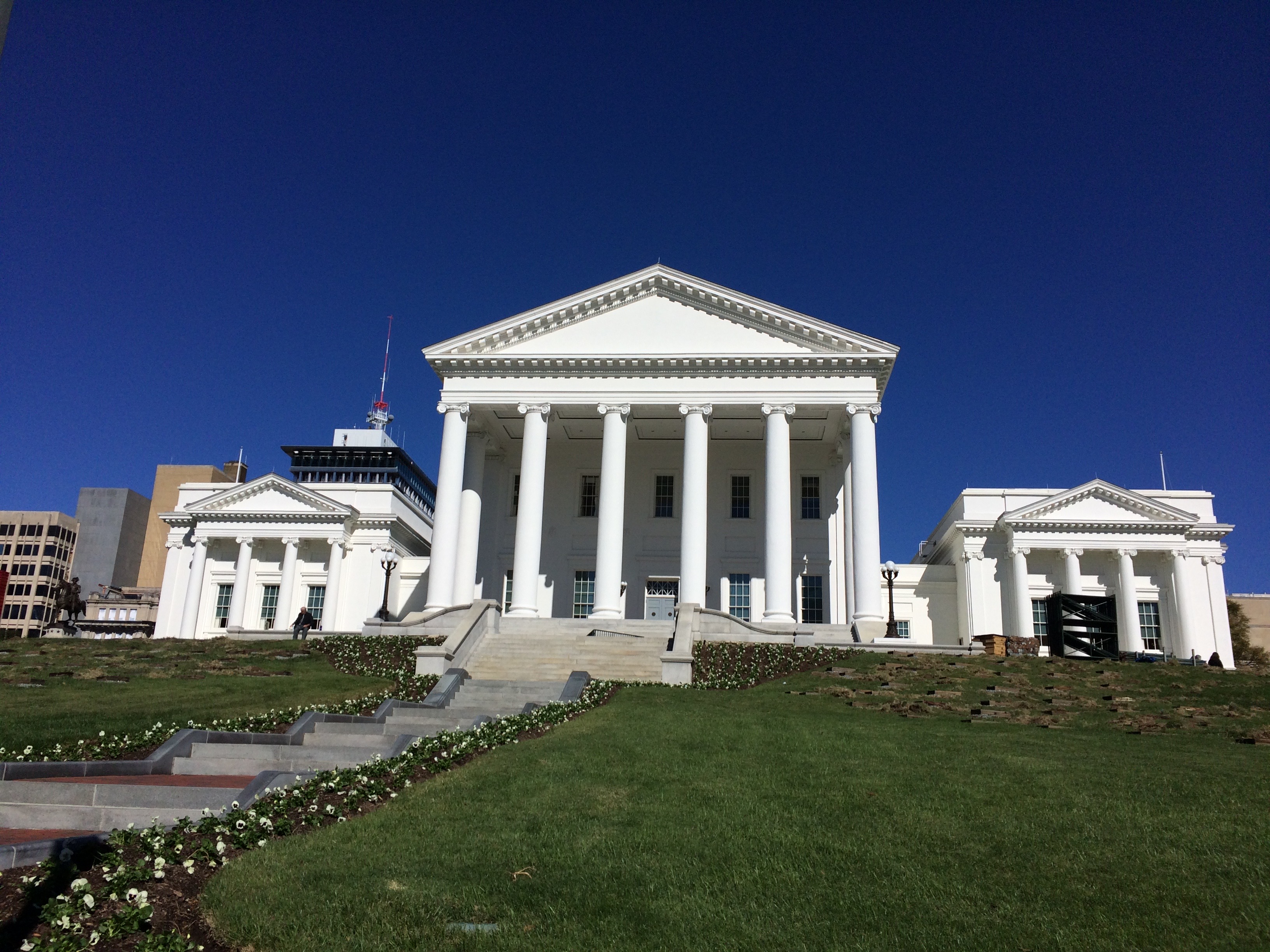
Last spring Gov. Glenn Youngkin vetoed more energy bills than he signed, killing legislation designed to increase rooftop solar and energy storage, strengthen utility planning requirements, and make efficiency improvements more available to low-income residents. 

Now, with Abigail Spanberger set to replace Youngkin in the Governor’s Mansion and Democrats in a position of legislative strength, those bills are back.

Members of the Commission on Electric Utility Regulation (CEUR) met several times this fall to examine last year’s failed energy bills to determine which should get the commission’s endorsement this year. CEUR is comprised primarily of legislative leaders from the Senate and House committees that hear energy bills, so endorsements signal a strong likelihood of passage. 

But while the bills CEUR endorsed show promise, I can’t help thinking they had better be just a starting point.  

Energy affordability and making data centers pay their fair share are supposed to be the top objectives for legislators this year. That makes it interesting, and concerning, that even as CEUR went beyond the vetoed bills to endorse some small new initiatives, it didn’t propose any legislation that would either supercharge generation in Virginia or put the onus on the tech companies to solve their supply problem themselves.  

We know bills like that are coming. Ann Bennett, the lead author of the Sierra Club’s comprehensive report on the state of the industry in Virginia, was, I hope, being hyperbolic when she told me she expects “a hundred” data center bills this session. Regardless, there will be a lot of them. 

Many will be land use bills that don’t go to the energy committees, but others will tackle the central contradiction at the heart of Virginia’s data center buildout: our leaders want the industry to grow, but haven’t faced squarely the problem of where the energy will come from. 

Getting more power on the grid (or freeing up capacity)

Some of the vetoed bills returning this year will put more energy on the grid. They won’t be enough to power the data center industry, but every bit helps. This includes one of the environmental communities’ top priorities, a bill that expands the role of rooftop solar in Virginia’s renewable portfolio standard (RPS). 

A new bill permitting balcony solar also got CEUR’s endorsement. Balcony solar – two or three panels that plug into a wall outlet, reducing a resident’s need to buy power – is the buzziest new idea of the year. The systems are too small to make much of a difference in megawatt terms, but by democratizing access to solar they counter the reputation of solar as a technology for rich people and will make it possible for solar skeptics to see for themselves that solar does actually work and save money.

Another CEUR initiative is a bill similar to one Youngkin vetoed that creates a carveout in the state’s renewable portfolio standard specifically for geothermal heat pumps. Like balcony solar, geothermal heat pumps don’t put electricity onto the grid, but by freeing up power for other customers it has the same effect.

 CEUR also endorsed a bill to simplify billing in the shared solar program in Appalachian Power Company’s territory, but a far more significant proposal to greatly expand shared solar in Dominion territory was deemed not ready for consideration after one of its patrons, Del. Rip Sullivan, D-Fairfax, said it was still in negotiation.  

The SCC recently directed a change in the calculation of Dominion Energy’s minimum bill that industry advocates say should make the program workable for customers beyond the low-income residents who were the only ones formerly able to access it. As currently drafted, the bill would allow shared solar to increase up to a maximum of 6% of Dominion’s peak load. That gives this bill the potential to make a meaningful dent in Virginia’s energy shortfall – if Dominion doesn’t block it. 

That assumes developers can get the community solar projects permitted at the local level. 

Virginia localities are notorious for denying permits to solar projects of all sizes, a recalcitrance that has contributed to Virginia having to import fully half of the electricity consumed in the state. CEUR has now scrapped last year’s big idea of allowing solar developers to appeal local government permit denials to the SCC, after failing to persuade enough legislators to vote for it last year. All that is left of that bill is a piece that establishes a university consortium to provide research and technical assistance. 

Luckily, last year’s other major solar siting bill lives on; it codifies best practices for solar projects without removing localities’ ability to deny permits even for projects that meet the high standards. New this year, however, is a requirement that localities provide a record of their decisions to the SCC, including the reason for any adverse decision. 

It’s not the solution the industry and landowners need to bring predictability to the local permitting process, but it does ratchet up pressure on county boards that have a habit of denying projects without articulating a legitimate reason. And sure enough, imposing that modest amount of accountability was enough to get Joe Lerch from the Virginia Association of Counties to speak against the proposal at the CEUR meeting. 

VACO seems likely to lose the fight this time around, and it should. Blocking solar development leads directly to higher electricity prices for consumers across the state. Moreover, it denies even a minimum of due process to landowners who want to install solar on their property – including farmers who need the income just to hold onto their land. For VACO to insist on counties having carte blanche to reject projects, with no responsibility to justify their decision, is arrogant and an abuse of the local prerogative.

Making the most of what’s already there

Anyone who keeps up with energy news has learned more in the past year about how the grid works than most of us ever wanted to know. There is widespread agreement that grid operator PJM has mismanaged its job, keeping new low-cost generation from interconnecting and driving up utility bills for customers across the region. Unfortunately, there is little that Virginia can do by itself to fix PJM.

But one key bit of information we can use is that utilities and the grid operator build infrastructure to meet the highest levels of demand on the hottest afternoons and coldest nights of the year, leaving much of that infrastructure sitting idle at other times. A recent study showed the grid could absorb far more data center demand than it can now if it weren’t for the 5% of the time when demand is at its highest. 

The issue is framed in terms of data centers being willing to curtail operations at times of peak demand, a solution for the companies that can do it. But there is also a broader point: we don’t need as much new generation if we use what we have better. 

That’s the principle behind several bills that CEUR endorsed. The most significant of these is a bill vetoed by Youngkin last year that almost doubles the targets for short-term energy storage laid out in the Virginia Clean Economy Act and adds targets for long-duration energy storage. As currently drafted, the 2026 version also adds new fire safety standards.

But CEUR did not discuss another obvious approach to increasing storage capacity on the grid: requiring data centers to have storage on-site, replacing highly-polluting diesel generators for at least the first couple of hours of a power outage and using spare battery capacity to assist the grid at other times. If Virginia is going to keep adding data centers at the current rate, this simply has to be part of the plan. We need far more storage than the CEUR bill calls for, and tech companies, not ratepayers, should bear the cost.

CEUR’s utility reform proposals would also help Virginia’s grid get the most out of what we already have. A bill to improve the integrated resource planning process (again, vetoed by Youngkin) requires utilities to consider surplus interconnection service projects to maximize existing transmission capacity. 

CEUR also proposes to have the SCC create a workgroup to study load flexibility. Though the SCC is already doing this through its technical conferences, the proposed legislation would formalize the process and task the work group with making recommendations.

And if all else fails, under another CEUR initiative, utilities would be explicitly allowed to delay service to new customers with more than 90 MW of demand if there wasn’t the generation or transmission available to serve them, or to protect grid reliability. As a fail-safe this is both obvious and inadequate; if a utility doesn’t have that authority now, it certainly needs it — but it needs it for a customer of any size.

Helping low-income residents save money 

CEUR endorsed several proposals that could help residents save money on energy bills. Some, like shared solar, balcony solar, geothermal heat pumps and the distributed solar expansion bill, would benefit anyone willing to make the investment. 

For low-income residents, weatherization and efficiency upgrades remain the focus. Last year the governor vetoed legislation from Del. Mark Sickles, D-Fairfax and Sen. Lamont Bagby, D-Henrico, which would have required Dominion and APCo to expand their low-income weatherization assistance to reach 30% of qualifying customers.  Sickles has already reintroduced his bill as HB2. CEUR endorsed a different recommendation from staff that the two utilities be required to extend their spending on energy assistance and weatherization programs. 

CEUR did not examine a related bill that has been reintroduced this year following a Youngkin veto last winter, establishing an income-qualified energy efficiency and weatherization task force to produce policy recommendations to ensure repairs and retrofits reach all eligible households. 

However, CEUR endorsed a bill that will require all utilities to disclose to the SCC information about electric utility disconnections, which presumably will inform the work of the task force.  

We’re going to need more

Even taken together, CEUR’s initiatives don’t fully address the biggest energy crunch Virginia has ever faced, and the rising utility bills that result. Possibly that is intentional; Democrats will continue to control the governor’s seat as well as the legislature for at least two years, giving them time to ramp up programs and see what works.

But data center development is so far outstripping supply side solutions that if legislators aren’t more aggressive this year, next year they will find themselves further behind than ever.  

As more bills are filed over the coming weeks, we are likely to see plenty of bold proposals. Hopefully, legislators now understand the urgency, and will be ready to act.

An earlier version of this article appeared in the Virginia Mercury on December 15, 2025. It has been edited to include the last two bills in the section titled “Making the most of what’s already there.”
Unknown's avatar

How Gov. Spanberger and a Democratic majority can make energy more affordable

An aggressive legislative agenda this year will demonstrate national leadership on managing the data center buildout while delivering climate, health and economic benefits to all Virginians

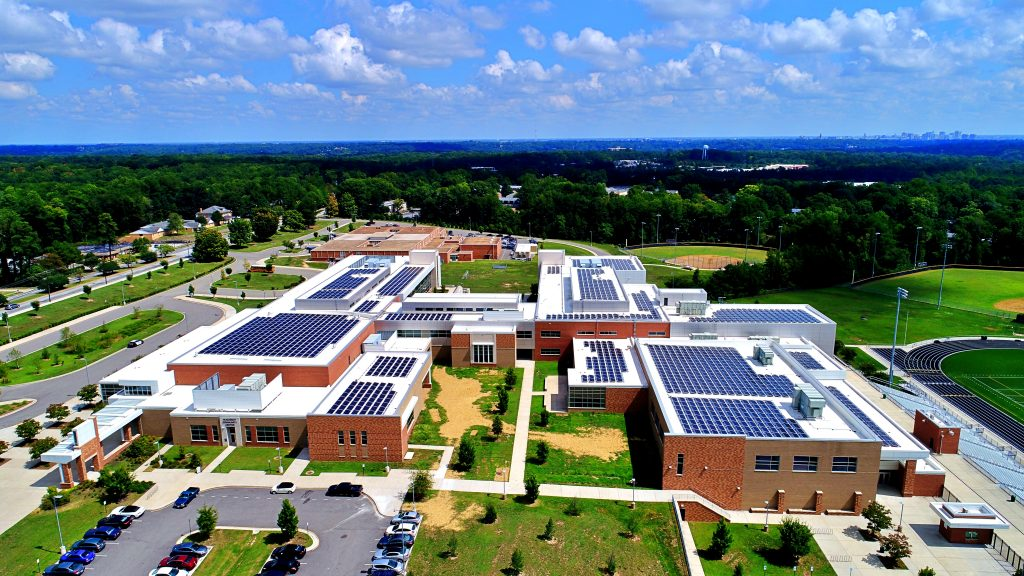
Solar on schools and other public buildings reduce pressure on the grid while saving money for taxpayers. Photo courtesy of Secure Solar Futures LLC

If Virginia’s election last month was more than an unleashing of anti-Trump sentiment (and it definitely was that), it was about affordability. Governor-elect Abigail Spanberger made the cost of living the focus of her campaign, frequently mentioning high energy bills. House Democrats, whose majority has been boosted by the addition of 13 new members of their party, are also expected to focus on these bread-and-butter issues. 

In Virginia, the cause of these high bills is not hard to identify: Data centers are driving up demand well beyond the available supply, and high fossil fuel prices are pinching a state that relies on natural gas for most of its electricity. Spanberger has committed to making data centers “pay their fair share,” and both she and legislators will be looking for other opportunities to lower costs.

The bad news is that adding ever more data centers across Virginia means the upward pressure on electricity prices will continue. If the governor and legislators don’t want to kick tech companies to states with spare capacity, and if the administration of President Donald Trump continues to throttle the energy supply with its war on wind and solar, lowering energy costs in the near term likely isn’t possible. 

Even so, there is a lot that Spanberger and the General Assembly can do to protect residential consumers from these higher prices. 

Making data centers pay their fair share means more than tweaking rate structures. Several Virginia utilities have created special rate classes for large load users like data centers. The utilities will require data center operators to sign long-term contracts committing them to paying for a large percentage of the electricity and transmission they say they need, even if they don’t end up using that much or leave the Virginia market prematurely. 

These new tariffs can help protect other customers from some – though not all – of the risk involved in serving data centers, but they don’t address the “fair share” issue. The current allocation of transmission costs, with residential ratepayers picking up most of the tab for new lines that don’t benefit them, needs to change. If the SCC determines it doesn’t have authority to do that on its own, the General Assembly and Spanberger should pass legislation to make it happen. 

The harder problem is how to make residents whole for rate increases that result from data centers gobbling up all available power. The supply and demand problem has been compounded by a lot of bad decisions, with plenty of blame to go around. The federal government has driven up fossil fuel prices by allowing the export of increasing amounts of natural gas, while hindering and even blocking solar and offshore wind projects that could make up the deficit. 

Outgoing Gov. Glenn Youngkin is to blame for illegally pulling Virginia out of the Regional Greenhouse Gas Initiative (RGGI), removing the market incentive for Virginia utilities to increase investments in low-cost renewable energy instead of burning expensive fossil fuels. (His promotion of the false narrative that gas is “cheap” doesn’t help.) 

Virginia utilities share the blame for relying too much on natural gas and high-priced electricity imported from other PJM states. And grid operator PJM is to blame for failing to approve enough new generation, including wind and solar facilities that make up the vast majority of projects waiting for approval to interconnect.

This history leaves Spanberger with a fine mess. Keeping prices in check now requires two things that can actually be accomplished during the next four years: a greater buildout of solar generation and energy storage to get more capacity on the grid; and investments in energy efficiency and rooftop solar to take pressure off the demand side.    

Solve utility solar siting with agrivoltaics. Virginia needs more energy, and solar is the only source that can be built quickly. Yet one of the knottiest problems confronting the General Assembly in the past few years has been the rise of anti-solar sentiment in rural counties. 

Landowners who want to lease their property for solar, or even to install arrays for their own use, find themselves stymied by opposition from neighbors who don’t like the look and are able to persuade county boards to deny permits. As we’ve seen, sometimes denial of a solar permit even follows approval of an energy-sucking data center.

Last year the General Assembly came close to passing a bill that would require solar developers to implement industry best practices. Passing legislation like that this year will address the legitimate concerns of localities around controlling erosion and maintaining native plant buffers. But more can be done to make solar look and function like a normal part of Virginia’s agricultural economy.

Already, solar facilities have become integrated with agriculture, as sheep and sometimes cattle take over vegetation management and farmers learn which crops do well growing between rows of solar arrays. It’s a trend that offers benefits to the land and the community alike. Farmers are struggling; solar can provide a stable income while protecting land from permanent development and putting much-needed energy on the grid. 

Businesses are ahead of public policy on this. Virginia-based Gray’s Lambscaping manages vegetation with over 800 sheep at solar farms across the state, and the company plans to grow to over 5,000 sheep by the end of this year. Meanwhile, solar panels have proven compatible with a wide range of food crops.  

Virginia should take a leading role in expanding agrivoltaics. Virginia law already recognizes the right to farm as an exception to localities’ authority over land use decisions, and this should be extended to farmers who put solar on their land, as long as they are also using the same land for traditional agricultural practices like grazing and crops. 

Install solar on new public buildings and schools. Heck, put it everywhere.  In the past ten years or so, Virginia’s commercial solar sector has blossomed while saving taxpayers money. To date, an estimated 150 Virginia schools have installed solar panels, saving schools about 25% on their energy bills. Solar on every sunny school rooftop would add up to more than 1,000 MW of carbon-free generation. Extend the effort to the roofs of all suitable public buildings across the state, and that number can go much higher. 

Dominion and APCo have long tried to squelch competition from rooftop solar, a war that looks increasingly foolish as Virginia finds itself short on energy for all customers. Earlier this year Congress drastically accelerated the phase-out of solar tax incentives, but the savings remain available for commercial and utility-scale projects for the next two years. There is no shortage of good ideas out there to be acted upon. Spanberger and legislators should take full advantage of that opportunity to install as much solar as possible. 

Battery storage at data centers does triple duty. While solar is the cheapest, cleanest, and fastest way to generate power, it needs batteries or other forms of energy storage to make it into a 24/7 resource, and storage remains relatively expensive. For tech companies, however, the calculus makes more sense.

Data centers need backup power anyway; they typically have three layers of redundancy so that they never risk losing power when the grid goes down. Today the backup power is mostly provided by massive diesel generators, sometimes three times as many as they might actually need. Most of these have no pollution controls and are therefore not supposed to run except in emergencies and for testing and maintenance. That’s sill a lot of run time — and DEQ is proposing to make matters worse by expanding the definition of “emergency” to include scheduled outages.

Some tech companies are now installing generators with selective catalytic converters that produce fewer emissions. The catch is that these can legally be used in non-emergency situations, raising the possibility that they might be used for demand-response or peak shaving. In effect, data centers would be solving the peak demand problem with one of the dirtiest forms of energy. The cumulative effect on air quality could be worrisome, and Virginia’s carbon footprint would grow at a time when the law says it should be shrinking. 

What if, instead of diesel generators, data centers installed storage as their first line of defense against power outages, leaving diesel generators to be used only in the rare case of extended grid outages? Air quality would benefit, carbon emissions would decrease, and the data centers would have the backup power they need. The tech companies would pay more upfront but could be compensated by utilities for using their storage capability for grid services and demand response, lowering their draw from the grid at peak demand times. 

All the data centers in Virginia today use 6 gigawatts of power. That much storage would exceed the targets set in the VCEA for Dominion and APCo combined.  Even limiting the requirement to two hours of storage at new data centers would bring enough storage online quickly to eliminate the expensive demand peaks that drive the high price of energy.  

Require data center operators to source their own zero-carbon electricity. Most of the tech companies have sustainability commitments that they aren’t meeting, so it isn’t asking too much of them to put them in charge of this effort. Legislation to require this as a condition of accepting Virginia’s generous tax subsidies has been defeated for the past two years. The difference this year is that rising energy prices are now affecting everyone. 

Under this proposal, the zero-carbon electricity doesn’t have to come from Virginia, as long as it is available to customers here. Maybe the tech companies could even tap into their considerable influence with the Trump administration to make electricity more plentiful and affordable by reversing its war on solar and wind energy.

Why, after all, should Virginia residents sacrifice for the richest corporations in the world? If “paying their fair share” means anything, it should mean that data centers, not residents, bear the costs of making enough energy available to Virginia, and complying with our clean energy mandate.

Lower demand with energy efficiency and distributed solar. The gap between energy supply and demand does not have to be filled entirely through supply-side solutions. Lowering demand should also be part of the solution. Virginia utilities, Dominion in particular, have done a poor job of running energy efficiency programs. Looking on the bright side, though, that means plenty of opportunities remain.

House Democrats have already started work on this issue, with a focus on lowering winter heating costs for lower-income households. As reported in the Mercury last week, HB 2, from Farifax Del. Mark Sickles, requires Dominion and APCo to make their “best, reasonable efforts” to provide energy efficiency and weatherization to 30% of income-qualified customers by the end of 2031. HB 3, from  Del. Destiny Levere Bolling, D-Henrico, sets up a task force to study income-qualified energy efficiency and weatherization.  

These steps are okay for starters, and they would be juiced by the influx of money from RGGI carbon auctions (see next section), earmarked for low-income energy efficiency. But Dominion has repeatedly failed to meet the energy efficiency targets the legislature sets for it, and after all, why stop with 30% of low-income customers when all households could benefit from more comprehensive programs? Virginia can do much better.  

My last column discussed Rewiring America’s proposal to have tech companies pay for heat pumps, solar and batteries in the residential sector, saving money for households and freeing up capacity for data centers to come online sooner. An independent provider could run the program and verify the energy savings.  

(If the tech companies complain that an awful lot of the solutions I’m proposing come at their expense, it’s true. But the industry benefits from a state tax subsidy that has reached nearly a billion dollars per year, and will only grow further as the number of data centers doubles and triples. They can afford to give back.) 

Use RGGI for long-term affordability. Gov.-elect Spanberger has committed to seeing Virginia rejoin the Regional Greenhouse Gas Initiative (RGGI), the compact of northeastern states working to lower carbon emissions by 30% by 2030. RGGI works by requiring owners of carbon-emitting generating plants to buy carbon allowances at auction, penalizing carbon-intensive generation and rewarding investments in zero-carbon facilities like wind, solar and nuclear. States collect the auction proceeds, which in Virginia are dedicated to low-income energy efficiency and climate adaptation measures.

Republicans have already renewed their attacks on RGGI, calling it a tax on energy consumers. To the extent that’s true, it’s a tax mostly paid by the largest consumers (including data centers) for the benefit of low-income residents and people most vulnerable to storms and sea level rise. Moreover, all energy consumers benefit over the longer term as low-cost clean energy increasingly replaces expensive fossil fuels. 

Beef up efficiency standards in the residential building code. Most people who buy a new home assume that modern building codes incorporate the latest standards for insulation and efficient technology. In Virginia, they do not. Buyers would be dismayed to learn that their homes are costing them more on their utility bills than they saved on a purchase price supposedly made more affordable by poorer-quality insulation and appliances. Buyers are rarely consulted on these trade-offs, and few have the expertise to question a builder’s choices. Building codes are supposed to do that job.

Unfortunately, Virginia’s Board of Housing and Community Development, which writes the code, is dominated by the homebuilding industry. The industry wants to build homes as cheaply as possible to ensure the highest profit possible on the homes it sells. Even as national model code standards have become more rigorous, homebuilders have protected their own interests by keeping weak energy efficiency requirements in Virginia’s residential building code. 

In 2021, Virginia adopted legislation requiring the board to consider and adopt energy standards “at least as stringent as” the latest national model code standards when the benefits over time to residents and the public exceed the incremental costs of construction. But the board simply didn’t do it. Will this be the year legislators realize that a board dominated by the industry it regulates won’t act in the public interest without explicit directions? 

This is Virginia’s moment. Since the passage of the Virginia Clean Economy Act in 2020, renewable energy and storage have only gotten cheaper, while energy efficiency opportunities remain plentiful. Coal has solidified its place as the most expensive baseload source, and fossil gas remains stubbornly expensive compared to solar. Spanberger and the Democratic majority have an opening this year to go big on clean energy. An aggressive legislative agenda this year will demonstrate national leadership on managing the data center buildout while delivering climate, health and economic benefits to all Virginians.  

This column was originally published in the Virginia Mercury on December3, 2025.