Unknown's avatar

The bills are back in town

Legislators cue up last year’s vetoed legislation for a new session, but leave us wanting more

Last spring Gov. Glenn Youngkin vetoed more energy bills than he signed, killing legislation designed to increase rooftop solar and energy storage, strengthen utility planning requirements, and make efficiency improvements more available to low-income residents. 

Now, with Abigail Spanberger set to replace Youngkin in the Governor’s Mansion and Democrats in a position of legislative strength, those bills are back.

Members of the Commission on Electric Utility Regulation (CEUR) met several times this fall to examine last year’s failed energy bills to determine which should get the commission’s endorsement this year. CEUR is comprised primarily of legislative leaders from the Senate and House committees that hear energy bills, so endorsements signal a strong likelihood of passage. 

But while the bills CEUR endorsed show promise, I can’t help thinking they had better be just a starting point.  

Energy affordability and making data centers pay their fair share are supposed to be the top objectives for legislators this year. That makes it interesting, and concerning, that even as CEUR went beyond the vetoed bills to endorse some small new initiatives, it didn’t propose any legislation that would either supercharge generation in Virginia or put the onus on the tech companies to solve their supply problem themselves.  

We know bills like that are coming. Ann Bennett, the lead author of the Sierra Club’s comprehensive report on the state of the industry in Virginia, was, I hope, being hyperbolic when she told me she expects “a hundred” data center bills this session. Regardless, there will be a lot of them. 

Many will be land use bills that don’t go to the energy committees, but others will tackle the central contradiction at the heart of Virginia’s data center buildout: our leaders want the industry to grow, but haven’t faced squarely the problem of where the energy will come from. 

Getting more power on the grid (or freeing up capacity)

Some of the vetoed bills returning this year will put more energy on the grid. They won’t be enough to power the data center industry, but every bit helps. This includes one of the environmental communities’ top priorities, a bill that expands the role of rooftop solar in Virginia’s renewable portfolio standard (RPS). 

A new bill permitting balcony solar also got CEUR’s endorsement. Balcony solar – two or three panels that plug into a wall outlet, reducing a resident’s need to buy power – is the buzziest new idea of the year. The systems are too small to make much of a difference in megawatt terms, but by democratizing access to solar they counter the reputation of solar as a technology for rich people and will make it possible for solar skeptics to see for themselves that solar does actually work and save money.

Another CEUR initiative is a bill similar to one Youngkin vetoed that creates a carveout in the state’s renewable portfolio standard specifically for geothermal heat pumps. Like balcony solar, geothermal heat pumps don’t put electricity onto the grid, but by freeing up power for other customers it has the same effect.

 CEUR also endorsed a bill to simplify billing in the shared solar program in Appalachian Power Company’s territory, but a far more significant proposal to greatly expand shared solar in Dominion territory was deemed not ready for consideration after one of its patrons, Del. Rip Sullivan, D-Fairfax, said it was still in negotiation.  

The SCC recently directed a change in the calculation of Dominion Energy’s minimum bill that industry advocates say should make the program workable for customers beyond the low-income residents who were the only ones formerly able to access it. As currently drafted, the bill would allow shared solar to increase up to a maximum of 6% of Dominion’s peak load. That gives this bill the potential to make a meaningful dent in Virginia’s energy shortfall – if Dominion doesn’t block it. 

That assumes developers can get the community solar projects permitted at the local level. 

Virginia localities are notorious for denying permits to solar projects of all sizes, a recalcitrance that has contributed to Virginia having to import fully half of the electricity consumed in the state. CEUR has now scrapped last year’s big idea of allowing solar developers to appeal local government permit denials to the SCC, after failing to persuade enough legislators to vote for it last year. All that is left of that bill is a piece that establishes a university consortium to provide research and technical assistance. 

Luckily, last year’s other major solar siting bill lives on; it codifies best practices for solar projects without removing localities’ ability to deny permits even for projects that meet the high standards. New this year, however, is a requirement that localities provide a record of their decisions to the SCC, including the reason for any adverse decision. 

It’s not the solution the industry and landowners need to bring predictability to the local permitting process, but it does ratchet up pressure on county boards that have a habit of denying projects without articulating a legitimate reason. And sure enough, imposing that modest amount of accountability was enough to get Joe Lerch from the Virginia Association of Counties to speak against the proposal at the CEUR meeting. 

VACO seems likely to lose the fight this time around, and it should. Blocking solar development leads directly to higher electricity prices for consumers across the state. Moreover, it denies even a minimum of due process to landowners who want to install solar on their property – including farmers who need the income just to hold onto their land. For VACO to insist on counties having carte blanche to reject projects, with no responsibility to justify their decision, is arrogant and an abuse of the local prerogative.

Making the most of what’s already there

Anyone who keeps up with energy news has learned more in the past year about how the grid works than most of us ever wanted to know. There is widespread agreement that grid operator PJM has mismanaged its job, keeping new low-cost generation from interconnecting and driving up utility bills for customers across the region. Unfortunately, there is little that Virginia can do by itself to fix PJM.

But one key bit of information we can use is that utilities and the grid operator build infrastructure to meet the highest levels of demand on the hottest afternoons and coldest nights of the year, leaving much of that infrastructure sitting idle at other times. A recent study showed the grid could absorb far more data center demand than it can now if it weren’t for the 5% of the time when demand is at its highest. 

The issue is framed in terms of data centers being willing to curtail operations at times of peak demand, a solution for the companies that can do it. But there is also a broader point: we don’t need as much new generation if we use what we have better. 

That’s the principle behind several bills that CEUR endorsed. The most significant of these is a bill vetoed by Youngkin last year that almost doubles the targets for short-term energy storage laid out in the Virginia Clean Economy Act and adds targets for long-duration energy storage. As currently drafted, the 2026 version also adds new fire safety standards.

But CEUR did not discuss another obvious approach to increasing storage capacity on the grid: requiring data centers to have storage on-site, replacing highly-polluting diesel generators for at least the first couple of hours of a power outage and using spare battery capacity to assist the grid at other times. If Virginia is going to keep adding data centers at the current rate, this simply has to be part of the plan. We need far more storage than the CEUR bill calls for, and tech companies, not ratepayers, should bear the cost.

CEUR’s utility reform proposals would also help Virginia’s grid get the most out of what we already have. A bill to improve the integrated resource planning process (again, vetoed by Youngkin) requires utilities to consider surplus interconnection service projects to maximize existing transmission capacity. 

CEUR also proposes to have the SCC create a workgroup to study load flexibility. Though the SCC is already doing this through its technical conferences, the proposed legislation would formalize the process and task the work group with making recommendations.

And if all else fails, under another CEUR initiative, utilities would be explicitly allowed to delay service to new customers with more than 90 MW of demand if there wasn’t the generation or transmission available to serve them, or to protect grid reliability. As a fail-safe this is both obvious and inadequate; if a utility doesn’t have that authority now, it certainly needs it — but it needs it for a customer of any size.

Helping low-income residents save money 

CEUR endorsed several proposals that could help residents save money on energy bills. Some, like shared solar, balcony solar, geothermal heat pumps and the distributed solar expansion bill, would benefit anyone willing to make the investment. 

For low-income residents, weatherization and efficiency upgrades remain the focus. Last year the governor vetoed legislation from Del. Mark Sickles, D-Fairfax and Sen. Lamont Bagby, D-Henrico, which would have required Dominion and APCo to expand their low-income weatherization assistance to reach 30% of qualifying customers.  Sickles has already reintroduced his bill as HB2. CEUR endorsed a different recommendation from staff that the two utilities be required to extend their spending on energy assistance and weatherization programs. 

CEUR did not examine a related bill that has been reintroduced this year following a Youngkin veto last winter, establishing an income-qualified energy efficiency and weatherization task force to produce policy recommendations to ensure repairs and retrofits reach all eligible households. 

However, CEUR endorsed a bill that will require all utilities to disclose to the SCC information about electric utility disconnections, which presumably will inform the work of the task force.  

We’re going to need more

Even taken together, CEUR’s initiatives don’t fully address the biggest energy crunch Virginia has ever faced, and the rising utility bills that result. Possibly that is intentional; Democrats will continue to control the governor’s seat as well as the legislature for at least two years, giving them time to ramp up programs and see what works.

But data center development is so far outstripping supply side solutions that if legislators aren’t more aggressive this year, next year they will find themselves further behind than ever.  

As more bills are filed over the coming weeks, we are likely to see plenty of bold proposals. Hopefully, legislators now understand the urgency, and will be ready to act.

An earlier version of this article appeared in the Virginia Mercury on December 15, 2025. It has been edited to include the last two bills in the section titled “Making the most of what’s already there.”

Unknown's avatar

Will Big Tech buy you a heat pump?

Sign at a dog park in Arlington, Virginia. Ivy Main

The data center boom has catapulted Virginia into a serious energy crunch. We have more data centers here than in any other state, by far, and four times as many more are expected in the next few years. Virginia utilities don’t generate enough electricity to serve them all; fully half of our power is imported from the regional grid. But now the regional grid is also running low on reserve power thanks to all the data center growth, according to grid operator PJM. 

Most proposed solutions focus on the supply side: generating more power by building new solar, wind, gas and battery storage; keeping aging power plants running that were previously scheduled for closure; and even reopening Three Mile Island, shuttered three and a half decades ago following the worst nuclear accident in US history. 

More nuanced solutions involve managing the existing generation better. Research shows that the grid could handle more data centers right now if operators ratcheted back consumption at peak times, either through installing batteries or through shifting some operations to non-peak times.

All of these approaches involve generating more power for the grid, or shifting use around to relieve grid stress at peak demand times. But there is another way to make room for new data centers: remove some existing loads. 

A national advocacy organization, Rewiring America, recently released an intriguing proposal to free up grid capacity by retrofitting homes with high-efficiency heat pumps, heat pump water heaters, solar panels and energy storage. The cumulative effect would be to reduce total demand in the residential sector, making capacity available to data centers sooner, while also saving the participating residential consumers thousands of dollars on their electricity bills.  

Oh, and the tech companies are going to pay for it. 

I am reminded of a delightful sign I once saw announcing the coming of the best dog park ever, to be paid for by cats, itself a satire of a certain president’s pledge to build a border wall paid for by Mexico. But, I notice, neither the cats nor Mexico have sent checks yet. Will Big Tech?

Rewiring America thinks so, if the policies are in place to aggregate and verify the household energy savings into a marketable package, and if buying the package means a data center can come online faster and more cheaply. Upgraded appliances and rooftop solar can be installed in a matter of weeks, compared to the many years that may be required to permit and build new generation and transmission. 

Note that the proposed program would not include households that replace gas, propane or oil furnaces with heat pumps. That kind of upgrade results in greater, not less, residential electricity demand, making it counterproductive when the point is to shrink residential electricity usage. 

Replacing electric furnaces with heat pumps would also mainly address the grid’s winter peak, not its summer peak, though the Department of Energy maintains that heat pumps use less energy for cooling than stand-alone air conditioners.

Researchers focused on replacing electric resistance heat with heat pumps because that one swap produces the biggest efficiency bang for the buck. An electric furnace is cheap to install but expensive to use; the reverse is true of a high-efficiency heat pump. The National Renewable Energy Laboratory (NREL) estimates that the conversion would save the average family $1,170 per year on its electricity bill. NREL calculates that heat pumps are cost-effective enough to pay for themselves in under 5 years.

According to Rewiring America, “If hyperscalers paid for 50 percent of the upfront cost of installing heat pumps in homes with electric resistance heating, they could get capacity on the grid at a price of about $344/kW-year — a similar cost to building and operating a new gas power plant, which currently costs about $315/kW-year.” (By my math, it’s an extra 10%, which might be acceptable to a power-hungry tech customer as a sort of rush fee.)

The report repeats the calculations for other technologies. Ductless heat pumps would replace baseboard electric heat. Heat pump water heaters would replace conventional electric water heaters. Solar panels paired with battery storage could displace electricity the home would otherwise draw from the grid.

Further capacity could come from home batteries. The report posits, “If every single-family household in the U.S. installed a home battery, and those with a suitable roof installed a 5 kW solar system (about 11 solar panels), they could collectively generate 109 GW of increased capacity on the grid.We assume that households charge the battery off-peak, either from the grid or from rooftop solar, and they discharge the battery during peak periods to reduce the household’s contribution to peak demand.” 

The researchers estimate that a mass purchasing program could squeeze costs of solar and storage down by 40%, primarily through reduced customer acquisition costs and cheaper permitting. Then the data center operators would pay 30% of this lower cost. By buying solar and storage at this now much-reduced price, households would get electricity at about a 30% discount off utility rates, while the tech companies would be able to buy capacity at a cost comparable to that of building a new gas plant. 

You’ll notice the proposal assumes tech companies pay only a portion of the costs for the residential upgrades, so residents still face upfront costs – 50% of the cost of heat pumps, 70% of a hopefully-lowered price for solar and batteries. Rewiring America calculates that residents will come out ahead under all scenarios, while the data centers will pay only a little more than they would otherwise have to pay, buying capacity they might not otherwise be able to get. 

Because Virginia has so many more data centers than anywhere else on earth, Rewiring America calculates that all of these investments would meet only 25% of our projected new data center demand. Other states could do much better, fully meeting projected new demand across most of the country and even exceeding it in about half the states. Virginia would presumably stand to benefit from surplus capacity in other PJM states. 

Obviously, these calculations describe a best-case scenario, and I have my doubts about whether the uptake would be anywhere near what they believe is possible. Still, even capturing just a portion of the efficiency potential Rewiring America believes is there would relieve some of the pressure on the grid. 

But is there really that much low-hanging efficiency fruit in Virginia? If the NREL data that the researchers use is correct, more than 300,000 single family homes in Virginia have electric furnaces. Yet electric furnaces are notoriously inefficient and expensive to operate, and heat pumps have been around for decades. Our utilities have been running energy efficiency programs for years that are supposed to help residents save energy. Can there really be that many single-family homes that have not converted to heat pumps yet?

I consulted Andrew Grigsby, a home energy efficiency expert who is currently the energy services director at Viridiant, a nonprofit focused on sustainable buildings. Grigsby shared my doubts about the accuracy of NREL’s estimate of the number of homes with electric resistance heat, saying it was at odds with his experience. He also felt that an efficiency program would save more energy at less cost by targeting improvements to the needs of each home, instead of supplying a blanket solution.

But he also refuted my assumption that most of the low-hanging fruit should have been picked by now. “Virginia has 100,000 homes (at least) where three hours work and $50 in materials would reduce heating/cooling costs by 25%  — via fixing the obvious, massive duct leakage,” he said in an email.

This doesn’t mean Rewiring America’s approach wouldn’t save energy; rather, it supports the conclusion that there is a massive opportunity for energy efficiency savings that Virginia hasn’t fully tapped into. 

Legislators have tried. The VCEA set efficiency targets for Dominion and APCo, and the SCC followed up with further targets. APCo has consistently met its goals, Dominion has not. A review of Dominion’s sad little list of programs available to homeowners suggests that the problem is a lack of ambition, not a lack of opportunity.

An aggressive, third-party operated efficiency program would complement the Virtual Power Plant (VPP) pilot program that Dominion is developing in accordance with legislation passed in the 2025 session. The VPP’s goal is to shift some consumption to off-peak times, while the Rewiring America proposal would reduce overall consumption. 

Both seek to achieve time-shifting through incentivizing residents to invest in home batteries, their only area of overlap. But whereas the VPP legislation set only 15 MW as its baseline target for home batteries, the Rewiring America proposal could incentivize much more, along with the solar systems to charge them.

The problem remains how to get tech companies to pay for it. My contact at Rewiring America, senior director of communications Alex Amend, pointed me to approaches being undertaken in other states. Minnesota legislation requires data centers to contribute between $2 million and $5 million annually toward energy conservation programs that benefit low-income households. Georgia Power is expected to file a large load tariff that, says Amend, includes pathways for off-site, behind-the-meter solutions.

Here in Virginia, though, both APCo and Dominion, as well as some co-ops, have already submitted large-load tariff proposals to the SCC as part of their rate cases. None of the proposals include incentives for demand reductions anywhere, much less the residential sector. Indeed, given Dominion’s track record on efficiency, the SCC would have to take the initiative to meld a large load tariff for data centers with the VPP program and aggressive home efficiency investments. 

The SCC has announced plans to hold a technical conference on Dec. 12 to examine data center load flexibility. Rewiring America hopes to participate to lay out its proposal in more detail. 

Then maybe we’ll see if the cats will pay for the dog park.

This article was originally published in the Virginia Mercury on November 10, 2025.

Unknown's avatar

As Youngkin takes an axe to the deep state, what could possibly go wrong?

The letter landed in email inboxes Monday morning like a grenade tucked into a plain manila envelope. In keeping with Gov. Glenn Youngkin’s Executive Directive Number One requiring agencies to eliminate 25% of government regulations “not mandated by federal or state statute,” the administration planned to take its axe to the building code. 

Yes, the building code. The Board of Housing and Community Development has been told to remove a quarter of the rules that protect homes and businesses against fires, bad weather and shoddy workmanship. 

The Board only last summer completed its triennial update of the Virginia building code, so you’d think they would have removed any unnecessary provisions already. But that’s not the point. The point is that the Axe of Freedom must fall wherever regulations gather in big bunches, and the building code is, by definition, a bunch of regulations. 

Wasting no time, the board plans to meet on January 26 to kick off what it is calling “the reduction cycle.” Virginians will have a chance to comment, although in keeping with what I’ve found to be board practice, only the comments the board likes will count. And as the governor appoints the board members, successful opinions will be those that confirm Youngkin’s vision. 

From that perspective, the building code is shot full of nanny state rubbish. It dictates things like safe wiring and roofs that don’t fly off in a storm and plumbing that actually works. The governor no doubt believes we can safely trust these kinds of things to profit-maximizing corporations without state inspectors second-guessing their work. (I assume the requirement for inspections also falls to the Axe. There is nothing more nanny-state than inspections.)

But if the government does away with standards, won’t builders cut corners? Yes, of course they will. That is the whole point, because then they can make more money. And making money is the ultimate conservative value, second only to owning the libs. 

As for the people who wind up living in unsafe, flimsy firetraps, I expect the administration thinks it’s about time those snowflakes took personal responsibility for the quality of their homes. If they can’t correct hidden defects before a house erupts in flames or grows black mold or the basement floods, that’s on them. 

Housing advocates worry the administration might especially target energy efficiency requirements, though Lord knows the board already watered those down plenty, and illegally so. But things can always get worse, and Youngkin seems committed to ensuring they do. 

(Indeed, that would make a great tagline for Youngkin’s 25% initiative. “Glenn Youngkin: Making Virginia Government One-Quarter Worse.” Feel free to use it, governor, with my compliments.)

Anyway, excising the energy efficiency section of the housing code could be a retro move to appeal to old folks’ nostalgic yearning for the days when houses were so drafty you could feel a breeze with the windows closed. Maybe you never thought we’d let new homes get built that were like those of my childhood, where the kitchen pipes froze when the temperature plunged unless you put a hot water bottle in the cupboard under the sink and left the faucet dripping. 

But here we are. Will the board also remove the bans on lead paint and asbestos insulation?

The building code may be the first place to look for regulations to cut, but reaching his 25% goal will require Youngkin to take the Axe of Freedom to regulations wherever they lurk. And they lurk all over the place. Virginia’s administrative code contains 24 titles. 

One colleague suggests simply removing every fourth word from every section of every title, which would have the virtue of wreaking havoc with the entire Deep State bureaucracy at once. And it would keep lawyers busy! Though not everyone would appreciate that feature (and sure enough, my colleague is a lawyer).

Another easy option might be to just remove a quarter of the titles indiscriminately. Chopping off the last 6 of the 24 would eliminate the following: 

     • Public safety (creating an interesting experiment in anarchy) 

     • Public utilities and telecommunications (turning the management of these critical functions over to the private sector, but what could go wrong?) 

     • Securities and retail franchising (as I have only a dim idea of what those are all about, it’s okay by me, but I expect these things have their defenders) 

     • Social services (this could be dicey when combined with the anarchy thing) 

     • Taxation (a popular title to jettison, with the added benefit of making the rest of government unworkable) and 

     • Transportation and motor vehicles (which would either allow everyone to speed to their heart’s content, or mean no one would do road repair; we’d just have to see how that went)

You will object that I’m proposing a totally mindless approach to regulatory reform. On the contrary, I’m just trying to help implement the governor’s regulatory reform agenda using the same level of care and foresight he did. 

Let the Axe of Freedom fall!

This article was published in the Virginia Mercury on January 25, 2023. Later that day, the Department of Housing and Community Development sent out another letter, this one scheduling an additional meeting for January 31 due to “quorum concerns” surrounding the upcoming January 26 meeting. No explanation was offered as to why board members had chosen to absent themselves.

Unknown's avatar

Houses can be built to use much less energy. Why aren’t they?

A house under construction in McLean, VA
A home under construction in McLean, Virginia. Ivy Main

Every three years, a nationwide group of building safety professionals known as the International Code Council (ICC) publishes updated model building codes that form the basis for most U.S. state and local building codes. ICC codes address essential features like structural integrity, fire safety, plumbing and energy use. As technologies improve, so do the model codes. A home built to the 2021 International Energy Conservation Code(IECC), for example, uses 9.38% less energy than one built to the 2018 model code, which was itself a significant improvement on the 2015 model code, etc.

Most home buyers take these things for granted. We don’t know the ins and outs of building technologies or codes, and we don’t want to. It is the job of ICC professionals to set modern standards, and the job of state and local government to ensure builders meet them. Right?

Except it doesn’t always work that way. Some states and localities do adopt each new iteration of the model codes as a matter of course; Maryland is one such state. Across the river in Virginia, however, important energy efficiency elements of the residential building code are stuck all the way back in 2009, because the builder-dominated board in charge of Virginia’s building code refuses to adopt more rigorous standards. 

This intransigence has cost Virginia residents millions of dollars over the years in higher energy bills, especially for heating and cooling. A July 2021 analysis by Pacific Northwest National Laboratory showed that adopting the 2021 IECC would save Virginians $2.5 billion over 30 years, the typical mortgage term. Their analysis assumed mortgages included the added cost of meeting the updated requirements, so the $2.5 billion is pure savings, reflected in yearly cash flow savings averaging $250 per homeowner.

Faced with high utility bills, owners of existing homes sometimes spring for expensive retrofits to upgrade heating and cooling systems, install new windows and add insulation. These investments often pay off in lower utility bills, but it costs more to retrofit than to build it right the first time. There are also limits to how much energy can be saved through retrofits. It can be very difficult, for example, to add insulation to the walls of an existing home. The right time to make a house weather-proof and energy efficient is during design and construction. 

Builders resist meeting the highest efficiency standards for one simple reason: it costs more to build high-efficiency homes, cutting into profits. Builders insist they are just trying to keep home prices down, but that rings hollow. Anyone who has gone house-shopping knows the price of a home is determined by supply and demand, not building cost. Builders will charge whatever they can get. 

Builders also say home buyers don’t ask for efficient homes, but that claim is also suspect. Unlike granite counters and high-end finishes, energy upgrades are frequently invisible to buyers, so they don’t know to ask for them or how to evaluate any claims a builder makes about them. Let’s face it, most of us wouldn’t know an R-value if a batt of insulation fell on our heads. Nor should we have to know. This is why we have building codes.

Unfortunately, protecting consumers from drafty homes and high utility bills is not a priority of the building industry and its allies that control Virginia’s code adoption process. For years the Board of Housing and Community Development (BHCD) has refused to adopt the full model efficiency code, leaving old exceptions in place. Standards for wall insulation and air leakage (the measure of how drafty a home feels) haven’t been updated since 2009.

The cost to residents mounts with each failed opportunity. Most people don’t buy new homes, after all. They buy (or rent) existing homes built according to previous building codes. BHCD’s repeated failures to raise standards condemns residents to decades of poorer-quality homes. Lower-income Virginians, in particular, end up energy burdened by living in homes that are unnecessarily expensive to heat and cool.

The General Assembly knows this is a problem. Virginia law has long required BHCD to adopt standards consistent with model codes such as the IECC. Faced with the board’s continuing intransigence, in 2021 legislators passed a new  law directing BHCD to “consider adopting Building Code standards that are at least as stringent as those contained in [each] new version of the IECC.” 

“Consider” looks like a loophole you could drive a truck through, but the new law goes on to add a specific requirement that the BHCD “shall assess the public health, safety, and welfare benefits of adopting standards that are at least as stringent as those contained in the IECC, including potential energy savings and air quality benefits over time compared to the cost of initial construction.”  

Now that sounds like a slam-dunk for adoption of the IECC standards, given the studies confirming that building to the higher standards benefits occupants and the public with better air quality and with utility bill savings over time that far exceed what it costs a builder to meet those standards. Legislators and advocates who worked to pass the legislation reasonably expected BHCD to adopt the 2021 IECC in its entirety, if not go beyond it.

That did not happen. During the slow process of updating Virginia’s residential building code over the ensuing months, BHCD never took the new law seriously. It never conducted the required analysis, and there is no indication it even “considered” adopting the full 2021 IECC standards, in spite of in-depth comments from experts and testimony from the public.

The building code update BHCD proposed in December of 2022 and approved in its final form on August 28 of this year neither removed past weakening amendments nor adopted more stringent standards.  Indeed, BHCD even decided this year to roll some commercial efficiency standards back to 2006 levels! 

Perhaps this sad state of affairs should not surprise us too much, given who our governors  – past and present  – have appointed to the board. By my count, 8 of the 11 appointed members  represent home builders; another member works for a mortgage company. The foxes are in charge of the hen house. 

Those appointments were not a matter of luck. Public records show construction and real estate companies gave almost $13 million to Glenn Youngkin’s 2021 campaign for governor, the second largest industry donor to his campaign. Four years previously, the industry donated “only” $2.5 million to the campaign of Youngkin’s Democratic predecessor, Ralph Northam. In both cases, the board appointments that followed heavily favored the home building industry, with the result that Virginia’s residential building codes seem to be permanently stuck in the past.

Virginia leaders pride themselves on being pro-business, but that doesn’t have to mean being anti-consumer. The commonwealth as a whole would benefit from a housing stock that is more weather-resilient and healthier for occupants, that saves energy, and that reduces residents’ utility bills.   

Is that really too much to ask?

This article first appeared in the Virginia Mercury on October 19, 2023.

Unknown's avatar

Washington Gas loves its customers too much for their own good

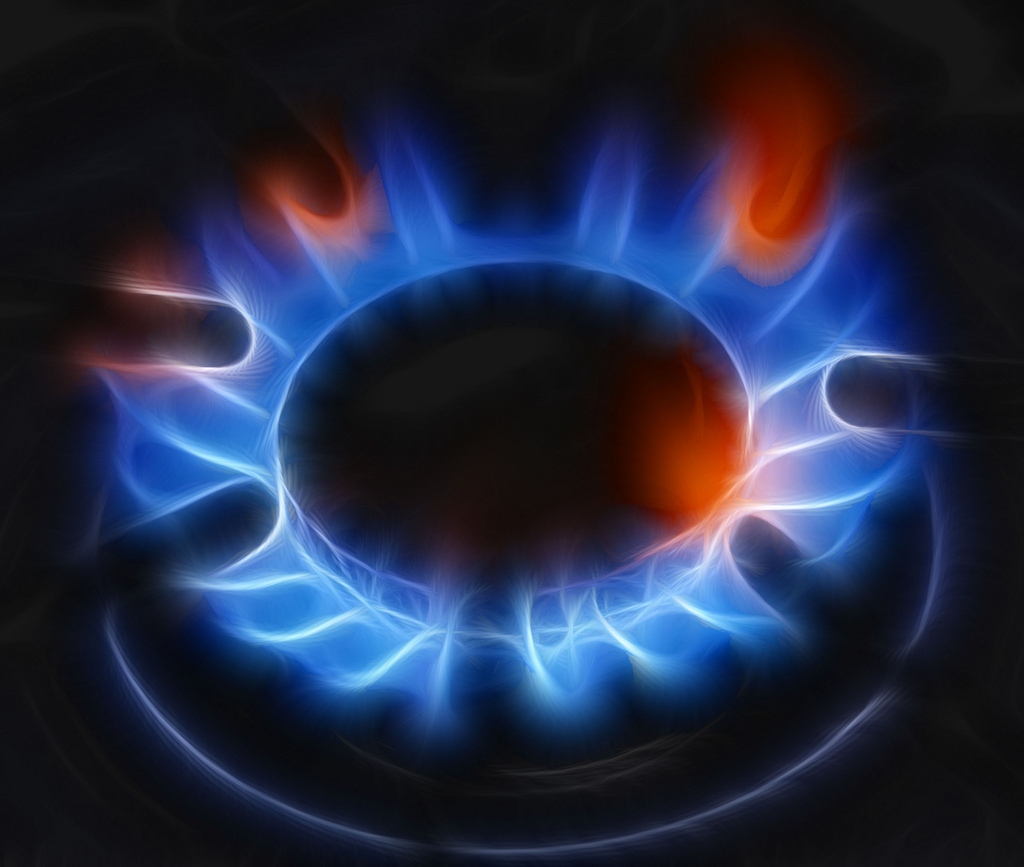
Shows a lit gas stove ring
Choose your fuel source carefully: you are likely to have to live with your decision for the next 10-20 years. Image: iamNigelMorris, CC BY 2.0 , via Wikimedia Commons

Washington Gas has been emailing its Virginia customers this month to offer them rebates if they buy new gas appliances, including home heating equipment (up to $700) and water heaters (up to $400). What the message doesn’t say is that this is a terrible deal. Customers will be able to get far bigger incentives if they wait until January and buy electric equipment instead.

Under the just-passed Inflation Reduction Act (IRA), Uncle Sam will provide tax credits of up to $2,000 per year for electric heat pumps that provide both heating and air conditioning as well as heat pump water heaters. Lower-income customers will be able to access upfront discounts of up to $8,000 for a heat pump, $1,750 for a water heater, $840 for an induction stove, and other amounts for additional upgrades. If you’re converting from gas and your electric panel isn’t sized to handle the extra electric load, the IRA will help with an upgrade. (For a full rundown of rebates and tax credits for homes, see this list from Rewiring America.)

It used to be that gas furnaces were more efficient and cheaper to operate than most electric heating options, but today the reverse is true: An EnergyStar heat pump uses energy more efficiently and costs less to operate than a fossil fuel furnace or boiler. A heat pump water heater, which I’d never even heard of until recently, is more efficient than either gas or a standard electric hot water heater and, again, saves money on operation.

Advances in heat pump technology and induction stoves, concerns about climate change and growing awareness of the dangers of burning fossil fuels indoors mean the switchover from gas to electricity would have happened without the IRA. But the IRA’s rebates are expected to goose the transition and transform the building sector.

Many consumers haven’t heard about the IRA’s rebates yet, and they may not have given much thought to home electrification. They need this information, but they sure won’t get it from their gas company.

Washington Gas is pushing its gas appliance rebates now for an even bigger reason, though, and one that makes it especially important that customers give them a pass: Installing an expensive new gas furnace locks you into the company’s fond embrace for the life of the furnace, no matter how high natural gas prices go.

It’s true that electric appliances will further tie you to your electric utility (unless you have solar panels), and electricity rates have been going up as well. But electricity rates are going up mainly because fossil fuel costs have skyrocketed. Dominion Energy Virginia, for example, cited a 100% increase in the price of natural gas when it asked for a rate hike this summer. As the electric grid gets greener year by year, lower-priced wind and solar energy will have a moderating effect on electricity prices. Your gas utility, on the other hand, will never have anything to sell you but gas.

It gets worse. Gas companies have to maintain their network of pipelines and other infrastructure regardless of how many customers they have. Those costs will be spread over a shrinking rate base as more and more customers switch over to electricity, raising rates for the remaining customers. If you buy a new gas furnace now, you will be trapped in that shrinking pool of customers, paying ever more to maintain pipelines.

Today, Washington Gas charges customers a flat “system charge” of $11.25 per month, plus supply and distribution costs based on how much gas is used that month. Customers who electrify their homes escape the monthly system charge and gain the convenience of dealing with just one utility. But the real savings come in not being part of a shrinking rate base paying an ever-larger share of the gas company’s fixed costs.

That makes Washington Gas’s rebate offer doubly dangerous for customers who don’t know about the IRA. Someone whose old gas furnace is on the fritz might see the email and decide to use that small rebate to buy a new gas furnace, when they would be far better off keeping the old one limping along for a few more months. Come 2023, they would then reap the benefit of an electric heat pump with a much larger rebate or tax credit.

Consumers are set to save a lot of money and energy under the IRA’s incentives for home electrification — but not if they get locked into fossil fuels first.

This post was originally published in the Virginia Mercury on October 28, 2022.

Unknown's avatar

With a federal windfall incoming, Virginia should require school districts to build to green standards

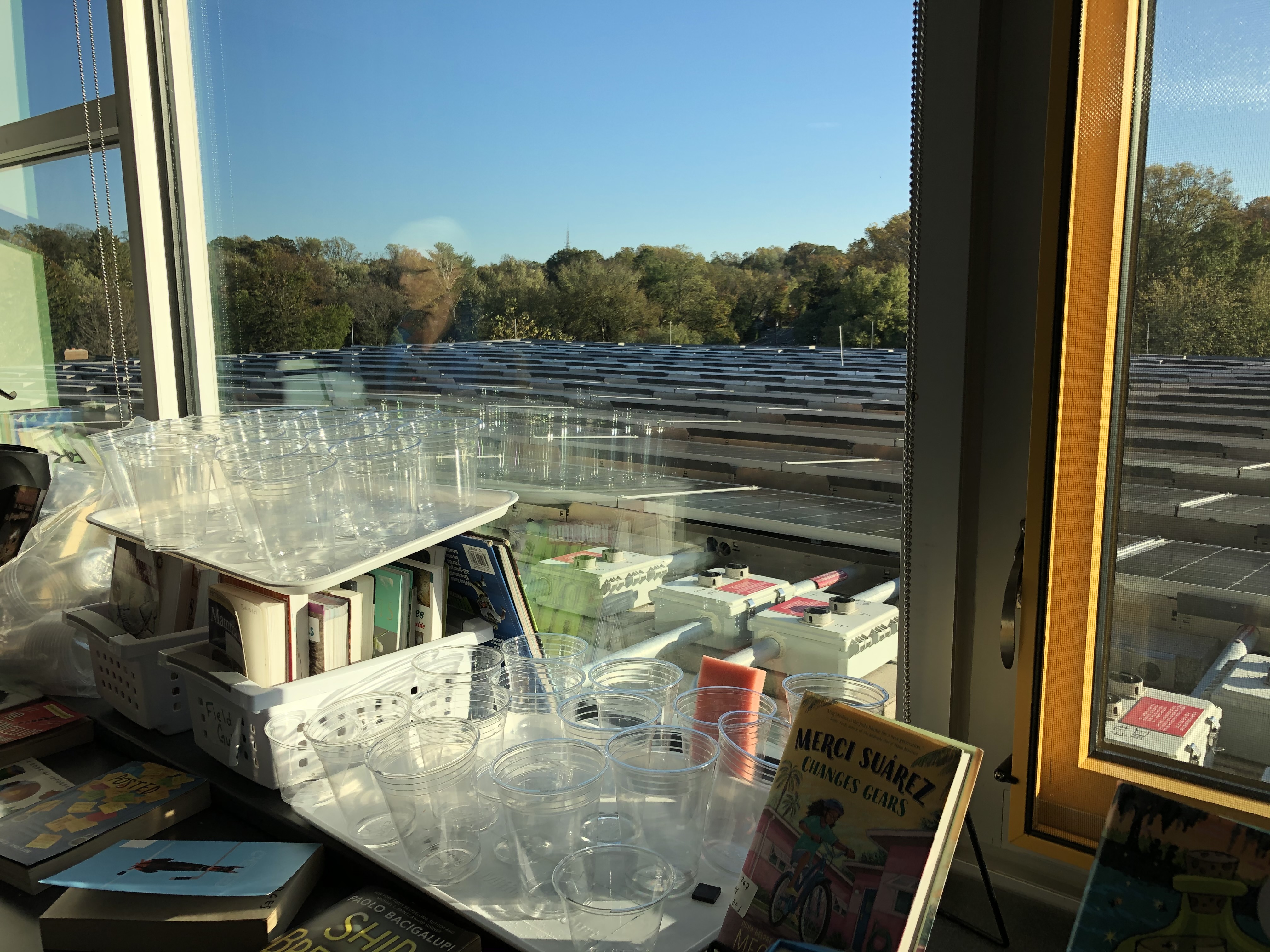
The solar panels powering Arlington, Virginia’s Discovery Elementary School, seen through the windows of a science classroom. Photo by Ivy Main

More than $4.3 billion in federal stimulus dollars will be flowing to Virginia this year as part of the American Rescue Plan, with cities and counties in line for another $2.7 billion. In a joint statement in May, Governor Northam and Democratic leaders laid out spending priorities that included rehabilitating and upgrading the infrastructure in public schools. The General Assembly plans to meet for a special legislative session in August to allocate the funds. In addition to the federal money, Virginia also finds itself in the happy position of having surplus funds of its own to spend.

As it stands now, the federal funds cannot be used for new school construction, a restriction that upsets school officials in areas with aging schools and no budget to replace them. But whether some money is spent on new schools or not, the General Assembly should not just throw dollars out the door and hope for the best. Virginia has an enormous opportunity to improve student health and learning, correct historic injustices, and meet the demands of the climate crisis, but only if the right standards are in place from the outset.

First, funding should be prioritized to Title 1 schools, which are those with at least 40 percent of children from low-income families. Given Virginia’s history of segregation and racism, a high number of Title 1 schools are in Black communities, while others are in parts of rural Virginia that have been left behind economically.  Title 1 schools on average are older and in worse condition than schools in more affluent areas, and the students are more likely to suffer from asthma and other health problems that are exacerbated by mold and poor indoor air quality. Improving indoor air quality and student well-being should be the primary goals for all new or renovated facilities, and it makes sense to start with the students most in need.

Second, while many localities are attracted to the idea of shiny new schools, in most cases it takes less time and costs less to retrofit an old school that is structurally sound than to tear it down and build new. It’s also better for the environment, even if the new school would be built to a “green” standard. Children don’t need new buildings; they need healthy, high-performing buildings. A beautiful remodel of the historic school their parents and grandparents attended could be just what the doctor ordered.

Third, new or renovated schools should be required to meet the highest standards for energy efficiency, including windows, insulation and HVAC. New construction should also be all-electric, as should most renovated buildings. This maximizes taxpayer savings on energy costs over the lifetime of the building, supports the goal of healthy indoor air, and is consistent with Virginia’s commitment to phase out fossil fuels.

Fourth, if the roof will be new or upgraded, it should be made solar-ready, allowing the school to take advantage of third-party power purchase agreements (PPAs) or solar services agreements to install solar panels. Leveraging private capital to pay for the school’s primary energy source stretches construction dollars. These agreements provide financing for solar facilities at no upfront cost and typically save money for schools from the outset. Once the solar panels are paid off, energy bills plummet and savings pile up.

New schools and deep retrofits can even achieve net-zero status affordably, and ought to be required to do so in most cases. Net-zero schools become a source of community pride and offer educational benefits as students learn about energy and how solar panels work. According to a study conducted for Fairfax County Public Schools, the additional upfront cost of building a net-zero-ready school (one that will produce as much energy as it uses once solar panels are added) is only about 5 percent more than standard construction, and the additional cost is recovered through energy savings in under 10 years. Renovating older schools to net-zero costs 11 percent more, but still pays off in 15 years.

Even if we weren’t worried about climate, these standards would make sense for student health and taxpayer savings. Yet today, school districts are not required to build high performance schools, and most don’t. The result is higher operating costs, and in some cases school boards being told that their brand-new schools won’t support solar. Solar companies say it’s probable that solar would be just fine, but this shouldn’t even be an issue. Yet it will continue to be cited as an obstacle if solar-readiness is not made standard.

Our children deserve better. Virginia should seize this year’s historic opportunity to invest in healthy, high-performing schools that are free of fossil fuels and will deliver long-term benefits for taxpayers and the climate.

Unknown's avatar

Climate action begins at home. (Literally. With houses.)

cartoon pig laying bricksYou remember the story of the Three Little Pigs. First the little pigs built themselves a house out of straw, but the big, bad wolf huffed and puffed and blew it down. Barely escaping with their lives, the little pigs built a new house out of sticks, but again the big, bad wolf blew it down. Wiser at last, the little pigs built their third house out of brick, and they lived happily ever after because the wolf could not blow it down.

When you were a child, you probably did not realize what must be obvious to you now: the story is really about the importance of building codes. Shoddy construction brings nothing but grief, as the little pigs learned, and in the end it costs you more than if you had used high-quality materials right from the start.

The story is silent on whether our young porcine heroes also concerned themselves with the energy performance of their house, but it stands to reason they would have taken an interest in the U factors of windows and the R values of wall and ceiling insulation. Their experience with tropical storm-force wolf breath would have given them an appreciation for the snuggest possible construction. Possibly they even went on to put solar panels on their roof and an electric vehicle in the garage, but on this we can only speculate.

I bring up this story now because Virginia is in the final stages of adopting an update to its residential building code, a process the Board of Housing and Community Development undertakes every three years. In addition to ensuring the safety of wiring and plumbing and so forth, the Uniform Statewide Building Code sets standards that determine whether a new home is drafty and expensive to heat and cool, or will be comfortable, healthy and frugal with energy.

Remarkably, the board is currently proposing to continue outdated efficiency standards dating back years instead of adopting the more energy-saving provisions of the latest International Energy Conservation Code (IECC), or even going beyond the IECC to Earth Craft or Passive House standards.

In spite of the global pretensions of its name, the IECC is a national model code. Virginia law specifically instructs the board to refer to the IECC in adopting provisions that permit buildings to be constructed at least cost “consistent with recognized standards of health, safety, energy conservation and water conservation.” The code suggests that the board may go beyond the IECC for purposes of health and safety, but should not fall short of its standards.

So why is the board proposing lower standards? As far as we know, there is no wolf lobby advocating for flimsy homes, but there is a homebuilder lobby doing its own share of huffing and puffing — and Virginia’s code adoption process gives the homebuilders an outsized role in the decision-making process.

Better-insulated houses cost builders slightly more to build. They pass along the added costs if they can, but if buyers won’t pay more, the higher costs cut into profits. This being bad for business, builders prefer to lobby for lower standards that are cheaper to meet, insisting they have only the poor buyers’ pocketbooks at heart.

Their argument is, if you will pardon the expression, hogwash. Research demonstrates that houses built to the highest efficiency standards save far more money on energy over time than they add to the upfront cost of the house. This becomes especially important for occupants who don’t make much money and who struggle to afford utility bills.

The board should ignore homebuilder objections and put the needs of building occupants first. Gov. Ralph Northam made it clear with his Executive Order 43 last fall that the commonwealth is now committed to a path of clean energy and energy efficiency. Bringing energy costs down for residents is not a side effect of the energy transition, but a feature. As he noted in the order, “Low-income households pay proportionately more than the average household for energy costs and often experience negative long-term effects on their health and welfare.”

The climate crisis also makes it urgent that we use building codes to reduce our fossil fuel use. The Virginia Clean Economy Act will transition the electric sector to clean energy, but it does not require buildings to become more efficient. This is a problem because buildings represent 40 percent of all energy use and houses typically last between 40 and 100 years.

Some retrofits can be made later, at higher cost, but the cheapest and simplest approach is to build houses snugly to begin with. They should also be sited with solar in mind and have wiring in place to make solar easy. Ultimately (and “ultimately” has got to be pretty darn soon), we have to start building homes that produce as much energy as they use.

The board is accepting comments on its proposal through June 26. The Sierra Club has set up a webpage to forward comments urging the board to adopt high efficiency standards.

Update July 1: The Board of Housing and Community Development is no longer accepting written comments from the public on its proposed updates to the building code. Advocates may write to Governor Northam asking him to insist that the Board at least adopt the provisions of the 2018  International Energy Conservation Code, and additional measures recommended by the Sierra Club’s comments to the Board to save more energy and combat climate change.  

An earlier version of this article appeared originally in the Virginia Mercury on June 23, 2020.

Unknown's avatar

COVID-19 throws a lemon at Virginia’s plan for an energy transition. It’s time for lemonade.

solar panels on a school roof

The solar panels on Wilson Middle School are saving money for Augusta County taxpayers. Photo courtesy of Secure Futures.

In mid-March, the Virginia General Assembly passed legislation to transition our economy from fossil fuels to clean energy over the coming years. Two weeks later, Virginia shut down in response to the COVID-19 pandemic. Among the businesses whose very existence is now in peril are the energy efficiency companies and solar installers we will be counting on to get us off fossil fuels.

Home weatherization and energy efficiency programs have come to an almost complete halt in Virginia, including programs run by Dominion Energy Virginia. Nationwide, the energy efficiency sector has lost almost 70,000 jobs. Meanwhile, companies that install solar, especially rooftop systems, report plummeting sales. The Solar Energy Industries Association reports that nationally, 55 percent of solar workers are already laid off or suffering cutbacks.

The timing seems terrible — although to be fair, there’s no good time for an economy-crushing, worldwide pandemic. Eventually, however, the virus will run its course or be defeated through vaccine or cure. At that point, we will face a choice: we can stagger blinking out into the sunlight aimlessly wondering now what?, or we can execute the well-developed plan we have spent these weeks and months formulating.

Let’s go with the second option.

First, it’s worth remembering that nothing happening now will change the trajectory of clean energy. Solar and wind had banner years in 2019, continuing their steady march to dominance. Wind has become the largest single source of electricity in two states, Iowa and Kansas. The island of Kauai in Hawaii is now 56 percent powered by renewable energy, mostly solar. Across the U.S. wind, solar and hydro produce more electricity than coal. Wind is the cheapest form of new electric generation nationally; solar takes pride of place in Virginia.

Meanwhile, fossil fuel is even more firmly on its way out. Six of the top seven U.S. coal companies have gone into bankruptcy since 2015. That was before the lockdown sent energy demand down, further hurting high-priced coal.

Fracked gas helped kill coal but is itself vulnerable to price competition from renewables. Odd as it sounds, the collapse in oil prices will make natural gas more expensive. That’s because oil producers in Texas and North Dakota are closing wells that produced natural gas along with oil. The tightening supply of gas may finally make fracking companies in Appalachia profitable, but it means higher prices for utilities. Wind and solar will just keep looking better.

The Trump administration is still trying futilely to hold back the tide, but the U.S. will get a lot farther riding the wave than struggling against it. Congressional leaders should declare the country “all in” on clean energy. Instead of bailing out the highly polluting fossil fuel industries, they should put that money to work creating more jobs and economic development — and actually doing something about climate change — with energy efficiency and renewables.

Congress should return the Investment Tax Credit for solar (and offshore wind) to the 30 percent level in effect last year and keep it there, instead of continuing the phase-out now in effect. Congress should also give solar owners the option of taking the credit as a cash grant, as it did during the last recession, and for the same reason: tax-based incentives are less useful in a recession, when companies can’t use the credits.

Virginia’s Sens. Tim Kaine and Mark Warner have a critical role to play in convincing their colleagues to support solar. So far neither is rising to the task.

On the state level, Northam did the right thing in signing this year’s energy legislation, allowing utilities and industry members to start planning for the future. But the Clean Economy Act gets wind and solar off to a very slow start; Dominion doesn’t have to build Virginia solar for five years yet. And though the new laws remove many policy constraints on customer-sited solar, they offer next to nothing in the way of financial incentives.

Governor Northam should make it clear he intends to make rooftop solar a priority for next year, along with projects on closed landfills, former coal mine areas, and other brownfields, with a special focus on areas hardest-hit economically. He can also encourage corporations that do business in Virginia to meet their sustainability goals with Virginia wind and solar, starting right now.

The governor should also prioritize building efficiency. Virginia will be adopting a new residential building code this year, and if past years are any indication, its energy efficiency provisions will fall short of the most recent model code standard. It’s up to the governor to make sure Virginia adopts the full code.

Local governments are already taking advantage of suddenly-empty buildings to accelerate maintenance and repairs. But it’s a good time to think bigger, with new financing tools available that make energy efficiency retrofits and solar facilities cash-positive right from the start.

Energy performance contracting allows the energy savings to pay for retrofits. The Department of Mines, Minerals and Energy keeps a list of pre-qualified energy service companies and offers expertise to help local government employees navigate the process.

This year’s legislation also greatly expanded local governments’ ability to finance on-site solar through third-party power purchase agreements, effective July 1. The PPAs are structured so that a school district, municipality or any commercial or non-profit customer can have a solar array installed at no cost, paying just for the energy produced.

In December, Fairfax County awarded contracts for PPAs to install solar on more than a hundred sites, including schools and other government buildings. The county’s contract is “rideable,” which allows other counties and cities to piggyback, getting the same terms without the need for new contract negotiations.

Unfortunately, local governments in southwest Virginia are prevented from pursuing PPAs — not by state legislation, which allows it starting July 1, but by a contract with Appalachian Power that governs their electricity purchases from the utility. The contract is up for renewal this year; disgracefully, APCo is refusing to agree to new terms allowing the localities to use solar PPAs. APCo should back off, and let local governments in economically depressed southwest Virginia start saving money and supporting solar jobs this year.

Arlington County has gone beyond on-site solar, contracting for a share of a large solar farm in southern Virginia that will provide more than 80 percent of the electricity for county government operations. It’s a model any locality can adopt.

Virginia residents and businesses also have good reasons to focus on clean energy. The enforced down-time many people are experiencing means more time to research options, and companies are motivated to offer low prices on energy efficiency upgrades and rooftop solar.

The federal government offers more generous tax credits this year than next. Credits for residential energy efficiency equipment and a deduction for energy efficient commercial buildings expire at the end of this year.

The investment tax credit for solar (as well as for geothermal heat pumps, fuel cells and small wind turbines) stands at 26% for projects placed in operation this year, but it will drop to 22% in 2021. It falls to 10% for commercial customers and disappears altogether for residential customers in 2022. If Congress acts to raise the credit to 30%, buyers will get an even bigger boost. If it doesn’t, there will be a rush this year to get projects done by the end of the year, so customers should secure their place in line now.

Virginia nonprofits have helped hundreds of residents and businesses save money on solar and EV chargers through bulk purchasing programs. Virginia Solar United Neighbors just announced a series of virtual information sessions to promote the Arlington Solar EV Co-op. And LEAP, which closed operations temporarily due to the virus, reports it has restarted two programs, Solarize NOVA and Solarize Piedmont.

In an ideal world, the U.S. would already be well along in executing a comprehensive plan for a clean energy transition, one that includes job retraining for workers, and that resists counterproductive efforts to save the fossil fuel industry. But we can do the next best thing, and use the tools of government, the market and consumer choice to speed us in the right direction.

COVID-19 has handed all of us a big, fat lemon. Let’s make some lemonade.


A version of this article appeared originally in the Virginia Mercury on April 30, 2020.


Unknown's avatar

With a framework for Virginia’s energy transition in place, here’s what happens next

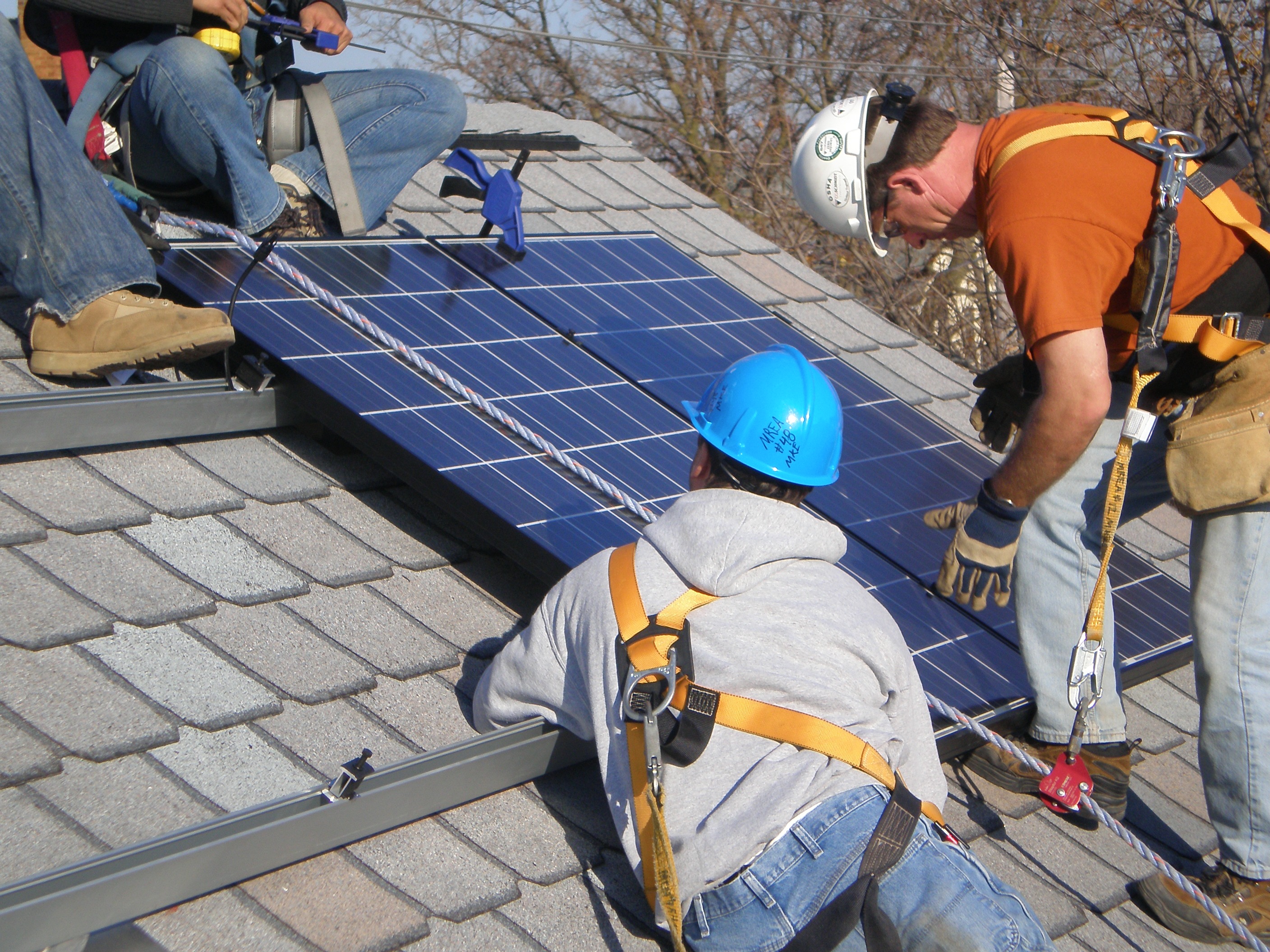
workers installing solar panels on a roof

One expected effect of the Clean Economy Act will be a boom in solar jobs across Virginia. Photo courtesy of NREL.

With Democrats in charge, Virginia passed a suite of bills that establish a sturdy framework for a transition to renewable energy in the electric sector.

At the center of this transformation are the Clean Economy Act, HB1526/SB851, and the Clean Energy and Community Flood Preparedness Act, HB981/SB1027. Other new laws direct further planning, make it easier for customers to install solar, improve the process for siting wind and solar farms, and expand financing options for energy efficiency and renewable energy.

Gov. Ralph Northam has signed some bills already, and has until April 11 to sign the others or send them back to the General Assembly with proposed amendments. Once signed, legislation takes effect on July 1.

I assume the Governor has other things on his mind right now than asking the General Assembly to tinker further with a bill like the Clean Economy Act, though bill opponents may be using the virus pandemic to argue for delay. That would be a self-defeating move; as the economy restarts, Virginia is going to need the infusion of jobs and investment that come with the build-out of clean energy. And one of the strongest arguments in support of our energy transition, after all, is that it will save money for consumers.

So what happens after July 1? How does this all work? Let’s look at the way these major pieces of legislation will change the energy landscape in Virginia.

Virginia joins RGGI, and CO2 emissions start to fall. 

Virginia’s Department of Environmental Quality has already written the regulations that call for Virginia power plants to reduce emissions by 30 percent by 2030. The mechanism for achieving this involves Virginia trading with the Regional Greenhouse Gas Initiative, a regional carbon cap and trade market.

The regulations have been on hold as the result of a budget amendment passed last year, when Republicans still ruled the General Assembly. After July 1, DEQ will be able to implement the regulations, with the commonwealth participating in carbon allowance auctions as early as the last quarter of this year or the first quarter of 2021.

In addition to joining RGGI, the Clean Energy and Community Flood Preparedness Act also allows the commonwealth to earn money from the allowance auctions. The Department of Housing and Community Development will spend 50 percent of auction proceeds on “low-income efficiency programs, including programs for eligible housing developments.”

The Department of Conservation and Recreation will get 45 percent of the auction proceeds to fund flood preparedness and climate change planning and mitigation through the Virginia Community Flood Preparedness Fund. The last 5 percent of proceeds will cover administrative costs, including those for administering the auctions.

Energy efficiency savings become mandatory, not just something to throw money at.

Two years ago, the Grid Transformation and Security Act required Dominion and Appalachian Power to propose more than a billion dollars in energy efficiency spending over 10 years, but the law didn’t say the programs had to actually be effective in lowering electricity demand.

This year that changed. For the first time, Virginia will have an energy efficiency resource standard (EERS) requiring Dominion to achieve a total of 5 percent electricity savings by 2025 (using 2019 as the baseline); APCo must achieve a total of 2 percent savings. The SCC is charged with setting new targets after 2025. At least 15 percent of the costs must go to programs benefiting low-income, elderly or disabled individuals, or veterans.

The EERS comes on top of the low-income energy efficiency spending funded by RGGI auctions.

Dominion and Appalachian Power ramp up renewables and energy storage. 

The Clean Economy Act requires Dominion to build 16,100 megawatts of onshore wind and solar energy, and APCo to build 600 megawatts. The law also contains one of the strongest energy storage mandates in the country: 2,700 MW for Dominion, 400 MW for Appalachian Power.

Beginning in 2020, Dominion and Appalachian must submit annual plans to the SCC for new wind, solar and storage resources. We’ll have a first look at Dominion’s plans just a month from now: the SCC has told the company to take account of the Clean Economy Act and other new laws when it files its 2020 Integrated Resource Plan on May 1.

The legislation provides a strangely long lead time before the utilities must request approval of specific projects: by the end of 2023 for APCo (the first 200 MW) or 2024 for Dominion (the first 3,000 MW). But the build-out then becomes rapid, and the utilities must issue requests for proposals on at least an annual basis.

In addition to the solar and land-based wind, Dominion now has the green light for up to 3,000 MW of offshore wind from the project it is developing off Virginia Beach, and which it plans to bring online beginning in 2024. All told, the Clean Economy Act proclaims up to 5,200 MW of offshore wind by 2034 to be in the public interest.

Dominion’s plans for new gas plants come to a screeching halt.

Before the 2020 legislative session, Dominion’s Integrated Resource Plan included plans for as many as 14 new gas combustion turbines to be built in pairs beginning in 2022. In December, the company announced plans to build four gas peaking units totaling nearly 1,000 MW, to come online in 2023 and 2024.

But that was then, and this is now. The Clean Economy Act prohibits the SCC from issuing a certificate of convenience and necessity for any carbon-emitting generating plant until at least January 1, 2022, when the secretaries of natural resources and commerce and trade submit a report to the General Assembly “on how to achieve 100 percent carbon-free electric energy generation by 2045 at least cost to ratepayers.”

Even with no further moratorium, Dominion will find it hard to sell the SCC on the need for new gas plants on top of all the renewable energy and energy storage mandated in the Clean Economy Act. Solar and battery storage together do the same job that a gas peaker would have done — but they are required, and the gas peaker is not. Meanwhile, the energy efficiency provisions of the act mean demand should start going down, not up.

Dominion has already signaled that it recognizes the days of new gas plants are largely over. On March 24, Dominion filed a request with the SCC to be excused from considering new fossil fuel and nuclear resources in its upcoming Integrated Resource Plan filing, arguing that “significant build-out of natural gas generation facilities is not currently viable” in light of the new legislation.

Fossil fuel and biomass plants start closing.

By 2024, the Clean Economy Act requires the closure of all Dominion or APCo-owned oil-fueled generating plants in Virginia over 500 MW and all coal units other than Dominion’s Virginia City Hybrid plant in Wise County and the Clover Station that Dominion co-owns with Old Dominion Electric Cooperative.

This mandate is less draconian than it sounds; it forces the closure of just two coal units, both at Dominion’s Chesterfield plant. Other Dominion coal plants in Virginia have already been retired or switched to using gas or biomass, and one additional coal plant in West Virginia lies beyond the reach of the legislation. Oil-fired peaking units at Yorktown and Possum Point were already slated for retirement in 2021 and 2022. APCo owns no coal or biomass plants in Virginia.

Although the exceptions might appear to swallow the rule, the truth is that coal plants are too expensive to survive much longer anyway. One indication of this is a March 24 report Dominion filed with the SCC showing its fuel generation sources for 2019: coal has now fallen to below 8 percent of generation.

By 2028, Dominion’s biomass plants must shut down, another victory for consumers. All other carbon-emitting generating units in Virginia owned by Dominion and APCo must close by 2045, including the Virginia City plant and all the gas plants.

As of 2050, no carbon allowances can be awarded to any generating units that emit carbon dioxide, including those owned by the coops and merchant generators, with an exception for units under 25 MW as well as units bigger than 25 MW (if they are owned by politically well-connected multinational paper companies with highly-paid lobbyists).

Solar on schools and other buildings becomes the new normal.

In December, Fairfax County awarded contracts for the installation of solar on up to 130 county-owned schools and other sites, one of the largest such awards in the nation. Using a financing approach called a third-party power purchase agreement (PPA), the county would get the benefits of solar without having to spend money upfront. The contracts were written to be rideable, meaning other Virginia jurisdictions could piggyback on them to achieve cost savings and lower greenhouse gas emissions.

Fairfax County’s projects, along with others across the state, hit a wall when, on Jan. 7, the SCC announced that the 50 MW program cap for PPAs in Dominion territory had been reached. But with the passage of the Clean Economy Act and Solar Freedom legislation, customers will be able to install up to 1,000 MW worth of solar PPAs in Dominion territory and 40 MW in APCo territory.

Fairfax County schools will soon join their counterparts in at least 10 other jurisdictions across the state that have already installed solar. With the PPA cap no longer a barrier, and several other barriers also removed, local governments will increasingly turn to solar to save money and shrink their carbon footprints.

Virginia agencies start working on decarbonizing the rest of the economy. 

In spite of its name, the Clean Economy Act really only tackles the electric sector, with a little spillover into home weatherization. That still leaves three-quarters of the state’s greenhouse gas emissions to be addressed in transportation, buildings, agriculture and industry. Ridding these sectors of greenhouse gas emissions requires different tools and policies.

Other legislation passed this session starts that planning process. SB94(Favola) and HB714 (Reid) establish a policy for the commonwealth to achieve net-zero emissions economy-wide by 2045 (2040 for the electric sector) and require the next Virginia Energy Plan, due in 2022, to identify actions towards achieving the goal. Depending on who the next governor is, we may see little or nothing in the way of new proposals, or we may see proposals for transportation and home electrification, deep building retrofits, net-zero homes and office buildings, carbon sequestration on farm and forest land and innovative solutions for replacing fossil fuels in industrial use.

Collateral effects will drive greenhouse gas emissions even lower.

Proposed new merchant gas plants are likely to go away. With Virginia joining RGGI and all fossil fuel generating plants required to pay for the right to spew carbon pollution, the developers of two huge new merchant gas plants proposed for Charles City County will likely take their projects to some other state, if they pursue them at all.

Neither the 1,600 MW Chickahominy Power Station and the 1,050 C4GT plant a mile away planned to sell power to Virginia utilities; their target is the regional wholesale market, which currently rewards over-building of gas plant capacity even in the absence of demand. The Chickahominy and C4GT developers sought an exemption from RGGI through legislation; the bill passed the Senate but got shot down in the House.

If the C4GT plant goes away, so too should Virginia Natural Gas’ plans for a gas pipeline and compressor stations to supply the plant, the so-called Header Improvement Project.

Other coal plants will close. Although the CEA only requires Dominion to retire two coal units at its Chesterfield Power Station, other coal plants in the state will close by the end of this decade, too. That’s because the economics are so heavily against coal these days that it was just a matter of time before their owners moved to close them.

Adding the cost of carbon allowances under RGGI will speed the process along. That includes the Clover Station, which Dominion owns in partnership with Old Dominion Electric Cooperative (ODEC), and the Virginia City Hybrid Electric plant in Wise County, Dominion’s most expensive coal plant, which should never have been built. 

The Atlantic Coast and Mountain Valley Pipelines find themselves in more trouble than ever. If I had a dollar for every time a Dominion or Mountain Valley spokesperson said, “Our customers desperately need this pipeline,” I would not be worried about the stock market right now.

The fact is that no one was ever sure who those customers might be, other than affiliates of the pipeline owners themselves—and that doesn’t exactly answer the question. With Virginia now on a path away from all fossil fuels, neither pipeline has a path to profitability inside Virginia any longer, if they ever had one.


A version of this article originally appeared in the Virginia Mercury on March 31. 

Unknown's avatar

It’s halftime at the GA, and do we ever have a show!

battle scene

Tense negotiations over the Clean Economy Act. (Aniello Falcone, Metropolitan Museum of Art)

Welcome to “Crossover,” the day on which the Virginia House and Senate have to finish the work on their bills and send them over to the other chamber. This is sudden death time; if a bill didn’t get across the finish line in time, it is dead for the year.

In past years, henceforth to be known as “the bad old days,” almost nothing good even got out of committee, much less reached Crossover. Clean energy advocates could pretty much plan vacations for the second half of February.

This year the Democrats are on a tear, especially in the House. Yes, a lot of good bills have been heavily watered down. This is still the Old Dominion, with the emphasis on Dominion. And it is definitely too early to break out the champagne, because the action isn’t over for the bills still in play. But overall, 2020 is shaping up to be a watershed year for clean energy.

BILLS STILL ALIVE

Energy Transition

HB1526/SB851, the Clean Economy Act, has been the subject of intense and continuous negotiation. First there were a bunch of amendments that weakened it; then there were a bunch that strengthened it. It’s been a wild ride, and we may still see more changes during the second half of Session. But it’s alive! (HB1526 passed the House 52-47; Democrats Rasoul and Carter voted no. SB851 passed the Senate on a party-line vote of 21-19.)

SB94 (Favola) rewrites the Commonwealth Energy Policy to bring it in line with Virginia’s commitment to dealing with climate change. The bill sets a target for net-zero greenhouse gas emissions economy wide by 2045, and in the electric sector by 2040. This section of the Code is for the most part merely advisory; nonetheless, it is interesting that Dominion Energy supported the bill. (Passed the Senate 21-18, on party lines.)

Delegate Reid’s HB714 is similar to SB94 but contains added details, some of which have now been incorporated into SB94. (Passed the House 55-45 with a substitute.)

HB672 (Willett) establishes a policy “to prevent and minimize actions that contribute to the detrimental effects of anthropogenic climate change in the Commonwealth.” State agencies are directed to consider climate change in any actions involving state regulation or spending. Local and regional planning commissions are required to consider impacts from and causes of climate change in adapting comprehensive plans. (Passed the House 55-44 with a substitute.)

HB547 (Delaney) establishes the Virginia Energy and Economy Transition Council to develop plans to assist the Commonwealth in transitioning from the use of fossil fuel energy to renewable energy by 2050. The Council is to include members from labor and environmental groups. (Passed the House 54-45.)

RGGI bills, good and bad

The Democratic takeover of the General Assembly means Virginia will finally join the Regional Greenhouse Gas Initiative (RGGI), either according to the regulations written by DEQ or with a system in place that raises money from auctioning carbon allowances.

HB981 (Herring) and SB1027 (Lewis) is called the Clean Energy and Community Flood Preparedness Act. It implements the DEQ carbon regulations and directs DEQ to enter the RGGI auction market. Auction allowances are directed to funds for flood preparedness, energy efficiency and climate change planning and mitigation. We are told this is the Administration’s bill. A similar bill, HB20 (Lindsey), was incorporated into HB981. (HB981 passed the House 53-46. SB1027 passed the Senate 22-18.)

SB992 (Spruill) requires the Air Board to give free allowances for three years to any new power plant that was permitted before June 26, 2019, the effective date of the carbon trading regulations. Essentially it gives special treatment to two planned gas generation plants that aren’t needed and therefore have sketchy economics unless they get this giveaway. Clean energy advocates will be looking to kill this one in the House. (Passed the Senate 27-13. A number of Democrats who should know better voted for the bill.)

RPS

The Clean Economy Act contains a renewable portfolio standard (RPS) requiring utilities to include in their electricity mix a percentage of renewable energy that ratchets up over time. In addition, HB1451 (Sullivan) is a stand-alone RPS bill that also includes an energy storage mandate. It appears to be identical to the RPS and storage provisions of the CEA (of which Sullivan is also the patron). (Passed the House 52-47.)

Customer-sited solar/net metering

Solar Freedom SB710 (McClellan) and HB572 (Keam) lifts barriers to customer-sited renewable energy such as rooftop solar. The changes include lifting the caps on PPAs and net metering, and eliminating standby charges. Nearly identical versions were filed by Delegates Lopez (HB1184) (rolled into HB572) and Simon (HB912) (ditto). SB532 (Edwards), a stand-alone bill to make PPAs legal, was rolled into SB710. (SB710 passed the Senate 22-18 with a substitute that is much more limited than the original bill. HB572 passed the House with just a minor substitute 67-31. HB1647 (Jones) is a Solar Freedom bill that also includes community solar. (Passed the House 55-45.) Several provisions of Solar Freedom also appear in the Clean Economy Act.

HOAs HB414 (Delaney) and SB504 (Petersen) clarifies the respective rights of homeowners associations (HOAs) and residents who want to install solar. The law allows HOAs to impose “reasonable restrictions,” a term some HOAs have used to restrict solar to rear-facing roofs regardless of whether these get sunshine. The bill clarifies that HOA restrictions may not increase the cost of the solar facility by more than 5%, or decrease the expected output by more than 10%. (HB414 passed the House 95-4. SB504 passed the Senate 40-0.)

Community solar

HB1647 (Jones) (see above) includes community solar in a bill that otherwise looks like Solar Freedom.

SB629 (Surovell) creates a program for “solar gardens.” (Substitute passed the Senate 39-0.)

HB1634 (Jones) requires utilities to establish shared-solar programs that allows customers to purchase subscriptions in a solar facility no greater than 5 MW. (Amended with a substitute; it now looks a lot like SB629. Passed the House 99-0.)

HB573 (Keam) affects the utility-controlled and operated “community solar” programs required by 2017 legislation. The bill requires that “an investor-owned utility shall not select an eligible generating facility that is located outside a low-income community for dedication to its pilot program unless the investor-owned utility contemporaneously selects for dedication to its pilot program one or more eligible generating facilities that are located within a low-income community and of which the pilot program costs equal or exceed the pilot program costs of the eligible generating facility that is located outside a low-income community.” (Passed the House 90-8.)

Offshore wind

The CEA contains detailed provisions for the buildout and acquisition of offshore wind. HB234 (Mugler) directs the Secretary of Commerce and Trade to develop an offshore wind master plan. (Passed House unanimously with substitute.)

SB860 (Mason) and HB1664 (Hayes) puts the construction or purchase of at least 5,200 MW of offshore wind in the public interest. (SB860 passed the Senate 22-18. HB1664 amended to incorporate HB1607, but with less gold-plating than the other bill. HB1664 passed the House 65-34.)

HB1607 (Lindsey) and SB998 (Lucas) allows Dominion to recover the costs of building offshore wind farms as long as it has a plan for the facilities to be in place before January 1, 2028 and that it has used reasonable efforts to competitively source the majority of services and equipment. All utility customers in Virginia, regardless of which utility serves them, will participate in paying for this through a non-bypassable charge. Surely this bill came straight from Dominion. (HB1607 amended to incorporate HB1664; only 1664 moves forward. SB998 passed the Senate 40-0.)

Nuclear and biomass

SB828 and SB817 declare that any time the Code or the Energy Policy refers to “clean” or “carbon-free” energy, it must be read to include nuclear energy. In subcommittee, Senator Lewis suddenly announced he was amending the bills to add “sustainable biomass” as well. After an uproar and a crash course on biomass, both bills eventually went back to being only about nuclear. (Both bills passed the Senate unanimously.) Unfortunately, some biomass from paper companies did creep into the Clean Economy Act in spite of the best efforts of clean energy advocates.

Energy Efficiency

HB1526/SB851, the Clean Economy Act, contains a mandatory energy efficiency resource standard (EERS) and contains other provisions for spending on low-income EE programs. HB981 (the RGGI bill) specifies that a portion of the funds raised by auctioning carbon allowances will fund efficiency programs.

There are also a few standalone efficiency bills. HB1450 (Sullivan) and SB354 (Bell) appear to be the same as the efficiency provisions of the CEA, though the standalone applies only to Dominion and APCo. (HB1450 passed House 75-24,picking up a respectable number of Republicans. SB354 stricken at request of patron in C&L.)

HB1576 (Kilgore) doesn’t set new efficiency targets, but it makes it harder for large customers to avoid paying for utility efficiency programs. In the past, customers with over 500 kW of demand were exempt; this bill allows only customers with more than 1 MW of demand to opt out, and only if the customer demonstrates that it has implemented its own energy efficiency measures. (Passed the House, 99-0.)

HB575 (Keam) beefs up the stakeholder process that Dominion and APCo engage in for the development of energy efficiency programs. (Passed the House 99-0 and referred to Senate C&L.)

SB963 (Surovell) establishes the Commonwealth Efficient and Resilient Buildings Board to advise the Governor and state agencies about ways to reduce greenhouse gas emissions and increase resiliency. Every agency is required to designate and energy manager responsible for improving energy efficiency and reducing greenhouse gas emissions. (Passed the Senate 40-0.)

SB628 (Surovell) requires the residential property disclosure statement provided by the Real Estate Board to include advice that purchasers should obtain a residential building energy analysis as well as a home inspection prior to settlement. (Passed the Senate 26-14.)

Energy storage

HB1183 (Lopez) requires the SCC to establish a task force on bulk energy storage resources. (Passed the House 91-9 with a substitute.)

SB 632 (Surovell) creates a storage target of 1,000 MW and states that this is in the public interest.  Senator Surovell says this bill originated with the Governor’s office. (Passed the Senate 20-19 with a substitute.)

Siting, permitting, and other issues with utility-scale renewable energy

HB1327 (Austin) allows localities to impose property taxes on generating equipment of electric suppliers utilizing wind turbines at a rate that exceeds the locality’s real estate tax rate by up to $0.20 per $100 of assessed value. Under current law, the tax may exceed the real estate rate but cannot exceed the general personal property tax rate in the locality. Wind developer Apex Clean Energy helped develop the bill and supports it. (Passed the House 81-12, now goes to Senate Finance.)

HB656 (Heretick) and SB875 (Marsden) allow local governments to incorporate into their zoning ordinances national best practices standards for solar PV and batteries. (Both bills passed their chambers unanimously with substitute language.)

HB1131 (Jones) and SB762 (Barker) authorize localities to assess a revenue share of up to $0.55 per megawatt-hour on solar PV projects, in exchange for which an existing tax exemption is expanded. (HB1131 Passed the House 54-42 with a substitute. SB762 passed Senate 40-0.)

HB657 (Heretick) and SB893 (Marsden) exempt solar facilities of 150 MW or less from the requirement that they be reviewed for substantial accord with local comprehensive plans. (HB657 passed the House with a substitute, 59-41. SB893 was passed by indefinitely—killed—in Local Government.)

HB1434 (Jones) and SB763 (Barker) reduces the existing 80% machinery and tools tax exemption for large solar projects. (HB1434 passed the House 57-41. SB763 passed the Senate 40-0.) 

SB870 (Marsden) authorizes local planning commissions to include certain regulations and provisions for conditional zoning for solar projects over 5 MW. (Passed Senate 40-0 with a substitute.)

HB1675 (Hodges) requires anyone wanting to locate a renewable energy or storage facility in an opportunity zone to execute a siting agreement with the locality. (Passed House 89-7.)

Grants, tax deductions, tax credits and other financing

HB654 (Guy) authorizes DMME to sponsor a statewide financing program for commercial solar, energy efficiency and stormwater investments. The effect would be to boost the availability of Commercial Property Assessed Clean Energy (C-PACE) in areas of the state where the locality has not developed a program of its own. (Passed House 75-23. Assigned to Senate Committee on Local Government.)

SB754 (Marsden) authorizes utilities to establish on-bill financing of energy efficiency, electrification, renewable energy, EV charging, energy storage and backup generators. (Passed Senate 40-0 with a substitute.)

HB1656 (O’Quinn) authorizes Dominion and APCo to design incentives for low-income people, the elderly, and disable persons to install energy efficiency and renewable energy, to be paid for by a rate adjustment clause. (Passed the House 95-4.)

HB1707 (Aird) makes changes to the Clean Energy Advisory Board, which is (already) authorized to administer public grant funding. (Passed the House 65-33 with a substitute. Referred to Senate Ag.)

SB634 (Surovell) establishes the Energy Efficiency Subsidy Program to fund grants to subsidize residential “efficiency” measures, interestingly defined as solar PV, solar thermal or geothermal heat pumps. It also creates a subsidy program for electric vehicles. (Passed the Senate 32-7. Senator Surovell has requested a budget amendment of $1 million for the fund. )

SB1039 (Vogel) allows a real property tax exemption for solar energy equipment to be applied retroactively if the taxpayer gets DEQ certification within a year. (Passed the Senate 40-0.)

SB542 (Edwards) repeals the sunset date on crowdfunding provisions and provides fixes for certain existing obstacles to this financing approach. (Passed the Senate 40-0.)

Customer rights to shop for renewable energy

HB868 (Bourne) and SB376 (Suetterlein and Bell) allows customers to buy 100% renewable energy from any licensed supplier, regardless of whether their own utility has its own approved tariff. (HB868 passd the House 55-44. But note that its Senate companion SB376 was passed by indefinitely in C&L.)

HB 889 (Mullin) and SB 379 (McPike), the Clean Energy Choice Act, is broader than HB868. The legislation allows all customers to buy 100% renewable energy from any licensed supplier regardless of whether their utility has its own approved tariff. In addition, large customers (over 5 MW of demand) of IOUs also gain the ability to aggregate their demand from various sites in order to switch to a competitive supplier that offers a greater percentage of renewable energy than the utility is required to supply under any RPS, even if it is not 100% renewable. Large customers in IOU territory who buy from competing suppliers must give three years’ notice before returning to their utility, down from the current five years. The SCC is directed to update its consumer protection regulations. (HB889 passed the House 56-44. But its Senate companion SB379 passed by indefinitely in C&L.)

Other utility regulation

HB528 (Subramanyam) requires the SCC to decide when utilities should retire fossil fuel generation. (Passed the House 55-44.)

HB1132 (Jones, Ware) put the SCC back in control of regulating utility rates. (Passed the House 77-23.)

SB731 (McClellan) also affects rates, in this case by addressing a utility’s rate of return. The SCC determines this rate by looking first at the average returns of peer group utilities, and then often going higher. The bill lowers the maximum level that the SCC can set above the peer group average. (Passed the Senate 38-1.)

HB167 (Ware) requires an electric utility that wants to charge customers for the cost of using a new gas pipeline to prove it can’t meet its needs otherwise, and that the new pipeline provides the lowest-cost option available to it. (Note that this cost recovery review typically happens after the fact, i.e., once a pipeline has been built and placed into service.) Last year Ware carried a similar bill that passed the House in the face of frantic opposition from Dominion Energy, before being killed in Senate Commerce and Labor. (Passed the House unanimously with a substitute. It will now go to Senate C&L, where it may still have trouble from a Dominion-friendly committee.)

DEAD FOR THE YEAR

Green New Deal HB77 (Rasoul) sets out an ambitious energy transition plan and includes a fossil fuel moratorium. (Sent from Labor and Commerce to Appropriations, where it was not brought up. This is a polite way of killing a bill without anyone having to vote on it).

Undercutting RGGI HB110 (Ware) says that if Virginia joins RGGI, DEQ must give free carbon allowances to any facility with a long-term contract predating May 17, 2017 that doesn’t allow recovery of compliance costs. Rumor has it the bill was written to benefit one particular company. (Left in Labor and Commerce.)

Clean energy standard Instead of an RPS, SB876 (Marsden) proposed a “clean energy standard” that made room for some coal and gas with carbon capture. (Recognizing a number of problems with this approach, Senator Marsden rolled his bill into SB851; that’s GA-speak for killing a bill while still giving the patron points for trying).

Greenhouse gas inventory HB525 (Subrmanyam and Reid) require a statewide greenhouse gas inventory covering all sectors of the economy. (Laid on the table in a subcommittee, which also means it was killed.)

Brownfields HB1306 (Kory) directs the Department of Mines, Minerals and Energy to adopt regulations allowing appropriate brownfields and lands reclaimed after mining to be developed as sites for renewable energy storage projects. (Stricken from docket in House Ag.) HB1133 (Jones) makes it in the public interest for utilities to build or purchase, or buy the output of, wind or solar facilities located on previously developed sites. (Continued to 2021, yet another polite way of killing a bill, though it leaves them not technically dead. So should we call them the undead? Let’s hope the concept is resurrected next year, anyway.)

Local action HB413 (Delaney) authorizes a locality to include in its subdivision ordinance rules establishing minimum standards of energy efficiency and “maintaining access” to renewable energy. (Left in Cities, Counties and Towns.)

Retail choice SB842 (Petersen) provides for all retail customers of electricity to be able to choose their supplier, and instructs the SCC to promulgate regulations for a transition to a competitive market for electricity. Existing utilities will continue to provide the distribution service. The bill also requires suppliers of electricity to obtain at least 25% of sales from renewable energy by 2025, 50% by 2030, and 100% by 2050. Renewable energy is defined to include “sustainable biomass” but not waste incineration or landfill gas. (Continued to 2021.)

Resilience hubs HB959 (Bourne) directs DMME to establish a pilot program for resilience hubs. These are defined as a simple combination of solar panels and battery storage capable of powering a publicly-accessible building in emergency situations or severe weather events, primarily to serve vulnerable communities. (Continued to 2021.)

Net metering HB1067 (Kory) deals with a specific situation where a customer has solar on one side of property divided by a public right-of-way, with the electric meter to be served by the solar array on the other side. The legislation declares the solar array to be located on the customer’s premises. (Item 4 of Solar Freedom would also solve the problem.) (Continued to 2021.)

Utility restructuring

HB1677 (Keam) replaces Virginia’s current vertically-integrated monopoly structure with one based on competition and consumer choice. Existing monopoly utilities would be required to choose between becoming sellers of energy in competition with other retail sellers, or divesting themselves of their generation portfolios and retaining ownership and operation of just the distribution system. Other features: a nonprofit independent entity to coordinate operation of the distribution system; performance-based regulation to reward distribution companies for reliable service; consumer choices of suppliers, including renewable energy suppliers; an energy efficiency standard; a low-income bill assistance program; and consumer protections and education on energy choices. (This was politely continued to 2021 in Labor and Commerce with no debate. The patrons were complimented for “starting a conversation.”)

HB206 (Ware) was, I’m told, the beta version of Delegate Keam’s HB1677. (Incorporated into HB1677, which was continued to 2021.)

SB842 (Petersen) seeks to achieve the same end as HB1677 and HB206, but it puts the SCC in charge of writing the plan. The bill provides for all retail customers of electricity to be able to choose their supplier, and instructs the SCC to promulgate regulations for a transition to a competitive market for electricity. Existing utilities will continue to provide the distribution service. The bill also requires suppliers of electricity to obtain at least 25% of sales from renewable energy by 2025, 50% by 2030, and 100% by 2050. Renewable energy is defined to include “sustainable biomass” but not waste incineration or landfill gas. (Continued to 2021.)

Anti-renewable energy bills

HB205 (Campbell) adds unnecessary burdens to the siting of wind farms and eliminates the ability of wind and solar developers to use the DEQ permit-by-rule process for projects above 100 megawatts. (Laid on the table in subcommittee.)  HB1171 (Poindexter) is a make-work bill requiring an annual report of the acreage of utility scale solar development, as well as the acreage of public or private conservation easements. (Continued to 2021.) HB1636 (Campbell) prohibits the construction of any building or “structure” taller than 50 feet on a “vulnerable mountain ridge.” You can tell the bill is aimed at wind turbines because it exempts radio, TV, and telephone towers and equipment for transmission of communications and electricity. (Laid on the table in subcommittee. FWIW, we’re told it was aimed at hotels, not wind. Yeah, sure . . .) HB1628 (Poindexter) prohibits the state from joining RGGI or adopting any carbon dioxide cap-and-trade program without approval from the General Assembly. (Passed by indefinitely in subcommittee. Yep, another way to kill a bill.)

Financing

HB461 (Sullivan) establishes a tax credit of 35%, up to $15,000, for purchases of renewable energy property. It is available only to the end-user (e.g., a resident or business who installs solar or a geothermal heat pump). Unfortunately, loose drafting would have also made the credit available for wood-burning stoves and other non-clean energy applications. (Died in a Finance subcommittee on a 5-5 vote.)

HB633 (Willett) establishes a tax deduction up to $10,000 for the purchase of solar panels or Energy Star products. (Stricken from docket in a Finance subcommittee.)

HB947 (Webert) expands the authority of localities to grant tax incentives to businesses located in green development zones that invest in “green technologies,” even if they are not themselves “green development businesses.” Green technologies are defined as “any materials, components, equipment, or practices that are used by a business to reduce negative impacts on the environment, including enhancing the energy efficiency of a building, using harvested rainwater or recycled water, or installing solar energy systems.” (Continued to 2021.)

SB1061 (Petersen) allows residential customers to qualify for local government Property Assessed Clean Energy (PACE) financing programs for renewable energy and energy efficiency improvements; currently the availability of this financing tool is restricted to commercial customers. (Continued to 2021.)

HB754 (Kilgore) establishes the Virginia Brownfield and Coal Mine Renewable Energy Grant Fund, which will support wind, solar or geothermal projects sited on formerly mined lands or brownfields. (Left in Appropriations.)

[Updated February 12 to include late votes and fix a random meaningless line, and later to correct various other screw-ups that people have kindly brought to my attention.]