Unknown's avatar

Energy bills to watch in 2014

photo credit: Amadeust

photo credit: Amadeust

Every year, hundreds of energy bills are fed into Virginia’s sausage-making machine, but little of interest to clean energy advocates makes it out the other end. Utilities and coal companies largely control the outcome, thanks to their generosity in funding legislators’ campaigns, and they do not share our desire for change.

Yet the start of each new Session, like the new year itself, always produces hope and excitement about the possibilities at hand. 2014 is no exception. There are a lot of bills here worth watching, and even rooting for. The list below is not comprehensive, and new bills keep coming in while existing ones get amended faster than I can keep up with, so take this summary only for what it’s worth today.

One point worth noting is that many of the most promising bills come from Republicans. Renewable energy and energy efficiency, once identified with progressives, seem to have gone mainstream in Virginia. Well, why not? In addition to lowering our carbon footprint and helping residents save money, they make business sense and create jobs.

How to look up a bill: The links in this article will take you to the summary page for a bill on the website of Virginia’s Legislative Information Service. The bill summary is not guaranteed accurate and does not change even if the bill language changes substantially, so always follow the links to the latest version of the bill to read the text. The summary page also shows what committee the bill has been assigned to; following the links will show you who is on the committee, when it meets, and what other bills have been assigned.

Investment tax credit. The bill with the potential to do most for renewable energy in Virginia is HB 910 (Villanueva), which would provide tax credits for renewable energy projects. The top priority this year for the solar industry, the bill would go a long way towards helping renewable energy compete in a state that still shells out millions of dollars every year in coal subsidies. A companion bill from a Senate Republican is also expected but has not been filed as of the time of this posting. The combination would be a powerful statement of support from a party that has not always been a friend to renewable energy.

In a bid to create broad support, HB 910 is not limited to emission-free projects like wind and solar. It would be hugely unfortunate if a few large biomass projects were to gobble up the credits, so we hope the patrons will commit to making any necessary fixes in future years if that happens.

Expanding net metering. Three-quarters of utility customers can’t take advantage of solar energy because their property isn’t suitable for solar panels. HB 879 (Yost), HB 906 (Krupicka) and SB 350 (Edwards) would allow customers in multifamily housing to participate in shared renewable energy systems, a limited form of community net metering. The bills would also allow something called “municipal net metering,” under which local governments could build a single renewable energy facility and attribute the energy from it to multiple meters on property owned by the locality. In addition to solar, these projects could include wind, landfill gas or gas from aerobic or anaerobic digesters.

Although these three bills look to be the same right now, I’m told they may be changed so that one House bill deals with multifamily housing and the other with municipal net metering.

Defining solar panels as pollution control equipment. SB 418 (Hangar) is primarily a useful workaround to address a tax problem that is holding back solar power purchase agreements. Odd as this sounds, currently third-party-owned solar systems are subject to local tax as manufacturing equipment. In many jurisdictions where solar PPAs have the most potential to help churches, schools, and other non-profits go solar, the tax is so high as to make the projects impossible to finance. Many localities want to help solar but are paralyzed by fear of opening a Pandora’s Box of unintended consequences. To solve the problem, SB 418 would extend to solar panels a tax exemption currently available to landfill gas projects and wood mulching equipment. Beyond helping PPAs, the legislation would also exempt solar equipment from state sales tax, which would make solar systems more affordable to all solar customers.

RPS bills. Several bills seek to improve Virginia’s pathetic voluntary renewable portfolio standard law by restricting the kinds of energy or credits that can be used to meet it. None of them would make the RPS mandatory, so they can’t deliver the kind of robust market in renewable energy credits (RECs) that supports the wind and solar industries in other states. For the most part, they aim for small fixes that could cue up stronger bills in future years, and reduce the consumer rip-off that characterizes the current RPS.

Of these, HB 1061 (Surovell) is the solar industry favorite. It would create the beginnings of a solar REC market here even within the framework of the voluntary RPS. This “Made in Virginia” bill would require Dominion Virginia Power to meet a portion of its voluntary target with renewable energy certificates representing distributed generation produced in Virginia, or by contributions to the state’s voluntary solar resource fund, which provides loans for solar projects. The State Corporation Commission would be tasked with the job of creating a system for registering and trading Virginia-based renewable energy certificates (RECs).

HB 881 (Yost) similarly sets up a system of renewable energy certificate registration and tracking at the SCC. It also eliminates the double and triple credits that the RPS currently gives to certain types of energy, only grandfathering in some wind RECs that Appalachian Power had already contracted for.

SB 498 (McEachin) makes a number of changes to the voluntary RPS to put it on a stronger footing going forward. It limits a utility’s ability to satisfy the goals with purchases of low-quality RECs like those from old hydroelectric dams and landfill gas, and ensures that most future purchases of energy and RECs will represent high-quality resources like wind and solar. It does not, however, include a carve-out for Virginia distributed generation. A similar bill last year received the blessing of Dominion but died in the face of opposition from the Virginia Alternative and Renewable Energy Association, arguing for the interests of the producers of crappy RECs.

Delegate Alfonso Lopez spent much time and effort over the past year trying to broker a deal between the utilities, environmental groups and renewable energy companies to produce a modest consensus bill. The result, HB 822, would seem to be a testament to how little consensus there is; it includes only a two-year limit on banking RECs for use in future years and the elimination of double credit for energy from animal waste. (I’m guessing the animal waste people weren’t at the table.) It also strengthens existing wording about the RPS serving the public interest, which may help utilities get SCC approval for expenditures to meet the targets.

On-bill financing for energy efficiency. Advocates of clean energy say the best way to get homeowners and businesses to weatherize buildings and install efficiency upgrades is to let customers pay the cost through their utility bills, often out of the energy savings they reap.  HB 1001 (Yancey) would require electric utilities to offer on-bill financing for energy efficiency measures. The bill would be stronger if it included gas utilities and did not insist on a five-year payback period, which is too short a time for many weatherization measures, but it’s still a great start.

Service districts. HB 766 (Bulova) adds energy and water conservation management services to the list of items that can be owned and maintained by local service districts. This adds a new tool for local governments to finance energy efficiency and renewable energy projects, allowing payments to be made via local property tax bills.

Virginia Commission on Energy and the Environment. The Virginia Energy Plan is due to be updated in 2014, and boy, does it need it. Anyone who has ever tried to make sense of the plan has probably given it up as a hopeless hodgepodge of contradictory ideas. Anything you like, it’s in there. Anything you don’t like is in there, too, and none of it means anything because the provisions for the most part have no teeth. HB 818 (Lopez) hopes to turn this mishmash into a coherent plan for Virginia’s energy future by creating a new legislative commission to perform a comprehensive review of the energy landscape.

Price stability. HB 808 (Lopez) adds consideration of long-term price stability to the factors that utilities and the State Corporation Commission must look at when evaluating a proposed new electric generating facility. This would help to level the field for renewable energy, since fuel prices for fossil fuels are highly volatile and largely unpredictable over the full 30-year design life of a facility, whereas wind and solar are famously price stable.

Consideration of the environment. In a case decided last summer (PUE-2012-00128), the State Corporation Commission essentially interpreted the Virginia code to eliminate its own role in protecting the environment when it approves electric generating facilities. HB 363 (Kory) beefs up the code just enough to make it clear the SCC still has a job to do even when state agencies have issued all the relevant permits. The bill requires the SCC to consider matters not covered by permits, such as carbon emissions and the overall effect of electric generation facilities on the health and welfare of residents.

Dealing with climate change. Hampton Roads is facing a crisis as sea level rise combines with sinking land to swamp low-lying coastal areas with every major storm, a problem predicted to get steadily worse over the course of the century. SJ 3 (Locke) and HJ 16 (Stolle) establish a Recurrent Flooding Planning Committee to examine ways to respond. It’s a good bill, but really, it’s weird to address recurrent flooding with no mention of what’s causing it. Dealing with recurrent flooding in Hampton Roads without talking about climate change is like addressing the obesity epidemic without mentioning diet and exercise. Why kid ourselves?

Carbon Dioxide Emission Control Plan. Speaking of kidding ourselves, SB 615 (Carrico) would establish a commission with the job of limiting carbon emissions without limiting the sources of those emissions. Indeed, the bill would be more accurately titled the Carbon Pollution Continuance Plan. It’s too bad to see legislators fighting to keep coal plants running full-tilt when we have better, cleaner, and cheaper options—ones that don’t put us on a course to make “recurrent flooding” a daily occurrence.
Unknown's avatar

McDonnell administration set to fail Virginians on building codes

Everyone agrees that cutting energy waste is the most cost-effective way to meet our energy needs while reducing reliance on fossil fuels. And making new buildings efficient from the start is the surest way to achieve energy savings. Energy efficiency is the Mom-and-apple-pie part of our energy policy. Who could oppose it?

The Home Builders Association of Virginia, for one. They would rather build cheap housing than efficient housing, even when high utility bills turn cheap housing into expensive housing.

Bowing to aggressive lobbying from the home builders, the Board of Housing and Community Development (BHCD) has backed away from the national model building code provisions that would have improved the efficiency of Virginia residences by as much as 27.4%, according to a U.S. Department of Energy analysis. And, the McDonnell administration has signed off on the weak regulations. Virginia’s Department of Housing and Community Development has proposed a watered-down code that is currently open to public comment until September 29.

The McDonnell administration prides itself on fiscal prudence and its love for the business community. Here is a case where fiscal prudence demands tough love. A watered-down code means money wasted.

The model code provisions would have required higher “R” values in ceiling and wall insulation, resulting in homes that cost less to heat and cool. It would also have required builders to check for leaks mechanically, rather than just eyeballing it, to catch air leaks while they can still be fixed. The code that Virginia is set to pass jettisons these improvements, and others.

It’s cheaper for builders to skimp on insulation and not worry about air leakage, but the result is a home of lower quality and value. Owners and tenants end up having to pay more to keep warm in winter, and cool in the summer. These higher utility costs paid by occupants quickly eclipse the savings to builders.

What’s more, the cost of fixing defects later is much greater than building the house right to start with. Drafty houses are a classic example of the need for strong building codes, because sealing and insulation aren’t visible to buyers, and trying to add them later is difficult and expensive.

Customers who are buying brand-new homes have the right to expect a quality product. Virginians should tell the Department not to waste this opportunity to improve our housing stock for years to come.

A strong building code will also reduce Virginia’s reliance on fossil fuels and help low and moderate-income residents in one of the most cost-effective ways possible. Housing built for the low-end market is particularly vulnerable to poor construction. Buyers usually don’t know where corners have been cut, or don’t care because they plan to rent out the buildings and won’t themselves shoulder the high utility bills.

Some builders do cater to sophisticated buyers with homes that meet higher standards, but the vast majority stick only to what the code requires. Utility bills consume a disproportionate share of the income of residents with low and moderate incomes, and can also be a particular burden for seniors and others on fixed incomes. The failure to keep pace with the national model code means a missed opportunity to help homeowners across the state, as well as future owners and tenants.

The more rigorous model code standards would result in some additional upfront cost to buyers, but the Department of Energy calculates that savings on utility bills would more than cover the additional payment on a mortgage. Over 30 years, the average consumer would see more than $5,000 in savings.

Unfortunately, the pressure from the home builder lobby has resulted in a proposal with greatly weakened provisions that mean most new homes will remain unnecessarily expensive to heat and cool.

Virginians should not have to live with leaky, inefficient homes. The Department of Housing and Community Development should restore and adopt the full 2012 model building code standards, to improve our housing stock now and for the future.

Unknown's avatar

Dominion’s giant concrete paperweight

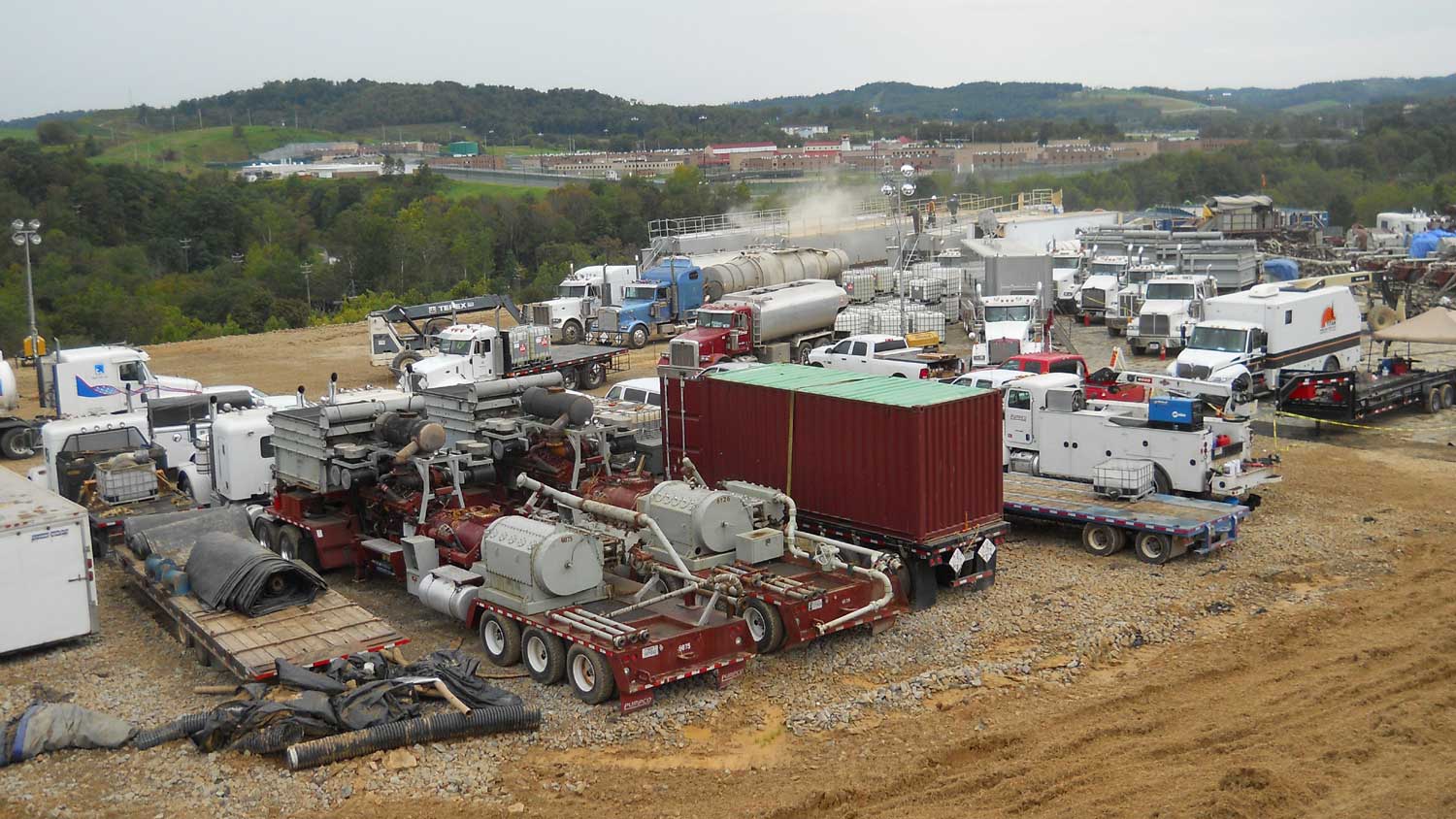
Fracking_Site_in_Warren_Center,_PA_04

A natural gas fracking site in Warren Center, PA. Photo credit: Ostroff Law

The State Corporation Commission has approved Dominion Virginia Power’s proposal for a new gas-fired power plant in Brunswick County, rejecting arguments from the Sierra Club and others that ratepayers would be better served by a combination of low-cost energy efficiency and price-stable renewable energy.

The decision in the case (PUE-2012-00128) reflects the same discouraging themes we have seen from our regulators before: a tendency to believe everything Dominion tells them, coupled with an absolute refusal to acknowledge the climate crisis bearing down upon us and the changes in the energy market that make fossil fuels increasingly risky.

As the SCC put it in its order, “The relevant statutes… do not require the Commission to find any particular level of environmental benefit, or an absence of environmental harm, as a precondition to approval.” (Note to legislators: How about fixing that?)

The SCC’s state of denial is not just about the future. Since at least the 1980s, Dominion has consistently overestimated future demand growth.

A little skepticism might be in order when Dominion projects the same level of demand growth that keeps not materializing.

But the SCC is not skeptical. Its order declares Dominion’s load forecasts “reasonable.”

Evidently one can be both reasonable and wrong. Demonstrating this in real time, only a few days after the SCC issued its order in early August, Dominion CEO Tom Farrell had to explain to shareholders why electricity demand has not grown this year in line with company predictions.

Amnesia was also in evidence at the public hearing on the case, where proponents of the gas plant – everyone from Dominion employees to the SCC staff – kept insisting on the environmental advantages of natural gas.

But congratulating each other that at least it wasn’t a coal plant seemed odd to those of us who recall the fanfare surrounding the opening of Dominion’s newest Virginia coal plant, all of one year ago.

My, how quickly things change. No one is proposing to build coal plants any more. Now that natural gas costs half what coal does, people have suddenly noticed that burning dirty black rocks to make electricity is a terrible idea. “Look at all that pollution!” they say in wonderment. “How last century!”

Hydraulic_Fracturing_Marcellus_Shale USGS

A natural gas fracking operation in the Marcellus Shale. Photo credit: U.S. Geologic Survey

But in this century, natural gas is already wearing out its welcome – and not just among unhappy landowners who say fracking has spoiled their drinking water. Scientists measuring methane escaping from extraction wells warn that high levels of “fugitive emissions” may make natural gas a major contributor to climate change.

The SCC takes no notice of climate change, but it ought to consider that others do, presenting a financial risk for any fossil fuel plant. A national plan to reduce carbon emissions could make gas very expensive.

Yet building the Brunswick plant commits Dominion ratepayers to paying whatever the market price is for natural gas for the next three decades. Worse, it’s effectively a baseload plant, designed to burn gas 24/7; it can’t ramp up and down quickly to supply power when needed on a short-term basis, such as to fill in around the power supplied by wind and solar.

Analysts predict wind and solar will increasingly become the first choice for new generation, as these renewables get steadily cheaper and offer long-term price stability as well as environmental benefits.

Indeed, wind turbines beat out natural gas plants as the largest source of new generating capacity nationwide last year. Companies are designing natural gas turbines now that integrate with renewable energy, allowing utilities to hedge their bets on gas.

Well before the end of its 36-year life, a 24/7 baseload plant like Brunswick may be reduced to a giant concrete paperweight.

It would seem wise to hold off on building this gas plant, and we could. Investments in energy efficiency would more than meet the demand the Brunswick plant is supposed to serve, at a lower cost.

The SCC brushed aside this argument, pointing out that it consistently swats down good energy efficiency proposals – and intends to continue doing it.

So Virginia ratepayers, prepare yourselves: You’ve already been stuck with one of the last coal plants to be built in America. Now get ready for 30 years of paying for a natural gas plant. As for your dreams of wind and solar, keep dreaming.

Originally published in the Hampton Roads Virginian-Pilot on August 29, 2013. 

Unknown's avatar

On-bill loans for energy upgrades: win-win

This guest column by Seth Heald originally appeared in the Rappahannock News on July 18, 2013. 

A little-noticed announcement earlier this month about an energy-efficiency pilot project in South Carolina could mean good news for the hundreds of thousands of Virginians who get their power from electric cooperatives.

Both South Carolina and Virginia have numerous electric cooperatives that provide power to customers in rural areas (and these days some no-longer-rural areas). These co-ops date to the 1930s, when Congress passed the Rural Electrification Act to provide loans and establish co-ops to help bring electricity for the first time to people in areas where investor-owned utilities were unwilling to go.

South Carolina’s “Help My House!” program showed that a creative financing measure called on-bill financing can help co-op members pay for efficiency upgrades to their homes that reduce their electricity consumption by more than a third on average.  The program paid for contractors to upgrade heat pumps, add insulation, seal ducts, and take other common-sense measures to make customers’ homes more comfortable and energy-efficient.

With on-bill financing the South Carolina co-op members didn’t have to pay upfront for their home improvements. Instead they pay over time on their electric bills. And because electricity consumption was significantly down, customers’ total electric bills generally went down even with the loan-repayment charges tacked on.  Efficiency contractors benefited too, which can create good local jobs.

That’s about as win-win as you can get—home improvements and lower electric bills, and more jobs, with no sacrifice of convenience or comfort. And once the loans are paid off, electric bills go down even more. The co-ops win too, because reducing customers’ electricity consumption on a broad scale can postpone or eliminate the need to build expensive new generation plants.

Electric co-ops are owned by their customers, so the South Carolina co-op boards and managers deserve great credit for undertaking this new program, which promises so many benefits to their member-owners.

So why can’t we do this here in Virginia? The short answer is we can. And we should. Soon.

But some Virginia co-op managers and board members have been reluctant to move forward aggressively on efficiency programs, preferring the old-fashioned method of building more generation capacity rather than helping members make efficiency upgrades. And some Virginia co-op managers and boards seem to worry more about their total revenues than about helping their customers lower their bills. Some co-op boards apparently are unconvinced that efficiency measures on a broad scale can benefit not only customers but the co-ops themselves.

That’s begun to change in Virginia. My co-op has launched an efficiency pilot program. But Virginia still has a lot of catching up to do to achieve the remarkable results that South Carolina co-ops have now shown are possible.

One thing essential to South Carolina’s success was 2010 state legislation that allowed on-bill financing, including having the loan obligation “stay with the meter” if a customer sells his home before paying off the loan.  The South Carolina co-ops pushed for that change and got it.

Virginia co-op members, and more importantly their influential managers and boards, should press our state legislators and regulators to make the changes needed to allow on-bill financing here. If anything can win bipartisan support in Virginia, it ought to be a simple measure that can help hundreds of thousands of hard-working electricity consumers improve their homes with no upfront costs while also reducing their power bills.

Seth Heald, of Rixeyville, is a lawyer and a member of Rappahannock Electric Cooperative, which is one of the Virginia co-ops that co-own Old Dominion Electric Cooperative.

Unknown's avatar

Virginia doesn’t need another gas plant

On April 24, Virginia’s State Corporation Commission (SCC) will consider a proposal from Dominion Virginia Power to build a new natural gas-fueled generating plant, the second of three it wants to add to its holdings. Its first plant, now under construction in Warren County, generated little opposition because it will replace old coal boilers that Dominion needs to retire.

But the latest proposal for a plant in Brunswick has come in for fierce criticism, and for good reason: we don’t need another gas plant. Dominion has exaggerated the growth in demand that it says justifies the plant, and the company could more cheaply meet its actual needs with energy efficiency and renewable energy.

Moreover, the world is changing, and the energy model of big utilities running big baseload power plants is becoming outdated. If Dominion builds another of these, Virginia could end up stuck with a giant concrete paperweight.  The SCC owes it to customers not to let this happen.

Every year Dominion tells regulators it expects demand to increase by 1.5% to 2% per year indefinitely, but its actual energy sales have been essentially flat since 2006. Sure, the recent recession threw everyone a curveball, but Dominion’s tendency to overstate future demand goes back decades. The company seems not to have anticipated widespread changes like more efficient appliances and better building codes that let consumers use less electricity even while we’re buying more gadgets.

With a little effort, we could save even more energy. Virginia ranks in the bottom half of states for energy efficiency, and Dominion is not on track to meet even the modest efficiency goals of the Virginia Energy Plan. Some of the fault for this lies with the SCC itself, which has often rejected energy efficiency programs. But nor has Dominion tried very hard. Even their rate structure is designed to encourage energy use. Greater efficiency would mean lower electricity sales, and who wants that? Not a company that makes its money building plants and selling electricity.

And this is a shame, because the cheapest energy is the energy that isn’t used. Virginians use 20% more electricity per person as our neighbors in Maryland, so we have a lot of low-hanging fruit we should pick before we build another power plant.

Even if we needed more power, though, building another baseload natural gas plant is a bad plan. A “baseload” plant is one designed to run continuously, unlike a “peaker” plant that fills in when needed. The price of natural gas fluctuates wildly, so building a baseload plant means committing customers to paying whatever the going rate happens to be, all day, every day, for the 30-year life of a gas plant. With about a third of Dominion’s power mix already coming from natural gas, surely adding more baseload gas is a reckless gamble when alternatives are available. Even Dominion CEO Tom Farrell has warned against an over-reliance on natural gas for this very reason.

It used to be that alternatives to fossil fuels weren’t much available, so a 30-year gamble was normal, and regulators didn’t trouble themselves by asking what the world would be like in 20 years. Wind and solar have changed that. When you build a wind farm or a solar facility, you know exactly what you will be paying for energy 20 years down the road, because your “fuel” is free. Building wind or solar is like locking in a fixed-rate mortgage instead of gambling on an adjustable rate mortgage with a low teaser rate. With that as an option, why should Virginians commit themselves to 30 years of buying gas at whatever the market decides is the price?

With prices dropping rapidly, wind and solar are today’s fastest growing energy technologies, and wind is second only to gas as a source of new electric generation. Of course, Virginia can’t boast a single wind farm today, and the smattering of solar across the state totals less than 1% of what New Jersey has. But even here, time and economics are on the side of renewable energy. Citigroup recently issued a report projecting that renewable energy will reach grid parity across the U.S. within the next few years and will gradually relegate all other fuels to back-up status.

This makes it an even worse idea for Dominion to invest in a plant that cannot easily adjust its output when the wind picks up or the sun comes out. Other options exist. Gas turbines are now being designed to integrate with renewable energy, combining high efficiency with the ability to ramp up and down quickly. Companies like General Electric are making big bets that this is the future of gas turbines.

Dominion, meanwhile, seems to be looking at the future as if we were back in the 20th century, and without even taking advantage of hindsight. Its plan is a bad deal for its customers, and the State Corporation Commission should reject it.