Unknown's avatar

Where ethics and utility profits intersect, a stain spreads across the “Virginia Way”

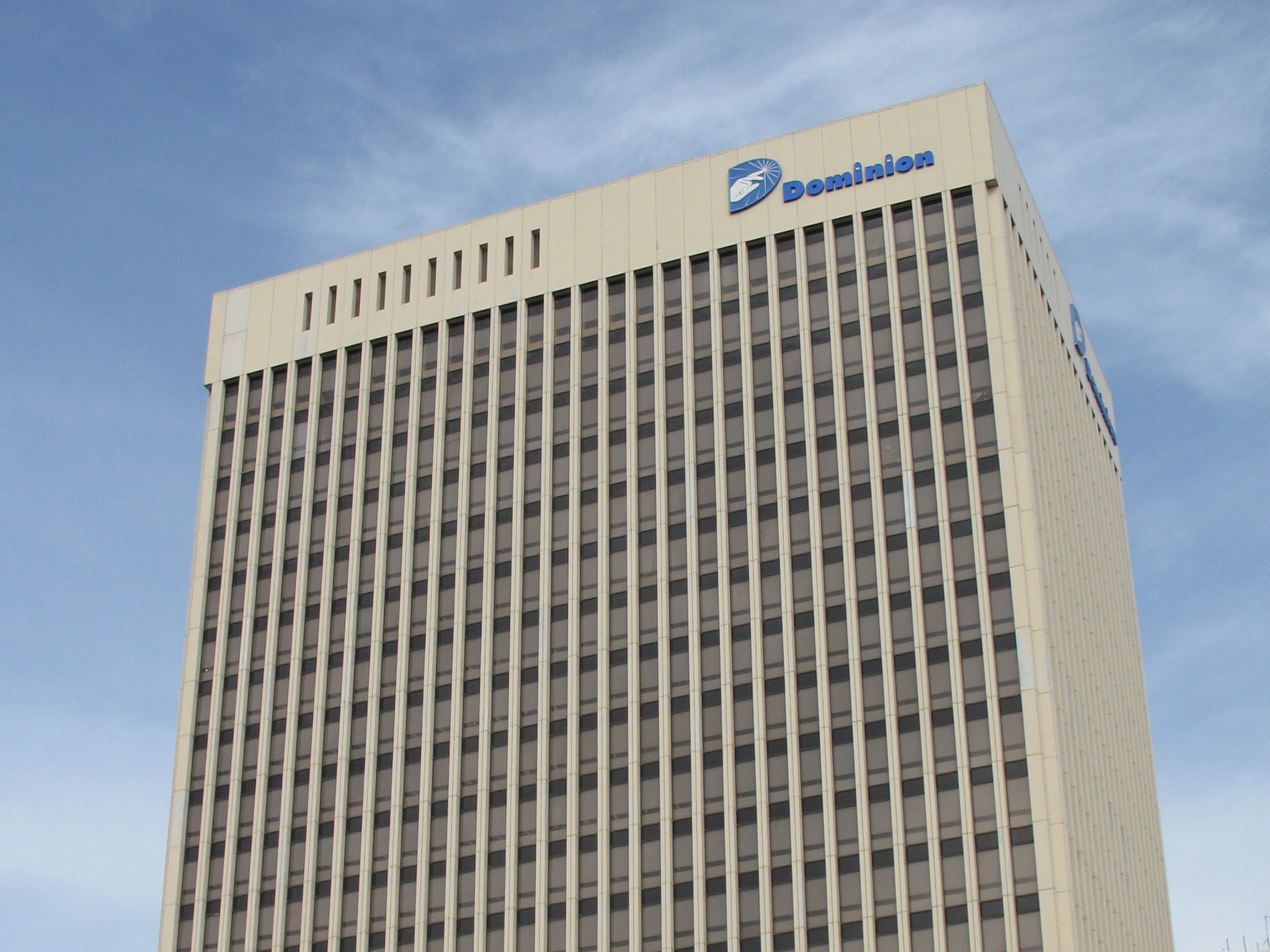
Dominion buildingThe Virginia General Assembly has punted on ethics reform, preparing to pass watered-down legislation that does very nearly nothing. At the same time, legislators are about to pass a law that will cost Dominion Power’s customers more than half a billion dollars as a down payment on a nuclear plant that hasn’t been approved and isn’t likely to be built.

These are not separate issues.

Virginia has had an ethics problem since long before Bob McDonnell met Jonnie Williams. As many people have noted, the real scandal is how hard it is to break our ethics laws. So long as you fill out a form disclosing the gift, it’s legal for politicians to accept anything of value from anyone, to use for any purpose. By this standard, McDonnell’s biggest failure was one of imagination.

The legislation that appears likely to come out of the General Assembly merely puts a $250 cap on the price tag of any one gift, with no limit on the number of lesser gifts and no limit on the value of so-called “intangible” gifts like all-expense-paid vacations. The mocking of this bill has already begun.

Conveniently, the bill deals with a tiny side stream of tainted cash compared to the river of money flowing from corporations and ladled out by lobbyists. Corporations don’t usually give out Rolexes and golf clubs. Instead, they give campaign contributions. Here again, Virginia law places no limits on the amount of money a politician can take from any donor. Five thousand or seventy-five thousand, as long as your campaign reports the gift, you can put it in your wallet.

And here’s the interesting part: you don’t have to spend the money on your campaign. If gerrymandering has delivered you a safe district, you can use your war chest to help out another member of your party—or you can buy groceries with it. The distinction between campaign money and personal money is merely rhetorical. A spokeswoman for the State Board of Elections was quoted in the Washington Post saying, “If they wanted to use the money to send their kids to college, they could probably do that.”

In an eye-popping editorial, the Post ripped into one Virginia delegate who charged his campaign more than $30,000 in travel and meals, and another $9600 in cellphone charges, in the course of just 18 months.

As with taking the money, the only rule in spending campaign funds is that you file timely paperwork showing what you spent it on; the reports are not even audited. The theory originally may have been that the threat of public disclosure would keep a gentleman from taking money from unsavory persons. If you took it anyway, the voters would learn of it and throw you out. How quaintly respectful of the energy and capabilities of voters! How pre-gerrymandering.

And how pre-corporation. The smartest companies today spread the wealth around: more to the legislators in charge of the important committees, less where they just need floor votes. The largesse is bipartisan, making everyone happy but the voters. Certainly, a legislator who accepts thousands of dollars from a lobbyist would be churlish to criticize the company writing the check.

So what do you call someone who pays for his meals out of the check he gets from a company?

How about, “an employee”?

Environmental groups and good-government advocates have long decried the influence of corporate money in Virginia politics. In their 2012 report, Dirty Money, Dirty Power, the Sierra Club, Appalachian Voices, and Chesapeake Climate Action Network documented the rising tide of utility and coal company contributions to Virginia politicians, coinciding with a series of votes enriching these special interests.

Dominion Power has consistently led the “dirty money” pack. As the single largest donor of campaign funds aside from the Republican and Democratic parties themselves, its influence in Richmond is widely acknowledged, even taken for granted.  Most legislators will not bother to introduce a bill that Dominion opposes, even if they like it themselves. Critics joke that the General Assembly is a wholly-owned subsidiary of Dominion Resources.

According to Dirty Money, Dirty Power, Dominion’s contributions to elected officials totaled $5.2 million from 2004 to 2011. The Virginia Public Access Project shows another $1.4 million in 2012 and 2013. The contributions overall somewhat favor Republicans, but often the contributions are so even-handed as to be comical, like the $20,000 each to Mark Herring and Mark Obenshain in the Attorney General’s race last fall. These contributions are not about supporting a preferred candidate; they are about buying influence.

Note that much of the donations don’t go directly to General Assembly members but to the parties’ PACs, which then dole out the money. This gives Dominion extra influence with party leaders—again, on both sides.

The result has been spectacularly successful for Dominion, which rarely fails to get its way. Bills it opposes die in subcommittee (witness this year’s bills to expand net metering). Bills it wants succeed.

That brings us to this year’s money bills. As you may have read here or in Virginia papers, Dominion has been “over-earning,” collecting more money from ratepayers than allowed by law. In the ordinary course of things, this would result in both a rebate to customers and a resetting of rates going forward to produce less revenue for the utility.

For Dominion, the solution is a bill that lets the company charge ratepayers for expenses it isn’t entitled to pass along under current law. (Indeed, in a nice touch, the bill actually requires Dominion to pass along these expenses.) Presto: it’s no longer earning too much, owes no rebate, and doesn’t have to cut rates.

In return, the ratepayers get the satisfaction of assuming the sunk costs of a new nuclear reactor that will probably never be built, plus whatever more money the utility spends on it going forward. I believe the technical parlance for this is “blank check.”

“But we must have nuclear,” our legislators murmur as they sign our names on the check. Um, why? Nuclear energy today can’t compete economically. Just last year Duke Energy gave up on two nuclear plants it had been building, after billing ratepayers close to a billion dollars in construction costs. (BloombergBusinessweek headlined its article on the subject, “Duke Kills Florida Nuclear Project, Keeps Customers’ Money.”)

Dominion itself understands the wretched economics of nuclear perfectly well; its parent company, Dominion Resources, just closed an existing nuclear plant in Kewaunee, Wisconsin, because it couldn’t produce power cheaply enough to attract customers. And that’s from a plant that’s paid for; energy from new plants is now more expensive than natural gas, wind, and even some solar.

Memo to Democrats: when the cheaper alternative is renewable energy, no self-respecting progressive signs on to nuclear.

The steadily falling price of wind energy, and more recently, solar energy, helps explain why nuclear is on its way out nationwide. The only nuclear plants under construction in the U.S. today are over budget and reliant on billions of dollars in federal loan guarantees.

Memo to Republicans: no self-respecting, Solyndra-bashing conservative signs on to nuclear.

The State Corporation Commission also understands the economic picture, and it has been skeptical of Dominion’s nuclear ambitions. On top of that, there are serious concerns whether a third reactor at North Anna could even get a license from the Nuclear Regulatory Commission in the wake of the earthquake that shut the existing units for four months in 2011. (For a good short history of the North Anna reactors, including the fine Dominion paid in 1975 for hiding the existence of the fault line, see this article in the local Fluvanna Review.)

So there’s a pretty good chance that Virginia ratepayers will find themselves following in the path of Duke Energy’s customers, with many hundreds of millions of dollars thrown down a rathole and nothing to show for it.

The elected officials voting for this boondoggle, on the other hand, will have plenty to show for it, unfettered by rules of ethics.
Unknown's avatar

Amid the carnage, some energy bills make progress

This week marks “Crossover” at the General Assembly. Both chambers have to finish up action on their own bills by midnight Tuesday; starting on Wednesday, they can consider only bills passed by the other chamber. If you’re a legislator and your bill doesn’t get acted on by COB Tuesday, you are out of luck for the year.

photo credit: Amadeus

photo credit: Amadeus

Most of the energy and climate bills we’ve been following now lie dead on committee floors, but some have made it through to passage by the whole House or Senate. Now they need to get through the other chamber’s committees and floor votes by March 8, the end of Session. This date is known as Sine Die, Latin for “thank God that’s over with.”

Here’s where we stand at press time:

Investment tax credit-now-grant passes Senate but not House; advocates looking for help to get it through this year. HB 910 (Villanueva) was “continued to 2015” by voice vote in House Finance, essentially killing it for the year due to a failure to find funds in the budget to cover the cost. However, SB 653 (Norment) has passed the Senate, giving proponents a second shot in House Finance and more time to identify funds. Supporters are running a campaign to generate emails to members of the House Finance committee. Follow the link to send an email.

Just for the record, I don’t recall any similar difficulty approving the tens of millions of dollars we throw at coal every year.

Redefining solar panels as pollution control equipment looks to be a done deal. SB 418 (Hanger) and HB 1239 (Hugo) have passed their respective houses. The amendment to the House bill limiting projects to 20 megawatts will likely be added to the Senate bill. The legislation is primarily designed to help third-party owners of solar systems who currently face prohibitive local taxes on “machinery and tools.”

No more HOA bans on solar. SB 222 (Petersen) is expected to pass easily in the House, where it has been referred to Commerce and Labor. The legislation nullifies homeowner bans on solar systems, while retaining associations’ ability to enact “reasonable” restrictions on their placement. Next year perhaps someone will take on the task of explaining to HOAs that restricting solar panels to north-facing roofs is not what we mean by “reasonable.”

5-year banking limits on REC purchases for the RPS expected to become law. SB 498 (McEachin) and HB 822 (Lopez) both passed their houses, so voting in the other house is just a formality before they go to the governor for his signature.

Municipal and multi-family net metering dead for the year. Last week I reported that the House energy subcommittee had killed all the House bills that would expand net metering opportunities for municipalities and multifamily housing communities. Now we have to add the Senate bill, SB 350 (Edwards), to the death toll. Condolences go out to those intrepid industry members and advocates who keep fighting to give Virginians more access to solar, knowing they have about as much chance against Dominion Power as democracy advocates have in North Korea.

Hampton Roads set to get a study of “recurrent flooding”; just don’t call it climate change. SJ3 and HJ16 have passed the Senate and House.

Fracking restrictions for Tidewater Virginia pass Senate. SB 48 (Stuart) will now go to House Commerce and Labor.

HB 207 “science education” bill may die of (press) exposure. Delegate Bell’s bill has been tossed from one House committee to the next like a hot potato, with no one wanting to go on the record voting either for it or against it. The news media have been all over this one, quoting science educators who say it promotes creationism and climate denial. Truth be told, many delegates support it for precisely that reason, but they don’t want to be exposed as troglodytes in the press. The bill is now back in Courts of Justice with pretty much no chance of getting to the floor tomorrow.

Dominion’s rate increase for nuclear clears both House and Senate. You can call it what you want, but in the absence of SB 459 (Stosch) and HB 1059 (Kilgore), we’re told regulators would require Dominion to refund to ratepayers the money it has reportedly been overcharging them, and to decrease rates going forward. These bills let Dominion keep the overage as a way of paying for a nuclear plant that will probably never get built. SB 459 sailed through the Senate. HB 1059 passed through committee and awaits action tomorrow by the full House. Stay tuned to find out if Dominion succeeds in sticking us with half a billion dollars to support Tom Farrell’s nuclear fantasy.

Unknown's avatar

Nuclear power: lessons from Japan (and Murphy)

Dominion Virginia Power said Monday that it intends to move forward with plans for a third reactor at its North Anna Power Station as the international nuclear energy industry reels from the disaster at the Dai-ichi nuclear plant in Japan.—WSLS10, March 15, 2011

The operator of Japan’s tsunami-hit nuclear power plant sounded the alarm on the gravity of the deepening crisis of containment at the coastal site on Friday, saying that there are more than 200,000 tons of radioactive water in makeshift tanks vulnerable to leaks, with no reliable way to check on them or anywhere to transfer the water. –The New York Times, August 23, 2013

A friend asked me recently whether I thought the ongoing disaster at the Fukishima nuclear plant in Japan would have repercussions here in Virginia, where Dominion Power operates four nuclear reactors at two plants and wants to build another. I feel pretty sure the answer is no. Economics will kill Dominion’s nuclear dream, but not risk. We just don’t think that way.

We think like this: Fukishima was taken out by a tsunami. There are no tsunamis in central Virginia. Ergo, there is no risk to Virginia’s nuclear plants from a tsunami, so Japan’s sudden revulsion against nuclear power shouldn’t put us off our feed half a world away.

So why did countries like Germany, which also has no tsunamis, freak out and swear off nuclear for good?

They drew an entirely different lesson: Japan is a smart, technologically-advanced nation. Japan did not anticipate the disaster that destroyed Fukishima. Ergo, unanticipated disasters happen even in smart, technologically-advanced nations.

Or put another way: Murphy’s Law also applies to nuclear plants. We ignore Murphy at our peril.

But ignore him we do. We had our own brush with nuclear disaster two years ago, when a rare, magnitude 5.8 earthquake shook central Virginia and led to a months-long shutdown of the two North Anna nuclear reactors. No one expected an earthquake of this strength there, least of all the plants’ designers. Fortunately, the reactors survived intact, but I don’t know of anyone who wants to repeat the experiment. Presumably Dominion intends the “next” North Anna reactor to be designed to withstand stronger earthquakes. Do you feel better about nuclear now, or worse?

Murphy’s Law operates with ferocity across the energy sector. An industry expert told me the BP oil spill in the Gulf happened in spite of four different safeguards in place on the drilling rig, each of which should have stopped the blowout from happening. And that spill was not an isolated incident; only the year before, a similar blowout off the coast of Australia created a 2,300 square mile oil slick—about the size of Delaware. U.S. papers largely ignored it. Spills are so common in oil drilling that they rarely warrant a headline. Yet somehow those who support offshore oil drilling off the coast of Virginia feel sure it won’t happen here.

Or take mountaintop removal coal mining (please). Right now powerful explosives are blasting away the tops of mountains in southwest Virginia and across Appalachia. The rubble is being dumped into stream valleys, while huge machines scrape off the thin seams of coal. Federal law provides that no streams should be harmed, and the mountains should afterwards be restored—requirements so fanciful that neither mining companies nor state officials take them seriously. So it’s not surprising that streams and rivers are polluted, species disappear, building foundations crack, and residents die young. That’s not the plan going wrong, it’s the plan.

In the past most Americans participated in an unspoken agreement to ignore the risks involved in producing energy, because we had no intention of stopping what we were doing. If it’s a choice between risky energy and no energy, we will go with risky every time. Denying the risks is a coping mechanism that lets us sleep at night. Not incidentally, this is also the strategy used by fossil fuel interests to keep the public from demanding action on climate change.

But the widespread availability of cleaner alternatives gives us energy options we didn’t feel we had before. Increases in energy efficiency and tumbling prices for wind and solar mean we can afford to look more honestly at the damage we do and the risks we run by powering our 21st century economy with 20th century fuels.

I like to think the Virginia legislature’s decision to maintain the ban on uranium mining—for now—shows that our ability to ignore risks has its limits. Mining anything hazardous is inherently risky in a climate like Virginia’s, where rainfall continually recharges the water table. Put nasty stuff between the rain and the water table, and you will find contamination downstream. The idea that water can be kept out of millions of tons of radioactive mine tailings for thousands of years strains credulity. The idea that this might be accomplished by a mining company whose sole purpose is to make money shatters credulity altogether.

The fact that a good many of Virginia’s politicians lined up on the side of the mining company anyway is not necessarily evidence of their capacity for ignoring risk. More likely, it simply demonstrates how extreme is the corrupting power of money in Virginia politics. Unfortunately, that shows no signs of changing.