Unknown's avatar

Utility efforts to undermine rooftop solar meet stiff opposition from Virginia customers

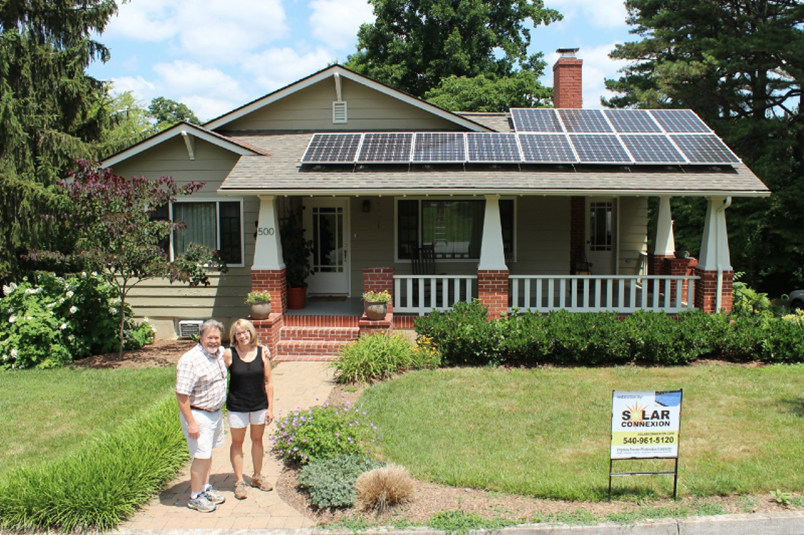
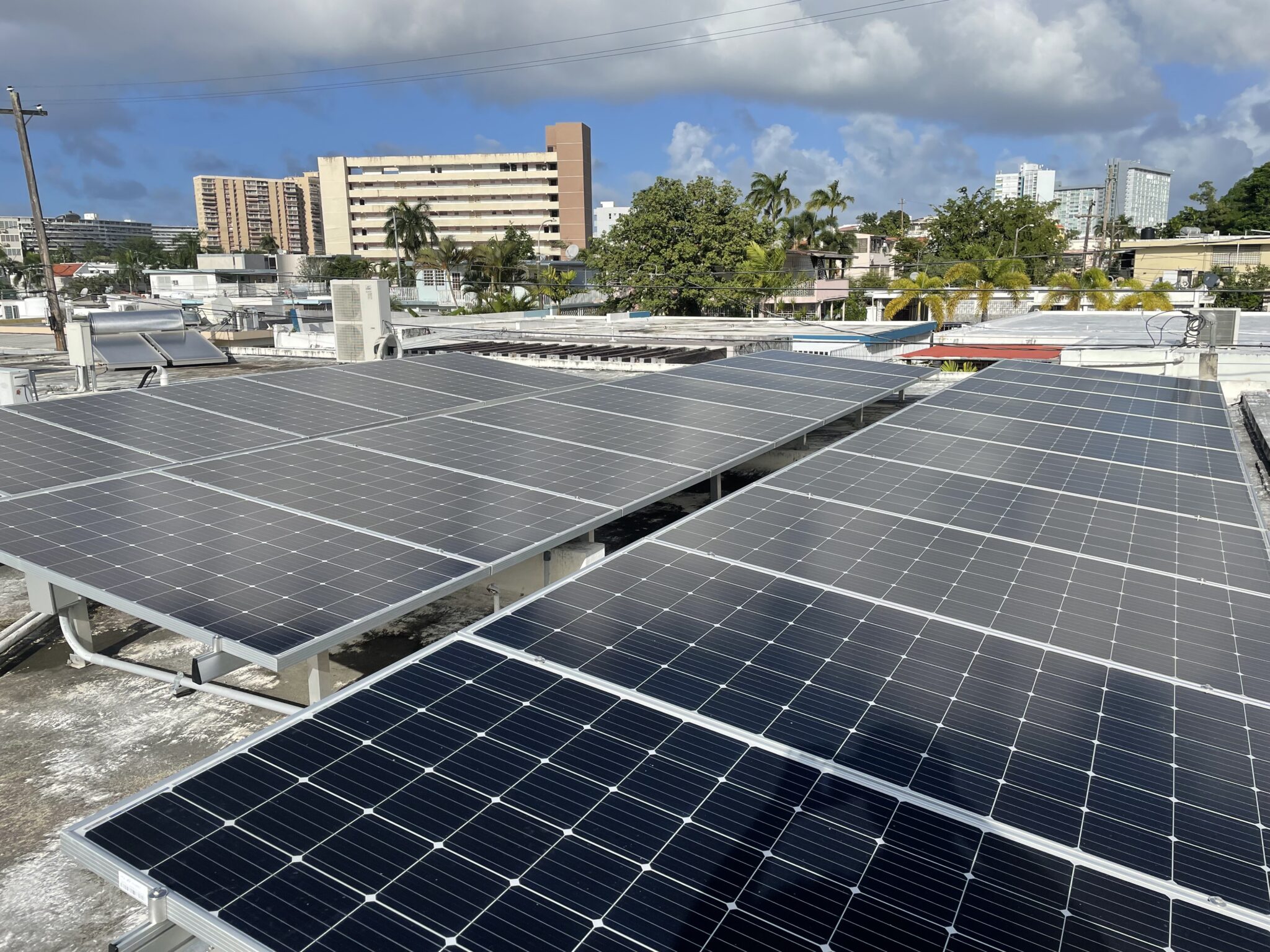
Photo courtesy of Solarize Blacksburg

Virginia’s investor-owned utilities thought 2025 would be the year they put an end to net metering – and with it, rooftop solar installers’ modest competition with their monopoly.. The 2020 Virginia Clean Economy Act (VCEA) removed many barriers that residents and businesses installing solar panels under the state’s net metering law had faced, but it also called for the State Corporation Commission to reevaluate the program, beginning right about now. 

 Not surprisingly, Dominion Energy and Appalachian Power are seizing this opportunity to push for changes that would undermine the economic calculus supporting customer-owned solar.  

Since at least 2007, Virginia law has required that customers of Dominion and APCo who have solar panels on their property be credited for surplus electricity they supply to the grid at the same retail rate they pay for electricity. The credit is applied against the cost of the electricity the customer draws from the grid at times when the panels aren’t generating, reducing what they owe on their electric bill. 

But now that they have the chance, both utilities have filed proposals to end net metering. Both essentially propose to charge new solar customers the full retail rate for the electricity they draw from the grid (with Dominion using a more complicated half-hour “netting”), but compensate them for electricity fed to the grid only at the utility’s “avoided cost,” or what it pays to buy electricity from other generators. By law, existing customers and new low-income customers with solar would be unaffected.

APCo calculates avoided cost as the wholesale cost of energy and capacity, plus transmission and ancillary services, for a total of less than 5 cents per kilowatt-hour. Thus, a homeowner with solar panels would now pay the full retail rate of about 17 cents/kWh for electricity drawn from the grid, while being credited at less than one-third that amount for electricity put back on the grid. 

Dominion’s approach instead pegs avoided cost to what it pays for solar generation and associated renewable energy certificates (RECs) bought from certain small producers under power purchase agreements, an average of about 9.5 cents/kWh. Dominion’s residential rate currently averages about 14 cents/kWh, but would go up to more than 16 cents if its latest rate increase request is granted.

The VCEA gave APCo the first swing at the piñata. APCo filed its proposal in September, and the SCC will hold an evidentiary hearing on May 20. Dominion only filed its petition last week, and no hearing date has been set yet. 

Not surprisingly, APCo’s proposal generated fierce opposition from advocates and solar installers. They point out that it’s hard enough to make the economics of home solar work with net metering at the retail rate; slashing the compensation for electricity returned to the grid by more than one-third, as Dominion proposes, or two-thirds, as APCo wants, would make solar a losing proposition for most homeowners. Maybe economies of scale and other factors would allow the market for commercial solar to survive under Dominion’s program, though Dominion’s insistence on confiscating customers’ RECs won’t make anyone happy.

If solar owners definitely lose under APCo’s plan, advocates say other ratepayers don’t necessarily win. A homeowner’s surplus generation travels only the short distance to the nearest neighbor, lessening the need for the utility to generate and transmit power to meet the neighbor’s demand. Since the utility charges that neighbor the regular retail rate for the electricity, without having to bring it from somewhere else, the utility saves on transmission costs. On top of that, the surplus solar comes in during the day, when demand is typically higher than at night and electricity is more costly, making solar more valuable to the utility. Plus, it is clean and renewable, and the customer bears all the cost and risk of the investment.

Utilities do not share this rosy view. By their way of thinking, solar customers use the grid as free energy storage and backup power, without paying their fair share of grid costs. Not only does this deprive the utility of revenue, but those grid costs now have to be spread out among the remaining customers. This, they say, creates a cost shift from solar owners to everyone else. 

More than a decade ago, Virginia took tentative steps towards resolving the dispute, with the Department of Environmental Quality setting up a stakeholder group to work towards a “value of solar” analysis. The process was never completed — the utilities walked away from the table when it appeared the results weren’t going to be what they wanted, and the group’s work product did not include numeric values or policy recommendations. 

Virginia is hardly alone in navigating these clashing narratives. 

Other states and regulators have arrived at very different conclusions as to the “correct” value of distributed solar to utilities, ratepayers, and society as a whole. States like Maryland kept net metering after a value of solar analysis concluded the benefits outweighed the costs. On the other hand, California famously ended its net metering program in 2022 when solar comprised almost 20% of electricity generated in the state and created a mid-day surplus without enough storage to absorb it; at the time, 45% of that solar was distributed. That same year, however, Florida Gov. Ron DeSantis vetoed an unpopular bill that would have phased out net metering in the state.

The experience of other states, combined with an abundance of research and analysis conducted over the years, gives the SCC a lot to work with as it considers the fate of net metering for APCo’s customers this year, and later for Dominion’s.

Countering the arguments of the utility’s hired witnesses, solar industry and environmental organizations have weighed in on the APCo docket with testimony from experts with nationwide experience. The experts pointed out a range of errors and omissions in the utility’s work product. They also presented their own benefit-cost analyses demonstrating a value for distributed solar in excess of the retail price of electricity, using tests often applied to energy efficiency and demand-response programs.

Perhaps even more significantly, SCC staff also filed an analysis that found many of the same problems with APCo’s proposal, including failures to comply with statutory requirements. The staff report did not include a quantitative analysis, but it urged the importance of considering benefits that APCo had ignored. Like the intervenors, staff recommended the commission reject APCo’s plan and retain its net metering program as it is, at least for now.  

Although the staff report would seem likely to carry weight with the commissioners, it’s never easy to predict what the SCC will do in any case before it. But in Virginia, unlike California, distributed solar makes up vanishingly little of total electric generation. Even taking the utilities’ arguments at face value, it seems foolish to upend this small but important market to remedy a perceived harm that is, at least for now, more theoretical than real. 

This article originally appeared in the Virginia Mercury on May 8, 2025.

Unknown's avatar

Will special rate classes protect Va. residents from the costs of serving data centers?

Data center between housing community and a bike path
A data center in Ashburn, Virginia. Photo by Hugh Kenny, Piedmont Environmental Council.

For the past few years, observers have been warning that the huge surge in demand for electricity to serve data centers will mean higher electricity bills. In its December 2024 report on data centers in Virginia, the Joint Legislative Audit and Review Commission (JLARC) confirmed projections that the increased demand for power and the need for new infrastructure to serve data centers would raise rates for everyone, not just the data centers. 

Right on cue, on March 31 Dominion Energy Virginia filed a request with the State Corporation Commission to increase the rates it charges to all customers. If granted, the increase would amount to an additional $10.50 on the monthly bill of an average resident. In a separate filing on the same day, Dominion asked to increase residents’ bills by another $10.92 per month to pay for higher fuel costs.  

Either out of a monumental failure to read the room, or because Dominion executives feel they might as well be hung for a sheep as a lamb, the rate filing also asks for an increase in the company’s authorized rate of return, from 9.7% currently to 10.4%.

But it’s not all bad news. Along with the rate increase request, Dominion filed a proposal to create a new rate class for large-load customers like data centers. The move coincides with enactment of new legislation requiringthe SCC to examine whether electric utilities should separate data centers into their own rate class to protect other customers, something the SCC was in fact already doing. 

And Dominion is not alone. Virginia’s other major investor-owned utility, Appalachian Power, filed a similar proposal on March 24, following onefrom Rappahannock Electric Cooperative (REC) on March 12. The proposals reflect a growing consensus that ordinary residents should not be forced to bear the cost of building new infrastructure needed only because of data centers. Moreover, if data centers close up shop before the costs of the new infrastructure are fully paid for, residents should not get stuck paying off these now-stranded assets.  

In Dominion’s case, there is good reason to worry. In the first day of testimony at the SCC regarding the company’s 2024 Integrated Resource Plan (IRP), a Dominion witness admitted that of the $7.6 billion worth of planned new transmission infrastructure listed in the IRP, residential customers will pay 55%, including for infrastructure that serves only data centers. 

It’s not immediately clear how much setting up a new rate class for data centers will change that outcome. Dominion proposes creating a new large-load class for customers using at least 25 MW at capacities of 75% or more (meaning that they have a consistently high level of electricity use, as data centers do). These customers would be subject to a number of new requirements, including posting collateral and paying for the substation equipment that supplies them. They would also have to sign 14-year contracts (including an optional 4-year ramp-up period) obligating them to pay for the greater of actual electricity use or 60% of the generation and 85% of the transmission and distribution capacity they sign up for, even if they use less.

Dominion says the proposed generation demand charge is much lower than that for transmission because transmission and distribution assets must be designed for 100% of capacity, while generation is only planned for 85% actual metered load. Based on that, though, you might think the correct demand charges would be set at 100% for transmission and 85% for generation. It’s also not clear whether 14 years is long enough to recover all the costs incurred to build new infrastructure, or whether that’s even the outcome Dominion is striving for. 

There are sure to be a lot more of these kinds of questions when the SCC takes up Dominion’s rate case. The SCC will have to evaluate Dominion’s proposed large-load tariff against a worst-case scenario: an industry-wide disruption that suddenly and dramatically reduces data center demand across the state, leaving a utility with excess generation and transmission capacity that can’t be backfilled and that other customers will be stuck paying for. 

Fortunately, Dominion’s proposal doesn’t have to be considered in isolation, since the SCC will be able to compare it to those from APCo, REC and utilities in other states. According to APCo’s filing, its new rate class would be limited to the largest new customers (those with at least 150 MW in total or 100 MW at a single site). These customers would be required to pay a minimum of 80% of contracted demand even if they use less, which the company says is a significant increase from the demand charge of 60% that applies to existing customers. (You’ll notice it’s also a lot more than the 60% demand charge Dominion is proposing for data centers.) 

APCo’s filing notes that its proposal is consistent with a data center tariff it recently agreed to in settling a case in West Virginia; in both cases, customers would have to sign 12-year contracts, following an optional ramping-up term of up to 4 years, with requirements for posting collateral and stiff exit terms. 

APCo has other experience to go on as well. Its parent company, American Electric Power (AEP), made news when its subsidiary in central Ohio proposed to charge data center customers at least 90% of contracted demand or 90% of their highest demand over the preceding 11 months, whichever is higher, and committing them to contract terms of at least 10 years, after a ramp-up period of up to four years. Data centers pushed back hard on these terms, and the Ohio Public Utilities Commission is considering different settlement proposals with somewhat lower demand charges. 

REC’s filing takes an entirely different approach. REC is the largest of Virginia’s co-ops, serving a territory that stretches from Frederick County in northwest Virginia down through Spotsylvania and as far east as King William County. As data center development pushes outward from Northern Virginia, REC finds itself overwhelmed with new demand. It now expects up to 17 gigawatts of data center demand by 2040, up from near zero in 2023, dwarfing all other customers’ loads.  

Like other utilities, electric cooperatives have an obligation to serve all comers in their territory, so if a new data center moves in, they have to provide the power. But unlike Dominion and other investor-owned utilities, co-ops are customer-owned nonprofits. They are highly motivated to protect their existing customers from the costs – and risks – involved in serving new ones. 

REC is a distribution cooperative only, with no generation of its own. Today, REC gets all its electricity from Old Dominion Electric Cooperative (ODEC), a sort of umbrella organization that owns generating plants and supplements those with power purchased on the PJM wholesale market. But when ODEC learned how much new data center load REC was expecting, it told REC to look elsewhere for the power. 

REC’s solution is to silo off big data centers and other customers with more than 25 megawatts in demand, and keep all the costs and risks involved within that space. According to the proposal the co-op filed with the SCC, data centers that want to get power from REC will have to post collateral, contribute to the cost of new infrastructure and sign two agreements, one for the power supply and one for its delivery. REC (or an affiliate it plans to create for this purpose) will buy electricity from PJM on the open market and pass through the cost. Alternatively, the data centers will be able to buy electricity from competitive service providers, allowing them, for example, to procure renewable energy.  

REC’s proposed delivery contract is similarly designed to ensure the data centers pay all the grid costs the utility will incur in serving them. In addition to contributing to the cost of new infrastructure, data centers will have to sign contracts with terms that must “be structured to recover the full cost of distribution and/or sub-transmission plant investment, maintenance and operation.” This includes payment of a demand charge that isn’t specified but appears to be as high as 100% of peak demand – meaning, there would be no risk that these grid costs would end up on the tab of residents and other customers outside the class.

REC’s approach might be seen as a sort of gold standard for protecting other ratepayers from the costs and risks involved in providing energy to data centers. It’s not a perfect antidote for rate increases, because the tight supply of generating capacity within PJM is already pushing up costs of electricity even for existing customers. And buying electricity on the open market may cost data center customers more than buying it from a utility that owns its own generation, as Dominion and APCo do. But that isn’t a concern that will keep REC’s other customers up at night. 

The very different approaches proposed by REC, on the one hand, and Dominion and APCo, on the other, reflect the difference between a nonprofit distribution cooperative and investor-owned utilities that build and own generation. Building stuff is how investor-owned utilities earn a profit. The bigger their customer base and the more electricity those customers demand, the more the profit. The data center industry looks to them like a big, fat golden goose. 

It isn’t surprising, then, that neither Dominion nor APCo are proposing solutions that put all the risks involved with serving data centers onto the industry, the way REC’s proposal does. As a new Harvard Law School reportdetails, the utility profit motive and the political muscle of Big Tech inevitably lead to a cost shift onto other customers.  

Maybe there is something different about data centers in Virginia that justifies involving ordinary residential customers in this risk. Dominion will surely make that pitch when the SCC takes up the case. 

It will be interesting to observe, but color me skeptical.

Originally published on April 25, 2025 in the Virginia Mercury.

Unknown's avatar

Remember when ethics in government mattered?

Protesters in front of a Tesla building.
People line up in front of a Tesla Service Center to protest Elon Musk. Rockville, Maryland. Photo by G. Edward Johnson via Wikimedia

It was only a decade ago that a governor of Virginia, Bob McDonnell, was embroiled in a corruption scandal resulting from his acceptance of $177,000 in gifts and loans from a businessman in exchange for promoting the company’s diet supplement. The quid pro quo struck many people at the time as more tacky than corrupt; and indeed, the U.S. Supreme Court eventually overturned his conviction on the grounds that using the governor’s mansion as a promotion venue wasn’t a sufficiently “official” act. 

These days, the kerfuffle raised by the exposure of McDonnell’s little side hustle feels almost quaint. It also feels like foreshadowing, anticipating President Donald Trump’s use of the White House lawn as a Tesla showroom to thank Elon Musk for his hard work in destroying American government. 

In the present-day version, though, it does not appear the carmaker’s $290 million in election spending played a role beyond instilling a warm fuzzy feeling in the bosom of the president. So while ordinary people may be appalled, and Democratic leaders like Rep. Gerry Connolly of Virginia are demanding an investigation, it’s hard to see the Supreme Court batting an eye. Is it so different from Justice Clarence Thomas accepting a luxury RV from a wealthy businessman?

Trading favors among the rich and powerful seems to be how it works in Trump’s America. Anyone who isn’t using his public position for his own gain is a chump. And while the laws prohibiting corruption are still on the books, Trump has ensured there are no federal prosecutors left with the independence to go after his allies. 

Besides which, in the unlikely event your cupidity actually gets you convicted of a crime, the president has a history going back to his first term of handing out pardons to MAGA loyalists regardless of their crimes. Sufficiently demonstrating fealty to the president may be enough to secure your place in his No Grifter Left Behind program. Frankly, the judge who sentences you has more to fear from the president than you do.  

By design, Trump’s attacks on American government, civil society and the world order have been so various and extreme as to leave opponents breathless. The resistance looks like a team of firefighters trying to deal with a large and very determined pack of juvenile arsonists. 

Yet, of all the fires now burning, Trump’s attacks on the rule of law might pose the single greatest threat to the country’s stability and prosperity. Trump’s firing of government watchdogs, blacklisting a law firm that represented his enemies, and defying judges who rule against him are unprecedented in modern U.S. history. Our economy as well as our democracy was built on a system of checks and balances that made corruption the newsworthy exception rather than the dismal norm.

This was brought home to me in a conversation I had recently with a rancher in, of all places, Patagonia, at the far tip of South America. (When the going gets tough, the not-very-tough go hiking.) The owner of an 8,000-acre estancia turned out to have been involved in Chilean politics for 30 years, representing his region in the Chilean Congress. He didn’t know much about what was going on in the U.S., he admitted, but he felt encouraged by the news that Trump was cutting waste and fraud. 

Okay, yes, I guffawed, but I was also struck that, with all the turmoil and crises going on in Washington, the only thing that survived a distance of 6,000 miles was Trump’s spin on his actions. Still, you hardly need to go to Chile to find people who accept Trump’s through-the-looking-glass framing of his dismantling of government institutions. 

A pro-Trump family member, as big-hearted a guy as you will ever meet, told me he was sad that people in developing countries would go without food and medicine as a result of Trump shutting down foreign aid, but it had to be done “because of all the fraud.” Virginia Gov. Glenn Youngkin is also an ardent supporter of Trump’s ever-expanding trims, last week defending the slashing of thousands of federal workers’ jobs as “dislocation” necessary to “gain efficiencies and reduce costs in the federal government.”

That’s the power of language. What Trump calls fraud and corruption turns out to be grants for things he doesn’t like, but his choice of words makes it seem he is fighting for the kind of honest government he is actually working to undermine. 

It’s not wrong for people to worry about corruption, though, whether it is the imaginary kind Trump invokes or the real kind we will face when no watchdogs are left to hold his appointees accountable. Whether conservative or socialist, corruption in government leads to a siphoning off of public dollars, the erosion of social cohesion and trust, economic distortion and lower levels of investment in education and health care. Sure, some businesses are going to prosper when they can evade laws with just a well-placed application of palm grease, but economists find that overall, official corruption is a drag on a country’s economic performance. Not to mention, most of us see it as fundamentally unAmerican.  

But has Trump actually launched the U.S. on a slippery slide down the corruption index? I talked over my concerns with a fellow Mercury contributor, Michael O’Grady. O’Grady is a research economist and Ph.D. candidate at Virginia Commonwealth University who studies public policy and administration, and he thinks the situation is even worse than I suggest. 

Like many scholars, he feels the face-off between Trump and the courts has brought the U.S. to what he calls “the biggest inflection point since at least U.S. v. Nixon, and maybe since Marbury v. Madison in 1803.”  And, he points out, if Musk’s Department of Government Efficiency was really uncovering fraud in government contracts, we should have seen cases being referred to the Department of Justice for prosecution. 

Meanwhile, he says, the firing of government watchdogs and the politicization of the federal government will have real consequences on people’s lives, affecting everything from housing costs to the stock market. When government oversight lapses, corporations tend to engage in market manipulation and tax evasion. To take one example, last summer the DOJ sued a company called RealPage for allowing competing landlords to collude in setting apartment rents. We aren’t likely to see that kind of action from the Trump administration.

O’Grady doesn’t see how this can end well, and neither do I. I’d like to think that in the U.S., our fifty state governments could provide some kind of pushback against malfeasance at the federal level. But I’m aware that’s delusional. For one thing, my own experience is that federal bureaucrats are saints compared to state and local officials, who have much more motivation to swap favors with people and businesses in their communities. And for another, Republican fealty to Trump is so strong that it’s hard to imagine a state attorney general from his own party taking action even if state laws were implicated. Recall that it wasn’t a state prosecutor who indicted Bob McDonnell; it was the U.S. Department of Justice. 

I’d have much less concern over Democrats rallying around a party leader if roles were reversed. Loyalty is a conservative value, not a liberal one. Recall how Democratic governor Ralph Northam was called on to resign by members of his own party over a blackface incident. Democrats eat their own.

For now, at least, one bulwark against Trumpism remains: an independent, non-partisan press committed to reporting the facts and holding government officials accountable. There has never been as great a need for unbiased journalism as there is today, or more need for ordinary Americans to support it. 

O’Grady reminded me of the (probably apocryphal) story of Benjamin Franklin describing the young United States as “a republic, if you can keep it.” Whether we keep it now depends on us.

This article was published in the Virginia Mercury on March 25, 2025.

Unknown's avatar

Distributed solar bills move forward, while progress on siting utility solar stalls out

Photo credit Norfolk Solar.

Virginia’s desire to be a leader on clean energy has faced numerous challenges over the past few years, coming from many different directions. Landowners who want utility-scale solar on their rural property face increasingly hostile county boards, with no provisions for relief. 

School systems, local governments and commercial customers that want solar on their buildings have been blocked by expensive new interconnection requirements imposed by Dominion Energy. And the clock is ticking on net metering, the program that gives customers with solar panels a one-for-one credit on surplus electricity they feed back into the grid. 

The solar industry is used to struggling for every foothold it gets in Virginia, but these new challenges come at a particularly bad time. With data center growth creating huge pressures on our electricity supply, Virginia needs more clean energy in every size range, and needs it now. Any coherent approach to meeting demand has to include removing unnecessary barriers to both utility-scale and distributed solar. That both are facing more barriers, rather than less, suggests the state still hasn’t figured out what it takes to be an energy leader.  

None of the legislation at the General Assembly this year addresses this fundamental failing head-on, but several bills took on some of the barriers. In particular, bills focused on rooftop solar and other distributed generation have made it to halftime in decent shape.

Sadly, the same cannot be said of bills designed to bring more utility-scale solar to Virginia, including siting legislation developed by the Commission on Electric Utility Regulation (CEUR) and carried by Del. Rip Sullivan, D-Fairfax, and Sen. Creigh Deeds, D-Charlottesville. The legislation sought to tackle the biggest obstacle to unleashing gigawatts of clean, low-cost energy across Virginia: local governments that deny permits to solar and energy storage facilities, acceding to neighbors who don’t want to have to look at solar panels where they once saw fields and forests. (Anti-solar fossil fuel front groups don’t help matters either.)  

On the House side, Sullivan’s HB2126 was killed in a subcommittee vote. Senate Bill 1190 made it to the Senate Floor but was defeated when two Democrats, Senators Russet Perry and Lashrecse Aird, joined with all Republicans in siding with localities that did not want to cede any part of their authority over land use. The bill would have pressured local governments, but it did not strip them of authority. They would have been required to include in their comprehensive plans targets for energy production and energy efficiency (the latter an interesting addition). In evaluating specific projects, localities would have had to consider advisory opinions that would be issued by a new interagency panel of experts recruited from Virginia universities. Perhaps of greatest import, localities would no longer have been allowed to adopt ordinances that ban all projects outright or place unreasonable restrictions on them, or deny permits “without a reasonable basis.”

The Senate bill “incorporated” (by which is meant, it jettisoned the provisions of) another solar siting bill from Sen. Jeremy McPike, D-Woodbridge, and a separate piece of legislation from Sen. Schuyler VanValkenburg, D-Richmond, that would have prescribed rigorous best practices for utility solar projects.

Over in the House, however, a companion to VanValkenburg’s bill from Del. Candi Munyon King, D-Dumfries, HB2438, passed the chamber 48-46. The bill came from the solar industry itself, proposing to adopt the highest standards for itself. So why wasn’t the vote unanimous? Go figure.

Bills advancing small-scale solar move forward

Legislation promoting distributed generation did not go through the CEUR pipe, but these bills show some wear and tear of their own.  A loose-knit group of advocates under the banner of the Equitable Solar Alliance came in with a package of three bills, all of which remain alive after favorable committee votes. 

HB1883, from Del. Katrina Callsen, D-Charlottesville, increases the tiny carve-out for distributed solar that is part of Dominion’s obligation to buy renewable energy certificates in compliance with Virginia’s renewable portfolio standard. The bill has been pared down since it was introduced but still makes several changes benefiting behind-the-meter solar and battery storage systems under 3 MW.  The distributed generation carve-out, currently 1% of the renewable standard target, will get bumped to 3% in 2026 and 5% in 2028, with further changes possible later if the the State Corporation Commission (SCC) decides on it. Third-party power purchase agreements, which had been restricted to commercial projects, will now be available to residential customers. And whereas currently only projects smaller than 1 MW can earn up to $75 per renewable energy certificate, the bill now makes that amount available for projects up to 3 MW. (Certificates for larger solar projects are effectively capped at $45 per certificate.) 

Callsen’s bill also raises to 600 MW, from 200 MW currently, the target for solar on previously developed sites. It also specifies that 65% of distributed projects qualifying for the Virginia Clean Economy Act’s 1,100 MW target for solar under 3 MW should be developed by non-utility providers.  

HB1883 passed the House unanimously. Its Senate companion, SB1040from Valkenburg, made it through committee without Republican support but passed the Senate 26-14. 

Two other bills, HB2346 from Del. Phil Hernandez, D-Norfolk, and SB1100 from Sen. Ghazala Hashmi, D-Richmond, establish a pilot program for virtual power plants (VPPs), which aggregate customer solar and storage resources and demand response capabilities. In concept, a VPP allows a utility to pay customers to let it make use of these capabilities, enabling it to meet peak demand without having to increase generation. (If you are familiar with programs in which your utility pays you to let it cycle your air conditioner off for a few minutes at a time on hot summer days, you have the idea.) VPPs are becoming popular in other states as a way to subsidize customers’ investments in things like battery storage, while reducing utility costs and saving money for all ratepayers. 

The original hope for this legislation was ambitious: a vision of energy democracy that would reshape the way utilities interact with residential and commercial customers and make the most efficient use of new technologies like electric vehicle charging and smart appliances. The financial benefits to customers could even be enough to offset the costs of investments like home batteries, potentially offering a way for rooftop solar to remain affordable even if the SCC guts Virginia’s net metering program. 

But, this being Virginia, the legislation making its way through committee calls only for pilot programs that utilities design and largely control, although they will be voluntary for participants. After 2028, however, the SCC may create permanent programs. SB1100 passed the Senate 22-18. HB2346 passed the House 71-27.

The third bill in the package, HB2356 from Del. Candi Munyon King, establishes an apprenticeship program to help develop a clean energy workforce, and requires participants to be paid prevailing wages. This bill is more politically divisive than the first two, and it passed the House only on a party-line vote. A companion bill passed the Senate on a party-line vote as well. With Republicans unified in opposition, we are likely to see amendments or a veto from the governor. 

A couple of other bills seek to address the costs of interconnecting small-scale solar facilities, including those on schools and government buildings. After Dominion Energy changed its rules in late 2022, customers found the cost of connecting solar facilities to the distribution grid was suddenly so high as to make it impossible to pursue projects in the affected size range.

HB2266 from Del. Kathy Tran, D-Springfield, requires the SCC to approve upgrades to the distribution system that are needed to accommodate grid-connected solar — a safeguard designed to prevent the utility from larding on costs. The utility must then spread the costs across all projects that benefit from the expanded capacity. This strikes me as a pretty elegant solution to the interconnection muddle. HB2266 passed the House 57-41. 

 SB1058 from Sen. Adam Ebbin, D-Alexandria, originally would have simply exempted public schools from interconnection costs. It was amended to look like Tran’s bill and then passed the Senate 21-18.

Finally, a bill from Del. David Bulova, D-Fairfax, would allow local governments to include in their land development ordinances a requirement that certain non-residential applicants install solar on a portion of a parking lot. HB2037 passed the House on a 64-32 vote and will now go to the Senate Committee on Local Government. 

This article was originally published in the Virginia Mercury on February 3, 2025. It has been updated to reflect the most recent General Assembly votes.

Unknown's avatar

It’s the fossil fuels, stupid

For low-cost electricity, Virginia needs renewable energy — not gas plants

smokestack
Photo credit Stiller Beobachter via Wikimedia.

Southwest Virginia leaders are up in arms over electricity rate hikes. It’s understandable: Appalachian Power, which serves residents in 34 counties, has raised rates by over 46% since July 2021, and its rates now rank among the state’s highest. Last March, it sought another increase that would have resulted in residents paying $10.22 more per month on average. Although the State Corporation Commission’s November ruling granted APCo a much smaller rate hike, customers are raising a ruckus about the high bills.

Complaints have reached such a fever pitch that Del. James Morefield, a Republican who represents parts of five southwest Virginia counties, filed legislation this month to cap the rates APCo can charge. Over in the Senate, another southwest Virginia Republican, Travis Hackworth, has launched a direct attack on APCo’s monopoly: His legislation would allow any residential customer of APCo whose monthly bill exceeds 125% of the statewide average to buy electricity from another provider.  

These bills might be more performative than serious. But in this case, legislators themselves are at least partly to blame. In 2023, another Southwest Virginia Republican, Israel O’Quinn, drove legislation that excused APCo from having to write integrated resource plans (IRPs) – those pesky documents that tell regulators how a utility plans to comply with state laws and meet the needs of customers at least cost. Both Hackworth and Morefield voted for the bill. 

In 2024, O’Quinn also championed legislation that allows APCo to charge customers for costs of developing a small modular nuclear reactor. Hackworth also supported this new burden on ratepayers, though Morefield did not.

This year, the Commission on Electric Utility Regulation is promoting legislation to reform the IRP process, including making APCo file plans again. That may help. Fundamentally, though, the primary reason APCo’s customers are paying so much is that the utility remains so dependent on fossil fuels. As of the date of its 2022 IRP, APCo relied on coal and fracked gas for 85% of its electricity. Prices for both fuels spiked so high in 2021 and 2022 that utilities were left with huge bills to pay. 

 In 2022, APCo told the SCC it had spent an extra $361 million over budget on gas and coal. Virginia law allows fuel costs to be passed through to customers, so the SCC couldn’t prevent bills from rising to cover the outlay. Instead, the SCC allowed the company to recover the excess fuel costs from its customers over two years by charging roughly $20 more per month to residents, spreading out the pain but also extending it. O’Quinn’s 2023 legislation let the company finance the costs, which meant customers pay interest on top of the fuel costs.

 APCo was not the only utility passing along high gas costs. Dominion Energy Virginia also got caught off guard and asked to spread its excess fuel costs out over three years, adding an average of $15 to residential customer bills. Dominion customers are not happy either. 

 Gas prices have since dropped, and the remarkably short memories of legislators have led them to think they will now stay low forever. Having learned precisely nothing, they also insist that the only way to ensure an adequate supply of reliable, low-cost energy to serve the data center boom is for Virginia to increase its reliance on gas instead of transitioning away from it.    

 The evidence does not support this fantasy. Contrary to Republican orthodoxy, new renewable energy is cheaper than new fossil fuel generation. That’s why in 2024, 94% of all new power capacity in the U.S. came from solar, batteries and wind energy. Fossil gas made up just 4% of new generating capacity. Yes, many states are now proposing to build new gas plants, so the trend could reverse, but that’s only because the rush of data centers and new manufacturing has made large users desperate for more energy at any cost. 

 It’s true that solar, Virginia’s least-cost resource, only produces electricity when the sun shines. But even adding battery storage to solar energy, allowing it to serve as baseload power or a peak power resource, still results in lower electricity costs than the gas combustion plants that are used to produce electricity at peak times. (In Virginia, Del. Rip Sullivan, D-Fairfax, has introduced legislation to expand storage targets for Dominion and APco, including for long-duration storage.)

 The era of low-cost renewable energy is fairly new, but it is already impacting utility bills across the country. Virginia used to boast of its low rates; now there are 22 states with lower residential electricity rates than Virginia. And of those, U.S. Energy Information data shows that all but five generate a higher percentage of their electricity from renewable energy. 

With data centers proliferating across Virginia unchecked, utility rates are under even more pressure now. The Joint Legislative and Audit Review Commission data center study, released last month, warns that ratepayer costs will inevitably rise under an “unrestrained growth” scenario that reflects current policy.

It’s too early to tell whether any of the many bills to protect residential ratepayers and put guardrails on data center development will pass. For now, the governor and many Republicans seem to prefer to use the crisis to crush the transition to renewable energy. As in past years, Republicans have introduced bills to repeal the Virginia Clean Economy Act or undermine it in various ways.

Making solar more difficult and expensive to build is also part of the strategy. The party that used to stand for individual liberty and personal property rights now instead champions local governments that deny farmers the ability to put solar on their land.

Talking up fossil fuels and dumping on solar may make for good politics with the folks in rural districts. That doesn’t mean it’s in their interests. If high utility bills are what really matter, legislators should be pushing renewable energy and storage, not expensive gas plants. 

This article appeared in the Virginia Mercury on January 20, 2025. Interestingly, today writers at two other publications, Cardinal News and Bacon’s Rebellion, took up one aspect of this topic that I only alluded to, the fact that Virginia “imports” more electricity than any other state. Virginia politicians have been exercised on this topic for as long as I’ve been writing, and it has always struck me as strange. It’s not like we need to worry about the political ramifications of a trade imbalance with Pennsylvania.

But as Duane Yancey noted, those electrons coming into Virginia from elsewhere in PJM do tend to be dirty. That’s especially the case for APCo, which operates coal plants in West Virginia and has been ordered by the West Virginia Public Utilities Commission to run those plants at a 69% capacity factor, regardless of the economics. I have not been able to find out anywhere the percentage of APCo’s generation that comes from coal as opposed to gas, but the West Virginia PUC order unquestionably means APCo’s Virginia customers are paying too much.

One other thing to note on the topic of imports: when I wrote that APCo’s resource mix is 85% fossil fuels, that did not mean the other 15% is renewable. In fact, most of the rest is purchased power, meaning mostly fossil fuels also.

By the way, readers may notice a few discrepancies among the articles, which is worth explaining. Both Yancey and James Bacon cite figures for Virginia electricity rates and how they compare to other states that are different from my numbers. The reason is that they are working from combined rates for residential, commercial and industrial, where I’m using residential only. Virginia’s combined rate compares more favorably to those of other states than does its residential rate because our commercial and industrial rates are lower.

Virginia’s low commercial rates have been a major draw for data centers. But if you’re a residential customer right now, maybe that’s pretty cold comfort.

Unknown's avatar

The data center energy crisis is now official

Data center between housing community and a bike path
A data center in Ashburn, Virginia. Photo by Hugh Kenny, Piedmont Environmental Council.

It is a truth universally acknowledged, that a politician in possession of elected office must be in want of large economic development projects. 

It does not seem to matter that in the case of Virginia, this compulsion is catapulting us into a costly energy crisis that will raise utility bills for residents; that the public shows no love for this industry; and that the benefits to be gained (mostly in the form of construction jobs) will continue only as long as new projects follow one another in perpetuity until the landscape is consumed by concrete and transmission wires. 

To the credit of the Joint Legislative Audit and Review Commission (JLARC), however, it has tried to sound the alarm. JLARC’s report, “Data Centers in Virginia,” released December 9, describes the challenges facing the state as a result of the massive, ongoing buildout of this astoundingly resource-intensive industry. Many of JLARC’s conclusions seem way too sanguine to me, especially around risks to regional water supplies and air pollution from diesel generators, and the policy options it offers don’t always hit the mark.

But on the threat to Virginia’s energy supply, JLARC is blunt: Building enough infrastructure to provide electricity for even just half the data centers projected for development across the state will be difficult, requiring far more generating facilities than are under development today. 

As for the current policy of allowing completely unconstrained data center growth – indeed, subsidizing it as we do now with tax exemptions to the tune of nearly a billion dollars per year – JLARC notes we are headed for a tripling of the state’s electricity usage over just the next decade and a half.  Meeting that much demand, says the report, would be “very difficult to achieve,” even if the state jettisoned the carbon emission limits imposed by the Virginia Clean Economy Act (VCEA).

For those of you unfamiliar with the vocabulary of bureaucrats, “very difficult to achieve” is a term of art that translates roughly as, “This is nuts.”

It might have been better if JLARC had employed the vernacular, because as it is, Virginia’s elected leaders will probably take “very difficult” to be a sort of heroic challenge, like beating the Russians to the moon, when what JLARC means is more like achieving lasting peace in the Middle East. 

One problem is cost. The law of supply and demand dictates that a massive increase in energy demand that isn’t matched by an equally massive increase in energy supply will lead to higher prices for all customers. Yet new energy projects cost money, and under traditional ratemaking principles that also means higher rates for everyone. The result is that it will be impossible to protect residents from higher utility bills, unless changes are made to the way costs get allocated. 

(Figuring out how to protect residents and other non-data center customers is currently a focus of the State Corporation Commission, which held a technical conference on data centers on December 16th. Judging by what the experts it convened had to say, the SCC has its work cut out for it.) 

Even if ordinary residents could be protected, the bigger problem is that increasing the supply of energy to keep up with soaring data center demand will not be easy, fast or cheap. JLARC warns that providing enough low-cost energy requires that gas plants, solar facilities, battery projects and transmission lines all be built at a pace Virginia has never achieved before, along with onshore wind farms that have never found takers here (though that may be changing), offshore wind projects that currently lack a pathway to development, and starting ten years from now, new nuclear plants in the form of small modular reactors (SMRs) that haven’t yet achieved commercial viability.

Moreover, most of that new generation and transmission will have to overcome local opposition. On the gas side, Dominion Energy’s plans for a new plant in Chesterfield County face fierce resistance from the local community, which argues it has been burdened by fossil fuel pollution for too many years already. Why should residents suffer to benefit Big Tech?

Clean energy also struggles at the local level. Industry representatives told members of the Commission on Electric Utility Regulation (CEUR) on December 17 that more than 30 localities have effectively banned utility solar projects within their borders. Rural leaders openly take pride in their prejudice against solar. Yet legislators are squeamish about overriding local siting authority, even when counties that welcome data centers turn down the solar facilities needed to power them. 

And of course, generation projects involve willing landowners. When it comes to transmission lines that are forced on property owners through eminent domain – many of which will be needed only to carry power to data centers – the public backlash is typically even greater.

Given so much local resistance to new generation and transmission, the fact that so many legislators nonetheless remain wedded to the data center buildout testifies to the ability of the human mind to compartmentalize. 

For legislators who care about climate, JLARC has more bad news: Fully half the new data center growth coming to Virginia is slated to occur in the territories of rural electric cooperatives, which are largely unaffected by VCEA limits. In addition, very large customers of Dominion and APCo have their own VCEA loophole: if they meet certain requirements, they can leave their utility to buy power from competitive service providers. Thus, if Virginia is serious about decarbonization, it will have to tighten, not loosen, the VCEA.

The report comes with some caveats. JLARC used a team of consultants to model approaches to meeting the supply gaps, and a lot of assumptions go into the consultant’s report without a lot of details. The consultant group says it chose its mix of resources with a view to least cost, but it acknowledges that different assumptions would change the results. It may not have accounted for the fact that renewable energy and storage prices continue to drop; meanwhile, fossil gas prices are so volatile that the one certain  thing you can say about any price forecast is that it will be wrong. Moreover, it appears the effects of re-entering the Regional Greenhouse Gas Initiative were not modeled; nor were the social costs of carbon, both of which favor zero-emission sources over fossil fuel plants. 

Where there are details, some beg to be questioned. Both the consultants and JLARC take for granted that a shortage of generation in Virginia can be made up by importing electricity from other states. An easy way out, sure, but it works only if other states are producing a surplus. Unless tech companies are required to secure their own carbon-free energy supply, there is no way to guarantee imports will be available. Contrary to one of JLARC’s suggestions, then, retail choice should not be curtailed. The better move is to expand shopping options for large customers, so long as the electricity they buy is zero-carbon.

Even more suspect is the idea that, in order to comply with the VCEA, all gas plants will convert to burning green hydrogen in 2045. The report might as well say, “and then a miracle occurs.” A miracle would be more likely.

However unserious, hydrogen as a placeholder for any hoped-for technology that isn’t available today demonstrates the fundamental problem confronting Virginia’s damn-the-torpedoes approach to data centers. A refusal to put constraints on the buildout means taking a leap into the unknown and hoping something will happen to save us from the consequences of our profligacy.

And sure, maybe it will work out. Legislators tend to be optimists, and they are already betting on bright, shiny objects like SMRs, fusion, and anything else not close enough for its costs and drawbacks to be fully evident. (Not that I’m immune, but personally I’m betting on advanced geothermal, which is not just bright and shiny but already here.) And hey, for all we know, artificial intelligence, the technology most culpable for today’s energy crisis, might even produce some unexpected new energy source. 

Or it might not. Given that most of the data center buildout will happen in just the next five years, we might need an actual miracle. 

On the flip side, maybe new technology will reduce the energy demand of data centers by orders of magnitude. That would be a fantastic outcome from the standpoint of climate, water and energy — though it would end the construction gravy train in Virginia and leave a wasteland of empty concrete warehouses and stranded energy infrastructure.

Either way, the unconstrained buildout of data centers has handed Virginia leaders a problem that is, in the parlance of JLARC, “very difficult” indeed.

A version of this article originally appeared in the Virginia Mercury on December 24, 2024.

Unknown's avatar

Data centers approved, solar farms rejected: What is going on in rural Virginia?


If Virginia Gov. Glenn Youngkin and Democratic leaders in the General Assembly are aligned on one thing, it’s their enthusiasm for bringing more data centers to the commonwealth. Where they part ways is in how to provide enough electricity to power them. Youngkin and most Republican legislators advocate for an “all of the above” approach that includes fossil gas as well as renewables; Democrats are committed to staying the course on the transition to zero-carbon energy, with a near-term emphasis on low-cost solar. 

Data centers are making the transition harder, but so is local resistance to building solar. General Assembly members mostly understand the connection, leading to a lively debate in last year’s legislative session over whether to override some local permit denials for solar projects – and if so, how to ensure the localities still have some say. Though none of the legislative proposals moved forward last year, the topic has become a central one for the recently revamped Commission on Electric Utility Regulation (CEUR). 

In January, the General Assembly is likely to consider legislation to override local solar permit denials in some cases, such as last year’s HB636 from Del. Rip Sullivan, D-Fairfax, or another approach that would break the solar logjam. It remains to be seen, however,  whether legislators will take any action on data centers.

The problem has grown only more urgent as localities have continued to approve new data center proposals with little thought given to where and how they will get the power to serve them.

Ann Bennett, Sierra Club Virginia’s data center chair, has been tracking data center permit applications across the state. She counts at least two dozen Virginia counties with data centers under development, including rural areas far outside the industry’s stronghold in suburban Northern Virginia. By Bennett’s calculation, data centers existing and under development in Virginia will consume at least 100,000 acres. 

Even as local governments woo data centers, many have become hostile to solar development. A presentation from the Weldon Cooper Center at the University of Virginia, which tracks solar permitting across Virginia, shows that far more local permits for solar facilities have been denied or withdrawn than were approved this year. 

In some cases, county boards that approve data center development also reject permits for solar farms. Sometimes, it happens even at the same meeting.

In an effort to understand this paradox, I watched footage from two county board meetings in Hanover County, one in March of this year and the other in September. At the March meeting, county supervisors approved a 1,200-acre data center complex for an area north of Ashland. Later the same night, they denied a permit for a utility-scale solar project. 

The parcels of land slated to be developed for the data center complex “included wooded areas, recently-logged areas, open fields, wetlands, ponds and stream corridors.” The developer plans to build about 30 data centers on the property, each 110 feet tall (about 10 stories), with setbacks from the property line ranging from 150 to 250 feet. The complex will require 700,000 gallons per day of cooling water. When fully developed, the data centers are expected to total a staggering 2,400 megawatts (MW) of power capacity, not far short of what all of Loudoun County had in 2022. There was no discussion of where so much electricity would come from. 

Public testimony was overwhelmingly negative. The objections echoed those that have been widely reported in response to projects such as the Prince William Digital Gateway: noise, light, a massive increase in truck traffic, secrecy surrounding the project, air pollution from diesel back-up generators. 

Yet the Hanover supervisors voted unanimously in favor of the project. It came down to money: the developer promised a tax benefit to the county over 20 years of $1.8 billion, plus upfront cash for road improvements and a $100,000 donation to a park. Supervisor Jeff Stoneman, who represents the Beaverdam district where the complex will be located, acknowledged his constituents’ concerns but noted that the revenue would be a “game-changer for this community.” 

Even for me, as thoroughly aware as I am of all the downsides of data center sprawl, the negative impacts on communities, the risks to our water and energy security, the possibility that folks will be left with nothing but regrets – well, I just have to say: It’s really hard to argue with $1.8 billion. Rural leaders see Loudoun County raking in revenue from data centers, letting it cut taxes for everyone else. Why wouldn’t they want in on that?

As I noted before, though, there was no discussion of how or where the enormous amount of electricity needed to power the data centers would be generated. This disconnect was underscored later in the same meeting when the supervisors voted to reject a 20 MW solar project on 100 acres of a 315-acre site, in the same district as the data center complex they had just approved. 

It was especially hard to understand the denial of this particular permit. Supervisors agreed the project met all the terms of the county’s solar ordinance, including provisions for the use of native grasses and pollinator plants. Most of the property would remain untouched. The county would receive an upfront cash contribution of $438,600, in addition to the increased tax revenue from the project. The planning commission had recommended approval. No one testified against it; a number of people, including the farmer across the street, testified in its favor.  

Most of the discussion of the project focused on screening the solar panels from view. Supervisors fussed that the trees to be planted at the entrance were too small, and worried that some of the existing mature trees along the road might die off over time and not be replaced. The developer agreed to put larger trees at the entrance, and even to walk the perimeter annually to monitor the health of the trees, and replace any if they needed to.

It was no use. Two of the supervisors wanted to approve the project, but they were outvoted. Stoneman, the Beaverdam supervisor who had led the way in supporting the data center complex, said he worried that erosion might impair the creek on the property, in spite of ample natural buffers, and said he did not have a “comfort level” with the project.

Evidently, the county’s solar ordinance, adopted in 2023, was irrelevant, or at least, misleading. Such objective standards make a developer think it will be worth their while to put in months of planning, public outreach, and working with county staff. But then it turns out that what actually matters is whether a supervisor can achieve a certain undefined “comfort level.” 

Six months after the approval of the 2,400 MW data center complex and the denial of the 20 MW solar facility, another solar project met the same fate, again with Stoneman making the motion to deny the permit. 

This time the project would take up 250 acres of a 1,500-acre site and produce 72 MW of electricity, achieved through stacking the panels to a double height. Again, the project more than met the requirements of the county solar ordinance. The land was described as currently consisting of managed pine forest, already subject to being cut over at any time, and fully 70% of the property would be preserved for conservation. Native grasses would be planted, and sheep would do most of the vegetation management. The shepherd, Marcus Gray of Gray’s Lambscaping, attended the hearing to describe the sheep operations he runs successfully at other solar sites.  

Approval of the project would earn the county roughly $1.7 million upfront, and $300,000 in annual tax revenue. 

Supervisors praised the developer for “a really good application” that “respected” the ordinance and the environment, for the company’s willingness to listen and respond to concerns, and for agreeing to build stormwater basins and sacrifice buildable space in favor of conservation. 

Several members of the public testified in favor of the project, but this time there were also opponents. Some of them repeated common myths about solar panel toxicity and the risk of fires. One woman stated flatly, and obviously incorrectly, that it was not possible to raise sheep at a solar farm because they would die from the heat. 

The supervisors themselves did not appear ill-informed or misinformed, though one expressed surprise that Gray could successfully sell his lamb at farmers markets when buyers knew where they had been raised. (Watching, I could only laugh, because I’ve always thought of the solar-sheep synergy as a great selling point for climate-conscious carnivores.) 

The concern raised most often was the risk of impacts to the nearby North Anna River, though the developer had agreed to shrink the project to accommodate a much greater setback from the river than required. 

Ultimately, however, Supervisor Stoneman’s argument for denying the permit rested on a different argument. He praised the developer for doing a good job, and noted the project was in accordance with all requirements. But, he said, “Beaverdam is just a different place.” People take pride in the rural character and forest and farmland. Our job, he noted, is to protect the trees that are harvested on the site currently, something “that is as important as the power.” 

“Money is not the most important thing,” concluded the man who led the cheering squad for a data center complex in his district six months earlier.  

The two supervisors who had supported the smaller solar facility that had been rejected in March made their best arguments for this project as well, though they ultimately voted with Stoneman as the home supervisor. One said she supported solar “because I’m pro-farm,” and solar is a way to preserve farmland from development. The other noted that the land would certainly be developed one way or another, and the results would almost certainly be worse. Maintaining rural culture is important, he noted, but “we are approving residential development and seeing by-right development that people don’t want either.”

He also warned his colleagues, as he had in the spring, that rejecting good solar projects was going to result in legislation that would take away local authority and give it to the unelected State Corporation Commission. He said he would go along with Stoneman’s motion to deny the permit because “I assume he knows something,” but he made it clear he considered it the wrong decision, and a dangerous one for local autonomy.

Evidently, he had been paying attention to the conversation at the General Assembly.

To be clear, my sympathies lie wholeheartedly with people whose instincts are to protect the woods and fields around them. I share the one Hanover supervisor’s belief that solar is a means to preserve land from permanent development and even improve soil health and wildlife habitat, but I also understand it may be years before some people see sheep grazing under solar panels as a welcome feature in their landscape. 

So I get how a rural county, having sold a little bit of its soul for $1.8 billion, might then slam the door to other development, even after applicants had worked with the county for months in good faith and done everything asked for. 

It’s not a choice I’d make – I’d take solar over data centers every time – but then, no one made it the county’s responsibility to contribute electricity to the grid that serves it, much less to produce the electricity needed to run the data centers it embraced.

This article originally appeared in the Virginia Mercury on December 3, 2024.

Unknown's avatar

Once again, Dominion’s energy plan falls short. This time, the SCC isn’t having it.

Dominion Energy headquarters, Richmond, VA

On October 15, Dominion Energy Virginia filed its 2024 integrated resource plan (IRP), and just as in 2023, the company shows no inclination to meet the carbon-cutting requirements of the Virginia Clean Economy Act (VCEA). Blaming soaring load growth from data centers, Dominion models only scenarios with increasing amounts of fossil fuel generation to supplement its investments in renewable energy and nuclear. A scenario that would actually comply with the law is discussed only as something stakeholders asked for, then dismissed as “infeasible.”

Tellingly, the company notes casually that its own scenarios “evaluate the impacts of” the VCEA, as if the law were merely advisory, while the utility retained the final say. It’s kind of like a driver thoughtfully “evaluating the impact” of a speed limit – and then accelerating.

To be fair, this used to work for Dominion. The State Corporation Commission (SCC) has a long history of criticizing Dominion’s IRPs and ordering the company to do better next time, but never outright rejecting a plan. If traffic cops only ever gave out warnings, you would expect to see more scofflaws.

This year, though, the three-member SCC has two new commissioners, and already they have shown they intend to take their oversight role seriously. The commission didn’t even wait to see what Dominion would come up with before demanding improvements. On October 11, four days before Dominion submitted its IRP, the SCC issued an order instructing the utility to supplement its filing with additional work, to be submitted by November 15.

The task list includes modeling plans that meet the requirements of the VCEA, with at least one that incorporates data center load and one that doesn’t, as well as least-cost plans with and without data centers. In addition, the SCC wants Dominion to break down the costs of new transmission projects to identify the expenses that are primarily due to data center demand. 

The order tacitly acknowledges that the staggering growth of the data center industry in Virginia has upended utility planning. At the same time, the SCC is not giving Dominion a free pass, either on costs or on VCEA requirements. If Dominion believes it can only meet demand reliably by adding expensive gas peaker plants, it is going to have to prove it.

As I wrote a few weeks ago, the SCC plans to convene a technical conference in December to examine issues around serving data center load. Of paramount interest to the commission are the questions of how much it will cost to meet the burgeoning demand, and how to protect other consumers from rate increases for new generation and transmission infrastructure needed only because of one industry. 

The SCC is not alone in its concerns about Dominion’s cavalier approach to its IRP obligations. Last year, with a goal of improving utility oversight, the General Assembly revitalized its Commission on Electric Utility Regulation, which formerly served as a graveyard for utility reform bills. (CEUR used to be pronounced “sewer,” but commission members would dearly love it if you would now call it “the cure.”) 

In a September 16 memo, CEUR director Carrie Hearne recommended members consider a list of reforms that would, among other things, require Dominion to include in its IRP “a VCEA conforming scenario that does not assume to exercise an immediate exemption due to reliability concerns.” This scenario would have to incorporate the social cost of carbon, meet energy efficiency metrics (another area where Dominion has fallen short), plan for the retirement of fossil fuel plants targeted for closure in the VCEA, and assume an “unobstructed” buildout of renewable energy and storage (removing the artificial caps Dominion currently employs). 

In other words, CEUR would like Dominion to follow the law.

Ratepayer and environmental advocates have applauded the more muscular approach being taken by CEUR and the SCC. Dominion, however, has remained steadfastly oblivious to the hints flung at it from all sides.

The company remains unapologetic. In an op-ed, Dominion Energy Chairman Bob Blue insists the company is pursuing an “all of the above” strategy that will produce electricity that is “reliable, affordable and increasingly clean” – an assertion he repeats three times, as if saying it often enough makes it true. 

As the IRP puts it, however, “perceptions of affordability are subjective.” Analyzing its favored scenario using the methodology directed by the SCC, Dominion projects residential bills will rise over the next 15 years from an average of $142.77 today to $315.25 in 2039. 

Let’s be charitable, though. Maybe when Mr. Blue said the company was committed to affordable energy, he meant for data centers.

“Increasingly clean” is even more counter-factual. As reported in the Mercury, “The utility’s previous plan projection said about 95% of electricity generation would be pulled from renewable sources. Tuesday’s updated plan calls for about 80% of generation to be spurred by renewables.” And as with the 2023 IRP, Dominion plans to keep expensive and highly polluting coal plants operating beyond their previous retirement dates, putting the company even further away from “clean.”

Dominion’s 2023 IRP received considerable criticism for projecting a doubling of greenhouse gas emissions by 2048, a year when they should be at zero under the terms of the VCEA. Dominion appears to have learned a lesson from that public shaming, but not the right lesson. The 2024 plan shortens the emissions time frame to 5 years, cutting out reporting for the later years when the proposed new methane gas plants would be in service and spewing out CO2. Instead, the IRP brags about lowering “emissions intensity,” a success it can achieve without cutting carbon, just by selling more electricity.  

Participants at a “people’s hearing” on October 29 protested Dominion’s plans for a new methane gas plant in Chesterfield, Virginia. Photo courtesy Friends of Chesterfield.

So much for affordable and increasingly clean. As for reliable, burning more methane will only exacerbate the climate change and extreme weather that have been wreaking havoc on southeastern utilities’ ability to keep the lights on. The recent storms should be a wake-up call for utilities to ramp up renewables, including distributed solar generation and storage to serve communities, rather than building more centralized, carbon-intensive fossil fuel plants to power data centers.

But some companies, like some people, never learn. Finding itself deep in a hole, Dominion proposes to keep on digging.

This article was first published in the Virginia Mercury on October 28, 2024.

A message to my Northern Virginia friends and climate advocates: please consider joining me at a fundraiser on Sunday, November 10 from 5-7 pm to support the work of the Sierra Club’s Virginia Chapter. Special guests include the fabulous Connor Kish, chapter director, and Sierra Club executive director Ben Jealous. RSVP and get more information here. Hope to see you there!

Unknown's avatar

Is sewage sludge laced with ‘forever chemicals’ contaminating Va. farmland?

It’s out of sight and out of mind, and it might just be killing people.

For decades, American factories have been sending their wastewater to municipal sewage treatment plants across the country, which handle it along with the effluent from other industries, homes and businesses. At the other end of the process, the separated and dried-out solids are often delivered to farmers as free fertilizer. The land application of this “sewage sludge” has long been encouraged by environmental regulators as a way to deal with what would otherwise be a vexing waste disposal problem. 

Yet not all of that wastewater, or the sludge that becomes fertilizer, is benign. An increasing number of industries discharge effluent laced with toxic per- and polyfluoroalkyl substances (PFAS), which most treatment plants aren’t equipped to remove. PFAS are notoriously long-lasting, so much so that they are nicknamed “forever chemicals.” And now some states are finding that PFAS-laced sewage sludge is contaminating farmland and poisoning consumers

PFAS are a relatively new class of synthetic chemical, emerging commercially in the 1950s to find their way into a wide range of useful products, including non-stick pans (most notoriouslyTeflon), waterproof clothing, stain-resistant fabrics and firefighting chemicals. Unfortunately, exposure to PFAS has been shown to cause an almost equally-wide range of environmental and human health harms, including cancer, kidney disease, thyroid disease, reproductive problems and obesity. 

After years of foot-dragging, the U.S. Environmental Protection Agency finally took action against two early types of PFAS that had already fallen out of use, setting drinking water standards for those and a few others. At the same time, however, chemical companies have been turning out literally thousands of new iterations that have been little studied and remain largely unregulated. PFAS have become so ubiquitous in the environment that scientists estimate 98% of Americans — and even some newborns — have detectable levels in their blood.  

In recent years, public health advocates have started to worry that PFAS may also be entering our food supply via the sewage sludge applied to farmland. According to the New York Times, five states – Texas, Michigan, New York, Maine and Tennessee – have detected PFAS on farmland treated with sewage sludge, sometimes in high levels. Crops grown in contaminated soil absorb the chemicals and pass them up the food chain. 

In Maine and Michigan, officials shut down farms after finding high concentrations of PFAS in the soil and in the meat of grazing animals. Maine officials found contamination on 56 farms and in 23% of more than 1,500 groundwater samples taken from farms and residences. 

In 2022, Maine banned the use of sewage sludge on agricultural land and prohibited most uses of PFAS in consumer products starting in 2030. The state is now working with affected farmers to compensate them or find alternative uses for contaminated land. Officials note that the testing programs are just beginning and fear that they may be seeing only the tip of the iceberg. 

The New York Times did not include Virginia among the states known to have PFAS-contaminated farmland. That’s not because we don’t have a problem. Rather, it’s because the Virginia Department of Environmental Quality (DEQ), which issues permits to municipal wastewater treatment plants, doesn’t require sludge to be tested.  

What little we do know is cause for concern. The conservation group Wild Virginia analyzed data submitted to DEQ in 2022 by a small number of drinking water and wastewater treatment plants that voluntarily tested their effluent. Limited and incomplete as it was, the information revealed that 20 of the 21 wastewater treatment plants that tested for PFAS found significant concentrations in their effluent. Only 8 of the plants also tested their sludge, but all 8 reported significant concentrations of PFAS. 

I talked by phone with David Sligh, Wild Virginia’s conservation director and a former DEQ employee, who told me the group plans to publish a report on this problem in the coming week. DEQ, he said, has the authority to regulate PFAS in treatment plants’ effluent and sludge and should be doing so to protect the public. His group has joined other members of the Virginia Conservation Network in calling on DEQ “to place the responsibility and cost of cleaning up PFAS on the industries that use and manufacture PFAS by requiring PFAS disclosure, monitoring, and limits in pollution discharge permits.”

DEQ, however, seems to be in no hurry. Neil Zahradka, manager of the land applications program at DEQ, wrote in an email to Tyla Matteson, a Sierra Club volunteer who works on sewage sludge issues, “To date, DEQ has relied upon the EPA biennial reviews to determine if additional regulation of biosolids is necessary beyond that contained in current permits, and no additional limits or criteria for PFAS have been set. … [A]ccording to the EPA PFAS Strategic Roadmap, they plan to complete the risk assessment for PFAS in biosolids this year.  We do plan to update the DEQ biosolids fact sheet once we have additional substantive information to offer landowners.”

Waiting for EPA to act first is convenient, but it does a grave disservice to Virginians. EPA itself has stalled for so long that Potomac Riverkeeper, Public Employees for Environmental Responsibility (PEER) and other groups finally sued the agency this year for its failure to regulate PFAS in sewage sludge used as fertilizer. According to PEER, EPA identified 10 different types of PFAS among some 250 pollutants contaminating sewage sludge, yet insists it is only obligated to identify the toxics in sewage sludge, not do anything about it.  

I suspect EPA and DEQ’s hesitance is due to the fear of what they would find in any extensive testing program. If testing confirmed widespread contamination in sewage sludge, DEQ would – one hopes – feel obligated to stop the practice of spreading it across the farms that produce our food. After all, if you identify a poison in your product, the answer is probably not to spread it among as many people as possible. 

Annoying as it would be for DEQ, industry and even farmers to learn the truth, though, the alternative is worse. PFAS can be removed, either in the wastewater treatment process or, ideally, before it leaves its industrial source. Not testing and treating means needlessly exposing farmers, their families and their animals – and ultimately all the rest of us – to chemicals that have no safe level of exposure. 

Given what we know about the harms PFAS causes, DEQ’s inaction is inexcusable. If Maine can tackle this threat to its land and people, surely Virginia can do it as well. We should expect no less.

This article was originally published in the Virginia Mercury on September 26, 2024.

Unknown's avatar

Geothermal energy is having a moment. Could it power Virginia’s data centers?

National Renewable Energy Laboratory

Drill down far enough into the earth, and you will hit hot rocks. Energy companies have used this heat to generate carbon-free electricity for more than a century. It’s an elegant concept, but it worked only where pockets of heat lay close to the surface, accompanied by steam ready-made to turn turbines. Those limitations confined geothermal power plants to geologically active areas like Iceland, parts of Indonesia, and a few locations in the American West. As of 2023, geothermal energy made up less than half of 1% of U.S. electricity generation. 

Suddenly, that is changing. New technology derived from oil and gas fracking methods is allowing energy companies to drill deep into the earth in places far from geologic activity. Wells can reach miles beneath the surface before branching out horizontally and creating fissures in hard, hot rock. Water injected into the wells comes back to the surface as steam to generate electricity. The steam is recaptured and re-injected to take up heat again, in a virtuous cycle powered by the earth itself. 

The benefits

These “enhanced geothermal” systems can produce 24/7 baseload electricity or fill in around variable sources like wind and solar. They can even be used like batteries to store energy, including for long durations.   

Unlike drilling for fossil fuels, geothermal companies avoid the shale formations that hold hydrocarbons, instead targeting non-porous rock. And since the product is not fossil fuel but steam, the technology produces zero-carbon energy without toxic or radioactive waste. 

Freed from geographic limitations and using the same technology and workforce as the oil and gas industry, geothermal energy is ready to take off fast. The U.S. Department of Energy (DOE) sees it spreading across the country to provide as much as 125 gigawatts (GW) of electricity by 2050. A global estimate suggests the industry could eventually produce 4,600 GW of electricity at a cost of 50 euros (around $55) per megawatt-hour or less.

In 2022 DOE launched an “Earthshot Initiative” to reduce the cost of enhanced geothermal energy in the U.S. to $45 per megawatt-hour (MWh) by 2035. If successful, that would put it at or below the cost of any other new, dispatchable energy source. 

Is this technology the answer to the surging demand for electricity from data centers and artificial intelligence? And could it allow Virginia to keep adding data centers without blowing up its climate goals?

The challenges

We do have to keep in mind that not all silver bullets prove to be sterling. Small modular nuclear reactors (SMRs) are evidence that some highly-anticipated technologies don’t follow the rosy timelines and price projections their boosters promise. 

Unlike SMRs, though, enhanced geothermal systems have already achieved commercial deployment. After successfully demonstrating the technology with a 3.5 MW pilot facility,  Fervo Energy signed a contract last year with Google to provide electricity for its data centers from a 115-MW enhanced geothermal power plant in Nevada. Fervo will deliver the power to the local utility, NV Energy, which will then charge a slightly higher price to Google via a proposed new “clean transition tariff.” Fervo has also signed a deal for an even bigger project that will deliver 400 MW to California utilities. 

Using a different fracking-based technology it calls a “Geopressured Geothermal System,” Houston-based Sage Geosystems recently agreed to supply 150 MW of power for Meta’s data centers beginning in 2027. Sage says it can make electricity not just by extracting heat but also by using pressure, an add-on technology that allows it to offer energy storage independent of steam production. 

Both Fervo and Sage say their methods can be used almost anywhere, and both cite advantages over established energy sources. Like wind and solar, geothermal is renewable and carbon-free, but it isn’t dependent on weather. It also doesn’t require fuel sources like coal and gas that are highly polluting and sometimes unreliable in extreme weather

Finally, with a small physical footprint relative to the energy produced, geothermal facilities could be located in urban areas or next to data centers and other large customers without the need for major new transmission lines. 

But of course, the fact that geothermal technology can be used anywhere does not mean it can be deployed profitably everywhere, or at least not yet. A map compiled by the National Renewable Energy Laboratory shows the most ideal areas are still in the West, where hot rocks lie within a few kilometers of the Earth’s surface. In most of the eastern U.S., deeper wells would be needed to reach the same temperatures. For this reason, DOE sees the technology proving out in the West first before spreading east.

But favorability is not purely a function of geology, according to Ben Serrurier, manager of government affairs and policy at Fervo. I wanted to know how soon geothermal systems could start providing electricity to the world’s largest concentration of data centers, in Northern Virginia. He said the biggest impediment for the industry is not location, but the high cost of capital and the paucity of government support compared to SMRs, hydrogen, and other new technologies. 

In spite of these challenges, Serrurier predicted geothermal would be deployed in Virginia by the latter part of the 2030s, noting that his company is already ahead of DOE’s projected timeline for the technology’s maturation. Eastern data centers present an especially attractive market, he said, because demand is increasing so quickly, and utilities have limited options for carbon-free energy. 

Alas, observers of the data center industry know that while renewable energy is nice to have, cheap energy is even nicer. So I wanted to talk about cost.

Serrurier told me Fervo’s first project will deliver power to NV Energy at a price of $107 per MWh, and Google will pay slightly more than that to the utility. That is twice DOE’s target cost for 2035, yet it still puts the price below the U.S average of 13.1 cents per kilowatt-hour ($131 per MWh) for commercial customers, and competitive with the average Nevada commercial rate of 10.92 cents, according to Energy Information Agency data.

That price is, however, more than the 9.54 cents/kWh that the average commercial customer in Virginia pays for electricity derived primarily from fossil fuels. And Fervo’s price is for drilling in the West, not in the less favorable geology of the East.

But heck, anywhere in the country, 10.7 cents for zero-carbon baseload power — with no waste to be cleaned up and no added healthcare costs from pollution — still sounds compelling. Google may have chosen to be a first mover in order to show leadership and promote a new technology, but it is also locking in a solid deal.

Sage does not make its costs public, but Lance Cook, the company’s chief technical officer, told me their process is competitive with combined cycle gas plants when the cost of fossil gas is above $6 per thousand cubic feet. (According to the Energy Information Agency, the price of gas is currently below that level in most states, though gas prices are famously volatile.)  

An additional benefit, said Cook, is that a geothermal plant could be co-located with a data center, foregoing a grid connection and obviating the need for transmission lines. “We can turn electricity into data,” he told me. “It is much easier to connect data than to wait for a grid connection.” 

Both Cook and Serrurier are confident that geothermal will beat new nuclear  price-wise, which today sounds like a safe bet. Analysts warn that cost continues to be a significant issue for the nuclear industry. Current projections for the cost of electricity from SMRs start at $142/MWh. 

Cook noted that Sage’s technology can also provide long-duration energy storage that isn’t dependent on the heat of the earth. This approach can be used anywhere to turn solar and wind power into baseload energy. Sage’s website claims it can achieve this for less than the cost of batteries or pumped hydro.  

With all this promise, enhanced geothermal has been slow to catch the attention of Virginia utilities and policy-makers. The Virginia Code includes geothermal energy in its definition of renewable energy, but enhanced geothermal is not on the list of energy sources that qualify for the state’s renewable portfolio standard (RPS). 

The General Assembly did pass legislation this year from Senate Majority Leader Scott Surovell, D-Fairfax, to include a similarly-named, but quite different, kind of geothermal energy – geothermal heating and cooling systems, also known as ground-source heat pumps – in the RPS. Geothermal heat pumps use the near-constant temperature of the ground just a few feet under our feet to help heat and cool buildings, much as air-source heat pumps do but with greater efficiency. A working group under the auspices of the State Corporation Commission is currently trying to figure out how to award renewable energy certificates (RECs) for a technology that does not produce electricity. 

But drilling down two miles or more and generating electricity at the utility level is quite another thing. Making enhanced geothermal systems eligible for the RPS would be essential to putting the technology on an even footing with other renewables for use in Virginia.

In an email, Surovell told me, “I have read about the Google geothermal project and believe there is significant potential in Virginia.I understand it is different, but we need to do all we can to try to meet the demand for energy created by data centers without upsetting the carbon-free goals we set with the Virginia Clean Energy Act.” He added, “Geothermal also has the potential to create thousands of well-paying trade jobs in drilling and pipefitting in the Commonwealth.”   

I also contacted Dominion Energy Virginia to gauge the utility’s level of interest. Dominion is facing an enormous challenge to meet the explosion of demand from data centers. Its 2023 integrated resource plan (IRP) proposed building new gas plants as early as 2028 and an SMR in 2034, but no geothermal energy. The plan failed to meet the carbon-cutting requirements of Virginia law, so the company ought to see the need to up its game for its 2024 IRP, due in October. 

Dominion’s answer was not encouraging. Aaron Ruby, Dominion’s director of Virginia and offshore wind media, responded with an email that made reference to the working group for geothermal heat pump RECs.

 “We’re certainly looking at the potential for geothermal in Virginia. The SCC is leading a geothermal working group, and there are lots of knowledgeable experts taking a close look. Most of the potential in Virginia appears to be geothermal heat pumps, with maybe less potential for power generation. The process is ongoing, so still more to learn.”

Echoing Gov. Glenn Youngkin’s rhetoric on energy, he added, “As you know, we’re experiencing an unprecedented growth in power demand. Reliably serving that growth requires an ‘all of the above’ approach, including offshore wind, solar, battery storage, next generation nuclear and natural gas. Emerging technologies like clean hydrogen, longer-duration storage and geothermal could also play a role.”

It’s not a great sign that Dominion ranks geothermal dead last. The company seems quite content to keep adding data centers to its customer base with no plan to meet its climate commitments. 

Data center developers, on the other hand, could vote with their metaphorical feet. If Dominion will not bring geothermal technology to Virginia data centers, maybe the data centers will go to the geothermal technology. Some data center operators say they need to be in Virginia to be close to customers in the East, but the industry’s rapid spread into other states shows many have flexibility. So why should they face public opposition and rising electricity rates in Virginia when they can go to Utah, Nevada or Texas to access low-cost, zero-carbon energy delivered 24/7 from a source that might even be located onsite? 

Especially since, in so doing, they would provide the capital and demand required for enhanced geothermal to achieve DOE’s goals ahead of time, and hasten the day when Dominion presents an IRP with a real zero-carbon plan.  

This article was previously published in the Virginia Mercury on September 10, 2024.