Unknown's avatar

Joe Manchin’s Pyrrhic victory

The folly of building the Mountain Valley Pipeline should be obvious to anyone who hasn’t already committed billions of dollars to the project.

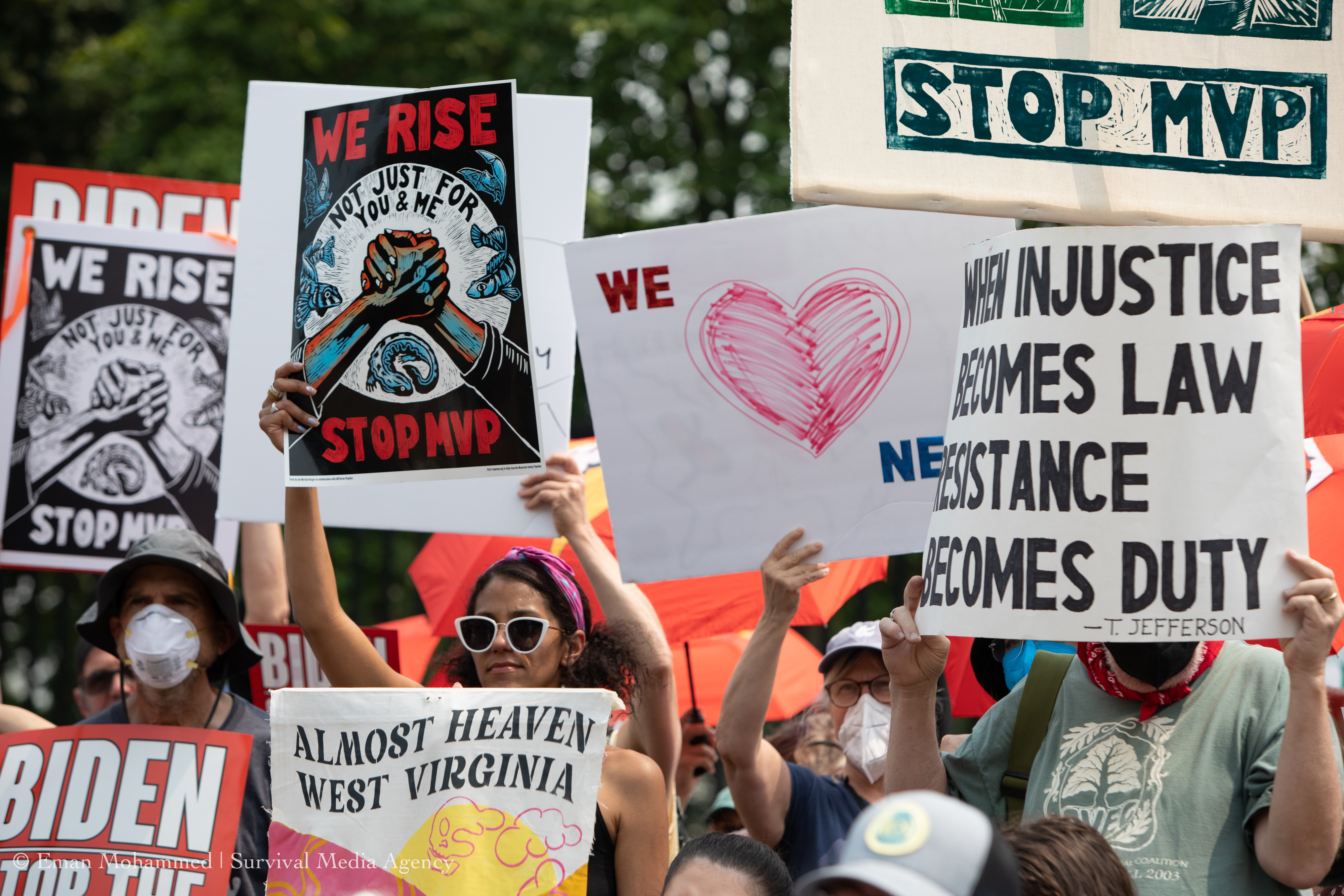
On Thursday, June 8, 2023, hundreds of frontline and Appalachian climate activists rallied at the White House against President Biden’s endorsement of the Mountain Valley Pipeline. (POWHR/Eman Mohammed/Survival Media Agency)


This spring’s passage of federal legislation raising the debt ceiling came with one provision that clean energy advocates had fought hard against: it sweeps away several legal challenges to the Mountain Valley Pipeline (MVP) that have stalled completion for more than four years. The pipeline is supposed to carry methane gas from the fracking fields of West Virginia into Virginia to connect to an existing interstate pipeline here, and getting it built has long been a priority of West Virginia Senator Joe Manchin.

Manchin surely believes he notched a victory with the inclusion of this provision in must-pass legislation. And in one respect, he’s right. Pipeline opponents aren’t conceding defeat, but stopping the MVP in court just got a heck of a lot harder. 

Whether the pipeline’s developers should be celebrating is another matter. The wisdom of building a new methane gas pipeline was questionable nine years ago when the MVP was conceived. Today, with the U.S. transitioning away from fossil fuels, the folly of building new gas infrastructure should be obvious to anyone who hasn’t already committed billions of dollars to the project.

Dominion Energy figured this out three years ago when it dropped plans to develop the Atlantic Coast Pipeline. Dominion is a big energy conglomerate and had other projects to pursue. Canceling the Atlantic Coast Pipeline saved it billions of dollars that it is now investing in offshore wind and other renewable energy assets. 

MVP’s two largest minority partners are also diversified companies with other options. NextEra Energy, which owns a 31% share in the partnership through its subsidiary Next Energy Resources, wrote off the value of its investment in MVP in 2021 and 2022, saying it planned to “reevaluate its investment in the Mountain Valley Pipeline.” 

A NextEra spokesperson did not answer my question about what the company plans to do about MVP now.  But if a picture is worth a thousand words, take a look at NextEra Energy Resources’ homepage. MVP isn’t mentioned anywhere on the website, which is largely a celebration of the company’s renewable energy assets. 

The third-largest stakeholder in the MVP is Consolidated Edison, with an initial 12.5% stake. In 2019 it exercised an option to cap its investment in MVP, and in 2020 it wrote down the value of its investment by almost half. ConEd CEO John McAvoy told investors that year the company would no longer invest in gas transmission projects and “certainly would” consider selling its stake in MVP. 

“We made those investments five to seven years ago,” he said, “and at that time we — and frankly many others — viewed natural gas as having a fairly large role in the transition to the clean energy economy. That view has largely changed, and natural gas, while it can provide emissions reductions, is no longer … part of the longer-term view.”

Unfortunately, these views aren’t shared by MVP’s majority owner and operator. Equitrans Midstream is solely a pipeline and gas storage company, having been spun off from a larger corporation, EQT, in 2018. MVP is its key to growth. The exit door may be wide open, but Equitrans doesn’t want to leave because it has nowhere to go.

That doesn’t mean it makes sense to stay, either. Many a gambler has learned the hard way that continuing to feed coins into a slot machine does not make it more likely to disgorge the jackpot. 

And really, if there ever was a jackpot for MVP, it is gone by now. In 2015, EQT saw an opportunity to undercut the price charged by existing pipelines to ship gas to an energy-hungry Southeast. Today, though, demand for methane gas has cooled in the face of cheap wind and solar, while MVP’s costs have ballooned to $6.6 billion from the initial projection of $3.25 billion. Analysts say MVP’s competitive advantage has evaporated, and its prospects for profitability look grim.  

Equitrans maintains that there is still a pressing need for its pipeline, but demand has always been hypothetical. From the very beginning, the partnership seemingly indulged in “build it and they will come” magical thinking. 

Getting a permit to build from the Federal Energy Regulatory Commission requires that pipeline developers have their customers lined up ahead of time in order to demonstrate a “need” for the project. Even in 2015 there were not enough customers clamoring for MVP’s services, so the partners named themselves as the buyers for more than half of the pipeline’s capacity. FERC’s approach to permitting allows this self-dealing, though the commission has been heavily criticized for it. 

Obviously, Equitrans was never going to be a customer; it isn’t in the business of generating power or selling gas at retail. Its field of dreams assumed demand for gas would grow, customers would be clamoring for pipeline capacity, and Equitrans would be able sell its share of the capacity and just reap the profits from owning the pipeline.

It’s hard to imagine that happening now. Economics had already started to favor wind and solar over fossil fuels when the MVP broke ground. Total natural gas consumption has been mostly flat nationwide since 2018, and the Energy Information Agency (EIA) projects it will decline steadily for the next decade. EIA also projects that more than half of all new electric generating capacity this year will be solar, with natural gas additions down to a mere 14%. Here in Virginia, methane gas burned by electric utilities has declined from a high in 2020.

The future will only get brighter for renewables and dimmer for gas. In 2020, Virginia committed to a zero-carbon energy future, and in 2022 Congress passed the strongest set of clean energy incentives in history. Betting on fossil fuels in today’s environment makes no sense.

Sure, Governor Youngkin is doing his level best to throw a wrench in the works, and Dominion Energy Virginia just proposed building a 1,000-megawatt gas combustion turbine, citing growing demand from data centers and electric vehicles. Misguided as that proposal is, it doesn’t signal good times ahead for the gas industry. Combustion turbines are not baseload plants; they run only when demand exceeds other sources of supply. Dominion has no plans to build new baseload gas plants.

MVP knows finding customers in Virginia will be hard. Before litigation and permit denials put construction on hold in 2018, the partnership had proposed an extension of the pipeline into North Carolina, perhaps hoping for better pickings in Duke Energy territory. Now that MVP has the congressional seal of approval, it is seeking to revive the proposed Southgate Extension, to the dismay of North Carolina activists. Yet economics don’t favor gas over solar there, either.

The liquefied natural gas export market has also been floated as a potential source of growth, but critics say the lack of liquefied natural gas terminal capacity prevents that from happening. 

It’s time to stop this travesty. Equitrans claims MVP is 94% complete, but opponents say the true figure is more like 56%, with many of the most difficult segments (like stream crossings) still to be tackled. Those are also the most environmentally sensitive parts of the line. Pulling the plug on MVP now would avoid not only the cost of completing the pipeline, but also the cost of fixing leaks, erosion damage and other problems critics believe are inevitable given the terrain and geology. 

That would be a much better result for everyone concerned than completing the pipeline to serve a market that doesn’t exist – a Pyrrhic victory if there ever was one.

This article was originally published in the Virginia Mercury on June 28, 2023.

Unknown's avatar

Is there a partisan divide on climate? Not among young people

The divide politicians should be paying attention to is not between Democrats and Republicans. It’s between young people and old Republicans.

Photo courtesy of 350.org

Judging from the political rhetoric, you’d be justified in thinking that only Democrats feel the urgency of the climate crisis, while Republicans are united in dismissing it. Polling shows Democrats are better aligned with popular sentiment: the great majority of Americans support more climate action. But Republican leaders assume that even if their position is a losing one  with the general population, at least they represent their party membership. 

It turns out they are ignoring critical details. The divide they should be paying attention to is not between Democrats and Republicans. It’s between young people and old Republicans.

Recent polling from the Pew Research Center found that although 64% of Republicans over 65 oppose the U.S. taking steps to become carbon neutral, 67% of Republicans under 30 support doing so. Given that Millennials and members of Gen Z (those born after 1997) are less likely to identify as Republicans in the first place, you’d think the party leadership would pay close attention to the issues young Republicans care about, in hopes of growing their brand.

Instead, the party’s position on climate is driven by the opinions of the older, mostly white Republicans who dominate the conservative media echo chamber and control power in Congress and state legislatures. In Virginia, as in other states and Congress, lawmakers are older, whiter and more male than the people they represent. They can afford to dismiss climate change, because the worst impacts won’t happen until they have disappeared from the planet. 

But that tendency of older voters to die off is exactly why catering to the curmudgeon bloc is a bad strategy for holding on to power in the long term. Greenhouse gas concentrations continue to increase; the planet keeps warming. The choking smoke from Canadian fires is merely a warning of what lies ahead.  

The nothing-to-see-here narrative on climate change will only appear more fringe with every record wildfire season, every killer heat wave and every freak mega-storm. If Republicans don’t find a way to pivot, they will continue losing younger voters until they find themselves out of power. 

That’s actually the best-case scenario. In the worst-case scenario, Republicans win the presidency and Congress and, having backed themselves into a corner pandering to the curmudgeons, will feel forced to undo recent federal climate legislation including the Inflation Reduction Act. Consequences for the planet and the American economy would be disastrous. The IRA is not just the most impactful climate law the U.S. has ever passed, it has unleashed enormous infusions of capital into red states

And what demographic benefits most from the millions of new jobs being created in green energy and electric vehicles? Why, that would be the young people. 

Some Republicans in Congress and state legislatures do recognize the climate is in crisis. Behind closed doors, they may even concede their party needs to do more. But each lawmaker has a different excuse for failing to act. They fear a primary challenge from someone even farther to the right, or they depend on donations from fossil fuel apologists like the Koch brothers (again, old white men!), or they fear retribution from party leaders if they buck their caucus. In the end, they fall back on obfuscation, deflection, Democrat-blaming and wishful thinking. 

Recent news stories have featured much wringing of hands and pointing of fingers over Gen Z’s tendency towards pessimism and nihilism. Surveys show these young people are more likely to believe it is too late to avert climate change, and more than half feel “humanity is doomed.” Close to 40% say their fears about the future make them reluctant to have children. 

Many young people are channeling their anxiety and anger into action. Election turnout among younger voters has surged, though it’s still woefully behind that of older generations. Young workers are more likely to seek jobs with a positive impact for people and the planet — which makes the green job incentives in the IRA all the more relevant to their lives. 

Indeed, the good news for this generation is that the urgency of the climate crisis has spurred a remarkable acceleration of research and development into climate solutions. For young workers especially, there are more opportunities for meaningful work than at any time in history. The kids are right to worry about hard times ahead, but their generation may be the one to save humanity from this crisis of their elders’ making. 

Success, however, requires that those elders acknowledge the crisis, find the courage to move past partisan politics, and help.

This article was originally published in the Virginia Mercury on June 13, 2023.

Unknown's avatar

Law? What law? Pandering to the governor, Dominion’s new plan ignores Virginia’s climate law

Dominion Energy headquarters, Richmond, VA

Last December, Dominion Energy produced a remarkable document: a climate report predicting that by 2040 its electricity supply will be dominated by renewable energy. Coal will be gone by 2030, and methane gas will hang around in ever-smaller amounts, just to fill in the energy gaps. Small modular nuclear reactors (SMRs) probably won’t play a role for at least 15 years, during which time solar will become the mainstay of the electricity supply. According to the report, this strategy will allow Dominion to meet its goal of becoming carbon-neutral by 2050.  

Fast forward a few months, and the same company, using the same information, projects a future full of new methane-burning plants and SMRs. Dominion Energy Virginia’s 2023 Integrated Resource Plan (IRP), released May 1, now insists that the phenomenal growth of the data center industry and, to a lesser degree, the adoption of electric vehicles require so much energy that it can’t possibly meet legally-mandated climate goals. Accordingly, the plan doesn’t even try.

Instead of decarbonizing in accordance with Virginia’s role in the Regional Greenhouse Gas Initiative (RGGI) and the requirements of the Virginia Clean Economy Act (VCEA), Dominion now says it must build new methane-burning plants and keep old, expensive coal plants running “beyond statutory retirement deadlines established in the VCEA.”  All the alternatives examined in the IRP “assume that Virginia exits the Regional Greenhouse Gas Initiative (‘RGGI’) before January 1, 2024,” in violation of Virginia law. Most of the alternatives include the same SMRs its Climate Report recognized as unready. Compared to Dominion’s 2022 IRP update (filed just last September!), now costs have ballooned and CO2 emissions will skyrocket. 

What could possibly have happened in the course of a few months to produce this about-face? The astounding growth projections for the data center industry may be news to many Virginians, but not to the utility that provides their power. Vehicle electrification is hardly a surprise either. SMRs did not achieve any breakthroughs in technology or economics this winter, nor did anyone suddenly discover a way for new gas plants to make sense for the climate or ratepayers. Dominion makes a big deal out of the Christmas cold snap, but you have to try pretty hard to believe that requires upending all previous planning.

What did happen was the 2023 General Assembly session, in which Gov. Glenn Youngkin played a decisive role in handing Dominion a major – and unaccustomed – defeat. With Dominion Energy holding its shareholder meeting today, the company badly needs to show it is back in the governor’s good graces. And the governor, as we know, is not a fan of the energy transition. 

In other words, the IRP is a political document, not a serious approach to meeting Virginia’s electricity needs, at a time when climate change is accelerating and fossil fuels are giving way to superior renewable energy technologies.  

Market watchers will recall that Dominion’s stock price tanked in the fall of 2022, losing more than 30% of its value from August to November. So the company came up with a bill that would have increased the profit margin for its Virginia utility from 9.35% to 10.77%. This number was calculated to improve Dominion’s standing on Wall Street but would cost consumers an extra $4 billion, according to the State Corporation Commission’s estimate. The company also expected to be able to defeat pro-consumer legislation that would return more authority over rates to the SCC.

Dominion’s bill was widely panned, but that hardly made it a non-starter. In past years, the company has gotten what it wanted more often than not, thanks to powerful friends like Senate Majority Leader Dick Saslaw, D-Fairfax, and House Majority Leader Terry Kilgore, R-Scott. This is the beauty of doing business in a state that allows corporations, even public utilities, to supply unlimited campaign donations to elected officials. Over the years, Dominion’s contributions to Republican Kilgore nearly match its contributions to Democrat Saslaw. Most other General Assembly members get contributions from Dominion, too, helping to cement bipartisan support for the company’s priorities.

As the patrons of this year’s money bill, Saslaw and Kilgore should have been able to deliver enough votes from members of both parties to ensure a profitable outcome for their biggest campaign donor. They were not counting on the governor poking holes in the plan. 

Dominion’s beating this year grew from seeds it sowed in 2021. That year, Dominion made a bad bet on Democrat Terry MacAuliffe to win the governorship, secretly funding a dark money group to run ads attacking Youngkin. 

This year, Youngkin took his revenge. As a Wall Street guy himself, he knows how to hit a corporation where it hurts. 

Youngkin forced Dominion to accept changes to the bill that increase the company’s return on equity modestly (and only temporarily), but take away other avenues of profit. Adding insult to injury, the General Assembly also adopted the pro-consumer legislation that allows the SCC to set “fair and reasonable” rates in the future. 

Dominion declared itself satisfied with the result, but Wall Street judged otherwise. The company’s stock, which had started to rally in January, reached a ten-year low this spring. 

Aside from punishing Dominion, the governor achieved none of his energy goals in the legislative session. Rolling back the VCEA, exiting RGGI through legislation, reversing the Clean Car Standard — none of that happened. And as long as the Democrats keep control of at least one chamber in the General Assembly in this fall’s election, none of that is likely to happen. 

So Dominion’s IRP violates Virginia’s laws and the public’s trust (such as it is), makes a mockery of its own climate plan and proposes “solutions” that will drive up both costs and carbon emissions. As a plan, it can’t be taken seriously.  

All that, however, is beside the point. It makes the governor happy. And what makes the governor happy, Dominion hopes, will make its shareholders happy. 

That assumes the shareholders don’t care about climate change, or that they hold values that are as malleable as those of Dominion CEO Bob Blue and the rest of the company’s leadership. 

Climate change? What climate change?

An earlier version of this article was published in the Virginia Mercury on May 10, 2023.

Unknown's avatar

Is hydrogen a miracle solution for the climate, or the new ethanol?

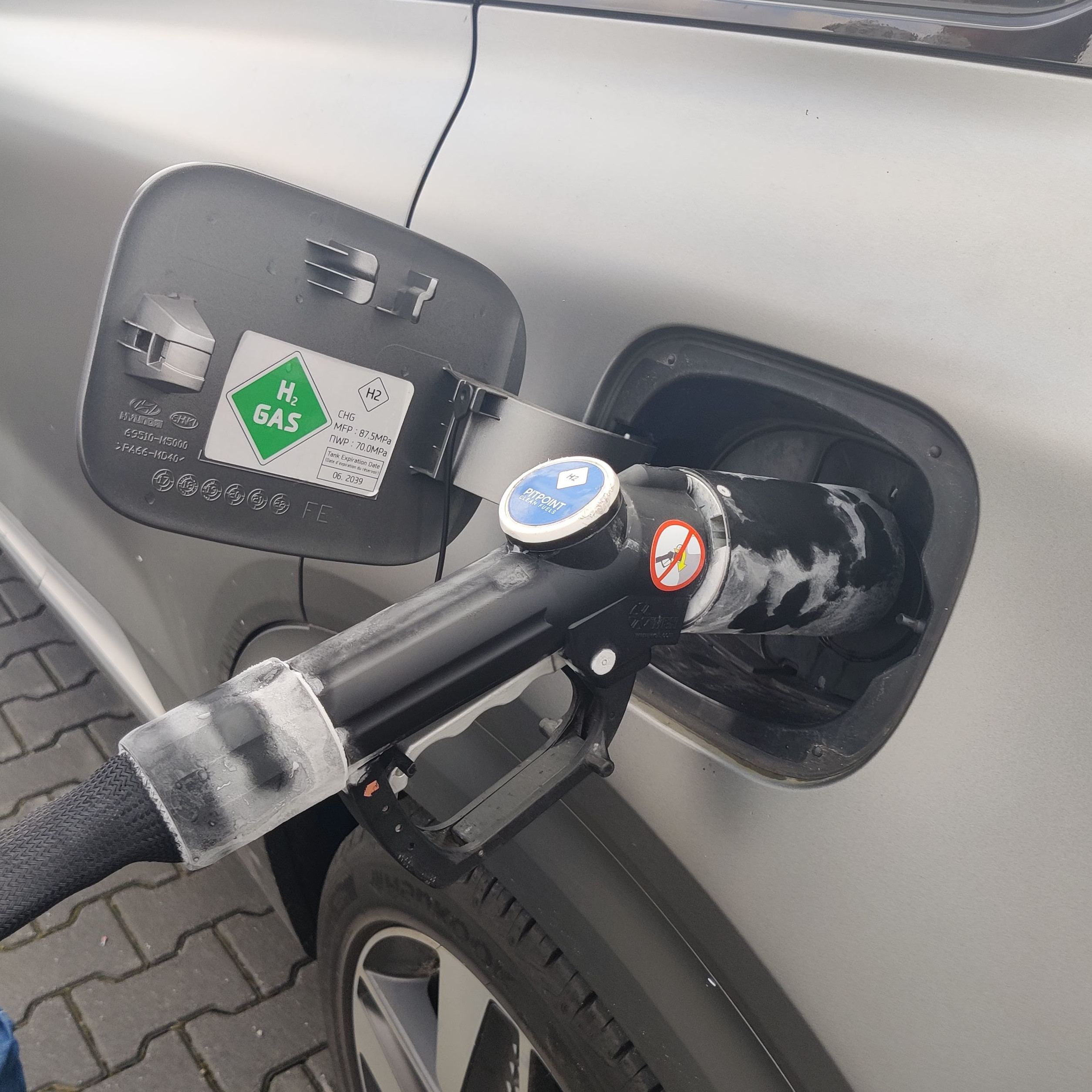
Refueling a hydrogen-powered vehicle. By Ogidya via Wikimedia Commons

The hydrogen gold rush is on. Spurred by the urgency of the climate crisis, and attracted by generous incentives in last year’s Inflation Reduction Act, companies ranging from oil majors to small start-ups are pouring money into the Next Big Thing in energy: a fuel that is flexible, transportable and carbon-free. 

Is hydrogen a critical piece of the decarbonization puzzle that needs floods of new funding, or an over-hyped, not-ready-for-prime-time financial boondoggle? 

At this point the answer seems to be both. 

In his 2022 Energy Plan, Virginia Gov. Glenn Youngkin touted hydrogen as “a once-in-a-lifetime opportunity to reimagine Virginia’s future and meet energy needs through an abundant, dispatchable, and zero-emission fuel source where water is the only required input.” 

This statement has its problems, including the fact that water is actually not the only required input. Making hydrogen from water requires a lot of energy, which must come from some other fuel. Therein lies the rub. 

 How the Department of Energy believes clean hydrogen could help decarbonize the U.S. economy. (U.S. Department of Energy)  

One way to make hydrogen — and the method everyone is talking about — is using electricity to split water (H2O) into its components, hydrogen and oxygen, through electrolysis. Energy is lost in the process, so there is no point in using hydrogen for anything that can plug into the grid. Hydrogen is also more expensive and less efficient than battery storage, which explains why automakers are focusing on electric vehicles rather than ones that run on hydrogen fuel cells

Yet some kinds of transportation (aviation, long-haul trucking) and many industrial processes are hard or impossible to electrify, at least for now. Hydrogen, ammonia and other products can often replace fossil fuels for these uses, and perhaps also play a role in long-term energy storage for grid power. 

Recognizing this potential, last year’s Inflation Reduction Act included a range of incentives to spur investment in so-called green hydrogen, defined as hydrogen made from renewable energy. Growing the supply of green hydrogen will require a massive buildout of wind and solar as well as years of technological refinement, but airlinessteelmakers and other customers are already either starting to use green hydrogen or say they want it for their operations.  

Unfortunately, any time the government dangles a subsidy, some businesses will look to exploit any opening to grab free money, even if the result is contrary to the whole point of the subsidy. Those businesses do find champions among politicians who are more interested in generating economic activity than in making sound public policy (or maybe they just confuse the two). But getting the rules right is critical for the climate, and for making sure customers get the carbon-free product they sign up for. 

Hydrogen is already used in many industrial processes and in the manufacture of fertilizers but today it is mostly made from methane gas, at half the cost of green hydrogen. Oil companies like Chevron have urged that to build the market quickly, making hydrogen green is “secondary” to making it affordable.

This is all wrong. The great promise of hydrogen is the potential to make it from renewable energy once wind and solar have scaled up so much that there is a glut of cheap, emissions-free power. 

That is not the situation today. Nationally, fossil fuels make up 60% of electricity generation, with all renewables together representing 21.5%. The regional grid that serves Virginia includes less than 10% wind and solar in the generation mix. Renewables are growing fast while coal shrinks, but few states have so much renewable energy that some of it occasionally goes to waste. California has experienced this under ideal conditions, and is likely to be the first to have surplus renewable energy on a predictable basis. 

The challenge is that a company that invests in the capital costs of a hydrogen production facility may not want to run it only when there is surplus wind and solar. These companies will make the most money by running their electrolyzers around the clock; profitability might even depend on it. Their choices are to build new renewable energy and battery storage for their own purposes and cut back production when they have to, or manipulate the rules.

So as the U.S. Treasury Department writes the rules around eligibility for green hydrogen incentives, corporate America is asking for loopholes. NextEra, the world’s largest renewable power generator, wants to be allowedto use fossil fuels to fill in whenever there isn’t enough wind or solar energy on the grid, without losing the “green” designation and all the subsidies that accompany it. The company proposes buying carbon credits as an offset.

The proposal makes climate advocates very uneasy. We have seen this movie before. When the federal government first offered subsidies for ethanol made from corn in the 1970s, the idea was that blending American-made ethanol into gasoline would reduce our dependence on foreign oil and lower greenhouse gas emissions. 

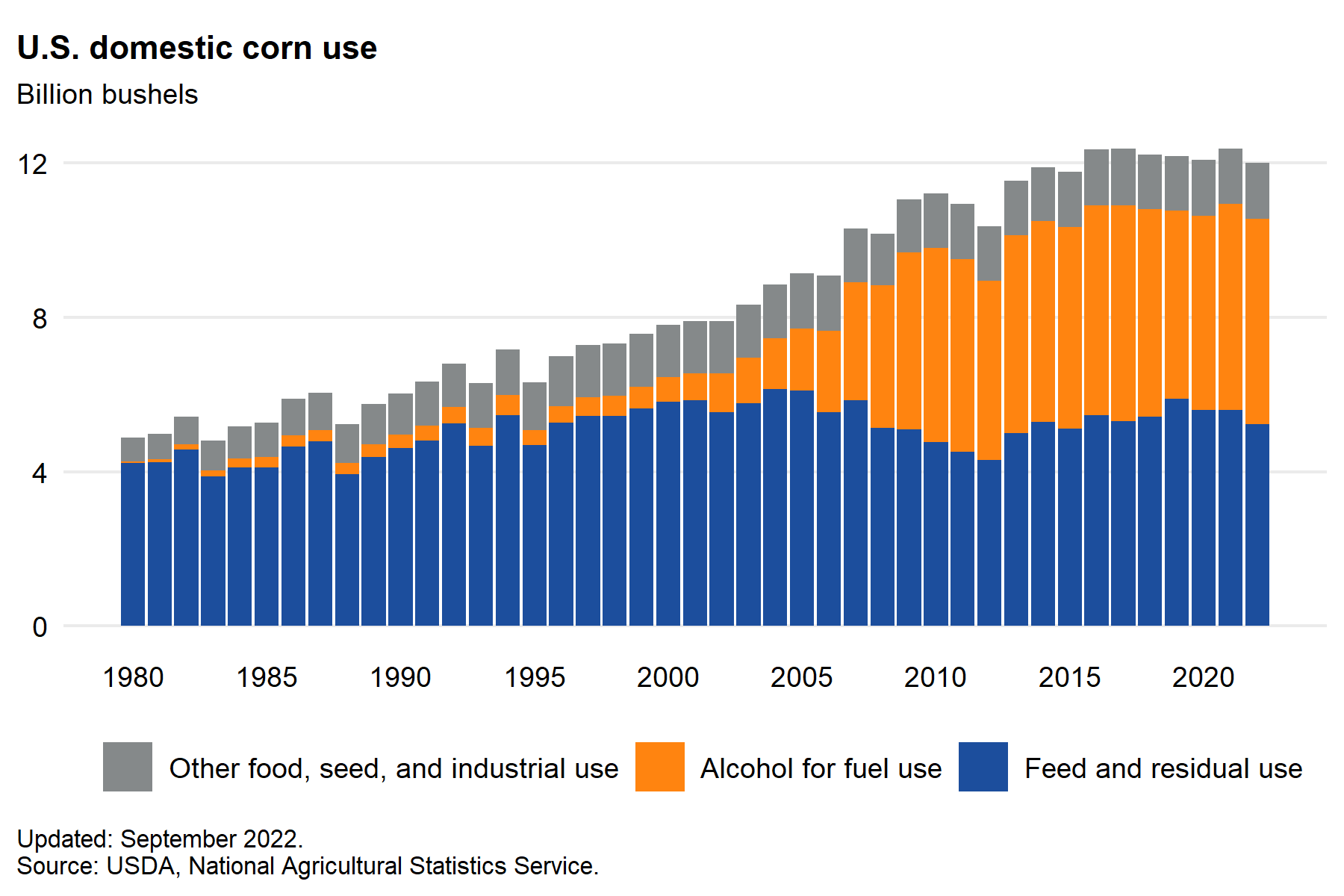
Forty years later, the program still consumes some 30 million acres of corn every year, and is estimated to have cost taxpayers billions of dollars, all while actually harming the climate. But just try scaling back ethanol subsidies today. Any politician who proposes such a thing gets their head handed to them by the powerful farm lobby. 

That makes it really important that rules set into place today for hydrogen and other “green” fuels do not compromise on the requirement that they be made from carbon-free sources. Make an exception once, and we’ll never close the loophole.

This article was originally published in the Virginia Mercury on April 25, 2023.

Unknown's avatar

It’s time for Virginia to plan its next offshore wind farm

offshore wind turbines

Virginia’s first commercial offshore wind farm is on track to start construction next year and to be fully operational in 2026.  The Coastal Virginia Offshore Wind (CVOW) project being developed by Dominion Energy will be the single largest offshore wind farm in the U.S. and among the first full-scale commercial wind projects built in U.S. waters. 

Yet it has taken us 10 years to get this far. Future projects will have shorter timelines now that the industry is gaining its footing and government bodies have figured out how to regulate it. Even so, the complexity of planning, permitting and building giant wind turbines 25 miles out in the ocean means Virginia needs to start planning the next project now to ensure that the supply chain businesses that have located here, and the workers we are training to build CVOW, still have reason to remain in Virginia come 2027. 

For most Virginians, offshore wind may still feel experimental because it has produced only two small projects in the U.S.: a 5-turbine wind farm off of Rhode Island’s Block Island built in 2016 and a two-turbine pilot project 27 miles out from Virginia Beach that started generating power in 2020. But at least 30 other projects are underway up and down the East Coast, including one currently under construction off Massachusetts and another off of New York that will begin construction this year. Plans are also underway for wind farms in the Great Lakes, off the West Coast and in the Gulf of Mexico. 

Together these projects add up to more than 53,000 megawatts (MW), exceeding the Biden Administration’s 30,000 MW by 2030 goal – enough to power 10 million homes with clean, renewable energy. According to the U.S. Department of Energy, independent forecasts show that goal to be solidly realistic. The U.S. offshore wind industry itself recently announced a longer-term target of 110,000 MW, reflecting the business community’s expectations for growth. 

The industry is also far more mature in other parts of the world. Global capacity passed the 50,000 MW milestone last year, and the global pipeline stands at more than 368,000 MW. (Surprise, surprise: China is eating our lunch, installing 13,790 MW in 2021 alone.)

Perhaps the most compelling evidence for the promise of the offshore wind industry in the U.S. is the size of industry events. In the course of a dozen years, U.S. offshore wind conferences have gone from gatherings of a few hundred academics, environmentalists and entrepreneurs in a hotel ballroom to the nearly 4,000 business people and hundreds of exhibitors who packed the Baltimore convention center at the end of March for the Business Network for Offshore Wind’s International Offshore Wind Partnering Forum (IPF).

Often the governor of a state hosting one of these annual conferences uses the occasion to unveil new goals or infrastructure investments; Maryland Gov. Wes Moore did not miss his chance this year. He announced that Maryland plans to develop 8,500 MW once the federal Bureau of Ocean Energy Management makes new lease areas available, a goal behind only New Jersey’s 11,000 MW target and New York’s 9,000 MW. Virginia’s goal begins to look cautious by comparison.

The industry does face challenges. Inflation and supply chain issues have disrupted timelines and threatened profitability. There aren’t enough workers. Transmission constraints hinder the ability to get power to customers. Permitting is a pain in the neck. Here in the mid-Atlantic, it’s hard to identify new areas of the ocean suitable for wind farms, in large part because the Department of Defense wants it all for itself. 

Other challenges are more of the good kind, such as the fact that wind turbine sizes are increasing faster than ships capable of transporting and installing them can be built. Larger turbines mean more power at less cost, and no one is quite sure what the upper size limit might be. On land, the difficulty of transporting blades that can be the length of a football field means turbines are limited to about 3 MW. Fabricating parts at coastal facilities allows turbines to scale up as far as physics and advanced material manufacturing allow.

Dominion installed 6-MW turbines for its pilot project, which was seen as the new standard a few years ago. Today the company plans to use 15-MW turbines. Each one of these massive turbines is said to produce enough energy to power 20,000 European households. I have not seen that figure translated into U.S. suburban McMansions, but it is still an eye-popping amount of emissions-free power from a single structure.  

Oh, and Dominion handled the installation ship issue by building its own vessel, which it will rent out for the Massachusetts and New York projects until it is needed for Virginia’s and others in the queue. Problem solved, at least for Virginia, though the industry needs many more ships.  

Will the cost of energy come down? 

Virginia’s CVOW project has been criticized for its high overall cost, largely the result of our immature domestic industry. The Biden Administration has set a goal to lower costs by one-third by 2030. If history is any indication, this should be readily achievable. A National Renewable Energy Laboratory (NREL) analysis shows costs have fallen by more than half since 2016, and projects that by 2030, the levelized cost of energy from offshore wind turbines will fall by another third.  

Scaling up turbines to capture more wind energy is one approach to bringing the per-kilowatt-hour price down. Economies of scale, a U.S. supply chain, and a range of innovative technologies are all expected to contribute. And of course, the Inflation Reduction Act, with its tax credits for domestic manufacturing and renewable energy, is creating a gold rush of sorts, as companies compete to get a piece of the action. 

Another significant factor in reducing costs is automation and machine learning. Some of the gains are incremental, such as optimizing turbine operation and improving turbine siting through improved wind and wake modeling. Other advances seem like windows into a future where robots take charge. Multiple exhibitor booths at IPF displayed crewless, self-piloting survey and depth-monitoring vessels and underwater robots capable of doing more tasks than humans can. Biologists and geologists stay comfortably ashore while on-board computers collect information at sea around the clock and send the data back. 

Today’s innovation will inform the next great leap forward for the industry: floating wind turbines that open deep water to energy production. Right now, floating turbines must be tethered to the seafloor  and connected to cables to bring power to shore. For various reasons this technology is more expensive than fixed-foundation turbines, but here, too, the industry expects to become competitive in the future. 

Some people are thinking much bigger. Walt Musial, a principal engineer at NREL who is one of the top researchers in the field, gave an IPF audience a look into the future. There, automation and AI could make it possible for unmoored, cableless turbines to pilot themselves around the oceans, chasing the best winds, avoiding hurricanes and turning electricity into liquid fuels like ammonia to drop off at ports of call or offshore “energy islands.”  Musial even referred to these turbines as “vessels,” evoking a whole new kind of wind-powered transportation.

 A display at the Business Network for Offshore Wind’s IPF conference exhibits an autonomous wind turbine that could contribute to the nation’s future wind energy capacity. (Ivy Main/The Virginia Mercury)

It’s a great time for workers entering the industry — if you can find them 

Though un-crewed, AI-directed traveling wind turbines may be the future, the present still requires foundations, cables, service vessels and, especially, a large workforce. Attracting and training an offshore wind workforce has become such an urgent issue that the topic earned its own track at IPF. 

To its credit, this heavily male, heavily white-dominated industry says it is committed to recruiting a diverse workforce and ensuring equitable development of offshore wind, also a goal of the Biden Administration. It will have to; right now, no one has enough workers, so finding them means recruiting from overlooked communities and addressing the social and economic barriers that have kept many people out of the skilled labor force. 

While not new to other large infrastructure projects, Community Benefit Agreements with detailed commitments covering local job creation and other investments, are new for offshore wind. Dominion has not entered any such agreement in Virginia, but as part of its case before the State Corporation Commission last fall in which it received permission to proceed with CVOW, the company signed a stipulation agreeing to an extensive and diverse community outreach program. Eileen Woll, Offshore Energy Program Director for the Sierra Club’s Virginia Chapter, told me Dominion is following through on this pledge.

Woll is also part of a task force made up of academic and community groups from the Hampton Roads area that has developed a plan for community engagement and outreach to identify potential workers from harder-to-reach demographic groups. She told me the “Breaking Barriers” project team has applied for a $500,000 grant from the U.S. Department of Energy to fund their work.  

The Virginia booth at IPF. (Ivy Main)

Halting steps towards Virginia’s next project 

The Virginia Clean Economy Act made special provision for Dominion’s CVOW project as part of an overall target of 5,200 MW. If CVOW makes up 2,600 MW, where will the rest come from? A project under development off Kitty Hawk, North Carolina, would connect to the grid in Virginia Beach, but Dominion has shown no interest in buying the power; nor has Duke Energy. Dominion makes more money acting as its own developer. Huge energy users like the data centers operated by Amazon Web Services in Virginia could absorb all the energy from several Kitty Hawks, but Amazon hasn’t stepped up either.

Meanwhile, the federal Bureau of Ocean Energy Management (BOEM) has identified 1.7 million acres offshore North Carolina, Virginia, Maryland and Delaware with potential for new leasing. The challenge is to make space for wind in an area already claimed by fishing interests, the Coast Guard, and the Department of Defense. If Virginia leaders are serious about building an enduring offshore wind industry here, they will have to engage in some tough negotiations.

For his part, Gov. Glenn Youngkin seems to be trying to ensure that the next Virginia project will be subject to competitive bidding to avoid a repeat of the process that made Dominion Energy the sole developer and holder of the only Virginia lease area. The governor amended an offshore wind bill from Sen. Mamie Locke, D-Hampton, that was something of a nothingburger as passed by the General Assembly. Youngkin’s amendment turns the legislation into a plan requiring Dominion to work with the State Corporation Commission and other government agencies on a competitive solicitation process for the next offshore wind project. 

There is no guarantee that this will work, given that BOEM awards leases to high bidders. But if BOEM offers multiple wind energy areas for lease near Virginia, and awards the leases to multiple developers, then an SCC-led competitive process seems feasible, with a better result for consumers.

The governor’s language may have been inspired by a House bill from Del. Suhas Subramanyam, D-Loudoun, that would have had the SCC study the ownership structure of offshore wind projects and report on how to achieve the best outcome for consumers. Republicans killed that bill, but presumably they will be more open to promoting competition when the idea comes from their own party. 

The General Assembly will consider the governor’s amendment when it reconvenes on April 12. Let’s hope his amendment indicates that Youngkin is ready and willing to start the next phase of Virginia’s offshore wind industry.

This article was originally published in the Virginia Mercury on April 10, 2023.

Unknown's avatar

Yes, RGGI works

At the heart of the political fight over Virginia’s participation in the Regional Greenhouse Gas Initiative (RGGI) is a seemingly simple question: does a requirement that Virginia power plants pay for the right to spew CO2 actually lower CO2 emissions? Critics argue no; supporters say yes. There is evidence for both, but in the long run, the benefits of RGGI for both Virginia and the climate are clear.

RGGI operates as a carbon cap-and-trade agreement between 12 northeastern states. Carbon-emitting power plants must buy allowances through an auction process. This makes high-carbon fossil fuel electricity more expensive relative to zero-carbon sources like wind, solar and nuclear. The result, in theory, is that utilities are incentivized to buy less of the former and more of the latter. In states like Virginia, where utilities own generating plants, RGGI provides an incentive for them to abandon coal plants and build more zero-carbon sources. 

RGGI administrators say it has succeeded in lowering carbon emissions in member states by more than 50%, twice as fast as the nation as a whole. RGGI states typically spend at least some of the money raised in the carbon allowance auctions on energy efficiency improvements that allow people to use less electricity, further reducing emissions.

But RGGI doesn’t operate in isolation. Several RGGI states are members of the PJM regional grid, comprising 13 states, including some that don’t participate in RGGI. Critics point out that, instead of building or buying renewable energy, a utility in a RGGI state can buy electricity produced in a state that doesn’t participate in RGGI. Fossil fuel plants in a non-RGGI state like West Virginia don’t have to pay to pollute, giving them a competitive edge over similar Virginia plants. 

This is known as “leakage,” a loophole that lets fossil fuel energy “leak” into RGGI states. If there were enough leakage, lower carbon emissions in RGGI could be offset by the higher emissions elsewhere in PJM, leaving overall emissions unchanged.

Stephen Haner, a respected advocate for low energy rates at the conservative Thomas Jefferson Institute for Public Policy, says this is what’s happening in Virginia. He cites data to show a big jump in electricity imports from 2020 to 2022. According to this calculation, CO2 emissions actually increased under RGGI, when they were supposed to be decreasing.

But there are problems with this analysis, starting with the fact that Virginia entered RGGI in 2020, at the onset of the pandemic. That year saw energy demand — and emissions — plummet. It would be strange indeed if Virginia emissions did not rise when the economy rebounded. 

Energy demand is also increasing in Virginia due to the boom in data center construction. Data centers are huge energy hogs, and they are being built faster than our utilities can build new electricity generation to serve them. The new generation will be zero-emission solar and, soon, offshore wind; meanwhile the electricity has to be imported from elsewhere in PJM.

Bill Shobe, an economist with the Weldon Cooper Center at the University of Virginia who has done extensive work in support of Virginia’s energy transition, told me in an email there are other reasons to be skeptical of the conclusion that RGGI caused Virginia’s carbon emissions to increase. I’ll spare you the weedy details, but among other things, Virginia’s nuclear production decreased significantly from 2020 to 2021, which has nothing to do with RGGI. And as Shobe notes, the data centers would get built somewhere, if not here, so perhaps they should not be counted against us.

I am not as forgiving of data centers as Shobe is. Tech companies have chosen Virginia for its fiber optic network and generous tax incentives, and they point to Virginia’s climate laws as progress in meeting their own sustainability commitments. Data centers are taking our money and busting our carbon cap; they owe it to us to procure their own renewable energy, if not in Virginia, then within PJM.

Data centers notwithstanding, Shobe’s own calculations show leakage to be much less than Haner’s data suggests. “It is abundantly clear that emission leakage is relatively modest,” he told me. “In the end, the other advantages of RGGI (lowering compliance costs, revenue for efficiency and flood resilience, etc.) will swamp the small leakage margin.” 

For RGGI critics like Haner and Gov. Glenn Youngkin, of course, effects on CO2 emissions are really beside the point anyway. They would gladly accept higher emissions if it meant lower rates. 

This is analogous to what happens when American manufacturers move operations to countries with cheaper labor and lax environmental laws. One way to stem the tide would be to lower our own environmental standards and suppress wages in the U.S., removing the incentive to offshore operations by making life equally miserable everywhere. 

The better alternative is to raise the bar everywhere so that everyone benefits. That’s not just the right thing to do; it actually works. In the international arena, American leadership on clean energy investment is already forcing other countries to discuss upping their game. Here in the U.S., RGGI has attracted new member states — like Virginia — and prompted discussions within PJM about creating a region-wide clean energy market.

Of course, Virginia alone doesn’t have the market power to force other states to change. Fortunately for us and for the climate, leakage will become less of an issue over time as renewable energy outcompetes fossil fuel power everywhere. PJM’s carbon emissions have trended steadily lower, first as methane displaced coal, and more recently as renewable energy displaces all fossil fuels. That displacement will accelerate with federal clean energy incentives in place and innovation continuing to drive renewable energy costs lower. 

Meanwhile, Virginia crafted its energy transition framework with an eye for ensuring our economy gains, no matter what other states do. As Shobe noted, lowering carbon emissions is just one benefit of RGGI membership; carbon auctions fund energy efficiency and flood control projects here, and the switch away from high-emission coal plants means our residents breathe cleaner air. 

Our RGGI law is also part of a larger package designed to create jobs and economic development here at home. The Virginia Clean Economy Act provides for utilities to procure electricity from solar and wind generating facilities and battery storage located in Virginia, which will reduce leakage over time. It also requires an increasing percentage of Dominion and Appalachian Power’s electricity to come from renewable energy. After 2025, most of that must come from in-state facilities. 

As I’ve shown before, building low-cost wind and solar helps to lower rates and provides price stability when fossil fuel costs spike. Virginia’s energy transition is just getting underway, but it will deliver benefits for years to come. 

This article was originally published in the Virginia Mercury on March 29, 2023.

Unknown's avatar

Is your electricity bill keeping you in the dark?

A seemingly simple question came across my desk a few weeks ago: What does Dominion Energy Virginia charge residents per kilowatt-hour (kWh)? Given how frequently I write about Dominion, I was embarrassed not to have a quick answer. In my own defense, though, Dominion makes it hard to find out. And when you do find out, the answer is, it depends. 

Examine a recent bill, and you will see the number of kilowatt-hours you used in the preceding month, a confusing list of charges and the dollar amount that you owe. You can do the math to figure out what you paid this month per kilowatt-hour, but that’s more of a snapshot than the whole picture.

 A Fairfax resident’s Mar. 6, 2023 Dominion Energy electricity bill. (Ivy Main/The Virginia Mercury)

I asked colleagues to send me their utility bills to see what people were actually paying, and I got out my calculator. Everyone’s rate was different, and the more electricity they used, the less they paid per kWh. Even after I removed state and local taxes from the equation, rates ranged from a low of 12.2 cents per kWh for a home that used 2930 kWh in February, to a high of 17.3 cents for a home that, thanks to solar panels, drew just 179 kWh from the grid in the same time period. 

As that solar home shows, the flat rate of the basic customer charge skews the average price higher. That basic charge is currently $6.58 per month, according to Dominion’s residential rate schedule, but you won’t see it on your bill. 

The rate schedule reveals other information your bill doesn’t tell you, and that’s where the real impact lies: you pay less per kWh, in both generation and distribution charges, for the electricity you use in excess of 800 kilowatts per month from October through May. From June to September, you pay less in distribution charges for every kilowatt over 800, but more in generation charges.

You’re also charged a single rate year-round for transmission, which is different from distribution. Plus, every kilowatt-hour is subject to a list of riders – “charges applied to certain rate schedules to recover various costs associated with Dominion Energy’s electric operations and electricity production,” according to Dominion – and non-bypassable charges. The rate schedule doesn’t identify these charges, but the bill does, albeit with no explanation for how the amounts are determined. Your bill also lists fuel as a separate charge under Electricity Supply, though fuel does not appear in the rate schedule. 

Still with me? No? All of this must make sense to the State Corporation Commission, which approved the rate schedule, but it is thoroughly opaque to customers. 

The sufficiently dogged can find a worksheet on Dominion’s website that breaks out all these costs. If you plug in the month and a number of kWh you used, it will calculate a bill. You still need to do the math yourself to arrive at the price per kWh, but you can then play with numbers to see how usage affects rates. 

Doing that confirms what I saw in my colleagues’ bills. Assuming 1,000 kWh, the number Dominion uses to represent the “typical” customer, the price works out to 14 cents in winter.  Change that to a frugal 500 kWh and you get 15 cents. Raise it to 2,000 kWh, and it goes down to about 13 cents. 

When challenged about this in the past, Dominion justified its buy-more, pay-less winter rate structure by arguing it was needed to make bills affordable for customers with electric heating, whose use can double or triple in the wintertime. The company didn’t mention that it also benefits wealthier people with large homes, and decreases the incentive for customers to conserve energy.

It also turns out that large homes do well in summer, too. According to the worksheet, a customer using 1,000 kWh in June would pay 14.6 cents per kWh. For 2,000 kWh, it rises slightly to 14.7 cents. The customer who uses only 500 kWh pays the highest rate, at 15 cents. Energy efficiency, alas, is not rewarded. 

So Dominion’s bills aren’t just confusing, they mask a perverse incentive in the rate structure that rewards people who use more electricity. This year’s utility legislation changes a lot of things, but it doesn’t require greater clarity in billing,  nor does it fix that upside-down incentive.

All utility bills are not equal

This perverse incentive is shared by some other Virginia utilities, though not all, and not all hide the ball the way Dominion does. Appalachian Power’s website shows it charges a single rate no matter how much you use. There’s neither a price break nor a penalty for higher consumption. The website provides two examples, for customers using 1,000 and 2,000 kWh, respectively. This makes it easy to calculate what you’re paying per kWh (about 16.5 cents), though you won’t find that number on either the website or the bills themselves. But neither the bill nor APCo’s website mentions the existence or amount of the basic customer charge, which can only be inferred from the website examples.

I also looked at February bills sent me by customers of Northern Virginia Electric Cooperative (NOVEC) and Rappahannock Electric Cooperative (REC). In both cases the bills were easy to understand. They identify the flat monthly charge, though in both cases the charge is unfortunately more than twice as high as Dominion’s. The bills also list the rates applicable per kWh for generation, transmission and distribution. Both utilities give a year-round volume discount on the distribution charge for higher levels of usage, another regrettable feature. However, REC’s SCC filing shows it imposes a higher electricity supply charge in summer for monthly usage over 800 kWh. I could not find current information about NOVEC’s rates online; I hope its customers have better access. 

Being able to understand your electric bill matters. Virginia’s average residential rates increased 20% between December 2021 and December 2022, according to the U.S. Energy Information Agency, mostly due to last year’s spike in the price of methane gas and coal. Even before last year, our bills were higher than those in most other states. 

Consumers have an array of options to help them lower their energy costs, including new federal and state programs and incentives for weatherization, energy efficient appliances and renewable energy. But customers who are confused about what they currently pay are less likely to act.

For the same reason, utility rate structures should incentivize customers to take steps that conserve energy. Lower rates for using more electricity undercut the value of investments in energy efficiency. 

If utilities want to help their customers, they can start by sending the right message.

This article was originally published in the Virginia Mercury on March 16, 2023.

Unknown's avatar

A dog, a food fight and other highlights from the 2023 General Assembly session

Cartoon describes Amazon replacing Dominion as the major political power in Virginia

For followers of Virginia energy policy, 2023 will be remembered as the year Dominion Energy lost its stranglehold on the General Assembly. The utility’s all-out campaign to boost its return on equity earned it little more than crumbs. By contrast, a bill to return authority over rates to the State Corporation Commission garnered overwhelming support. 

Another surprise loser was the nuclear industry. Gov. Youngkin and boosters of small modular reactors (SMRs) expected a lot more love, and incentives, than legislators proved willing to dole out this early in the technology’s development. 

Less noticed was the rise to political power of one of Dominion’s largest customers, Amazon Web Services. Many legislators may still not have caught on, but the corps of lobbyists who haunt the hallways of the General Assembly building know a 500-pound gorilla when they see one. As one lobbyist put it: “Amazon is the new Dominion.”

These are the standout takeaways from a legislative session in which, otherwise, few significant energy bills emerged from the scrum. Senate Democrats ably protected the energy transition framework established in 2020 and 2021, but modest efforts to accelerate the transition mostly failed. Of the roughly 60 bills I followed this session, only a handful made it to the governor’s desk. 

Republican attacks on the energy transition failed

The three foundational bills of Virginia’s energy transition — the Regional Greenhouse Gas Initiative (RGGI), the Virginia Clean Economy Act (VCEA) and Clean Cars — all came under attack this year, as they did last year. And again, repeal efforts failed every time.

Senate Democrats blocked the one bill that would have pulled Virginia out of RGGI. Gov. Youngkin remains bent on achieving the pullout by regulation through  Department of Environmental Quality rulemaking. 

In the transportation sector, every bill to repeal the Air Pollution Control Board’s authority to implement the Advanced Clean Car Standard failed in the Senate as Democrats held the line. 

Efforts to undermine key parts of the VCEA failed, including House and Senate bills that would have given the State Corporation Commission more authority over closures of fossil fuel plants and require it to conduct annual reviews designed to second-guess the VCEA’s framework for lowering emissions and building renewable energy. 

A House bill that would have exempted certain industrial customers categorized as “energy-intensive trade-exposed industries” from paying their share of the VCEA’s costs passed the House on a party-line basis. However, with the bill facing certain death in Senate Commerce and Labor, patron Lee Ware, R-Powhatan, requested it be stricken. At the time, he had reason to expect that a compromise approach proposed by Sen. Jeremy McPike, D-Prince William, would pass. McPike’s bill would have had the SCC put together a group of experts to study the issue and make recommendations. After passing the Senate, however, McPike’s study bill went to House Energy and Commerce, which insisted on amending it to mirror Del. Ware’s bill. That did not go over well in the Senate, where the House substitute was  unanimously rejected. McPike then asked the Senate to kill his own bill, and the energy-intensive trade-exposed industries got nothing. 

Raids on the VCEA produced mixed results

One of the VCEA’s strengths is in creating incentives for clean energy. That’s also a vulnerability, because everybody and their brother wants in on the incentives — and this year, once again, the brothers came peddling some pretty sketchy stuff.

In the end, however, the VCEA sustained little damage. An effort to open up the renewable energy category to coal mine methane was modified to become simply a policy to encourage the beneficial capture and use of methane that would otherwise escape from old coal mines into the air. However, methane extraction jobs in four Southwest Virginia counties will now qualify for a “green jobs” tax credit.

More successful was an effort by the forestry industry to allow more woody biomass to qualify for the renewable portfolio standard (RPS); this was in spite of drawbacks including high levels of pollution, expense and large climate impact. As passed, the House and Senate bills will allow Dominion-owned biomass plants to remain open and have their output qualify for the RPS, so long as they burn only waste wood from forestry operations. Climate advocates opposed the change, but remain hopeful that Dominion and the SCC will want to close these uneconomic biomass plants to protect ratepayers. 

Two different House bills that tried to shoehorn nuclear and hydrogen into the RPS failed in the Senate. A third bill promoting small modular nuclear reactors (SMRs) got more traction initially; it would have had the SCC develop a pilot program for SMRs with a goal of having the first one operational by 2032. After it passed the House, the Senate Commerce and Labor committee adopted amendments to require the SCC to examine the cost of any SMRss  relative to alternatives, and to prevent ratepayers from being charged for the costs if an SMR never became operational. The Senate voted unanimously for the bill with these protections included, but the House rejected them. Ultimately, the bill died, a remarkable setback for the governor’s nuclear ambitions.

Utility reform consumed most of the session (again)

Dominion’s money grabs have turned into near-annual food fights. This one almost wrecked the cafeteria. 

The action proceeded along two fronts. One consisted of bipartisan, pro-consumer House and Senate legislation promoted as the Affordable Energy Act, intended to return ratemaking authority to the SCC. As passed, it merely authorizes the SCC to modify Dominion’s or Appalachian Power’s base rates going forward, if it determines that current rates will produce revenues outside the utility’s authorized rate of return. If that strikes you as hard to argue with, you’re not alone; no one in either chamber voted against it. 

Far more divisive was Dominion’s own effort to secure an increased rate of return on equity (ROE). This legislation earned its own bipartisan support from Dominion loyalists, led by Senate Majority Leader Dick Saslaw, D-Fairfax, for the Senate bill and House Majority Leader Terry Kilgore, R-Scott, for the House bill

As initially drafted, it probably should have been called the Unaffordable Energy Act instead of the reassuringly bureaucratic-sounding Virginia Electric Utility Regulation Act. The bill described a formula for determining Dominion’s allowed ROE that SCC staff calculated could result in an ROE as high as 11.57%, up from the currently-allowed 9.35%. SCC staff told legislators this could cost ratepayers $4 billion through 2040. In return, the bill offered some near-term savings for customers but also would have removed the last vestige of retail competition and opened VCEA coal plant retirement commitments to second-guessing by the SCC.

Dominion pulled out all the stops. The company supplemented its own in-house lobbying corps of 13 with another 17 top lobbyists from around Richmond. Former senator John Watkins signed on, as did former FERC commissioner Bernard McNamee. CEO Bob Blue showed up personally  to push the bill. Dominion ran full-page ads in the Washington Post and Virginia newspapers touting a provision of the bill that would save ratepayers $300 million (neglecting to mention that it was the ratepayers’ own money). The ad featured a dog so people could be sure Dominion was being friendly.

It didn’t work. The consumer advocates hung tough, and Gov. Youngkin, possibly a cat person, added his weight to the resistance. As the Mercury reported, the “compromise” that all parties now swear they are delighted with gives Dominion very little kibble. The coal plants will be retired on schedule, ratepayers will see savings and a larger percentage of over earnings will be returned to customers in the future. In exchange, Dominion’s future return on equity will be bumped up to 9.7%, but only for two years, after which the SCC will have discretion to set the ROE as it deems fair. (That is, if Dominion doesn’t start the next food fight first.)

Appalachian Power had its own troubles this session. APCo-only legislationthat would have replaced the requirement for an integrated resource plan with an “annual true-up review” was radically amended to become an entirely different bill. It now allows both utilities to finance the high fuel costs they’ve incurred due to soaring natural gas and coal prices. The amendments were welcomed both as a way to handle the fuel debt and so that no one had to figure out what a true-up review is. The bills passed handily.

One other successful piece of legislation may help avoid future food fights. Sen. Scott Surovell, D-Fairfax, and Del. Kilgore worked together to resuscitate the Commission on Electric Utility Regulation (CEUR) and create more transparency around utility planning. The original bill also created a structure for state energy planning, but that proved too much for House Republicans, who amended it down to the lean bill that passed. 

Over the years CEUR earned a bad reputation as an entity that rarely met but that served as an excuse for legislators to defer action on pro-consumer bills. That makes advocates somewhat wary of this bill. On the other hand, provisions welcoming stakeholders into the utility integrated resource planning process seems likely to benefit the public, if not the utilities.  

Elsewhere, consumers did poorly

Dominion may have taken a drubbing on its money grab, but it did pretty well in guarding its monopoly. The Dominion-friendly Senate Commerce and Labor committee killed a bill to allow customers to buy renewable energy at a competitive rate from a provider other than their own utility. Bills to expand shared solar passed the Senate but died in the House. 

Indeed, the House turned into a killing field for any bill with the word “solar” in it, no matter how innocuous or popular. A House Rules subcommittee killed a bill that would have helped schools take advantage of onsite solar, though it had passed the Senate unanimously. A resolution to study barriers to local government investments in clean energy was left in House Rules. A bill to create a solar and economic development fund passed the Senate but was tabled in House Appropriations. A resolution directing the Department of Transportation to study the idea of putting solar panels in highway medians never got a hearing in House Rules. A consumer-protection effort for buyers of rooftop solar was tabled in House Commerce and Energy. A bill clarifying the legality of solar leases passed the Senate unanimously, only to be left in House Commerce and Energy. 

Do we detect a little frustration on the part of House Republicans at the complete failure of their anti-clean energy agenda? Why, yes. Yes, we do.

The only pro-consumer legislation to pass was a very modest bill requiring the SCC to establish annual energy efficiency savings targets for Dominion customers who are low-income, elderly, disabled or veterans of military service. But legislation that would have made homeowners eligible for low-cost loans through property-assessed clean energy (PACE) programs failed.

Offshore wind remains on track

Dominion beat back an effort to make it hold ratepayers harmless if its Coastal Virginia Offshore Wind project fails to produce as much energy as expected. A bill to allow the company to create an affiliate to secure financing for the project passed. 

Legislation to move up the VCEA’s deadline for offshore wind farm construction from 2034 to 2032 passed; the law now also requires that the SCC consider economic and job creation benefits to Virginia in overseeing cost recovery. However, a bill that would have required the SCC to issue annual reports on the progress of CVOW failed. That bill would also have required the SCC to analyze alternative ownership structures that might save ratepayers money. 

The gas ban ban fails again

This year’s attempt to bar local governments from prohibiting new gas connections passed the House on a party-line vote but was killed in Senate Commerce and Labor. A Senate companion bill from Democrat Joe Morrissey, which had caused something of a tizzy initially, was stricken at Morrissey’s request. 

And this year’s big winner is … Amazon!

With data centers now making up over 21% of Dominion’s load and since they have already sucked up over a billion dollars in tax subsidies, this should have been the year Virginia government woke up to the need for state oversight of the industry. Alas, no. Bills that would limit where data centers could be sited failed. Senate legislation that would have simply tasked the Department of Energy with studying the impact of data centers passed the Senate on a voice vote but was killed in a subcommittee of House Rules on a 3-2 vote, the same fate suffered by a similar House bill

Who could be against studying the impact of an industry this big? Aside from the data center industry that is enjoying the handouts, the answer is the Youngkin administration. The governor is so pleased with Amazon’s plan to spend $35 billion on more data centers across Virginia that he promised the company even greater handouts. 

Those handouts take the form of a bill creating the Cloud Computing Cluster Infrastructure Grant Fund, with parameters that ensure only Amazon gets $165 million. In addition, the far more impactful sales and use tax exemption, currently set to expire in 2035, will be continued out to 2040 with an option to go to 2050; again, this is all just for Amazon, unless some other company manages to pony up $35 billion in data center investments. In return, Amazon must create a total of just  1,000 new jobs across the entire commonwealth, and only 100 of them must pay “at least one and a half times the prevailing wage.” A jobs bill, this is not.

With the sales and use tax exemption already costing Virginia $130 million per year and growing rapidly, this legislation will be very costly. You would not know it, though, from the budget analysis performed for legislators. Through the magic of accounting rules, that analysis managed to conclude that the budget impact of this legislation would be zero. 

As preposterous as that is, it may explain why only a few legislators voted against the bill. They have no idea what the governor is getting us into.

Unknown's avatar

Small modular nuclear reactors:  A bad deal for Southwest Virginia! And all of us!

Infographic shows how small modular nuclear reactors work
Source: U.S. Department of Energy

In announcing his 2022 Virginia Energy Plan, Gov. Youngkin said, “A growing Virginia must have reliable, affordable and clean energy for Virginia’s families and businesses.” The Governor’s plan to promote and subsidize Small Modular nuclear Reactors (SMnRs) in Southwest Virginia fails all three of the Governor’s own criteria:

  1. SMnRs can’t be reliable when they cannot reliably be built and brought on line in a predictable and timely fashion.
  2. SMnRs can’t be affordable because nuclear power is close to the costliest of all forms of electric power generation.
  3. SMnRs can’t be clean since they produce extremely toxic high and low-level nuclear waste, which has no safe storage or disposal solution.

Appalachia has long served as a sacrifice zone for rapacious energy ambitions of other regions. Southwest Virginians have had reason to hope that would change as opportunities for low-cost solar development emerged in recent years. Instead, politicians like Youngkin are making too-good-to-be-true promises about SMnRs, sidelining opportunities to promote solar, which can produce power in a matter of weeks, not decades.

Imposing SMnRs on Southwest Virginia is disturbing. My father worked for the Atomic Energy Commission in the 1950s. The promise the nuclear industry and the government touted then – “electricity, too cheap to meter” – never has been realized. TVA and other utilities abandoned nuclear plants under construction, leaving costly monuments to that folly and sticking electricity customers with the bill. 

COSTS: It’s not at all clear that SMnR technology will succeed, or when. Levelized cost charts of electric power generation rate nuclear as among the very most expensive means to generate electric power at utility scale. If nuclear waste management, insurance, and decommissioning costs are counted, actual costs are far higher. (Some of these costs are already socialized for nuclear power – e.g. insurance in the Price-Anderson Act.) 

The first commercial SMnR is not expected to be completed until 2029, but already its developers have raised the target price of its power by 53%. This is not a surprise; nuclear power construction history documents an extremely strong correlation between new designs and cost increases and project delays. Indeed, the Lazard research shows that nuclear is the ONLY grid-wide generation source to increase in price, 2009-2021. The increase was 36%!

NUCLEAR WASTE, TRANSPORT, AND REPROCESSING: Nuclear waste and reprocessing are also serious concerns. Make no mistake, unreprocessed nuclear waste, for all practicable purposes, is FOREVER. The fact that we have become accustomed to risk does not, by any means, reduce risk. Nor will SMnRs generate less waste than their larger forebears. Indeed, a recent Stanford University study concluded that “small modular reactors may produce a disproportionately larger amount of nuclear waste than bigger nuclear plants.” 

Safeguarding this waste is already costing taxpayers and utility customers tens of billions of dollars. With the failure of the U.S. to designate a central storage facility, nuclear power plants are forced to continue to store the waste in pools on site. 

Yet nuclear waste recycling, known as reprocessing, is no panacea. In November, the Governor spoke in Bristol in support of recycling nuclear waste from SMnRs: “I think the big steps out of the box are the technical capability to deploy in the next 10 years and on top of that to press forward to recycling opportunities for fuel.” He may have had in mind BWX Technologies of Lynchburg, which is beginning reprocessing of uranium at its Nuclear Fuel Services (NFS) plant just south of the Virginia border in Erwin, Tennessee, for nuclear weapons. 

It took over a decade, but in 1984, Congress finally killed the last proposal to reprocess nuclear waste into nuclear fuel. The reprocessing would have taken place at the Clinch River Breeder Reactor, also south of the Virginia border, near Oak Ridge, TN. The concern then was the potential for accidental highly toxic “spills” of nuclear wastes or purposeful diversion of plutonium into the international weapons market. I recall this clearly because I spoke at a public hearing in Abingdon about the transportation of nuclear waste that would be bound for the Clinch River plant.

Transportation of SMnR nuclear wastes along Virginia mountain roads or railroads across the border to Erwin presents further risk of accident and contamination. Longstanding concerns about transportation and security of nuclear wastes have never been adequately addressed.

In addition, Princeton University physicist, Frank N. von Hippel reported in the Bulletin of Atomic Scientists that the Nuclear Regulatory Commission, charged with protecting U.S. citizens from reactor disasters such as Three Mile Island, Chernobyl, or Fukushima, has moved toward offering greater flexibility for a nuclear industry plagued by cost overruns and calls for safety improvements, rather than hewing to its primary responsibility for maintaining safety of nuclear generating facilities and the American people. The Bulletin also reports that, because of longstanding financial troubles experienced by the commercial nuclear power industry, state legislatures are increasingly being asked and are feeling compelled to subsidize nuclear power. Gov. Youngkin’s state energy plan would take Virginia down that road, a road that could be very long. 

URANIUM MINING in VIRGINIA? Because of toxic pollution risks, mining uranium in Virginia is currently prohibited under a moratorium enacted by the General Assembly. Coles Hill in Pittsylvania County contains the largest deposit of uranium in the U.S. Just a month ago, Consolidated Uranium, a Canadian company, announced its purchase of Virginia Energy Resources, which owns Coles Hill. It sounds like those executives think that another run at overturning the mining moratorium might be successful. That this purchase announcement comes so shortly after Youngkin’s announcement of SMnRs in his Virginia Energy Plan feels like more than coincidence. 

Uranium mining in a wet, eastern location would present a far higher opportunity for contamination than mining that has for years had problems affecting water and public health in the West. We Appalachians know the social and environmental costs of an extractive economy. We should not support any enterprise that forces that kind of exploitation upon our neighbors, especially mining with known, pervasive health, safety and environmental risks.

CORPORATE CRONYISM and POLITICAL BOONDOGGERY: BWX Technologies of Lynchburg (formerly Babcock and Wilcox) is the nuclear contractor we can anticipate would be charged with Gov. Youngkin’s wish to reprocess nuclear waste into fuel. BWX has been on the ropes for years, since nuclear became so unpopular with utilities in the wake of the Three Mile Island accident. It has managed to stay afloat with military contracts and wants to develop the reactors it builds for subs and aircraft carriers for commercial power production. The SMnRs are its ticket, and Gov. Youngkin is playing both their salesman and the state’s purchasing agent. Some General Assembly members are angling to help their localities and favored industries cash in.

Here’s how the boondoggery works:

  • Del. Danny Marshall, representing Danville and Pittsylvania Co. – where those huge untapped uranium reserves lie – submitted HB 2333: “It is the policy of the Commonwealth to promote the development and operation of small modular nuclear reactors at the earliest reasonable time possible, with a goal of having the first small modular nuclear reactor operating by the end of 2032, and requires the State Corporation Commission to establish a small modular nuclear reactor pilot program…The pilot program shall be limited to three small modular nuclear reactor sites [note: the bill allows for multiple SMnRs at each site] in the Commonwealth… In considering an application for a certificate of public convenience and necessity for a small modular nuclear reactor under the pilot program…in the coalfield region of the Commonwealth.” The pilot program requires the SCC to grant coalfield SMnRs special treatment under a state-mandated SMnR pilot program. Under this bill, Virginia’s largest utilities, Dominion Energy and American Electric Power would be granted permission from the General Assembly to charge its customers for SMnR construction, regardless of whether these unproven facilities are ever able to produce a kiloWatt of power.
  • Del. Kathy Byron, representing Lynchburg – home of BWX Technologies – is patron for  HB2197, which defines “advanced nuclear [SMnR] technology…as renewable energy,” which allows SMnRs to access the benefits under law afforded to renewable energy under Virginia’s Renewable Energy Portfolio Standards, designed to incentivize  adoption of renewable energy by utilities.
  • Del. Israel O’Quinn, representing Bristol, Washington Co. area, introduced HB 1780, that would establish “A revenue-sharing agreement requiring the Counties of Buchanan, Dickenson, Lee, Russell, Scott, Tazewell, and Wise and the City of Norton to enter into a perpetual revenue-sharing agreement regarding advanced nuclear technologies and an advanced nuclear reactor to be located in one of these localities.” The legislation would have divided property tax benefits from SMnRs among coalfield counties by a formula, since no one yet knows which ones will have the “benefit” of hosting SMnRs. 

All three bills passed the Virginia House and moved to the Senate last week. A Senate committee has since rejected Del. O’Quinn’s bill.

UNDERMINING REGIONAL GREEN ENERGY DEVELOPMENT: Given the questions about cost, practicality, and safety, the governor’s choice of SMnRs as the cornerstone for future energy development in the coalfields of Southwest Virginia risks leaving residents here with nothing. This is especially worrisome as it pulls state support from proven, cheaper, and ready-to-deploy-now solar and energy storage applications. 

It also redirects government resources away from homegrown economic projects, like the New Economy Program, based on cleaning up and repurposing unrestored mine lands for a burgeoning utility solar energy industry, employing local residents and adding restored land to productive purpose and to the taxbase.

Counties across eastern and Piedmont Virginia are benefitting from a property tax bonanza flowing from utility scale solar development. Coalfield counties are being told to ignore a sure solar bet and place their few economic development chips on a risky, unproven, costly, pie-in-the-sky energy prospect.

Why should SWVA be forced to endure the burden of risky and more costly electric energy, subsidized by the state to benefit powerful corporations, which seek to exploit our region and its people? Why indeed, while the rest of Virginia benefits economically from low-cost, safe solar energy and advanced energy storage systems?

This same shell game occurred when state mining regulation allowed mountaintops to be blown away and thousands of acres of forestland despoiled. Once again, government officials are choosing to make decisions which benefit the interests of corporations outside the region instead of the people who actually live here.

Rees Shearer is a retired school counselor and community organizer who has researched and organized around regional environmental protection and clean energy issues for over 50 years. He lives with his wife Kathy in Emory, VA.

This article originally appeared in the Virginia Mercury on February 16, 2023. 

Unknown's avatar

Don’t give data centers a pass on pollution


Senator Petersen and a group of advocates
Senator Chap Petersen talks with advocates at the General Assembly on February 3. Photo courtesy of Piedmont Environmental Council

In 2019, with Northern Virginia’s data center boom well underway, I worked with the Sierra Club to provide comments to the Department of Environmental Quality (DEQ) on a proposed major source air permit for a data center. 

We urged that the data center, owned by Digital Realty, be required to minimize its reliance on highly-polluting, back-up diesel generators by installing on-site solar and battery storage. While rooftop solar alone wouldn’t produce more than a fraction of the energy a data center uses, solar panels and batteries could provide a strong first line of defense against grid outages, without the air pollution. 

It wasn’t a new idea; other data centers elsewhere were using clean energy and storage or installing microgrids capable of providing all of the power the facility needed. Yet DEQ rejected the suggestion and gave the go-ahead for the data center to install 139 diesel generators with no pollution controls. 

Three years later, data centers have proliferated to such a degree that the power grid can’t keep up. DEQ is now proposing that more than 100 data centers in Loudoun, Prince William and Fairfax counties be given a variance from air pollution controls so they can run their diesel generators any time the transmission system is strained. DEQ is taking comments on the proposal through March 14 and will hold a hearing at its office in Woodbridge on February 27.

As a resident of Fairfax County, I’ll be one of the people forced to breathe diesel pollution to keep data centers running. Make no mistake: There would be no grid emergency without these data centers’ thousands of megawatts worth of electricity demand. And there wouldn’t be a threat to Northern Virginia’s air quality without their diesel generators. 

It’s fair to ask: Should these data centers have been built if the infrastructure to deliver power to them wasn’t ready? I’d also like to know why DEQ thinks it’s okay to impose on residents the combined pollution from many thousands of diesel generators firing at once, when it has known since at least 2019 that viable, clean alternatives exist. 

Batteries alone are an obvious solution for short-term emergency use, and can provide exactly the kind of help to the grid that will be needed this year. Instead of calling on data centers to run diesel generators, a grid operator can avoid the strain by tapping into a data center’s battery, a solution Google is implementing.      

But data centers can economically lower their energy and water costs as well as reduce strain on the electric grid by reducing their energy use and using on-site renewable energy. Global energy management companies like Schneider Electric, Virginia AECOM and Arlington’s  The Stella Group design microgrid solutions for data centers and other facilities that need 24/7 power.

I contacted Stella Group president Scott Sklar to ask how feasible it is for Northern Virginia’s data centers to meet their needs without diesel generators, given land constraints that limit their ability to meet demand with on-site solar. He told me data centers can start by reducing their cooling load by two-thirds by using efficiency and waste heat; cooling, he says, accounts for 38% to 47% of electricity demand. Cost-effective energy efficiency can reduce energy demand by one-third, and waste-heat-to-electricity can meet another 25% to 38% of the remaining electric load. “If you cut the cooling load and use waste heat to electricity, then you only need renewable energy and batteries for a maximum of half,” he concluded. “That’s doable.”

If Virginia data centers don’t start taking these kinds of measures, the situation will get worse. This year’s grid strain may be relieved through construction of new generation and transmission infrastructure, but the industry’s staggering growth rate threatens to create future problems. In 2019, when the Sierra Club was urging DEQ to think about the environmental impact of data centers, the industry consumed 12% of Dominion Virginia Energy’s total electric supply. Today, that number has risen to 21%, a figure that does not include the many data centers served by electric cooperatives rather than Dominion.  

Just last month, Gov. Youngkin announced that Amazon Web Services will invest $35 billion in  new data centers in Virginia, at least doubling Amazon’s existing investments here. By way of thanks, Youngkin wants taxpayers to provide up to $140 million in grant funding to Amazon and extend Virginia’s already-generous tax subsidy program. Ratepayers would also subsidize the build-out by contributing to the cost of new generation and transmission.

Amazon claims to lead the list of tech companies buying renewable energy, though its investments are mostly in other states and abroad. A scathing report in 2019 showed Amazon owned the majority of the data centers in Virginia at that time, but had made few investments in renewable energy here. Since then, Amazon has developed new solar facilities statewide, including enough to power its new Arlington headquarters. But as I discussed in a previous column, all the solar in Virginia would not be enough to make a dent in the energy appetite of Northern Virginia’s data centers, of which Amazon owns more than 100.  

I have no special beef with Amazon, but I do think that a rich tech company with pretensions to sustainability leadership should do more to walk the walk in the state that hosts so much of its operations. Surely that includes not relying solely on diesel generators for back-up power at its data centers. 

I also have no beef with data centers in general. They provide necessary services in today’s world, and they have to go somewhere. Data centers could be a valuable source of revenue and economic development for Southwest Virginia and other parts of the state that are not grid-constrained, if there are guardrails in place to protect nearby communities and the environment, and if they help rather than hurt our clean energy transition. Right now, none of this is the case.

Unfortunately, Gov. Youngkin not only doesn’t want guardrails, he doesn’t even want to know where and why they are needed. On February 3, a representative of his administration spoke in committee in opposition to legislation filed by Sen. Chap Petersen, D-Fairfax that would have the Department of Energy and DEQ study the impact of data centers on Virginia’s environment, energy supply and climate goals. The Senate agreed to the study, but a similar bill died in the House, and a House subcommittee killed Petersen’s Senate version Monday on a 2-1 vote. (The vote was later changed to 3-2 when two delegates who missed the meeting, and the discussion, added their votes. Killing a bill in a tiny subcommittee is one way House procedures allow delegates to avoid accountability on controversial issues — but that’s a topic for another day.)

I spoke with Sen. Petersen by phone after the subcommittee hearing. He pointed out that the administration would have been able to shape the study any way the governor wanted, and would have had control over the recommendations as well. Petersen’s conclusion: “He just doesn’t want anyone looking at it.”

Refusing to look at a problem, however, never makes it go away. And in this case, the problem is just getting bigger.

This article was originally published in the Virginia Mercury on February 15, 2023.

Update: On March 7, DEQ issued a new permit variance limited to data centers in Loudoun County. Although DEQ doesn’t say so, it appears that the original proposal has been modified. The comment period will now run through April 21, and another hearing will be held on April 6.