Unknown's avatar

The bills are back in town

Legislators cue up last year’s vetoed legislation for a new session, but leave us wanting more
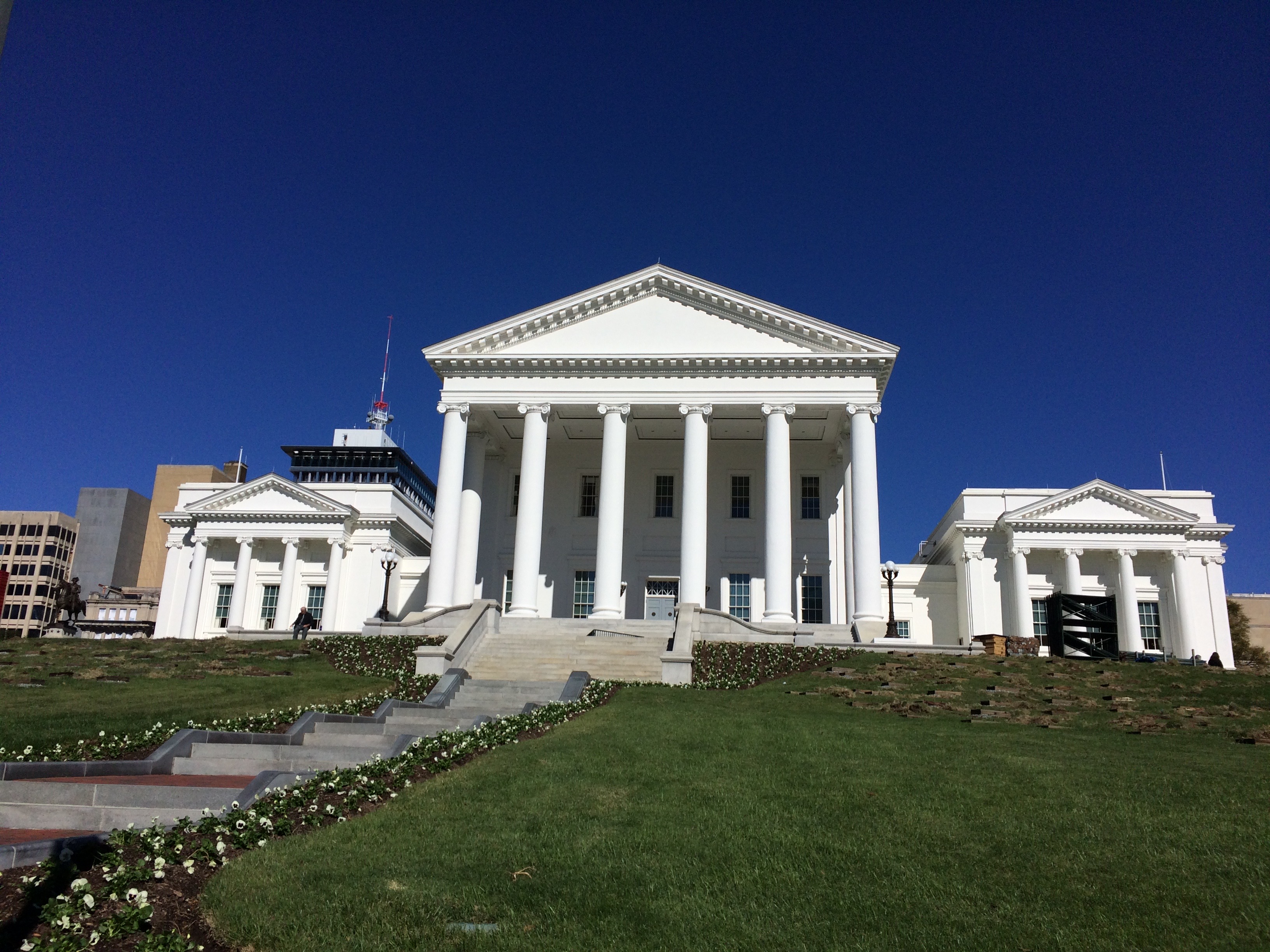
Last spring Gov. Glenn Youngkin vetoed more energy bills than he signed, killing legislation designed to increase rooftop solar and energy storage, strengthen utility planning requirements, and make efficiency improvements more available to low-income residents. 

Now, with Abigail Spanberger set to replace Youngkin in the Governor’s Mansion and Democrats in a position of legislative strength, those bills are back.

Members of the Commission on Electric Utility Regulation (CEUR) met several times this fall to examine last year’s failed energy bills to determine which should get the commission’s endorsement this year. CEUR is comprised primarily of legislative leaders from the Senate and House committees that hear energy bills, so endorsements signal a strong likelihood of passage. 

But while the bills CEUR endorsed show promise, I can’t help thinking they had better be just a starting point.  

Energy affordability and making data centers pay their fair share are supposed to be the top objectives for legislators this year. That makes it interesting, and concerning, that even as CEUR went beyond the vetoed bills to endorse some small new initiatives, it didn’t propose any legislation that would either supercharge generation in Virginia or put the onus on the tech companies to solve their supply problem themselves.  

We know bills like that are coming. Ann Bennett, the lead author of the Sierra Club’s comprehensive report on the state of the industry in Virginia, was, I hope, being hyperbolic when she told me she expects “a hundred” data center bills this session. Regardless, there will be a lot of them. 

Many will be land use bills that don’t go to the energy committees, but others will tackle the central contradiction at the heart of Virginia’s data center buildout: our leaders want the industry to grow, but haven’t faced squarely the problem of where the energy will come from. 

Getting more power on the grid (or freeing up capacity)

Some of the vetoed bills returning this year will put more energy on the grid. They won’t be enough to power the data center industry, but every bit helps. This includes one of the environmental communities’ top priorities, a bill that expands the role of rooftop solar in Virginia’s renewable portfolio standard (RPS). 

A new bill permitting balcony solar also got CEUR’s endorsement. Balcony solar – two or three panels that plug into a wall outlet, reducing a resident’s need to buy power – is the buzziest new idea of the year. The systems are too small to make much of a difference in megawatt terms, but by democratizing access to solar they counter the reputation of solar as a technology for rich people and will make it possible for solar skeptics to see for themselves that solar does actually work and save money.

Another CEUR initiative is a bill similar to one Youngkin vetoed that creates a carveout in the state’s renewable portfolio standard specifically for geothermal heat pumps. Like balcony solar, geothermal heat pumps don’t put electricity onto the grid, but by freeing up power for other customers it has the same effect.

 CEUR also endorsed a bill to simplify billing in the shared solar program in Appalachian Power Company’s territory, but a far more significant proposal to greatly expand shared solar in Dominion territory was deemed not ready for consideration after one of its patrons, Del. Rip Sullivan, D-Fairfax, said it was still in negotiation.  

The SCC recently directed a change in the calculation of Dominion Energy’s minimum bill that industry advocates say should make the program workable for customers beyond the low-income residents who were the only ones formerly able to access it. As currently drafted, the bill would allow shared solar to increase up to a maximum of 6% of Dominion’s peak load. That gives this bill the potential to make a meaningful dent in Virginia’s energy shortfall – if Dominion doesn’t block it. 

That assumes developers can get the community solar projects permitted at the local level. 

Virginia localities are notorious for denying permits to solar projects of all sizes, a recalcitrance that has contributed to Virginia having to import fully half of the electricity consumed in the state. CEUR has now scrapped last year’s big idea of allowing solar developers to appeal local government permit denials to the SCC, after failing to persuade enough legislators to vote for it last year. All that is left of that bill is a piece that establishes a university consortium to provide research and technical assistance. 

Luckily, last year’s other major solar siting bill lives on; it codifies best practices for solar projects without removing localities’ ability to deny permits even for projects that meet the high standards. New this year, however, is a requirement that localities provide a record of their decisions to the SCC, including the reason for any adverse decision. 

It’s not the solution the industry and landowners need to bring predictability to the local permitting process, but it does ratchet up pressure on county boards that have a habit of denying projects without articulating a legitimate reason. And sure enough, imposing that modest amount of accountability was enough to get Joe Lerch from the Virginia Association of Counties to speak against the proposal at the CEUR meeting. 

VACO seems likely to lose the fight this time around, and it should. Blocking solar development leads directly to higher electricity prices for consumers across the state. Moreover, it denies even a minimum of due process to landowners who want to install solar on their property – including farmers who need the income just to hold onto their land. For VACO to insist on counties having carte blanche to reject projects, with no responsibility to justify their decision, is arrogant and an abuse of the local prerogative.

Making the most of what’s already there

Anyone who keeps up with energy news has learned more in the past year about how the grid works than most of us ever wanted to know. There is widespread agreement that grid operator PJM has mismanaged its job, keeping new low-cost generation from interconnecting and driving up utility bills for customers across the region. Unfortunately, there is little that Virginia can do by itself to fix PJM.

But one key bit of information we can use is that utilities and the grid operator build infrastructure to meet the highest levels of demand on the hottest afternoons and coldest nights of the year, leaving much of that infrastructure sitting idle at other times. A recent study showed the grid could absorb far more data center demand than it can now if it weren’t for the 5% of the time when demand is at its highest. 

The issue is framed in terms of data centers being willing to curtail operations at times of peak demand, a solution for the companies that can do it. But there is also a broader point: we don’t need as much new generation if we use what we have better. 

That’s the principle behind several bills that CEUR endorsed. The most significant of these is a bill vetoed by Youngkin last year that almost doubles the targets for short-term energy storage laid out in the Virginia Clean Economy Act and adds targets for long-duration energy storage. As currently drafted, the 2026 version also adds new fire safety standards.

But CEUR did not discuss another obvious approach to increasing storage capacity on the grid: requiring data centers to have storage on-site, replacing highly-polluting diesel generators for at least the first couple of hours of a power outage and using spare battery capacity to assist the grid at other times. If Virginia is going to keep adding data centers at the current rate, this simply has to be part of the plan. We need far more storage than the CEUR bill calls for, and tech companies, not ratepayers, should bear the cost.

CEUR’s utility reform proposals would also help Virginia’s grid get the most out of what we already have. A bill to improve the integrated resource planning process (again, vetoed by Youngkin) requires utilities to consider surplus interconnection service projects to maximize existing transmission capacity. 

CEUR also proposes to have the SCC create a workgroup to study load flexibility. Though the SCC is already doing this through its technical conferences, the proposed legislation would formalize the process and task the work group with making recommendations.

And if all else fails, under another CEUR initiative, utilities would be explicitly allowed to delay service to new customers with more than 90 MW of demand if there wasn’t the generation or transmission available to serve them, or to protect grid reliability. As a fail-safe this is both obvious and inadequate; if a utility doesn’t have that authority now, it certainly needs it — but it needs it for a customer of any size.

Helping low-income residents save money 

CEUR endorsed several proposals that could help residents save money on energy bills. Some, like shared solar, balcony solar, geothermal heat pumps and the distributed solar expansion bill, would benefit anyone willing to make the investment. 

For low-income residents, weatherization and efficiency upgrades remain the focus. Last year the governor vetoed legislation from Del. Mark Sickles, D-Fairfax and Sen. Lamont Bagby, D-Henrico, which would have required Dominion and APCo to expand their low-income weatherization assistance to reach 30% of qualifying customers.  Sickles has already reintroduced his bill as HB2. CEUR endorsed a different recommendation from staff that the two utilities be required to extend their spending on energy assistance and weatherization programs. 

CEUR did not examine a related bill that has been reintroduced this year following a Youngkin veto last winter, establishing an income-qualified energy efficiency and weatherization task force to produce policy recommendations to ensure repairs and retrofits reach all eligible households. 

However, CEUR endorsed a bill that will require all utilities to disclose to the SCC information about electric utility disconnections, which presumably will inform the work of the task force.  

We’re going to need more

Even taken together, CEUR’s initiatives don’t fully address the biggest energy crunch Virginia has ever faced, and the rising utility bills that result. Possibly that is intentional; Democrats will continue to control the governor’s seat as well as the legislature for at least two years, giving them time to ramp up programs and see what works.

But data center development is so far outstripping supply side solutions that if legislators aren’t more aggressive this year, next year they will find themselves further behind than ever.  

As more bills are filed over the coming weeks, we are likely to see plenty of bold proposals. Hopefully, legislators now understand the urgency, and will be ready to act.

An earlier version of this article appeared in the Virginia Mercury on December 15, 2025. It has been edited to include the last two bills in the section titled “Making the most of what’s already there.”
Unknown's avatar

In Puerto Rico, customers are helping to keep the lights on. Could a Virginia program do the same?

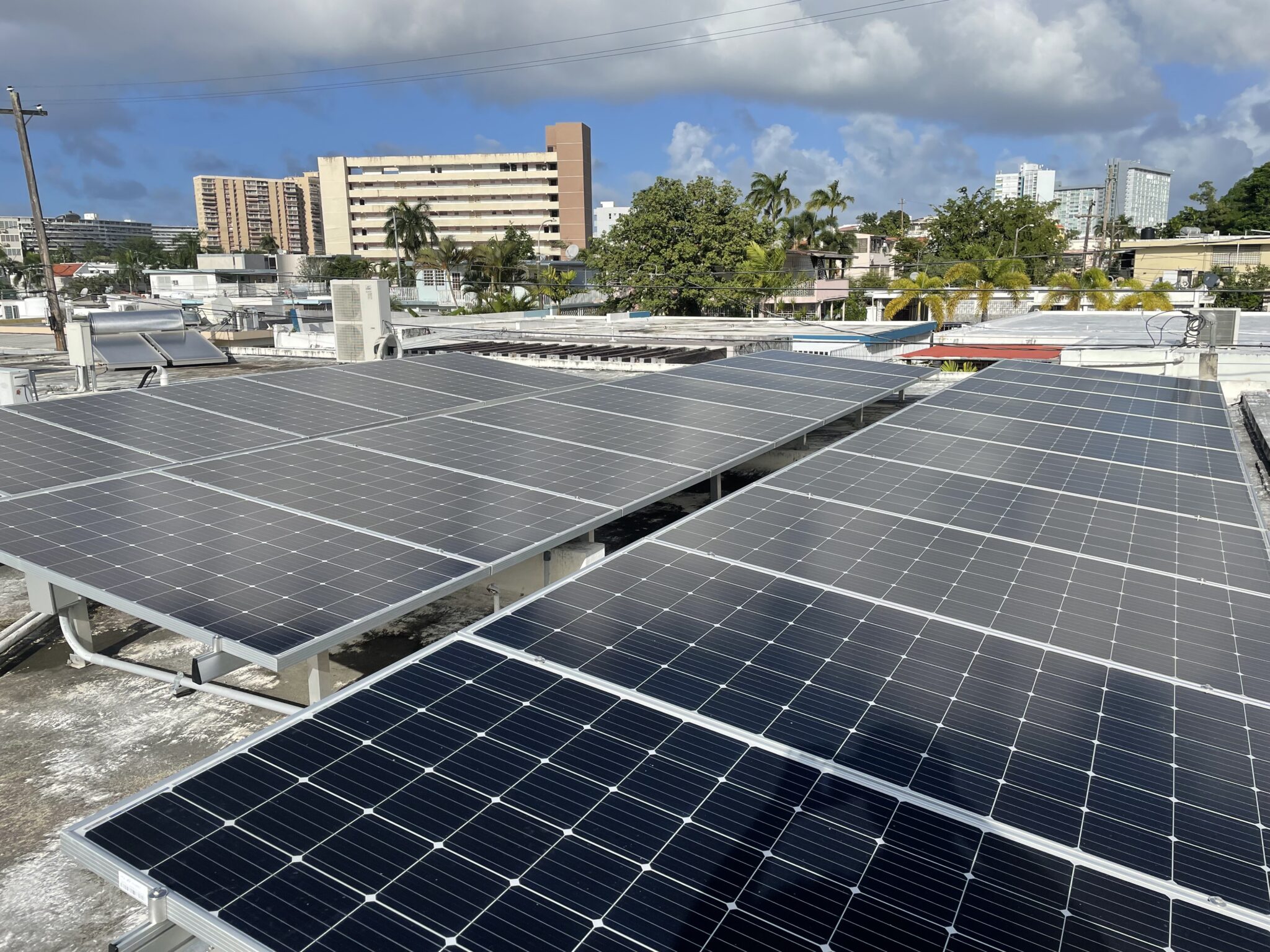
 Rooftop solar panels are helping generate electricity after Hurricane Maria destroyed much of the island electrical infrastructure. (Photo by Aaron Sutch/Solar United Neighbors)

Back in 2017, a hurricane destroyed Puerto Rico’s power grid. The island struggled to rebuild it, with limited success, and continues to experience a severe electricity shortage and frequent power outages. Customers and nonprofits have stepped into the void, installing solar panels on rooftops all over the island and backing them up with batteries. Today, 175,000 households have solar — about 1 in 7  – and at least 160,000 of those also have battery backup. Thousands of new installations go in every month.

The solar and batteries don’t just secure electricity for the customers who install them. Through programs like one managed by the solar company Sunrun, Puerto Rico’s grid can draw on the batteries to provide power in times of emergency, reducing the frequency and duration of power outages for everyone. 

Last month, as hurricane season got underway again, Puerto Rico’s grid operator announced it had reached a “major energy milestone.” In a statement posted on X, LUMA Energy said it “successfully dispatched approximately 70,000 batteries, contributing around 48 MW of energy to the grid.” That’s about as much as a gas peaker plant, with no need for fuel.

Puerto Rico’s experience shows how residents and businesses no longer need to be passive energy consumers. With a well-designed program they can play an active role in keeping the lights on in their communities, and get paid for it. 

This customer participation creates what is called a “virtual power plant” (VPP), sometimes also called a community power plant. The VPP may use battery aggregation, as in Puerto Rico, or demand reduction measures like temporary adjustments to smart thermostats or shifting electric vehicle charging to off-peak times. The more these measures are combined, the bigger the benefit to the grid, and the less a utility needs to invest in new generation to meet peaks in demand. 

VPPs offer such promise that this year Virginia’s General Assembly directed Dominion Energy to develop a pilot program for its customers, to be overseen by the State Corporation Commission. 

HB2346, from Del. Phil Hernandez, D-Norfolk, calls for a program of up to 450 MW to “optimize demand” with distributed energy resources, mainly batteries but also smart thermostats, electric vehicle charging and non-battery storage (e.g., electric hot water heaters). The proposal, due to be filed with the SCC by December 1, must include incentives for at least 15 MW of residential batteries. The legislation calls for stakeholder participation in the development of the VPP, with opportunities for public input. 

Dominion is also tasked with expanding the electric school bus program it began in 2019, which allows the utility to make use of school bus batteries at times of the day when the buses are not needed to transport children. As of March of 2024, Dominion had 135 electric buses in the program, spread across 25 school districts in Virginia. 

The impact of VPPs can be significant. This summer, California’s grid operator conducted an experiment to determine how much customer batteries could contribute to the needs of the grid. More than 100,000 residential batteries across California delivered an average of 535 MW of power from 7 to 9 p.m. on July 29, an output equivalent to that of a coal plant. 

Many other states are also using VPPs. Some are limited to solar-powered battery aggregation, like Xcel’s Colorado program and a new Texas program, while others involve demand response programs using smart appliances – anything that can be turned off and on remotely for short periods. In Michigan, DTE pays electric vehicle owners to charge at off-peak times, while Arizona Public Service’s VPP pays customers for the ability to access their smart thermostats to reduce peak demand.

Vermont’s Green Mountain Power runs two popular battery programs, one for people who own their own batteries and the other that leases batteries to customers. Both allow the utility to draw on the batteries when the power grid requires more capacity. 

While Virginia has not had a VPP program before, appliance-based demand response will be familiar to residents who opted into Dominion Energy’s “Smart Cooling Rewards” program.  Participants allowed the utility to remotely turn their air conditioners on and off for a few minutes at a time on hot days in exchange for an annual $40 payment. This helped the utility shave peak demand without affecting residents’ comfort. 

Dominion ended the cooling rewards program in 2022 and now offers a “Peak Time Rebate” program that rewards customers for reducing energy use during certain times of high energy demand. This program, however, requires residents to take affirmative measures themselves, like adjusting thermostats and delaying laundry. A well-designed VPP program, by contrast, takes the burden off the individual.

Josephus Allmond, a lawyer with the Southern Environmental Law Center who helped to craft the Virginia VPP legislation, told me in an email that he expects school buses and smart thermostats will make up most of Dominion’s program initially, but he’d like to see the residential battery component grow significantly from the initial 15 MW. Even 100,000 aggregated residential batteries would be a minor share of Dominion’s 2.8 million residential accounts, he pointed out.

I emailed Nathan Frost, Dominion’s general manager for new business and customer solutions, to ask for more information about the VPP program. Frost replied only that Dominion is “actively developing our VPP framework and will be engaging stakeholders soon.”    

Stakeholders, including customers themselves, are likely to have a lot to say. Clean energy advocates have long urged that VPPs, distributed generation sources and microgrids can contribute to a more efficient, secure and resilient grid, at less cost to everyone. 

No doubt recentering the grid around customers is too tall an order for a monopoly utility with a profit model based on centralized generation. But from what we’ve seen in Puerto Rico, California and elsewhere, harnessing even some of the power of customer-owned resources is a worthwhile project whose time has finally come.

This article was originally published in the Virginia Mercury on September 2, 2025.

Update: on September 15, Dominion sent this note:

Dominion Energy Virginia is preparing to file a virtual power plant (“VPP”) pilot proposal by December 1, 2025, pursuant to House Bill 2346 and Senate Bill 1100.  As part of this effort, Dominion Energy Virginia is seeking stakeholder input.  Please visit our website at https://www.dominionenergy.com/vpp.  The website contains an overview of the legislation, a timeline, an informational webinar about VPPs and the Company’s plan, and additional information.  We encourage all interested stakeholders to review the materials posted on the website and provide feedback through the link on the website by October 6, 2025.

If you have questions, please contact virtualpowerplant@dominionenergy.com

Unknown's avatar

Hurricanes mean power outages. Resilience hubs can help.

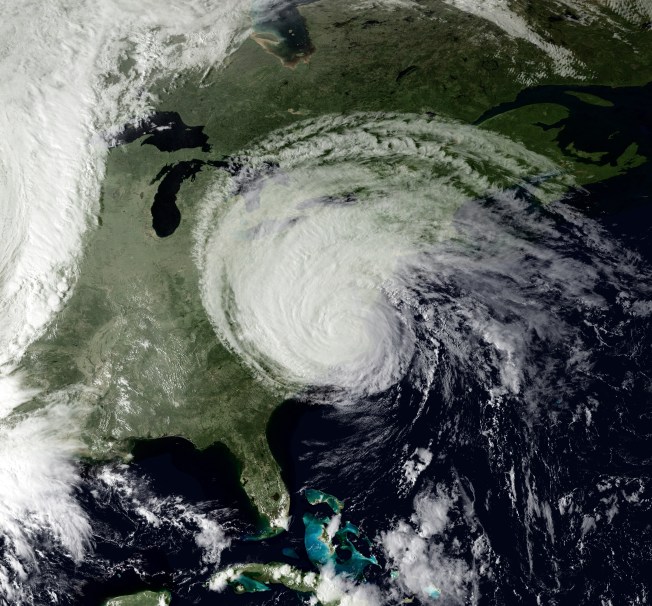
Satellite imagery shows Hurricane Isabel in 2003

Hurricane Isabel was one of Virginia’s worst natural disasters–and it was only a category 2 storm when it made landfall in North Carolina. Photo credit NOAA National Environmental Satellite, Data, and Information Service (NESDIS)

The National Oceanic and Atmospheric Administration says this year’s hurricane season could set a record for the number of storms big enough to be given names. NOAA now predicts a total of 19 to 25 named storms (winds of 39 mph or greater) in the Atlantic, of which 7 to 11 are likely to become hurricanes. Isaias, a Category 1 hurricane, was already the ninth named storm of this season.

With global warming heating the ocean and making hurricanes worse, states and localities have to prepare not just for the storms but also for their aftermath, when residents are left without power, sometimes for days.

I still have keen and unpleasant memories of 2003’s Hurricane Isabel, one of Virginia’s deadliest and costliest storms. My family was among the 2 million households who lost power.

For eight days we used a camp lantern for light and cooked outside over fires kindled in a Weber grill. We ate our way through the thawing contents of the freezer, then got creative with canned foods. We have a well with an electric pump, so our water supply consisted of what was in the jugs and pots we filled before the storm hit. And without power for our septic pump, we could not put anything down the drain or flush toilets. (My daughters were just hitting their teen years at the time. You can imagine how well they took this.)

Still, we were lucky. We didn’t need power to run a medical device like an oxygen machine or wheelchair, or to keep medicine refrigerated. Firewood and a grill gave us a cooking option we wouldn’t have had if we lived in an apartment, and we owned plenty of jugs and pots to hold water. Most importantly, if it had gotten bad enough we could have left in our car — something many city dwellers don’t have, especially if they are low-income or elderly.

After Isabel, a lot of my neighbors went out and got generators, buying peace of mind for themselves but underscoring how the wealth gap affects even the ability to weather a storm. Yet in these intervening years, electricity has truly become central to everything Americans do. We get our information over the internet; business happens online; cell phones have replaced landlines. In an emergency, having access to electricity can mean the difference between getting help and having none.

The traditional government response to a hurricane warning is to issue evacuation orders and designate emergency shelters, but experience has shown that a lot of people stay put. Some can’t afford to leave or lack transportation. Others have pets they can’t take with them and won’t leave behind, or they fear looters might take advantage of their absence. Distrust of government probably plays a role, too, making some folks prefer to take their chances with a storm than let people in uniform tell them what to do.

And this year, of course, the pandemic will make people even more hesitant to leave home.

The hurricane hunker-downers, and everyone else left without power after a storm, need access to electricity that doesn’t depend on the grid. There weren’t many options 17 years ago, when Isabel hit. Since then, though, the technological innovations that are transforming our energy supply have also created ways to keep the power flowing that don’t require balky, fuel-dependent generators.

Solar panels on a community center, school or other centrally-located and publicly-accessible building can provide continuous power when the sun is shining; adding batteries allows the panels to keep providing power at night and when the grid is down. Even just a few solar panels can power lights and provide cellphone charging. A larger array will run a refrigerator, microwave, television and coffeemaker. If it is large enough, it can even provide heating and cooling.

A site like this might serve as an emergency shelter for evacuees, or be part of a microgrid that includes nearby critical services such as a police or fire station. But it could be just a neighborhood location where people drop by to charge phones and computers, heat food, get news and see familiar faces. This concept is known as a “resilience hub,” and it’s the sort of modest investment that punches above its weight in community benefits. Good emergency planning should include locating a resilience hub wherever people are most likely to suffer in the aftermath of a storm due to lack of mobility, old age, disability or poverty.

The challenge, of course, is that a resilience hub or microgrid requires an upfront investment. Solar panels pay for themselves over time by reducing electricity bills, but someone still has to front the cost. Legislation passed this year makes that much easier, and local governments are already saving money with solar on public buildings across the state.

The battery is more of a problem. If it simply sits around waiting for a power outage, it won’t earn its keep over the 10-15 years of its useful life. A battery that isn’t providing useful services on a regular basis is also bad for the planet, since batteries have an environmental footprint of their own.

But a battery doesn’t need to sit idle. When it is not being used to provide stored energy in a power outage, the battery could provide a range of benefits to the grid, helping to meet peak demand, integrate renewable energy, and provide frequency regulation and other ancillary services. This is such a valuable service to the grid that in Vermont, utility Green Mountain Power pays for much of the cost of batteries in the homes of customers in exchange for the right to use them.

Virginia has no resilience hubs yet, and the fiscal crisis caused by the pandemic means local governments may not have funding for them. However, the Federal Emergency Management Agency (FEMA) is offering $500 million in grants under a program that looks tailor-made for resilience hubs and microgrids that power critical services and other community needs on an emergency basis.

Our utilities could also play an active role. The recently enacted Virginia Clean Economy Act (VCEA) provides all the authority Dominion Energy Virginia and Appalachian Power need to support solar-plus-storage at neighborhood locations. The law permits the utilities to even own the solar, if they want to, if an array meets a 50-kilowatt minimum size.

More importantly, Dominion and Appalachian can own the batteries, or contract with third parties to be able to use them. The VCEA sets out ambitious energy storage targets that include a “goal of installing at least 10 percent of such energy storage projects behind the meter”—a category that includes most customer-sited storage. The VCEA also allows utilities to select storage projects on a basis other than cost if a project “materially advances non-price criteria, including favoring geographic distribution of generating facilities.”

The State Corporation Commission took comments this summer on how to implement the VCEA’s requirements for energy storage. This is a good opportunity for the SCC to look beyond utility-scale projects that deliver storage services to the grid cheaply, but do nothing to provide backup power when the grid goes down. The SCC should insist utilities include storage at resilience hubs in neighborhoods that are most at risk from storms, and where residents are least likely to have other options when the grid goes down.

That probably won’t be near my house, but I’m okay with help going to the communities where it is most needed. This year’s pandemic has exposed the interconnectedness of our lives in ways that usually lie beneath the surface. Whether it’s a virus, a natural disaster, climate change or acts of injustice, we are really all part of the same community.

This article originally appeared in the Virginia Mercury on August 24, 2020.

Unknown's avatar

If the power grid goes down, blame the war on solar

More, please. Photo credit Christoffer Reimer/Wikimedia

More, please.
Photo credit Christoffer Reimer/Wikimedia

A large number of electric utilities across the country are famously engaged in a war against customer-owned solar. Using policy barriers, “standby” charges and other tactics, utilities from Arizona to Virginia are doing everything possible to short-circuit a revolution that threatens their control of the electric sector. It won’t work. Trying to keep electric generation out of the hands of the rabble is a stop-gap solution, doomed to fail within a few years when battery storage allows customers with solar arrays (or wind turbines) to defect en masse.

But utilities won’t be the only ones hurt in the process. Stifling distributed generation and forcing grid defection is the worst possible outcome for the economy, the climate, and the security of the electric grid. The more utilities succeed, the more everyone loses.

With all its problems—and they are growing—the modern electric grid remains an efficient way of delivering competitively-priced power to American homes and businesses. Utilities, generators, and grid operators engage in a complicated dance that delivers power economically where it is needed, when it is needed, with no shortfalls and nothing left over, better than 99.9% of the time. If one generating plant suddenly breaks down, others are swiftly brought online. When demand for electricity peaks, grid operators call up “peaker” plants or pay some customers to curtail use. The balance is maintained.

But the sheer size and interdependence of the grid, and its reliance on large, centralized generating plants, makes it vulnerable to massive power disruptions resulting from weather events, electromagnetic pulses, solar storms or physical attack. Aging infrastructure, climate change-driven mega-storms, more intense heatwaves, drought, and potential cyberattacks are growing threats to the reliability of our power supply.

Distributed generation using renewable energy offers the simplest and most efficient way to reduce many of these threats. A power grid that includes thousands of solar and wind installations scattered across a service territory is inherently more secure than one reliant on a handful of huge generating plants and transformer stations. And when the fuel is wind or solar, supply lines can’t be disrupted.

Distributed solar is especially useful when the grid is under stress. Researchers found that just 500 megawatts of widely dispersed solar energy could have prevented the massive blackout of the Northeast in August of 2003.

Add in battery storage, and some small systems can be combined to form microgrids. Microgrids can be “islanded” when the larger grid fails, producing power continuously to ensure that critical needs are met—and decreasing the incentive for hackers and terrorists to target the grid in the first place.

The businesses and residents who are installing solar arrays today aren’t just saving money on energy bills and reducing their carbon footprint. They are buying the building blocks of a more resilient power grid that will serve all of us in the future. Some utilities like NRG and Vermont’s Green Mountain Power recognize the value of distributed solar to the grid and work to encourage customers to stay connected. Others, like Dominion Virginia Power and Appalachian Power in Virginia, NV Energy in Nevada, and the Arizona Public Service Company, are energetically working to impose barriers and punish solar owners with higher costs. If they succeed, the result will be less distributed generation and greater grid vulnerability.

Worse, customers who face these utility barriers and cost penalties will have an incentive to cut themselves off from the grid. Affordable battery storage is beginning to make that an option. Within a few years, disaffected customers could be leaving in droves. Rather than pay a punitive “fair share” of the wires that cross their property, they could opt to pay no share at all.

Then, instead of a stronger grid, we’d have a weaker one. Instead of increasing the security of our power supply, we would increase our vulnerability to attack. In place of a highly efficient, low-cost, interconnected grid, we’d move towards an inefficient, high-cost, Balkanized grid.

This is the worst possible direction for our grid—and it’s the logical conclusion to the war on solar that utilities are waging today. That makes it critical that regulators, customers and state legislatures push back hard in support of customer-owned solar. Protecting the grid is too important to let utilities win this war.