Unknown's avatar

Distributed solar bills move forward, while progress on siting utility solar stalls out

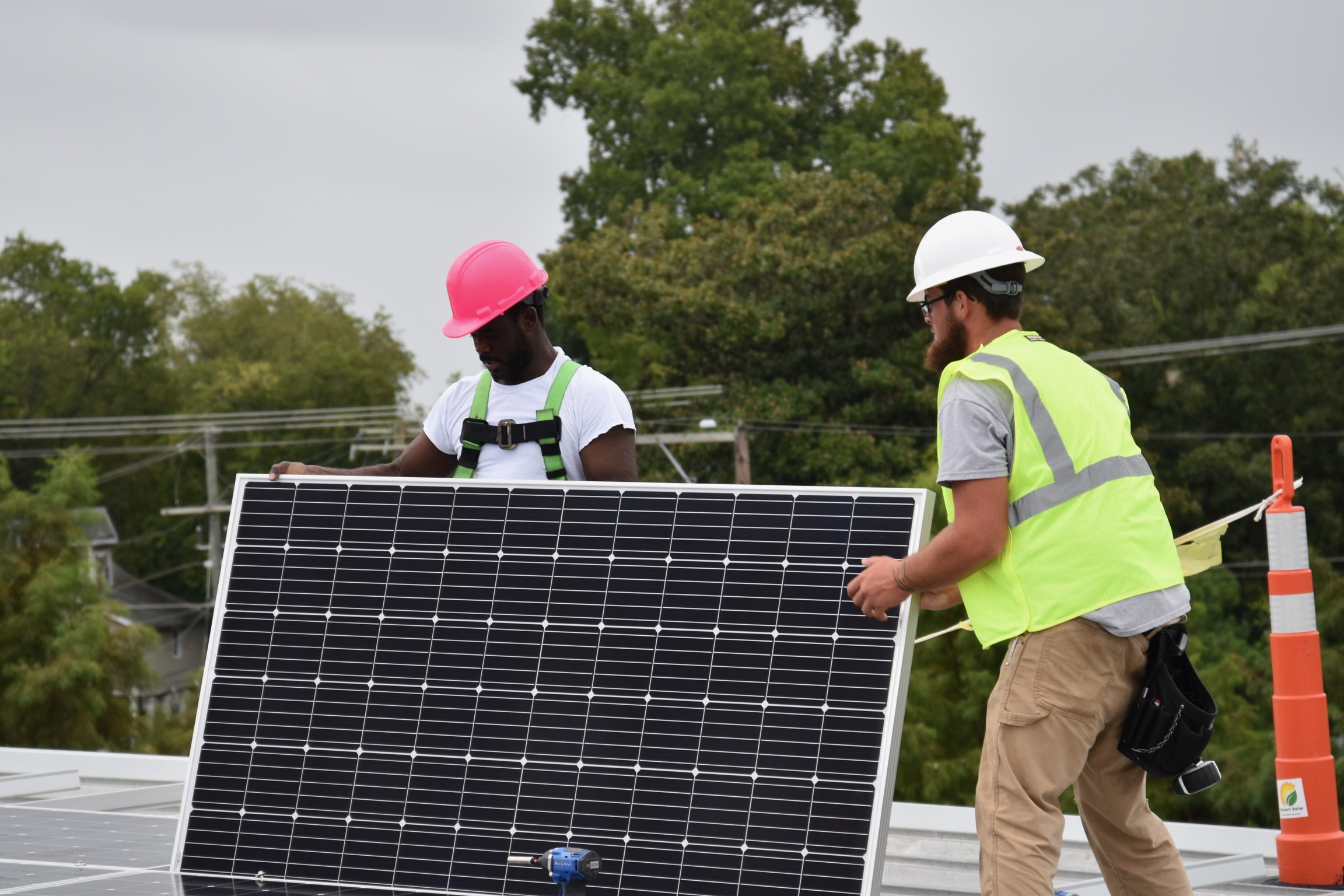
Photo credit Norfolk Solar.

Virginia’s desire to be a leader on clean energy has faced numerous challenges over the past few years, coming from many different directions. Landowners who want utility-scale solar on their rural property face increasingly hostile county boards, with no provisions for relief. 

School systems, local governments and commercial customers that want solar on their buildings have been blocked by expensive new interconnection requirements imposed by Dominion Energy. And the clock is ticking on net metering, the program that gives customers with solar panels a one-for-one credit on surplus electricity they feed back into the grid. 

The solar industry is used to struggling for every foothold it gets in Virginia, but these new challenges come at a particularly bad time. With data center growth creating huge pressures on our electricity supply, Virginia needs more clean energy in every size range, and needs it now. Any coherent approach to meeting demand has to include removing unnecessary barriers to both utility-scale and distributed solar. That both are facing more barriers, rather than less, suggests the state still hasn’t figured out what it takes to be an energy leader.  

None of the legislation at the General Assembly this year addresses this fundamental failing head-on, but several bills took on some of the barriers. In particular, bills focused on rooftop solar and other distributed generation have made it to halftime in decent shape.

Sadly, the same cannot be said of bills designed to bring more utility-scale solar to Virginia, including siting legislation developed by the Commission on Electric Utility Regulation (CEUR) and carried by Del. Rip Sullivan, D-Fairfax, and Sen. Creigh Deeds, D-Charlottesville. The legislation sought to tackle the biggest obstacle to unleashing gigawatts of clean, low-cost energy across Virginia: local governments that deny permits to solar and energy storage facilities, acceding to neighbors who don’t want to have to look at solar panels where they once saw fields and forests. (Anti-solar fossil fuel front groups don’t help matters either.)  

On the House side, Sullivan’s HB2126 was killed in a subcommittee vote. Senate Bill 1190 made it to the Senate Floor but was defeated when two Democrats, Senators Russet Perry and Lashrecse Aird, joined with all Republicans in siding with localities that did not want to cede any part of their authority over land use. The bill would have pressured local governments, but it did not strip them of authority. They would have been required to include in their comprehensive plans targets for energy production and energy efficiency (the latter an interesting addition). In evaluating specific projects, localities would have had to consider advisory opinions that would be issued by a new interagency panel of experts recruited from Virginia universities. Perhaps of greatest import, localities would no longer have been allowed to adopt ordinances that ban all projects outright or place unreasonable restrictions on them, or deny permits “without a reasonable basis.”

The Senate bill “incorporated” (by which is meant, it jettisoned the provisions of) another solar siting bill from Sen. Jeremy McPike, D-Woodbridge, and a separate piece of legislation from Sen. Schuyler VanValkenburg, D-Richmond, that would have prescribed rigorous best practices for utility solar projects.

Over in the House, however, a companion to VanValkenburg’s bill from Del. Candi Munyon King, D-Dumfries, HB2438, passed the chamber 48-46. The bill came from the solar industry itself, proposing to adopt the highest standards for itself. So why wasn’t the vote unanimous? Go figure.

Bills advancing small-scale solar move forward

Legislation promoting distributed generation did not go through the CEUR pipe, but these bills show some wear and tear of their own.  A loose-knit group of advocates under the banner of the Equitable Solar Alliance came in with a package of three bills, all of which remain alive after favorable committee votes. 

HB1883, from Del. Katrina Callsen, D-Charlottesville, increases the tiny carve-out for distributed solar that is part of Dominion’s obligation to buy renewable energy certificates in compliance with Virginia’s renewable portfolio standard. The bill has been pared down since it was introduced but still makes several changes benefiting behind-the-meter solar and battery storage systems under 3 MW.  The distributed generation carve-out, currently 1% of the renewable standard target, will get bumped to 3% in 2026 and 5% in 2028, with further changes possible later if the the State Corporation Commission (SCC) decides on it. Third-party power purchase agreements, which had been restricted to commercial projects, will now be available to residential customers. And whereas currently only projects smaller than 1 MW can earn up to $75 per renewable energy certificate, the bill now makes that amount available for projects up to 3 MW. (Certificates for larger solar projects are effectively capped at $45 per certificate.) 

Callsen’s bill also raises to 600 MW, from 200 MW currently, the target for solar on previously developed sites. It also specifies that 65% of distributed projects qualifying for the Virginia Clean Economy Act’s 1,100 MW target for solar under 3 MW should be developed by non-utility providers.  

HB1883 passed the House unanimously. Its Senate companion, SB1040from Valkenburg, made it through committee without Republican support but passed the Senate 26-14. 

Two other bills, HB2346 from Del. Phil Hernandez, D-Norfolk, and SB1100 from Sen. Ghazala Hashmi, D-Richmond, establish a pilot program for virtual power plants (VPPs), which aggregate customer solar and storage resources and demand response capabilities. In concept, a VPP allows a utility to pay customers to let it make use of these capabilities, enabling it to meet peak demand without having to increase generation. (If you are familiar with programs in which your utility pays you to let it cycle your air conditioner off for a few minutes at a time on hot summer days, you have the idea.) VPPs are becoming popular in other states as a way to subsidize customers’ investments in things like battery storage, while reducing utility costs and saving money for all ratepayers. 

The original hope for this legislation was ambitious: a vision of energy democracy that would reshape the way utilities interact with residential and commercial customers and make the most efficient use of new technologies like electric vehicle charging and smart appliances. The financial benefits to customers could even be enough to offset the costs of investments like home batteries, potentially offering a way for rooftop solar to remain affordable even if the SCC guts Virginia’s net metering program. 

But, this being Virginia, the legislation making its way through committee calls only for pilot programs that utilities design and largely control, although they will be voluntary for participants. After 2028, however, the SCC may create permanent programs. SB1100 passed the Senate 22-18. HB2346 passed the House 71-27.

The third bill in the package, HB2356 from Del. Candi Munyon King, establishes an apprenticeship program to help develop a clean energy workforce, and requires participants to be paid prevailing wages. This bill is more politically divisive than the first two, and it passed the House only on a party-line vote. A companion bill passed the Senate on a party-line vote as well. With Republicans unified in opposition, we are likely to see amendments or a veto from the governor. 

A couple of other bills seek to address the costs of interconnecting small-scale solar facilities, including those on schools and government buildings. After Dominion Energy changed its rules in late 2022, customers found the cost of connecting solar facilities to the distribution grid was suddenly so high as to make it impossible to pursue projects in the affected size range.

HB2266 from Del. Kathy Tran, D-Springfield, requires the SCC to approve upgrades to the distribution system that are needed to accommodate grid-connected solar — a safeguard designed to prevent the utility from larding on costs. The utility must then spread the costs across all projects that benefit from the expanded capacity. This strikes me as a pretty elegant solution to the interconnection muddle. HB2266 passed the House 57-41. 

 SB1058 from Sen. Adam Ebbin, D-Alexandria, originally would have simply exempted public schools from interconnection costs. It was amended to look like Tran’s bill and then passed the Senate 21-18.

Finally, a bill from Del. David Bulova, D-Fairfax, would allow local governments to include in their land development ordinances a requirement that certain non-residential applicants install solar on a portion of a parking lot. HB2037 passed the House on a 64-32 vote and will now go to the Senate Committee on Local Government. 

This article was originally published in the Virginia Mercury on February 3, 2025. It has been updated to reflect the most recent General Assembly votes.
Unknown's avatar

Data centers approved, solar farms rejected: What is going on in rural Virginia?


If Virginia Gov. Glenn Youngkin and Democratic leaders in the General Assembly are aligned on one thing, it’s their enthusiasm for bringing more data centers to the commonwealth. Where they part ways is in how to provide enough electricity to power them. Youngkin and most Republican legislators advocate for an “all of the above” approach that includes fossil gas as well as renewables; Democrats are committed to staying the course on the transition to zero-carbon energy, with a near-term emphasis on low-cost solar. 

Data centers are making the transition harder, but so is local resistance to building solar. General Assembly members mostly understand the connection, leading to a lively debate in last year’s legislative session over whether to override some local permit denials for solar projects – and if so, how to ensure the localities still have some say. Though none of the legislative proposals moved forward last year, the topic has become a central one for the recently revamped Commission on Electric Utility Regulation (CEUR). 

In January, the General Assembly is likely to consider legislation to override local solar permit denials in some cases, such as last year’s HB636 from Del. Rip Sullivan, D-Fairfax, or another approach that would break the solar logjam. It remains to be seen, however,  whether legislators will take any action on data centers.

The problem has grown only more urgent as localities have continued to approve new data center proposals with little thought given to where and how they will get the power to serve them.

Ann Bennett, Sierra Club Virginia’s data center chair, has been tracking data center permit applications across the state. She counts at least two dozen Virginia counties with data centers under development, including rural areas far outside the industry’s stronghold in suburban Northern Virginia. By Bennett’s calculation, data centers existing and under development in Virginia will consume at least 100,000 acres. 

Even as local governments woo data centers, many have become hostile to solar development. A presentation from the Weldon Cooper Center at the University of Virginia, which tracks solar permitting across Virginia, shows that far more local permits for solar facilities have been denied or withdrawn than were approved this year. 

In some cases, county boards that approve data center development also reject permits for solar farms. Sometimes, it happens even at the same meeting.

In an effort to understand this paradox, I watched footage from two county board meetings in Hanover County, one in March of this year and the other in September. At the March meeting, county supervisors approved a 1,200-acre data center complex for an area north of Ashland. Later the same night, they denied a permit for a utility-scale solar project. 

The parcels of land slated to be developed for the data center complex “included wooded areas, recently-logged areas, open fields, wetlands, ponds and stream corridors.” The developer plans to build about 30 data centers on the property, each 110 feet tall (about 10 stories), with setbacks from the property line ranging from 150 to 250 feet. The complex will require 700,000 gallons per day of cooling water. When fully developed, the data centers are expected to total a staggering 2,400 megawatts (MW) of power capacity, not far short of what all of Loudoun County had in 2022. There was no discussion of where so much electricity would come from. 

Public testimony was overwhelmingly negative. The objections echoed those that have been widely reported in response to projects such as the Prince William Digital Gateway: noise, light, a massive increase in truck traffic, secrecy surrounding the project, air pollution from diesel back-up generators. 

Yet the Hanover supervisors voted unanimously in favor of the project. It came down to money: the developer promised a tax benefit to the county over 20 years of $1.8 billion, plus upfront cash for road improvements and a $100,000 donation to a park. Supervisor Jeff Stoneman, who represents the Beaverdam district where the complex will be located, acknowledged his constituents’ concerns but noted that the revenue would be a “game-changer for this community.” 

Even for me, as thoroughly aware as I am of all the downsides of data center sprawl, the negative impacts on communities, the risks to our water and energy security, the possibility that folks will be left with nothing but regrets – well, I just have to say: It’s really hard to argue with $1.8 billion. Rural leaders see Loudoun County raking in revenue from data centers, letting it cut taxes for everyone else. Why wouldn’t they want in on that?

As I noted before, though, there was no discussion of how or where the enormous amount of electricity needed to power the data centers would be generated. This disconnect was underscored later in the same meeting when the supervisors voted to reject a 20 MW solar project on 100 acres of a 315-acre site, in the same district as the data center complex they had just approved. 

It was especially hard to understand the denial of this particular permit. Supervisors agreed the project met all the terms of the county’s solar ordinance, including provisions for the use of native grasses and pollinator plants. Most of the property would remain untouched. The county would receive an upfront cash contribution of $438,600, in addition to the increased tax revenue from the project. The planning commission had recommended approval. No one testified against it; a number of people, including the farmer across the street, testified in its favor.  

Most of the discussion of the project focused on screening the solar panels from view. Supervisors fussed that the trees to be planted at the entrance were too small, and worried that some of the existing mature trees along the road might die off over time and not be replaced. The developer agreed to put larger trees at the entrance, and even to walk the perimeter annually to monitor the health of the trees, and replace any if they needed to.

It was no use. Two of the supervisors wanted to approve the project, but they were outvoted. Stoneman, the Beaverdam supervisor who had led the way in supporting the data center complex, said he worried that erosion might impair the creek on the property, in spite of ample natural buffers, and said he did not have a “comfort level” with the project.

Evidently, the county’s solar ordinance, adopted in 2023, was irrelevant, or at least, misleading. Such objective standards make a developer think it will be worth their while to put in months of planning, public outreach, and working with county staff. But then it turns out that what actually matters is whether a supervisor can achieve a certain undefined “comfort level.” 

Six months after the approval of the 2,400 MW data center complex and the denial of the 20 MW solar facility, another solar project met the same fate, again with Stoneman making the motion to deny the permit. 

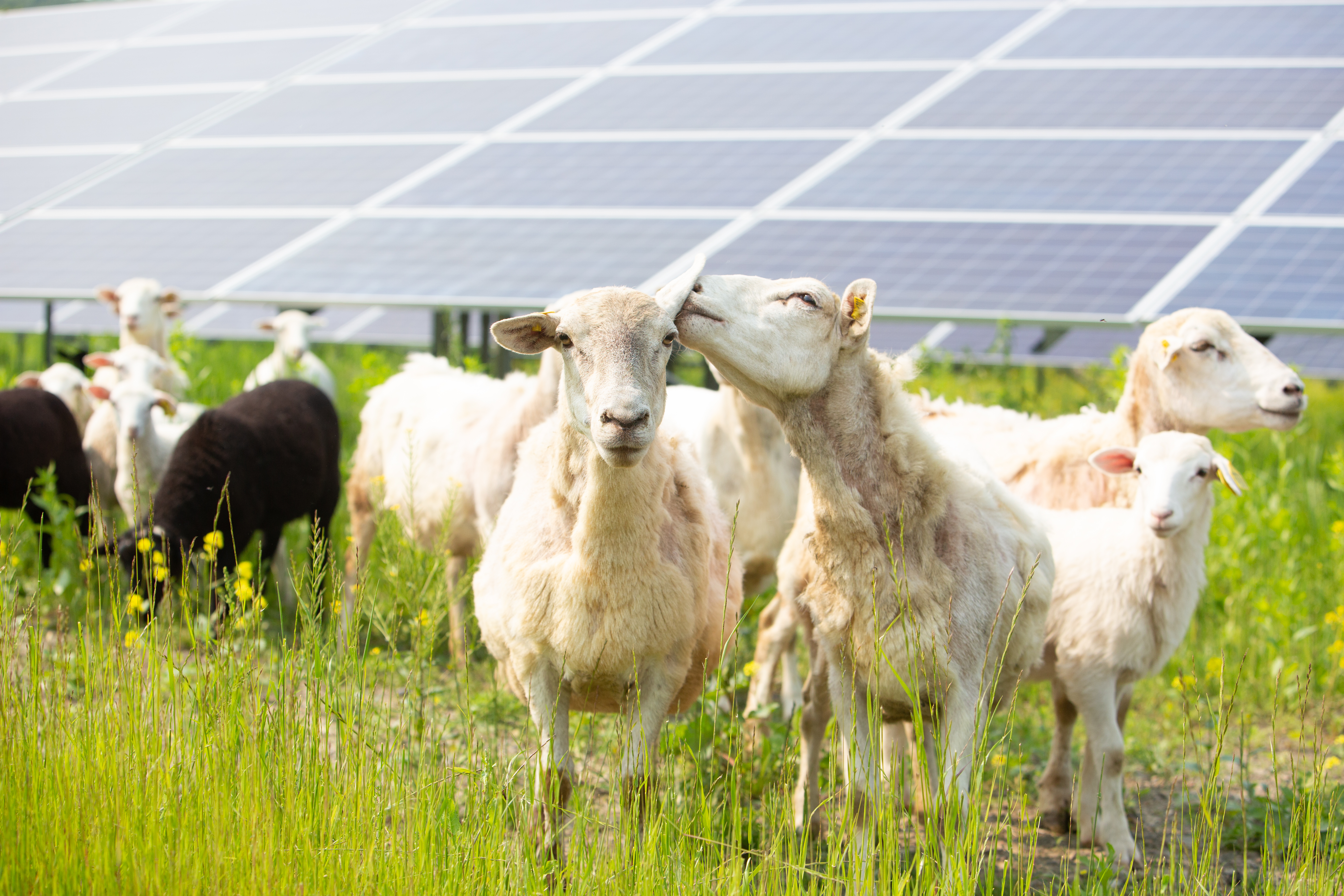
This time the project would take up 250 acres of a 1,500-acre site and produce 72 MW of electricity, achieved through stacking the panels to a double height. Again, the project more than met the requirements of the county solar ordinance. The land was described as currently consisting of managed pine forest, already subject to being cut over at any time, and fully 70% of the property would be preserved for conservation. Native grasses would be planted, and sheep would do most of the vegetation management. The shepherd, Marcus Gray of Gray’s Lambscaping, attended the hearing to describe the sheep operations he runs successfully at other solar sites.  

Approval of the project would earn the county roughly $1.7 million upfront, and $300,000 in annual tax revenue. 

Supervisors praised the developer for “a really good application” that “respected” the ordinance and the environment, for the company’s willingness to listen and respond to concerns, and for agreeing to build stormwater basins and sacrifice buildable space in favor of conservation. 

Several members of the public testified in favor of the project, but this time there were also opponents. Some of them repeated common myths about solar panel toxicity and the risk of fires. One woman stated flatly, and obviously incorrectly, that it was not possible to raise sheep at a solar farm because they would die from the heat. 

The supervisors themselves did not appear ill-informed or misinformed, though one expressed surprise that Gray could successfully sell his lamb at farmers markets when buyers knew where they had been raised. (Watching, I could only laugh, because I’ve always thought of the solar-sheep synergy as a great selling point for climate-conscious carnivores.) 

The concern raised most often was the risk of impacts to the nearby North Anna River, though the developer had agreed to shrink the project to accommodate a much greater setback from the river than required. 

Ultimately, however, Supervisor Stoneman’s argument for denying the permit rested on a different argument. He praised the developer for doing a good job, and noted the project was in accordance with all requirements. But, he said, “Beaverdam is just a different place.” People take pride in the rural character and forest and farmland. Our job, he noted, is to protect the trees that are harvested on the site currently, something “that is as important as the power.” 

“Money is not the most important thing,” concluded the man who led the cheering squad for a data center complex in his district six months earlier.  

The two supervisors who had supported the smaller solar facility that had been rejected in March made their best arguments for this project as well, though they ultimately voted with Stoneman as the home supervisor. One said she supported solar “because I’m pro-farm,” and solar is a way to preserve farmland from development. The other noted that the land would certainly be developed one way or another, and the results would almost certainly be worse. Maintaining rural culture is important, he noted, but “we are approving residential development and seeing by-right development that people don’t want either.”

He also warned his colleagues, as he had in the spring, that rejecting good solar projects was going to result in legislation that would take away local authority and give it to the unelected State Corporation Commission. He said he would go along with Stoneman’s motion to deny the permit because “I assume he knows something,” but he made it clear he considered it the wrong decision, and a dangerous one for local autonomy.

Evidently, he had been paying attention to the conversation at the General Assembly.

To be clear, my sympathies lie wholeheartedly with people whose instincts are to protect the woods and fields around them. I share the one Hanover supervisor’s belief that solar is a means to preserve land from permanent development and even improve soil health and wildlife habitat, but I also understand it may be years before some people see sheep grazing under solar panels as a welcome feature in their landscape. 

So I get how a rural county, having sold a little bit of its soul for $1.8 billion, might then slam the door to other development, even after applicants had worked with the county for months in good faith and done everything asked for. 

It’s not a choice I’d make – I’d take solar over data centers every time – but then, no one made it the county’s responsibility to contribute electricity to the grid that serves it, much less to produce the electricity needed to run the data centers it embraced.

This article originally appeared in the Virginia Mercury on December 3, 2024.