A data center in Ashburn, Virginia. Photo by Hugh Kenny, Piedmont Environmental Council.
Virginia Senate leaders did something remarkably courageous this week in writing a budget that ends the sales tax exemption for data centers. As Majority Leader Scott Surovell, D-Fairfax, pointed out, the exemption was projected to cost the state about $1.54 million when it was passed in 2008. In 2025, it cost Virginia $1.6 billion.
And that amount will escalate as the industry continues its explosive growth across Virginia. Dominion Energy told the State Corporation Commission recently that data centers have requested 70,000 megawatts of power, almost triple the utility’s current peak load. Dominion isn’t alone; Northern Virginia Electric Cooperative (NOVEC) expects its peak load to grow from 1,400 megawatts to more than 5,000 megawatts between 2025 and 2030, with more than 60 new data center buildings coming online. By 2040, NOVEC expects data center demand to reach 13,000 megawatts.
The Data Center Coalition, which represents the tech industry, warns that not all of this growth will materialize if Virginia yanks away its sales tax exemption. Instead of building here, the industry will take its business to other states.
To which Virginia residents can only respond, in unison, “Is that a threat, or a promise?”
Local communities would love to see the industry pull up stakes and move elsewhere, but the question our elected leaders are asking is whether that would actually happen. Is the industry so dependent on the sales tax exemption that the 70,000 megawatts of requested demand cited by Dominion would evaporate in its absence?
Or, as seems more likely, would the industry continue to grow here because it has nowhere else to go? Other states are reporting the same explosion in data center growth, and the same challenges in finding enough land, power and water to serve the escalating demand. In which case, Virginia threw $1.6 billion at some of America’s richest corporations last year for no reason, and it should stop the gravy train right now.
There is a tendency among government leaders to see taxes it chooses to forego as different from government spending, but economists understand that they are economically equivalent. Lost tax revenue has the same impact on a budget as spending does. That $1.6 billion is a real number, representing income Virginia could have used for spending priorities, or (as the Senate budget proposes) to issue refunds to residents.
There is also a question of fairness. The sales tax that the tech industry is excused from paying is the same state sales tax that you and I pay: 5.3%. They buy IT hardware and equipment, while you and I buy life’s necessities. If we didn’t have to pay sales taxes either, we would have more money to put back into the economy, supporting other people’s businesses and jobs.
This looks a lot like the argument that the data center industry makes for why it should continue to be excused from paying taxes that all other businesses and residents pay. Why them and not us? Yet the state requires tax revenues to fund the services it provides. If we all agree that data centers should pay their fair share, that means paying the same taxes we do.
Certainly, yanking the tax exemption away so abruptly upsets expectations — and not just for the industry. As I wrote last week, the House and Senate had already taken diverging approaches to managing data center growth. The Senate passed a bill, SB 619, requiring data centers over 90 megawatts to get permission from the SCC before they can operate. The permission would be contingent on a number of factors designed to protect both other ratepayers and Virginia’s ability to stay on course with the transition to zero-carbon energy.
The House killed a companion to the Senate bill, but it did pass other legislation, HB 897, conditioning the tax exemptions on data centers achieving high energy efficiency, using increasing amounts of zero-carbon energy, and limiting their use of diesel backup generators. For that approach to have teeth, there needs to be a tax exemption.
Other data center legislation is on track to pass, but together these bills offered the strongest guardrails. If the final budget zeroes out the tax exemption without SB 619 passing the House, the General Assembly will be left with neither stick nor carrot to improve the operations of an industry that, with or without subsidies, will almost certainly continue to grow.
That makes it critical for House and Senate budget conferees to look beyond the money. If they agree to phase out the tax exemption, they should make sure SB 619 makes it through the House and to the governor’s desk (something the House should do anyway, since the bill provides critical grid reliability safeguards).
If, however, the conferees settle on some sort of partial exemption, they should condition it on data centers meeting the requirements of HB 897.
Either way, the days of free money for America’s richest corporations should be over.
This column was originally published in the Virginia Mercury on February 25, 2026.
Delegate Rip Sullivan and Senator Lamont Bagby address activists at a lobby day held by Sierra Club and Chesapeake Climate Action Network on February 17. Photo credit Dave Parrish Photographphy.
Wednesday marked crossover at the General Assembly, the day on which bills that have passed the House move to the Senate, and vice-versa. Any legislation that didn’t clear its chamber by now is dead for the year.
That should mean that by this point we can predict which major policy initiatives are likely to become law. That looks to be true of the energy bills I wrote about last week, where the House and Senate are pretty well aligned. With data center legislation, though, the situation remains more fluid.
Legislators put in scores of bills addressing various problems the data center boom has brought for communities, water supplies, the electricity grid and consumers, and even the hard-core, pro-development leadership agrees on the need for fixes. They just don’t agree on what those are.
In recent days, House and Senate leaders have coalesced around a limited number of preferred solutions. The catch is, the House solutions are mostly different from the Senate solutions. The second half of the session could be lively.
One thing House and Senate leaders from both parties agree on is that they want the data center boom to continue, and they aren’t taking guff on this point from the rank-and-file, not to mention angry community members. New delegates, elected on promises to rein in Big Tech, are learning how little their campaign promises matter when the subcommittee hearing their bill has received instructions from leadership to send it to a quick death.
That said, leaders also agree on some other points. One is so obvious that you wouldn’t think it would need stating, much less legislating: If all the tweaks the General Assembly makes to the supply side of the equation don’t result in enough new power availability fast enough, the data centers must wait to connect.
Utilities, however, have raised the concern that their “duty to serve” all comers may tie their hands. As a result, last fall the Commission on Electric Utility Regulation (CEUR) crafted legislation that was introduced this year as HB 1151, from Del. Rodney Willett, D-Henrico, and SB 423, from Sen. Russet Perry, D-Loudoun. The legislation allows a utility to delay service to a customer whose demand exceeds 90 MW if needed for system reliability or to avoid exceeding existing generation or transmission capability.
Remarkably, the House bill (but not the Senate bill) has a delayed effective date of July 1, 2027, indicating that House leaders are reluctant to slow the data center buildout even to protect the reliability of the electricity supply. The leadership split is even more evident in the treatment of a stronger version of the CEUR legislation, discussed in the energy section below, that would require sign-off from the State Corporation Commission before a data center of over 90 MW can connect. While the Senate bill has passed, the House bill was killed in committee.
Another point of divergence within the legislature is on what to do about Virginia’s tax exemption for data centers, now approaching $2 billion per year. On his way out the door, Gov. Glenn Youngkin left a budget with a provision (Item 4-14 #18) extending the data center tax incentive from 2035 to 2050 with no strings attached.
Conversely, Sen. Danica Roem, D-Manassas, submitted a budget amendment canceling the incentive altogether. Roem’s approach might be the more fiscally prudent, but there’s no indication it has support of General Assembly leaders or Gov. Abigail Spanberger.
Occupying the middle ground is legislation that extracts concessions from companies that take advantage of the subsidy, as well as measures addressing the collateral effects on residents and the environment levied by so many data centers using so many resources. These will all be improvements – if they survive the coming weeks.
You will notice that many of the bills discussed below apply only to the largest data centers, “hyperacalers” that draw as much power as a city. Data centers of this size were virtually unknown a decade ago, when 30 MW was considered large. The data centers in Northern Virginia that first worried planners with their energy demand — and angered community members with their noise and pollution — averaged about 20 MW. Today, data center proposals of 1,000 MW or more are not unheard of. Tech companies are planning as if the world had unlimited resources to serve them, while the rest of us live in a world of natural resource constraints. If Speaker Don Scott and other House leaders remain resistant to controls on the spread of these grid-deforming behemoths, Virginia will face increasing crises of power availability and reliability, water shortages and escalating utility rates. Is that really what they want?
The energy problem
Using the tax exemption as leverage is the idea behind HB 897 from Del. Rip Sullivan, D-Fairfax, and SB 465 from Sen. Creigh Deeds, D-Charlottesville. Both bills condition the tax exemption on data centers achieving high energy efficiency standards, purchasing carbon-free energy, and decreasing the use of their highly-polluting diesel backup generators. Both legislators have put in similar bills for three years in a row, and last year Deeds even tried to use the budget process to get the provisions into law.
Sullivan has been working his bill hard, making concessions where he feels he needs to in hopes of getting the legislation across the line. In the form that passed the House, data centers that want the tax exemption would have to meet one of several options to demonstrate a high measure of energy efficiency.
In addition, they would have to use zero-carbon electricity for a percentage of their demand, reflecting Virginia’s renewable portfolio standard (RPS) but accelerated by 10 years. That means data centers in Dominion territory would have to reach 100% zero carbon energy by 2035; for those in Appalachian Power territory, that date would be 2040. Data centers located in the territory of a rural electric cooperative, where the RPS doesn’t apply, would have to meet the RPS requirements of Appalachian Power, again accelerated by 10 years.
Thirdly, data centers would not be allowed to use co-located fossil fuel generation (like onsite gas plants) other than for backup, and would have to shift away from using the highly polluting “Tier II” diesel generators that are the current industry standard. The requirements for this shift differ for existing and new data centers, but no backup generators could be used for non-emergency purposes.
A final addition to the bill requires utilities to petition the SCC for approval of a program enabling large energy customers to participate in “demand response or other voluntary programs” using the customer’s on-site solar, wind, energy storage, or zero-carbon electricity generating resources. Such a program would compensate the data center for investments in clean energy while helping the utility meet demand.
Encouraging as these provisions are, Sullivan told me that even though his bill has passed the House, negotiations on its final language will continue as it makes its way through the Senate.
Meanwhile, over in the Senate, Deeds’ bill never changed after he introduced it. The legislation provided that data centers that want to enjoy the tax exemption must use 90% renewable energy by 2028, meet high energy efficiency standards based on a single metric (power usage efficiency) and not use diesel fuel for onsite generation after 2031. The bill never got a hearing in committee, however, suggesting that Senate leadership intended its quiet death all along.
Senate leadership was apparently more pleased with SB 619 from Sen. Kannan Srinivasan, D-Loudoun, which requires SCC sign-off before a data center can become operational. Under the bill, the SCC would issue the certificate only if it finds that a high load facility (over 90 MW) will have no material adverse effect on the rates paid by other customers, and won’t affect reliability or the utility’s ability to meet environmental laws and regulations. This last condition can be met by showing that the data center will take measures “reasonably designed to offset its contribution to the utility’s peak demand,” such as using energy storage or zero-carbon energy sources.
From a ratepayer’s point of view, this is the most protective bill still alive at the General Assembly. Yet, while Srinivasan’s bill passed the Senate, a similar House bill was killed in committee, making SB 619’s fate in the House uncertain.
Other bills that apparently have the blessing of leadership in both chambers are HB 284 from Del. Michael Feggans, D-Virginia Beach, and SB 371 from Jeremy McPike, D-Prince William. The legislation directs the SCC and utilities (including the cooperatives) to develop voluntary demand flexibility programs for high energy demand customers to reduce their demand at peak times or other times the grid is strained. They can do it in one of two ways: by reducing demand at peak times themselves, or by securing peak load reductions from other customers (like residents).
Specifically mentioned in the legislation is the kind of program proposed by Electrify America last fall, in which hyperscalers could buy heat pumps, solar panels and batteries for residents as a way to free up capacity on the grid, making room for their data centers and speeding up interconnection timelines.
SB 267 from Sen. Schuyler VanValkenburg, D-Henrico, shares a theme with Feggans’ and McPike’s legislation. It directs the SCC to look for cost-savings within the existing electricity system, including potential voluntary pathways by which large customers could finance alternatives as a condition of interconnection.
HB 323 from Sullivan instructs the Department of Energy to set up a work group to study ways to use the waste heat from data centers.
SB 43 from Roem directs the Department of Energy to conduct a study and make recommendations for cost-effective demand response programs that can reduce consumption during grid emergencies while not increasing air pollution from fossil fuel generators.
SB 554 from Srinivasan allows (not requires) a locality to consider the adverse impacts on the grid of any high-energy user, together with the impacts of the new infrastructure that would be needed.
HB 591 from Del. Shelly Simonds, D-Newport News, is sort of a “best practices” policy statement for data centers, favoring their “responsible operation.” However, the bill imposes no actual requirements.
Finally, one bill addresses one multi-billion-dollar question everyone is asking and no one knows the answer to: Is the data center onslaught really as huge as it appears? HB 892 from Del. Irene Shin, D-Fairfax, directs the SCC to investigate utilities’ load forecasts (as well as compliance with the RPS).
But no one seems to be asking the question that’s top of mind for me: Why is it that with access to all the data and information in the world and the astounding computational power of artificial intelligence, Big Tech can’t solve its own energy (and water) problems?
The diesel generator problem
Pollution from diesel back-up generators at data centers is an emerging air quality threat in Northern Virginia. As I wrote a few weeks ago, researchers from Virginia Commonwealth University found that diesel pollution from Northern Virginia data centers is already impacting surrounding neighborhoods. Their report, now final, also warns that the total emissions allowed by data center permits in the region is a far greater threat.
Two more things happened this winter. First, after earning blistering criticism from residents for allowing data centers to run their dirty “Tier II” emergency generators in non-emergency situations, Virginia’s Department of Environmental Quality (DEQ) quietly moved to require cleaner generators for all uses, as a Dec. 29 memo shows.
While that is good news, DEQ does not propose to restrict those cleaner “Tier IV” generators to emergency use. The risk is growing that data centers might run diesel generators for long periods to support the grid, causing air quality problems.
In fact, exactly that possibility arose in late January, when grid operator PJM received authorization from the U.S. Department of Energy to order Northern Virginia data centers to run their emergency generators in support of the grid over a few days of extreme cold.
That makes DEQ’s move to require Tier IV-equivalent generators seem both prescient and insufficient.
Of the House bills still alive, the strongest language on diesel generators is in Sullivan’s HB 897, discussed above. Since that bill only affects data centers that wish to take Virginia’s tax exemption, it is in a sense voluntary, though it’s hard to imagine a data center foregoing so much free money. The bill is also prospective, with a time lag and a phased-in approach.
As Virginia Mercury reporter Shannon Hecht wrote this week, other bills addressing generators have not fared well.
HB507 from Del. John McAuliff, D-Fauquier, started out as an aggressive bill to reduce the use of diesel generators by prohibiting them from being used for non-emergency purposes, requiring the ones that are used to be Tier IV or the equivalent, and making data centers use energy storage as their primary backup power source. The bill also called for air monitoring. Strong-arming from the House leadership has led to a substitute that does nothing more than codify DEQ’s new guidance requiring new generators to achieve Tier IV controls.
HB 1502, from Del. Elizabeth Guzman, D-Prince William, directs DEQ to perform a statewide study of pollution from standby generators used by any kind of commercial facility, identifying the type and amounts of pollutants. It also started out as a stronger bill, but a study seems to be as far as House leadership is willing to go to address air pollution concerns.
Only one surviving Senate bill addresses diesel generators, and it is remarkably weak. Roem’s SB 336 began as a bill to reverse DEQ guidance expanding the definition of an “emergency” for the purpose of allowing a data center to use its uncontrolled Tier II diesel backup generators.
Now the bill has morphed into a directive to the SCC to merely evaluate the impact of requiring data centers to limit the use of Tier II generators and of requiring that they replace 20% of their Tier II generators each year to bring them up to Tier IV standards. The SCC will also look at what other states are doing, and how diesel generators are regulated for other users within Virginia.
The water problem
HB 496 from Guzman originally required data center operators to submit expected water use estimates to localities for both special exception and by-right permits, including average daily use, maximum daily use, and total maximum annual use. The applicant would not be allowed to use nondisclosure or confidentiality agreements to keep the information secret.
It was first killed in committee, but then brought back from the dead and amended with language drafted by data center lobbyists. In its latest iteration, it allows localities, as part of a zoning ordinance (thus excluding by-right development), to require data centers to submit annual (but not daily) water consumption estimates, and to consider water consumption from public resources in its rezoning and special use permit decisions. The information would be publicly accessible in the applications.
In the Senate, Srinivasan’s SB 553 requires water providers to report on water volumes provided to data centers they serve.
The cost-shift problem
SB 253, from Sen. Louise Lucas, D- Portsmouth, started out as an initiative to increase the amount of funds Dominion and APCo must spend on low-income energy assistance and weatherization. Along the way it has become a vehicle for a plan to make data centers pay more of the energy and distribution costs Dominion incurs.
However, Lucas also includes a giveaway to Dominion for its program putting lines underground, which will increase residential bills over the next 20 years. Lucas has added the name Fair and Affordable Electric Rates and Reliability Act to her bill, and says it will save the average resident $5.50 per month.
Sadly, even if Lucas’s bill passes the House, the average resident is not likely to notice this savings among the rate increases Dominion has secured in the past year. In addition to charging ratepayers for undergrounding lines, the SCC recently granted Dominion’s request to raise rates and collect more in profit. On top of that, the soaring cost of fossil gas led the SCC to approve a higher “fuel factor” for Dominion customers, calculated to cost the average resident almost $9 per month.
Still, the fact that the data centers opposed Lucas’ bill in committee indicates that the industry’s perfect record for extracting subsidies from Virginia taxpayers and ratepayers year after year may have suffered a tiny injury, perhaps even on the order of a pinkie sprain. But the session isn’t over yet.
A different cost allocation bill also made its way through the Senate. Perry’s SB 339 requires the SCC to initiate proceedings to determine whether non-data center customers of Dominion and APCo are subsidizing data center customers under the current cost allocation for transmission, distribution and generation projects. The SCC is empowered to change the cost allocation formula as it deems appropriate. However, the companion House bill from Del. Michelle Maldondo, D-Manassas, was tabled (killed) in a subcommittee, making the prospects for Perry’s bill uncertain in the House.
The House also killed a blunter instrument from McAuliff (HB 503), which prohibited a utility from recovering costs for serving data centers over 100 MW except from data centers.
The transmission problem
Local governments issue permits for data centers to be built, but it’s the utility that has to build distribution lines and substations to connect data centers to the grid. Enough data centers drawing enough power can even trigger the need for new interstate high-voltage transmission lines such as one Dominion Energy plans to build to bring more power from the Ohio River valley to Northern Virginia data centers.
Yet residents don’t want transmission lines running through their neighborhoods or parks, and they don’t want to pay for lines that are needed only for data centers.
Under Virginia law, residents have little choice in either matter. Utilities can use eminent domain to seize land from unwilling sellers for new lines, and current cost allocation rules make residents shoulder more than 50% of the cost of Dominion’s transmission projects.
The Perry and Lucas bills discussed above address the cost allocation problem for transmission as well as generation. But having decided to encourage an unlimited number of new data centers into the state, legislators can’t very well stop new transmission lines. (And, I feel compelled to add, Dominion’s choice to build massive interstate transmission lines carrying fossil-fuel power is the natural result of Virginia counties rejecting solar projects that would have been located near existing distribution lines.)
A couple of House bills do try to limit the pain. HB 889 from Shin establishes an order of preference for transmission line siting, with existing utility corridors in first place, then highway corridors, and new corridors last.
HB 1491 from J.J. Singh, D-Loudoun, directs the SCC not to approve a new transmission line if it would be close to residences or schools unless no other feasible alternative exists, or if it would conflict with open space and environmental protection.
SB 827 from Srinivasan and HB 1487 from Singh is narrowly targeted but interesting as a possible model for putting lines underground. Burying wires is much more expensive than stringing them on poles, but it is also more popular with communities. The legislation authorizes the SCC to approve up to four applications for undergrounding of high-voltage lines, if the local government foots the bill for half the added cost.
Of the four projects, one is specified in the bill with a description that fits the 8.3 mile Golden-Mars transmission project serving data centers in Loudoun County.
The there-goes-the-neighborhood problem
Only one initiative addresses the constant, loud hum from data centers’ air conditioning systems that drives the neighbors batty.
HB153 from Del. Josh Thomas, D-Prince William, calls for a locality to require a high energy use facility (HEUF, defined as 100 MW or more) to perform a site assessment examining its sound profile as part of any rezoning, special exception or special use permit.
The locality may (not must) also require the site assessment to include the HEUF’s effect on other resources at the site or contiguous to it, including ground and surface water, forest and parks. The locality must also get from the electric utility a form describing substations and transmission required to serve the facility.
However, none of these requirements apply to an already-approved data center that seeks to expand its operations by less than an additional 100 MW, meaning an existing small facility could be turned into an enormous one without the additional review.
In the Senate, a companion bill was rolled into Roem’s SB 94, which was a very different bill until, late in the process, it was amended to look like HB 153 – with one difference. Roem’s bill adds a provision that beginning July 1, 2027, if a locality has adopted a zoning ordinance, data centers can only be placed on land zoned industrial unless the land is part of a larger development and will share the energy connection of the adjacent parcel.
This legislation won’t satisfy community members who today feel under siege from the onslaught of data center development. But as General Assembly leaders are making clear, the onslaught will continue.
A version of this article was originally published on February 20, 2026 in the Virginia Mercury.
Update, February 23: Clearly I’m a lousy prognosticator. After dismissing the possibility of the General Assembly rolling back the tax exemption for data centers, I now have to report that the budget the Senate adopted proposes to do just that, ending the exemption in 2027. The House budget does no such thing, however, so get your popcorn ready to watch the action. Sullivan’s HB897, which relies on the tax exemption as the carrot to achieve its goals, may now be in jeopardy in the Senate. If the House prevails in keeping the exemption intact, it could achieve Sullivan’s purpose by putting the conditions into the budget. Or it could do something else entirely. . .
Legislators cue up last year’s vetoed legislation for a new session, but leave us wanting more
Last spring Gov. Glenn Youngkin vetoed more energy bills than he signed, killing legislation designed to increase rooftop solar and energy storage, strengthen utility planning requirements, and make efficiency improvements more available to low-income residents.
Now, with Abigail Spanberger set to replace Youngkin in the Governor’s Mansion and Democrats in a position of legislative strength, those bills are back.
Members of the Commission on Electric Utility Regulation (CEUR) met several times this fall to examine last year’s failed energy bills to determine which should get the commission’s endorsement this year. CEUR is comprised primarily of legislative leaders from the Senate and House committees that hear energy bills, so endorsements signal a strong likelihood of passage.
But while the bills CEUR endorsed show promise, I can’t help thinking they had better be just a starting point.
Energy affordability and making data centers pay their fair share are supposed to be the top objectives for legislators this year. That makes it interesting, and concerning, that even as CEUR went beyond the vetoed bills to endorse some small new initiatives, it didn’t propose any legislation that would either supercharge generation in Virginia or put the onus on the tech companies to solve their supply problem themselves.
We know bills like that are coming. Ann Bennett, the lead author of the Sierra Club’s comprehensive report on the state of the industry in Virginia, was, I hope, being hyperbolic when she told me she expects “a hundred” data center bills this session. Regardless, there will be a lot of them.
Many will be land use bills that don’t go to the energy committees, but others will tackle the central contradiction at the heart of Virginia’s data center buildout: our leaders want the industry to grow, but haven’t faced squarely the problem of where the energy will come from.
Getting more power on the grid (or freeing up capacity)
Some of the vetoed bills returning this year will put more energy on the grid. They won’t be enough to power the data center industry, but every bit helps. This includes one of the environmental communities’ top priorities, a bill that expands the role of rooftop solar in Virginia’s renewable portfolio standard (RPS).
A new bill permitting balcony solar also got CEUR’s endorsement. Balcony solar – two or three panels that plug into a wall outlet, reducing a resident’s need to buy power – is the buzziest new idea of the year. The systems are too small to make much of a difference in megawatt terms, but by democratizing access to solar they counter the reputation of solar as a technology for rich people and will make it possible for solar skeptics to see for themselves that solar does actually work and save money.
Another CEUR initiative is a bill similar to one Youngkin vetoed that creates a carveout in the state’s renewable portfolio standard specifically for geothermal heat pumps. Like balcony solar, geothermal heat pumps don’t put electricity onto the grid, but by freeing up power for other customers it has the same effect.
CEUR also endorsed a bill to simplify billing in the shared solar program in Appalachian Power Company’s territory, but a far more significant proposal to greatly expand shared solar in Dominion territory was deemed not ready for consideration after one of its patrons, Del. Rip Sullivan, D-Fairfax, said it was still in negotiation.
The SCC recently directed a change in the calculation of Dominion Energy’s minimum bill that industry advocates say should make the program workable for customers beyond the low-income residents who were the only ones formerly able to access it. As currently drafted, the bill would allow shared solar to increase up to a maximum of 6% of Dominion’s peak load. That gives this bill the potential to make a meaningful dent in Virginia’s energy shortfall – if Dominion doesn’t block it.
That assumes developers can get the community solar projects permitted at the local level.
Virginia localities are notorious for denying permits to solar projects of all sizes, a recalcitrance that has contributed to Virginia having to import fully half of the electricity consumed in the state. CEUR has now scrapped last year’s big idea of allowing solar developers to appeal local government permit denials to the SCC, after failing to persuade enough legislators to vote for it last year. All that is left of that bill is a piece that establishes a university consortium to provide research and technical assistance.
Luckily, last year’s other major solar siting bill lives on; it codifies best practices for solar projects without removing localities’ ability to deny permits even for projects that meet the high standards. New this year, however, is a requirement that localities provide a record of their decisions to the SCC, including the reason for any adverse decision.
It’s not the solution the industry and landowners need to bring predictability to the local permitting process, but it does ratchet up pressure on county boards that have a habit of denying projects without articulating a legitimate reason. And sure enough, imposing that modest amount of accountability was enough to get Joe Lerch from the Virginia Association of Counties to speak against the proposal at the CEUR meeting.
VACO seems likely to lose the fight this time around, and it should. Blocking solar development leads directly to higher electricity prices for consumers across the state. Moreover, it denies even a minimum of due process to landowners who want to install solar on their property – including farmers who need the income just to hold onto their land. For VACO to insist on counties having carte blanche to reject projects, with no responsibility to justify their decision, is arrogant and an abuse of the local prerogative.
Making the most of what’s already there
Anyone who keeps up with energy news has learned more in the past year about how the grid works than most of us ever wanted to know. There is widespread agreement that grid operator PJM has mismanaged its job, keeping new low-cost generation from interconnecting and driving up utility bills for customers across the region. Unfortunately, there is little that Virginia can do by itself to fix PJM.
But one key bit of information we can use is that utilities and the grid operator build infrastructure to meet the highest levels of demand on the hottest afternoons and coldest nights of the year, leaving much of that infrastructure sitting idle at other times. A recent study showed the grid could absorb far more data center demand than it can now if it weren’t for the 5% of the time when demand is at its highest.
The issue is framed in terms of data centers being willing to curtail operations at times of peak demand, a solution for the companies that can do it. But there is also a broader point: we don’t need as much new generation if we use what we have better.
That’s the principle behind several bills that CEUR endorsed. The most significant of these is a bill vetoed by Youngkin last year that almost doubles the targets for short-term energy storage laid out in the Virginia Clean Economy Act and adds targets for long-duration energy storage. As currently drafted, the 2026 version also adds new fire safety standards.
But CEUR did not discuss another obvious approach to increasing storage capacity on the grid: requiring data centers to have storage on-site, replacing highly-polluting diesel generators for at least the first couple of hours of a power outage and using spare battery capacity to assist the grid at other times. If Virginia is going to keep adding data centers at the current rate, this simply has to be part of the plan. We need far more storage than the CEUR bill calls for, and tech companies, not ratepayers, should bear the cost.
CEUR’s utility reform proposals would also help Virginia’s grid get the most out of what we already have. A bill to improve the integrated resource planning process (again, vetoed by Youngkin) requires utilities to consider surplus interconnection service projects to maximize existing transmission capacity.
CEUR also proposes to have the SCC create a workgroup to study load flexibility. Though the SCC is already doing this through its technical conferences, the proposed legislation would formalize the process and task the work group with making recommendations.
And if all else fails, under another CEUR initiative, utilities would be explicitly allowed to delay service to new customers with more than 90 MW of demand if there wasn’t the generation or transmission available to serve them, or to protect grid reliability. As a fail-safe this is both obvious and inadequate; if a utility doesn’t have that authority now, it certainly needs it — but it needs it for a customer of any size.
Helping low-income residents save money
CEUR endorsed several proposals that could help residents save money on energy bills. Some, like shared solar, balcony solar, geothermal heat pumps and the distributed solar expansion bill, would benefit anyone willing to make the investment.
For low-income residents, weatherization and efficiency upgrades remain the focus. Last year the governor vetoed legislation from Del. Mark Sickles, D-Fairfax and Sen. Lamont Bagby, D-Henrico, which would have required Dominion and APCo to expand their low-income weatherization assistance to reach 30% of qualifying customers. Sickles has already reintroduced his bill as HB2. CEUR endorsed a different recommendation from staff that the two utilities be required to extend their spending on energy assistance and weatherization programs.
CEUR did not examine a related bill that has been reintroduced this year following a Youngkin veto last winter, establishing an income-qualified energy efficiency and weatherization task force to produce policy recommendations to ensure repairs and retrofits reach all eligible households.
However, CEUR endorsed a bill that will require all utilities to disclose to the SCC information about electric utility disconnections, which presumably will inform the work of the task force.
We’re going to need more
Even taken together, CEUR’s initiatives don’t fully address the biggest energy crunch Virginia has ever faced, and the rising utility bills that result. Possibly that is intentional; Democrats will continue to control the governor’s seat as well as the legislature for at least two years, giving them time to ramp up programs and see what works.
But data center development is so far outstripping supply side solutions that if legislators aren’t more aggressive this year, next year they will find themselves further behind than ever.
As more bills are filed over the coming weeks, we are likely to see plenty of bold proposals. Hopefully, legislators now understand the urgency, and will be ready to act.
An earlier version of this article appeared in the Virginia Mercury on December 15, 2025. It has been edited to include the last two bills in the section titled “Making the most of what’s already there.”
An aggressive legislative agenda this year will demonstrate national leadership on managing the data center buildout while delivering climate, health and economic benefits to all Virginians
Solar on schools and other public buildings reduce pressure on the grid while saving money for taxpayers. Photo courtesy of Secure Solar Futures LLC
If Virginia’s election last month was more than an unleashing of anti-Trump sentiment (and it definitely was that), it was about affordability. Governor-elect Abigail Spanberger made the cost of living the focus of her campaign, frequently mentioning high energy bills. House Democrats, whose majority has been boosted by the addition of 13 new members of their party, are also expected to focus on these bread-and-butter issues.
In Virginia, the cause of these high bills is not hard to identify: Data centers are driving up demand well beyond the available supply, and high fossil fuel prices are pinching a state that relies on natural gas for most of its electricity. Spanberger has committed to making data centers “pay their fair share,” and both she and legislators will be looking for other opportunities to lower costs.
The bad news is that adding ever more data centers across Virginia means the upward pressure on electricity prices will continue. If the governor and legislators don’t want to kick tech companies to states with spare capacity, and if the administration of President Donald Trump continues to throttle the energy supply with its war on wind and solar, lowering energy costs in the near term likely isn’t possible.
Even so, there is a lot that Spanberger and the General Assembly can do to protect residential consumers from these higher prices.
Making data centers pay their fair share means more than tweaking rate structures. Several Virginia utilities have created special rate classes for large load users like data centers. The utilities will require data center operators to sign long-term contracts committing them to paying for a large percentage of the electricity and transmission they say they need, even if they don’t end up using that much or leave the Virginia market prematurely.
These new tariffs can help protect other customers from some – though not all – of the risk involved in serving data centers, but they don’t address the “fair share” issue. The current allocation of transmission costs, with residential ratepayers picking up most of the tab for new lines that don’t benefit them, needs to change. If the SCC determines it doesn’t have authority to do that on its own, the General Assembly and Spanberger should pass legislation to make it happen.
The harder problem is how to make residents whole for rate increases that result from data centers gobbling up all available power. The supply and demand problem has been compounded by a lot of bad decisions, with plenty of blame to go around. The federal government has driven up fossil fuel prices by allowing the export of increasing amounts of natural gas, while hindering and even blocking solar and offshore wind projects that could make up the deficit.
Outgoing Gov. Glenn Youngkin is to blame for illegally pulling Virginia out of the Regional Greenhouse Gas Initiative (RGGI), removing the market incentive for Virginia utilities to increase investments in low-cost renewable energy instead of burning expensive fossil fuels. (His promotion of the false narrative that gas is “cheap” doesn’t help.)
Virginia utilities share the blame for relying too much on natural gas and high-priced electricity imported from other PJM states. And grid operator PJM is to blame for failing to approve enough new generation, including wind and solar facilities that make up the vast majority of projects waiting for approval to interconnect.
This history leaves Spanberger with a fine mess. Keeping prices in check now requires two things that can actually be accomplished during the next four years: a greater buildout of solar generation and energy storage to get more capacity on the grid; and investments in energy efficiency and rooftop solar to take pressure off the demand side.
Solve utility solar siting with agrivoltaics. Virginia needs more energy, and solar is the only source that can be built quickly. Yet one of the knottiest problems confronting the General Assembly in the past few years has been the rise of anti-solar sentiment in rural counties.
Landowners who want to lease their property for solar, or even to install arrays for their own use, find themselves stymied by opposition from neighbors who don’t like the look and are able to persuade county boards to deny permits. As we’ve seen, sometimes denial of a solar permit even follows approval of an energy-sucking data center.
Last year the General Assembly came close to passing a bill that would require solar developers to implement industry best practices. Passing legislation like that this year will address the legitimate concerns of localities around controlling erosion and maintaining native plant buffers. But more can be done to make solar look and function like a normal part of Virginia’s agricultural economy.
Already, solar facilities have become integrated with agriculture, as sheep and sometimes cattle take over vegetation management and farmers learn which crops do well growing between rows of solar arrays. It’s a trend that offers benefits to the land and the community alike. Farmers are struggling; solar can provide a stable income while protecting land from permanent development and putting much-needed energy on the grid.
Businesses are ahead of public policy on this. Virginia-based Gray’s Lambscaping manages vegetation with over 800 sheep at solar farms across the state, and the company plans to grow to over 5,000 sheep by the end of this year. Meanwhile, solar panels have proven compatible with a wide range of food crops.
Virginia should take a leading role in expanding agrivoltaics. Virginia law already recognizes the right to farm as an exception to localities’ authority over land use decisions, and this should be extended to farmers who put solar on their land, as long as they are also using the same land for traditional agricultural practices like grazing and crops.
Install solar on new public buildings and schools. Heck, put it everywhere. In the past ten years or so, Virginia’s commercial solar sector has blossomed while saving taxpayers money. To date, an estimated 150 Virginia schools have installed solar panels, saving schools about 25% on their energy bills. Solar on every sunny school rooftop would add up to more than 1,000 MW of carbon-free generation. Extend the effort to the roofs of all suitable public buildings across the state, and that number can go much higher.
Dominion and APCo have long tried to squelch competition from rooftop solar, a war that looks increasingly foolish as Virginia finds itself short on energy for all customers. Earlier this year Congress drastically accelerated the phase-out of solar tax incentives, but the savings remain available for commercial and utility-scale projects for the next two years. There is no shortage of good ideas out there to be acted upon. Spanberger and legislators should take full advantage of that opportunity to install as much solar as possible.
Battery storage at data centers does triple duty. While solar is the cheapest, cleanest, and fastest way to generate power, it needs batteries or other forms of energy storage to make it into a 24/7 resource, and storage remains relatively expensive. For tech companies, however, the calculus makes more sense.
Data centers need backup power anyway; they typically have three layers of redundancy so that they never risk losing power when the grid goes down. Today the backup power is mostly provided by massive diesel generators, sometimes three times as many as they might actually need. Most of these have no pollution controls and are therefore not supposed to run except in emergencies and for testing and maintenance. That’s sill a lot of run time — and DEQ is proposing to make matters worse by expanding the definition of “emergency” to include scheduled outages.
Some tech companies are now installing generators with selective catalytic converters that produce fewer emissions. The catch is that these can legally be used in non-emergency situations, raising the possibility that they might be used for demand-response or peak shaving. In effect, data centers would be solving the peak demand problem with one of the dirtiest forms of energy. The cumulative effect on air quality could be worrisome, and Virginia’s carbon footprint would grow at a time when the law says it should be shrinking.
What if, instead of diesel generators, data centers installed storage as their first line of defense against power outages, leaving diesel generators to be used only in the rare case of extended grid outages? Air quality would benefit, carbon emissions would decrease, and the data centers would have the backup power they need. The tech companies would pay more upfront but could be compensated by utilities for using their storage capability for grid services and demand response, lowering their draw from the grid at peak demand times.
All the data centers in Virginia today use 6 gigawatts of power. That much storage would exceed the targets set in the VCEA for Dominion and APCo combined. Even limiting the requirement to two hours of storage at new data centers would bring enough storage online quickly to eliminate the expensive demand peaks that drive the high price of energy.
Require data center operators to source their own zero-carbon electricity. Most of the tech companies have sustainability commitments that they aren’t meeting, so it isn’t asking too much of them to put them in charge of this effort. Legislation to require this as a condition of accepting Virginia’s generous tax subsidies has been defeated for the past two years. The difference this year is that rising energy prices are now affecting everyone.
Under this proposal, the zero-carbon electricity doesn’t have to come from Virginia, as long as it is available to customers here. Maybe the tech companies could even tap into their considerable influence with the Trump administration to make electricity more plentiful and affordable by reversing its war on solar and wind energy.
Why, after all, should Virginia residents sacrifice for the richest corporations in the world? If “paying their fair share” means anything, it should mean that data centers, not residents, bear the costs of making enough energy available to Virginia, and complying with our clean energy mandate.
Lower demand with energy efficiency and distributed solar. The gap between energy supply and demand does not have to be filled entirely through supply-side solutions. Lowering demand should also be part of the solution. Virginia utilities, Dominion in particular, have done a poor job of running energy efficiency programs. Looking on the bright side, though, that means plenty of opportunities remain.
House Democrats have already started work on this issue, with a focus on lowering winter heating costs for lower-income households. As reported in the Mercury last week, HB 2, from Farifax Del. Mark Sickles, requires Dominion and APCo to make their “best, reasonable efforts” to provide energy efficiency and weatherization to 30% of income-qualified customers by the end of 2031. HB 3, from Del. Destiny Levere Bolling, D-Henrico, sets up a task force to study income-qualified energy efficiency and weatherization.
These steps are okay for starters, and they would be juiced by the influx of money from RGGI carbon auctions (see next section), earmarked for low-income energy efficiency. But Dominion has repeatedly failed to meet the energy efficiency targets the legislature sets for it, and after all, why stop with 30% of low-income customers when all households could benefit from more comprehensive programs? Virginia can do much better.
My last column discussed Rewiring America’s proposal to have tech companies pay for heat pumps, solar and batteries in the residential sector, saving money for households and freeing up capacity for data centers to come online sooner. An independent provider could run the program and verify the energy savings.
(If the tech companies complain that an awful lot of the solutions I’m proposing come at their expense, it’s true. But the industry benefits from a state tax subsidy that has reached nearly a billion dollars per year, and will only grow further as the number of data centers doubles and triples. They can afford to give back.)
Use RGGI for long-term affordability. Gov.-elect Spanberger has committed to seeing Virginia rejoin the Regional Greenhouse Gas Initiative (RGGI), the compact of northeastern states working to lower carbon emissions by 30% by 2030. RGGI works by requiring owners of carbon-emitting generating plants to buy carbon allowances at auction, penalizing carbon-intensive generation and rewarding investments in zero-carbon facilities like wind, solar and nuclear. States collect the auction proceeds, which in Virginia are dedicated to low-income energy efficiency and climate adaptation measures.
Republicans have already renewed their attacks on RGGI, calling it a tax on energy consumers. To the extent that’s true, it’s a tax mostly paid by the largest consumers (including data centers) for the benefit of low-income residents and people most vulnerable to storms and sea level rise. Moreover, all energy consumers benefit over the longer term as low-cost clean energy increasingly replaces expensive fossil fuels.
Beef up efficiency standards in the residential building code. Most people who buy a new home assume that modern building codes incorporate the latest standards for insulation and efficient technology. In Virginia, they do not. Buyers would be dismayed to learn that their homes are costing them more on their utility bills than they saved on a purchase price supposedly made more affordable by poorer-quality insulation and appliances. Buyers are rarely consulted on these trade-offs, and few have the expertise to question a builder’s choices. Building codes are supposed to do that job.
Unfortunately, Virginia’s Board of Housing and Community Development, which writes the code, is dominated by the homebuilding industry. The industry wants to build homes as cheaply as possible to ensure the highest profit possible on the homes it sells. Even as national model code standards have become more rigorous, homebuilders have protected their own interests by keeping weak energy efficiency requirements in Virginia’s residential building code.
In 2021, Virginia adopted legislation requiring the board to consider and adopt energy standards “at least as stringent as” the latest national model code standards when the benefits over time to residents and the public exceed the incremental costs of construction. But the board simply didn’t do it. Will this be the year legislators realize that a board dominated by the industry it regulates won’t act in the public interest without explicit directions?
This is Virginia’s moment. Since the passage of the Virginia Clean Economy Act in 2020, renewable energy and storage have only gotten cheaper, while energy efficiency opportunities remain plentiful. Coal has solidified its place as the most expensive baseload source, and fossil gas remains stubbornly expensive compared to solar. Spanberger and the Democratic majority have an opening this year to go big on clean energy. An aggressive legislative agenda this year will demonstrate national leadership on managing the data center buildout while delivering climate, health and economic benefits to all Virginians.
This column was originally published in the Virginia Mercury on December3, 2025.
Sign at a dog park in Arlington, Virginia. Ivy Main
The data center boom has catapulted Virginia into a serious energy crunch. We have more data centers here than in any other state, by far, and four times as many more are expected in the next few years. Virginia utilities don’t generate enough electricity to serve them all; fully half of our power is imported from the regional grid. But now the regional grid is also running low on reserve power thanks to all the data center growth, according to grid operator PJM.
Most proposed solutions focus on the supply side: generating more power by building new solar, wind, gas and battery storage; keeping aging power plants running that were previously scheduled for closure; and even reopening Three Mile Island, shuttered three and a half decades ago following the worst nuclear accident in US history.
More nuanced solutions involve managing the existing generation better. Research shows that the grid could handle more data centers right now if operators ratcheted back consumption at peak times, either through installing batteries or through shifting some operations to non-peak times.
All of these approaches involve generating more power for the grid, or shifting use around to relieve grid stress at peak demand times. But there is another way to make room for new data centers: remove some existing loads.
A national advocacy organization, Rewiring America, recently released an intriguing proposal to free up grid capacity by retrofitting homes with high-efficiency heat pumps, heat pump water heaters, solar panels and energy storage. The cumulative effect would be to reduce total demand in the residential sector, making capacity available to data centers sooner, while also saving the participating residential consumers thousands of dollars on their electricity bills.
Oh, and the tech companies are going to pay for it.
I am reminded of a delightful sign I once saw announcing the coming of the best dog park ever, to be paid for by cats, itself a satire of a certain president’s pledge to build a border wall paid for by Mexico. But, I notice, neither the cats nor Mexico have sent checks yet. Will Big Tech?
Rewiring America thinks so, if the policies are in place to aggregate and verify the household energy savings into a marketable package, and if buying the package means a data center can come online faster and more cheaply. Upgraded appliances and rooftop solar can be installed in a matter of weeks, compared to the many years that may be required to permit and build new generation and transmission.
Note that the proposed program would not include households that replace gas, propane or oil furnaces with heat pumps. That kind of upgrade results in greater, not less, residential electricity demand, making it counterproductive when the point is to shrink residential electricity usage.
Replacing electric furnaces with heat pumps would also mainly address the grid’s winter peak, not its summer peak, though the Department of Energy maintains that heat pumps use less energy for cooling than stand-alone air conditioners.
Researchers focused on replacing electric resistance heat with heat pumps because that one swap produces the biggest efficiency bang for the buck. An electric furnace is cheap to install but expensive to use; the reverse is true of a high-efficiency heat pump. The National Renewable Energy Laboratory (NREL) estimates that the conversion would save the average family $1,170 per year on its electricity bill. NREL calculates that heat pumps are cost-effective enough to pay for themselves in under 5 years.
According to Rewiring America, “If hyperscalers paid for 50 percent of the upfront cost of installing heat pumps in homes with electric resistance heating, they could get capacity on the grid at a price of about $344/kW-year — a similar cost to building and operating a new gas power plant, which currently costs about $315/kW-year.” (By my math, it’s an extra 10%, which might be acceptable to a power-hungry tech customer as a sort of rush fee.)
The report repeats the calculations for other technologies. Ductless heat pumps would replace baseboard electric heat. Heat pump water heaters would replace conventional electric water heaters. Solar panels paired with battery storage could displace electricity the home would otherwise draw from the grid.
Further capacity could come from home batteries. The report posits, “If every single-family household in the U.S. installed a home battery, and those with a suitable roof installed a 5 kW solar system (about 11 solar panels), they could collectively generate 109 GW of increased capacity on the grid.We assume that households charge the battery off-peak, either from the grid or from rooftop solar, and they discharge the battery during peak periods to reduce the household’s contribution to peak demand.”
The researchers estimate that a mass purchasing program could squeeze costs of solar and storage down by 40%, primarily through reduced customer acquisition costs and cheaper permitting. Then the data center operators would pay 30% of this lower cost. By buying solar and storage at this now much-reduced price, households would get electricity at about a 30% discount off utility rates, while the tech companies would be able to buy capacity at a cost comparable to that of building a new gas plant.
You’ll notice the proposal assumes tech companies pay only a portion of the costs for the residential upgrades, so residents still face upfront costs – 50% of the cost of heat pumps, 70% of a hopefully-lowered price for solar and batteries. Rewiring America calculates that residents will come out ahead under all scenarios, while the data centers will pay only a little more than they would otherwise have to pay, buying capacity they might not otherwise be able to get.
Because Virginia has so many more data centers than anywhere else on earth, Rewiring America calculates that all of these investments would meet only 25% of our projected new data center demand. Other states could do much better, fully meeting projected new demand across most of the country and even exceeding it in about half the states. Virginia would presumably stand to benefit from surplus capacity in other PJM states.
Obviously, these calculations describe a best-case scenario, and I have my doubts about whether the uptake would be anywhere near what they believe is possible. Still, even capturing just a portion of the efficiency potential Rewiring America believes is there would relieve some of the pressure on the grid.
But is there really that much low-hanging efficiency fruit in Virginia? If the NREL data that the researchers use is correct, more than 300,000 single family homes in Virginia have electric furnaces. Yet electric furnaces are notoriously inefficient and expensive to operate, and heat pumps have been around for decades. Our utilities have been running energy efficiency programs for years that are supposed to help residents save energy. Can there really be that many single-family homes that have not converted to heat pumps yet?
I consulted Andrew Grigsby, a home energy efficiency expert who is currently the energy services director at Viridiant, a nonprofit focused on sustainable buildings. Grigsby shared my doubts about the accuracy of NREL’s estimate of the number of homes with electric resistance heat, saying it was at odds with his experience. He also felt that an efficiency program would save more energy at less cost by targeting improvements to the needs of each home, instead of supplying a blanket solution.
But he also refuted my assumption that most of the low-hanging fruit should have been picked by now. “Virginia has 100,000 homes (at least) where three hours work and $50 in materials would reduce heating/cooling costs by 25% — via fixing the obvious, massive duct leakage,” he said in an email.
This doesn’t mean Rewiring America’s approach wouldn’t save energy; rather, it supports the conclusion that there is a massive opportunity for energy efficiency savings that Virginia hasn’t fully tapped into.
Legislators have tried. The VCEA set efficiency targets for Dominion and APCo, and the SCC followed up with further targets. APCo has consistently met its goals, Dominion has not. A review of Dominion’s sad little list of programs available to homeowners suggests that the problem is a lack of ambition, not a lack of opportunity.
An aggressive, third-party operated efficiency program would complement the Virtual Power Plant (VPP) pilot program that Dominion is developing in accordance with legislation passed in the 2025 session. The VPP’s goal is to shift some consumption to off-peak times, while the Rewiring America proposal would reduce overall consumption.
Both seek to achieve time-shifting through incentivizing residents to invest in home batteries, their only area of overlap. But whereas the VPP legislation set only 15 MW as its baseline target for home batteries, the Rewiring America proposal could incentivize much more, along with the solar systems to charge them.
The problem remains how to get tech companies to pay for it. My contact at Rewiring America, senior director of communications Alex Amend, pointed me to approaches being undertaken in other states. Minnesota legislation requires data centers to contribute between $2 million and $5 million annually toward energy conservation programs that benefit low-income households. Georgia Power is expected to file a large load tariff that, says Amend, includes pathways for off-site, behind-the-meter solutions.
Here in Virginia, though, both APCo and Dominion, as well as some co-ops, have already submitted large-load tariff proposals to the SCC as part of their rate cases. None of the proposals include incentives for demand reductions anywhere, much less the residential sector. Indeed, given Dominion’s track record on efficiency, the SCC would have to take the initiative to meld a large load tariff for data centers with the VPP program and aggressive home efficiency investments.
The SCC has announced plans to hold a technical conference on Dec. 12 to examine data center load flexibility. Rewiring America hopes to participate to lay out its proposal in more detail.
Then maybe we’ll see if the cats will pay for the dog park.
This article was originally published in the Virginia Mercury on November 10, 2025.
Maybe it’s the heat. Heat-addled brains might explain the thinking of many Virginia lawmakers that what we need to do right now is burn more fossil fuels.
Scientists have documented the way high temperatures affect the brain, impairing cognition and causing impulsivity and trouble concentrating. And this summer is already starting out hot, which is saying something given that 2024 was the hottest year on record, bumping 2023 off its baking pedestal. Scientists say this global fever is the natural result of burning fossil fuels and driving CO2 levels to their highest in millions of years.
Since burning more fossil fuels will drive more global warming, it’s exactly the reverse of what we should be doing. Yes, but, these state leaders respond, how else are we going to power ever more data centers?
Northern Virginia is the data center capital of the world, and data centers are notoriously power-hungry. Without them, Virginia electricity demand would be flat, and we could easily meet our electricity needs while gradually decarbonizing along the pathway laid out in the Virginia Clean Economy Act (VCEA).
Instead, Virginia taxpayers subsidize some of the richest corporations in America to the tune of almost a billion dollarsevery year to entice them to rip up land in Loudoun, Prince William and other Virginia counties instead of Atlanta or Dallas. In return, the tech companies keep construction workers busy, underwrite their host counties’ finances, make life miserable for nearby residents, raise everyone’s power bills, drain our rivers and aquifers and pollute our air with enough diesel generators to light up a major city.
Virginia legislators obviously consider this a fair deal, because that’s what they keep voting for. Whether their constituents agree is another question; the evidence says they don’t.
For anyone just getting up to speed on data center issues, the Virginia Sierra Club’s new report, “Unconstrained Demand: Virginia’s Data Center Expansion and Its Impacts” (to which I contributed), covers the current state of data center development in Virginia and the problems that come with it. Fun fact: More than half of all the nation’s energy consumption attributed to data centers occurs in Virginia.
That puts a special burden of leadership on our lawmakers. If we allow data centers to undermine our sustainability efforts here, we can only expect a race to the bottom in other states. As Virginia goes, so goes the nation.
And yet we haven’t heard much outcry from Virginia leaders against the plans of our largest utility to build new generating plants powered by fracked gas. Dominion Energy laid out its plans in its 2024 integrated resource plan as well as a proposal for a 944 megawatts of gas combustion turbines in Chesterfield now pending before the State Corporation Commission.
Dominion and its allies say more gas is needed for reliability, which could make it allowable under the VCEA. Indeed, “reliability” is a word that fossil fuel advocates frequently toss down like a trump card (in the unpresidential sense but with the same lack of thoughtful analysis). The claim is suspect. Fussing about reliability when your state ranks 24th in the nation for renewable energy is like worrying about the taxes you’ll owe if you win the lottery: we should be so lucky.
Gov. Glenn Youngkin and Republican legislators are explicit in wanting to see the VCEA repealed and more gas plants built. Democrats defend the VCEA’s goals, but worry about the challenges of implementation and the effect on electricity rates. They all cite data center demand as the reason they contemplate backsliding on clean energy.
I wish I could say that our rich and powerful tech companies were aggressively championing carbon-free energy for their data centers in Virginia, but they are not. I attended a meeting of the Commission on Electric Utility Regulation where legislators were hashing out the problems of too much demand and too little supply. Representatives from the Data Center Coalition stood in the back of the room, observing but refusing to engage. Out of sight, they successfully lobbied against any bills that would slow the data center boom, force them to absorb more of its costs, or require them to source their own clean energy.
Publicly, many tech companies tout their commitments to decarbonization. Amazon says it even met its goal to run its operations entirely on renewable energy. Yes, and I’m the Queen of Sheba. In fact, these companies are in a fierce competition to develop artificial intelligence as fast as possible. They’d like carbon-free power, but really, they’ll take whatever energy they can get wherever they can get it, and even among the industry’s best actors, climate now takes a back seat.
Yet the likes of Mark Zuckerberg and Jeff Bezos would not be significantly worse off if forced to meet their climate commitments. Virginia leaders know – or at any rate, they have been exposed to the information, which I realize is not the same thing – that building new fossil gas generating plants is not just bad for the planet but more expensive than pursuing carbon-free alternatives.
Oh, I know, Congress just yanked back the federal tax incentives that helped make wind and solar as cheap as it is, one of the myriad ill-considered elements of the big beautiful debt bomb Republicans adopted against everyone’s better judgment. (Apparently heat affects spines as well as brains.) With passage of that bill, developers will need to have begun construction on new facilities by this time next year in order to qualify for the existing tax credits.
There will be a mad rush to get construction underway immediately for facilities in the development pipeline. Thereafter, projects on the margin won’t get built. But others will, because even the loss of federal subsidies won’t destroy solar’s competitive edge against most new-build gas.
Even so, utilities and their customers will pay higher prices for unsubsidized new renewable energy – as well as for existing fossil fuel generation that will command higher prices in the coming supply crunch. The Clean Energy Buyers Association estimates that commercial electricity costs in Virginia will be about 10% higher after the phase-out of federal incentives.
A years-long backlog for orders of gas turbines will further squeeze energy supply and drive up prices for fossil power. On the plus side, the lack of available turbines will make fast-to-deploy solar not just the better option, but sometimes the only option.
I’ve never understood the conservative love affair with fossil fuels, when today’s clean technology is cleaner, cheaper and quicker to deploy. Trump would like to crush wind and solar altogether, which would eliminate 90% of the power capacity waiting to be connected to the grid and catapult the U.S into a serious energy crisis. In addition to much higher power prices, observers warn we would likely see a loss of data centers and other energy-intensive industries to parts of the world that are not on a mission to kill low-cost clean energy.
Well, that would be one way to rid Virginia of the data center scourge.
Fortunately, the worst attacks on solar in Trump’s budget bomb did not survive, but the bill should nonetheless serve as a wake-up call for Virginia leaders. With little time left to secure federal clean energy incentives, our utilities need to acquire all the solar and storage they can right now. With or without data centers, locking in as much fuel-free generation as possible while it’s available at a discount is a prudent move to avoid the coming shortages and escalating costs of energy.
As for the tech companies, lawmakers should embrace the simplest approach to this problem, which happens also to be the one that spares ordinary Virginians from bearing the costs of the data center buildout: shifting responsibility for sourcing electricity onto the companies themselves, and requiring that they live up to their climate claims by making the power they buy carbon-free.
It’s an approach other states can follow, holding Big Tech to the same responsibility no matter where they put their data centers. Certainly the tech titans can afford it; they just won big with massive tax cuts that our poorest residents will pay for.
No doubt they will complain. Everyone would like somebody else to pay for what benefits them. But Virginians can’t afford to subsidize Big Tech, and we don’t want to.
As for those legislators who think we should continue to do it anyway – well, all I can think is, it’s got to be the heat.
This article was originally published on July 8, 2025. On July 7, President Trump signed an executive order directing cabinet members to find more ways to hobble wind and solar energy, including directing the Secretary of the Treasury to interpret “beginning of construction” in a way that requires “a substantial portion” of a facility to have been built in order to qualify for tax incentives, counter to current regulation.
This was supposed to be the year the General Assembly did something about data centers. Two years ago, it crushed the first tentative efforts to regulate construction, choosing instead to goose the pace. Last year it again killed all attempts at regulation, punting in favor of a study by the Joint Legislative Audit and Review Commission (JLARC).
JLARC’s report was released in December to a soundtrack of alarm bells ringing. Unconstrained data center growth is projected to triple electricity demand in Virginia over just the next 15 years, outstripping the state’s ability to build new generation and driving up utility bills for everyone. On top of the energy problem, the industry’s growth is taxing water supplies and spawning billions of dollars’ worth of transmission infrastructure projects needed to serve the industry.
Yet the most popular strategy for addressing the biggest energy crisis ever to face Virginia is to continue the status quo – that is to say, to keep the data center sprawl sprawling. Of the two dozen or so bills introduced this year that would put restrictions on growth, manage its consequences, or impose transparency requirements, barely a handful have survived to the session’s halfway point this week.
The surviving initiatives address important aspects of local siting, ratepayer protection and energy, though they will face efforts to further weaken them in the second half of the session. Even if the strongest bills pass, though, they will not rein in the industry, provide comprehensive oversight or address serious resource adequacy problems.
HB1601 from Del. Josh Thomas, D-Gainesville, is the most meaningful bill to address the siting of data centers. It requires site assessments for facilities over 100 MW to examine the sound profile of facilities near residential communities and schools. It also allows localities to require site assessments to examine effects on water and agricultural resources, parks, historic sites or forests. In addition, before approving a rezoning, special exception or special use permit, the locality must require the utility that is serving the facility to describe any new electric generating units, substations and transmission voltage that will be required. Existing sites that are seeking to expand by less than 100 MW are excluded. HB1601 passed the House 57-40, with several Republicans joining all Democrats in favor.
SB1449 from Sen. Adam Ebbin, D-Alexandria, is similar to HB1601 but does not include the language on electricity and transmission lines. SB1449 passed the Senate 33-6.
Typically, when the House and the Senate each pass similar but different bills, they each try to make the other chamber’s bill look like theirs, then work out the differences in a conference committee. If that happens here, the House will amend SB1449 to conform it to HB1601 before passing it. The Senate might amend the House bill to match its own. In this case, however, Ebbin’s bill never had the language on electricity and transmission. It’s possible the Senate will recognize that HB1601 is better and pass it as is rather than watering it down to match SB1449; otherwise, the bills will have to go to conference.
Only two ratepayer protection bills passed. SB960 from Sen. Russet Perry, D-Leesburg, is the better of the two. It requires the SCC to determine if non-data center customers are subsidizing data centers or incurring costs for new infrastructure that is needed only because of data center demand; if so, the SCC is to take steps to eliminate or minimize the cross-subsidy. The bill incorporates a similar measure from Sen. Richard Stuart, R-Westmoreland. It passed the Senate by a healthy 26-13, but leaves the question of why those 13 Republicans voted against a bill designed to protect residential customers from higher rates.
Over in the House, HB2084 from Del. Irene Shin, D-Herndon, started out similar to Perry’s bill but was weakened in committee to the point that its usefulness is questionable. It now merely requires the SCC to use its existing authority during a regular proceeding sometime in the next couple of years to determine whether Dominion and Appalachian Power are using reasonable customer classifications in setting rates, and if not, whether new classifications are reasonable. It passed the House 61-35. Hopefully the House will see the wisdom of adopting SB960 as the better bill, but again, these could end up going to conference.
The only data center legislation related to energy use to have made it this far is SB1047 from Sen. Danica Roem, D-Manassas. It requires utilities to implement demand-response programs for customers with a power demand of more than 25 MW, which could help relieve grid constraints. It passed the Senate 21-17.
The data center industry and its labor allies were successful in killing all other data center initiatives, including the only bills that dealt with the energy issues head-on. This included legislation that basically called on the industry to live up to its sustainability claims. SB1196, Sen. Creigh Deeds, D-Charlottesville and HB2578, Del. Rip Sullivan, D-Fairfax, would have conditioned state tax subsidies on data centers meeting conditions for energy efficiency, zero-carbon energy and cleaner back-up generators. Sullivan’s bill also set up pathways for data center developers to meet the energy requirements and work towards cleaner operations.
None of this mattered. Republicans were united in their determination not to put anything in the way of continued data center sprawl, and they were joined by a number of Democrats who were persuaded that requiring corporations to act responsibly threatens construction jobs. HB2578 died in subcommittee, with Democrats Charniele Herring and Alfonso Lopez joining Republicans in voting to table the bill. SB1196 was never even granted a committee hearing.
Yet the idea of adding conditions to the tax subsidies is not dead. Senator Deeds put in a budget amendment to secure the efficiency requirements that had been in his bill. His amendment takes on a House budget amendment requested by Delegate Terry Kilgore, R-Gate City, that extends the tax subsidies out to 2050 from their current sunset date of 2035, with no new conditions whatsoever.
It seems like a reasonable ask for the tech industry to meet some efficiency requirements in exchange for billions of dollars in subsidies and the raiding of Virginia’s water and energy supplies. Indeed, the industry could have had it worse. Senator Stuart had introduced a bill to end the tax subsidies Virginia provides to data centers altogether. Alas, like several other more ambitious bills intended to bring accountability to the data center industry, it failed to even get a hearing in committee.
Now, maybe Virginia will get lucky – or unlucky, depending on how you look at it – and the data center boom will go bust. The flurry of excitement around China’s bid to provide artificial intelligence at a fraction of the cost of American tech joins other news items about efficiency breakthroughs that could mean the tech industry needs far fewer data centers, using far less energy and water. That would be good for the planet, not to mention Virginia ratepayers, but it would leave a lot of empty buildings, upend local budgets, and strand potentially billions of dollars in new generation and transmission infrastructure. A little preparation and contingency planning would seem to have been the wiser course.
Failed bills.
Most bills to regulate data centers never made it out of committee, but the problems of data center sprawl and resource consumption will only increase in coming years. In addition to the energy legislation from Senator Deeds and Delegate Sullivan, here are other bills we may see come back again in another form.
SB1448 from Sen. Richard Stuart, R-Westmoreland, would have required any new resource-intensive facility (defined as drawing more than 100 MW or requiring more than 500,000 gallons of water per day) to get a permit from the Department of Environmental Quality. DEQ is to permit the facility only “upon a finding that such facility will have no material adverse impact on the public health or environment.” The impacts are broadly defined and include transmission lines and cumulative impacts from multiple facilities in the same area. The bill reported from Senate Agriculture, Conservation and Natural Resources but was then sent to Finance and Appropriations, never to be heard from again.
A bill from Del. Thomas would have required localities to change their zoning ordinances to designate data centers as industrial uses and to consider changes in how they evaluate data center siting, especially around noise impacts. HB2026 was tabled unanimously in subcommittee.
HB2712 from Del. Ian Lovejoy, D-Manassas, would have authorized a locality that is weighing a permit application for a data center to consider factors like water use, noise and power usage, and to require the applicant to provide studies and other information. It lost on a bipartisan subcommittee vote.
Lovejoy’s HB1984 would have required data centers to be located at least one-quarter mile from parks, schools and residential neighborhoods. It was killed on an 8-0 subcommittee vote.
A third Lovejoy bill, HB2684, would have required Dominion to file a plan with the SCC every two years to address the risk that infrastructure built to serve data centers might become stranded assets that other customers would be left paying for. It was never docketed.
A bill that did not mention data centers but originated with local fights over the siting of transmission lines needed to serve them was Roem’s SB1049. It would have prohibited new overhead transmission lines unless the SCC determined that putting them underground was not in the public interest. It lost in a 4-11 vote in committee.
This article (minus the section on failed bills) was published in the Virginia Mercury on February 10, 2025.
A data center in Ashburn, Virginia. Photo by Hugh Kenny, Piedmont Environmental Council.
It is a truth universally acknowledged, that a politician in possession of elected office must be in want of large economic development projects.
It does not seem to matter that in the case of Virginia, this compulsion is catapulting us into a costly energy crisis that will raise utility bills for residents; that the public shows no love for this industry; and that the benefits to be gained (mostly in the form of construction jobs) will continue only as long as new projects follow one another in perpetuity until the landscape is consumed by concrete and transmission wires.
To the credit of the Joint Legislative Audit and Review Commission (JLARC), however, it has tried to sound the alarm. JLARC’s report, “Data Centers in Virginia,” released December 9, describes the challenges facing the state as a result of the massive, ongoing buildout of this astoundingly resource-intensive industry. Many of JLARC’s conclusions seem way too sanguine to me, especially around risks to regional water supplies and air pollution from diesel generators, and the policy options it offers don’t always hit the mark.
But on the threat to Virginia’s energy supply, JLARC is blunt: Building enough infrastructure to provide electricity for even just half the data centers projected for development across the state will be difficult, requiring far more generating facilities than are under development today.
As for the current policy of allowing completely unconstrained data center growth – indeed, subsidizing it as we do now with tax exemptions to the tune of nearly a billion dollars per year – JLARC notes we are headed for a tripling of the state’s electricity usage over just the next decade and a half. Meeting that much demand, says the report, would be “very difficult to achieve,” even if the state jettisoned the carbon emission limits imposed by the Virginia Clean Economy Act (VCEA).
For those of you unfamiliar with the vocabulary of bureaucrats, “very difficult to achieve” is a term of art that translates roughly as, “This is nuts.”
It might have been better if JLARC had employed the vernacular, because as it is, Virginia’s elected leaders will probably take “very difficult” to be a sort of heroic challenge, like beating the Russians to the moon, when what JLARC means is more like achieving lasting peace in the Middle East.
One problem is cost. The law of supply and demand dictates that a massive increase in energy demand that isn’t matched by an equally massive increase in energy supply will lead to higher prices for all customers. Yet new energy projects cost money, and under traditional ratemaking principles that also means higher rates for everyone. The result is that it will be impossible to protect residents from higher utility bills, unless changes are made to the way costs get allocated.
(Figuring out how to protect residents and other non-data center customers is currently a focus of the State Corporation Commission, which held a technical conference on data centers on December 16th. Judging by what the experts it convened had to say, the SCC has its work cut out for it.)
Even if ordinary residents could be protected, the bigger problem is that increasing the supply of energy to keep up with soaring data center demand will not be easy, fast or cheap. JLARC warns that providing enough low-cost energy requires that gas plants, solar facilities, battery projects and transmission lines all be built at a pace Virginia has never achieved before, along with onshore wind farms that have never found takers here (though that may be changing), offshore wind projects that currently lack a pathway to development, and starting ten years from now, new nuclear plants in the form of small modular reactors (SMRs) that haven’t yet achieved commercial viability.
Moreover, most of that new generation and transmission will have to overcome local opposition. On the gas side, Dominion Energy’s plans for a new plant in Chesterfield County face fierce resistance from the local community, which argues it has been burdened by fossil fuel pollution for too many years already. Why should residents suffer to benefit Big Tech?
Clean energy also struggles at the local level. Industry representatives told members of the Commission on Electric Utility Regulation (CEUR) on December 17 that more than 30 localities have effectively banned utility solar projects within their borders. Rural leaders openly take pride in their prejudice against solar. Yet legislators are squeamish about overriding local siting authority, even when counties that welcome data centers turn down the solar facilities needed to power them.
And of course, generation projects involve willing landowners. When it comes to transmission lines that are forced on property owners through eminent domain – many of which will be needed only to carry power to data centers – the public backlash is typically even greater.
Given so much local resistance to new generation and transmission, the fact that so many legislators nonetheless remain wedded to the data center buildout testifies to the ability of the human mind to compartmentalize.
For legislators who care about climate, JLARC has more bad news: Fully half the new data center growth coming to Virginia is slated to occur in the territories of rural electric cooperatives, which are largely unaffected by VCEA limits. In addition, very large customers of Dominion and APCo have their own VCEA loophole: if they meet certain requirements, they can leave their utility to buy power from competitive service providers. Thus, if Virginia is serious about decarbonization, it will have to tighten, not loosen, the VCEA.
The report comes with some caveats. JLARC used a team of consultants to model approaches to meeting the supply gaps, and a lot of assumptions go into the consultant’s report without a lot of details. The consultant group says it chose its mix of resources with a view to least cost, but it acknowledges that different assumptions would change the results. It may not have accounted for the fact that renewable energy and storage prices continue to drop; meanwhile, fossil gas prices are so volatile that the one certain thing you can say about any price forecast is that it will be wrong. Moreover, it appears the effects of re-entering the Regional Greenhouse Gas Initiative were not modeled; nor were the social costs of carbon, both of which favor zero-emission sources over fossil fuel plants.
Where there are details, some beg to be questioned. Both the consultants and JLARC take for granted that a shortage of generation in Virginia can be made up by importing electricity from other states. An easy way out, sure, but it works only if other states are producing a surplus. Unless tech companies are required to secure their own carbon-free energy supply, there is no way to guarantee imports will be available. Contrary to one of JLARC’s suggestions, then, retail choice should not be curtailed. The better move is to expand shopping options for large customers, so long as the electricity they buy is zero-carbon.
Even more suspect is the idea that, in order to comply with the VCEA, all gas plants will convert to burning green hydrogen in 2045. The report might as well say, “and then a miracle occurs.” A miracle would be more likely.
However unserious, hydrogen as a placeholder for any hoped-for technology that isn’t available today demonstrates the fundamental problem confronting Virginia’s damn-the-torpedoes approach to data centers. A refusal to put constraints on the buildout means taking a leap into the unknown and hoping something will happen to save us from the consequences of our profligacy.
And sure, maybe it will work out. Legislators tend to be optimists, and they are already betting on bright, shiny objects like SMRs, fusion, and anything else not close enough for its costs and drawbacks to be fully evident. (Not that I’m immune, but personally I’m betting on advanced geothermal, which is not just bright and shiny but already here.) And hey, for all we know, artificial intelligence, the technology most culpable for today’s energy crisis, might even produce some unexpected new energy source.
Or it might not. Given that most of the data center buildout will happen in just the next five years, we might need an actual miracle.
On the flip side, maybe new technology will reduce the energy demand of data centers by orders of magnitude. That would be a fantastic outcome from the standpoint of climate, water and energy — though it would end the construction gravy train in Virginia and leave a wasteland of empty concrete warehouses and stranded energy infrastructure.
Either way, the unconstrained buildout of data centers has handed Virginia leaders a problem that is, in the parlance of JLARC, “very difficult” indeed.
A version of this article originally appeared in the Virginia Mercury on December 24, 2024.
If Virginia Gov. Glenn Youngkin and Democratic leaders in the General Assembly are aligned on one thing, it’s their enthusiasm for bringing more data centers to the commonwealth. Where they part ways is in how to provide enough electricity to power them. Youngkin and most Republican legislators advocate for an “all of the above” approach that includes fossil gas as well as renewables; Democrats are committed to staying the course on the transition to zero-carbon energy, with a near-term emphasis on low-cost solar.
Data centers are making the transition harder, but so is local resistance to building solar. General Assembly members mostly understand the connection, leading to a lively debate in last year’s legislative session over whether to override some local permit denials for solar projects – and if so, how to ensure the localities still have some say. Though none of the legislative proposals moved forward last year, the topic has become a central one for the recently revamped Commission on Electric Utility Regulation (CEUR).
In January, the General Assembly is likely to consider legislation to override local solar permit denials in some cases, such as last year’s HB636 from Del. Rip Sullivan, D-Fairfax, or another approach that would break the solar logjam. It remains to be seen, however, whether legislators will take any action on data centers.
The problem has grown only more urgent as localities have continued to approve new data center proposals with little thought given to where and how they will get the power to serve them.
Ann Bennett, Sierra Club Virginia’s data center chair, has been tracking data center permit applications across the state. She counts at least two dozen Virginia counties with data centers under development, including rural areas far outside the industry’s stronghold in suburban Northern Virginia. By Bennett’s calculation, data centers existing and under development in Virginia will consume at least 100,000 acres.
Even as local governments woo data centers, many have become hostile to solar development. A presentation from the Weldon Cooper Center at the University of Virginia, which tracks solar permitting across Virginia, shows that far more local permits for solar facilities have been denied or withdrawn than were approved this year.
In some cases, county boards that approve data center development also reject permits for solar farms. Sometimes, it happens even at the same meeting.
In an effort to understand this paradox, I watched footage from two county board meetings in Hanover County, one in March of this year and the other in September. At the March meeting, county supervisors approved a 1,200-acre data center complex for an area north of Ashland. Later the same night, they denied a permit for a utility-scale solar project.
The parcels of land slated to be developed for the data center complex “included wooded areas, recently-logged areas, open fields, wetlands, ponds and stream corridors.” The developer plans to build about 30 data centers on the property, each 110 feet tall (about 10 stories), with setbacks from the property line ranging from 150 to 250 feet. The complex will require 700,000 gallons per day of cooling water. When fully developed, the data centers are expected to total a staggering 2,400 megawatts (MW) of power capacity, not far short of what all of Loudoun County had in 2022. There was no discussion of where so much electricity would come from.
Public testimony was overwhelmingly negative. The objections echoed those that have been widely reported in response to projects such as the Prince William Digital Gateway: noise, light, a massive increase in truck traffic, secrecy surrounding the project, air pollution from diesel back-up generators.
Yet the Hanover supervisors voted unanimously in favor of the project. It came down to money: the developer promised a tax benefit to the county over 20 years of $1.8 billion, plus upfront cash for road improvements and a $100,000 donation to a park. Supervisor Jeff Stoneman, who represents the Beaverdam district where the complex will be located, acknowledged his constituents’ concerns but noted that the revenue would be a “game-changer for this community.”
Even for me, as thoroughly aware as I am of all the downsides of data center sprawl, the negative impacts on communities, the risks to our water and energy security, the possibility that folks will be left with nothing but regrets – well, I just have to say: It’s really hard to argue with $1.8 billion. Rural leaders see Loudoun County raking in revenue from data centers, letting it cut taxes for everyone else. Why wouldn’t they want in on that?
As I noted before, though, there was no discussion of how or where the enormous amount of electricity needed to power the data centers would be generated. This disconnect was underscored later in the same meeting when the supervisors voted to reject a 20 MW solar project on 100 acres of a 315-acre site, in the same district as the data center complex they had just approved.
It was especially hard to understand the denial of this particular permit. Supervisors agreed the project met all the terms of the county’s solar ordinance, including provisions for the use of native grasses and pollinator plants. Most of the property would remain untouched. The county would receive an upfront cash contribution of $438,600, in addition to the increased tax revenue from the project. The planning commission had recommended approval. No one testified against it; a number of people, including the farmer across the street, testified in its favor.
Most of the discussion of the project focused on screening the solar panels from view. Supervisors fussed that the trees to be planted at the entrance were too small, and worried that some of the existing mature trees along the road might die off over time and not be replaced. The developer agreed to put larger trees at the entrance, and even to walk the perimeter annually to monitor the health of the trees, and replace any if they needed to.
It was no use. Two of the supervisors wanted to approve the project, but they were outvoted. Stoneman, the Beaverdam supervisor who had led the way in supporting the data center complex, said he worried that erosion might impair the creek on the property, in spite of ample natural buffers, and said he did not have a “comfort level” with the project.
Evidently, the county’s solar ordinance, adopted in 2023, was irrelevant, or at least, misleading. Such objective standards make a developer think it will be worth their while to put in months of planning, public outreach, and working with county staff. But then it turns out that what actually matters is whether a supervisor can achieve a certain undefined “comfort level.”
Six months after the approval of the 2,400 MW data center complex and the denial of the 20 MW solar facility, another solar project met the same fate, again with Stoneman making the motion to deny the permit.
This time the project would take up 250 acres of a 1,500-acre site and produce 72 MW of electricity, achieved through stacking the panels to a double height. Again, the project more than met the requirements of the county solar ordinance. The land was described as currently consisting of managed pine forest, already subject to being cut over at any time, and fully 70% of the property would be preserved for conservation. Native grasses would be planted, and sheep would do most of the vegetation management. The shepherd, Marcus Gray of Gray’s Lambscaping, attended the hearing to describe the sheep operations he runs successfully at other solar sites.
Approval of the project would earn the county roughly $1.7 million upfront, and $300,000 in annual tax revenue.
Supervisors praised the developer for “a really good application” that “respected” the ordinance and the environment, for the company’s willingness to listen and respond to concerns, and for agreeing to build stormwater basins and sacrifice buildable space in favor of conservation.
Several members of the public testified in favor of the project, but this time there were also opponents. Some of them repeated common myths about solar panel toxicity and the risk of fires. One woman stated flatly, and obviously incorrectly, that it was not possible to raise sheep at a solar farm because they would die from the heat.
The supervisors themselves did not appear ill-informed or misinformed, though one expressed surprise that Gray could successfully sell his lamb at farmers markets when buyers knew where they had been raised. (Watching, I could only laugh, because I’ve always thought of the solar-sheep synergy as a great selling point for climate-conscious carnivores.)
The concern raised most often was the risk of impacts to the nearby North Anna River, though the developer had agreed to shrink the project to accommodate a much greater setback from the river than required.
Ultimately, however, Supervisor Stoneman’s argument for denying the permit rested on a different argument. He praised the developer for doing a good job, and noted the project was in accordance with all requirements. But, he said, “Beaverdam is just a different place.” People take pride in the rural character and forest and farmland. Our job, he noted, is to protect the trees that are harvested on the site currently, something “that is as important as the power.”
“Money is not the most important thing,” concluded the man who led the cheering squad for a data center complex in his district six months earlier.
The two supervisors who had supported the smaller solar facility that had been rejected in March made their best arguments for this project as well, though they ultimately voted with Stoneman as the home supervisor. One said she supported solar “because I’m pro-farm,” and solar is a way to preserve farmland from development. The other noted that the land would certainly be developed one way or another, and the results would almost certainly be worse. Maintaining rural culture is important, he noted, but “we are approving residential development and seeing by-right development that people don’t want either.”
He also warned his colleagues, as he had in the spring, that rejecting good solar projects was going to result in legislation that would take away local authority and give it to the unelected State Corporation Commission. He said he would go along with Stoneman’s motion to deny the permit because “I assume he knows something,” but he made it clear he considered it the wrong decision, and a dangerous one for local autonomy.
Evidently, he had been paying attention to the conversation at the General Assembly.
To be clear, my sympathies lie wholeheartedly with people whose instincts are to protect the woods and fields around them. I share the one Hanover supervisor’s belief that solar is a means to preserve land from permanent development and even improve soil health and wildlife habitat, but I also understand it may be years before some people see sheep grazing under solar panels as a welcome feature in their landscape.
So I get how a rural county, having sold a little bit of its soul for $1.8 billion, might then slam the door to other development, even after applicants had worked with the county for months in good faith and done everything asked for.
It’s not a choice I’d make – I’d take solar over data centers every time – but then, no one made it the county’s responsibility to contribute electricity to the grid that serves it, much less to produce the electricity needed to run the data centers it embraced.
This article originally appeared in the Virginia Mercury on December 3, 2024.
New filing shows electricity demand would be flat without the industry
A data center in Ashburn, Virginia. Photo by Hugh Kenny, Piedmont Environmental Council.
Ever since data centers started spreading across the Virginia landscape like an invasive pest, one important question has remained unanswered: How much does the industry’s insatiable demand for energy impact other utility customers? Under pressure from the SCC, this month Dominion Energy Virginia finally provided the answer we feared: Ordinary Virginia customers are subsidizing Big Tech with both their money and their health.
Dominion previously hid data centers among the rest of its customer base, making it impossible to figure out if residents were paying more than their fair share of the costs of building new generation and transmission lines. Worse, if data centers are the reason for burning more fossil fuels, then they are also responsible for residents being subjected to pollution that is supposed to be eliminated under the 2020 Virginia Clean Economy Act (VCEA). The VCEA calls for most coal plants in the state to be closed by the end of this year – which is not happening – and sets rigorous conditions before utilities can build any new fossil fuel plants.
Dominion’s 2023 Integrated Resource Plan (IRP), filed a year and a half ago, projected steep increases in energy demand and the cost of electricity. The utility asserted that for reliability purposes it needed to keep coal plants operating, build new methane gas generating units without meeting the VCEA’s conditions, and add small nuclear reactors beginning in 2034.
Dominion’s failure to file a plan that complied with the VCEA led to an unusual stalemate at the SCC, with the IRP neither approved nor rejected. Ignoring the foul-weather warning, Dominion filed a similarly-flawed 2024 IRP in October. None of the modeled scenarios showed coal plants closing, none met the energy efficiency requirements set by law, and all proposed building new gas and nuclear reactors, with the first small nuclear plant now pushed off to 2035.
Neither of the two filings separated out the role of data centers in driving the changes.
Even before the 2024 IRP was filed, though, the SCC directed the utility to file a supplement. It was obvious the IRP would project higher costs and increased use of fossil fuels. How much of that, the SCC demanded to know, is attributable to data centers?
A lot, as it turns out. Though Dominion continues to obfuscate key facts, the document it filed on November 15 shows future data center growth will drive up utility spending by about 20%. Dominion did not take the analysis further to show the effect on residential rates.
The filing also shows that but for new data centers, peak demand would actually decrease slightly over the next few years, from 17,353 MW this year to 17,280 MW in 2027, before beginning a gentle rise to 17,818 MW in 2034 and 18,608 MW in 2039.
In other words, without data centers, electricity use in Dominion territory would scarcely budge over the next decade. Indeed, the slight decrease over the next three years is especially interesting because near-term numbers tend to be the most reliable, with projections getting more speculative the further out you look.
Surprised? You’re not alone. We’ve heard for years that electric vehicles and building electrification will drive large increases in energy demand. When Dominion talks about the challenges of load growth, it cites these factors along with data centers, suggesting that ordinary people are part of the problem. We’re not.
Decreasing demand is a testament to the profound effect of energy efficiency, as advances in things like lighting, heat pumps and other appliances allow consumers to do more with less. Presumably, the electrification of transportation and buildings will eventually outpace gains in efficiency – no doubt reflected in the projections for slightly increasing demand over the 2030s – but the effect is still modest. Electrification is not to blame for demand growth; data centers are.
In a future without new data centers, there should be no reason for Virginia’s energy transition to get off track. Solar, offshore wind and battery storage could increasingly displace fossil fuels, clean our air and bring down greenhouse gas emissions at an orderly pace.
At least, that’s the intuitive result, though Dominion fights hard to counter it. The new filing is supposed to show what a VCEA-compliant plan would look like without data centers, but it retains assumptions from its IRPs that skew the results in favor of fossil fuels. These include limiting energy efficiency and artificially capping the amounts of solar and storage that its computer model could select. Obviously, if you won’t invest in low-cost energy efficiency and solar, you need more of something else.
Dominion’s computer model also doesn’t choose offshore wind in spite of the fact that the 2,600-MW Virginia Coastal Offshore Wind project is under construction. No doubt the higher cost of offshore wind is responsible for this counter-factual omission, but again, leaving it out requires that something else be selected. Nuclear similarly doesn’t make the cut due to cost.
By limiting or eliminating all zero-carbon options, Dominion would like you to conclude that, with or without data centers, it “needs” more gas plants.
There are other reasons to be skeptical of this manufactured result. As with the 2024 IRP itself, Dominion does not appear to have incorporated the social cost of carbon in its supposedly-VCEA-compliant plan, a mandatory consideration for any new fossil fuel generation. It’s also worth noting that Dominion will once again have to buy carbon emission allowances to run its coal and gas plants now that a court has nullified Gov. Glenn Youngkin’s illegal withdrawal of Virginia from the Regional Greenhouse Gas Initiative (RGGI). (Youngkin has vowed to appeal.)
On the other hand, President-elect Donald Trump and Republicans in Congress seem likely to overturn new EPA regulations tightening pollution standards for fossil fuel plants. That would make fossil fuels appear cheaper by shifting costs onto residents in the form of worse health outcomes and climate-related weather disasters.
In addition to showing what the energy mix might look like without data centers, the SCC directed Dominion to identify which of its approximately 200 planned transmission projects were needed solely because of data centers. The 4-page table in Dominion’s supplemental filing reveals that about half of the projects are solely data center-driven, with two or three dozen more serving a mix of customers that includes data centers. I tried to add up the numbers but lost track at a billion dollars’ worth of projects needed solely for data centers – and I was still on the second page.
There is one more caveat to keep in mind. Since the SCC’s order applied only to future growth, Dominion’s new numbers don’t show the cost and energy impact of data centers in operation today. Data centers already make up a quarter of Dominion’s sales, and that growth was the main reason the utility pivoted back to fossil fuels in its 2023 IRP.
Still, most of the data center growth lies ahead of us, as does Dominion’s plans for new fossil fuel and nuclear generation. With state leaders avidly chasing more data centers in the name of economic development, ordinary Virginians are left to watch the assault on their energy supply, their water, and their environment and wonder: Is anyone going to fix this?
This article was originally published in the Virginia Mercury on November 26, 2024.


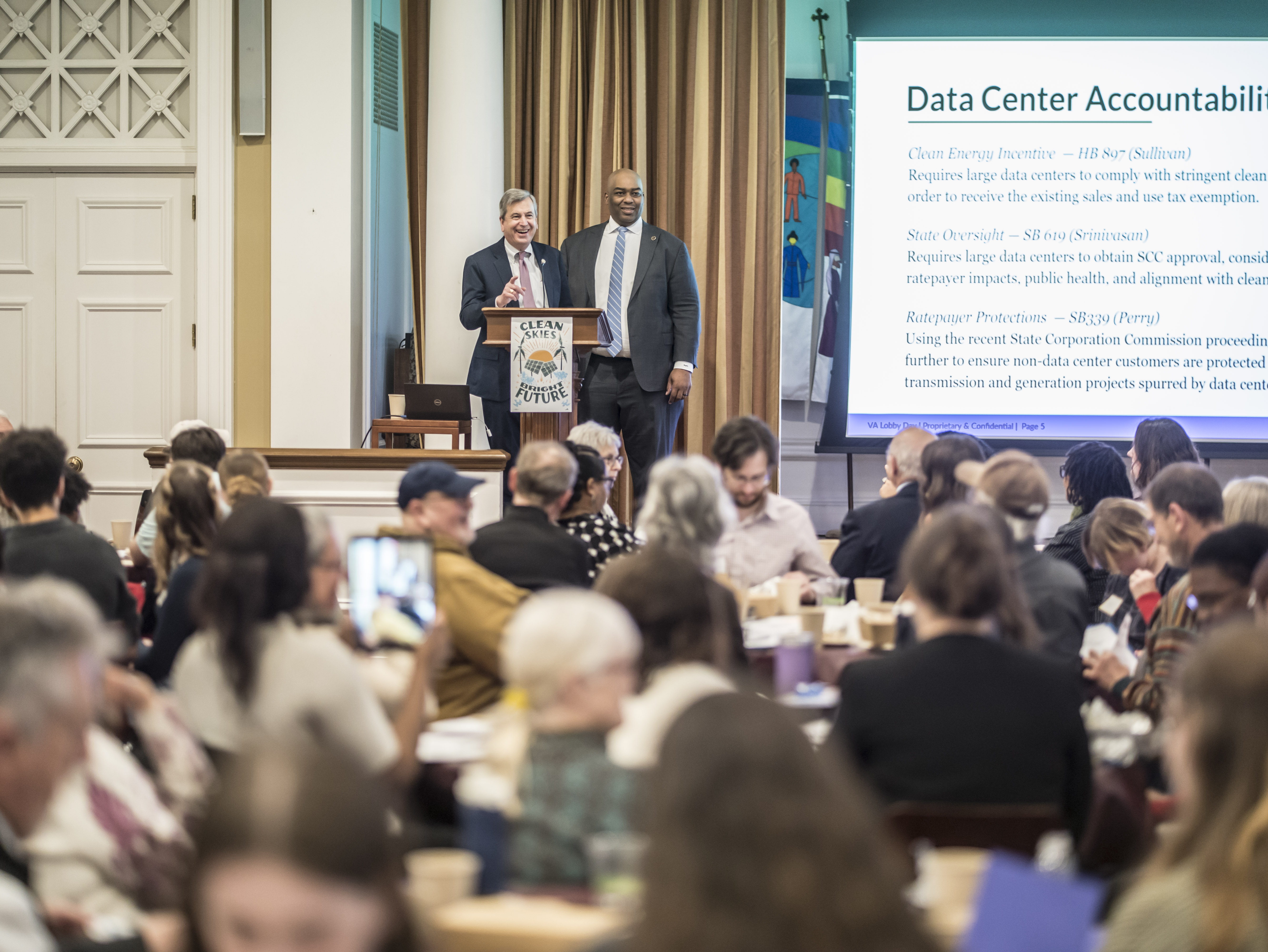
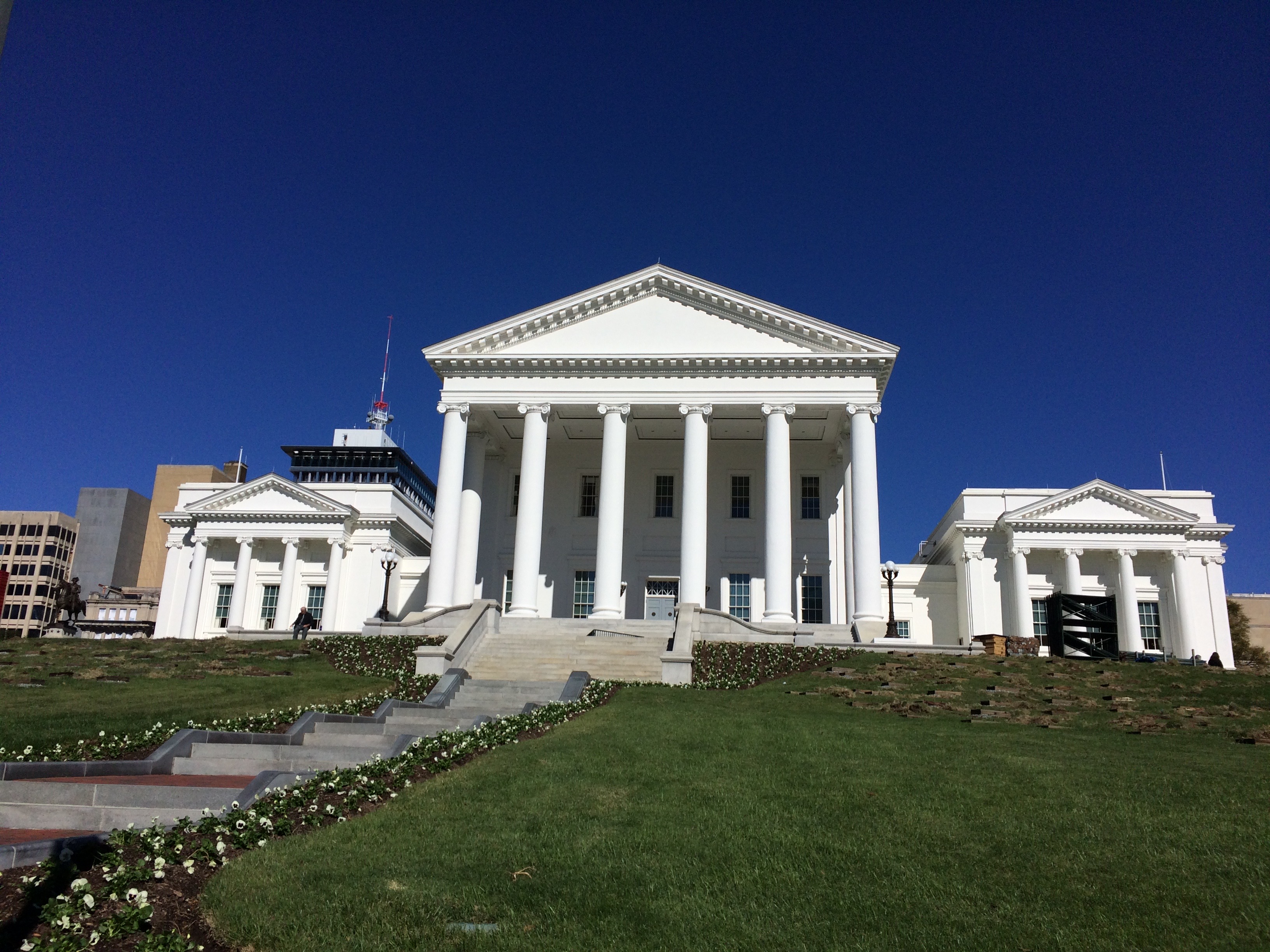
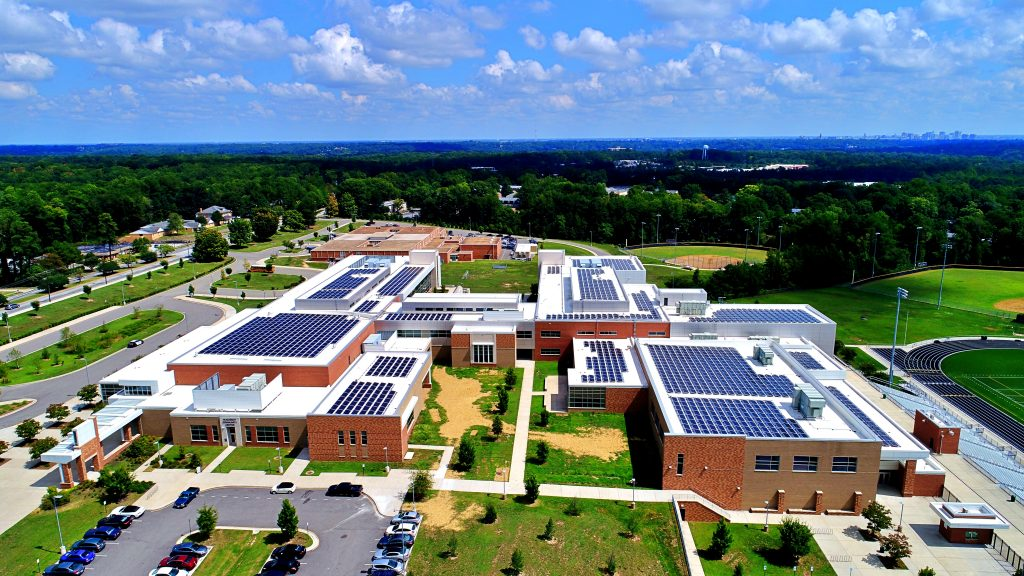



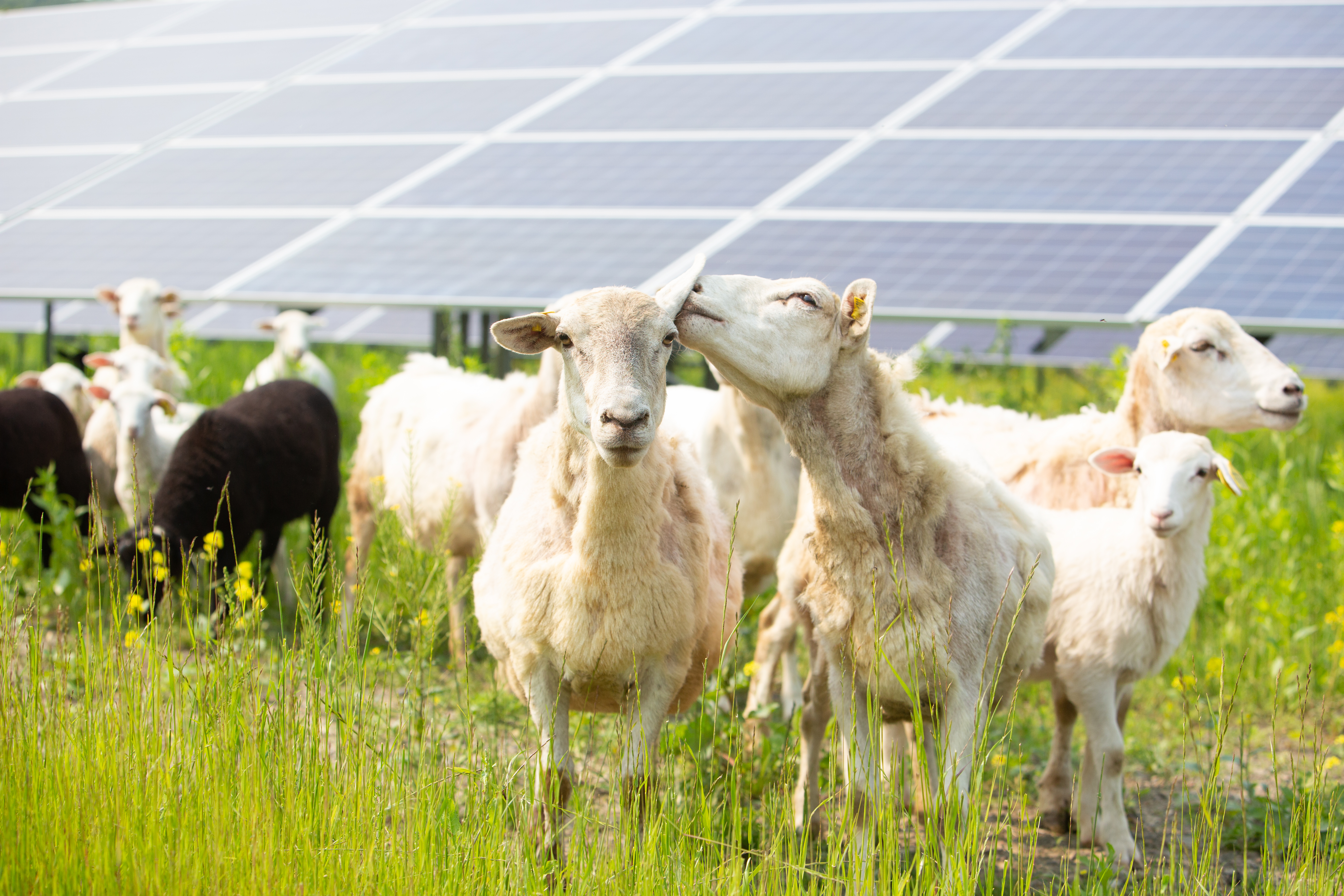
 Power for the People VA