Eight years ago last week, I wrote a column titled, “Why Trump won’t stop the clean energy revolution.” Calling global warming a hoax, businessman and reality TV star Donald J. Trump had just been elected with a promise to save coal jobs and pull the U.S. out of the Paris climate accord.
Climate activists were deeply distraught then, as now. I wrote in 2016, “Reading the news Wednesday morning was like waking up from a nightmare to discover that there really is a guy coming after you with a meat cleaver.”
But as I also wrote, there is only so much damage a president can do when technology, popular opinion and – especially – economics don’t support his agenda. Trump couldn’t save the coal industry (though he tried). Instead, his administration oversaw a 24% decline in coal employment. And where coal supplied 30% of U.S. electricity in 2016, by the time Trump left office it had fallen to 20%.
In the intervening years, Trump seems to have lost interest in coal mining, even as he continues to embrace fossil gas production. His enthusiasm for gas fracking fits with his drill-baby-drill approach to energy, but it was also intended to win over voters in Pennsylvania, a major producer of shale gas. Ironically, the gas industry insists on calling methane “clean” precisely because burning it emits less CO2 than coal.
While coal was dying, wind and solar were well on their upswing when Trump took office in 2017, and they continued to advance through his first administration. By 2020, wind and solar had become the cheapest forms of new electric generation. Today, renewable energy supplies more than 21% of the nation’s electricity, while coal’s share has dropped further, to just 16%. Trump or no Trump, technological advances and a thirst for cleaner energy continue to drive new wind and solar generation.
Indeed, the offshore wind industry – famously reviled by Trump – wasted no time last week in congratulating its erstwhile foe on his victory and insisting, hilariously, that his election is a big win for the industry. The first Trump administration, they noted hopefully, “laid out the fundamental framework for our modern offshore wind industry.”
Well, okay. From their lips to Trump’s ears. Trump is hardly known for consistency, and it is not impossible to imagine him softening his position on an industry that is creating well-paying jobs for the blue-collar workers who make up a portion of his base. His Virginia acolyte, Republican Gov. Glenn Youngkin, boasts of overseeing the building of the nation’s largest offshore wind farm. Why shouldn’t Trump pivot?
Early in the Republican primaries, one candidate opined that all the solar panels and batteries sold in the U.S. are made in China. That wasn’t actually true. For years one U.S. company, First Solar, has ranked among the world’s top ten solar panel manufacturers. Among the domestic manufacturers of both EVs and batteries, one of the largest is Tesla, whose CEO Elon Musk is now a Trump darling. It is going to be fascinating to find out whether Musk uses his influence to benefit the clean energy transition generally, or only himself.
Yet the notion that China dominates solar and battery production is also not wrong. China is eating our lunch on clean energy. Chinese companies produce 80% of the world’s solar panels and more than half of its electric vehicles. Sadly, perhaps, these are not cheap imitations of superior American products. They are world-leading technology.
Chinese dominance of the world market was a major reason that President Joe Biden’s signature climate law, the Inflation Reduction Act (IRA), put so much emphasis on supporting domestic manufacturing. Tariffs on Chinese goods, Trump’s preferred approach, help U.S. companies compete for American consumers, but they don’t support an export market when other countries produce better goods for less money. Even at home, critics note, tariffs mostly just raise prices.
Yet Trump has vowed to repeal the IRA, and given that Congress passed it without Republican support, there is certainly a danger that a Republican Congress will comply. On the other hand, observers note that 80% of the manufacturing tax credits have gone to red states, and this August, 18 House Republicans signed a letter to Speaker Mike Johnson asking to keep the credits.
I don’t want to sound too optimistic. Wait, let me rephrase that: I don’t feel optimistic at all. We are facing headwinds today that weren’t around in 2016. At that time, gains in energy efficiency meant electricity demand was not increasing, in spite of a growing population. With wind and solar displacing coal, there was a clear pathway for CO2 emissions from the electric sector to continue falling.
Today, however, the skyrocketing demand for electricity from data centers threatens the progress we’ve made on clean energy. It remains to be seen whether artificial intelligence will unleash efficiency gains and novel technologies that can put carbon reductions back on track. Right now, though, tech companies are so desperate for power that they will take it from wherever they can get it, and regardless of carbon content. (I notice, though, that they still want it to be cheap and are happy to greenwash it to meet their sustainability goals).
Perhaps the biggest change from eight years ago is simply that we are that much closer to reaching catastrophic climate tipping points. 2023 was the warmest year on record, and 2024 is on track to surpass it. The effects are evident in the number and costliness of severe weather and wildfires made worse by global warming. (Just ask insurance companies.) It is frustrating, to say the least, to contemplate losing the next four years to an administration that thinks climate change wouldn’t be an issue if we would just stop talking about it.
Yet Americans of all political stripes continue to support renewable energy by wide margins. And apart from a small minority of vocal climate deniers, most Americans want the U.S. to take stronger action on climate.
This election revealed deep fault lines among the American public, but one thing we all have in common is the faith that our ability to solve intractable problems is stronger even than our tendency to wish the problems away.
That’s why, even in the face of such serious headwinds, the clean energy revolution will continue.
This column was originally published in the Virginia Mercury on November 12, 2024.
Drill down far enough into the earth, and you will hit hot rocks. Energy companies have used this heat to generate carbon-free electricity for more than a century. It’s an elegant concept, but it worked only where pockets of heat lay close to the surface, accompanied by steam ready-made to turn turbines. Those limitations confined geothermal power plants to geologically active areas like Iceland, parts of Indonesia, and a few locations in the American West. As of 2023, geothermal energy made up less than half of 1% of U.S. electricity generation.
Suddenly, that is changing. New technology derived from oil and gas fracking methods is allowing energy companies to drill deep into the earth in places far from geologic activity. Wells can reach miles beneath the surface before branching out horizontally and creating fissures in hard, hot rock. Water injected into the wells comes back to the surface as steam to generate electricity. The steam is recaptured and re-injected to take up heat again, in a virtuous cycle powered by the earth itself.
The benefits
These “enhanced geothermal” systems can produce 24/7 baseload electricity or fill in around variable sources like wind and solar. They can even be used like batteries to store energy, including for long durations.
Unlike drilling for fossil fuels, geothermal companies avoid the shale formations that hold hydrocarbons, instead targeting non-porous rock. And since the product is not fossil fuel but steam, the technology produces zero-carbon energy without toxic or radioactive waste.
Freed from geographic limitations and using the same technology and workforce as the oil and gas industry, geothermal energy is ready to take off fast. The U.S. Department of Energy (DOE) sees it spreading across the country to provide as much as 125 gigawatts (GW) of electricity by 2050. A global estimate suggests the industry could eventually produce 4,600 GW of electricity at a cost of 50 euros (around $55) per megawatt-hour or less.
In 2022 DOE launched an “Earthshot Initiative” to reduce the cost of enhanced geothermal energy in the U.S. to $45 per megawatt-hour (MWh) by 2035. If successful, that would put it at or below the cost of any other new, dispatchable energy source.
Is this technology the answer to the surging demand for electricity from data centers and artificial intelligence? And could it allow Virginia to keep adding data centers without blowing up its climate goals?
The challenges
We do have to keep in mind that not all silver bullets prove to be sterling. Small modular nuclear reactors (SMRs) are evidence that some highly-anticipated technologies don’t follow the rosy timelines and price projections their boosters promise.
Unlike SMRs, though, enhanced geothermal systems have already achieved commercial deployment. After successfully demonstrating the technology with a 3.5 MW pilot facility, Fervo Energy signed a contract last year with Google to provide electricity for its data centers from a 115-MW enhanced geothermal power plant in Nevada. Fervo will deliver the power to the local utility, NV Energy, which will then charge a slightly higher price to Google via a proposed new “clean transition tariff.” Fervo has also signed a deal for an even bigger project that will deliver 400 MW to California utilities.
Using a different fracking-based technology it calls a “Geopressured Geothermal System,” Houston-based Sage Geosystems recently agreed to supply 150 MW of power for Meta’s data centers beginning in 2027. Sage says it can make electricity not just by extracting heat but also by using pressure, an add-on technology that allows it to offer energy storage independent of steam production.
Both Fervo and Sage say their methods can be used almost anywhere, and both cite advantages over established energy sources. Like wind and solar, geothermal is renewable and carbon-free, but it isn’t dependent on weather. It also doesn’t require fuel sources like coal and gas that are highly polluting and sometimes unreliable in extreme weather.
Finally, with a small physical footprint relative to the energy produced, geothermal facilities could be located in urban areas or next to data centers and other large customers without the need for major new transmission lines.
But of course, the fact that geothermal technology can be used anywhere does not mean it can be deployed profitably everywhere, or at least not yet. A map compiled by the National Renewable Energy Laboratory shows the most ideal areas are still in the West, where hot rocks lie within a few kilometers of the Earth’s surface. In most of the eastern U.S., deeper wells would be needed to reach the same temperatures. For this reason, DOE sees the technology proving out in the West first before spreading east.
But favorability is not purely a function of geology, according to Ben Serrurier, manager of government affairs and policy at Fervo. I wanted to know how soon geothermal systems could start providing electricity to the world’s largest concentration of data centers, in Northern Virginia. He said the biggest impediment for the industry is not location, but the high cost of capital and the paucity of government support compared to SMRs, hydrogen, and other new technologies.
In spite of these challenges, Serrurier predicted geothermal would be deployed in Virginia by the latter part of the 2030s, noting that his company is already ahead of DOE’s projected timeline for the technology’s maturation. Eastern data centers present an especially attractive market, he said, because demand is increasing so quickly, and utilities have limited options for carbon-free energy.
Alas, observers of the data center industry know that while renewable energy is nice to have, cheap energy is even nicer. So I wanted to talk about cost.
Serrurier told me Fervo’s first project will deliver power to NV Energy at a price of $107 per MWh, and Google will pay slightly more than that to the utility. That is twice DOE’s target cost for 2035, yet it still puts the price below the U.S average of 13.1 cents per kilowatt-hour ($131 per MWh) for commercial customers, and competitive with the average Nevada commercial rate of 10.92 cents, according to Energy Information Agency data.
That price is, however, more than the 9.54 cents/kWh that the average commercial customer in Virginia pays for electricity derived primarily from fossil fuels. And Fervo’s price is for drilling in the West, not in the less favorable geology of the East.
But heck, anywhere in the country, 10.7 cents for zero-carbon baseload power — with no waste to be cleaned up and no added healthcare costs from pollution — still sounds compelling. Google may have chosen to be a first mover in order to show leadership and promote a new technology, but it is also locking in a solid deal.
Sage does not make its costs public, but Lance Cook, the company’s chief technical officer, told me their process is competitive with combined cycle gas plants when the cost of fossil gas is above $6 per thousand cubic feet. (According to the Energy Information Agency, the price of gas is currently below that level in most states, though gas prices are famously volatile.)
An additional benefit, said Cook, is that a geothermal plant could be co-located with a data center, foregoing a grid connection and obviating the need for transmission lines. “We can turn electricity into data,” he told me. “It is much easier to connect data than to wait for a grid connection.”
Both Cook and Serrurier are confident that geothermal will beat new nuclear price-wise, which today sounds like a safe bet. Analysts warn that cost continues to be a significant issue for the nuclear industry. Current projections for the cost of electricity from SMRs start at $142/MWh.
Cook noted that Sage’s technology can also provide long-duration energy storage that isn’t dependent on the heat of the earth. This approach can be used anywhere to turn solar and wind power into baseload energy. Sage’s website claims it can achieve this for less than the cost of batteries or pumped hydro.
With all this promise, enhanced geothermal has been slow to catch the attention of Virginia utilities and policy-makers. The Virginia Code includes geothermal energy in its definition of renewable energy, but enhanced geothermal is not on the list of energy sources that qualify for the state’s renewable portfolio standard (RPS).
The General Assembly did pass legislation this year from Senate Majority Leader Scott Surovell, D-Fairfax, to include a similarly-named, but quite different, kind of geothermal energy – geothermal heating and cooling systems, also known as ground-source heat pumps – in the RPS. Geothermal heat pumps use the near-constant temperature of the ground just a few feet under our feet to help heat and cool buildings, much as air-source heat pumps do but with greater efficiency. A working group under the auspices of the State Corporation Commission is currently trying to figure out how to award renewable energy certificates (RECs) for a technology that does not produce electricity.
But drilling down two miles or more and generating electricity at the utility level is quite another thing. Making enhanced geothermal systems eligible for the RPS would be essential to putting the technology on an even footing with other renewables for use in Virginia.
In an email, Surovell told me, “I have read about the Google geothermal project and believe there is significant potential in Virginia.I understand it is different, but we need to do all we can to try to meet the demand for energy created by data centers without upsetting the carbon-free goals we set with the Virginia Clean Energy Act.” He added, “Geothermal also has the potential to create thousands of well-paying trade jobs in drilling and pipefitting in the Commonwealth.”
I also contacted Dominion Energy Virginia to gauge the utility’s level of interest. Dominion is facing an enormous challenge to meet the explosion of demand from data centers. Its 2023 integrated resource plan (IRP) proposed building new gas plants as early as 2028 and an SMR in 2034, but no geothermal energy. The plan failed to meet the carbon-cutting requirements of Virginia law, so the company ought to see the need to up its game for its 2024 IRP, due in October.
Dominion’s answer was not encouraging. Aaron Ruby, Dominion’s director of Virginia and offshore wind media, responded with an email that made reference to the working group for geothermal heat pump RECs.
“We’re certainly looking at the potential for geothermal in Virginia. The SCC is leading a geothermal working group, and there are lots of knowledgeable experts taking a close look. Most of the potential in Virginia appears to be geothermal heat pumps, with maybe less potential for power generation. The process is ongoing, so still more to learn.”
Echoing Gov. Glenn Youngkin’s rhetoric on energy, he added, “As you know, we’re experiencing an unprecedented growth in power demand. Reliably serving that growth requires an ‘all of the above’ approach, including offshore wind, solar, battery storage, next generation nuclear and natural gas. Emerging technologies like clean hydrogen, longer-duration storage and geothermal could also play a role.”
It’s not a great sign that Dominion ranks geothermal dead last. The company seems quite content to keep adding data centers to its customer base with no plan to meet its climate commitments.
Data center developers, on the other hand, could vote with their metaphorical feet. If Dominion will not bring geothermal technology to Virginia data centers, maybe the data centers will go to the geothermal technology. Some data center operators say they need to be in Virginia to be close to customers in the East, but the industry’s rapid spread into other states shows many have flexibility. So why should they face public opposition and rising electricity rates in Virginia when they can go to Utah, Nevada or Texas to access low-cost, zero-carbon energy delivered 24/7 from a source that might even be located onsite?
Especially since, in so doing, they would provide the capital and demand required for enhanced geothermal to achieve DOE’s goals ahead of time, and hasten the day when Dominion presents an IRP with a real zero-carbon plan.
This article was previously published in the Virginia Mercury on September 10, 2024.
Greenpeace protesters at the site of Amazon’s HQ2 in Arlington, Virginia, in 2019 called out the company for failing to make progress towards its commitment to power the cloud with renewable energy. Since then, the company has actually increased its carbon emissions. Photo courtesy of Greenpeace.
When Amazon announced this month that it had achieved 100% renewable energy seven years ahead of schedule, that sounded like really good news for Virginia. Amazon owns more data centers here than anyone else, and data center energy demand is driving Dominion Energy Virginia’s plan to renege on its climate commitments, keep dirty coal plants online and build expensive new gas plants and transmission lines.
Unfortunately, Amazon’s announcement is so full of asterisks it looks like a starry night.
Let’s start with the good news. Amazon’s claim that it has purchased enough renewable energy to “match” its energy use is likely true, though its sustainability report doesn’t reveal essential details like how much energy the company uses. Amazon also says it is the largest corporate purchaser of renewable energy in the world, an impressive achievement.
Some of that renewable energy is in Virginia, so it is reasonable to say it serves the company’s data centers here. A map on Amazon’s website shows the company has invested in 19 solar farms in Virginia, with a capacity that totals around 1,386 MW – about a quarter of all solar installed in Virginiato date. That’s terrific. If every company operating in Virginia did as much, we’d be rolling in solar, figuratively speaking.
So what am I complaining about?
One problem is that the energy appetite of Amazon’s data centers in Virginia far outstrips the output of all of its solar farms here. The other problem is that producing renewable energy in the middle of the day can only very loosely be said to “match” energy used at other times of the day and night. Meeting energy demand on a 24/7 basis is harder, and Amazon isn’t even trying.
Let’s start with the numbers. Because the sun doesn’t shine all the time, a large solar array produces, on average, 22-25% of what it produces on a cloudless day at noon. (That percentage is known as the facility’s capacity factor.) At a 25% capacity factor, Amazon’s 1,386 MW worth of solar panels produce enough electricity to “match” about 347 MW of demand.
Amazon keeps its energy demand in Virginia a secret, but we can be pretty sure its 110 data centers here use way more than that. A 2019 Greenpeace report estimated Amazon’s Virginia data center demand at 1,700 MW in operation or under construction, an amount that would call for 6,800 MW of solar. Amazon rejected Greenpeace’s estimate at the time, but it didn’t supply a better one. More recent estimates suggest Amazon’s energy appetite in Virginia is on its way to 2,700 MW, enough to require the output of around 11,000 MW of solar.
Luckily for us, Virginia is part of PJM, a regional transmission grid that covers all or parts of 13 states plus Washington, D.C. Generation sources located anywhere in the region can serve a Virginia customer, and Amazon’s map shows it has utility solar and wind projects in several PJM states. By my count, these add up to as much as 4,000 MW of additional renewable energy that could be allocated to Virginia data centers, if Amazon had no other operations in those states that it wanted to power. (Which, however, it does.)
Adding together its solar in Virginia and elsewhere in PJM still leaves Amazon short of what it likely needs. So, if the company is correct that it has secured enough renewable energy to match all of its demand, a lot of those facilities must be in other regions or other countries. Yet the climate benefit of Amazon’s solar farms in (for example) Spain, which gets more than 50% of its electricity from renewable energy, is significantly less than the climate benefit of solar in PJM, where the percentage of wind and solar combined still hangs in the single digits.
I will – almost – give Amazon a pass on this point. PJM has been so appallingly slow to approve new generation that Amazon could well have as many projects in the “queue” as online. PJM claims it will catch up in the next year and a half, and when that happens, perhaps Amazon won’t feel the need to obfuscate.
Even if Amazon were “matching” all its energy needs with wind and solar in PJM, though, it’s the second problem that troubles me more. Building solar and wind is cheap; Amazon very likely makes a profit on it. Actually ensuring renewable energy provides all the juice for the company’s operations every hour of every day, on the other hand, would require a heck of a lot of expensive energy storage. And Amazon is not doing that.
Without energy storage, solar delivers electricity only while the sun is shining. The rest of the time, Amazon’s data centers run on whatever resource mix the local utility uses. In both Virginia and PJM’s territory, fossil fuels make up the great majority of the mix. Building more Amazon data centers in Virginia increases the burning of fossil fuels, causing more pollution and raising costs that are borne by the rest of us.
The self-styled climate hero turns out to be a climate parasite, harming people to make itself look good.
Combining renewable energy with storage to achieve true carbon neutrality isn’t prohibitively expensive. Other leading tech companies seem to be making that extra effort, with Google notable for its commitment to meeting its energy demand with renewable energy and storage on a 24/7 basis.
Amazon’s failure to rise to this challenge explains why, in spite of its massive investments in wind and solar, the company’s carbon footprint actually rose by 34% since the launch of its Climate Pledge in 2019, when it set a target of net zero carbon emissions by 2040.
That explains why, a year ago, the Science Based Targets initiative, a U.N.-backed organization that monitors corporate net-zero plans, removed Amazon from a list of companies taking action on climate goals. According to press reports, Amazon failed “to implement its commitment to set a credible target for reducing carbon emissions.”
Among those least impressed with the company’s efforts are its own workers. Last year, Amazon Employees for Climate Justice accused the company of failing in its climate commitments, and the group released its own report this month alleging multiple climate failures, including using “creative accounting” to inflate its achievements.
If Virginia is serious about meeting the climate challenge, we can’t blindly accept rosy claims from corporations whose central goal is not sustainability, but growth. Data centers whose energy demand isn’t met on a 24/7 basis from zero-carbon sources located on the same grid are not part of the climate solution, they are part of the problem. And currently, Amazon’s data centers are making the problem worse.
This article was first published in the Virginia Mercury on July 24, 2024.
A data center in Ashburn, Virginia. Photo by Hugh Kenny, Piedmont Environmental Council.
Somehow, we were not prepared for this. Artificial intelligence was in development for decades, during which time we fantasized about all the wonderful things it was going to do for us. And then the bots launched almost fully formed like Athena springing from the forehead of Zeus with her sword in hand, and only then did we have our epiphany: Oh man, this is not going to go well.
What happened to the AI utopia? We were expecting self-driving cars that would let us drink too much on nights out while eliminating highway fatalities. We anticipated the seamless integration of all our devices and appliances, maybe even without cords! We imagined an unlocking of efficiencies at home and at work; medical breakthroughs; scientific innovation on steroids. We’d have three-day workweeks and go hiking on the weekends while the robots cooked and cleaned.
Maybe these things are still there in our future, along with world peace, but so far what we’ve got is a new way for kids to cheat on homework, a lot of derivative art, pernicious deepfakes and raging arguments over intellectual property theft. Oh, and an unprecedented increase in the demand for electricity that threatens to overwhelm the grid and make it impossible for us to stop burning fossil fuels before global warming destabilizes societies worldwide.
The wonder is why we thought this would go well. Shouldn’t we have known ourselves better?
In my view, the biggest problem with AI is that either humans are in charge, or the robots are. If it’s the robots, there is a good chance they will decide to kill us all, and we won’t see it coming. So we need to root for the humans, who could use the powerful new tools of AI to address hunger and climate change but so far mostly use it for financial fraud, child pornography and adding to the absurd percentage of the internet devoted to cat memes.
And instead of helping to lower CO2 emissions, right now the effect of AI is to increase the burning of fossil fuels. U.S. electricity consumption had flatlined after the mid-2000s, but AI is pushing it up again, and sharply. Data centers, where AI “lives,” could consume as much as 9% of U.S. electricity generation by 2030, double that of today.
We have a close-up view of this in Virginia, the data center capital of the world. In 2022, when I first tried to quantify Virginia’s data center problem, industry sources put the state’s data center demand at 1,688 megawatts (MW) — equivalent to about 1.6 million homes. With the advent of AI and its enormous appetite for power, the industry added 4,000 MW of new data centers in 2023. By the end of last year, data centers commanded fully 24%of the total electricity generated by Dominion Energy Virginia, the state’s largest utility. Over the next 15 years, Virginia’s data center demand is expected to quadruple.
Citing the need to supply data centers with power, Dominion did an about-face on its plan to achieve net zero carbon emissions by 2050. It now proposes to keep coal plants running past their previous retirement dates, and to build new gas-powered generation.
The problem is not confined to Virginia. Across the country, utilities are struggling to meet AI’s increased energy demand, and looking to fossil fuels to fill the gap.
And while tech companies talk a good game about meeting their power demand sustainably, the evidence says otherwise. Tech companies conspicuously did not push back on Dominion Energy’s plan, and their own efforts fall woefully short. Even Google, which has taken its carbon-cutting obligations more seriously than most companies, just reported a 13% rise in its greenhouse gas emissions in 2023, thanks to its investments in AI and data centers.
Apparently, Google and its competitors in the race to dominate AI think meeting climate goals is like getting a loan from a bank; you emit more today, grow your business and use the profits to clear the debt by emitting a lot less tomorrow.
But Mother Earth is not a bank. She is a loan shark, and she has started breaking fingers.
If we can’t rely on the inventors of AI to restrain their energy appetites, we have to turn to our politicians (sigh). Our leaders have to make and enforce limits on the growth of AI commensurate with the world’s ability to provide the resources without baking the planet. Admittedly, mustering that kind of willpower is hard to do in a country that has elevated corporations to personhood and defines the First Amendment to include both spreading lies and spending money to influence elections.
And that gets us to the second-biggest concern I have about AI, but the one that might upend society soonest: the unleashing of deepfakes in this fall’s elections, and the threat that the reins of government will go not to those most dedicated to tackling hard problems, but to those who prove themselves the biggest scoundrels.
The American Bar Association (ABA) defines deepfakes as “hoax images, sounds and videos that convincingly depict people saying or doing things that they did not actually say or do.” Noting that they have already been used in election campaigns in the U.S. and abroad, the ABA is promoting model state legislation to criminalize the creation of malicious deepfakes. Meanwhile, tech companies including Google and Meta have adopted advertising policies to require disclosures of altered content.
Both approaches are good as far as they go; websites should police content, and states should act swiftly to outlaw the deepfakes (though the ABA lists very few that have done so yet). But in a high-stakes situation like an election, punishing violators after the fact – if you can catch them at all – is very much a case of closing the barn door after the horses are out. Once voters have been exposed to “evidence” of a candidate’s unfitness for office, especially when media coverage has primed them to believe the lies, the damage is done.
Many voters, especially younger ones, are savvy enough to be wary of campaign-related materials generally, and of unattributed images that float around the internet in particular. But older people who came of age in the pre-internet-memes era are vulnerable to believing what they see and hear, and a lot of us won’t put ourselves to the trouble of questioning what feels true. A deepfake only has to fool some of the people some of the time to alter the results of an election.
But maybe I’m being needlessly alarmist about the dangers of AI, even if I have a lot of company. So I did the obvious thing: I asked a bot if AI would save humanity or kill us all.
ChatGPT responded with a list of pros and cons of AI, including the familiar benefits and concerns that have spawned a thousand op-eds. You can try this at home, so I won’t reiterate them here. But I will note the curious fact that the bot didn’t mention either carbon emissions or election-altering deepfakes.
Maybe that’s an oversight, or maybe it means my fears are unwarranted. But maybe it shows something even scarier than AI itself: It’s AI pretending it isn’t trying to take over.
We urgently need action from U.S. and corporate leaders. Stiff new taxes on data center energy use would lead to greater efficiencies and nudge companies to price data storage and AI use appropriately. New laws should put the onus on internet platforms to stop deepfakes before they can spread. Tech companies should prioritize what is good for human beings over what is good for corporate profit. If they can’t ensure AI is used only for good, they should pull the plug until they can.
If all this doesn’t happen, and soon – well, let’s just hope the robots are kind.
This article first appeared in the Virginia Mercury on July 11, 2024.
If you’d like to hear a deeper discussion about the climate challenge posed by data centers and AI, I’ll be addressing this topic tonight at a meeting of the IEEE Society on Social Implications of Technology (SSIT) Chapter of Northern Virginia/Washington/Baltimore in Oakton, Virginia, which you can also attend remotely. The presentation will be recorded.. https://events.vtools.ieee.org/m/424609
Following the General Assembly’s failure either to rein in the explosive growth of power-hungry data centers or to remove obstacles to increasing the supply of renewable energy in Virginia, a lot of people are wondering where we go from here.
Dominion Energy Virginia’s answer, as described in its 2023 Integrated Resource Plan (IRP), is “build more fossil fuels.” The utility is pushing forward plans to build new methane gas generating units in Chesterfield. Dominion argues that although its IRP calls for dramatically increased carbon emissions, it sort of complies with the Virginia Clean Economy Act anyway because the VCEA has an escape clause when reliability is at risk.
Dominion does not acknowledge that its own actions contribute to the problem. To be fair, though, it’s a huge problem, and even if our utilities were on board with the VCEA’s carbon-cutting agenda, we would need stronger legislative policy than we have now. Rejoining the Regional Greenhouse Gas Initiative is an important priority that Democrats are rightly pursuing, but the need for action goes much further.
Sen. Dave Marsden, D-Fairfax, convened meetings the week before last to hear from utilities, industry members, environmental groups and others to get suggestions on ways to reform the VCEA. The interest groups met separately, and members of one group were not allowed to attend other group sessions to hear what those stakeholders had to say. The meetings were closed-door and confidential, with the express purpose of preventing a nosy public from learning anything through Freedom of Information Act requests.
That secrecy makes me queasy, so I declined the invitation to attend the environmentalists’ session. I’d have cheerfully jettisoned my scruples, though, if I could have been in the utility session to hear what Dominion’s lobbyists were whispering in the senator’s ear. Alas, that was not on offer.
But Marsden is asking the right questions, and of course, I always have answers, even when no one is asking. In my view, Virginia can stay on track to carbon neutrality by adopting four basic principles: data centers must pay their own way, both literally and carbon-wise; solar must be easy to build and interconnect; utilities must not build new fossil generation for “reliability” before exhausting non-carbon solutions; and efficient buildings must be added to the strategy.
Let’s start with the elephant outgrowing the room.
Data centers are sucking up all the energy
Without action, data centers will soon overtake residential customers to become Dominion’s largest category of customer. Already, they are driving the utility’s decision-making, as we saw from Dominion’s IRP. This year, the General Assembly deferred action to address the energy crisis until it sees the results of a study being undertaken by the Joint Legislative Audit and Review Commission (JLARC).
It now appears that study won’t be published before the 2025 session convenes, and in fact there does not appear to be a deadline of any kind. Yet we already know enough about data center energy demand and its consequences for everyone else that legislators will be derelict in their duty if they put off all action until 2026.
The General Assembly must choose from three options if it still cares about the energy transition: stop the growth of the data center industry in Virginia, put the onus on data centers to source their own clean energy from the grid, or dramatically increase renewable energy generation and power line construction.
Lawmakers show no desire to stop all data center growth, but as I’ve urged before, they can and should establish a joint state-local task force to choose appropriate sites for growth based on energy and transmission availability, water resource adequacy and good-neighbor factors, like distance from residential communities and parkland.
Legislators should also require data centers to meet industry-best standards for energy efficiency, use alternatives to diesel generators for backup power and source carbon-free energy from facilities located on the grid that serves Virginia. They could buy this power either on their own or through a specially-designed utility tariff, as long as it meets all of their needs on a 24/7, hourly basis. In no case should other customers see higher electricity bills for infrastructure that’s only needed because of data centers.
These measures will take time to put in place, yet data center development is proceeding apace while the General Assembly takes its nap. There is no avoiding Virginia’s need for a lot more carbon-free generation, pretty much right away. A couple of small modular nuclear reactors ten years from now aren’t a solution.
Don’t expect climate leadership from Dominion
Dominion’s fossil-heavy IRP marked a sharp break away from the climate report that the company released just months before, which projected solar dominating the grid by 2040. Whether the IRP should be dismissed as political pandering to a conservative governor, or taken in earnest to mean the utility has thrown in the towel on renewable energy, is something of a Rorschach test for Virginia leaders.
When Dominion releases its 2024 IRP this fall, we may get more clarity about what the company really thinks. More likely, we will still be left guessing. Dominion has a long history of playing to both sides to get what it wants, and what it wants is profit.
There’s nothing wrong with a company making a profit, of course, as long as the company isn’t also allowed to make the rules it plays by. Asking Dominion’s lobbyists to help make energy policy is like recruiting burglars for a task force on crime prevention.
Make it easier to build solar
While Virginia counties vie with each other to attract data centers, some are notably less keen on solar farms. Sprawling developments of windowless warehouses that suck power? Yes, they say. Grassy fields lined with rows of solar panels that produce power? No. Such is the horror with which some people view solar that localities have adopted moratoriums, acreage caps and other limits designed to keep projects at bay. The result is that an already-slow process for siting solar projects is getting even slower, more unpredictable and more expensive.
Lawmakers rejected legislation this year that would have allowed the State Corporation Commission to overrule local permit denials. Yet it seems doubtful whether, in a Dillon Rule state like ours, local governments actually have the authority to enact blanket prohibitions and caps on specific kinds of land use. Legislators may want to ask the attorney general to clarify this point rather than waiting for landowners to challenge in court a locality’s refusal to let them put solar panels on their property.
If the AG (or a court) rules these barriers illegal, localities would have to go back to evaluating the merits of project applications on a case-by-case basis — hardly a bad result. But it would be wiser and more orderly to pass legislation spelling out under what circumstances a local government may reject a solar project, and what the landowner’s recourse should be.
New gas plants are the wrong solution for reliability
Though Dominion’s 2023 IRP didn’t win approval from the SCC, Dominion is going ahead with plans to build new methane gas combustion turbines in Chesterfield. Given that these “peaker” plants generate dirty power at a high price, Dominion should not be permitted to build gas combustion turbines if other alternatives are available.
Which they are. Demand-response programs, advanced grid technologies and batteries charged by renewable energy are superior to gas peakers for reasons of cost, air quality and climate impact.
Dominion is building some large batteries and testing long-duration battery storage technologies (and of course, Virginia already has the largest pumped storage facility in the world), but our utilities have not even begun to tap the potential of batteries in homes and businesses. Subsidizing the purchase of batteries by homeowners and businesses in exchange for the ability to draw on the batteries for peaking power, as some utilities do, would also build resilience into the grid and address power outages more cheaply than burying lines.
Imagine: If data centers had installed batteries instead of the 11 gigawatts of diesel generators at Loudoun and Fairfax County data centers, Virginia would already have more battery storage capacity than any country in the world.
Let everyone build solar
The VCEA calls for 35% of its solar target to be satisfied by third-party developers. The purpose of this set-aside is two-fold: to attract more private capital, and to use competition to keep a lid on prices. Unfortunately, the SCC accepted Dominion’s argument that 35% should be read as a ceiling as well as a floor, to the detriment of ratepayers and solar developers. With Dominion now reneging on its solar commitments, it’s more important than ever that private developers be allowed to step in. One bill in the 2024 session would have corrected this problem by explicitly making 35% the minimum. The General Assembly should adopt that measure.
Fix interconnection
Possibly the most inexplicable failure of the General Assembly this year was failing to pass legislation to resolve the dispute between Dominion and commercial customers over interconnection requirements. The onerous requirements that Dominion adopted in December of 2022 — imposed even in the face of a contrary SCC ruling — have wreaked havoc on plans by local governments to put solar on public buildings and schools. That is fine with Dominion; though the goal of the new requirements was to acquire upgraded distribution infrastructure at no cost to itself, its monopolistic lizard brain is equally satisfied with the result of shutting down competition from small solar companies.
Legislators should not accept this result, though. The General Assembly adopted net metering years ago because encouraging residents and businesses to go solar is good for the economy and makes communities more resilient. Support for distributed renewable energy is even written into the Virginia Code as official policy.
And distributed solar is hugely popular. Indeed, the very people who oppose utility-scale solar projects almost inevitably argue that society should maximize rooftop solar instead. In this they are at least half right: If we are really going to meet the energy challenge ahead of us, the very least we can do is milk every kilowatt-hour from sunshine falling on rooftops.
Customers have always paid to interconnect their solar to the utility’s grid. The dispute between Dominion and its customers is about whether Dominion can insist they pay the entire cost of expensive new fiber-optic wire and other cool technology that could make the distribution grid better for everyone, but which any one customer can’t afford. These upgrades could enable not just more solar but also electric vehicle charging in our communities, vehicle-to-grid technology and programs allowing utilities to make use of customers’ battery storage. But if the technology really is that valuable (a determination that should be made by the SCC, not Dominion), then getting it shouldn’t depend on how deep a customer’s pocket is — especially when that customer is a local government and, therefore, effectively, the Virginia taxpayer.
This year’s interconnection bill would have allowed a utility to recover the costs of these grid upgrades from ratepayers, with SCC oversight. Even Dominion would have been better off with the bill, something it would have recognized if its lizard brain weren’t in charge at the time. The General Assembly should pass the bill.
An untapped three gigawatts of energy are waiting off our coast
Dominion’s 2,600 megawatt Virginia offshore wind project is due to begin construction this year, but it is not the only game in town. The Kitty Hawk offshore wind area situated off North Carolina can deliver up to 3,500 megawatts of energy through a cable that will come ashore at Virginia Beach. All that is holding up the project is the lack of a customer. Offshore wind is more expensive than solar, but we have a lot of power-hungry data centers who could pay a clean energy tariff that would include Kitty Hawk wind.
Maximize efficiency in buildings
Possibly the best piece of energy legislation to pass this year was the bill that directs local governments and schools to build to higher efficiency standards and incorporate renewable energy, as appropriate. The language could have been even stronger, but as it is, it will deliver significant cost savings for taxpayers.
In fact, local governments will now build to better standards than most homeowners get for themselves when they buy a house. That’s because Virginia’s residential building code is pathetically behind the times when it comes to energy efficiency. Home buyers and renters would save more than enough money on utility bills to cover the upfront cost of better housing construction, but builders won’t voluntarily meet higher standards because it reduces profits. That should not be acceptable.
Legislation passed in 2021 directed the Board of Housing and Community Development to consider amendments that would strengthen the building code. BHCD, which is dominated by builder and real estate interests, simply ignored the law. The matter is now in litigation (and the governor is trying to weaken the code even further), but the General Assembly could resolve the matter by directing BHCD to adopt efficiency measures at least as strong as the national standards set by the International Building Code Council (itself under fire for allowing builder interests to weaken efficiency standards), and to allow local governments to adopt stronger “stretch codes” to help residents save even more money and energy.
Going further, new and renovated buildings should be required to use electricity in place of methane gas, oil or propane for heating, cooling and appliances wherever practicable. Though building electrification increases electricity consumption, electricity is a more efficient technology than burning fossil fuels in the home, so it contributes to lower energy costs for residents and a smaller carbon footprint for the state overall.
It’s a shame the General Assembly settled for simply not going backwards this year, but it is a good sign that Marsden and others are not waiting for next year to consider ways to get us back on the carbon-cutting wagon. With the climate clock ticking, we have no more time to lose.
A version of this article appeared in the Virginia Mercury on April 29, 2024.
For the third year in a row, a tug-of-war is going on in the General Assembly over whether Virginia stays the course of the energy transition laid out in 2020 and 2021, or rolls it back hard.
Democrats remain committed to a renewable energy future to address pollution, high electricity costs and the causes of catastrophic climate change. Gov. Glenn Youngkin and most Republican legislators cling to the familiar (dis)comfort of fossil fuels. Republicans are still lobbing grenades at the Virginia Clean Economy Act (VCEA) and the Clean Car Standard; Democrats are holding the line on those advances.
Last year House Republicans used small subcommittees to kill Democrats’ energy bills, even those that passed the Senate on a bipartisan basis. This year the Democrats’ slim majority in both chambers will let more bills get to the governor’s desk. But with the threat of a veto tempering expectations, the party of clean energy is not running big, ambitious bills, but is instead focused on solving problems that have popped up along the march to zero carbon.
Committees have already begun work on the hundreds of energy bills filed in past days. That’s too many for even the Mercury’s dedicated readers to review without more caffeine than is good for you, so let’s focus on just some that would have the most consequence for the clean energy transition.
To be: Democrats work to further the clean economy
Many of the Democratic bills contain small fixes to existing law that add up to big gains for clean energy. One of these is HB 638, from Del. Rip Sullivan, D-Fairfax, and SB 230, from Sen. Ghazala Hashmi, D-Richmond. Most of its provisions are tweaks to the VCEA. Among them are increasing from 1% to 5% the percentage of Dominion Energy Virginia and Appalachian Power’s renewable energy purchasing that must come from small projects like rooftop solar; streamlining the State Corporation Commission’s review of energy efficiency programs by creating a single cost-effectiveness test; and supporting competition in the development of renewable energy and energy storage facilities by specifying that “at least”35% of projects must come from third-party developers, instead of the simple 35% number currently in the law.
The bill also contains a provision that goes beyond the VCEA. It states that the SCC has an “affirmative duty” to implement the Commonwealth Energy Policy at “lowest reasonable cost.” (Two other bills, one from Sen. Jennifer Carroll Foy, D-Fairfax, and the other from Del. Phil Hernandez, D-Norfolk, contain only this provision.) The energy policy is separate from the VCEA, and it sets ambitious goals for the decarbonization of Virginia’s whole economy, including a faster timeline for achieving net zero in the electricity sector. The catch is that the policy does not have teeth, and for that reason it is routinely ignored. Requiring the SCC not just to take account of it, but also to implement it, is a step towards broader decarbonization, though it is not clear how it would actually play out at the SCC.
Legislation from Sen. Scott Surovell, D-Fairfax and Sullivan would resolve problems with the shared solar program in Dominion territory (including putting restraints on the minimum bill that the utility can charge) and expand it to Appalachian Power territory.
SB 79, from Sen. Barbara Favola, D-Arlington, would save taxpayers money by requiring new or substantially renovated (over 50%) public buildings to have solar-ready roofs or, if solar is deemed impractical, to meet one of two high-efficiency alternatives. New or substantially renovated schools would have to be designed and built to net-zero energy standards, unless the locality determines that to be impractical or the school is a historic building.
Sullivan and Sen. Suhas Subramanyam, D-Loudoun, have introduced legislation to resolve the interconnection problem that has stalled commercial solar projects across Dominion territory. The House and Senate bills specify that customers are responsible for costs on their side of the meter, while the utility pays for costs on its side, including upgrades to the distribution grid.
A few bills seek to break through the local-level gridlock that has bedeviled utility-scale solar and wind projects. The most significant of these is HB 636from Sullivan and SB 567 from Sen. Creigh Deeds, D-Charlottesville, which provides an alternative permitting process for larger utility solar (50 MW or more), wind (100 MW or more) and renewable energy storage projects (at least 50 MW nameplate and discharge capacity of 200 MWh or more) that go through the local permitting process but end up without permits. Developers get a second chance at the SCC if they meet a list of requirements. These include safeguards for farmland protection, stormwater, setbacks, wetlands, wildlife corridors, etc. Applicants are also charged $75,000 to cover the locality’s cost of participating in the SCC proceeding. (There is some irony here that small projects, which have less impact, are left at the mercy of local whims, while the most impactful projects have what amounts to a right of appeal.)
Vehicle electrification would also get support from Democratic legislation. One bill of particular interest is Sullivan’s HB 118, which requires Dominion and Appalachian Power to take charge of upgrades to the distribution grid needed to support EV charging by non-residential customers. The utilities are also tasked with filing detailed plans to “accelerate widespread transportation electrification across the Commonwealth in a manner designed to lower total ratepayer costs.”
Regardless of the fate of these bills, Virginia’s efforts to transition to a zero-carbon economy will be swamped by new demand from the fast-growing data center industry, unless the industry itself can be made part of the solution. A dozen or so bills seek to put conditions on the industry in one way or another, but one takes on the energy demand directly. HB116, from Sullivan, and SB192, from Subramanyam, condition data center operators’ receipt of tax credits on demonstrating compliance with minimum standards for energy efficiency and renewable energy procurement, as well as not using diesel generators for backup power.
Not to be: Republicans try out arguments against the energy transition
Many of the Republican anti-clean energy transition bills are blunt instruments that are more about campaigning in Trump country than low-cost energy. For example, HB 397, from freshman Del. Tim Griffin, R-Bedford, would repeal most of the important provisions of the VCEA, while declaring that development of new nuclear is “in the public interest” (a phrase that pretty much means “watch your wallet”).
Similarly, five bills seek to repeal outright the Advanced Clean Cars law passed in 2021, which effectively put Virginia among the states that follow California’s path to vehicle electrification. The law does not kick in until 2025, but trying to repeal it has become a Republican standby. A more subtle bill from Del. Lee Ware, R-Powhatan, would condition repeal on the Virginia Automobile Dealers certifying that Virginia is not meeting its annual EV sales targets.
Some anti-EV bills are merely performative. One non-starter, from Griffin again, would provide a tax credit for purchases of vehicles with internal combustion engines. A bill from Sen. William Stanley, R-Franklin, would require any business selling an EV or any EV component to a public body to provide a sworn declaration that there was no child labor involved not just in the manufacturing but at any point anywhere along the supply chain, starting with mining minerals abroad.
If Stanley were truly concerned about child labor violations, of course, he would seek to apply this sworn declaration requirement to all industries. He could start with the domestic meatpacking industry, where child labor violations are rife, including in Virginia. Ah, if only that were the point.
It’s not just state-level decarbonization that comes in for a brute-force attack. A bill from another new delegate, Eric Zehr, R-Lynchburg, makes its target any federal regulations that “may threaten the production or supply of affordable, reliable, and secure energy within the Commonwealth.” If alerted to such a threat by a utility or the SCC, the Attorney General’s office would be required to intervene. This sort of bill is not intended to survive its first committee hearing, if it even gets a hearing. Its only purpose is to show off the patron’s hard right bona-fides.
To be fair, there are Republicans who are actually trying to solve real problems in the energy sector. As one example, take SB562 from Sen. Travis Hackworth, R-Tazewell. His bill would create a ratepayer-funded pilot program for utilities to figure out a way to use coalbed methane for electricity without burning it (perhaps with fuel cells?). The problem is, he proposes to make this electricity eligible for Virginia’s renewable portfolio standard (RPS). It’s a creative, if expensive-sounding, response to the real climate problem of methane leaking from old and often abandoned coal mines, part of the true cost of coal. But calling fossil methane renewable is, shall we say, counterfactual. Some problems are more effectively tackled head-on, using tax dollars or tax credits, rather than being used to undermine the integrity of the RPS.
To be: somewhere else entirely
The reality of renewable energy is that we have to build a great many wind, solar and storage projects, each one taking months or years of design, permitting and construction work and requiring acreage we would rather use for something else. Yes, it means economic activity, investment and jobs, but it’s also something of a slog. Wouldn’t it be nice if we had a magic solution that could just provide carbon-free electricity without all that bother?
That’s the dream that continues to attract both Democrats and Republicans to nuclear energy. Opinion is divided on whether small modular reactors (SMRs) could hold the answer to all our energy woes, or are just the latest con from an industry looking to attract a new set of deep-pocketed suckers.
Three things are clear at this point. One, SMRs are still many years away from commercialization, coming too late to solve the climate problem that is here and now. Second, SMRs are going to cost a lot. Not only is there no free nuclear lunch, there isn’t even a low-priced breakfast. And third, Dominion is frothing at the bit to build an SMR – but only if customers have to pay for it.
Some legislators are happy to oblige, even with all these drawbacks. The most concerning of the bills are HB 1323 from Del. Danny Marshall, R-Danville, and SB 454 from Sen. David Marsden, D-Fairfax. The legislation would allow Dominion or Appalachian Power to charge ratepayers “at any time” to recover development costs of a small modular nuclear reactor, defined as a nuclear reactor not larger than 500 MW. Not only is that not small, but by the language of the bill it need not even be modular or use advanced technology. Heck, it doesn’t even have to be in Virginia. Dominion could build any kind of nuclear plant, anywhere it chooses, and satisfy the terms of the bill.
But it’s that “at any time” language that should be a red flag for lawmakers. Charging customers for a nuclear plant before and during construction, including cost overruns and with no guarantee of completion, is precisely how residents of South Carolina got stuck paying billions of dollars for a hole in the ground.
That amount of money buys a lot of low-cost renewable energy and storage, right in the here and now. Virginia needs to be a clean energy state for the sake of ratepayers, the economy and the climate, and there is no time to waste.
This article was first published on January 21, 2024 in the VIrginia Mercury.
Data centers increasingly dot the landscape of Northern Virginia, like this one sandwiched between a housing community and the W&OD bike path in Ashburn. Photo by Hugh Kenny, Piedmont Environmental Council.
None of the sessions at last month’s Virginia Clean Energy Summit(VACES) in Richmond were devoted to data centers, but data centers were what everyone was talking about. Explosive growth in that energy-hungry industry has everyone — utilities, the grid operator, and the industry itself — scrambling to figure out how Virginia will provide enough new power generation and transmission. And, worryingly, no one seems to have an answer.
Or rather, lots of people have answers, but none of them achieve the trifecta of providing data centers the energy they need while continuing the explosive growth trajectory that state leaders seem to want, and at the same time keeping Virginia’s transition to zero-carbon energy on track. Something has to give. Which will it be?
With no action, the “give” comes from the people of Virginia. Residents will see growth they don’t want, pay for infrastructure that doesn’t serve them, suffer from pollution that is not of their making, and see their tax dollars subsidize an industry that employs almost no one.
The no-action option isn’t a solution
But first, a quick recap. Northern Virginia already has the largest concentration of data centers in the world. As of late 2022, data center electricity demand had grown to 21% of Dominion Energy Virginia’s entire load, and likely an even larger percentage of the load of Northern Virginia Electric Cooperative (NOVEC), which serves much of Data Center Alley.
Worse, the industry is just getting started. Grid operator PJM’s grid forecast projects Dominion’s data center load will quadruple over the next 15 years, while NOVEC’s will rise to ten times what it is today. Other rural electric cooperatives in Virginia told PJM they also expect a huge demand from data centers, a prediction confirmed by news that Amazon Web Services expects to spend $11 billion on data centers in Louisa County, in the territory of Rappahannock Electric Cooperative.
In its Integrated Resource Plan (IRP) filing in May of this year, Dominion told the State Corporation Commission (SCC) that due to data center demand, it plans to ignore Virginia’s commitment to achieving a zero-carbon economy. Instead of increasing the pace of renewable energy and storage construction, it wants to keep coal plants running past their mandatory retirement dates and even build new gas combustion turbines as well as billions of dollars’ worth of new transmission infrastructure. The result will be higher costs for consumers and massive increases in carbon emissions, violating the carbon-cutting mandate of the Virginia Clean Economy Act.
Bill Murray, Dominion senior vice president for corporate affairs and communications, seems to have tried for a more conciliatory tone in talking to Senate Finance Committee members last week about the challenge of meeting data center load. Murray is quoted in the Richmond Times-Dispatch telling members, “We have worked through these challenges before.” Isn’t that reassuring? If only it were true.
If Dominion’s response has been less than adequate, others have not done better. PJM, already woefully behind on approving new renewable energy generation interconnection requests, blames states for wanting clean energy rather than doing its own job to help the market provide it. A PJM representative told the VACES audience utilities should just keep their fossil fuel plants running until it can work its way through the backlog, hopefully by 2026.
Virginia’s Data Center Coalition doesn’t see energy as its problem to solve, and its members seem strangely content to run on fossil fuels. Others in the industry are trying to do better, though. Whole conferences are devoted to the subject of lowering the carbon footprint of data centers. In addition to a pledge to use renewable energy 24/7, Google has achieved remarkable levels of energy efficiency (for you nerds, they claim an average PUE of 1.1). Google, however, has only a small footprint in Virginia.
Amazon Web Services, the biggest data center company in Virginia, buys renewable energy but is not striving for the 24/7 standard. AWS’ senior manager for energy and environment public policy, Craig Sundstrom, told a panel at VACES that by 2025, AWS will have offset its use of grid power with purchases of renewable energy on the PJM grid, and he pointed to 16 solar projects the company has in operation or under development in Virginia. That’s a great start, but it’s only a start. With no battery storage in the mix, AWS will still be using grid power from fossil fuels most of the time.
Wishful thinking will not solve this
So what should data centers do? Or, since most of the industry doesn’t want to do anything, what should Virginia utilities and policymakers do?
VACES conference attendees had a few suggestions. The nuclear energy true believers were there, touting small modular reactors (SMRs). Gov. Youngkin and many Virginia legislators are fans of nuclear, but the timing was unfortunate. A few weeks after VACES, the first SMR in development — the one that’s supposed to prove how great the technology is — lost its customers due to increasing cost projections. The chances of SMRs ever outcompeting solar paired with storage seems more remote than ever.
Green hydrogen, a vital part of our energy future, has cost and availability problems right now, too. Microgrids powered by hydrogen fuel cells would be a fantastic solution. I’ll set my alarm for 2030 to check on how that’s going.
Meanwhile, representatives of Washington Gas and Roanoke Gas earnestly tried to sell the VACES audience on the virtues of methane captured from wastewater treatment plants and hog waste cesspools like those at Smithfield Farms’ concentrated animal feeding operations (CAFOs).
Some of this so-called renewable natural gas (RNG) may be available now, but it is exceedingly hard to imagine there would ever be enough to supply even the back-up generators at Virginia data centers, to say nothing of meeting 21% (and growing!) of Dominion’s total load. North Carolina has incentivized pig waste biogas for many years, but it still makes up only a fraction of a percentage point of that state’s energy supply.
To hear the gas folks tell it, though, RNG is not just carbon-neutral but carbon-negative, achieving this Holy Grail status by capturing and burning methane that would otherwise escape into the air. They assert that mixing a mere 5% of this biogas into ordinary fossil methane will effectively decarbonize the entire pipeline. In other words, we should be glad CAFOs are such an environmental disaster.
That dog won’t hunt. If gas companies get to claim the virtues of pig waste biogas, they also have to account for its vices, including the greenhouse gas emissions and other pollution associated with methane capture and leakage throughout collection and delivery.
Also, if factory farming is the answer to the needs of data centers, God help us. Maybe the tech industry should move to Iowa.
A better approach
One of the better ideas coming out of VACES was a simple one: if clean energy can’t come to the load, the load should go to clean energy. Iowa, in fact, is just one of several states that get more than half their electricity from wind and solar. And indeed, some large tech companies are looking at separating their operations between those that are time-critical and need to be next to load centers and those that don’t, with the latter able to take advantage of better climates and greener energy.
Tech companies don’t necessarily have to look beyond Virginia to take their operations to clean energy. Nothing prevents them from locating in rural counties where they can surround their data centers with fields of solar panels and banks of batteries. For that matter, a large operator like AWS could buy offshore wind, starting with the Kitty Hawk project that is still seeking a customer.
Many Virginia data center operators, though, will still need to access the PJM market. They should be expected to follow Google and buy renewable energy and storage to meet at least most of their electricity needs on a 24/7, hourly matching basis. Given the PJM bottleneck, they will need a grace period of two or three years. After that: no renewable energy, no tax subsidy.
That’s point one of our data center strategy. Point two: data centers that have to source their own renewable energy will be motivated to use less energy, but Virginia can also set an energy efficiency minimum they should meet to qualify for Virginia’s tax subsidies. They need not match Google’s success, but they should come close.
Point three: Dominion claimed in its IRP that it could not build enough solar itself to meet the soaring data center demand; this was its excuse for keeping expensive coal plants running beyond their planned retirement dates. If Dominion can’t build it, let others do it. The General Assembly should remove the 35% limit on the amount of solar and storage capacity that third-party developers can provide. A little free-market competition never hurt anyone.
Point four: If the growth of data centers requires utilities to invest more for energy generation and power lines, the data centers should be the ones paying the extra cost, not residential customers.
Point five: Leaders should not separate the joy they feel in attracting data centers from the pain their constituents feel in living with data centers and transmission lines, breathing pollution from diesel back-up generators and having the quality and quantity of their freshwater resources threatened. Data center developers and revenue-hungry local governments are not the appropriate decision makers for development at this scale. The administration should convene a task force with the job and power to do comprehensive planning for data center siting, development and resource use.
Adopting these five points will not stop data centers from locating in Virginia, and that isn’t the goal. What it will ensure is that the development is well planned out, fair and equitable to everyone.
This article appeared in the Virginia Mercury on November 21, 2023.
Virginia voters will decide next month who will represent them at the State Capitol in January.
How much do Virginia’s elections matter in an off year? Measured by the turnout in past elections, you’d think the answer is “not much.” The percentage of registered voters who show up at the polls in Virginia typically drops well below 50% when no federal or statewide candidates are on the ballot.
But measured by how much the outcome of this year’s election could affect the lives of regular people, the battle for control of the Virginia Senate and House of Delegates matters enormously. With a Republican in the governor’s mansion, a Democratic edge in either or both chambers would continue the status quo of divided government and (mostly) consensus-based lawmaking. A Republican takeover of both chambers, on the other hand, would lead to a wave of new legislation imposing the conservative social agenda on abortion, gay rights, transgender issues, education and welfare.
It would also put an end to Virginia’s leadership on climate and clean energy and lead to costly initiatives protecting fossil fuels, at the expense of consumers and the environment.
Some of the divisions between the two parties are well-known, and the consequences of one party edging out the other are clear. For some issues, however, the party positions are not as obvious, and it takes a look under the hood to understand where elections matter.
Virginia’s clean energy transition is at risk
Let’s start with the obvious: the broad framework of Virginia’s energy transition to clean energy is a signature achievement of Democrats that Republicans have in the crosshairs.
Three and a half years ago, Virginia made history as the first Southern state to commit to zero-carbon electricity by 2050 with detailed and specific guidance. The next year, the General Assembly followed up with legislation to begin the transition to electric vehicles.
Clean energy investments soared after passage of the Virginia Clean Economy Act (VCEA). Solar installations in 2020 and 2021 dwarfed previous numbers, and the state solar market is now a $5.1 billion industry employing over 4,700 workers. Private investment dollars have poured into small-scale renewable energy as well, funding solar on schools, churches and government buildings.
The VCEA’s support for offshore wind gave that industry the certainty it needed to move beyond the pilot project stage. Foundations for the first of 176 turbines of the Coastal Virginia Offshore Wind project are currently on their way to the Portsmouth Marine Terminal. By the end of 2026, the turbines are expected to provide enough electricity to power more than 600,000 homes.
Communities benefited from Virginia’s entry into the carbon-cutting Regional Greenhouse Gas Initiative (RGGI), as $730 million in new revenue flowed to the Commonwealth for flood mitigation and low-income home weatherization.
And after passage of the Clean Cars law, sales of electric vehicles in Virginia are set to double by the end of next year, and to double again by 2026.
In 2021, however, the election of Gov. Glenn Youngkin and a narrow Republican majority in the House of Delegates put these gains at risk. Early on, Youngkin declared his intent to repeal the VCEA and the Clean Cars law and pull Virginia out of RGGI. Only a Democratic majority in the Senate stopped legislative rollbacks passed by House Republicans in 2022 and 2023. Loss of that majority would ensure repeal of Clean Cars and the evisceration of VCEA.
As for RGGI, the failure to repeal the law led Youngkin to attempt to pull Virginia out through an administrative rulemaking that will be contested in court. He could sidestep a court battle and do it legally through legislation if his party takes control of the General Assembly.
“No-brainer” bills killed in small committees
While a clear divide separates the two parties on signature Democratic initiatives like VCEA and RGGI, party membership is the determining factor on other energy and climate bills in less obvious ways. House rules allow a subcommittee consisting of as few as 5 members to vote down a bill by majority vote, keeping it from being heard by the full committee. With Republicans in control of the House, every subcommittee has a Republican majority, and Democratic bills routinely die on 3-2 votes. This can be true even if a bill has already passed the Senate, and even if the Senate vote was bipartisan – or for that matter, unanimous.
The Senate operates very differently. There, a subcommittee can only make recommendations. It takes a vote of the full committee to kill a bill in the Senate.
You might wonder: if a bill is such a no-brainer that it passes the Senate unanimously or by a wide bipartisan majority, why would it get voted down in the House at all? Wouldn’t the bipartisan endorsement suggest this is actually a good bill that even the party in charge of the House would want to support, or at least have heard in full committee?
Indeed, when a no-brainer bill is killed in a tiny House subcommittee along party lines, it is rarely because the bill’s patron just happened to find the only few people in the General Assembly who don’t like the bill. More typically, it’s because the governor or the caucus itself has taken a position against the bill, but doesn’t want to draw attention to that fact. The subcommittee members tasked with doing the killing let everyone else in the party keep their hands clean.
This explains the fate of Fairfax Democrat Sen. Chap Petersen’s bill to study the effect of data centers on Virginia’s environment, economy, energy resources and ability to meet carbon-reduction goals. The bill passed unanimously by voice vote in the Senate before dying at the hands of three Republicans in a five-person subcommittee of the House Rules committee.
The data center study was the very definition of a no-brainer bill. The unbridled growth of data centers has ignited protests in communities across Virginia, and the industry’s voracious appetite for energy is blowing up Virginia’s climate goals, according to Dominion Energy. How can it be that House Republicans don’t even want to study the issue?
The answer lies in the fact that the Youngkin administration testified against the three data center bills that were heard in the Senate. One of Youngkin’s proudest achievements in office was the deal with Amazon to bring another $35 billion worth of data centers to Virginia. He does not want a study that would bring negative realities to light, so the bill had to die. The Republican members of the subcommittee were merely the executioners.
Another no-brainer bill that never made it to a full committee vote is one that gets introduced year after year: a prohibition on using campaign funds for personal purposes. This year’s legislation passed the Senate unanimously before just five Republicans voted to scuttle the bill in a House Privileges and Elections subcommittee.
My guess is you could not find a voter anywhere in Virginia who thinks legislators should be able to take money donated to their election campaigns and spend it on themselves. Justifying it requires legislators to turn themselves into logical pretzels.
The combination of unlimited campaign giving by donors and unrestricted spending by the recipients makes it easy for powerful corporations like Dominion Energy to buy influence. Dominion has long been the largest corporate donor to legislators of both parties. The company’s influence has cost consumers billions of dollars and kept its fossil fuel plants burning.
Dominion’s influence was clearly at work this year when a House subcommittee killed a bill from Fairfax Senator Scott Surovell that would have made shared solar available to more Virginians, over Dominion’s opposition. The bill passed the Senate with bipartisan support before losing 4-2 on a party-line vote in a House Commerce and Energy subcommittee.
It is less clear whether Dominion had a hand in the death of a bill that would help localities put solar on schools. The legislation passed the Senate unanimously before being killed in House Appropriations, again on a straight party-line vote.
Certainly, there have been plenty of Democrats over the years who have voted for Dominion’s interest time and again. Conversely, not all the no-brainer bills killed by House Republicans reflect a hostility to the energy transition; sometimes the problem seems to be a hostility to environmental protections in general. Thus a bill to require customer notification when water tests show contamination from PFAS – known commonly as “forever chemicals” – passed the Senate unanimously and then was killed in a House subcommittee on, yet again, a party-line vote.
It would be hard to identify a consistent line of reasoning behind all the anti-environment votes across all the various subcommittees, but the pattern is clear enough. It reflects not just the positions of individual legislators, but a firm party line.
Whether voters care about these votes now is not clear, mainly because the news media rarely look at the role of the environment, climate and energy in elections. Regardless, these issues will be very much at stake at the polls next month.
This article originally appeared in the Virginia Mercury on October 4, 2023.
Virginia’s embrace of the data center industry produced new fallout this spring when Dominion Energy Virginia released its latest Integrated Resource Plan (IRP). With data center growth the “key driver,” Dominion projects a massive increase in the demand for electricity. As a result, the utility claims the state-mandated transition to clean energy is now impossible to achieve.
Jettisoning its commitment to the Virginia Clean Economy Act (VCEA), Dominion proposes to keep running uneconomic coal and biomass plants that were previously slated for closure, build a new fossil gas plant and pay penalties instead of meeting state renewable energy targets, all of which mean higher costs for customers.
As I said at the time, this IRP is primarily a political document aimed at currying favor with a gas-loving governor. It is not a serious plan. For example, a Sierra Club filing with the State Corporation Commission describes how Dominion put artificial constraints into its computer modeling (including limits on new solar) to ensure the plan came out fossil-friendly. Moreover, Dominion’s demand projections are inflated, according to the clean energy industry group Advanced Energy United.
But for the sake of discussion, let’s take the IRP at face value. And in that case, I have some questions. How did Dominion let itself get blindsided by the data center growth spurt? Why are the rest of us expected to pay for infrastructure that’s only needed for data centers? Does the Governor understand that his deal to bring another $35 billion worth of new Amazon data centers to Virginia is driving up energy rates for everyone else?
Oh, and while I’m at it, are tech company commitments to sourcing renewable energy just a pack of lies?
Virginia’s data center problem is well known. Northern Virginia has the largest concentration of data centers in the world, by far. Data centers are Dominion’s single largest category of commercial power users, already consuming more than 21% of total electricity supply and slated to hit 50% by 2038. In addition to the new generation that will be required, data centers need grid upgrades including new transmission lines, transformers and breakers, with the costs spread to all ratepayers.
Residents are not happy. Controversy around data centers’ diesel generators, their water use, noise and visual impacts have spread outward from Loudoun County into Prince William, Fauquier, and even other parts of Virginia as massive new developments are proposed.
Data center developers don’t build without assurance they will have access to the huge amount of electricity they need for their operations, so they have to start discussions with their utility early. Yet in July of 2022, Dominion stunned the data center industry by warning it would not be able to meet new demand in Loudoun County until 2025 or 2026. The utility said, however, that the problem was not generating capacity, but transmission. So, what gives?
Not that it would be better if Dominion anticipated the oncoming tsunami but kept it secret until this spring. You have to wonder whether the General Assembly would have approved hundreds of millions of dollars in grants and tax subsidies for new Amazon data centers in February if legislators understood the effect would be to upend the VCEA and drive up energy costs for residents.
Some Republicans are no doubt pleased that Dominion’s IRP undermines the VCEA, but they shouldn’t be. Dominion proposes keeping coal plants open not for economic reasons, but in spite of them. These plants were slated for closure in previous IRPs because they were costing ratepayers too much money. Now Dominion says it needs more generating capacity and can’t (or rather, won’t) build enough low-cost solar to keep up with new data center demand.
Dominion also proposes to build a new methane gas combustion “peaker” plant that wasn’t in its last IRP, and again the company points to data center growth as the reason. Peaker plants are an expensive way to generate power; on average, the cost of energy from gas combustion is about double that of a solar/storage combination, or even triple once you factor in federal clean energy incentives.
Keeping the fossil fuel party going instead of embracing more solar isn’t the only way this IRP drives rates higher for customers. Limiting its solar investments means Dominion expects to miss the VCEA’s renewable energy percentage targets by a mile. The shortfall would subject Dominion to significant penalties. The kicker is, Dominion can pass the cost of those penalties on to ratepayers, too.
Regardless of your political persuasion, then, this IRP is bad news for Virginia consumers.
It’s also concerning that the driver of all these higher costs and carbon emissions is the high-tech industry that is so eager to be seen as a leader in sustainability. If these tech companies were meeting their power needs with renewable energy, Dominion wouldn’t be able to claim a “need” to keep its old coal plants belching away.
Amazon, the number one beneficiary of state data center largesse, says it is the leading corporate purchaser of renewable energy globally. Its website claims the company is “on a path to powering our operations with 100% renewable energy by 2025.” A map shows it has developed around 16 solar projects in Virginia, adding up to over 1,100 megawatts. That’s great, but the company’s Virginia data centers are such energy hogs that they would need many times as much solar, plus a huge amount of battery storage to meet their 24/7 demand. And of course, Amazon’s demand will skyrocket with that next $35 billion in new data centers.
That same map, by the way, shows that Amazon has on-site solar at warehouses and Whole Foods stores all over the Northeast, but none in Virginia. Northeastern states have higher commercial power rates than Virginia does, so on-site solar means bigger bill savings in those states. One cannot help but suspect that Amazon’s commitment to renewable energy is really just a commitment to cheap energy.
The Data Center Coalition’s filing in the IRP case does nothing to reassure us otherwise. Instead of chiding Dominion for reneging on its clean energy commitments, the Coalition’s Josh Levi essentially argues data centers are so important it doesn’t matter.
I have no beef with data centers as a general proposition. They are an integral component of today’s economy, and the developments that now drive their explosive growth — machine learning and artificial intelligence — will also help us achieve a zero-carbon future.
I just think data centers should try a little harder to be part of the solution instead of part of the problem.
This article was first published in the Virginia Mercury on August 16, 2023.
At the heart of the political fight over Virginia’s participation in the Regional Greenhouse Gas Initiative (RGGI) is a seemingly simple question: does a requirement that Virginia power plants pay for the right to spew CO2 actually lower CO2 emissions? Critics argue no; supporters say yes. There is evidence for both, but in the long run, the benefits of RGGI for both Virginia and the climate are clear.
RGGI operates as a carbon cap-and-trade agreement between 12 northeastern states. Carbon-emitting power plants must buy allowances through an auction process. This makes high-carbon fossil fuel electricity more expensive relative to zero-carbon sources like wind, solar and nuclear. The result, in theory, is that utilities are incentivized to buy less of the former and more of the latter. In states like Virginia, where utilities own generating plants, RGGI provides an incentive for them to abandon coal plants and build more zero-carbon sources.
RGGI administrators say it has succeeded in lowering carbon emissions in member states by more than 50%, twice as fast as the nation as a whole. RGGI states typically spend at least some of the money raised in the carbon allowance auctions on energy efficiency improvements that allow people to use less electricity, further reducing emissions.
But RGGI doesn’t operate in isolation. Several RGGI states are members of the PJM regional grid, comprising 13 states, including some that don’t participate in RGGI. Critics point out that, instead of building or buying renewable energy, a utility in a RGGI state can buy electricity produced in a state that doesn’t participate in RGGI. Fossil fuel plants in a non-RGGI state like West Virginia don’t have to pay to pollute, giving them a competitive edge over similar Virginia plants.
This is known as “leakage,” a loophole that lets fossil fuel energy “leak” into RGGI states. If there were enough leakage, lower carbon emissions in RGGI could be offset by the higher emissions elsewhere in PJM, leaving overall emissions unchanged.
Stephen Haner, a respected advocate for low energy rates at the conservative Thomas Jefferson Institute for Public Policy, says this is what’s happening in Virginia. He cites data to show a big jump in electricity imports from 2020 to 2022. According to this calculation, CO2 emissions actually increased under RGGI, when they were supposed to be decreasing.
But there are problems with this analysis, starting with the fact that Virginia entered RGGI in 2020, at the onset of the pandemic. That year saw energy demand — and emissions — plummet. It would be strange indeed if Virginia emissions did not rise when the economy rebounded.
Energy demand is also increasing in Virginia due to the boom in data center construction. Data centers are huge energy hogs, and they are being built faster than our utilities can build new electricity generation to serve them. The new generation will be zero-emission solar and, soon, offshore wind; meanwhile the electricity has to be imported from elsewhere in PJM.
Bill Shobe, an economist with the Weldon Cooper Center at the University of Virginia who has done extensive work in support of Virginia’s energy transition, told me in an email there are other reasons to be skeptical of the conclusion that RGGI caused Virginia’s carbon emissions to increase. I’ll spare you the weedy details, but among other things, Virginia’s nuclear production decreased significantly from 2020 to 2021, which has nothing to do with RGGI. And as Shobe notes, the data centers would get built somewhere, if not here, so perhaps they should not be counted against us.
I am not as forgiving of data centers as Shobe is. Tech companies have chosen Virginia for its fiber optic network and generous tax incentives, and they point to Virginia’s climate laws as progress in meeting their own sustainability commitments. Data centers are taking our money and busting our carbon cap; they owe it to us to procure their own renewable energy, if not in Virginia, then within PJM.
Data centers notwithstanding, Shobe’s own calculations show leakage to be much less than Haner’s data suggests. “It is abundantly clear that emission leakage is relatively modest,” he told me. “In the end, the other advantages of RGGI (lowering compliance costs, revenue for efficiency and flood resilience, etc.) will swamp the small leakage margin.”
For RGGI critics like Haner and Gov. Glenn Youngkin, of course, effects on CO2 emissions are really beside the point anyway. They would gladly accept higher emissions if it meant lower rates.
This is analogous to what happens when American manufacturers move operations to countries with cheaper labor and lax environmental laws. One way to stem the tide would be to lower our own environmental standards and suppress wages in the U.S., removing the incentive to offshore operations by making life equally miserable everywhere.
The better alternative is to raise the bar everywhere so that everyone benefits. That’s not just the right thing to do; it actually works. In the international arena, American leadership on clean energy investment is already forcing other countries to discuss upping their game. Here in the U.S., RGGI has attracted new member states — like Virginia — and prompted discussions within PJM about creating a region-wide clean energy market.
Of course, Virginia alone doesn’t have the market power to force other states to change. Fortunately for us and for the climate, leakage will become less of an issue over time as renewable energy outcompetes fossil fuel power everywhere. PJM’s carbon emissions have trended steadily lower, first as methane displaced coal, and more recently as renewable energy displaces all fossil fuels. That displacement will accelerate with federal clean energy incentives in place and innovation continuing to drive renewable energy costs lower.
Meanwhile, Virginia crafted its energy transition framework with an eye for ensuring our economy gains, no matter what other states do. As Shobe noted, lowering carbon emissions is just one benefit of RGGI membership; carbon auctions fund energy efficiency and flood control projects here, and the switch away from high-emission coal plants means our residents breathe cleaner air.
Our RGGI law is also part of a larger package designed to create jobs and economic development here at home. The Virginia Clean Economy Act provides for utilities to procure electricity from solar and wind generating facilities and battery storage located in Virginia, which will reduce leakage over time. It also requires an increasing percentage of Dominion and Appalachian Power’s electricity to come from renewable energy. After 2025, most of that must come from in-state facilities.
As I’ve shown before, building low-cost wind and solar helps to lower rates and provides price stability when fossil fuel costs spike. Virginia’s energy transition is just getting underway, but it will deliver benefits for years to come.
This article was originally published in the Virginia Mercury on March 29, 2023.


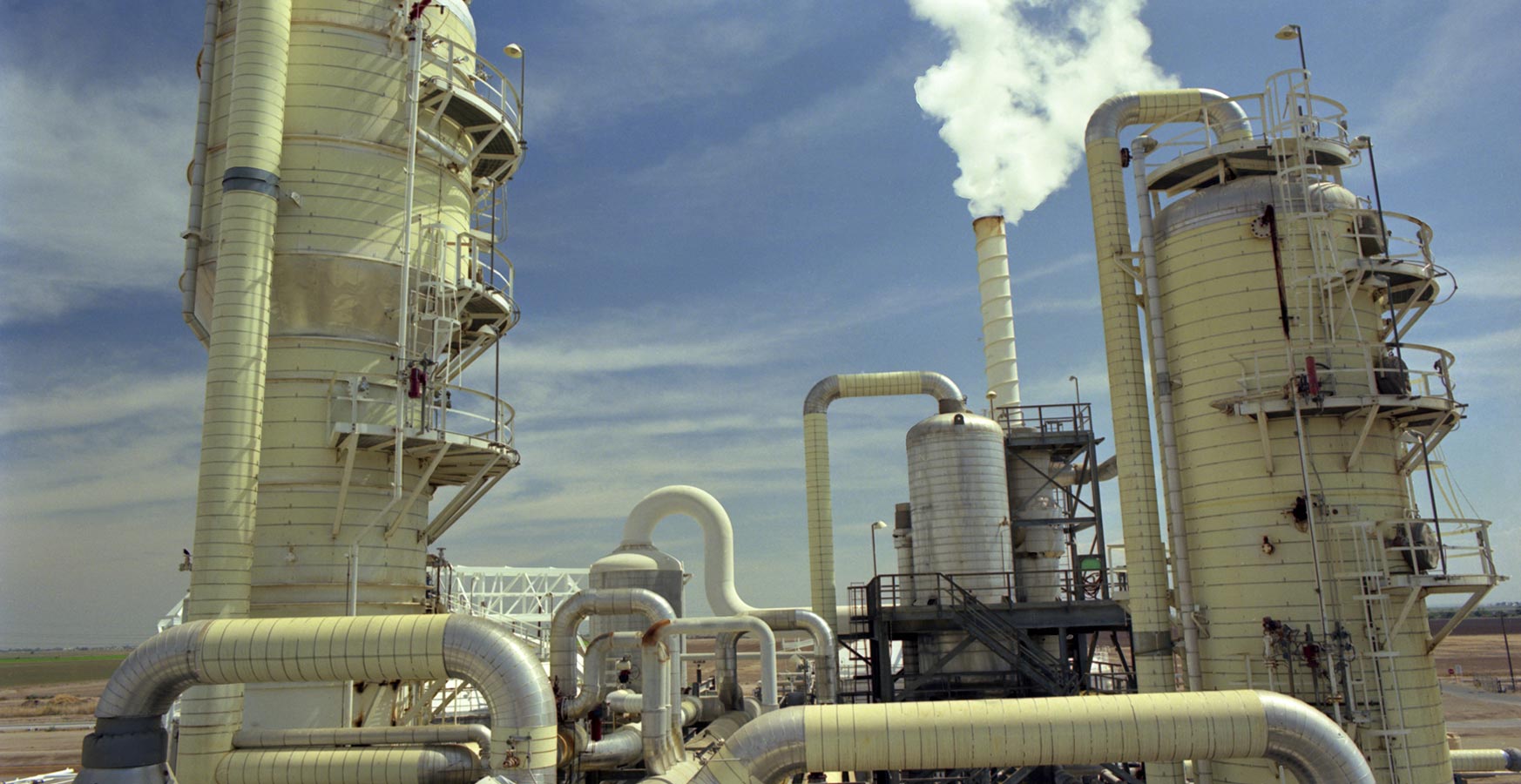


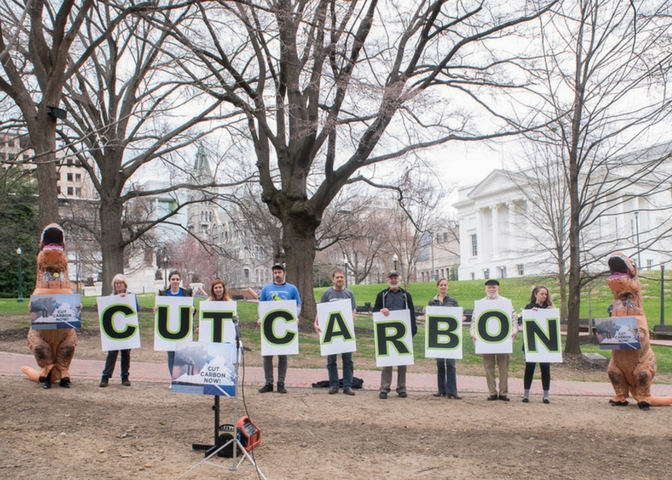

 Power for the People VA