Unknown's avatar

Why we can’t just shut up and eat our cookies (or embrace natural gas)

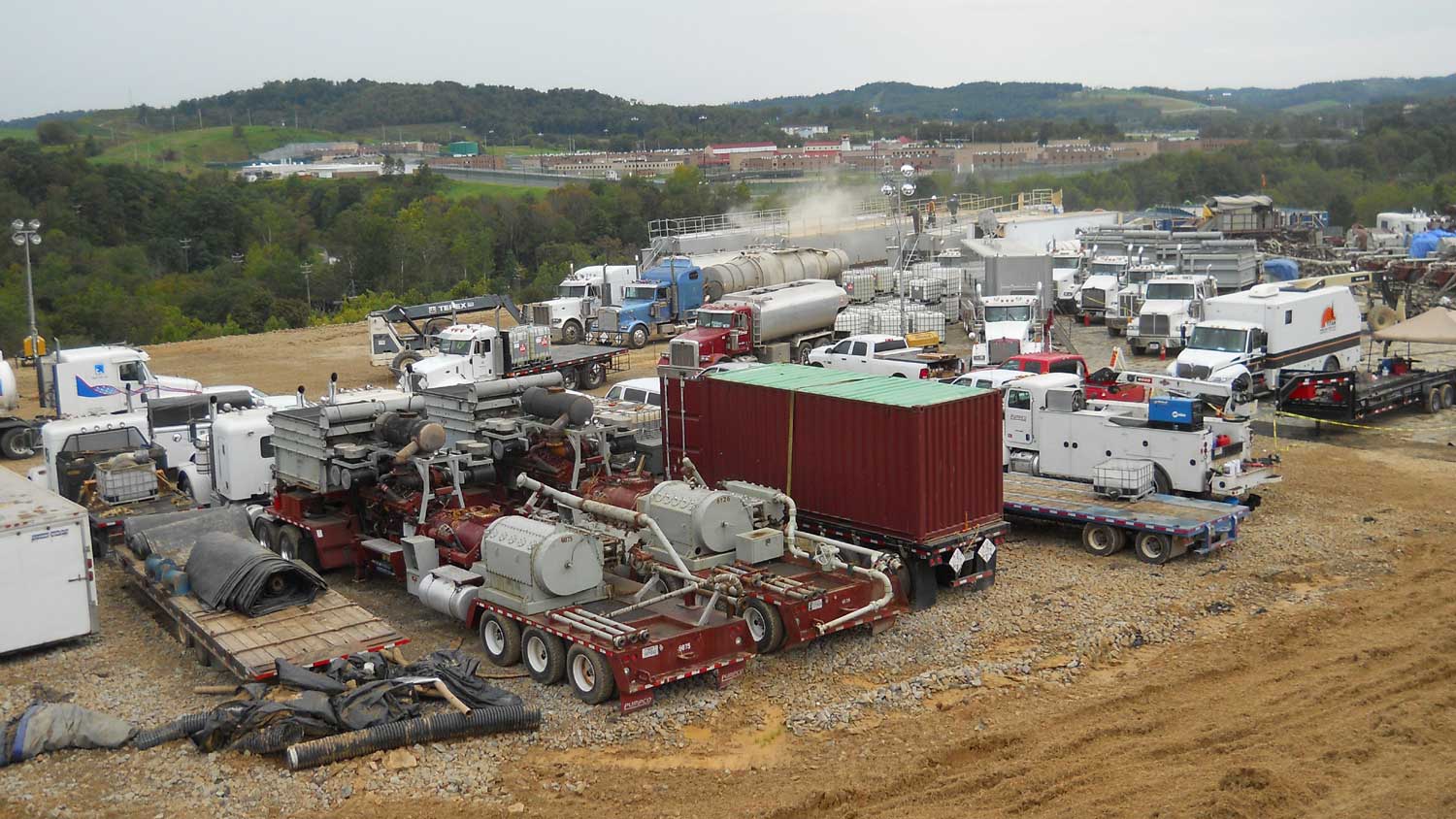
Fracking site, Marcellus Shale. Photo courtesy of U.S. Geologic Survey.

Fracking site, Marcellus Shale. Photo courtesy of U.S. Geologic Survey.

I grew up with brothers, so I knew from an early age that the easiest way to make friends with guys was to feed them chocolate chip cookies. I took this strategy with me to college, commandeering the tiny kitchen in our coed dorm. The aroma wafting down the hallways reliably drew a crowd.

One fan was so enthusiastic that he wanted to learn to make cookies himself. So the next time, he showed up at the start of the process. He watched me combine sugar and butter, eggs and white flour.

Instead of being enthusiastic, he was appalled. It had never occurred to him that anything as terrific as a cookie could be made of stuff so unhealthy. It’s not that he thought they were created from sunshine and elf magic; he just hadn’t thought about it at all. He left before the cookies even came out of the oven.

I felt so bad about it, I ate the whole batch.

But I can empathize with that guy when I’m told that as an environmentalist, I should love natural gas. Natural gas is the chocolate chip cookie of fossil fuels. At the point of consumption, everybody loves it. It’s cheap, there’s gobs of it, and it burns cleaner than coal, with only half the carbon dioxide emissions. Disillusionment sets in only when you look at the recipe. (“First, frack one well. . .”)

I realize we have only ourselves to blame. For years, environmentalists talked about gas as a “bridge fuel” that could carry us from a fossil fuel past to a future powered by renewable energy. No one would tarry on that bridge, we figured, because gas was expensive. We’d hurry along to the promised land of wind and solar.

But that was before hydrofracking and horizontal drilling hit the scene. Fracking opened up vast swaths of once-quiet forest and farmland to the constant grinding of truck traffic heading to drilling rigs that operate all day and night, poisoning the air with diesel fumes and sometimes spilling toxic drilling fluids onto fields and into streams. It was before studies documented well failures that let toxic chemicals and methane seep back up along the well borings and into aquifers, contaminating drinking water.

And it was before scientists sounded the alarm on “fugitive” methane emissions from wellheads: gas that escapes into the air unintentionally, sometimes at levels so high as to cancel out the climate advantage of burning natural gas instead of coal.

But just as environmentalists were thinking, “Whoa, natural gas turns out to be a bridge to nowhere,” electric utilities were embracing fracked gas in a big way. Fracking has made gas so cheap that giving up coal is no sacrifice. It’s so cheap they see no reason to get off the bridge and embrace renewable energy. At one conference I attended, a gas company executive gushed, “Natural gas is no longer a bridge fuel. It’s a destination fuel!”

All I could think was, “In that case, the destination must be Cleveland.” Which was surely unfair to Cleveland.

Just to be clear: environmentalists are not opposed to gas because we are spoil-sports, or purists, or hold stock in solar companies. The problem with natural gas is that it isn’t made by Keebler elves, but extracted through a nasty process that is harming the planet in ways both local and global.

If the best anyone can say about natural gas is that it’s not as bad as coal, then lingering on the bridge makes no sense. And anything we do that keeps us here—opening up Virginia to fracking, or building a huge new pipeline to bring fracked gas from other states—is both foolish and dangerous. Foolish, because embracing cheap gas distracts us from the serious business of building wind and solar and using energy more efficiently; and dangerous, because the planet will not stop warming while we play shell games with carbon.


Unknown's avatar

Children need the EPA’s carbon pollution standard

This post, from guest blogger Samantha Ahdoot, originally appeared in the August 21 edition of the Fairfax County Times. I’ve written about the threat that increasing summer temperatures poses for people who have to work outdoors in ; here, Dr. Ahdoot tells us what carbon pollution means for children.

The end of summer fun? Higher temperatures resulting from carbon pollution could limit children's outdoor time.

The end of summer fun? Higher temperatures resulting from carbon pollution could limit children’s outdoor time.

Every day, parents protect their children from a myriad of risks. By strapping them in car seats, placing them on their backs to sleep and cutting their grapes into quarters, parents do everything in their power to insure their children against harm. President Obama’s Clean Power Plan will be called many things in the upcoming months, but it is ultimately an insurance plan. It is insurance for our children against the dangers of carbon pollution and resulting climate change.

Carbon pollution presents a major risk to the health, safety and security of current and future children. Rising atmospheric carbon is making our planet hotter. While skeptics may say this remains uncertain, our major scientific organizations (NASA, NOAA, IPCC) tell us it is at least very, very likely. With this increased heat, many other climactic changes are already occurring, including melting glaciers, rising sea levels and worsening storms. These fundamental changes ultimately impact human health, and children are amongst the most vulnerable to these changes. Some impacts are already affecting children today and are being seen by pediatricians like myself.

Allergic rhinitis, for example, affects about 10 percent of American children. With later first frost and earlier spring thaw due to rising global temperature, the allergy season has become longer. In the Northern Virginia region, where I practice, it has lengthened by about two weeks. More northern regions of the country have experienced greater lengthening. Higher carbon dioxide in the atmosphere also causes ragweed plants today to produce more pollen than in preindustrial times. Allergy season is therefore both longer and more severe.

Some infectious disease patterns have already been impacted by climactic changes. As global temperatures rise, many plants and animals are migrating poleward. They are bringing diseases, like Lyme disease, with them. There is now Lyme disease in Canada, and large increases in reported cases of Lyme have occurred in the northern U.S. Maine had 175 cases in 2003 and 1300 cases in 2013, while New Hampshire had 262 cases in 2002 and greater than 1300 cases in 2013. Children under five years old, who spend the most time outside playing in high-risk areas, have the highest incidence of Lyme disease.

Increasingly long and severe heat waves also place children at risk of heat-related illness. While the elderly are at highest risk from extreme heat, some groups of children also appear to be vulnerable. Infants less than one year, for example, have immature thermoregulation, and infant mortality has been found to increase due to extreme heat. A study from MIT found that by the end of the 21st century, under a “business as usual” scenario, infant mortality rates would increase by 5.5 percent in females and 7.8 percent in males due to heat-related deaths. U.S. student athletes are a high-risk group for heat injury. Teenage boys, most commonly football players, made up 35 percent of the roughly 5,900 people treated yearly in emergency rooms for exertional heat illness between 2001 and 2009. According to the CDC, heat illness is a leading cause of disability in high school athletes, with a national estimate of 9,237 illnesses annually.

Health impacts on individuals and communities will grow significantly if we allow carbon emissions, and global temperatures, to rise unchecked. Power plants contribute approximately one-third of U.S. greenhouse gas pollution. Reducing emissions from existing fossil fuel-fired power plants represents a major step towards altering our emissions, and climate, trajectory. Obama’s Clean Power Plan is, ultimately, like a car seat- an insurance plan for our children against a significant risk of harm. The road of climate change will be long and hazardous. Our children deserve to be strapped in.

Dr. Samantha Ahdoot is pediatrician in Alexandria. She is a Fellow of the American Academy of Pediatrics (AAP), and a member of the Executive Committee of the AAP’s Council on Environmental Health.

Unknown's avatar

Finally, utility-scale solar for Virginia?

111022-N-OH262-322After a solar buying spree in other states, Dominion Power is at last taking a look at the possibility of building utility-scale solar in Virginia.

As reported in the Richmond Times-Dispatch, Dominion Resources, the parent company of Dominion Virginia Power, is considering building 220 megawatts of solar projects in Virginia, starting in 2017. The plan would involve five 40-megawatt “greenfield” projects, plus 20 megawatts located at existing power stations. (A greenfield is an area that is not already developed. So the large projects would be on former farmland, say, not closed landfills or old industrial sites.)

The company’s recent solar buys in California, Connecticut, Indiana, Georgia and Tennessee have all involved the unregulated, merchant side of Dominion Resources. But in this case, the plan is for Dominion Virginia Power to own the Virginia projects and sell the electricity to its customers here in the Commonwealth. This would require approval of the State Corporation Commission—which, as we know, is no friend to renewable energy.

A little more digging confirmed that Dominion plans to sell the solar energy to the whole rate base, rather than, say, to participants in the voluntary Green Power Program. How would they get that past the SCC? That remains unclear, but they know keeping the cost down will be key. Right now they’re looking at all the options to make it work. The company is still at the conceptual stage, is still looking for good sites of 100 acres and up, and hasn’t even made a decision to proceed.

So we should probably hold our excitement in check for now. After all, Dominion has had wind farms in Virginia “under development” for the past several years, with nary a turbine in sight.

Solar does have a few advantages over wind, though, from a utility perspective. For one, it produces power during the day, when demand is higher, while onshore wind tends to blow more at night. (Offshore wind, on the other hand, picks up in the late afternoon and evening, right at peak demand time.) And unlike wind farms in the Midwest and Great Plains, where turbines coexist peacefully with cows and cornfields, turbines in the mountains of the east have generated opposition from people concerned about impacts on forests and viewsheds. You find some curmudgeons who think solar panels are ugly, but they aren’t trying to block them wholesale at the county level.

With the sharp drop in solar costs over the last few years, large-scale solar has been looking increasingly attractive to utilities that want to beef up their renewable energy portfolios. As we learned recently, Dominion’s got a long way to go before it competes with even an average utility elsewhere. That puts it in a poor position to respond to the rapid changes heading our way. These include not just growing public demand for wind and solar and new regulatory constraints on carbon emissions, but also the much-discussed upending of the traditional utility model that depends on a captive customer base and large centralized generating plants running baseload power. Distributed generation and batteries increasingly offer customers a way to untether themselves from the grid, while wind and solar together are pushing grid operators towards a more nimble approach to meeting demand—one in which baseload is no longer a virtue.

Dominion and its fossil fuel and nuclear allies are fighting hard against the tide, but in the end, Dominion will do whatever it takes to keep making money. And right now, the smart money is on solar.

None of this means we should expect Dominion to become more friendly to pro-solar legislation that will “let our customers compete with us,” as one Dominion Vice President put it. But it does suggest an opening for legislation that would promote utility-owned solar, perhaps through the RPS or stand-alone bills.

Legislators shouldn’t view utility-owned solar as an alternative to customer-owned solar; we need both. And if being grid-tied means being denied the right to affordable solar energy, we will see customers begin to abandon the grid. But those aren’t arguments against utility-scale solar, either. Big projects like the ones Dominion proposes are critical to helping us catch up to other states and reduce our carbon emissions.

So full speed ahead, Dominion! We’re all waiting.


Unknown's avatar

Energy Plan must prepare Virginia for hotter summers

A version of this blogpost was previously published in theHampton Roads Virginian-Pilot on July 20, 2014

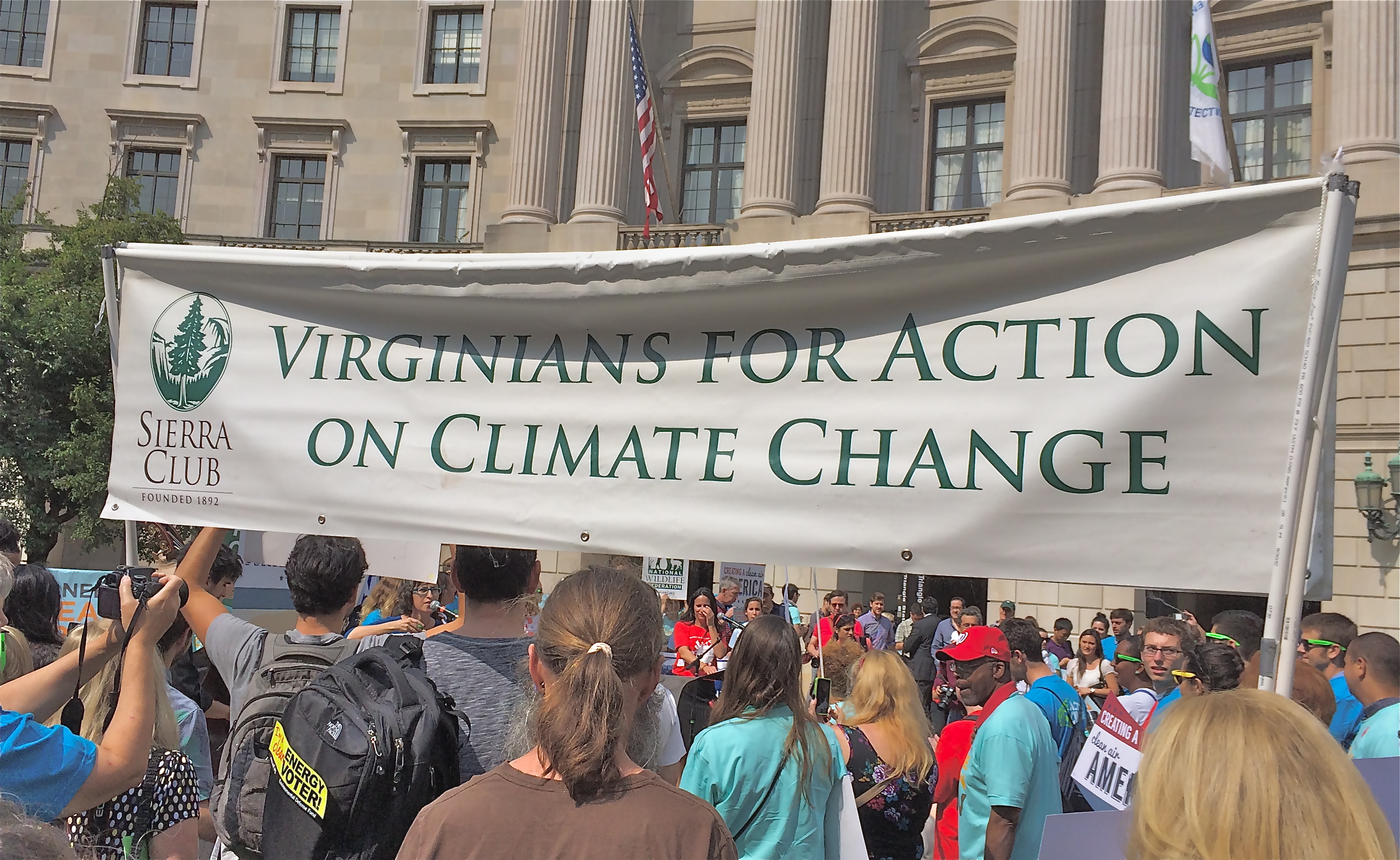
Virginians rally in front of U.S. EPA Headquarters in Washington, DC

Virginians rally in front of U.S. EPA Headquarters in Washington, DC

“Over the past 30 years, the average resident of [the Southeast] has experienced about 8 days per year at 95° or above. Looking forward, if we continue our current emissions path, the average Southeast resident will likely experience an additional 17 to 52 extremely hot days per year by mid-century and an additional 48 to 130 days per year by then end of the century.”

            —Risky Business: The Business Risks of Climate Change in the United States

This quote comes from a report issued in June by an all-star group of business and government leaders, laying out the costs involved in higher temperatures and sea level rise. The section on the Southeast is especially likely to make you want to move north and west.

Virginia has started to focus attention on rising sea levels because they are already taking a toll on Tidewater areas, regularly flooding neighborhoods in Norfolk and eating away at the Eastern Shore. In 2013, at the behest of the General Assembly, the Virginia Institute of Marine Science produced an in-depth report on sea level rise and our options for dealing with it. The report says southeast Virginia should expect another one to two feet of sea level rise by 2040, and up to 7.5 feet by the end of the century. We have our work cut out for us, but at least we’re facing up to it.

By contrast, we have not yet begun planning for higher summer temperatures. As the Risky Business report warns, these higher temperatures will make much of the humid Southeast literally uninhabitable without air conditioning. And that has profound implications for our energy planning, starting now.

More intense summer heatwaves will place additional stress on the electric grid and cause costly spikes in power demand. Power outages, today mostly an inconvenience, will become public health emergencies unless there are back-up sources of power readily available, such as solar PV systems with battery storage distributed throughout every community.

Better building construction will be critical to keeping homes and businesses cool reliably and affordably. Since buildings last for many decades, we shouldn’t wait for summers to become deadly before we start mandating better insulation. It is vastly cheaper and more effective to build energy efficiency into a building than to retrofit it later.

This makes it especially unfortunate that the McDonnell administration caved to the home builders’ association last year and did not adopt the updated residential building codes, which would have required these kinds of improvements in new additions to our housing stock. Governor McAuliffe’s failure to reverse the decision this year remains incomprehensible.

However, the McAuliffe administration is now engaged in three planning exercises that ultimately converge around Virginia’s future in a warming world. The Department of Mines, Minerals and Energy is currently writing an update to the Virginia Energy Plan as required by statue every four years, and which must be submitted to the General Assembly this October. On a slower track, a revived Climate Commission will begin conducting its work over the course of the next year. And most recently, the Department of Environmental Quality has announced listening sessions this summer focused on the U.S. EPA’s proposed climate rules.

This timeline puts the (energy) cart before the (climate) horse. The writers of the Energy Plan will not have the benefit of the climate commission’s deliberations, and won’t know what the final EPA rules will require. With pressure from utilities, fossil fuel interests and home builders, business-as-usual thinking might prevail. That would be a mistake.

We don’t know whether the worst extremes cited in the Risky Business report will become reality, or whether the U.S. and the rest of the world will manage to reduce greenhouse gas emissions enough to slow the rise of the oceans and check the worst of the heatwaves. But while we hope for the best, it makes sense to plan for the worst.

And in this case, planning for the worst will also reduce the likelihood of it happening. If we improve building efficiency starting now, we will cut down on the emissions driving a Risky Business future. If our disaster preparedness includes solar panels on businesses and government buildings, we cut emissions and make the grid more resilient.

Global warming has to be part of Virginia’s energy planning from now on. It’s just too risky to ignore it.


Unknown's avatar

Now’s your chance: Virginia seeks public input on carbon rules

Photo by Josh Lopez, courtesy of the Sierra Club.

Photo by Josh Lopez, courtesy of the Sierra Club.

On June 2 the U.S. EPA proposed a Clean Power Plan for the states, and now the Virginia Department of Environmental Quality wants to know what Virginians think about it. Starting July 22, DEQ is holding four “listening sessions” to get the public’s views:

  • Tues, July 22 in Wytheville, VA, Snyder Auditorium, Wytheville Community College, 1000 East Main Street, 5 PM to 8 PM.
  • Thurs, July 24 in Alexandria, VA, Meeting Room, John Marshall Library, 6209 Rose Hill Drive, 5 PM to 8 PM.
  • Mon, July 28 in Virginia Beach, VA, Auditorium, Virginia Beach Public Library, 4100 Virginia Beach Blvd., 5 PM to 8 PM.
  • Thurs, Aug 7 in Henrico, VA, Administration Board Room, Henrico County Govt. Center, 4301 East Parham Rd., 5 PM to 8 PM.

Depending on turnout, speakers may be limited to 3-5 minutes, though written testimony can be any length. Written comments can also be submitted to ghg@deq.virginia.gov.

The purpose of the listening sessions, according to DEQ, is to help the agency determine what comments it will file on the EPA plan, and how Virginia can implement the rules as they have been proposed.

The first question is one for the public—do we support EPA’s plan to cut carbon emissions? The answer, of course, is an emphatic yes. In fact, EPA’s proposal is too modest, and we can do better.

Carbon pollution affects everyone in Virginia: residents of coastal areas experiencing recurrent flooding and beach erosion due to sea level rise; farmers whose crops will suffer from higher summer temperatures and drought; people who have asthma or heart disease; the elderly, who suffer most during heat waves; and parents who want to leave a healthier planet for our children and grandchildren. DEQ needs to hear from all these residents.

DEQ’s second question is how we should go about cutting carbon. The EPA plan proposes a carbon budget for Virginia that would reduce our emissions by 38.5% over 2005 levels by 2030. It wouldn’t tell us how to do it, but outlines four broad categories of options:

  • Increasing the efficiency of existing coal plants to reduce carbon emissions;
  • Increasing utilization of existing natural gas-fired power plants;
  • Expanding the use of wind, solar, or other low- or zero-emitting alternatives; and
  • Reducing consumption through energy efficiency.

We may be able to do all of these, but the third and fourth categories offer the big opportunities. Virginia lags behind other states on energy efficiency, has so little solar that the industry trade groups haven’t bothered to track it, and has no wind power at all. As a result, we have a lot of low-hanging fruit to go after. So EPA’s 38.5% is readily achievable if we refocus our energy policies to support energy efficiency and zero-emission energy sources like solar and wind.

This is hardly a new theme, though the EPA plan gives it new impetus. For years environmental groups have argued to the State Corporation Commission, utilities and the legislature (and anyone else who will listen), that a sound energy policy for Virginia should include substantial investments in energy efficiency, solar and wind. That combination offers the most bang for the buck and provides the most benefit to Virginians in the way of clean air, jobs and business opportunities.

It’s been a hard sell; Virginia utilities make more money when they sell more power, so they don’t like efficiency measures that lower demand, and the SCC has always favored “cheap” energy, no matter what it costs us. EPA’s plan can help us overcome these barriers if Virginia adopts the right policies. These could take the form of an energy efficiency resource standard (EERS) and a law giving teeth to our renewable portfolio standard (RPS). Alternatively or in addition, we could join a regional cap-and-trade system that effectively puts a price on carbon, such as the northeast’s very successful Regional Greenhouse Gas Initiative.

If any of these are to become a reality, it will take public demand to make it happen. Even with carbon taking center stage now, there is room for utilities to carry us in the wrong direction. Dominion Virginia Power sees carbon regulation as an opportunity to develop nuclear power at ratepayer expense, in spite of the costs, the risks, the shortage of cooling water, and the lack of any long-term plan for radioactive waste. Expensive central power stations, heavily subsidized by the public but comfortably familiar to executives and lucrative for shareholders, remain Dominion’s top choice.

With Dominion using its cash and clout liberally in Richmond, its preference for more gas and more nuclear will carry greater weight with decision-makers than such an approach deserves. So if the public wants anything else, it had better speak up—and now’s the time to do it.


Unknown's avatar

Who’s afraid of a Carbon Rule?

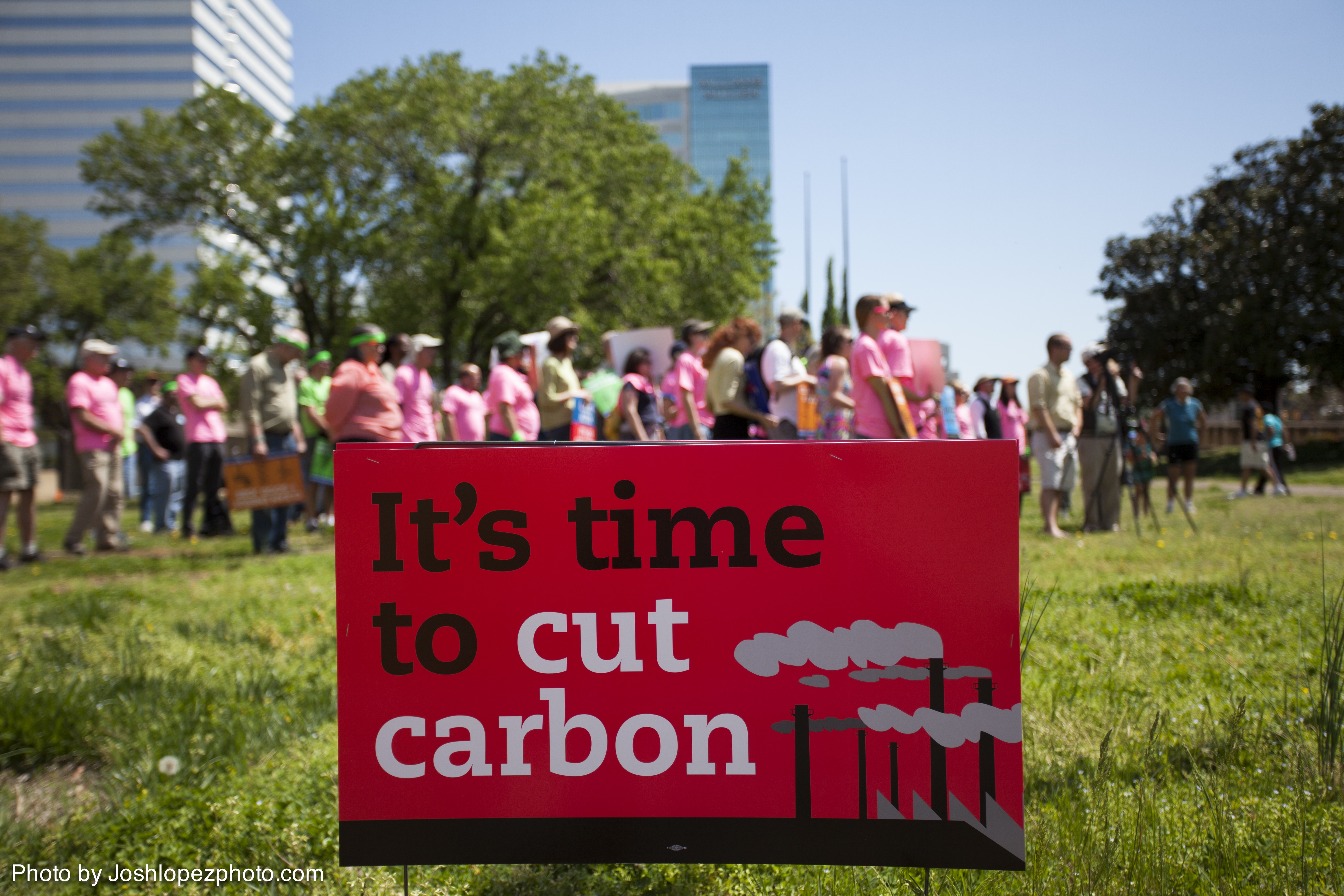
Climate activists urge action to curb carbon emissions at a demonstration in Richmond, Virginia. Photo by Josh Lopez, courtesy of the Sierra Club.

Climate activists urge action to curb carbon emissions at a demonstration in Richmond, Virginia. Photo by Josh Lopez, courtesy of the Sierra Club.

When I was a law student working at the U.S. EPA in the ‘80s, we sued a company that had been polluting a Maine river for years. Back then, EPA calculated penalties based on the amount of money a polluter saved by ignoring the requirements of the Clean Water Act. The idea was to take away the economic benefit of pollution so that companies would make out better by installing treatment systems than by imposing their toxic waste on the community.

Not surprisingly, the company’s lawyers tried to prevent their client from having to pay a penalty for all those years it had been dumping pollution into the river. But their reasoning was interesting. Faced with the lawsuit, the company overhauled its industrial process and eliminated most of its waste products, which turned out to be a money-saving move. Thus, said the lawyers, the company hadn’t gained any competitive advantage by polluting the river; it had actually lost money doing so. Really, they’d have made a lot more money if we’d forced them to clean up their act sooner.

Needless to say, the argument didn’t fly, and the company paid a fine. But its experience turns out to have been a common one. When it comes to environmental regulation, industry screams that the sky is falling, but then it gets to work to solve the problem, and frequently ends up stronger than ever.

This is one reason to be skeptical of ad campaigns from the U.S. Chamber of Commerce and the National Mining Association trying to convince the public that the EPA’s new regulations on carbon pollution from power plants, to be announced on June 2, will destroy the American economy. They’ve cried wolf so many times they have lost all credibility.

And in case you are of a generous nature and inclined to forgive previous false alarms, it’s worth noting that the National Mining Association campaign earned the maximum four Pinocchios from the Washington Post fact-checker—meaning, it’s a pack of lies. The EPA has been scarcely kinder in its analysis of the Chamber’s campaign, and the economist Paul Krugman says the Chamber’s own numbers actually prove compliance with the carbon rule will be cheap.

At least we can understand the American Mining Association’s fabricating facts. These are coal mining companies, after all; of course they are opposed to limits on carbon! They’re like the tobacco companies fighting limits on smoking. In fact, they’re in a worse position, because a good many smokers say they like tobacco, whereas nobody who isn’t making money from it likes coal.

But we can’t cut the Chamber the same kind of slack. There is little reason to fear the economy will suffer by continuing the gradual phase-out of coal that is already underway. No one was building new coal plants anyway; they are too expensive compared to natural gas plants and wind farms. The old, dirty, but fully amortized coal plants will gradually be retired, and good riddance. We have paid dearly for that “cheap” power in health care for asthma and heart disease, in premature deaths, and in babies born with neurological damage from mercury in their mothers’ bodies.

Nor does the Chamber’s anti-carbon rule stance accurately reflect the opinions of the energy sector as a whole. Even those electric utilities that once relied heavily on coal have proven to be fickle friends. Many of them have already said they can live with a carbon rule that lets them swap fuel sources.

And while coal declines, other energy industries are growing and flourishing. The breathtaking pace of advances in wind, solar and battery technologies make it clear that the age of fossil fuels will end in this century. There will be winners and losers, as there always are in a free market, but the new energy economy offers so many opportunities for American companies and workers that one wishes the fear-mongers at the Chamber would stretch their necks out of their bunker far enough to see the horizon.

As for society in general, we have seldom seen a limit on pollution that didn’t make us collectively better off, and carbon will be no exception. It is always easier and cheaper to stop pollution at its source than to clean it up later or pay for the damage. That will be true here in spades, where the damage includes hotter summers, more crop losses, more disease, more destructive storms, and whole communities swamped by rising sea levels. These are already happening, and they affect both our health and our wallets. Failing to limit carbon condemns us all to economic decline and slow self-destruction.

Surely, all we have to fear about the EPA’s upcoming carbon rule is that it might not be strong enough.


Unknown's avatar

APCo wants higher bills for homeowners who go solar

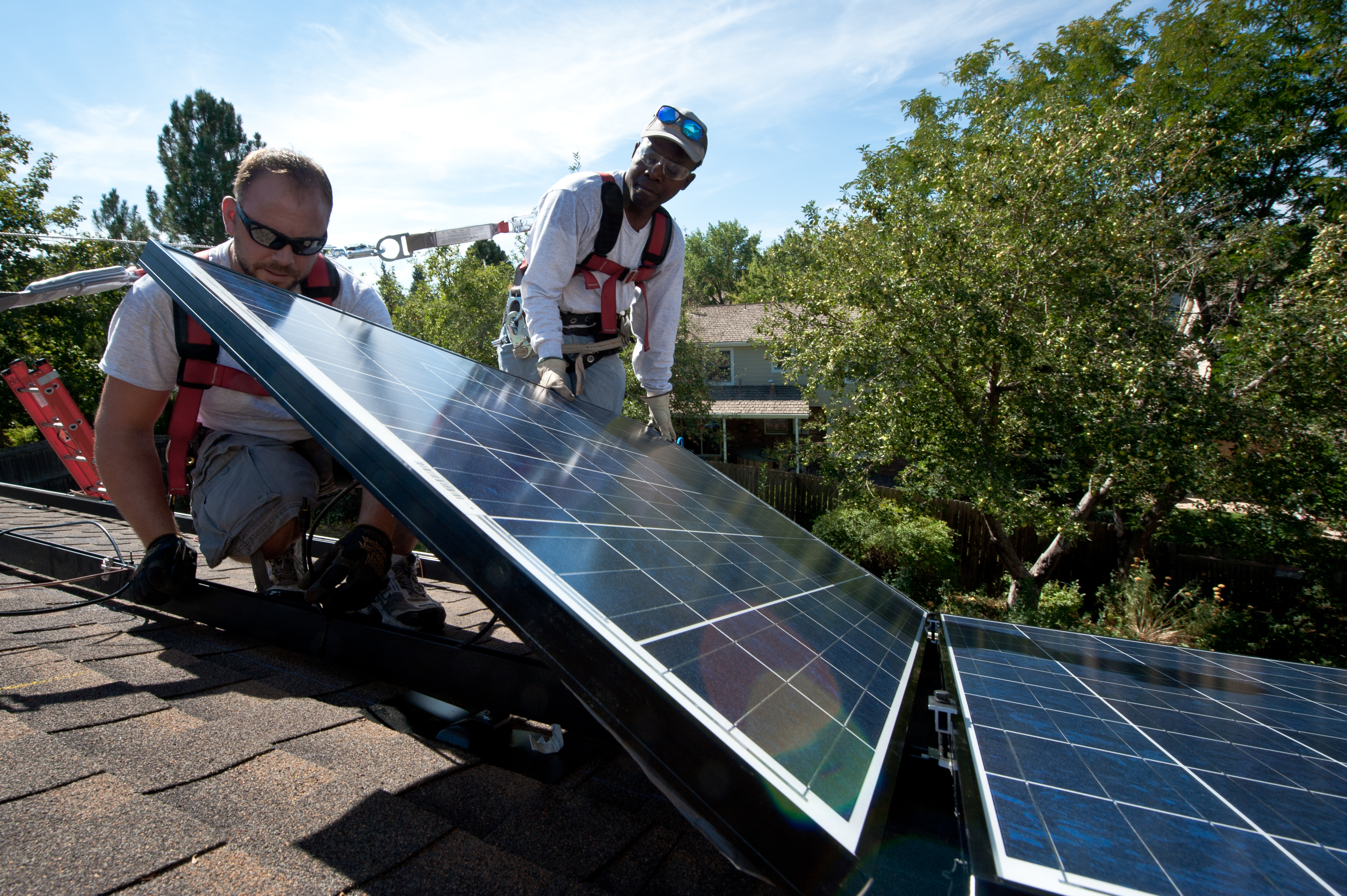
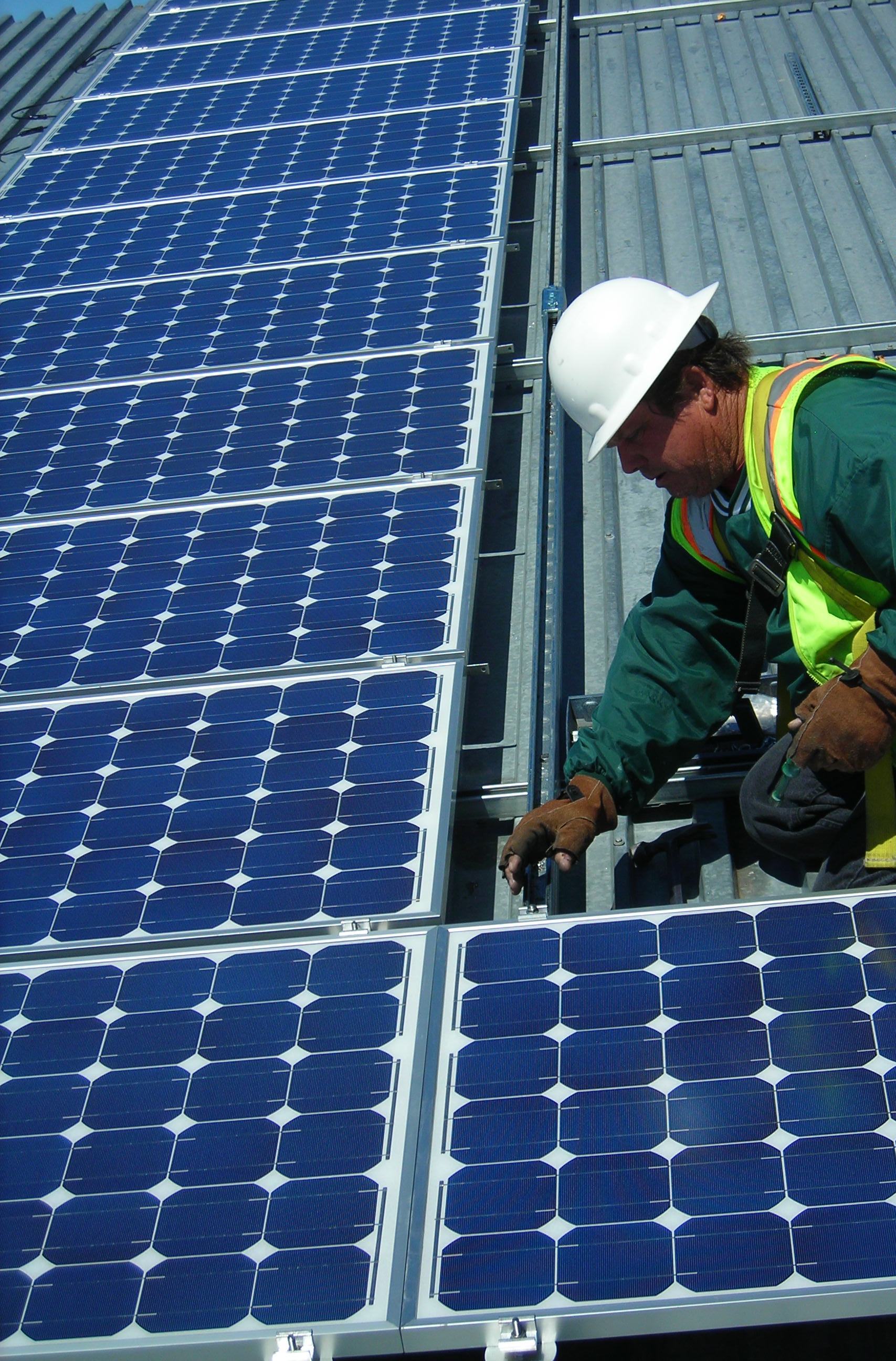
Workers installing solar on a roof. Photo credit: Dennis Schroeder, NREL

Workers installing solar on a roof. Photo credit: Dennis Schroeder, NREL

Update: The SCC approved APCo’s standby charges with a small modification. As it had when considering Dominion’s standby charge, the SCC declined to consider the benefits of solar to APCo. See http://www.scc.virginia.gov/docketsearch/DOCS/303%2301!.PDF at page 36-37.


Appalachian Power Company (APCo) is seeking permission from utility regulators to impose new “standby” charges on residential customers who install solar systems over 10 kilowatts (kW). The fee is included in the company’s latest rate proposal, now before the State Corporation Commission.

According to the filing, the transmission and distribution charges would add $3.77 per kW to the monthly bill of a customer who goes solar with a large residential system. That means homeowners with 10 kW systems would pay an added $37.70 per month. Charges would escalate to $75.40 per month for homes with 20 kW systems, the largest size allowed under net-metering rules.

So the potential is there for a solar homeowner to owe over $900 per year in new charges on his electric bill. But according to APCo, only three customers in all of its Virginia territory have systems large enough to qualify for a standby charge, with no additional big systems in the queue.

That’s right: APCo is spending many, many thousands of dollars on lawyers and consultants so it can change rules that affect three people.

Ahem. Lest anyone think APCo is worried about cost. APCo’s decision to move now proves this is not about freeloaders on the grid. This is about protecting the corporate monopoly on electric power by shutting down the independent solar industry while it is still small.

In this, APCo is following the lead of Dominion Power, which got the SCC to approve similarly onerous standby charges on its own large residential solar customers in 2011. The utility’s ability to do so was authorized that year by a bill amending section 56-594 of the Virginia Code. The statute leaves it up to utilities and the SCC to determine the amount.

The Virginia solar industry acquiesced to the standby charge language as part of a deal that raised the residential net metering limit from 10 kW to 20 kW. Industry members assumed any charges the SCC approved under the law would be modest, given the many benefits solar brings to the grid.

Their assumption proved spectacularly wrong. The SCC bought Dominion’s arguments about solar homeowners not paying their “fair share,” dismissing expert testimony and findings from other states that solar enhances grid security and offsets peak demand.

The result has been a clear setback for the solar industry’s ability to sell larger home systems. Dominion’s steep standby charges “are forcing the solar industry to take a step backward when we’ve worked so hard to make positive steps forward,” says Andrew Skinner, Project Manager with Prospect Solar in Sterling, Virginia. “Working with several small farms and residences in rural VA, we have had to design right up to the threshold of the standby charge to make the economic case most compelling.”

Dominion and APCo are following the playbook of the American Legislative Exchange Council (ALEC), a secretive corporate lobbying organization that seeks to roll back pro-renewable energy laws across the country. The parent companies of both Dominion and APCo are members of ALEC, and Dominion’s president, Bob Blue, served on ALEC’s energy and environment task force with representatives from the American Petroleum Institute, the American Coalition for Clean Coal Electricity, the science-obfuscation shop Heartland Institute, and other champions of all things fossil. (Greenpeace recently announced that six utilities have resigned from ALEC; unfortunately our guys were not among them.)

Given that APCo’s proposed standby charges are so similar to Dominion’s, APCo probably figures its request is a slam-dunk at the SCC. And given how few people are affected, it may be tempting to ignore it. But just last summer Dominion signaled its intent to try to extend its own standby charges to more solar customers, which makes the issue relevant to everyone who owns a solar system, wants one, or supports the rights of others to buy them.

Whether utilities should be loading up their solar customers with added fees is also at the heart of two studies getting underway in Virginia this year examining the costs and benefits of solar, one of them under the auspices of the Department of Mines, Minerals and Energy and the Department of Environmental Quality, and the other by the SCC itself. With a consumer backlash growing nationwide against utility efforts to “tax the sun,” APCo’s move looks like a way to lock in a rate increase on solar owners before the data is in—and before its customers catch on.

It’s especially unfortunate that the utilities’ push against net metered solar comes at a time when we are beginning to see a flourishing of the solar market. Total installed solar in Virginia has leapt from under 5 megawatts just a couple of years ago to perhaps 18 megawatts today. Okay, that’s a paltry figure compared to, say, North Carolina’s 557 megawatts or New Jersey’s more than 1200 megawatts, but starting from next to nothing gives us a really fantastic growth curve.

The rapid drop in solar prices has been a major factor driving Virginia sales. Says Skinner, “With the advancements in the solar market over the past couple years, even here in Virginia, we have been inching closer to the 10 year or less payback period. We talk to people every day that tell us they’ll go solar here when the payback is less than 10 years. A standby charge reverses that trend based on an argument with flawed economics. While other states are making progress on the true value of solar, we’re here with our head held under water.”

He concludes, “Even while holding our breath we are still creating jobs and installing solar arrays all over our beautiful state. I was born and raised here, and I’m proud to work for a VA based company; we just need to get rid of these backward policies so we can keep moving forward.”

APCo’s rate case is PUE-2014-00026, which can be found on the SCC website. For a discussion of the standby charge proposal, look for the exhibit containing the testimony of Jennifer Sebastian. The deadline for submitting comments on APCo’s application is September 9, 2014, and a public hearing will be held on September 16 at the SCC offices in Richmond.


Unknown's avatar

American Wind Energy Association to highlight Virginia potential at June conference

Works of art, attractively priced. Photo credit: Andy Beecroft

Works of art, attractively priced.
Photo credit: Andy Beecroft

The American Wind Energy Association (AWEA) will be sponsoring a one-day forum on wind energy in Harrisonburg, Virginia on June 3. The Virginia Wind Center at James Madison University will host; others partners include the Department of Environmental Quality, the Sierra Club and the Southeastern Coastal Wind Coalition.

Virginia currently has only a handful of small wind turbines statewide, putting us far behind neighboring states like Maryland and West Virginia. But AWEA’s Larry Flowers, who leads the team organizing the event, says his trade association sees great potential in the Commonwealth.

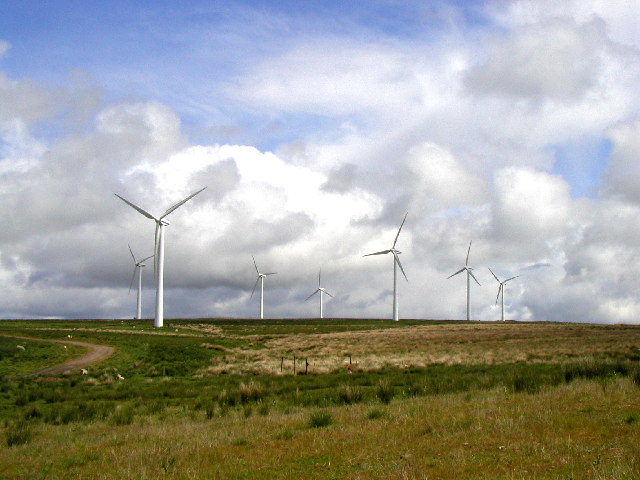
With good sites for about 2,000 megawatts (MW) of land-based wind farms, and at least another 2,000 MW already slated for development offshore, Virginia could experience a wind boom in coming years.

“With Virginia’s good on- and offshore wind resource, significant load, and proximity to the PJM market, AWEA’s wind developers see Virginia as an important wind energy market,” says Flowers. “Wind has been an important diversification strategy with utilities all over the country with its fuel price and carbon risk avoidance features, while providing significant long-term local economic development benefits.”

Achieving this development will be no easy feat. Virginia does not have a Renewable Portfolio Standard requiring utilities to buy wind power, a standard policy feature in northeastern states. Nor do we offer the kind of economic incentives developers need to make wind power cost-competitive with our old, fully-depreciated coal and nuclear plants, or with electricity from natural gas at today’s low prices. (Wind power is the cheapest form of energy in some prairie states, but it is costs more to build in our mountains and offshore.) Wind is endlessly renewable and emission-free, but until we put a value on that, our utilities and regulators see little point in paying for it

Yet that calculus may be changing as wind costs continue to decline, coal grows increasingly expensive, and natural gas prices show their historic volatility. At least as significantly, wind energy could be a means of helping Virginia comply with the EPA’s carbon regulations under Section 111(d) of the Clean Air Act. The regulations for existing sources have not been proposed yet, but may allow states to reduce their overall carbon emissions by adding renewable energy to their electric generation mix.

Certainly, wind development would be a huge economic opportunity here. Offshore wind development is projected to create ten thousand career-length jobs in Virginia and bring millions of dollars in new economic activity to the state, especially to the Hampton Roads region. Land-based wind would be a boon to the economically hard-hit counties of southwest Virginia, where coal jobs have been disappearing steadily for more than twenty years. In addition to jobs and payments to landowners, wind farms would provide critical local tax revenue.

These policy issues will be featured topics at the AWEA forum, along with practical issues including siting, wildlife impacts, and small wind applications.

Registration for the Virginia wind energy forum is available here. Early bird discount pricing is available until May 13.


Unknown's avatar

Dominion Power buys California solar, and Virginians wonder, “Why not us?”


solar installation public domainThe news broke on April Fools’ Day, making Virginians feel we were the victims of a bad joke: Dominion Power announced it had bought six California solar projects, for a total capacity of 139 megawatts (MW). “This investment is another important step forward for Dominion as we expand our renewable energy portfolio,” said Dominion Chairman, President and Chief Executive Officer Thomas F. Farrell II. “These projects fit well within our portfolio of regulated and long-term contracted assets,” which also include 41 MW of solar in Georgia, Connecticut and Indiana.

Don’t get excited, Virginia: this solar investor is not Dominion Virginia Power but Dominion Resources, the parent company. You can be sure executives will take every opportunity to brag about the company’s stake in the national solar market, but none of this power will reach us here in the Commonwealth.

Here, Dominion owns a grand total of one solar array at a university, all of 132 kilowatts. That’s about 14 houses’ worth, out of a customer base of 2.4 million. A 500-kilowatt array on an industrial building is set to deploy soon. That will bring the grand total to maybe 70 houses’ worth, if the owners don’t leave the lights on too much. Dominion is supposed to be developing a total of 30 MW of solar under a law passed in 2012, but the glacial pace of deployment is discouraging. Oh, and neither of its first two projects employed Virginia solar companies, further minimizing their impact in the state.

Why isn’t Dominion investing in Virginia? “The cost of large solar projects such as this are still too high for a regulated market in Virginia,” Dominion spokesman Dan Genest told the Richmond Times-Dispatch.

You might ask, if the costs of solar power are too high for a regulated market, perhaps it is time to deregulate the market? Somehow I don’t think that’s what Genest meant. More likely he meant that Virginia’s regulatory scheme is so skewed in favor of fossil fuels that there’s no space for utility-scale solar. Not that he would put it quite so bluntly—or admit to his employer’s role in creating this problem.

But let’s review the facts: Dominion has lavished $6.6 million over the last ten years on Virginia lawmakers, ensuring the company’s dominance in our political process. Dominion writes our energy laws and shepherds them through the legislative committees it controls. It has molded both the rules of the game and the way Virginia regulators apply them: favoring fossil fuel generation such as the expensive Wise County coal plant, ignoring costs to the public from air and water pollution, and blocking all attempts at reform.

Dominion has so shaped Virginia’s energy policy that it wouldn’t get permission from the State Corporation Commission to add a utility-scale solar project to its generation mix today. The company now finds itself a captive within the very walls it built to protect its profit and defend itself from competition, and just at a time when the world outside its walls is offering all kinds of interesting opportunities.

But there are ways out. Dominion could support a solar mandate in the General Assembly, on grounds that range from energy security to fuel diversity to preparing for a major natural disaster. Solar on gas station roofs can keep the pumps working when the electric grid fails; solar on hospitals and police stations can power essential services even when supply disruptions idle fossil-fueled generators. The more legislators understand the unique potential of solar, the easier it will be for Dominion to overcome the bias against renewable energy that it helped instill in the first place.

Or Dominion could support the value-of-solar methodology recently adopted in Minnesota that rewards solar development instead of penalizing it. Minnesota is not much known for sunshine, but its analysis of the costs and benefits of solar energy demonstrated a value for solar that exceeds even the full retail price of fossil-fired electricity. Adopting this analysis would be an about-face for Dominion; the company only recently won the right to levy punitive standby charges on some solar customers, and it has signalled a desire to impose them on the rest of the solar market as well, all on the theory that solar is of no more value than dirty power bought wholesale off the grid.

So okay, my suggestion has Tom Farrell spitting out his coffee, but bear with me. There is money to be made here.

Solar energy is no longer a marginal energy source for niche markets. Its price is going down; its market share is going up. Dominion’s own forays into solar show the company knows it has to play in this market or get left behind. So it makes more sense for Dominion to support a market in Virginia, where its influence will ensure the company profits handsomely, than to try to hold back the tide, as it is doing now. Sure, success would also mean independent rooftop solar installers would flourish in Virginia, but that’s a small price to pay for creating a whole new market in utility-scale solar that Dominion would own.

And then there’s the attraction of a carbon-free energy source in a climate-change world. A major foray into the Virginia solar market will help Dominion comply with the federal carbon rule the EPA is expected to announce in June. After all, no matter how you feel about federal rules, there are only two ways to deal with them: comply, or throw a tantrum and then comply.

It’s a fact that Dominion’s initial forays into developing solar have not inspired confidence. Dominion spends too much and takes too long to do something the private sector does better and cheaper. But Virginia has a solar industry that is champing at the bit to develop these projects and put Virginians to work in the process. Dominion may as well take advantage of other companies’ expertise here, the way it has in California.

As the saying goes: Lead, follow or get out of the way. I would settle for any one of the three. And any of them are better than what we have now in Virginia, with Dominion standing in the middle of the road, going nowhere, and blocking progress.

.   .   .   .   .

UPDATE: Installation of Dominion’s second solar array is now complete, reports the Associated Press. The story says that the more than 2,000 panels on the Canon Environmental Technology plant in Gloucester, VA make this the biggest rooftop array in Virginia. However, that honor would seem to remain with the Ikea store in Woodbridge, which has 2,100 panels providing 504 kW. The Ikea array, dedicated in 2012, is outside of Dominion’s territory, so the Dominion array may be the largest in its own territory.

Alert readers will notice that Ikea uses a government calculator to compute that its 504 kW is enough to power 55 homes, while Dominion claims its 500 kW could power 125 homes. Ikea’s calculation fits with normal industry assumptions. But perhaps Dominion is predicting 120% more sunshine?


Unknown's avatar

2014 legislative session ends with modest progress on solar, not much else to brag about

photo credit: Amadeus

photo credit: Amadeus

The 2014 Virginia legislative session wrapped up this weekend, sort of. Legislators still have to return to work out a budget deal, and in six weeks they will be back again to consider any bills vetoed or amended by the governor. But it’s still a good time to survey the battlefield.

Advocates of enlightened energy policy march into session every January bright-eyed and optimistic, only to become mired in the slough of despond. We watch the best bills die, while bills we thought too backward to survive the light of day flourish like an invasive species. Yet even in Virginia, the past few years have produced glimmers of hope that suggest a slowly shifting mindset among legislators.

There is, for example, a growing movement in favor of solar energy that is as strong on the Republican right as it is on the Democratic left. They haven’t quite formed a Solar Caucus yet, but you might say we are beginning to see a Solar Consensus.

Last year, after a long battle, this consensus produced a law specifically allowing some third-party-owned solar and wind projects, a critical step for nonprofits to install solar economically. This year, the legislature removed the second major hurdle to these projects, local “machinery and tools” taxes on solar equipment that would have made third-party-owned projects impossible in most Virginia jurisdictions.  Assuming the Governor signs, SB 418 and HB 1239 take effect January 1, 2015.

In a near-rerun of two years ago, Senator Chap Petersen’s SB 222, nullifying homeowner bans on solar, passed the House and Senate. Back then Governor McDonnell surprised us all by vetoing similar legislation, an action not expected from Governor McAuliffe.

This year, too, the legislature voted to establish a grant program to help fund renewable energy projects. Originally conceived as an ambitious, $100 million tax credit, the legislation was quickly scaled back to $10 million and turned into a grant, causing it to run into trouble when money couldn’t be found in the budget to fund it. (Sorry, we spent it all on coal.) So SB 653 won’t take effect until fiscal year 2015-2016, and even for that to happen the bill must be reenacted in 2015. Too many contingencies, you say? Well, yes. But passing the bill at all is a remarkable milestone for this legislature. Let’s appreciate this moment.

Solar advocates also tried for a second year to pass a bill that would require the State Corporation Commission to set up a registration system for Virginia renewable energy certificates. While the bill did not pass, the SCC has agreed to examine whether it can do the job administratively, and if legislation is required, to suggest the necessary language for the 2015 session. Again, it’s a small victory, but it reflects an increasing acceptance of solar energy as an inevitable part of our energy mix.

Okay, sure, the defeats were far more numerous. Reforms to our farcical Renewable Portfolio Standard were whittled down to why-bother status before passage (SB 498 and HB 822). Efforts to ensure that both utilities and regulators take account of the long-term costs of fossil fuels (HB 808) and their climate change impacts (HB 363) never made it out of House subcommittee. Every effort to expand residents’ access to solar energy by opening up net-metering failed (SB 350, HB 879HB 1158HB 906 and SB 350).

One of the net-metering champions, Senator John Edwards, put in a resolution in the final days of the session to organize a study of the value that distributed solar generation provides to utilities and the grid. The bill was introduced on March 3d and scuttled on the 6th (surely some kind of record), but advocates expect the study to go forward administratively. The study will make use of the Small Solar Working Group that formed last year, facilitated by the Department of Environmental Quality and consisting of solar advocates, utilities, local governments and others.

This value-of-solar issue is at the heart of the national battle over the expansion of distributed solar and the effort by utilities to nip it in the bud to preserve their monopolies. We expect Virginia utilities to continue their push for a very low valuation, one that would justify the barriers currently in place and add new ones like standby charges.

There were other disappointments, too, like the failure of HB 766, a bill that would have allowed localities to form service districts for energy projects, just as they do for things like trash collection, and HB 1001, which would have required electric utilities to offer on-bill financing of energy efficiency improvements.

But as I wrote in my last post, the worst news for consumers this year was the passage of SB 459, a bill allowing Dominion to write off hundreds of millions of dollars it has spent developing plans for a third nuclear reactor at Lake Anna. Last week we spoke with lawyers at the Attorney General’s office about this boondoggle, which they also oppose, and received confirmation that our reading of the bill is correct. In spite of the propaganda coming from Dominion about “no ratepayer impact,” customers of the utility will indeed pay these costs.

Worse, while we know Dominion has spent $570 million so far, the company has not disclosed how much more it intends to spend—and charge us for—in the future. The AG’s office told us Dominion has this estimate but won’t disclose it publicly, insisting the figure is confidential. Apparently it is not for the likes of us customers to know such things.

Legislators not only signed us up for this open-ended boondoggle, they specifically rejected an amendment offered by Delegate Ware that would have ensured we got our money back if Dominion doesn’t build the nuclear plant.

Given the lopsided vote tally, the Governor is not likely to veto the bill. Knowing this, the AG’s office is recommending amendments that would allow the State Corporation Commission to review the money spent (the bill as written jettisons even that minor consumer protection), but isn’t suggesting a wholesale rewrite.

Looking for a silver lining? There are two. First, Dominion may have pursued this legislation not because it wants to build North Anna 3, but because it intends to abandon the project and figures it might as well get ratepayers to cover the sunk costs while it’s still possible to pretend everything is full-speed-ahead. That would actually come as a relief; not building a financially uncompetitive nuclear plant on an earthquake fault line is way better than building it.

Second, the bitter pill of this legislation comes with a little chaser of sugar in the form of a second bill, SB 643, that provides the same treatment for the costs of developing an offshore wind farm. So far these costs have been tiny in comparison to what’s been spent on North Anna 3, but putting them into the rate base will lower the cost of building turbines offshore.

Some people have suggested it’s inconsistent to like the wind bill while hating the nuclear bill, but surely it’s only reasonable to fish a pearl out of a dung heap. There are good reasons to distinguish the bills, beyond the dangers of nuclear and the planet-friendly qualities of wind power. Most obvious is that there is real doubt whether the federal government will approve a nuclear plant with the serious siting issues confronting Lake Anna, while it has already approved the site of the offshore wind farm and given Dominion a lease.

Since my last update, a few other bills have seen action. Senator Stuart’s bill to control fracking in the Tidewater area, SB 48, died in the killing fields of House Commerce and Labor.  SJ3 and HJ16, Virginia’s first bills to deal with the effects of climate change, had to go to conference on the question of who would be part of the subcommittee studying “recurrent flooding” and how much power they would have. The compromise calls for three senators and five delegates to be part of the 11-member subcommittee. Absurdly, it gives the majority of either the senators or the delegates veto power over any recommendation. Senators Locke, McWaters and Watkins, and Delegates Stolle, Knight and Hester have already been appointed.