Unknown's avatar

The strange obsession with low birth rates


The human population of the Earth passed 8 billion in 2022, up from 7 billion in 2011 and less than 2 billion just a century ago. The United Nations projects that by 2050, the world will hit 9.7 billion people and continue rising to 10.9 billion in 2100. The average number of children women have in their lifetimes remains above the replacement rate of 2.1. 

So why is there so much hand-wringing about a population bust

It is true that population trends are uneven across the world, and some European and East Asian countries are struggling to address a decline in numbers. This is not the case in the U.S., however. Although our birth rate has been below the replacement rate for years, the Census projects our population increasing by another 33 million before it peaks in 2080. By 2100, the Census expects there will still be almost 10% more people in the U.S. than there are today. 

Frankly, it’s more than a little odd to worry about something that won’t happen for at least three-quarters of a century, while ignoring that in the meantime, an ever-growing population using too many resources is pushing the planet to the brink of ecological collapse. You would think we could worry about that now, and save the hysterics over population decline for the next century. 

Yet conservatives see the sky falling. The fear is most palpable among white supremacists spouting replacement theory, the notion that pale-skinned people, who are having fewer children, will be swamped by brown people, who are having more. They are pretty sure this is, in fact, a nefarious plan concocted by Jewish people, who apparently don’t count as white, with a goal of destroying Western civilization and all the great things that America stands for — by which they definitely do not mean democracy and civil rights

Even some liberal Americans say they’re worried about the birth rate, and argue we need child tax credits, mandatory parental leave and publicly-subsidized daycare to reverse the decline. Of course, progressives support these policies anyway, so it’s hard to know how sincere their concern over birth rates really is. 

I’m not sure about the sincerity on the right, either. Most of the people who express alarm about a declining birth rate are red-state Republicans who celebrate rural living and the small-town lifestyle. They hate traffic and the plethora of rules necessary to make life tolerable in crowded communities. 

Meanwhile, I guarantee you no one in New York or LA looks around and says, “You know what would make this place better? More people!”  

Of course, the pro-population-growth crowd absolutely rejects the one sure way to increase the US population: allowing more immigrants in. 

They say it’s not racism. Theirs is just a preference for people who look like them, sound like them and do things the way they do them. 

Yet immigration does all the things that the population alarmists say we need. It fills schools with children, bolsters the workforce, and keeps contributions flowing to Social Security and Medicare, extending the solvency of these programs. 

Vastly more would-be immigrants are knocking at our doors than we are willing to allow in, and the numbers will only increase as climate change and the collapse of ecosystems spark further conflict and make it harder to eke out a living in more parts of the world. Countries that are able and willing to absorb the outflow of migrants from devastated areas will not be challenged by depopulation. 

The U.S. is home to more migrants than any other country. Clearly many Americans, themselves descended from immigrants, are ready to shut the door behind them, but economists agree immigration is the secret sauce of our economic strength. That doesn’t mean the doors need to be wide open, with no one managing the flow, or that we shouldn’t try to help solve the crises that drive people to leave their home countries in the first place. And we still urgently need to work on transforming our consumption-based economy into a sustainable one.

But it does mean we needn’t fear a population bust in our lifetimes. While other advanced countries are figuring out how to retool their economies for a shrinking population, we will always have the numbers we desire, so long as we remain a society committed to equal opportunity, democracy and the striving for justice.    

Obviously, this is not what the nativist right wants. But what they want — more American-born babies and limitless population growth, achieved by controlling women’s bodies rather than by strengthening the welfare state — is a fantasy served up with a helping of bad policy. 

This article was previously published in the Virginia Mercury on August 20, 2024.
Unknown's avatar

Immigrants aren’t wrecking our environment, and blaming them won’t save it

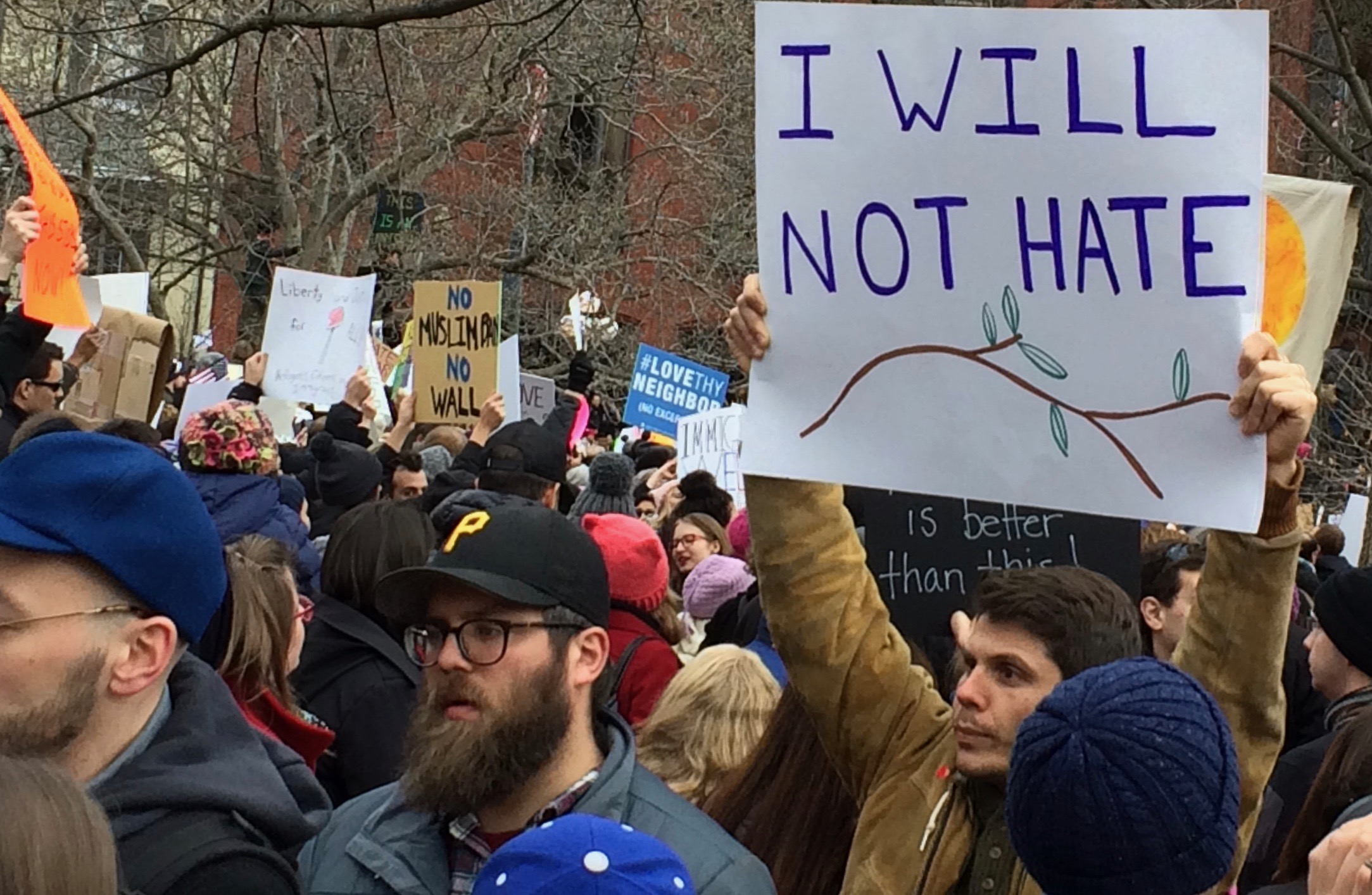
people protesting with a sign

Protesting President Trump’s immigration policies in Lafayette Square, Washington DC. Photo by Ivy Main

Chances are, the people you know who call themselves environmentalists also celebrate racial diversity and think the U.S. should welcome immigrants and refugees. What, then, are we to make of white nationalists who invoke environmental concerns to justify acts of violence against immigrants?

Recent news articles tell us the suspect in the El Paso massacre cited overpopulation as a reason for killing 21 shoppers at a Walmart in the Texas border city. Latinos make up more than 82% of El Paso’s population, many of them Mexican-born. The suspect, Patrick Crusius, is said to have written a “manifesto” decrying Americans’ over-exploitation and degradation of natural resources.

“The American lifestyle . . . is destroying the environment of our country,” he wrote, before concluding, bizarrely, that therefore he should kill non-Americans.

Crusius is said to have drawn inspiration from an earlier mass shooting in Christchurch, New Zealand, where a white nationalist killed 51p eople at two mosques in the name of “eco-fascism.” He defined the term as “ethnic autonomy for all peoples with a focus on preservation of nature and the natural order.”

As a member of the Sierra Club for almost 40 years, I find this sounds familiar. Starting in the late 1980s, anti-immigrant forces tried to take over the environmental group, in an effort that wasn’t fully exposed and defeated until 2004. I remember the critical board election; the anti-immigration candidates made a plausible case for overpopulation as a root cause of much of what ails the environment, then and now. If you have fewer people around, after all, there’s only so much harm they can do.

Only, of course, the problem wasn’t—and isn’t—immigrants, it was U.S. laws that allowed native-born Americans to pollute our land, air and water. Keeping out immigrants isn’t a solution, it’s a non-sequitur. Realizing this, Sierra Club members firmly rejected the anti-immigrant slate of board candidates

White nationalists aren’t just wrong in blaming immigrants for environmental ills. They also refuse to acknowledge that today’s most serious environmental challenges are global. Climate change, ocean acidification, the rapid loss of species—to name just a few—can’t be stopped by building walls and evicting non-white people.

This may be one reason many right-wing voters still reject the scientific consensus that climate change is a human-caused problem. The qualities most treasured by much of the radical right—self-sufficiency, male supremacy, physical strength, proficiency with weapons—aren’t useful in solving climate change. It’s human nature to disregard a problem you don’t think you have the tools to tackle.

Managing global problems requires international cooperation, respect for others, patience in the face of provocation, and empathy for those who are suffering. People of faith, humanists, and adults in general recognize these as higher-order virtues, but they are the first to be dispensed with in a zero-sum situation. People who believe the survival of their way of life requires other people to suffer do not ask themselves, “What would Jesus do?”

There is indeed a case for despair about the health of the planet. Bad news dogs us daily, from the deforestation of the tropics and the collapse of insect and amphibian populations, to the intensification of hurricanes and the plague of plastic waste. And then, of course, there’s the possibility that we have now passed a critical greenhouse gas tipping point and entered an age of runaway global warming.

But it isn’t fear of nature’s wrath that keeps me and other climate activists up at night. It’s the steady erosion of our conviction that we humans have it in us to rise to the enormous challenges before us.

Across the world, people are responding to resource scarcity and an increase in refugees not with compassion and generosity but with anger and distrust. Nationalism is confused with patriotism. Identity politics replaces communitarian values. Democracy is in retreat.

This is particularly maddening because, in fact, we know how to address the environmental challenges we face. We have the technology to quit fossil fuels. We can adapt to sea-level rise. We can make room for climate refugees. We can stop deforestation, and even reclaim deserts for trees. We don’t need to poison the earth to grow crops. We could end plastic waste tomorrow. We can’t bring back the species we’ve lost (at least not many of them), but we can do a much better job of protecting the ones we have left. Even reversing the rise in atmospheric carbon is conceivable, if we undertake to do it.

The question isn’t whether humans can do these things, it’s whether we will. Americans should be the ones leading the way, negotiating treaties with other nations, funding research, implementing solutions that benefit everyone, and keeping our doors open to the dispossessed.

That’s the sort of thing Americans used to do—not always, admittedly, but in hindsight we recognize those as our finest moments. We desperately need this sense of purpose again now, when the threats we face are existential.

But to do that, we have to reject a foreign policy grounded in selfishness and domestic policies that feed racism, xenophobia, and climate-science denialism here at home. There are no “other” people we can exclude, neglect or destroy to save ourselves.

There is only all of us, all across the world, and we are all in this together.

This article first appeared in the August 22, 2019 edition of the Virginia Mercury.