Unknown's avatar

Will Virginia step up for its rooftop solar industry?

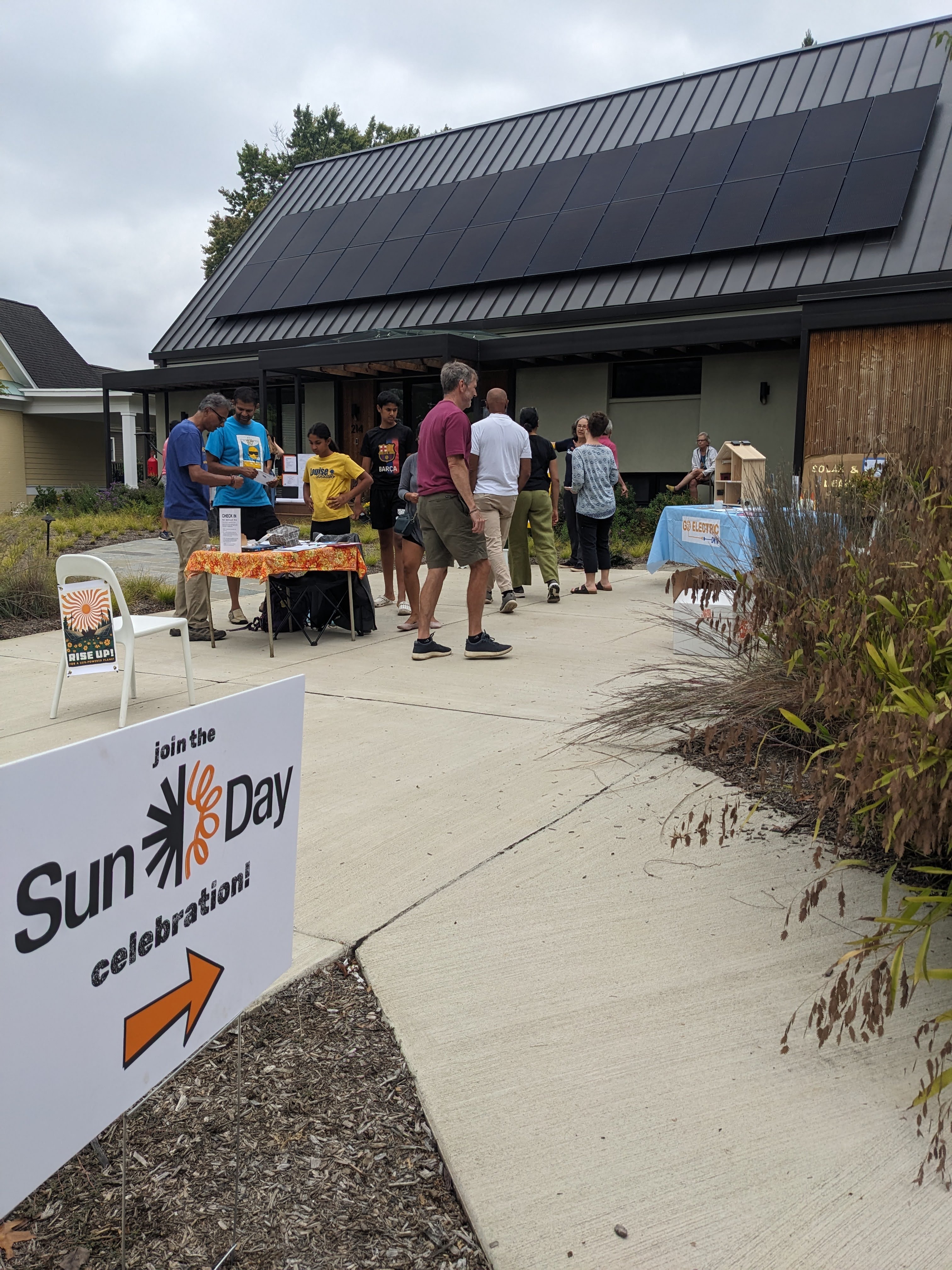
Visitors to a net-zero energy home in Vienna, Virginia learn about solar as part of SunDay, a national celebration of solar energy, on September 21, 2025. Photo courtesy of Meredith Haines.

For solar energy, 2025 is the best of times and the worst of times. It’s the fastest growing energy source in the world and the largest source of new power capacity additions in the U.S. for the fifth year in a row. Even in the absence of tax subsidies, solar is the cheapest source of new electricity in Virginia, and indeed almost everywhere. 

Yet the congressional Republican budget law’s early termination of tax incentives for solar, together with the Trump administration’s determined efforts to restore fossil fuel dominance, make these dark days for the solar industry. The EPA is relaxing pollution standards for power plants and refusing to enforce regulations, and the same law that cut clean energy credits provided tens of billions of dollars in tax subsidies for drilling and mining activities. (What, did you think they wanted to level the playing field?)  

As a result, analysts project a sharp drop-off in solar installations in the coming years, posing a challenge to energy reliability and affordability. With data centers driving up the demand for electricity, the loss of tax credits for solar will mean higher costs for our utilities, and therefore higher utility bills for customers. Virginians who worry about high electricity bills should be very unhappy with the rollback of these incentives. 

How the rollbacks could push solar forward (at least for now)

Ironically, though, the coming end of tax credits has goosed the U.S. solar market in the near term. The industry has never been busier, as companies scramble to get projects completed in time to qualify for the tax credits before they expire. With careful planning, solar developers will be able to stretch tax credit eligibility to cover projects for a few more years, softening the blow for consumers. 

And in the long term, the solar industry feels confident that the technical and cost advantages of renewable energy will win out in America as they continue to do abroad. Politics and policy aside, utility-scale solar is the cheapest, cleanest and fastest-to-build electricity source available in most of the U.S. The technology continues to push efficiencies up and costs down, while protecting Americans from the pollution and fuel costs of coal and gas. With energy storage technologies following the same price trajectory as solar, it is hard to imagine the U.S. willingly turning its back on clean energy for long.

In Virginia, of course, utility solar still faces rural resistance. But having embraced data centers, Virginia will have to find the energy to power them, and price has a way of winning out. 

While the solar industry overall will survive, the loss of federal tax credits is landing hard on the segment that serves homeowners and businesses. The economic case for distributed solar has never been a slam-dunk in Virginia, given the higher costs involved. Now the question is whether it can remain even a reasonable investment.

The Virginia solar industry has grown a lot in the past decade and now includes 199 companies employing close to 5,000 workers, almost double the number employed in coal mining. I haven’t seen numbers specific to distributed solar, but installing solar on rooftops is more labor-intensive than utility solar. More importantly, these jobs tend to be local to Virginia, and most don’t require a college degree. 

Distributed solar is also important to our energy supply and resilience. Sunny rooftops could potentially supply as much as 20% of Virginia’s electricity, yet less than 3% of Virginia homes have solar now, leaving plenty of room for growth. Rooftop solar is also a vital component of community resilience; when batteries are added to solar, buildings can remain powered during storms and other events that take down the wider grid. And of course, solar and batteries can form the basis for virtual power plants that support the grid and reduce the need for utility investments. 

A trifecta of solar success

Three policies have enabled the industry to succeed here, and all three have been subject to attack. The first, of course, is the federal tax credits, which allow owners of solar arrays to recover 30% of project costs through their tax returns. For residential customers, availability of this credit will now expire at the end of 2025. 

The good news is that structuring residential solar installations as leases or power purchase agreements puts projects under a more favorable provision that gives commercial owners of solar panels until July of 2026 to begin construction. This won’t work for everybody, and residential power purchase agreements are currently legal in Virginia only for low-income customers, but it does offer some breathing room. 

The second policy critical for rooftop solar is a Virginia program that lets owners of solar arrays earn money from the sale of solar renewable electricity certificates (SRECs) associated with the electricity they put onto the grid. The Virginia Clean Economy Act (VCEA) requires Dominion Energy Virginia to buy SRECs to meet a small fraction of its renewable energy purchase obligation. Customers with solar who choose to sell their SRECs can offset some of their costs this way, making solar more affordable. (Since SRECs represent the “bragging rights” to solar – the legal right to claim you are powering your home or business with solar – not everyone wants to sell theirs.)

Customers and industry members say, however, that the Virginia SREC market is neither robust nor transparent. The price that Dominion pays for SRECs would have to be substantially higher to overcome the loss of federal tax credits. Some advocates have floated the idea of asking the tech companies to support the distributed solar market through voluntary SREC purchases, which could raise SREC values and help localities build more solar on schools and other public buildings.

A bipartisan-backed bill that Virginia Gov. Glenn Youngkin vetoed this year would have increased the percentage of Dominion’s electricity that must come from distributed solar generation. This would have incentivized more rooftop solar and possibly resulted in higher SREC prices through the normal economics of supply and demand. But so far there is no plan to set a floor on SREC prices.

The third supportive policy for distributed solar is net metering, which ensures that customers of Dominion and Appalachian Power get credited at the retail rate for surplus electricity they supply to the grid. Customers pay the utility only for the net energy they purchase. While this doesn’t make rooftop solar cheaper, it does mean customers don’t actually lose money on their surplus generation, as they would without net metering.

Dominion and APCo have tried repeatedly to undermine net metering, so far without success.

The State Corporation Commission recently rejected a proposal from APCo to replace one-for-one credits with a payment system valuing distributed solar at the utility’s avoided cost for energy – about one-third of retail. The effect on customers would have been severe, making it impossible for most new buyers to recoup the cost of solar panels. In rejecting APCo’s proposal, the SCC cited expert analyses showing that the value of customer-sited solar to the grid and the public equals or exceeds the retail cost of energy. 

Dominion has also filed a proposal to gut net metering in its territory. Its replacement program differs from APCo’s, yet it too results in a greatly reduced compensation rate. The SCC has not ruled on Dominion’s request yet, but it’s hard to see how Dominion could succeed where APCo failed.

Net metering is the rock that Virginia’s rooftop solar industry is built on, so the SCC’s decision preserving the program was critical to the industry’s very survival. Net metered solar will also remain an appealing hedge against rising electricity rates for many people. Still, there is no getting around the fact that losing the 30% tax credit is the kind of blow that can send an industry off a cliff.  

What’s next

What can the industry, or policy-makers, do to counteract the loss of tax credits?

The most obvious step is for the General Assembly to once again pass legislation increasing the requirement for utility SREC purchases (and this time with the governor signing the bill). The bill has other good provisions, like making residential power purchase agreements legal beyond the low-income market, and these will also help the industry. 

Virginia should also consider adopting a streamlined permitting protocol for onsite solar, as states like Florida have done. Some Virginia localities have already adopted automated permitting software, such as SolarAPP+, a free platform developed by the National Renewable Energy Laboratory. Permitting in some other localities, however, reportedly remains so arduous that it adds significantly to costs and delays in installing rooftop solar. 

Speaking of permitting, Virginia could pass a law like Utah’s to allow so-called balcony solar, plug-in solar panels that don’t require professional installation. The kits still require national certification before they can hit the market, however. 

Virginia could devote some emergency preparedness funds to onsite solar and storage at schools and senior centers to make local communities more resilient. These microgrids would save on energy costs for taxpayers and ensure people have a place to go that still has power when the larger grid is down. 

Utilities could once again be tasked with funding solar on low-income housing, as they did in response to Republican-sponsored legislation passed in 2019. Localities could be allowed to require solar panels on parking lots in some new developments, as provided in a bill the governor vetoed this spring. Legislation to increase goals and funding for solar on closed landfills, coal mines and other brownfields would also bring more solar to places where everyone agrees it is welcome. 

Finally, our Department of Energy has done a very good job supporting solar energy through both Democratic and Republican administrations. It could now be asked to convene meetings with the solar industry to plan a pathway to solar on more homes and businesses. They could start with a program of government-backed advertising and outreach to educate more consumers about the value of solar, its cost, and how to hire trustworthy installers. Customer acquisition is one of the biggest costs for solar companies, so reaching potential customers will reduce costs.   

Meanwhile, what can the average resident do? Talk to your elected leaders and candidates and get them to put in pro-solar bills and support the legislation you want to see. If Virginians want more home-grown clean energy,  we need to make it happen.

This article was originally published in the Virginia Mercury on September 25, 2025. It has been updated to correct the date by which construction must commence in order to qualify for federal tax credits.
Unknown's avatar

Utility efforts to undermine rooftop solar meet stiff opposition from Virginia customers

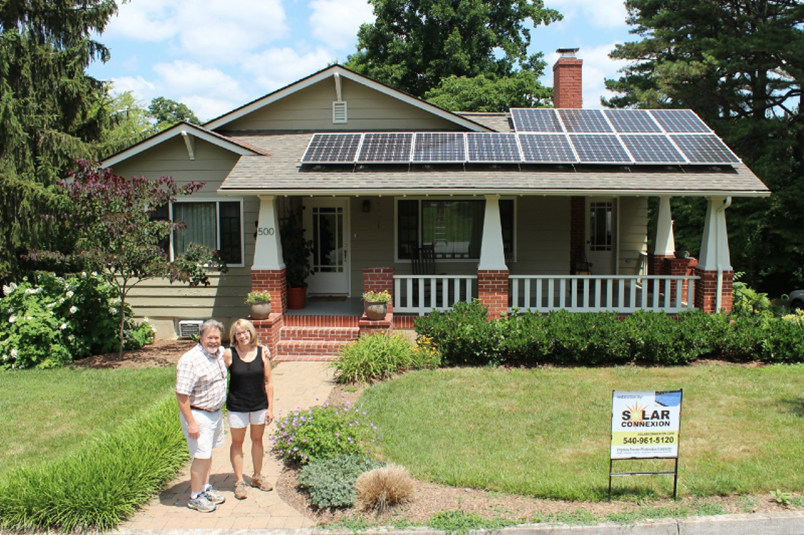
Photo courtesy of Solarize Blacksburg

Virginia’s investor-owned utilities thought 2025 would be the year they put an end to net metering – and with it, rooftop solar installers’ modest competition with their monopoly.. The 2020 Virginia Clean Economy Act (VCEA) removed many barriers that residents and businesses installing solar panels under the state’s net metering law had faced, but it also called for the State Corporation Commission to reevaluate the program, beginning right about now. 

 Not surprisingly, Dominion Energy and Appalachian Power are seizing this opportunity to push for changes that would undermine the economic calculus supporting customer-owned solar.  

Since at least 2007, Virginia law has required that customers of Dominion and APCo who have solar panels on their property be credited for surplus electricity they supply to the grid at the same retail rate they pay for electricity. The credit is applied against the cost of the electricity the customer draws from the grid at times when the panels aren’t generating, reducing what they owe on their electric bill. 

But now that they have the chance, both utilities have filed proposals to end net metering. Both essentially propose to charge new solar customers the full retail rate for the electricity they draw from the grid (with Dominion using a more complicated half-hour “netting”), but compensate them for electricity fed to the grid only at the utility’s “avoided cost,” or what it pays to buy electricity from other generators. By law, existing customers and new low-income customers with solar would be unaffected.

APCo calculates avoided cost as the wholesale cost of energy and capacity, plus transmission and ancillary services, for a total of less than 5 cents per kilowatt-hour. Thus, a homeowner with solar panels would now pay the full retail rate of about 17 cents/kWh for electricity drawn from the grid, while being credited at less than one-third that amount for electricity put back on the grid. 

Dominion’s approach instead pegs avoided cost to what it pays for solar generation and associated renewable energy certificates (RECs) bought from certain small producers under power purchase agreements, an average of about 9.5 cents/kWh. Dominion’s residential rate currently averages about 14 cents/kWh, but would go up to more than 16 cents if its latest rate increase request is granted.

The VCEA gave APCo the first swing at the piñata. APCo filed its proposal in September, and the SCC will hold an evidentiary hearing on May 20. Dominion only filed its petition last week, and no hearing date has been set yet. 

Not surprisingly, APCo’s proposal generated fierce opposition from advocates and solar installers. They point out that it’s hard enough to make the economics of home solar work with net metering at the retail rate; slashing the compensation for electricity returned to the grid by more than one-third, as Dominion proposes, or two-thirds, as APCo wants, would make solar a losing proposition for most homeowners. Maybe economies of scale and other factors would allow the market for commercial solar to survive under Dominion’s program, though Dominion’s insistence on confiscating customers’ RECs won’t make anyone happy.

If solar owners definitely lose under APCo’s plan, advocates say other ratepayers don’t necessarily win. A homeowner’s surplus generation travels only the short distance to the nearest neighbor, lessening the need for the utility to generate and transmit power to meet the neighbor’s demand. Since the utility charges that neighbor the regular retail rate for the electricity, without having to bring it from somewhere else, the utility saves on transmission costs. On top of that, the surplus solar comes in during the day, when demand is typically higher than at night and electricity is more costly, making solar more valuable to the utility. Plus, it is clean and renewable, and the customer bears all the cost and risk of the investment.

Utilities do not share this rosy view. By their way of thinking, solar customers use the grid as free energy storage and backup power, without paying their fair share of grid costs. Not only does this deprive the utility of revenue, but those grid costs now have to be spread out among the remaining customers. This, they say, creates a cost shift from solar owners to everyone else. 

More than a decade ago, Virginia took tentative steps towards resolving the dispute, with the Department of Environmental Quality setting up a stakeholder group to work towards a “value of solar” analysis. The process was never completed — the utilities walked away from the table when it appeared the results weren’t going to be what they wanted, and the group’s work product did not include numeric values or policy recommendations. 

Virginia is hardly alone in navigating these clashing narratives. 

Other states and regulators have arrived at very different conclusions as to the “correct” value of distributed solar to utilities, ratepayers, and society as a whole. States like Maryland kept net metering after a value of solar analysis concluded the benefits outweighed the costs. On the other hand, California famously ended its net metering program in 2022 when solar comprised almost 20% of electricity generated in the state and created a mid-day surplus without enough storage to absorb it; at the time, 45% of that solar was distributed. That same year, however, Florida Gov. Ron DeSantis vetoed an unpopular bill that would have phased out net metering in the state.

The experience of other states, combined with an abundance of research and analysis conducted over the years, gives the SCC a lot to work with as it considers the fate of net metering for APCo’s customers this year, and later for Dominion’s.

Countering the arguments of the utility’s hired witnesses, solar industry and environmental organizations have weighed in on the APCo docket with testimony from experts with nationwide experience. The experts pointed out a range of errors and omissions in the utility’s work product. They also presented their own benefit-cost analyses demonstrating a value for distributed solar in excess of the retail price of electricity, using tests often applied to energy efficiency and demand-response programs.

Perhaps even more significantly, SCC staff also filed an analysis that found many of the same problems with APCo’s proposal, including failures to comply with statutory requirements. The staff report did not include a quantitative analysis, but it urged the importance of considering benefits that APCo had ignored. Like the intervenors, staff recommended the commission reject APCo’s plan and retain its net metering program as it is, at least for now.  

Although the staff report would seem likely to carry weight with the commissioners, it’s never easy to predict what the SCC will do in any case before it. But in Virginia, unlike California, distributed solar makes up vanishingly little of total electric generation. Even taking the utilities’ arguments at face value, it seems foolish to upend this small but important market to remedy a perceived harm that is, at least for now, more theoretical than real. 

This article originally appeared in the Virginia Mercury on May 8, 2025.

Unknown's avatar

Will Virginia’s residential solar market survive the coming year?

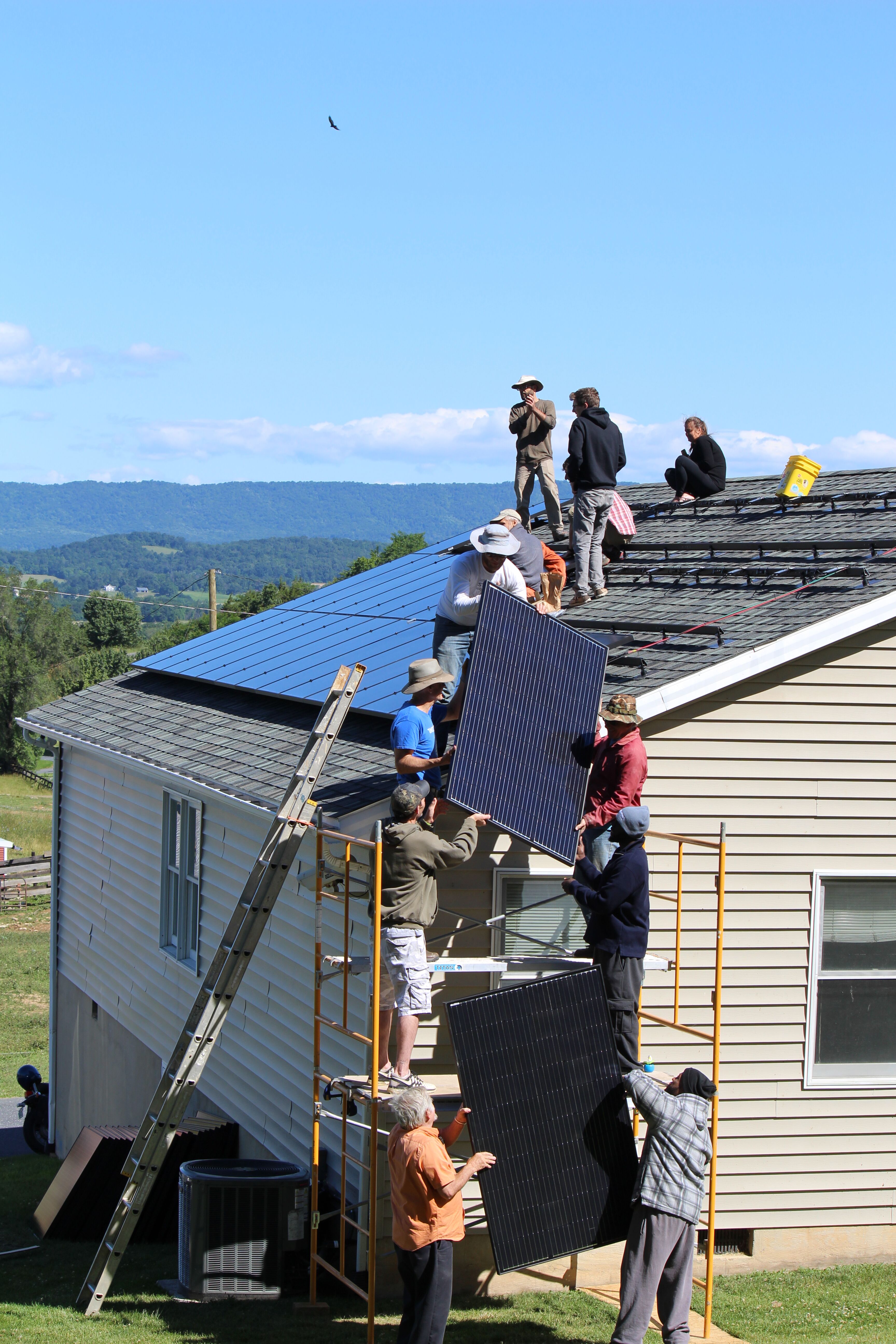
Installation of solar panels on the roof of a house.
Virginia utilities finally have an opportunity to attack net metering. Photo by Don Crawford.

When the Virginia Clean Economy Act became law in 2020, solar advocates celebrated. In addition to creating a framework for a transition to a zero carbon electricity sector by 2050, the VCEA and sister legislation known as Solar Freedom swept away multiple barriers to installing solar in Virginia. Among the new provisions were some that strengthened net metering, the program that allows residents, businesses and local governments who install solar onsite to be credited for excess electricity they feed back to the grid. 

Currently, the law requires that customers of Dominion Energy and Appalachian Power be credited for the electricity they supply to the grid at the full retail rate for electricity. The credit is applied against the cost of the electricity they draw from the grid at night. The policy makes solar affordable and supports small businesses across Virginia. 

However, the VCEA came with a ticking time bomb. It provided that in 2024 for Appalachian Power, and 2025 for Dominion, the State Corporation Commission would hold proceedings to determine the fate of net metering, and in particular the terms for compensating new net metering customers. 

Well, it’s 2024, and the bomb just went off. On May 6, the SCC issued an order directing the two utilities to file their suggested changes. Appalachian’s proposal is due by September 2; Dominion’s is due by May 1, 2025. The SCC will establish a schedule for each case that will include provisions for the public and interested parties to participate.

There are two important protections to note. First, low-income customers will have their choice of installing solar under either the existing rules or the new ones. Second, customers who install solar panels and interconnect to the grid before the SCC issues its final order will continue to be covered by the existing provisions for retail net metering. 

For anyone who’s been on the fence about installing solar, I can’t overstate the urgency of acting now. Nonprofits Solar United Neighbors and Solarize Virginia can help you get the best deal. Also check out the excellent advice and sample quotes from HR Climate Hub.

Make no mistake, utilities hate net metering and will destroy it if they can. The more customers who install solar, the less control the utility can exercise over them — and, even more critically, the less money the company makes for its shareholders from building new generation and transmission. 

That’s not what our utilities tell legislators and the SCC, though. Instead, they promote a narrative that net metering customers impose extra costs on other ratepayers, creating a “cost shift.” The idea is that residents who go solar are making everyone else pay more of the costs of the grid while they themselves rake in money with their free electricity from the sun.  

This argument has raged across the country for years. Utilities often argue that solar customers should be paid for their surplus electricity only the amount of money the utility would otherwise have had to spend to generate or buy that same amount of electricity from somewhere else. This “avoided cost” can be less than one-third of the retail rate for residential electricity. (The net metering changes would also affect commercial and non-profit properties, which pay a lower rate than residential – but still well above avoided cost.)

With a payback period of nine to 15 years in Virginia, residential solar is a reasonable investment with retail rate net metering, but it’s hardly a get-rich-quick scheme. Brandon Praileau, the Virginia program director for Solar United Neighbors, said in an email that lowering the net metering rate would eliminate the energy savings that homeowners see from solar today. 

“It is the full retail 1:1 value of solar that allows solar to not be a boutique purchase that only fits a certain demographic but something that every homeowner can benefit from,” he noted. 

Praileau added that the loss of net metering would also hit Virginia’s solar installers hard and lead to job losses, something I confirmed with industry members. Russ Edwards, president of Charlottesville-based Tiger Solar, says any devaluation of solar would have a “significantly adverse” impact on local companies like his that serve the residential market.

But the “cost shift” argument doesn’t actually depend on whether rooftop solar is affordable for customers or profitable for installers. The way utilities think about net metering, a homeowner could even lose money on solar and still be guilty of shifting the costs of maintaining the grid onto other customers.

Net metering supporters counter that rooftop solar provides valuable benefits to the grid and to other customers that the utilities overlook, like relieving grid congestion and lessening the need for utility investments in new generation and transmission. Solar also has larger societal benefits like increased energy security, local resilience, clean air and carbon reduction.

Over the years this dispute has spawned literally dozens of studies estimating the value of solar. A Michigan study found that rather than being subsidized by other ratepayers, residents who install solar actually subsidize their non-solar-owning neighbors. Closer to home, a Maryland study also concluded that distributed solar provided a value greater than the retail cost of energy. 

But every state is different. California’s public utility commission recently slashed the net metering rate all the way down to a so-called avoided cost, in part because the huge growth of solar in the state has led to a power glut in the middle of the day. The residential solar market cratered as a result of the PUC’s action, with an estimated 17,000 jobs lost in the solar industry.  

Virginia does not have California’s problem. With only about 6.5% of our electricity generated by solar and the world’s largest energy storage facility in the form of Bath County’s pumped hydro plant, rooftop solar still helps Virginia utilities meet peak demand. We also face a skyrocketing demand for electricity from data centers, which militates in favor of all the clean energy we can generate. 

Ten years ago, Virginia set out to do a study on the value of solar, led by the Department of Environmental Quality. Unfortunately, our utilities pulled out when they didn’t like what they were seeing, so the study never progressed beyond a framing of the issues. 

Since then, Dominion and APCo have often repeated the “cost shift” narrative but have never backed it up with evidence. Their efforts have had some effect with legislators, most recently with passage of a bill instructing the SCC to “make all reasonable efforts to ensure that the net energy metering program does not result in unreasonable cost-shifting to nonparticipating electric utility customers.”

But of course, that simply begs the question of whether a cost shift is actually occurring. Under the VCEA, the SCC will now have to “evaluate and establish” the amount a net metering customer should pay for “the cost of using the utility’s infrastructure,” and the amount the utility should compensate the customer for the “total benefits” the customer’s solar panels provide. The SCC is also instructed to evaluate and establish the “direct and indirect economic impact of net metering” and consider “any other information the Commission deems relevant.” 

Presumably, this other information should include the state’s energy policy. The policy specifically supports distributed solar, including “enhancing the ability of private property owners to generate their own renewable energy for their own personal use from renewable energy sources on their property.” 

The SCC will now have to navigate these opposing positions in what are certain to be contentious proceedings. Meanwhile, residents and businesses would be well advised to get their solar panels up this year.

This article was originally published in the Virginia Mercury on May 21, 2024.

Unknown's avatar

If you can’t beat ‘em, join ‘em? Dominion Energy now selling residential solar

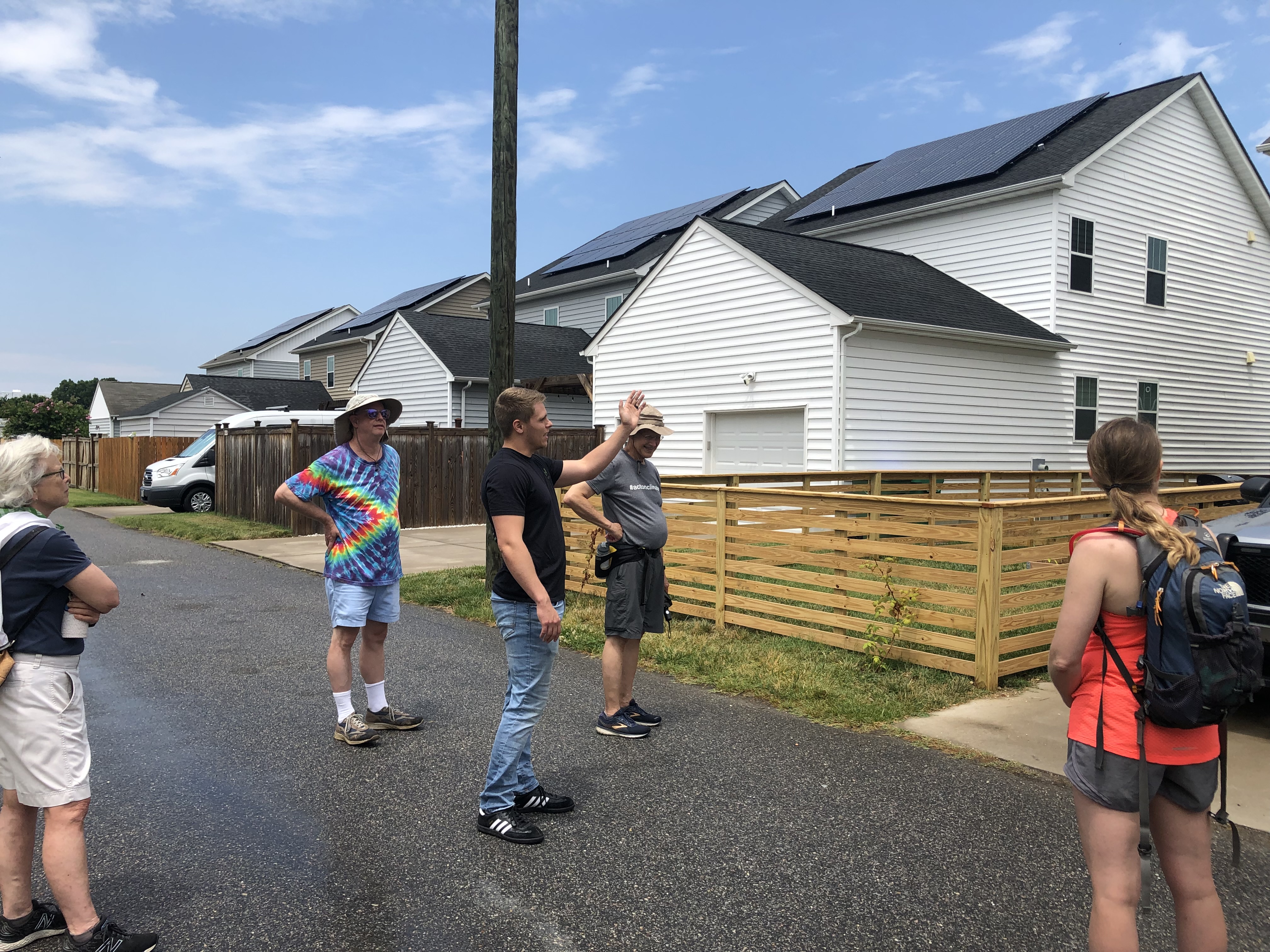
Sierra Club members talk to Richmond homeowner Kevin Ciafarini about his experience with solar.

Dominion Energy never used to be happy about customers producing their own energy from solar. “Hostile” is more the word that springs to mind. The company has traditionally seen privately owned solar arrays as competition: The more solar panels people put on their roofs, the less electricity they buy from their utility.

But Virginia has long allowed net metering, and in 2020 our General Assembly came down firmly on the side of customers by expanding opportunities for onsite solar. Consumers responded with the enthusiasm legislators hoped for. Industry statistics show annual residential solar installations in the commonwealth roughly tripled from 2019 to today. 

If you can’t beat ‘em, join ‘em. Virginia homeowners and businesses in the market for a solar array can now buy it from a wholly-owned subsidiary of Dominion Energy called BrightSuite. The BrightSuite website touts some of the same customer benefits that solar advocates have been pointing out all these years: consumer savings, carbon reductions, stable electric bills. And why shouldn’t Dominion sell solar? As the website declares, “We embrace change with a commitment first and foremost to meet our customers’ evolving energy needs.”

Well, amen to that! With climate chaos impacting people’s lives and high fossil fuel prices driving up utility bills faster than the rate of inflation, customers’ energy needs certainly have evolved, and they do now include onsite solar arrays. We just didn’t expect to hear that from Dominion. 

But that’s okay, we welcome latecomers! Moreover, while Dominion’s entry into the residential market will make some people uneasy, it could goose demand, growing the distributed solar market for everyone while pushing out the price-gougers.   

First, though, let’s address that unease. Having an affiliate of the local utility compete for a homeowner’s business puts independent installers at a definite disadvantage. Dominion has a much broader marketing reach, and BrightSuite’s use of the Dominion name carries an implied promise of trustworthiness. In a market crowded with competitors, name recognition and the assurance that a company isn’t going away any time soon are distinct advantages. 

But Dominion’s entry into the retail solar business could ultimately be good for independent installers. Dominion doesn’t do anything inexpensively, and its home solar offering appears to be no exception. If Dominion persuades more customers to look into home solar, and those customers then comparison shop, companies that can offer a better deal will get more business.  

Sarah Vogelsong recently wrote about a project of the HR Climate Hub, which solicited quotes from solar installers for the same single-family home in order to compare prices and service, and to flag potentially predatory sellers. The website offers helpful advice to Virginia homeowners about how solicit and compare offers. It also lists prices and terms from a dozen companies, ranging from a low of $2.10 per watt from Tesla to a high of $5.62 from Power Home Solar. Two small, well-regarded Virginia Beach installers submitted bids of $2.80 and $2.85. BrightSuite’s quote (added after the Mercury article ran) came in at $3.25. 

HR Climate Hub’s figures square with information from the Solar Energy Industries Association, which provides advice for consumers and tracks the average cost of residential solar systems through a service called SolarReviews. According to the website, “As of Jun 2022, the average cost of solar panels in Virginia is $2.66 per watt making a typical 6000 watt (6 kW) solar system $11,797 after claiming the 26% federal solar tax credit now available.”

I asked HR Climate Hub for additional information about the BrightSuite quote and was glad to learn the company uses high quality REC solar panels that carry a 25-year warranty, along with microinverters made by Enphase, a top-quality American company. So, no bottom shelf components here. However, the quote did not mention warranty or maintenance information for the installation work. These do not appear on the BrightSuite website either, apart from a one-year performance guarantee. 

It goes without saying that anyone investing thousands of dollars on a major home improvement should shop around, compare prices, and read warrantees. Prices listed on HR Climate Hub and SolarReviews are a good starting point. Where available, bulk purchase programs like those offered by Solarize NoVa and Virginia Solar United Neighbors provide discounts as well as expert advice. 

But it wouldn’t be surprising if even well-informed consumers choose to pay a premium to get a solar installation from BrightSuite simply because the company is associated with their utility. Name recognition goes a long way in marketing, and a lot of customers will want the security of knowing Dominion Energy isn’t likely to take the money and disappear into the night. With this marketing advantage, I expect BrightSuite will quickly emerge as a market leader in spite of its higher-than-average price. 

Ultimately, however, Dominion’s entry into the market may grow the pie for everyone. Homeowners who have held back from installing solar because they don’t know who to trust may feel confident enough to call BrightSuite. Once they have one quote, many will comparison shop.  

At the very least, Dominion’s entry into the home solar market should set a price ceiling. Why would anyone pay $5 per watt or more for a solar array from a company they probably don’t know anything about, when they could get $3.25 from their utility? Price gougers, beware: your time here is up.

This article appeared in the Virginia Mercury on June 17, 2022.

Dear readers: Many of you know that although I write independently of any organization, I also volunteer for the Sierra Club and serve on its legislative committee. The Sierra Club’s Virginia Chapter urgently needs funds to support its legislative and political work towards a clean energy transition. So this summer I’m passing the hat and asking you to make a donation to our “Ten Wild Weekends” fundraising campaign. Thanks!