Unknown's avatar

Virginia legislators cast a wide net on energy, hoping to land more capacity

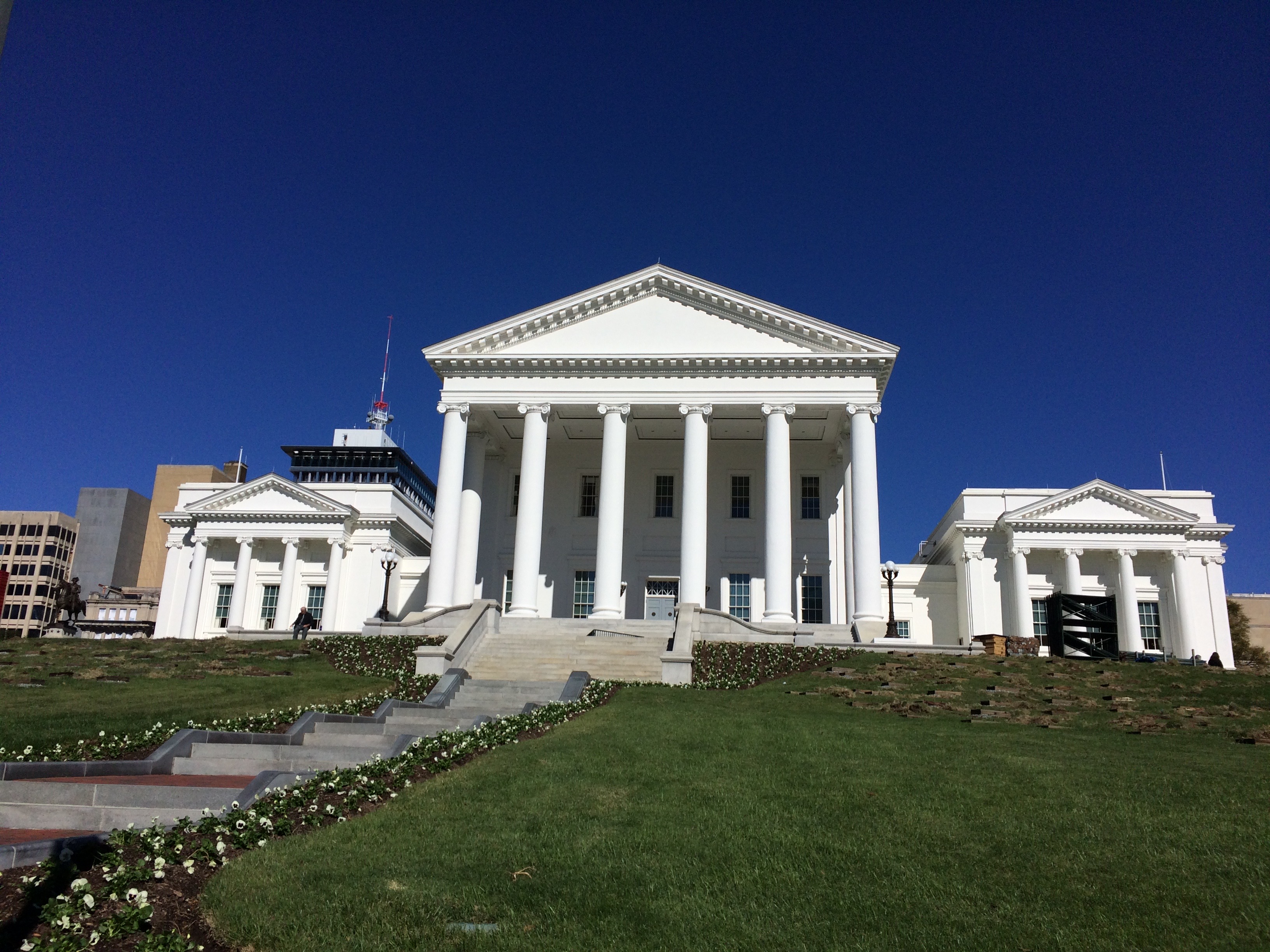
Virginia's capitol building in Richmond.

Two themes have emerged in the first half of the General Assembly session this year. First, legislators have no intention of stopping the data center boom, even temporarily. And second, their preference for dealing with the skyrocketing energy demand is to piece together a lot of small and medium-sized initiatives in hopes they all add up to enough to meet the moment. If it doesn’t work, that’s a problem for next year.

I’ll write about data center legislation in my next column; for now, let’s look at some of the bills that are aimed at increasing the ability of Virginia utilities to serve the data centers – and incidentally, the rest of us.

Everybody seems to have ideas for how Virginia can generate more energy, use it better, or make the grid (and our utilities) operate more efficiently. Many of these ideas aren’t new, but the pressure of rising electricity rates means the stakes are higher than ever, and bills are often advancing with bipartisan support. 

Notice how many different legislators are named as the sponsors of these bills. This is not just the usual in-crowd of energy wonks crafting measures. This year, everyone has ideas, and a remarkable number of these ideas are getting traction.

Making the most of the wires you’ve got

The first priority is to maximize use of the existing grid, allowing it to handle more power without building new transmission. 

Bills addressing the grid take many forms, including targeting new generation for places on the grid where there is spare room already, using demand-response programs to shift demand from peak hours to off-peak, improving energy efficiency and tapping into distributed resources at homes and businesses to supplement what utilities can do.

House Bill 114 from Del. Lee Ware, R-Powhatan, and Senate Bill 267 from Sen. Schuyler VanValkenburg, D-Henrico, task the SCC with studying alternatives to new generation. Possibilities to be studied include “capacity uprates for zero-carbon electric generating resources and energy storage resources and transmission upgrades including grid enhancing technologies and high-performance conductors.”  

Intriguingly, the legislation also directs the SCC to analyze pathways for large load customers to voluntarily finance the grid upgrades “as a condition of accelerated interconnection.” Ware’s bill has already passed the House unanimously and is now in Senate Commerce and Labor, which is expected to hear the identical Senate version this week.

Similarly, HB 434 from Del. Destiny LeVere Bolling, D-Henrico, requires the SCC to set a “grid utilization standard” for Dominion Energy and Appalachian Power Company, which the utilities are then required to meet. The bill passed the House unanimously. SB 621 from Sen. Kannan Srinivasan, D-Loudoun, is similar.

Last year the General Assembly passed legislation establishing a pilot program for a “virtual power plant” (VPP), a way to aggregate distributed generation and storage resources to help utilities shift some electricity demand away from peak times. VPPS have emerged as a way to tap into customer-sited resources for the benefit of the grid without the utility having to invest in a similar amount of generation – or the transmission to go with it. 

Last year’s program was only for Dominion. This year bills expanding programs to APCo and interested electric cooperatives appear likely to pass both chambers without problems.

HB 1065, introduced by Del. Phil Hernandez, D-Norfolk, known as the FAST Act, directs Dominion Energy and Appalachian Power to examine the points on the grid where solar facilities are interconnected in order to figure out where there is room to add more capacity. 

The idea is that the utilities ought to be able to add solar generation and storage where there is this surplus interconnection capacity instead of having to make new investments in grid capacity. The legislation then requires the utilities to issue requests for proposals for appropriate projects, under the supervision of an independent auditor.

HB 1065 has passed out of the Labor and Commerce committee.  Its Senate companion, SB 508 from VanValkenburg, will be heard in Senate Commerce and Labor this week.  

Energy efficiency programs remain one of the best tools for lowering energy consumption, freeing up room on the grid for new customers. Most legislation this year is aimed at serving low-income residents. 

These include HB 2 from Mark Sickles, D-Fairfax, which has already passed the House, and its companion, SB 72 from Srinivasan. The bills require Dominion and APCo to increase their efforts to serve qualifying households. HB 1393 from Bolling and SB 327 from  VanValkenburg require these utilities to develop a program for spending on energy upgrades. 

Other bills in the House and Senate establish a task force designed to remove barriers for low-income residents to access energy efficiency and weatherization programs. 

And lest we not forget, low-income energy efficiency programs receive 50% of the auction proceeds from participation in the Regional Greenhouse Gas Initiative. 

When Gov. Glenn Youngkin yanked Virginia out of RGGI, hundreds of millions of dollars for these programs were lost. HB 397 from Del. Charniele Herring, D-Alexandria, and SB 802 from Sen. Mamie Locke, D-Hampton, reiterate the requirement that the state participate in RGGI. Herring’s bill has passed the House, and Locke’s bill is set to pass the Senate this week. 

Outside the Capitol, Attorney General Jay Jones recently announced hestopped the state’s appeal of a court ruling that found former Gov. Glenn Youngkin unlawfully removed Virginia from RGGI.  

Everything’s better with storage

Batteries and other forms of energy storage have emerged as a panacea of sorts for correcting the mismatch of generation and demand at various times of the day. Too much nuclear at night when no one needs that much power? Store it. Too much solar during the day? Okay, for now that’s a trick question. Solar still makes up less than 10% of our electricity. But you get the point. 

That’s why one of this year’s most consequential pieces of legislation is HB 895 from Del. Rip Sullivan, D-Fairfax, and SB 448 from Sen. Lamont Bagby, D-Henrico. The bill hugely expands the VCEA’s targets for utility investments in energy storage, and includes new provisions for long-term storage of more than 10 hours in duration. Sullivan’s bill has gone to House Appropriations after passing out of Labor and Commerce, while Bagby’s has been referred from Commerce and Labor to the Finance committee.

A related bill from Sullivan, HB893, requires Dominion to assess the use of its energy storage resources through a power flow model. I would explain that if I understood it. The bill has reached the House floor.

A little energy here, a little there, and next thing you know you’ve got megawatts

Six years ago, a bill known as Solar Freedom caught on for its promise of removing barriers that were holding back rooftop solar. Most of its provisions became part of the Virginia Clean Economy Act. Loosening restrictions on customer investments in distributed generation led to significant increases in small solar facilities at homes and businesses as well as on public buildings, particularly schools. 

This year, the loss of federal tax incentives for solar, coupled with a sense of urgency to add every possible kilowatt to a grid under strain, has prompted legislators to look for more ways, large and small, to unlock private investment in solar and storage. 

Solar Freedom was successful in eliminating the dreaded “standby” charges assessed by Appalachian Power, while limiting Dominion’s ability to collect them for residential systems over 15 kW. This year, HB 1255 from Del. Irene Shin, D-Fairfax, aims to raise that to 20 kW. The bill has passed House Labor and Commerce and moves to the House floor.  

Solar Freedom and the VCEA also made it easier for commercial and government customers to finance solar acquisition through power purchase agreements (PPAs); however, residents have not been allowed to use PPAs, with the exception of low-income customers. The prohibition made no sense then, and it is a genuine barrier now that residents can no longer access federal tax credits for solar through direct ownership of the panels.

 HB 628 from Del. Katrina Callsen, D-Albermarle, resolves that problem along with increasing the percentage of the state’s renewable portfolio standard that must be met with distributed generation projects of under one megawatt. The legislation passed the House unanimously. Its Senate companion is expected to be heard this week.  

Plug-in solar, also known as balcony solar, captured the public’s imagination this fall as a simple, low-cost way for residents to access solar without the hassle of permits and interconnection agreements. Several bills in the House were rolled into one piece of legislation carried by Fairfax Democrat Del. Paul Krizek and Senate Majority Leader Scott Surovell, D-Fairfax. The House version has already passed the chamber unanimously, while the Senate version will be heard in committee this week. 

Another idea popular with the public is putting solar canopies over parking lots. HB 1234 from Del. Briana Sewell, D-Prince William, would allow localities to require certain commercial developers to install solar on as much as 50% of a surface parking lot with more than 100 spaces. The bill has been reported from committee and will head now to the House floor. A Senate companion, SB26 from Sen. Jennifer Carroll Foy, D-Prince William, will be heard this week in committee. 

HB 590 from Del. Phil Hernandez, D-Norfolk, and SB 382 from Surovell, streamline residential solar permitting in an effort to reduce delays and “soft costs” that drive up the cost of distributed solar.

Finally, Lt. Gov. Ghazala Hashmi is expected to head up a task force to seek further ways to promote distributed solar and generation if a bill from Del. Dan Helmer, D-Fairfax, and  VanValkenburg succeeds. 

Making it easier to build stuff, big and little

A related group of bills shares the goal of making it easier to get energy and storage projects sited, permitted or over the finish line. 

Two bills expand the existing shared solar programs available in Dominion and APCo territories. HB 807 from  Sullivan and SB 254 from Surovell expand the Dominion program by an additional 525 MW, with a provision for more after that. 

Sullivan and Surovell are also the patrons of House and Senate bills expanding the smaller APCo program by 100 MW in two stages, again with provision for more later. Both of Sullivan’s bills have now passed the House unanimously, while Surovell awaits action in Senate Commerce and Labor.

HB 891 from Del. Irene Shin, D-Fairfax, and SB 443 from Sen. Jeremy McPike, D-Prince William, will make it easier to site battery storage at solar facilities by removing the second round of permitting.  The bills have passed both the House and Senate.

As I’ve written before, getting solar projects approved at the local level has increasingly been a challenge in rural parts of Virginia. A bill I especially liked, allowing farmers to install solar by right, failed in subcommittee. However, legislation setting standards for projects and requiring localities to consider them on their merits (in lieu of blanket bans) has already passed both the House and Senate

A few legislators have proposed grant programs to help customers, and in some cases utilities, pay for solar and storage. All of these face an uphill battle in the money committees; if successful, they will have to fight for a slice of the budget pie.

HB 1089 from Del. Michael Webert, R-Fauquier, and SB 415 from Sen. Mark Peake, R-Lynchburg, increase the subsidy for an existing program incentivizing solar on brownfields and coal mine sites. HB 1133 from Del. David Reid, D-Loudoun, and SB 834 from Sen. Michael Jones, D-Richmond, establish a new grant program for solar and, especially, batteries. (Update: Reid’s bill perished, but Jones’ has reached the Senate floor.) 

HB 683 from Herring and SB 659 from Sen. Christie New Craig, R-Chesapeake, create a grant fund to help pay the interconnection costs for solar on schools and other public bodies. Herring’s has passed the House. New Craig’s has reached the Senate floor.

Meanwhile, HB 1444 from Del. Alfonso Lopez, D-Arlington, and SB 225from Surovell create a green bank to provide financing for clean energy projects. 

Looking towards the future 

Lawmakers are thinking long term about offshore wind energy. Sure, it feels like the industry has stalled out in the face of President Trump’s visceral loathing, but the general feeling is that the hostility will disappear in three years when its source does. Meanwhile, the East Coast is desperate for new energy sources close to load centers that don’t require new transmission lines on land. Offshore wind still fits the bill. 

That may be why offshore wind continues to earn bipartisan support in Virginia. HB 67 from Del. Michael Feggans, D-Virginia Beach, was among the earliest bills to pass both chambers this session, with support from members of both parties. Both HB67 and SB 25 from Sen. Jennifer Carroll Foy, D-Prince William, would organize an offshore wind workforce effort. 

(We will have some catching up to do. While U.S. states struggle to complete the 5 GW of offshore wind currently under construction in the face of Trump’s attacks, the rest of the world has kept building. China’s offshore wind capacity has grown to more than 40 gigawatts, and its advances in the technology have made it cost-competitive there.) 

If all else fails, throw a Hail Mary

Legislators still like to think big, when “big” is comfortably off in the future, where potential problems don’t loom as large. Many of them have their sights set on small modular nuclear reactors (SMRs). If all goes well, they hope, this technology will provide many gigawatts of carbon-free energy on a 24/7 basis, paid for by tech companies. If things don’t go well, a few overpriced projects would provide a nice boondoggle for Dominion and APCo at ratepayer expense. What’s not to like?

Currently the VCEA treats nuclear as a middle-tier resource, neither incentivized like renewable energy nor discouraged like fossil fuels. Some legislators from both parties want to elevate new nuclear to the same status as renewable energy, proposing a system of “zero emission credits” (ZECs) that both utilities and customers like data centers could purchase in lieu of renewable energy credits (RECs). 

Though the House Labor and Commerce committee does not seem inclined to take up Republican bills to make nuclear qualify for the renewable portfolio standard, other pro-nuclear bills are moving forward. 

HB 369, from Reid, allows certain corporate customers to buy ZECs from Virginia sources and avoid their share of a utility’s renewable energy costs. The bill has made it to the House floor and is likely to pass this week. 

In the Senate, the nuclear bill most likely to pass is SB 598, from Sen. Creigh Deeds, D-Charlottesville.

Deeds’ bill puts ZECs on an equal footing with RECs beginning in 2035. The legislation also speeds up the timeline for Dominion to purchase renewable energy in the near term and increases the percentage of it that must be built by third parties. From 2035 to 2045, Dominion and APCo are instructed to seek permission from the SCC to build or buy zero-carbon energy – 1600 MW for APCo and 5,000 MW for Dominion. Again, half of that would be developed by third parties. 

The bill also allows the SCC to reduce the targets if load growth doesn’t justify them. Oddly, however, the SCC is not empowered to cancel the targets for reasons like questionable safety, lousy economics or commercial non-viability, a remarkable oversight given the less-than-stellar track record of the SMRs under development.  The bill will be heard in Senate Commerce and Labor this week.

This article was originally published in the Virginia Mercury on February 10, 2026. It has been updated to include one bill I left out and to reflect recent action at the General Assembly.

Unknown's avatar

Solar can save Virginia farms — if government gets out of the way

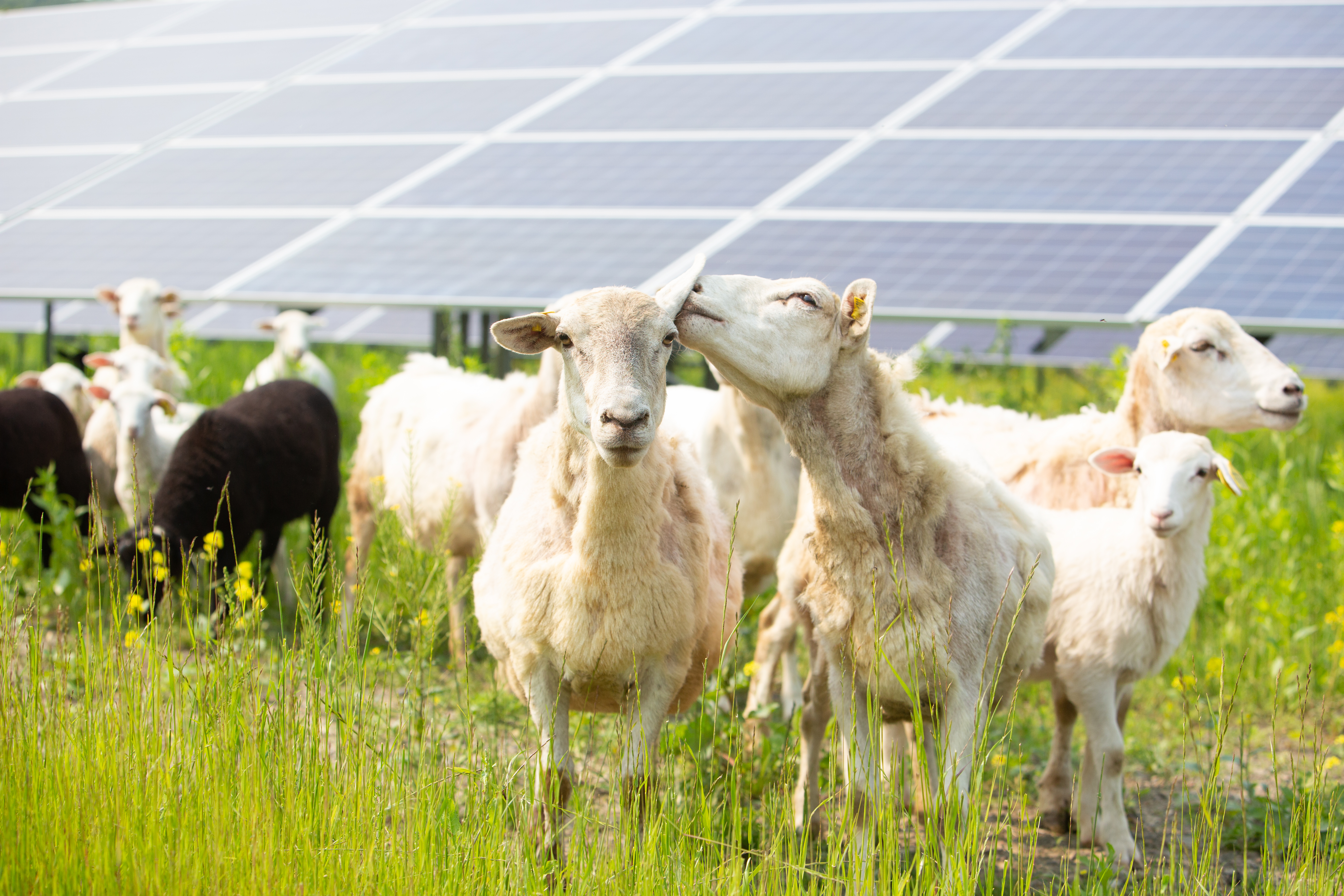
Photo courtesy of the American Solar Grazing Association

It’s not easy to be a farmer in Virginia. Pests, weather, uncertain markets and access to capital are a perennial problem. This year farmers have also had to contend with disruptions from President Donald Trump’s on-again, off-again tariffs, and an immigration crackdown that has deprived many farms of their experienced labor force. 

 And then there’s climate change and the outward creep of suburban sprawl. No wonder studies show the number of farms in Virginia continuing to shrink, and the age of farmers still in business trending steadily upward. We are losing our family farms.

 That’s why I’m baffled by the resistance to solar in many parts of rural Virginia. 

Farmers who lease part of their land for solar earn a guaranteed, stable income for 25 or 30 years, keep the property in the family, and never have to watch as a subdivision paves over the fields where they played as children. The income from a solar project will be there when a late frost means the loss of that year’s fruit crop or a scorching summer reduces the corn harvest by half.

Indeed, these days the choice is not between farming and solar; farming and solar are increasingly compatible “crops.” Sheep grazing has gotten the most attention in Virginia for its perfect synergy with solar: the sheep thrive in the shade of the solar panels and do the work of vegetation management, which otherwise would require herbicides and machinery. Elsewhere, farmers are raising cattlepoultrygrapevines and shade-loving crops under solar, in a practice collectively known as agrivoltaics.

 The combination of solar and agriculture is spreading rapidly across the country, endorsed by organizations like the American Farmland Trust. Solar sheep grazing is so popular that it has its own trade association, the American Solar Grazing Association. Here in Virginia, at least two sheep grazing companies contract with large solar developers for vegetation management. One, Gray’s Lambscaping, has over 800 sheep at solar projects, and expects to scale up to 5500 sheep by 2028. 

 Meanwhile, the conservation group Piedmont Environmental Council (PEC), which typically opposes large solar projects, is demonstrating the feasibility of growing vegetables under solar panels at a community farm in Loudoun County. 

 If solar integrates so well into the agricultural economy, what is the reasoning behind the county ordinances that ban solar or limit it to only a few projects? And why, when a county doesn’t prohibit solar outright, do local leaders so frequently reject permits for projects that meet all their conditions?  

 I’ve received emails from solar haters who regurgitate misinformation about the harms of solar panels, I’ve listened to legislators wax eloquent on the subject of “protecting rural values,” and I’ve sighed in frustration at a few fellow members of the environmental community who, when it comes to it, care less about addressing climate change than about keeping viewsheds pretty. 

 Often the opposition to solar is couched in terms of defending local control of land use decisions. But too many localities use this authority, not to make sure projects are developed responsibly, but to make sure they aren’t developed at all. And to that end, they prevent landowners from using their land in the way the owners have decided they need to. The rejections don’t mean the land returns to being farmed; more likely it means the land will be sold and, quite likely, developed for housing or even – gah! – data centers. If localities cared about saving farmland, they would approve more solar.

 In the last year, the percentage of utility solar projects that receive permits from localities ticked up slightly. One possibility is that the hostility to solar is easing. That would be welcome, but I suspect the more likely reason is that solar companies aren’t pursuing projects where they expect rejection. That’s a loss all around: the localities lose out on tax revenue, their landowners lose out on income, and everyone loses out on low-cost electricity.

 The hostility to solar makes little sense to me. Conservatives who care about property rights typically favor landowners over the government, so why is solar different? To be fair, some conservatives actively support solar, such as the groups Conservatives for Clean Energy and Energy Right.

 On the other side of the political spectrum, liberals and everyone else who cares about climate change should want solar everywhere – and most do, but not all. As for solar and farming, those of any political persuasion who care about farmland preservation should favor solar over subdivisions. And anyone who cares about the farmers themselves should be spreading the gospel of solar. Agrivoltaics is just the icing on the cake that can make everyone feel they didn’t have to compromise.

The legislative response

 Legislators have struggled with this problem for several years now. Many are desperate for new clean energy projects to serve the fast-rising demand for electricity, but they’ve been unable to bring themselves to take authority away from recalcitrant localities. It’s a hard needle to thread.

 Last year members of the Commission on Electric Utility Regulation (CEUR) crafted a multi-part bill designed to give localities all the information they need to make rational decisions about solar permitting, while giving landowners and project developers a right to appeal adverse decisions to the State Corporation Commission (SCC). 

 That bill failed in committee, and this year only a part of it made it into a bill. House Bill 918, from Del. Rip Sullivan, D-Fairfax, sets up a university consortium to provide expertise and guidance, including on solar siting and permitting. 

 Meanwhile, a bill proposed last year by members of the solar industry came closer to passage than the CEUR bill did. The industry bill proposed a suite of rigorous best practices for solar, designed to reassure localities that solar facilities will be good neighbors. 

Among the best practices were farm-friendly provisions like using native pollinator plants, screening with native trees, and incorporating grazing animals or farm crops. Localities would not be allowed to ban solar outright, but would have to make decisions on the merits of each proposal. However, nothing in the bill would have required localities to approve these projects.

 The industry bill foundered last year, but this year it is back with the endorsement of CEUR. In its current form, HB 711 from Del. Charniele Herring, D-Alexandria, and Senate Bill 347 from Sen. Schuyler VanValkenburg, D-Henrico, continues to preserve local decision-making, but localities that deny permits to solar projects must report their reasons to the SCC for inclusion in a public database. SB 347 has already been reported from committee and will be heard by the full Senate.

 Only one bill this year is directly aimed at helping farmers install solar. HB 1091 from Del. Amy Laufer, D-Albermarle, adds half a line to Virginia’s right-to-farm law giving farmers a right to install solar if they also use the same land for agricultural activities like grazing or crops.  The effect of Laufer’s bill is that any farmer who wants to combine solar and farming could do so without having to go get a local permit. (The right-to-farm law does not exempt farmers from other laws, so regulations governing erosion, wetland protection, etc. still apply.)

 A more modest bill, developed by PEC and carried by Del. Irene Shin, D-Fairfax, defines agrivoltaics and sets up an advisory panel to determine what qualifies, consider possible requirements and limitations, and make recommendations for next year. That’s encouraging, but unfortunately, the bill defines agrivoltaics specifically to exclude “solar energy generation that replaces the farmer’s primary income.”

Counterfactual definitions like this tend to cause problems. 

If a farmer has a crop failure, and the farm’s major source of income that year is solar, do they no longer qualify? It also suggests that sheep graziers in the business of using their animals for vegetation management at solar projects – i.e., agrivoltaics – could not use the industry-accepted word to describe what they do. Besides, really, don’t we want all solar projects to incorporate agriculture?

 A bill from Sen.David Marsden, D-Fairfax, would task the Department of Energy with setting up a committee of experts to develop solar siting criteria and then score the appropriateness of any proposed site for solar. There’s no indication in the bill that the criteria would include a farmer wanting to include solar among their products, but perhaps it could. However, it would not require localities to approve any projects. 

 It feels inevitable that the future of solar incorporates farming, and the future of farming may well mean incorporating solar. Whether Virginia’s leaders see this yet or not is another question, but they do have their opportunity this year.

This article was originally published in the Virginia Mercury on January 28, 2026.

Unknown's avatar

The bills are back in town

Legislators cue up last year’s vetoed legislation for a new session, but leave us wanting more

Last spring Gov. Glenn Youngkin vetoed more energy bills than he signed, killing legislation designed to increase rooftop solar and energy storage, strengthen utility planning requirements, and make efficiency improvements more available to low-income residents. 

Now, with Abigail Spanberger set to replace Youngkin in the Governor’s Mansion and Democrats in a position of legislative strength, those bills are back.

Members of the Commission on Electric Utility Regulation (CEUR) met several times this fall to examine last year’s failed energy bills to determine which should get the commission’s endorsement this year. CEUR is comprised primarily of legislative leaders from the Senate and House committees that hear energy bills, so endorsements signal a strong likelihood of passage. 

But while the bills CEUR endorsed show promise, I can’t help thinking they had better be just a starting point.  

Energy affordability and making data centers pay their fair share are supposed to be the top objectives for legislators this year. That makes it interesting, and concerning, that even as CEUR went beyond the vetoed bills to endorse some small new initiatives, it didn’t propose any legislation that would either supercharge generation in Virginia or put the onus on the tech companies to solve their supply problem themselves.  

We know bills like that are coming. Ann Bennett, the lead author of the Sierra Club’s comprehensive report on the state of the industry in Virginia, was, I hope, being hyperbolic when she told me she expects “a hundred” data center bills this session. Regardless, there will be a lot of them. 

Many will be land use bills that don’t go to the energy committees, but others will tackle the central contradiction at the heart of Virginia’s data center buildout: our leaders want the industry to grow, but haven’t faced squarely the problem of where the energy will come from. 

Getting more power on the grid (or freeing up capacity)

Some of the vetoed bills returning this year will put more energy on the grid. They won’t be enough to power the data center industry, but every bit helps. This includes one of the environmental communities’ top priorities, a bill that expands the role of rooftop solar in Virginia’s renewable portfolio standard (RPS). 

A new bill permitting balcony solar also got CEUR’s endorsement. Balcony solar – two or three panels that plug into a wall outlet, reducing a resident’s need to buy power – is the buzziest new idea of the year. The systems are too small to make much of a difference in megawatt terms, but by democratizing access to solar they counter the reputation of solar as a technology for rich people and will make it possible for solar skeptics to see for themselves that solar does actually work and save money.

Another CEUR initiative is a bill similar to one Youngkin vetoed that creates a carveout in the state’s renewable portfolio standard specifically for geothermal heat pumps. Like balcony solar, geothermal heat pumps don’t put electricity onto the grid, but by freeing up power for other customers it has the same effect.

 CEUR also endorsed a bill to simplify billing in the shared solar program in Appalachian Power Company’s territory, but a far more significant proposal to greatly expand shared solar in Dominion territory was deemed not ready for consideration after one of its patrons, Del. Rip Sullivan, D-Fairfax, said it was still in negotiation.  

The SCC recently directed a change in the calculation of Dominion Energy’s minimum bill that industry advocates say should make the program workable for customers beyond the low-income residents who were the only ones formerly able to access it. As currently drafted, the bill would allow shared solar to increase up to a maximum of 6% of Dominion’s peak load. That gives this bill the potential to make a meaningful dent in Virginia’s energy shortfall – if Dominion doesn’t block it. 

That assumes developers can get the community solar projects permitted at the local level. 

Virginia localities are notorious for denying permits to solar projects of all sizes, a recalcitrance that has contributed to Virginia having to import fully half of the electricity consumed in the state. CEUR has now scrapped last year’s big idea of allowing solar developers to appeal local government permit denials to the SCC, after failing to persuade enough legislators to vote for it last year. All that is left of that bill is a piece that establishes a university consortium to provide research and technical assistance. 

Luckily, last year’s other major solar siting bill lives on; it codifies best practices for solar projects without removing localities’ ability to deny permits even for projects that meet the high standards. New this year, however, is a requirement that localities provide a record of their decisions to the SCC, including the reason for any adverse decision. 

It’s not the solution the industry and landowners need to bring predictability to the local permitting process, but it does ratchet up pressure on county boards that have a habit of denying projects without articulating a legitimate reason. And sure enough, imposing that modest amount of accountability was enough to get Joe Lerch from the Virginia Association of Counties to speak against the proposal at the CEUR meeting. 

VACO seems likely to lose the fight this time around, and it should. Blocking solar development leads directly to higher electricity prices for consumers across the state. Moreover, it denies even a minimum of due process to landowners who want to install solar on their property – including farmers who need the income just to hold onto their land. For VACO to insist on counties having carte blanche to reject projects, with no responsibility to justify their decision, is arrogant and an abuse of the local prerogative.

Making the most of what’s already there

Anyone who keeps up with energy news has learned more in the past year about how the grid works than most of us ever wanted to know. There is widespread agreement that grid operator PJM has mismanaged its job, keeping new low-cost generation from interconnecting and driving up utility bills for customers across the region. Unfortunately, there is little that Virginia can do by itself to fix PJM.

But one key bit of information we can use is that utilities and the grid operator build infrastructure to meet the highest levels of demand on the hottest afternoons and coldest nights of the year, leaving much of that infrastructure sitting idle at other times. A recent study showed the grid could absorb far more data center demand than it can now if it weren’t for the 5% of the time when demand is at its highest. 

The issue is framed in terms of data centers being willing to curtail operations at times of peak demand, a solution for the companies that can do it. But there is also a broader point: we don’t need as much new generation if we use what we have better. 

That’s the principle behind several bills that CEUR endorsed. The most significant of these is a bill vetoed by Youngkin last year that almost doubles the targets for short-term energy storage laid out in the Virginia Clean Economy Act and adds targets for long-duration energy storage. As currently drafted, the 2026 version also adds new fire safety standards.

But CEUR did not discuss another obvious approach to increasing storage capacity on the grid: requiring data centers to have storage on-site, replacing highly-polluting diesel generators for at least the first couple of hours of a power outage and using spare battery capacity to assist the grid at other times. If Virginia is going to keep adding data centers at the current rate, this simply has to be part of the plan. We need far more storage than the CEUR bill calls for, and tech companies, not ratepayers, should bear the cost.

CEUR’s utility reform proposals would also help Virginia’s grid get the most out of what we already have. A bill to improve the integrated resource planning process (again, vetoed by Youngkin) requires utilities to consider surplus interconnection service projects to maximize existing transmission capacity. 

CEUR also proposes to have the SCC create a workgroup to study load flexibility. Though the SCC is already doing this through its technical conferences, the proposed legislation would formalize the process and task the work group with making recommendations.

And if all else fails, under another CEUR initiative, utilities would be explicitly allowed to delay service to new customers with more than 90 MW of demand if there wasn’t the generation or transmission available to serve them, or to protect grid reliability. As a fail-safe this is both obvious and inadequate; if a utility doesn’t have that authority now, it certainly needs it — but it needs it for a customer of any size.

Helping low-income residents save money 

CEUR endorsed several proposals that could help residents save money on energy bills. Some, like shared solar, balcony solar, geothermal heat pumps and the distributed solar expansion bill, would benefit anyone willing to make the investment. 

For low-income residents, weatherization and efficiency upgrades remain the focus. Last year the governor vetoed legislation from Del. Mark Sickles, D-Fairfax and Sen. Lamont Bagby, D-Henrico, which would have required Dominion and APCo to expand their low-income weatherization assistance to reach 30% of qualifying customers.  Sickles has already reintroduced his bill as HB2. CEUR endorsed a different recommendation from staff that the two utilities be required to extend their spending on energy assistance and weatherization programs. 

CEUR did not examine a related bill that has been reintroduced this year following a Youngkin veto last winter, establishing an income-qualified energy efficiency and weatherization task force to produce policy recommendations to ensure repairs and retrofits reach all eligible households. 

However, CEUR endorsed a bill that will require all utilities to disclose to the SCC information about electric utility disconnections, which presumably will inform the work of the task force.  

We’re going to need more

Even taken together, CEUR’s initiatives don’t fully address the biggest energy crunch Virginia has ever faced, and the rising utility bills that result. Possibly that is intentional; Democrats will continue to control the governor’s seat as well as the legislature for at least two years, giving them time to ramp up programs and see what works.

But data center development is so far outstripping supply side solutions that if legislators aren’t more aggressive this year, next year they will find themselves further behind than ever.  

As more bills are filed over the coming weeks, we are likely to see plenty of bold proposals. Hopefully, legislators now understand the urgency, and will be ready to act.

An earlier version of this article appeared in the Virginia Mercury on December 15, 2025. It has been edited to include the last two bills in the section titled “Making the most of what’s already there.”

Unknown's avatar

How Gov. Spanberger and a Democratic majority can make energy more affordable

An aggressive legislative agenda this year will demonstrate national leadership on managing the data center buildout while delivering climate, health and economic benefits to all Virginians

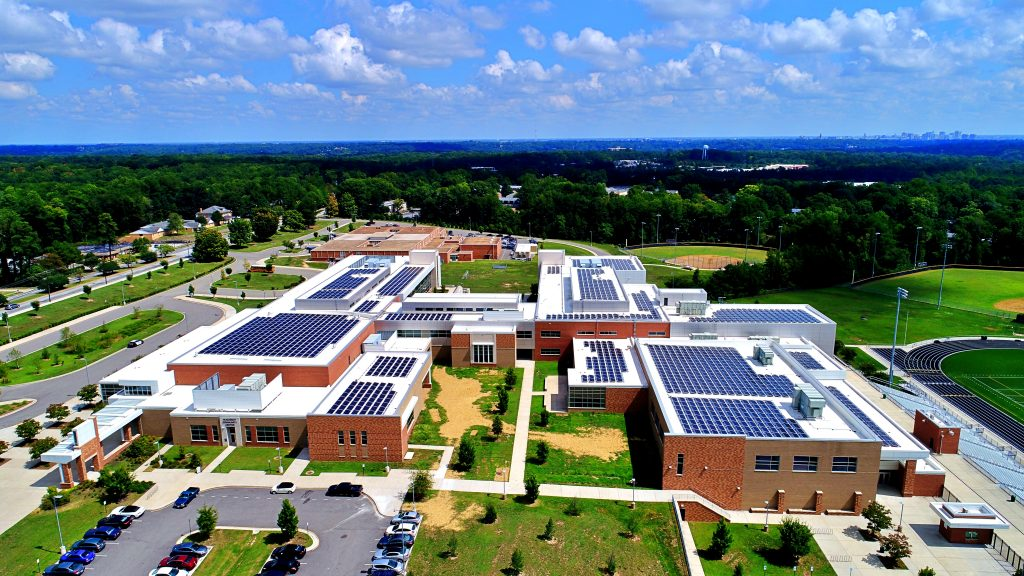
Solar on schools and other public buildings reduce pressure on the grid while saving money for taxpayers. Photo courtesy of Secure Solar Futures LLC

If Virginia’s election last month was more than an unleashing of anti-Trump sentiment (and it definitely was that), it was about affordability. Governor-elect Abigail Spanberger made the cost of living the focus of her campaign, frequently mentioning high energy bills. House Democrats, whose majority has been boosted by the addition of 13 new members of their party, are also expected to focus on these bread-and-butter issues. 

In Virginia, the cause of these high bills is not hard to identify: Data centers are driving up demand well beyond the available supply, and high fossil fuel prices are pinching a state that relies on natural gas for most of its electricity. Spanberger has committed to making data centers “pay their fair share,” and both she and legislators will be looking for other opportunities to lower costs.

The bad news is that adding ever more data centers across Virginia means the upward pressure on electricity prices will continue. If the governor and legislators don’t want to kick tech companies to states with spare capacity, and if the administration of President Donald Trump continues to throttle the energy supply with its war on wind and solar, lowering energy costs in the near term likely isn’t possible. 

Even so, there is a lot that Spanberger and the General Assembly can do to protect residential consumers from these higher prices. 

Making data centers pay their fair share means more than tweaking rate structures. Several Virginia utilities have created special rate classes for large load users like data centers. The utilities will require data center operators to sign long-term contracts committing them to paying for a large percentage of the electricity and transmission they say they need, even if they don’t end up using that much or leave the Virginia market prematurely. 

These new tariffs can help protect other customers from some – though not all – of the risk involved in serving data centers, but they don’t address the “fair share” issue. The current allocation of transmission costs, with residential ratepayers picking up most of the tab for new lines that don’t benefit them, needs to change. If the SCC determines it doesn’t have authority to do that on its own, the General Assembly and Spanberger should pass legislation to make it happen. 

The harder problem is how to make residents whole for rate increases that result from data centers gobbling up all available power. The supply and demand problem has been compounded by a lot of bad decisions, with plenty of blame to go around. The federal government has driven up fossil fuel prices by allowing the export of increasing amounts of natural gas, while hindering and even blocking solar and offshore wind projects that could make up the deficit. 

Outgoing Gov. Glenn Youngkin is to blame for illegally pulling Virginia out of the Regional Greenhouse Gas Initiative (RGGI), removing the market incentive for Virginia utilities to increase investments in low-cost renewable energy instead of burning expensive fossil fuels. (His promotion of the false narrative that gas is “cheap” doesn’t help.) 

Virginia utilities share the blame for relying too much on natural gas and high-priced electricity imported from other PJM states. And grid operator PJM is to blame for failing to approve enough new generation, including wind and solar facilities that make up the vast majority of projects waiting for approval to interconnect.

This history leaves Spanberger with a fine mess. Keeping prices in check now requires two things that can actually be accomplished during the next four years: a greater buildout of solar generation and energy storage to get more capacity on the grid; and investments in energy efficiency and rooftop solar to take pressure off the demand side.    

Solve utility solar siting with agrivoltaics. Virginia needs more energy, and solar is the only source that can be built quickly. Yet one of the knottiest problems confronting the General Assembly in the past few years has been the rise of anti-solar sentiment in rural counties. 

Landowners who want to lease their property for solar, or even to install arrays for their own use, find themselves stymied by opposition from neighbors who don’t like the look and are able to persuade county boards to deny permits. As we’ve seen, sometimes denial of a solar permit even follows approval of an energy-sucking data center.

Last year the General Assembly came close to passing a bill that would require solar developers to implement industry best practices. Passing legislation like that this year will address the legitimate concerns of localities around controlling erosion and maintaining native plant buffers. But more can be done to make solar look and function like a normal part of Virginia’s agricultural economy.

Already, solar facilities have become integrated with agriculture, as sheep and sometimes cattle take over vegetation management and farmers learn which crops do well growing between rows of solar arrays. It’s a trend that offers benefits to the land and the community alike. Farmers are struggling; solar can provide a stable income while protecting land from permanent development and putting much-needed energy on the grid. 

Businesses are ahead of public policy on this. Virginia-based Gray’s Lambscaping manages vegetation with over 800 sheep at solar farms across the state, and the company plans to grow to over 5,000 sheep by the end of this year. Meanwhile, solar panels have proven compatible with a wide range of food crops.  

Virginia should take a leading role in expanding agrivoltaics. Virginia law already recognizes the right to farm as an exception to localities’ authority over land use decisions, and this should be extended to farmers who put solar on their land, as long as they are also using the same land for traditional agricultural practices like grazing and crops. 

Install solar on new public buildings and schools. Heck, put it everywhere.  In the past ten years or so, Virginia’s commercial solar sector has blossomed while saving taxpayers money. To date, an estimated 150 Virginia schools have installed solar panels, saving schools about 25% on their energy bills. Solar on every sunny school rooftop would add up to more than 1,000 MW of carbon-free generation. Extend the effort to the roofs of all suitable public buildings across the state, and that number can go much higher. 

Dominion and APCo have long tried to squelch competition from rooftop solar, a war that looks increasingly foolish as Virginia finds itself short on energy for all customers. Earlier this year Congress drastically accelerated the phase-out of solar tax incentives, but the savings remain available for commercial and utility-scale projects for the next two years. There is no shortage of good ideas out there to be acted upon. Spanberger and legislators should take full advantage of that opportunity to install as much solar as possible. 

Battery storage at data centers does triple duty. While solar is the cheapest, cleanest, and fastest way to generate power, it needs batteries or other forms of energy storage to make it into a 24/7 resource, and storage remains relatively expensive. For tech companies, however, the calculus makes more sense.

Data centers need backup power anyway; they typically have three layers of redundancy so that they never risk losing power when the grid goes down. Today the backup power is mostly provided by massive diesel generators, sometimes three times as many as they might actually need. Most of these have no pollution controls and are therefore not supposed to run except in emergencies and for testing and maintenance. That’s sill a lot of run time — and DEQ is proposing to make matters worse by expanding the definition of “emergency” to include scheduled outages.

Some tech companies are now installing generators with selective catalytic converters that produce fewer emissions. The catch is that these can legally be used in non-emergency situations, raising the possibility that they might be used for demand-response or peak shaving. In effect, data centers would be solving the peak demand problem with one of the dirtiest forms of energy. The cumulative effect on air quality could be worrisome, and Virginia’s carbon footprint would grow at a time when the law says it should be shrinking. 

What if, instead of diesel generators, data centers installed storage as their first line of defense against power outages, leaving diesel generators to be used only in the rare case of extended grid outages? Air quality would benefit, carbon emissions would decrease, and the data centers would have the backup power they need. The tech companies would pay more upfront but could be compensated by utilities for using their storage capability for grid services and demand response, lowering their draw from the grid at peak demand times. 

All the data centers in Virginia today use 6 gigawatts of power. That much storage would exceed the targets set in the VCEA for Dominion and APCo combined.  Even limiting the requirement to two hours of storage at new data centers would bring enough storage online quickly to eliminate the expensive demand peaks that drive the high price of energy.  

Require data center operators to source their own zero-carbon electricity. Most of the tech companies have sustainability commitments that they aren’t meeting, so it isn’t asking too much of them to put them in charge of this effort. Legislation to require this as a condition of accepting Virginia’s generous tax subsidies has been defeated for the past two years. The difference this year is that rising energy prices are now affecting everyone. 

Under this proposal, the zero-carbon electricity doesn’t have to come from Virginia, as long as it is available to customers here. Maybe the tech companies could even tap into their considerable influence with the Trump administration to make electricity more plentiful and affordable by reversing its war on solar and wind energy.

Why, after all, should Virginia residents sacrifice for the richest corporations in the world? If “paying their fair share” means anything, it should mean that data centers, not residents, bear the costs of making enough energy available to Virginia, and complying with our clean energy mandate.

Lower demand with energy efficiency and distributed solar. The gap between energy supply and demand does not have to be filled entirely through supply-side solutions. Lowering demand should also be part of the solution. Virginia utilities, Dominion in particular, have done a poor job of running energy efficiency programs. Looking on the bright side, though, that means plenty of opportunities remain.

House Democrats have already started work on this issue, with a focus on lowering winter heating costs for lower-income households. As reported in the Mercury last week, HB 2, from Farifax Del. Mark Sickles, requires Dominion and APCo to make their “best, reasonable efforts” to provide energy efficiency and weatherization to 30% of income-qualified customers by the end of 2031. HB 3, from  Del. Destiny Levere Bolling, D-Henrico, sets up a task force to study income-qualified energy efficiency and weatherization.  

These steps are okay for starters, and they would be juiced by the influx of money from RGGI carbon auctions (see next section), earmarked for low-income energy efficiency. But Dominion has repeatedly failed to meet the energy efficiency targets the legislature sets for it, and after all, why stop with 30% of low-income customers when all households could benefit from more comprehensive programs? Virginia can do much better.  

My last column discussed Rewiring America’s proposal to have tech companies pay for heat pumps, solar and batteries in the residential sector, saving money for households and freeing up capacity for data centers to come online sooner. An independent provider could run the program and verify the energy savings.  

(If the tech companies complain that an awful lot of the solutions I’m proposing come at their expense, it’s true. But the industry benefits from a state tax subsidy that has reached nearly a billion dollars per year, and will only grow further as the number of data centers doubles and triples. They can afford to give back.) 

Use RGGI for long-term affordability. Gov.-elect Spanberger has committed to seeing Virginia rejoin the Regional Greenhouse Gas Initiative (RGGI), the compact of northeastern states working to lower carbon emissions by 30% by 2030. RGGI works by requiring owners of carbon-emitting generating plants to buy carbon allowances at auction, penalizing carbon-intensive generation and rewarding investments in zero-carbon facilities like wind, solar and nuclear. States collect the auction proceeds, which in Virginia are dedicated to low-income energy efficiency and climate adaptation measures.

Republicans have already renewed their attacks on RGGI, calling it a tax on energy consumers. To the extent that’s true, it’s a tax mostly paid by the largest consumers (including data centers) for the benefit of low-income residents and people most vulnerable to storms and sea level rise. Moreover, all energy consumers benefit over the longer term as low-cost clean energy increasingly replaces expensive fossil fuels. 

Beef up efficiency standards in the residential building code. Most people who buy a new home assume that modern building codes incorporate the latest standards for insulation and efficient technology. In Virginia, they do not. Buyers would be dismayed to learn that their homes are costing them more on their utility bills than they saved on a purchase price supposedly made more affordable by poorer-quality insulation and appliances. Buyers are rarely consulted on these trade-offs, and few have the expertise to question a builder’s choices. Building codes are supposed to do that job.

Unfortunately, Virginia’s Board of Housing and Community Development, which writes the code, is dominated by the homebuilding industry. The industry wants to build homes as cheaply as possible to ensure the highest profit possible on the homes it sells. Even as national model code standards have become more rigorous, homebuilders have protected their own interests by keeping weak energy efficiency requirements in Virginia’s residential building code. 

In 2021, Virginia adopted legislation requiring the board to consider and adopt energy standards “at least as stringent as” the latest national model code standards when the benefits over time to residents and the public exceed the incremental costs of construction. But the board simply didn’t do it. Will this be the year legislators realize that a board dominated by the industry it regulates won’t act in the public interest without explicit directions? 

This is Virginia’s moment. Since the passage of the Virginia Clean Economy Act in 2020, renewable energy and storage have only gotten cheaper, while energy efficiency opportunities remain plentiful. Coal has solidified its place as the most expensive baseload source, and fossil gas remains stubbornly expensive compared to solar. Spanberger and the Democratic majority have an opening this year to go big on clean energy. An aggressive legislative agenda this year will demonstrate national leadership on managing the data center buildout while delivering climate, health and economic benefits to all Virginians.  

This column was originally published in the Virginia Mercury on December3, 2025.

Unknown's avatar

Will Big Tech buy you a heat pump?

Sign at a dog park in Arlington, Virginia. Ivy Main

The data center boom has catapulted Virginia into a serious energy crunch. We have more data centers here than in any other state, by far, and four times as many more are expected in the next few years. Virginia utilities don’t generate enough electricity to serve them all; fully half of our power is imported from the regional grid. But now the regional grid is also running low on reserve power thanks to all the data center growth, according to grid operator PJM. 

Most proposed solutions focus on the supply side: generating more power by building new solar, wind, gas and battery storage; keeping aging power plants running that were previously scheduled for closure; and even reopening Three Mile Island, shuttered three and a half decades ago following the worst nuclear accident in US history. 

More nuanced solutions involve managing the existing generation better. Research shows that the grid could handle more data centers right now if operators ratcheted back consumption at peak times, either through installing batteries or through shifting some operations to non-peak times.

All of these approaches involve generating more power for the grid, or shifting use around to relieve grid stress at peak demand times. But there is another way to make room for new data centers: remove some existing loads. 

A national advocacy organization, Rewiring America, recently released an intriguing proposal to free up grid capacity by retrofitting homes with high-efficiency heat pumps, heat pump water heaters, solar panels and energy storage. The cumulative effect would be to reduce total demand in the residential sector, making capacity available to data centers sooner, while also saving the participating residential consumers thousands of dollars on their electricity bills.  

Oh, and the tech companies are going to pay for it. 

I am reminded of a delightful sign I once saw announcing the coming of the best dog park ever, to be paid for by cats, itself a satire of a certain president’s pledge to build a border wall paid for by Mexico. But, I notice, neither the cats nor Mexico have sent checks yet. Will Big Tech?

Rewiring America thinks so, if the policies are in place to aggregate and verify the household energy savings into a marketable package, and if buying the package means a data center can come online faster and more cheaply. Upgraded appliances and rooftop solar can be installed in a matter of weeks, compared to the many years that may be required to permit and build new generation and transmission. 

Note that the proposed program would not include households that replace gas, propane or oil furnaces with heat pumps. That kind of upgrade results in greater, not less, residential electricity demand, making it counterproductive when the point is to shrink residential electricity usage. 

Replacing electric furnaces with heat pumps would also mainly address the grid’s winter peak, not its summer peak, though the Department of Energy maintains that heat pumps use less energy for cooling than stand-alone air conditioners.

Researchers focused on replacing electric resistance heat with heat pumps because that one swap produces the biggest efficiency bang for the buck. An electric furnace is cheap to install but expensive to use; the reverse is true of a high-efficiency heat pump. The National Renewable Energy Laboratory (NREL) estimates that the conversion would save the average family $1,170 per year on its electricity bill. NREL calculates that heat pumps are cost-effective enough to pay for themselves in under 5 years.

According to Rewiring America, “If hyperscalers paid for 50 percent of the upfront cost of installing heat pumps in homes with electric resistance heating, they could get capacity on the grid at a price of about $344/kW-year — a similar cost to building and operating a new gas power plant, which currently costs about $315/kW-year.” (By my math, it’s an extra 10%, which might be acceptable to a power-hungry tech customer as a sort of rush fee.)

The report repeats the calculations for other technologies. Ductless heat pumps would replace baseboard electric heat. Heat pump water heaters would replace conventional electric water heaters. Solar panels paired with battery storage could displace electricity the home would otherwise draw from the grid.

Further capacity could come from home batteries. The report posits, “If every single-family household in the U.S. installed a home battery, and those with a suitable roof installed a 5 kW solar system (about 11 solar panels), they could collectively generate 109 GW of increased capacity on the grid.We assume that households charge the battery off-peak, either from the grid or from rooftop solar, and they discharge the battery during peak periods to reduce the household’s contribution to peak demand.” 

The researchers estimate that a mass purchasing program could squeeze costs of solar and storage down by 40%, primarily through reduced customer acquisition costs and cheaper permitting. Then the data center operators would pay 30% of this lower cost. By buying solar and storage at this now much-reduced price, households would get electricity at about a 30% discount off utility rates, while the tech companies would be able to buy capacity at a cost comparable to that of building a new gas plant. 

You’ll notice the proposal assumes tech companies pay only a portion of the costs for the residential upgrades, so residents still face upfront costs – 50% of the cost of heat pumps, 70% of a hopefully-lowered price for solar and batteries. Rewiring America calculates that residents will come out ahead under all scenarios, while the data centers will pay only a little more than they would otherwise have to pay, buying capacity they might not otherwise be able to get. 

Because Virginia has so many more data centers than anywhere else on earth, Rewiring America calculates that all of these investments would meet only 25% of our projected new data center demand. Other states could do much better, fully meeting projected new demand across most of the country and even exceeding it in about half the states. Virginia would presumably stand to benefit from surplus capacity in other PJM states. 

Obviously, these calculations describe a best-case scenario, and I have my doubts about whether the uptake would be anywhere near what they believe is possible. Still, even capturing just a portion of the efficiency potential Rewiring America believes is there would relieve some of the pressure on the grid. 

But is there really that much low-hanging efficiency fruit in Virginia? If the NREL data that the researchers use is correct, more than 300,000 single family homes in Virginia have electric furnaces. Yet electric furnaces are notoriously inefficient and expensive to operate, and heat pumps have been around for decades. Our utilities have been running energy efficiency programs for years that are supposed to help residents save energy. Can there really be that many single-family homes that have not converted to heat pumps yet?

I consulted Andrew Grigsby, a home energy efficiency expert who is currently the energy services director at Viridiant, a nonprofit focused on sustainable buildings. Grigsby shared my doubts about the accuracy of NREL’s estimate of the number of homes with electric resistance heat, saying it was at odds with his experience. He also felt that an efficiency program would save more energy at less cost by targeting improvements to the needs of each home, instead of supplying a blanket solution.

But he also refuted my assumption that most of the low-hanging fruit should have been picked by now. “Virginia has 100,000 homes (at least) where three hours work and $50 in materials would reduce heating/cooling costs by 25%  — via fixing the obvious, massive duct leakage,” he said in an email.

This doesn’t mean Rewiring America’s approach wouldn’t save energy; rather, it supports the conclusion that there is a massive opportunity for energy efficiency savings that Virginia hasn’t fully tapped into. 

Legislators have tried. The VCEA set efficiency targets for Dominion and APCo, and the SCC followed up with further targets. APCo has consistently met its goals, Dominion has not. A review of Dominion’s sad little list of programs available to homeowners suggests that the problem is a lack of ambition, not a lack of opportunity.

An aggressive, third-party operated efficiency program would complement the Virtual Power Plant (VPP) pilot program that Dominion is developing in accordance with legislation passed in the 2025 session. The VPP’s goal is to shift some consumption to off-peak times, while the Rewiring America proposal would reduce overall consumption. 

Both seek to achieve time-shifting through incentivizing residents to invest in home batteries, their only area of overlap. But whereas the VPP legislation set only 15 MW as its baseline target for home batteries, the Rewiring America proposal could incentivize much more, along with the solar systems to charge them.

The problem remains how to get tech companies to pay for it. My contact at Rewiring America, senior director of communications Alex Amend, pointed me to approaches being undertaken in other states. Minnesota legislation requires data centers to contribute between $2 million and $5 million annually toward energy conservation programs that benefit low-income households. Georgia Power is expected to file a large load tariff that, says Amend, includes pathways for off-site, behind-the-meter solutions.

Here in Virginia, though, both APCo and Dominion, as well as some co-ops, have already submitted large-load tariff proposals to the SCC as part of their rate cases. None of the proposals include incentives for demand reductions anywhere, much less the residential sector. Indeed, given Dominion’s track record on efficiency, the SCC would have to take the initiative to meld a large load tariff for data centers with the VPP program and aggressive home efficiency investments. 

The SCC has announced plans to hold a technical conference on Dec. 12 to examine data center load flexibility. Rewiring America hopes to participate to lay out its proposal in more detail. 

Then maybe we’ll see if the cats will pay for the dog park.

This article was originally published in the Virginia Mercury on November 10, 2025.

Unknown's avatar

How Trump’s deal with Big Oil is raising your energy bills

smokestack
Photo credit Stiller Beobachter

There is a principle in law that says someone intends the natural result of their actions. You cannot throw me out a window and say you didn’t mean for me to get hurt. 

By the same principle, if you block new solar and wind generation, you can’t say you didn’t intend to throttle energy production. 

President Trump has made it clear he wants to kill wind and solar, and his appointees have followed through. The Department of Interior is refusing leases and permits to wind and solar projects, even as it moves ahead on lease sales for oil and gas drilling.

Interior even issued a stop-work order on an offshore wind farm that is 80% complete. The project was on track to supply enough energy for 350,000 homes in Rhode Island and Connecticut, until the Trump administration stepped in. A judge later lifted the order, but not before the company building the project saw its share price drop to a record low

Reducing the amount of low-cost, clean electricity developers can add to the grid will have an enormous impact. Clean energy is so much less expensive and faster to build than fossils fuels that renewable energy and batteries made up over 90% of the energy capacity added in the U.S. last year. 

It’s fortunate for consumers that Trump won’t be able to stop all wind and solar projects, because the small number of fossil fuel plants under development won’t fill the gap. It takes years to develop a new gas plant, and gas turbines face an order backlog of up to 7 years.

The shortfall in new generation is happening at a time when the use of electricity is surging, mainly due to demand from data centers. Other customers, including ordinary residents, now have to compete with data centers for increasingly expensive electricity. Rates are going up as a result, and grid operators warn we may soon face power shortages

Trump’s only concession to the power crunch is to order a few fossil fuel plants to stay open that their owners had planned to close for economic reasons. Ordering an uneconomic plant to stay open means someone loses money. Trump hasn’t offered federal dollars to pay the difference. The utilities that own the plants will pass the cost on to consumers.

If throttling energy production and raising energy costs is the natural result of Trump’s actions, it’s reasonable to assume that’s his intent. So many experts have pointed out the damage his policy will do that the alternative explanation – that the president is deluded and foolishly thinks his actions will somehow result in more energy production and lower costs – doesn’t hold up.

But why would the president deliberately hamstring American energy production and raise electricity costs for consumers? 

Because that’s the deal he made with oil and gas industry leaders at a closed-door fundraiser at Mar-a-Lago last year, in exchange for the more than $200 million the industry spent to get him elected. Actually, Trump asked for a billion dollars, and in return promised to dismantle environmental regulations, go after the wind industry and scrap President Biden’s policies promoting electric vehicles. 

At a later fundraiser, he also promised to approve new natural gas exports, in spite of warnings from critics that these exports would drive U.S. prices higher – which is exactly what happened.

Promises made, promises kept, as Trump’s fans like to say. Trump’s appointees have gutted environmental protections and done their best to keep wind and solar off the grid. Most people know the “One Big Beautiful Bill” revoked tax incentives for homes and businesses to install solar; less widely reported is that it included $18 billion in tax incentives for the oil and gas industry and lowered the amounts the industry must pay to lease federal lands for drilling, among other rewards. 

Less renewable energy and higher prices means more market share and higher profits for fossil fuels. The natural result is that the American consumer will have to pay through the nose for energy. 

Too bad, folks, but that was the deal.

This article was originally published in the Richmond Times-Dispatch on September 30, 2025.

Unknown's avatar

Will Virginia step up for its rooftop solar industry?

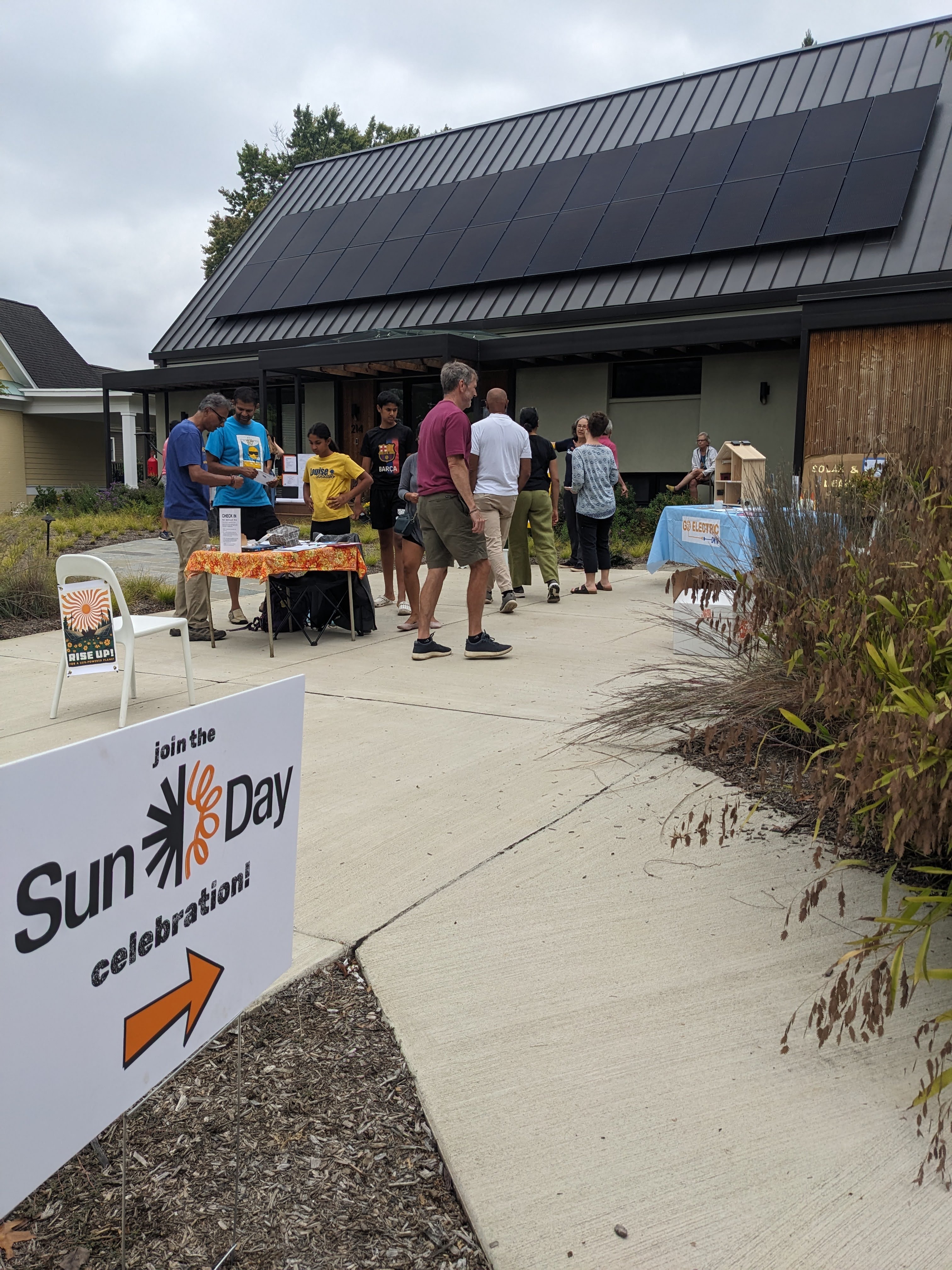
Visitors to a net-zero energy home in Vienna, Virginia learn about solar as part of SunDay, a national celebration of solar energy, on September 21, 2025. Photo courtesy of Meredith Haines.

For solar energy, 2025 is the best of times and the worst of times. It’s the fastest growing energy source in the world and the largest source of new power capacity additions in the U.S. for the fifth year in a row. Even in the absence of tax subsidies, solar is the cheapest source of new electricity in Virginia, and indeed almost everywhere. 

Yet the congressional Republican budget law’s early termination of tax incentives for solar, together with the Trump administration’s determined efforts to restore fossil fuel dominance, make these dark days for the solar industry. The EPA is relaxing pollution standards for power plants and refusing to enforce regulations, and the same law that cut clean energy credits provided tens of billions of dollars in tax subsidies for drilling and mining activities. (What, did you think they wanted to level the playing field?)  

As a result, analysts project a sharp drop-off in solar installations in the coming years, posing a challenge to energy reliability and affordability. With data centers driving up the demand for electricity, the loss of tax credits for solar will mean higher costs for our utilities, and therefore higher utility bills for customers. Virginians who worry about high electricity bills should be very unhappy with the rollback of these incentives. 

How the rollbacks could push solar forward (at least for now)

Ironically, though, the coming end of tax credits has goosed the U.S. solar market in the near term. The industry has never been busier, as companies scramble to get projects completed in time to qualify for the tax credits before they expire. With careful planning, solar developers will be able to stretch tax credit eligibility to cover projects for a few more years, softening the blow for consumers. 

And in the long term, the solar industry feels confident that the technical and cost advantages of renewable energy will win out in America as they continue to do abroad. Politics and policy aside, utility-scale solar is the cheapest, cleanest and fastest-to-build electricity source available in most of the U.S. The technology continues to push efficiencies up and costs down, while protecting Americans from the pollution and fuel costs of coal and gas. With energy storage technologies following the same price trajectory as solar, it is hard to imagine the U.S. willingly turning its back on clean energy for long.

In Virginia, of course, utility solar still faces rural resistance. But having embraced data centers, Virginia will have to find the energy to power them, and price has a way of winning out. 

While the solar industry overall will survive, the loss of federal tax credits is landing hard on the segment that serves homeowners and businesses. The economic case for distributed solar has never been a slam-dunk in Virginia, given the higher costs involved. Now the question is whether it can remain even a reasonable investment.

The Virginia solar industry has grown a lot in the past decade and now includes 199 companies employing close to 5,000 workers, almost double the number employed in coal mining. I haven’t seen numbers specific to distributed solar, but installing solar on rooftops is more labor-intensive than utility solar. More importantly, these jobs tend to be local to Virginia, and most don’t require a college degree. 

Distributed solar is also important to our energy supply and resilience. Sunny rooftops could potentially supply as much as 20% of Virginia’s electricity, yet less than 3% of Virginia homes have solar now, leaving plenty of room for growth. Rooftop solar is also a vital component of community resilience; when batteries are added to solar, buildings can remain powered during storms and other events that take down the wider grid. And of course, solar and batteries can form the basis for virtual power plants that support the grid and reduce the need for utility investments. 

A trifecta of solar success

Three policies have enabled the industry to succeed here, and all three have been subject to attack. The first, of course, is the federal tax credits, which allow owners of solar arrays to recover 30% of project costs through their tax returns. For residential customers, availability of this credit will now expire at the end of 2025. 

The good news is that structuring residential solar installations as leases or power purchase agreements puts projects under a more favorable provision that gives commercial owners of solar panels until July of 2026 to begin construction. This won’t work for everybody, and residential power purchase agreements are currently legal in Virginia only for low-income customers, but it does offer some breathing room. 

The second policy critical for rooftop solar is a Virginia program that lets owners of solar arrays earn money from the sale of solar renewable electricity certificates (SRECs) associated with the electricity they put onto the grid. The Virginia Clean Economy Act (VCEA) requires Dominion Energy Virginia to buy SRECs to meet a small fraction of its renewable energy purchase obligation. Customers with solar who choose to sell their SRECs can offset some of their costs this way, making solar more affordable. (Since SRECs represent the “bragging rights” to solar – the legal right to claim you are powering your home or business with solar – not everyone wants to sell theirs.)

Customers and industry members say, however, that the Virginia SREC market is neither robust nor transparent. The price that Dominion pays for SRECs would have to be substantially higher to overcome the loss of federal tax credits. Some advocates have floated the idea of asking the tech companies to support the distributed solar market through voluntary SREC purchases, which could raise SREC values and help localities build more solar on schools and other public buildings.

A bipartisan-backed bill that Virginia Gov. Glenn Youngkin vetoed this year would have increased the percentage of Dominion’s electricity that must come from distributed solar generation. This would have incentivized more rooftop solar and possibly resulted in higher SREC prices through the normal economics of supply and demand. But so far there is no plan to set a floor on SREC prices.

The third supportive policy for distributed solar is net metering, which ensures that customers of Dominion and Appalachian Power get credited at the retail rate for surplus electricity they supply to the grid. Customers pay the utility only for the net energy they purchase. While this doesn’t make rooftop solar cheaper, it does mean customers don’t actually lose money on their surplus generation, as they would without net metering.

Dominion and APCo have tried repeatedly to undermine net metering, so far without success.

The State Corporation Commission recently rejected a proposal from APCo to replace one-for-one credits with a payment system valuing distributed solar at the utility’s avoided cost for energy – about one-third of retail. The effect on customers would have been severe, making it impossible for most new buyers to recoup the cost of solar panels. In rejecting APCo’s proposal, the SCC cited expert analyses showing that the value of customer-sited solar to the grid and the public equals or exceeds the retail cost of energy. 

Dominion has also filed a proposal to gut net metering in its territory. Its replacement program differs from APCo’s, yet it too results in a greatly reduced compensation rate. The SCC has not ruled on Dominion’s request yet, but it’s hard to see how Dominion could succeed where APCo failed.

Net metering is the rock that Virginia’s rooftop solar industry is built on, so the SCC’s decision preserving the program was critical to the industry’s very survival. Net metered solar will also remain an appealing hedge against rising electricity rates for many people. Still, there is no getting around the fact that losing the 30% tax credit is the kind of blow that can send an industry off a cliff.  

What’s next

What can the industry, or policy-makers, do to counteract the loss of tax credits?

The most obvious step is for the General Assembly to once again pass legislation increasing the requirement for utility SREC purchases (and this time with the governor signing the bill). The bill has other good provisions, like making residential power purchase agreements legal beyond the low-income market, and these will also help the industry. 

Virginia should also consider adopting a streamlined permitting protocol for onsite solar, as states like Florida have done. Some Virginia localities have already adopted automated permitting software, such as SolarAPP+, a free platform developed by the National Renewable Energy Laboratory. Permitting in some other localities, however, reportedly remains so arduous that it adds significantly to costs and delays in installing rooftop solar. 

Speaking of permitting, Virginia could pass a law like Utah’s to allow so-called balcony solar, plug-in solar panels that don’t require professional installation. The kits still require national certification before they can hit the market, however. 

Virginia could devote some emergency preparedness funds to onsite solar and storage at schools and senior centers to make local communities more resilient. These microgrids would save on energy costs for taxpayers and ensure people have a place to go that still has power when the larger grid is down. 

Utilities could once again be tasked with funding solar on low-income housing, as they did in response to Republican-sponsored legislation passed in 2019. Localities could be allowed to require solar panels on parking lots in some new developments, as provided in a bill the governor vetoed this spring. Legislation to increase goals and funding for solar on closed landfills, coal mines and other brownfields would also bring more solar to places where everyone agrees it is welcome. 

Finally, our Department of Energy has done a very good job supporting solar energy through both Democratic and Republican administrations. It could now be asked to convene meetings with the solar industry to plan a pathway to solar on more homes and businesses. They could start with a program of government-backed advertising and outreach to educate more consumers about the value of solar, its cost, and how to hire trustworthy installers. Customer acquisition is one of the biggest costs for solar companies, so reaching potential customers will reduce costs.   

Meanwhile, what can the average resident do? Talk to your elected leaders and candidates and get them to put in pro-solar bills and support the legislation you want to see. If Virginians want more home-grown clean energy,  we need to make it happen.

This article was originally published in the Virginia Mercury on September 25, 2025. It has been updated to correct the date by which construction must commence in order to qualify for federal tax credits.

Unknown's avatar

Five things every Virginia candidate (and voter!) should know about energy

What lights up your life? Photo by Pixabay on Pexels.com

Running for office requires candidates to know about topics they might never have given much thought to. Most Virginia campaigns are won or lost on hot-button issues like taxes, education, reproductive rights, guns and gay marriage, so everyone who runs for office has a position on these questions. This holds true for candidates in this year’s high-stakes races for the state’s executive branch and all 100 House of Delegates seats. 

Inevitably, though, there are topics the average candidate doesn’t completely grasp. Some are narrow and – thankfully – nonpartisan. Where do you stand on Sunday hunting? Should I-81 have more lanes? How do you feel about skill games? Will you vote to save the menhaden, whatever a menhaden is? (It’s a fish, and I encourage you to say yes.)

Other topics affect the lives of every Virginian, but they are, frankly, complicated. One of these is energy. Not only is it hard to get up to speed on energy issues, but technology is changing so rapidly that keeping abreast of developments would be a full-time job. Who would spend that kind of time on such a dreary topic?

Uh, that would be me. 

So here we go: I’m going to cover five things political hopefuls need to know about energy in Virginia before you get to the General Assembly and start passing laws that affect your constituents’ wallets and futures. And for voters, these are things you should ask candidates about before they earn your vote. 

First up:

If you are going to talk about energy, you have to talk about data centers

By now you surely know that Virginia has embraced the most energy-intensive industry to come along since the steam engine launched the Industrial Revolution. Northern Virginia hosts the world’s largest concentration of data centers, which already consume an estimated 25% of the state’s electricity, with massively more development planned. The reason isn’t vacation photos or Instagram cat videos; it’s the competition to develop artificial intelligence (AI).  

After putting tax incentives in place to attract the industry 15 years ago, the General Assembly and the current governor have rejected all attempts to put guardrails on development or make data centers more energy efficient. The subsidies now cost taxpayers a billion dollars per year (and counting). Virginia asks for almost nothing in return. 

Under the best of circumstances, the skyrocketing demand for electricity would put upward pressure on energy prices. But our situation is even worse: Virginia already imports about half our electricity from other states, and the regional grid that we’re part of faces its own energy crunch. 

Grid manager PJM has been so slow to approve new generation that governors from member states, including Virginia Gov. Glenn Youngkin, wrote a letter taking PJM to task and urging it to move faster. But the damage has been done. Supply is tight, electricity prices have risen, and prices will continue to rise unless and until supply catches up.

PJM has decided to fast-track new high-cost, gas-fired generating plants ahead of the cheaper renewable energy projects that make up 95% of the queue. It’s a much-criticized move and seems more likely to increase costs. Once built, fossil gas plants burn a fuel that has doubled in price just over the past year, threatening a repeat of the post-pandemic price surge that Virginia ratepayers are still paying for. And there is no relief in sight, with utilities now having to compete with a doubling of U.S. natural gas exports.

Short of unleashing all the renewable energy stuck in the queue, there is no easy way to protect Virginia residents from higher electricity costs. Dominion Energy, Appalachian Power, and at least one of the electric cooperatives have proposed special rate classes for large-load customers, but that would shield residents from only some of the costs of serving the data centers. 

Utility bills are going up. Dominion Energy is seeking hefty rate increases that would push up residential bills by an average of more than $10 per month in base rates plus almost $11 per month in fuel costs, primarily due to those higher natural gas prices. Coal-heavy APCo has seen even steeper rate increases in the past few years.

Virginia needs new legislation ensuring data centers bear the full expense and risks of serving Big Tech, and they should be required to source their own clean energy. Localities, meanwhile, must be required to evaluate the costs to all Virginians before they issue permits to data centers, including considerations like where the energy will come from, water impacts, and the siting of transmission lines.  

You can’t get from here to there without solar

Virginia wasn’t producing all of its own energy even before the data center rush, and PJM’s problems are now pushing us into a crisis. Our near-term options are limited; new data centers are breaking ground at a breathtaking rate, and only solar can be installed on the timeline needed to prevent an energy shortfall. Even if we were willing to pay for high-priced gas or nuclear plants, developers face a backlog of as long as seven years for gas turbines, and advanced nuclear is still not commercially viable. 

Fortunately, solar is not just the fastest energy source to deploy, it’s also the cheapest and cleanest. Though President Donald Trump blames rising electricity prices on renewable energy, that’s false, just one of many myths the fossil fuel industry has propagated against solar. Nor is solar unreliable, another myth. When solar is paired with battery storage, it can match the rise and fall of demand perfectly.

It’s true, however, that while the great majority of Virginians support solar energy, many rural residents oppose it on aesthetic grounds. Of course, they would also oppose nuclear reactors and gas fracking in their neighborhoods. Legislators should  be sensitive to their concerns – but having chosen to welcome data centers, Virginia leaders can’t just shrug off the need for energy.

We also have to recognize that many farmers need to lease their land for solar in order to keep the land in their family and generate stable income. This should be as important a consideration to lawmakers as the objections of people who aren’t paying the taxes on the farm. Preventing landowners from making profitable use of their land is more likely to lead to the land being sold for development than to it remaining agricultural. 

The good news is that solar panels are compatible with agricultural uses including livestock grazing, beekeeping, vineyards and some crops. Dominion Energy uses sheep instead of lawnmowers at several of its solar facilities in Virginia and plans to expand the practice. The combination is a beautiful synergy: sheep and native grasses improve the soil, and in 30 years when the solar panels are removed, the land has not been lost to development.

While there is no getting around the need for utility-scale solar projects, rooftop solar also has an important role to play. In addition to harnessing private dollars to increase electricity generation, distributed solar saves money for customers and makes communities more resilient in the face of extreme weather.

This year the governor vetoed a bill to expand the role of distributed solar in Virginia. The legislation had garnered strong bipartisan support, so it will likely pass again next year. However, lawmakers will need to go further to encourage customer investments in solar now that federal tax credits will be eliminated for residential consumers at the end of this year.  

Batteries: For all your reliability needs

The fastest-growing energy sector today is battery storage. Batteries allow utilities to meet peaks in demand without having to build gas combustion turbines that typically run less than 10% of the time. Batteries also pair perfectly with intermittent energy sources like wind and solar, storing their excess generation and then delivering electricity when these resources aren’t available.  

Battery prices have tumbled to new lows, while the technology continues to improve. Most lithium-ion batteries provide 4 hours of storage, enough to meet evening peak demand with midday solar. When renewable energy becomes a larger part of Virginia’s energy supply (it’s less than 10% now) we will need longer term storage, such as the iron-air batteries that are part of a Dominion pilot program. This year the governor vetoed a bill that would have increased the amount of storage our utilities must invest in. Given the increasing importance of batteries to the grid, the legislation will likely be reintroduced next year.

Batteries installed at homes and businesses can also play a vital role in supporting the grid. Alone or combined with distributed solar, smart meters and electric vehicle charging, customer devices can be aggregated into a virtual power plant (VPP) to make more electricity available to the grid at peak demand times. Dominion will be developing a VPP pilot program under the terms of legislation passed this year. 

Advanced nuclear is still in Maybeland

The enormous expense of building large nuclear plants using conventional light-water technology has made development almost nonexistent in this century. Proponents believe new technology will succeed with scaled-down plants that can, in theory, be standardized and modularized to lower costs. Many political and tech leaders hope these small modular reactors (SMRs) will prove a carbon-free solution to the data center energy problem. 

It’s hard not to think they’re kidding themselves, or maybe us. Dominion Energy and Appalachian Power plan to develop one SMR each, with Dominion shooting to have one in service in 2035. Not only is this too late to meet today’s energy crunch, but a single SMR would add less energy to the supply side than new data centers add to the demand side each year. Virginia still needs near-term solutions, which means solar and batteries. 

Industry enthusiasts believe the 2035 timeline can be shortened, while critics say SMRs may never reach commercial viability. SMRs have to be able to compete on cost with much cheaper renewable energy, including wind, solar and emerging geothermal technologies, and cost parity is a long way off. The economic case for nuclear reactors also requires that they generate power all the time, including when the demand isn’t there, so SMRs need batteries almost as much as renewable energy does.

Finally, radioactive waste remains a challenging issue, as much (or more) for SMRs as for legacy nuclear plants. The U.S. has never resolved the problem of permanent storage, so nuclear waste is simply kept onsite at generating stations. The risk of accidents or sabotage makes it unlikely that communities will accept SMRs in their midst, especially if the idea is for SMRs to proliferate on the premises of privately-owned data centers near residential areas statewide.  

A nuclear technology with less of a waste problem is fusion energy. A fusion start-up plans to build its first power plant in Virginia in the “early 2030s,” if the demonstration plant it is building in Massachusetts proves successful. While fusion would be an energy game-changer, there are so many uncertainties around timeline and cost that only an inveterate gambler would bet on it helping us out of our predicament. 

Pretending climate change isn’t real won’t make it go away

We don’t have to talk about climate change to make the case for transitioning to carbon-free renewable energy, but global warming hovers in the background of any energy debate like an unwanted guest. If you need a primer or are even slightly tempted to say you “don’t know” whether human activity is responsible because you’re not a scientist, read the Intergovernmental Panel on Climate Change’s summary for policymakers. The continued habitability of the planet is too important for ignorance to be an acceptable dodge – and of course you, as a respectable candidate, would never stoop to such a thing.

Virginia codified its own action plan in 2020 with two major laws. One provides for the commonwealth to participate in the Regional Greenhouse Gas Initiative (RGGI), a multistate compact that uses auctions of carbon emission allowances to incentivize a shift away from fossil fuels and raise money for energy efficiency and climate adaptation. After taking office in 2022,  Youngkin removed Virginia from RGGI – illegally, as a court ruled. Virginia remains outside RGGI while the appeals process continues. 

The second law is the Virginia Clean Economy Act (VCEA), which creates a pathway for Dominion and APCo to transition to carbon-free electricity by 2050. The VCEA includes provisions requiring Dominion and APCo to invest in renewable energy, storage and energy efficiency and make renewable energy an increasing portion of their electricity supply. 

The VCEA contains special provisions for offshore wind, which I haven’t addressed here because  Trump is determined not to allow projects to move forward while he is in office. This is a shame, as there is bipartisan support in Virginia for this industry and the huge economic development opportunities that come with it. Still, Virginia’s Coastal Virginia Offshore Wind (CVOW) project is 60% complete and will start delivering power next year. Eventually, hopefully, it will be remembered as the first of many.

The VCEA also prohibited new investments in fossil fuel plants except under certain conditions. Dominion is currently seeking permission from the State Corporation Commission to build a $1.5 billion, fossil gas-fired peaker plant, citing data center demand and a need for reliability. Local residents, environmental organizations and ratepayer advocates oppose the plant and filed expert testimony showing that solar, storage and other less expensive technologies would better serve consumers.

In what passes for a bombshell in the energy space, Dominion was forced to admit last month that it had not obtained an independent review of the bid process before selecting its own gas plant over resources offered by third-party bidders.

“No regrets” solutions are progressive and conservative

As you’ve probably figured out by now, there is no perfect power source available today. And yet we would need new generation even if we stopped data center construction cold in its tracks – which isn’t in the plans. Solar is the cheapest, cleanest, and fastest source of generation, allowing us to preserve land – and keep options open – for the future. If the data center boom goes bust, having surplus clean energy on the grid will let us eliminate dirty sources faster, while saving money. 

Who would run against that?

First published in the Virginia Mercury on September 15, 2025.

Unknown's avatar

In Puerto Rico, customers are helping to keep the lights on. Could a Virginia program do the same?

 Rooftop solar panels are helping generate electricity after Hurricane Maria destroyed much of the island electrical infrastructure. (Photo by Aaron Sutch/Solar United Neighbors)

Back in 2017, a hurricane destroyed Puerto Rico’s power grid. The island struggled to rebuild it, with limited success, and continues to experience a severe electricity shortage and frequent power outages. Customers and nonprofits have stepped into the void, installing solar panels on rooftops all over the island and backing them up with batteries. Today, 175,000 households have solar — about 1 in 7  – and at least 160,000 of those also have battery backup. Thousands of new installations go in every month.

The solar and batteries don’t just secure electricity for the customers who install them. Through programs like one managed by the solar company Sunrun, Puerto Rico’s grid can draw on the batteries to provide power in times of emergency, reducing the frequency and duration of power outages for everyone. 

Last month, as hurricane season got underway again, Puerto Rico’s grid operator announced it had reached a “major energy milestone.” In a statement posted on X, LUMA Energy said it “successfully dispatched approximately 70,000 batteries, contributing around 48 MW of energy to the grid.” That’s about as much as a gas peaker plant, with no need for fuel.

Puerto Rico’s experience shows how residents and businesses no longer need to be passive energy consumers. With a well-designed program they can play an active role in keeping the lights on in their communities, and get paid for it. 

This customer participation creates what is called a “virtual power plant” (VPP), sometimes also called a community power plant. The VPP may use battery aggregation, as in Puerto Rico, or demand reduction measures like temporary adjustments to smart thermostats or shifting electric vehicle charging to off-peak times. The more these measures are combined, the bigger the benefit to the grid, and the less a utility needs to invest in new generation to meet peaks in demand. 

VPPs offer such promise that this year Virginia’s General Assembly directed Dominion Energy to develop a pilot program for its customers, to be overseen by the State Corporation Commission. 

HB2346, from Del. Phil Hernandez, D-Norfolk, calls for a program of up to 450 MW to “optimize demand” with distributed energy resources, mainly batteries but also smart thermostats, electric vehicle charging and non-battery storage (e.g., electric hot water heaters). The proposal, due to be filed with the SCC by December 1, must include incentives for at least 15 MW of residential batteries. The legislation calls for stakeholder participation in the development of the VPP, with opportunities for public input. 

Dominion is also tasked with expanding the electric school bus program it began in 2019, which allows the utility to make use of school bus batteries at times of the day when the buses are not needed to transport children. As of March of 2024, Dominion had 135 electric buses in the program, spread across 25 school districts in Virginia. 

The impact of VPPs can be significant. This summer, California’s grid operator conducted an experiment to determine how much customer batteries could contribute to the needs of the grid. More than 100,000 residential batteries across California delivered an average of 535 MW of power from 7 to 9 p.m. on July 29, an output equivalent to that of a coal plant. 

Many other states are also using VPPs. Some are limited to solar-powered battery aggregation, like Xcel’s Colorado program and a new Texas program, while others involve demand response programs using smart appliances – anything that can be turned off and on remotely for short periods. In Michigan, DTE pays electric vehicle owners to charge at off-peak times, while Arizona Public Service’s VPP pays customers for the ability to access their smart thermostats to reduce peak demand.

Vermont’s Green Mountain Power runs two popular battery programs, one for people who own their own batteries and the other that leases batteries to customers. Both allow the utility to draw on the batteries when the power grid requires more capacity. 

While Virginia has not had a VPP program before, appliance-based demand response will be familiar to residents who opted into Dominion Energy’s “Smart Cooling Rewards” program.  Participants allowed the utility to remotely turn their air conditioners on and off for a few minutes at a time on hot days in exchange for an annual $40 payment. This helped the utility shave peak demand without affecting residents’ comfort. 

Dominion ended the cooling rewards program in 2022 and now offers a “Peak Time Rebate” program that rewards customers for reducing energy use during certain times of high energy demand. This program, however, requires residents to take affirmative measures themselves, like adjusting thermostats and delaying laundry. A well-designed VPP program, by contrast, takes the burden off the individual.

Josephus Allmond, a lawyer with the Southern Environmental Law Center who helped to craft the Virginia VPP legislation, told me in an email that he expects school buses and smart thermostats will make up most of Dominion’s program initially, but he’d like to see the residential battery component grow significantly from the initial 15 MW. Even 100,000 aggregated residential batteries would be a minor share of Dominion’s 2.8 million residential accounts, he pointed out.

I emailed Nathan Frost, Dominion’s general manager for new business and customer solutions, to ask for more information about the VPP program. Frost replied only that Dominion is “actively developing our VPP framework and will be engaging stakeholders soon.”    

Stakeholders, including customers themselves, are likely to have a lot to say. Clean energy advocates have long urged that VPPs, distributed generation sources and microgrids can contribute to a more efficient, secure and resilient grid, at less cost to everyone. 

No doubt recentering the grid around customers is too tall an order for a monopoly utility with a profit model based on centralized generation. But from what we’ve seen in Puerto Rico, California and elsewhere, harnessing even some of the power of customer-owned resources is a worthwhile project whose time has finally come.

This article was originally published in the Virginia Mercury on September 2, 2025.

Update: on September 15, Dominion sent this note:

Dominion Energy Virginia is preparing to file a virtual power plant (“VPP”) pilot proposal by December 1, 2025, pursuant to House Bill 2346 and Senate Bill 1100.  As part of this effort, Dominion Energy Virginia is seeking stakeholder input.  Please visit our website at https://www.dominionenergy.com/vpp.  The website contains an overview of the legislation, a timeline, an informational webinar about VPPs and the Company’s plan, and additional information.  We encourage all interested stakeholders to review the materials posted on the website and provide feedback through the link on the website by October 6, 2025.

If you have questions, please contact virtualpowerplant@dominionenergy.com

Unknown's avatar

The SCC serves up a nothingburger

Dominion Energy headquarters, Richmond, VA

When Dominion Energy Virginia filed its latest integrated resource plan (IRP) last fall, critics (including me) complained that the company failed to lay out a cost-effective approach that would meet soaring energy demand from data centers while complying with Virginia’s decarbonization mandate. We hoped regulators at the State Corporation Commission would reject the IRP and demand better of our largest utility.

Instead, they chickened out. 

The SCC’s final order, issued July 15, is short but not really to the point. The order finds Dominion’s IRP “legally sufficient,” while citing previous SCC orders for the proposition that “acceptance” doesn’t mean approval “of the magnitude or specifics of Dominion’s future spending plans.” It would be hard to imagine a less enthusiastic endorsement, and the lack of analysis leaves advocates wondering, where’s the meat?

It’s true that an IRP is “only” a planning document; it doesn’t commit a utility to carrying out the plan, and the SCC still has to approve any project the utility decides to move forward with. But the point of the exercise is to ensure utilities are on the right track; that their demand projections are on target and their plans for meeting demand are realistic, cost-effective and comply with all relevant laws. This needs discussion and analysis, not merely an up-or-down vote.

Admittedly, the SCC has a long history of approving lousy IRPs while directing Dominion to do a better job the next time. That was the case here, too, with the order directing Dominion to do a few things differently in its next IRP, due in the fall of 2026. 

First, the SCC wants to see a 20-year timeline instead of the 15-year period that Dominion used this year, which is all the law requires. It’s an obvious ask, even apart from the fact the SCC cites that the regional grid operator PJM uses a 20-year planning window. A better reason is that we are just 20 years away from Dominion’s 2045 deadline for full decarbonization under the Virginia Clean Economy Act (VCEA), and anything the utility does now will have consequences extending out to that deadline. 

The SCC also neglected to mention that using just a 15-year window, and omitting the 25-year planning period that Dominion included in previous IRPs, allowed the company to avoid showing the economic consequences to consumers of spending money for fossil fuel generation that either will shut down or may become economically obsolete by 2045, long before the plants are paid off. If Dominion thinks it can justify sinking customers’ money into assets it knows will become stranded, we all deserve to see the rationale. 

The order also directs Dominion to include in its modeling at least one pathway that complies with the requirement of the VCEA that carbon-emitting facilities (including any new gas plants) be retired by 2045. This goes beyond obvious: the lack of a VCEA-compliant plan should have prompted the SCC to reject the IRP outright. 

But of course, Dominion claims new gas plants are needed for reliability, which would make them legal under the VCEA in spite of their carbon emissions and questionable long-term viability. Reliability is a red herring, as I’ve argued, and other parties to the IRP case modeled how Dominion can meet demand without building new fossil fuels. Dominion should have been required to prove its case.

But here again, the SCC chose not to engage on the issue. Requiring Dominion to do better next time is as far as it is willing to go. This is unfortunate, but the silence can’t last: in March, Dominion filed for approval of the first of its planned new gas plants. The SCC will have to address need and reliability to make a decision in that case, and it would have been better for all concerned if it had grappled with these questions now.

The order falls short in other ways, as well. While the SCC expresses concern about forecasted rate increases, it doesn’t even mention the data centers that are driving the problem. 

This is astonishing; even before Dominion filed its IRP last fall, the commission ordered the company to supplement the record with an analysis of data center impacts. When Dominion did so, it became clear that all of the load growth (and likely, much of the projected rate increases) results from this one industry. It’s beyond strange that the SCC does not even mention the supplement it ordered, or discuss whether Dominion’s duty to serve truly prevents it from protecting existing customers.

The order also accepts Dominion’s argument that it had to artificially limit the amount of low-cost solar it could include in its modeling, due to the increased difficulty of siting solar projects in Virginia. It’s true that many rural counties have been denying permits to solar projects, even as they approve data centers. But I’ve also heard a Dominion lobbyist tell legislators that permit denials have not been a problem for the company, an assertion that may have persuaded some legislators to vote against bills that would make solar siting easier. It appears Dominion tells legislators one thing and the SCC another. 

The SCC’s order contains a few other requirements for the next IRP, mostly things that really should have been included in this one. The IRP should model Virginia’s return to the Regional Greenhouse Gas Initiative, reflecting a Virginia court’s ruling that Gov. Glenn Youngkin’s withdrawal was unlawful. The IRP should assume Dominion achieves the energy efficiency targets that the SCC itself established for the company. Dominion should include an analysis of impacts on base rates and should share its modeling with utility watchdog Clean Virginia, as well as run modeling based on SCC staff inputs. Long-duration storage, a maturing technology that can replace gas combustion turbines, should be included in the next modeling.

“Do better next time” is a well-worn directive from the SCC to Dominion, but it is deeply disappointing at a time when Virginia is facing an unprecedented surge in demand from data centers and accompanying increases in utility rates. 

It’s disappointing in another way, too: this is the first major ruling from the SCC since two new judges were added to the three-member commission, and all three were appointed by a Democratically-controlled Senate. If there was ever a time for the SCC to get tough with Dominion on its climate obligations, this should have been it. 

No doubt, the problem lies in Dominion’s influence over the entire process. The utility doles out exceedingly generous campaign donations to members of both parties, so the company retains influence no matter who is in power. Not only does this give Dominion sway over who is appointed to the SCC, but commissioners have to be mindful that getting reappointed at the end of their six-year terms depends on how satisfied these Dominion-backed senators are with their rulings. 

As long as Dominion is allowed to shower senators with unlimited campaign cash, the SCC will never be free of the utility’s pernicious influence. 

Meanwhile, though, Dominion’s poor performance, and the SCC’s unwillingness to call it out, demonstrate the necessity of the comprehensive IRP reform legislation that the governor vetoed this spring. The Commission on Electric Utility Regulation is already working on similar legislation for the next session. 

Passing the IRP reform bill may not inject the SCC with greater courage, but it will ensure the commission, and the public, get a fuller look at the facts.

This article was originally published in the Virginia Mercury on July 21, 2025.