Unknown's avatar

How Gov. Spanberger and a Democratic majority can make energy more affordable

An aggressive legislative agenda this year will demonstrate national leadership on managing the data center buildout while delivering climate, health and economic benefits to all Virginians
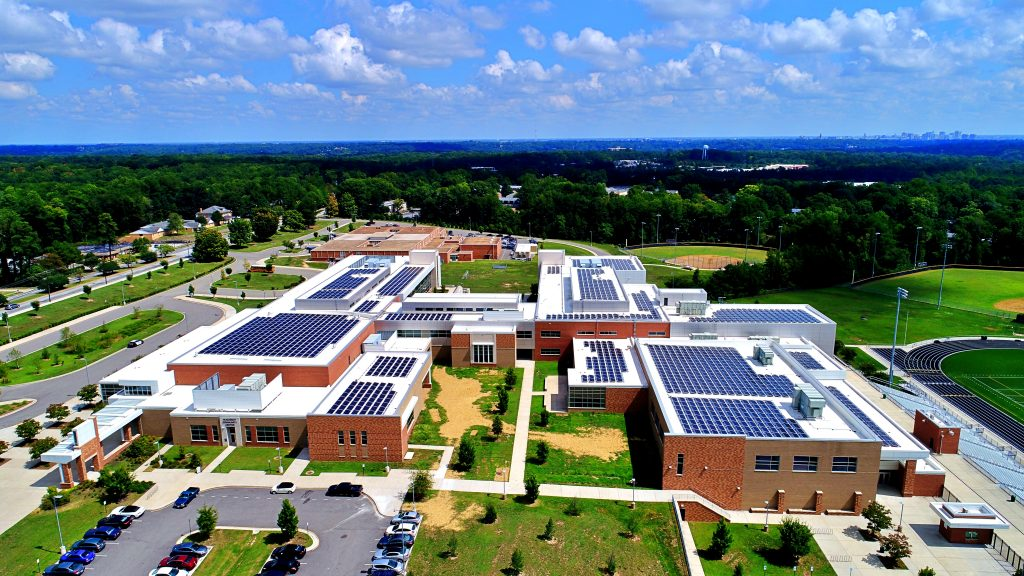
Solar on schools and other public buildings reduce pressure on the grid while saving money for taxpayers. Photo courtesy of Secure Solar Futures LLC

If Virginia’s election last month was more than an unleashing of anti-Trump sentiment (and it definitely was that), it was about affordability. Governor-elect Abigail Spanberger made the cost of living the focus of her campaign, frequently mentioning high energy bills. House Democrats, whose majority has been boosted by the addition of 13 new members of their party, are also expected to focus on these bread-and-butter issues. 

In Virginia, the cause of these high bills is not hard to identify: Data centers are driving up demand well beyond the available supply, and high fossil fuel prices are pinching a state that relies on natural gas for most of its electricity. Spanberger has committed to making data centers “pay their fair share,” and both she and legislators will be looking for other opportunities to lower costs.

The bad news is that adding ever more data centers across Virginia means the upward pressure on electricity prices will continue. If the governor and legislators don’t want to kick tech companies to states with spare capacity, and if the administration of President Donald Trump continues to throttle the energy supply with its war on wind and solar, lowering energy costs in the near term likely isn’t possible. 

Even so, there is a lot that Spanberger and the General Assembly can do to protect residential consumers from these higher prices. 

Making data centers pay their fair share means more than tweaking rate structures. Several Virginia utilities have created special rate classes for large load users like data centers. The utilities will require data center operators to sign long-term contracts committing them to paying for a large percentage of the electricity and transmission they say they need, even if they don’t end up using that much or leave the Virginia market prematurely. 

These new tariffs can help protect other customers from some – though not all – of the risk involved in serving data centers, but they don’t address the “fair share” issue. The current allocation of transmission costs, with residential ratepayers picking up most of the tab for new lines that don’t benefit them, needs to change. If the SCC determines it doesn’t have authority to do that on its own, the General Assembly and Spanberger should pass legislation to make it happen. 

The harder problem is how to make residents whole for rate increases that result from data centers gobbling up all available power. The supply and demand problem has been compounded by a lot of bad decisions, with plenty of blame to go around. The federal government has driven up fossil fuel prices by allowing the export of increasing amounts of natural gas, while hindering and even blocking solar and offshore wind projects that could make up the deficit. 

Outgoing Gov. Glenn Youngkin is to blame for illegally pulling Virginia out of the Regional Greenhouse Gas Initiative (RGGI), removing the market incentive for Virginia utilities to increase investments in low-cost renewable energy instead of burning expensive fossil fuels. (His promotion of the false narrative that gas is “cheap” doesn’t help.) 

Virginia utilities share the blame for relying too much on natural gas and high-priced electricity imported from other PJM states. And grid operator PJM is to blame for failing to approve enough new generation, including wind and solar facilities that make up the vast majority of projects waiting for approval to interconnect.

This history leaves Spanberger with a fine mess. Keeping prices in check now requires two things that can actually be accomplished during the next four years: a greater buildout of solar generation and energy storage to get more capacity on the grid; and investments in energy efficiency and rooftop solar to take pressure off the demand side.    

Solve utility solar siting with agrivoltaics. Virginia needs more energy, and solar is the only source that can be built quickly. Yet one of the knottiest problems confronting the General Assembly in the past few years has been the rise of anti-solar sentiment in rural counties. 

Landowners who want to lease their property for solar, or even to install arrays for their own use, find themselves stymied by opposition from neighbors who don’t like the look and are able to persuade county boards to deny permits. As we’ve seen, sometimes denial of a solar permit even follows approval of an energy-sucking data center.

Last year the General Assembly came close to passing a bill that would require solar developers to implement industry best practices. Passing legislation like that this year will address the legitimate concerns of localities around controlling erosion and maintaining native plant buffers. But more can be done to make solar look and function like a normal part of Virginia’s agricultural economy.

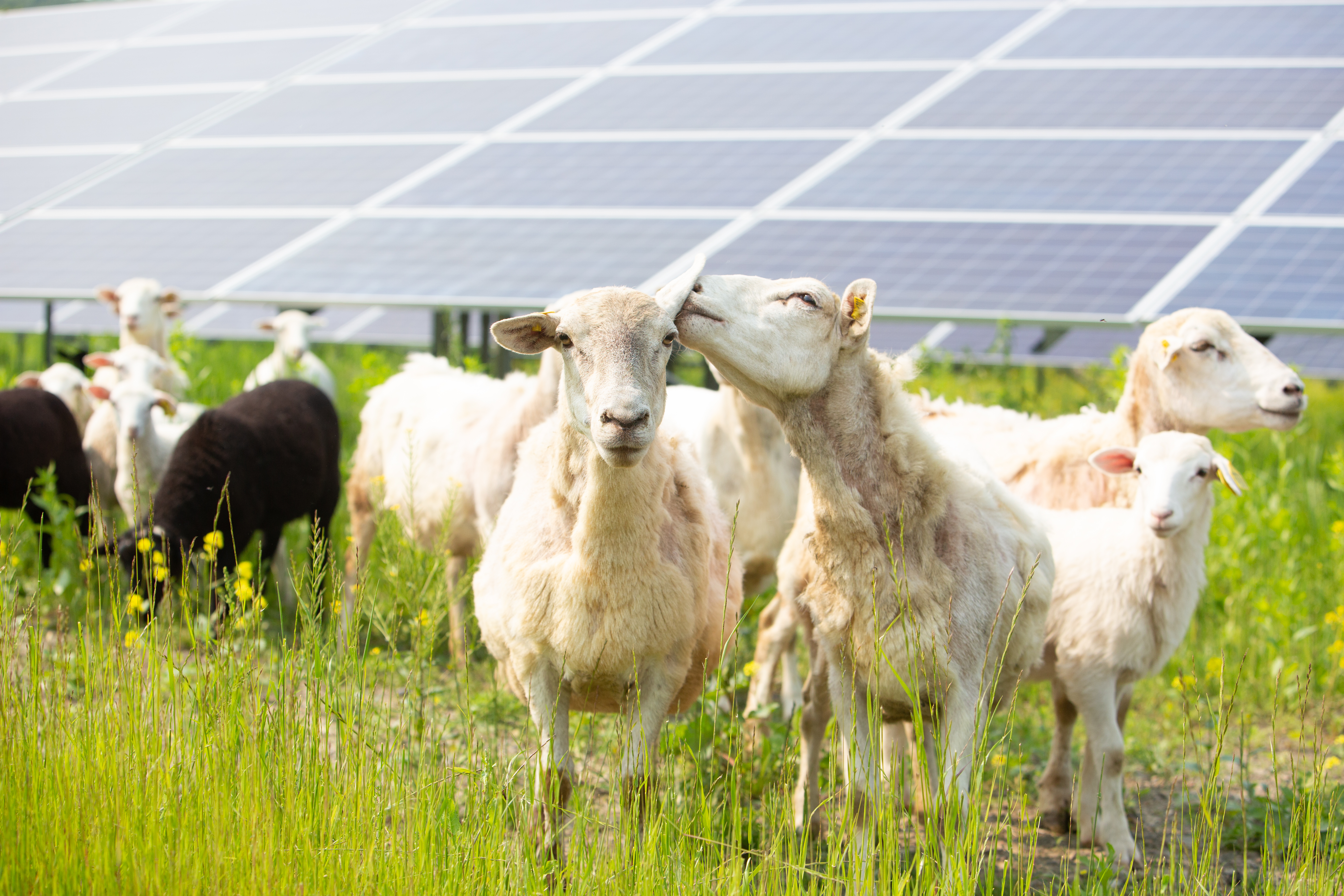
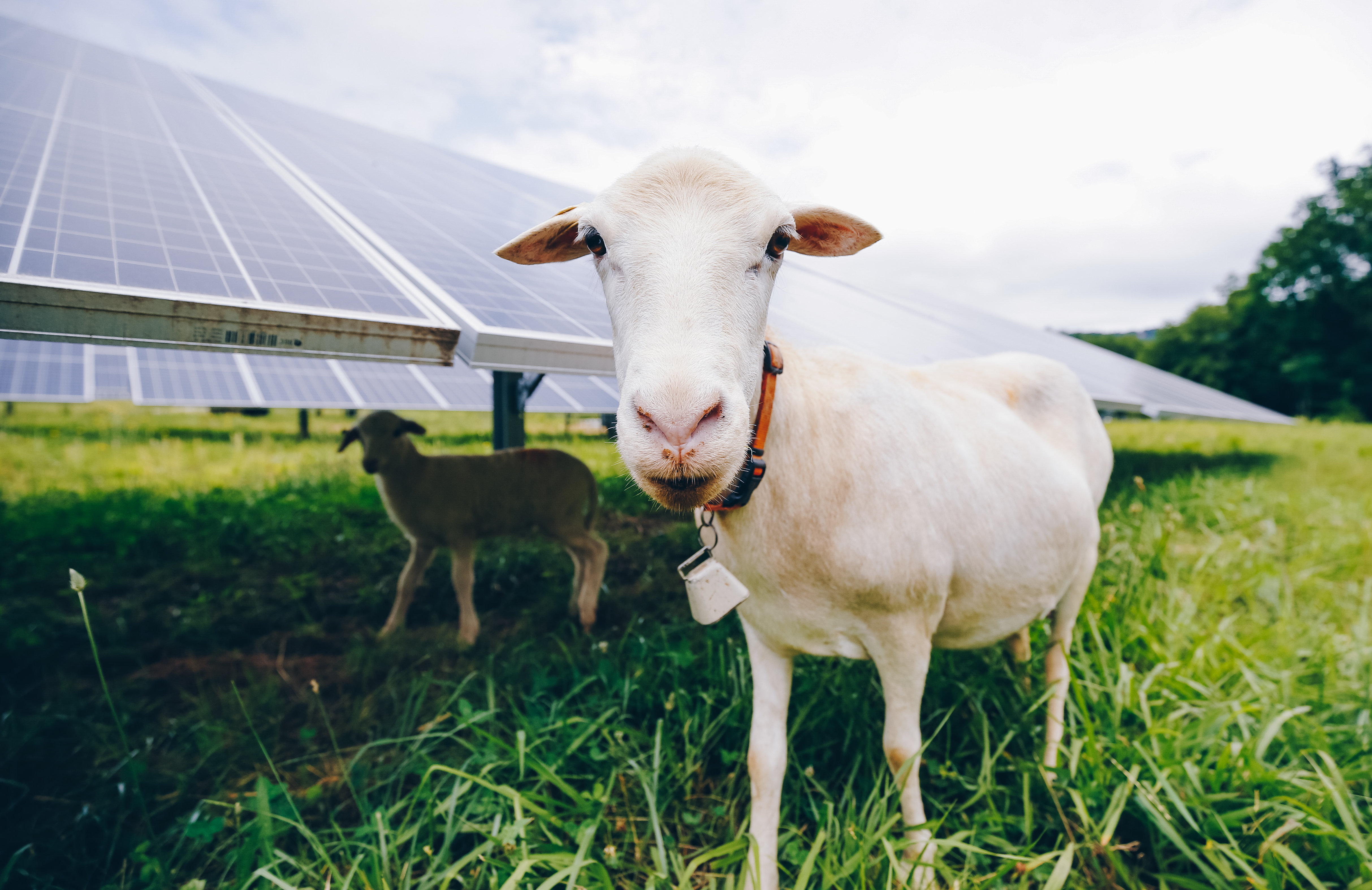
Already, solar facilities have become integrated with agriculture, as sheep and sometimes cattle take over vegetation management and farmers learn which crops do well growing between rows of solar arrays. It’s a trend that offers benefits to the land and the community alike. Farmers are struggling; solar can provide a stable income while protecting land from permanent development and putting much-needed energy on the grid. 

Businesses are ahead of public policy on this. Virginia-based Gray’s Lambscaping manages vegetation with over 800 sheep at solar farms across the state, and the company plans to grow to over 5,000 sheep by the end of this year. Meanwhile, solar panels have proven compatible with a wide range of food crops.  

Virginia should take a leading role in expanding agrivoltaics. Virginia law already recognizes the right to farm as an exception to localities’ authority over land use decisions, and this should be extended to farmers who put solar on their land, as long as they are also using the same land for traditional agricultural practices like grazing and crops. 

Install solar on new public buildings and schools. Heck, put it everywhere.  In the past ten years or so, Virginia’s commercial solar sector has blossomed while saving taxpayers money. To date, an estimated 150 Virginia schools have installed solar panels, saving schools about 25% on their energy bills. Solar on every sunny school rooftop would add up to more than 1,000 MW of carbon-free generation. Extend the effort to the roofs of all suitable public buildings across the state, and that number can go much higher. 

Dominion and APCo have long tried to squelch competition from rooftop solar, a war that looks increasingly foolish as Virginia finds itself short on energy for all customers. Earlier this year Congress drastically accelerated the phase-out of solar tax incentives, but the savings remain available for commercial and utility-scale projects for the next two years. There is no shortage of good ideas out there to be acted upon. Spanberger and legislators should take full advantage of that opportunity to install as much solar as possible. 

Battery storage at data centers does triple duty. While solar is the cheapest, cleanest, and fastest way to generate power, it needs batteries or other forms of energy storage to make it into a 24/7 resource, and storage remains relatively expensive. For tech companies, however, the calculus makes more sense.

Data centers need backup power anyway; they typically have three layers of redundancy so that they never risk losing power when the grid goes down. Today the backup power is mostly provided by massive diesel generators, sometimes three times as many as they might actually need. Most of these have no pollution controls and are therefore not supposed to run except in emergencies and for testing and maintenance. That’s sill a lot of run time — and DEQ is proposing to make matters worse by expanding the definition of “emergency” to include scheduled outages.

Some tech companies are now installing generators with selective catalytic converters that produce fewer emissions. The catch is that these can legally be used in non-emergency situations, raising the possibility that they might be used for demand-response or peak shaving. In effect, data centers would be solving the peak demand problem with one of the dirtiest forms of energy. The cumulative effect on air quality could be worrisome, and Virginia’s carbon footprint would grow at a time when the law says it should be shrinking. 

What if, instead of diesel generators, data centers installed storage as their first line of defense against power outages, leaving diesel generators to be used only in the rare case of extended grid outages? Air quality would benefit, carbon emissions would decrease, and the data centers would have the backup power they need. The tech companies would pay more upfront but could be compensated by utilities for using their storage capability for grid services and demand response, lowering their draw from the grid at peak demand times. 

All the data centers in Virginia today use 6 gigawatts of power. That much storage would exceed the targets set in the VCEA for Dominion and APCo combined.  Even limiting the requirement to two hours of storage at new data centers would bring enough storage online quickly to eliminate the expensive demand peaks that drive the high price of energy.  

Require data center operators to source their own zero-carbon electricity. Most of the tech companies have sustainability commitments that they aren’t meeting, so it isn’t asking too much of them to put them in charge of this effort. Legislation to require this as a condition of accepting Virginia’s generous tax subsidies has been defeated for the past two years. The difference this year is that rising energy prices are now affecting everyone. 

Under this proposal, the zero-carbon electricity doesn’t have to come from Virginia, as long as it is available to customers here. Maybe the tech companies could even tap into their considerable influence with the Trump administration to make electricity more plentiful and affordable by reversing its war on solar and wind energy.

Why, after all, should Virginia residents sacrifice for the richest corporations in the world? If “paying their fair share” means anything, it should mean that data centers, not residents, bear the costs of making enough energy available to Virginia, and complying with our clean energy mandate.

Lower demand with energy efficiency and distributed solar. The gap between energy supply and demand does not have to be filled entirely through supply-side solutions. Lowering demand should also be part of the solution. Virginia utilities, Dominion in particular, have done a poor job of running energy efficiency programs. Looking on the bright side, though, that means plenty of opportunities remain.

House Democrats have already started work on this issue, with a focus on lowering winter heating costs for lower-income households. As reported in the Mercury last week, HB 2, from Farifax Del. Mark Sickles, requires Dominion and APCo to make their “best, reasonable efforts” to provide energy efficiency and weatherization to 30% of income-qualified customers by the end of 2031. HB 3, from  Del. Destiny Levere Bolling, D-Henrico, sets up a task force to study income-qualified energy efficiency and weatherization.  

These steps are okay for starters, and they would be juiced by the influx of money from RGGI carbon auctions (see next section), earmarked for low-income energy efficiency. But Dominion has repeatedly failed to meet the energy efficiency targets the legislature sets for it, and after all, why stop with 30% of low-income customers when all households could benefit from more comprehensive programs? Virginia can do much better.  

My last column discussed Rewiring America’s proposal to have tech companies pay for heat pumps, solar and batteries in the residential sector, saving money for households and freeing up capacity for data centers to come online sooner. An independent provider could run the program and verify the energy savings.  

(If the tech companies complain that an awful lot of the solutions I’m proposing come at their expense, it’s true. But the industry benefits from a state tax subsidy that has reached nearly a billion dollars per year, and will only grow further as the number of data centers doubles and triples. They can afford to give back.) 

Use RGGI for long-term affordability. Gov.-elect Spanberger has committed to seeing Virginia rejoin the Regional Greenhouse Gas Initiative (RGGI), the compact of northeastern states working to lower carbon emissions by 30% by 2030. RGGI works by requiring owners of carbon-emitting generating plants to buy carbon allowances at auction, penalizing carbon-intensive generation and rewarding investments in zero-carbon facilities like wind, solar and nuclear. States collect the auction proceeds, which in Virginia are dedicated to low-income energy efficiency and climate adaptation measures.

Republicans have already renewed their attacks on RGGI, calling it a tax on energy consumers. To the extent that’s true, it’s a tax mostly paid by the largest consumers (including data centers) for the benefit of low-income residents and people most vulnerable to storms and sea level rise. Moreover, all energy consumers benefit over the longer term as low-cost clean energy increasingly replaces expensive fossil fuels. 

Beef up efficiency standards in the residential building code. Most people who buy a new home assume that modern building codes incorporate the latest standards for insulation and efficient technology. In Virginia, they do not. Buyers would be dismayed to learn that their homes are costing them more on their utility bills than they saved on a purchase price supposedly made more affordable by poorer-quality insulation and appliances. Buyers are rarely consulted on these trade-offs, and few have the expertise to question a builder’s choices. Building codes are supposed to do that job.

Unfortunately, Virginia’s Board of Housing and Community Development, which writes the code, is dominated by the homebuilding industry. The industry wants to build homes as cheaply as possible to ensure the highest profit possible on the homes it sells. Even as national model code standards have become more rigorous, homebuilders have protected their own interests by keeping weak energy efficiency requirements in Virginia’s residential building code. 

In 2021, Virginia adopted legislation requiring the board to consider and adopt energy standards “at least as stringent as” the latest national model code standards when the benefits over time to residents and the public exceed the incremental costs of construction. But the board simply didn’t do it. Will this be the year legislators realize that a board dominated by the industry it regulates won’t act in the public interest without explicit directions? 

This is Virginia’s moment. Since the passage of the Virginia Clean Economy Act in 2020, renewable energy and storage have only gotten cheaper, while energy efficiency opportunities remain plentiful. Coal has solidified its place as the most expensive baseload source, and fossil gas remains stubbornly expensive compared to solar. Spanberger and the Democratic majority have an opening this year to go big on clean energy. An aggressive legislative agenda this year will demonstrate national leadership on managing the data center buildout while delivering climate, health and economic benefits to all Virginians.  

This column was originally published in the Virginia Mercury on December3, 2025.

Unknown's avatar

DEQ’s proposal to end the solar wars makes lemons out of lemonade

Wildflowers in front of solar panels illustrate pollinator plantings around solar panels
Who says solar can’t be an asset to the land? Photo credit Center for Pollinators in Energy, fresh-energy.org

It’s a problem that divides communities and stymies lawmakers: Virginia’s transition to clean energy depends on building thousands of acres’ worth of large solar facilities, but a backlash from some rural neighbors makes siting projects increasingly difficult. 

Most of the objections are aesthetic – few people prefer to look at rows of solar panels if they once enjoyed a bucolic country scene – but some opponents say they worry about the loss of farmland and trees. Solar, they fear, is bad for the land as well as the eyes. It doesn’t help that some early solar development suffered from corner-cutting that resulted in soil compaction and erosion. If that is solar, many people want no part of it.

In 2022, land conservation groups banded together with agriculture and logging interests to lobby for legislation requiring mitigation whenever a solar project would disturb more than 50 acres of forest or 10 acres of “prime agricultural soils.” House Bill 206 applies to any solar project developed under Virginia’s sort-of-streamlined “permit by rule” process, which is available to all but the largest facilities. 

The solar industry initially fought the legislation, joined by some climate advocacy groups. They pointed out that no other industry is subject to mitigation requirements, and that solar provides greater climate benefits than forests and agriculture. Moreover, solar panels can be removed and the land returned to farming or forestry. By contrast, once land is converted to a housing subdivision or strip mall or data center, the damage is permanent. 

Eventually the solar industry accepted compromise language that put off the effective date until the start of 2025 and gave industry members a voice in an advisory panel under the auspices of Virginia’s Department of Environmental Quality (DEQ). The law tasked this group with helping to develop “criteria to determine if a significant adverse impact to prime agricultural soils or forest lands is likely to occur as a result of a proposed solar project,” and if so, the actions that should be considered in any mitigation plan. DEQ was to use the working group’s conclusions to draw up regulations. 

As it turned out, the working group agreed on very little. Its 717-page report found consensus on only a few points, leaving DEQ itself with the task of resolving key issues. On May 13, the agency published its proposed regulations. The regulations are currently under executive branch review, after which Interested parties and the public will have the opportunity to comment.

Meanwhile, a few things have happened since the passage of HB 206.

In March of 2022, DEQ toughened its stormwater regulations to address the runoff and erosion problems that had given solar a bad name in some communities. Building on that, the agency just released a new stormwater handbook that will become effective July 1, 2024, with sections specific to solar development. 

Some solar industry members complain that DEQ’s stormwater regulations are unreasonably onerous, but no one questions the importance of preventing runoff and erosion. In any case, many companies are already using land-friendly practices that make it easier to meet tougher rules. One is the use of terrain following trackers, a technology that allows solar to be installed on uneven terrain instead of bringing in bulldozers to level the site. The trackers maximize solar production in hilly areas while preserving topsoil and vegetation. 

The new tracker technology is among the suite of low-impact approaches gaining ground as the solar industry matures. DEQ encourages another eco-friendly practice: planting native species among and around solar arrays. Native plants provide food and habitat for insects whose numbers have plummeted in recent years, threatening our ecosystems. Though only a few solar projects have achieved DEQ’s pollinator-smart certification to date, most of the developers I’ve spoken with say they are open to it. 

Photo credit Solar Power World and Nexamp

Gaining traction even faster is the practice of using grazing animals for vegetation management. Sheep hit the sweet spot: project owners save money they would have to spend on humans operating machinery, while the sheep thrive in the shade of solar panels and return nutrients to the soil. Already, 2% of sheep in the U.S. are being grazed under solar panels, according to an American Solar Grazing Association webinar, including at several large Virginia facilities providing power to Dominion Energy. Elsewhere, cattle graze under solar panels or crops grow between the rows, further erasing the distinction between solar facilities and agricultural use. 

All-terrain trackers, topsoil preservation, native plants and incorporating active farming or grazing: all these practices ensure farmland isn’t “lost” to solar. Yet DEQ’s tougher stormwater rules, the solar industry’s increasingly land-friendly practices, and even the passage of HB 206 haven’t allayed concerns among solar opponents. Instead, rural counties have stepped up the pace of bans, caps and moratoriums.  

One suspects the continued hostility isn’t because opponents lack familiarity with the ways solar can be eco-friendly, but because the opposition’s primary motivation isn’t preserving farmland. If what they really care about is keeping solar from cluttering up the viewshed (“preserving our rural heritage” is the euphemistic framing), then adding a new layer of mitigation requirements won’t change anything. 

Admittedly, I never supported HB 206 in the first place. From an environmental perspective, solar is no worse for the land than monoculture pine plantations or commodity crops grown with pesticides and petroleum-based fertilizers. Done in a habitat-friendly way, solar can increase biodiversity and help heal the land. And solar addresses our CO2 problem, far more even than trees.

Still, DEQ’s job was to try to find a middle ground between the solar industry and its detractors, and in fairness, their effort gets some things right. The proposed rules recognize that there are degrees of impact a solar facility can have, and that practices like leaving topsoil undisturbed or incorporating agrivoltaics should be rewarded with lower mitigation requirements. A neat table delineates the various levels of impact and proposes differing levels of mitigation to match. Mitigation mostly takes the form of land set-asides, but can also be satisfied with per-acre payments. 

And yet the proposal misses the mark on at least three fronts. First, it fails to give full credit to solar projects that minimize soil disturbance and incorporate agrivoltaics. DEQ should recognize that adopting best practices is itself mitigation, which should obviate the need for land set-asides or monetary payments. 

Second, the proposed regulations make no exceptions for projects owned and operated by local farmers who incorporate solar into their farm activities in order to increase and diversify their income without having to sell their land. If the point of HB 206 was to protect farming, DEQ has shot wide of the mark.

Finally, the dollar amounts that DEQ proposes in lieu of land set-asides are punishingly high, with perverse effects. A solar company that has to pay a stiff penalty must pass that cost along in the form of a higher price for the electricity produced. If a utility has to pay more for electricity, ratepayers ultimately foot the bill. 

The alternative is equally counterproductive. I noted at the start that DEQ’s permit-by-rule process is available to all but the largest projects, but it is not the only pathway open to developers. Projects over 150 MW are required to go to the SCC for approval, but smaller projects aren’t foreclosed from doing so. If DEQ makes its own process too onerous, solar developers will go to the SCC instead. The SCC requires that a developer secure a local permit, but not that it employ soil-saving practices, agrivoltaics or mitigation.

It would be great if DEQ could turn the lemon that is HB 206 into a lemonade of a solar industry adopting eco-friendly development practices and incorporating pollinator plantings, sheep grazing, and other agrivoltaic businesses. What we have instead is a proposal that may kill the permit-by-rule program without producing any benefit to anyone – in effect, turning lemonade into lemons.

There is still time to get it right. DEQ may not be able to resolve the solar wars, but a good set of regulations would position Virginia to make the most of a solar industry that is essential to our future.

This article was originally published in the Virginia Mercury on June 12, 2024.

Unknown's avatar

Do hominoids dream of solar sheep?

Photo credit American Solar Grazing Association
http://www.solargrazing.org

Everybody has a favorite topic to bring up at parties when someone who knows them only vaguely and can’t remember what line of work they’re in seeks clues by asking, “So what have you been up to lately?”

“Advocating for offshore wind!” I used to respond brightly, which is why I wasn’t that popular at parties even before the pandemic.

But I got my longed-for turbines when Virginia Governor Ralph Northam and Dominion Energy committed to developing 2,600 megawatts of offshore wind by the middle of this decade.

So now I’m campaigning for another cutting-edge technology, or rather, for a cutting-edge combination of otherwise familiar technologies. I’m talking about agrivoltaics. For those of you not in the know, agrivoltaics refers to using land for solar panels and farming purposes at the same time. The “construction footprint” of solar—that is, the amount of land at a solar facility that is taken up by infrastructure and can’t be used for anything else—is less than 2%. The rest is up for grabs.

Consider one approach. At most utility-scale solar facilities, the ground under and between the rows of solar panels is planted in grass, which has to be mowed periodically. Instead of paying a maintenance crew to come through with lawn mowers, why not hire sheep to do the lawn care? The sheep do a better job at less cost, the shepherds get fresh pasture for their flock, and the soil gets nicely fertilized.

(Sheep, it turns out, are the grazers of preference. Cattle like to rub up against things that ought not to have 1200-pound animals rubbing against them, and goats—well, they’re goats: they eat the wiring.)

Photo credit Furman University.

I admit I have no personal knowledge of this, since I live in wooded suburbs with neither solar panels nor sheep. The closest I get to country life is owning a dog of the farm collie variety. And she shows no talent for herding, though it’s possible she is just not in her element. Five years after arriving here from rural South Carolina, Ellie has still not gotten over her indignation at having been “rescued” by a family without a farm.

Actually, I recently toyed with the fantasy of moving to a farm, which is such a COVID cliché that I apologize for mentioning it. But if my fellow residents of Northern Virginia haven’t done this yourselves, you will cry in your morning latte to learn that for the price of the average home in the D.C. area, you can buy hundreds of acres of open space elsewhere in Virginia, typically with a house thrown in. Alas, not a single listing mentioned suitability for solar, with or without sheep, and when I caught on that they didn’t mention internet access either, my enthusiasm waned.

So what I know about solar sheep comes mostly from the American Solar Grazing Association, which I urge you to check out because it is by far the cutest professional organization I have ever belonged to. Most of the projects it highlights are small in scale, given that the partnership between solar developers and shepherds is a new one. Still, the partnerships work because they save money for solar project owners and earn money for graziers.

A few Virginia farmers and developers have shown it works. The 3-megawatt Bedford Solar Farm has used sheep as the primary means of vegetation management since beginning operations in January 2018. Sheep are also on the job at the 1.3-megawatt solar facility at Carilion New River Valley Medical Center near Roanoke. The project owner, Secure Futures LLC, argues for the economic and environmental benefits in an enthusiastic blogpost (but beware of the b-a-a-a-d puns).

For others, the bigger benefit comes in community acceptance. The more a solar facility looks and operates like an agricultural use, the easier it will be to integrate it into the rural landscape. If we want Virginia to succeed in its quest to decarbonize our electricity supply, we need more solar. We need much more of it on rooftops and parking lots and closed landfills, but we also need the big projects. The carbon math just doesn’t work otherwise.

Virginia’s solar industry is young, but developers already report difficulty in securing permits for projects that require hundreds or even thousands of acres. The industry sweetened the pot this year by supporting laws that provide extra revenue to counties in exchange for hosting projects. But solar was already a good deal for county government and landowners, producing more revenue for both than farming alone. The people putting up a fuss are the neighbors.

Sheep graze under a solar array. (Photo courtesy Solar Power World and Nexamp)

I’m not terribly sympathetic to these folks. Virginia has lost way more farmland and forests to subdivisions than it ever will to solar projects, including the subdivisions many of those complaining neighbors live in (looking at you, Fawn Lake!). Land that is carved up and paved over never becomes a field or forest again, but solar is a temporary use; when the lease is up, the panels and their supports are taken away, and an open meadow remains.

As for concerns about losing land that was growing food, we need to keep in mind that more than 30 million acres of U.S. farmland is largely wasted today growing the 40 percent of U.S. corn production that gets processed into ethanol for mixing with gasoline. Solar is not competing with food.

But it isn’t me who has to be persuaded, it’s the people who show up at public hearings to oppose what they regard as some kind of industrial eyesore. They don’t care that leasing land for solar may be what lets a family hold onto their farm. They don’t want to look at it.

So developers, and the utilities who buy the projects from them, have to do more to make themselves welcome by offering other benefits. It doesn’t have to be sheep. Some developers offer wildlife-friendly fencing and set aside land for walking trails. Another especially welcome trend is for facility owners to plant native wildflowers in place of grass to support bees and other pollinators.

If sheep don’t move you, pollinators should. We are in a biodiversity crisis as well as a climate crisis, and populations of native bees critical to pollination of many food crops are in steep decline. So why not make use of the space under solar panels to strike a blow for bees? Neighboring farmers also benefit, because studies show that attracting insect pollinators increases yields of food crops grown nearby. A study from Yale University found additional benefits, including the cooling effect of native plantings that increase solar production.

Minnesota and Maryland are leading the way in formalizing programs with guidelines and incentives for pollinator-friendly solar facilities, but Virginia is also out front on this topic. The Departments of Conservation and Recreation (DCR), Mines, Minerals and Energy (DMME), and Environmental Quality (DEQ) created the Virginia Pollinator-Smart Solar Program and developed a scorecard to help local governments and solar developers understand how to achieve pollinator-friendly status. (Check out the terrific webinar from last April.)

Wildflowers in front of solar panels illustrate pollinator plantings around solar panels
Photo credit Center for Pollinators in Energy, fresh-energy.org

Solar developer Sun Tribe announced it achieved the state’s first Gold Certified solar site under the program at Cople Elementary School in Westmoreland County, where the solar array sits on 4.3 acres. Small projects like this should be simple to replicate, but scaling up may be harder.

For one thing, the only large supplier of native plant seeds in our region, Ernst Conservation Seeds in Pennsylvania, projects that it would take up to ten years to build up enough stock to supply a robust utility-scale solar market. (Ernst also has a seed mix designed for those who want both pollinator plants and sheep among their solar panels; of course it’s called “Fuzz and Buzz.”)

The solar companies I’ve spoken with are enthusiastic, but they cite one other challenge: persuading their customers, including utilities, to accept sheep or pollinator plantings on site. So we may have to look to other kinds of customers for leadership: institutional buyers, corporations and government buyers — the kind of customers for whom social and environmental benefits add value beyond the cheap electricity they can get from solar.

I don’t imagine I will ever be able to give my dog a farm, with or without solar sheep, but I take comfort in the certainty that grazing, native plantings and other co-benefits will eventually become standard practice, simply because they’ll have to.

Meeting our energy needs sustainably means solar is going to become a visible part of our landscape. The job of the solar industry, its allies and its customers is to make that not just tolerable, but welcome. And for that, solar projects must offer more than energy.

This article originally appeared in the Virginia Mercury on December 11, 2020.