Maybe it’s the heat. Heat-addled brains might explain the thinking of many Virginia lawmakers that what we need to do right now is burn more fossil fuels.
Scientists have documented the way high temperatures affect the brain, impairing cognition and causing impulsivity and trouble concentrating. And this summer is already starting out hot, which is saying something given that 2024 was the hottest year on record, bumping 2023 off its baking pedestal. Scientists say this global fever is the natural result of burning fossil fuels and driving CO2 levels to their highest in millions of years.
Since burning more fossil fuels will drive more global warming, it’s exactly the reverse of what we should be doing. Yes, but, these state leaders respond, how else are we going to power ever more data centers?
Northern Virginia is the data center capital of the world, and data centers are notoriously power-hungry. Without them, Virginia electricity demand would be flat, and we could easily meet our electricity needs while gradually decarbonizing along the pathway laid out in the Virginia Clean Economy Act (VCEA).
Instead, Virginia taxpayers subsidize some of the richest corporations in America to the tune of almost a billion dollarsevery year to entice them to rip up land in Loudoun, Prince William and other Virginia counties instead of Atlanta or Dallas. In return, the tech companies keep construction workers busy, underwrite their host counties’ finances, make life miserable for nearby residents, raise everyone’s power bills, drain our rivers and aquifers and pollute our air with enough diesel generators to light up a major city.
Virginia legislators obviously consider this a fair deal, because that’s what they keep voting for. Whether their constituents agree is another question; the evidence says they don’t.
For anyone just getting up to speed on data center issues, the Virginia Sierra Club’s new report, “Unconstrained Demand: Virginia’s Data Center Expansion and Its Impacts” (to which I contributed), covers the current state of data center development in Virginia and the problems that come with it. Fun fact: More than half of all the nation’s energy consumption attributed to data centers occurs in Virginia.
That puts a special burden of leadership on our lawmakers. If we allow data centers to undermine our sustainability efforts here, we can only expect a race to the bottom in other states. As Virginia goes, so goes the nation.
And yet we haven’t heard much outcry from Virginia leaders against the plans of our largest utility to build new generating plants powered by fracked gas. Dominion Energy laid out its plans in its 2024 integrated resource plan as well as a proposal for a 944 megawatts of gas combustion turbines in Chesterfield now pending before the State Corporation Commission.
Dominion and its allies say more gas is needed for reliability, which could make it allowable under the VCEA. Indeed, “reliability” is a word that fossil fuel advocates frequently toss down like a trump card (in the unpresidential sense but with the same lack of thoughtful analysis). The claim is suspect. Fussing about reliability when your state ranks 24th in the nation for renewable energy is like worrying about the taxes you’ll owe if you win the lottery: we should be so lucky.
Gov. Glenn Youngkin and Republican legislators are explicit in wanting to see the VCEA repealed and more gas plants built. Democrats defend the VCEA’s goals, but worry about the challenges of implementation and the effect on electricity rates. They all cite data center demand as the reason they contemplate backsliding on clean energy.
I wish I could say that our rich and powerful tech companies were aggressively championing carbon-free energy for their data centers in Virginia, but they are not. I attended a meeting of the Commission on Electric Utility Regulation where legislators were hashing out the problems of too much demand and too little supply. Representatives from the Data Center Coalition stood in the back of the room, observing but refusing to engage. Out of sight, they successfully lobbied against any bills that would slow the data center boom, force them to absorb more of its costs, or require them to source their own clean energy.
Publicly, many tech companies tout their commitments to decarbonization. Amazon says it even met its goal to run its operations entirely on renewable energy. Yes, and I’m the Queen of Sheba. In fact, these companies are in a fierce competition to develop artificial intelligence as fast as possible. They’d like carbon-free power, but really, they’ll take whatever energy they can get wherever they can get it, and even among the industry’s best actors, climate now takes a back seat.
Yet the likes of Mark Zuckerberg and Jeff Bezos would not be significantly worse off if forced to meet their climate commitments. Virginia leaders know – or at any rate, they have been exposed to the information, which I realize is not the same thing – that building new fossil gas generating plants is not just bad for the planet but more expensive than pursuing carbon-free alternatives.
Oh, I know, Congress just yanked back the federal tax incentives that helped make wind and solar as cheap as it is, one of the myriad ill-considered elements of the big beautiful debt bomb Republicans adopted against everyone’s better judgment. (Apparently heat affects spines as well as brains.) With passage of that bill, developers will need to have begun construction on new facilities by this time next year in order to qualify for the existing tax credits.
There will be a mad rush to get construction underway immediately for facilities in the development pipeline. Thereafter, projects on the margin won’t get built. But others will, because even the loss of federal subsidies won’t destroy solar’s competitive edge against most new-build gas.
Even so, utilities and their customers will pay higher prices for unsubsidized new renewable energy – as well as for existing fossil fuel generation that will command higher prices in the coming supply crunch. The Clean Energy Buyers Association estimates that commercial electricity costs in Virginia will be about 10% higher after the phase-out of federal incentives.
A years-long backlog for orders of gas turbines will further squeeze energy supply and drive up prices for fossil power. On the plus side, the lack of available turbines will make fast-to-deploy solar not just the better option, but sometimes the only option.
I’ve never understood the conservative love affair with fossil fuels, when today’s clean technology is cleaner, cheaper and quicker to deploy. Trump would like to crush wind and solar altogether, which would eliminate 90% of the power capacity waiting to be connected to the grid and catapult the U.S into a serious energy crisis. In addition to much higher power prices, observers warn we would likely see a loss of data centers and other energy-intensive industries to parts of the world that are not on a mission to kill low-cost clean energy.
Well, that would be one way to rid Virginia of the data center scourge.
Fortunately, the worst attacks on solar in Trump’s budget bomb did not survive, but the bill should nonetheless serve as a wake-up call for Virginia leaders. With little time left to secure federal clean energy incentives, our utilities need to acquire all the solar and storage they can right now. With or without data centers, locking in as much fuel-free generation as possible while it’s available at a discount is a prudent move to avoid the coming shortages and escalating costs of energy.
As for the tech companies, lawmakers should embrace the simplest approach to this problem, which happens also to be the one that spares ordinary Virginians from bearing the costs of the data center buildout: shifting responsibility for sourcing electricity onto the companies themselves, and requiring that they live up to their climate claims by making the power they buy carbon-free.
It’s an approach other states can follow, holding Big Tech to the same responsibility no matter where they put their data centers. Certainly the tech titans can afford it; they just won big with massive tax cuts that our poorest residents will pay for.
No doubt they will complain. Everyone would like somebody else to pay for what benefits them. But Virginians can’t afford to subsidize Big Tech, and we don’t want to.
As for those legislators who think we should continue to do it anyway – well, all I can think is, it’s got to be the heat.
This article was originally published on July 8, 2025. On July 7, President Trump signed an executive order directing cabinet members to find more ways to hobble wind and solar energy, including directing the Secretary of the Treasury to interpret “beginning of construction” in a way that requires “a substantial portion” of a facility to have been built in order to qualify for tax incentives, counter to current regulation.
I’ve been thinking a lot about language lately, and the strange way words that used to mean good things are now attacked as bad, and vice-versa. Diversity, equity and inclusion are radioactive. Mentioning environmental justice or climate change will get your federal program canceled. Coal is clean, even beautiful, and pointing out the connection to global warming makes you an alarmist, because speaking up when your government steers you towards disaster is now a bad thing to do.
Recently I received an email excoriating “woke” energy policy, which seemed especially curious. I can see how awareness of historic racial injustice against Black people might nudge policy makers into greater support for renewable energy, given that pollution from fossil fuels tends to have a disparate impact on communities of color. But judging from the hostile tone of the email, I believe we may have different understandings of wokeness.
Sometimes, though, words mean different things to different people without anyone realizing they aren’t using the same definition. That may be the case when Virginia leaders talk about the reliability of the electricity supply. Everyone agrees reliability is critical – but they may not be talking about the same thing.
Virginia’s need for power is growing at a terrific pace. Data centers consume so much electricity that our utilities can’t keep up, causing them to increase imports from out of state. That’s okay for now; West Virginia is not a hostile foreign nation. Also, Virginia is a member of a larger grid, the 13-state (plus D.C.) PJM Interconnection, which manages thousands of generating facilities to ensure output matches demand across the region. But even across this wider area, demand is increasing faster than supply, pushing up prices and threatening a shortfall. Unless we tell data centers to go elsewhere, we need more generation, and fast.
Democrats and Republicans are divided over how to increase the power supply. Democrats remain committed to the Virginia Clean Economy Act, which requires Virginia’s electricity to decarbonize by 2050. Meeting the VCEA’s milestones requires investments in renewable energy and storage, both to address climate change and to save ratepayers from the high costs of coal and fracked gas.
Gov. Glenn Youngkin and members of his party counter that fossil fuels are tried-and-true, baseload sources of energy. They advocate abandoning the VCEA and building more gas plants, arguing that renewable energy just isn’t reliable.
Note that these Republicans are not alarmists, so they ignore climate change. If they were the proverbial frog in a pot of water on the stove, they would consider it a point of pride that they boiled to death without acknowledging the reason.
Youngkin takes every chance he gets to slam the VCEA. As I’ve previously described, the governor sought to amend various energy-related legislation to become VCEA repeal bills, regardless of the original subject matter or how much good it could do.
Last month, Youngkin’s Director of the Department of Energy sent a report on performance-based utility regulation to the State Corporation Commission. With it was a cover letter that had nothing to say about performance-based regulation, but a lot to say about the big, bad VCEA. The letter insists that “By all models, VCEA is unable to meet Virginia’s growing energy demand” and urges the SCC to “prioritize ratepayer affordability and grid reliability over long-term VCEA compliance.”
Unfortunately for the Youngkin administration, affordability hasn’t been an argument in favor of fossil fuels for many years now. A new solar farm generates a megawatt of electricity more cheaply than a new fossil gas plant, and that will still be true even if Congress revokes renewable energy subsidies – though doing so will make electricity less affordable.
The argument from fossil fuel defenders then becomes that the cheapest megawatt is not a reliable megawatt. And that’s where meaning matters.
Reliability is so important that even the decarbonization mandate of the VCEA contains an important exception: a utility can build fossil fuel generation under certain circumstances, if it is the only way to keep the lights on.
Dominion Energy is relying on this escape clause as it seeks regulatory approval to build new fossil gas combustion turbines on the site of an old coal plant in Chesterfield. The move is opposed by local residents, environmental justice advocates and climate activists. (No word on whether they are alarmists or simply alarmed.) They argue Dominion hasn’t met the conditions set out in the VCEA to trigger the escape clause, including achieving energy efficiency targets and proving it can’t meet its needs with renewable energy, energy storage and demand response programs.
Virginia Republicans not only side with Dominion on this, they increasingly favor building gas plants over renewables as a general matter, urging the reliability point. It’s an argument that never made much sense for me, given that renewables make up only 5% of PJM’s electricity. That’s way less than the national average of over 21%, and other grids aren’t crashing right and left.
The light bulb went off for me while I was watching the May meeting of the Commission on Electric Utility Regulation. A PJM representative showed a chart of how the grid operator assigns numbers to different resources according to how they contribute to the electricity supply. Nuclear plants get the highest score because they run constantly, intermittent wind and solar sources get lower scores, with fossil fuel plants in the middle. PJM calls that a reliability score.
For some Republicans, that’s a slam-dunk: the chart proves renewable energy is unreliable. But in spite of its label, the chart doesn’t actually measure reliability; it gives points for availability, which is not the same thing.
As I once heard a solar installer testify, few things are as reliable as the sun rising every morning (or rather, the earth rotating). With modern weather forecasting, grid operators can predict with great precision how much electricity from solar they can count on at any given time from solar facilities arrayed across the region. Solar energy is highly reliable, even though it is not always available. Add storage, and the availability issue is also resolved.
Obviously, the grid would not be reliable if solar were the only resource operators had to work with. But it isn’t. PJM calls on a mix of different sources, plus storage facilities and demand response, to ensure generation precisely matches the peaks and valleys of demand. Reliability is a matter of keeping resources in sync and ensuring a robust transmission and distribution system.
The threat to reliability today comes from the mad rush to connect new data centers. PJM has been roundly criticized for not approving new generating and storage facilities’ connection to the grid at a fast enough pace to keep up with the increase in demand and retirements of old, money-losing fossil fuel plants. Scrambling to recover, recently it decided to prioritize a smaller number of big, new gas plants over the thousands of megawatts of renewable energy and storage still languishing on its waiting list.
Meanwhile, PJM wants utilities to keep operating coal plants even though it will make electricity less affordable and violate state climate laws. In this it is joined by the Trump administration, which wants to require utilities to keep running coal plants explicitly to support the coal industry.
Analysts say this is the wrong way to achieve reliability. A recent report from the consulting firm Synapse estimates that PJM’s approach will raise residential electricity bills by 60% by 2036-2040. By contrast, reforming its interconnection process and enabling more renewable energy and storage to come online would lower bills by 7%. By Synapse’s calculation, Virginia would see the most savings of any state.
In other words, Virginia Republicans are pursuing reliability the wrong way. Instead of pressuring Democrats to back away from the VCEA, they ought to be pressuring PJM to reform its approach. Reliable power doesn’t have to be expensive, if you take the politics out of it.
This article was originally published in the Virginia Mercury on June 3, 2025.
Virginia’s investor-owned utilities thought 2025 would be the year they put an end to net metering – and with it, rooftop solar installers’ modest competition with their monopoly.. The 2020 Virginia Clean Economy Act (VCEA) removed many barriers that residents and businesses installing solar panels under the state’s net metering law had faced, but it also called for the State Corporation Commission to reevaluate the program, beginning right about now.
Not surprisingly, Dominion Energy and Appalachian Power are seizing this opportunity to push for changes that would undermine the economic calculus supporting customer-owned solar.
Since at least 2007, Virginia law has required that customers of Dominion and APCo who have solar panels on their property be credited for surplus electricity they supply to the grid at the same retail rate they pay for electricity. The credit is applied against the cost of the electricity the customer draws from the grid at times when the panels aren’t generating, reducing what they owe on their electric bill.
But now that they have the chance, both utilities have filed proposals to end net metering. Both essentially propose to charge new solar customers the full retail rate for the electricity they draw from the grid (with Dominion using a more complicated half-hour “netting”), but compensate them for electricity fed to the grid only at the utility’s “avoided cost,” or what it pays to buy electricity from other generators. By law, existing customers and new low-income customers with solar would be unaffected.
APCo calculates avoided cost as the wholesale cost of energy and capacity, plus transmission and ancillary services, for a total of less than 5 cents per kilowatt-hour. Thus, a homeowner with solar panels would now pay the full retail rate of about 17 cents/kWh for electricity drawn from the grid, while being credited at less than one-third that amount for electricity put back on the grid.
Dominion’s approach instead pegs avoided cost to what it pays for solar generation and associated renewable energy certificates (RECs) bought from certain small producers under power purchase agreements, an average of about 9.5 cents/kWh. Dominion’s residential rate currently averages about 14 cents/kWh, but would go up to more than 16 cents if its latest rate increase request is granted.
The VCEA gave APCo the first swing at the piñata. APCo filed its proposal in September, and the SCC will hold an evidentiary hearing on May 20. Dominion only filed its petition last week, and no hearing date has been set yet.
Not surprisingly, APCo’s proposal generated fierce opposition from advocates and solar installers. They point out that it’s hard enough to make the economics of home solar work with net metering at the retail rate; slashing the compensation for electricity returned to the grid by more than one-third, as Dominion proposes, or two-thirds, as APCo wants, would make solar a losing proposition for most homeowners. Maybe economies of scale and other factors would allow the market for commercial solar to survive under Dominion’s program, though Dominion’s insistence on confiscating customers’ RECs won’t make anyone happy.
If solar owners definitely lose under APCo’s plan, advocates say other ratepayers don’t necessarily win. A homeowner’s surplus generation travels only the short distance to the nearest neighbor, lessening the need for the utility to generate and transmit power to meet the neighbor’s demand. Since the utility charges that neighbor the regular retail rate for the electricity, without having to bring it from somewhere else, the utility saves on transmission costs. On top of that, the surplus solar comes in during the day, when demand is typically higher than at night and electricity is more costly, making solar more valuable to the utility. Plus, it is clean and renewable, and the customer bears all the cost and risk of the investment.
Utilities do not share this rosy view. By their way of thinking, solar customers use the grid as free energy storage and backup power, without paying their fair share of grid costs. Not only does this deprive the utility of revenue, but those grid costs now have to be spread out among the remaining customers. This, they say, creates a cost shift from solar owners to everyone else.
More than a decade ago, Virginia took tentative steps towards resolving the dispute, with the Department of Environmental Quality setting up a stakeholder group to work towards a “value of solar” analysis. The process was never completed — the utilities walked away from the table when it appeared the results weren’t going to be what they wanted, and the group’s work product did not include numeric values or policy recommendations.
Virginia is hardly alone in navigating these clashing narratives.
Other states and regulators have arrived at very different conclusions as to the “correct” value of distributed solar to utilities, ratepayers, and society as a whole. States like Maryland kept net metering after a value of solar analysis concluded the benefits outweighed the costs. On the other hand, California famously ended its net metering program in 2022 when solar comprised almost 20% of electricity generated in the state and created a mid-day surplus without enough storage to absorb it; at the time, 45% of that solar was distributed. That same year, however, Florida Gov. Ron DeSantis vetoed an unpopular bill that would have phased out net metering in the state.
The experience of other states, combined with an abundance of research and analysis conducted over the years, gives the SCC a lot to work with as it considers the fate of net metering for APCo’s customers this year, and later for Dominion’s.
Countering the arguments of the utility’s hired witnesses, solar industry and environmental organizations have weighed in on the APCo docket with testimony from experts with nationwide experience. The experts pointed out a range of errors and omissions in the utility’s work product. They also presented their own benefit-cost analyses demonstrating a value for distributed solar in excess of the retail price of electricity, using tests often applied to energy efficiency and demand-response programs.
Perhaps even more significantly, SCC staff also filed an analysis that found many of the same problems with APCo’s proposal, including failures to comply with statutory requirements. The staff report did not include a quantitative analysis, but it urged the importance of considering benefits that APCo had ignored. Like the intervenors, staff recommended the commission reject APCo’s plan and retain its net metering program as it is, at least for now.
Although the staff report would seem likely to carry weight with the commissioners, it’s never easy to predict what the SCC will do in any case before it. But in Virginia, unlike California, distributed solar makes up vanishingly little of total electric generation. Even taking the utilities’ arguments at face value, it seems foolish to upend this small but important market to remedy a perceived harm that is, at least for now, more theoretical than real.
This article originally appeared in the Virginia Mercury on May 8, 2025.
This year’s General Assembly session notably failed to produce legislation addressing the widening gap between electricity demand and supply in Virginia. Legislators shied away from measures that would address the growing demand from data centers, but they also couldn’t bring themselves to improve the supply picture by supporting landowners who want to host solar facilities. By the time the session ended, a mere handful of bills had passed that could improve our ability to meet demand.
Still, the initiatives that did pass offered positive steps forward on energy efficiency, distributed generation, interconnection of rooftop solar, energy storage, EV charging and utility planning. In addition, two data center-related bills passed requiring more planning and transparency during the local permitting process and tasking utilities with developing a demand response program to relieve some of the added burden on the grid.
Sadly, however, Republican Gov. Glen Youngkin decided to use his powers of veto and amendment to water down or scuttle the limited (and mostly bipartisan) progress legislators made. The only two data center bills were effectively killed, as were most energy bills – some by veto, others by amendments that made them worse than no action at all.
There’s nothing very subtle going on here. The governor loves data centers and isn’t about to limit their growth, regardless of the consequences to residential ratepayers and communities. He’s also stuck in a rut of attacking the Virginia Clean Economy Act (VCEA), which prioritizes low-cost renewable energy over legacy fossil fuels. He won’t be in office when the chickens come home to roost in the form of an electricity shortfall and skyrocketing rates, but he’s setting up his party to cast blame on the liberal climate agenda.
Data centers
The General Assembly failed to pass legislation that would have shifted responsibility for sourcing clean energy onto the data center operators. The only bill to pass that even makes energy a consideration in the siting of data centers is HB 1601, sponsored by Del. Josh Thomas, D-Gainesville. In addition to site assessment provisions at the permitting stage, it requires the utility serving the facility to describe any new electric generating units, substations and transmission voltage that would be required.
Limited as these provisions are, the governor proposed amendments to further weaken the bill, then added a clause requiring that for the bill to take effect, it has to be passed all over again in 2026. That’s a veto by another name.
SB 1047 from Sen. Danica Roem, D-Manassas, requires utilities to implement demand-response programs for customers with a power demand of more than 25 MW, a way of relieving grid constraints during times of high demand. The governor vetoed the bill, deeming it unnecessary.
The only data center-related bill that did get the governor’s approval is one of questionable utility. HB 2084 from Del. Irene Shin, D-Herndon, merely requires the SCC to use its existing authority during a regular proceeding sometime in the next couple of years to determine whether Dominion and Appalachian Power are using reasonable customer classifications in setting rates, and if not, whether new classifications are reasonable. The SCC seems to be doing this already anyway, but maybe this lets our leaders claim they are doing something to protect residential ratepayers. Plus, they can now call it a bipartisan effort!
Utility reform
With Virginia fixed on a collision course between growing demand for energy from data centers and our leaders’ refusal to support low-cost solar to provide the power, it is more important than ever that our utilities engage in transparent and comprehensive planning through the integrated resource plans (IRPs) filed with the State Corporation Commission. Over the course of last fall, the Commission on Electric Utility Regulation hammered out what I think is truly good legislation to ensure Dominion and APCo present the information the SCC and the public need to be sure our utilities are making the decisions that will improve our energy position and put the needs of ratepayers ahead of corporate profits.
In vetoing SB 1021 from Sen. Scott Surovell, D-Fairfax, and HB 2413 from Del. Candi Mundon King, D-Dumfries, the governor offered this muddled statement: “The State Corporation Commission has the expertise and the authority to make requirements and changes to the integrated resource plan process. The Virginia Clean Economy Act is failing Virginia and those that champion it should stop trying to buttress this failing policy. But rather should be focused on procuring the dependable power needed to meet our growing demand through optimizing for reliability, affordability, and increasingly clean power generation.”
We get it: Johnny One-Note doesn’t like the VCEA. He said that already. But right now, APCo isn’t filing IRPs at all, and the SCC has been so frustrated with Dominion’s filings that it didn’t approve the last one, and demanded a supplement to the most recent one even before it was filed. Clearly the SCC could use a little help here.
Distributed energy sources
Advocates for small-scale solar were more successful this year than their colleagues who focus on utility-scale projects. Bipartisan majorities seemed to agree that if we can’t or won’t site large solar farms, at least we should make it easier to put solar on rooftops and other small sites close to users.
Sadly, however, only one bill survived the governor’s scrutiny relatively unscathed, though it’s an important one for customer-sited solar. HB 2266 from Del. Kathy Tran, D-Springfield, resolves the interconnection dispute that has stalled commercial solar projects in the 250 kW to 3 MW size range, which includes most rooftop solar on schools. Tran’s bill requires the SCC to approve upgrades to the distribution system that utilities say are needed to accommodate grid-connected solar, a safeguard that will prevent the utility from larding on costs. The utility must then spread the costs across all projects that benefit from the expanded capacity.
Youngkin’s proposed amendment rearranges the language a bit and places it into a new section of code, but does not otherwise change it. He then adds a provision in the tax code to make grid upgrades tax-deductible. I would have thought they would be anyway, as business expenses, but it can only be helpful to spell it out.
Unfortunately, that’s it for the good news.
HB 1883 from Del. Katrina Callsen, D-Charlottesville, and SB 1040 from Sen. Schuyler VanValkenburg, D-Richmond, contain several provisions aimed at increasing the amount of distributed solar in Virginia. Among other things, the legislation increases the percentage of Dominion’s renewable portfolio standard (RPS) obligation that must be met with renewable energy certificates (RECs) from behind-the-meter small solar projects, a change that would make rooftop and other distributed solar more profitable for homeowners and businesses.
HB 1883 also increases to 3 MW from 1 MW the size of solar projects that could qualify for this favored category. Additionally, for the first time it would give all residential ratepayers the right to use power purchase agreements (PPAs) to install solar with no money down, and would increase the amount of electricity Dominion would build or buy from solar facilities on previously developed project sites. To give the market a chance to ramp up, Callsen’s bill excuses Dominion from having to meet its REC obligations from Virginia projects for an additional two years, pushing that date from this year to 2027.
Among all those changes, the only one the governor liked is the idea of softening the requirements around REC purchases. His proposed amendment would make all REC compliance voluntary for four years. Effectively, Virginia would have no renewable energy requirements until 2028, undercutting solar development of any size. His preferred version scraps all of the provisions of Callsen’s bill, leaving no provisions to support solar development and replacing them with an open attack on the VCEA.
I checked in with Callsen by email to get her reaction. She responded, “We sent the administration bipartisan legislation that protects ratepayers, gives Virginians more options for solar on our homes and businesses, and saves rural land. Rather than sign HB 1883 into law,” Callsen wrote, “the governor used this opportunity to attack the Clean Economy Act from 2020. Instead of looking at the past, our Administration should look around; we have a developing energy crisis and are reliant on importing energy to meet our needs.”
The governor also offered a destructive amendment to HB 2346 from Del. Phil Hernandez, D-Norfolk, and SB 1100 from Sen. Ghazala Hashmi, D-Richmond, legislation establishing a pilot program in Dominion territory for virtual power plants (VPPs), which aggregate customer solar and storage resources and demand response capabilities. Although VPPs don’t by themselves add electricity on the grid, they allow time-shifting and other efficiencies that make it easier for utilities to meet peak demand without having to build new generation. The payments utilities make to customers for this service can justify customers’ investments in things like solar, battery storage and smart appliances.
Instead of improving on the pilot program, however, the governor’s amendment scraps it and calls for the SCC to convene a proceeding to talk about VPPs. On the plus side, Youngkin suggests that the conversation include Appalachian Power as well as Dominion, and consider allowing the service to be provided by either the utilities or third-party aggregators, the latter being the favored approach of many industry members. Still, the amendment pushes off any hope of a program for at least another year, until the SCC has made its recommendations. Since it would have been feasible to both start a pilot program this year and have the SCC consider parameters for a broader program in the future, it’s hard to see the governor’s amendment as a step forward.
When I asked her for a comment, Hashmi did not mince words, saying it was “incredibly disappointing” that Youngkin chose to offer a substitute instead of signing the legislation.
“This legislation was the result of several months of conversation among a variety of stakeholders, including our utility companies, energy partners, and environmental groups. The Virtual Power Plant has the promise of helping Virginia meet the goals of our increasing energy demands. The Governor’s substitute shows that he is not serious about responding to the growth of Virginia’s energy needs,” Hashmi wrote.
Other solar bills drew outright vetoes, including Mundon King’s HB 2356, establishing an apprenticeship program to help develop a clean energy workforce. The bill requires participants to be paid prevailing wages, a provision that was a certain veto magnet for Youngkin, whose veto statement reads, “This bill will increase the construction costs which will ultimately be passed along to ratepayers, raising costs for consumers.”
Another bill that drew an outright veto was HB 2037 from Del. David Bulova, D-Fairfax. His bill would allow local governments to include in their land development ordinances a requirement that certain non-residential applicants install solar on a portion of a parking lot.
The governor vetoed it because, he said, it would be expensive for developers, and if it weren’t, they would do it without having to be told. (It’s a strange objection. Does he not understand the whole concept of government acting in the public good? Well, maybe not; see the veto.)
Also vetoed was Shin’s HB 2090, changing the rules around multifamily solar. Admittedly I was not crazy about this bill; although it allows solar facilities to be placed on nearby commercial buildings instead of being restricted to the multifamily building itself, it also imports the requirement for minimum bills that has made other shared solar programs in Virginia unworkable for all but the low-income customers who are excused from the minimum bills.
Maybe the trade-off would have opened new opportunities for apartment buildings serving low-income households, which would make it a plus on balance. But among his objections to HB2090, the governor noted that excusing low-income customers from high minimum bills would shift costs onto other customers.
Energy efficiency
The governor vetoed SB 1342 from Sen. Lamont Bagby, D-Richmond, and HB 2744 from Del. Mark Sickles, D-Franconia, that would have pushed Dominion and APCo harder to provide energy efficiency upgrades to low-income homes, setting a target of 30% of qualifying households.
He also vetoed SB 777 from Sen. Mamie Locke, D-Hampton, and HB 1935from Del. Destiny LeVere Bolling, D-Richmond, which would have established a task force to address the needs of low-income customers for weatherization and efficiency upgrades. The governor said it isn’t needed.
If you notice a pattern here when it comes to helping low-income households with their energy burden, you are not alone.
Reached on maternity leave, LeVere Bolling had this to say: “Across our Commonwealth, high utility bills are forcing Virginians to choose between essentials like groceries and medication and keeping their home at a safe temperature during hot summers and cold winters. Virginia has the 10th least affordable residential energy bills in the country. Over 75% of Virginia households have an energy burden higher than the 6% affordability threshold.” She added that the governor’s veto represents a “missed opportunity to address the pressing energy needs of Virginia’s most vulnerable communities.”
Electric vehicles
The governor offered a substitute for a bill intended to support electric vehicle charging. As passed by the General Assembly, Shin’s HB 2087requires Dominion and APCo to file detailed plans to “accelerate transportation electrification,” including for rural areas and economically disadvantaged communities. It also allows the utilities to file proposed tariffs with the SCC to supply the distribution infrastructure necessary for EV charging stations.
The utilities are also authorized to develop their own fast-charging stations, but only at a distance from privately-owned charging stations, with the SCC determining the proper distance. This provision responds to the request of gas station chains like Sheetz that say they want to expand their EV charging options, but don’t want to face unfair competition from utilities that can rate-base their investments.
The governor’s amendment would prohibit Dominion and APCo from owning EV charging stations at all; in addition, it would allow retail providers of EV charging stations to buy electricity from any competitive service provider. However, the amendment repeals the section of code that allows the utilities to recover costs of investments in transportation electrification.
According to Steve Banashek, EV legislative lead with the Virginia Sierra Club, that “negates the purpose of the enrolled bill.” The amendment, he told me in an email, “removes the requirement for utilities to file for tariffs to support implementation of EV charging and to plan for transportation electrification growth via the IRP process, which is critical for speeding up the transition to electric transportation.”
As for the prohibition on the utilities owning charging stations, Banashek noted that there are areas of the state where private businesses aren’t likely to do it, including in those economically disadvantaged and rural communities. If we don’t want these areas left behind, either the utilities have to step up, or the state does.
Apparently, however, Youngkin doesn’t intend for the state to do it either. Along with his amendments to Shin’s bill, the governor also vetoed HB 1791 from Sullivan, creating a fund to support EV charging in rural areas of the state.
Energy storage
The need for more energy storage seems like it would be one area of bipartisan consensus. Batteries and other forms of energy storage are critical to filling in the generation gaps for low-cost, intermittent forms of energy like wind and solar.
But storage is also required to make full use of baseload sources like nuclear that either can’t be ramped down at times when there is a surplus of energy being produced, or where doing so makes it harder to recover the cost of building the generation. (The already-high projected cost of electricity from small modular nuclear reactors becomes even higher if you assume they don’t run when the power isn’t needed.)
Sullivan’s HB 2537 increases the energy storage targets for Dominion and APCo, and includes new targets for long-duration energy storage. Unfortunately, Youngkin’s substitute language repeals the entire section of code that includes Virginia’s renewable portfolio standard as well as even the existing storage targets. It’s another bit of anti-VCEA flag-waving that won’t help anyone.
Just in case you thought Youngkin might be adhering to conservative free market principles with some kind of consistency, I note that he signed HB 2540 and SB 1207 from two Republicans, Del. Danny Marshall of Danville and Sen. Tammy Brankley Mulchi of Clarksville, which provides a $60 million grant to a manufacturer of lithium-ion battery separators.
I asked Sullivan for a comment on the governor’s action on his bill. He replied, “The Governor’s ridiculous ‘recommendation’ on HB 2537 was disappointing, but hardly surprising. This was not an amendment; he deleted everything – everything – having to do with energy storage, and turned it into a one-sentence bill which would repeal the entire Clean Economy Act.”
Moreover, wrote Sullivan, “HB 2537 was the most closely and extensively negotiated bill among stakeholders that I’ve been involved with since the VCEA. It had broad support – including from Dominion – and should have easily fit into the Governor’s ‘all of the above’ energy strategy and his economic development goals, since it would have brought all sorts of business, jobs, and companies to the Commonwealth.”
Sullivan concluded, “Needless to say, we cannot agree to the amendment. We’ll easily pass this bill next session, and I suspect Governor Spanberger will sign it.”
Sullivan may be right that it will take a new administration before Virginia gets serious about meeting its energy challenges – if it does even then – but this session needn’t have ended in a partisan stalemate and near-zero progress. Most of the bills the governor vetoed or gutted were passed with the help of Republicans, making Youngkin’s actions less of a rebuke to Democrats than to the members of his own party who were simply trying to do their job. The results, sadly, are bad for everyone.
This article originally appeared in the Virginia Mercury on April 1, 2025.
UPDATE May 8: As expected, the General Assembly rejected the governor’s destructive amendments to the bills described. The governor then vetoed all but one. The exception is HB2346 from Hernandez and SB1100 from Hashmi, establishing a pilot program in Dominion territory for virtual power plants (VPPs). That one has been signed into law, along with Tran’s HB2266.
Virginia’s desire to be a leader on clean energy has faced numerous challenges over the past few years, coming from many different directions. Landowners who want utility-scale solar on their rural property face increasingly hostile county boards, with no provisions for relief.
School systems, local governments and commercial customers that want solar on their buildings have been blocked by expensive new interconnection requirements imposed by Dominion Energy. And the clock is ticking on net metering, the program that gives customers with solar panels a one-for-one credit on surplus electricity they feed back into the grid.
The solar industry is used to struggling for every foothold it gets in Virginia, but these new challenges come at a particularly bad time. With data center growth creating huge pressures on our electricity supply, Virginia needs more clean energy in every size range, and needs it now. Any coherent approach to meeting demand has to include removing unnecessary barriers to both utility-scale and distributed solar. That both are facing more barriers, rather than less, suggests the state still hasn’t figured out what it takes to be an energy leader.
None of the legislation at the General Assembly this year addresses this fundamental failing head-on, but several bills took on some of the barriers. In particular, bills focused on rooftop solar and other distributed generation have made it to halftime in decent shape.
Sadly, the same cannot be said of bills designed to bring more utility-scale solar to Virginia, including siting legislation developed by the Commission on Electric Utility Regulation (CEUR) and carried by Del. Rip Sullivan, D-Fairfax, and Sen. Creigh Deeds, D-Charlottesville. The legislation sought to tackle the biggest obstacle to unleashing gigawatts of clean, low-cost energy across Virginia: local governments that deny permits to solar and energy storage facilities, acceding to neighbors who don’t want to have to look at solar panels where they once saw fields and forests. (Anti-solar fossil fuel front groups don’t help matters either.)
On the House side, Sullivan’s HB2126 was killed in a subcommittee vote. Senate Bill 1190 made it to the Senate Floor but was defeated when two Democrats, Senators Russet Perry and Lashrecse Aird, joined with all Republicans in siding with localities that did not want to cede any part of their authority over land use. The bill would have pressured local governments, but it did not strip them of authority. They would have been required to include in their comprehensive plans targets for energy production and energy efficiency (the latter an interesting addition). In evaluating specific projects, localities would have had to consider advisory opinions that would be issued by a new interagency panel of experts recruited from Virginia universities. Perhaps of greatest import, localities would no longer have been allowed to adopt ordinances that ban all projects outright or place unreasonable restrictions on them, or deny permits “without a reasonable basis.”
The Senate bill “incorporated” (by which is meant, it jettisoned the provisions of) another solar siting bill from Sen. Jeremy McPike, D-Woodbridge, and a separate piece of legislation from Sen. Schuyler VanValkenburg, D-Richmond, that would have prescribed rigorous best practices for utility solar projects.
Over in the House, however, a companion to VanValkenburg’s bill from Del. Candi Munyon King, D-Dumfries, HB2438, passed the chamber 48-46. The bill came from the solar industry itself, proposing to adopt the highest standards for itself. So why wasn’t the vote unanimous? Go figure.
Bills advancing small-scale solar move forward
Legislation promoting distributed generation did not go through the CEUR pipe, but these bills show some wear and tear of their own. A loose-knit group of advocates under the banner of the Equitable Solar Alliance came in with a package of three bills, all of which remain alive after favorable committee votes.
HB1883, from Del. Katrina Callsen, D-Charlottesville, increases the tiny carve-out for distributed solar that is part of Dominion’s obligation to buy renewable energy certificates in compliance with Virginia’s renewable portfolio standard. The bill has been pared down since it was introduced but still makes several changes benefiting behind-the-meter solar and battery storage systems under 3 MW. The distributed generation carve-out, currently 1% of the renewable standard target, will get bumped to 3% in 2026 and 5% in 2028, with further changes possible later if the the State Corporation Commission (SCC) decides on it. Third-party power purchase agreements, which had been restricted to commercial projects, will now be available to residential customers. And whereas currently only projects smaller than 1 MW can earn up to $75 per renewable energy certificate, the bill now makes that amount available for projects up to 3 MW. (Certificates for larger solar projects are effectively capped at $45 per certificate.)
Callsen’s bill also raises to 600 MW, from 200 MW currently, the target for solar on previously developed sites. It also specifies that 65% of distributed projects qualifying for the Virginia Clean Economy Act’s 1,100 MW target for solar under 3 MW should be developed by non-utility providers.
HB1883 passed the House unanimously. Its Senate companion, SB1040from Valkenburg, made it through committee without Republican support but passed the Senate 26-14.
Two other bills, HB2346 from Del. Phil Hernandez, D-Norfolk, and SB1100 from Sen. Ghazala Hashmi, D-Richmond, establish a pilot program for virtual power plants (VPPs), which aggregate customer solar and storage resources and demand response capabilities. In concept, a VPP allows a utility to pay customers to let it make use of these capabilities, enabling it to meet peak demand without having to increase generation. (If you are familiar with programs in which your utility pays you to let it cycle your air conditioner off for a few minutes at a time on hot summer days, you have the idea.) VPPs are becoming popular in other states as a way to subsidize customers’ investments in things like battery storage, while reducing utility costs and saving money for all ratepayers.
The original hope for this legislation was ambitious: a vision of energy democracy that would reshape the way utilities interact with residential and commercial customers and make the most efficient use of new technologies like electric vehicle charging and smart appliances. The financial benefits to customers could even be enough to offset the costs of investments like home batteries, potentially offering a way for rooftop solar to remain affordable even if the SCC guts Virginia’s net metering program.
But, this being Virginia, the legislation making its way through committee calls only for pilot programs that utilities design and largely control, although they will be voluntary for participants. After 2028, however, the SCC may create permanent programs. SB1100 passed the Senate 22-18. HB2346 passed the House 71-27.
The third bill in the package, HB2356 from Del. Candi Munyon King, establishes an apprenticeship program to help develop a clean energy workforce, and requires participants to be paid prevailing wages. This bill is more politically divisive than the first two, and it passed the House only on a party-line vote. A companion bill passed the Senate on a party-line vote as well. With Republicans unified in opposition, we are likely to see amendments or a veto from the governor.
A couple of other bills seek to address the costs of interconnecting small-scale solar facilities, including those on schools and government buildings. After Dominion Energy changed its rules in late 2022, customers found the cost of connecting solar facilities to the distribution grid was suddenly so high as to make it impossible to pursue projects in the affected size range.
HB2266 from Del. Kathy Tran, D-Springfield, requires the SCC to approve upgrades to the distribution system that are needed to accommodate grid-connected solar — a safeguard designed to prevent the utility from larding on costs. The utility must then spread the costs across all projects that benefit from the expanded capacity. This strikes me as a pretty elegant solution to the interconnection muddle. HB2266 passed the House 57-41.
SB1058 from Sen. Adam Ebbin, D-Alexandria, originally would have simply exempted public schools from interconnection costs. It was amended to look like Tran’s bill and then passed the Senate 21-18.
Finally, a bill from Del. David Bulova, D-Fairfax, would allow local governments to include in their land development ordinances a requirement that certain non-residential applicants install solar on a portion of a parking lot. HB2037 passed the House on a 64-32 vote and will now go to the Senate Committee on Local Government.
This article was originally published in the Virginia Mercury on February 3, 2025. It has been updated to reflect the most recent General Assembly votes.
A data center in Ashburn, Virginia. Photo by Hugh Kenny, Piedmont Environmental Council.
It is a truth universally acknowledged, that a politician in possession of elected office must be in want of large economic development projects.
It does not seem to matter that in the case of Virginia, this compulsion is catapulting us into a costly energy crisis that will raise utility bills for residents; that the public shows no love for this industry; and that the benefits to be gained (mostly in the form of construction jobs) will continue only as long as new projects follow one another in perpetuity until the landscape is consumed by concrete and transmission wires.
To the credit of the Joint Legislative Audit and Review Commission (JLARC), however, it has tried to sound the alarm. JLARC’s report, “Data Centers in Virginia,” released December 9, describes the challenges facing the state as a result of the massive, ongoing buildout of this astoundingly resource-intensive industry. Many of JLARC’s conclusions seem way too sanguine to me, especially around risks to regional water supplies and air pollution from diesel generators, and the policy options it offers don’t always hit the mark.
But on the threat to Virginia’s energy supply, JLARC is blunt: Building enough infrastructure to provide electricity for even just half the data centers projected for development across the state will be difficult, requiring far more generating facilities than are under development today.
As for the current policy of allowing completely unconstrained data center growth – indeed, subsidizing it as we do now with tax exemptions to the tune of nearly a billion dollars per year – JLARC notes we are headed for a tripling of the state’s electricity usage over just the next decade and a half. Meeting that much demand, says the report, would be “very difficult to achieve,” even if the state jettisoned the carbon emission limits imposed by the Virginia Clean Economy Act (VCEA).
For those of you unfamiliar with the vocabulary of bureaucrats, “very difficult to achieve” is a term of art that translates roughly as, “This is nuts.”
It might have been better if JLARC had employed the vernacular, because as it is, Virginia’s elected leaders will probably take “very difficult” to be a sort of heroic challenge, like beating the Russians to the moon, when what JLARC means is more like achieving lasting peace in the Middle East.
One problem is cost. The law of supply and demand dictates that a massive increase in energy demand that isn’t matched by an equally massive increase in energy supply will lead to higher prices for all customers. Yet new energy projects cost money, and under traditional ratemaking principles that also means higher rates for everyone. The result is that it will be impossible to protect residents from higher utility bills, unless changes are made to the way costs get allocated.
(Figuring out how to protect residents and other non-data center customers is currently a focus of the State Corporation Commission, which held a technical conference on data centers on December 16th. Judging by what the experts it convened had to say, the SCC has its work cut out for it.)
Even if ordinary residents could be protected, the bigger problem is that increasing the supply of energy to keep up with soaring data center demand will not be easy, fast or cheap. JLARC warns that providing enough low-cost energy requires that gas plants, solar facilities, battery projects and transmission lines all be built at a pace Virginia has never achieved before, along with onshore wind farms that have never found takers here (though that may be changing), offshore wind projects that currently lack a pathway to development, and starting ten years from now, new nuclear plants in the form of small modular reactors (SMRs) that haven’t yet achieved commercial viability.
Moreover, most of that new generation and transmission will have to overcome local opposition. On the gas side, Dominion Energy’s plans for a new plant in Chesterfield County face fierce resistance from the local community, which argues it has been burdened by fossil fuel pollution for too many years already. Why should residents suffer to benefit Big Tech?
Clean energy also struggles at the local level. Industry representatives told members of the Commission on Electric Utility Regulation (CEUR) on December 17 that more than 30 localities have effectively banned utility solar projects within their borders. Rural leaders openly take pride in their prejudice against solar. Yet legislators are squeamish about overriding local siting authority, even when counties that welcome data centers turn down the solar facilities needed to power them.
And of course, generation projects involve willing landowners. When it comes to transmission lines that are forced on property owners through eminent domain – many of which will be needed only to carry power to data centers – the public backlash is typically even greater.
Given so much local resistance to new generation and transmission, the fact that so many legislators nonetheless remain wedded to the data center buildout testifies to the ability of the human mind to compartmentalize.
For legislators who care about climate, JLARC has more bad news: Fully half the new data center growth coming to Virginia is slated to occur in the territories of rural electric cooperatives, which are largely unaffected by VCEA limits. In addition, very large customers of Dominion and APCo have their own VCEA loophole: if they meet certain requirements, they can leave their utility to buy power from competitive service providers. Thus, if Virginia is serious about decarbonization, it will have to tighten, not loosen, the VCEA.
The report comes with some caveats. JLARC used a team of consultants to model approaches to meeting the supply gaps, and a lot of assumptions go into the consultant’s report without a lot of details. The consultant group says it chose its mix of resources with a view to least cost, but it acknowledges that different assumptions would change the results. It may not have accounted for the fact that renewable energy and storage prices continue to drop; meanwhile, fossil gas prices are so volatile that the one certain thing you can say about any price forecast is that it will be wrong. Moreover, it appears the effects of re-entering the Regional Greenhouse Gas Initiative were not modeled; nor were the social costs of carbon, both of which favor zero-emission sources over fossil fuel plants.
Where there are details, some beg to be questioned. Both the consultants and JLARC take for granted that a shortage of generation in Virginia can be made up by importing electricity from other states. An easy way out, sure, but it works only if other states are producing a surplus. Unless tech companies are required to secure their own carbon-free energy supply, there is no way to guarantee imports will be available. Contrary to one of JLARC’s suggestions, then, retail choice should not be curtailed. The better move is to expand shopping options for large customers, so long as the electricity they buy is zero-carbon.
Even more suspect is the idea that, in order to comply with the VCEA, all gas plants will convert to burning green hydrogen in 2045. The report might as well say, “and then a miracle occurs.” A miracle would be more likely.
However unserious, hydrogen as a placeholder for any hoped-for technology that isn’t available today demonstrates the fundamental problem confronting Virginia’s damn-the-torpedoes approach to data centers. A refusal to put constraints on the buildout means taking a leap into the unknown and hoping something will happen to save us from the consequences of our profligacy.
And sure, maybe it will work out. Legislators tend to be optimists, and they are already betting on bright, shiny objects like SMRs, fusion, and anything else not close enough for its costs and drawbacks to be fully evident. (Not that I’m immune, but personally I’m betting on advanced geothermal, which is not just bright and shiny but already here.) And hey, for all we know, artificial intelligence, the technology most culpable for today’s energy crisis, might even produce some unexpected new energy source.
Or it might not. Given that most of the data center buildout will happen in just the next five years, we might need an actual miracle.
On the flip side, maybe new technology will reduce the energy demand of data centers by orders of magnitude. That would be a fantastic outcome from the standpoint of climate, water and energy — though it would end the construction gravy train in Virginia and leave a wasteland of empty concrete warehouses and stranded energy infrastructure.
Either way, the unconstrained buildout of data centers has handed Virginia leaders a problem that is, in the parlance of JLARC, “very difficult” indeed.
A version of this article originally appeared in the Virginia Mercury on December 24, 2024.
If Virginia Gov. Glenn Youngkin and Democratic leaders in the General Assembly are aligned on one thing, it’s their enthusiasm for bringing more data centers to the commonwealth. Where they part ways is in how to provide enough electricity to power them. Youngkin and most Republican legislators advocate for an “all of the above” approach that includes fossil gas as well as renewables; Democrats are committed to staying the course on the transition to zero-carbon energy, with a near-term emphasis on low-cost solar.
Data centers are making the transition harder, but so is local resistance to building solar. General Assembly members mostly understand the connection, leading to a lively debate in last year’s legislative session over whether to override some local permit denials for solar projects – and if so, how to ensure the localities still have some say. Though none of the legislative proposals moved forward last year, the topic has become a central one for the recently revamped Commission on Electric Utility Regulation (CEUR).
In January, the General Assembly is likely to consider legislation to override local solar permit denials in some cases, such as last year’s HB636 from Del. Rip Sullivan, D-Fairfax, or another approach that would break the solar logjam. It remains to be seen, however, whether legislators will take any action on data centers.
The problem has grown only more urgent as localities have continued to approve new data center proposals with little thought given to where and how they will get the power to serve them.
Ann Bennett, Sierra Club Virginia’s data center chair, has been tracking data center permit applications across the state. She counts at least two dozen Virginia counties with data centers under development, including rural areas far outside the industry’s stronghold in suburban Northern Virginia. By Bennett’s calculation, data centers existing and under development in Virginia will consume at least 100,000 acres.
Even as local governments woo data centers, many have become hostile to solar development. A presentation from the Weldon Cooper Center at the University of Virginia, which tracks solar permitting across Virginia, shows that far more local permits for solar facilities have been denied or withdrawn than were approved this year.
In some cases, county boards that approve data center development also reject permits for solar farms. Sometimes, it happens even at the same meeting.
In an effort to understand this paradox, I watched footage from two county board meetings in Hanover County, one in March of this year and the other in September. At the March meeting, county supervisors approved a 1,200-acre data center complex for an area north of Ashland. Later the same night, they denied a permit for a utility-scale solar project.
The parcels of land slated to be developed for the data center complex “included wooded areas, recently-logged areas, open fields, wetlands, ponds and stream corridors.” The developer plans to build about 30 data centers on the property, each 110 feet tall (about 10 stories), with setbacks from the property line ranging from 150 to 250 feet. The complex will require 700,000 gallons per day of cooling water. When fully developed, the data centers are expected to total a staggering 2,400 megawatts (MW) of power capacity, not far short of what all of Loudoun County had in 2022. There was no discussion of where so much electricity would come from.
Public testimony was overwhelmingly negative. The objections echoed those that have been widely reported in response to projects such as the Prince William Digital Gateway: noise, light, a massive increase in truck traffic, secrecy surrounding the project, air pollution from diesel back-up generators.
Yet the Hanover supervisors voted unanimously in favor of the project. It came down to money: the developer promised a tax benefit to the county over 20 years of $1.8 billion, plus upfront cash for road improvements and a $100,000 donation to a park. Supervisor Jeff Stoneman, who represents the Beaverdam district where the complex will be located, acknowledged his constituents’ concerns but noted that the revenue would be a “game-changer for this community.”
Even for me, as thoroughly aware as I am of all the downsides of data center sprawl, the negative impacts on communities, the risks to our water and energy security, the possibility that folks will be left with nothing but regrets – well, I just have to say: It’s really hard to argue with $1.8 billion. Rural leaders see Loudoun County raking in revenue from data centers, letting it cut taxes for everyone else. Why wouldn’t they want in on that?
As I noted before, though, there was no discussion of how or where the enormous amount of electricity needed to power the data centers would be generated. This disconnect was underscored later in the same meeting when the supervisors voted to reject a 20 MW solar project on 100 acres of a 315-acre site, in the same district as the data center complex they had just approved.
It was especially hard to understand the denial of this particular permit. Supervisors agreed the project met all the terms of the county’s solar ordinance, including provisions for the use of native grasses and pollinator plants. Most of the property would remain untouched. The county would receive an upfront cash contribution of $438,600, in addition to the increased tax revenue from the project. The planning commission had recommended approval. No one testified against it; a number of people, including the farmer across the street, testified in its favor.
Most of the discussion of the project focused on screening the solar panels from view. Supervisors fussed that the trees to be planted at the entrance were too small, and worried that some of the existing mature trees along the road might die off over time and not be replaced. The developer agreed to put larger trees at the entrance, and even to walk the perimeter annually to monitor the health of the trees, and replace any if they needed to.
It was no use. Two of the supervisors wanted to approve the project, but they were outvoted. Stoneman, the Beaverdam supervisor who had led the way in supporting the data center complex, said he worried that erosion might impair the creek on the property, in spite of ample natural buffers, and said he did not have a “comfort level” with the project.
Evidently, the county’s solar ordinance, adopted in 2023, was irrelevant, or at least, misleading. Such objective standards make a developer think it will be worth their while to put in months of planning, public outreach, and working with county staff. But then it turns out that what actually matters is whether a supervisor can achieve a certain undefined “comfort level.”
Six months after the approval of the 2,400 MW data center complex and the denial of the 20 MW solar facility, another solar project met the same fate, again with Stoneman making the motion to deny the permit.
This time the project would take up 250 acres of a 1,500-acre site and produce 72 MW of electricity, achieved through stacking the panels to a double height. Again, the project more than met the requirements of the county solar ordinance. The land was described as currently consisting of managed pine forest, already subject to being cut over at any time, and fully 70% of the property would be preserved for conservation. Native grasses would be planted, and sheep would do most of the vegetation management. The shepherd, Marcus Gray of Gray’s Lambscaping, attended the hearing to describe the sheep operations he runs successfully at other solar sites.
Approval of the project would earn the county roughly $1.7 million upfront, and $300,000 in annual tax revenue.
Supervisors praised the developer for “a really good application” that “respected” the ordinance and the environment, for the company’s willingness to listen and respond to concerns, and for agreeing to build stormwater basins and sacrifice buildable space in favor of conservation.
Several members of the public testified in favor of the project, but this time there were also opponents. Some of them repeated common myths about solar panel toxicity and the risk of fires. One woman stated flatly, and obviously incorrectly, that it was not possible to raise sheep at a solar farm because they would die from the heat.
The supervisors themselves did not appear ill-informed or misinformed, though one expressed surprise that Gray could successfully sell his lamb at farmers markets when buyers knew where they had been raised. (Watching, I could only laugh, because I’ve always thought of the solar-sheep synergy as a great selling point for climate-conscious carnivores.)
The concern raised most often was the risk of impacts to the nearby North Anna River, though the developer had agreed to shrink the project to accommodate a much greater setback from the river than required.
Ultimately, however, Supervisor Stoneman’s argument for denying the permit rested on a different argument. He praised the developer for doing a good job, and noted the project was in accordance with all requirements. But, he said, “Beaverdam is just a different place.” People take pride in the rural character and forest and farmland. Our job, he noted, is to protect the trees that are harvested on the site currently, something “that is as important as the power.”
“Money is not the most important thing,” concluded the man who led the cheering squad for a data center complex in his district six months earlier.
The two supervisors who had supported the smaller solar facility that had been rejected in March made their best arguments for this project as well, though they ultimately voted with Stoneman as the home supervisor. One said she supported solar “because I’m pro-farm,” and solar is a way to preserve farmland from development. The other noted that the land would certainly be developed one way or another, and the results would almost certainly be worse. Maintaining rural culture is important, he noted, but “we are approving residential development and seeing by-right development that people don’t want either.”
He also warned his colleagues, as he had in the spring, that rejecting good solar projects was going to result in legislation that would take away local authority and give it to the unelected State Corporation Commission. He said he would go along with Stoneman’s motion to deny the permit because “I assume he knows something,” but he made it clear he considered it the wrong decision, and a dangerous one for local autonomy.
Evidently, he had been paying attention to the conversation at the General Assembly.
To be clear, my sympathies lie wholeheartedly with people whose instincts are to protect the woods and fields around them. I share the one Hanover supervisor’s belief that solar is a means to preserve land from permanent development and even improve soil health and wildlife habitat, but I also understand it may be years before some people see sheep grazing under solar panels as a welcome feature in their landscape.
So I get how a rural county, having sold a little bit of its soul for $1.8 billion, might then slam the door to other development, even after applicants had worked with the county for months in good faith and done everything asked for.
It’s not a choice I’d make – I’d take solar over data centers every time – but then, no one made it the county’s responsibility to contribute electricity to the grid that serves it, much less to produce the electricity needed to run the data centers it embraced.
This article originally appeared in the Virginia Mercury on December 3, 2024.
Eight years ago last week, I wrote a column titled, “Why Trump won’t stop the clean energy revolution.” Calling global warming a hoax, businessman and reality TV star Donald J. Trump had just been elected with a promise to save coal jobs and pull the U.S. out of the Paris climate accord.
Climate activists were deeply distraught then, as now. I wrote in 2016, “Reading the news Wednesday morning was like waking up from a nightmare to discover that there really is a guy coming after you with a meat cleaver.”
But as I also wrote, there is only so much damage a president can do when technology, popular opinion and – especially – economics don’t support his agenda. Trump couldn’t save the coal industry (though he tried). Instead, his administration oversaw a 24% decline in coal employment. And where coal supplied 30% of U.S. electricity in 2016, by the time Trump left office it had fallen to 20%.
In the intervening years, Trump seems to have lost interest in coal mining, even as he continues to embrace fossil gas production. His enthusiasm for gas fracking fits with his drill-baby-drill approach to energy, but it was also intended to win over voters in Pennsylvania, a major producer of shale gas. Ironically, the gas industry insists on calling methane “clean” precisely because burning it emits less CO2 than coal.
While coal was dying, wind and solar were well on their upswing when Trump took office in 2017, and they continued to advance through his first administration. By 2020, wind and solar had become the cheapest forms of new electric generation. Today, renewable energy supplies more than 21% of the nation’s electricity, while coal’s share has dropped further, to just 16%. Trump or no Trump, technological advances and a thirst for cleaner energy continue to drive new wind and solar generation.
Indeed, the offshore wind industry – famously reviled by Trump – wasted no time last week in congratulating its erstwhile foe on his victory and insisting, hilariously, that his election is a big win for the industry. The first Trump administration, they noted hopefully, “laid out the fundamental framework for our modern offshore wind industry.”
Well, okay. From their lips to Trump’s ears. Trump is hardly known for consistency, and it is not impossible to imagine him softening his position on an industry that is creating well-paying jobs for the blue-collar workers who make up a portion of his base. His Virginia acolyte, Republican Gov. Glenn Youngkin, boasts of overseeing the building of the nation’s largest offshore wind farm. Why shouldn’t Trump pivot?
Early in the Republican primaries, one candidate opined that all the solar panels and batteries sold in the U.S. are made in China. That wasn’t actually true. For years one U.S. company, First Solar, has ranked among the world’s top ten solar panel manufacturers. Among the domestic manufacturers of both EVs and batteries, one of the largest is Tesla, whose CEO Elon Musk is now a Trump darling. It is going to be fascinating to find out whether Musk uses his influence to benefit the clean energy transition generally, or only himself.
Yet the notion that China dominates solar and battery production is also not wrong. China is eating our lunch on clean energy. Chinese companies produce 80% of the world’s solar panels and more than half of its electric vehicles. Sadly, perhaps, these are not cheap imitations of superior American products. They are world-leading technology.
Chinese dominance of the world market was a major reason that President Joe Biden’s signature climate law, the Inflation Reduction Act (IRA), put so much emphasis on supporting domestic manufacturing. Tariffs on Chinese goods, Trump’s preferred approach, help U.S. companies compete for American consumers, but they don’t support an export market when other countries produce better goods for less money. Even at home, critics note, tariffs mostly just raise prices.
Yet Trump has vowed to repeal the IRA, and given that Congress passed it without Republican support, there is certainly a danger that a Republican Congress will comply. On the other hand, observers note that 80% of the manufacturing tax credits have gone to red states, and this August, 18 House Republicans signed a letter to Speaker Mike Johnson asking to keep the credits.
I don’t want to sound too optimistic. Wait, let me rephrase that: I don’t feel optimistic at all. We are facing headwinds today that weren’t around in 2016. At that time, gains in energy efficiency meant electricity demand was not increasing, in spite of a growing population. With wind and solar displacing coal, there was a clear pathway for CO2 emissions from the electric sector to continue falling.
Today, however, the skyrocketing demand for electricity from data centers threatens the progress we’ve made on clean energy. It remains to be seen whether artificial intelligence will unleash efficiency gains and novel technologies that can put carbon reductions back on track. Right now, though, tech companies are so desperate for power that they will take it from wherever they can get it, and regardless of carbon content. (I notice, though, that they still want it to be cheap and are happy to greenwash it to meet their sustainability goals).
Perhaps the biggest change from eight years ago is simply that we are that much closer to reaching catastrophic climate tipping points. 2023 was the warmest year on record, and 2024 is on track to surpass it. The effects are evident in the number and costliness of severe weather and wildfires made worse by global warming. (Just ask insurance companies.) It is frustrating, to say the least, to contemplate losing the next four years to an administration that thinks climate change wouldn’t be an issue if we would just stop talking about it.
Yet Americans of all political stripes continue to support renewable energy by wide margins. And apart from a small minority of vocal climate deniers, most Americans want the U.S. to take stronger action on climate.
This election revealed deep fault lines among the American public, but one thing we all have in common is the faith that our ability to solve intractable problems is stronger even than our tendency to wish the problems away.
That’s why, even in the face of such serious headwinds, the clean energy revolution will continue.
This column was originally published in the Virginia Mercury on November 12, 2024.
Greenpeace protesters at the site of Amazon’s HQ2 in Arlington, Virginia, in 2019 called out the company for failing to make progress towards its commitment to power the cloud with renewable energy. Since then, the company has actually increased its carbon emissions. Photo courtesy of Greenpeace.
When Amazon announced this month that it had achieved 100% renewable energy seven years ahead of schedule, that sounded like really good news for Virginia. Amazon owns more data centers here than anyone else, and data center energy demand is driving Dominion Energy Virginia’s plan to renege on its climate commitments, keep dirty coal plants online and build expensive new gas plants and transmission lines.
Unfortunately, Amazon’s announcement is so full of asterisks it looks like a starry night.
Let’s start with the good news. Amazon’s claim that it has purchased enough renewable energy to “match” its energy use is likely true, though its sustainability report doesn’t reveal essential details like how much energy the company uses. Amazon also says it is the largest corporate purchaser of renewable energy in the world, an impressive achievement.
Some of that renewable energy is in Virginia, so it is reasonable to say it serves the company’s data centers here. A map on Amazon’s website shows the company has invested in 19 solar farms in Virginia, with a capacity that totals around 1,386 MW – about a quarter of all solar installed in Virginiato date. That’s terrific. If every company operating in Virginia did as much, we’d be rolling in solar, figuratively speaking.
So what am I complaining about?
One problem is that the energy appetite of Amazon’s data centers in Virginia far outstrips the output of all of its solar farms here. The other problem is that producing renewable energy in the middle of the day can only very loosely be said to “match” energy used at other times of the day and night. Meeting energy demand on a 24/7 basis is harder, and Amazon isn’t even trying.
Let’s start with the numbers. Because the sun doesn’t shine all the time, a large solar array produces, on average, 22-25% of what it produces on a cloudless day at noon. (That percentage is known as the facility’s capacity factor.) At a 25% capacity factor, Amazon’s 1,386 MW worth of solar panels produce enough electricity to “match” about 347 MW of demand.
Amazon keeps its energy demand in Virginia a secret, but we can be pretty sure its 110 data centers here use way more than that. A 2019 Greenpeace report estimated Amazon’s Virginia data center demand at 1,700 MW in operation or under construction, an amount that would call for 6,800 MW of solar. Amazon rejected Greenpeace’s estimate at the time, but it didn’t supply a better one. More recent estimates suggest Amazon’s energy appetite in Virginia is on its way to 2,700 MW, enough to require the output of around 11,000 MW of solar.
Luckily for us, Virginia is part of PJM, a regional transmission grid that covers all or parts of 13 states plus Washington, D.C. Generation sources located anywhere in the region can serve a Virginia customer, and Amazon’s map shows it has utility solar and wind projects in several PJM states. By my count, these add up to as much as 4,000 MW of additional renewable energy that could be allocated to Virginia data centers, if Amazon had no other operations in those states that it wanted to power. (Which, however, it does.)
Adding together its solar in Virginia and elsewhere in PJM still leaves Amazon short of what it likely needs. So, if the company is correct that it has secured enough renewable energy to match all of its demand, a lot of those facilities must be in other regions or other countries. Yet the climate benefit of Amazon’s solar farms in (for example) Spain, which gets more than 50% of its electricity from renewable energy, is significantly less than the climate benefit of solar in PJM, where the percentage of wind and solar combined still hangs in the single digits.
I will – almost – give Amazon a pass on this point. PJM has been so appallingly slow to approve new generation that Amazon could well have as many projects in the “queue” as online. PJM claims it will catch up in the next year and a half, and when that happens, perhaps Amazon won’t feel the need to obfuscate.
Even if Amazon were “matching” all its energy needs with wind and solar in PJM, though, it’s the second problem that troubles me more. Building solar and wind is cheap; Amazon very likely makes a profit on it. Actually ensuring renewable energy provides all the juice for the company’s operations every hour of every day, on the other hand, would require a heck of a lot of expensive energy storage. And Amazon is not doing that.
Without energy storage, solar delivers electricity only while the sun is shining. The rest of the time, Amazon’s data centers run on whatever resource mix the local utility uses. In both Virginia and PJM’s territory, fossil fuels make up the great majority of the mix. Building more Amazon data centers in Virginia increases the burning of fossil fuels, causing more pollution and raising costs that are borne by the rest of us.
The self-styled climate hero turns out to be a climate parasite, harming people to make itself look good.
Combining renewable energy with storage to achieve true carbon neutrality isn’t prohibitively expensive. Other leading tech companies seem to be making that extra effort, with Google notable for its commitment to meeting its energy demand with renewable energy and storage on a 24/7 basis.
Amazon’s failure to rise to this challenge explains why, in spite of its massive investments in wind and solar, the company’s carbon footprint actually rose by 34% since the launch of its Climate Pledge in 2019, when it set a target of net zero carbon emissions by 2040.
That explains why, a year ago, the Science Based Targets initiative, a U.N.-backed organization that monitors corporate net-zero plans, removed Amazon from a list of companies taking action on climate goals. According to press reports, Amazon failed “to implement its commitment to set a credible target for reducing carbon emissions.”
Among those least impressed with the company’s efforts are its own workers. Last year, Amazon Employees for Climate Justice accused the company of failing in its climate commitments, and the group released its own report this month alleging multiple climate failures, including using “creative accounting” to inflate its achievements.
If Virginia is serious about meeting the climate challenge, we can’t blindly accept rosy claims from corporations whose central goal is not sustainability, but growth. Data centers whose energy demand isn’t met on a 24/7 basis from zero-carbon sources located on the same grid are not part of the climate solution, they are part of the problem. And currently, Amazon’s data centers are making the problem worse.
This article was first published in the Virginia Mercury on July 24, 2024.
The only real question is why it has taken so long. (DOD photo by U.S. Air Force Staff Sgt. Brittany A. Chase)
Virginia Gov. Glenn Youngkin can’t run for reelection, so it’s frustrating to see him spending so much time trying to score political points. The latest episode came earlier this month, when according to Fox News, Youngkin sent a letter to Defense Secretary Lloyd Austin questioning the Pentagon’s plan, announced back in January, to install solar panels on the building’s massive roof. Youngkin complained that the plan included no requirements for American-made technology, raising the question “whether American taxpayer dollars will be used to purchase solar equipment from the Chinese Communist Party.”
A few days later, Fox News reported the Pentagon offered reassurance that it had a “rigorous and extensive oversight process to ensure compliance” with the Buy American Act and other laws requiring domestic content.
According to this second article, a Youngkin spokesperson quoted the governor as “pleased that Secretary Austin will follow his recommendations to adopt the ‘Made in America’ requirements for procuring Chinese solar panels.”
Younkin’s attempt to snatch victory while still clenched in the jaws of defeat is amusing, but more than a little puzzling. Apparently Younkin is under the impression that solar panels are inherently Chinese.
Let’s be clear: Solar energy is one of the great American success stories. Americans invented solar photovoltaic technology, nurtured it and led the world in its development for half a century. American ingenuity put solar on the path to becoming today’s low-cost leader for power generation, to the point that it is projected to become the world’s dominant source of electricity by 2050.
However, as with a lot of American manufacturing, most solar panel production migrated overseas as the technology matured. Starting in 2010, China bet big on renewable energy, investing in solar technology itself and driving down panel prices to the point where most manufacturers in Europe and the U.S. were driven out of business. Only one U.S company remains in the top ten worldwide.
Chinese companies also likely benefited from the use of forced labor in the production of polysilicon, the raw material for most solar panels. The U.S. banned the importation of solar panels made with forced labor in 2021.
By then, however, China had developed a mature supply chain and technological know-how to support low-cost production. Today China dominates every aspect of solar manufacturing, with about 80% of the world’s market share. Chinese solar companies have expanded production capacity beyond the ability of world markets to absorb, driving down already-low prices by 42% in 2023.
Domination of the world market is only half the story, though. China also leads the world in deploying solar at home. China installed as much solar PV capacity in 2022 as the rest of the world combined, and then doubled that in 2023. China also leads the world in offshore wind deployment and electric vehicle sales and dominates production of lithium-ion batteries.
So the concern that the Chinese are winning the clean energy race is well justified, and Youngkin is not the only American who hates the taste of second place. But our leaders only have two choices: stand around talking trash about the competition, or get in the game.
That’s what Congress did in passing laws like the Bipartisan Infrastructure Act and the Inflation Reduction Act (IRA) that support American investment in solar panels, wind turbines, electric vehicles and other components of a green revolution. More controversially, President Joe Biden also extended Trump-era tariffs on Chinese-made polysilicon solar panels to give American manufacturers a chance to scale up.
Not everyone supports tariffs on Chinese-made solar panels, given the inflationary impact of trade barriers and the urgent need to deploy as much renewable energy as possible to lower CO2 emissions. Still, the learning rateof solar is expected to continue driving prices lower over the long term. Even with a less-mature, more expensive supply chain, American-made panels are projected to become cheaper than imported panels by 2026.
One year after the IRA’s passage, a Goldman-Sachs analysis found the law was meeting its objectives of driving private sector investment and job creation in the clean-tech sector, including manufacturing. This month, Wood Mackenzie reported that U.S. solar manufacturing capacity increased 71% in the first quarter of 2024, making it the largest quarter of solar manufacturing growth in history.
The Pentagon is not known for caring about saving money, so maybe it isn’t surprising that it is only now following the example of millions of Americans by putting solar panels on the roof. Defense Department officials say the move is intended to support the resurgence in American manufacturing and to deliver the benefits of increased energy resilience and reliability, including having an uninterrupted power source in case of a cyberattack or a grid outage.
Low-cost, clean power, resilience and energy security are all part of the great American success story that is solar energy. A note of congratulation, not complaint, would be the better response from Youngkin.
This article first appeared in the Virginia Mercury on June 26, 2024. It has been edited to remove a reference to the Pentagon being located in Virginia because, for reasons worth a digression, it is not.

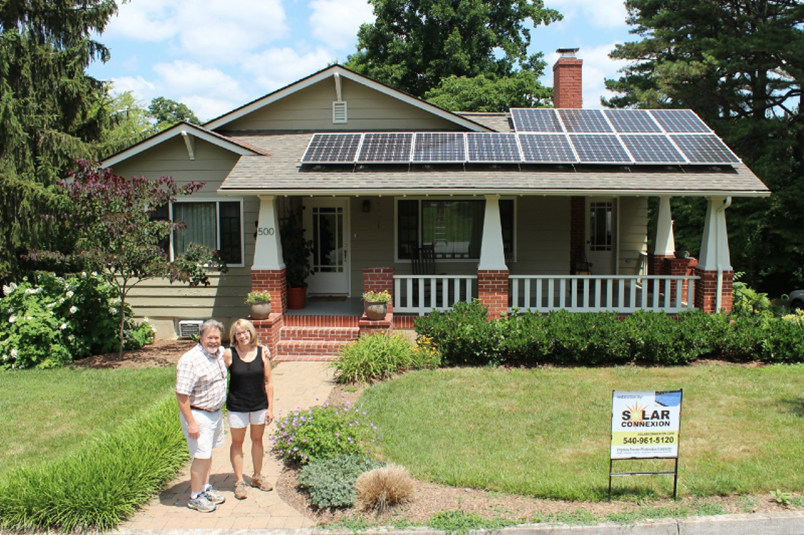

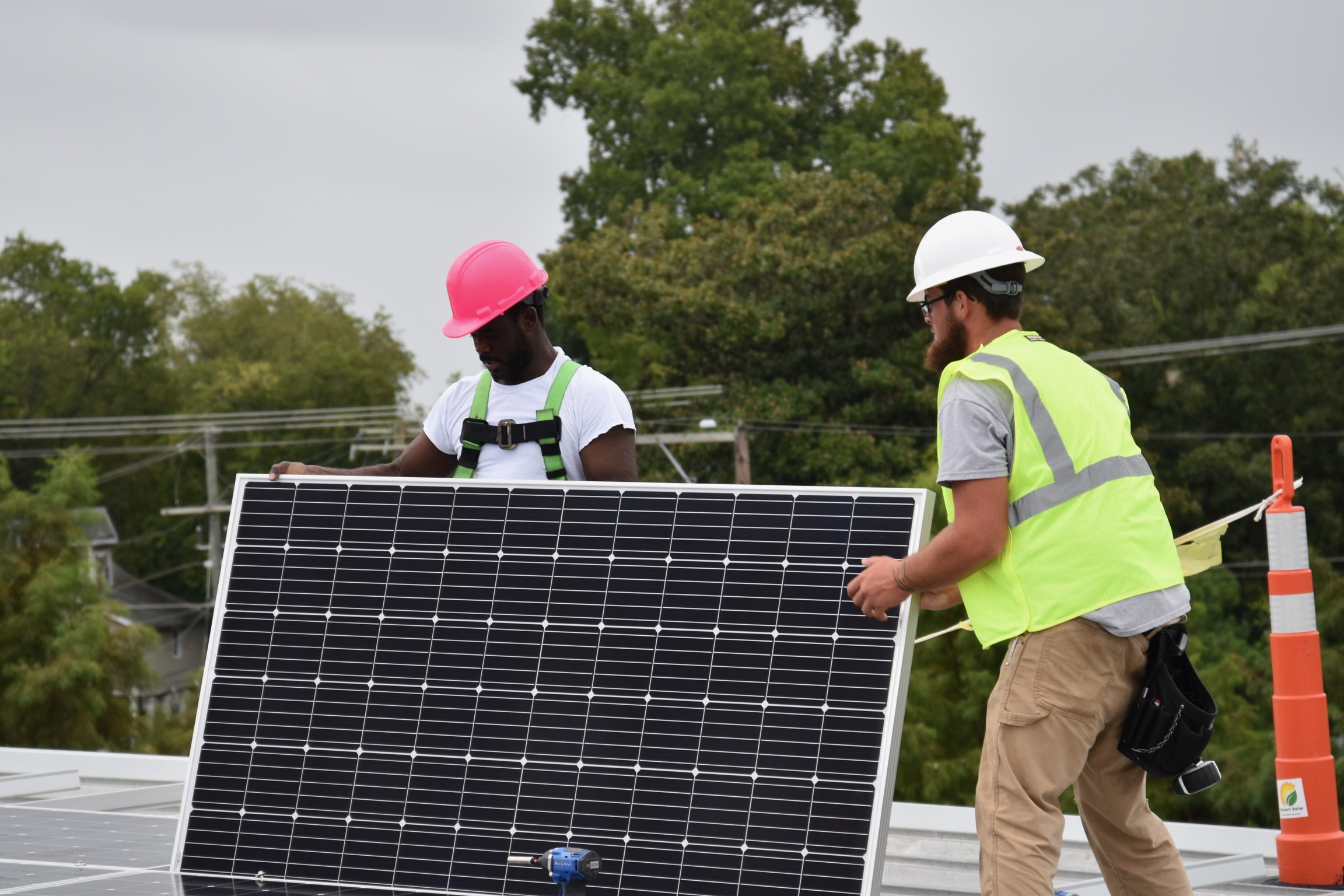

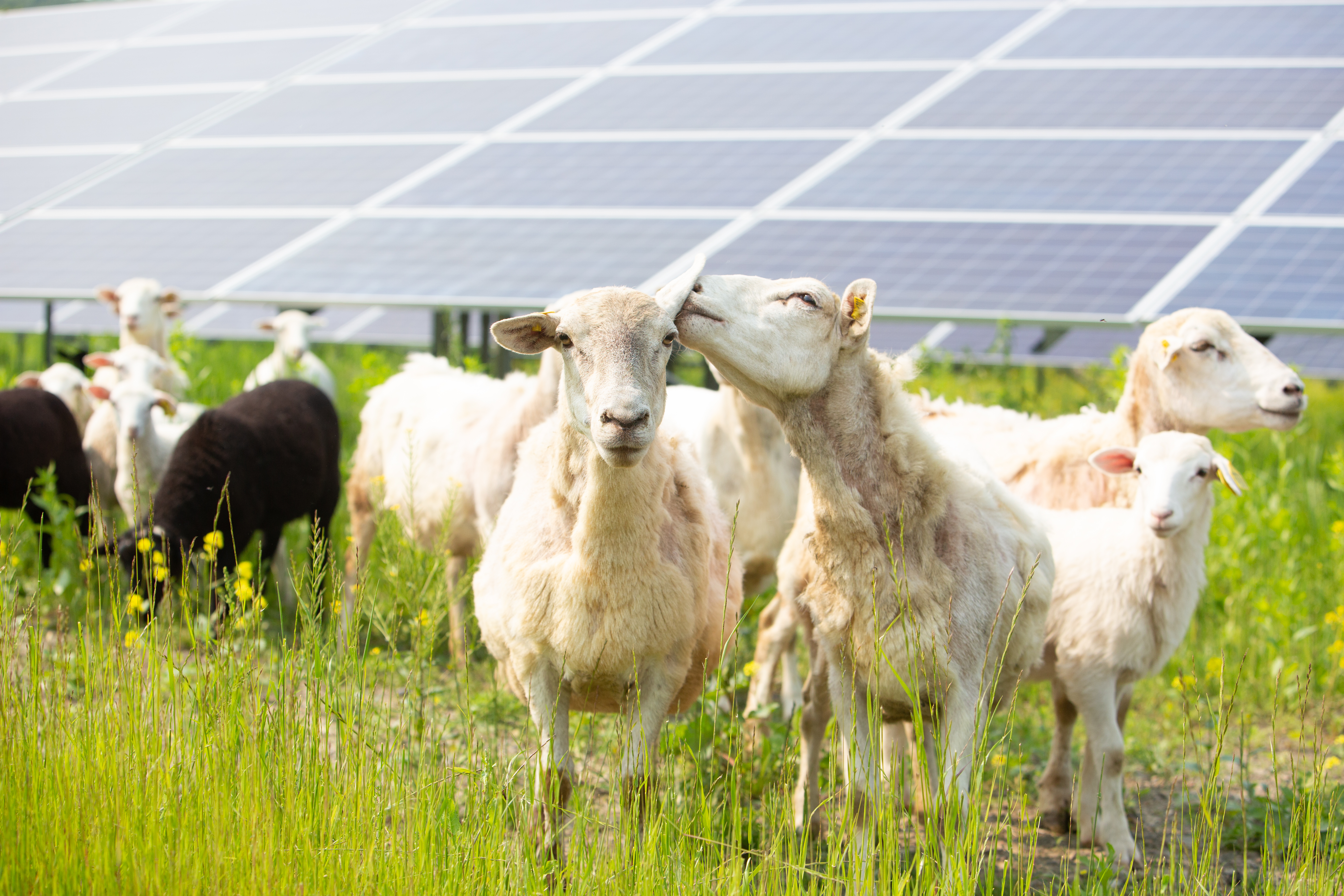


 Power for the People VA