When the State Corporation Commission approved Dominion Energy Virginia’s proposal to build a new, 944 MW gas peaker plant on November 25, it looked like the end of a long, drawn-out battle over the future of fossil fuels in Virginia.
The approval seemed to signal that for now, at least, the Virginia Clean Economy Act (VCEA) would not stand in the way of new gas-burning turbines in spite of their high greenhouse gas emissions. According to the SCC’s order, the surge in power demand from data centers had triggered a reliability exception to the VCEA’s ban on new fossil fuel construction.
Then suddenly, on December 16, the SCC granted the Southern Environmental Law Center’s (SELC) motion to reconsider the decision the commission had rendered just weeks before, suspending approval of Dominion’s plan. What the heck?
The SCC did not limit what it intends to reconsider, suggesting it will look anew at each of the four issues SELC raised. Since those issues cover pretty much everything about the gas plant’s approval, it’s impossible to guess what is going on.
Certainly, there are many reasons to criticize the initial approval of the Chesterfield Energy Reliability Center (CERC), beyond its climate impacts. The majority-Black community where the plant would be located suffered for decades from exposure to toxic air pollution spewing from the huge coal plant on the site. Closure of the coal plant had brought a welcome respite. Residents fear they will once again serve as a sacrifice zone for decades to come, in spite of environmental justice protections written into the VCEA.
In addition, Dominion had gamed the planning process so thoroughly that this alone might have caused the SCC to reject the proposal. Dominion had gone ahead and put in an order for the gas turbine even before soliciting proposals from third parties to address reliability concerns, as the law requires. On top of that, the company told the SCC that an independent third party had reviewed the options, which was false.
Dominion, it turned out, never had any intention of awarding the project to anyone but itself or of considering alternatives that didn’t involve fossil gas. How could the SCC reward such malfeasance?
The VCEA prioritizes the security and reliability of the power supply even over its carbon-cutting and cost-saving goals, but there are conditions attached to approving new power plants, intended to make new fossil fuel generation something of a last resort. SELC and other environmental groups had made a strong case both that Dominion failed to meet those conditions, and that there were non-fossil fuel alternatives that could provide reliability at less cost.
But if Dominion’s gaming of the process should have sparked outrage at the SCC, it also succeeded in putting the regulators in a difficult position. The mere suggestion of a future with rolling blackouts if a power company doesn’t get its way would cow any public utility commission, let alone one in a state facing an unprecedented surge in demand.
That explains the SCC’s order approving a certificate of public convenience and necessity (CPCN) for the gas plant Dominion swears is its only viable option. What, then, explains the about face on December 16, less than 24 hours after receiving the motion to reconsider?
Four possible errors
In its motion, the Southern Environmental Law Center (SELC), representing Appalachian Voices, the NAACP and Mothers Out Front, argued that the SCC erred on four points around environmental justice, the cost of the gas plant compared to alternatives, the burden of proof on reliability and the legal mechanism for cost recovery.
If the SCC were to agree with any of the first three arguments, the result would require new analysis, and might even send Dominion back to the drawing board. Agreement on the fourth point, however, would only change how Dominion charges ratepayers for the cost of the project. It would require the company to put the cost into base rates instead of a new rider, making CERC potentially less profitable for the company.
This last point looks like something of a legal slam-dunk. A provision in the VCEA allows rate recovery through a rider only when a utility has met its energy efficiency targets – something all parties agree Dominion has not done.
SELC also alleged that the commission failed to ensure the development of CERC “does not have a disproportionate adverse impact on historically economically disadvantaged communities,” another statutory requirement. The SCC’s original order addressed the point but appears to have misread this section of the law. That fact alone would justify a reconsideration of the November 25 order, though it would not alter the core of the decision to approve a CPCN for the gas plant.
SELC’s other three points put CERC in greater jeopardy, if the SCC agrees.
The commission’s environmental justice analysis consisted mainly of a judgment that a gas plant would be less harmful to the surrounding Black and Hispanic community than the coal plant that was formerly on the site. This may or may not be true, but that’s not the standard. On the contrary, a minority community that has suffered decades of pollution shouldn’t be first in line for the next polluting project to come along. That “disproportionate” impact is precisely what the VCEA and the Environmental Justice Act prohibit.
If the SCC were to side with the local community on this point, it wouldn’t stop Dominion from building a gas plant, but it would require the company to find a new location.
The two final arguments attack the decision that a large gas peaker plant is the right remedy for a looming energy crisis. SELC contends that Dominion didn’t prove the cost of the gas plant is reasonable, citing the company’s deeply flawed process for considering alternatives and its failure to include fuel cost data. SELC also complains the SCC didn’t require Dominion to prove that its claimed threat to reliability could only be satisfied with a fossil fuel plant, but had merely taken the company’s word for it.
These are accurate complaints about Dominion’s flawed process and strained analysis, and compelling reasons to reject Dominion’s plan — but they were just as compelling on November 25, when the SCC issued its order granting the CPCN.
Indeed, the SCC had to both close its eyes and grasp at straws to reach the conclusions it did. For example, a footnote in the SCC’s order cites a Dominion witness’ testimony for the proposition that a Sierra Club witness had agreed a gas plant would be needed eventually. The commissioners did not take the time to find and review the Sierra Club’s testimony, which would have shown the Dominion witness had mischaracterized the evidence. Indeed, the Sierra Club’s modeling showed an alternative portfolio of clean resources would provide more energy than CERC at less cost.
But apparently, gaming the process, ignoring the law and mischaracterizing the evidence are all things Dominion is willing to do to get an expensive fossil fuel plant approved in the face of the rigorous conditions set by the VCEA.
On December 29, the SCC set a date of January 23 for Dominion to reply to the issues raised by SELC in its motion for reconsideration; presumably the commission will then set a date for a new hearing on those issues. The timeline could push a final decision on CERC out beyond the end of this year’s legislative session, making the interplay of politics and policy all the more interesting.
This article was originally published in the Virginia Mercury.
Update: After all that, in February the SCC decided not to make any changes to its order. Environmental groups are taking the matter to court.
When Dominion Energy Virginia filed its latest integrated resource plan (IRP) last fall, critics (including me) complained that the company failed to lay out a cost-effective approach that would meet soaring energy demand from data centers while complying with Virginia’s decarbonization mandate. We hoped regulators at the State Corporation Commission would reject the IRP and demand better of our largest utility.
Instead, they chickened out.
The SCC’s final order, issued July 15, is short but not really to the point. The order finds Dominion’s IRP “legally sufficient,” while citing previous SCC orders for the proposition that “acceptance” doesn’t mean approval “of the magnitude or specifics of Dominion’s future spending plans.” It would be hard to imagine a less enthusiastic endorsement, and the lack of analysis leaves advocates wondering, where’s the meat?
It’s true that an IRP is “only” a planning document; it doesn’t commit a utility to carrying out the plan, and the SCC still has to approve any project the utility decides to move forward with. But the point of the exercise is to ensure utilities are on the right track; that their demand projections are on target and their plans for meeting demand are realistic, cost-effective and comply with all relevant laws. This needs discussion and analysis, not merely an up-or-down vote.
Admittedly, the SCC has a long history of approving lousy IRPs while directing Dominion to do a better job the next time. That was the case here, too, with the order directing Dominion to do a few things differently in its next IRP, due in the fall of 2026.
First, the SCC wants to see a 20-year timeline instead of the 15-year period that Dominion used this year, which is all the law requires. It’s an obvious ask, even apart from the fact the SCC cites that the regional grid operator PJM uses a 20-year planning window. A better reason is that we are just 20 years away from Dominion’s 2045 deadline for full decarbonization under the Virginia Clean Economy Act (VCEA), and anything the utility does now will have consequences extending out to that deadline.
The SCC also neglected to mention that using just a 15-year window, and omitting the 25-year planning period that Dominion included in previous IRPs, allowed the company to avoid showing the economic consequences to consumers of spending money for fossil fuel generation that either will shut down or may become economically obsolete by 2045, long before the plants are paid off. If Dominion thinks it can justify sinking customers’ money into assets it knows will become stranded, we all deserve to see the rationale.
The order also directs Dominion to include in its modeling at least one pathway that complies with the requirement of the VCEA that carbon-emitting facilities (including any new gas plants) be retired by 2045. This goes beyond obvious: the lack of a VCEA-compliant plan should have prompted the SCC to reject the IRP outright.
But of course, Dominion claims new gas plants are needed for reliability, which would make them legal under the VCEA in spite of their carbon emissions and questionable long-term viability. Reliability is a red herring, as I’ve argued, and other parties to the IRP case modeled how Dominion can meet demand without building new fossil fuels. Dominion should have been required to prove its case.
But here again, the SCC chose not to engage on the issue. Requiring Dominion to do better next time is as far as it is willing to go. This is unfortunate, but the silence can’t last: in March, Dominion filed for approval of the first of its planned new gas plants. The SCC will have to address need and reliability to make a decision in that case, and it would have been better for all concerned if it had grappled with these questions now.
The order falls short in other ways, as well. While the SCC expresses concern about forecasted rate increases, it doesn’t even mention the data centers that are driving the problem.
This is astonishing; even before Dominion filed its IRP last fall, the commission ordered the company to supplement the record with an analysis of data center impacts. When Dominion did so, it became clear that all of the load growth (and likely, much of the projected rate increases) results from this one industry. It’s beyond strange that the SCC does not even mention the supplement it ordered, or discuss whether Dominion’s duty to serve truly prevents it from protecting existing customers.
The order also accepts Dominion’s argument that it had to artificially limit the amount of low-cost solar it could include in its modeling, due to the increased difficulty of siting solar projects in Virginia. It’s true that many rural counties have been denying permits to solar projects, even as they approve data centers. But I’ve also heard a Dominion lobbyist tell legislators that permit denials have not been a problem for the company, an assertion that may have persuaded some legislators to vote against bills that would make solar siting easier. It appears Dominion tells legislators one thing and the SCC another.
The SCC’s order contains a few other requirements for the next IRP, mostly things that really should have been included in this one. The IRP should model Virginia’s return to the Regional Greenhouse Gas Initiative, reflecting a Virginia court’s ruling that Gov. Glenn Youngkin’s withdrawal was unlawful. The IRP should assume Dominion achieves the energy efficiency targets that the SCC itself established for the company. Dominion should include an analysis of impacts on base rates and should share its modeling with utility watchdog Clean Virginia, as well as run modeling based on SCC staff inputs. Long-duration storage, a maturing technology that can replace gas combustion turbines, should be included in the next modeling.
“Do better next time” is a well-worn directive from the SCC to Dominion, but it is deeply disappointing at a time when Virginia is facing an unprecedented surge in demand from data centers and accompanying increases in utility rates.
It’s disappointing in another way, too: this is the first major ruling from the SCC since two new judges were added to the three-member commission, and all three were appointed by a Democratically-controlled Senate. If there was ever a time for the SCC to get tough with Dominion on its climate obligations, this should have been it.
No doubt, the problem lies in Dominion’s influence over the entire process. The utility doles out exceedingly generous campaign donations to members of both parties, so the company retains influence no matter who is in power. Not only does this give Dominion sway over who is appointed to the SCC, but commissioners have to be mindful that getting reappointed at the end of their six-year terms depends on how satisfied these Dominion-backed senators are with their rulings.
As long as Dominion is allowed to shower senators with unlimited campaign cash, the SCC will never be free of the utility’s pernicious influence.
Meanwhile, though, Dominion’s poor performance, and the SCC’s unwillingness to call it out, demonstrate the necessity of the comprehensive IRP reform legislation that the governor vetoed this spring. The Commission on Electric Utility Regulation is already working on similar legislation for the next session.
Passing the IRP reform bill may not inject the SCC with greater courage, but it will ensure the commission, and the public, get a fuller look at the facts.
This article was originally published in the Virginia Mercury on July 21, 2025.
A data center in Ashburn, Virginia. Photo by Hugh Kenny, Piedmont Environmental Council.
It is a truth universally acknowledged, that a politician in possession of elected office must be in want of large economic development projects.
It does not seem to matter that in the case of Virginia, this compulsion is catapulting us into a costly energy crisis that will raise utility bills for residents; that the public shows no love for this industry; and that the benefits to be gained (mostly in the form of construction jobs) will continue only as long as new projects follow one another in perpetuity until the landscape is consumed by concrete and transmission wires.
To the credit of the Joint Legislative Audit and Review Commission (JLARC), however, it has tried to sound the alarm. JLARC’s report, “Data Centers in Virginia,” released December 9, describes the challenges facing the state as a result of the massive, ongoing buildout of this astoundingly resource-intensive industry. Many of JLARC’s conclusions seem way too sanguine to me, especially around risks to regional water supplies and air pollution from diesel generators, and the policy options it offers don’t always hit the mark.
But on the threat to Virginia’s energy supply, JLARC is blunt: Building enough infrastructure to provide electricity for even just half the data centers projected for development across the state will be difficult, requiring far more generating facilities than are under development today.
As for the current policy of allowing completely unconstrained data center growth – indeed, subsidizing it as we do now with tax exemptions to the tune of nearly a billion dollars per year – JLARC notes we are headed for a tripling of the state’s electricity usage over just the next decade and a half. Meeting that much demand, says the report, would be “very difficult to achieve,” even if the state jettisoned the carbon emission limits imposed by the Virginia Clean Economy Act (VCEA).
For those of you unfamiliar with the vocabulary of bureaucrats, “very difficult to achieve” is a term of art that translates roughly as, “This is nuts.”
It might have been better if JLARC had employed the vernacular, because as it is, Virginia’s elected leaders will probably take “very difficult” to be a sort of heroic challenge, like beating the Russians to the moon, when what JLARC means is more like achieving lasting peace in the Middle East.
One problem is cost. The law of supply and demand dictates that a massive increase in energy demand that isn’t matched by an equally massive increase in energy supply will lead to higher prices for all customers. Yet new energy projects cost money, and under traditional ratemaking principles that also means higher rates for everyone. The result is that it will be impossible to protect residents from higher utility bills, unless changes are made to the way costs get allocated.
(Figuring out how to protect residents and other non-data center customers is currently a focus of the State Corporation Commission, which held a technical conference on data centers on December 16th. Judging by what the experts it convened had to say, the SCC has its work cut out for it.)
Even if ordinary residents could be protected, the bigger problem is that increasing the supply of energy to keep up with soaring data center demand will not be easy, fast or cheap. JLARC warns that providing enough low-cost energy requires that gas plants, solar facilities, battery projects and transmission lines all be built at a pace Virginia has never achieved before, along with onshore wind farms that have never found takers here (though that may be changing), offshore wind projects that currently lack a pathway to development, and starting ten years from now, new nuclear plants in the form of small modular reactors (SMRs) that haven’t yet achieved commercial viability.
Moreover, most of that new generation and transmission will have to overcome local opposition. On the gas side, Dominion Energy’s plans for a new plant in Chesterfield County face fierce resistance from the local community, which argues it has been burdened by fossil fuel pollution for too many years already. Why should residents suffer to benefit Big Tech?
Clean energy also struggles at the local level. Industry representatives told members of the Commission on Electric Utility Regulation (CEUR) on December 17 that more than 30 localities have effectively banned utility solar projects within their borders. Rural leaders openly take pride in their prejudice against solar. Yet legislators are squeamish about overriding local siting authority, even when counties that welcome data centers turn down the solar facilities needed to power them.
And of course, generation projects involve willing landowners. When it comes to transmission lines that are forced on property owners through eminent domain – many of which will be needed only to carry power to data centers – the public backlash is typically even greater.
Given so much local resistance to new generation and transmission, the fact that so many legislators nonetheless remain wedded to the data center buildout testifies to the ability of the human mind to compartmentalize.
For legislators who care about climate, JLARC has more bad news: Fully half the new data center growth coming to Virginia is slated to occur in the territories of rural electric cooperatives, which are largely unaffected by VCEA limits. In addition, very large customers of Dominion and APCo have their own VCEA loophole: if they meet certain requirements, they can leave their utility to buy power from competitive service providers. Thus, if Virginia is serious about decarbonization, it will have to tighten, not loosen, the VCEA.
The report comes with some caveats. JLARC used a team of consultants to model approaches to meeting the supply gaps, and a lot of assumptions go into the consultant’s report without a lot of details. The consultant group says it chose its mix of resources with a view to least cost, but it acknowledges that different assumptions would change the results. It may not have accounted for the fact that renewable energy and storage prices continue to drop; meanwhile, fossil gas prices are so volatile that the one certain thing you can say about any price forecast is that it will be wrong. Moreover, it appears the effects of re-entering the Regional Greenhouse Gas Initiative were not modeled; nor were the social costs of carbon, both of which favor zero-emission sources over fossil fuel plants.
Where there are details, some beg to be questioned. Both the consultants and JLARC take for granted that a shortage of generation in Virginia can be made up by importing electricity from other states. An easy way out, sure, but it works only if other states are producing a surplus. Unless tech companies are required to secure their own carbon-free energy supply, there is no way to guarantee imports will be available. Contrary to one of JLARC’s suggestions, then, retail choice should not be curtailed. The better move is to expand shopping options for large customers, so long as the electricity they buy is zero-carbon.
Even more suspect is the idea that, in order to comply with the VCEA, all gas plants will convert to burning green hydrogen in 2045. The report might as well say, “and then a miracle occurs.” A miracle would be more likely.
However unserious, hydrogen as a placeholder for any hoped-for technology that isn’t available today demonstrates the fundamental problem confronting Virginia’s damn-the-torpedoes approach to data centers. A refusal to put constraints on the buildout means taking a leap into the unknown and hoping something will happen to save us from the consequences of our profligacy.
And sure, maybe it will work out. Legislators tend to be optimists, and they are already betting on bright, shiny objects like SMRs, fusion, and anything else not close enough for its costs and drawbacks to be fully evident. (Not that I’m immune, but personally I’m betting on advanced geothermal, which is not just bright and shiny but already here.) And hey, for all we know, artificial intelligence, the technology most culpable for today’s energy crisis, might even produce some unexpected new energy source.
Or it might not. Given that most of the data center buildout will happen in just the next five years, we might need an actual miracle.
On the flip side, maybe new technology will reduce the energy demand of data centers by orders of magnitude. That would be a fantastic outcome from the standpoint of climate, water and energy — though it would end the construction gravy train in Virginia and leave a wasteland of empty concrete warehouses and stranded energy infrastructure.
Either way, the unconstrained buildout of data centers has handed Virginia leaders a problem that is, in the parlance of JLARC, “very difficult” indeed.
A version of this article originally appeared in the Virginia Mercury on December 24, 2024.
New filing shows electricity demand would be flat without the industry
A data center in Ashburn, Virginia. Photo by Hugh Kenny, Piedmont Environmental Council.
Ever since data centers started spreading across the Virginia landscape like an invasive pest, one important question has remained unanswered: How much does the industry’s insatiable demand for energy impact other utility customers? Under pressure from the SCC, this month Dominion Energy Virginia finally provided the answer we feared: Ordinary Virginia customers are subsidizing Big Tech with both their money and their health.
Dominion previously hid data centers among the rest of its customer base, making it impossible to figure out if residents were paying more than their fair share of the costs of building new generation and transmission lines. Worse, if data centers are the reason for burning more fossil fuels, then they are also responsible for residents being subjected to pollution that is supposed to be eliminated under the 2020 Virginia Clean Economy Act (VCEA). The VCEA calls for most coal plants in the state to be closed by the end of this year – which is not happening – and sets rigorous conditions before utilities can build any new fossil fuel plants.
Dominion’s 2023 Integrated Resource Plan (IRP), filed a year and a half ago, projected steep increases in energy demand and the cost of electricity. The utility asserted that for reliability purposes it needed to keep coal plants operating, build new methane gas generating units without meeting the VCEA’s conditions, and add small nuclear reactors beginning in 2034.
Dominion’s failure to file a plan that complied with the VCEA led to an unusual stalemate at the SCC, with the IRP neither approved nor rejected. Ignoring the foul-weather warning, Dominion filed a similarly-flawed 2024 IRP in October. None of the modeled scenarios showed coal plants closing, none met the energy efficiency requirements set by law, and all proposed building new gas and nuclear reactors, with the first small nuclear plant now pushed off to 2035.
Neither of the two filings separated out the role of data centers in driving the changes.
Even before the 2024 IRP was filed, though, the SCC directed the utility to file a supplement. It was obvious the IRP would project higher costs and increased use of fossil fuels. How much of that, the SCC demanded to know, is attributable to data centers?
A lot, as it turns out. Though Dominion continues to obfuscate key facts, the document it filed on November 15 shows future data center growth will drive up utility spending by about 20%. Dominion did not take the analysis further to show the effect on residential rates.
The filing also shows that but for new data centers, peak demand would actually decrease slightly over the next few years, from 17,353 MW this year to 17,280 MW in 2027, before beginning a gentle rise to 17,818 MW in 2034 and 18,608 MW in 2039.
In other words, without data centers, electricity use in Dominion territory would scarcely budge over the next decade. Indeed, the slight decrease over the next three years is especially interesting because near-term numbers tend to be the most reliable, with projections getting more speculative the further out you look.
Surprised? You’re not alone. We’ve heard for years that electric vehicles and building electrification will drive large increases in energy demand. When Dominion talks about the challenges of load growth, it cites these factors along with data centers, suggesting that ordinary people are part of the problem. We’re not.
Decreasing demand is a testament to the profound effect of energy efficiency, as advances in things like lighting, heat pumps and other appliances allow consumers to do more with less. Presumably, the electrification of transportation and buildings will eventually outpace gains in efficiency – no doubt reflected in the projections for slightly increasing demand over the 2030s – but the effect is still modest. Electrification is not to blame for demand growth; data centers are.
In a future without new data centers, there should be no reason for Virginia’s energy transition to get off track. Solar, offshore wind and battery storage could increasingly displace fossil fuels, clean our air and bring down greenhouse gas emissions at an orderly pace.
At least, that’s the intuitive result, though Dominion fights hard to counter it. The new filing is supposed to show what a VCEA-compliant plan would look like without data centers, but it retains assumptions from its IRPs that skew the results in favor of fossil fuels. These include limiting energy efficiency and artificially capping the amounts of solar and storage that its computer model could select. Obviously, if you won’t invest in low-cost energy efficiency and solar, you need more of something else.
Dominion’s computer model also doesn’t choose offshore wind in spite of the fact that the 2,600-MW Virginia Coastal Offshore Wind project is under construction. No doubt the higher cost of offshore wind is responsible for this counter-factual omission, but again, leaving it out requires that something else be selected. Nuclear similarly doesn’t make the cut due to cost.
By limiting or eliminating all zero-carbon options, Dominion would like you to conclude that, with or without data centers, it “needs” more gas plants.
There are other reasons to be skeptical of this manufactured result. As with the 2024 IRP itself, Dominion does not appear to have incorporated the social cost of carbon in its supposedly-VCEA-compliant plan, a mandatory consideration for any new fossil fuel generation. It’s also worth noting that Dominion will once again have to buy carbon emission allowances to run its coal and gas plants now that a court has nullified Gov. Glenn Youngkin’s illegal withdrawal of Virginia from the Regional Greenhouse Gas Initiative (RGGI). (Youngkin has vowed to appeal.)
On the other hand, President-elect Donald Trump and Republicans in Congress seem likely to overturn new EPA regulations tightening pollution standards for fossil fuel plants. That would make fossil fuels appear cheaper by shifting costs onto residents in the form of worse health outcomes and climate-related weather disasters.
In addition to showing what the energy mix might look like without data centers, the SCC directed Dominion to identify which of its approximately 200 planned transmission projects were needed solely because of data centers. The 4-page table in Dominion’s supplemental filing reveals that about half of the projects are solely data center-driven, with two or three dozen more serving a mix of customers that includes data centers. I tried to add up the numbers but lost track at a billion dollars’ worth of projects needed solely for data centers – and I was still on the second page.
There is one more caveat to keep in mind. Since the SCC’s order applied only to future growth, Dominion’s new numbers don’t show the cost and energy impact of data centers in operation today. Data centers already make up a quarter of Dominion’s sales, and that growth was the main reason the utility pivoted back to fossil fuels in its 2023 IRP.
Still, most of the data center growth lies ahead of us, as does Dominion’s plans for new fossil fuel and nuclear generation. With state leaders avidly chasing more data centers in the name of economic development, ordinary Virginians are left to watch the assault on their energy supply, their water, and their environment and wonder: Is anyone going to fix this?
This article was originally published in the Virginia Mercury on November 26, 2024.
For the third year in a row, a tug-of-war is going on in the General Assembly over whether Virginia stays the course of the energy transition laid out in 2020 and 2021, or rolls it back hard.
Democrats remain committed to a renewable energy future to address pollution, high electricity costs and the causes of catastrophic climate change. Gov. Glenn Youngkin and most Republican legislators cling to the familiar (dis)comfort of fossil fuels. Republicans are still lobbing grenades at the Virginia Clean Economy Act (VCEA) and the Clean Car Standard; Democrats are holding the line on those advances.
Last year House Republicans used small subcommittees to kill Democrats’ energy bills, even those that passed the Senate on a bipartisan basis. This year the Democrats’ slim majority in both chambers will let more bills get to the governor’s desk. But with the threat of a veto tempering expectations, the party of clean energy is not running big, ambitious bills, but is instead focused on solving problems that have popped up along the march to zero carbon.
Committees have already begun work on the hundreds of energy bills filed in past days. That’s too many for even the Mercury’s dedicated readers to review without more caffeine than is good for you, so let’s focus on just some that would have the most consequence for the clean energy transition.
To be: Democrats work to further the clean economy
Many of the Democratic bills contain small fixes to existing law that add up to big gains for clean energy. One of these is HB 638, from Del. Rip Sullivan, D-Fairfax, and SB 230, from Sen. Ghazala Hashmi, D-Richmond. Most of its provisions are tweaks to the VCEA. Among them are increasing from 1% to 5% the percentage of Dominion Energy Virginia and Appalachian Power’s renewable energy purchasing that must come from small projects like rooftop solar; streamlining the State Corporation Commission’s review of energy efficiency programs by creating a single cost-effectiveness test; and supporting competition in the development of renewable energy and energy storage facilities by specifying that “at least”35% of projects must come from third-party developers, instead of the simple 35% number currently in the law.
The bill also contains a provision that goes beyond the VCEA. It states that the SCC has an “affirmative duty” to implement the Commonwealth Energy Policy at “lowest reasonable cost.” (Two other bills, one from Sen. Jennifer Carroll Foy, D-Fairfax, and the other from Del. Phil Hernandez, D-Norfolk, contain only this provision.) The energy policy is separate from the VCEA, and it sets ambitious goals for the decarbonization of Virginia’s whole economy, including a faster timeline for achieving net zero in the electricity sector. The catch is that the policy does not have teeth, and for that reason it is routinely ignored. Requiring the SCC not just to take account of it, but also to implement it, is a step towards broader decarbonization, though it is not clear how it would actually play out at the SCC.
Legislation from Sen. Scott Surovell, D-Fairfax and Sullivan would resolve problems with the shared solar program in Dominion territory (including putting restraints on the minimum bill that the utility can charge) and expand it to Appalachian Power territory.
SB 79, from Sen. Barbara Favola, D-Arlington, would save taxpayers money by requiring new or substantially renovated (over 50%) public buildings to have solar-ready roofs or, if solar is deemed impractical, to meet one of two high-efficiency alternatives. New or substantially renovated schools would have to be designed and built to net-zero energy standards, unless the locality determines that to be impractical or the school is a historic building.
Sullivan and Sen. Suhas Subramanyam, D-Loudoun, have introduced legislation to resolve the interconnection problem that has stalled commercial solar projects across Dominion territory. The House and Senate bills specify that customers are responsible for costs on their side of the meter, while the utility pays for costs on its side, including upgrades to the distribution grid.
A few bills seek to break through the local-level gridlock that has bedeviled utility-scale solar and wind projects. The most significant of these is HB 636from Sullivan and SB 567 from Sen. Creigh Deeds, D-Charlottesville, which provides an alternative permitting process for larger utility solar (50 MW or more), wind (100 MW or more) and renewable energy storage projects (at least 50 MW nameplate and discharge capacity of 200 MWh or more) that go through the local permitting process but end up without permits. Developers get a second chance at the SCC if they meet a list of requirements. These include safeguards for farmland protection, stormwater, setbacks, wetlands, wildlife corridors, etc. Applicants are also charged $75,000 to cover the locality’s cost of participating in the SCC proceeding. (There is some irony here that small projects, which have less impact, are left at the mercy of local whims, while the most impactful projects have what amounts to a right of appeal.)
Vehicle electrification would also get support from Democratic legislation. One bill of particular interest is Sullivan’s HB 118, which requires Dominion and Appalachian Power to take charge of upgrades to the distribution grid needed to support EV charging by non-residential customers. The utilities are also tasked with filing detailed plans to “accelerate widespread transportation electrification across the Commonwealth in a manner designed to lower total ratepayer costs.”
Regardless of the fate of these bills, Virginia’s efforts to transition to a zero-carbon economy will be swamped by new demand from the fast-growing data center industry, unless the industry itself can be made part of the solution. A dozen or so bills seek to put conditions on the industry in one way or another, but one takes on the energy demand directly. HB116, from Sullivan, and SB192, from Subramanyam, condition data center operators’ receipt of tax credits on demonstrating compliance with minimum standards for energy efficiency and renewable energy procurement, as well as not using diesel generators for backup power.
Not to be: Republicans try out arguments against the energy transition
Many of the Republican anti-clean energy transition bills are blunt instruments that are more about campaigning in Trump country than low-cost energy. For example, HB 397, from freshman Del. Tim Griffin, R-Bedford, would repeal most of the important provisions of the VCEA, while declaring that development of new nuclear is “in the public interest” (a phrase that pretty much means “watch your wallet”).
Similarly, five bills seek to repeal outright the Advanced Clean Cars law passed in 2021, which effectively put Virginia among the states that follow California’s path to vehicle electrification. The law does not kick in until 2025, but trying to repeal it has become a Republican standby. A more subtle bill from Del. Lee Ware, R-Powhatan, would condition repeal on the Virginia Automobile Dealers certifying that Virginia is not meeting its annual EV sales targets.
Some anti-EV bills are merely performative. One non-starter, from Griffin again, would provide a tax credit for purchases of vehicles with internal combustion engines. A bill from Sen. William Stanley, R-Franklin, would require any business selling an EV or any EV component to a public body to provide a sworn declaration that there was no child labor involved not just in the manufacturing but at any point anywhere along the supply chain, starting with mining minerals abroad.
If Stanley were truly concerned about child labor violations, of course, he would seek to apply this sworn declaration requirement to all industries. He could start with the domestic meatpacking industry, where child labor violations are rife, including in Virginia. Ah, if only that were the point.
It’s not just state-level decarbonization that comes in for a brute-force attack. A bill from another new delegate, Eric Zehr, R-Lynchburg, makes its target any federal regulations that “may threaten the production or supply of affordable, reliable, and secure energy within the Commonwealth.” If alerted to such a threat by a utility or the SCC, the Attorney General’s office would be required to intervene. This sort of bill is not intended to survive its first committee hearing, if it even gets a hearing. Its only purpose is to show off the patron’s hard right bona-fides.
To be fair, there are Republicans who are actually trying to solve real problems in the energy sector. As one example, take SB562 from Sen. Travis Hackworth, R-Tazewell. His bill would create a ratepayer-funded pilot program for utilities to figure out a way to use coalbed methane for electricity without burning it (perhaps with fuel cells?). The problem is, he proposes to make this electricity eligible for Virginia’s renewable portfolio standard (RPS). It’s a creative, if expensive-sounding, response to the real climate problem of methane leaking from old and often abandoned coal mines, part of the true cost of coal. But calling fossil methane renewable is, shall we say, counterfactual. Some problems are more effectively tackled head-on, using tax dollars or tax credits, rather than being used to undermine the integrity of the RPS.
To be: somewhere else entirely
The reality of renewable energy is that we have to build a great many wind, solar and storage projects, each one taking months or years of design, permitting and construction work and requiring acreage we would rather use for something else. Yes, it means economic activity, investment and jobs, but it’s also something of a slog. Wouldn’t it be nice if we had a magic solution that could just provide carbon-free electricity without all that bother?
That’s the dream that continues to attract both Democrats and Republicans to nuclear energy. Opinion is divided on whether small modular reactors (SMRs) could hold the answer to all our energy woes, or are just the latest con from an industry looking to attract a new set of deep-pocketed suckers.
Three things are clear at this point. One, SMRs are still many years away from commercialization, coming too late to solve the climate problem that is here and now. Second, SMRs are going to cost a lot. Not only is there no free nuclear lunch, there isn’t even a low-priced breakfast. And third, Dominion is frothing at the bit to build an SMR – but only if customers have to pay for it.
Some legislators are happy to oblige, even with all these drawbacks. The most concerning of the bills are HB 1323 from Del. Danny Marshall, R-Danville, and SB 454 from Sen. David Marsden, D-Fairfax. The legislation would allow Dominion or Appalachian Power to charge ratepayers “at any time” to recover development costs of a small modular nuclear reactor, defined as a nuclear reactor not larger than 500 MW. Not only is that not small, but by the language of the bill it need not even be modular or use advanced technology. Heck, it doesn’t even have to be in Virginia. Dominion could build any kind of nuclear plant, anywhere it chooses, and satisfy the terms of the bill.
But it’s that “at any time” language that should be a red flag for lawmakers. Charging customers for a nuclear plant before and during construction, including cost overruns and with no guarantee of completion, is precisely how residents of South Carolina got stuck paying billions of dollars for a hole in the ground.
That amount of money buys a lot of low-cost renewable energy and storage, right in the here and now. Virginia needs to be a clean energy state for the sake of ratepayers, the economy and the climate, and there is no time to waste.
This article was first published on January 21, 2024 in the VIrginia Mercury.
Virginia voters will decide next month who will represent them at the State Capitol in January.
How much do Virginia’s elections matter in an off year? Measured by the turnout in past elections, you’d think the answer is “not much.” The percentage of registered voters who show up at the polls in Virginia typically drops well below 50% when no federal or statewide candidates are on the ballot.
But measured by how much the outcome of this year’s election could affect the lives of regular people, the battle for control of the Virginia Senate and House of Delegates matters enormously. With a Republican in the governor’s mansion, a Democratic edge in either or both chambers would continue the status quo of divided government and (mostly) consensus-based lawmaking. A Republican takeover of both chambers, on the other hand, would lead to a wave of new legislation imposing the conservative social agenda on abortion, gay rights, transgender issues, education and welfare.
It would also put an end to Virginia’s leadership on climate and clean energy and lead to costly initiatives protecting fossil fuels, at the expense of consumers and the environment.
Some of the divisions between the two parties are well-known, and the consequences of one party edging out the other are clear. For some issues, however, the party positions are not as obvious, and it takes a look under the hood to understand where elections matter.
Virginia’s clean energy transition is at risk
Let’s start with the obvious: the broad framework of Virginia’s energy transition to clean energy is a signature achievement of Democrats that Republicans have in the crosshairs.
Three and a half years ago, Virginia made history as the first Southern state to commit to zero-carbon electricity by 2050 with detailed and specific guidance. The next year, the General Assembly followed up with legislation to begin the transition to electric vehicles.
Clean energy investments soared after passage of the Virginia Clean Economy Act (VCEA). Solar installations in 2020 and 2021 dwarfed previous numbers, and the state solar market is now a $5.1 billion industry employing over 4,700 workers. Private investment dollars have poured into small-scale renewable energy as well, funding solar on schools, churches and government buildings.
The VCEA’s support for offshore wind gave that industry the certainty it needed to move beyond the pilot project stage. Foundations for the first of 176 turbines of the Coastal Virginia Offshore Wind project are currently on their way to the Portsmouth Marine Terminal. By the end of 2026, the turbines are expected to provide enough electricity to power more than 600,000 homes.
Communities benefited from Virginia’s entry into the carbon-cutting Regional Greenhouse Gas Initiative (RGGI), as $730 million in new revenue flowed to the Commonwealth for flood mitigation and low-income home weatherization.
And after passage of the Clean Cars law, sales of electric vehicles in Virginia are set to double by the end of next year, and to double again by 2026.
In 2021, however, the election of Gov. Glenn Youngkin and a narrow Republican majority in the House of Delegates put these gains at risk. Early on, Youngkin declared his intent to repeal the VCEA and the Clean Cars law and pull Virginia out of RGGI. Only a Democratic majority in the Senate stopped legislative rollbacks passed by House Republicans in 2022 and 2023. Loss of that majority would ensure repeal of Clean Cars and the evisceration of VCEA.
As for RGGI, the failure to repeal the law led Youngkin to attempt to pull Virginia out through an administrative rulemaking that will be contested in court. He could sidestep a court battle and do it legally through legislation if his party takes control of the General Assembly.
“No-brainer” bills killed in small committees
While a clear divide separates the two parties on signature Democratic initiatives like VCEA and RGGI, party membership is the determining factor on other energy and climate bills in less obvious ways. House rules allow a subcommittee consisting of as few as 5 members to vote down a bill by majority vote, keeping it from being heard by the full committee. With Republicans in control of the House, every subcommittee has a Republican majority, and Democratic bills routinely die on 3-2 votes. This can be true even if a bill has already passed the Senate, and even if the Senate vote was bipartisan – or for that matter, unanimous.
The Senate operates very differently. There, a subcommittee can only make recommendations. It takes a vote of the full committee to kill a bill in the Senate.
You might wonder: if a bill is such a no-brainer that it passes the Senate unanimously or by a wide bipartisan majority, why would it get voted down in the House at all? Wouldn’t the bipartisan endorsement suggest this is actually a good bill that even the party in charge of the House would want to support, or at least have heard in full committee?
Indeed, when a no-brainer bill is killed in a tiny House subcommittee along party lines, it is rarely because the bill’s patron just happened to find the only few people in the General Assembly who don’t like the bill. More typically, it’s because the governor or the caucus itself has taken a position against the bill, but doesn’t want to draw attention to that fact. The subcommittee members tasked with doing the killing let everyone else in the party keep their hands clean.
This explains the fate of Fairfax Democrat Sen. Chap Petersen’s bill to study the effect of data centers on Virginia’s environment, economy, energy resources and ability to meet carbon-reduction goals. The bill passed unanimously by voice vote in the Senate before dying at the hands of three Republicans in a five-person subcommittee of the House Rules committee.
The data center study was the very definition of a no-brainer bill. The unbridled growth of data centers has ignited protests in communities across Virginia, and the industry’s voracious appetite for energy is blowing up Virginia’s climate goals, according to Dominion Energy. How can it be that House Republicans don’t even want to study the issue?
The answer lies in the fact that the Youngkin administration testified against the three data center bills that were heard in the Senate. One of Youngkin’s proudest achievements in office was the deal with Amazon to bring another $35 billion worth of data centers to Virginia. He does not want a study that would bring negative realities to light, so the bill had to die. The Republican members of the subcommittee were merely the executioners.
Another no-brainer bill that never made it to a full committee vote is one that gets introduced year after year: a prohibition on using campaign funds for personal purposes. This year’s legislation passed the Senate unanimously before just five Republicans voted to scuttle the bill in a House Privileges and Elections subcommittee.
My guess is you could not find a voter anywhere in Virginia who thinks legislators should be able to take money donated to their election campaigns and spend it on themselves. Justifying it requires legislators to turn themselves into logical pretzels.
The combination of unlimited campaign giving by donors and unrestricted spending by the recipients makes it easy for powerful corporations like Dominion Energy to buy influence. Dominion has long been the largest corporate donor to legislators of both parties. The company’s influence has cost consumers billions of dollars and kept its fossil fuel plants burning.
Dominion’s influence was clearly at work this year when a House subcommittee killed a bill from Fairfax Senator Scott Surovell that would have made shared solar available to more Virginians, over Dominion’s opposition. The bill passed the Senate with bipartisan support before losing 4-2 on a party-line vote in a House Commerce and Energy subcommittee.
It is less clear whether Dominion had a hand in the death of a bill that would help localities put solar on schools. The legislation passed the Senate unanimously before being killed in House Appropriations, again on a straight party-line vote.
Certainly, there have been plenty of Democrats over the years who have voted for Dominion’s interest time and again. Conversely, not all the no-brainer bills killed by House Republicans reflect a hostility to the energy transition; sometimes the problem seems to be a hostility to environmental protections in general. Thus a bill to require customer notification when water tests show contamination from PFAS – known commonly as “forever chemicals” – passed the Senate unanimously and then was killed in a House subcommittee on, yet again, a party-line vote.
It would be hard to identify a consistent line of reasoning behind all the anti-environment votes across all the various subcommittees, but the pattern is clear enough. It reflects not just the positions of individual legislators, but a firm party line.
Whether voters care about these votes now is not clear, mainly because the news media rarely look at the role of the environment, climate and energy in elections. Regardless, these issues will be very much at stake at the polls next month.
This article originally appeared in the Virginia Mercury on October 4, 2023.
In my last column I took Dominion’s Integrated Resource Plan (semi-) seriously, giving the utility the benefit of the doubt in its projections for data center growth and the alleged need for more fossil fuels to keep up with the power demands of that ravenous industry. But as I also noted, Dominion doesn’t deserve to be taken seriously with this document.
Under Virginia law, an Integrated Resource Plan (IRP) is supposed to explain how the utility expects to meet demand reliably and at low cost within the constraints of the law. In this IRP, however, Dominion asked a different question: how to make Gov. Glenn Youngkin happy by keeping fossil fuels dominant regardless of both law and cost.
Coming up with a favorable answer required Dominion to ignore the Virginia Clean Economy Act (VCEA), create arbitrary limits on solar deployment, use wishful thinking instead of facts and, for good measure, do basic math wrong. They also assume the Youngkin administration will succeed in pulling Virginia out of the carbon-cutting Regional Greenhouse Gas Initiative (RGGI), a move that is being challenged in court. This makes Dominion’s IRP, with its plan to double carbon emissions, a sort of evil twin to a plan from any RGGI state.
Sure enough, the governor loves it. Elsewhere, however, this evil twin found a cold reception. Experts retained by environmental, consumer and industry groups all agree that this IRP should be chucked in the trash bin and Dominion told to start over.
It’s worth taking a look at the testimony from these groups to understand where Dominion went so badly wrong, and what a better plan might look like.
It’s all about the data centers
Northern Virginia data centers are the driving force behind Dominion’s plans to burn more coal and gas, but there is some disagreement whether their growth will be absolutely off-the-charts crazy, or merely eye-poppingly huge. Dominion’s IRP projects the data center industry’s power use in its territory will quadruple over the next 15 years, rising from 2,767 megawatts (MW) in 2022 to more than 11,000 MW in 2038. At that point it would represent close to 40% of Dominion’s load.
Experts testifying in the IRP case believe data center demand won’t reach the dizzying heights Dominion projects. They question whether Virginia communities will accept so much new data center development, given the pushback already evident in localities like Prince William and Fauquier Counties. Their thinking is essentially that if things can’t go on this way, they probably won’t.
They also suggest that some of the demand Dominion expects may also be reflected in the plans of other utilities serving Northern Virginia’s Data Center Alley, leading to double-counting. A load forecast published by grid operator PJM shows that Northern Virginia Electric Cooperative (NOVEC) projects its data center demand to rise from about 400 MW in 2022 to 4,000 by 2028 and 8,000 by 2034. Two other cooperatives project a combined 3,000 MW of data center development in the same time period.
Aside from data centers, demand for electricity in Dominion territory is flat or declining over the next fifteen years; presumably this is due to the increased efficiency of homes and businesses offsetting the increased demand from electric vehicles and building electrification.
If you were already experiencing vertigo over Dominion’s data center numbers, and you are now hearing for the first time that Dominion’s numbers represent only half of the total projected data center load coming to Virginia, maybe you won’t find it all that cheering that some of that added demand could be illusory. Still, it is a reasonable point. If you reduce demand by a few thousand megawatts here and there, pretty soon you might not “need” a new gas plant.
As an aside, one Virginia utility stands out for apparently not expecting much in the way of new data centers in its territory. Appalachian Power, which serves customers in Southwest Virginia, West Virginia and Tennessee, has experienced declining demand for years, and rural Virginia leaders would dearly love to see data centers come there. Yet the PJM forecast shows Appalachian Power’s parent company, American Electric Power (AEP), told grid operators it expected only about another 200 MW on top of the 500 MW of data center load it serves across its entire 11-state territory. AEP seems to regard this as quite a lot, which, when compared with what is happening in Northern Virginia, seems rather sweet.
I can’t help but wonder how Gov. Youngkin managed to make a deal with Amazon to bring $35 billion worth of new data centers to Virginia without securing a guarantee that many of the facilities would be located in a part of the state that actually has surplus energy capacity and desperately needs new economic development. Southwest Virginia voters may have put Youngkin in office; you’d think he’d be looking out for them.
Instead of real investment today, Youngkin promises the area a little nuclear plant a decade from now, when and if small modular reactors (SMRs) prove viable. Local leaders must be muttering, “Gee, thanks.”
And this leads to another point raised by several of the experts in the IRP case: All of the load growth Dominion projects is due to a single industry in Northern Virginia; elsewhere, demand is decreasing. Yet, instead of crafting a solution specific to the industry and region experiencing runaway growth, Dominion proposes to build a fossil fuel plant 140 miles away in Chesterfield and a nuclear plant 300 miles away in another utility’s territory.
Gregory Abbott, a former SCC Deputy Director, offers a particularly withering assessment of the IRP in his testimony on behalf of environmental advocacy group Appalachian Voices. Dominion’s computer model, he says, “is proposing supply-side solutions that are not focused on solving the actual problem, are likely unnecessary, and driving costs higher than they should be.”
Although Dominion insists this IRP represents just a “snapshot in time,” Abbott says that’s misleading: The IRP “sets the stage for multi-billion-dollar investments that Dominion’s customers will pay for decades to come. If a future snapshot in time changes, based on new public policy goals or market dynamics, ratepayers are stuck with paying for these sunk costs.”
Garbage in, garbage out
Abbott and others also note that unlike factories or other high consumers of energy, data center operators can shift some functions to other data centers elsewhere for short periods of time. Dominion could save money and reduce the need for new investments by capitalizing on this capability to develop demand-response programs tailored specifically to this industry.
Instead, Dominion treated the surge in demand as if it were statewide and spread across all its customers; then it used a computer model to figure out how to meet the soaring demand.
An expert for the Sierra Club, Devi Glick of Synapse Energy Economics, noted several problems with Dominion’s approach. Among them: the company told its computer model that it couldn’t select energy efficiency as a resource; it had to include gas combustion turbines in 2028; it had to adhere to artificial limits on solar, wind and battery storage; and it had to assume prices for solar that were “substantially higher than industry projections.” Dominion also did not instruct the model to account for proposed (and since finalized) new federal pollution limits that will raise the cost of burning fossil fuels, and miscalculated — by a billion dollars — the penalties associated with failure to meet the VCEA’s renewable energy requirements.
As they say, garbage in, garbage out. The model did what it was told, and produced plans that limited solar and battery storage, called for new gas combustion turbines and/or SMRs, and kept uneconomic coal plants running past their previously-planned retirement dates. Accordingly, none of the modeled scenarios complied with Virginia law and all would be unnecessarily expensive for customers.
Synapse ran its own computer model that kept most of Dominion’s load and cost assumptions but corrected for the company’s errors and artificial constraints. The results, not surprisingly, show that building more solar and storage and retiring coal plants earlier than Dominion wants to will lower carbon emissions and “reduce costs for Dominion’s ratepayers by between $4.1 and $9.0 billion over the 25-year study period.”
When Synapse then tweaked the model to reflect the new federal pollution rules and prices for solar and battery storage in line with industry projections, the results saw solar and battery investments soaring, while the “need” for firm capacity such as a new gas plant disappeared altogether during the planning period.
Clean energy, vindicated
So finally, we begin to see a path forward founded on real data and not constrained by political expediency. With none of its plans meeting the basic requirements of Virginia law, Dominion should be ordered to go back to the drawing board. The company should reexamine its data center load projections and design a demand-response program tailored to that industry. Then it should re-run its computer model with energy efficiency allowed as a resource, with no artificial constraints on battery storage and renewable energy,with federal and state compliance costs associated with fossil fuels fully included and with cost estimates for solar and storage consistent with industry norms.
The General Assembly has a role to play, too, in ensuring the data center industry does not shift costs onto other customers and cause Virginia to fall short of its carbon reduction goals. Data centers should be required to meet energy efficiency targets and to secure an increasing percentage of renewable energy on their own as a condition of obtaining generous state tax subsidies. Likewise, the State Corporation Commission should be required to ensure that data centers pay for the transmission upgrades they need. Finally, the General Assembly should pass the data center study bill adopted by the Senate this year before being killed in the House.
Finally, it’s clear that the computer models will select as much low-cost solar as they are allowed to, so the General Assembly should make it easier to build solar projects at competitive rates. They can do this by further opening the market to third-party developers, who are currently constrained by an interpretation of the VCEA that caps their share of the solar Dominion procures at 35%.
The SCC will hold a hearing on the IRP beginning September 18.
An earlier version of this article appeared in the Virginia Mercury on September 5, 2023.
Virginia’s embrace of the data center industry produced new fallout this spring when Dominion Energy Virginia released its latest Integrated Resource Plan (IRP). With data center growth the “key driver,” Dominion projects a massive increase in the demand for electricity. As a result, the utility claims the state-mandated transition to clean energy is now impossible to achieve.
Jettisoning its commitment to the Virginia Clean Economy Act (VCEA), Dominion proposes to keep running uneconomic coal and biomass plants that were previously slated for closure, build a new fossil gas plant and pay penalties instead of meeting state renewable energy targets, all of which mean higher costs for customers.
As I said at the time, this IRP is primarily a political document aimed at currying favor with a gas-loving governor. It is not a serious plan. For example, a Sierra Club filing with the State Corporation Commission describes how Dominion put artificial constraints into its computer modeling (including limits on new solar) to ensure the plan came out fossil-friendly. Moreover, Dominion’s demand projections are inflated, according to the clean energy industry group Advanced Energy United.
But for the sake of discussion, let’s take the IRP at face value. And in that case, I have some questions. How did Dominion let itself get blindsided by the data center growth spurt? Why are the rest of us expected to pay for infrastructure that’s only needed for data centers? Does the Governor understand that his deal to bring another $35 billion worth of new Amazon data centers to Virginia is driving up energy rates for everyone else?
Oh, and while I’m at it, are tech company commitments to sourcing renewable energy just a pack of lies?
Virginia’s data center problem is well known. Northern Virginia has the largest concentration of data centers in the world, by far. Data centers are Dominion’s single largest category of commercial power users, already consuming more than 21% of total electricity supply and slated to hit 50% by 2038. In addition to the new generation that will be required, data centers need grid upgrades including new transmission lines, transformers and breakers, with the costs spread to all ratepayers.
Residents are not happy. Controversy around data centers’ diesel generators, their water use, noise and visual impacts have spread outward from Loudoun County into Prince William, Fauquier, and even other parts of Virginia as massive new developments are proposed.
Data center developers don’t build without assurance they will have access to the huge amount of electricity they need for their operations, so they have to start discussions with their utility early. Yet in July of 2022, Dominion stunned the data center industry by warning it would not be able to meet new demand in Loudoun County until 2025 or 2026. The utility said, however, that the problem was not generating capacity, but transmission. So, what gives?
Not that it would be better if Dominion anticipated the oncoming tsunami but kept it secret until this spring. You have to wonder whether the General Assembly would have approved hundreds of millions of dollars in grants and tax subsidies for new Amazon data centers in February if legislators understood the effect would be to upend the VCEA and drive up energy costs for residents.
Some Republicans are no doubt pleased that Dominion’s IRP undermines the VCEA, but they shouldn’t be. Dominion proposes keeping coal plants open not for economic reasons, but in spite of them. These plants were slated for closure in previous IRPs because they were costing ratepayers too much money. Now Dominion says it needs more generating capacity and can’t (or rather, won’t) build enough low-cost solar to keep up with new data center demand.
Dominion also proposes to build a new methane gas combustion “peaker” plant that wasn’t in its last IRP, and again the company points to data center growth as the reason. Peaker plants are an expensive way to generate power; on average, the cost of energy from gas combustion is about double that of a solar/storage combination, or even triple once you factor in federal clean energy incentives.
Keeping the fossil fuel party going instead of embracing more solar isn’t the only way this IRP drives rates higher for customers. Limiting its solar investments means Dominion expects to miss the VCEA’s renewable energy percentage targets by a mile. The shortfall would subject Dominion to significant penalties. The kicker is, Dominion can pass the cost of those penalties on to ratepayers, too.
Regardless of your political persuasion, then, this IRP is bad news for Virginia consumers.
It’s also concerning that the driver of all these higher costs and carbon emissions is the high-tech industry that is so eager to be seen as a leader in sustainability. If these tech companies were meeting their power needs with renewable energy, Dominion wouldn’t be able to claim a “need” to keep its old coal plants belching away.
Amazon, the number one beneficiary of state data center largesse, says it is the leading corporate purchaser of renewable energy globally. Its website claims the company is “on a path to powering our operations with 100% renewable energy by 2025.” A map shows it has developed around 16 solar projects in Virginia, adding up to over 1,100 megawatts. That’s great, but the company’s Virginia data centers are such energy hogs that they would need many times as much solar, plus a huge amount of battery storage to meet their 24/7 demand. And of course, Amazon’s demand will skyrocket with that next $35 billion in new data centers.
That same map, by the way, shows that Amazon has on-site solar at warehouses and Whole Foods stores all over the Northeast, but none in Virginia. Northeastern states have higher commercial power rates than Virginia does, so on-site solar means bigger bill savings in those states. One cannot help but suspect that Amazon’s commitment to renewable energy is really just a commitment to cheap energy.
The Data Center Coalition’s filing in the IRP case does nothing to reassure us otherwise. Instead of chiding Dominion for reneging on its clean energy commitments, the Coalition’s Josh Levi essentially argues data centers are so important it doesn’t matter.
I have no beef with data centers as a general proposition. They are an integral component of today’s economy, and the developments that now drive their explosive growth — machine learning and artificial intelligence — will also help us achieve a zero-carbon future.
I just think data centers should try a little harder to be part of the solution instead of part of the problem.
This article was first published in the Virginia Mercury on August 16, 2023.
For followers of Virginia energy policy, 2023 will be remembered as the year Dominion Energy lost its stranglehold on the General Assembly. The utility’s all-out campaign to boost its return on equity earned it little more than crumbs. By contrast, a bill to return authority over rates to the State Corporation Commission garnered overwhelming support.
Another surprise loser was the nuclear industry. Gov. Youngkin and boosters of small modular reactors (SMRs) expected a lot more love, and incentives, than legislators proved willing to dole out this early in the technology’s development.
Less noticed was the rise to political power of one of Dominion’s largest customers, Amazon Web Services. Many legislators may still not have caught on, but the corps of lobbyists who haunt the hallways of the General Assembly building know a 500-pound gorilla when they see one. As one lobbyist put it: “Amazon is the new Dominion.”
These are the standout takeaways from a legislative session in which, otherwise, few significant energy bills emerged from the scrum. Senate Democrats ably protected the energy transition framework established in 2020 and 2021, but modest efforts to accelerate the transition mostly failed. Of the roughly 60 bills I followed this session, only a handful made it to the governor’s desk.
Republican attacks on the energy transition failed
The three foundational bills of Virginia’s energy transition — the Regional Greenhouse Gas Initiative (RGGI), the Virginia Clean Economy Act (VCEA) and Clean Cars — all came under attack this year, as they did last year. And again, repeal efforts failed every time.
Senate Democrats blocked the one bill that would have pulled Virginia out of RGGI. Gov. Youngkin remains bent on achieving the pullout by regulation through Department of Environmental Quality rulemaking.
In the transportation sector, every bill to repeal the Air Pollution Control Board’s authority to implement the Advanced Clean Car Standard failed in the Senate as Democrats held the line.
Efforts to undermine key parts of the VCEA failed, including House and Senate bills that would have given the State Corporation Commission more authority over closures of fossil fuel plants and require it to conduct annual reviews designed to second-guess the VCEA’s framework for lowering emissions and building renewable energy.
A House bill that would have exempted certain industrial customers categorized as “energy-intensive trade-exposed industries” from paying their share of the VCEA’s costs passed the House on a party-line basis. However, with the bill facing certain death in Senate Commerce and Labor, patron Lee Ware, R-Powhatan, requested it be stricken. At the time, he had reason to expect that a compromise approach proposed by Sen. Jeremy McPike, D-Prince William, would pass. McPike’s bill would have had the SCC put together a group of experts to study the issue and make recommendations. After passing the Senate, however, McPike’s study bill went to House Energy and Commerce, which insisted on amending it to mirror Del. Ware’s bill. That did not go over well in the Senate, where the House substitute was unanimously rejected. McPike then asked the Senate to kill his own bill, and the energy-intensive trade-exposed industries got nothing.
Raids on the VCEA produced mixed results
One of the VCEA’s strengths is in creating incentives for clean energy. That’s also a vulnerability, because everybody and their brother wants in on the incentives — and this year, once again, the brothers came peddling some pretty sketchy stuff.
In the end, however, the VCEA sustained little damage. An effort to open up the renewable energy category to coal mine methane was modified to become simply a policy to encourage the beneficial capture and use of methane that would otherwise escape from old coal mines into the air. However, methane extraction jobs in four Southwest Virginia counties will now qualify for a “green jobs” tax credit.
More successful was an effort by the forestry industry to allow more woody biomass to qualify for the renewable portfolio standard (RPS); this was in spite of drawbacks including high levels of pollution, expense and large climate impact. As passed, the House and Senate bills will allow Dominion-owned biomass plants to remain open and have their output qualify for the RPS, so long as they burn only waste wood from forestry operations. Climate advocates opposed the change, but remain hopeful that Dominion and the SCC will want to close these uneconomic biomass plants to protect ratepayers.
Two different Housebills that tried to shoehorn nuclear and hydrogen into the RPS failed in the Senate. A third bill promoting small modular nuclear reactors (SMRs) got more traction initially; it would have had the SCC develop a pilot program for SMRs with a goal of having the first one operational by 2032. After it passed the House, the Senate Commerce and Labor committee adopted amendments to require the SCC to examine the cost of any SMRss relative to alternatives, and to prevent ratepayers from being charged for the costs if an SMR never became operational. The Senate voted unanimously for the bill with these protections included, but the House rejected them. Ultimately, the bill died, a remarkable setback for the governor’s nuclear ambitions.
Utility reform consumed most of the session (again)
Dominion’s money grabs have turned into near-annual food fights. This one almost wrecked the cafeteria.
The action proceeded along two fronts. One consisted of bipartisan, pro-consumer House and Senate legislation promoted as the Affordable Energy Act, intended to return ratemaking authority to the SCC. As passed, it merely authorizes the SCC to modify Dominion’s or Appalachian Power’s base rates going forward, if it determines that current rates will produce revenues outside the utility’s authorized rate of return. If that strikes you as hard to argue with, you’re not alone; no one in either chamber voted against it.
Far more divisive was Dominion’s own effort to secure an increased rate of return on equity (ROE). This legislation earned its own bipartisan support from Dominion loyalists, led by Senate Majority Leader Dick Saslaw, D-Fairfax, for the Senate bill and House Majority Leader Terry Kilgore, R-Scott, for the House bill.
As initially drafted, it probably should have been called the Unaffordable Energy Act instead of the reassuringly bureaucratic-sounding Virginia Electric Utility Regulation Act. The bill described a formula for determining Dominion’s allowed ROE that SCC staff calculated could result in an ROE as high as 11.57%, up from the currently-allowed 9.35%. SCC staff told legislators this could cost ratepayers $4 billion through 2040. In return, the bill offered some near-term savings for customers but also would have removed the last vestige of retail competition and opened VCEA coal plant retirement commitments to second-guessing by the SCC.
Dominion pulled out all the stops. The company supplemented its own in-house lobbying corps of 13 with another 17 top lobbyists from around Richmond. Former senator John Watkins signed on, as did former FERC commissioner Bernard McNamee. CEO Bob Blue showed up personally to push the bill. Dominion ran full-page ads in the Washington Post and Virginia newspapers touting a provision of the bill that would save ratepayers $300 million (neglecting to mention that it was the ratepayers’ own money). The ad featured a dog so people could be sure Dominion was being friendly.
It didn’t work. The consumer advocates hung tough, and Gov. Youngkin, possibly a cat person, added his weight to the resistance. As the Mercury reported, the “compromise” that all parties now swear they are delighted with gives Dominion very little kibble. The coal plants will be retired on schedule, ratepayers will see savings and a larger percentage of over earnings will be returned to customers in the future. In exchange, Dominion’s future return on equity will be bumped up to 9.7%, but only for two years, after which the SCC will have discretion to set the ROE as it deems fair. (That is, if Dominion doesn’t start the next food fight first.)
Appalachian Power had its own troubles this session. APCo-only legislationthat would have replaced the requirement for an integrated resource plan with an “annual true-up review” was radically amended to become an entirely different bill. It now allows both utilities to finance the high fuel costs they’ve incurred due to soaring natural gas and coal prices. The amendments were welcomed both as a way to handle the fuel debt and so that no one had to figure out what a true-up review is. The bills passed handily.
One other successful piece of legislation may help avoid future food fights. Sen. Scott Surovell, D-Fairfax, and Del. Kilgore worked together to resuscitate the Commission on Electric Utility Regulation (CEUR) and create more transparency around utility planning. The original bill also created a structure for state energy planning, but that proved too much for House Republicans, who amended it down to the lean bill that passed.
Over the years CEUR earned a bad reputation as an entity that rarely met but that served as an excuse for legislators to defer action on pro-consumer bills. That makes advocates somewhat wary of this bill. On the other hand, provisions welcoming stakeholders into the utility integrated resource planning process seems likely to benefit the public, if not the utilities.
Elsewhere, consumers did poorly
Dominion may have taken a drubbing on its money grab, but it did pretty well in guarding its monopoly. The Dominion-friendly Senate Commerce and Labor committee killed a bill to allow customers to buy renewable energy at a competitive rate from a provider other than their own utility. Bills to expand shared solar passed the Senate but died in the House.
Indeed, the House turned into a killing field for any bill with the word “solar” in it, no matter how innocuous or popular. A House Rules subcommittee killed a bill that would have helped schools take advantage of onsite solar, though it had passed the Senate unanimously. A resolution to study barriers to local government investments in clean energy was left in House Rules. A bill to create a solar and economic development fund passed the Senate but was tabled in House Appropriations. A resolution directing the Department of Transportation to study the idea of putting solar panels in highway medians never got a hearing in House Rules. A consumer-protection effort for buyers of rooftop solar was tabled in House Commerce and Energy. A bill clarifying the legality of solar leases passed the Senate unanimously, only to be left in House Commerce and Energy.
Do we detect a little frustration on the part of House Republicans at the complete failure of their anti-clean energy agenda? Why, yes. Yes, we do.
The only pro-consumer legislation to pass was a very modest bill requiring the SCC to establish annual energy efficiency savings targets for Dominion customers who are low-income, elderly, disabled or veterans of military service. But legislation that would have made homeowners eligible for low-cost loans through property-assessed clean energy (PACE) programs failed.
Offshore wind remains on track
Dominion beat back an effort to make it hold ratepayers harmless if its Coastal Virginia Offshore Wind project fails to produce as much energy as expected. A bill to allow the company to create an affiliate to secure financing for the project passed.
Legislation to move up the VCEA’s deadline for offshore wind farm construction from 2034 to 2032 passed; the law now also requires that the SCC consider economic and job creation benefits to Virginia in overseeing cost recovery. However, a bill that would have required the SCC to issue annual reports on the progress of CVOW failed. That bill would also have required the SCC to analyze alternative ownership structures that might save ratepayers money.
The gas ban ban fails again
This year’s attempt to bar local governments from prohibiting new gas connections passed the House on a party-line vote but was killed in Senate Commerce and Labor. A Senate companion bill from Democrat Joe Morrissey, which had caused something of a tizzy initially, was stricken at Morrissey’s request.
And this year’s big winner is … Amazon!
With data centers now making up over 21% of Dominion’s load and since they have already sucked up over a billion dollars in tax subsidies, this should have been the year Virginia government woke up to the need for state oversight of the industry. Alas, no. Bills that would limit where data centers could be sited failed. Senate legislation that would have simply tasked the Department of Energy with studying the impact of data centers passed the Senate on a voice vote but was killed in a subcommittee of House Rules on a 3-2 vote, the same fate suffered by a similar House bill.
Who could be against studying the impact of an industry this big? Aside from the data center industry that is enjoying the handouts, the answer is the Youngkin administration. The governor is so pleased with Amazon’s plan to spend $35 billion on more data centers across Virginia that he promised the company even greater handouts.
Those handouts take the form of a bill creating the Cloud Computing Cluster Infrastructure Grant Fund, with parameters that ensure only Amazon gets $165 million. In addition, the far more impactful sales and use tax exemption, currently set to expire in 2035, will be continued out to 2040 with an option to go to 2050; again, this is all just for Amazon, unless some other company manages to pony up $35 billion in data center investments. In return, Amazon must create a total of just 1,000 new jobs across the entire commonwealth, and only 100 of them must pay “at least one and a half times the prevailing wage.” A jobs bill, this is not.
With the sales and use tax exemption already costing Virginia $130 million per year and growing rapidly, this legislation will be very costly. You would not know it, though, from the budget analysis performed for legislators. Through the magic of accounting rules, that analysis managed to conclude that the budget impact of this legislation would be zero.
As preposterous as that is, it may explain why only a few legislators voted against the bill. They have no idea what the governor is getting us into.
Climate advocates gathered at the Virginia Capitol on Friday to defend Virginia’s clean energy laws. Speakers included Senators Creigh Deeds, Ghazala Hashmi, David Marsden and Scott Surovell, and Delegates Rip Sullivan, Nadarius Clark, Rodney Willett and Alfonso Lopez. Photo courtesy of Mary-Stuart Torbeck, Virginia Sierra Club.
Every year I do a round-up of climate and energy bills at the start of the General Assembly session. This year, as expected, Republicans continue their assault on the hallmark legislation passed in 2020 and 2021 committing Virginia to a zero-carbon economy by 2050. In addition, this year features the usual assortment of bills doing favors for special interests, efforts to help residents and local governments go solar and a brand-new money and power grab by Dominion Energy.
Republicans are not down with the energy transition
Dominion Energy may have baked the transition to renewables into its planning, but unsurprisingly, the Virginia Republican Party thinks the fight to preserve fossil fuel dependence is a winning issue. The three foundational bills of Virginia’s energy transition — the Regional Greenhouse Gas Initiative (RGGI), the Virginia Clean Economy Act (VCEA) and Clean Cars — all come in for attack, either by outright repeal or death-by-a-thousand-cuts.
Senate Bill 1001 (Richard Stuart, R-Westmoreland) would repeal the Clean Energy and Community Flood Preparedness Act, the statute that propelled Virginia into the Regional Greenhouse Gas Initiative. Participation in RGGI is the vehicle by which utilities buy allowances to emit carbon pollution. Under RGGI, the number of allowances available declines every year, and Virginia’s power sector would reduce CO2 emissions 30% by 2030. The allowance auctions have already raised hundreds of millions of dollars that by law must be used for low-income energy efficiency programs and flood resilience projects. A similar bill failed last year, and Senate Democrats have pledged to block the effort again. Meanwhile, Gov. Glenn Youngkin is trying to withdraw Virginia from RGGI administratively, a move that former Attorney General Mark Herring ruled wasn’t legal.
Carbon allowance auctions are a foundational piece of the VCEA as well, but it is a much bigger law that touches on too many aspects of energy regulation for repeal of the whole thing. This isn’t stopping Republicans from trying to undermine key provisions. House Bill 2130 (Tony Wilt, R-Rockingham) and Senate Bill 1125 (Travis Hackworth, R-Tazewell) would give the State Corporation Commission more authority over closures of fossil fuel plants and require it to conduct annual reviews aimed at second-guessing the VCEA’s framework for lowering emissions and building renewable energy. Achieving the VCEA’s climate goals is decidedly not the purpose; meanwhile, the legislation would remove business certainty and undercut utility planning.
Other attacks on the VCEA take the form of favors for specific industries, but would effectively make the VCEA’s goal of reaching 100% carbon-free electricity by 2050 at the least cost to consumers impossible. I’ve dealt separately with small modular reactors, hydrogen and coal mine methane below.
In addition, House Bill 1430 and House Bill 1480 (Lee Ware, R-Powhatan) exempt certain industrial customers categorized as “energy-intensive trade-exposed industries” from paying costs that the VCEA makes all customers pay. The exemption would last four years. The result would be nice for those industries but would shift costs onto everyone else. The bill seems likely to pass the House, but the same bill last year died in the Senate. However, Senate Bill 1454 (Jeremy McPike, D-Prince William) proposes the SCC put together a group of experts to study the issue and make recommendations.
In the transportation sector, no fewer than seven bills sought to repeal the Air Pollution Control Board’s authority to implement the Advanced Clean Car Standard: House Bill 1372 (Buddy Fowler, R-Hanover), House Bill 1378 (Wilt), Senate Bill 778 (Stuart), Senate Bill 779 (Stephen Newman, R-Bedford), Senate Bill 781 (Bill DeSteph, R-Virginia Beach), Senate Bill 782 (Bryce Reeves, R-Fredericksburg) and Senate Bill 785 (Ryan McDougle, R-Hanover). The Senate bills were killed in committee on Tuesday. The House bills are likely to pass that Republican-led chamber, but it appears clear that Senate Democrats intend to hang fast to Clean Cars.
Although so many identical bills might look like a failure of legislators to coordinate efforts, in fact the senators all signed on as co-patrons to each other’s bills, along with a dozen House Republicans. Republicans think they have a winning issue for the November election, and lots of them want to claim they filed “the” legislation attempting to repeal Clean Cars.
Raiding the store for polluter interests
If the VCEA is here to stay, there are some decidedly non-green industries that want to claim the green mantle to get in on the action. It’s not about making themselves feel better about their high greenhouse gas emissions. It’s about getting a piece of the market for renewable energy certificates and undermining the integrity of the renewable energy label.
House Bill 1643 (Terry Kilgore, R-Scott) and Senate Bill 1121 (Hackworth) proclaim coal mine methane a renewable energy. House Bill 2178 (James Morefield, R-Tazewell) makes coal mine methane a qualifying industry for Virginia’s green job creation tax credit.
Burning wood for electricity produces as much CO2 as coal, at a cost much higher than solar energy today. Yet House Bill 2026 (Israel O’Quinn, R-Bristol) and Senate Bill 1231 (Lynwood Lewis, D-Accomack) remove the requirement in the VCEA for the retirement of Dominion’s generating facilities that burn wood for electricity and allow these generating plants to qualify as renewable energy sources.
SMRs and hydrogen
Speaking of raiding the store, House Bill 2197 (Kathy Byron, R-Bedford) allows “advanced nuclear technology” to qualify for Virginia’s renewable portfolio standard (RPS). The bill defines the term as “a small modular reactor or other technology for generating nuclear energy,” which looks like an opening for existing nuclear plants as well. Even if it isn’t, treating any kind of nuclear technology as a renewable resource upsets the VCEA’s calibrated approach to nuclear as a zero-carbon technology alongside renewable energy, not in place of it.
House Bill 2311 (Kilgore) goes a step further, declaring both nuclear and hydrogen to be renewable energy sources and making them eligible for the RPS. Hydrogen, of course, is a fuel made from other sources of energy, which can be renewable but are more typically fossil fuels currently. Given Youngkin’s interest in seeing hydrogen made from coal mine methane, you can see where this is headed.
House Bill 2333 (Danny Marshall, R-Danville) calls on the SCC to develop a pilot program to support building small modular nuclear reactors, with a goal of having the first one operational by 2032. In spite of the word “pilot,” the bill is ambitious. It contemplates four sites, each of which can have multiple reactors of up to 400 megawatts each.
Utility reform
Some of these bills are reform bills; some are “reform” bills. To recognize the difference, it helps to know whether the proponent is a public interest organization or the utility itself. When Dominion tells you it has a bill you’re going to love, you can be pretty sure the result will be bad for ratepayers.
Senate Bill 1321 (Jennifer McClellan, D-Richmond, and Creigh Deeds, D-Charlottesville) and House Bill 1604 (Ware), billed as the Affordable Energy Act, is real reform legislation that gives the SCC authority to lower a utility’s base rates if it determines that existing rates produce “unreasonable revenues in excess of the utility’s authorized rate of return.”
Other straightforward measures include House Bill 2267 (Wilt) and Senate Bill 1417 (David Suetterlein, R-Roanoke), which allow the SCC to decide to add the cost of a new utility generation project into base rates instead of granting a rate adjustment clause (RAC), and House Bill 1670 (Marshall), which returns rate reviews to every two years instead of the current three years.
Dominion, however, has its own “reform” bill, introduced by its favorite Democratic Senate and Republican House leaders. As is typical for Dominion, Senate Bill 1265 (Dick Saslaw, D-Fairfax) and House Bill 1770 (Kilgore) is long, dense and deadly effective in crushing competition and protecting profits. The bitter pill is sugarcoated with short-term rebates and concessions to minor reform proposals, such as biennial rate reviews in place of triennial reviews and consolidating many RACs into base rates. A somewhat less objectionable substitute moved forward in Senate subcommittee this week, but further negotiations are expected to produce yet more changes.
The warring factions may be able to find common ground in House Bill 2275 (Kilgore) and Senate Bill 1166 (Scott Surovell, D-Fairfax), legislation creating a structure for state energy planning.
House Bill 1777 (O’Quinn) and Senate Bill 1075 (Frank Ruff, R-Mecklenburg) change how the SCC regulates rates of Appalachian Power – but not Dominion. They require the SCC to conduct “annual rate true-up reviews (ART reviews) of the rates, terms and conditions for generation and distribution services” by March 31, 2025 and annually after. They also remove the requirement for an integrated resource plan.
Retail choice
Past years have seen efforts to restore the ability of customers to buy renewable energy from providers other than their own utilities, an important option for a resident or business that wants to buy renewable energy at a competitive rate. Senate Bill 1419 (Suetterlein) marks at least the fourth year in a row for this effort. A Senate subcommittee voted against it this week.
Dominion’s “reform” bill, on the other hand, clamps down further on retail choice. In light of Youngkin’s support for retail choice in his energy plan, it is interesting to see Republicans like Kilgore instead enabling Dominion’s anticompetitive efforts.
Wilson Middle School, Augusta County. Photo courtesy of Secure Futures.
Goosing investments in solar and efficiency
With the passage of the federal Inflation Reduction Act last summer, renewable energy and energy efficiency tax credits are more generous and easier to access than ever before. Senate Bill 848 (Barbara Favola, D-Arlington) and House Bill 1852 (Suhas Subramanyam, D-Loudoun) direct the Commission on School Construction and Modernization to figure out how to help schools take full advantage of onsite solar.
House Joint Resolution 545 (Briana Sewell, D-Prince William) directs the Department of Energy to study barriers to clean energy investments by localities and their residents and issue recommendations to help.
Senate Bill 1333 (Ghazala Hashmi, D-Richmond) creates a program within the Department of Energy to be known as the Commonwealth Solar and Economic Development Program. The program will implement solar, energy efficiency and other economic development projects in specified census tracts.
Senate Bill 1323 (McClellan) requires the SCC to establish for Dominion Energy Virginia annual energy efficiency savings targets for customers who are low-income, elderly, disabled or veterans of military service.
Senate Bill 984 (Monty Mason, D-Williamsburg) clarifies that lease arrangements for onsite solar are legal, whether or not they’re net metered, including when battery storage is part of the project. (For context: Leasing has always been an option for onsite solar, but the IRA has increased interest in this approach. It is considered especially attractive for residential projects that, except when the customer is low-income, are barred by Virginia law from using third-party power purchase agreements.) The bill also ensures owners can be paid for grid services using the facilities. Another welcome provision of the bill is removing standby charges for residential customers who have batteries along with their solar panels. Currently, residents with systems over 15 kW must pay hefty standby charges.
House Joint Resolution 487 (Marshall) directs the Department of Transportation to study the idea of putting solar panels in highway medians.
Meanwhile, House Bill 2355 (Jackie Glass, D-Norfolk) is a consumer-protection effort for buyers of rooftop solar and other small arrays, who have sometimes been the victims of unscrupulous companies that overcharge and under-deliver.
Shared solar
Virginia has been wading into community solar like a child at the seashore, dipping a toe in and then running away again and again, without ever truly entering the water. A 2020 law establishing a “shared solar” program in Dominion territory was supposed to get us swimming. At the SCC, however, Dominion won the right to impose such a high minimum bill as to make the program unworkable for any but low-income customers, who are exempt from the minimum bill.
Senate Bill 1266 (Surovell) attempts to address the problems with the shared solar program in Dominion territory. Surovell was the author of the 2020 law and criticized the SCC’s action for making shared solar unavailable to anyone other than low-income residents. His approach would limit the minimum bill to more than twice the basic customer charge, while also increasing the size of the program to at least 10% of the utility’s peak load and allowing non-jurisdictional customers like local governments to participate.
Senate Bill 1083 (Edwards and Surovell) creates a shared solar program in Appalachian Power territory. It builds on the framework of the existing program in Dominion territory, but the minimum bill is limited to $20. It also seeks to prevent the interconnection problems that industry members have complained about by limiting costs and requirements to those “consistent with generally accepted industry practices in markets with significant penetration levels of distributed generation.”
On the House side, House Bill 1853 (Suhas Subramanyam, D-Loudoun) combines both Senate bills into one bill that addresses both Dominion and Appalachian Power. For both, it limits the minimum bill to two times the basic customer charge, and it includes the interconnection language.
Offshore wind
Senate Bill 1441 (Mamie Locke, D-Hampton) moves up the VCEA’s deadline for offshore wind farm construction from 2034 to 2024, a change I don’t understand at all, given that the current timeline calls for completion of the Coastal Virginia Offshore Wind Project (CVOW) in 2026. The bill also requires that when Dominion seeks cost recovery, the SCC must give preference “for generating facilities utilizing energy derived from offshore wind that maximize economic benefits to the Commonwealth, such as benefits arising from the construction and operation of such facilities and the manufacture of wind turbine generator components.” I look forward to learning what’s behind that, too.
Senate Bill 1854 (Subramanyam) seeks annual reports from the SCC on the progress of CVOW, including “the status and the anticipated environmental impacts and benefits of such projects” that “analyze the current and projected capital costs and consumer rate impacts associated with such projects.” It also wants “an analysis of the ownership structure chosen by an electric utility for previously approved wind energy projects and the costs, benefits, and risks for consumers associated with utility-owned and third-party-owned projects.” This analysis would compare the Virginia project with other U.S. projects, potentially a useful analytical tool for the next offshore wind project that comes along.
House Bill 1797 (Nick Freitas, R-Culpeper) declares that ratepayers will be held harmless if CVOW’s annual net capacity factor falls below 42% as measured on a three-year rolling average. The capacity factor is the average output of the wind turbines as a percentage of their full potential. In its filing with the SCC, Dominion projected CVOW would hit that 42% mark. If wind speeds turn out to be stronger than projected, the turbines will produce more energy at a lower cost. If the wind (or the machinery) doesn’t meet expectations, the capacity factor will be lower and costs will be higher. The bill would make Dominion absorb the loss in that event. However, the SCC did just resolve this issue in a way that takes account of both ratepayer interests and the newness of the technology, making it unlikely that many legislators will want to revisit this topic.
Senate Bill 1477 (Lewis) allows Dominion, subject to SCC approval, to create an affiliated company to build some or all of its offshore wind project, with the purpose of having the affiliate secure equity financing.
House Bill 2444 (Bloxom) moves up the timeline for Virginia offshore wind projects under the VCEA from 2034 to 2032 (I wonder if this is what Senator Locke’s bill was supposed to say). It also requires the SCC to give preference to requests for cost recovery by Dominion for “generating facilities utilizing energy derived from offshore wind that maximize economic benefits to the Commonwealth.” I don’t understand if this is intended to discourage Dominion from pursuing projects off the shores of other states, or if it is a poorly-worded way to support in-state manufacturing of components.
Residential PACE
Senate Bill 949 (Petersen) makes homeowners eligible for property-assessed clean energy (PACE) programs, which provide low-cost financing for energy efficiency and renewable energy upgrades. Currently PACE loans are only available to commercial customers.
Data centers
Virginia has a data center problem. Northern Virginia hosts the largest concentration of data centers in the world, and the energy they consume now amounts to 21% of Dominion’s load. This growth has happened with no state oversight; indeed, it’s been goosed by a billion dollars’ worth of state tax incentives over the past decade. Meeting the energy demand of data centers requires more generation and more transmission lines, usually paid for by all utility customers.
Senate Joint Resolution 240 (Chap Petersen, D-Fairfax), and House Joint Resolution 522 (Danica Roem, D-Manassas) task the Department of Energy with studying data centers’ impact on Virginia’s environment, energy supply, electricity rates and ability to meet climate targets. The bills also ask for recommendations on whether tax incentives should be conditioned on use of renewable energy or on meeting siting criteria.
Both Roem and Petersen also have bills that deal with specific siting issues, mostly unrelated to energy. Senate Bill 1078 (Petersen) limits areas where data centers can be sited (e.g., not near parks and battlefields, a barb likely aimed at the Prince William Gateway project). However, it also requires localities to conduct site assessments for impacts on carbon emissions as well as water resources and agriculture.
Meanwhile, though, legislators seem determined to increase taxpayer handouts to data centers. Following Governor Youngkin’s announcement about Amazon’s plans to invest billions of dollars in new data centers in Virginia, Delegate Barry Knight (R-Virginia Beach) filed House Bill 2479, creating the Cloud Computing Cluster Infrastructure Grant Fund to throw more money at a corporation that seems likely to have more money already than Virginia does.
Return of the gas ban ban
Last year the natural gas industry tried to get a law passed to ban localities from prohibiting gas connections in new buildings. Some cities in other states have done that to protect the health and safety of residents and protect the climate; meanwhile, about 20 red states have passed laws to prevent their local governments from doing it. But no Virginia locality has attempted to ban gas connections, in part because as a Dillon Rule state, our local governments don’t appear to have that authority. That isn’t stopping the gas industry from seeking to ban bans here; House Bill 1783 (O’Quinn) and Senate Bill 1485 (Morrissey) would do just that. Obnoxiously, it calls the right to use gas “energy justice,” which is surely the best reason to oppose it.
A version of this article appeared in the Virginia Mercury on January 18, 2023.
Update January 19: Two new bills have been added since yesterday. Senator Morrissey filed SB1485 (gas ban ban), and Senator Lewis filed SB1477 (Dominion offshore wind affiliate).
Update January 23: Delegate Bloxom filed HB2444, added to the offshore wind section above. Delegate Knight filed HB2479, a bill to enrich Amazon; see data centers.


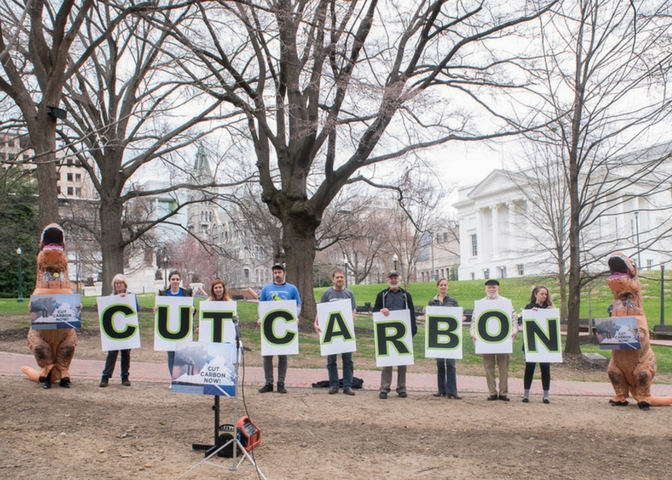
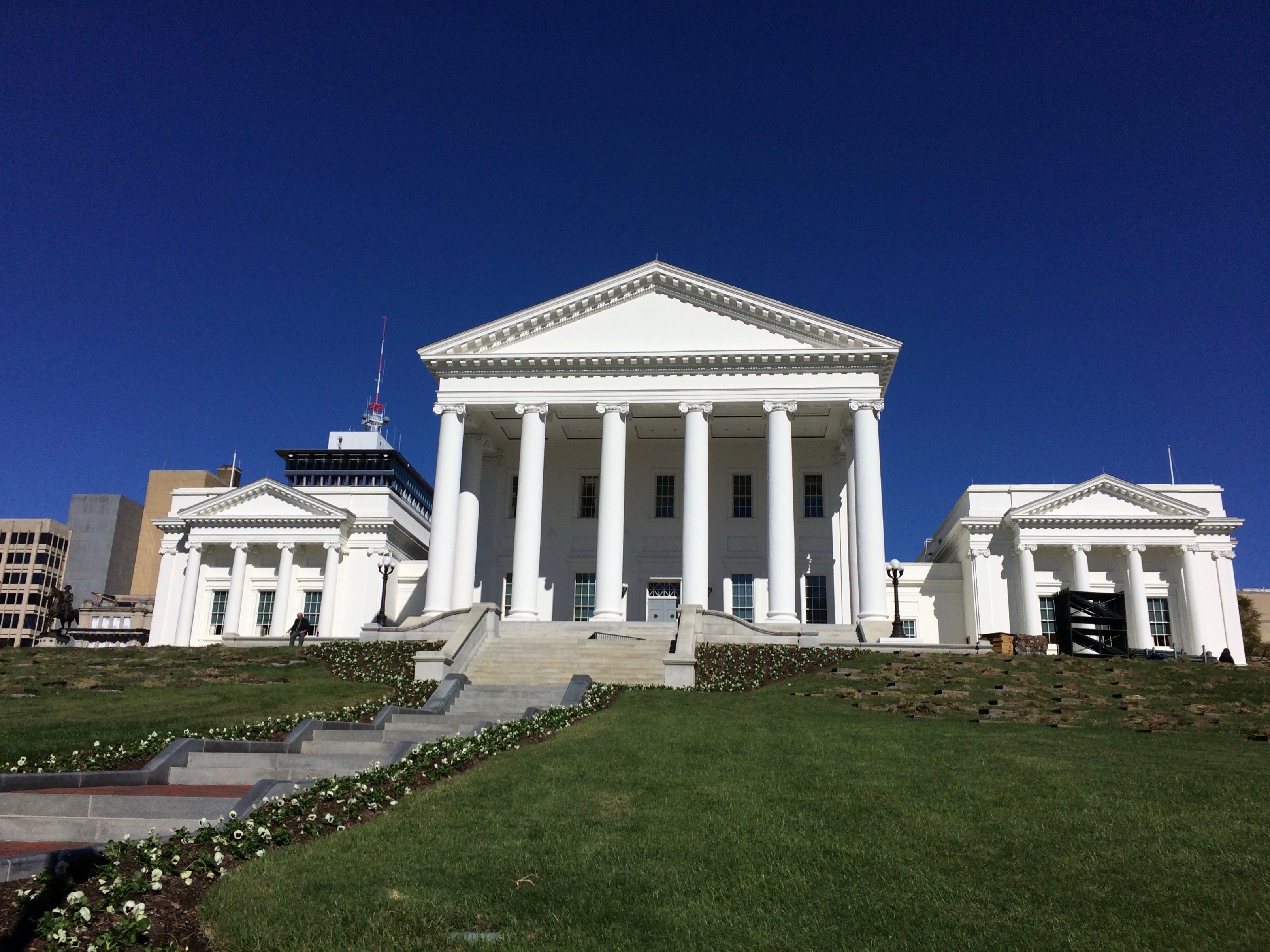



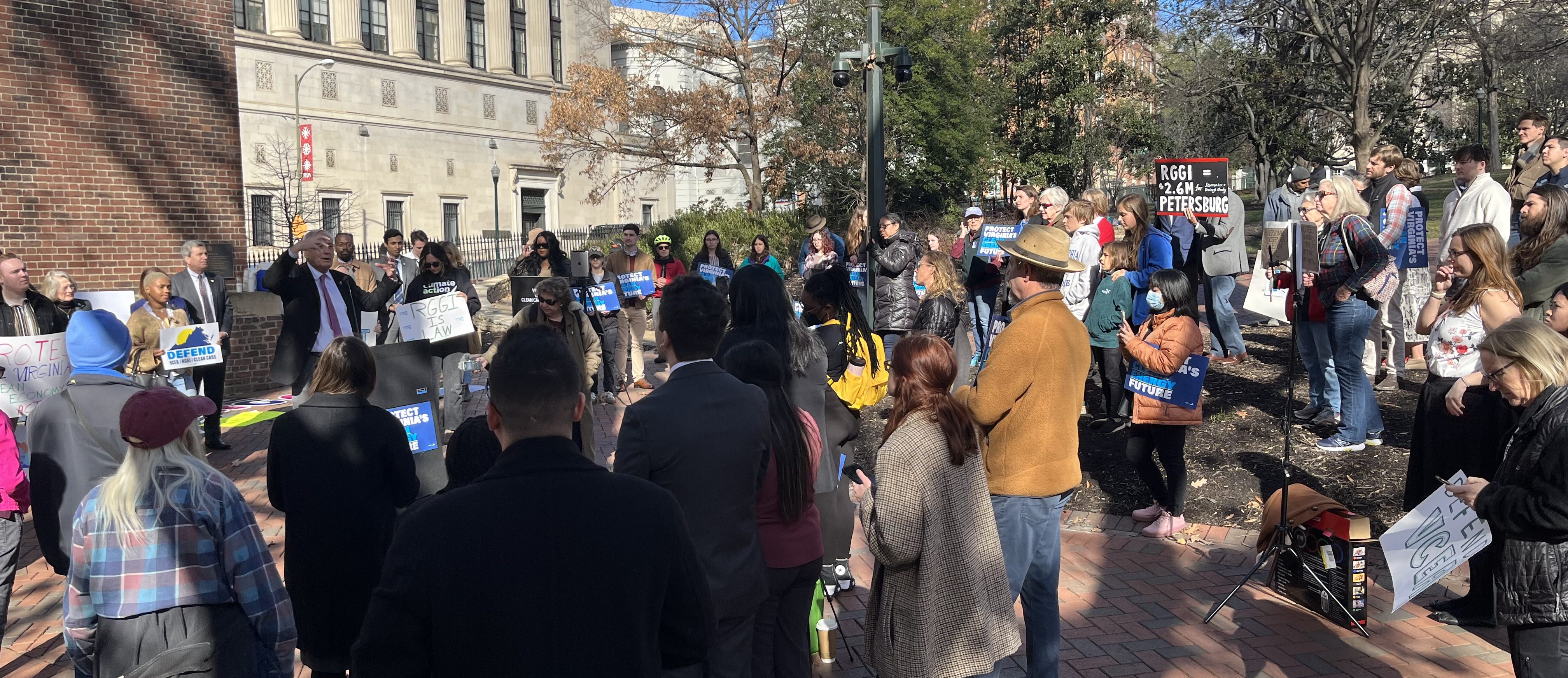
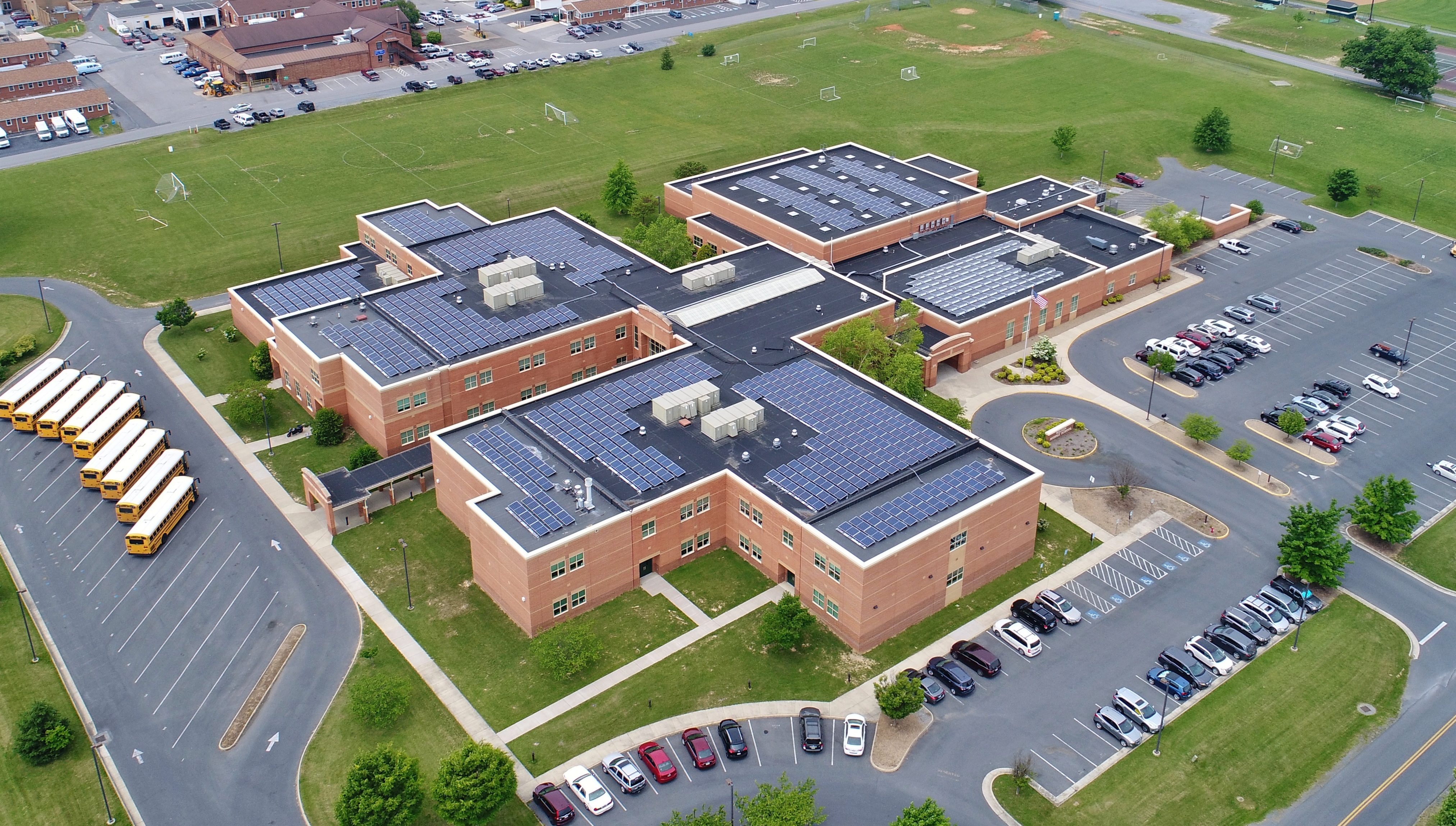

 Power for the People VA