Unknown's avatar

Why can’t I buy solar?

photoEvery year, on the first weekend in October, homeowners and businesses across the U.S. open their doors to a special kind of tourist: the solar wannabe. The American Solar Energy Society’s annual Solar Tour features homes with solar PV and hot water, along with an assortment of “green living” features that inspire envy and emulation.

Envy especially, I’m here to tell you. My home in the Northern Virginia suburbs is surrounded by beautiful mature trees that provide shade for my house, cooling for the neighborhood, carbon sequestration for the planet, and food for an abundance of insects, birds and other wildlife. What it doesn’t provide is a sunny place on the roof for solar panels. So when I go to houses on the DC Metro area tour, it’s a teeth-gritting experience.

I’m hardly alone. Less than a quarter of residents can install solar panels at their homes. The rest either have shade or other siting issues, or they are renters, or they live in condominiums where they don’t control the roof and common areas. That leaves the vast majority of us solar wannabes with nowhere to turn.

Some states let customers choose their electricity suppliers, which means they can select one that will supply them with renewable energy. But Virginia upholds the rights of monopolists to control our electricity supply. And my local monopolist, Dominion Virginia Power, sells only one electricity product: a mix of coal, nuclear, and natural gas, with barely a smidgen of stuff the legislature considers renewable (mainly wood trucked in from forests and burned).

I could subscribe to Dominion’s Green Power Program, but I’d still get the exact same dirty power. I’d just be paying extra for renewable energy certificates (RECs), mostly from wind farms in other states.

RECs don’t do it for me. Adding money to my utility bill for RECs is about as satisfying as buying a gallon of ordinary milk and adding a dollar extra to know that a buyer in Indiana paid for ordinary milk but got organic. Maybe both milks taste the same, but that’s not the point.

No, if I’m buying RECs, I want them to come attached to actual, Virginia-made wind or solar power. I know I’m not alone; the 20,000 people who have signed up for the Green Power Program, plus those who buy from other REC sellers like Pear and Arcadia, are proof that if Dominion cared to build wind or solar, it would find a ready market.

But it hasn’t. And Dominion also refuses to let the private market do the job. I’ve been approached by would-be solar developers who ask why they can’t put a solar array on unproductive farmland and sell the power to people like me. When that happens I swoon with delight for a moment, then glumly point them to the experience of Washington and Lee University three years ago. The university wanted to buy solar from a project on its campus but owned by a developer. Dominion came down on them like a ton of bricks, claiming a violation of its monopoly.

Dominion also opposes allowing customers to pool their money for a shared solar project, like an array on one house that could provide electricity for two or more. Sometimes called community net metering or solar gardens, and a growing trend in other states, shared solar unleashes the power of private investment by freeing up customers to build and own solar together and get credit on their utility bills for their percentage of the electricity the project puts on the grid. Imagine how much new economic activity we could create this way, and how much clean generation we could build, without state government mandates or subsidies.

There are thousands of Virginians like me who want renewable energy and are willing to pay for it. If our utilities don’t want to build it, they should step aside and let customers do it.

Unknown's avatar

Dominion’s ties to ALEC, McDonnell’s conviction, all part of one corrupt package

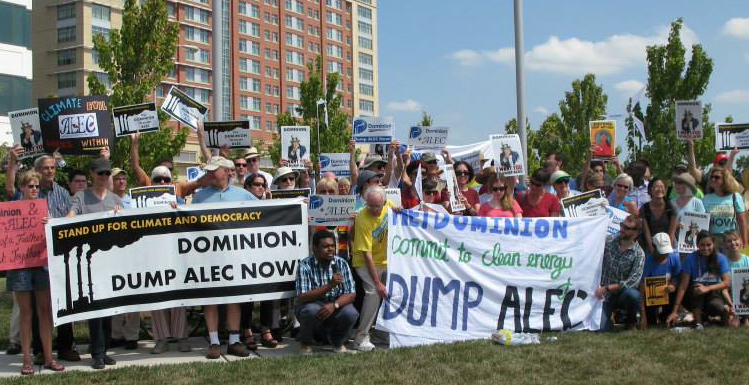
Group Dominion quit ALEc image 2

Protesters gather outside the Crystal City headquarters of ALEC

A crowd of protesters gathered at the Arlington headquarters of the American Legislative Exchange Council (ALEC) on September 4 to demand that Dominion Resources, the parent of public utility monopoly Dominion Virginia Power, drop its membership in the right wing “bill mill.”

On the very same day, a jury convicted ex-Governor Bob McDonnell and his wife on federal corruption charges, setting off a new round of debate about Virginia’s lax ethics laws.

The two news items sound like different topics, but in fact they are both about the corruption undermining our democratic system. The McDonnell trial, with its focus on swank vacations, golf clubs, designer clothes and other neat stuff, actually missed the bigger breach of public trust that goes on every day. This takes the form of unlimited corporate campaign contributions and gifts to members of both parties, and the influence over legislation purchased by this largesse.

Dominion Power has spent decades and many millions of dollars building its influence in Richmond this way, to the point where most legislators don’t bother pursuing a bill if the utility signals its opposition. That’s why Virginia has not followed so many other states in requiring its utilities to invest in energy efficiency, wind and solar. Economic arguments, jobs, electricity rates—all these are talked about in committee, and all are irrelevant to the fate of a bill. The only relevant question for legislators is, “What does Dominion think?”

What Dominion thinks, though, is not about what’s good for its customers, but what’s good for its own bottom line. And this is where ALEC comes in. Dominion Virginia Power’s president, Bob Blue, sits on an ALEC committee with representatives from the climate-denial group Heartland Institute, the Koch-funded anti-environment group Americans for Prosperity, and that most oxymoronic of lobby shops, the American Coalition for Clean Coal Electricity. Their purpose is to craft model state bills that protect fossil fuel profits and attack all efforts to regulate carbon emissions.

Dominion provides a straight shot from ALEC’s back-room bill-brokering to Virginia’s statute books, trampling environmental protections along the way and giving the lie to Dominion’s façade of environmental responsibility. No wonder so many of last week’s protesters were Dominion customers who objected to the utility using the money it charges them for electricity to pay its ALEC dues.

We see the result every year in the General Assembly, as bills drafted by ALEC pop up all over the place without attribution. In addition to attacking clean energy, ALEC bills oppose worker protections and minimum wage initiatives, promote stand-your-ground bills like the one at issue in the Trayvon Martin case, and of course, undermine the kinds of clean-government efforts that would reduce the influence of corporations—like campaign finance reform.

And because the voters are the only people who could prove more powerful than corporations—and the only ones who might ultimately cut off the corporate cash flow—ALEC works to undermine voting rights as well.

In the wake of the McDonnells’ convictions, Virginia legislators are once again mumbling about tightening up the rules on gifts. The discussion is half-hearted; the pay for their work is paltry and the hours are long, so they aren’t anxious to give up the perks.

But it’s too late for half-measures. Elected officials are going to have to subject themselves to a ban on gifts, and the prohibition should extend to ballgame tickets, golf getaways and sit-down dinners. The loophole that currently allows campaign funds to be used for personal use must also be closed to avoid an end-run around the gift ban.

But until we turn off the corporate cash spigot, our democracy will still have special interests, not voters, calling too many shots.

Unknown's avatar

Children need the EPA’s carbon pollution standard

This post, from guest blogger Samantha Ahdoot, originally appeared in the August 21 edition of the Fairfax County Times. I’ve written about the threat that increasing summer temperatures poses for people who have to work outdoors in ; here, Dr. Ahdoot tells us what carbon pollution means for children.

The end of summer fun? Higher temperatures resulting from carbon pollution could limit children's outdoor time.

The end of summer fun? Higher temperatures resulting from carbon pollution could limit children’s outdoor time.

Every day, parents protect their children from a myriad of risks. By strapping them in car seats, placing them on their backs to sleep and cutting their grapes into quarters, parents do everything in their power to insure their children against harm. President Obama’s Clean Power Plan will be called many things in the upcoming months, but it is ultimately an insurance plan. It is insurance for our children against the dangers of carbon pollution and resulting climate change.

Carbon pollution presents a major risk to the health, safety and security of current and future children. Rising atmospheric carbon is making our planet hotter. While skeptics may say this remains uncertain, our major scientific organizations (NASA, NOAA, IPCC) tell us it is at least very, very likely. With this increased heat, many other climactic changes are already occurring, including melting glaciers, rising sea levels and worsening storms. These fundamental changes ultimately impact human health, and children are amongst the most vulnerable to these changes. Some impacts are already affecting children today and are being seen by pediatricians like myself.

Allergic rhinitis, for example, affects about 10 percent of American children. With later first frost and earlier spring thaw due to rising global temperature, the allergy season has become longer. In the Northern Virginia region, where I practice, it has lengthened by about two weeks. More northern regions of the country have experienced greater lengthening. Higher carbon dioxide in the atmosphere also causes ragweed plants today to produce more pollen than in preindustrial times. Allergy season is therefore both longer and more severe.

Some infectious disease patterns have already been impacted by climactic changes. As global temperatures rise, many plants and animals are migrating poleward. They are bringing diseases, like Lyme disease, with them. There is now Lyme disease in Canada, and large increases in reported cases of Lyme have occurred in the northern U.S. Maine had 175 cases in 2003 and 1300 cases in 2013, while New Hampshire had 262 cases in 2002 and greater than 1300 cases in 2013. Children under five years old, who spend the most time outside playing in high-risk areas, have the highest incidence of Lyme disease.

Increasingly long and severe heat waves also place children at risk of heat-related illness. While the elderly are at highest risk from extreme heat, some groups of children also appear to be vulnerable. Infants less than one year, for example, have immature thermoregulation, and infant mortality has been found to increase due to extreme heat. A study from MIT found that by the end of the 21st century, under a “business as usual” scenario, infant mortality rates would increase by 5.5 percent in females and 7.8 percent in males due to heat-related deaths. U.S. student athletes are a high-risk group for heat injury. Teenage boys, most commonly football players, made up 35 percent of the roughly 5,900 people treated yearly in emergency rooms for exertional heat illness between 2001 and 2009. According to the CDC, heat illness is a leading cause of disability in high school athletes, with a national estimate of 9,237 illnesses annually.

Health impacts on individuals and communities will grow significantly if we allow carbon emissions, and global temperatures, to rise unchecked. Power plants contribute approximately one-third of U.S. greenhouse gas pollution. Reducing emissions from existing fossil fuel-fired power plants represents a major step towards altering our emissions, and climate, trajectory. Obama’s Clean Power Plan is, ultimately, like a car seat- an insurance plan for our children against a significant risk of harm. The road of climate change will be long and hazardous. Our children deserve to be strapped in.

Dr. Samantha Ahdoot is pediatrician in Alexandria. She is a Fellow of the American Academy of Pediatrics (AAP), and a member of the Executive Committee of the AAP’s Council on Environmental Health.

Unknown's avatar

Finally, utility-scale solar for Virginia?

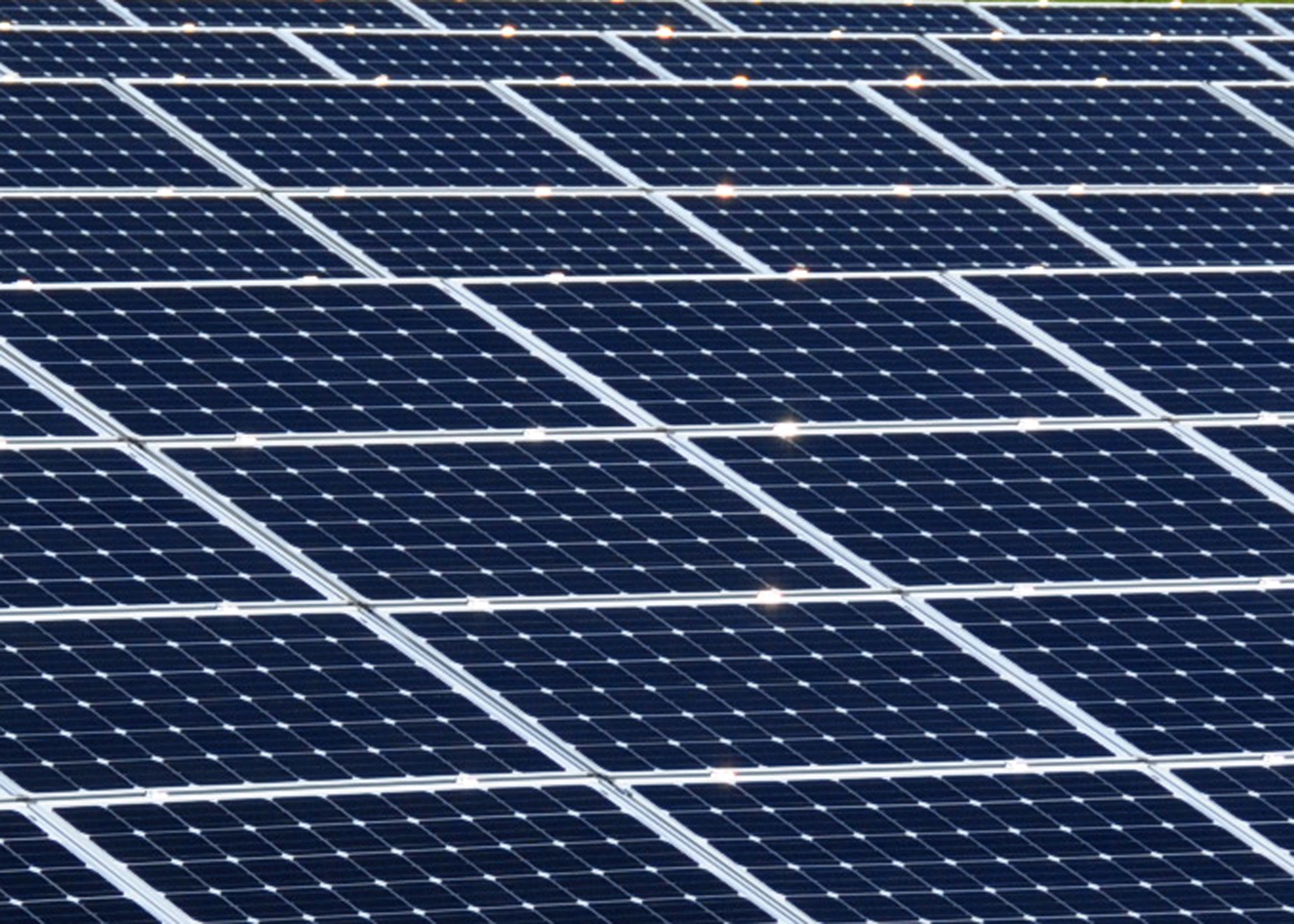
111022-N-OH262-322After a solar buying spree in other states, Dominion Power is at last taking a look at the possibility of building utility-scale solar in Virginia.

As reported in the Richmond Times-Dispatch, Dominion Resources, the parent company of Dominion Virginia Power, is considering building 220 megawatts of solar projects in Virginia, starting in 2017. The plan would involve five 40-megawatt “greenfield” projects, plus 20 megawatts located at existing power stations. (A greenfield is an area that is not already developed. So the large projects would be on former farmland, say, not closed landfills or old industrial sites.)

The company’s recent solar buys in California, Connecticut, Indiana, Georgia and Tennessee have all involved the unregulated, merchant side of Dominion Resources. But in this case, the plan is for Dominion Virginia Power to own the Virginia projects and sell the electricity to its customers here in the Commonwealth. This would require approval of the State Corporation Commission—which, as we know, is no friend to renewable energy.

A little more digging confirmed that Dominion plans to sell the solar energy to the whole rate base, rather than, say, to participants in the voluntary Green Power Program. How would they get that past the SCC? That remains unclear, but they know keeping the cost down will be key. Right now they’re looking at all the options to make it work. The company is still at the conceptual stage, is still looking for good sites of 100 acres and up, and hasn’t even made a decision to proceed.

So we should probably hold our excitement in check for now. After all, Dominion has had wind farms in Virginia “under development” for the past several years, with nary a turbine in sight.

Solar does have a few advantages over wind, though, from a utility perspective. For one, it produces power during the day, when demand is higher, while onshore wind tends to blow more at night. (Offshore wind, on the other hand, picks up in the late afternoon and evening, right at peak demand time.) And unlike wind farms in the Midwest and Great Plains, where turbines coexist peacefully with cows and cornfields, turbines in the mountains of the east have generated opposition from people concerned about impacts on forests and viewsheds. You find some curmudgeons who think solar panels are ugly, but they aren’t trying to block them wholesale at the county level.

With the sharp drop in solar costs over the last few years, large-scale solar has been looking increasingly attractive to utilities that want to beef up their renewable energy portfolios. As we learned recently, Dominion’s got a long way to go before it competes with even an average utility elsewhere. That puts it in a poor position to respond to the rapid changes heading our way. These include not just growing public demand for wind and solar and new regulatory constraints on carbon emissions, but also the much-discussed upending of the traditional utility model that depends on a captive customer base and large centralized generating plants running baseload power. Distributed generation and batteries increasingly offer customers a way to untether themselves from the grid, while wind and solar together are pushing grid operators towards a more nimble approach to meeting demand—one in which baseload is no longer a virtue.

Dominion and its fossil fuel and nuclear allies are fighting hard against the tide, but in the end, Dominion will do whatever it takes to keep making money. And right now, the smart money is on solar.

None of this means we should expect Dominion to become more friendly to pro-solar legislation that will “let our customers compete with us,” as one Dominion Vice President put it. But it does suggest an opening for legislation that would promote utility-owned solar, perhaps through the RPS or stand-alone bills.

Legislators shouldn’t view utility-owned solar as an alternative to customer-owned solar; we need both. And if being grid-tied means being denied the right to affordable solar energy, we will see customers begin to abandon the grid. But those aren’t arguments against utility-scale solar, either. Big projects like the ones Dominion proposes are critical to helping us catch up to other states and reduce our carbon emissions.

So full speed ahead, Dominion! We’re all waiting.


Unknown's avatar

Energy Plan must prepare Virginia for hotter summers

A version of this blogpost was previously published in theHampton Roads Virginian-Pilot on July 20, 2014

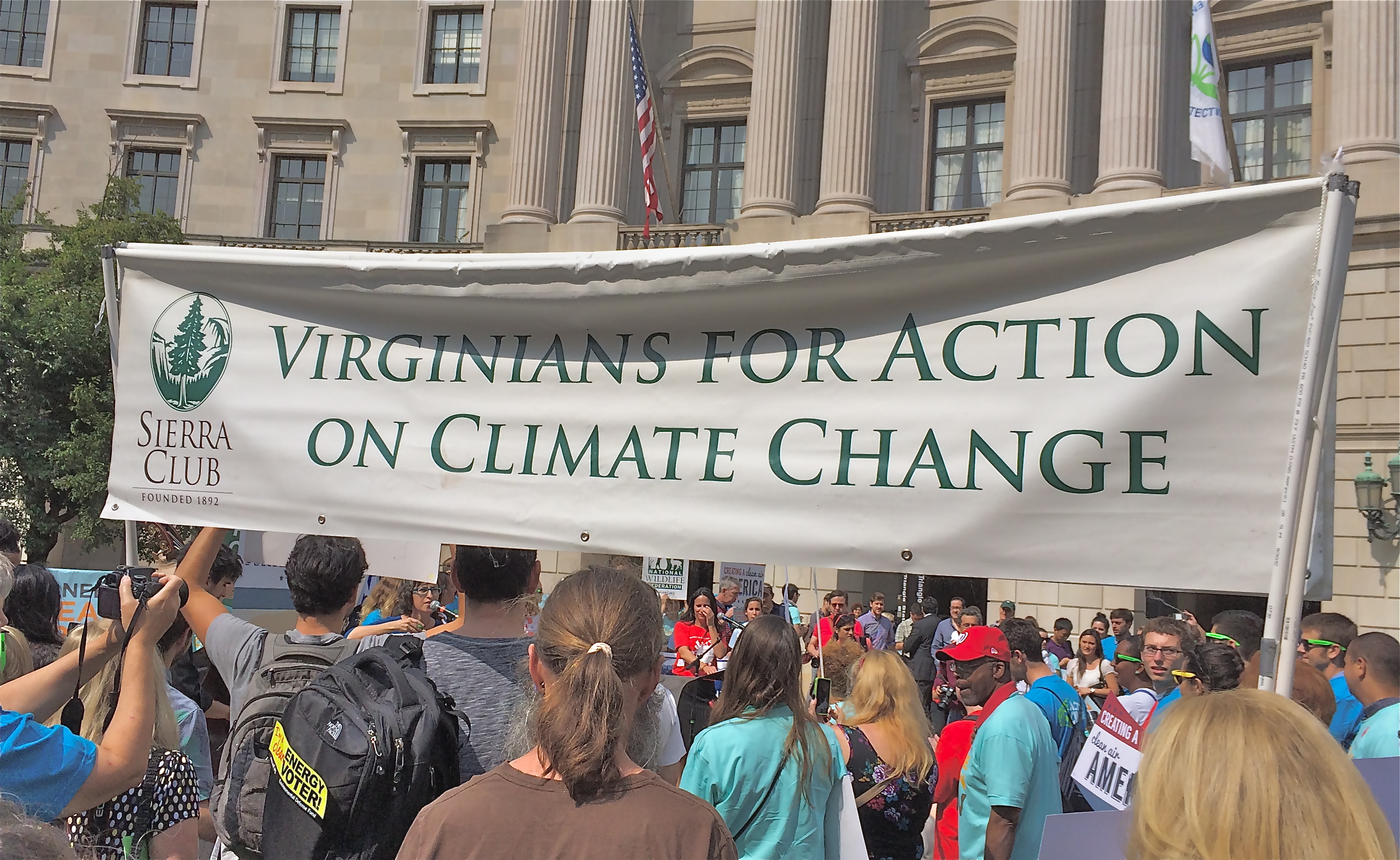
Virginians rally in front of U.S. EPA Headquarters in Washington, DC

Virginians rally in front of U.S. EPA Headquarters in Washington, DC

“Over the past 30 years, the average resident of [the Southeast] has experienced about 8 days per year at 95° or above. Looking forward, if we continue our current emissions path, the average Southeast resident will likely experience an additional 17 to 52 extremely hot days per year by mid-century and an additional 48 to 130 days per year by then end of the century.”

            —Risky Business: The Business Risks of Climate Change in the United States

This quote comes from a report issued in June by an all-star group of business and government leaders, laying out the costs involved in higher temperatures and sea level rise. The section on the Southeast is especially likely to make you want to move north and west.

Virginia has started to focus attention on rising sea levels because they are already taking a toll on Tidewater areas, regularly flooding neighborhoods in Norfolk and eating away at the Eastern Shore. In 2013, at the behest of the General Assembly, the Virginia Institute of Marine Science produced an in-depth report on sea level rise and our options for dealing with it. The report says southeast Virginia should expect another one to two feet of sea level rise by 2040, and up to 7.5 feet by the end of the century. We have our work cut out for us, but at least we’re facing up to it.

By contrast, we have not yet begun planning for higher summer temperatures. As the Risky Business report warns, these higher temperatures will make much of the humid Southeast literally uninhabitable without air conditioning. And that has profound implications for our energy planning, starting now.

More intense summer heatwaves will place additional stress on the electric grid and cause costly spikes in power demand. Power outages, today mostly an inconvenience, will become public health emergencies unless there are back-up sources of power readily available, such as solar PV systems with battery storage distributed throughout every community.

Better building construction will be critical to keeping homes and businesses cool reliably and affordably. Since buildings last for many decades, we shouldn’t wait for summers to become deadly before we start mandating better insulation. It is vastly cheaper and more effective to build energy efficiency into a building than to retrofit it later.

This makes it especially unfortunate that the McDonnell administration caved to the home builders’ association last year and did not adopt the updated residential building codes, which would have required these kinds of improvements in new additions to our housing stock. Governor McAuliffe’s failure to reverse the decision this year remains incomprehensible.

However, the McAuliffe administration is now engaged in three planning exercises that ultimately converge around Virginia’s future in a warming world. The Department of Mines, Minerals and Energy is currently writing an update to the Virginia Energy Plan as required by statue every four years, and which must be submitted to the General Assembly this October. On a slower track, a revived Climate Commission will begin conducting its work over the course of the next year. And most recently, the Department of Environmental Quality has announced listening sessions this summer focused on the U.S. EPA’s proposed climate rules.

This timeline puts the (energy) cart before the (climate) horse. The writers of the Energy Plan will not have the benefit of the climate commission’s deliberations, and won’t know what the final EPA rules will require. With pressure from utilities, fossil fuel interests and home builders, business-as-usual thinking might prevail. That would be a mistake.

We don’t know whether the worst extremes cited in the Risky Business report will become reality, or whether the U.S. and the rest of the world will manage to reduce greenhouse gas emissions enough to slow the rise of the oceans and check the worst of the heatwaves. But while we hope for the best, it makes sense to plan for the worst.

And in this case, planning for the worst will also reduce the likelihood of it happening. If we improve building efficiency starting now, we will cut down on the emissions driving a Risky Business future. If our disaster preparedness includes solar panels on businesses and government buildings, we cut emissions and make the grid more resilient.

Global warming has to be part of Virginia’s energy planning from now on. It’s just too risky to ignore it.


Unknown's avatar

Now’s your chance: Virginia seeks public input on carbon rules

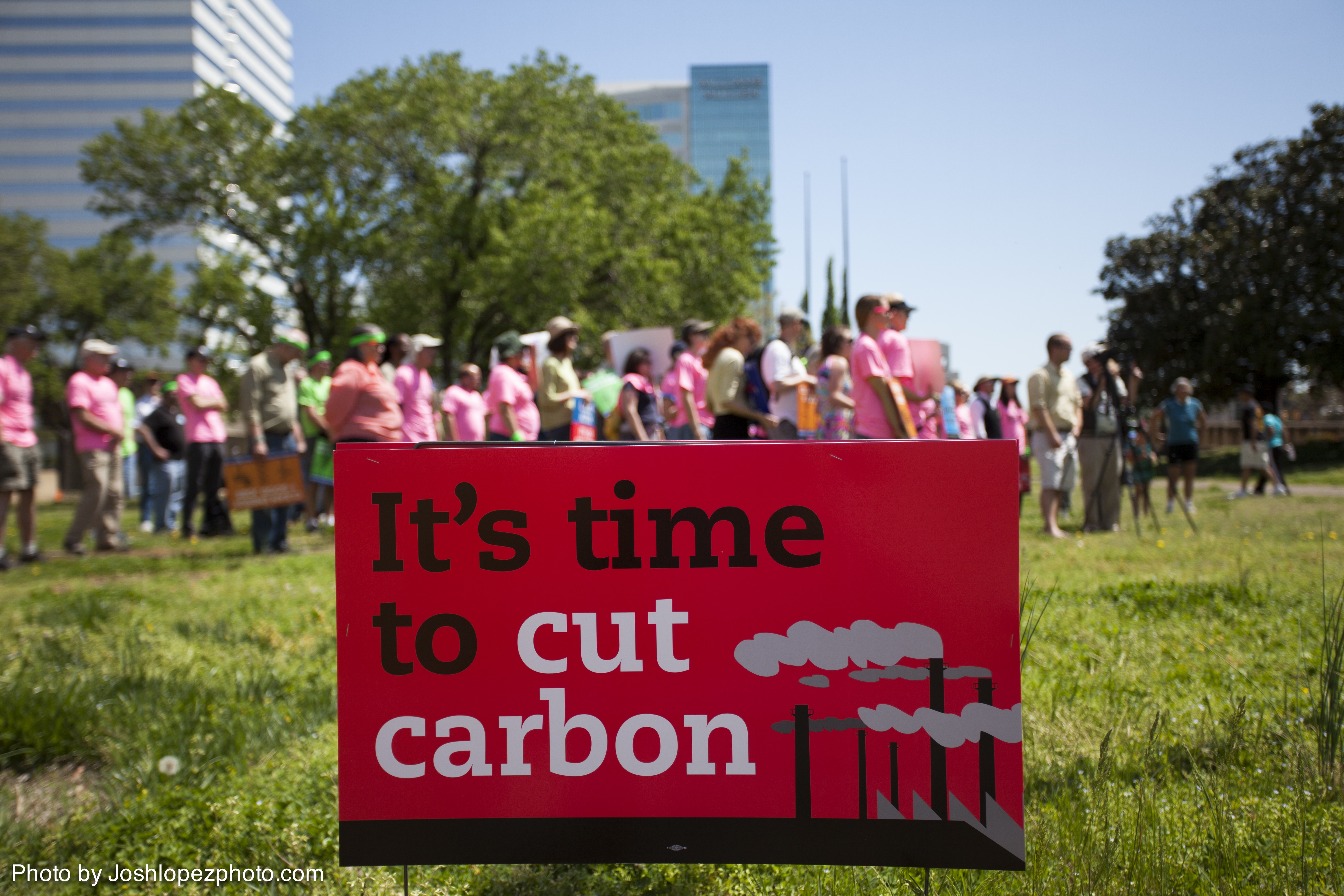
Photo by Josh Lopez, courtesy of the Sierra Club.

Photo by Josh Lopez, courtesy of the Sierra Club.

On June 2 the U.S. EPA proposed a Clean Power Plan for the states, and now the Virginia Department of Environmental Quality wants to know what Virginians think about it. Starting July 22, DEQ is holding four “listening sessions” to get the public’s views:

  • Tues, July 22 in Wytheville, VA, Snyder Auditorium, Wytheville Community College, 1000 East Main Street, 5 PM to 8 PM.
  • Thurs, July 24 in Alexandria, VA, Meeting Room, John Marshall Library, 6209 Rose Hill Drive, 5 PM to 8 PM.
  • Mon, July 28 in Virginia Beach, VA, Auditorium, Virginia Beach Public Library, 4100 Virginia Beach Blvd., 5 PM to 8 PM.
  • Thurs, Aug 7 in Henrico, VA, Administration Board Room, Henrico County Govt. Center, 4301 East Parham Rd., 5 PM to 8 PM.

Depending on turnout, speakers may be limited to 3-5 minutes, though written testimony can be any length. Written comments can also be submitted to ghg@deq.virginia.gov.

The purpose of the listening sessions, according to DEQ, is to help the agency determine what comments it will file on the EPA plan, and how Virginia can implement the rules as they have been proposed.

The first question is one for the public—do we support EPA’s plan to cut carbon emissions? The answer, of course, is an emphatic yes. In fact, EPA’s proposal is too modest, and we can do better.

Carbon pollution affects everyone in Virginia: residents of coastal areas experiencing recurrent flooding and beach erosion due to sea level rise; farmers whose crops will suffer from higher summer temperatures and drought; people who have asthma or heart disease; the elderly, who suffer most during heat waves; and parents who want to leave a healthier planet for our children and grandchildren. DEQ needs to hear from all these residents.

DEQ’s second question is how we should go about cutting carbon. The EPA plan proposes a carbon budget for Virginia that would reduce our emissions by 38.5% over 2005 levels by 2030. It wouldn’t tell us how to do it, but outlines four broad categories of options:

  • Increasing the efficiency of existing coal plants to reduce carbon emissions;
  • Increasing utilization of existing natural gas-fired power plants;
  • Expanding the use of wind, solar, or other low- or zero-emitting alternatives; and
  • Reducing consumption through energy efficiency.

We may be able to do all of these, but the third and fourth categories offer the big opportunities. Virginia lags behind other states on energy efficiency, has so little solar that the industry trade groups haven’t bothered to track it, and has no wind power at all. As a result, we have a lot of low-hanging fruit to go after. So EPA’s 38.5% is readily achievable if we refocus our energy policies to support energy efficiency and zero-emission energy sources like solar and wind.

This is hardly a new theme, though the EPA plan gives it new impetus. For years environmental groups have argued to the State Corporation Commission, utilities and the legislature (and anyone else who will listen), that a sound energy policy for Virginia should include substantial investments in energy efficiency, solar and wind. That combination offers the most bang for the buck and provides the most benefit to Virginians in the way of clean air, jobs and business opportunities.

It’s been a hard sell; Virginia utilities make more money when they sell more power, so they don’t like efficiency measures that lower demand, and the SCC has always favored “cheap” energy, no matter what it costs us. EPA’s plan can help us overcome these barriers if Virginia adopts the right policies. These could take the form of an energy efficiency resource standard (EERS) and a law giving teeth to our renewable portfolio standard (RPS). Alternatively or in addition, we could join a regional cap-and-trade system that effectively puts a price on carbon, such as the northeast’s very successful Regional Greenhouse Gas Initiative.

If any of these are to become a reality, it will take public demand to make it happen. Even with carbon taking center stage now, there is room for utilities to carry us in the wrong direction. Dominion Virginia Power sees carbon regulation as an opportunity to develop nuclear power at ratepayer expense, in spite of the costs, the risks, the shortage of cooling water, and the lack of any long-term plan for radioactive waste. Expensive central power stations, heavily subsidized by the public but comfortably familiar to executives and lucrative for shareholders, remain Dominion’s top choice.

With Dominion using its cash and clout liberally in Richmond, its preference for more gas and more nuclear will carry greater weight with decision-makers than such an approach deserves. So if the public wants anything else, it had better speak up—and now’s the time to do it.


Unknown's avatar

What’s North Carolina got that we ain’t got? Solar.

solar installation public domainRenewable energy advocates were delighted by the news last week that American University, George Washington University, and George Washington University Hospital, all in DC, have contracted to buy 52 megawatts of solar power from three projects to be built in North Carolina. The projects will be owned and operated by Duke Energy. It’s one of the biggest solar deals in the East, and puts the two universities and the hospital at the forefront of nonprofit institutions.

Many universities have been debating the merits of divesting their endowments from fossil fuels, an important but mostly symbolic move in the fight against global warming. But buying solar for campus operations and investing in solar projects on campus actually carries the ball forward. It reduces fossil fuel use, helps the solar industry grow, and supports local jobs.

Although in this case, the jobs aren’t local. The astute reader will have noticed that an entire state lies between the District of Columbia and North Carolina, but it got skipped over in this deal. A project like this one in Virginia would have about quadrupled our entire installed solar capacity to date. We, too, have under-utilized agricultural land and communities pining for new additions to their tax base, and we have solar installers working in every corner of Virginia. We could have done this. So what has North Carolina got that we ain’t got?

Pro-solar policies, for one thing. North Carolina offers a 35% tax credit that is driving the huge growth in solar in the state; North Carolina has about thirty times more solar than Virginia. The credit probably explains how the universities and the hospital could be promised a price for solar electricity that will be less than the price for regular “brown” power.

As word of this gets around, there will be a lot of other nonprofits looking at this deal and considering similar projects for themselves. North Carolina will see even more activity like this in the future—meaning it will continue to benefit from growth in the solar industry, creating jobs and bringing in new revenue.

North Carolina’s Duke Energy also seems to be more interested in developing solar in its home state than is Dominion Virginia Power. Duke is no angel—like Dominion, it uses its membership in the American Legislative Exchange Council (ALEC) to concoct attacks on customer-owned solar.

But Duke has signed on to own and operate the two universities’ projects, while Dominion busies itself complaining about other North Carolina solar projects.

Meanwhile, back in Virginia, Dominion brags that it intends to install an 800-kilowatt solar system on two buildings in Sterling. News reports put the price tag at $2.5 million, or $3.125 per watt, for what Dominion says will be the biggest rooftop solar installation in Virginia.

Of course, it’s only the state’s biggest rooftop system because Dominion’s customers face a 500-kW cap on the size of solar projects they can net meter under a Virginia law that Dominion fights hard to maintain. This low cap is one more barrier for Virginia.

And in its announcement, Dominion did not suggest the company harbors any actual enthusiasm for solar. In a carefully worded statement, Dominion’s vice president for customer solutions, Ken Barker, said the project “reflects Dominion’s commitment to understanding how solar power can fit into our generation mix,” and “will enable us to evaluate the benefits and study the impact of distributed solar generation on our electric grid.”

That “commitment to understanding” is a long way from a commitment to supporting a vibrant solar market in Virginia. That’s something we have yet to see from Dominion.

And in case you’re wondering, the project will be built by—ahem—a North Carolina developer.

Unknown's avatar

Governor McAuliffe gets his chance on energy and climate


Virginia Sierra Club activists Tom Ellis and Ann Moore. Photo by Ivy Main

Virginia Sierra Club activists Tom Ellis and Ann Moore. Photo by Ivy Main

2014 is shaping up to be an exceedingly interesting year for energy policy in Virginia. The rewrite of the Virginia Energy Plan, the re-establishment of the Governor’s Climate Commission, and EPA’s just-proposed carbon rule create three separate pathways that will either intersect to form a coherent and coordinated state policy, or will take us into a chaotic tangle of competing agendas.

Add in the myopia of the State Corporation Commission and the control of the General Assembly by utility and coal interests, and we’ve got an unpredictable plotline here. All you energy watchers are going to want to stock up on popcorn for this show. Or better yet, become a player—read on to find out how.

First there’s the energy plan. Virginia law requires a new iteration every four years, with this year’s due October 1. To help with the work, Governor McAuliffe appointed the Virginia Energy Council two weeks ago. The Council consists primarily of energy industry members, with only one environmental representative and no consumer advocates. (Although come to think of it, that might be because Virginia doesn’t have any consumer advocates. But still.)

The Council will be working with the staff of the Department of Mines, Minerals and Energy, which has already begun holding “listening sessions” and accepting comments to get input from the public. The next one will be held tonight, June 17, in Annandale, Virginia. Get there early and sign up for a speaking slot. Other locations include South Boston on June 19, Abingdon on June 24, Norfolk on June 26, and Harrisonburg on July 1.

The existing energy plan, created under Governor McDonnell, is the sort of “all of the above” hodgepodge that you’d expect from a process where you bring in a bunch of energy company executives and say, “Have at it!” I’d be concerned that the same fate awaits the new one, but for a couple of new factors: the reboot of the Governor’s Commission on Climate Change and the looming threat of EPA’s carbon rule. (Making this the first time ever that I’ve welcomed anything I called a looming threat.)

The Climate Commission was supposed to have launched by now, and if it had, I might have been able to say something definite about how it will interact with the Energy Council. Unfortunately, Governor McAuliffe got a little sidetracked by something you may have heard about: the political chaos that ensued when a certain Democratic senator resigned his seat and threw the Senate into Republican hands under suspect circumstances in the middle of a battle over the Governor’s signature initiative.

(In fairness. the senator’s backers insist he acted only out of the purest self-interest and not because he’d been bribed, there being a legal difference. Still, from now on anyone who screws over a large number of friends at once will be said to have “Pucketted” them.)

As you may remember, Governor Kaine established the first Governor’s Commission on Climate Change back in 2007 to study the effects of global warming on Virginia and to make recommendations on what to do about it. The commission issued a well-thought-out report replete with excellent suggestions. The report was put on a shelf and admired for a while, until Governor McDonnell found out about it. He acted swiftly, taking down the Commission’s web page lest anyone think he believed in rising sea levels and flooding and predictions about the dire consequences of global warming—you know, the sort of thing you can actually see going on now in Hampton Roads, the second-largest metropolitan area in Virginia.

Governor McAuliffe, on the other hand, not only “believes in” climate change and the risks it poses to Virginia, but also believes there are huge job and growth opportunities to be had by taking action in response. He has made it clear he does not want his commission to start from scratch, but rather to pick up where the Kaine commission left off.

McAuliffe’s Energy Plan must also take account of carbon emissions in a way the McDonnell plan never tried to. On June 2, EPA issued a proposed rule to address carbon pollution from existing electric generating plants, intended to reduce overall emissions nationwide by 30% by 2030. Although the rule won’t be final for a year, and states will then have as long as two years to implement it, and there will be lawsuits trying to block it from ever being implemented—still it means no one can ignore carbon now.

If you want to weigh in on the carbon rule, EPA will be holding hearings around the country, including in Washington, DC on July 30, or you can email your comments.

The proposed rule is not simple. Each state has been given a carbon budget for all its electric generating plants combined, expressed in pounds per megawatt-hour, and arrived at by some still-rather-opaque notion of what a given state is capable of. The cleanest states are thought to have policies in place to get even cleaner, so their targets are more ambitious than those of the dirtiest states. The dirty, coal-intensive states, having done so little to clean up in the past, are thought incapable of making a whole lot of progress now, and so are rewarded by being graded on a curve. Interestingly, it is not the clean states crying foul, but the dirty ones.

Virginia’s carbon target falls in the middle, but achieving it will require improvements of 37.5% over 2012 levels. This sounds harder than it is, given that we have several natural gas plants under construction that will presumably count towards lowered emissions as they dilute the coal in the state’s power mix. EPA also assumes that existing plants can operate at higher efficiencies that will reduce emissions per unit of energy produced.

The carbon rule also contains what seems to be a freebie of 6% of existing nuclear power, a provision intended to encourage the continued operation of nuclear plants that still have time remaining on their licenses but are no longer economic. In Virginia’s regulated market, our nuclear plants don’t have to compete on the open market and so aren’t in danger of being shut down for economic reasons, but apparently we get the freebie anyway.

Beyond that, however, the carbon rule will clearly put a thumb on the scale in favor of energy efficiency and carbon-free power sources. The EPA is right to think we have plenty of those to call on. A few years ago, ACEEE released a study showing Virginia could readily achieve energy efficiency savings of almost 20% cost-effectively, and much more if we really rolled up our sleeves. Since then, the few utility programs that have addressed energy efficiency have barely moved the needle. This means the low-hanging fruit still clings there, only now it’s really, really ripe.

Add in offshore wind (which can provide about 10% of state energy needs just from the initial lease area that Dominion Power bought rights to), some land-based wind (a few more percentage points) and solar energy (estimated to be able to produce 18-25% of our demand), and we know we can blow right through the EPA target.

As we also know, though, Dominion CEO Tom Farrell has his heart set on a new nuclear plant, which would suck up all the money that might otherwise go to renewables and dampen the utility’s interest in efficiency. Given nuclear’s high cost, the need for taxpayer and ratepayer subsidies, and the public safety risks involved, the free market isn’t on his side. But with captive ratepayers and the legislature on the company payroll, Farrell’s dream remains a possibility in Virginia.

As I say, it’s going to be an interesting year.


Unknown's avatar

News on renewables makes Virginians green, but not in a good way

Virginians want wind and solar. Bummer, y'all.

Virginians want wind and solar. Bummer, y’all.

On May 20, the Georgia Public Service Commission signed off on two power purchase agreements that will add 250 megawatts (MW) of wind energy to the state’s electricity mix. This comes on top of earlier commitments to solar energy that, combined with the wind power, will give Georgia more than 1,000 megawatts of renewable energy capacity by 2016.

While we certainly want to congratulate Georgia on its commitment to clean energy, the news has turned Virginia advocates a little green–and not in a good way. We can only wish this were us. Virginia has no wind energy to boast about, and about 15-18 megawatts of solar, according to estimates from the Department of Mines, Minerals and Energy.

This comes on top of other recent announcements about the great strides being made in renewable energy nationwide. If you can stomach it, here are the numbers: the U.S. installed over 1,000 MW of wind in 2013, and another 485 MW of wind just in the first quarter of 2014, bringing the total installed capacity to date to over 61,000 MW. More than 7,000 MW are in development

In Virginia, we have a few backyard turbines.

Solar, for its part, keeps breaking records, with over 4,700 MW installed in 2013, a 41% increase over the previous year, and another 680 MW in the first quarter of 2014.

Virginia solar broke into the double digits—bring out your horns and whistles!—thanks to the efforts of homeowners, colleges, the military, a few progressive towns and a handful of consumer-conscious businesses. As for our utilities, they have developed less than 1 MW of wind and solar in the Commonwealth.

Oh, but Dominion Resources, the parent of Dominion Virginia Power, just bought a 7.7 MW solar project. In, um, Georgia.

Changing to a local focus won’t help our case of envy. West Virginia doesn’t have much solar, but it has 583 MW of wind energy. North Carolina doesn’t have much wind, but it installed 335 MW of solar energy in the last year alone. Maryland is up to 142 MW of solar and 120 MW of wind.

Tennessee—Tennessee!—has 29 MW of wind and 74 MW of solar.

If we were shooting for last place among east coast states in the race to develop renewable energy, we might be able to congratulate ourselves. We are doing a great job of falling further and further behind.

Sadly, Virginia, there is no consolation prize.

Unknown's avatar

APCo wants higher bills for homeowners who go solar

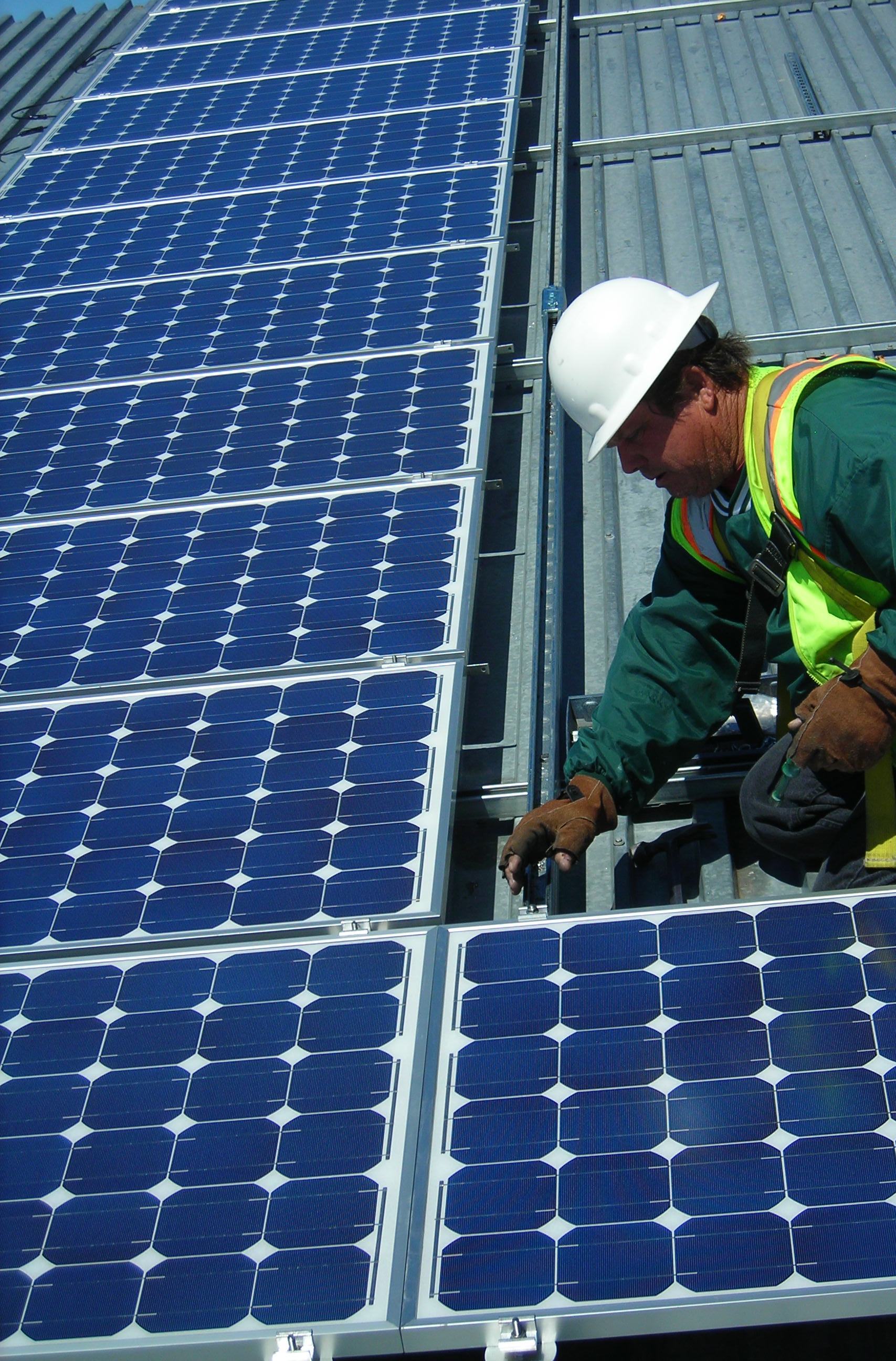
Workers installing solar on a roof. Photo credit: Dennis Schroeder, NREL

Workers installing solar on a roof. Photo credit: Dennis Schroeder, NREL

Update: The SCC approved APCo’s standby charges with a small modification. As it had when considering Dominion’s standby charge, the SCC declined to consider the benefits of solar to APCo. See http://www.scc.virginia.gov/docketsearch/DOCS/303%2301!.PDF at page 36-37.


Appalachian Power Company (APCo) is seeking permission from utility regulators to impose new “standby” charges on residential customers who install solar systems over 10 kilowatts (kW). The fee is included in the company’s latest rate proposal, now before the State Corporation Commission.

According to the filing, the transmission and distribution charges would add $3.77 per kW to the monthly bill of a customer who goes solar with a large residential system. That means homeowners with 10 kW systems would pay an added $37.70 per month. Charges would escalate to $75.40 per month for homes with 20 kW systems, the largest size allowed under net-metering rules.

So the potential is there for a solar homeowner to owe over $900 per year in new charges on his electric bill. But according to APCo, only three customers in all of its Virginia territory have systems large enough to qualify for a standby charge, with no additional big systems in the queue.

That’s right: APCo is spending many, many thousands of dollars on lawyers and consultants so it can change rules that affect three people.

Ahem. Lest anyone think APCo is worried about cost. APCo’s decision to move now proves this is not about freeloaders on the grid. This is about protecting the corporate monopoly on electric power by shutting down the independent solar industry while it is still small.

In this, APCo is following the lead of Dominion Power, which got the SCC to approve similarly onerous standby charges on its own large residential solar customers in 2011. The utility’s ability to do so was authorized that year by a bill amending section 56-594 of the Virginia Code. The statute leaves it up to utilities and the SCC to determine the amount.

The Virginia solar industry acquiesced to the standby charge language as part of a deal that raised the residential net metering limit from 10 kW to 20 kW. Industry members assumed any charges the SCC approved under the law would be modest, given the many benefits solar brings to the grid.

Their assumption proved spectacularly wrong. The SCC bought Dominion’s arguments about solar homeowners not paying their “fair share,” dismissing expert testimony and findings from other states that solar enhances grid security and offsets peak demand.

The result has been a clear setback for the solar industry’s ability to sell larger home systems. Dominion’s steep standby charges “are forcing the solar industry to take a step backward when we’ve worked so hard to make positive steps forward,” says Andrew Skinner, Project Manager with Prospect Solar in Sterling, Virginia. “Working with several small farms and residences in rural VA, we have had to design right up to the threshold of the standby charge to make the economic case most compelling.”

Dominion and APCo are following the playbook of the American Legislative Exchange Council (ALEC), a secretive corporate lobbying organization that seeks to roll back pro-renewable energy laws across the country. The parent companies of both Dominion and APCo are members of ALEC, and Dominion’s president, Bob Blue, served on ALEC’s energy and environment task force with representatives from the American Petroleum Institute, the American Coalition for Clean Coal Electricity, the science-obfuscation shop Heartland Institute, and other champions of all things fossil. (Greenpeace recently announced that six utilities have resigned from ALEC; unfortunately our guys were not among them.)

Given that APCo’s proposed standby charges are so similar to Dominion’s, APCo probably figures its request is a slam-dunk at the SCC. And given how few people are affected, it may be tempting to ignore it. But just last summer Dominion signaled its intent to try to extend its own standby charges to more solar customers, which makes the issue relevant to everyone who owns a solar system, wants one, or supports the rights of others to buy them.

Whether utilities should be loading up their solar customers with added fees is also at the heart of two studies getting underway in Virginia this year examining the costs and benefits of solar, one of them under the auspices of the Department of Mines, Minerals and Energy and the Department of Environmental Quality, and the other by the SCC itself. With a consumer backlash growing nationwide against utility efforts to “tax the sun,” APCo’s move looks like a way to lock in a rate increase on solar owners before the data is in—and before its customers catch on.

It’s especially unfortunate that the utilities’ push against net metered solar comes at a time when we are beginning to see a flourishing of the solar market. Total installed solar in Virginia has leapt from under 5 megawatts just a couple of years ago to perhaps 18 megawatts today. Okay, that’s a paltry figure compared to, say, North Carolina’s 557 megawatts or New Jersey’s more than 1200 megawatts, but starting from next to nothing gives us a really fantastic growth curve.

The rapid drop in solar prices has been a major factor driving Virginia sales. Says Skinner, “With the advancements in the solar market over the past couple years, even here in Virginia, we have been inching closer to the 10 year or less payback period. We talk to people every day that tell us they’ll go solar here when the payback is less than 10 years. A standby charge reverses that trend based on an argument with flawed economics. While other states are making progress on the true value of solar, we’re here with our head held under water.”

He concludes, “Even while holding our breath we are still creating jobs and installing solar arrays all over our beautiful state. I was born and raised here, and I’m proud to work for a VA based company; we just need to get rid of these backward policies so we can keep moving forward.”

APCo’s rate case is PUE-2014-00026, which can be found on the SCC website. For a discussion of the standby charge proposal, look for the exhibit containing the testimony of Jennifer Sebastian. The deadline for submitting comments on APCo’s application is September 9, 2014, and a public hearing will be held on September 16 at the SCC offices in Richmond.