Unknown's avatar

Energy bills to watch in 2014

photo credit: Amadeust

photo credit: Amadeust

Every year, hundreds of energy bills are fed into Virginia’s sausage-making machine, but little of interest to clean energy advocates makes it out the other end. Utilities and coal companies largely control the outcome, thanks to their generosity in funding legislators’ campaigns, and they do not share our desire for change.

Yet the start of each new Session, like the new year itself, always produces hope and excitement about the possibilities at hand. 2014 is no exception. There are a lot of bills here worth watching, and even rooting for. The list below is not comprehensive, and new bills keep coming in while existing ones get amended faster than I can keep up with, so take this summary only for what it’s worth today.

One point worth noting is that many of the most promising bills come from Republicans. Renewable energy and energy efficiency, once identified with progressives, seem to have gone mainstream in Virginia. Well, why not? In addition to lowering our carbon footprint and helping residents save money, they make business sense and create jobs.

How to look up a bill: The links in this article will take you to the summary page for a bill on the website of Virginia’s Legislative Information Service. The bill summary is not guaranteed accurate and does not change even if the bill language changes substantially, so always follow the links to the latest version of the bill to read the text. The summary page also shows what committee the bill has been assigned to; following the links will show you who is on the committee, when it meets, and what other bills have been assigned.

Investment tax credit. The bill with the potential to do most for renewable energy in Virginia is HB 910 (Villanueva), which would provide tax credits for renewable energy projects. The top priority this year for the solar industry, the bill would go a long way towards helping renewable energy compete in a state that still shells out millions of dollars every year in coal subsidies. A companion bill from a Senate Republican is also expected but has not been filed as of the time of this posting. The combination would be a powerful statement of support from a party that has not always been a friend to renewable energy.

In a bid to create broad support, HB 910 is not limited to emission-free projects like wind and solar. It would be hugely unfortunate if a few large biomass projects were to gobble up the credits, so we hope the patrons will commit to making any necessary fixes in future years if that happens.

Expanding net metering. Three-quarters of utility customers can’t take advantage of solar energy because their property isn’t suitable for solar panels. HB 879 (Yost), HB 906 (Krupicka) and SB 350 (Edwards) would allow customers in multifamily housing to participate in shared renewable energy systems, a limited form of community net metering. The bills would also allow something called “municipal net metering,” under which local governments could build a single renewable energy facility and attribute the energy from it to multiple meters on property owned by the locality. In addition to solar, these projects could include wind, landfill gas or gas from aerobic or anaerobic digesters.

Although these three bills look to be the same right now, I’m told they may be changed so that one House bill deals with multifamily housing and the other with municipal net metering.

Defining solar panels as pollution control equipment. SB 418 (Hangar) is primarily a useful workaround to address a tax problem that is holding back solar power purchase agreements. Odd as this sounds, currently third-party-owned solar systems are subject to local tax as manufacturing equipment. In many jurisdictions where solar PPAs have the most potential to help churches, schools, and other non-profits go solar, the tax is so high as to make the projects impossible to finance. Many localities want to help solar but are paralyzed by fear of opening a Pandora’s Box of unintended consequences. To solve the problem, SB 418 would extend to solar panels a tax exemption currently available to landfill gas projects and wood mulching equipment. Beyond helping PPAs, the legislation would also exempt solar equipment from state sales tax, which would make solar systems more affordable to all solar customers.

RPS bills. Several bills seek to improve Virginia’s pathetic voluntary renewable portfolio standard law by restricting the kinds of energy or credits that can be used to meet it. None of them would make the RPS mandatory, so they can’t deliver the kind of robust market in renewable energy credits (RECs) that supports the wind and solar industries in other states. For the most part, they aim for small fixes that could cue up stronger bills in future years, and reduce the consumer rip-off that characterizes the current RPS.

Of these, HB 1061 (Surovell) is the solar industry favorite. It would create the beginnings of a solar REC market here even within the framework of the voluntary RPS. This “Made in Virginia” bill would require Dominion Virginia Power to meet a portion of its voluntary target with renewable energy certificates representing distributed generation produced in Virginia, or by contributions to the state’s voluntary solar resource fund, which provides loans for solar projects. The State Corporation Commission would be tasked with the job of creating a system for registering and trading Virginia-based renewable energy certificates (RECs).

HB 881 (Yost) similarly sets up a system of renewable energy certificate registration and tracking at the SCC. It also eliminates the double and triple credits that the RPS currently gives to certain types of energy, only grandfathering in some wind RECs that Appalachian Power had already contracted for.

SB 498 (McEachin) makes a number of changes to the voluntary RPS to put it on a stronger footing going forward. It limits a utility’s ability to satisfy the goals with purchases of low-quality RECs like those from old hydroelectric dams and landfill gas, and ensures that most future purchases of energy and RECs will represent high-quality resources like wind and solar. It does not, however, include a carve-out for Virginia distributed generation. A similar bill last year received the blessing of Dominion but died in the face of opposition from the Virginia Alternative and Renewable Energy Association, arguing for the interests of the producers of crappy RECs.

Delegate Alfonso Lopez spent much time and effort over the past year trying to broker a deal between the utilities, environmental groups and renewable energy companies to produce a modest consensus bill. The result, HB 822, would seem to be a testament to how little consensus there is; it includes only a two-year limit on banking RECs for use in future years and the elimination of double credit for energy from animal waste. (I’m guessing the animal waste people weren’t at the table.) It also strengthens existing wording about the RPS serving the public interest, which may help utilities get SCC approval for expenditures to meet the targets.

On-bill financing for energy efficiency. Advocates of clean energy say the best way to get homeowners and businesses to weatherize buildings and install efficiency upgrades is to let customers pay the cost through their utility bills, often out of the energy savings they reap.  HB 1001 (Yancey) would require electric utilities to offer on-bill financing for energy efficiency measures. The bill would be stronger if it included gas utilities and did not insist on a five-year payback period, which is too short a time for many weatherization measures, but it’s still a great start.

Service districts. HB 766 (Bulova) adds energy and water conservation management services to the list of items that can be owned and maintained by local service districts. This adds a new tool for local governments to finance energy efficiency and renewable energy projects, allowing payments to be made via local property tax bills.

Virginia Commission on Energy and the Environment. The Virginia Energy Plan is due to be updated in 2014, and boy, does it need it. Anyone who has ever tried to make sense of the plan has probably given it up as a hopeless hodgepodge of contradictory ideas. Anything you like, it’s in there. Anything you don’t like is in there, too, and none of it means anything because the provisions for the most part have no teeth. HB 818 (Lopez) hopes to turn this mishmash into a coherent plan for Virginia’s energy future by creating a new legislative commission to perform a comprehensive review of the energy landscape.

Price stability. HB 808 (Lopez) adds consideration of long-term price stability to the factors that utilities and the State Corporation Commission must look at when evaluating a proposed new electric generating facility. This would help to level the field for renewable energy, since fuel prices for fossil fuels are highly volatile and largely unpredictable over the full 30-year design life of a facility, whereas wind and solar are famously price stable.

Consideration of the environment. In a case decided last summer (PUE-2012-00128), the State Corporation Commission essentially interpreted the Virginia code to eliminate its own role in protecting the environment when it approves electric generating facilities. HB 363 (Kory) beefs up the code just enough to make it clear the SCC still has a job to do even when state agencies have issued all the relevant permits. The bill requires the SCC to consider matters not covered by permits, such as carbon emissions and the overall effect of electric generation facilities on the health and welfare of residents.

Dealing with climate change. Hampton Roads is facing a crisis as sea level rise combines with sinking land to swamp low-lying coastal areas with every major storm, a problem predicted to get steadily worse over the course of the century. SJ 3 (Locke) and HJ 16 (Stolle) establish a Recurrent Flooding Planning Committee to examine ways to respond. It’s a good bill, but really, it’s weird to address recurrent flooding with no mention of what’s causing it. Dealing with recurrent flooding in Hampton Roads without talking about climate change is like addressing the obesity epidemic without mentioning diet and exercise. Why kid ourselves?

Carbon Dioxide Emission Control Plan. Speaking of kidding ourselves, SB 615 (Carrico) would establish a commission with the job of limiting carbon emissions without limiting the sources of those emissions. Indeed, the bill would be more accurately titled the Carbon Pollution Continuance Plan. It’s too bad to see legislators fighting to keep coal plants running full-tilt when we have better, cleaner, and cheaper options—ones that don’t put us on a course to make “recurrent flooding” a daily occurrence.

Unknown's avatar

Can carbon sequestration save Virginia’s coalfields?

Mountaintop removal coal mining

Mountaintop removal coal mining

Many elected officials who care about the stark challenges confronting America’s coal-producing regions today are pinning their hopes on carbon capture and sequestration. This technology takes carbon dioxide out of power plant emissions and stores it underground. Since coal is the number one emitter of carbon dioxide, the greenhouse gas primarily responsible for heating the planet, carbon sequestration might be the only way to continue our use of coal in a world increasingly worried about climate disruption.

Virginia’s newly-elected governor, Terry McAuliffe, has high hopes for carbon sequestration. McAuliffe is confronting a problem that confounded his predecessors: how to deal with the continuing economic decline of southwest Virginia’s coal-producing counties. But, enthusiastic as he is about new technology, McAuliffe should be skeptical of suggestions that carbon sequestration offers a solution to Virginia’s coal decline. It does not.

This decline has been going on for decades. It predates the recession and the Obama presidency and tighter regulations aimed at protecting public health. It predates the explosion in natural gas fracking that has made gas cheaper than coal. Coal employment in Virginia has steadily dropped and is now below 5,000 workers, less than half of what it was in 1990. The best coal seams have been mined out, exacerbating the problem that Virginia coal is more expensive to mine than coal from other states. To get at the remaining seams as cheaply as possible, coal companies increasingly resort to mountaintop removal, destroying vast tracts of the Appalachians with explosives and giant machines (but very few workers). Even if carbon capture and storage proves successful, coal employment in the commonwealth won’t recover.

We aren’t the only Appalachian state facing this problem, but others are tackling it head-on. Kentucky, facing an even steeper decline in its coal-producing areas, has launched a bipartisan effort to help the region move beyond coal. This doesn’t mean they are happy about it, but they are willing to look facts in the face.

In Virginia, on the other hand, the response for some years has been to throw money at the coal companies and hope for the best. Virginia taxpayers shell out millions of dollars every year to corporations that mine Virginia coal. Legislators keep renewing the coal subsidies even though a 2011 review by the Joint Legislative Audit and Review Committee concluded they aren’t effective.

If throwing money at coal companies can’t halt the slide in Virginia coal, it’s hard to see how carbon sequestration technology could do it, even if the government were to pay for it. And given the environmental destruction involved in mountaintop removal mining, prolonging the end of the coal era in Virginia shouldn’t be anyone’s priority.

The start of a new administration offers a chance for a new strategy. Admittedly, it won’t be easy. The challenge of bringing new industries to a remote and mountainous region is a tough one, and support for coal still remains high in the area. Why, then, insist on confronting cold reality?

Because it has to be done.

Terry McAuliffe campaigned on jobs, and has given every indication he means it. Given his background, connections and talents, he is in as good a position as any governor in recent times to take on the challenge of helping southwest Virginia diversify its economy. He can work with the legislature to redirect the millions of dollars currently going to ineffective coal subsidies into tax credits for jobs in new industries and support for projects like home weatherization that create jobs and make a difference in people’s lives. He can challenge the entrenched interests, twist arms, enlist allies, recruit businesses, use the media—in short, make this a priority. The residents of the coalfields deserve as much.

Unknown's avatar

Time to get serious about offshore wind

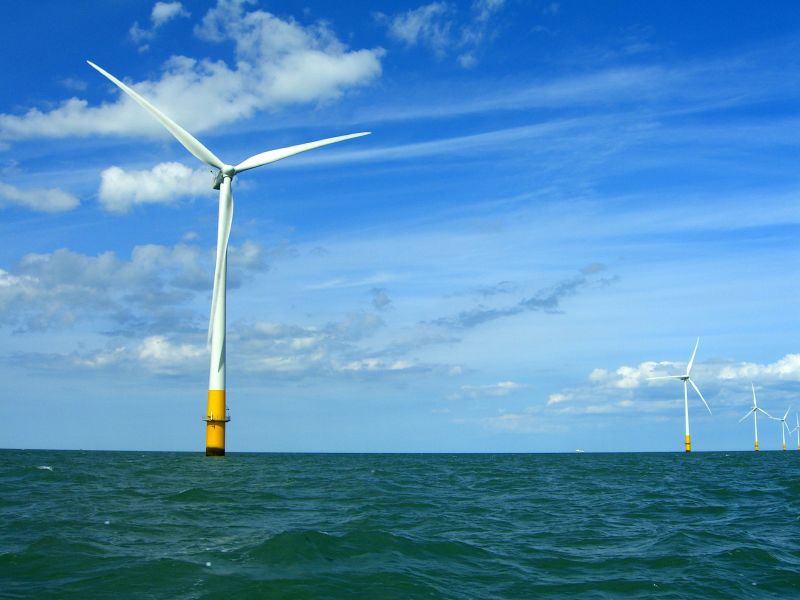
Photo credit: Phil Holman

Photo credit: Phil Holman

A version of this article originally appeared in the Hampton Roads Virginian-Pilot on Sunday, December 15.

No doubt about it, Virginia is for lovers of offshore wind. It’s hugely popular with the public, and Virginia legislators passed a near-unanimous resolution in its favor. Governor McDonnell talked it up, and even tossed it some bucks. Governor-elect McAuliffe is such a fan that he made television commercials about it way back in 2009.

But all that love won’t get us turbines in the water unless Dominion Virginia Power decides to build them. Dominion is the key player after winning the exclusive right to develop the federal lease area 25 miles off Virginia Beach. The company has five years to study the area and come up with a construction and operations plan—or not. Right now the company is being coy about whether it will move forward come 2018.

Alas, Virginia, getting offshore wind turbines is going to take more than sweet talk: we have to start laying the groundwork now for that trip down the aisle. So here’s a to-do list to help get us there.

Governor McAuliffe should declare offshore wind a priority from the day he takes office. Only two test turbines are likely to be spinning before the end of his term, but he can make it clear he expects Dominion to meet all of the milestones in its federal lease, ensuring the next governor presides over the big buildout.

The governor and the General Assembly can also prove their ardor by funding ocean studies that have to be conducted before construction starts. The developer of Rhode Island’s wind energy area, Deepwater Wind, expects to have its turbines spinning only five years from now thanks to state-sponsored ocean studies that, Deepwater says, translated into a three-year head start. It’s an approach Virginia should emulate. The public will pay for these studies one way or another—either as taxpayers or as ratepayers—and footing the bill now will help us make up time.

The governor can also direct an analysis of workforce and port readiness so we begin to train workers and put in place the infrastructure needed for this huge new industry.

Of course, creating a skilled workforce is hard to do with no wind projects now in Virginia. Building land-based wind here would support the growth of the workforce and the supply chain, and give everyone experience with wind energy here. One project might be the wind farm proposed by Iberdrola in northeastern North Carolina, within commuting distance of Hampton Roads workers. Dominion turned down the chance to buy energy from the project a few years ago, and it hasn’t been built. The General Assembly could turn that around with legislation to require our investor-owned utilities to incorporate wind power into their energy mix.

Why support a project in North Carolina? The simple fact is that offshore wind is too big an industry for any one state to go it alone. Creating scale and keeping costs down demands a regional approach. Cooperation means both states win. In addition to North Carolina, the governor should partner with Maryland and Delaware, which also have federally-designated wind energy areas off their coasts.

Regulators, and the public, also need to see an analysis of what impact this energy will have on our electric bills. Harder to quantify, but just as important, is a full understanding of offshore wind’s benefits. Such a study might begin with a survey to identify those Virginia companies that could participate in the supply chain, what new businesses and jobs the state might attract, and how the economically distressed regions of the state can best participate.

When the time comes, the State Corporation Commission will have to do its part by approving both the two test turbines and, later, the full wind farm. The legislature can help by declaring an offshore wind farm in the public interest—a short step beyond its earlier resolution, but one with actual weight.

Virginia offshore wind may still seem to be off in the future, but now is the time for the incoming McAuliffe Administration and the General Assembly to prove their love. Otherwise, Virginia just might get left at the altar.

Unknown's avatar

Why standby charges are bogus

Utilities want solar owners to pay for grid access.  Photo credit: NREL.

Utilities want solar owners to pay for grid access. Photo credit: NREL.

Rooftop solar energy makes up a tiny fraction of the total electricity produced in America, but already utilities worry about a day when large numbers of their customers won’t need them any more. As renewable energy costs continue to tumble and the technology of battery storage improves, many residents and businesses may abandon their power utility to go it alone or form microgrids within their communities to control their own power.

Some utilities understand that this is the future and are looking for ways to turn these trends to their advantage. Others are doing everything they can to protect their turf, and progress (and the environment) be damned. They figure they can’t wind up on the wrong side of history if they stop history from happening.

Hence the attempt to throttle solar while it’s still little. Caps on system sizes, caps on total amounts of distributed generation, prohibitions against third-party power purchase agreements, restrictions on net metering: all of these are efforts to keep solar too small to matter, and too small to achieve the economies of scale that could lead to an upending of the central utility model.

The latest effort to squelch solar is through standby charges: fees imposed on net metering customers that compensate the utility for “standing by,” ready to sell grid-produced energy at night and on cloudy days. In 2012 in Virginia, Dominion Virginia Power won the right to charge customers with large residential systems (10-20 kilowatts) up to $60 per month—a charge that destroyed this market segment. This summer Dominion pressed its advantage, indicating in a submission to regulators that it will likely seek more standby charges on a broader class of solar customers.

Note that Virginia has less than 15 megawatts (MW) of solar installed across the state. Dominion Power alone has around 19,000 MW of coal, gas and nuclear. So the notion that net metering by solar customers has any perceptible effect on the grid or other customers is silly. The point of Dominion’s stand-by charges is to stifle the solar market, not cover costs.

This same debate played out this year in Arizona, which saw its solar industry install 719 MW in 2012—still a tiny percentage of that state’s total energy supply, but one that is growing fast enough to warrant the discussion. Last week the public utilities commission agreed to allow Arizona Public Service Company (APS) to charge its residential solar customers an average of $5 per month. The utility treated the ruling as a win, and indeed the charges might eventually add up to enough to cover APS’s attorney fees in the case. That’s more than can be said about Dominion’s standby charges.

Meanwhile the conservative American Legislative Exchange Council (ALEC) has gotten into the act, drafting a model resolution insisting that net metering customers should have to pay their “fair share” of utility costs through measures like standby charges. Not incidentally, Dominion Power is a member of ALEC and sits on the energy and environment task force next to the fossil fuel shills from Heartland Institute.

But the “fair share” argument is bogus. Utilities weren’t set up to ensure Americans all paid their “fair share” of the costs of the electric grid. If they were, there would still be mountain communities without power today. Residents of cities and towns subsidized the cost of running power lines to far-flung rural homes inhabited by people who could never have afforded their “fair share” of this infrastructure.

Even today, city dwellers pay more than their “fair share” of transmission costs to subsidize people like me who live in leafy, sprawling suburbs and less-populated parts of the state. Anybody voting for an ALEC-style resolution about “fair shares” had better be willing to stick it to suburban and rural consumers.

There are other ways electricity rates aren’t “fair.” Dominion’s residential rates are structured so people who use less electricity pay more per kilowatt hour than those who use more—again, making it roughly a transfer of wealth from urban apartment dwellers to those with larger or less efficient homes elsewhere. The utility’s goal is to encourage the use of electricity, and compete more effectively with the gas company for heating. People paying their “fair share” just doesn’t enter into it.

And while we’re at it, if we were serious about subsidies we’d slap a tax on electricity made from fossil fuels to reflect the costs they impose on society. Asthma, heart disease, mercury poisoning, groundwater contamination, and of course, the dumping of carbon into the atmosphere—these are all costs of fossil fuel that ought to be included in power bills to make sure everyone is paying their “fair share.” People who install solar panels deserve a thank-you for their service to society, not standby charges based on bogus “fair share” claims.

The argument for standby charges is, pure and simple, an attempt by entrenched monopolies to block competition. The “fair share” argument is a red herring from utilities that don’t want a fair fight. And with good reason: they’re going to lose.

Unknown's avatar

What’s wrong with Dominion’s Green Power Program

Better than Green Power: installing a solar system yourself. Photo credit: NREL

Better than Green Power: installing a solar system yourself. Photo credit: NREL

Renewable energy advocates in Virginia were astonished to learn a few weeks ago that the U.S. Environmental Protection Agency has given Dominion Virginia Power an award for its Green Power Program.

Dominion’s program is not, to put it mildly, a good one. Half of the money its customers contribute is siphoned off for overhead and “education.” The rest goes to buy renewable energy certificates from out of state. Over the years Dominion has collected millions of dollars in these voluntary contributions without building a single wind or solar facility to supply the program. Surely the only green award this merits is one for greenwashing.

So I called the EPA to find out what criteria they use in determining who gets an award. It turns out the agency only measures the growth of a green power program, and Dominion has signed up more customers than other utility programs have.

I had to laugh. Customers of utilities in most other states have real options to buy wind and solar. If you can buy wind energy from an alternative supplier or participate in a community solar project, or if your utility is aggressively incorporating renewables into its power supply, you don’t need a green power program.

But Dominion has never built more than token amounts of renewable energy, and it continues to use its monopoly position to erect barriers to competition from others. The utility has signed up 19,000 Green Power participants only because it has effectively denied its Virginia customers any meaningful way of participating in the renewable energy market.

News of this award will surely lure more people in. Yet even if every one of Dominion’s customers signed up for the program, it wouldn’t shrink Virginia’s carbon footprint. Instead, Dominion’s latest integrated resource plan reveals plans for more fossil fuel generation and increasing greenhouse gas emissions over the next fifteen years.

And it’s worse than that. As of this year, Dominion is actually using the Green Power Program to bankroll an attack on renewable energy—one the State Corporation Commission shamefully endorsed when it approved the company’s 3-megawatt “solar purchase program.”

In this charade, Dominion buys solar power from homeowners and businesses to resell to the Green Power Program. The deal nets sellers a few cents over the retail price of electricity, but costs the Green Power Program almost three times as much. This overcharging of the Green Power Program would be bad enough. But the more insidious problem lies in Dominion’s justification for the high charge. It claims that rooftop solar energy is no more valuable than power from fossil fuels that it can buy at wholesale.

Dominion’s position flies in the face of recent studies demonstrating the benefits of solar energy to the grid, including generating power where demand is, providing power during peak hours when energy is most expensive, avoiding the need for transmission upgrades, eliminating line losses, and reducing the need for new generation.

It also runs counter to trends in states like Georgia, where Georgia Power has put a higher–than-retail value on the solar distributed generation it plans to buy, and says that paying the extra won’t put upward pressure on rates.

This makes it especially difficult to understand why Virginia’s State Corporation Commission approved Dominion’s Green Power rip-off. And predictably, Dominion has followed up its win with a deeply flawed study it plans to use as a basis for a new round of standby charges on customers who net meter. (The case is PUE-2012-00064, available on the SCC web site.)

So what is a dedicated renewable energy advocate to do?

There are options. If you are determined to buy RECs, you don’t have to go through Dominion. Buy from another source. But better yet, install solar yourself if you can. The price of solar panels has dropped so precipitously over the past few years (down 60% since the start of 2011) that you may find it worth taking out a home equity loan.

If you don’t have a sunny roof yourself or can’t afford the whole upfront cost, you can work with your school, community center or place of worship to install solar panels in your neighborhood. Interest in solar is very high among Virginia faith congregations, driving large turnouts for presentations on the topic given by Sierra Club and others in cooperation with the solar industry.

Or you can take the money you were spending on Dominion’s program and give it to a charity that will use it to install renewable energy here in Virginia; this may even get you a tax deduction. Low-income housing providers like Richmond’s Better Housing Coalition now put solar panels on many of their facilities, and will accept donations specifically for that purpose.

The Virginia Center for Wind Energy at James Madison University accepts donations to its Wind for Schools program, which helps public schools across the commonwealth install wind turbines for educational purposes.

A new non-profit, Three Birds Foundation, is working to put solar on public schools that serve low-income children in Virginia and elsewhere.

All these charities are committed to doing what Dominion, apparently, doesn’t want to do: install solar and wind energy in Virginia.

Unknown's avatar

McDonnell administration set to fail Virginians on building codes

Everyone agrees that cutting energy waste is the most cost-effective way to meet our energy needs while reducing reliance on fossil fuels. And making new buildings efficient from the start is the surest way to achieve energy savings. Energy efficiency is the Mom-and-apple-pie part of our energy policy. Who could oppose it?

The Home Builders Association of Virginia, for one. They would rather build cheap housing than efficient housing, even when high utility bills turn cheap housing into expensive housing.

Bowing to aggressive lobbying from the home builders, the Board of Housing and Community Development (BHCD) has backed away from the national model building code provisions that would have improved the efficiency of Virginia residences by as much as 27.4%, according to a U.S. Department of Energy analysis. And, the McDonnell administration has signed off on the weak regulations. Virginia’s Department of Housing and Community Development has proposed a watered-down code that is currently open to public comment until September 29.

The McDonnell administration prides itself on fiscal prudence and its love for the business community. Here is a case where fiscal prudence demands tough love. A watered-down code means money wasted.

The model code provisions would have required higher “R” values in ceiling and wall insulation, resulting in homes that cost less to heat and cool. It would also have required builders to check for leaks mechanically, rather than just eyeballing it, to catch air leaks while they can still be fixed. The code that Virginia is set to pass jettisons these improvements, and others.

It’s cheaper for builders to skimp on insulation and not worry about air leakage, but the result is a home of lower quality and value. Owners and tenants end up having to pay more to keep warm in winter, and cool in the summer. These higher utility costs paid by occupants quickly eclipse the savings to builders.

What’s more, the cost of fixing defects later is much greater than building the house right to start with. Drafty houses are a classic example of the need for strong building codes, because sealing and insulation aren’t visible to buyers, and trying to add them later is difficult and expensive.

Customers who are buying brand-new homes have the right to expect a quality product. Virginians should tell the Department not to waste this opportunity to improve our housing stock for years to come.

A strong building code will also reduce Virginia’s reliance on fossil fuels and help low and moderate-income residents in one of the most cost-effective ways possible. Housing built for the low-end market is particularly vulnerable to poor construction. Buyers usually don’t know where corners have been cut, or don’t care because they plan to rent out the buildings and won’t themselves shoulder the high utility bills.

Some builders do cater to sophisticated buyers with homes that meet higher standards, but the vast majority stick only to what the code requires. Utility bills consume a disproportionate share of the income of residents with low and moderate incomes, and can also be a particular burden for seniors and others on fixed incomes. The failure to keep pace with the national model code means a missed opportunity to help homeowners across the state, as well as future owners and tenants.

The more rigorous model code standards would result in some additional upfront cost to buyers, but the Department of Energy calculates that savings on utility bills would more than cover the additional payment on a mortgage. Over 30 years, the average consumer would see more than $5,000 in savings.

Unfortunately, the pressure from the home builder lobby has resulted in a proposal with greatly weakened provisions that mean most new homes will remain unnecessarily expensive to heat and cool.

Virginians should not have to live with leaky, inefficient homes. The Department of Housing and Community Development should restore and adopt the full 2012 model building code standards, to improve our housing stock now and for the future.

Unknown's avatar

Dominion wins Virginia offshore wind lease: well, duh

And the winner is . . . Dominion Power!

Okay, you knew that. Dominion had the deck so stacked in its favor for Wednesday’s Virginia offshore wind lease auction that the question everyone was asking at the end wasn’t “who won?” but “who bid against Dominion, and why did they bother?”

The answer to the first question proved to be Charlottesville-based Apex Energy, a far more experienced player in the wind industry—but one without Dominion’s lock on the Virginia power market.

There was much to criticize about the auction format and the process that led inevitably to Dominion’s win, but this historic step is still hugely exciting for offshore wind advocates. If Dominion follows through on the commitment it just made to develop offshore wind, Virginia will be a winner, too.

That “if” has a lot of people worried, given that Dominion is both a participant in the offshore wind industry and one of its loudest detractors. Company executives talk about their desire to develop the lease area, and also their opinion that offshore wind energy is way too expensive to succeed. Often they make both points in the same conversation.

Observers can’t help wondering why a company would pour money into a venture if it doesn’t believe it can sell its own product. Two possible reasons come to mind: one, because it is willing to gamble on political and market changes that will make its venture successful after all; or two, because by spending the money to win the lease, the company prevents any competitor from occupying the space. One is gutsy, the other is evil. It is possible for both to be true.

So what did Dominion win? The lease area, a 112,800-acre swath of ocean beginning more than 23 miles off Virginia Beach, is expected to support at least 2,000 megawatts of wind turbines—enough to power about 700,000 homes. It’s the second Wind Energy Area to be auctioned off in the U.S.; the first lies off Rhode Island and Massachusetts, and was auctioned off in August.

Under rules set by the Bureau of Ocean Energy Management (BOEM), the entire Virginia area was treated as one tract (a bad idea, in the view of advocates and industry members who aren’t Dominion, because it further reduced competition). Dominion won with a high bid of $1.6 million.

A formal announcement of the winning bid is expected in October, following federal antitrust review. As the winning bidder, Dominion will have five years to conduct the studies required for development of the area, with interim deadlines including submission of a Site Assessment Plan next summer.

After the five years is up, Dominion could decide not to proceed, releasing the area for BOEM to offer in a new auction. That result would be an unqualified disaster for Virginia’s ability to develop an offshore wind industry here. With states to the north proceeding, we would lose not just construction jobs, but the entire supply chain, and likely the marine services as well. Many thousands of jobs now ride on Dominion following through.

If Dominion decides to proceed, it will have to submit a Construction and Operations Plan at least six months before the expiration of the five-year site assessment period—that is, by the summer of 2018. BOEM will then evaluate the plan in accordance with the National Environmental Policy Act, producing an Environmental Impact Statement in 18-24 months, before construction can begin. That timeline puts construction underway no later than 2020, with electricity from the first turbines flowing by 2022.

The process doesn’t have to take as long as this; Deepwater Wind, which won the two leases in the Rhode Island/Massachusetts area last month, says construction there “could begin as early as 2017, with commercial operations by 2018.”

But Dominion had previously indicated its preference for the slowest possible approach. The company’s original idea was to build some wind turbines, think about it for a while, and five years later start all over again. Then five years later, round three. Another five years, round four. So 20 years on, if Dominion liked what it saw each time, Virginia would finally have its 2,000 megawatts.

In accordance with this plan, Dominion’s surrogate, the Virginia government, asked BOEM to make the lease term for Virginia’s Wind Energy Area 45 years instead of 25.

Other developers and the environmental community cried foul, pointing out that such an approach would mean a generation would be born, grow up and go off to college before we had all our wind turbines—hardly the way to build an industry or stave off climate change.

BOEM conceded half a loaf and agreed to a 33-year term that allows time for a phased approach, but a faster one. The agency expects the construction plan will consist of four, two-year phases, ensuring completion of the build-out in 8 years—or by 2028, to be followed by 25 years of operation.

We can only hope that BOEM’s confidence is not misplaced. Dominion employees have said candidly that right now, under current market conditions, the company has no intention of actually building offshore wind turbines.

What will it take to change its mind? The company talks about costs and the difficulty of getting approval from Virginia regulators. It seems likely that the company will follow through with construction only if some combination of events happens in the next few years:

  • Continuing advancements in technology bring the cost of offshore wind energy down. Already the latest cost estimates put offshore wind power well below the sky-high figures Dominion cites.
  • Congress or the EPA tackles climate change through incentives for renewable energy (or disincentives for fossil fuels);
  • The Virginia government passes legislation to create a market in Virginia for offshore wind power;
  • Virginia’s State Corporation Commission (SCC), which regulates utilities, alters the way it views renewable energy.

Of these contingencies, the last might be the hardest. The SCC seems to believe the public interest is served only by providing the cheapest possible electricity available today. It shows no interest in climate change, or the pollution costs of fossil fuels, or long-term price stability, or job creation, or asthma rates. Ignoring the actual language of the Virginia Code, it declared this summer that Virginia law doesn’t require it to consider the environment in evaluating a new electric generation facility.

But the offshore wind industry is now off and running in the U.S., and the only question is whether Virginia wants to be part of it. On that answer depend thousands of jobs for our residents, an abundant source of stably-priced energy, and Virginia’s ability to move beyond fossil fuels in the face of climate change.

Virginians overwhelmingly want to move forward on offshore wind; now our challenge will be to make it happen.

Unknown's avatar

Dominion’s giant concrete paperweight

Fracking_Site_in_Warren_Center,_PA_04

A natural gas fracking site in Warren Center, PA. Photo credit: Ostroff Law

The State Corporation Commission has approved Dominion Virginia Power’s proposal for a new gas-fired power plant in Brunswick County, rejecting arguments from the Sierra Club and others that ratepayers would be better served by a combination of low-cost energy efficiency and price-stable renewable energy.

The decision in the case (PUE-2012-00128) reflects the same discouraging themes we have seen from our regulators before: a tendency to believe everything Dominion tells them, coupled with an absolute refusal to acknowledge the climate crisis bearing down upon us and the changes in the energy market that make fossil fuels increasingly risky.

As the SCC put it in its order, “The relevant statutes… do not require the Commission to find any particular level of environmental benefit, or an absence of environmental harm, as a precondition to approval.” (Note to legislators: How about fixing that?)

The SCC’s state of denial is not just about the future. Since at least the 1980s, Dominion has consistently overestimated future demand growth.

A little skepticism might be in order when Dominion projects the same level of demand growth that keeps not materializing.

But the SCC is not skeptical. Its order declares Dominion’s load forecasts “reasonable.”

Evidently one can be both reasonable and wrong. Demonstrating this in real time, only a few days after the SCC issued its order in early August, Dominion CEO Tom Farrell had to explain to shareholders why electricity demand has not grown this year in line with company predictions.

Amnesia was also in evidence at the public hearing on the case, where proponents of the gas plant – everyone from Dominion employees to the SCC staff – kept insisting on the environmental advantages of natural gas.

But congratulating each other that at least it wasn’t a coal plant seemed odd to those of us who recall the fanfare surrounding the opening of Dominion’s newest Virginia coal plant, all of one year ago.

My, how quickly things change. No one is proposing to build coal plants any more. Now that natural gas costs half what coal does, people have suddenly noticed that burning dirty black rocks to make electricity is a terrible idea. “Look at all that pollution!” they say in wonderment. “How last century!”

Hydraulic_Fracturing_Marcellus_Shale USGS

A natural gas fracking operation in the Marcellus Shale. Photo credit: U.S. Geologic Survey

But in this century, natural gas is already wearing out its welcome – and not just among unhappy landowners who say fracking has spoiled their drinking water. Scientists measuring methane escaping from extraction wells warn that high levels of “fugitive emissions” may make natural gas a major contributor to climate change.

The SCC takes no notice of climate change, but it ought to consider that others do, presenting a financial risk for any fossil fuel plant. A national plan to reduce carbon emissions could make gas very expensive.

Yet building the Brunswick plant commits Dominion ratepayers to paying whatever the market price is for natural gas for the next three decades. Worse, it’s effectively a baseload plant, designed to burn gas 24/7; it can’t ramp up and down quickly to supply power when needed on a short-term basis, such as to fill in around the power supplied by wind and solar.

Analysts predict wind and solar will increasingly become the first choice for new generation, as these renewables get steadily cheaper and offer long-term price stability as well as environmental benefits.

Indeed, wind turbines beat out natural gas plants as the largest source of new generating capacity nationwide last year. Companies are designing natural gas turbines now that integrate with renewable energy, allowing utilities to hedge their bets on gas.

Well before the end of its 36-year life, a 24/7 baseload plant like Brunswick may be reduced to a giant concrete paperweight.

It would seem wise to hold off on building this gas plant, and we could. Investments in energy efficiency would more than meet the demand the Brunswick plant is supposed to serve, at a lower cost.

The SCC brushed aside this argument, pointing out that it consistently swats down good energy efficiency proposals – and intends to continue doing it.

So Virginia ratepayers, prepare yourselves: You’ve already been stuck with one of the last coal plants to be built in America. Now get ready for 30 years of paying for a natural gas plant. As for your dreams of wind and solar, keep dreaming.

Originally published in the Hampton Roads Virginian-Pilot on August 29, 2013. 

Unknown's avatar

Nuclear power: lessons from Japan (and Murphy)

Dominion Virginia Power said Monday that it intends to move forward with plans for a third reactor at its North Anna Power Station as the international nuclear energy industry reels from the disaster at the Dai-ichi nuclear plant in Japan.—WSLS10, March 15, 2011

The operator of Japan’s tsunami-hit nuclear power plant sounded the alarm on the gravity of the deepening crisis of containment at the coastal site on Friday, saying that there are more than 200,000 tons of radioactive water in makeshift tanks vulnerable to leaks, with no reliable way to check on them or anywhere to transfer the water. –The New York Times, August 23, 2013

A friend asked me recently whether I thought the ongoing disaster at the Fukishima nuclear plant in Japan would have repercussions here in Virginia, where Dominion Power operates four nuclear reactors at two plants and wants to build another. I feel pretty sure the answer is no. Economics will kill Dominion’s nuclear dream, but not risk. We just don’t think that way.

We think like this: Fukishima was taken out by a tsunami. There are no tsunamis in central Virginia. Ergo, there is no risk to Virginia’s nuclear plants from a tsunami, so Japan’s sudden revulsion against nuclear power shouldn’t put us off our feed half a world away.

So why did countries like Germany, which also has no tsunamis, freak out and swear off nuclear for good?

They drew an entirely different lesson: Japan is a smart, technologically-advanced nation. Japan did not anticipate the disaster that destroyed Fukishima. Ergo, unanticipated disasters happen even in smart, technologically-advanced nations.

Or put another way: Murphy’s Law also applies to nuclear plants. We ignore Murphy at our peril.

But ignore him we do. We had our own brush with nuclear disaster two years ago, when a rare, magnitude 5.8 earthquake shook central Virginia and led to a months-long shutdown of the two North Anna nuclear reactors. No one expected an earthquake of this strength there, least of all the plants’ designers. Fortunately, the reactors survived intact, but I don’t know of anyone who wants to repeat the experiment. Presumably Dominion intends the “next” North Anna reactor to be designed to withstand stronger earthquakes. Do you feel better about nuclear now, or worse?

Murphy’s Law operates with ferocity across the energy sector. An industry expert told me the BP oil spill in the Gulf happened in spite of four different safeguards in place on the drilling rig, each of which should have stopped the blowout from happening. And that spill was not an isolated incident; only the year before, a similar blowout off the coast of Australia created a 2,300 square mile oil slick—about the size of Delaware. U.S. papers largely ignored it. Spills are so common in oil drilling that they rarely warrant a headline. Yet somehow those who support offshore oil drilling off the coast of Virginia feel sure it won’t happen here.

Or take mountaintop removal coal mining (please). Right now powerful explosives are blasting away the tops of mountains in southwest Virginia and across Appalachia. The rubble is being dumped into stream valleys, while huge machines scrape off the thin seams of coal. Federal law provides that no streams should be harmed, and the mountains should afterwards be restored—requirements so fanciful that neither mining companies nor state officials take them seriously. So it’s not surprising that streams and rivers are polluted, species disappear, building foundations crack, and residents die young. That’s not the plan going wrong, it’s the plan.

In the past most Americans participated in an unspoken agreement to ignore the risks involved in producing energy, because we had no intention of stopping what we were doing. If it’s a choice between risky energy and no energy, we will go with risky every time. Denying the risks is a coping mechanism that lets us sleep at night. Not incidentally, this is also the strategy used by fossil fuel interests to keep the public from demanding action on climate change.

But the widespread availability of cleaner alternatives gives us energy options we didn’t feel we had before. Increases in energy efficiency and tumbling prices for wind and solar mean we can afford to look more honestly at the damage we do and the risks we run by powering our 21st century economy with 20th century fuels.

I like to think the Virginia legislature’s decision to maintain the ban on uranium mining—for now—shows that our ability to ignore risks has its limits. Mining anything hazardous is inherently risky in a climate like Virginia’s, where rainfall continually recharges the water table. Put nasty stuff between the rain and the water table, and you will find contamination downstream. The idea that water can be kept out of millions of tons of radioactive mine tailings for thousands of years strains credulity. The idea that this might be accomplished by a mining company whose sole purpose is to make money shatters credulity altogether.

The fact that a good many of Virginia’s politicians lined up on the side of the mining company anyway is not necessarily evidence of their capacity for ignoring risk. More likely, it simply demonstrates how extreme is the corrupting power of money in Virginia politics. Unfortunately, that shows no signs of changing.

Unknown's avatar

Non-profits can go solar, save money under new Virginia law

photo credit Dietrich Krieger

A church in Germany displays both its faith and its solar panels. Photo credit Dietrich Krieger.

Faith communities, colleges, schools, local governments and non-profits will find it easier to “go solar” under a law that takes effect in Virginia on July 1. Eligible customers will be able to install solar panels or wind turbines with little or no upfront cost, paying only for the electricity the systems provide. This arrangement, known as a third-party power purchase agreement (PPA), has been the driver for most of the solar projects in the U.S. in recent years, but prior to this year utilities had blocked its use in most of Virginia.

The new law creates a two-year pilot program allowing customers of Dominion Virginia Power to install projects as large as 1 megawatt (1,000 kilowatts) using PPAs financed by private companies. Projects must have a minimum size of 50 kilowatts, so the program can be used by many commercial customers but excludes homeowners, whose solar PV systems more typically fall in the 4-to-8 kilowatt size.

Importantly, however, the 50-kilowatt minimum does not apply to tax-exempt entities. PPAs are one of the only ways available for tax-exempt entities to benefit from the federal 30% tax credit for renewable energy systems; a tax-paying investor actually owns the system and uses the credits, passing along the savings to the customer. Thus the program could open up a new solar market in Virginia focused on what might be considered a natural vanguard for renewable energy: houses of worship, colleges, schools and nonprofits.

PPAs also offer an advantage over buying solar panels outright: even though the solar system is on the customer’s roof, someone else actually installs, owns and maintains it. That means less hassle for the customer and no upfront capital cost. The customer only has to pay for the solar power that’s produced. With prices for solar systems having fallen dramatically in recent years, customers will generally be able to buy solar energy under a PPA for no more than they now pay for power from non-renewable sources.

In states with incentive programs, including Maryland and DC, customers actually save money on their utility bills with solar PPAs. Virginia customers may not save money at first. Depending on the contract terms, however, customers may save money in future years, and can end up owning the solar system outright eventually, which will allow them to save quite a bit of money on electricity in the long run.

PPAs are the most common financing method for rooftop solar systems across the country. Companies like Solar City and Sungevity have created a profitable business model around financing and owning solar systems on customers’ property. Given the lack of state incentives in Virginia, Solar City isn’t expected to enter the market here. Financing PPAs in Virginia can still be profitable, but it presents challenges. Still, for people with cash sitting in CDs and bank accounts earning less than 1% interest, financing a solar project at their neighborhood church or school can be rewarding financially as well as spiritually.

One of the few companies with experience in Virginia PPAs is Secure Futures, LLC of Staunton, Virginia. CEO Tony Smith says his company’s business model is to “work with tax exempt entities to met their environmental, educational and thought leadership goals through solar installations that we own and operate in ways that deliver immediate operational savings and solid long term returns.”

The new law will involve rulemaking by Virginia’s regulatory body, the State Corporation Commission, to settle the details–including how the pilot program is tracked and how a qualifying customer applies for the limited kilowatts available over the two-year period. The SCC should be issuing a docket for a public hearing in the near future.  Since many customers need months of lead-time, it’s not too soon to start the planning process.

Free workshops will offer information about solar PPAs beginning in June

On June 23 at 7 p.m., Greater Washington Interfaith Power and Light (GWIPL) and the Sierra Club will hold a free workshop for faith congregations at Mount Vernon Unitarian Church in Alexandria, one of the first Virginia churches to install solar panels. Representatives of solar companies including Secure Futures and Abakus Solar of Richmond, Virginia will be on hand to answer questions.

GWIPL has worked extensively with DC and Maryland congregations on similar solar projects and has compiled an informative booklet that can be downloaded from the gwipl.org website.

The Virginia Chapter of the Sierra Club supported the solar industry in its quest to open up the Virginia market for solar PPAs and believes churches and other faith communities can play a big role in making the benefits of renewable energy available to everyone.

Sierra Club and Virginia Interfaith Power and Light are also planning a June workshop for Richmond-area congregations. Similarly, Sierra Club and National Wildlife Federation, which has been working with community colleges on “green campus” projects, are planning a workshop designed especially for colleges and universities.

In addition to their target audiences, all workshops will be open to anyone who wants to learn more about the solar opportunity. For information, contact corrinabeall@sierraclub.org.

New law an imperfect compromise

The PPA legislation was a compromise between the solar industry and Dominion Power, which had sparred over the question of whether PPAs are legal in Virginia. When Secure Futures tried to install a system at Washington & Lee University in 2011 under a PPA, Dominion sent cease and desist letters claiming the arrangement was illegal. Eventually Secure Futures and the university used a different financing approach so the project could move forward.

Dominion also blocked a 2012 bill in the General Assembly that would have expressly allowed PPAs; that bill would have included private homes and smaller commercial systems. The issue was popular with legislators and the public and became a priority for many local governments during the 2013 legislative session.

Eventually this year Dominion agreed to a narrower bill as a temporary pilot project. In exchange, the bill gives Dominion legal certainty by prohibiting PPAs in its territory that fall outside the pilot project.

Other Virginia utilities refused to participate in the pilot program. As a result, the program and its rules apply only in Dominion Virginia Power’s service territory.

The pilot project will run for two years, after which Virginia regulators will evaluate it to determine whether it should be continued and expanded. The total size of all the systems installed under the legislation is capped at 50 megawatts. Although this is a tiny amount compared to states like New Jersey, which already has more than 1,000 megawatts of solar installed, it would mark a significant step forward for Virginia, which to date has installed less than 10 megawatts.

In addition to the 50 megawatts that can be installed under PPAs, another 30 megawatts of solar will be installed by Dominion itself under a program it refers to, somewhat confusingly, as “community solar.” Under that program, the utility plans to install and own solar systems on leased rooftops in select locations. The program includes no provision for selling the solar output to the building owners.

Wind systems also covered

The pilot project includes wind turbines as well as solar systems. Dominion’s service territory includes relatively few areas with wind resources good enough to make wind power economically attractive, but the Virginia Wind Center at James Madison University has been evaluating the possibilities under the pilot program and believes it may be useful for some customers interested in installing wind turbines.