Unknown's avatar

Amid the carnage, some energy bills make progress

This week marks “Crossover” at the General Assembly. Both chambers have to finish up action on their own bills by midnight Tuesday; starting on Wednesday, they can consider only bills passed by the other chamber. If you’re a legislator and your bill doesn’t get acted on by COB Tuesday, you are out of luck for the year.

photo credit: Amadeus

photo credit: Amadeus

Most of the energy and climate bills we’ve been following now lie dead on committee floors, but some have made it through to passage by the whole House or Senate. Now they need to get through the other chamber’s committees and floor votes by March 8, the end of Session. This date is known as Sine Die, Latin for “thank God that’s over with.”

Here’s where we stand at press time:

Investment tax credit-now-grant passes Senate but not House; advocates looking for help to get it through this year. HB 910 (Villanueva) was “continued to 2015” by voice vote in House Finance, essentially killing it for the year due to a failure to find funds in the budget to cover the cost. However, SB 653 (Norment) has passed the Senate, giving proponents a second shot in House Finance and more time to identify funds. Supporters are running a campaign to generate emails to members of the House Finance committee. Follow the link to send an email.

Just for the record, I don’t recall any similar difficulty approving the tens of millions of dollars we throw at coal every year.

Redefining solar panels as pollution control equipment looks to be a done deal. SB 418 (Hanger) and HB 1239 (Hugo) have passed their respective houses. The amendment to the House bill limiting projects to 20 megawatts will likely be added to the Senate bill. The legislation is primarily designed to help third-party owners of solar systems who currently face prohibitive local taxes on “machinery and tools.”

No more HOA bans on solar. SB 222 (Petersen) is expected to pass easily in the House, where it has been referred to Commerce and Labor. The legislation nullifies homeowner bans on solar systems, while retaining associations’ ability to enact “reasonable” restrictions on their placement. Next year perhaps someone will take on the task of explaining to HOAs that restricting solar panels to north-facing roofs is not what we mean by “reasonable.”

5-year banking limits on REC purchases for the RPS expected to become law. SB 498 (McEachin) and HB 822 (Lopez) both passed their houses, so voting in the other house is just a formality before they go to the governor for his signature.

Municipal and multi-family net metering dead for the year. Last week I reported that the House energy subcommittee had killed all the House bills that would expand net metering opportunities for municipalities and multifamily housing communities. Now we have to add the Senate bill, SB 350 (Edwards), to the death toll. Condolences go out to those intrepid industry members and advocates who keep fighting to give Virginians more access to solar, knowing they have about as much chance against Dominion Power as democracy advocates have in North Korea.

Hampton Roads set to get a study of “recurrent flooding”; just don’t call it climate change. SJ3 and HJ16 have passed the Senate and House.

Fracking restrictions for Tidewater Virginia pass Senate. SB 48 (Stuart) will now go to House Commerce and Labor.

HB 207 “science education” bill may die of (press) exposure. Delegate Bell’s bill has been tossed from one House committee to the next like a hot potato, with no one wanting to go on the record voting either for it or against it. The news media have been all over this one, quoting science educators who say it promotes creationism and climate denial. Truth be told, many delegates support it for precisely that reason, but they don’t want to be exposed as troglodytes in the press. The bill is now back in Courts of Justice with pretty much no chance of getting to the floor tomorrow.

Dominion’s rate increase for nuclear clears both House and Senate. You can call it what you want, but in the absence of SB 459 (Stosch) and HB 1059 (Kilgore), we’re told regulators would require Dominion to refund to ratepayers the money it has reportedly been overcharging them, and to decrease rates going forward. These bills let Dominion keep the overage as a way of paying for a nuclear plant that will probably never get built. SB 459 sailed through the Senate. HB 1059 passed through committee and awaits action tomorrow by the full House. Stay tuned to find out if Dominion succeeds in sticking us with half a billion dollars to support Tom Farrell’s nuclear fantasy.

Unknown's avatar

Energy and climate bills get hearings in Richmond

photo credit: Amadeus

photo credit: Amadeus

This week Virginia’s General Assembly took action on a good many of the bills we are following. For a fuller description of the bills and information on how to access the bill language, refer to my previous posts. At the end I’ve also added comments on a few additional bills you may have read about.

Solar panels on their way to being redefined as pollution control equipment. SB 418 (Hanger) passed the Senate. HB 1239 (Hugo) passed a House Finance Subcommittee Thursday and is expected to pass the full committee next week. Following the subcommittee hearing, proponents agreed to add a 20-megawatt limitation on the size of projects that can qualify for the tax-free treatment. Obviously, this project size won’t stop any projects in Virginia, but the amendment satisfied the only opposition the bill had encountered, from the Virginia Municipal League.

HOA bans on solar may soon be a thing of the past. SB 222 (Petersen) passed the Senate unanimously and now moves the House. Petersen added an amendment sought by HOA interests that would preserve solar bans if they were included in the underlying deeds, as opposed to in HOA contracts. As no one knows of any deeds prohibiting solar, this seems to have removed the only opposition to the bill without actually limiting its effectiveness.

Investment tax credit/grant facing headwinds. HB 910 (Villanueva) was heard Friday morning in a 5-member subcommittee of House Finance, which voted to table the bill.  Usually this is fatal to a bill, but advocates who were there say in this case they do expect the bill to come before the full committee on Wednesday, and the tabling is a temporary measure while $10 million is found in the budget to cover the cost. The Senate companion bill, SB 653 (Norment) remains in Senate Finance and has not been heard yet. It has been converted to a $10 million grant in accordance with the committee’s policy to reject most new tax credits but consider grants instead.

Two RPS bills rendered almost meaningless (but they pass!), one killed unceremoniously. Both SB 498 (McEachin) and HB 822 (Lopez) originally would have made modest improvements to Virginia’s sad, toothless, voluntary, RPS. Facing utility opposition, the bills were made even more modest, amended down to consist of nothing more than 5-year “banking” limits on the length of time utilities can hold onto RECs. States with real RPS laws generally have 2-year limits. Virginia currently has no limit at all, which not-just-theoretically allows utilities to stock up on enough pre-world-war II, out-of-state hydro RECs to last through 2025. So any limit at all is an improvement. And the bills seem set to pass both chambers, so you should thank Dominion for its generosity in allowing this to happen.

Meanwhile, HB 1061, Delegate Surovell’s “Made in Virginia” bill, was killed in Thursday’s House energy subcommittee.

Efforts to expand net metering fail in the House, will be heard in Senate Monday. Solar advocates and industry members successfully beat back Dominion Power’s bid to hijack the multi-family net metering provisions of HB 879 (Yost) and HB 906 (Krupicka). Alas, Dominion got its revenge Thursday in the House Commerce & Labor energy subcommittee, where the Republican majority had clearly come prepared to kill the bills. The two bills, plus Delegate Surovell’s solar gardens bill, HB 1158, were tabled with little debate, though with dissenting votes from the subcommittee’s three Democrats.

(We interrupt this blogpost for an observation about the workings of the General Assembly, which you can skip if your interest extends only to the sausage and not the sausage-making. Sitting in the audience of the House energy subcommittee on Thursday, I couldn’t help noticing the three Democrats appeared to be entirely irrelevant. They were seated way off to one side by themselves, and took no part in any of the discussions during the three hours that I was there. Even their dissenting votes were cast by silent little waves of their hands. It is tough to be a Democrat in the House.)

Meanwhile over in the Senate, SB 350 (Edwards) is scheduled to be heard in Commerce & Labor on Monday afternoon. Like the House bills, the Senate bill as drafted addresses both multi-family and municipal net metering.

House energy subcommittee kills effort to add price stability to factors to be considered in new generation. HB 808 (Lopez) was tabled Thursday in the House energy subcommittee.

And don’t go considering the environment, either. HB 363 (Kory) was also killed in the House energy subcommittee Thursday.

On-bill financing effort fails for the year. HB 1001 (Yancey) was continued to 2015 at the request of the patron, a face-saving way to withdraw your bill when you find it really isn’t ready for prime time. The bill faced utility opposition, but also had flaws that the delegate wants to work on. “Continuing” it rather than withdrawing it signals that we can expect another effort next year.

Adding energy and water conservation projects to the powers of local service districts fails. HB 766 (Bulova) was tabled in a subcommittee of the House Counties, Cities and Towns committee.

Crowdfunding bills fail. Both HB 880 and SB 351 failed in committee.

All right, time for some good news.

Bill to impose a new gas plant on AEP fails. My understanding of HB 1224 turned out to be mistaken; AEP did not seek this legislation. Instead the proponent of a new gas plant in AEP territory is the would-be developer, which resorted to legislation when its efforts to sell the utility on its proposal failed. Following a far more spirited and extensive debate than was afforded to far better bills, HB 1224 failed to get a vote to move it out of the House energy subcommittee.

Hampton Roads “recurrent flooding” study passes Senate, moving through House. SJ3 passed the Senate, while HJ16 was reported from House Rules subcommittee with an amendment shrinking the size of the commission doing the study. Still no mention of why recurrent flooding is happening.

Some protections from fracking pass Senate Ag. SB 48 (Stuart) passed the Senate Agriculture committee unanimously. The bill provides some protections for drinking water from impacts related to oil or gas operations proposed in Tidewater Virginia. I haven’t analyzed this bill; for more information, contact the Southern Environmental Law Center, which supports the bill.

Attempts to nullify federal law (said to) fail. I’m told Bob Marshall’s HB 140 and HB 155 both died in a subcommittee of House Privileges and Elections, although the website still shows them in committee. Possibly they simply failed to gain a vote, which is one way bills die.

Saner heads prevail (mostly) on anti-EPA bills. SB 615 (Carrico), the “Carbon Dioxide Emission Control Plan” designed to ensure the continuation of carbon dioxide emissions, was in trouble even before Democrats took control of the Senate. The senator changed the bill to conform it to HB 1261 (Chafin), which called for a study with the same purpose. Under pressure from the governor’s office, the bill was amended to study not just the costs to industry and ratepayers of complying with EPA regulations, but also the benefits. In Senate Ag Thursday, still facing heavy opposition to the bill from the environmental community, Carrico accepted an amendment from Chap Petersen that took out the worst remaining provision, one that would have restricted the state from proposing any standards more stringent than the EPA required. The bill then passed unanimously. Later in the afternoon, HB 1261 was conformed to the amended language of SB 615 and passed handily. The bill remains weighted towards findings favorable to the fossil fuel industry, but it is hugely better than it was.

But lest we feel progress is being made in Virginia . . .

Dominion’s rate boondoggle shows excellent prospects. Really, you have to admire the way Dominion Power pushes through bills it wants and kills the ones it doesn’t. Dominion is the single biggest contributor to Virginia’s politicians, after the Republican and Democratic parties, and the company gets its money’s worth. But it’s not just the way it kills smart energy policies that impresses.

Take HB 1059 (Kilgore), which would allow—nay, require!—Dominion to begin charging customers for $570 million it has spent towards a new nuclear plant, plus a couple million towards offshore wind, money it would ordinarily recover only when the projects are built.

Stephen Haner, a lobbyist for Newport News Shipbuilding, delivered a valiant and spirited defense of ratepayers in opposing the bill during the meeting of Thursday’s House subcommittee on energy. The real reason for the bill, he explained, is to prevent Dominion from having to give its customers hundreds of millions of dollars in rebates as a result of having earned too much money these past two years. Two years of over-earning would also lead to a reduction in rates for consumers going forward, threatening the bottom line still further. Dominion has figured out it can avoid that result by adding the money spent on nuclear to the balance sheet, thereby canceling out that pesky excess revenue and avoiding a rate decrease. For more on this, see the article in the Richmond Times-Dispatch.

Separate bills in the Senate–one for nuclear, one for wind—also empower the boondoggle. SB 643, the offshore wind bill, remains in Senate Commerce and Labor and is not on the docket yet. But the nuclear bill, SB 459, has already passed the Senate unanimously, a testament to Dominion’s charm if there ever was one. In addition to requiring our utility monopoly to charge us for its costs in planning and developing a new nuclear facility, it states as a matter of law that this development is in the public interest. Really, guys? How do you think the public would vote?

Science “education.” Last, I bring you a dispatch from guest blogger Seth Heald, who has been following Delegate Dickie Bell’s anti-science bill. Seth attended the House education subcommittee on Thursday. He reports:

HB 207 science education bill referred to Courts Committee. The bill purports to encourage open discussion and “critical thinking” as to purported “scientific controversies.” Last week the Hampton Daily Press and Washington Post nicely described the anti-science creationist and climate-denial history of the bill’s statutory language here and here. More detail is on the National Center for Science Education website. The bill came before the House Subcommittee on Elementary and Secondary Education on January 30, where Rita Dunaway of the Virginia Christian Alliance was the sole member of the public speaking in favor of it. Ten or so people spoke in opposition to the bill, including representatives of teacher and education groups, the Sierra Club, and the Jewish Community Relations Council. At week’s end WRIC TV in Richmond reported that the bill’s sponsor, Delegate Dickie Bell, said he introduced HB 207 after being “approached by” the Virginia Christian Alliance. The subcommittee approved Delegate Peter Farrell’s motion to refer the bill to the Courts of Justice Committee to consider its constitutionality.  Delegate Bell’s hometown newspaper, The Staunton News Leader, opined in a Feb 1 editorial titled “Bell introduces an unnecessary bill” that HB 207 is “unworthy of legislative attention.” The paper noted that Bell “has been down this road before, sponsoring other controversial bills drafted by ultraconservatives.”

Unknown's avatar

Dominion’s plan to hijack community net metering

Want to quadruple the potential market for solar in Virginia? The answer is to open up the benefits of solar ownership to renters, people with shaded roofs, and others who can’t install solar panels on their own property. Several legislators have been working with the solar industry to take a step in that direction this year. Senator Edwards (SB 350) and Delegates Krupicka (HB 906) and Yost (HB 879) introduced bills that would allow residents of multi-family housing communities like condominiums to band together to purchase a solar system, with all the participants able to claim a credit on their utility bills for their share of the energy generated.

Virginia’s utilities don’t want to see this happen. When people install solar systems, they buy less power from their utility, which otherwise has a monopoly on the generation and sale of electricity.

Now Dominion Virginia Power thinks it has figured out a way to hijack the bills. It proposes to scrap the community net metering language that’s in there now and substitute language that would give the utility the exclusive right to build and own community systems and sell the power to the customers.

Is this still progress? Regrettably, no, and for three reasons:

monopolistIt’s anticompetitive and anti-free market. With a monopoly on the systems, Dominion will also control price. Customers won’t be able to go elsewhere to get a better deal. If Dominion sets the price unacceptably high or imposes terms that turn off customers, we may see no community systems installed at all.

The original proposal for multi-family net metering provides customer choice and allows market forces to determine prices. It’s a better deal for customers.

Virginia solar companies will be left out in the cold. Virginia solar companies tell me the utility hired out-of-state companies for the few solar projects it has installed so far under its Solar Partnership Program. (This is hard to verify because Dominion won’t share the information.)

The original bill language would create new opportunities for Virginia solar companies. It’s a better deal for business.

The changes suggested by Dominion would allow it to engage in self-dealing at the expense of Green Power Program customers. Dominion could set the price of solar at whatever it wants, but that wouldn’t be its only income stream. It would also generate renewable energy certificates (RECs), which it would own and could sell for additional revenue. (The customers would just be buying electricity from Dominion, not the “attributes” that allow them to say they are using solar energy. For that, they would have to also buy the RECs.)

Dominion could sell these RECs to a utility in a state like Pennsylvania, which has a mandatory renewable portfolio system that creates a market for RECs. But that market has been pretty weak lately. So more likely, Dominion’s plan is to sell the RECs to the chumps over at the voluntary Green Power Program, at a higher-than-market price. After all, Dominion operates the Green Power Program, and the State Corporation Commission has already blessed this self-dealing once.

By contrast, under the original bill language, the customers would be the owners of their solar system and thus the owners of the RECs. They could sell the RECs to reduce their costs, or retire (keep) them so they are truly running their homes on solar power.

To protect both the system owners and the Green Power customers, any bill allowing Dominion to own a community solar system would have to require the RECs to be applied to the utility’s goals under Virginia’s RPS, and not sold on the voluntary market. Yet I predict this protection would provoke howls of protest from Dominion.

Is there anything to be done? Well, legislators shouldn’t let Dominion hijack community net metering. But that doesn’t mean there’s no role in this market for the utility, if it’s willing to play fair. That means competing with Virginia solar companies, not shutting them out.

Heck, customers have been clamoring for years for Dominion to sell us solar power. It could do that so easily by building a utility-scale project on a brownfield somewhere and offering customers a straightforward solar tariff. When we see that happen, we will know the company is serious about solar. Its attempt to hijack these net metering bills just proves it’s not.

Unknown's avatar

More bills to watch

photo credit: Amadeus

photo credit: Amadeus

The bills keep coming. Again, this is hardly a comprehensive list, just the ones I’ve had a chance to think about. By the way, renewable energy fans may want to head to Richmond on January 30, when many of the House bills will be taken up in a long afternoon session of the House subcommittee on energy. Members of the public are usually permitted to testify.

Another renewable energy tax credit bill. Senator Norment has now filed SB 653, a companion bill to HB 910. This caps the overall total of tax credits that can be claimed at $10 million annually. As previously noted, it’s encouraging to have powerful Republicans supporting this bill. One complication, however, is that Senate Finance, which will hear Norment’s bill, has adopted a policy that makes it very difficult to pass new tax credit legislation, preferring grants instead. Tax breaks for renewable energy have proven extremely effective in other states and at the federal level in building the industry and creating jobs, but I wouldn’t object to grants. With Norment one of the leading senators on the Finance committee, we will hope he navigates this wisely.

Crowdfunding. Currently securities laws prevent private companies from accepting investments from people who are not “accredited” investors, otherwise known as rich folks. The purpose is to protect unsophisticated investors from hucksters, but it has the effect of preventing companies from engaging in creative crowdsourced financing for things like solar projects. An “invest in Virginia” bill, HB 880 (Yost) and SB 351 (Edwards), would loosen the rules for Virginia citizens investing in Virginia companies.

Ending HOA bans on solar. Since 2008, homeowner associations haven’t been able to impose new bans on solar panels, though they can impose restrictions on size and placement. However, HOA rules that were adopted prior to 2008 can still include total bans. SB 222 (Petersen) would nullify these bans. A similar bill passed the General Assembly two years ago, only to be vetoed by Governor McDonnell in the belief that it interfered with existing contracts. But many other states have overridden HOA solar bans as a matter of public policy; Virginia should do likewise. So far, Senate Commerce and Labor agrees, as the bill was passed out of committee today on a unanimous vote. (One caveat: what passed was a substitute, and I haven’t seen the changed language.)

Solar gardens. HB 1158 (Surovell) would allow “virtual” net metering of solar energy, making it possible for someone to subscribe to part of the output of a solar project and get credit on their utility bill for that amount. This approach would support huge growth in the solar market and has tremendous grassroots appeal; not surprisingly, the utilities are completely opposed to it.

Advantaging natural gas. Appalachian Power seems to want to build a new natural gas plant in Virginia at customer expense, and doesn’t want the State Corporation Commission to scrutinize the plan too carefully. HB 1224 (O’Quinn) makes an end run around the SCC’s standard operating procedures by declaring such a plant in the public interest and telling the SCC to “liberally construe” the provisions of the law to approve it. You have to wonder: if a natural gas plant is such a great idea, why does the SCC have to be coerced into approving it? And why shouldn’t a wind farm get the same treatment?

Fracking public lands. HB 915 provides that no permit or lease for oil and gas exploration or drilling on public lands can prohibit the use of fracturing. Really? Why would you prevent a state agency and the Governor from determining the scope of a permit? If the agencies are doing their job protecting public lands (I know, a big if), surely this prohibition ought to make it less likely, not more likely, that permits would be issued. That makes this bill a bad idea no matter whose side you’re on.

Attempts to nullify federal law. Two bills from Bob Marshall, HB 140 (multi-state coal compact) and HB 155 (interstate offshore energy compact) would replace existing federal laws and regulations with state control. Only the first bill is blatantly unconstitutional. The second, an attempt to supplant federal authority over waters beyond three miles out from shore, wouldn’t take effect without “consent” of Congress, so it might be merely a total waste of everyone’s time and an affront to our good sense. Delegate Marshall evidently regards the Constitution as a mistake. The rest of us can only be embarrassed for his constituents.

Unknown's avatar

Energy bills to watch in 2014

photo credit: Amadeust

photo credit: Amadeust

Every year, hundreds of energy bills are fed into Virginia’s sausage-making machine, but little of interest to clean energy advocates makes it out the other end. Utilities and coal companies largely control the outcome, thanks to their generosity in funding legislators’ campaigns, and they do not share our desire for change.

Yet the start of each new Session, like the new year itself, always produces hope and excitement about the possibilities at hand. 2014 is no exception. There are a lot of bills here worth watching, and even rooting for. The list below is not comprehensive, and new bills keep coming in while existing ones get amended faster than I can keep up with, so take this summary only for what it’s worth today.

One point worth noting is that many of the most promising bills come from Republicans. Renewable energy and energy efficiency, once identified with progressives, seem to have gone mainstream in Virginia. Well, why not? In addition to lowering our carbon footprint and helping residents save money, they make business sense and create jobs.

How to look up a bill: The links in this article will take you to the summary page for a bill on the website of Virginia’s Legislative Information Service. The bill summary is not guaranteed accurate and does not change even if the bill language changes substantially, so always follow the links to the latest version of the bill to read the text. The summary page also shows what committee the bill has been assigned to; following the links will show you who is on the committee, when it meets, and what other bills have been assigned.

Investment tax credit. The bill with the potential to do most for renewable energy in Virginia is HB 910 (Villanueva), which would provide tax credits for renewable energy projects. The top priority this year for the solar industry, the bill would go a long way towards helping renewable energy compete in a state that still shells out millions of dollars every year in coal subsidies. A companion bill from a Senate Republican is also expected but has not been filed as of the time of this posting. The combination would be a powerful statement of support from a party that has not always been a friend to renewable energy.

In a bid to create broad support, HB 910 is not limited to emission-free projects like wind and solar. It would be hugely unfortunate if a few large biomass projects were to gobble up the credits, so we hope the patrons will commit to making any necessary fixes in future years if that happens.

Expanding net metering. Three-quarters of utility customers can’t take advantage of solar energy because their property isn’t suitable for solar panels. HB 879 (Yost), HB 906 (Krupicka) and SB 350 (Edwards) would allow customers in multifamily housing to participate in shared renewable energy systems, a limited form of community net metering. The bills would also allow something called “municipal net metering,” under which local governments could build a single renewable energy facility and attribute the energy from it to multiple meters on property owned by the locality. In addition to solar, these projects could include wind, landfill gas or gas from aerobic or anaerobic digesters.

Although these three bills look to be the same right now, I’m told they may be changed so that one House bill deals with multifamily housing and the other with municipal net metering.

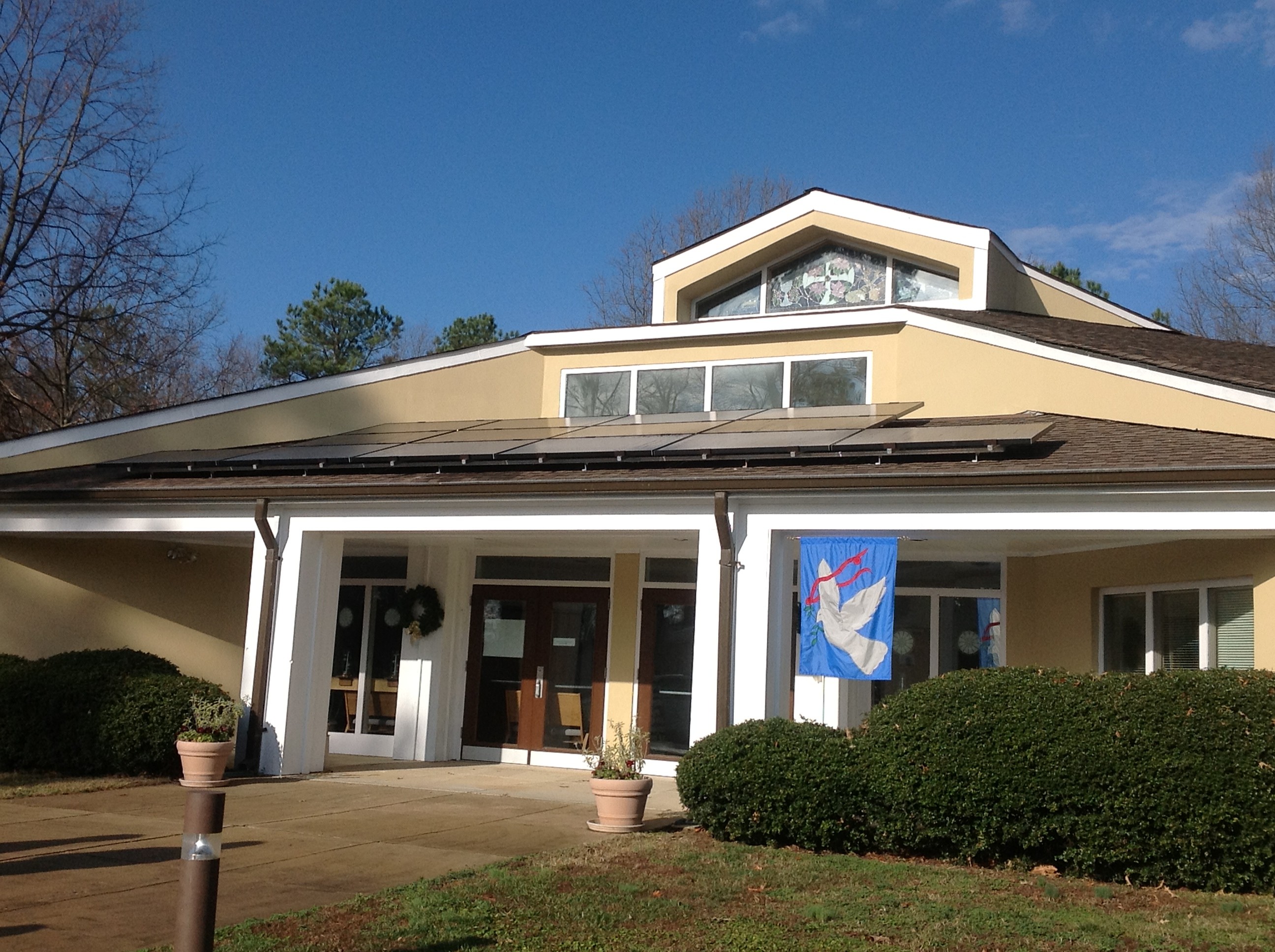
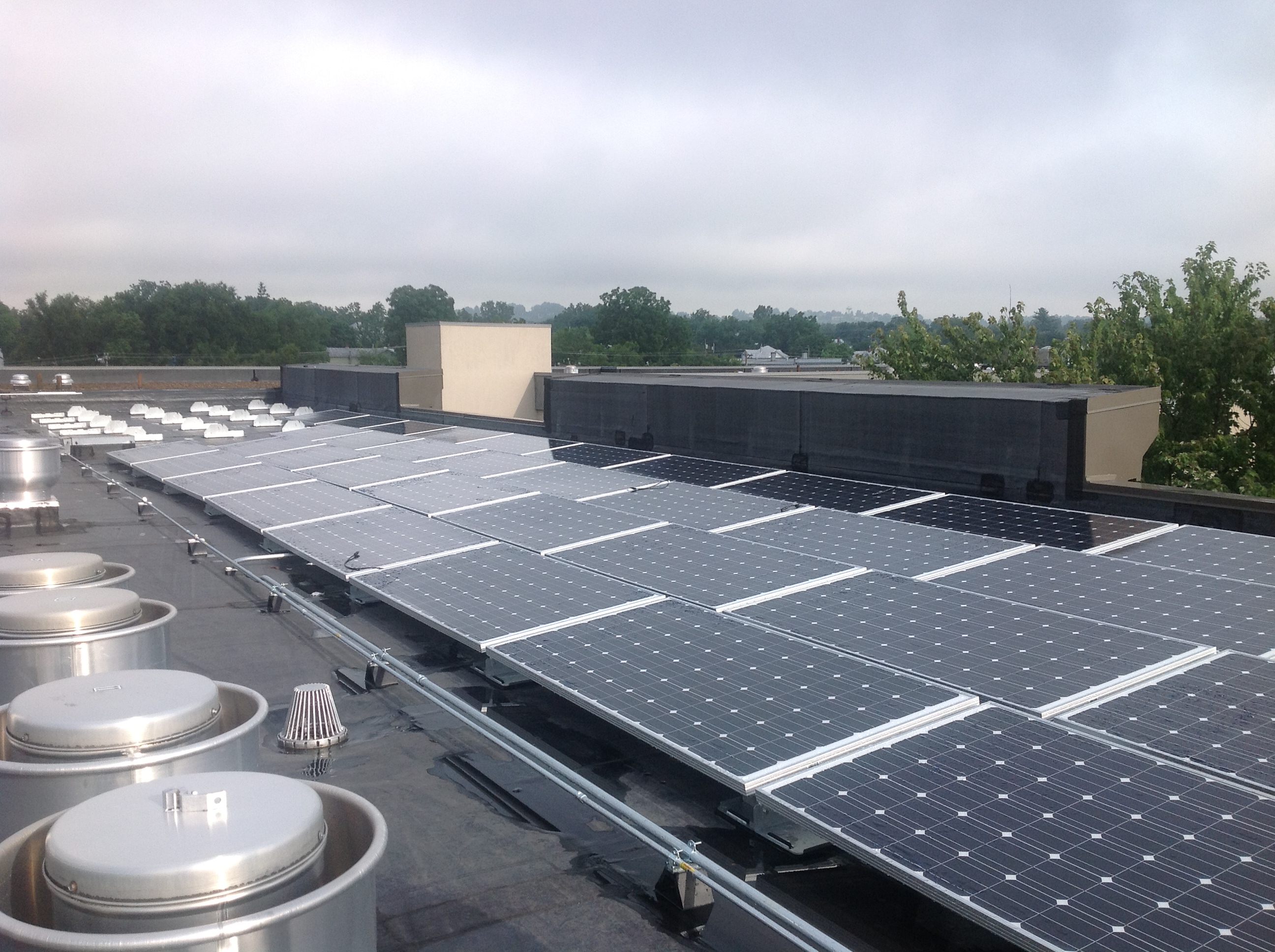
Defining solar panels as pollution control equipment. SB 418 (Hangar) is primarily a useful workaround to address a tax problem that is holding back solar power purchase agreements. Odd as this sounds, currently third-party-owned solar systems are subject to local tax as manufacturing equipment. In many jurisdictions where solar PPAs have the most potential to help churches, schools, and other non-profits go solar, the tax is so high as to make the projects impossible to finance. Many localities want to help solar but are paralyzed by fear of opening a Pandora’s Box of unintended consequences. To solve the problem, SB 418 would extend to solar panels a tax exemption currently available to landfill gas projects and wood mulching equipment. Beyond helping PPAs, the legislation would also exempt solar equipment from state sales tax, which would make solar systems more affordable to all solar customers.

RPS bills. Several bills seek to improve Virginia’s pathetic voluntary renewable portfolio standard law by restricting the kinds of energy or credits that can be used to meet it. None of them would make the RPS mandatory, so they can’t deliver the kind of robust market in renewable energy credits (RECs) that supports the wind and solar industries in other states. For the most part, they aim for small fixes that could cue up stronger bills in future years, and reduce the consumer rip-off that characterizes the current RPS.

Of these, HB 1061 (Surovell) is the solar industry favorite. It would create the beginnings of a solar REC market here even within the framework of the voluntary RPS. This “Made in Virginia” bill would require Dominion Virginia Power to meet a portion of its voluntary target with renewable energy certificates representing distributed generation produced in Virginia, or by contributions to the state’s voluntary solar resource fund, which provides loans for solar projects. The State Corporation Commission would be tasked with the job of creating a system for registering and trading Virginia-based renewable energy certificates (RECs).

HB 881 (Yost) similarly sets up a system of renewable energy certificate registration and tracking at the SCC. It also eliminates the double and triple credits that the RPS currently gives to certain types of energy, only grandfathering in some wind RECs that Appalachian Power had already contracted for.

SB 498 (McEachin) makes a number of changes to the voluntary RPS to put it on a stronger footing going forward. It limits a utility’s ability to satisfy the goals with purchases of low-quality RECs like those from old hydroelectric dams and landfill gas, and ensures that most future purchases of energy and RECs will represent high-quality resources like wind and solar. It does not, however, include a carve-out for Virginia distributed generation. A similar bill last year received the blessing of Dominion but died in the face of opposition from the Virginia Alternative and Renewable Energy Association, arguing for the interests of the producers of crappy RECs.

Delegate Alfonso Lopez spent much time and effort over the past year trying to broker a deal between the utilities, environmental groups and renewable energy companies to produce a modest consensus bill. The result, HB 822, would seem to be a testament to how little consensus there is; it includes only a two-year limit on banking RECs for use in future years and the elimination of double credit for energy from animal waste. (I’m guessing the animal waste people weren’t at the table.) It also strengthens existing wording about the RPS serving the public interest, which may help utilities get SCC approval for expenditures to meet the targets.

On-bill financing for energy efficiency. Advocates of clean energy say the best way to get homeowners and businesses to weatherize buildings and install efficiency upgrades is to let customers pay the cost through their utility bills, often out of the energy savings they reap.  HB 1001 (Yancey) would require electric utilities to offer on-bill financing for energy efficiency measures. The bill would be stronger if it included gas utilities and did not insist on a five-year payback period, which is too short a time for many weatherization measures, but it’s still a great start.

Service districts. HB 766 (Bulova) adds energy and water conservation management services to the list of items that can be owned and maintained by local service districts. This adds a new tool for local governments to finance energy efficiency and renewable energy projects, allowing payments to be made via local property tax bills.

Virginia Commission on Energy and the Environment. The Virginia Energy Plan is due to be updated in 2014, and boy, does it need it. Anyone who has ever tried to make sense of the plan has probably given it up as a hopeless hodgepodge of contradictory ideas. Anything you like, it’s in there. Anything you don’t like is in there, too, and none of it means anything because the provisions for the most part have no teeth. HB 818 (Lopez) hopes to turn this mishmash into a coherent plan for Virginia’s energy future by creating a new legislative commission to perform a comprehensive review of the energy landscape.

Price stability. HB 808 (Lopez) adds consideration of long-term price stability to the factors that utilities and the State Corporation Commission must look at when evaluating a proposed new electric generating facility. This would help to level the field for renewable energy, since fuel prices for fossil fuels are highly volatile and largely unpredictable over the full 30-year design life of a facility, whereas wind and solar are famously price stable.

Consideration of the environment. In a case decided last summer (PUE-2012-00128), the State Corporation Commission essentially interpreted the Virginia code to eliminate its own role in protecting the environment when it approves electric generating facilities. HB 363 (Kory) beefs up the code just enough to make it clear the SCC still has a job to do even when state agencies have issued all the relevant permits. The bill requires the SCC to consider matters not covered by permits, such as carbon emissions and the overall effect of electric generation facilities on the health and welfare of residents.

Dealing with climate change. Hampton Roads is facing a crisis as sea level rise combines with sinking land to swamp low-lying coastal areas with every major storm, a problem predicted to get steadily worse over the course of the century. SJ 3 (Locke) and HJ 16 (Stolle) establish a Recurrent Flooding Planning Committee to examine ways to respond. It’s a good bill, but really, it’s weird to address recurrent flooding with no mention of what’s causing it. Dealing with recurrent flooding in Hampton Roads without talking about climate change is like addressing the obesity epidemic without mentioning diet and exercise. Why kid ourselves?

Carbon Dioxide Emission Control Plan. Speaking of kidding ourselves, SB 615 (Carrico) would establish a commission with the job of limiting carbon emissions without limiting the sources of those emissions. Indeed, the bill would be more accurately titled the Carbon Pollution Continuance Plan. It’s too bad to see legislators fighting to keep coal plants running full-tilt when we have better, cleaner, and cheaper options—ones that don’t put us on a course to make “recurrent flooding” a daily occurrence.

Unknown's avatar

Can carbon sequestration save Virginia’s coalfields?

Mountaintop removal coal mining

Mountaintop removal coal mining

Many elected officials who care about the stark challenges confronting America’s coal-producing regions today are pinning their hopes on carbon capture and sequestration. This technology takes carbon dioxide out of power plant emissions and stores it underground. Since coal is the number one emitter of carbon dioxide, the greenhouse gas primarily responsible for heating the planet, carbon sequestration might be the only way to continue our use of coal in a world increasingly worried about climate disruption.

Virginia’s newly-elected governor, Terry McAuliffe, has high hopes for carbon sequestration. McAuliffe is confronting a problem that confounded his predecessors: how to deal with the continuing economic decline of southwest Virginia’s coal-producing counties. But, enthusiastic as he is about new technology, McAuliffe should be skeptical of suggestions that carbon sequestration offers a solution to Virginia’s coal decline. It does not.

This decline has been going on for decades. It predates the recession and the Obama presidency and tighter regulations aimed at protecting public health. It predates the explosion in natural gas fracking that has made gas cheaper than coal. Coal employment in Virginia has steadily dropped and is now below 5,000 workers, less than half of what it was in 1990. The best coal seams have been mined out, exacerbating the problem that Virginia coal is more expensive to mine than coal from other states. To get at the remaining seams as cheaply as possible, coal companies increasingly resort to mountaintop removal, destroying vast tracts of the Appalachians with explosives and giant machines (but very few workers). Even if carbon capture and storage proves successful, coal employment in the commonwealth won’t recover.

We aren’t the only Appalachian state facing this problem, but others are tackling it head-on. Kentucky, facing an even steeper decline in its coal-producing areas, has launched a bipartisan effort to help the region move beyond coal. This doesn’t mean they are happy about it, but they are willing to look facts in the face.

In Virginia, on the other hand, the response for some years has been to throw money at the coal companies and hope for the best. Virginia taxpayers shell out millions of dollars every year to corporations that mine Virginia coal. Legislators keep renewing the coal subsidies even though a 2011 review by the Joint Legislative Audit and Review Committee concluded they aren’t effective.

If throwing money at coal companies can’t halt the slide in Virginia coal, it’s hard to see how carbon sequestration technology could do it, even if the government were to pay for it. And given the environmental destruction involved in mountaintop removal mining, prolonging the end of the coal era in Virginia shouldn’t be anyone’s priority.

The start of a new administration offers a chance for a new strategy. Admittedly, it won’t be easy. The challenge of bringing new industries to a remote and mountainous region is a tough one, and support for coal still remains high in the area. Why, then, insist on confronting cold reality?

Because it has to be done.

Terry McAuliffe campaigned on jobs, and has given every indication he means it. Given his background, connections and talents, he is in as good a position as any governor in recent times to take on the challenge of helping southwest Virginia diversify its economy. He can work with the legislature to redirect the millions of dollars currently going to ineffective coal subsidies into tax credits for jobs in new industries and support for projects like home weatherization that create jobs and make a difference in people’s lives. He can challenge the entrenched interests, twist arms, enlist allies, recruit businesses, use the media—in short, make this a priority. The residents of the coalfields deserve as much.

Unknown's avatar

Time to get serious about offshore wind

Photo credit: Phil Holman

Photo credit: Phil Holman

A version of this article originally appeared in the Hampton Roads Virginian-Pilot on Sunday, December 15.

No doubt about it, Virginia is for lovers of offshore wind. It’s hugely popular with the public, and Virginia legislators passed a near-unanimous resolution in its favor. Governor McDonnell talked it up, and even tossed it some bucks. Governor-elect McAuliffe is such a fan that he made television commercials about it way back in 2009.

But all that love won’t get us turbines in the water unless Dominion Virginia Power decides to build them. Dominion is the key player after winning the exclusive right to develop the federal lease area 25 miles off Virginia Beach. The company has five years to study the area and come up with a construction and operations plan—or not. Right now the company is being coy about whether it will move forward come 2018.

Alas, Virginia, getting offshore wind turbines is going to take more than sweet talk: we have to start laying the groundwork now for that trip down the aisle. So here’s a to-do list to help get us there.

Governor McAuliffe should declare offshore wind a priority from the day he takes office. Only two test turbines are likely to be spinning before the end of his term, but he can make it clear he expects Dominion to meet all of the milestones in its federal lease, ensuring the next governor presides over the big buildout.

The governor and the General Assembly can also prove their ardor by funding ocean studies that have to be conducted before construction starts. The developer of Rhode Island’s wind energy area, Deepwater Wind, expects to have its turbines spinning only five years from now thanks to state-sponsored ocean studies that, Deepwater says, translated into a three-year head start. It’s an approach Virginia should emulate. The public will pay for these studies one way or another—either as taxpayers or as ratepayers—and footing the bill now will help us make up time.

The governor can also direct an analysis of workforce and port readiness so we begin to train workers and put in place the infrastructure needed for this huge new industry.

Of course, creating a skilled workforce is hard to do with no wind projects now in Virginia. Building land-based wind here would support the growth of the workforce and the supply chain, and give everyone experience with wind energy here. One project might be the wind farm proposed by Iberdrola in northeastern North Carolina, within commuting distance of Hampton Roads workers. Dominion turned down the chance to buy energy from the project a few years ago, and it hasn’t been built. The General Assembly could turn that around with legislation to require our investor-owned utilities to incorporate wind power into their energy mix.

Why support a project in North Carolina? The simple fact is that offshore wind is too big an industry for any one state to go it alone. Creating scale and keeping costs down demands a regional approach. Cooperation means both states win. In addition to North Carolina, the governor should partner with Maryland and Delaware, which also have federally-designated wind energy areas off their coasts.

Regulators, and the public, also need to see an analysis of what impact this energy will have on our electric bills. Harder to quantify, but just as important, is a full understanding of offshore wind’s benefits. Such a study might begin with a survey to identify those Virginia companies that could participate in the supply chain, what new businesses and jobs the state might attract, and how the economically distressed regions of the state can best participate.

When the time comes, the State Corporation Commission will have to do its part by approving both the two test turbines and, later, the full wind farm. The legislature can help by declaring an offshore wind farm in the public interest—a short step beyond its earlier resolution, but one with actual weight.

Virginia offshore wind may still seem to be off in the future, but now is the time for the incoming McAuliffe Administration and the General Assembly to prove their love. Otherwise, Virginia just might get left at the altar.

Unknown's avatar

Why standby charges are bogus

Utilities want solar owners to pay for grid access.  Photo credit: NREL.

Utilities want solar owners to pay for grid access. Photo credit: NREL.

Rooftop solar energy makes up a tiny fraction of the total electricity produced in America, but already utilities worry about a day when large numbers of their customers won’t need them any more. As renewable energy costs continue to tumble and the technology of battery storage improves, many residents and businesses may abandon their power utility to go it alone or form microgrids within their communities to control their own power.

Some utilities understand that this is the future and are looking for ways to turn these trends to their advantage. Others are doing everything they can to protect their turf, and progress (and the environment) be damned. They figure they can’t wind up on the wrong side of history if they stop history from happening.

Hence the attempt to throttle solar while it’s still little. Caps on system sizes, caps on total amounts of distributed generation, prohibitions against third-party power purchase agreements, restrictions on net metering: all of these are efforts to keep solar too small to matter, and too small to achieve the economies of scale that could lead to an upending of the central utility model.

The latest effort to squelch solar is through standby charges: fees imposed on net metering customers that compensate the utility for “standing by,” ready to sell grid-produced energy at night and on cloudy days. In 2012 in Virginia, Dominion Virginia Power won the right to charge customers with large residential systems (10-20 kilowatts) up to $60 per month—a charge that destroyed this market segment. This summer Dominion pressed its advantage, indicating in a submission to regulators that it will likely seek more standby charges on a broader class of solar customers.

Note that Virginia has less than 15 megawatts (MW) of solar installed across the state. Dominion Power alone has around 19,000 MW of coal, gas and nuclear. So the notion that net metering by solar customers has any perceptible effect on the grid or other customers is silly. The point of Dominion’s stand-by charges is to stifle the solar market, not cover costs.

This same debate played out this year in Arizona, which saw its solar industry install 719 MW in 2012—still a tiny percentage of that state’s total energy supply, but one that is growing fast enough to warrant the discussion. Last week the public utilities commission agreed to allow Arizona Public Service Company (APS) to charge its residential solar customers an average of $5 per month. The utility treated the ruling as a win, and indeed the charges might eventually add up to enough to cover APS’s attorney fees in the case. That’s more than can be said about Dominion’s standby charges.

Meanwhile the conservative American Legislative Exchange Council (ALEC) has gotten into the act, drafting a model resolution insisting that net metering customers should have to pay their “fair share” of utility costs through measures like standby charges. Not incidentally, Dominion Power is a member of ALEC and sits on the energy and environment task force next to the fossil fuel shills from Heartland Institute.

But the “fair share” argument is bogus. Utilities weren’t set up to ensure Americans all paid their “fair share” of the costs of the electric grid. If they were, there would still be mountain communities without power today. Residents of cities and towns subsidized the cost of running power lines to far-flung rural homes inhabited by people who could never have afforded their “fair share” of this infrastructure.

Even today, city dwellers pay more than their “fair share” of transmission costs to subsidize people like me who live in leafy, sprawling suburbs and less-populated parts of the state. Anybody voting for an ALEC-style resolution about “fair shares” had better be willing to stick it to suburban and rural consumers.

There are other ways electricity rates aren’t “fair.” Dominion’s residential rates are structured so people who use less electricity pay more per kilowatt hour than those who use more—again, making it roughly a transfer of wealth from urban apartment dwellers to those with larger or less efficient homes elsewhere. The utility’s goal is to encourage the use of electricity, and compete more effectively with the gas company for heating. People paying their “fair share” just doesn’t enter into it.

And while we’re at it, if we were serious about subsidies we’d slap a tax on electricity made from fossil fuels to reflect the costs they impose on society. Asthma, heart disease, mercury poisoning, groundwater contamination, and of course, the dumping of carbon into the atmosphere—these are all costs of fossil fuel that ought to be included in power bills to make sure everyone is paying their “fair share.” People who install solar panels deserve a thank-you for their service to society, not standby charges based on bogus “fair share” claims.

The argument for standby charges is, pure and simple, an attempt by entrenched monopolies to block competition. The “fair share” argument is a red herring from utilities that don’t want a fair fight. And with good reason: they’re going to lose.

Unknown's avatar

What’s wrong with Dominion’s Green Power Program

Better than Green Power: installing a solar system yourself. Photo credit: NREL

Better than Green Power: installing a solar system yourself. Photo credit: NREL

Renewable energy advocates in Virginia were astonished to learn a few weeks ago that the U.S. Environmental Protection Agency has given Dominion Virginia Power an award for its Green Power Program.

Dominion’s program is not, to put it mildly, a good one. Half of the money its customers contribute is siphoned off for overhead and “education.” The rest goes to buy renewable energy certificates from out of state. Over the years Dominion has collected millions of dollars in these voluntary contributions without building a single wind or solar facility to supply the program. Surely the only green award this merits is one for greenwashing.

So I called the EPA to find out what criteria they use in determining who gets an award. It turns out the agency only measures the growth of a green power program, and Dominion has signed up more customers than other utility programs have.

I had to laugh. Customers of utilities in most other states have real options to buy wind and solar. If you can buy wind energy from an alternative supplier or participate in a community solar project, or if your utility is aggressively incorporating renewables into its power supply, you don’t need a green power program.

But Dominion has never built more than token amounts of renewable energy, and it continues to use its monopoly position to erect barriers to competition from others. The utility has signed up 19,000 Green Power participants only because it has effectively denied its Virginia customers any meaningful way of participating in the renewable energy market.

News of this award will surely lure more people in. Yet even if every one of Dominion’s customers signed up for the program, it wouldn’t shrink Virginia’s carbon footprint. Instead, Dominion’s latest integrated resource plan reveals plans for more fossil fuel generation and increasing greenhouse gas emissions over the next fifteen years.

And it’s worse than that. As of this year, Dominion is actually using the Green Power Program to bankroll an attack on renewable energy—one the State Corporation Commission shamefully endorsed when it approved the company’s 3-megawatt “solar purchase program.”

In this charade, Dominion buys solar power from homeowners and businesses to resell to the Green Power Program. The deal nets sellers a few cents over the retail price of electricity, but costs the Green Power Program almost three times as much. This overcharging of the Green Power Program would be bad enough. But the more insidious problem lies in Dominion’s justification for the high charge. It claims that rooftop solar energy is no more valuable than power from fossil fuels that it can buy at wholesale.

Dominion’s position flies in the face of recent studies demonstrating the benefits of solar energy to the grid, including generating power where demand is, providing power during peak hours when energy is most expensive, avoiding the need for transmission upgrades, eliminating line losses, and reducing the need for new generation.

It also runs counter to trends in states like Georgia, where Georgia Power has put a higher–than-retail value on the solar distributed generation it plans to buy, and says that paying the extra won’t put upward pressure on rates.

This makes it especially difficult to understand why Virginia’s State Corporation Commission approved Dominion’s Green Power rip-off. And predictably, Dominion has followed up its win with a deeply flawed study it plans to use as a basis for a new round of standby charges on customers who net meter. (The case is PUE-2012-00064, available on the SCC web site.)

So what is a dedicated renewable energy advocate to do?

There are options. If you are determined to buy RECs, you don’t have to go through Dominion. Buy from another source. But better yet, install solar yourself if you can. The price of solar panels has dropped so precipitously over the past few years (down 60% since the start of 2011) that you may find it worth taking out a home equity loan.

If you don’t have a sunny roof yourself or can’t afford the whole upfront cost, you can work with your school, community center or place of worship to install solar panels in your neighborhood. Interest in solar is very high among Virginia faith congregations, driving large turnouts for presentations on the topic given by Sierra Club and others in cooperation with the solar industry.

Or you can take the money you were spending on Dominion’s program and give it to a charity that will use it to install renewable energy here in Virginia; this may even get you a tax deduction. Low-income housing providers like Richmond’s Better Housing Coalition now put solar panels on many of their facilities, and will accept donations specifically for that purpose.

The Virginia Center for Wind Energy at James Madison University accepts donations to its Wind for Schools program, which helps public schools across the commonwealth install wind turbines for educational purposes.

A new non-profit, Three Birds Foundation, is working to put solar on public schools that serve low-income children in Virginia and elsewhere.

All these charities are committed to doing what Dominion, apparently, doesn’t want to do: install solar and wind energy in Virginia.

Unknown's avatar

McDonnell administration set to fail Virginians on building codes

Everyone agrees that cutting energy waste is the most cost-effective way to meet our energy needs while reducing reliance on fossil fuels. And making new buildings efficient from the start is the surest way to achieve energy savings. Energy efficiency is the Mom-and-apple-pie part of our energy policy. Who could oppose it?

The Home Builders Association of Virginia, for one. They would rather build cheap housing than efficient housing, even when high utility bills turn cheap housing into expensive housing.

Bowing to aggressive lobbying from the home builders, the Board of Housing and Community Development (BHCD) has backed away from the national model building code provisions that would have improved the efficiency of Virginia residences by as much as 27.4%, according to a U.S. Department of Energy analysis. And, the McDonnell administration has signed off on the weak regulations. Virginia’s Department of Housing and Community Development has proposed a watered-down code that is currently open to public comment until September 29.

The McDonnell administration prides itself on fiscal prudence and its love for the business community. Here is a case where fiscal prudence demands tough love. A watered-down code means money wasted.

The model code provisions would have required higher “R” values in ceiling and wall insulation, resulting in homes that cost less to heat and cool. It would also have required builders to check for leaks mechanically, rather than just eyeballing it, to catch air leaks while they can still be fixed. The code that Virginia is set to pass jettisons these improvements, and others.

It’s cheaper for builders to skimp on insulation and not worry about air leakage, but the result is a home of lower quality and value. Owners and tenants end up having to pay more to keep warm in winter, and cool in the summer. These higher utility costs paid by occupants quickly eclipse the savings to builders.

What’s more, the cost of fixing defects later is much greater than building the house right to start with. Drafty houses are a classic example of the need for strong building codes, because sealing and insulation aren’t visible to buyers, and trying to add them later is difficult and expensive.

Customers who are buying brand-new homes have the right to expect a quality product. Virginians should tell the Department not to waste this opportunity to improve our housing stock for years to come.

A strong building code will also reduce Virginia’s reliance on fossil fuels and help low and moderate-income residents in one of the most cost-effective ways possible. Housing built for the low-end market is particularly vulnerable to poor construction. Buyers usually don’t know where corners have been cut, or don’t care because they plan to rent out the buildings and won’t themselves shoulder the high utility bills.

Some builders do cater to sophisticated buyers with homes that meet higher standards, but the vast majority stick only to what the code requires. Utility bills consume a disproportionate share of the income of residents with low and moderate incomes, and can also be a particular burden for seniors and others on fixed incomes. The failure to keep pace with the national model code means a missed opportunity to help homeowners across the state, as well as future owners and tenants.

The more rigorous model code standards would result in some additional upfront cost to buyers, but the Department of Energy calculates that savings on utility bills would more than cover the additional payment on a mortgage. Over 30 years, the average consumer would see more than $5,000 in savings.

Unfortunately, the pressure from the home builder lobby has resulted in a proposal with greatly weakened provisions that mean most new homes will remain unnecessarily expensive to heat and cool.

Virginians should not have to live with leaky, inefficient homes. The Department of Housing and Community Development should restore and adopt the full 2012 model building code standards, to improve our housing stock now and for the future.