

Two themes have emerged in the first half of the General Assembly session this year. First, legislators have no intention of stopping the data center boom, even temporarily. And second, their preference for dealing with the skyrocketing energy demand is to piece together a lot of small and medium-sized initiatives in hopes they all add up to enough to meet the moment. If it doesn’t work, that’s a problem for next year.
I’ll write about data center legislation in my next column; for now, let’s look at some of the bills that are aimed at increasing the ability of Virginia utilities to serve the data centers – and incidentally, the rest of us.
Everybody seems to have ideas for how Virginia can generate more energy, use it better, or make the grid (and our utilities) operate more efficiently. Many of these ideas aren’t new, but the pressure of rising electricity rates means the stakes are higher than ever, and bills are often advancing with bipartisan support.
Notice how many different legislators are named as the sponsors of these bills. This is not just the usual in-crowd of energy wonks crafting measures. This year, everyone has ideas, and a remarkable number of these ideas are getting traction.
Making the most of the wires you’ve got
The first priority is to maximize use of the existing grid, allowing it to handle more power without building new transmission.
Bills addressing the grid take many forms, including targeting new generation for places on the grid where there is spare room already, using demand-response programs to shift demand from peak hours to off-peak, improving energy efficiency and tapping into distributed resources at homes and businesses to supplement what utilities can do.
House Bill 114 from Del. Lee Ware, R-Powhatan, and Senate Bill 267 from Sen. Schuyler VanValkenburg, D-Henrico, task the SCC with studying alternatives to new generation. Possibilities to be studied include “capacity uprates for zero-carbon electric generating resources and energy storage resources and transmission upgrades including grid enhancing technologies and high-performance conductors.”
Intriguingly, the legislation also directs the SCC to analyze pathways for large load customers to voluntarily finance the grid upgrades “as a condition of accelerated interconnection.” Ware’s bill has already passed the House unanimously and is now in Senate Commerce and Labor, which is expected to hear the identical Senate version this week.
Similarly, HB 434 from Del. Destiny LeVere Bolling, D-Henrico, requires the SCC to set a “grid utilization standard” for Dominion Energy and Appalachian Power Company, which the utilities are then required to meet. The bill passed the House unanimously. SB 621 from Sen. Kannan Srinivasan, D-Loudoun, is similar.
Last year the General Assembly passed legislation establishing a pilot program for a “virtual power plant” (VPP), a way to aggregate distributed generation and storage resources to help utilities shift some electricity demand away from peak times. VPPS have emerged as a way to tap into customer-sited resources for the benefit of the grid without the utility having to invest in a similar amount of generation – or the transmission to go with it.
Last year’s program was only for Dominion. This year bills expanding programs to APCo and interested electric cooperatives appear likely to pass both chambers without problems.
HB 1065, introduced by Del. Phil Hernandez, D-Norfolk, known as the FAST Act, directs Dominion Energy and Appalachian Power to examine the points on the grid where solar facilities are interconnected in order to figure out where there is room to add more capacity.
The idea is that the utilities ought to be able to add solar generation and storage where there is this surplus interconnection capacity instead of having to make new investments in grid capacity. The legislation then requires the utilities to issue requests for proposals for appropriate projects, under the supervision of an independent auditor.
HB 1065 has passed out of the Labor and Commerce committee. Its Senate companion, SB 508 from VanValkenburg, will be heard in Senate Commerce and Labor this week.
Energy efficiency programs remain one of the best tools for lowering energy consumption, freeing up room on the grid for new customers. Most legislation this year is aimed at serving low-income residents.
These include HB 2 from Mark Sickles, D-Fairfax, which has already passed the House, and its companion, SB 72 from Srinivasan. The bills require Dominion and APCo to increase their efforts to serve qualifying households. HB 1393 from Bolling and SB 327 from VanValkenburg require these utilities to develop a program for spending on energy upgrades.
Other bills in the House and Senate establish a task force designed to remove barriers for low-income residents to access energy efficiency and weatherization programs.
And lest we not forget, low-income energy efficiency programs receive 50% of the auction proceeds from participation in the Regional Greenhouse Gas Initiative.
When Gov. Glenn Youngkin yanked Virginia out of RGGI, hundreds of millions of dollars for these programs were lost. HB 397 from Del. Charniele Herring, D-Alexandria, and SB 802 from Sen. Mamie Locke, D-Hampton, reiterate the requirement that the state participate in RGGI. Herring’s bill has passed the House, and Locke’s bill is set to pass the Senate this week.
Outside the Capitol, Attorney General Jay Jones recently announced hestopped the state’s appeal of a court ruling that found former Gov. Glenn Youngkin unlawfully removed Virginia from RGGI.
Everything’s better with storage
Batteries and other forms of energy storage have emerged as a panacea of sorts for correcting the mismatch of generation and demand at various times of the day. Too much nuclear at night when no one needs that much power? Store it. Too much solar during the day? Okay, for now that’s a trick question. Solar still makes up less than 10% of our electricity. But you get the point.
That’s why one of this year’s most consequential pieces of legislation is HB 895 from Del. Rip Sullivan, D-Fairfax, and SB 448 from Sen. Lamont Bagby, D-Henrico. The bill hugely expands the VCEA’s targets for utility investments in energy storage, and includes new provisions for long-term storage of more than 10 hours in duration. Sullivan’s bill has gone to House Appropriations after passing out of Labor and Commerce, while Bagby’s has been referred from Commerce and Labor to the Finance committee.
A related bill from Sullivan, HB893, requires Dominion to assess the use of its energy storage resources through a power flow model. I would explain that if I understood it. The bill has reached the House floor.
A little energy here, a little there, and next thing you know you’ve got megawatts
Six years ago, a bill known as Solar Freedom caught on for its promise of removing barriers that were holding back rooftop solar. Most of its provisions became part of the Virginia Clean Economy Act. Loosening restrictions on customer investments in distributed generation led to significant increases in small solar facilities at homes and businesses as well as on public buildings, particularly schools.
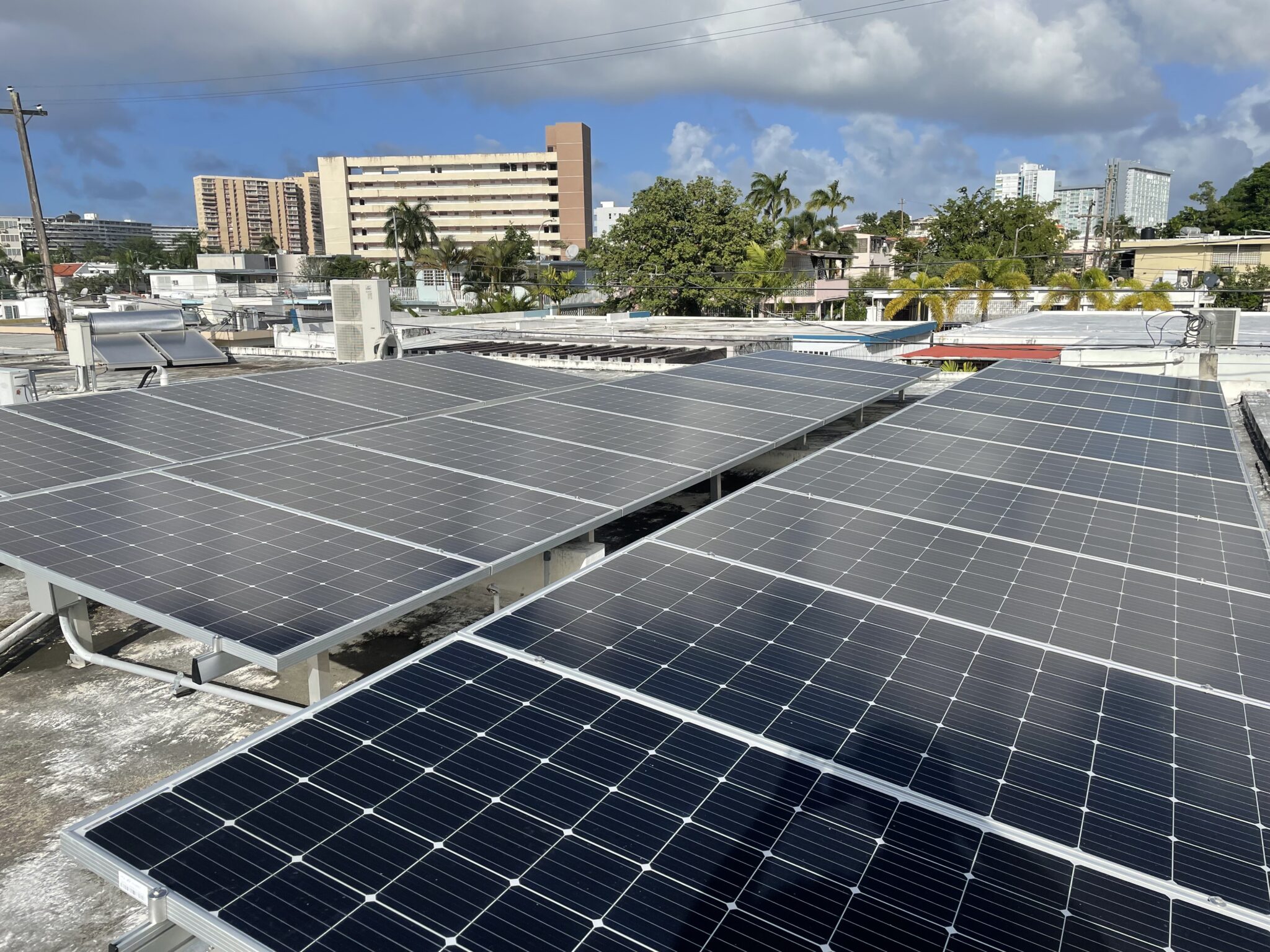
This year, the loss of federal tax incentives for solar, coupled with a sense of urgency to add every possible kilowatt to a grid under strain, has prompted legislators to look for more ways, large and small, to unlock private investment in solar and storage.
Solar Freedom was successful in eliminating the dreaded “standby” charges assessed by Appalachian Power, while limiting Dominion’s ability to collect them for residential systems over 15 kW. This year, HB 1255 from Del. Irene Shin, D-Fairfax, aims to raise that to 20 kW. The bill has passed House Labor and Commerce and moves to the House floor.
Solar Freedom and the VCEA also made it easier for commercial and government customers to finance solar acquisition through power purchase agreements (PPAs); however, residents have not been allowed to use PPAs, with the exception of low-income customers. The prohibition made no sense then, and it is a genuine barrier now that residents can no longer access federal tax credits for solar through direct ownership of the panels.
HB 628 from Del. Katrina Callsen, D-Albermarle, resolves that problem along with increasing the percentage of the state’s renewable portfolio standard that must be met with distributed generation projects of under one megawatt. The legislation passed the House unanimously. Its Senate companion is expected to be heard this week.
Plug-in solar, also known as balcony solar, captured the public’s imagination this fall as a simple, low-cost way for residents to access solar without the hassle of permits and interconnection agreements. Several bills in the House were rolled into one piece of legislation carried by Fairfax Democrat Del. Paul Krizek and Senate Majority Leader Scott Surovell, D-Fairfax. The House version has already passed the chamber unanimously, while the Senate version will be heard in committee this week.
Another idea popular with the public is putting solar canopies over parking lots. HB 1234 from Del. Briana Sewell, D-Prince William, would allow localities to require certain commercial developers to install solar on as much as 50% of a surface parking lot with more than 100 spaces. The bill has been reported from committee and will head now to the House floor. A Senate companion, SB26 from Sen. Jennifer Carroll Foy, D-Prince William, will be heard this week in committee.
HB 590 from Del. Phil Hernandez, D-Norfolk, and SB 382 from Surovell, streamline residential solar permitting in an effort to reduce delays and “soft costs” that drive up the cost of distributed solar.
Finally, Lt. Gov. Ghazala Hashmi is expected to head up a task force to seek further ways to promote distributed solar and generation if a bill from Del. Dan Helmer, D-Fairfax, and VanValkenburg succeeds.
Making it easier to build stuff, big and little
A related group of bills shares the goal of making it easier to get energy and storage projects sited, permitted or over the finish line.
Two bills expand the existing shared solar programs available in Dominion and APCo territories. HB 807 from Sullivan and SB 254 from Surovell expand the Dominion program by an additional 525 MW, with a provision for more after that.
Sullivan and Surovell are also the patrons of House and Senate bills expanding the smaller APCo program by 100 MW in two stages, again with provision for more later. Both of Sullivan’s bills have now passed the House unanimously, while Surovell awaits action in Senate Commerce and Labor.
HB 891 from Del. Irene Shin, D-Fairfax, and SB 443 from Sen. Jeremy McPike, D-Prince William, will make it easier to site battery storage at solar facilities by removing the second round of permitting. The bills have passed both the House and Senate.
As I’ve written before, getting solar projects approved at the local level has increasingly been a challenge in rural parts of Virginia. A bill I especially liked, allowing farmers to install solar by right, failed in subcommittee. However, legislation setting standards for projects and requiring localities to consider them on their merits (in lieu of blanket bans) has already passed both the House and Senate.
A few legislators have proposed grant programs to help customers, and in some cases utilities, pay for solar and storage. All of these face an uphill battle in the money committees; if successful, they will have to fight for a slice of the budget pie.
HB 1089 from Del. Michael Webert, R-Fauquier, and SB 415 from Sen. Mark Peake, R-Lynchburg, increase the subsidy for an existing program incentivizing solar on brownfields and coal mine sites. HB 1133 from Del. David Reid, D-Loudoun, and SB 834 from Sen. Michael Jones, D-Richmond, establish a new grant program for solar and, especially, batteries. (Update: Reid’s bill perished, but Jones’ has reached the Senate floor.)
HB 683 from Herring and SB 659 from Sen. Christie New Craig, R-Chesapeake, create a grant fund to help pay the interconnection costs for solar on schools and other public bodies. Herring’s has passed the House. New Craig’s has reached the Senate floor.
Meanwhile, HB 1444 from Del. Alfonso Lopez, D-Arlington, and SB 225from Surovell create a green bank to provide financing for clean energy projects.
Looking towards the future
Lawmakers are thinking long term about offshore wind energy. Sure, it feels like the industry has stalled out in the face of President Trump’s visceral loathing, but the general feeling is that the hostility will disappear in three years when its source does. Meanwhile, the East Coast is desperate for new energy sources close to load centers that don’t require new transmission lines on land. Offshore wind still fits the bill.
That may be why offshore wind continues to earn bipartisan support in Virginia. HB 67 from Del. Michael Feggans, D-Virginia Beach, was among the earliest bills to pass both chambers this session, with support from members of both parties. Both HB67 and SB 25 from Sen. Jennifer Carroll Foy, D-Prince William, would organize an offshore wind workforce effort.
(We will have some catching up to do. While U.S. states struggle to complete the 5 GW of offshore wind currently under construction in the face of Trump’s attacks, the rest of the world has kept building. China’s offshore wind capacity has grown to more than 40 gigawatts, and its advances in the technology have made it cost-competitive there.)
If all else fails, throw a Hail Mary
Legislators still like to think big, when “big” is comfortably off in the future, where potential problems don’t loom as large. Many of them have their sights set on small modular nuclear reactors (SMRs). If all goes well, they hope, this technology will provide many gigawatts of carbon-free energy on a 24/7 basis, paid for by tech companies. If things don’t go well, a few overpriced projects would provide a nice boondoggle for Dominion and APCo at ratepayer expense. What’s not to like?
Currently the VCEA treats nuclear as a middle-tier resource, neither incentivized like renewable energy nor discouraged like fossil fuels. Some legislators from both parties want to elevate new nuclear to the same status as renewable energy, proposing a system of “zero emission credits” (ZECs) that both utilities and customers like data centers could purchase in lieu of renewable energy credits (RECs).
Though the House Labor and Commerce committee does not seem inclined to take up Republican bills to make nuclear qualify for the renewable portfolio standard, other pro-nuclear bills are moving forward.
HB 369, from Reid, allows certain corporate customers to buy ZECs from Virginia sources and avoid their share of a utility’s renewable energy costs. The bill has made it to the House floor and is likely to pass this week.
In the Senate, the nuclear bill most likely to pass is SB 598, from Sen. Creigh Deeds, D-Charlottesville.
Deeds’ bill puts ZECs on an equal footing with RECs beginning in 2035. The legislation also speeds up the timeline for Dominion to purchase renewable energy in the near term and increases the percentage of it that must be built by third parties. From 2035 to 2045, Dominion and APCo are instructed to seek permission from the SCC to build or buy zero-carbon energy – 1600 MW for APCo and 5,000 MW for Dominion. Again, half of that would be developed by third parties.
The bill also allows the SCC to reduce the targets if load growth doesn’t justify them. Oddly, however, the SCC is not empowered to cancel the targets for reasons like questionable safety, lousy economics or commercial non-viability, a remarkable oversight given the less-than-stellar track record of the SMRs under development. The bill will be heard in Senate Commerce and Labor this week.
This article was originally published in the Virginia Mercury on February 10, 2026. It has been updated to include one bill I left out and to reflect recent action at the General Assembly.
 Power for the People VA