
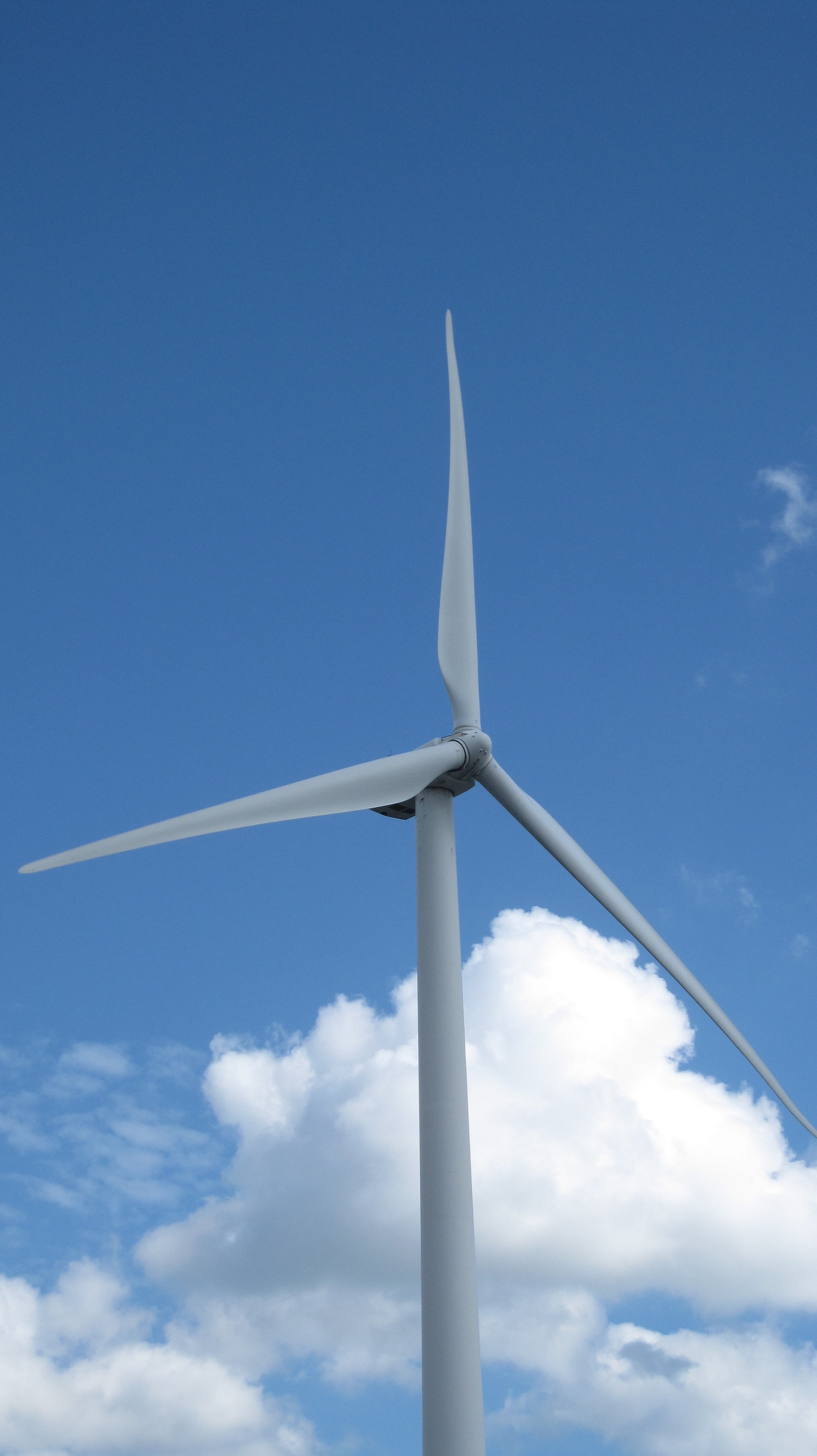
On May 5, attorneys general from 17 states and the District of Columbia — not including Virginia, regrettably — sued the Trump administration over its attacks on the wind industry. The lawsuit challenges an executive order, signed by President Donald J. Trump on his first day in office, stopping all approvals, permits and funding for wind projects across the country and offshore.
Since the order was signed, the administration hasn’t just blocked new projects, it’s issued a stop-work order for one project under construction in New York and revoked a permit for another. The actions inflict enormous damage on the wind industry and on the economies of states that need the energy and jobs this industry could deliver.
One state that will lose big under Trump’s order is Virginia, which has positioned itself to be a national leader in offshore wind deployment, supply chain and manufacturing. On top of that, Virginia badly needs the electricity from offshore wind to help meet the demand from data centers; it can’t afford to have a major new source of energy strangled in its infancy. Yet Attorney General Jason Miyares did not join the lawsuit.
Sure, Miyares wants to be a good soldier in the Trump putsch. And no doubt he wouldn’t feel at home among all those Democratic AGs (there were no Republicans signing the complaint). But he could at least speak up in his state’s interest. Some well-timed advocacy would go a long way in showing the administration that wind energy is not a partisan matter.
It doesn’t have to be just our attorney general, either. The silence from Gov. Glen Youngkin has been equally deafening. What are they afraid of? Youngkin can’t run for reelection, and Miyares has already secured his party’s nomination in his bid for reelection this fall.
Any politician who styles himself as pro-business ought to be pushing back on the Trump administration’s interference with contracts, destruction of American jobs and infliction of billions of dollars in damage to a growing domestic industry. Especially when it is happening to their own state, the big risk is in not speaking out.
And let’s face it, attacking wind energy is Trump’s own peculiar hobbyhorse, not his party’s. Though Republican support for wind energy has dropped a bit in recent years, it remains above 50%. Onshore wind is the largest source of electricity in Iowa and South Dakota and a major source in several other Republican strongholds. Wind power is responsible for billions of dollars in economic investment while keeping utility rates low in states that rely on it.
Offshore wind is more expensive, but states have embraced it for its potential to lower electricity bills over time while relieving grid congestion, creating well-paying jobs and providing clean, zero-carbon power to East Coast cities. Thirteen states have established offshore wind development goals, totaling over 112 gigawatts (GW) by 2050.
In Virginia, Republican leaders have been among the biggest boosters of offshore wind for more than 15 years. Legislators from both parties supported the creation of the Virginia Offshore Wind Development Authority. With a boost from then-Gov. Bob McDonnell, the Virginia Department of Energy partnered with Dominion Energy on a research project that produced the nation’s first offshore wind turbines in federal waters. Republican support also paved the way for Dominion’s development of the 2.6 GW Coastal Virginia Offshore Wind (CVOW) project, now more than halfway to completion and expected to begin delivering electricity next year.
Nor is CVOW a one-off; the Virginia Clean Economy Act declares twice as much offshore wind power to be “in the public interest.” At the offshore wind International Partnering Forum held in Virginia Beach last month, Dominion displayed a poster of the projects it has in the works. These include a project off Kitty Hawk, North Carolina, which Dominion acquired last October, as well as a huge lease area east of CVOW, which Dominion secured in a lease auction from the federal government last August. All told, Dominion’s projects could deliver a total of 9 GW of clean, renewable power.

As important as the energy itself is, Virginia leaders believe offshore wind can be a driver of economic development and job creation for the Hampton Roads area. The Virginia Economic Development Partnership touts Virginia’s strategic location, strong maritime industry and ready workforce as draws for businesses up and down the offshore wind supply chain.
Some businesses have already set up shop in Virginia to serve the industry. These include most recently a Korean subsea cable manufacturer that is investing almost $700 million for a facility in Chesapeake. Gov. Glen Youngkin was on hand for the groundbreaking last month, calling it “a proud moment for Virginia.” Attracting the company was only possible because of Virginia’s commitment to the wind industry – as well as the availability of federal tax credits that Trump also intends to eliminate.
CVOW will likely survive Trump’s attacks (albeit at a higher cost due to his tariffs), but Virginia’s ability to develop an offshore wind workforce and supply chain are very much at risk. The Trump administration’s war on wind power already threatens developers with losses in the billions of dollars. With permitting at a halt, companies are headed for the exits instead of creating the project pipeline necessary for offshore wind to become the powerhouse industry that it is in Europe and Asia.
Trump may have planned his economic sabotage to hurt northeastern states with Democratic governors, but the collateral damage to Virginia is considerable. As it is, our economy has taken a hit from Trump’s mass firings of federal workers, thousands of whom live here. We can’t afford to lose four years of offshore wind progress for no better reason than that Trump wills it.
Silence is not an acceptable response. Miyares and Youngkin must speak up for Virginia.
Originally published in the Virginia Mercury on May 19, 2025.
Update: On May 20 we learned Trump’s Department of the Interior rescinded its order to shut down the $5 billion Empire Wind project in New York, reportedly after Gov. Kathy Hochul agreed to reverse a decision five years ago denying a permit to a natural gas pipeline. This is being billed as a “compromise,” which is apparently what extortion is called when the Trump administration does it.
 Power for the People VA
Offshore wind is expensive. As a coop member I am part owner of Old Dominion and a captive to the Virginia SCC. We will be forced to pay for offshore wind while continuing to curtail our share of the Clover coal plant. Dominion the conglomerate will weasel out of paying. Our electric rates will go up. The more offshore wind we deploy, the more my rates will go up. Offshore wind is $100 per MWh, about 3 times the price of solar: https://www.eia.gov/outlooks/aeo/pdf/electricity_generation.pdf Likewise it is three time the cost of onshore wind.
Offshore wind in the UK is as expensive as that or even more, and rising.
Why so expensive? Simple: labor. They brag about the jobs:
As part of the Biden-Harris administration’s commitment to creating nearly 80,000 jobs through the development 30 gigawatts (GW) of offshore wind by 2030…. https://www.boem.gov/boem-announces-environmental-review-proposed-VA-wind-energy-facility-offshore
At a generous 45% capacity factor and conservative cost of $100k per job, that’s $67 / MWh just for labor. No turbines and supports, no boats to transport materials and people, no fuel for the boats. It’s grueling work, mostly by younger males. It will probably have similar accident and fatality rates as commercial fishing, one of the most dangerous jobs.
Wind more broadly is not solid state and is mostly a stop-gap while solar and solid state storage builds out. Solar-generated hydrocarbons can also store energy and displace transportation fuels. Wind doesn’t do that. UK, with electric rates triple ours, is finding out that not only is offshore wind much more expensive than promised, but it increases costs on the grid as gas plants are forced to be maintained and operate inefficiently. Electric rates have risen even as natural gas prices have fallen revealing the truth that offshore wind is not actually pegged to gas-electricity prices.
In short, already too expensive and will only go up in price. Please reconsider your support for it.
>
Pingback: Ivy Main: “One state that will lose big under Trump’s order [stopping approvals, permits and funding for wind projects] is Virginia, which has positioned itself to be a national leader in offshore wind deployment, supply chain and manufacturing.” -