
Public concern about the ubiquitous man-made chemicals known as perfluoroalkyl and polyfluoroalkyl substances (PFAS) has finally translated into bipartisan legislation at the Virginia General Assembly.
Several different bills are now awaiting action from Gov. Abigail Spanberger by April 13. Among these are requirements for industrial users to test their wastewater for PFAS and for sewage treatment plants to test sludge for the presence of these contaminants before it can be applied to farmland.
Enactment of the laws won’t mean we’ve solved the problem of the notorious “forever chemicals” that accumulate in the body and cause a wide array of neurological problems. Thousands of different PFAS variants are manufactured and used across the U.S. economy, and they have so polluted our air and water now that they are found even in rainfall.
The problem goes back many decades, but only in the last few years has our state government even begun to take notice.
When Virginia’s Department of Environmental Quality (DEQ) finally started collecting data on PFAS in drinking water in 2024, it found elevated levels in public water systems serving about 2.29 million people across the state. In December 2025, the nonprofit Wild Virginia sued the U.S. Environmental Protection Agency (EPA) for its failure to protect Virginia waterways from PFAS contamination.
Virginia’s new legislation won’t stop these chemicals from being produced and used in consumer products, or from getting into waterways. They could, however, reduce how much PFAS gets into the food produced on Virginia farms.
Yes, that’s a modest goal. Yet it is more than Virginia has tried to accomplish before now, and it puts us among only a minority of states actively working to protect residents from the health effects of PFAS. The federal government, which ought to be setting standards for the whole country, has dropped the ball. It wasn’t until 2024 that EPA even imposed limits on a few kinds of PFAS in drinking water – and it has been backpedaling under the administration of President Donald Trump.
New sewage sludge standards
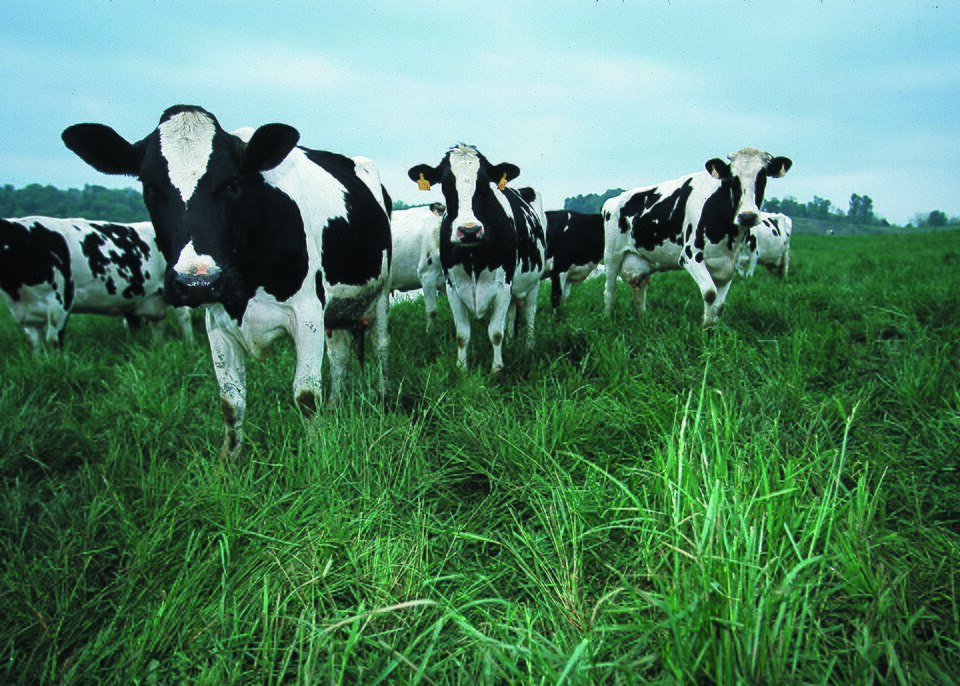
The main route for PFAS to get into our food supply comes from the practice of spreading sewage sludge across farmland. It is both the cheapest disposal method for the enormous quantity of this wastewater treatment plant byproduct and a way to fertilize crops that’s free to farmers. It’s also a perfect way to ensure our crops and farm animals are maximally exposed to contamination.
The federal government has taken no action to limit the disposal of sludge on farmland. In January of 2025 EPA issued a draft risk assessment for two of the oldest PFAS chemicals (PFOA and PFOS) in sludge, but (surprise, surprise) the agency has neither finalized the document nor issued regulations to protect farms since Trump took office.
Now Virginia’s General Assembly proposes to take up the slack. HB 1443 from Del. Alfonso Lopez, D-Arlington, and SB 386 from Sen. Richard Stuart, R-King George, require that any owner of a sewage treatment works that applies or sells sludge for land application purposes must begin sampling and testing the sludge for PFAS by January 1, 2027. The test results must be provided to anyone applying the sludge to their land. Sludge generated outside of Virginia is also subject to this requirement if the sludge is applied here.
The legislation does not stop with monitoring and notification. If the concentrations of PFAS in the sludge exceed 50 micrograms per kilogram, the sludge cannot be land applied or distributed. Levels of PFAS between 25 and 50 are subject to less stringent restrictions, and below 25, the only requirement is to notify the landowner of the test results before the sludge is applied.
This sliding-scale approach puts Virginia among the minority of states that regulate PFAS in sewage sludge. Maine takes the most protective approach, prohibiting any amount of PFAS in sludge applied to land. The zero-tolerance approach reflects the science, since there is no safe level of exposure for these chemicals.
Unfortunately, though, PFAS are both so ubiquitous and so hard to remove from wastewater that a standard of zero is impossible to meet. The result is that all Maine sewage sludge has to be landfilled, and the one landfill in the state that accepts it is rapidly filling up. This may be why only Connecticut has followed Maine in adopting a zero-tolerance rule, though other states have set limits more protective than Virginia’s.
Maine is a standout in another way: it’s the only state that has created a program to help farmers deal with land contamination, including buying out farms that are too contaminated to be used to produce food for either humans or livestock.
Without a program like that, landowners may have little incentive to find out what’s in the “free” fertilizer being spread across their fields. Small farmers especially are under tremendous economic pressure, and may not easily be able to afford alternatives.
The problem is that PFAS are called “forever” chemicals because they don’t break down in the environment. Years of applying contaminated sludge can result in levels of contamination high enough to destroy a farmer’s livelihood, as has happened in Michigan as well as Maine. David Sligh, water program director at Wild Virginia, told me in an email that he thinks this could happen in Virginia as well.
“One real fear I have, among many, is that some farmers will eventually bear a big cost in loss of their land values, water supplies, etc., after they’ve been sold on this practice for so many years,” he wrote.
While the Virginia response relies just on testing for now, the new legislation also calls for DEQ to convene a work group to study ways to reduce PFAS in sewage sludge.
Assisting that effort will be SB 138 from Sen. Jeremy McPike, D-Prince William, and HB 938 from Del. Nadarius Clark, D-Suffolk, under which every publicly-owned wastewater treatment plant will have to require industrial users to test for PFAS and report the results to DEQ.
One other piece of legislation is also relevant. Virginia law already allows localities to adopt ordinances providing for testing and monitoring the land application of sewage sludge. HB 1072 from Del. Amy Laufer, D-Albermarle, makes it explicit that this authority includes testing for PFAS. It does not, however, require any kind of monitoring. Sligh told me, however, that Laufer’s bill is “definitely useful,” and he hopes localities will begin taking advantage of it.
Originally published in the Virginia Mercury on April 8, 2026.
 Power for the People VA
Gives new meaning to the adage “eat $hit and die”.