Unknown's avatar

Dominion Power defends its billion-dollar handout from ratepayers; squashes dissent; asks for more.

DominionLogoA Senate committee quickly killed SB 1095, a bill introduced by Chap Petersen (D-Fairfax) that could have brought an early end to a five-year prohibition on regulators’ ability to review Dominion Virginia Power’s earnings and to order refunds where warranted. The prohibition, passed two years ago as part of 2015’s SB 1349 (Frank Wagner, R-Virginia Beach), will mean as much as a billion dollars in extra cash to the utility—money that would otherwise be returned to customers.

After losing the vote on SB 1095 in Senate Commerce and Labor, Petersen introduced SB 1593, a bill that would have prohibited campaign contributions from public service corporations like Dominion Power. He was forced to withdraw the bill when Senate leaders complained he had filed it late.

Score two for Dominion. But in case you thought the utility giant might choose to lie low for a while, consider another of this year’s bills: HB 2291 (Terry Kilgore, R-Gate City). The legislation allows Dominion to seek approval to charge customers for billions of dollars in nuclear power plant upgrades. Kilgore has collected $162,000 in campaign contributions from Dominion’s parent company over the years, even though he represents an area of the state that is not served by Dominion Virginia Power (meaning it won’t be his constituents paying for his bill). Astoundingly, the bill passed the House of Delegates with only two dissenting votes (cast by Mark Keam, D-Vienna, and Sam Rasoul, D-Roanoke).

Obviously, there is a pattern here. It actually began at least as far back as 2014, when another Kilgore-sponsored bill passed allowing Dominion to shift onto its customers several hundred million dollars of nuclear development costs that otherwise would not have been recovered for many years, if ever. The legislation inspired much criticism, but little action.

Taken together, these legislative giveaways add up to enormous sums of money. The 2015 legislation involved as much as a billion dollars in customer payments that exceed the profit margin allowed by the State Corporation Commission, according to an estimate offered by one commissioner. In the absence of SB 1349, Dominion would likely have had to issue refunds, lower rates, or both.

At the time, Dominion claimed that the EPA’s proposed Clean Power Plan would impose huge costs on ratepayers unless the General Assembly acted to stop base rates from rising. Legislators weren’t told the real effect of SB 1349 would be to keep base rates from falling. And meanwhile, customers’ utility bills could continue to rise because base rates make up only a portion of monthly bills.

Petersen’s bill this year took notice of the fact that the Clean Power Plan is now highly unlikely to take effect. SB 1095 would have reinstated the SCC’s authority to review rates if and when the Clean Power Plan was deemed truly dead. This misses the mark only in being way too generous to Dominion. As the SCC has pointed out, the review freeze period will be over before the Clean Power Plan is slated to take effect, so SB 1349 could not possibly protect ratepayers from compliance costs anyway.

SB 1349 is currently being challenged in court as an unconstitutional abrogation of the SCC’s power. Two former Attorneys General, Republican Ken Cuccinelli and Democrat Andy Miller, have weighed in on the side of consumers. The current Attorney General, Democrat Mark Herring, was harshly critical of the bill when it was before the General Assembly, but now says he is obligated to defend the law.

SB 1349 passed the General Assembly two years ago amid great confusion about what was in the bill and what it all meant. Legislators padded it out with modest solar-energy and energy-efficiency provisions to make it palatable to skeptical Democrats and ensure it would be signed by Governor McAuliffe.

But this year, legislators have no such excuse. They cannot have missed the torrent of criticism the law inspired, or the point that Dominion won’t spend a dime of its ill-gotten gain on compliance with the Clean Power Plan. It is hard to see the 9-2 vote in Commerce and Labor to kill Petersen’s SB 1095 as anything but a blatant, bipartisan gift to Dominion. (The dissenting votes came from Republicans Dick Black and Stephan Newman.)

Dominion’s corrosive effect on Virginia politics is one of the main threads of a book published last year called Virginia Politics & Government in a New Century: The Price of Power. Author Jeff Thomas outlines a whole host of ways in which Virginia politics have become mired in corruption. SB 1349 is Exhibit A.

Now the unearned largesse for Dominion—and the ignominious end to Senator Petersen’s effort to rein in Dominion’s influence—have become an issue in this year’s governor’s race. Republicans Denver Riggleman and Corey Stewart and Democrat Tom Perriello are all taking aim at the connection between Dominion’s campaign spending and the billion-dollar boondoggle it received from SB 1349. If Kilgore’s HB 2291 passes the Senate this month, they will have another example on which to build their case that Dominion’s campaign donations have corrupted Virginia’s legislative process.

Legislators themselves publicly reject the idea of a causal relationship between the steady stream of campaign cash and their votes in favor of the bills, while privately acknowledging the sway Dominion holds over the General Assembly. Indeed, the comfortable fiction that campaign donations don’t affect a politician’s votes is such an insult to voters’ intelligence that the wonder is why it took so many years to become a campaign issue.

Given Wagner and Kilgore’s leadership roles in the Republican-controlled House and Senate, the issue might not seem like obvious fodder for the Republican primary campaign. Of course, Wagner is also running for governor on the Republican ticket, so the assaults of challengers Riggleman and Stewart might simply be tactics designed to undermine the competition. If voters respond, though, we can expect to hear a lot more discussion of government corruption.

In today’s chaotic political environment, Democrats who don’t speak out could find themselves under fire, too. Lieutenant Governor Ralph Northam, the other Democrat running for Governor, has accepted over $97,000 from Dominion since 2008, according to VPAP.org, and so far seems not to have joined the chorus of voices criticizing Dominion’s influence.

The anti-corporate sentiments that fueled Bernie Sanders’ campaign have only intensified with Donald Trump’s embrace of bankers and oil barons. Democratic voters today are less likely than ever to forgive leaders of their own party for cozying up to big corporations. If either Democratic candidate for governor cedes the issue of clean government to the other—or to Republicans—this might be the election in which it matters.

Unknown's avatar

Renewable energy bills begin an uncertain journey through Virginia’s general assembly

VA capital Corrina BeallThree Senate Republicans and one Democrat met on Thursday to consider the fate of many of this year’s renewable energy bills. Reported out were two bills introduced by Frank Wagner that were crafted by utilities, the solar industry trade association MDV-SEIA, and Powered by Facts (a group currently focused on farms).

Other bills were not as lucky as these two. In theory all bills get another bite at the apple in the full Senate Commerce and Labor Committee, where they are on the docket for Monday afternoon. However, expectations are that the bills voted down in subcommittee will meet the same fate in full committee.

Wagner, the chairman of the Senate committee, named himself to his subcommittee along with fellow Republicans Ben Chafin and Glen Sturtevant, and Democrat Rosalyn Dance. So it was not surprising that this hand-picked group supported his bills. More disappointing was the solid opposition to anyone else’s proposals, including ones with even better potential to improve the solar market. That opposition came not only from the Wagner, Chafin and Sturtevant, but also from MDV-SEIA.

The two Wagner bills reported out are SB 1393 (the so-called community solar program) and SB 1394 (small agricultural generators). The bills have undergone some more recent changes, which I will get to in a bit.

The committee voted down Edwards’ SB 917 (containing minor fixes to the agricultural net metering law), Edwards’ SB 918 (expanding authorized uses of third party power purchase agreements), and Wexton’s SB 1208 (a more expansive community solar bill). Following a common practice in the General Assembly, SB 1208 was “rolled into” SB 1393, which is simply a polite way of extinguishing a bill. Similarly, SB 917 was rolled into SB 1394, even though the two are only vaguely related.

Over in House Commerce and Labor, several renewable energy bills will be heard by the energy subcommittee when it meets Tuesday afternoon. These include Keam’s HB 2112, the companion to Wexton’s SB 1208, and Minchew’s HB 2303, the companion to Wagner’s SB 1394. (The text of some House bills has not yet been updated to conform to changes in the Senate bills, but this seems likely to happen.)

Two new bills on third-party power purchase agreements have been added since my initial roundup. Chairman Kilgore introduced HB 2390, a bill that would, for a narrow class of privileged customers, extend to Appalachian Power territory the PPA pilot program currently running in Dominion territory. The pilot program specifically allows certain third-party power purchase agreements while forbidding all others. In Dominion territory the program is capped at 50 MW; the bill would place a 10 MW cap on the APCo program.

The PPA pilot program has allowed customers like Albermarle County Public Schools and the University of Richmond to install solar cost-effectively, and APCo customers have been itching to join it.

But Kilgore’s bill contains a limitation that is really pretty offensive. Unlike the pilot project in Dominion territory, where participants may include any non-profit of any size, as well as commercial customers with facilities of over 50 kW, Kilgore’s bill would allow only private colleges and universities to compete for the 10 MW in APCo territory. No public colleges, no churches, no community centers or town buildings. For a guy with a folksy demeanor, Kilgore seems to be one heck of an elitist.

A better PPA bill is Toscano’s HB 1800, stating that nonresidential and agricultural customers have the right to contract with other people to own and operate renewable energy facilities on the customer’s premises. Although a hearing examiner recently agreed with the solar industry and environmentalists that this right already exists in the Virginia Code, utilities have blocked on-site PPAs. Toscano’s bill would put an end to this harassment, while giving up on residential consumer PPAs. (The concession sounds bad but isn’t; residential customers can use leases to achieve the same result that PPAs afford.)

Other House bills. Also up in the House subcommittee on Tuesday will be the three worthy energy efficiency bills from Delegate Sullivan. In addition, Villanueva’s Alternative Energy and Coastal Protection Act is back for a third year as HB 2018. It would provide money for renewables and efficiency as well as badly-needed funds to help communities adapt to consequences of climate change such as sea level rise.

Now, about those Wagner bill changes:

Following revisions, “community” solar still looks like a winner, except for the community part. SB 1393 met with support from all corners of the room at the Senate subcommittee meeting on Thursday. Everyone, it seems, wants more solar options for consumers and is excited that the utilities seem willing to move forward to meet this growing demand.

Just don’t expect community solar. As now drafted, utilities control every aspect of the program. Although third-party developers would build the solar projects, the utilities can choose to buy the electricity through a PPA or buy and own the project themselves. Also, the project size limit of 2 MW, which has a community-scale feel to it, does not apply if a utility is simply designating 2 MW of a larger project to this program. In effect, if the utility contracts for a number of large projects across the state (which Dominion is indeed doing), it can simply designate parts of each as “community solar,” and fill the program that way.

That doesn’t make it a bad bill, just not a community solar bill. And while it looks like a tariff for the sale of renewable energy to participating customers, the bill continues to state that it is not a tariff for the supply of 100% renewable electricity—language that supposedly dodges the fight about under what circumstances third parties can legally sell renewable energy in Virginia.

Even with changes, agricultural RE bill’s possible benefits for some come at a cost to others. SB 1394 was reported unanimously from the Senate subcommittee Thursday, but drew opposition from both the Sierra Club and the solar consumer group VA-SUN. The current language of the bill contains improvements over the original (discussed here), but however well intentioned, it remains a bad bill.

The legislation establishes a pilot program that allows farmers to use a portion of their land for solar and enter a buy-all, sell-all contract with the utility. They will buy their power at retail and sell at a price that might not be much more than wholesale, so whether the program pencils out for farmers is uncertain. But that’s not my beef with it.

The problem is that this program is offered as a replacement to an entirely different program, one that allows farms to attribute the power output of a single solar array or wind turbine to all the various meters on the farm under the net metering statute. That’s a valuable option for farmers who want to meet their electric needs with renewable energy. Removing this option is a backwards step for wineries, breweries, organic farms, and any other farmer for whom solar power is an important part of their branding and marketing. (Consider that this bill applies to wind as well as solar; a small farmer would likely have only one wind turbine to serve the whole farm. You can’t put a little wind turbine on every building with an electric meter.)

The date at which agricultural generators can no longer opt to use the agricultural net metering provisions has been moved to 2019 (from 2018 in the original draft legislation), and the termination of the net metering option now applies only to coop members, not customers of Dominion and APCo. Existing agricultural net metering customers can continue to use the net metering provisions for 25 years, up from 20. These are all incremental improvements but don’t change the fundamental problem that the legislation trades away the rights of some customers in an effort to help others.

There is another problem. Projects developed under the buy-all, sell-all program would count against the 1% cap on the total amount of electricity produced by net metering in a utility’s service territory. This is wrong as a matter of principle (if they aren’t net metering, it shouldn’t count against a net metering limit) and also because a few large farmers using the buy-all, sell-all program would max out the 1% and leave nothing for homeowners or other coop customers.

From the coops point of view, that’s not a bug, that’s a feature; killing net metering is precisely their goal. That’s why the buy-all, sell-all program is not being offered as an option, which would be fine, but as a replacement, which is not.

I asked Dana Sleeper, Director of MDV-SEIA, why her organization was supporting the bill. She responded:

We felt that with the changes made in committee, it was more additive (creating options) then limiting. We had some models made in order to confirm that the proposed legislation would be a viable path for businesses to pursue, and my intent is to make those models publicly available so they may be helpful to those interested in pursuing the AgGEN option, should the bill pass. 

As for why MDV-SEIA opposed other pro-solar bills like Wexton’s and Edwards’, she answered:

MDV-SEIA was a participant in the Rubin stakeholder group process over the course of many months and, along with the other stakeholders, agreed to support a slate of bills that moved the needle on solar issues in VA. As part of the group, we included professional lobbyists in order to ensure that political perspective was built in. One of the recommendations from the lobbyists was to draw clear lines around those bills coming out of our stakeholder process versus those put forward by other groups, as it would cause confusion among legislators who have a lot on their plates during a short session. 

For that reason, any bills that were seen by legislators as being duplicative were folded into the Rubin group bills. That’s not to say we don’t see the merit of them, it’s simply that there were many concerns about those proposals which were addressed by the Rubin bills. Our lobbyist, when asked, noted that while we appreciated the thought and effort put into the legislation, we recommended folding them into our bill. There were some bills that did not cover the same topics as those discussed in the working group (for example, the tax credit bill), and we supported them wholeheartedly. 

Lobby efforts underway. MDV-SEIA is inviting supporters to its second Clean Energy Lobby Day on Tuesday; register here.

Separately, Secure Futures LLC and other solar industry members are also encouraging advocates of distributed generation to attend the House subcommittee meeting on Tuesday. They urge support for HB 1800 and HB 2112, and opposition to HB 2303 and HB 2390. (Opposition to HB 2303 puts them at odds with MDV-SEIA on the agricultural solar issue.)

Unknown's avatar

Virginia General Assembly session opens. What can we expect?

Photo credit: Corrina Beall

Photo credit: Corrina Beall

The General Assembly failed to act on clean energy bills in 2016, but as the 2017 legislative session gets underway, advocates hope the delay will have only increased pressure for progress this year.

New energy legislation includes the four bills negotiated over the summer by the utilities and the solar industry promoting utility, community-scale, and agricultural renewable energy projects. The “Rubin Group” (named for facilitator Mark Rubin) brought together utilities, the solar industry trade group MDV-SEIA, and a group called Powered by Facts, but largely excluded environmental and consumer interests. Not surprisingly, the resulting bills are heavily weighted towards utility-scale solar, and utility control of solar in general.

But if the chairmen of House and Senate Commerce and Labor thought the Rubin Group’s work would mean no one else would float new renewable energy bills, they were certainly wrong.

Community-scale solar. I’ve previously addressed the Rubin Group’s legislation that enables a utility-administered, community-scale program to sell solar to participants on a voluntary basis. I see Senator Wagner will be carrying the bill in the Senate, now designated SB 1393. I haven’t had time to compare the current bill to the draft previously shared with stakeholders, but I’m cautiously optimistic that it will produce a viable solar option for consumers. Even better would be HB 2112 from Delgate Keam and SB 1208 from Senator Wexton, which authorize a broader set of community solar models. Delegate Krizek’s solar gardens bill, HB 618, also authorizes shared solar.

Utility-scale solar. Another bill from the Rubin Group, SB 1395 (Wagner), would raise from 100 MW to 150 MW the size of wind and solar projects that qualify as “small renewable energy projects” subject to Permit By Rule (PBR) permitting by DEQ, and allowing utilities to use that process for facilities that won’t be rate-based. In contrast, Senator Deeds’ SB 1197 would undo much of the streamlining gained by the PBR process, sending projects to the SCC if they either disturb an area of 100 acres or more or are within five miles of a boundary between political subdivisions.

The third Rubin Group bill, Wagner’s SB 1388, would allow utilities to earn a margin when they obtain solar energy via power purchase agreements with (lower cost) third-party developers rather than building projects themselves.

Senator Marsden’s SB 813 exempts investor-owned utilities from the requirement that they consider alternative options, including third-party market alternatives, when building solar facilities that have been declared in the public interest. This is surely an attempt to smooth the way for utility-owned solar at the SCC. However, if you’re trying to get utilities to keep costs down by using third-party installers, this is the wrong incentive.

Agricultural net metering. The last bill from the Rubin Group, Senator Wagner’s SB 1394, would revoke the recently enacted code provisions that allow agricultural customers to attribute electricity from a renewable energy facility to more than one meter on their property for the purposes of net metering. The proposed legislation would terminate this provision in 2018 (grandfathering existing net metering customers for 20 years) and instead offer farmers a buy-all, sell-all option for their renewable production.

Under the proposed bill, negotiated between the utilities and Powered by Facts, farmers would have to buy all their (dirty) power from their utility at retail, and sell their renewable power to the utility at the utility’s avoided cost—essentially wholesale. This doesn’t sound like a good deal for the farmers, but we’re told it more or less pencils out. On the plus side, the bill would allow farmers to build up to 1.5 megawatts of renewable capacity on up to 25% of their land, or up to 150% of the amount of electricity they use, whichever is less, which is more than they can under today’s rules. (But since federal law allows anyone to sell power they produce from a qualifying facility into the grid at avoided cost, even this part of the bill is of dubious added benefit.)

Regardless, removing the net metering option seems both unnecessary and unwise; many farmers specifically want to run their farms on solar, for marketing reasons or otherwise, and taking away their ability to aggregate meters and use net metering will be viewed as a serious setback.

The first draft of this bill that I had seen contained a provision that projects under the new program would apply against the state’s 1% cap on total net metering output, even though the projects would not be net metered. Fortunately, I don’t see that in the current version. [Update: this provision does appear in the version of the bill reported out of the Senate subcommittee on January 27, presenting a reason sufficient in itself to oppose the legislation.]

An agricultural bill that is more readily supportable is Senator Edwards’ SB 917, which eases the rules for agricultural customer-generators and increases the size of projects that can qualify for meter aggregation under the net metering statute. It also extends the law to include small hydro projects.

PPAs. Two bills attempt to resolve the ongoing dispute over customers’ rights to use third-party power purchase agreements for their on-site renewable facilities. Delegate Toscano’s HB 1800 essentially reiterates what solar advocates believe to be existing law allowing on-site PPAs, but—as a peace offering to utilities—narrows it to exclude residential customers. Senator Edwards’ SB 918 takes a different approach, replacing the Dominion PPA pilot program with a permanent statewide program to be designed by the State Corporation Commission.

Tax credits. Delegate Hugo’s HB 1891 provides a tax credit for residents who install geothermal heat pumps—a nice idea, but it will face tough sledding in a tight budget year. That budget reality could also doom Delegate Sullivan’s HB 1632, offering a broader renewable energy property tax credit (it would include geothermal heat pumps).

In spite of the current budget deficit, Republicans are making a new attempt to reinstate taxpayer subsidies for coal mining companies (Delegate Kilgore’s HB 2198). Delegate Morefield’s HB 1917 takes a better approach, offering a new tax credit for “capital investment in an energy production facility in the coalfield region.” This is worth watching, as it is not limited to coal facilities but applies to any facility that has “the primary purpose of producing energy for sale.”

Climate. Republicans seem inclined to make a renewed attack on the EPA’s Clean Power Plan (Delegate O’Quinn’s HB 1974), even though Trump’s election seems likely to send it to an early grave. This probable fate inspired Senator Petersen’s SB 1095, which says that if and when the Clean Power Plan is really declared dead, then the notorious “rate-freeze” imposed two years ago will end. As readers know, that law (Wagner’s SB 1349 from the 2015 session), will allow Dominion to keep an estimated $1 billion in excess revenues; at the time, Dominion said the law was needed to protect its customers from rate hikes required by compliance with the Clean Power Plan. Unfortunately the condition in Petersen’s bill doesn’t seem likely to kick in for at least a year or two, and possibly more; we’d prefer to see the legislation revoke the freeze immediately, and put the ill-gotten gains to use as a massive stimulus package supporting clean energy jobs.

On the flip side, Delegate Villanueva is gamely making another run at getting Virginia to join the Regional Greenhouse Gas Initiative (HB 2018) as a way to change utility incentives and raise money for climate adaptation and clean energy.

Nuclear. Delegate Kilgore has introduced HB 2291, a bill to make it easier for Dominion Virginia Power to stick ratepayers with the costs of any upgrades it makes to its nuclear power plants. The bill further attacks and undermines the SCC’s authority to determine whether expenses are reasonable, the sort of favor to Dominion that has become a theme in recent years. Kilgore doesn’t even represent any Dominion customers; he’s in APCo territory. I guess that’s why he’s okay with raising rates for Dominion customers.

Energy efficiency. Efficiency bills suffered the same fate as renewable energy bills last year; many were offered, but few were chosen. (Actually, it might have been none. We don’t do much energy efficiency in Virginia.)

Delegate Sullivan is trying again to set energy efficiency goals with HB 1703, or at the very least to have government track our progress towards meeting (or rather, not meeting) the state’s existing goal, with HB 1465. He is also trying again to change how the SCC evaluates energy efficiency programs to make them easier to implement (HB 1636). Senator Dance’s SB 990 also sets an energy consumption reduction goal.

Delegate Krizek’s HJ 575 would authorize a study of infrastructure investments that yield energy savings. Delegate Minchew’s HB 1712 authorizes energy performance-based contracting for public bodies.

Miscellaneous. Delegate Kilgore’s HB 1760 supports a new pumped storage facility in the Coalfields region (news to me). Senator Ebbin’s SB 1258 would add energy storage to the work of the Virginia Solar Development Authority, which seems eminently sensible.

More bills are likely to be filed in the coming days, and I would promise to update you on them if I weren’t marking Trump’s inauguration by leaving the country for a week. Serious advocates should peruse the LIS website and perhaps sign up for the bill tracking service “Lobbyist in a Box.” Also watch for a clean energy lobby day that MDV-SEIA will organize, likely on the yet-to-be-announced day the House Commerce and Labor Subcommittee on Energy meets, usually in early February.

This year’s legislative session lasts a mere 45 days, weekends included. Cynics say the tight schedule limits the damage politicians can do, but in reality it just means lawmakers have to lean heavily on lobbyists and constituents—and as the lobbyists are on hand, and the constituents are at home, the schedule favors the lobbyists. So if you want to make your voice heard, now’s the time.

Unknown's avatar

Dominion Resources embraces a post-truth world

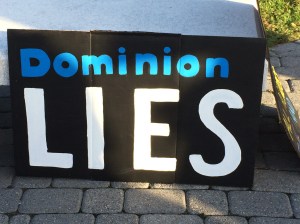
A sign at a protest against the Atlantic Coast Pipeline

A sign at a protest against the Atlantic Coast Pipeline

This post was co-written with Seth Heald, an attorney currently serving as Chair of the Virginia Chapter of the Sierra Club.
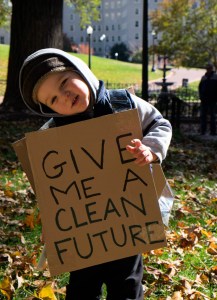
Donald Trump’s campaign for president upended the conventional wisdom that politicians must treat voters with honesty and respect. For Trump, no amount of lying, bullying, pettiness, crudeness and erratic behavior proved too much for an electorate hungry for change.

Indeed, some of his followers feel Trump succeeded because of his vices, not in spite of them. These trolls, bigots and bullies make up what historian Patty Limerick calls the Jerk Pride Movement, and they think they’re having their moment in the sun.

And lest anyone forget that corporations are people, the fossil fuel industry and its apologists have set out to prove that corporations can be jerks, too. Fossil fuel interests seized on the election as a mandate to gut the EPA, strip away clean air and water protections, open up public lands for exploitation, and renege on international climate commitments.

Since fake news and conspiracy theories served the Trump campaign so well, the anti-regulation crowd is stepping up its own use of half-truths, diversionary tactics and outright lies. Sure, they risk undermining the very foundations of American democracy, but fossil-fuel interests smell profit; nothing else matters.

Decent Americans should be outraged no matter who they voted for—and even more so when they see it happening in their own back yards, involving the people and institutions they deal with. We may not be able to staunch the flood of falsehood flowing across the internet, but we can hold our own leaders and institutions accountable when they add to it.

The corporate parent of Virginia’s own largest electric utility was already one of these corporate jerks, working with the American Legislative Exchange Council on state legislation undermining federal clean air and water protections. But recently Dominion Resources has gone further, adopting disinformation tactics in claiming its proposed fracked-gas pipeline will actually lower carbon emissions, and implicitly endorsing spurious reports and lies on a blog it sponsors. Dominion has gone from spinning facts to its own advantage, to actively misleading the people of Virginia.

Dominion is one of the partners in the Atlantic Coast Pipeline (ACP), which if built will bring massive amounts of fracked gas from West Virginia through Virginia and down to North Carolina. An analysis of the ACP’s climate change impact and that of the Mountain Valley Pipeline, conducted for the Sierra Club by physicist Richard Ball, showed that building these two pipelines would result in the emissions of twice the climate pollution of Virginia’s entire current greenhouse gas footprint.

Yet in a recent Facebook posting, Dominion claimed the Atlantic Coast Pipeline would “play an instrumental role in reducing carbon emissions in Virginia and North Carolina, which will allow both states to meet the requirements of the federal Clean Power Plan. In fact, the ACP alone could contribute as much as 25 to 50 percent of the carbon reductions necessary to meet interim goals in 2022.”

In the words of the Virginia Sierra Club’s former director, Glen Besa, “This is just not true and does not pass the sniff test. My personal rating is: Liar, Liar, Pants on Fire. Both of Dominion’s new gas plants in Virginia are fueled by existing pipelines. The ACP will bring in more fossil fuel for burning. At the same time Dominion has made NO new commitments to retire existing coal plants. Dominion can meet the Clean Power Plan without the ACP, but more importantly, the ACP will markedly increase carbon emissions, not decrease them.”

This bogus claim that a fracked-gas pipeline will help lower carbon pollution is in keeping with Dominion’s history of playing to both climate-concerned liberals and moderates on the one hand, and climate-denying conservatives on the other. Promising lower carbon emissions and Clean Power Plan compliance is intended to mollify the left, while Dominion courts the right through its work with ALEC, its lavish contributions to lawmakers, and its sponsorship of the libertarian Jim Bacon’s blog, Bacon’s Rebellion.

Even before Dominion signed on as his sponsor, Bacon exhibited an exasperating credulity when examining claims by Dominion and other fossil fuel companies. No doubt that endeared him to Dominion CEO Thomas Farrell, II and Company. If I were selling poison under the guise of medicine, I too would value a man who advertised my wares while proclaiming his independence.

But since joining the Dominion team and featuring its bright blue logo with every post, Bacon has adopted tactics familiar from the Trump campaign. These include promoting a sham “report” slamming a supposed new renewable electricity mandate that Virginia does not have and defending fake news about voter fraud. (Suppression of minority voting is a historic ALEC priority, along with opposition to wind and solar and promoting climate-science disinformation.)

Bacon’s post about supposed voter fraud is particularly instructive, as it adopts the “alt right’s” tactic of putting the onus on others to disprove absurd, baseless claims. Recall that Trump recently claimed, with no evidence, that he would have won the popular vote but for two million fraudulent votes supposedly cast against him. On the one hand Bacon (in perhaps the understatement of the year) acknowledged that Trump’s claim is a “huuuge stretch.” But then Bacon chastised “the news establishment” for not “distinguishing itself in debunking” Trump’s allegation. Indeed, Bacon posits, the national media’s reaction to Trump’s baseless allegation was “unhinged.” This, Bacon reasons, lends credence to Trump’s claim that the media is biased.

So now, according to a blog post with Dominion’s blue logo at the top, a president-elect’s lie about vote fraud is a stretch, but calling it a lie is unhinged. Welcome to the post-truth world.

Fossil fuel companies and their minions spreading disinformation is hardly a new tactic, of course. Read Naomi Oreskes and Erik Conway’s Merchants of Doubt for a compelling account of how the tobacco, chemical, and fossil fuel industries have used industry-funded “studies” and science-for-sale to stave off regulation for decades or longer.

If Americans aren’t in a panic about climate change, the reason isn’t a paucity of information about what is happening and why. It is due to a calculated disinformation campaign by the fossil fuel industry and a cadre of front groups like ALEC to make people believe the science is unsettled, exploiting the natural human tendency to do nothing in the face of uncertainty. As one internal tobacco company memo explained, “doubt is our product.”

Dominion Resources is a special case. Its Dominion Virginia Power subsidiary is a regulated public utility that is supposed to act in the public interest. Sham reports, fake news and false claims undermine the ability of regulators, legislators, and the public to understand and address the true nature of the energy choices facing us. Virginians should demand better.


Unknown's avatar

Virginia utilities back legislation to offer consumers a solar option

Photo credit iid.com

Photo credit iid.com

A group comprised primarily of Virginia utilities and solar industry members has proposed four pieces of legislation for the 2017 Virginia legislative session. The bills address four areas the group agreed to work on: creating a pilot program to offer solar energy to customers on a voluntary basis, under the name of “community solar”; raising from 100 MW to 150 MW the size limit for wind and solar projects that can take advantage of the streamlined Permit by Rule process, and allowing utilities to use that process in some circumstances; creating a program to allow farmers to sell some surplus solar to the grid; and allowing utilities to earn a profit on solar facilities they don’t build themselves (an incentive for them to do more deals with developers, whose costs are less and who receive more favorable tax treatment).

The group, referred to as the Rubin Group after its moderator, Richmond lawyer Mark Rubin, formed earlier this year when the Commerce and Labor Committees of the General Assembly refused to act on a suite of renewable energy and energy efficiency bills offered during the 2016 session. The committee chairmen, Senator Frank Wagner and Delegate Terry Kilgore, said members needed more time to consider the proposals, though they were similar to ones submitted (and killed) in previous years. Wagner and Kilgore assigned a special subcommittee to study the legislation and make recommendations for next year.

The subcommittee met once in the spring to hear summaries of the bills. It took no further action until December 8, when four members showed up to hear presentations from the Rubin Group and ask a few questions. The hearing took half an hour. No one mentioned energy efficiency.

Setting aside more contentious issues, the Rubin Group had agreed to focus on drafting legislation where they felt compromise between the solar industry and the utilities was possible. That left out a lot, including the many bills dealing with net metering issues and third-party ownership. They also chose not to bring in environmental or consumer groups until they had nearly completed drafting their bills, though they did include an advocacy group called Powered by Facts that focused on agricultural customers. Representatives from Southern Environmental Law Center and League of Conservation Voters were finally brought in to review and comment solely on the community solar bill. Other stakeholders were briefed on the bills in late November but not allowed to see the legislation until today. (As of this writing, the bills had not yet been posted anywhere I can link to.)

The community solar bill has generated the most interest, especially from residential customers who can’t put solar on their own roofs and are eager for options. And a review of the language suggests that in concept, at least, this bill holds a great deal of promise for bringing solar to average Virginians.

However, the name “community solar” is something of a misnomer for the Rubin Group’s bill, which might better be described as enabling a program for utility-administered, community-scale solar. The legislation provides for the utility to solicit bids for new solar facilities to be built by private developers around the state. The utility will contract for the output of the facilities and sell the electricity to customers who want to buy solar. Customers will never own the projects.

The bill is labeled a three-year pilot program. It consists of generating facilities up to 2 megawatts in size, for an initial total of 4 MW for APCo and 25 MW for Dominion. When a program is 90% subscribed, the utilities will add facilities up to a total of 10 MW for APCo and 40 MW for Dominion. Each utility will issue requests for proposals (RFPs) from developers, and will purchase the output and the associated renewable energy certificates (RECs). The utility will retire the RECs on the customer’s behalf, which assures customers they are actually getting solar. Electric cooperatives are also authorized to conduct similar pilot programs.

The utilities will be allowed to recover all of their costs through a rate schedule, including for squishy categories like administrative and marketing charges, plus a margin determined by the “weighted average cost of capital.”

The legislation does not set the price of the electricity, something left to the State Corporation Commission to decide under tight parameters. Leaving the price out of the legislation is reasonable, given that the RFPs haven’t even been issued yet, but it does mean we have no idea at this point whether customers will see a savings from the program either immediately (highly unlikely) or in the future. But the legislation does allow customers to lock in a fixed price for as long as they are in the program, giving them the price stability that is one of the major benefits of solar.

In addition, the members of the Rubin Group say they have agreed to abide by a Memorandum of Understanding they drafted to guide implementation of the bill at the SCC. This MOU has not been made public, and in any case the SCC would not be bound by it, but it may help ensure that regulations implementing the pilot program meet the parties’ expectations.

So how much of a difference could this program make? As a rule of thumb, supplying an average Virginia household with 100% solar energy requires the output of 10 kilowatts (kW) worth of solar panels. Thus the program total of 50 MW (50,000 kW) would be enough to supply 5,000 average Virginia households if they were to meet their entire electric load this way, or more if they are energy efficient or plan to meet only a portion of their load with solar. By comparison, Dominion alone claims to have over 30,000 customers in its Green Power Program. That program offers mostly wind RECs from other states, and does not reduce customers’ use of ordinary grid power from fossil fuels and nuclear. Thus there seem to be more than enough customers primed to sign up for a program that is infinitely better than what they are paying extra for today.

The astute reader will wonder why Dominion didn’t just change its Green Power Program to a Virginia solar program, something it could do through the State Corporation Commission without new legislation. If any astute reader figures that out, please let me know, because I’ve been wondering about it for years.

Regardless, the Rubin bill holds promise as an option for customers who can’t put solar on their own rooftops. It would mean more solar projects get built in Virginia, creating jobs and bringing new economic development to localities across the state. It would decrease demand for dirty power and possibly persuade our utilities that the future really does lie with solar, not with fracked gas.

Calling it community solar seems unwise, however. Virginians are wary of a bait-and-switch from a utility with a long history of promising the moon and delivering green cheese.

For real community solar, we will have to look to legislation developed by the Virginia Distributed Solar Collaborative. This broad-based group of solar stakeholders includes consumers, local government employees and environmentalists as well as solar industry representatives (but not utilities). The Collaborative developed its own model bill this summer based on legislation from other states. The model bill gives much greater freedom to customers to cooperate in the development and ownership of renewable energy facilities for their own benefit. Customers don’t have to wait for their utility to choose a developer, and they can choose to own a share of a facility, not just buy some of the electricity generated. Utilities can own facilities, but so can non-profit or for-profit entities. Utilities are required to purchase the output of the community facilities, and to issue bill credits to its customers who are subscribers.

As a practical matter, members of the Virginia Distributed Solar Collaborative don’t expect the General Assembly to adopt their model instead of something that comes with the Dominion Power seal of approval. But it’s important for legislators to understand what the alternative looks like, and why their constituents may feel that a utility-operated program shouldn’t be the only option.

Unknown's avatar

Why Trump won’t stop the clean energy revolution

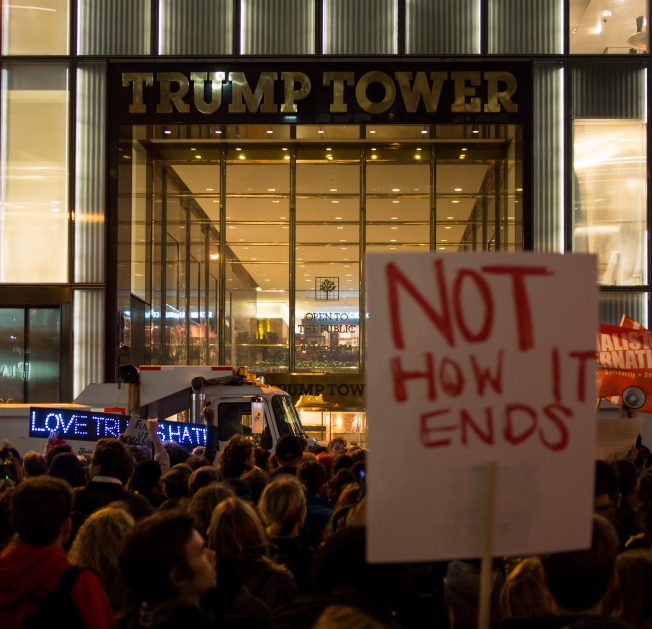
A protest in Manhattan against the presidency of Donald Trump, held the day after the election. Photo credit Rhododendrites - Own work, CC BY-SA 4.0, https://commons.wikimedia.org/w/index.php?curid=53011447

A protest in Manhattan against the presidency of Donald Trump, held the day after the election. Photo credit Rhododendrites – Own work, CC BY-SA 4.0, https://commons.wikimedia.org/w/index.php?curid=53011447

It is not an overstatement to say that Donald Trump’s win over Hillary Clinton horrified everyone who is worried about climate change. Reading the news Wednesday morning was like waking up from a nightmare to discover that there really is a guy coming after you with a meat cleaver.

You might not be done for, though. You could just end up maimed and bloodied before you wrest the cleaver away. So with that comforting thought, let’s talk about what a Trump presidency means for energy policy over the next four years.

I’ve had a lot of time to think about this. As a career pessimist, I’ve been worried about the possibility of a Trump win since last spring. I can fairly say I was panicking before panic became mainstream. But even with the worst-case scenario starting to play out, I’m convinced we will continue making progress on clean energy.

There is no getting around how much harder a Trump presidency makes it for those of us who want the U.S. to meet its obligations under the Paris climate accord. It’s not clear that Trump can actually “cancel” the accord, as he has promised to do. On the other hand, a man who puts fossil fuel lobbyists and climate skeptics in charge of energy policy is hardly likely to ask Congress for a carbon tax.

Nothing good can come of it when the people in charge relish chaos and embrace ignorance. Destroying the EPA will not stop glaciers melting and sea levels rising.

But just as politicians can’t repeal the laws of physics driving global warming, so there are other forces largely beyond their control. Laws and regulations currently in place; state-level initiatives; market competition; technological innovation; and popular attitudes towards clean energy have all driven changes that will withstand a fair amount of monkeying with. It’s worth a quick review of these realities.

Coal is still dead

Donald Trump’s promise to bring back coal jobs is about as solid as his promise to force American companies to bring jobs back from China. Even if he’s sincere, he can’t actually do it.

The economic case for coal no longer exists, and that remains true even if Trump and anti-regulation forces in Congress gut EPA rules protecting air and water. Fracking technology did more than the Obama administration to drive coal use down by making shale gas cheap. A glut of natural gas pushed prices down to unsustainable levels and kept them there so long that utilities chose to close coal plants or convert them to gas rather than wait.

What gas started, renewables are finishing. Today, coal can’t compete on price with wind or solar, either. That leaves coal with no path back to profitability. Not many utilities want to pollute when not polluting is cheaper.

Nor will the export market recover. China doesn’t want our coal, and a president who pursues protectionist trade policies will find it hard to get other countries to take our products.

It’s also hard to find serious political support for coal outside of a handful of coal states. Politicians say they care about out-of-work coal miners, but they care more about attracting industry to their states with cheap energy. That is certainly the case in Virginia, where Governor McAuliffe didn’t even include coal mining or burning anywhere in his energy plan.

If there is a silver lining for coal miners, it’s that without an Obama bogeyman to blame for everything, coal-state Republicans will have to seek real solutions to unemployment in Appalachia.

Solar and wind are still going to beat out conventional fuels

Analysts predict renewable energy, especially solar, will become the dominant source of electricity worldwide in the coming decades. Already wind and solar out-compete coal and gas on price in many places across the U.S. As these technologies mature, prices will continue to fall, driving a virtuous cycle of escalating installations and further price reductions.

While federal policies helped make the clean energy revolution possible, changes in federal policy now won’t stop it. Today the main drivers of wind and solar are declining costs, improvements in technology, corporate sustainability goals, and state-level renewable energy targets.

As the revolution unfolds over the next decade, the folly of investing in new fossil fuel and nuclear infrastructure will become increasingly clear. Natural gas itself is cheap right now, but new gas infrastructure built today will become worthless before it can recover its costs and return a profit. Corporations like Dominion Resources and Duke Energy are investing in gas transmission pipelines and gas generating plants only because they think they can profit from them now, and force captive utility customers to bear the cost of paying off the worthless assets later.

Advocates fighting new gas infrastructure have mostly had to work at the state level, since they’ve received little help from the Feds. That much won’t change. The cavalry isn’t coming to save us? Well, we are no worse off than we were before. We just have to do the job ourselves.

Dominion’s gas build-out is still a bad idea

Dominion Power is enthusiastic about natural gas, but we’ve seen this movie before. Environmentalists and their allies tried, and failed, to stop Dominion’s newest coal plant in Wise County from being built. Regulators approved it in spite of Dominion’s cost projections showing a levelized cost of energy of 9.3 cents per kilowatt-hour. That’s about twice the wholesale price of energy today, and well above where wind and solar would be even without subsidies.

Approval to construct the plant came in the fall of 2008. A mere eight years later, that looks like a terrible decision. Dominion Virginia Power shows no further interest in building coal plants. Instead, it has since built two huge natural gas plants and received approval to build a third. Its sister company is building the Atlantic Coast Pipeline to lock ratepayers into even more gas.

Eight years from now, those will look like equally bad decisions.

Renewable energy is popular with everyone

One of the most remarkable pieces of legislation passed during the last few years was the extension of the Investment Tax Credit and the Production Tax Credit, subsidies that have underpinned the rapid spread of solar and wind power. It turns out that Republicans don’t actually hate subsidies; they only hate the ones that benefit other people.

Wind energy is one of the bright spots in the red states of the heartland. Farmers facing volatile markets for agricultural products appreciate the stable income they get from hosting wind turbines among the cornfields, and they aren’t going to give that up.

And everybody, it turns out, loves solar energy. There’s a simple, populist appeal to generating free, clean energy on your own roof. The failure on Tuesday of a utility-sponsored ballot measure in Florida is especially notable: the constitutional amendment would have ended net metering and led to steep declines in solar installations in the Sunshine State. Voters said no. The lesson will resonate across the South: people want solar.

Indeed, public polling for years has shown overwhelming support for wind and solar energy, across the political spectrum. Even people who don’t understand climate change think it’s a good idea to pollute less. And the energy security benefits of having wind and solar farms dotting the landscape are simple and intuitive. So while the fossil fuel industry may use a friendly Trump administration to launch attacks on renewable energy, no populist army will back them.

The Clean Power Plan was important, but not transformative

Congressional Republicans have talked smack about the EPA for years, and the Clean Power Plan raised the needle on the right wing’s outrage meter to new levels. Most EPA rules have a layer of insulation from Congressional meddling as long as Senate Democrats retain the ability to filibuster legislation that would repeal bedrock environmental laws like the Clean Air Act. And laws protecting the air and water have such broad public backing that it is hard to imagine even the Chaos Caucus going there.

The Clean Power Plan could be different. Trump’s choice of a new Supreme Court justice will produce a conservative majority that might well strike down Obama’s most important carbon rule. For a handful of states that rely heavily on electricity from aging coal plants and aren’t compelled to close them under other air pollution rules, this will buy them a few years. (But see “Coal is still dead,” above.)

For most states, though, the Clean Power Plan was never going to be a game-changer. Many states were given targets that are easy to meet, or that they have already met. As I’ve pointed out before, Virginia’s target is so modest that the state could meet it simply by adopting a few efficiency measures and supplying new demand with wind and solar. That’s if the state decided to include newly-built generating sources in its implementation plan, which it doesn’t have to do.

By its terms, the Clean Power Plan applies only to carbon pollution from power plants in existence as of 2012. Newer generating plants are regulated under a different section of the Clean Air Act, under standards that new combined-cycle gas plants can easily meet. That’s a gigantic loophole that Dominion Virginia Power, for one, intends to exploit to the fullest, and it’s the reason the company supported the Clean Power Plan in court.

Regardless of whether it is upheld in the courts, however, the Clean Power Plan has already had a significant effect nationwide by forcing utilities and state regulators to do better planning. It led to a raft of analyses by consulting firms showing how states could comply and actually save money for ratepayers by deploying cost-effective energy efficiency measures. If the Clean Power Plan doesn’t become law, states can ignore those reports, but their residents should be asking why.

For Virginia, nothing has changed at the state level. Or has it?

Virginia has off-year elections at the state level, so Trump’s election has no immediate effect on state law or policy. Most significantly, Terry McAuliffe is still governor of Virginia for another year, he still knows climate change is real, and his Executive Order 57, directing his senior staff to pursue a strategy for CO2 reductions, is still in effect. McAuliffe has disappointed activists who hoped he would become a climate champion, but Trump’s win could light a fire under his feet. He has an opportunity to put sound policies in place, if he chooses to do so.

Offshore drilling in Virginia probably isn’t back on the table

Trump has promised to re-open federal lands for private exploitation, reversing moves by the Obama administration. His website says that includes offshore federal waters. However, the decision by the Bureau of Ocean Energy Management to take Virginia out of consideration for offshore drilling isn’t scheduled to be revisited for five years. Trump’s people could change the process, perhaps, but there’s not much demand for him to do so. With oil prices low, companies aren’t clamoring for more places to drill.

Environmental protection begins at home . . . and the grassroots will just get stronger

I would hate for anyone to mistake this stock-taking for optimism. The mere fact that the clean energy revolution is underway does not mean it will proceed apace. Opportunities abound for Trump to do mischief, and nothing we have heard or seen from him during the campaign suggests he will rule wisely and with restraint.

But advancing environmental protection has always been the job of the people. Left by itself, government succumbs to moneyed interests, and regulators are taken captive by the industries they are supposed to regulate. Americans who want clean air and water and a climate that supports civilization as we know it have to demand it. It will not be given to us.

Sound economics, common sense, and technological innovation are on our side. Most important, though, is the groundswell of public support for clean energy and action on climate. That never depended on the election, and it won’t stop now.

Unknown's avatar

McAuliffe’s bright new energy plan still has that rotten-egg smell

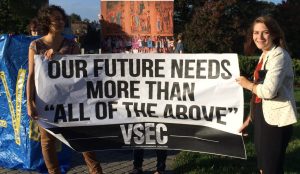
Students protesting the new state motto.

Students protesting the new state motto.

Earlier this week, Virginia Secretary of Commerce and Trade Todd Haymore published an op-ed in the Roanoke Times boasting of the Commonwealth’s achievements on energy. It was a sad reminder that Virginia has trouble moving beyond “all of the above,” a phrase that seems to have become the state motto. But then on Wednesday, the McAuliffe Administration released a cheerful new version of the Virginia Energy Plan that reads like an extended love poem to solar power.

Haymore’s column more accurately reflects this Administration’s approach to energy: a lot of fracked gas, tricked out with bright snippets of solar. But I much prefer the Energy Plan. The entire first third of it is given over to trumpeting Virginia’s progress on developing solar energy. Though the amount of solar installed to date is still tiny, Virginia solar has terrific momentum, and McAuliffe can rightly claim a share of the credit.

The Plan also touches briefly on onshore wind (thanks to a single project from Apex Clean Energy), offshore wind power (nothing to see here, folks, move along), and an array of modest-yet-promising energy efficiency initiatives.

But the Energy Plan has its darker moments, too. If McAuliffe is in love with solar, he is still married to fossil fuels. The Plan continues to promote fracked gas infrastructure like Dominion’s Atlantic Coast pipeline, and insists that flooding the Commonwealth with natural gas is the key to economic prosperity.

Natural gas sneaks into other parts of the Energy Plan as well. The section on alternative fuel vehicles shows a preference for natural gas-fueled vehicles over electric vehicles, bucking the nationwide trend toward EVs. It’s another discouraging indication of just how powerful utility giant Dominion Resources has become in Virginia. Though we think of it as an electric utility, Dominion is a much bigger player in the gas world. You can run an EV on solar, but a natural gas vehicle commits you to fracking.

Locking us into natural gas in all parts of our lives serves Dominion’s purposes very well. But for Virginia, it means considerable pain down the road. With the world finally committed to tackling global warming, our failure to cut carbon now will mean deeper cuts forced on us later.

The Energy Plan does contain a short discussion of the need to fight climate change, but it fails to acknowledge the tension between embracing gas and cutting carbon. The Plan assures us that “Regardless of the outcome of litigation involving the [EPA’s Clean Power Plan], the Governor will work to identify a path toward further reducing Virginia’s carbon emissions and shifting to greater utilization of clean energy to power the Commonwealth economy.” But no hints follow as to how McAuliffe expects to accomplish this while expanding the use of a carbon-emitting resource like natural gas.

We’ve already seen that McAuliffe is capable of holding two contradictory thoughts in his head at the same time. The Governor frequently asserts that climate change is an urgent problem, then in the same breath brags that he persuaded EPA to soften Virginia’s targets under the Clean Power Plan to make compliance easier. He repeats this claim in the Energy Plan, and seems to expect applause.

Knowledgeable observers say EPA softened some initial state targets and tightened others to make the final Clean Power Plan more legally defensible. Regardless, for a man who believes in climate change, McAuliffe’s boast is exasperating. It’s like announcing you pulled off a bank heist when the evidence points to an inside job. Well-wishers can only cringe.

McAuliffe has a little more than a year left in the single term Virginia allows its governors. Here’s hoping he uses it to commit the Commonwealth more firmly to the solar energy he so loves, along with the other essentials of the 21st century energy economy: wind power, battery storage, and energy efficiency. That should make it easier to break with natural gas. Sure, fracked gas looks cheap today, but cheap is not the stuff of legacies.


*On a purely tangential note, Haymore’s column isn’t helped by the editing habits of the Roanoke Times. Like many newspapers these days, the Roanoke Times seems to believe its readers can’t handle full paragraphs. It presents almost all of the Secretary’s short sentences as separate paragraphs, as though insisting that each one should be mulled over individually. The result puts me in mind of the slips of paper inside Chinese fortune cookies, if the fortunes had been written by guys working for energy companies. (That is not, frankly, something I would like to see.)

Unknown's avatar

Virginia, meet Paris. Things will never be the same.

By Tristan Nitot - standblog.org, CC BY-SA 3.0, https://commons.wikimedia.org/w/index.php?curid=41689

By Tristan Nitot – standblog.org, CC BY-SA 3.0, https://commons.wikimedia.org/w/index.php?curid=41689

After Republicans in Virginia’s General Assembly shut down the McAuliffe administration’s work on implementing the EPA Clean Power Plan last winter, Governor McAuliffe decided on an end run. He issued Executive Order 57, directing administration officials to recommend ways to reduce carbon pollution from the state’s power plants. The workgroup led by Secretary of Natural Resources Molly Ward is holding meetings this fall to gather information and advice.

This puts Ward in something of a pickle. Meeting the climate challenge requires Virginia to commit to a future with less fossil fuel, while McAuliffe is championing Dominion Power’s plans to radically expand fossil fuel investments in the Commonwealth.

Last week the European Union joined the United States, China, India, Canada, Mexico and dozens of other countries in ratifying the Paris climate accord, putting it over the threshold needed for it to take effect. The goal of the accord is to limit the increase in world temperatures to “well below” 2 degrees Celsius, 3.6 degrees Fahrenheit, a level beyond which climate effects are projected to be catastrophic. Given mounting concerns that 2 degrees isn’t sufficiently protective, the 197 signatory nations also agreed to a stretch goal of 1.5 degrees Celsius.

The U.S. is the world’s second highest emitter of CO2 after China, and our average emissions per person are two-and-a-half times that of the Chinese. No other country has contributed more to the problem. American leadership was key to bringing other countries on board, and it will be key to implementing solutions.

A few niggling details remain, like how we are actually going to do this. The EPA’s Clean Power Plan is a first step, but its scope is narrow. It addresses only carbon emissions from electric generating plants in use as of 2012, not new sources (though states can choose to do that). It doesn’t address emissions outside the electric sector. It also doesn’t address methane emissions from natural gas infrastructure, a climate threat that seriously undercuts the climate benefit of utilities switching from coal to gas. Its goal of reducing electric-sector carbon pollution by 30% by 2030 is nowhere near what’s needed.

To meet its Paris commitment, the U.S. will have to dramatically reduce fossil fuel use in everything from electricity and heating to manufacturing and transportation. The good news is that the technologies to do this exist, and they are getting better and cheaper by the day. The bad news is that even an all-hands-on-deck approach would need time to work, and there are still way too many hands sitting idle in their bunks below deck.

Future federal regulation that goes well beyond the Clean Power Plan is inevitable. Through whatever means—a carbon tax, removal of fossil fuel subsidies, new incentives, or simple mandates—renewable energy has to take over the power sector, with fossil fuels limited to a supporting role before being phased out altogether. Building codes must be dramatically strengthened to minimize energy consumption, and transportation must be electrified so vehicles run on wind and solar, not gasoline or diesel. And all this has to happen starting now.

With the U.S. committed to this path, it makes no sense for any state to pursue a fossil fuel-heavy strategy simply because federal mandates aren’t in place yet. The ratification of the Paris accord means all new fossil fuel investments—drilling machinery, fracking wells, pipelines, generating plants—must be evaluated against the likelihood that they will have to be abandoned well before the end of their useful life.

In Virginia this includes proposed new fracked-gas transmission pipelines; a new natural gas generating station that Dominion Power just received approval to build; as much as 9,000 megawatts more of natural gas generating plants that Dominion wants to build; and at least two new natural gas generating plants proposed by other developers, who would use the new gas pipelines to supply them. Altogether, these projects represent tens of billions of dollars in investments in infrastructure that would have to be shut down and left to decay within a decade or two.

All this could happen without violating the Clean Power Plan, if Virginia takes advantage of a loophole allowing it to exclude new gas plants from its implementation plan. Dominion’s gas plants alone would increase carbon emissions from Virginia by as much as 83%. That won’t get us to Paris.

It seems obvious that these investments would be better channeled into carbon-free renewable energy and reducing energy use through efficiency and building improvements. These are the “no regrets” investments that make sense for human health and economic development reasons anyway. With the Paris accord, the decision has gone from no-regrets to no-brainer.

But Dominion clearly thinks a pipelines-and-gas-plants approach will make more money for its shareholders. Dominion is betting that regulators will allow it to bill customers for the costs of new fossil fuel infrastructure even if it turns out that using it means paying a high carbon tax, or not using it at all. Dominion counts on the prevalence of climate doubt and magical thinking within the Virginia legislature and the staff of the SCC to muffle the wake-up call from Paris.

This is a deeply irresponsible and immoral calculus.

To date, Governor McAuliffe has backed Dominion at every turn. With only a year and a half left in his term, the “jobs governor” wants to lure businesses to Virginia quickly with the promise of cheap natural gas. It’s a strategy that might backfire in the short run, as savvy businesses go to states better preparing for life after Paris. Surely, it will backfire in the long run, when Virginia is left paying off unwanted fossil fuel infrastructure. The Paris accord marks a good point for McAuliffe to change his allegiance.

Indeed, after Paris, nothing will ever be the same. The days of natural gas as a bridge fuel are rapidly ending, and the U.S. has committed itself to breaking from its fossil fuel past. Executive Order 57 offers Virginia an opportunity to map out a carbon-free strategy. Time is short. Allons-y!

Unknown's avatar

Will Virginia run roughshod over local zoning power to help gas drilling companies?

Although Virginia’s 2017 General Assembly session is still more than three months off, fossil fuel interests will already be planning how to win more special favors from the legislature. In past years they’ve gotten subsidies or a relaxation of environmental safeguards. This year, it could be help dealing with pesky local governments that want to protect communities from fracking. Guest blogger Linda Burchfiel brings us the story.

Photo credit Virginia Sierra Club

Photo credit Virginia Sierra Club

Even in a Dillon Rule state like Virginia, where local governments have only the authority conferred on them by the state, localities have some authority over matters that affect the daily life of residents. Traditionally they have authority to enact zoning ordinances to maintain their sense of community. Recently, counties have started to use their authority to limit the ability of natural gas drilling companies to conduct fracking operations within their borders. Now the industry is pushing back—hard.

Indeed, any action that limits fracking sends the oil and gas industry into high gear. The industry is already working to undermine new state regulations governing disclosure of chemicals used in fracking operations. Based on the experience of other states, we expect to see the industry seek legislation in Virginia’s upcoming General Assembly Session to block local authority over fracking.

New forms of “unconventional drilling,” including hydraulic fracturing or “fracking,” make drilling for natural gas potentially profitable in parts of Virginia that have no history of oil and gas development. Fracking companies have been travelling to new areas, leasing acres of land and approaching local governments for permits. Before considering permits, some local governments have insisted on researching fracking and its consequences.

This happened in 2010 in Rockingham County, which sits in the Shenandoah Valley atop a sliver of the Marcellus Shale. When a Texas-based drilling company requested permits to conduct fracking operations there, county supervisors decided they had better educate themselves on the subject. A Republican board member took the lead, investigating the safety records of fracking companies in other states and sounding the alarm about his findings. Facing growing opposition and unwilling to wait, and with falling gas prices making fracking in the county less profitable, the drilling company eventually withdrew its request.

Fracking also threatens the Tidewater area, where the U.S. Geological Survey estimates the Taylorsville Basin may contain over a trillion cubic feet of shale gas in an area underlying parts of more than a dozen Virginia counties. (A map of the Taylorsville Basin can be found here.) But while the potential for industry profits may be good, the potential risks are much greater. This low-lying region is in the Chesapeake Bay watershed and contains the Potomac Aquifer, which supplies water for drinking, agriculture and industry for almost half of Virginia’s population. In recognition of these unique environmental challenges, the Virginia Oil and Gas Act includes special provisions to protect the Tidewater Region. Two such provisions are the requirement of an environmental impact assessment for a permit, and a prohibition of drilling for oil or natural gas within 500 feet of the Chesapeake Bay or any tributary.

To add further safeguards, the King George Board of Supervisors proposed an ordinance in August 2015 with specific restrictions intended to protect the community from the noise, traffic and environmental degradation of fracking. After the gas industry threatened to sue, the Board held a new public hearing this year, then passed the ordinance with only slight modifications. Restrictions include a prohibition on well drilling within 750 feet of a waterway or road or occupied building, limiting drill sites to four acres, prohibiting holes from being bored within 100 feet of a property line, and requiring each company interested in drilling to apply for a special exception permit and to submit extensive information.

Although the oil and gas industry had tried to influence the Board’s decision with the threat of long and expensive litigation, its legal theory is weak. A 2015 opinion by Attorney General Mark Herring affirms that municipalities have the authority to use zoning ordinances to restrict fracking, including authority to prohibit it entirely within a jurisdiction. His opinion overturned that of the previous Attorney General, Ken Cuccinelli, who had stated that localities could not “ban altogether” oil and gas exploration and drilling through zoning ordinances. Even Cuccinelli, however, had conceded that a county “may adopt a zoning ordinance that places restrictions on the location and siting of oil and gas wells that are reasonable in scope and consistent” with applicable state laws.

If the industry can’t win in court, though, it may attempt to use the legislature to pass legislation taking away local governments’ ability to limit fracking. Given the historic influence the fossil fuel industry has on Virginia’s General Assembly, this poses a serious threat to localities that want to control their own fate.

The industry has an ally in this effort: the American Legislative Exchange Council (ALEC), a lobbying organization heavily funded by the fossil fuel industry. ALEC counts many conservative Virginia legislators among its members, as well as utility giant Dominion Resources. ALEC members draft and share model state-level legislation that favors corporate interests. ALEC claims to support sending power back to the local level, but in fact it consistently favors unlimited fossil-fuel extraction and burning, regardless of ALEC’s ostensible principles. So if local governments want to restrict fracking, while state legislatures are less inclined to do so, ALEC will likely favor blocking local government restrictions.

A recent news account revealed that ALEC and its local government affiliate, the American City-County Exchange (ACCE) are working to block local government action in states where the state legislature is more corporate-friendly than local governments. Thus we should be prepared to see ALEC insert itself in Virginia’s legislative process to try to block local restrictions on fracking.

Indeed, ALEC has already been working in other states to stop local governments from restricting fracking. This includes Texas, which passed a preemptive ban on local government efforts to stop fracking in 2015. In Florida, a similar ALEC-supported ban was defeated after opponents pointed out that the measure threatened localities’ traditional control over other local issues, such as education.

Linda Burchfiel is the Fracking Issues Chair for the Virginia Chapter of the Sierra Club.

Unknown's avatar

Even Appalachian Power doesn’t like its third-party solar option

Colleges in APCo territory want to use PPAs to install solar facilities like the one recently installed at the University of Richmond, in Dominion territory.

Colleges in APCo territory want to use PPAs to install solar facilities like the one recently installed at the University of Richmond, in Dominion territory.

Facing a withering report from a Virginia hearing examiner recommending denial of its request for a renewable energy “Rider RGP,” Appalachian Power Company (APCo) has responded with a simple message to the State Corporation Commission: um, never mind.

APCo proposed Rider RGP as an alternative to third-party power purchase agreements (PPAs) for customers wanting to install rooftop solar. The proposal would have put APCo in the middle of the deal and created a buy-all, sell-all scheme. But the proposal was roundly criticized at last year’s hearing and in witness statements as convoluted and expensive.

On September 19 APCo asked to withdraw its application, citing changed circumstances. In reality, of course, nothing has changed since the Hearing Examiner’s August 31 report, other than APCo learning it was about to lose.

The company probably doesn’t mind being rejected for a program that witnesses said no one would sign up for. The much bigger issue for the company is that if the SCC adopts the hearing examiner’s view, APCo could lose its battle to block PPAs in its service territory.

For those of you just coming to the story, here’s the Cliff Notes version (this earlier post has the unabridged telling): APCo’s customers want the ability to install solar on their property through PPAs, a financing arrangement in which a solar developer installs and owns the panels, selling the electricity that’s generated to the customer. Often this means the customer can reduce its electricity bills without incurring an up-front cost. For tax-exempt institutions like colleges that can’t take advantage of the federal 30% tax credit for solar, the PPA model means the developer can take the tax credit and pass along the savings.

Virginia utilities say this arrangement violates their monopoly on the sale of electricity. Customers point to two statutory provisions that make PPAs legal. One provision allows customers to buy renewable energy from third parties if their utility doesn’t offer it. (No utility in Virginia does.) The other provision defines a net metering customer to include one who contracts with someone else to install and operate a solar facility on the customer’s property—an apt description of a PPA arrangement. Customers would seem to have the better of the argument, surely, but no bank will finance a PPA when a deep-pocketed utility is threatening to sue.

Dominion temporarily settled the issue in its territory with a pilot program that allows some PPAs, but APCo declined to participate. Under pressure from educational institutions that want solar, APCo proposed Rider RGP as an alternative for its territory. Customers and solar advocates seized the opportunity to seek a clear ruling from the SCC on the legality of PPAs. They argued, and the Hearing Examiner agreed, that Rider RGP wasn’t just badly designed, but unnecessary, given the provisions of the statute that already allow PPAs.

APCo doesn’t want the SCC commissioners to confirm this conclusion. It hopes that by withdrawing Rider RGP, the SCC will dismiss the case and not reach the merits of the argument on PPA legality. It is urging the SCC not to consider the point at all, or if it does so, not to take it up until it considers APCo’s plan, announced in April, to offer a green tariff to customers.

That green tariff is the “changed circumstances” APCo says makes Rider RGP unnecessary. If the SCC approves the green tariff, APCo will offer to sell real renewable energy to customers who want it. APCo clearly believes that having that tariff available to customers closes off the statutory provision that allows customers to go to third-party sellers if their own utility doesn’t offer renewable energy.

The green tariff would not, however, affect the legality of PPAs under the other statutory provision, the one that defines net metering customers to include those who have renewable energy facilities located on their property but owned and operated by someone else. Nor does the offer of a green tariff seem likely to satisfy customer demand for PPAs; buying electricity from a utility through a green tariff is a very different animal from having solar panels on your own roof.

The SCC is considering APCo’s request to withdraw its proposal for Rider RGP. It issued an order asking the parties to the case to comment by September 26. Advocates are expected to oppose APCo’s request and to ask the SCC to rule definitively on the legality of PPAs. By doing so, the Commission would finally bring legal clarity to an issue that has been holding back solar development in Virginia.


Update: September 26, Dominion Virginia Power filed a motion to intervene out of time, with a brief begging the SCC not to even look at the legality of PPAs, or if it did, to reject the hearing examiner’s reading of the statute on the grounds that her opinion disagrees with Dominion’s.  Dominion’s brief notes that it wrote its own opinion into a tariff, which the SCC approved, and therefore that ought to be more important than whatever the General Assembly actually said.

On October 7, the SCC allowed APCo to withdraw its proposal, ducking the issue of PPA legality and ensuring that more time and money will be wasted on future proceedings.