Unknown's avatar

Spanberger’s energy plan dazzles – and disappoints

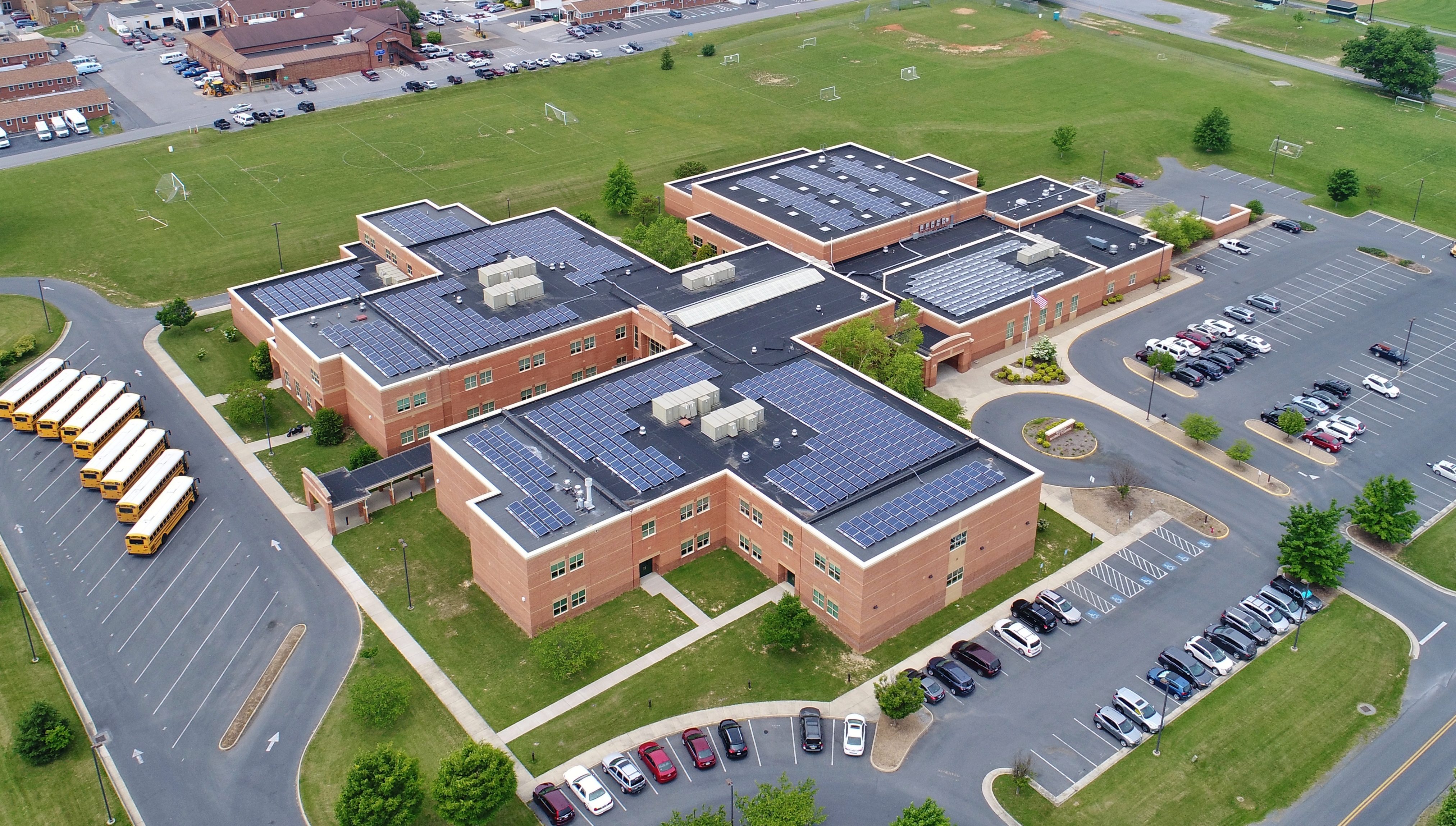
solar panels on a school roof
Rooftop solar gets a boost in the 2026 Energy Plan, potentially leading to more installs like that on Wilson Middle School in Augusta County. Photo courtesy of Secure Futures.

Virginia Gov. Abigail Spanberger’s energy plan, released October 1, is a marvel of earnestness and hard work. Anyone plowing through its 180 pages of text and appendices can’t help but be impressed with the level of detail and the thoroughness of its coverage.

The Department of Energy even acquired the same modeling software used by Dominion Energy and ran its own scenarios. And unlike Dominion, the administration took the goals of the Virginia Clean Economy Act seriously.

It’s an impressive effort, and the result surely has to be considered the new gold standard for Virginia energy plans, which have seldom even met statutory requirements. Take a bow, Virginia Energy staff and chief Energy Officer Josephus Allmond; you deserve it.

And yet.

If the plan’s central purpose is to demonstrate that Virginia doesn’t need to tamp down the growth of data centers to preserve energy affordability for residents and achieve the decarbonization goals of the VCEA, it fails.

The plan acknowledges that “rapid data center load growth is driving grid infrastructure constraints and higher costs.” Yet that unconstrained load growth is subjected to scrutiny only as to the accuracy of the forecasts, not to consider throttling back the growth.

Indeed, the plan hypothesizes that data centers will spend more on power than utilities will spend on infrastructure, an assertion the governor repeated last week at the Virginia Clean Energy Summit in Richmond.

From this calculation flowed her equally questionable argument that a future with more data centers will mean lower costs – the reverse of what the plan admits is happening now.

Providing enough clean energy cheaply to meet this load is a really hard circle to square, though the plan describes a few pathways heading in the right direction.

It identifies a lengthy list of ways to eliminate energy waste and smooth demand spikes, many of which have already been set in motion with 2026 legislation. (There is certainly room for improvement; the web site WalletHub just ranked Virginia 35th out of 48 states on energy efficiency.)

The plan also makes a strong case for energy storage and distributed generation as a way to harness private investment and make the grid more efficient, secure and resilient.

It recognizes the huge potential for solar on public buildings, currently held hostage to the interconnection barriers Dominion Energy erected. It also calls out Dominion for the high price tag on its clean energy projects and proposes a state-led renewables marketplace to bring the power of competition to bear on purchasing. And it suggests interesting interim solutions like fuel cells that could replace dirty diesel generators at data centers.

Certainly, it could go further. The governor could, for example, throw her weight behind a stronger residential building code and creation of an independent energy utility like Vermont’s to consolidate programs and maximize energy savings for residents.

The problem remains that all the efficiency, distributed generation and grid management in the world can’t get us out of the hole that data center demand is digging for us. We’re going to need a lot more generation, and if we also need it to be cheap and clean, we need a lot more utility-scale solar.

That brings me to my criticism of the energy modeling done by Virginia Energy’s staff, apart from its failure to include a scenario that limits data center growth. It imposes a cap on the amount of solar energy that the model was allowed to choose to achieve least-cost pathways for meeting demand. Without this artificial cap, it’s safe to say, the model would have selected a lot more cheap-and-easy solar paired with storage.

Doing so would have undercut a claim we are already hearing from Republicans, that if we would just leave climate and health costs out of the equation — and ignore turbine shortages, pipeline constraints, and fuel price volatility — building more fossil gas plants would come out as the cheapest option. A picture of what solar could do if we let it would rebut that argument.

That the model instead imposed a cap reveals Spanberger’s own ambivalence about utility solar. The administration takes it as a given that the current resistance to utility solar in many rural counties will persist even in the face of the declining farm income that makes solar one of the few lifelines available to struggling landowners. The plan mentions agrivoltaics approvingly but misses its transformational potential.

The plan could have proposed education and incentives to bring solar and agriculture together for the mutual benefit of both. Instead, it treats utility-scale solar as a regrettable necessity we should minimize. It’s an odd capitulation to solar NIMBYs from a governor who barely acknowledges the far greater public hostility to data centers.

Limiting utility-scale solar hamstrings the modeling effort. Even the addition of a lot more offshore wind, which is assumed to happen once President Donald Trump exits the stage, leaves us short of what’s needed to meet a massive increase in data center load.

Unwilling to check the growth of data centers, committed to defending the VCEA and wary of expanding energy imports, Spanberger isn’t left with a lot of great options. So, like so many governors before her, she puts her faith in nuclear.

Apparently, the best thing about the new small modular nuclear reactors (SMRs) under development today is that they are still a long way from commercial viability. That excuses leaders from having to immediately grapple with the realities of cost, siting, safety, security and waste. People can just imagine SMRs will be the perfect power source.

I am reminded of friends who joke that their retirement plan is winning the lottery. Fortunately, my friends know not to bank on it.

Spanberger proposes to bank on it, and to pass the cost of the lottery tickets on to the public. The energy plan has numerous suggestions for ways Virginia can help develop nuclear energy, all to be paid for by Virginia residents.

The worst proposal involves revising our renewable portfolio standard to make new nuclear an eligible technology. It’s yet another blow to solar, which Virginia has already made more expensive to develop in a way no other state has done (looking at you, House Bill 206).

The plan’s enthusiasm for nuclear even extends to conventional large light-water reactors. Recall that Dominion pulled the plug on its proposal for a third, 1500-MW light-water reactor at North Anna in 2017, when the total cost to ratepayers had hit $19 billion (about $26 billion in today’s dollars). There is a reason nuclear companies want their projects subsidized, and a reason the rest of us should be wary of being the ones doing it.

Really, when you consider it, wouldn’t it be better just to slow the growth of data centers?

Originally published in the Virginia Mercury on October 16, 2026.

Want to offset your carbon footprint but can’t put solar on your home? Help us put solar on a Virginia non-profit! Norfolk Solar Solutions uses your tax-deductible donations to provide resiliency and energy savings to community-serving nonprofits across the commonwealth. Contribute to one of our projects under development or talk to us about other ways you can help.
Unknown's avatar

Northam’s energy plan: A blueprint for action or destined for dusty shelf?

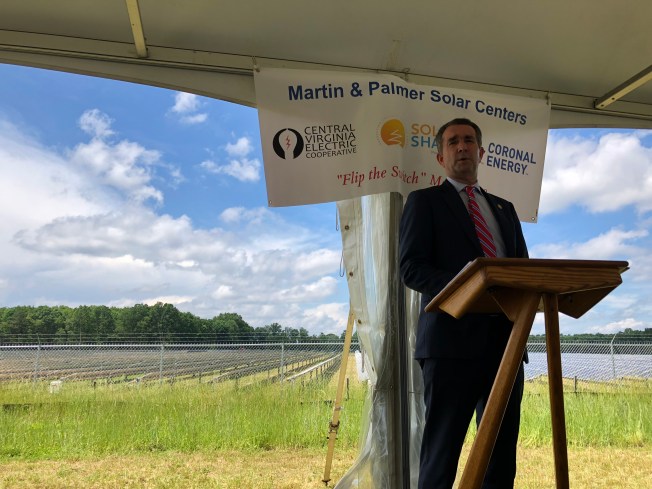
Virginia Governor Ralph Northam standing in front of a new solar farm.

Governor Northam speaks at the opening of the Palmer Solar Center on May 23.

[Note: A version of this post originally appeared in Virginia Mercury on July 23. Virginia Mercury is a nonprofit, independent online news organization that launched this summer. Subscribe to its free daily newsletter here.]

Forget “all of the above.” Under Governor Ralph Northam, Virginia’s next Energy Plan will emphasize the features of a clean energy future: solar and wind, energy efficiency, electric vehicles, energy storage, and offshore wind. This marks a welcome departure from previous state energy plans, though whether the end result serves as a blueprint for action or just stuffing for a filing cabinet remains to be seen.

Since 2007, Virginia law has required the Department of Mines, Minerals and Energy (DMME) to write a ten-year Energy Plan in the first year of every new administration. The statute lists vague requirements for the plan, including that it be consistent with the Commonwealth Energy Policy, itself a toothless statute. That means each new governor can pretty much tell DMME what to focus on.

Previous governors’ plans have read more like campaign rhetoric than like meaningful indicators of an administration’s direction. Tim Kaine’s plan supported carbon reductions, but by the next spring Kaine was promoting construction of a coal plant in Wise County that would become one of the last coal plants ever built in America.

Bob McDonnell used his energy plan to announce Virginia as the Energy Capital of the East Coast, perhaps the strongest indication that Energy Plans need not be tethered to reality.

Terry McAuliffe pushed an “all of the above” agenda, heavy on offshore drilling, natural gas, and offshore wind. He later backpedaled on offshore drilling, went all in on gas pipelines, and forgot about offshore wind.

Northam surely feels the pressure to write a pro-clean energy plan, and not merely because economic trends have swung decisively in favor of wind and solar. In his short time in office, Governor Northam has deeply undermined his standing as an environmentalist. Even before his inauguration, his public silence about gas pipeline projects fed rumors of private support. Once in office, he caved early on negotiations with Dominion Energy over this year’s energy legislation; reappointed David Paylor, the controversial director of the Department of Environmental Quality (DEQ), whom he had promised to replace; and passed up a rare opportunity to appoint a progressive to the State Corporation Commission.

One bright spot remains DEQ’s work towards completion of rules to lower carbon emissions from power plants by trading carbon allowances with states to the north of us. But the plan is not yet finalized, and the devil (or Dominion’s fingerprints) may prove to be in the details.

The Energy Plan gives Northam an opportunity to change the subject, and possibly even to change course. DMME’s presentation at its initial public meeting on June 25 addressed only clean energy topics—no coal, no natural gas, no nuclear, no oil. For some topics, the agency has already proposed recommendations for policy changes and scheduled public meetings to discuss them.

In the solar and wind “stakeholder track,” DMME proposes to “increase the residential cap on net metering from 20 kW to 40 kW; increase the overall net metering program from 1% of the utility’s peak load to 3% of peak load; make third-party Power Purchase Agreements (PPAs) available throughout all utility service territories; increase the total PPA installation cap from 50 MW to 100 MW and increase the installation-specific cap from 1 MW to 2 MW.” These recommendations are guaranteed to be popular with solar advocates and industry members, but won’t get past the utility blockade without a fight.

Recommendations for other tracks run the gamut from practical to aspirational. A recommendation to track energy consumption by state agencies through an energy data registry and dashboard is specific and achievable. Less so is the recommendation for Virginia to “reach the voluntary goal of reducing energy consumption by 10 percent by 2020.” Yes, that would be nice, but getting there would require a level of utility cooperation we have never seen in Virginia, and that neither the General Assembly nor any previous governor has had the tenacity to fight for.

The fact that our utilities are so often barriers to positive change underscores a need for the Energy Plan to address one subject missing from DMME’s list: a comprehensive study of grid transformation. Within the next ten years covered by the Energy Plan, our electric grid will need to incorporate vastly more wind and solar generation (much of it consumer-sited), plus electric vehicle charging, battery storage, and new metering technology that gives consumers greater control over their energy use.

Left to their own devices, the utilities will create the energy generation and delivery system most profitable for themselves, not the one most efficient and beneficial for the public. If Governor Northam is serious about a clean energy future, his Energy Plan should kick off a comprehensive study of grid transformation, managed by an independent expert who can help DMME and stakeholders develop a specific, actionable roadmap for the future of Virginia’s energy economy.

Without such a roadmap, we are likely to make progress only in fits and starts and at greater expense than necessary. Utility bills are rising and will keep going up as a result of the legislation Northam supported. Now the Governor needs to make sure Virginians have something to show for it.

Unknown's avatar

McAuliffe’s bright new energy plan still has that rotten-egg smell

Students protesting the new state motto.

Students protesting the new state motto.

Earlier this week, Virginia Secretary of Commerce and Trade Todd Haymore published an op-ed in the Roanoke Times boasting of the Commonwealth’s achievements on energy. It was a sad reminder that Virginia has trouble moving beyond “all of the above,” a phrase that seems to have become the state motto. But then on Wednesday, the McAuliffe Administration released a cheerful new version of the Virginia Energy Plan that reads like an extended love poem to solar power.

Haymore’s column more accurately reflects this Administration’s approach to energy: a lot of fracked gas, tricked out with bright snippets of solar. But I much prefer the Energy Plan. The entire first third of it is given over to trumpeting Virginia’s progress on developing solar energy. Though the amount of solar installed to date is still tiny, Virginia solar has terrific momentum, and McAuliffe can rightly claim a share of the credit.

The Plan also touches briefly on onshore wind (thanks to a single project from Apex Clean Energy), offshore wind power (nothing to see here, folks, move along), and an array of modest-yet-promising energy efficiency initiatives.

But the Energy Plan has its darker moments, too. If McAuliffe is in love with solar, he is still married to fossil fuels. The Plan continues to promote fracked gas infrastructure like Dominion’s Atlantic Coast pipeline, and insists that flooding the Commonwealth with natural gas is the key to economic prosperity.

Natural gas sneaks into other parts of the Energy Plan as well. The section on alternative fuel vehicles shows a preference for natural gas-fueled vehicles over electric vehicles, bucking the nationwide trend toward EVs. It’s another discouraging indication of just how powerful utility giant Dominion Resources has become in Virginia. Though we think of it as an electric utility, Dominion is a much bigger player in the gas world. You can run an EV on solar, but a natural gas vehicle commits you to fracking.

Locking us into natural gas in all parts of our lives serves Dominion’s purposes very well. But for Virginia, it means considerable pain down the road. With the world finally committed to tackling global warming, our failure to cut carbon now will mean deeper cuts forced on us later.

The Energy Plan does contain a short discussion of the need to fight climate change, but it fails to acknowledge the tension between embracing gas and cutting carbon. The Plan assures us that “Regardless of the outcome of litigation involving the [EPA’s Clean Power Plan], the Governor will work to identify a path toward further reducing Virginia’s carbon emissions and shifting to greater utilization of clean energy to power the Commonwealth economy.” But no hints follow as to how McAuliffe expects to accomplish this while expanding the use of a carbon-emitting resource like natural gas.

We’ve already seen that McAuliffe is capable of holding two contradictory thoughts in his head at the same time. The Governor frequently asserts that climate change is an urgent problem, then in the same breath brags that he persuaded EPA to soften Virginia’s targets under the Clean Power Plan to make compliance easier. He repeats this claim in the Energy Plan, and seems to expect applause.

Knowledgeable observers say EPA softened some initial state targets and tightened others to make the final Clean Power Plan more legally defensible. Regardless, for a man who believes in climate change, McAuliffe’s boast is exasperating. It’s like announcing you pulled off a bank heist when the evidence points to an inside job. Well-wishers can only cringe.

McAuliffe has a little more than a year left in the single term Virginia allows its governors. Here’s hoping he uses it to commit the Commonwealth more firmly to the solar energy he so loves, along with the other essentials of the 21st century energy economy: wind power, battery storage, and energy efficiency. That should make it easier to break with natural gas. Sure, fracked gas looks cheap today, but cheap is not the stuff of legacies.


*On a purely tangential note, Haymore’s column isn’t helped by the editing habits of the Roanoke Times. Like many newspapers these days, the Roanoke Times seems to believe its readers can’t handle full paragraphs. It presents almost all of the Secretary’s short sentences as separate paragraphs, as though insisting that each one should be mulled over individually. The result puts me in mind of the slips of paper inside Chinese fortune cookies, if the fortunes had been written by guys working for energy companies. (That is not, frankly, something I would like to see.)