Unknown's avatar

“Virginia Climate Fever” shows us where we’re going, and why we don’t want to go there

The mid-Atlantic enjoyed one of the most delightful summers in memory this year, causing a lot of snickering to the effect that if climate change means moderate temperatures and low humidity, then bring it on, baby! Elsewhere on the planet, though, “bringing it on” translated into a whole lot of hot. For a good laugh at our own parochial mindset, check out the map of relative temperatures that accompanies this article about NOAA declaring 2014 on track to be the hottest year on record.

This sad reality check shows that global warming has not paused or gone away, and Virginians had better try to understand what’s coming so we can start preparing. It turns out our problems go well beyond sea level rise, as we learn this week from guest blogger Seth Heald.

Oh, and don’t miss the note at the bottom about the November 6 event. 

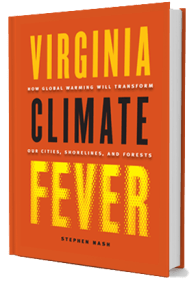
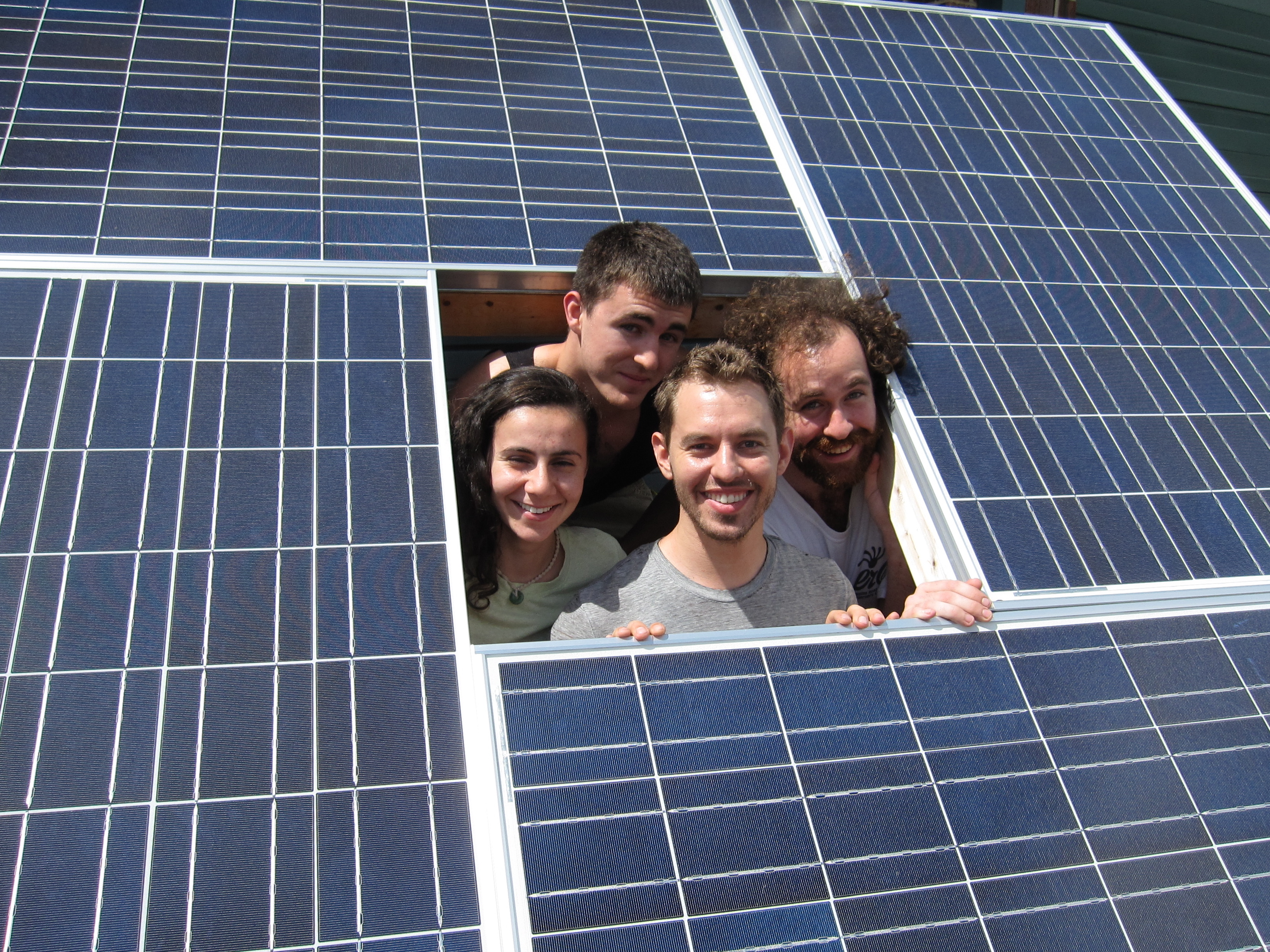
Featured imageVirginia climate activists (and indeed all Virginians) should cheer Stephen Nash, whose Virginia Climate Fever (just published by The University of Virginia Press) lays out clearly the costs of our decades of inaction on global warming. The book’s subtitle nicely sums up the point: How Global Warming Will Transform Our Cities, Shorelines, and Forests.
Why a climate book focused on just one state?

One of many confounding challenges of global warming is how to get people (and politicians and businesses) to take action commensurate with the size of the problem. As the popular British social scientist Roman Krznaric asks, “how can we close the gap between knowledge and action on climate change?” Krznarik’s answer is to seek ways to increase our empathy for people who live in distant places, or will live in future times. Certainly that is needed. (The U.S. edition of Krznarik’s book on empathy comes out in November.)

But since the day of increased empathy has yet to arrive, climate communications experts have focused on the need to get people to realize that climate change is happening here and now. It’s not just about our grandchildren, or even our children. It’s about us too. Now. And it’s not just about poor people living at sea level in Bangladesh, or the soon-to-disappear Maldives, or where melting glaciers threaten tens of millions of people’s water supply. Global warming is happening to us in America, and right here in Virginia. What’s more, it’s not limited to low-lying, frequently flooded parts of coastal Virginia, like Norfolk. Climate disruption is happening all across the commonwealth—from the shore to the tidal Potomac near Alexandria and Washington to the Piedmont to the mountains.

Climate communications experts agree that people are more likely to act (and demand that their leaders act) on global warming if they understand that it will have serious effects in their lives, and where they live.

Virginia Climate Fever does a superb job of bringing climate change home to Virginia. Nash, a journalist who writes with a deft touch, has taught at The University of Richmond since 1980, and he clearly knows Virginia well. He is is well versed in the science of climate disruption, and very good at explaining it. The book is filled with information gathered from interviews with scientists, including several at Virginia universities.

One leading climatologist featured prominently is Katharine Hayhoe, head of the Climate Science Center at Texas Tech University. As the book explains, she also happens to be an evangelical Christian whose faith informs and inspires her work. At Nash’s request, Hayhoe and a colleague prepared color maps of Virginia for Virginia Climate Fever, showing stunningly how much hotter our summers and winters are likely to be in the coming decades under different levels of future carbon emissions. It’s hard for me (at age 61) to look at these and contemplate my own hotter future here, much less my children’s.

Most disturbing to my mind was Nash’s description of the future of what those maps mean for our forests. We often hear about sea-level rise and how it will combine with more-severe storms to harm Virginia, especially in the Hampton Roads area. And well we should—the situation in Virginia’s coastal areas is dire indeed. But Nash reveals that our inland and mountain forests are just as threatened. And so not surprisingly are many plant and animal species that live in or near them. Many species face the prospect of extinction this century. Nash quotes the bioclimatologist Ron Neilson as saying that large areas of Virginia forest could “go into drought stress and potentially burn up,” resulting in “some very rapid conversions from forest to savannah.” Nash asked Neilson if this could happen in the next twenty or thirty years. Neilson’s answer: “How about now?”

Virginia Climate Fever is not strictly speaking a book about energy or energy policy. Rather it’s about climate impacts from our past, present, and future energy choices. But for those on the more well-informed side of the current “I’m not a scientist, what do I know?” climate-science-denial catchphrase, Virginia’s current and future energy choices will come to mind on every page of the book.

Nash does include a chapter on possible prescriptions for our climate fever. He tellingly notes: “we don’t lack for examples among other states,” citing North Carolina and Maryland as two of many states considerably farther along in addressing changing climate. He cites with approval Maryland’s efficiency and conservation measures, and its mandatory renewable portfolio standard, noting that Virginia is one of only nineteen states with no mandatory renewable standard at all. He mentions Maryland’s participation in the multistate Regional Greenhouse Gas Initiative. Again, “Virginia is not on the list.”

Nash asked Virginia’s Department of Environmental Quality about climate change and got this written response: “The Virginia [DEQ] does not have the expertise to study climate change issues.” One could not find a better sentence to sum up the four lost years of the McDonell-Cuccinelli administration’s climate denialism.

Governor Terry McAuliffe and Senator Mark Warner enthuse about a mindless “all of the above” energy policy that includes fracking (and associated pipelines), offshore oil drilling, coal exports, and ever more reliance on fossil fuels. (To his credit, Senator Tim Kaine has said that “all of the above” is not a strategy—yet nevertheless supports offshore oil drilling.) Virginia Climate Fever is a wake-up call for them, and for the “I’m not a scientist” crowd, and for all Virginians.

But of course there have been other such calls in the past few decades. The question is, when will enough Virginians hear them clearly, and begin to act with a sense of urgency?

Seth Heald is vice chair of the Sierra Club Virginia Chapter. He is a student in the Master of Science in Energy Policy and Climate program at Johns Hopkins University.

Note: Northern Virginians will have an opportunity on November 6 to meet Stephen Nash in Alexandria at an author talk and book signing. Details and RSVP form are here.


Unknown's avatar

Virginia’s SCC staff attacks EPA over the Clean Power Plan

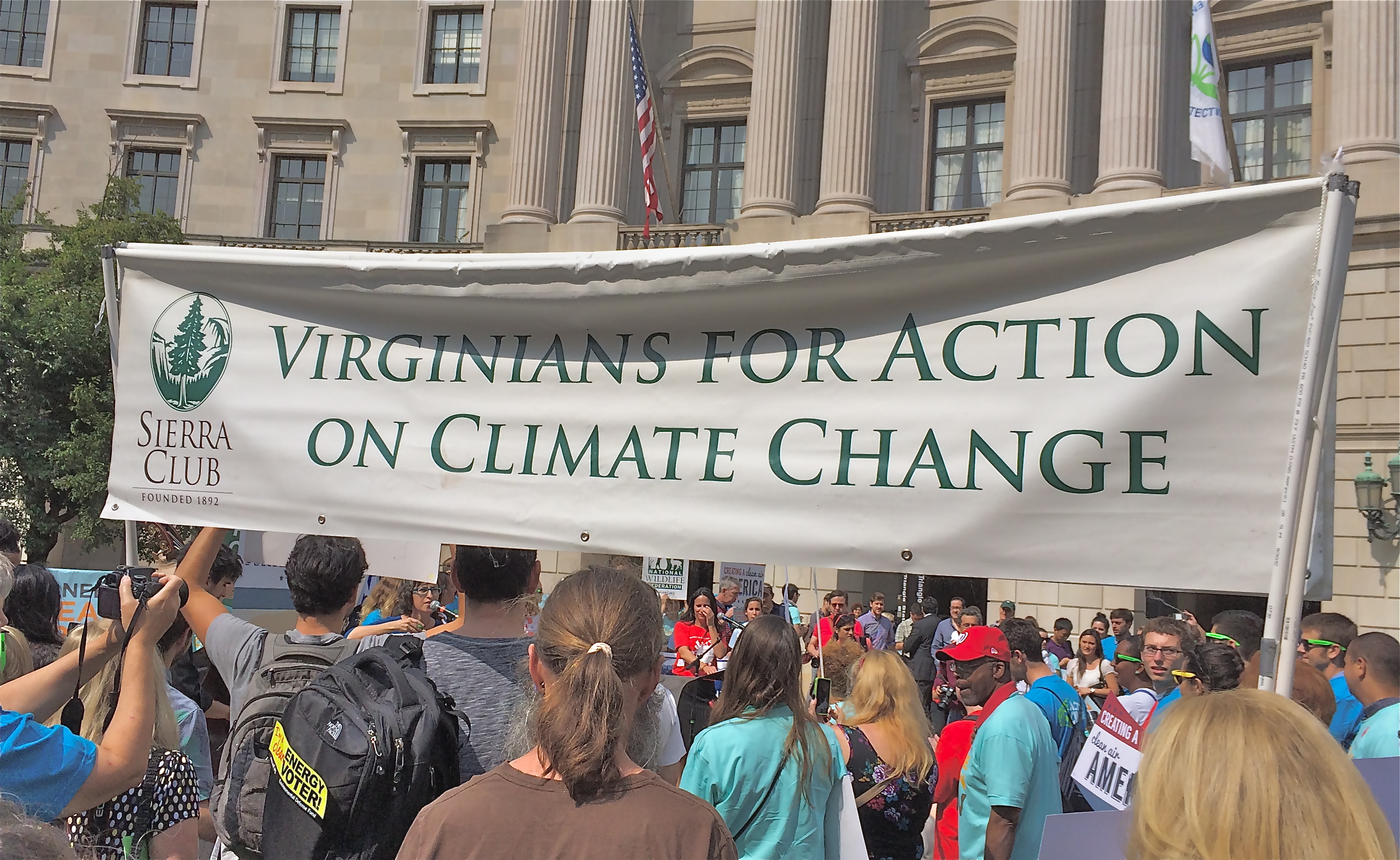
Virginians rally in front of U.S. EPA Headquarters in Washington, DC in support of the Clean Power Plan

Virginians rally in front of U.S. EPA Headquarters in Washington, DC in support of the Clean Power Plan

In recent years paleontologists have come to believe that the dinosaurs did not go extinct; they evolved into today’s chickens and other birds. It turns out, however, that some of them did not evolve. Instead, they took jobs at Virginia’s State Corporation Commission.

Now they’ve put their DNA on full display with comments they filed on the EPA’s Clean Power Plan. The proposed EPA rules, under section 111(d) of the Clean Air Act, would require states to reduce the power plant CO2 emissions driving climate change. The staffers assert primly that they “take no position on the broad policy issues,” but that they feel “compelled” to point out all the ways the plan is “arbitrary, capricious, unsupported, and unlawful.” These mostly boil down to their claims that the plan will force coal plant closures, raise rates significantly and threaten service reliability—claims experts say are badly off-base.

Note that the commissioners themselves didn’t sign onto these comments. They come from the career staff at the Energy Regulatory Division, led by Bill Stevens, the Director, and Bill Chambliss, the General Counsel. This is pretty peculiar. I can’t think of a single other agency of government where the staff would file comments on a federal rulemaking without the oversight of their bosses.

Bill and Bill acknowledge in a footnote that the staff comments represent only their own views and not those of the commissioners. But that distinction has already been lost on at least one lawmaker. Today Speaker of the House William J. Howell released a statement declaring, “The independent, nonpartisan analysis of the State Corporation Commission confirms that President Obama’s environmental policies could devastate Virginia’s economy.”

And really, “devastate”? But that’s the kind of hysteria you hear from opponents of the Clean Power Plan. While the rest of us see healthier air, huge opportunities for job growth in the clean energy sector, and the chance to avoid the worst effects of climate disruption, the Friends of Coal see only devastation. And no wonder: Howell accepted $14,000 from the coal industry just this year alone.

But back to what the Bills over at the SCC think about the Clean Power Plan. How did they arrive at their conclusion that it would raise rates? According to Cale Jaffe, a lawyer with the Southern Environmental Law Center who practices extensively before the SCC, “Staff never did an analysis of an actual plan to comply with the Clean Power Plan, which has a lot of flexibility built into it. Instead, the Staff simply took Dominion Virginia Power’s last Integrated Resource Plan from 2013 and used it as a proxy for a compliance plan. That’s a significant flaw that skews the Staff’s analysis.  The Dominion plan, after all, was released nearly a year before the EPA even announced its rule.”

Compounding the error, says Jaffe, the staff “artificially inflated the cost by assuming that the only compliance strategy would be for Dominion to build a new nuclear reactor: the most expensive resource, which is not a required compliance option.”

We can all agree with the staff that nuclear plants are appallingly expensive. That may be why the EPA doesn’t assume most states will build them as part of their compliance strategy. To the contrary, the expectation is that states will respond with energy efficiency, wind and solar—all resources that are plentiful in Virginia but largely untapped so far.

As Jaffe notes, “an independent analysis of the actual Clean Power Plan itself shows that Virginia can achieve its goals at a fraction of the cost while lowering Virginians’ bills by 8%.”

We have seen time and again that the SCC staff has never been friendly to either renewable energy or energy efficiency, so it’s no surprise that their comments dismiss them as unworkable. Indeed, it is clear from the comments they filed that their real interest is promoting an anti-EPA, pro-coal agenda. Otherwise it would be hard to understand why they would stray so far from their own area of practice to attack the very legality of the Clean Power Plan.

Jaffe lists a number of other ways the SCC staff screwed up, but you get the picture: careful, reasoned analysis wasn’t the point. Still, you’d think that if agency staffers decide to go rogue like this, they would be careful to get the facts right.

———————————

Update: I have heard from some sources that the SCC staff had the blessing of at least one commissioner in putting forth their comments, and that all three commissioners may have known. If so, that’s even worse.

Unknown's avatar

McAuliffe’s Energy Plan has a little something for (almost) everyone

On October 1, the Virginia Department of Mines, Minerals and Energy released the McAuliffe administration’s rewrite of the Virginia Energy Plan. Tomorrow, on October 14, Governor McAuliffe is scheduled to speak about the plan at an “executive briefing” to be held at the Science Museum of Virginia in Richmond. Will he talk most about fossil fuels, or clean energy? Chances are, we’ll hear a lot about both.

Like the versions written by previous governors, McAuliffe’s plan boasts of an “all of the above” approach. But don’t let that put you off. In spite of major lapses of the drill-baby-drill variety, this plan has more about solar energy, offshore wind, and energy efficiency, and less about coal, than we are used to seeing from a Virginia governor.

Keep in mind that although the Virginia Code requires an energy plan rewrite every four years, the plan does not have the force of law. It is intended to lay out principles, to be the governor’s platform and a basis for action, not the action itself. This is why they tend to look like such a hodge-podge: it’s just so easy to promise every constituency what it wants. The fights come in the General Assembly, when the various interests look for follow-through.

Here’s my take on some of the major recommendations: IMG_3954

Renewable energy. Advocates and energy libertarians will like the barrier-busting approach called for in the Energy Plan, including raising the cap on customer-owned solar and other renewables from the current 1% of a utility’s peak load to 3%; allowing neighborhoods and office parks to develop and share renewable energy projects; allowing third-party power purchase agreements (PPAs) statewide and doubling both the size of projects allowed and the overall program limit; and increasing the size limits on both residential (to 40 kW) and commercial (to 1 MW) net metered projects, with standby charges allowed only for projects over 20 kW (up from the current 10 kW for residential, but seemingly now to be applied to all systems).

It also proposes a program that would allow utilities to build off-site solar facilities on behalf of subscribers and provide on-bill financing to pay for it. This sounds rather like a true green power program, but here the customers would pay to build and own the project instead of simply buying electricity from renewable energy projects.

Elsewhere in the recommendations, the plan calls for “flexible financing mechanisms” that would support both energy projects and energy efficiency.

In case unleashing the power of customers doesn’t do enough for solar, the plan also calls for the establishment of a Virginia Solar Energy Development Authority tasked with the development of 15 megawatts (MW) of solar energy at state and local government facilities by June 30, 2017, and another 15 MW of private sector solar by the same date. Though extremely modest by the standards of Maryland and North Carolina, these goals, if met, would about triple Virginia’s current total. I do like the fact that these are near-term goals designed to boost the industry quickly. But let’s face it: these drops don’t even wet the bucket. We need gigawatts of solar over the next few decades, so let’s set some serious long-term goals for this Authority, and give it the tools to achieve them.

Finally, the plan reiterates the governor’s enthusiasm for building offshore wind, using lots of exciting words (“full,” “swift,” “with vigor”), but neglecting how to make it happen. Offshore wind is this governor’s Big Idea. I’d have expected more of a plan.

And while we’re in “I’d have expected more” territory, you have to wonder whatever happened to the mandatory Renewable Portfolio Standard that McAuliffe championed when running for office. Maybe our RPS is too hopeless even for a hopeless optimist.

Energy Efficiency. Reducing energy consumption and saving money for consumers and government are no-brainer concepts that have led to ratepayers in many other states paying lower electricity bills than we do, even in the face of higher rates. Everyone can get behind energy efficiency, with the exception of utilities that make money selling more electricity. (Oh, wait—those would be our utilities.) The Energy Plan calls for establishing a Virginia Board on Energy Efficiency, tasked with getting us to the state’s goal of 10% savings two years ahead of schedule. But glaringly absent is any mention of the role of building codes. Recall that Governor McDonnell bowed to the home builders and allowed a weakened version of the residential building code to take effect. So far Governor McAuliffe hasn’t reversed that decision. If he is serious about energy efficiency, this is an obvious, easy step. Where is it?

Fracking_Site_in_Warren_Center,_PA_04

Natural Gas. Did I say offshore wind was the governor’s Big Idea? Well, now he’s got a bigger one: that 500-mile long natural gas pipeline Dominion wants to build from West Virginia through the middle of Virginia and down to North Carolina. Governor McAuliffe gets starry-eyed talking about fracked gas powering a new industrial age in Virginia. So it’s not surprising that the Energy Plan includes support for gas pipelines among other infrastructure projects. As for fracking itself, though, the recommendations have nothing to say. A curious omission, surely? And while we are on the subject of natural gas, this plan is a real testament to the lobbying prowess of the folks pushing for natural gas vehicles. Given how little appetite the public has shown for this niche market, it’s remarkable to see more than a page of recommendations for subsidies and mandates. Some of these would apply to electric vehicles as well. But if we really want to reduce energy use in transportation, shouldn’t we give people more alternatives to vehicles? It’s too bad sidewalks, bicycles and mass transit (however fueled) get no mention in the plan.

Photo credit Ed Brown, Wikimedia Commons.

Coal. Coal has fallen on hard times, indeed, when even Virginia’s energy plan makes no recommendations involving it. Oh, there’s a whole section about creating export markets for coal technology, as in, helping people who currently sell equipment to American coal companies find a living in other ways. These might be Chinese coal mining companies; but then again, they might be companies that mine metals in Eastern Europe, or build tunnels, or do something totally different. The Energy Plan seems to be saying that coal may be on its way out, but there’s no reason it should drag the whole supply chain down with it. Good thinking.

Nuclear. If you think the coal industry has taken a beating these past few years, consider nuclear. Nationwide, the few new projects that haven’t been canceled are behind schedule and over budget, going forward at all only thanks to the liberality of Uncle Sam and the gullibility of state lawmakers. But there it is in the Energy Plan: we’re going to be “a national and global leader in nuclear energy.” Watch your wallets, people. Dominion already raided them for $300 million worth of development costs for a third plant at North Anna. That was just a down payment.

Photo: U.S. Coast Guard

Photo: U.S. Coast Guard

Offshore drilling. As with nuclear, favoring offshore oil drilling seems to be some kind of perverse obsession for many Virginia politicians. Sure enough, the energy plan says we should “fully support” it. As for the downside potential for a massive spill of crude oil fouling beaches, ruining fishing grounds, destroying the coastal tourism economy, and killing vast numbers of marine animals, the plan says we must be prepared “to provide a timely and comprehensive response.” I bet Louisiana was at least equally prepared.

Unknown's avatar

Utilities’ pullout won’t affect “value of solar” study

When Virginia’s utilities made a surprise announcement on September 5th that they would no longer participate in the state’s Solar Stakeholder Group (SSG), they may have hoped that doing so would stop the group’s Value of Solar study in its tracks. Not so: on Friday, at its first meeting since the utilities withdrew, the group agreed it would issue the report on schedule, although with no further input from members—thus guaranteeing that the report reflects only input submitted while the utilities participated.

This decision was essentially a moot point, because the group had actually wrapped up its work by that September 5th date in order to give the study authors time to incorporate comments, including those from the utilities. The resulting third draft of the report was provided to the remaining group members on September 29. It reflects the work of the full 49-member committee up to September 4.

Lead authors Damian Pitt and Gilbert Michaud of Virginia Commonwealth University will do some clean-up editing and draft a cover letter. Then, in accordance with the work plan established last summer, it will be submitted to the National Renewable Energy Laboratory (NREL) for review. The study is due in to the Senate Rules Committee by November 1. But as noted previously by Jim Pierobon, it’s not clear how much weight the study will have in the General Assembly now that the utilities have disavowed it.

The utilities have not said why they decided to withdraw from participation. They wrote no memos, offered no analysis, and sent no polite email to other members expressing regret or anything else.

The SSG grew out of an informal “Small Solar Working Group” that formed in 2013 as a way to bring together those with an interest in non-utility-scale solar.* Like the SSG, the Working Group included representatives from the solar industry, environmental groups, local government, academia, trade associations and the electric utilities. But while the Working Group set its own broad agenda, the SSG was formed in response to a specific letter request from the Clerk of the Virginia Senate to DEQ and DMME. The letter asked for a study of “the costs and benefits of distributed solar generation and net metering.”

From that description, and knowing that the utilities hastily decamped, you might think that the SSG actually calculated costs and benefits and came up with a value of solar, and that the result was good for solar advocates but bad for utilities. But in fact, the study reaches no conclusions at all. It could more accurately be described as a study about how you would conduct a study, were you so inclined. Which no one was, because then the utilities might have left. As they did, but only after ensuring the study incorporates their views.

Thus the study wraps up with statements like, “The SSG recognizes that the short- and long-term value of solar will be dependent on a wide range of conditions and perspectives.” And this: “With greater time, resource, and data access, future studies could produce actual values for the net VOS under each methodology.”

There is nothing wrong with such a limited approach, so far as it goes. Professors Pitt and Michaud did an excellent and comprehensive job in surveying the literature, comparing previous studies, and discussing the factors relevant to the issue of solar’s value to the grid, utilities, customers, and society at large. But given that this Value of Solar study came nowhere near assigning a value of solar, it’s hard to understand what the utilities might have objected to.

Nor had there been any hints the utilities were unhappy with the process or with the first two drafts of the report. At Friday’s SSG meeting, many of the other members expressed their surprise and frustration with the utilities’ pull-out. They noted that the utilities participated fully every step of the way and provided copious comments, which were reflected in the drafts. Indeed, three utility representatives served on the twelve-member steering committee that created the work plan and oversaw the study, making it as much their work as anyone else’s. (The other steering committee members were Professor Pitt, three representatives of local government, two conservation group reps., two solar industry members, and one citizen representative.)

So why did the utilities pull out? In retrospect, it may have been their plan all along. By pulling out, they could signal to their allies their disapproval of the study and try to prevent a follow-on study that would actually calculate a value for solar. And by waiting until the last moment to pull out, they maximized their influence over the study’s content, lest it have credence outside their sphere of influence.

But what the utilities lost by this clever maneuver is the trust of the rest of the group. The SSG, like the Small Solar Working Group before it, provided a forum for discussion among the many different parties with an interest in distributed solar. It is incredibly important in a forum like the SSG that people trust each other to act in good faith. Otherwise, 49 people are wasting their time.

The utilities’ decision to sacrifice this trust strikes me as both stupid and unnecessary. Many of us expected that the utilities’ lobbyists would quietly tell their friends in the legislature to ignore the Value of Solar study, that they participated just to be nice guys. Openly thumbing their noses at the study did nothing except prove they aren’t nice guys and cannot be trusted.

The rural electric cooperatives will have to answer to their members, who admittedly don’t seem to pay much attention. But Dominion Virginia Power and Appalachian Power are public utilities. They hold their monopolies by the grace of the people of Virginia, and are expected to act in the interest of the people they serve. In this case, they have manifestly failed to do so.

——————

* I was one of the founding members of the Small Solar Working Group and was responsible for asking the Department of Environmental Quality’s Carol Wampler to facilitate the meetings. Ms. Wampler had led other successful stakeholder groups and had a gift for guiding people with disparate interests towards consensus. (Unfortunately for the people of Virginia, she retired from DEQ this summer.) She brought in the equally-dedicated Ken Jurman from the Department of Mines, Minerals and Energy as a co-facilitator. The divide between the utility monopolies and everyone else proved too great to produce any consensus bills that could spur the flourishing of solar in Virginia, but it did develop a level of trust, unfortunately now compromised.


Unknown's avatar

Why can’t I buy solar?

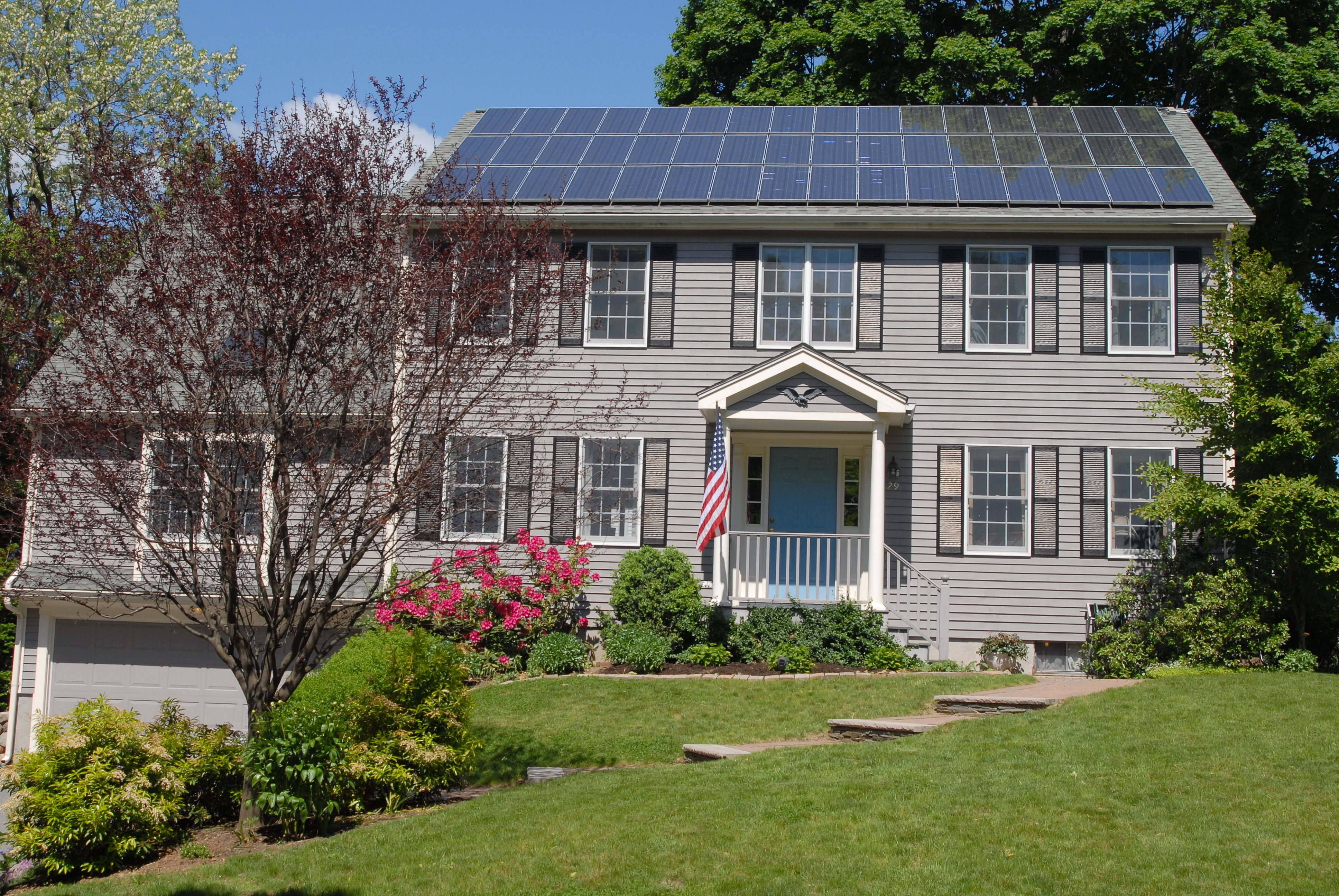
photoEvery year, on the first weekend in October, homeowners and businesses across the U.S. open their doors to a special kind of tourist: the solar wannabe. The American Solar Energy Society’s annual Solar Tour features homes with solar PV and hot water, along with an assortment of “green living” features that inspire envy and emulation.

Envy especially, I’m here to tell you. My home in the Northern Virginia suburbs is surrounded by beautiful mature trees that provide shade for my house, cooling for the neighborhood, carbon sequestration for the planet, and food for an abundance of insects, birds and other wildlife. What it doesn’t provide is a sunny place on the roof for solar panels. So when I go to houses on the DC Metro area tour, it’s a teeth-gritting experience.

I’m hardly alone. Less than a quarter of residents can install solar panels at their homes. The rest either have shade or other siting issues, or they are renters, or they live in condominiums where they don’t control the roof and common areas. That leaves the vast majority of us solar wannabes with nowhere to turn.

Some states let customers choose their electricity suppliers, which means they can select one that will supply them with renewable energy. But Virginia upholds the rights of monopolists to control our electricity supply. And my local monopolist, Dominion Virginia Power, sells only one electricity product: a mix of coal, nuclear, and natural gas, with barely a smidgen of stuff the legislature considers renewable (mainly wood trucked in from forests and burned).

I could subscribe to Dominion’s Green Power Program, but I’d still get the exact same dirty power. I’d just be paying extra for renewable energy certificates (RECs), mostly from wind farms in other states.

RECs don’t do it for me. Adding money to my utility bill for RECs is about as satisfying as buying a gallon of ordinary milk and adding a dollar extra to know that a buyer in Indiana paid for ordinary milk but got organic. Maybe both milks taste the same, but that’s not the point.

No, if I’m buying RECs, I want them to come attached to actual, Virginia-made wind or solar power. I know I’m not alone; the 20,000 people who have signed up for the Green Power Program, plus those who buy from other REC sellers like Pear and Arcadia, are proof that if Dominion cared to build wind or solar, it would find a ready market.

But it hasn’t. And Dominion also refuses to let the private market do the job. I’ve been approached by would-be solar developers who ask why they can’t put a solar array on unproductive farmland and sell the power to people like me. When that happens I swoon with delight for a moment, then glumly point them to the experience of Washington and Lee University three years ago. The university wanted to buy solar from a project on its campus but owned by a developer. Dominion came down on them like a ton of bricks, claiming a violation of its monopoly.

Dominion also opposes allowing customers to pool their money for a shared solar project, like an array on one house that could provide electricity for two or more. Sometimes called community net metering or solar gardens, and a growing trend in other states, shared solar unleashes the power of private investment by freeing up customers to build and own solar together and get credit on their utility bills for their percentage of the electricity the project puts on the grid. Imagine how much new economic activity we could create this way, and how much clean generation we could build, without state government mandates or subsidies.

There are thousands of Virginians like me who want renewable energy and are willing to pay for it. If our utilities don’t want to build it, they should step aside and let customers do it.

Unknown's avatar

Why we can’t just shut up and eat our cookies (or embrace natural gas)

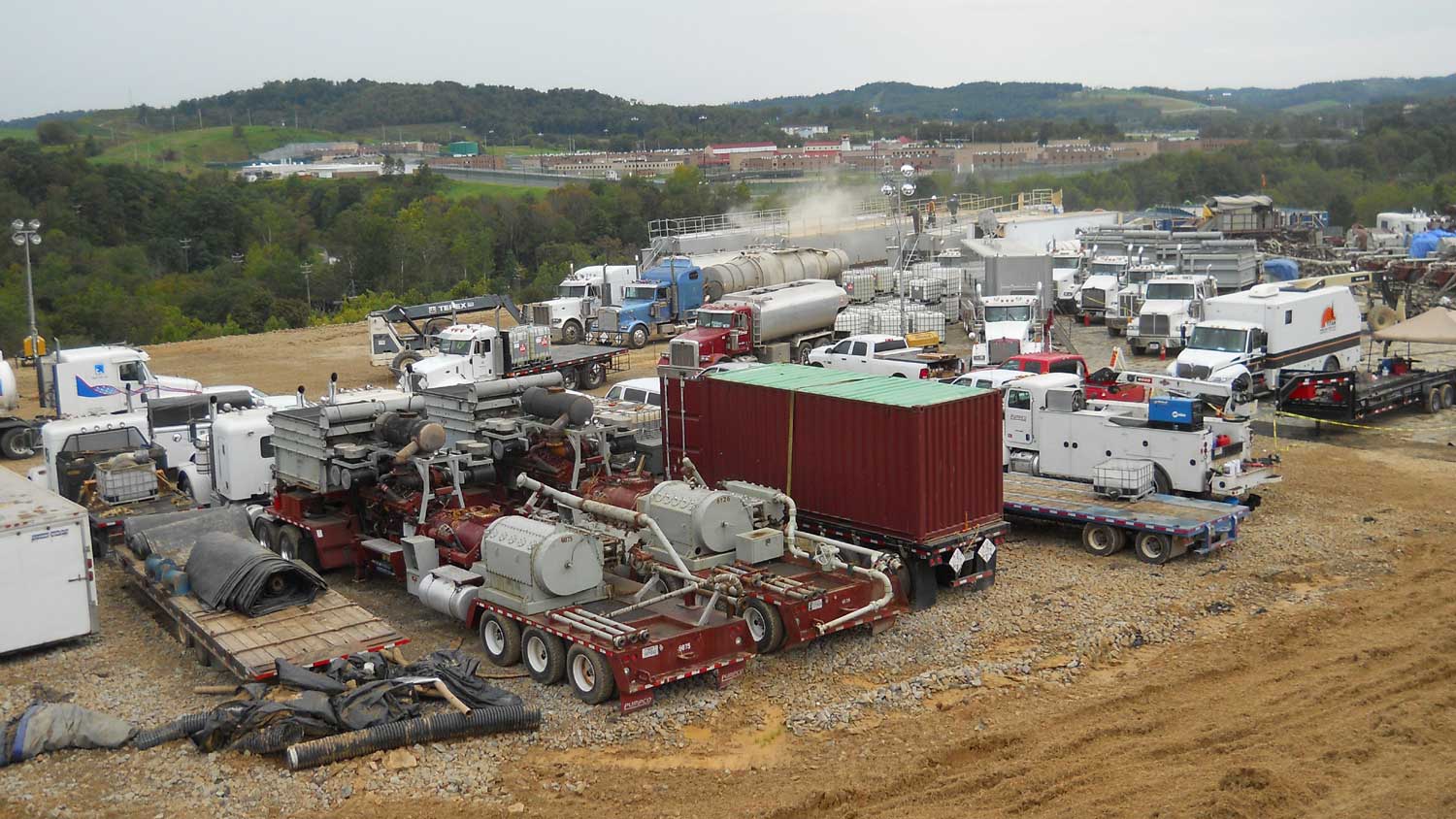
Fracking site, Marcellus Shale. Photo courtesy of U.S. Geologic Survey.

Fracking site, Marcellus Shale. Photo courtesy of U.S. Geologic Survey.

I grew up with brothers, so I knew from an early age that the easiest way to make friends with guys was to feed them chocolate chip cookies. I took this strategy with me to college, commandeering the tiny kitchen in our coed dorm. The aroma wafting down the hallways reliably drew a crowd.

One fan was so enthusiastic that he wanted to learn to make cookies himself. So the next time, he showed up at the start of the process. He watched me combine sugar and butter, eggs and white flour.

Instead of being enthusiastic, he was appalled. It had never occurred to him that anything as terrific as a cookie could be made of stuff so unhealthy. It’s not that he thought they were created from sunshine and elf magic; he just hadn’t thought about it at all. He left before the cookies even came out of the oven.

I felt so bad about it, I ate the whole batch.

But I can empathize with that guy when I’m told that as an environmentalist, I should love natural gas. Natural gas is the chocolate chip cookie of fossil fuels. At the point of consumption, everybody loves it. It’s cheap, there’s gobs of it, and it burns cleaner than coal, with only half the carbon dioxide emissions. Disillusionment sets in only when you look at the recipe. (“First, frack one well. . .”)

I realize we have only ourselves to blame. For years, environmentalists talked about gas as a “bridge fuel” that could carry us from a fossil fuel past to a future powered by renewable energy. No one would tarry on that bridge, we figured, because gas was expensive. We’d hurry along to the promised land of wind and solar.

But that was before hydrofracking and horizontal drilling hit the scene. Fracking opened up vast swaths of once-quiet forest and farmland to the constant grinding of truck traffic heading to drilling rigs that operate all day and night, poisoning the air with diesel fumes and sometimes spilling toxic drilling fluids onto fields and into streams. It was before studies documented well failures that let toxic chemicals and methane seep back up along the well borings and into aquifers, contaminating drinking water.

And it was before scientists sounded the alarm on “fugitive” methane emissions from wellheads: gas that escapes into the air unintentionally, sometimes at levels so high as to cancel out the climate advantage of burning natural gas instead of coal.

But just as environmentalists were thinking, “Whoa, natural gas turns out to be a bridge to nowhere,” electric utilities were embracing fracked gas in a big way. Fracking has made gas so cheap that giving up coal is no sacrifice. It’s so cheap they see no reason to get off the bridge and embrace renewable energy. At one conference I attended, a gas company executive gushed, “Natural gas is no longer a bridge fuel. It’s a destination fuel!”

All I could think was, “In that case, the destination must be Cleveland.” Which was surely unfair to Cleveland.

Just to be clear: environmentalists are not opposed to gas because we are spoil-sports, or purists, or hold stock in solar companies. The problem with natural gas is that it isn’t made by Keebler elves, but extracted through a nasty process that is harming the planet in ways both local and global.

If the best anyone can say about natural gas is that it’s not as bad as coal, then lingering on the bridge makes no sense. And anything we do that keeps us here—opening up Virginia to fracking, or building a huge new pipeline to bring fracked gas from other states—is both foolish and dangerous. Foolish, because embracing cheap gas distracts us from the serious business of building wind and solar and using energy more efficiently; and dangerous, because the planet will not stop warming while we play shell games with carbon.


Unknown's avatar

Dominion’s ties to ALEC, McDonnell’s conviction, all part of one corrupt package

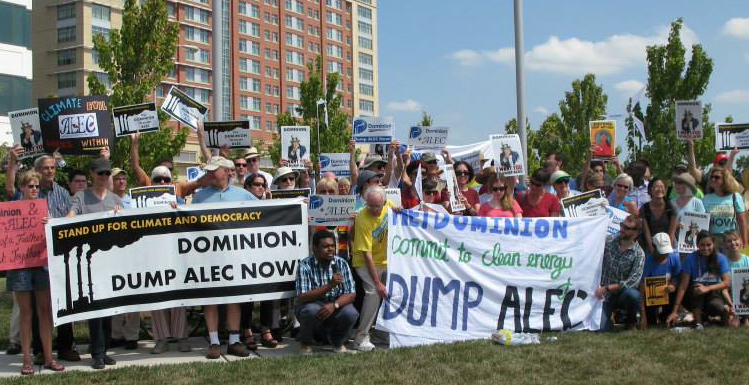
Group Dominion quit ALEc image 2

Protesters gather outside the Crystal City headquarters of ALEC

A crowd of protesters gathered at the Arlington headquarters of the American Legislative Exchange Council (ALEC) on September 4 to demand that Dominion Resources, the parent of public utility monopoly Dominion Virginia Power, drop its membership in the right wing “bill mill.”

On the very same day, a jury convicted ex-Governor Bob McDonnell and his wife on federal corruption charges, setting off a new round of debate about Virginia’s lax ethics laws.

The two news items sound like different topics, but in fact they are both about the corruption undermining our democratic system. The McDonnell trial, with its focus on swank vacations, golf clubs, designer clothes and other neat stuff, actually missed the bigger breach of public trust that goes on every day. This takes the form of unlimited corporate campaign contributions and gifts to members of both parties, and the influence over legislation purchased by this largesse.

Dominion Power has spent decades and many millions of dollars building its influence in Richmond this way, to the point where most legislators don’t bother pursuing a bill if the utility signals its opposition. That’s why Virginia has not followed so many other states in requiring its utilities to invest in energy efficiency, wind and solar. Economic arguments, jobs, electricity rates—all these are talked about in committee, and all are irrelevant to the fate of a bill. The only relevant question for legislators is, “What does Dominion think?”

What Dominion thinks, though, is not about what’s good for its customers, but what’s good for its own bottom line. And this is where ALEC comes in. Dominion Virginia Power’s president, Bob Blue, sits on an ALEC committee with representatives from the climate-denial group Heartland Institute, the Koch-funded anti-environment group Americans for Prosperity, and that most oxymoronic of lobby shops, the American Coalition for Clean Coal Electricity. Their purpose is to craft model state bills that protect fossil fuel profits and attack all efforts to regulate carbon emissions.

Dominion provides a straight shot from ALEC’s back-room bill-brokering to Virginia’s statute books, trampling environmental protections along the way and giving the lie to Dominion’s façade of environmental responsibility. No wonder so many of last week’s protesters were Dominion customers who objected to the utility using the money it charges them for electricity to pay its ALEC dues.

We see the result every year in the General Assembly, as bills drafted by ALEC pop up all over the place without attribution. In addition to attacking clean energy, ALEC bills oppose worker protections and minimum wage initiatives, promote stand-your-ground bills like the one at issue in the Trayvon Martin case, and of course, undermine the kinds of clean-government efforts that would reduce the influence of corporations—like campaign finance reform.

And because the voters are the only people who could prove more powerful than corporations—and the only ones who might ultimately cut off the corporate cash flow—ALEC works to undermine voting rights as well.

In the wake of the McDonnells’ convictions, Virginia legislators are once again mumbling about tightening up the rules on gifts. The discussion is half-hearted; the pay for their work is paltry and the hours are long, so they aren’t anxious to give up the perks.

But it’s too late for half-measures. Elected officials are going to have to subject themselves to a ban on gifts, and the prohibition should extend to ballgame tickets, golf getaways and sit-down dinners. The loophole that currently allows campaign funds to be used for personal use must also be closed to avoid an end-run around the gift ban.

But until we turn off the corporate cash spigot, our democracy will still have special interests, not voters, calling too many shots.

Unknown's avatar

Children need the EPA’s carbon pollution standard

This post, from guest blogger Samantha Ahdoot, originally appeared in the August 21 edition of the Fairfax County Times. I’ve written about the threat that increasing summer temperatures poses for people who have to work outdoors in ; here, Dr. Ahdoot tells us what carbon pollution means for children.

The end of summer fun? Higher temperatures resulting from carbon pollution could limit children's outdoor time.

The end of summer fun? Higher temperatures resulting from carbon pollution could limit children’s outdoor time.

Every day, parents protect their children from a myriad of risks. By strapping them in car seats, placing them on their backs to sleep and cutting their grapes into quarters, parents do everything in their power to insure their children against harm. President Obama’s Clean Power Plan will be called many things in the upcoming months, but it is ultimately an insurance plan. It is insurance for our children against the dangers of carbon pollution and resulting climate change.

Carbon pollution presents a major risk to the health, safety and security of current and future children. Rising atmospheric carbon is making our planet hotter. While skeptics may say this remains uncertain, our major scientific organizations (NASA, NOAA, IPCC) tell us it is at least very, very likely. With this increased heat, many other climactic changes are already occurring, including melting glaciers, rising sea levels and worsening storms. These fundamental changes ultimately impact human health, and children are amongst the most vulnerable to these changes. Some impacts are already affecting children today and are being seen by pediatricians like myself.

Allergic rhinitis, for example, affects about 10 percent of American children. With later first frost and earlier spring thaw due to rising global temperature, the allergy season has become longer. In the Northern Virginia region, where I practice, it has lengthened by about two weeks. More northern regions of the country have experienced greater lengthening. Higher carbon dioxide in the atmosphere also causes ragweed plants today to produce more pollen than in preindustrial times. Allergy season is therefore both longer and more severe.

Some infectious disease patterns have already been impacted by climactic changes. As global temperatures rise, many plants and animals are migrating poleward. They are bringing diseases, like Lyme disease, with them. There is now Lyme disease in Canada, and large increases in reported cases of Lyme have occurred in the northern U.S. Maine had 175 cases in 2003 and 1300 cases in 2013, while New Hampshire had 262 cases in 2002 and greater than 1300 cases in 2013. Children under five years old, who spend the most time outside playing in high-risk areas, have the highest incidence of Lyme disease.

Increasingly long and severe heat waves also place children at risk of heat-related illness. While the elderly are at highest risk from extreme heat, some groups of children also appear to be vulnerable. Infants less than one year, for example, have immature thermoregulation, and infant mortality has been found to increase due to extreme heat. A study from MIT found that by the end of the 21st century, under a “business as usual” scenario, infant mortality rates would increase by 5.5 percent in females and 7.8 percent in males due to heat-related deaths. U.S. student athletes are a high-risk group for heat injury. Teenage boys, most commonly football players, made up 35 percent of the roughly 5,900 people treated yearly in emergency rooms for exertional heat illness between 2001 and 2009. According to the CDC, heat illness is a leading cause of disability in high school athletes, with a national estimate of 9,237 illnesses annually.

Health impacts on individuals and communities will grow significantly if we allow carbon emissions, and global temperatures, to rise unchecked. Power plants contribute approximately one-third of U.S. greenhouse gas pollution. Reducing emissions from existing fossil fuel-fired power plants represents a major step towards altering our emissions, and climate, trajectory. Obama’s Clean Power Plan is, ultimately, like a car seat- an insurance plan for our children against a significant risk of harm. The road of climate change will be long and hazardous. Our children deserve to be strapped in.

Dr. Samantha Ahdoot is pediatrician in Alexandria. She is a Fellow of the American Academy of Pediatrics (AAP), and a member of the Executive Committee of the AAP’s Council on Environmental Health.

Unknown's avatar

Finally, utility-scale solar for Virginia?

111022-N-OH262-322After a solar buying spree in other states, Dominion Power is at last taking a look at the possibility of building utility-scale solar in Virginia.

As reported in the Richmond Times-Dispatch, Dominion Resources, the parent company of Dominion Virginia Power, is considering building 220 megawatts of solar projects in Virginia, starting in 2017. The plan would involve five 40-megawatt “greenfield” projects, plus 20 megawatts located at existing power stations. (A greenfield is an area that is not already developed. So the large projects would be on former farmland, say, not closed landfills or old industrial sites.)

The company’s recent solar buys in California, Connecticut, Indiana, Georgia and Tennessee have all involved the unregulated, merchant side of Dominion Resources. But in this case, the plan is for Dominion Virginia Power to own the Virginia projects and sell the electricity to its customers here in the Commonwealth. This would require approval of the State Corporation Commission—which, as we know, is no friend to renewable energy.

A little more digging confirmed that Dominion plans to sell the solar energy to the whole rate base, rather than, say, to participants in the voluntary Green Power Program. How would they get that past the SCC? That remains unclear, but they know keeping the cost down will be key. Right now they’re looking at all the options to make it work. The company is still at the conceptual stage, is still looking for good sites of 100 acres and up, and hasn’t even made a decision to proceed.

So we should probably hold our excitement in check for now. After all, Dominion has had wind farms in Virginia “under development” for the past several years, with nary a turbine in sight.

Solar does have a few advantages over wind, though, from a utility perspective. For one, it produces power during the day, when demand is higher, while onshore wind tends to blow more at night. (Offshore wind, on the other hand, picks up in the late afternoon and evening, right at peak demand time.) And unlike wind farms in the Midwest and Great Plains, where turbines coexist peacefully with cows and cornfields, turbines in the mountains of the east have generated opposition from people concerned about impacts on forests and viewsheds. You find some curmudgeons who think solar panels are ugly, but they aren’t trying to block them wholesale at the county level.

With the sharp drop in solar costs over the last few years, large-scale solar has been looking increasingly attractive to utilities that want to beef up their renewable energy portfolios. As we learned recently, Dominion’s got a long way to go before it competes with even an average utility elsewhere. That puts it in a poor position to respond to the rapid changes heading our way. These include not just growing public demand for wind and solar and new regulatory constraints on carbon emissions, but also the much-discussed upending of the traditional utility model that depends on a captive customer base and large centralized generating plants running baseload power. Distributed generation and batteries increasingly offer customers a way to untether themselves from the grid, while wind and solar together are pushing grid operators towards a more nimble approach to meeting demand—one in which baseload is no longer a virtue.

Dominion and its fossil fuel and nuclear allies are fighting hard against the tide, but in the end, Dominion will do whatever it takes to keep making money. And right now, the smart money is on solar.

None of this means we should expect Dominion to become more friendly to pro-solar legislation that will “let our customers compete with us,” as one Dominion Vice President put it. But it does suggest an opening for legislation that would promote utility-owned solar, perhaps through the RPS or stand-alone bills.

Legislators shouldn’t view utility-owned solar as an alternative to customer-owned solar; we need both. And if being grid-tied means being denied the right to affordable solar energy, we will see customers begin to abandon the grid. But those aren’t arguments against utility-scale solar, either. Big projects like the ones Dominion proposes are critical to helping us catch up to other states and reduce our carbon emissions.

So full speed ahead, Dominion! We’re all waiting.


Unknown's avatar

Report confirms Dominion’s worst-place standing on clean energy

photo courtesy of the Sierra Club

photo courtesy of the Sierra Club

A new report from the non-profit group Ceres shows Dominion Resources, the parent of Dominion Virginia Power, winning last place among investor-owned utilities on a nationwide ranking of renewable energy sales and energy efficiency savings.

That’s left Virginians wondering how a company that talks so big succeeds in doing so little. And more importantly, what would it take for Dominion to rank even among the average?

Dominion came in 30th out of 32 in renewable energy sales, at 0.52%. On energy efficiency, it achieved 31st out of 32 on savings measured cumulatively (0.41%), and 32nd out of 32 measured on an incremental annual level (at 0.03%). Together these put our team in last place overall—a notable achievement for a utility that trumpets its solar investments and carbon-cutting progress.

To show just how awful Dominion’s performance is, the top five finishers achieved between 16.67% and 21.08% on renewable energy sales, 10.62-17.18% on cumulative annual energy efficiency, and 1.46-1.77% on incremental annual energy efficiency. National averages were 5.29% for renewable energy sales, 4.96% for cumulative efficiency savings, and 0.73% for incremental annual efficiency savings. Rankings were based on 2012 numbers, the latest year for which data were available.

In case you’re wondering, American Electric Power, the parent company of Appalachian Power Co., earned 24th place for renewable energy, with 2.65% of sales from renewables—a number only half the national average and one we might have called pathetic if it weren’t five times higher than Dominion’s. AEP’s efficiency rankings also placed it firmly in the bottom half of utilities, running 23d and 20th for cumulative and incremental efficiency savings, respectively. However, AEP earned its own laurels recently as the nation’s largest emitter of carbon pollution from power plants due to its coal-centric portfolio.

A study of the rankings reveals that Dominion’s major competition for the title of absolute worst came from other utilities based in the South. The critic’s favorite, Southern Company, nabbed 31st place on the renewable energy sales measure, but failed to make the bottom five on one of the efficiency rankings. Another southeastern utility, SCANA, achieved rock bottom on renewable energy; but like Southern, its marginally better performance on efficiency disqualified it from an overall last-place ranking.

Why do utilities in the South do so poorly? Probably because they can. Most of the poor performers have monopoly control over their territories and are powerful players in their state legislatures. Lacking in competition, they do what’s best for themselves. Possessing political power, they are able to keep it that way.

Of course, they still have to contend with public opinion and the occasional legislator who gets out of line. For that it helps to have a well-worn narrative handy, like the one about how expensive clean energy is. Dominion has found that Virginia’s leaders fall for that one readily, even though it’s false.

And so, when asked about the Ceres report, Dominion responded that Virginia wouldn’t want to be like the states that have high-performing utilities. Dominion spokesman Dan Genest told the Daily Press, “The three states — California, Connecticut and Massachusetts — the report mentions as being leaders in those categories also have among the highest electric rates in the nation. Typical residential customer monthly bills are $228.85, $206.07 and $191.04, respectively. Dominion Virginia Power customers pay $112.45.”

This would be an excellent point, if it were true. Alas, Genest’s numbers appear to be a product of a fevered imagination. According to recent data reported in the Washington Post, California’s average monthly electric bill is only $87.91, Connecticut’s comes in at $126.75, and Massachusetts’ at $93.53, while Virginia’s is $123.72. (Virginia’s numbers presumably reflect an average of bills paid by customers statewide, probably accounting for the higher figure than Genest cites for Dominion’s “typical” customer.)

That’s right: in spite of higher rates, Californians pay way less for electricity than Virginians do, in part because they have achieved high levels of energy efficiency. If you do that, you can afford to invest in more renewable energy without people’s bills going up.

This is such a great idea that it seems like it would be worth trying it here. Remarkably, this is precisely the strategy that environmental groups have been urging for years in their conversations with legislators and their filings at the State Corporation Commission. With the pressure on from global warming and the EPA’s Clean Power Plan, this would seem to be a great opportunity to save money, cut carbon, and move us into the 21st century.

So go for it, Dominion. Aspire to lead! Or failing that, at least shoot for average.