Unknown's avatar

Non-profits can go solar, save money under new Virginia law

photo credit Dietrich Krieger

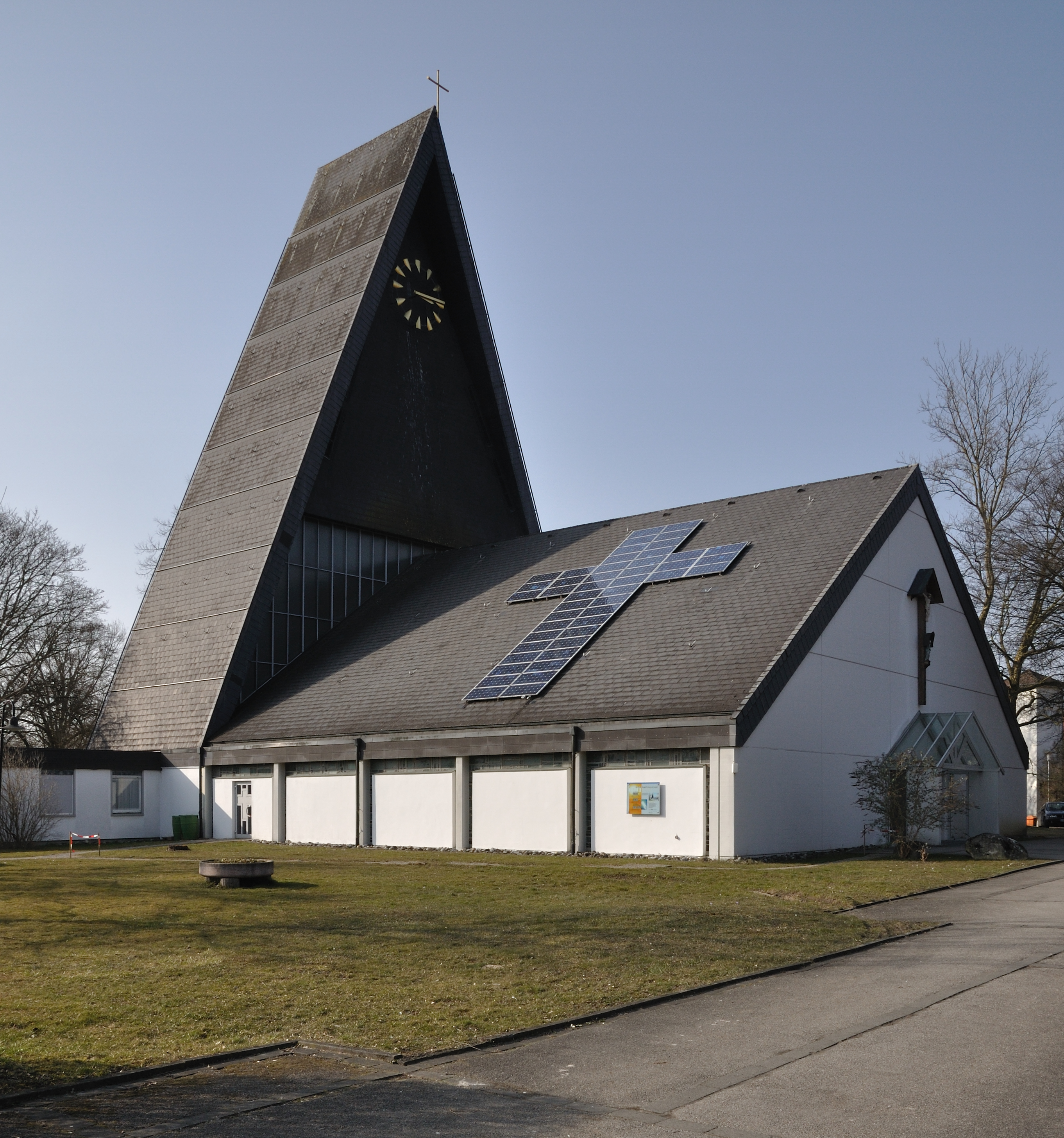
A church in Germany displays both its faith and its solar panels. Photo credit Dietrich Krieger.

Faith communities, colleges, schools, local governments and non-profits will find it easier to “go solar” under a law that takes effect in Virginia on July 1. Eligible customers will be able to install solar panels or wind turbines with little or no upfront cost, paying only for the electricity the systems provide. This arrangement, known as a third-party power purchase agreement (PPA), has been the driver for most of the solar projects in the U.S. in recent years, but prior to this year utilities had blocked its use in most of Virginia.

The new law creates a two-year pilot program allowing customers of Dominion Virginia Power to install projects as large as 1 megawatt (1,000 kilowatts) using PPAs financed by private companies. Projects must have a minimum size of 50 kilowatts, so the program can be used by many commercial customers but excludes homeowners, whose solar PV systems more typically fall in the 4-to-8 kilowatt size.

Importantly, however, the 50-kilowatt minimum does not apply to tax-exempt entities. PPAs are one of the only ways available for tax-exempt entities to benefit from the federal 30% tax credit for renewable energy systems; a tax-paying investor actually owns the system and uses the credits, passing along the savings to the customer. Thus the program could open up a new solar market in Virginia focused on what might be considered a natural vanguard for renewable energy: houses of worship, colleges, schools and nonprofits.

PPAs also offer an advantage over buying solar panels outright: even though the solar system is on the customer’s roof, someone else actually installs, owns and maintains it. That means less hassle for the customer and no upfront capital cost. The customer only has to pay for the solar power that’s produced. With prices for solar systems having fallen dramatically in recent years, customers will generally be able to buy solar energy under a PPA for no more than they now pay for power from non-renewable sources.

In states with incentive programs, including Maryland and DC, customers actually save money on their utility bills with solar PPAs. Virginia customers may not save money at first. Depending on the contract terms, however, customers may save money in future years, and can end up owning the solar system outright eventually, which will allow them to save quite a bit of money on electricity in the long run.

PPAs are the most common financing method for rooftop solar systems across the country. Companies like Solar City and Sungevity have created a profitable business model around financing and owning solar systems on customers’ property. Given the lack of state incentives in Virginia, Solar City isn’t expected to enter the market here. Financing PPAs in Virginia can still be profitable, but it presents challenges. Still, for people with cash sitting in CDs and bank accounts earning less than 1% interest, financing a solar project at their neighborhood church or school can be rewarding financially as well as spiritually.

One of the few companies with experience in Virginia PPAs is Secure Futures, LLC of Staunton, Virginia. CEO Tony Smith says his company’s business model is to “work with tax exempt entities to met their environmental, educational and thought leadership goals through solar installations that we own and operate in ways that deliver immediate operational savings and solid long term returns.”

The new law will involve rulemaking by Virginia’s regulatory body, the State Corporation Commission, to settle the details–including how the pilot program is tracked and how a qualifying customer applies for the limited kilowatts available over the two-year period. The SCC should be issuing a docket for a public hearing in the near future.  Since many customers need months of lead-time, it’s not too soon to start the planning process.

Free workshops will offer information about solar PPAs beginning in June

On June 23 at 7 p.m., Greater Washington Interfaith Power and Light (GWIPL) and the Sierra Club will hold a free workshop for faith congregations at Mount Vernon Unitarian Church in Alexandria, one of the first Virginia churches to install solar panels. Representatives of solar companies including Secure Futures and Abakus Solar of Richmond, Virginia will be on hand to answer questions.

GWIPL has worked extensively with DC and Maryland congregations on similar solar projects and has compiled an informative booklet that can be downloaded from the gwipl.org website.

The Virginia Chapter of the Sierra Club supported the solar industry in its quest to open up the Virginia market for solar PPAs and believes churches and other faith communities can play a big role in making the benefits of renewable energy available to everyone.

Sierra Club and Virginia Interfaith Power and Light are also planning a June workshop for Richmond-area congregations. Similarly, Sierra Club and National Wildlife Federation, which has been working with community colleges on “green campus” projects, are planning a workshop designed especially for colleges and universities.

In addition to their target audiences, all workshops will be open to anyone who wants to learn more about the solar opportunity. For information, contact corrinabeall@sierraclub.org.

New law an imperfect compromise

The PPA legislation was a compromise between the solar industry and Dominion Power, which had sparred over the question of whether PPAs are legal in Virginia. When Secure Futures tried to install a system at Washington & Lee University in 2011 under a PPA, Dominion sent cease and desist letters claiming the arrangement was illegal. Eventually Secure Futures and the university used a different financing approach so the project could move forward.

Dominion also blocked a 2012 bill in the General Assembly that would have expressly allowed PPAs; that bill would have included private homes and smaller commercial systems. The issue was popular with legislators and the public and became a priority for many local governments during the 2013 legislative session.

Eventually this year Dominion agreed to a narrower bill as a temporary pilot project. In exchange, the bill gives Dominion legal certainty by prohibiting PPAs in its territory that fall outside the pilot project.

Other Virginia utilities refused to participate in the pilot program. As a result, the program and its rules apply only in Dominion Virginia Power’s service territory.

The pilot project will run for two years, after which Virginia regulators will evaluate it to determine whether it should be continued and expanded. The total size of all the systems installed under the legislation is capped at 50 megawatts. Although this is a tiny amount compared to states like New Jersey, which already has more than 1,000 megawatts of solar installed, it would mark a significant step forward for Virginia, which to date has installed less than 10 megawatts.

In addition to the 50 megawatts that can be installed under PPAs, another 30 megawatts of solar will be installed by Dominion itself under a program it refers to, somewhat confusingly, as “community solar.” Under that program, the utility plans to install and own solar systems on leased rooftops in select locations. The program includes no provision for selling the solar output to the building owners.

Wind systems also covered

The pilot project includes wind turbines as well as solar systems. Dominion’s service territory includes relatively few areas with wind resources good enough to make wind power economically attractive, but the Virginia Wind Center at James Madison University has been evaluating the possibilities under the pilot program and believes it may be useful for some customers interested in installing wind turbines.

Unknown's avatar

Virginia doesn’t need another gas plant

On April 24, Virginia’s State Corporation Commission (SCC) will consider a proposal from Dominion Virginia Power to build a new natural gas-fueled generating plant, the second of three it wants to add to its holdings. Its first plant, now under construction in Warren County, generated little opposition because it will replace old coal boilers that Dominion needs to retire.

But the latest proposal for a plant in Brunswick has come in for fierce criticism, and for good reason: we don’t need another gas plant. Dominion has exaggerated the growth in demand that it says justifies the plant, and the company could more cheaply meet its actual needs with energy efficiency and renewable energy.

Moreover, the world is changing, and the energy model of big utilities running big baseload power plants is becoming outdated. If Dominion builds another of these, Virginia could end up stuck with a giant concrete paperweight.  The SCC owes it to customers not to let this happen.

Every year Dominion tells regulators it expects demand to increase by 1.5% to 2% per year indefinitely, but its actual energy sales have been essentially flat since 2006. Sure, the recent recession threw everyone a curveball, but Dominion’s tendency to overstate future demand goes back decades. The company seems not to have anticipated widespread changes like more efficient appliances and better building codes that let consumers use less electricity even while we’re buying more gadgets.

With a little effort, we could save even more energy. Virginia ranks in the bottom half of states for energy efficiency, and Dominion is not on track to meet even the modest efficiency goals of the Virginia Energy Plan. Some of the fault for this lies with the SCC itself, which has often rejected energy efficiency programs. But nor has Dominion tried very hard. Even their rate structure is designed to encourage energy use. Greater efficiency would mean lower electricity sales, and who wants that? Not a company that makes its money building plants and selling electricity.

And this is a shame, because the cheapest energy is the energy that isn’t used. Virginians use 20% more electricity per person as our neighbors in Maryland, so we have a lot of low-hanging fruit we should pick before we build another power plant.

Even if we needed more power, though, building another baseload natural gas plant is a bad plan. A “baseload” plant is one designed to run continuously, unlike a “peaker” plant that fills in when needed. The price of natural gas fluctuates wildly, so building a baseload plant means committing customers to paying whatever the going rate happens to be, all day, every day, for the 30-year life of a gas plant. With about a third of Dominion’s power mix already coming from natural gas, surely adding more baseload gas is a reckless gamble when alternatives are available. Even Dominion CEO Tom Farrell has warned against an over-reliance on natural gas for this very reason.

It used to be that alternatives to fossil fuels weren’t much available, so a 30-year gamble was normal, and regulators didn’t trouble themselves by asking what the world would be like in 20 years. Wind and solar have changed that. When you build a wind farm or a solar facility, you know exactly what you will be paying for energy 20 years down the road, because your “fuel” is free. Building wind or solar is like locking in a fixed-rate mortgage instead of gambling on an adjustable rate mortgage with a low teaser rate. With that as an option, why should Virginians commit themselves to 30 years of buying gas at whatever the market decides is the price?

With prices dropping rapidly, wind and solar are today’s fastest growing energy technologies, and wind is second only to gas as a source of new electric generation. Of course, Virginia can’t boast a single wind farm today, and the smattering of solar across the state totals less than 1% of what New Jersey has. But even here, time and economics are on the side of renewable energy. Citigroup recently issued a report projecting that renewable energy will reach grid parity across the U.S. within the next few years and will gradually relegate all other fuels to back-up status.

This makes it an even worse idea for Dominion to invest in a plant that cannot easily adjust its output when the wind picks up or the sun comes out. Other options exist. Gas turbines are now being designed to integrate with renewable energy, combining high efficiency with the ability to ramp up and down quickly. Companies like General Electric are making big bets that this is the future of gas turbines.

Dominion, meanwhile, seems to be looking at the future as if we were back in the 20th century, and without even taking advantage of hindsight. Its plan is a bad deal for its customers, and the State Corporation Commission should reject it.

Unknown's avatar

The Keystone XL Pipeline: Game over?

NASA scientist James Hansen famously warned that if the Keystone XL pipeline gets built, it’s “game over” for the climate. That dire warning lit a fire under the feet of activists, who rightly argue that Canada shouldn’t be producing the dirty, carbon-intensive tar sands oil, and the U.S. shouldn’t enable the climate destruction by building a pipeline to get the oil out of North America. But stopping Keystone won’t stop global warming, and building it won’t make environmentalists throw in the towel. If this is a game, we are pawns as well as players, so we can never walk away.

Frankly, it’s hard to understand right-wing enthusiasm in the U.S. for a pipeline benefiting a Canadian company extracting Canadian oil intended for the world market. In spite of all the talk about jobs, it will employ only a few thousand workers temporarily, and not in the areas of the country where unemployed construction workers live. Moreover, building it requires the government to seize private property from unwilling landowners to benefit a private interest—usually the sort of thing that makes Republicans go ballistic.

I might add that the environmental damage being done to thousands of square miles of Canadian arboreal forests and lakes is staggering—but Republicans have long since made it clear that they do not consider despoiling nature a drawback when there is energy to be had and profit to be made. (If you are a Republican and you bristle at this, see if you can name a recent oil, gas, or coal mining project your party has opposed for environmental reasons. I can only name one, and that doesn’t get beyond “sort of.” See the Tennessee Conservative Union’s ad opposing mountaintop removal coal mining, now that a Chinese company wants to do it.)

Some would argue that the climate case against Keystone is overstated. Tar sands oil is “only” 14-24% more carbon intensive than conventional oil, if you ignore a nasty byproduct called petroleum coke that adds to the total carbon footprint. Yet surely if the reverse were true, and the carbon footprint of tar sands oil were less than that of conventional oil, it would be hailed as some kind of a planet-saving fuel. Incremental changes are what got us into this mess in the first place.

If Keystone represents evil, though, it has plenty of company, and there is blame enough to go around. Canadians are developing tar sands oil because the worldwide demand for petroleum is high and growing, there is money to be made meeting the demand, and there is no one who will make them stop. The harm done exceeds the profit to be made, but most of the harm is borne by people in other countries.

That makes the case against the pipeline mostly a moral one, and moral arguments don’t get much respect these days. Yet when the State Department or the Washington Post urges that if we don’t build the pipeline, the Canadians will just find other ways to get the oil to market, the proper response should be outrage. Their position is the moral equivalent of justifying buying stolen goods on the theory that if you don’t do it, the thieves will just find a fence somewhere else.

Admittedly, lots of people would buy stolen goods if there weren’t a law against it; for such people, morality is most successful when immorality gets you arrested. And there isn’t a law against tar sands oil; Canada is the only country with jurisdiction, and it prefers to look away.

Americans also have a little problem that we do, indeed, buy a lot of stolen goods. As the world’s biggest oil consumers, we have a credibility problem. On the other hand, if we don’t set the standards, who will? And if we don’t start here, then where?

Keystone or no Keystone, the fight against climate change will go on, because our lives and our children’s lives depend on it. It’s not a game we can stop playing—but we sure shouldn’t make it even harder for ourselves to win.

Unknown's avatar

Tom Farrell’s nuclear fantasy

Tom Farrell doesn’t get it. Dominion Power, the utility of which he is CEO, has been all about building natural gas plants for the past couple of years, as it rushes to take advantage of cheap fracked gas. Out with the aging coal plants that had been its first love, in with the next cheap thing, and never mind the pollution! Then suddenly two weeks ago, faced with a question about climate change, Farrell told reporters the answer is more nuclear plants.

Mother Earth to Tom Farrell: The correct answer is “renewable energy.”

Most of the rest of the country gets this. Wind supplied more new electric generation than natural gas did in 2012. More people work in solar energy than in coal mining. Renewable energy has overtaken nuclear worldwide. Almost no one is building nuclear plants, partly because—here’s an inconvenient truth for you, Tom—they cost too much. Almost three years ago a Duke University study found that power from new nuclear plants is more expensive than solar energy, and the cost of solar has only gone down since then.

But Farrell is convinced wind and solar can’t provide reliable electricity to power the whole grid. You’d think he’d been reading propaganda from the Koch Brothers and had come to believe that if there are solar panels somewhere and a cloud crosses the sun, the whole grid crashes.

Can I just point out here that Dominion’s own North Anna nuclear reactors shut down suddenly in 2011 following an earthquake in Virginia, and the grid did not crash? Even though nuclear is one-third of Dominion’s Virginia portfolio, and North Anna represents more than half of that? And even though, while weather forecasters are pretty good at predicting regional cloud cover, no one can yet predict an earthquake?

The reason the grid didn’t crash is that grid operators make sure there is enough surplus generation available to keep supplying power even at times of catastrophic failure. And note that the nuclear plants didn’t come back online when the clouds cleared off, either. They were down for four months.

If nuclear power is more expensive than renewables, and it has to be backed up 100% with other forms of energy, for much longer time periods, where is the place for new nuclear?

As the CEO of a utility, Tom Farrell should know better. He should also know about the new study demonstrating that renewable energy alone—onshore wind, offshore wind, and solar energy—can power the entire grid 99.9% of the time. The study authors show that doing this would actually cost less than conventional sources of electricity, assuming you include in the price the “external” cost society pays for the use of fossil fuels. That is, if you factor in the cost of climate change, it’s cheaper to build renewable energy than new fossil fuel plants.

Climate aside, there’s other evidence for the superior value of renewable energy in providing price stability for customers and a whole range of benefits for the grid. And of course, for meeting demand at the cheapest possible cost, you can’t beat energy efficiency.

It’s time to face reality, Tom Farrell. If all you care about is making money for Dominion today, your natural gas strategy probably makes sense. But if you care about tomorrow—or even about the big picture today—it doesn’t. Either way, there’s no room in the picture for expensive new nuclear plants.

And if you’re sincerely concerned about climate change, now would be a good time for Dominion to invest in energy efficiency, wind and solar.

*    *    *

Note to readers: Willett Kempton, one of the authors of the study cited above on powering the grid with renewable energy, will be speaking at a townhall meeting sponsored by Sierra Club and Environment America this Wednesday, March 13, at the MetroStage Theatre, 1201 North Royal St., Alexandria, VA. The meeting is open to the public (Tom Farrell is especially invited). To RSVP, contact Phillip Ellis at phillip.ellis@sierraclub.org or 571-970-0275.


Unknown's avatar

Dominion takes the wrong way on solar

On February 12, Virginia’s State Corporation Commission held a public hearing to decide whether to approve Dominion Virginia Power’s plan to buy 3 megawatts of solar power from Virginia residents and businesses to sell to the company’s voluntary Green Power Program. Sound like a good idea? It’s not.

Yes, Virginians want solar power. Investing in solar means stably priced electricity, cleaner air and lower greenhouse gas emissions. Solar power is now cost-effective in Virginia even in the absence of state incentives, thanks to federal tax credits and a steep decline in the price of solar panels. But a high upfront cost still limits who can afford to install it.

Utilities and the SCC have a role to play in bringing new solar power onto the grid. Dominion’s program to install 30 megawatts of solar on leased rooftops, which the SCC approved this fall, provides an example of how utilities can strengthen the grid, diversify their power sources, supply valuable peak-demand electricity, and contribute to their own learning curve on integrating renewable energy, all while meeting a portion of their customers’ demand for clean power.

The 3-megawatt program, on the other hand, gets nothing right. Under the program, customers who have solar panels would sell all their solar power to Dominion for 15 cents per kilowatt-hour (kWh), and buy regular fossil-fuel electricity (known as “brown power”) from Dominion at the normal retail rate of about 11 cents. Cost to Dominion: 4 cents/kWh.

Dominion would then resell the solar power to the participants in its Green Power Program, not for the 4 cents it costs the company, but for 11 cents. Dominion would keep 7 cents/kWh.

Dominion tells us that the 7 cents would go to its rate base, not its own bottom line. But it’s clear who loses. The do-gooders who pay extra on their utility bills for the Green Power Program would pay 11 cents for something Dominion bought for 4 cents. They are being played for chumps.

Last year the Green Power Program bought Virginia solar power directly for 4 cents/kWh through the purchase of renewable energy certificates. So why should the program pay 11 cents for something it can get for 4?

Since Dominion administers the program, it will be up to the SCC to prevent this misuse of its funds.

This is only part of the problem. The reason Dominion wants to shift the cost of the solar purchase onto the Green Power Program is its insistence that the value of solar energy isn’t the retail rate of electricity, but is the utility’s “avoided cost”—roughly, the price at which it can buy brown power on the wholesale market, which is around 4 cents/kWh.

Of course, if the current wholesale price were the only thing that mattered, you’d have to question why Dominion ever builds its own electric generation, including its new coal-fired plant that delivers power at 9.3 cents/kWh.

The SCC allows Dominion to build its own generation in Virginia for a host of other reasons, all of which apply equally to Virginia solar. Rooftop solar also provides significant additional benefits to the utility and the electric grid that utility-supplied brown power does not. A number of recent studies have quantified these benefits to prove that net-metered solar (where customers sell solar power to the grid at the retail rate) lowers costs for everyone.

Yet Dominion wants to shift costs onto a voluntary program, while keeping the benefits. This is bad for the Green Power Program, and it sets a terrible precedent for valuing solar that could retard its growth in Virginia. And that would be bad for all of us.

Unknown's avatar

Renewable energy makes small gains in Virginia’s 2013 legislative session

The Virginia General Assembly will soon wrap up its work on the 2013 legislative session. Renewable energy advocates began the session with high hopes for a series of bills that promised to reform our renewable energy law, expand net-metering, and open up new opportunities for financing solar systems and small wind turbines.

So how did we do? Well, this is Virginia. Progress is slow, the utilities are powerful, and half the legislature doesn’t believe in climate change. On the other hand, they do believe in business. Under the circumstances, we did okay.

Renewable Portfolio Standards: bye-bye, bonuses

Readers of this blog already know the long, miserable tale of Virginia’s weak and ineffective, voluntary renewable portfolio standard (RPS), which has enriched utilities with tens of millions of dollars in incentives without bringing any new renewable energy projects to Virginia. This year the legislature went halfway to fixing the problem. Legislation negotiated between the office of the Attorney General and the utilities will deprive utilities of future ill-gotten gains for meeting the RPS law, but won’t change the pathetic nature of the law itself.

Stripping out the RPS incentives was only part of a bigger, more complex bill that sweetens the deal for utilities in other ways, so it’s hard to judge whether the legislation as a whole marks a victory for consumers. Skeptics will note that Dominion’s stock price has actually gone up several percentage points since the deal was announced, which you wouldn’t expect if the AG were correct that the bill will save consumers close to a billion dollars over time.

What is clear is that the RPS remains as voluntary and as crummy as it ever was, but the utilities can no longer use it to rip off ratepayers while pretending to be good citizens. Some environmental groups consider stripping out the incentives a bad thing, on the theory that only by giving utilities a bonus can we expect them to meet the goals. Other groups (including the Sierra Club) believe Dominion, at least, will want to maintain its greenwashed public image by continuing to meet the RPS goals, and that ending the consumer rip-off is worth celebrating.

Sure, if the goals had brought wind and solar to Virginia, the Sierra Club would have considered the incentives a tolerable price to pay. As it happened, Dominion and the other utilities continuously rebuffed efforts over the years to improve the RPS. Had Dominion approached the RPS as an opportunity to bring real renewable energy to Virginia rather than as a cash cow to be milked for its own advantage, the company would have saved itself a public relations fiasco and likely kept its bonuses, too. Surely, someone at HQ should be out of a job right now.

Taking the long view, it is also worth noting that getting rid of the free money is a necessary first step towards a mandatory RPS in Virginia, which would unleash market forces for renewable energy that don’t emerge with a voluntary law. Utilities would oppose such a move more vigorously if they still had incentives to protect that were available only under the voluntary program.

. . . but reform efforts fail again

These views all assume the legislature will someday pass a bill to improve the goals and bring wind and solar projects to Virginia, without which the RPS is meaningless anyway. Surely legislators must recognize how pointless it is to have an RPS that can be met with out-of-state, pre-World War II hydro, plus some trash and wood-burning and a few assorted projects that put no power on the grid. (Even without the performance incentives, utilities remain entitled to pass along to customers the cost of meeting the RPS goals.)

Bills to improve the goals should have passed the legislature this year as part of the reform package. HB 1946 (Lopez) and SB 1269  (McEachin) even received the support of Dominion Power for provisions that would limit most future purchases for the RPS to high-quality projects like wind and solar. What killed the bills seems to have been a combination of opposition from vested interests and sheer cussedness on the part of some Republicans, who were engaged in partisan maneuvers that had nothing at all to do with renewable energy.

As usual, we are left hoping for better luck next year.  Meanwhile, however, a couple of other RPS bills made incremental progress. Most notably, HB 1917 (Surovell) adds solar thermal energy to the definition of renewable energy; as of this writing it has passed the House and is on the Senate floor.

A loss for more honest competition among fuels

There are more ways to support renewable energy than through an RPS, of course. One of my favorite bills would have required utilities and the State Corporation Commission to consider the long-term price stability of fuels used in electric power generation. HB 1943 (Lopez) would have helped price-stable wind and solar compete against notoriously price-volatile natural gas. It’s an idea that should appeal to fair-minded conservatives, so it’s a shame it hasn’t gained traction since first being introduced in 2012. However, it died in committee in the face of opposition from Dominion Power, which doesn’t want any interference with its plans for new natural gas plants.

Power Purchase Agreements get a “pilot”

Two bills passed the legislature to allow some third-party power purchase agreements (PPAs) for wind and solar within Dominion’s territory. Under a PPA, an installer retains ownership of the solar equipment, with the customer buying the electricity that is generated. This arrangement has two primary advantages: the customer can “go solar” with no money down and no responsibility for the equipment; and in the case of a tax-exempt entity like a church or a university, it provides a way to access federal tax credits worth 30% of the system cost.

The bills were designed to prevent a recurrence of a dispute that erupted in 2011 when a Staunton-based solar company, Secure Futures, installed a large solar system at Washington & Lee University under a PPA. Dominion issued “cease and desist” letters insisting that only it could sell electricity in its assigned territory. Although Virginia law is unclear on this point, the university and the solar company capitulated in the face of massive litigation costs. Since then Dominion’s army of lawyers has proven as effective as any statute in stopping further efforts to use PPAs in Virginia.

This year’s bills, SB 1023 (Edwards) and HB 2334 (Yancey), were originally written to allow third-party PPAs wherever customers can currently install renewable energy systems that they own themselves. They were significantly scaled back to win acceptance from Dominion Power. (AEP and the coops wouldn’t play at all, so legal ambiguity remains the rule in their territories.)

The bills allow up to 50 megawatts’ worth of solar and wind installations using PPAs, in Dominion territory only, as a pilot program.  Whether net-metered or not, they will be counted against the current net-metering cap of 1% of the utility’s generation. Tax-exempt entities can have a facility of any size up to 1 megawatt (500 kW if they net meter); taxable entities must have a minimum size of at least 50 kW (so no homeowner need apply). PPAs that do not meet the requirements are expressly prohibited in Dominion territory.

Agricultural net metering, yes; community net metering, no

A bill to allow agricultural net metering also passed this year. HB 1695 (Minchew) allows the electricity from a single solar, wind, or digester gas facility to be attributed to two or more electricity meters as long as they are all on the same property and have the same owner. Thus, for example, a farmhouse, barn and other out-buildings can all share in the benefits of solar panels on one of the buildings, even if each building is separately metered.

Originally the bill would also have enabled community net metering, sometimes known as solar gardens, but the utilities opposed it. Bowing to political reality, Delegate Minchew scaled it back. The bill is notable, however, for making progress without including any provisions that seem capable of doing mischief.

A note about all the bills: In Virginia, the governor can sign a bill, veto it, or send it back to the legislature with amendments of his own, so none of these bills are final as of this writing.

Unknown's avatar

For electric power generation, the end of fossil fuels is in sight

The rap on renewable energy is that it’s too variable to meet society’s demand for a constant supply of electricity. The answer to the problem turns out to be: More renewables.

111022-N-OH262-322Climate change is acting like an ever-tightening vise on our energy options. Each year that passes without dramatic decreases in our use of carbon-emitting fuels means the cuts we have to make simply get more drastic. By 2030, say experts, we must entirely replace coal with efficiency and renewable energy, or fry. Even the most intrepid environmentalists wonder if it can be done without huge price hikes and wholesale changes in how we live and use energy–changes that society may not accept.

A new study out of the University of Delaware shows it is possible to power the grid 99.9% of the time with only solar and wind energy, at a cost comparable to what we are paying today. This counters the conventional wisdom that we will always need large amounts of fossil fuel as a backup when the wind doesn’t blow and the sun doesn’t shine. It also means the goal of getting largely beyond fossil fuels by 2030 is not just achievable, but practical.

The study focused on a regional transmission grid known as PJM, which encompasses parts or all of fourteen states, mostly in the Mid-Atlantic. Researchers ran 28 billion computer simulations to find the most cost-effective combinations of wind and solar that could power the entire grid, at the least possible cost and with minimal amounts of energy storage. The winning combination relied on natural gas turbines for backup on only five days out of the four years modeled.

The study authors looked for the least cost taking account of carbon and other external costs of fossil fuels, which are not being accounted for today, but they also assumed no technology improvements over time, making their cost estimates conservative overall. All the least-cost combinations used much more storage than we have today, but needed it for only 9 to 72 hours to get through the entire four years modeled.

The secret to dealing with the inherent variability of wind and solar, it turns out, is to build even more wind and solar. One wind turbine is unreliable, but tens of thousands spread across a dozen states greatly reduces the variability problem, and tens of thousands of wind turbines balanced with millions of solar panels is better still. To get to 99.9% renewables, you keep adding wind turbines and solar panels until you are producing three times the electricity that you actually need to meet demand. To power the grid with renewables just 90% of the time, you would have to produce “only” 1.8 times the electricity needed. (And yes, we have the windy sites and the sunny places to support all those projects.)

While it may sound strange to build more generation than you need, that is already the way grid operators ensure reliability. To take one example, if you were in Virginia when the “Big One” struck in 2011, you will recall that the earthquake caused the North Anna nuclear plant to shut down for four months. Nuclear energy provides a third of the electricity in Dominion Virginia Power’s service territory, and yet the lights stayed on. That’s because the grid wizards at PJM simply called on other power sources that had been idle or that had spare capacity.

The other component of reliability is the ability to match demand for power, which rises and falls with the time of day, weather, and other factors. So-called “baseload” plants like nuclear, coal, and some natural gas turbines don’t offer that flexibility and must be supplemented with other sources or stored energy. PJM currently uses more than 1,300 different generating sources, as well as about 4% storage in the form of pumped hydro. The right combination of other sources can replace baseload plants entirely.

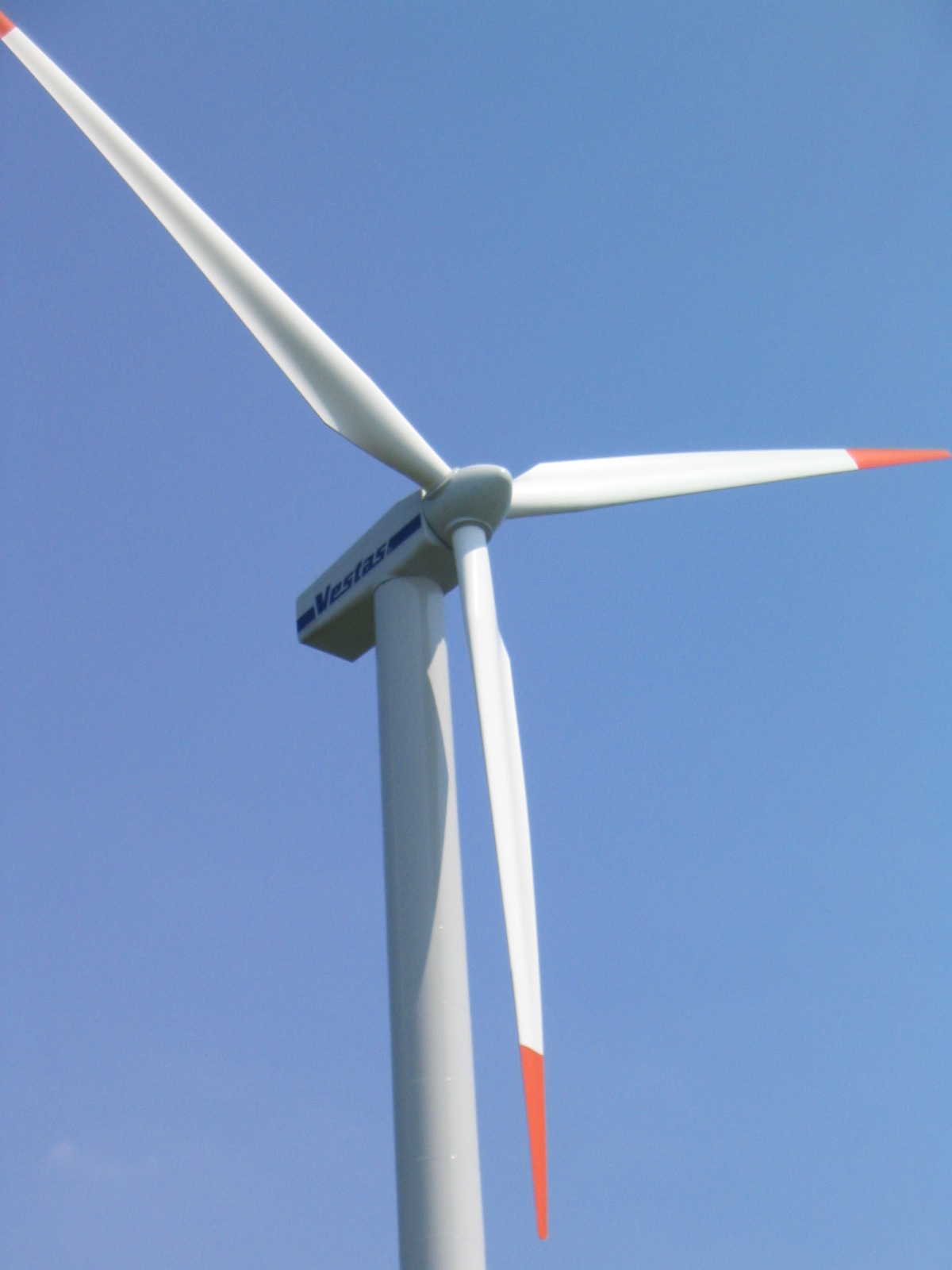
wind turbine-wikimedia

Pairing wind and solar improves their ability to meet demand reliably. Onshore wind tends to blow most strongly at night, while solar energy provides power during the peak demand times of the day. Offshore wind power is also expected to match demand well. Combining them all reduces the need for back-up power.

But until now policy makers have assumed that solar and wind won’t be able to power the grid reliably, even when combined and spread out over PJM’s more than 200,000 square miles, and with the addition of wind farms off the coast. Critics have insisted that renewable energy requires lots of back-up generating capacity, especially from some natural gas turbines that can ramp up and down quickly. New gas turbines have even been designed specifically to integrate with renewables in anticipation of increasing amounts of wind and solar coming onto the grid.

This makes the work of the U. Delaware researchers a game-changer by showing that wind and solar can be backed up primarily by more wind and solar. And so we can begin planning for a future entirely without fossil fuels, knowing that when we get there, the lights will still be on.

Unknown's avatar

The trouble with natural gas

Natural gas was supposed to be the answer to all our energy dreams. It’s produced in America, cheap, plentiful, and guilt-free, like the fuel version of Diet Coke. In the dream, it is a lifeline for struggling family farms that can make money leasing their mineral rights. It will wean us off dirty coal for generating electricity, and yet be so cheap that poor people don’t have to be cold at night. It will power the American manufacturing renaissance. It will bring down carbon emissions and stop global warming from happening, making it the savior of the whole world, including Greenland’s glaciers, the coral reefs, the polar bears, and civilization itself.

The new technique of natural gas extraction known as hydraulic fracturing with horizontal drilling, or “fracking,” has unlocked vast supplies of methane trapped in shale formations across the country, driving down the price of natural gas to historic lows and promising a supply that the government estimates will last 92 years at current consumption levels. Electric utilities have been switching from dirty coal to “clean natural gas” at record rates.

But instead of ushering in a future of boundless clean energy, natural gas has been setting off alarm bells all over the country. First, there are those family farmers and other landowners who leased their land for fracking and now say it has contaminated wells and surface water, polluted the air, killed farm animals, ruined crops, and made their lives a living hell with all-day, all-night truck traffic.

The heck with them. They signed contracts. Caveat greedy landowner, right?

Let’s offer a little more sympathy to their neighbors who suffer the consequences without getting lease payments. But keep in mind that the gas industry denies all charges. None of this happened. Or if it did, the ruined water wells were due to naturally-occurring methane or other chemicals in the area, and it is an unlucky coincidence that the pollutants reached hazardous levels in the drinking water aquifer shortly after a gas company drilled down through it en route to the natural gas thousands of feet below, with impenetrable rock layers in between.

I once heard a gas industry lobbyist inform a room full of conference attendees that it was impossible for a fracking operation to contaminate drinking water. I was reminded of the way the computer geeks in college used to insist there was no such thing as a computer error. “I’m sure you’re right,” the rest of us would answer humbly. “Now can you help us recover the data?”

At least the computer geeks would then get busy fixing the bugs so that the next time the system crashed, it was from an entirely different cause. Gas company lobbyists have been stuck at denial, and it has only done them damage with the public. Admitting to a bad well casing seems far preferable to driving a now-widespread belief that methane is migrating up through rock fissures caused by fracking.

As for the other complaints—the 24-7 truck traffic, extra air pollution from operations, polluted wastewater, and occasional surface spills—the response from the gas industry and its friends has been that this is the price of progress. Industry is not pretty. Get over it. Who entitled you to a quiet life in the countryside?

But another alarm bell has been ringing, and it gets progressively louder. This one warns that drilling for natural gas, far from being the answer to climate change, may actually be making it worse. The problem is one of  “fugitive” emissions, which sounds vaguely criminal and exciting, but simply refers to the small percentage of natural gas that escapes into the atmosphere at drilling sites. Methane, the major ingredient of natural gas, is a greenhouse gas that is much shorter-acting than carbon dioxide but twenty-five times more powerful. If recent analyses prove correct, the amount of methane that escapes during the fracking process may be enough to make natural gas worse than coal as a driver of climate change. This is especially unhappy news given that natural gas integrates well with more variable energy sources like wind and solar, and environmentalists had been counting on it to help in the transition to a future powered mainly by renewable energy.

The trillion-dollar question is whether all these problems are inherent in natural gas drilling, or whether the gas companies could solve them if they put their minds to it. After all, wind energy companies have shown they can be responsive to environmental concerns and still grow as an industry. Environmentalists have turned from being the biggest critics of wind energy to its biggest advocates. There’s no rule saying gas drillers have to stonewall, or that the companies with the best operations have to support those drillers whose operations threaten communities and the climate.

Drilling companies don’t want methane to escape, obviously, because that is lost revenue for them. But neither do they seem to be making heroic efforts to monitor and prevent fugitive emissions. A few companies have been using innovative approaches to solve other problems, however. One has developed a method that uses propane as the fracking fluid, saving millions of gallons of fresh water for every well. The propane returns to the surface with the gas to be reused in a virtuous cycle.

Unfortunately, this method turns out to be more expensive than using water, which is often free if you grab it before anyone else realizes they might need it. So while you have to admire the elegance of the propane solution, you can’t really expect any self-respecting capitalist to adopt it just because it is better for society in general.

The same is true of an experimental approach that uses CO2 as the fracking medium. When water is the medium, most of what is injected remains underground permanently. CO2 seems to behave the same way, suggesting that the fracking wells might be able to sequester enough carbon underground to offset much of the CO2 that is emitted when the gas is burned. Coupled with carbon capture technology at plants burning natural gas for electricity, this technique would significantly lower the carbon footprint of natural gas. Whether it is enough to offset the problem of fugitive methane emissions is unclear.

But CO2 is already used in oil extraction, and drilling companies can’t get enough of it as it is, because carbon capture is expensive. Sure, it’s not as expensive as adapting our coastal cities to rising sea levels caused by climate change, but that’s a cost to society; carbon capture is a cost to industry. Any gas company or utility that adopts more expensive methods than its competitors, just because it’s better for society, won’t be around for long.

Capitalism can’t solve this problem alone, or any of the other pollution issues posed by natural gas extraction. Nor are individual states able to regulate practices effectively, because companies that face higher costs in a well-regulated state will move to states with more lax regulations in order to retain their competitive position.

The only effective answer is for the federal government to impose a set of best practices that apply to all members of the industry nationwide, so the good actors aren’t placed at a competitive disadvantage. The requirements would include extraction practices that minimize the risk of groundwater and surface water contamination, reduce air pollution, and prevent the escape of methane into the air. They would provide for monitoring and analysis, so regulators and industry would know where, when and how to take corrective measures. They would also cover the consumption end of the cycle, requiring carbon capture technology for all new fossil-fueled electric generation, and ensuring that the costs to society are borne by the industry.

This isn’t a radical idea, by the way. It is how we used to approach industry-wide problems, back before fossil fuel lobbyists reframed regulation as a dirty word that meant we were no longer a free people. The natural gas industry is now in a hugely dominant position over other fossil fuels. They can afford to implement rigorous best practices across the board and still retain a competitive edge. They should be lobbying to make them universal, not fighting efforts to regulate.

The alarms bells are growing louder. Will the gas industry rise to meet the emergency, or just keep trying to cut the wires?

Unknown's avatar

Greenwashing Virginia’s renewable energy law, part 3: you can’t clean ugly

If you’ve been following the woeful tale of Virginia’s renewable portfolio standard, by now you know it hasn’t produced a single electron of wind or solar power in the commonwealth, nor is it ever likely to. Fellow citizens, what is to be done?

Let’s review what happened in last year’s legislative session, when word got out that Dominion Power was meeting the state’s renewable energy goals by buying cheap renewable energy certificates from decades-old projects involving dams, trash and wood—and collecting tens of millions of dollars annually as a “bonus” for doing so. Outraged environmentalists pushed for a reform bill that would let utilities collect this bonus from their customers only if they invest in new, Virginia-made wind and solar projects—essentially, what we thought the law was about in the first place.

It was a well-crafted, solid, common-sense bill. It died without even a hearing.

But meanwhile, Governor McDonnell got two bills passed that actually made the law worse. The first one said that in addition to energy from old dams, trash and wood, utilities can meet our goals by purchasing renewable energy certificates generated by universities showing they’ve done some research into renewable energy.

Research is an admirable activity. Most of us approve of research. We approve of universities, too. But even when you put universities and research together, not a single electron of energy flows into anyone’s home. Under what possible theory does it qualify as renewable energy?

Also newly qualifying, thanks to the governor, are certificates representing an industrial process used by a Virginia corporation called MeadWestvaco. This also won’t put energy on the grid, but it creates a brand-new income stream for MeadWestvaco, paid for by utility customers—though not by large industrial users like MeadWestvaco itself, which got themselves exempted from paying for the added cost to utilities of renewable energy.

Lobbyists, my friends, are worth every dime of their inflated paychecks.

No doubt this clever bill will stimulate the creative juices of other corporations to figure out how they, too, can feed at the renewable energy trough. As a service to anyone wondering how to get their ideas into law, I note that MeadWestvaco gave $75,000 to Bob McDonnell’s campaign for governor and his inaugural committee. This is what we call the Virginia Way.

After these two bills passed, Governor McDonnell announced he had taken important steps to promote renewable energy. Advocates of renewable energy promptly asked him not to do us any more favors. Heading into the next session, we’re gravely concerned that he wasn’t listening.

Attorney General Ken Cuccinelli offered a different approach: repeal the RPS law, or at least repeal the bonus utilities get. Mr. Cuccinelli is more famous for attacking the credibility of climate scientists than for embracing renewable energy, but with the environmentalists’ reform bill dead, the Sierra Club ended up supporting the AG’s bill rather than see the consumer rip-off continue.

But that bill failed, too, though it got several votes from Cuccinelli allies in the House, some of whom are pretty sure that if renewable energy succeeds, the United States will become a failed socialist state occupied by blue-helmeted U.N. troops. (If you think I am making that up, check out some Virginia Tea Party websites.) It is safe to conclude that votes for the AG’s bill were not votes for renewable energy.

Cuccinelli’s bill shared the same fatal flaw as the reform bill: Dominion Power opposed it. In case you haven’t caught on by now, Dominion almost always gets its way in the legislature, and it sure isn’t going to allow either the AG or the Sierra Club to take away its free money.

The upcoming session could be interesting. Mr. Cuccinelli is running for governor next year, which makes him the leading Republican in the state, with all due respect to Bob “Lame Duck” McDonnell. This fall Cuccinelli issued a report critical of Virginia’s appalling RPS, and has signaled he plans to go after the bonuses again.

Which is more powerful for Republicans, political allegiance or Dominion’s campaign cash? Which matters more to Democrats, renewable energy or Dominion’s campaign cash? Which matters more to Governor McDonnell, his party or his tight relationship with Dominion’s CEO (not to mention the campaign cash)? Not surprisingly, legislators are begging Dominion and the AG’s office to work something out together so they won’t have to pick sides.

Concerned that a “compromise” may serve political ends but leave the public out in the cold, environmental groups plan to bring their own citizen’s army to Richmond in support of reform. They’d like to see a compromise that lets Dominion keep its bonus payments by earning them with Virginia-made wind and solar. It’s so little to ask–yet, based on past years’ experience, it may still be too much to hope for.

Which brings us to the third option for outraged citizens. Buy Dominion stock. Seriously, if the company is going to wind up on top every time, you may as well get in on the profits.

Maybe you can use your dividends to buy solar panels.

Unknown's avatar

Greenwashing Virginia’s renewable energy law, part 2: Check, please!

Maybe not quite what we had in mind.

Maybe not quite what we had in mind.

In our last column, we looked at Virginia’s renewable energy standard, trying to grab hold of its 15% goal as it shrank three sizes in the greenwash. At the end of that discussion, you may have consoled yourself with the thought that 10% or 5% or 3% is, at least, better than nothing. Besides which, the law is only voluntary, so how much harm can it do?

Voluntary” has such a nice ring to it, doesn’t it?  You probably think it has something to do with customers deciding whether to participate. You might think it’s for those virtuous people who sign up to buy “green” power, and the rest of us will just go on burning coal.

That is not what voluntary means at all. “Voluntary” means your utility gets to choose whether to participate, and then you have to go along with it. The law says that if your utility opts in, it will spend some of your money on renewable energy, and then because it did all that work, you have to add a big tip to your utility bill.

I suppose, in theory, a utility like Dominion Power might decide it didn’t want to spend your money, and it could just skip the fat tip. In reality, refusing a tip isn’t part of a corporation’s DNA any more than it is of a waiter’s. Tom Farrell’s momma didn’t bring him up to be a fool who leaves money on the table. So our voluntary RPS is kind of like one of those annoying restaurants where they automatically add the tip to the bill for parties of six or more.

In this case, the tip adds up to more than $38 million per year. Mind you, this is on top of the profit they had already added to your bill. This is a very lucrative line of business.

Well, you might think, at least I got fed. You like renewable energy, after all. It replaces smog-causing fossil fuels. It lowers our carbon footprint. It creates jobs and enhances our national security. A utility shouldn’t have to be bribed into buying it for you, but at least now it’s part of the meal.

But look more closely. If that renewable energy were food, you’d send it back. You assumed you were getting fresh, Virginia-grown electrons, made with the sun and the wind—and what is this stuff they are serving? Energy from dams, trash and wood, most of it fifty years old or more, of such poor quality that no other state will let it be served to their customers. They only call it “green” because it’s practically moldy. (And such small portions!)

You call your utility over and demand an explanation. “Where’s the wind energy? Where’s the solar? Why isn’t this fresh and local?” And your utility looks down its nose at you and answers, “Those things cost more. We have an obligation to be careful of your money. So for you, we go dumpster diving.”

At that point, you might be glad the renewable energy portion of your meal barely amounts to a garnish. The trouble is, you can’t take your business elsewhere. Your utility has a monopoly, and it guards your patronage jealously. So you’re stuck with the meal they serve you. The closest you’re going to get to real renewable energy is the picture of a wind turbine on the cover of the menu.

It’s only now that you notice an asterisk by the wind turbine and fine print that reads: “Coming soon!” And below that, in print so tiny you have to reach for your glasses: “Or not.”