Unknown's avatar

The bill roundup continues: climate, energy transition, and other utility regulation

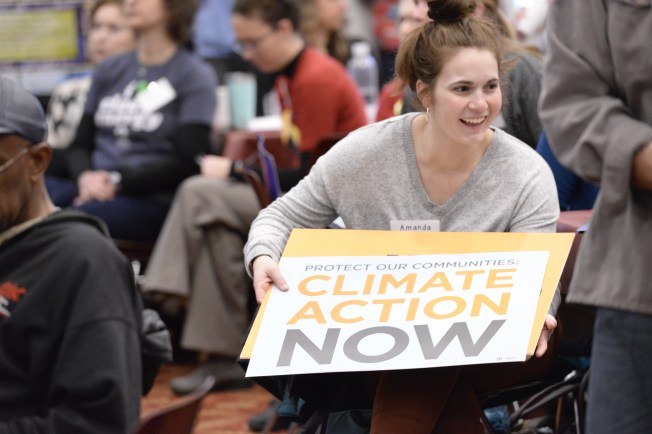
Young woman holding sign that says Climate Action Now

An activist at the Clean Energy Lobby Day on January 14. Photo by Alex Kambis.

If you need evidence that Virginia legislators finally recognize global warming as a crisis, you could simply look at this year’s plethora of bills addressing coastal flooding and resilience. We’ve barely begun to address the greenhouse gas pollution that drives climate change and sea level rise, but already Virginia has entered the age of adaptation.

Meanwhile, however, the need for mitigation measures is more pressing than ever. The new Democratic majority has responded with a long list of bills that address the problem in various ways: by joining the Regional Greenhouse Gas Initiative (RGGI), requiring energy efficiency and renewable energy investments, offering incentives for private investments, lowering barriers to investments, or all of the above.

In an earlier post I described two omnibus energy transition bills, the Clean Economy Act, HB1526 (Sullivan) and SB851 (McClellan), and the Green New Deal Act, HB77 (Rasoul). A second post brought together all the renewable energy bills.

Now I’m moving on to the rest of the climate policy bills, as well as other utility regulation.

Climate and energy policy

 SB94 (Favola) rewrites the Commonwealth Energy Policy to bring it in line with Virginia’s commitment to dealing with climate change. The latest draft of the bill, as it passed out of subcommittee, sets a target for net-zero greenhouse gas emissions economy wide by 2045, and in the electric sector by 2040. This section of the Code is for the most part merely advisory; nonetheless, it is interesting that Dominion Energy Virginia supported the bill in subcommittee. [Update: the bill, with further amendments, passed out of Commerce & Labor on January 20 and now goes to the Senate floor.]

Delegate Reid’s HB714 is similar to SB94 but contains added details, some of which have now been incorporated into SB94.

HB672 (Willett) establishes a policy “to prevent and minimize actions that contribute to the detrimental effects of anthropogenic climate change in the Commonwealth.” State agencies are directed to consider climate change in any actions involving state regulation or spending. Local and regional planning commissions are required to consider impacts from and causes of climate change in adapting comprehensive plans.

HB525 (Subrmanyam and Reid) require a statewide greenhouse gas inventory covering all sectors of the economy.

HB547 (Delaney) establishes the Virginia Energy and Economy Transition Council to develop plans to assist the Commonwealth in transitioning from the use of fossil fuel energy to renewable energy by 2050. The Council is to include members from labor and environmental groups.

Meanwhile, efforts are already underway to undercut the effectiveness of all this great policy work. Witness the latest strategy from Dominion, involving a pair of bills put forward by Senator Lewis. SB828 and SB817 declare that any time the Code or the Energy Policy refers to “clean” or “carbon-free” energy, it must be read to include nuclear energy. In subcommittee, Senator Lewis suddenly announced he was amending the bills to add “sustainable biomass” as well, turning the bills into a mockery of science and the English language, not to mention terrible policy.

Biomass—that is, burning wood—causes more pollution than coal, it emits more carbon than coal, and it isn’t carbon neutral in the timeframe that matters to climate. Oh, and it’s very expensive energy. Insisting that the words “clean” and “carbon-free” include biomass is like saying the color blue includes the color yellow. It just doesn’t.

[Update 1/22: Both bills passed out of subcommittee, but in full committee, Lewis appears to have presented the unamended SB817, with no biomass language. It sailed through and now goes to the Senate floor. Lewis then presented additional amendments to SB828 to limit biomass to “sustainable residual” biomass, but then asked to have his bill passed by for the day instead of having it voted on. The amendments are not yet available on the LIS.]

RGGI bills (good and bad)

The Democratic takeover of the General Assembly means Virginia will finally join the Regional Greenhouse Gas Initiative (RGGI), either according to the regulations written by DEQ or with a system in place that raises money from auctioning carbon allowances.

HB981 (Herring) and SB1027 (Lewis) is called the Clean Energy and Community Flood Preparedness Act. It implements the DEQ carbon regulations and directs DEQ to enter the RGGI auction market. Auction allowances are directed to funds for flood preparedness, energy efficiency and climate change planning and mitigation. We are told this is the Administration’s bill. A similar bill, HB20 (Lindsey), is not expected to move forward.

HB110 (Ware) says that if Virginia joins RGGI, DEQ must give free carbon allowances to any facility with a long-term contract predating May 17, 2017 that doesn’t allow recovery of compliance costs. Rumor has it the bill was written to benefit one particular company.

SB992 (Spruill) requires the Air Board to give free allowances for three years to any new power plant that was permitted before June 26, 2019, the effective date of the carbon trading regulations. It’s not clear why new facilities should get special treatment; it was not exactly a secret that these regulations were in the works. And the result of this law would be to encourage companies to go ahead and build anything that has a permit, which just can’t be a good result.

HB1628 (Poindexter) prohibits the state from joining RGGI or adopting any carbon dioxide cap-and-trade program without approval from the General Assembly.

Other utility regulation

“Other” makes this section sound like an afterthought, but in fact several of the most impactful bills of the session appear here.

HB1677 (Keam) replaces Virginia’s current vertically-integrated monopoly structure with one based on competition and consumer choice. Existing monopoly utilities would be required to choose between becoming sellers of energy in competition with other retail sellers, or divesting themselves of their generation portfolios and retaining ownership and operation of just the distribution system. Other features: a nonprofit independent entity to coordinate operation of the distribution system; performance-based regulation to reward distribution companies for reliable service; consumer choices of suppliers, including renewable energy suppliers; an energy efficiency standard; a low-income bill assistance program; and consumer protections and education on energy choices.

HB206 (Ware) is, I’m told, the beta version of Delegate Keam’s bill and will be pulled, and that Delegate Ware is on board with HB1677.

HB528 (Subramanyam) requires the SCC to decide when utilities should retire fossil fuel generation.

SB842 (Petersen) seeks to achieve the same end as the House bills, but it puts the SCC in charge of writing the plan. The bill provides for all retail customers of electricity to be able to choose their supplier, and instructs the SCC to promulgate regulations for a transition to a competitive market for electricity. Existing utilities will continue to provide the distribution service. The bill also requires suppliers of electricity to obtain at least 25% of sales from renewable energy by 2025, 50% by 2030, and 100% by 2050. Renewable energy is defined to include “sustainable biomass” but not waste incineration or landfill gas.

Not ready to bust up the monopolies yet? How about at least putting the SCC back in control? The last few years have seen a steady chipping away of the SCC’s authority to regulate utility rates. HB1132 (Jones, Ware) seeks to reverse this trend and possibly get some rate relief for consumers.

SB731 (McClellan) also affects rates, in this case by addressing a utility’s rate of return. The SCC determines this rate by looking first at the average returns of peer group utilities, and then often going higher. The bill lowers the maximum level that the SCC can set above the peer group average.

And finally (but by no means least), HB167 (Ware) requires an electric utility that wants to charge customers for the cost of using a new gas pipeline to prove it can’t meet its needs otherwise, and that the new pipeline provides the lowest-cost option available to it. (Note that this cost recovery review typically happens after the fact, i.e., once a pipeline has been built and placed into service.) Last year Ware carried a similar bill that passed the House in the face of frantic opposition from Dominion Energy, before being killed in Senate Commerce and Labor.

Unknown's avatar

A first look at the Clean Economy Act and the Green New Deal

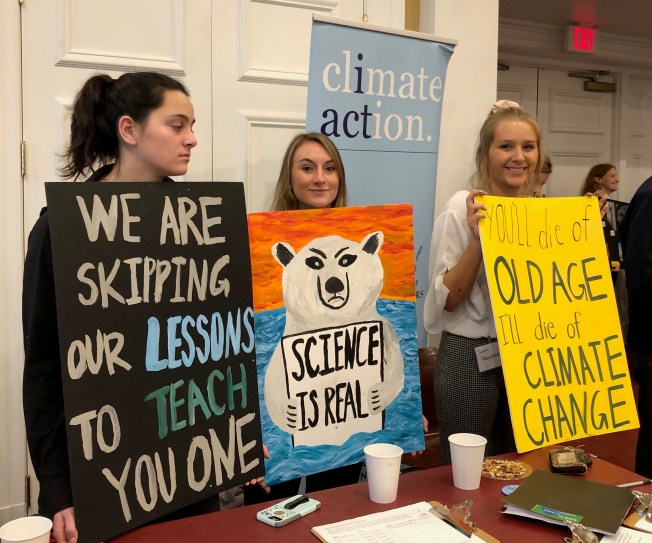
Three young women holding climate action signs

Students joined more than 200 other grassroots activists for a lobby day at the General Assembly on Tuesday. Photo Ivy Main

Climate and energy activists have been pinning their hopes on the 2020 legislative session to produce a framework for transitioning our economy to 100 percent carbon-free energy.

After years of talking big but delivering little in the way of carbon reductions and clean energy, the General Assembly is under pressure to finally deliver.

Much of the initial focus and discussion so far has been on two very different omnibus bills, the Clean Economy Act and the Green New Deal Act. But dozens of other bills also aim to reform Virginia energy law in ways both big (breaking up the monopolies) and small (clarifying HOAs’ abilities to regulate solar panels) — and everything in between (removing barriers to customer solar, taxing fossil fuel investments).

In the coming days I’ll post summaries of many of these bills. But for now, let’s take a look at the two omnibus bills that have energized so many activists. Both have their strong points; both would benefit from strengthening amendments. And both are guaranteed to be better than anything Dominion will put forward in the coming days, if rumors of such a bill prove correct.

The Clean Economy Act

HB1526 (Del. Rip Sullivan, D-Fairfax) and SB851(Sen. Jennifer McClellan, D-Richmond) are the Clean Economy Act put forward by a coalition of renewable energy industry and environmental groups. This is a massive bill, running to 37 pages and covering diverse aspects of the electric sector, and yet it is also surprisingly restrained in its ambitions.

The CEA’s goal is a zero-carbon electricity supply by 2050, a goal that allows nuclear energy to keep its role in the mix, and also one that, after an initial kick, requires a ramp-up of renewable energy of only 3% per year from 2021 to 2050. Utilities also must achieve energy efficiency savings that start slow and creep upwards to a top rate of 2% per year in 2027; utilities generally can’t build new generation unless they first meet the efficiency targets.

The very modest pace of the required investments in renewable energy and efficiency leaves no room for utilities to argue that the targets cannot be met or will cause economic pain. On the contrary, critics can justly complain they are too easy. On the other hand, the bill has lots of elements utilities still won’t like, including an energy storage mandate, community solar, net metering reforms and a limited moratorium on new fossil fuel generation.

The bill includes provisions for joining the Regional Greenhouse Gas Initiative to reduce statewide electric sector carbon emissions 30% by 2030, in accordance with DEQ’s regulations finalized last year. The state would auction carbon allowances, with 50% of proceeds funding energy efficiency programs for low-income, disability, veteran and elderly residents; 16% going to energy efficiency measures on state and local property; 30% for coastal resilience; and 4% for administrative costs.

The renewable portfolio standard provisions look more complicated than they are, but even so, understanding what’s going on is not a job for the meek. First off, note that the RPS only applies to “total electric energy,” which does not mean, you know, total electric energy. The code defines the term to mean total electric energy minus electricity produced by nuclear power. Since nuclear provides about 30% of Virginia’s electric generation, that means the RPS percentages look 30% bigger than they really are. (This is a neat trick Dominion devised years ago to make our voluntary RPS sound more meaningful. People fell for it, which is why our voluntary RPS is widely described as targeting 15% renewable energy by 2025 instead of about 10%.)

Thus, the nominal RPS goal of 41% by 2030 does not mean that Virginia would get 41% of its electricity from renewable energy by 2030. The true percentage would be 41% of 70%, or — oh Lord, now I have to do math — somewhat under 30%.

Not incidentally, 30% by 2030 is the renewable energy target Governor Ralph Northam set in his Executive Order 43 back in September, and that squares pretty well with Dominion’s building plans. (The CEA, however, strives mightily to ensure that less expensive independent developers get a good share of the business.)

The drafters of the Clean Economy Act also chose not to change the code’s existing kitchen-sink definition of renewable energy, foregoing an opportunity to fix the mischief Dominion has got up to lately with what I call its Green Power for Suckers program and the Great Thermal REC Boondoggle. Instead, the RPS provisions exclude biomass and sometimes waste, then limit which specific technologies qualify for each tier of the RPS. The result is that even without changing the definition of renewable energy, biomass and thermal RECs have no place in the CEA mix, municipal waste incineration is limited to existing facilities and old hydro dams will cease to qualify when their contracts run out.

The system of tiers also allows the CEA to prioritize among technologies and project sizes.

  1. Offshore wind has its own tier beginning in 2027, as well as detailed instructions for how it will be developed.
  2. Tier II covers distributed (under 3 MW) Virginia-based wind, solar and anaerobic digestion (presumably meaning biogas from things like pig manure, reflecting Dominion’s deal with Smithfield Foods). This tier is divided into sub-tiers that ensure smaller projects are represented, and 10% of each tier is supposed to be sourced from projects serving low-to-moderate income persons. This tier begins at 3% of the RPS total in 2021, increasing to 9% in 2028, and then bouncing around strangely between 7 and 9% thereafter.
  3. Tier III can be met with Virginia wind, solar, wave, tidal, geothermal or energy from waste (poorly defined, but with a limit on the number of eligible RECs that, I’m told, just covers the output of existing waste incinerators in Virginia), or landfill gas (also from existing landfills and with a limit). These projects don’t have a size limit. Utilities are instructed to issue annual requests for proposals to acquire Tier III resources. Tier III begins at 30% of the RPS, gets as high as 43% in 2030, and then declines as offshore wind in Tier I takes a greater share.
  4. Tier IV can be met with renewable energy certificates from wind, solar and some hydro sources inside or outside Virginia, but within the PJM, the regional transmission organization that coordinates the electric grid in all or parts of 13 states, including Virginia, and the District of Columbia. Tier IV starts at 38% of the RPS total, goes as high as 51% in 2023, and then declines by fits and starts until it is less than 20% in the out years.
  5. The fifth tier consists of the old hydro RECs from PJM with existing purchase contracts. These begin at a whopping 29% of the total but decline rapidly to 6% in 2023 and even less thereafter.

Solar installers who focus on Virginia may be dismayed by the modesty of the in-state requirements. Only Tier II serves distributed generation, and all its sub-tiers and low-income provisions don’t make up for the fact that distributed generation must account for less than 0.3% of total statewide demand in 2021 (3% of the initial 14% goal, adjusted downward for nuclear). This may well be less than the amount of net-metered solar we will have then anyway, with or without the CEA. By 2030, distributed renewables would still account for less than 2.5% of total generation in Virginia, a far cry from the 25% or more that studies have shown is possible.

Meanwhile, Tiers IV and V allow RECs from utility-scale facilities located anywhere within PJM, accounting for more than half the RPS total for the first several years. If utilities choose to buy these out-of-state RECs instead of building new renewable energy in Virginia for this tier, ratepayers will be paying for economic development and jobs in other states, rather than supporting clean energy jobs at home.

(As I’ll describe below, this is an even bigger drawback of the Green New Deal Act.)

Defenders of the PJM RECs approach cite market efficiency and cost; RECs from states that don’t have RPS laws tend to be cheap, and allowing them to qualify for our RPS means projects will get built wherever it is cheapest to do it. That justifies allowing a small percentage of PJM RECs, but not making those RECs the centerpiece.

The CEA already has another, and better, cost-containment measure. If prices of RECs go too high, utilities have an option of paying into a fund administered by the state Department of Mines, Minerals and Energy instead. The money will be used for energy efficiency and renewable energy projects in Virginia benefiting mainly low-income residents. This “deficiency payment” alternative is a standard feature of other states’ RPS laws; it provides a critical cost cap while not letting utilities off the hook.

The CEA also includes community solar provisions and removal of certain barriers to net metering. It raises the net metering cap to 10%, raises the commercial size cap to 3 MW, removes all caps on third-party power purchase agreements, eliminates standby charges on residential and agricultural customers, and allows customers to install facilities large enough to meet 150% of their previous year’s demand. (These net-metering provisions intentionally duplicate five of the eight provisions of the Solar Freedom legislation, HB572, SB710 and others.)

In addition to all of this, the CEA includes a mandate for 2,400 megawatts of energy storage by 2035, with interim targets beginning with 100 MW by the end of 2021.

And just in case Dominion thinks that somehow all this still leaves room for any new fossil fuel plants, the CEA ends with a one-year moratorium on the permitting of any new carbon-emitting generating units that an investor-owned utility might want to build, until the government produces a report with recommendations for achieving a carbon-free electric sector by 2050 at least cost to ratepayers.

If I’d been writing this bill, I would have accelerated the timeline and focused the RPS more on Virginia projects, including rooftop solar. But as a framework this is still a strong bill, and it’s possibly the best we can do this year.

The Green New Deal

HB77 (Del. Sam Rasoul, D-Roanoke) is the Green New Deal Act. Its major features include a moratorium on any new fossil fuel infrastructure; a very aggressive timetable for 100% renewable energy by 2036; energy efficiency standards and a mandate for buildings to decrease energy use; low-income weatherization; job training; a requirement that companies hire workers from environmental justice communities; and assistance for workforce transition for fossil fuel workers.

The GND looks almost nothing like the Clean Energy Act. Its moratorium on new fossil fuel infrastructure is far broader than that in the CEA, covering not just electric-generating plants but also pipelines, refineries, import and export terminals and fossil fuel exploration activities.

It directs DMME to develop a climate action plan that addresses mitigation, adaptation and resiliency, supports publicly-owned clean energy and incorporates environmental justice principles. Forty percent of funds spent under the plan are to be targeted to low-income communities and communities of color.

The GND’s energy efficiency mandates are tougher than the CEA’s, requiring savings of 2.4% per year beginning immediately. These savings will be achieved not just by weatherizing buildings, upgrading heating and cooling, etc., but also by dramatically improving new buildings and requiring installation of rooftop solar wherever feasible.

DMME is also required to set performance benchmarks for scholarships, low-interest loans, job training programs and renewable energy projects to serve EJ communities (“until such date that 100 percent of the energy consumed in such communities is clean energy”), as well as a mandate that 50% of the workforce for energy efficiency and clean energy programs come from EJ communities.

(We should pause here for a reality check. We’re talking about Virginia, where many excellent programs that are already on the books currently go unfunded, and underinvestment in education and social services means companies can’t find enough qualified workers as it is.)

With all its aims of putting the energy transition on steroids, the Green New Deal also has a surprisingly weak RPS. In fact, it appears utilities would not have to build renewable energy projects in Virginia at all — or for that matter, close any fossil fuel plants.

The bill doesn’t actually say so, but it appears to contemplate that the very fast ramp-up of renewable energy to 80% by 2030 can be achieved by utilities buying renewable energy certificates from other states. I’m told Delegate Rasoul has confirmed this is his intention. There is no requirement for utilities to buy from in-state producers.

There is a practical reason for this: given how far behind Virginia is in developing wind and solar, allowing utilities to buy out-of-state RECs is probably the only way to meet an 80% by 2030 target. These RECs are traded on the open market; that makes it easy for utilities to comply, and eliminates reliability concerns because utilities can continue to run their existing fossil fuel plants as usual.

But there’s the rub: the bill contains no requirement to build wind and solar in Virginia, and utilities can run their fossil fuel plants as usual. That’s not the energy transition a lot of people are looking for.

[Update January 23: Dominion did not file a separate bill, but has drafted language it proposes to shoehorn into another bill from a friendly legislator, likely Senator Lucas’ SB998. The proposal is almost comically bad. If it comes with a slogan, it will be “Leave the Driving to Us.” We’ve seen what that means. Watch your wallets.]

Unknown's avatar

Governor Northam’s Executive Order, Dominion Energy’s about-face on offshore wind: is Virginia off to the clean energy races?

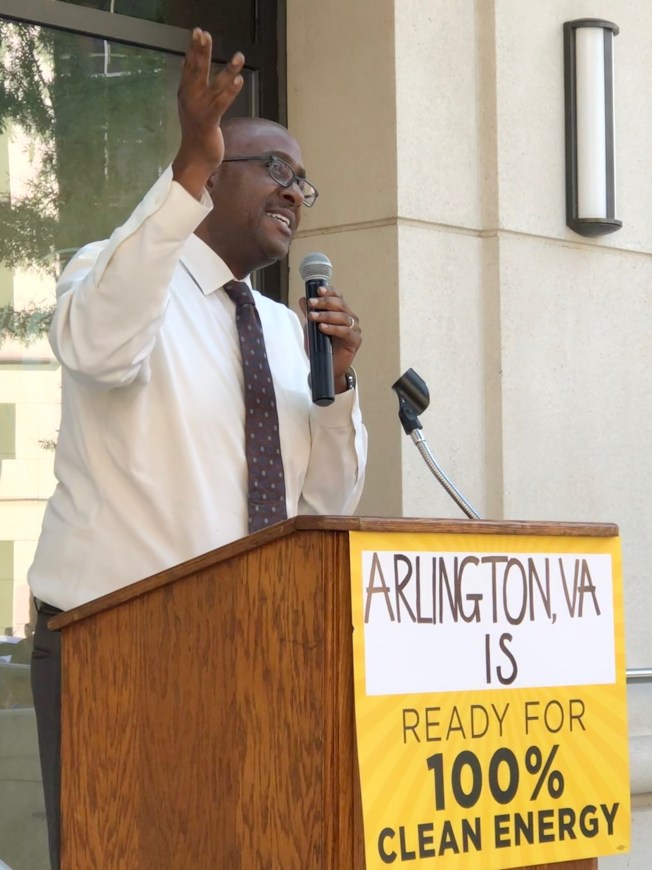
Man at podium

Arlington County Board Chair Christian Dorsey speaking to clean energy supporters on September 21, following the Board’s adoption of its new Community Energy Plan. Arlington’s plan would produce a carbon-free grid 15 years earlier than Governor Northam’s plan, while also tackling CO2 emissions from transportation and buildings.

A single week in September brought an unprecedented cascade of clean energy announcements in Virginia. On Tuesday, September 24, Governor Northam issued an Executive Order aimed at achieving 30 percent renewable energy by 2030 and 100 percent carbon-free energy by 2050, and with near-term state procurement targets.

On Thursday, Dominion Energy announced it would fully build out Virginia’s offshore wind energy area by 2026, in line with one of the goals in the Governor’s order.

Then, Saturday morning, the Democratic Party of Virginia unanimously passed resolutions endorsing the Virginia Green New Deal and a goal of net zero carbon emissions for the energy sector by 2050.

Saturday afternoon, Arlington became the first county in Virginia to commit to 100 percent renewable electricity by 2035, and economy-wide carbon neutrality by 2050.

So is Virginia off to the clean energy races? Well, let’s take a closer look at that Executive Order.

The governor’s order sounds great, but how real are its targets?

Executive Order 43, “Expanding access to clean energy and growing the clean energy jobs of the future,” directs the Department of Mines, Minerals and Energy (DMME) and other state agencies to “develop a plan of action to produce 30 percent of Virginia’s electricity from renewable energy sources by 2030 and one hundred percent of Virginia’s electricity from carbon-free sources by 2050.”

The difference between “renewable energy” and “carbon-free” sources is intentional. The latter term is a nod to nuclear energy, which provides about a quarter of Virginia’s electricity today. Keeping Dominion’s four nuclear reactors in service past 2050 may not prove feasible, economical or wise, but the utility wants to keep that option open.

The order also doesn’t define “renewable energy.” It talks about wind and solar, but it doesn’t specifically exclude carbon-intensive and highly-polluting sources like biomass and trash incinerators, which state code treats as renewable. Dominion currently meets Virginia’s voluntary renewable energy goals with a mix of old hydro and dirty renewables, much of it from out of state. Dominion will want to keep these subsidies flowing, especially for its expensive biomass plants, which would undermine the carbon-fighting intent of the order.

Finally, there is the question whether all of the renewable energy has to be produced in Virginia. Old Dominion Electric Cooperative, which supplies electricity to most of the member-owned cooperatives in the state, buys wind energy from outside Virginia. Surely that should count. But what if a Virginia utility just buys renewable energy certificates indicating that someone, somewhere, produced renewable energy, even if it was consumed in, say, Ohio? Those had better not count, or we’ll end up subsidizing states that haven’t committed to climate action.

What will DMME’s plan look like?

In describing what should be in the action plan, Northam’s order largely recites existing goals and works in progress, but it also directs DMME and the other agencies to consider going beyond existing law and policy to achieve specific outcomes:

  • Ensure that utilities meet their existing commitments to solar and onshore wind energy development, including recommending legislation to reduce barriers to achieving these goals. These goals include 500 MW of utility-owned or controlled distributed wind and solar. Customer-owned solar is not mentioned.
  • Make recommendations to ensure the Virginia offshore wind energy area is fully developed with as much as 2,500 MW of offshore wind by 2026.
  • Make recommendations for increased utility investments in energy efficiency, beyond those provided for by the passage of SB 966 in 2018, the Grid Modernization Act.
  • Include integration of storage technologies into the grid and pairing them with renewable generation, including distributed energy resources like rooftop solar.
  • Provide for environmental justice and equity in the planning, including “measures that provide communities of color and low- and moderate-income communities access to clean energy and a reduction in their energy burdens.”

Can the administration do all that?

Nothing in this part of the order has any immediate legal effect; it just kicks off a planning process with a deadline of July 1, 2020. Achieving some of the goals will require new legislation, which would have to wait for the 2021 legislative session.

That doesn’t mean the governor will sit on his hands until then – delay is the enemy of progress — but it could have the effect of slowing momentum for major climate legislation in 2020.

Cynics, if you know any, might even suggest that undercutting more aggressive Green New Deal-type legislation is one reason for the order.

A second part of Northam’s order, however, will have immediate effect, limited but impressive. It establishes a new target for state procurement of solar and wind energy of 30 percent of electricity by 2022, up from an 8 percent goal set by former Governor Terry McAuliffe. This provision will require the Commonwealth to negotiate amendments to the contract by which it buys electricity for state-owned facilities and universities from Dominion. The order also calls for at least 10 MW annually of power purchase agreements (PPAs) for on-site solar at state facilities, and requires agencies to consider distributed solar as part of all new construction.

State facilities will also be subject to new energy savings requirements to reduce state consumption of electricity by 10 percent by 2022, measured against a 2006 baseline, using energy performance contracting.

These provisions do for the state government what the action plan is intended to do for Virginia as a whole, but 8 years faster and without potential loopholes.

Thirty percent by 2030? Gee, where have we heard that before?

Just this spring, Virginia’s Department of Environmental Quality finalized regulations aimed at lowering carbon emissions from Virginia power plants by 30 percent by 2030. These numbers look so similar to Northam’s goal of 30 percent renewable energy by 2030 that it’s reasonable to ask what the order achieves that the carbon rule doesn’t. (This assumes the carbon regulations take effect; Republicans used a budgetary maneuver to stall implementation by at least a year.)

The answer goes back to the reason Dominion opposed the carbon rule. Dominion maintains—wrongly, says DEQ and others—that requiring lower in-state carbon emissions will force it to reduce the output of its coal and gas plants in Virginia and buy more power from out of state. That, says Dominion, would be bad for ratepayers.

As the company’s August update of its Integrated Resource Plan showed, Dominion would much prefer a rule requiring it to build more stuff of its own. As it turns out, that would be even more expensive for ratepayers, but definitely better for Dominion’s profitability.

So legislation to achieve Governor Northam’s renewable energy goals would take the pain out of the carbon regulations for Dominion. Whether it might also lower carbon emissions beyond DEQ’s 30 percent target remains to be seen.

The 2050 carbon-free goal, on the other hand, goes beyond anything on the books yet. Dominion’s corporate goal is 80 percent carbon-free by 2050, and it has no roadmap to achieve even that.

Is there anything in the order about pipelines?

No. In fact, there is no mention of any fossil fuel infrastructure, though shuttering coal and gas plants is the main way you cut carbon from the electricity supply.

That doesn’t mean Northam’s order leaves the Mountain Valley and Atlantic Coast pipelines in the clear. If Dominion joins Duke Energy in its pledge to go to zero carbon by 2050, the use of fracked gas to generate electricity in Virginia and the Carolinas has to go down, not up, over the coming decades (Duke’s own weird logic notwithstanding). As word gets around that Virginia is ditching fossil fuels, pipeline investors must be thinking about pulling out and cutting their losses.

What about Dominion’s offshore wind announcement?

I saved the best for last. For offshore wind advocates like me, Dominion’s announcement was the really big news of the week: it’s the Fourth of July, Christmas and New Years all at once. Offshore wind is Virginia’s largest long-term renewable energy resource opportunity, and we can’t fully decarbonize without it.

Dominion has taken a go-slow approach to offshore wind ever since winning the right to develop the federal lease area in 2013. Until this year, it refused to commit to anything more than a pilot project. The two, 6-MW turbines are currently under construction and will be installed next summer.

Then in March, Dominion CEO Tom Farrell told investors his company planned to build one commercial offshore wind farm, of unspecified size, to be operational in 2024. In its Aug. 28 resource plan update filed with the state regulators, Dominion Energy Virginia included for the first time an 880-MW wind farm, pushed back to 2025.

A mere three weeks later, the plan has changed to three wind farms, a total of 220 turbines with a capacity of 2,600 MW, with the start date moved up again to 2024, and all of them in service by 2026, exactly Northam’s target (except his was 2,500 MW).

Certainly the case for developing the full lease area has been improving at a rapid clip. Costs are falling dramatically, and it appears Dominion expects to maximize production by using massive 12 MW turbines, which did not even exist until this year.

But if the situation has changed that dramatically from August to September, all I can say is, I can’t wait to see what October brings.

Maybe it will bring answers to questions like who will build these wind farms, who will pay for them, and how Dominion expects to meet this accelerated timeline. As Sarah Vogelsong reports, several northeastern states have wind farms slated for development in the early-to-mid-2020s, too. Industry members are already worried about bottlenecks in everything from the supply chain to installation vessels, workforce training and the regulatory approval process.

That is to say, we’re coming to the party pretty late to expect good seats. But hey, it’s going to be a great party, and I’m glad we won’t miss it.

This article originally appeared in the Virginia Mercury on September 27, 2019.

Unknown's avatar

Ignoring state climate rules, Dominion decides what carbon regulations should look like

woman in dinosaur costume holding sign reading clean energy now

Four out of five dinosaurs agree. The fifth, that would be Dominion. Photo courtesy of Sierra Club Virginia Chapter.

For several years now, Dominion Energy Virginia has factored into its plans an assumption that electricity from carbon-emitting power plants will eventually include a cost reflecting CO2’s role as the primary driver of global warming. Dominion says it has even integrated this into its corporate goals, targeting an 80 percent reduction in CO2 emissions by 2050.

That promise may be more propaganda than corporate lodestar, but in any case the utility’s Integrated Resource Plans regularly point to the probability of future carbon regulations as a reason to build new renewable energy facilities and close old coal plants.

Planning for constraints on CO2 emissions proved wise this spring when Virginia’s Department of Environmental Quality finalized a state carbon cap-and-trade program. The DEQ regulations call for Virginia power plant owners to trade carbon allowances with those in the member states of the Regional Greenhouse Gas Initiative (RGGI). A Republican budget maneuver has delayed implementation of the new rules, but once they take effect they are expected to hasten the retirement of expensive old coal plants and support investments in new renewable energy projects.

But it’s not the DEQ regulations that Dominion is planning around. The utility’s 2019 update to its 2018 IRP, filed with the State Corporation Commission on Aug. 29, treats the DEQ regulations as hypothetical. Instead, it posits some unspecified future federal carbon regulations that, apparently, it would like much better.

The update describes three alternative scenarios, down from five in the 2018 IRP. The first is a “base case” that assumes no carbon emission constraints. The second assumes the state carbon limits take effect as well as some future federal regulations, and the third assumes federal (but not state) limits. However, the cover letter makes it clear that only the third scenario actually describes what Dominion intends to do. As it happens, that is the most expensive— and most profitable —plan.

The primary feature of the base case is that it keeps some old coal units running that will be closed in the other scenarios. According to Dominion, this makes it the least-cost approach to meeting electricity demand. Whether that’s true is a matter of dispute; these units hardly run at all any more, and experts for environmental organizations in the IRP hearing testified that retiring them will save money for customers.

It suits Dominion’s political strategy, however, to pretend that coal remains a low-cost option. This fiction makes coalfield legislators happy, and it allows Dominion to blame rising electricity rates on environmental regulations instead of on its own profligate spending and excess profits.

But Dominion Energy made a big bet on fracked gas, not coal. It won’t fight to keep outdated coal plants online and spewing out CO2 if it’s cheaper to close them. Gas plants are another matter. Dominion Energy’s massive investments in gas transmission and storage make the company keen to keep Virginia gas plants running full-tilt, and to build as much new gas generation as possible.

For that reason, Dominion hates the DEQ regulations. It warns the regional cap and trade plan will result in power from outside the state replacing electricity from Dominion’s combined-cycle gas plants, which provide baseload power. Dominion argues this will lead to higher, rather than lower, carbon emissions as well as higher consumer costs.

DEQ and others disagree on both counts, though the SCC takes Dominion’s view. So although Dominion labels its second scenario RGGI-compliant, it treats the DEQ regulations as hypothetical, as if Gov. Ralph Northam might change his mind any day now and order them scrapped.

Instead, Dominion offers its third scenario, positing only unspecified and (with Trump as president) truly hypothetical future federal carbon regulations. In Dominion’s fantasy, a federal plan will be strong enough to support Dominion building profitable new renewable energy and storage projects, but not so strong that it can’t also build a bunch of new gas plants.

Ergo, that’s what Dominion is shooting for. The cover letter accompanying the IRP update makes it clear that Dominion is already pursuing projects that appear only in the third plan. These include a 300 MW pumped hydro storage project that will take a decade to develop and cost upwards of $1.5 billion (if indeed it pans out), and an 852 MW offshore wind project slated for 2025, a year later than what Dominion told investors in March.

The third scenario also includes more than 3,000 MW of solar between now and the end of 2034, but that’s actually a whole lot less solar than under the RGGI scenario. Even the base case has more solar. Go figure.

Still missing is the rest of the 2,000 MW of offshore wind that the Virginia lease area can support. Also still missing are thousands more megawatts of wind and solar that Virginia would need if, instead of a gas-friendly plan, the federal government were to enact regulations actually sufficient to the climate crisis.

Dominion has not even modeled that possibility. The update’s third scenario still includes 10 new fracked-gas combustion turbines, a total of 2,425 MW, with two units coming online every year from 2022 through 2026.

Maybe the Dominion executive team thinks it knows more than the rest of us do about the federal climate plan we’ll see once Donald Trump is sent packing in 2020. More likely, Dominion is simply using its IRP carbon assumptions to bolster its case for more spending and higher profits.

In which case, the more things get updated, the more they stay the same.


This article originally appeared in the Virginia Mercury on September 13, 2019.

Unknown's avatar

Immigrants aren’t wrecking our environment, and blaming them won’t save it

people protesting with a sign

Protesting President Trump’s immigration policies in Lafayette Square, Washington DC. Photo by Ivy Main

Chances are, the people you know who call themselves environmentalists also celebrate racial diversity and think the U.S. should welcome immigrants and refugees. What, then, are we to make of white nationalists who invoke environmental concerns to justify acts of violence against immigrants?

Recent news articles tell us the suspect in the El Paso massacre cited overpopulation as a reason for killing 21 shoppers at a Walmart in the Texas border city. Latinos make up more than 82% of El Paso’s population, many of them Mexican-born. The suspect, Patrick Crusius, is said to have written a “manifesto” decrying Americans’ over-exploitation and degradation of natural resources.

“The American lifestyle . . . is destroying the environment of our country,” he wrote, before concluding, bizarrely, that therefore he should kill non-Americans.

Crusius is said to have drawn inspiration from an earlier mass shooting in Christchurch, New Zealand, where a white nationalist killed 51p eople at two mosques in the name of “eco-fascism.” He defined the term as “ethnic autonomy for all peoples with a focus on preservation of nature and the natural order.”

As a member of the Sierra Club for almost 40 years, I find this sounds familiar. Starting in the late 1980s, anti-immigrant forces tried to take over the environmental group, in an effort that wasn’t fully exposed and defeated until 2004. I remember the critical board election; the anti-immigration candidates made a plausible case for overpopulation as a root cause of much of what ails the environment, then and now. If you have fewer people around, after all, there’s only so much harm they can do.

Only, of course, the problem wasn’t—and isn’t—immigrants, it was U.S. laws that allowed native-born Americans to pollute our land, air and water. Keeping out immigrants isn’t a solution, it’s a non-sequitur. Realizing this, Sierra Club members firmly rejected the anti-immigrant slate of board candidates

White nationalists aren’t just wrong in blaming immigrants for environmental ills. They also refuse to acknowledge that today’s most serious environmental challenges are global. Climate change, ocean acidification, the rapid loss of species—to name just a few—can’t be stopped by building walls and evicting non-white people.

This may be one reason many right-wing voters still reject the scientific consensus that climate change is a human-caused problem. The qualities most treasured by much of the radical right—self-sufficiency, male supremacy, physical strength, proficiency with weapons—aren’t useful in solving climate change. It’s human nature to disregard a problem you don’t think you have the tools to tackle.

Managing global problems requires international cooperation, respect for others, patience in the face of provocation, and empathy for those who are suffering. People of faith, humanists, and adults in general recognize these as higher-order virtues, but they are the first to be dispensed with in a zero-sum situation. People who believe the survival of their way of life requires other people to suffer do not ask themselves, “What would Jesus do?”

There is indeed a case for despair about the health of the planet. Bad news dogs us daily, from the deforestation of the tropics and the collapse of insect and amphibian populations, to the intensification of hurricanes and the plague of plastic waste. And then, of course, there’s the possibility that we have now passed a critical greenhouse gas tipping point and entered an age of runaway global warming.

But it isn’t fear of nature’s wrath that keeps me and other climate activists up at night. It’s the steady erosion of our conviction that we humans have it in us to rise to the enormous challenges before us.

Across the world, people are responding to resource scarcity and an increase in refugees not with compassion and generosity but with anger and distrust. Nationalism is confused with patriotism. Identity politics replaces communitarian values. Democracy is in retreat.

This is particularly maddening because, in fact, we know how to address the environmental challenges we face. We have the technology to quit fossil fuels. We can adapt to sea-level rise. We can make room for climate refugees. We can stop deforestation, and even reclaim deserts for trees. We don’t need to poison the earth to grow crops. We could end plastic waste tomorrow. We can’t bring back the species we’ve lost (at least not many of them), but we can do a much better job of protecting the ones we have left. Even reversing the rise in atmospheric carbon is conceivable, if we undertake to do it.

The question isn’t whether humans can do these things, it’s whether we will. Americans should be the ones leading the way, negotiating treaties with other nations, funding research, implementing solutions that benefit everyone, and keeping our doors open to the dispossessed.

That’s the sort of thing Americans used to do—not always, admittedly, but in hindsight we recognize those as our finest moments. We desperately need this sense of purpose again now, when the threats we face are existential.

But to do that, we have to reject a foreign policy grounded in selfishness and domestic policies that feed racism, xenophobia, and climate-science denialism here at home. There are no “other” people we can exclude, neglect or destroy to save ourselves.

There is only all of us, all across the world, and we are all in this together.

This article first appeared in the August 22, 2019 edition of the Virginia Mercury.

Unknown's avatar

Dominion’s plans to tackle global warming are mostly hot air

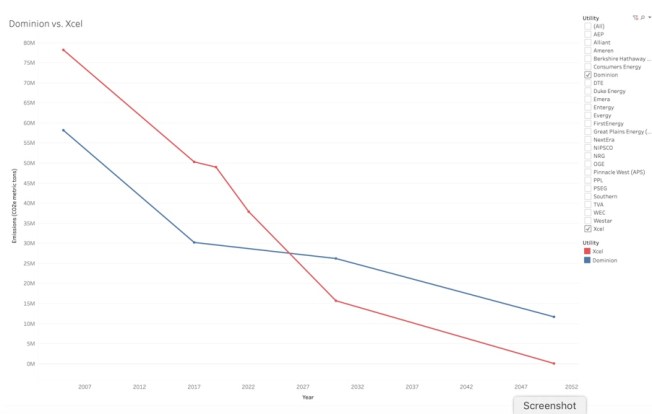
Graph compares CO2 reductions by Dominion Energy and Xcel

Dominion (blue line) starts out with lower total CO2 emissions than the larger Xcel (red line), but after switching out old coal for new fracked gas, Dominion’s carbon-cutting slows to a crawl, while Xcel’s keeps going.

My readers will be shocked, shocked to learn that contrary to Dominion Energy’s propaganda, the company plans to cut carbon emissions by only about 1% per year between now and 2030, a slower pace than it has achieved in the past.

According to an analysis of Dominion’s own data by the Energy and Policy Institute, “the company reduced its carbon emissions at an average rate of 4% per year from 2005 to 2017, mostly by retiring coal plants in the later years of that period. That reduction rate plummets to 1% per year between now and 2030 under Dominion’s new goal.”

“The company’s reduction pace would increase again between 2030 and 2050 in order to meet its later goal [of 80% carbon reduction from 2005 to 2050], though only to about 2.8%, still lower than its pace from 2005 to 2017.”

Fracked gas investments are both the reason Dominion has brought carbon emissions down as much as it has, and the reason it can’t keep up the pace. Closing expensive, old coal plants is an easy way to cut carbon and save money at the same time. Replace the output of a coal plant with the same output from a gas plant, and you’ve slashed carbon emissions almost in half overnight.

But it’s not such a great trick if it requires you to build a new gas plant with a useful life of 30 years. That makes it much harder to decarbonize further by replacing gas with carbon-free renewables.

This is exactly Dominion Energy Virginia’s problem. A comparison of the utility’s 2013 and 2018 integrated resource plans shows coal fell from 22% of the total energy mix to 18%, while natural gas jumped from 17% to 32%, displacing purchased energy as well as coal.

The company achieved this feat with three new, huge combined-cycle gas plants it brought online just in the past five years: Warren (1,370 MW) in 2014, Brunswick (1,358 MW) in 2016, and Greensville (1,588 MW) in 2018. Together these plants increased Dominion’s natural gas generating capacity by more than 50%.

Not only did Dominion stick utility ratepayers with these big new gas plants, its parent company promised investors the utility will burn enough gas to justify spending $7 billion-plus on the Atlantic Coast Pipeline. Decarbonizing violates the business plan.

Dominion is in good company — by which I mean bad company — in making bold claims about carbon cuts that prove inadequate on closer inspection. According to the Energy and Policy Institute, the other southeastern monopoly utilities, Duke, Southern, and NextEra, are all using the same playbook.

Other utilities have avoided the gas trap. National leaders like Minneapolis-based Xcel, Consumers Energy in Michigan, and NIPSCO in Indiana are replacing coal with renewables and leapfrogging over new gas. That puts them in a position to deliver on their promises of rapid emissions cuts.

The Energy and Policy Institute analysis pointedly contrasts Xcel with Dominion:

Xcel Energy is one of the country’s largest electric utilities, with operations in eight states, primarily Colorado and Minnesota. Xcel pledged in December 2018 to reduce its carbon emissions 80 percent by 2030 from 2005 levels, and to fully decarbonize by 2050. Xcel’s new goal is an upgrade of a previous one to cut carbon emissions 60 percent by 2030. It says it plans to lean heavily on renewable energy and batteries will save its customers money. In a detailed report released in March, Xcel says its goals fall within the range compatible with Intergovernmental Panel on Climate Change scenarios that achieve either a 2°C or 1.5°C target.

Graphing Xcel’s trajectory vs. Dominion’s is telling: the companies’ decarbonization pathways tracked one another closely from 2005 until 2017. At that point, Xcel’s trajectory starts turning sharply downward, while Dominion’s flattens out.

Another contrast you’ll notice between Xcel and Dominion: Dominion has no plans to get to zero emissions, ever. It’s hard not to conclude that the company’s leaders are simply putting the best climate face on a gas strategy that hasn’t changed.

Eventually, though, the falling costs of wind and solar and the public’s demand for climate action will force Dominion to follow Xcel and others into deep decarbonization.

It may not be the business plan, but it is the future.

This post was originally published in the Virginia Mercury on July 15, 2019. 


Unknown's avatar

In a last-ditch effort to stop climate regulations, Virginia Republicans try legislating by budget amendment

Dominion Energy Virginia's Chesterfield Coal Plant

Dominion’s coal-burning power plant in Chesterfield County.

The Northam administration is finalizing regulations to reduce the carbon pollution from Virginia power plants by 30 percent between 2020 and 2030. The Department of Environmental Quality (DEQ) estimates the move will cost consumers only about a dollar per month while accelerating the transition to clean energy.

Instead of celebrating this modest progress on climate action, Virginia Republicans have been fighting it every step of the way. Their latest effort takes the form of two amendments to the state budget that would effectively prevent Virginia from joining the Regional Greenhouse Gas Initiative (RGGI), a nine-state platform for trading carbon emission allowances. It would also stop the Commonwealth from participating in a new compact focused on reducing carbon emissions in transportation.

Virginia law gives the governor a line-item veto in the budget, which requires a two-thirds majority in the legislature to override. But for reasons known only to himself, Governor Northam has instead chosen to remove the amendments by offering his own amendments, which the General Assembly can reject by a simple majority vote.

This cues up the issue for a battle on the House floor on Wednesday, when the legislature returns for the “veto session.” The governor needs the votes of all the Democrats and at least two Republicans to prevail in the House, and those of at least one Republican and the Lieutenant Governor to prevail in the Senate.

Earlier this year, Republicans voted almost unanimously for legislation that, like the budget amendment, would have stopped Virginia from participating in RGGI. Northam vetoed that bill, saying it was bad policy and violated the state constitution. His action probably didn’t persuade any Republicans that he was right and they were wrong.

Still, there are reasons why a Republican who voted for the anti-RGGI bill might support the governor in the budget vote.

One is that using the budget to achieve a policy outcome you couldn’t reach through the legislative process makes a lot of legislators uneasy; it feels like bad governance.

Another is that the anti-RGGI bill was for show; everyone knew the governor would veto it. Moderate Republicans who privately acknowledge the urgency of the climate crisis were able to use their vote to demonstrate party loyalty without actually interfering with the DEQ program.

They bill vote also followed surprise testimony from State Corporation Commission staff members who claimed that trading with RGGI would cost Virginia households much more than DEQ modeling showed. The staff members provided no evidence, but hard-line Republicans saw the threat of rate increases as a gift horse they weren’t going to look in the mouth.

DEQ staff did look it in the mouth, however, and found a number of bad teeth.  DEQ Chief Deputy Chris Bast lambasted the SCC staff for coming into the discussion late, using incorrect assumptions, and failing to show their work.

The SCC staff members followed up after the end of the session with a letter stating their reasoning, though still without showing their math. The late release of the letter prompted Delegate David Toscano to write an editorial in the Washington Post decrying the staff members’ overtly political tactics as well as criticizing their analysis.

In its response to comments on the proposed carbon regulations, DEQ lists several flaws in the SCC staff’s analysis, ranging from significantly overestimating program costs to assuming that Virginia coal plants are immune to the economic stressors affecting coal plants across the U.S.

With time to reflect, many legislators will conclude the evidence supports DEQ. But more to the point, some Republicans may realize that holding Virginia back is bad economics and bad policy.

An analysisreleased this month shows wind and solar could replace 74 percent of coal plants nationwide at an immediate savings to customers; by 2025, that number will be 86 percent. Major utilities like Xcel and MidAmerican have targeted 100% renewable energy, saving money for customers in the process.

Meanwhile, voters across the country—and in Virginia—support renewable energy over fossil fuels by wide margins. Even polling by conservative groups shows strong support for clean energy.

It simply makes no sense for Virginia to opt out of the clean energy future. No doubt a lot of Republicans will vote to do it anyway in hopes of denying a win to a Democratic governor. But if they do, they run the risk of their constituents holding them accountable come November.

This article originally appeared in the Virginia Mercury on April 2. It has been updated to include DEQ’s response to the SCC staff’s letter.

Update April 4: Disappointingly but not surprisingly, the Governor’s amendments were defeated along party lines yesterday. If he wants to keep the carbon regulations moving towards implementation, he will have to exercise his veto authority. There have been questions raised about his authority to do that, so stay tuned. 

Unknown's avatar

Bills that passed, bills that failed, and how the General Assembly failed Virginia again on clean energy

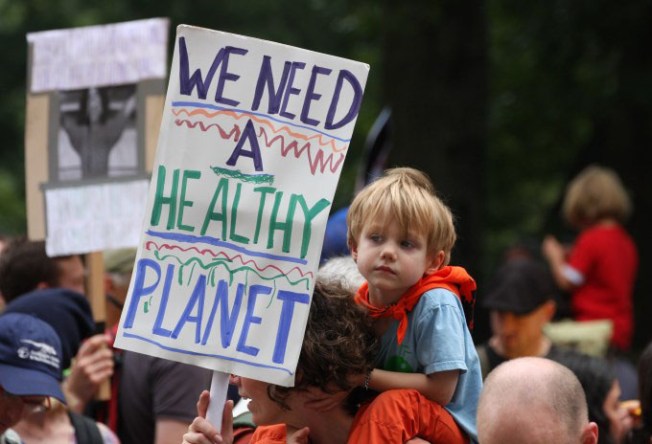
Child on father's shoulders with sign reading "We need a healthy planet"

Photo credit Sierra Club.

When the General Assembly session opened January 9, legislators were presented with dozens of bills designed to save money for consumers, lower energy consumption, provide more solar options, and set us on a pathway to an all-renewables future. Almost none of these measures passed, while bills that benefited utilities kept up their track record of success.

Before I review the individual bills, it’s worth considering for a moment how very different Virginia’s energy future would look if the best of 2019’s bills had passed. In that alternate universe, Virginians could have looked forward to:

  • A freer and more open market for renewable energy at all levels, including unrestricted use of third-party financing for renewable energy, an end to punitive standby charges and arbitrary limits on customer solar, and new opportunities for local governments to install solar cost-effectively.
  • A mandate for utilities to achieve real energy efficiency results, not just to throw their customers’ money at programs.
  • An energy efficiency revolving fund to offer no-interest loans to local governments, public schools and public institutions of higher learning.
  • The right to choose an electricity supplier for renewable energy, instead of being restricted to more expensive and less desirable utility offerings (if available at all).
  • Tax credits for solar on landfills, brownfields and economic opportunity zones.
  • Rebates for low and moderate-income Virginians who install solar.
  • A new revenue source for spending on climate adaptation efforts, energy efficiency programs, and coalfields transition, made possible bythe auctioning of carbon allowances to power plants as part of joining the Regional Greenhouse Gas Initiative; half the lowered carbon emissions would have been achieved through installing wind and solar.
  • Movement towards an eventual phase-out of fossil fuels.
  • Stronger assurance that customers won’t be overcharged for the use of the Atlantic Coast Pipeline or other fracked-gas pipelines owned by utility affiliates.

But in a legislature still ruled by Dominion Energy and Republicans (in that order), what we mostly got instead were bills letting utilities charge their electricity customers for speculative development projects (HB 1840, HB 2738 and SB 1695) and rural broadband infrastructure (HB 2691), and another that would actually prevent the state from pursuing carbon reduction regulations (HB 2611).

A year ago legislators agreed that Dominion and Appalachian Power should propose hundreds of millions of dollars in energy efficiency programs, as a way to sop up some of those companies’ excess earnings instead of the unthinkable alternative of taking the money away from them. This year subcommittees killed bills (HB 2294, HB 1809) that would have insisted those programs be effective. (HB 2294 would have also made last year’s renewable energy goals mandatory.)

The energy efficiency bills that did pass were far more modest: making it harder for the SCC to reject utility-proposed programs (HB 2292 and SB 1662) and establishing a stakeholder group to provide input on programs (HB 2293).

“Energy Freedom,” and other similar legislation aimed at opening up the rooftop solar market, died on party-line votes in committee.

In fact, the party-line vote became a theme whenever bills came up that Dominion opposed. Anyone sitting through the House Commerce and Labor subcommittee hearing, watching one customer solar bill after another be unceremoniously killed, might have wondered if the vote buttons had gotten stuck.

The only significant renewable energy legislation to make it through the committee gauntlet was a long-negotiated Rubin Group bill that gives customers of Virginia’s rural electric cooperatives more opportunities to install solar, at the cost of accepting future new demand charges (HB 2547 and SB 1769). Whether it works in favor of all coop solar customers or not remains an open question. The coops would not provide advocates with any cost modeling and referred us to the solar industry trade association MDV-SEIA, which told us they couldn’t provide it either because of a confidentiality agreement within the Rubin Group.

But the bill does raise the limit on the amount of customer solar that can be built in those parts of the state served by rural electric coops. Customers of Dominion and APCo didn’t get even that much, though one bill—from a Republican—calls for those utilities to provide a total of $50 million in assistance to low-income, elderly and disabled customers for solar and energy efficiency. HB 2789 marks one of the rare bright spots of the 2019 session.

Two other minor renewable energy bills could make incremental progress for a handful of municipalities (HB 2792 and SB 1779) and school systems (HB 2192 and SB 1331).

And that, I’m sorry to say, is pretty much it for energy legislation this year.

Below is a final rundown of the bills that passed, followed by the ones that didn’t. Links in the bill numbers will take you to their summary pages in the Legislative Information Service. The summaries there should not be relied on, because amendments may make a bill quite different by the time it gets passed (or dies). Follow the links on a page to read the legislation or see vote results. Many of the committee hearings were recorded on video.

Bills that passed: renewable energy

HB 2192 (Rush) and SB 1331 (Stanley) is a school modernization initiative that includes language encouraging energy efficient building standards and net zero design. It also encourages schools to consider lease agreements with private developers (apparently there is one particular North Carolina firm that wants this). It does not provide for the more common use of third-party power purchase agreements. It has nice (but not mandatory) language on net zero schools. It allows leases with private developers who will construct and operate buildings and facilities. It permits public schools to contract with utilities for solar energy as part of the school modernization project. An amendment added language requiring that renewable energy facilities must be on school property and cannot be used to serve any other property. PPAs are not mentioned. Ambiguous language in these provisions may cause problems for schools. Both bills passed the House and Senate almost unanimously with Senator Black the only naysayer.

HB 2547 (Hugo) and SB 1769 (Sturtevant) make changes to the net metering program for customers of electric cooperatives. The overall net metering cap is raised from the current 1 percent to a total of 5%, divided into separate buckets by customer type and with an option for coops to choose to go up to 7%. Customers will be permitted to install enough renewable energy to meet up to 125% of previous year’s demand, up from 100% today. Third-party PPAs are generally legal for tax-exempt entities, with a self-certification requirement. However, the coops will begin imposing demand charges on customers with solar, to be phased in over several years, replacing any standby charges. This bill was negotiated between the coops and the solar industry via the “Rubin Group.” An amendment to the bill establishes a stakeholder group for further discussions with Dominion and APCo on net metering, a prospect that will appeal only to eternal optimists and amnesiacs who don’t remember the past five years of time-wasting, fruitless negotiations. SB 1769 passed both the Senate and House unanimously. HB 2547 passed the House unanimously and the Senate 36-4, with Black, Chase, Stuart and Suetterlein voting no this time, with no discernible reason for the change.

HB 2621 (Ingram) and SB 1398 (Stanley) authorize a locality to require the owner or developer of a solar farm, as part of the approval process, to agree to a decommissioning plan. This was a negotiated Rubin Group bill. SB 1398 was incorporated into SB 1091 (Reeves), which was amended to conform to the compromise language of HB 2621.

HB 2741 (Aird) establishes a rebate program for low and moderate-income households that install solar. Amended so it retains the structure of the program but removes funding. As amended it passed both House and Senate.

HB 2792 (Tran) and SB 1779 (Ebbin) establish a 6-year pilot program for municipal net metering for localities that are retail customers of investor-owned utilities. The initial bill negotiated with the utilities was much more limited than most localities wanted; further amendments whittled it down to a point where it won’t help localities with significant projects like landfill solar. However, we are told it will be useful for a few small on-site projects that don’t need PPAs. Even with the utilities on board, 21 House Republicans and one senator (Sutterlein) voted against the House bill, though only 12 House Republicans were hardcore enough to vote against the identical Senate bill when it crossed over. 

HB 2789 (O’Quinn) requires Dominion and APCo to develop pilot programs to offer solar and energy efficiency incentives to low-income, elderly and disabled customers. The energy efficiency money, totaling $25 million, is to come out of the amount the utilities are required to propose in efficiency spending under last year’s SB 966. The renewable energy incentives, also $25 million, cannot come out of that spending; the legislation is silent on how it will be paid for. Passed the House 90-9, with only Republicans as holdouts. Passed the Senate 37-3, with only Black, Stuart and Suetterlein in opposition.

Bills that passed: energy efficiency

HB 2292 (Sullivan) and SB 1662 (Wagner), dubbed the “show your work bill,” requires the SCC to provide justification if it rejects a utility energy efficiency program. As amended, the bills passed almost unanimously.

HB 2293 (Sullivan) establishes a stakeholder process to provide input on the development of utility energy efficiency programs. Passed both houses unanimously.

HB 2332 (Keam) protects customer data collected by utilities while allowing the use of aggregated anonymous data for energy efficiency and demand-side management efforts. A substitute changed the bill to one requiring the SCC to convene a Data Access Stakeholder Group to review customer privacy and data access issues. As amended, the bill passed both Houses unanimously. 

SB 1400 (Petersen) would have removed the exclusion of residential buildings from the Property Assessed Clean Energy (PACE) program, which allows localities to provide low-interest loans for energy efficiency and renewable energy improvements on buildings. After passing the Senate unanimously, the bill was amended in the House to remove the residential PACE authorization (it does expand PACE to include stormwater improvements). As amended, it passed both houses unanimously. It’s probably cheating putting this one in the“passed” category, but I needed the win. 

Bills that passed: energy transition and climate

HB 2611 (Poindexter) would prohibit Virginia from joining or participating in RGGI without support from two-thirds of the members of the House and Senate, making it sort of an anti-Virginia Coastal Protection Act. Passed the House on a 51-48 party-line vote. Passed the Senate on a 20-19 vote. Only one Republican, Jill Vogel, voted against it. The Governor is expected to veto it.

HB 2747 (Kilgore) and SB 1707 (Chafin) create a Southwest Virginia Energy Research and Development Authority “for the purposes of promoting opportunities for energy development in Southwest Virginia, to create jobs and economic activity in Southwest Virginia consistent with the Virginia Energy Plan prepared pursuant to Chapter 2 (§ 67-200 et seq.), and to position Southwest Virginia and the Commonwealth as a leader in energy workforce and energy technology research and development.” Among the powers listed are promotingrenewable energy on brownfield sites, including abandoned mine sites, and supporting energy storage, including pumped storage hydro. Fossil fuel projects are not listed, but are also not excluded. Both bills passed unanimously.

Bills that passed: other utility regulation

HB 1840 (Danny Marshall) allows utilities to develop transmission infrastructure at megasites in anticipation of development, charging today’s customers for the expense of attracting new customers. The legislation was amended to change the language to the nicer-sounding “business park,” but it continues to allow utilities to recover costs for constructing transmission lines and substations to serve these speculative projects. It passed unanimously in the Senate and 82-18 in the House, with mainly the newer Democrats voting no.

HB 2477 (Kilgore) originally would have eliminated one of the few areas of retail choice allowed in Virginia by preventing large customers from using competitive retail suppliers of electricity, including for the purpose of procuring renewable energy, in any utility territory with less than 2% annual load growth. A substitute bill removed most of the bad provisions and confined its operation to APCo, but also left it incomprehensible, so I can’t possibly tell you what it does. As far as I was able to determine, no customers opposed the final bill, which passed the House and Senate unanimously.

HB 2691 (O’Quinn) originally would have established a pilot program for electric utilities to provide broadband services in underserved areas, and raise rates for the rest of us to pay for it. The bill was amended so utilities can only provide the capacity on their lines to private broadband suppliers. The investment is eligible for recovery as an electric grid transformation project under last year’s SB 966, presumably so it is paid for out of utility overearnings instead of a new rate increase.The amended bill passed both houses almost unanimously.   

HB 2738 (Bagby) and SB 1695 (Wagner) authorizes utilities to acquire rights of way for sites that the Virginia Economic Development Partnership Authority decides could be developed to attract new customers, and allows utilities to recover costs from existing customers. A substitute tightened the requirements somewhat, but it remains another giveaway to utilities in the name of speculative development, at the expense of landowners and consumers.The House bill passed 85-13with mostly newer Democrats in opposition, then passed the Senate 37-3, with McPike, Spruill and Suetterlein voting no. The Senate bill passed 34-6; although the bills appear to have been identical, Chase, Newman and Peake also voted no. The House vote on SB 1695 was 84-13.

And now for the also-rans.

Bills that failed: renewable energy

HB 2329 (Keam) and SB 1456 (McClellan and Edwards) is the Solar Freedom bill that would have removed 8 barriers to renewable energy installations by utility customers, including lifting the 1% net metering cap, removing PPA caps, and allowing municipal net metering. HB 2329 was defeated inCommerce and Labor 8-7 on a party-line vote. The Senate companion was killed in Commerce and Labor on a 10-3 party-line vote.

HB 1683 (Ware) gives electric cooperatives greater autonomy, including authority to raise their total system caps for net metering up to 5% of peak load. Amended to remove the net metering language, then withdrawn by patron.

HB 1809 (Gooditis) follows up on last year’s HB 966 by making the renewable energy and energy efficiency provisions mandatory. If utilities don’t meet annual targets, they have to return their retained overearnings to customers. Defeated inCommerce and Labor subcommittee 3 on party-line vote, with only Democrats supporting.

HB 1869 (Hurst), SB 1483 (Deeds) and SB 1714 (Edwards) creates a pilot program allowing schools that generate a surplus of solar or wind energy to have the surplus credited to other schools in the same school district. HB 1869defeated in Commerce and Labor subcommittee 3 on party-line vote. In Senate Commerce and Labor, SB 1714 was incorporated into SB 1483, then defeated unanimously.

HB 1902 (Rasoul) would provide a billion dollars in grant funding for solar projects, paid for by utilities, who are required to contribute this amount of money through voluntary contributions (sic). Killed in Appropriations subcommittee on party-line vote.

HB 1928 (Bulova) and SB 1460 (McClellan) expands utility programs allowing third-party power purchase agreements (PPAs) for renewable energy while continuing to restrict the classes of customers who are allowed to have access to this important financing tool. In committee hearings, utility lobbyists claimed there was no need for the legislation because there is “plenty of room left” under the existing caps. Industry members testified that there is a lot more in the queue than is public, and caps will likely be reached this year. HB 1928 killed in Commerce and Labor subcommittee 3 by a 6-4 vote; Republican Tim Hugo voted with Democrats in support of the bill. SB 1460 killed in Senate Commerce and Labor 10-3, with only Democrats supporting.

HB 2117 (Mullin) and SB 1584 (Sutterlein) fixes the problem that competitive service providers can no longer offer renewable energy to a utility’s customers once the utility has an approved renewable energy tariff of its own. Now that the SCC has approved a renewable energy tariff for APCo, this is a live issue. HB 2117defeated inCommerce and Labor subcommittee 3 on party-line vote. Although the patron of SB 1584, David Sutterlein, is a Republican, his bill died in Senate Commerce and Labor 11-1, with only fellow Republican Ben Chafin voting for it, and Republican Stephen Newman abstaining.

HB 2165 (Davis and Hurst) and HB 2460 (Jones and Kory), and SB 1496 (Saslaw) provide an income tax credit for nonresidential solar energy equipment installed on landfills, brownfields, in economic opportunity zones, and in certain utility cooperatives. This is a Rubin Group bill. HB 2165 and HB 2460 were left in the Committee on General Laws (i.e, they died there). SB 1496 was amended in Finance to change it from a tax credit to a grant-funded program, but with no money. Then it passed the committee and the Senate unanimously.  However, it was then killed unanimously in a House subcommittee of Commerce, Agriculture, Natural Resources & Technology.

HB 2241 (Delaney) establishes a green jobs training tax credit. Failed in House Finance subcommittee on party-line vote.

HB 2500 (Sullivan) establishes a mandatory renewable portfolio standard (RPS) for Virginia, eliminates carbon-producing sources from the list of qualifying sources, kicks things off with an extraordinarily ambitious 20% by 2020 target, and ratchets up the targets to 80% by 2027. Failed inCommerce and Labor subcommittee 3 with only Democrat Mark Keam supporting it.

HB 2641 (Gooditis) makes third-party power purchase agreements for distributed renewable energy resources legal statewide. Killed in Commerce and Labor subcommittee 3 by a 6-3 vote. Delegate Hugo, who had voted for Bulova’s narrower PPA bill, joined the other Republicans in voting against this broader one.

HB 2692 (Sullivan) allows the owner of a multifamily residential building to install a renewable energy facility and sell the output to occupants or use for the building’s common areas. Stricken from docket.

HJ 656 (Delaney) would have the Virginia Resources Authority study the process of transitioning Virginia’s workforce from fossil-fuel jobs to green energy jobs. Failed to report from Rules subcommittee on party-line vote, all Republicans voting against it.

Bills that failed: energy efficiency (some of which had RE components)

HB 2243 (Sullivan) creates an energy efficiency revolving fund to offer no-interest loans to local government, public schools, and public institutions of higher learning. Killed in Appropriations subcommittee on party-line vote.

HB 2294 (Sullivan) establishes mandatory energy efficiency goals for electric and gas utilities. Killed in Commerce and Labor subcommittee 3 on party-line vote.

HB 2295 (Sullivan) creates an energy efficiency fund and board to administer it. Killed in an Appropriations subcommittee on a party-line vote.

SB 1111 (Marsden) requires utilities to provide rate abatements to certain customers who invest at least $10,000 in energy efficiency and, by virtue of their lower consumption, end up being pushed into a tier with higher rates. Stricken at the request of the patron.

HB 2070 (Bell, John) provides a tax deduction for energy saving products, including solar panels and Energy Star products, up to $10,000. Stricken from docket in Finance subcommittee.

Bills that failed: energy transition and climate

HB 1635 (Rasoul, with 9 co-patrons) imposes a moratorium on fossil fuel projects, including export facilities, gas pipelines and related infrastructure, refineries and fossil fuel exploration; requires utilities to use clean energy sources for 80% of electricity sales by 2028, and 100% by 2036; and requires the Department of Mines, Minerals and Energy to develop a (really) comprehensive climate action plan, which residents are given legal standing to enforce by suit. This is being referred to as by the Off Act. Defeated on the floor of the House 86-12.

HB 1686 (Reid, with 14 co-patrons) and SB 1648 (Boysko) bans new or expanded fossil fuel generating plants until Virginia has those 5,500 MW of renewable energy we were promised. This is referred to as the Renewables First Act. HB 1686:Defeated inCommerce and Labor Subcommittee 3. 2 Democrats voted for it, 6 Republicans and 1 Democrat against. SB 1648 PBI’d 12-0 in Commerce and Labor.

HB 2501(Rasoul) directs the Division of Energy at DMME to include a greenhouse gas emissions inventory in the Virginia Energy Plan. Killed in Commerce and Labor subcommittee 3 on party-line vote.

HB 2645 (Rasoul, with 13 co-patrons), nicknamed the REFUND Act, prohibits electric utilities from making nonessential expenditures and requires refunds if the SCC finds they have. It also bars fuel cost recovery for more pipeline capacity than appropriate to ensure a reliable supply of gas. Other reforms in the bill would undo some of the provisions of last year’s SB 966, lower the percentage of excess earnings utilities can retain, and require the SCC to determine rates of return based on cost of service rather than peer group analysis. Democrat Steve Heretick voted with Republicans to kill the bill in Commerce and Labor subcommittee 3.

HB 2735 (Toscano) and SB 1666 (Lewis and Spruill) is this year’s version of the Virginia Coastal Protection Act, which would have Virginia formally join the Regional Greenhouse Gas Initiative (RGGI). It dedicates money raised by auctioning carbon allowances to climate adaptation efforts, energy efficiency programs, and coalfields transition. HB 2735 died in Commerce and Labor subcommittee 3 on party-line vote. SB 1666 met the same fate in Agriculture, Conservation and Natural Resources, with Democrat Rosalyn Dance abstaining.

HJ 724 (Rasoul) is a resolution “Recognizing the need for a Green New Deal in Virginia which promotes a Just Transition to a clean energy economy through lifting working families.” This was referred to Commerce and Labor subcommittee 3, where it was left without a hearing.

Bills that failed: other utility regulation

HB 1718 (Ware) requires an electric utility to demonstrate that any pipeline capacity contracts it enters are the lowest-cost option available, before being given approval to charge customers in a fuel factor case. Delegate Ware testified in committee that the bill was not intended to stop the Atlantic Coast Pipeline, but would simply guide the SCC’s review of a rate request after the pipeline is operational. Dominion’s lobbyist argued the legislation was unnecessary because the SCC already has all the authority it needs, and it shouldn’t be allowed to look back to second-guess the contents of the ACP contract. The bill passed the House 57-40. Do look at the votes; this is the most interesting energy vote of the year, as it neatly separates the Dominion faction from the pro-consumer faction. Unfortunately, the bill was then killed in Senate Commerce & Labor, where the Dominion faction runs the show, so most senators didn’t have the opportunity to demonstrate whose side they’re on.

HB 2503 (Rasoul) requires the State Corporation Commission to conduct a formal hearing before approving any changes to fuel procurement arrangements between affiliates of an electric utility or its parent company that will impact rate payers. This addresses the conflict of interest issue in Dominion Energy’s arrangement to commit its utility subsidiary to purchase capacity in the Atlantic Coast Pipeline.  Stricken from docket.   

HB 2697 (Toscano) and SB 1583 (Sutterlein) supports competition by shortening the time period that a utility’s customer that switches to a competing supplier is barred from returning as a customer of its utility from 5 years to 90 days. HB 2697 died in House Commerce and Labor subcommittee 3 on a party-line vote, with all the Republicans voting against it. SB 1583 died in Senate Commerce and Labor 11-2, with only Republicans Newman and Chafin voting for it. Democrats Saslaw, Dance and Lucas joined the rest of the Republicans in demonstrating their Dominion-friendly bonafides.

SB 1780 (Petersen) requires, among other things, that utilities must refund to customers the costs of anything the SCC deems is a nonessential expenditure, including spending on lobbying, political contributions, and compensation for employees in excess of $5 million. It directs the SCC to disallow recovery of fuel costs if a company pays more for pipeline capacity from an affiliated company than needed to ensure a reliable supply of natural gas. It requires rate reviews of Dominion and APCo in 2019 and makes those biennial instead of triennial, and provides for the SCC to conduct an audit going back to 2015. It tightens provisions governing utilities’ keeping of overearnings and provides for the allowed rate of return to be based on the cost of providing service instead of letting our utilities make what all the other monopolists make (“peer group analysis”).  Killed in Commerce and Labor 12-1, with only Republican Richard Stuart supporting the bill.

Unknown's avatar

Growth in data centers overpowers Virginia’s renewable energy gains


Greenpeace rebranded National Landing, the future home to Amazon’s HQ2, with a human-sized Alexa, lamppost signs and street posters highlighting the company’s stalled progress towards its commitment to power its cloud with 100% renewable energy. Photo credit Greenpeace.


More than 100 massive data centers, over 10 million square feet of building space, dot the Northern Virginia landscape around Dulles Airport in what is known as “Data Center Alley.”

And the industry is growing fast.

Local governments welcome the contribution to their tax revenue, but these data centers come with a dark downside: they are energy hogs, and the fossil fuel energy they consume is driving climate change.

A new report from Greenpeace called Clicking Clean Virginia: The Dirty Energy Powering Data Center Alley describes the magnitude of the problem:

“Not including government data centers, we estimate the potential electricity demand of both existing data centers and those under development in Virginia to be approaching 4.5 gigawatts, or roughly the same power output as nine large (500-megawatt) coal power plants.”

As these data center operations continue to grow, they are providing the excuse for utilities, primarily Dominion Energy Virginia, to build new fracked-gas infrastructure, including gas generating plants and the Atlantic Coast Pipeline.

Many of these same tech companies have publicly committed to using renewable energy, and in some cases they have invested heavily in solar and wind power in other states. With the exception of Apple, however, all these data center operators are falling far short in meeting their Virginia energy demand with renewables. Intentionally or not, that makes them complicit in Dominion’s fossil-fuel expansion.

One tech company in particular stands out in the report, due to the sheer size of its operations. Greenpeace calculates that Amazon Web Services, the largest provider of cloud hosting services in the world, has a larger energy load than the next four largest companies combined.

For a while, it looked like AWS would provide leadership commensurate with its size. In 2015, AWS helped break open the solar market in Virginia with an 80-megawatt solar farm. A year later it added another 180 megawatts of solar here, as well as a wind farm in North Carolina in Dominion territory.

Then the investments stopped, while the data center growth continued.

Today, Greenpeace estimates that AWS uses close to 1,700 megawatts for its Virginia data centers. Adjusted for their capacity factors, the renewable energy projects total just 132 megawatts, or less a tenth of the energy the data centers use.

The capacity factor of an energy facility reflects how much energy it actually produces, as opposed to its “nameplate” capacity. A solar facility produces only in daylight, but a data center consumes energy 24/7. To match all of its energy demand with solar energy, AWS would need more than 7,000 megawatts of solar—at least 15 times the amount in all of Virginia today.

For a company whose website promises a commitment to 100 percent renewable energy, that’s a major fail.

The Greenpeace report shows Amazon is not alone in data center operators that are dragging their feet on clean energy. It is simply, by far, the largest. The next three biggest data center operators—Cloud HQ, Digital Reality, and QTS—have no renewable energy at all in Virginia.

Better-known names like Microsoft and Facebook also operate Virginia data centers. Although both have invested in Virginia solar farms, they also fall well short of meeting their energy needs with renewables.

The tech giants are not entirely to blame in all this. As the Greenpeace report details, many of them have asked the General Assembly and the State Corporation Commission for more and better options for purchasing renewable energy. Their requests have largely been ignored.

Virginia’s monopoly system makes it hard for the companies to buy clean electricity from other providers. Our number one monopoly, Dominion Energy, claims to be working hard to meet the large customers’ demand for renewable energy, but its extensive investments in gas infrastructure pose a clear conflict of interest.

Surely, though, if anyone can stand up to Dominion on its home turf, it should be Amazon — which, of course, plans to make Virginia its home turf as well.

And AWS does have options, including more solar as well as land-based wind from the Rocky Forge wind farm and offshore wind from Virginia or North Carolina.

The fact that Amazon doesn’t even seem to be trying should be of great concern to Virginians. As Greenpeace puts it, “AWS’ decision to continue its rapid expansion in Virginia without any additional supply of renewable energy is a powerful endorsement of the energy pathway Dominion has chosen, including the building of the ACP, and a clear signal that its commitment to 100 percent renewable energy will not serve as a meaningful basis for deciding how its data center are powered.”

Amazon has already fired back at the Greenpeace report. In a statement, it asserts that “Greenpeace’s estimates overstate both AWS’ current and projected energy usage.”

However, the statement did not offer a different estimate. It also points to its investments in Virginia renewable energy (the same ones described in the report) and concludes, “AWS remains firmly committed to achieving 100 percent renewable energy across our global network, achieving 50 percent renewable energy in 2018. We have a lot of exciting initiatives planned for 2019 as we work towards our goal and are nowhere near done.”

Well, that’s nice.

But meanwhile, those data centers are using electricity generated from burning fossil fuels, driving climate change, and providing an excuse for new fracked gas infrastructure. Given the rapid pace of data center construction in Virginia, it’s going to take a lot of exciting initiatives from AWS — and all the other data center operators — to make any kind of meaningful impact.

Unknown's avatar

As Virginia prepares to join carbon-trading states, arguments erupt over the price of admission

photo courtesy of the Sierra Club

Virginia won’t enter the nine-state carbon emissions trading program known as the Regional Greenhouse Gas Initiative until 2020 under regulations being finalized by the state, but debate about how much it might cost utility ratepayers is already heating up.

Estimates range from little or no cost — or even a cost savings — to as high as $12 per month for the average household, depending on who is doing the calculations and the assumptions they make.

An Associated Press article reports that State Corporation Commission staff testified before a legislative committee that joining RGGI via the Virginia Coastal Protection Act, SB 1666 and HB 2735, would cost Virginia households an added $7-12 per month. The Northam administration disputed the SCC figure, saying the true cost would be about a dollar per month.

Republicans killed the bill in both the Senate and House committees that day.

A few days later, the anti-RGGI bill, HB 2611 (Poindexter), sailed through the House on a party-line vote. It would prevent Virginia from participating in RGGI or any other carbon-reduction regimen. If it also passes the Senate in coming weeks, it faces certain veto by the governor.

So is joining RGGI an inexpensive way to incentivize utilities to save energy and lower carbon emissions, or will it pile costs onto customers?

RGGI, for those of you who need a quick brush-up on your carbon policies, is a cooperative, market-based effort that has been running in New England and the Mid-Atlantic states as far south as Maryland for the past decade.

It works by auctioning carbon pollution allowances to major emitters, gradually ratcheting down the number of allowances made available each year to incentivize conservation and the use of lower-carbon fuels. States use the money they raise to fund energy efficiency, community solar, weatherization and other programs, often focusing especially on low-income residents.

First things first: RGGI works.

According to a 2018 report by Analysis Group, the RGGI region has met its targets, and benefited economically as well:

“Over three years (2015-2017), the RGGI program led to $1.4 billion (net present value) of net positive economic activity in the nine-state region,” the report says. “Each RGGI state’s electricity consumers and local economy also experienced net benefits from the RGGI program. When spread across the region’s population, these economic impacts amount to nearly $34 in net positive value added per capita.”

Virginia’s carbon reduction plan, now in the final stages of drafting at DEQ, will have Virginia participate in the RGGI auctions but not raise money from auctioning allowances.

Beginning in 2020, RGGI will add Virginia carbon emissions (28 million tons, the baseline DEQ has chosen) to the total for the existing members (56 million tons), and our utilities will bid for and trade allowances with the utilities in the other nine states.

But unlike the existing RGGI states, under DEQ’s plan Virginia will distribute its share of carbon allowances to our utilities at no cost, based on their previous year’s electricity sales. Utilities will sell the allowances into the RGGI auction bucket and buy back as many as they need. Initially, at least, the effect on ratepayers should be pretty much a wash.

Chris Bast, chief deputy at the Virginia Department of Environmental Quality said DEQ’s modeling program estimated rates would increase about 1 percent as a result of the new regulations. That’s a much lower figure than the $7 per month the SCC estimated the program would cost even with free allowances.

State Corporation Commission spokesman Ken Schrad said the DEQ “has understated the price of carbon emissions and understated Dominion’s cost of money for future capital investments (borrowed from lenders or invested by shareholders).”

“DEQ modeled Dominion as if it was a deregulated utility in a competitive market,” Schrad said. “Dominion’s fossil fuel generating units must be paid for in rates regardless of whether they are generating electricity under its vertically integrated structure.”

Bast takes issue with this. “I don’t know where the SCC got its numbers,” Bast told me. “Many folks, including the DEQ, have done extensive modeling to determine the environmental and economic impacts of the rule. That modeling is part of the public record and is part of the extensive public process that has gone into crafting this regulation. The SCC’s analysis is an outlier by several orders of magnitude – nearly 600%. The SCC has not provided any comment about ratepayer impact during any of our regulatory proceedings.

“We’re simply asking the SCC to show their work. But, to date, they have refused to provide us with the analysis that supports their conclusions.”

Bast says DEQ has not modeled what the program would cost if utilities had to pay for allowances, as contemplated under the Coastal Protection Act. Paying for allowances, according to the SCC, could drive costs up by an additional $5 per month.

This is a moot point, for now, since the Coastal Protection Act did not pass. But advocates believe that auctioning allowances offers an opportunity to raise funds to invest in energy efficiency and climate programs, so the idea remains on everyone’s radar for next year.

How RGGI works:

Under the Coastal Protection Act, auction proceeds would go into the state’s coffers to fund energy efficiency and resiliency programs that benefit the public. Utilities would be able to recover the costs of buying allowances from their customers, so there would be more impact on rates than there would be if allowances are free.

The Coastal Protection Act takes an extra step and actually requires investor-owned utilities to build wind and solar to achieve at least 50 percent of the required emissions reduction. If that amount were to exceed what they planned to build anyway, it would mean more costs paid for by customers—though maybe not a lot, if it speeds up the retirement of old fossil fuel plants that ought to close anyway.

RGGI reduces carbon emissions over time by gradually decreasing the number of auction allowances available in the region year after year. As the carbon cap tightens, either allowances become more expensive, or utilities reduce emissions, or both.

So far the RGGI states have succeeded in reducing emissions without higher allowance prices. They have done this in large part by closing coal plants and investing in energy efficiency and renewable energy, including programs paid for by auctioning the carbon emissions allowances.

Most RGGI states also have mandates for efficiency and renewable energy, which Virginia lacks. (In spite of the hoopla around it, last year’s “grid mod” bill did not require utilities to achieve any specific efficiency or renewable energy outcomes.) The combined effect of all these actions is that the prices paid for auction allowances in RGGI have stayed low.

According to the Analysis Group, consumers in RGGI states have benefited:

“On the one hand, the inclusion of the cost of CO2 allowances in wholesale prices tends to increase wholesale electricity prices in the RGGI region at the beginning of the 2015-2017 period,” the report says.

“But these near-term impacts are more than offset during these years and beyond, because the states invest a substantial amount of the RGGI auction proceeds on energy efficiency programs that reduce overall electricity consumption and on renewable energy projects that reduce the use of higher-priced power plants. Consumers gain because their overall electricity bills go down.

“Since RGGI’s commencement in 2009, energy and dollar savings resulting from all states’ investments in energy efficiency and renewable energy has more than offset the wholesale market price increases associated with inclusion of allowance costs in market bids.”

Virginia is as well-positioned as any of the RGGI states to meet the carbon-reduction goals.

Utilities can reduce energy demand through energy efficiency, resulting in less need for carbon-emitting fuel to be burned. They can also replace coal-fired generation with power from gas (with about half the CO2 of coal) or renewables (zero C02 for wind, water and solar; biomass has CO2 emissions as high as coal, but decision-makers pretend it’s carbon neutral).

Our nuclear plants, which provide a big chunk of Virginia’s electricity, are already operating at full capacity, and that’s not expected to change.

Intuitively, the solutions wouldn’t be expected to cost very much. Some of Virginia’s coal plants aren’t running very much these days anyway, putting them precariously close to the point where it is cheaper to close them than keep paying to have them available. As for alternatives, Dominion says solar is the cheapest form of new energy.

And energy efficiency is, famously, the lowest-cost energy resource, and vastly underutilized in Virginia.

In fact, projections have Dominion coming in under the RGGI cap for at least several years, putting our utilities in the happy (for them) position of possibly making money in the auctions.

But that doesn’t quite settle the matter.

There is one other consideration that could affect rates: Virginia utilities participate in the regional transmission organization known as PJM, which runs the wholesale power market. Anything that makes Virginia power more expensive makes it less attractive to the market.

That is surely part of the SCC staff’s concern.

To understand this dynamic, I consulted economist Bill Shobe, a professor at the Center for Economic and Policy Studies at the Weldon Cooper Center for Public Service at the University of Virginia, who studies carbon markets.

Shobe said that if Virginia utilities get CO2 allowances for free based on their previous year’s electricity generation, as the DEQ plan calls for, there should be no impact on their power plants’ competitiveness in PJM. The cost to customers would be little or nothing.

But if a coal or gas plant has to add the cost of CO2 allowances to its price of power, as happens in other RGGI states, power plants from non-RGGI states that don’t have to charge for CO2 will have a price advantage.

Shobe said if a Virginia utility adds the cost of CO2 allowances to the price of power from its own fossil fuel plants, those plants won’t run as much. Even the utility itself might buy cheaper wholesale power rather than run its own plants. Worse, the imported power could be higher in CO2 than the Virginia power it displaces, a problem known as “leakage.”

Dominion Energy Virginia’s 2018 Integrated Resource Plan, a document that forecasts how the utility will meet electric demand, predicted that if Virginia joined RGGI, its four big gas plants would run only an average of 64 percent of the time in 2025, compared to 79 percent in a scenario with no carbon constraints.

Dominion also claimed the cheaper imported power would come with such a higher carbon footprint than the power it was replacing that the whole deal would be counterproductive as a CO2 reduction strategy.

Skeptics should note that Dominion didn’t report the assumptions behind the modeling. Even its consultant, ICF, included a disclaimer that it was using the information Dominion gave it but “makes no assurances as to the accuracy of any such information or any conclusions based thereon.”

It’s also not clear that Dominion recognized any difference between getting free allowances and having to pay for them.

Shobe explained that Dominion’s modeling program didn’t account for DEQ’s use of “output-based allocation”— that is, distributing carbon allowances for free based on a utility’s generation in the previous year. This approach, said Shobe, incentivizes the utility to keep generating as much zero- or low-carbon electricity as it can so it will get as many allowances the next year as possible, and it will use its allowances to keep its own power competitive with imports.

The modeling that ICF did for Dominion, say Shobe, “treats all allowances as if they are sold at auction. Period. They don’t even attempt to model free allowances much less output-based allocation.”

With free allowances, customer costs should be minimal.

What if we auction the allowances?

Shobe said auctioning allowances instead of distributing them for free would make the power from Virginia’s fossil fuel plants less competitive in the PJM market. Yet customers will still have to pay for the capital cost of these huge gas plants that the SCC itself foolishly allowed Dominion to build, even if the power they generate is less competitive in PJM.

(“Foolishly” is obviously my term for it. The SCC not only doesn’t admit it did anything wrong, it rejected Dominion’s IRP in part because the company didn’t propose building yet another giant gas plant.)

The SCC’s high-end estimate seems to be based on this concern, but its numbers are much higher than even Dominion’s.

Dominion’s IRP estimated that joining RGGI would “cost Virginia customers about $530 million over the period 2020 to 2030,” or $53 million per year. The IRP says the impact would be about $3.50-$5 per month for residential customers, depending on the approach taken.

Even that estimate has to be taken with a bucket of salt. As the SCC staff noted at the time, Dominion overestimated the costs of joining RGGI by using overly high demand projections and failing to assume any decrease in demand from the hundreds of millions of dollars in efficiency programs the utility is required to design.

Obviously, those programs will also lower carbon emissions, helping Virginia meet the RGGI targets—as will building the solar energy envisioned by the grid mod bill.

So how the SCC staff has now come up with cost estimates even higher than Dominion’s is a head-scratcher. Nothing in the Coastal Protection Act appears to add costs beyond what Dominion knew about for its IRP.

This debate is surely not over.

We hope DEQ and the SCC will come together on a shared set of facts and assumptions, but meanwhile it is worth noting two points.

One is that even Dominion agrees some sort of carbon regulation at the federal level is likely eventually, even if it doesn’t happen under President Donald Trump’s administration.

Starting to shrink our carbon footprint now instead of later is going to save us money, even apart from its climate and health benefits.

The other is that the RGGI approach brings proven economic benefits to customers. As the Analysis Group report showed, customers in RGGI states actually saw lower bills in spite of higher rates because of the investments in energy efficiency.

If that happens in Virginia, joining RGGI will actually put more money in the pockets of customers.


A version of this article first appeared in the Virginia Mercury on February 6, 2019.