Unknown's avatar

The Commerce & Labor Committee did WHAT?

Today the Republican-controlled House Commerce & Labor Committee endorsed the most sweeping energy transformation package in history by passing Democratic Delegate Sam Rasoul’s HB 1635, a bill known as the “Off Act” that would transition Virginia away from fossil fuels by 2035.

Or rather, they passed the bill. Saying they endorsed it: I’m making that up. The Republicans who run Commerce & Labor are wholly indebted to the fossil fuel companies whose campaign contributions keep them in office. Most of them don’t even believe in human-caused climate change. They cannot conceive of an economy reshaped around clean energy.

They didn’t allow this bill to pass out of committee because they support it, but because they want a bigger venue in which to kill it.

The Off Act is serious climate action. It starts with a complete fossil fuel moratorium and goes from there. The Republicans think it is so extreme that even most Democrats will vote against it when push comes to shove. And a vote on the floor of the House is a great place for verbal pushing and shoving. They intend to create some serious theater in the cause of preserving America’s dependence on dinosaur-based hydrocarbons.

How do we know this is the plan? Let’s play the video of the committee hearing.

First, Delegate Rasoul introduces the bill, and a cross-section of Virginia residents step up to testify in support—women, men, black, white, Asian-American. They are followed by a line of older white men representing fossil fuel interests. Each of these highly-paid lobbyists explains how this radical bill will cost too much and hurt poor people.

Then the committee members vote, and gradually we understand that the reason this bill, and this bill alone, did not go to the usual subcommittee to die, is that the Republicans have selected it as the vote they will take to the floor. To do that, they need just one of their members to vote in support.

Tim Hugo, who won reelection by only about 110 votes last year and will be in the crosshairs of grassroots progressives this fall, is the R designated to vote in favor. You will notice, however, that he does not speak in favor of the bill in committee, and as a conservative and close ally of Dominion Energy there is no way he actually supports it (though he will trumpet his vote when he needs to, come November).

But the Republicans screw up the first vote; it is 8-8, not enough to pass the bill. Kathy Byron, who voted against it, calls for a re-vote, and this time withholds her vote, allowing it to pass.

The smile on committee chair Terry Kilgore’s face afterwards seems to be recognition that the snafu revealed the plan all too well.

Update: You all will be shocked–shocked!–to know that the bill died on January 31 after a very vigorous debate on the House floor. 

Unknown's avatar

Your guide to 2019 climate and energy bills

Virginia statehouse, where the General Assembly meetsUpdated (again!) January 23.

Clean energy and climate action are mainstream concepts with the public these days, but at Virginia’s General Assembly they have yet to gain much traction. Last year saw one renewable energy bill after another die in committee, along with legislation mandating lower energy use through energy efficiency and climate measures like having Virginia join the Regional Greenhouse Gas Initiative (RGGI).

The only major energy legislation to pass the GA in 2018 was the infamous SB 966, the so-called “grid mod” bill that included spending on energy efficiency and a stipulation that 5,500 megawatts (MW) of utility-owned or controlled solar and wind is “in the public interest.” But the bill didn’t actually mandate any efficiency savings or renewable energy investments, and it contained no support for customer-owned solar.

So clean energy advocates and climate activists are trying again, though the odds against them look as tough as ever. Republicans hold a bare majority of seats overall, but they dominate the powerful Commerce and Labor Committees that hear most energy bills. And Republicans overall (though with some exceptions) are more hostile to clean energy legislation than Democrats, and more willing to side with utilities against customers and competitors.

In particular, the House energy subcommittee has been a regular killing field for renewable energy bills. It consists of 7 Republicans and 4 Democrats, and last year every clean energy bill but one lost on party-line votes. Bills don’t advance to the full committee, much less to the House floor, unless they garner a majority in the subcommittee.

Over at Senate Commerce and Labor, Republicans hold an 11-4 majority on the full committee, and none of the Democrats are what you would call environmental champions. The electric utility subcommittee does not appear to be active this year.

A scattering of other clean energy and climate bills have been assigned to House Rules (which Republicans dominate 11-6) and Appropriations (12-10), where a subcommittee will several energy-related bills with fiscal impacts (at least three have been assigned to date). Some Senate bills will go to Finance.

Of course, this is an election year in Virginia, with every House and Senate seat up this fall. Legislators have reason to worry that the 2017 “blue wave” could turn into a 2019 flood tide that sweeps out not just vulnerable Republicans, but Democrats facing primary challenges from the left.

Will that persuade some of them to finally support clean energy, or at least some of the pragmatic initiatives that have broad popular support?

That’s the hope driving a number of bills framed around supporting market competition and customer choice, enabling private investments in renewable energy, and saving money for consumers and taxpayers. These are themes that appeal as much to conservatives as to liberals.

But a lot of these bills have the same problem they’ve always had. Dominion Energy opposes them, and Dominion controls the legislature.

Both Dominion and elected leaders maintain the fiction that it’s the other way around. That fiction allowed Senator Wagner and Delegate Kilgore, the chairmen of the Commerce and Labor Committees, to “refer” solar bills for secret negotiation between utilities and the solar industry via the private, closed-door Rubin Group.

About that Rubin Group

Frankly, I’ve never understood the notion that the solar industry ought to be able to work things out with the utilities so legislators don’t have to make decisions themselves. Solar installers negotiating with Dominion is like mice negotiating with the cat. The cat is not actually interested in peaceful coexistence, so it’s hard to imagine an outcome that makes life better for the mice.

And however much they insist they support solar, Kilgore, Wagner and company act like they’re secretly pleased that Kitty is such a good mouser. I don’t know how else to explain the way they lecture the mice on the virtues of compromise.

The Rubin Group has managed to produce legislation where the interests of the utilities and the solar industry align, primarily in ways that help utility-scale solar farms. When it comes to net metering and customer solar generally, however, Dominion hasn’t been willing to give up anything unless it gets something in return—and as it already has everything but the crumbs, progress seems to have stalled. I hear negotiations remain ongoing, however, so this isn’t the last word.

On the other hand, the solar industry did reach an accommodation with the electric cooperatives this year over customer solar. As member-owned non-profits, the coops are sometimes more responsive to the desires of their customer-owners, and this seems to be evidence of that. (Though see this blogpost from Seth Heald about the failures of democracy and transparency at Virginia’s larges coop, an issue now in litigation before the SCC.)

With the solar industry stalled in its talks with Dominion and a sense of urgency mounting, customer groups and other solar industry alliances have stepped into the void. Several bills seek to preserve and expand the market for customer solar with bills removing policy barriers. The most comprehensive of these is the Solar Freedom legislation put forward by Delegate Keam (HB 2329) and Senators McClellan and Edwards (SB 1456), removing 8 non-technical barriers to renewable energy deployment buy customers. Other net metering bills have similar provisions that tackle just one barrier at a time.

Another group of bills don’t seem intended to win Republican support, much less Dominion’s. Bills that will dramatically alter our energy supply, put Virginia at the forefront of climate action and rein in utility power have no chance of passage this year, but may become part of a platform for strong climate action next year if a pro-environment majority wins control of the GA.

The list below may look overwhelming, so let me just note that this is not even comprehensive, and additional bills may yet be filed.

I’ve separated the bills into categories for easier reference, but watch for overlap among them. I’ve put Solar Freedom up first (because I can!); after that, bills are ordered by number, with House bills first.

Solar Freedom 

HB 2329 (Keam) and SB 1456 (McClellan and Edwards) is the Solar Freedom bill that removes barriers to renewable energy installations by utility customers, mostly in the net metering provisions, and adds language to the Commonwealth Energy Policy supporting customer solar. The 8 provisions are:

  • Lifting the 1% cap on the total amount of solar that can be net metered in a utility territory
  • Making third-party financing using power purchase agreements (PPAs) legal statewide for all customer classes
  • Allowing local government entities to install solar facilities of up to 5 MW on government-owned property and use the electricity for other government-owned buildings
  • Allowing all customers to attribute output from a single solar array to multiple meters on the same or adjacent property of the same customer
  • Allowing the owner of a multi-family residential building or condominium to install a solar facility on the building or surrounding property and sell the electricity to tenants
  • Removing the restriction on customers installing a net-metered solar facility larger than required to meet their previous 12 months’ demand
  • Raising the size cap for net metered non-residential solar facilities from 1 MW to 2 MW
  • Removing standby charges for residential and agricultural net metering customers

Other renewable energy bills

HB 1683 (Ware) gives electric cooperatives greater autonomy, including authority to raise their total system caps for net metering up to 5% of peak load.

HB 1809 (Gooditis) follows up on last year’s HB 966 by making the renewable energy and energy efficiency provisions mandatory. If utilities don’t meet annual targets, they have to return their retained overearnings to customers.

HB 1869 (Hurst), SB 1483 (Deeds) and SB 1714 (Edwards) creates a pilot program allowing schools that generate a surplus of solar or wind energy to have the surplus credited to other schools in the same school district.

HB 1902 (Rasoul) would provide a billion dollars in grant funding for solar projects, paid for by utilities, who are required to contribute this amount of money through voluntary contributions (sic).

HB 1928 (Bulova) and SB 1460 (McClellan) expands utility programs allowing third-party power purchase agreements (PPAs) for renewable energy while continuing to restrict the classes of customers who are allowed to have access to this important financing tool.

HB 2117 (Mullin) and SB 1584 (Sutterlein) fixes the problem that competitive service providers can no longer offer renewable energy to a utility’s customers once the utility has an approved renewable energy tariff of its own. Now that the SCC has approved a renewable energy tariff for APCo, this is a live issue.

HB 2165 (Davis and Hurst) and HB 2460 (Jones and Kory), and SB 1496 (Saslaw) provide an income tax credit for nonresidential solar energy equipment installed on landfills, brownfields, in economic opportunity zones, and in certain utility cooperatives. This is a Rubin Group bill.

HB 2192 (Rush) and SB 1331 (Stanley) is a school modernization initiative that includes language encouraging energy efficient building standards and net zero design. It also encourages schools to consider lease agreements with private developers, but does not seem to contemplate the more common use of third-party power purchase agreements.

HB 2241 (Delaney) establishes a green jobs training tax credit.

HB 2500 (Sullivan) establishes a mandatory renewable portfolio standard (RPS) for Virginia, eliminates carbon-producing sources from the list of qualifying sources, kicks things off with an extraordinarily ambitious 20% by 2020 target, and ratchets up the targets to 80% by 2027.

HB 2547 (Hugo) and SB 1769 (Sturtevant) makes changes to the net metering program for customers of electric cooperatives. The overall net metering cap is raised from the current 1 percent to a total of 5%, divided into separate buckets by customer type and with an option for coops to choose to go up to 7%. Customers will be permitted to install enough renewable energy to meet up to 125% of previous year’s demand, up from 100% today. Third-party PPAs are generally legal, with a self-certification requirement. However, the coops will begin imposing demand charges on customers with solar, to be phased in over several years, replacing any standby charges. In the House version only, one additional provision allows investor-owned utilities (Dominion and APCo) to ask the SCC to raise the net metering cap if they feel like it, but I’m told it is not expected to be in the final legislation. This bill was negotiated between the coops and the solar industry via the “Rubin Group.”

HB 2621 (Ingram) and SB 1398 (Stanley) authorize a locality to require the owner or developer of a solar farm, as part of the approval process, to agree to a decommissioning plan. This is a Rubin Group bill.

HB 2641 (Gooditis) makes third-party power purchase agreements for distributed renewable energy resources legal statewide.

HB 2692 (Sullivan) allows the owner of a multifamily residential building to install a renewable energy facility and sell the output to occupants or use for the building’s common areas.

HB 2741 (Aird) establishes a rebate program for low and moderate-income households that install solar.

HB 2792 (Tran) and SB 1779 (Ebbin) establishes a 6-year pilot program for municipal net metering for localities that are retail customers of investor-owned utilities.

HJ 656 (Delaney) would have the Virginia Resources Authority study the process of transitioning Virginia’s workforce from fossil-fuel jobs to green energy jobs.

SB 1091 (Reeves) imposes expensive bonding requirements on utility-scale solar farms, taking a more drastic approach than HB 2621 (Ingram) and SB 1398 (Stanley) to resolving the concerns of localities about what happens to solar farms at the end of their useful life.

Energy Efficiency (some of which have RE components)

HB 2243 (Sullivan) creates an energy efficiency revolving fund to offer no-interest loans to local government, public schools, and public institutions of higher learning.

HB 2292 (Sullivan) and SB 1662 (Wagner), dubbed the “show your work bill,” requires the SCC to provide justification if it rejects a utility energy efficiency program.

HB 2293 (Sullivan) establishes a stakeholder process to provide input on the development of utility energy efficiency programs.

HB 2294 (Sullivan) establishes mandatory energy efficiency goals for electric and gas utilities.

HB 2295 (Sullivan) creates an energy efficiency fund and board to administer it.

HB 2332 (Keam) protects customer data collected by utilities while allowing the use of aggregated anonymous data for energy efficiency and demand-side management efforts.

SB 1111 (Marsden) requires utilities to provide rate abatements to certain customers who invest at least $10,000 in energy efficiency and, by virtue of their lower consumption, end up being pushed into a tier with higher rates.

SB 1400 (Petersen) removes the exclusion of residential buildings from the Property Assessed Clean Energy (PACE) program, which allows localities to provide low-interest loans for energy efficiency and renewable energy improvements on buildings.

HB 2070 (Bell, John) provides a tax deduction for energy saving products, including solar panels and Energy Star products, up to $10,000.

Energy transition and climate

HB 1635 (Rasoul, with 9 co-patrons) imposes a moratorium on fossil fuel projects, including export facilities, gas pipelines and related infrastructure, refineries and fossil fuel exploration; requires utilities to use clean energy sources for 80% of electricity sales by 2028, and 100% by 2036; and requires the Department of Mines, Minerals and Energy to develop a (really) comprehensive climate action plan, which residents are given legal standing to enforce by suit. This is being referred to as by the Off Act. (Update: HB 1635 passed Commerce and Labor on January 23 and heads to the floor of the House. Read this blogpost to understand what’s going on.)

HB 2735 (Toscano) and SB 1666 (Lewis and Spruill) is this year’s version of the Virginia Coastal Protection Act, which would have Virginia formally join the Regional Greenhouse Gas Initiative (RGGI). It dedicates money raised by auctioning carbon allowances to climate adaptation efforts, energy efficiency programs, and coalfields transition. The Governor has made this bill a priority.

HB 1686 (Reid, with 14 co-patrons) and SB 1648 (Boysko) bans new or expanded fossil fuel generating plants until Virginia has those 5,500 MW of renewable energy we were promised. This is referred to as the Renewables First Act.

HB 2611 (Poindexter) would prohibit Virginia from joining or participating in RGGI without support from two-thirds of the members of the House and Senate, making it sort of an anti-Virginia Coastal Protection Act.

HB 2501 (Rasoul) directs the Division of Energy at DMME to include a greenhouse gas emissions inventory in the Virginia Energy Plan.

HB 2645 (Rasoul, with 13 co-patrons), nicknamed the REFUND Act, prohibits electric utilities from making nonessential expenditures and requires refunds if the SCC finds they have. It also bars fuel cost recovery for more pipeline capacity than appropriate to ensure a reliable supply of gas. Other reforms in the bill would undo some of the provisions of last year’s SB 966, lower the percentage of excess earnings utilities can retain, and require the SCC to determine rates of return based on cost of service rather than peer group analysis.

HB 2747 (Kilgore) and SB 1707 (Chafin) create a Southwest Virginia Energy Research and Development Authority which will, among other things, promote renewable energy on brownfield sites, including abandoned mine sites, and support energy storage, including pumped storage hydro.

HJ 724 (Rasoul) is a resolution “Recognizing the need for a Green New Deal in Virginia which promotes a Just Transition to a clean energy economy through lifting working families.”

Other utility regulation

HB 1718 (Ware) requires an electric utility to demonstrate that any pipeline capacity contracts it enters are the lowest-cost option available, before being given approval to charge customers in a fuel factor case.

HB 1840 (Danny Marshall) allows utilities to develop transmission infrastructure at megasites in anticipation of development, charging today’s customers for the expense of attracting new customers.

HB 2477 (Kilgore) would eliminate one of the few areas of retail choice allowed in Virginia by preventing large customers from using competitive retail suppliers of electricity, including for the purpose of procuring renewable energy, in any utility territory with less than 2% annual load growth. (I haven’t confirmed this, but that might be Dominion as well as APCo.)

HB 2503 (Rasoul) requires the State Corporation Commission to conduct a formal hearing before approving any changes to fuel procurement arrangements between affiliates of an electric utility or its parent company that will impact rate payers. This addresses the conflict of interest issue in Dominion Energy’s arrangement to commit its utility subsidiary to purchase capacity in the Atlantic Coast Pipeline.

HB 2691 (O’Quinn) establishes a pilot program for electric utilities to provide broadband services in underserved areas, and raise rates for the rest of us to pay for it, proclaiming this to be in the public interest.

HB 2697 (Toscano) and SB 1583 (Sutterlein) supports competition by shortening the time period that a utility’s customer that switches to a competing supplier is barred from returning as a customer of its utility from 5 years to 90 days.

HB 2738 (Bagby) and SB 1695 (Wagner) authorizes utilities to acquire rights of way on land that the Virginia Economic Development Partnership Authority decides could attract new customers to the site, and allows utilities to recover costs from existing customers. Because, you know, having utilities seize Virginians’ land for speculative development is already going so well for folks in the path of the pipelines. Who could complain about paying higher rates to help it happen more places?

SB 1780 (Petersen) requires, among other things, that utilities must refund to customers the costs of anything the SCC deems is a nonessential expenditure, including spending on lobbying, political contributions, and compensation for employees in excess of $5 million. It directs the SCC to disallow recovery of fuel costs if a company pays more for pipeline capacity from an affiliated company than needed to ensure a reliable supply of natural gas. It requires rate reviews of Dominion and APCo in 2019 and makes those biennial instead of triennial, and provides for the SCC to conduct an audit going back to 2015. It tightens provisions governing utilities’ keeping of overearnings and provides for the allowed rate of return to be based on the cost of providing service instead of letting our utilities make what all the other monopolists make (“peer group analysis”).


This article originally appeared in the Virginia Mercury on January 17, 2019. I’ve updated it to include later-filed bills and one or two that I missed originally. 

Unknown's avatar

It’s time for the General Assembly to side with customers, not utilities, on solar

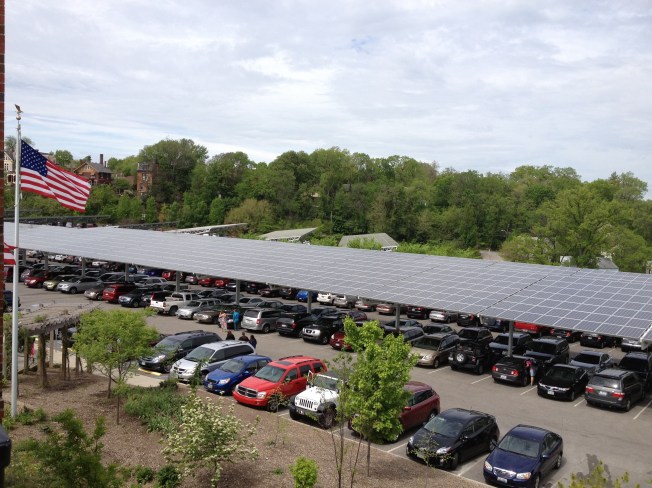
Solar canopy over a parking lot

Solar panels on parking lots, landfills, rooftops and other sites could provide a lot of clean electricity if policy barriers are removed.

Last winter, the Virginia General Assembly passed legislation giving utilities the green light to develop 5,500 megawatts (MW) of wind and solar energy. This marks a milestone for Virginia, offering the possibility for an amount of solar equal in output to Dominion Energy’s newest gas-fired power plant in Greensville.*

Amid the general celebration of this support for utility solar and wind, few legislators noticed that the bill did nothing to help residents and businesses that want to build renewable energy for their own use. Private investment drives most of the solar market in many other states, so leaving it out of the picture means squandering an opportunity.

Customers—and the solar companies who depend on small-scale solar— hope it’s their turn this year. They’d like to see the General Assembly give customer-built solar the same level of love in 2019 that it gave utility solar in 2018.

Unfortunately, that doesn’t square with the agenda of our utilities, which want to protect their monopolies on electric generation. Over the past few years, Dominion Energy and its fellow utilities have blocked dozens of bills aimed at removing some of the policy barriers stifling the market.

Just one example: Fairfax County, like many jurisdictions across the state, owns a closed landfill. It can’t be used for most purposes, but it could hold a solar array large enough to power multiple county buildings.

Yet no fewer than four different provisions of Virginia’s net metering law keep a cost-effective project from moving forward: a 1 MW limit on commercial solar arrays; a requirement that electricity from a solar facility must be used onsite; a rule that a solar facility can’t be larger than needed to meet the site’s electric demand over the preceding year; and a prohibition on meter aggregation that keeps a customer with solar on one building from sharing it with another building.

These would all be simple legislative fixes, but for years now Dominion and the other utilities have opposed the reforms.

Other reforms are needed, too. The solar industry faces a ceiling on the total amount of solar customers can own under the net metering program; utilities killed bills that would raise the ceiling. Businesses tried to lift restrictions on third-party financing using power purchase agreements. Utilities killed the bills. Homeowners tried to get out from under the oppressive fees called standby charges that utilities impose to keep customers from putting up more than 10 kilowatts (kW) of solar panels. Utilities killed the bills.

Killing bills clearly must get tedious. So, this year, Dominion is using the occasion of a report to the General Assembly on solar energy last month to launch a propaganda campaign against the whole radical idea of customers producing their own energy supply.

The 44-page, glossy brochure boasts photographs of sunlight slanting across solar panels nestled in fields of dandelions. Much of it is devoted to touting Dominion’s own progress in installing solar. Dominion claims its 1,600 MW of solar make it a national leader, though that might have to be taken with a grain of salt given that the U.S. now has more than 58,000 MW of solar.

And of course, most of Dominion’s solar is in other states; and of the solar in Virginia, most is being built in response to demand from the state government and corporate customers. Only a few of the solar farms Dominion includes will actually serve ordinary ratepayers.

The achievements amount to even less for Dominion’s customer-sited projects. The company’s Solar Partnership Program for commercial customers built only 7.7 MW out of the 30 MW the SCC approved five years ago. The Solar Purchase Program that Dominion once hoped might replace net metering has produced a grand total of 2 MW.

And then there are the 18 schools across the commonwealth that are the lucky recipients of solar panels in Dominion’s “Solar for Students” program. Each school gets 1.2 kW worth of solar panels, or roughly enough to run an old refrigerator. (In fairness, those old refrigerators are electricity hogs. If you have one, replace it.)

If these programs demonstrate Dominion’s level of competence building rooftop solar, that seems like reason enough to open up the private market.

It’s also worth keeping in mind that the reason customers are trying so hard to remove Virginia’s policy barriers is that they don’t just want electricity, they want solar. Yet absolutely none of the solar energy from any project Dominion builds or buys, even those paid for by Virginia ratepayers, will stay in Virginia to meet our voluntary renewable portfolio standard (RPS).

If that surprises you, check out a different document Dominion filed last month, with significantly less fanfare than it gave the solar report. The other filing, Dominion’s annual report to the State Corporation Commission (SCC) on renewable energy, confirms that Dominion sells the “renewable attributes” of solar energy produced here to utilities in other states in the form of renewable energy certificates (RECs).

Then, for the Virginia RPS, Dominion buys cheaper RECs from facilities like out-of-state, century-old hydro dams, biomass (wood) burners, trash incinerators, and a large but mysterious category called “thermal” that is nowhere defined but definitely has nothing to do with solar. So other states get the bragging rights to our solar, and we get dams, trash and wood, plus a mystery ingredient.

But regardless of who gets to claim it, all solar is good solar in a world threatened by climate change. That’s my attitude, anyway, and I only wish Dominion shared it. But, returning our attention to the glossy solar brochure, we find Dominion instead doing its darnedest to undermine the idea of solar built by anyone but the lovable monopoly itself.

The report offers up a poll that concludes: “Solar power is the most popular energy source of all those tested in this polling (Nuclear, Wind, Solar, Natural Gas, and Coal).” But then it goes on to suggest customers don’t understand solar, don’t want to spend much money on it, and don’t really value it very highly after all.

For example, the report follows news of solar’s 82% positive rating with this caveat: “However, when asked to choose what is most important to them regarding their own electricity provider . . .customers chose as follows: dependability and reliability 53%; affordability 28%; investing in renewable energy 16%.”

The poll apparently didn’t give respondents the option of choosing solar andreliability andaffordability. Pollsters must not have told folks that customers in other states enjoy all three at once, or that solar actually has a positive effect on grid reliability and customer savings.

If the question had been, “How biased is this poll?” I bet they could have scored 100%.

After delivering a few more similarly manipulated polling results, the report goes on to discuss the results of last summer’s solar stakeholder process. Readers may recall that Dominion hired consultant Meridian Institute to convene a series of meetings to get feedback on renewable energy policy questions. Hundreds of Virginians took the trouble to attend in person or by phone to share their expertise and opinions.

The result, presented in an 18-page appendix to Dominion’s report, is impressive only for how completely inane it is.

Here, for example, is how Meridian opens its summary of stakeholder feedback:

Most stakeholders who expressed a general opinion about the expansion of renewable energy in Virginia indicated that they support such expansion. Others indicated that their support for renewable energy was dependent on a variety of factors. Some stakeholders did not express a general opinion about the expansion of renewable energy in Virginia.

I am sorry to say it goes on like that for pages.

If you persist in reading the Meridian summary, the most you will get out of it is what we all knew going into it: utilities disagree with customers and the solar industry about whether existing restrictions on customer solar are good or bad.

Except, the report does not even say that. It only says the “participants” in the solar stakeholder process disagreed on these questions. Putting it that way leaves open the possibility that some customer, somewhere, in one of those meetings, might have taken the utilities’ side.

If so, the customer’s name was Tooth Fairy.

I have little doubt Dominion provided a copy of its pretty solar report to every legislator in Richmond, and is already using it in its fight against expanding the rights of customers in Virginia to go solar. Dominion will point to its report as proof that customers are too stupid and too conflicted to be allowed to make their own decisions. Ergo, Dominion should control all solar in Virginia, on rooftops as well as elsewhere.

Legislators should indeed read the report. And then after they’ve had a good laugh, they should tell Dominion no.

——————

*That equivalence is because Dominion projects its 1,588 MW Greensville plant will run at 80% of its full capacity. Solar farms, generating only during daylight hours, achieve capacity factors in the range of 25%, while rooftop solar comes in a little less.


This post originally appeared in the Virginia Mercury on December 7, 2018.

Unknown's avatar

After the grid mod bill, the SCC wants to know how much authority it still has over utility spending

offshore wind turbines

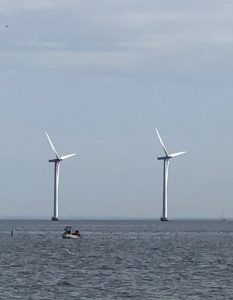
Offshore wind turbines, Copenhagen, Denmark. Dominion Energy has asked the SCC for permission to proceed with building two wind turbines off the Virginia coast as a test project. Photo by Ivy Main.

It’s no secret the State Corporation Commission didn’t like this year’s big energy bill, the Grid Transformation and Security Act. SCC staff testified against SB 966 in committee, and their objections played a major role in amendments removing the “double dip” provision that would have let Dominion Energy Virginia double its earnings on infrastructure projects. Since passage of the bill, the SCC has raised questions about the constitutionality of the law’s provisions favoring in-state renewable energy, and its staff has issued broadsides about the costs of the legislation.

Now the SCC is mulling the question of how much authority it still has to reject Dominion’s proposals for spending under the bill. Dominion has filed for approval of a solar power purchase agreement (case number PUR-2018-00135) and two offshore wind test turbines it plans to erect in federal waters 24 nautical miles out from Virginia Beach (PUR-2018-00121). The utility has also requested permission to spend a billion dollars on grid upgrades and smart meters (PUR-2018-00100).

In an order issued September 12, the SCC asked participants in the solar and offshore wind cases to brief them on legal issues arising from the legislation. The SCC has focused in on two new sections of the Virginia Code. One is the language making it “in the public interest” for a utility to buy, build, or purchase the output of up to 5,000 megawatts (MW) of Virginia-based wind or solar by January 1, 2024. The SCC noted that subsection A of the provision says such a facility “is in the public interest, and the Commission shall so find if required to make a finding regarding whether such construction or purchase is in the public interest.”

The other new Code section gives a utility the right to petition the SCC at any time for a “prudency determination” for construction or purchase of a solar or wind project located in Virginia or off its coast, or for the purchase of the output of such a project if developed by someone else.

Together these sections give Dominion a good deal of latitude, but they don’t actually force the SCC to approve a project it thinks is a bad deal for ratepayers. In other words, wind and solar may be in the public interest, but that doesn’t mean every wind and solar project has to be approved.

The SCC asked for briefs on seven questions:

  • What are the specific elements that the utility must prove for the Commission to determine that the project is prudent under Subsection F?
  • Is the “prudency determination” in Subsection F different from the “public interest” findings mandated by Subsections A or E?
  • Do the public interest findings mandated by either Subsections A or E supersede a determination under Subsection F that a project is not prudent? If not, then what is the legal effect of either of the mandated public interest findings?
  • If the construction (or purchase or leasing) is statutorily deemed in the public interest, is there any basis upon which the Commission could determine that such action is not prudent? If so, identify such basis or bases.
  • In determining whether the project is prudent, can the Commission consider whether the project’s: (a) capacity or energy are needed; and (b) costs to customers are unreasonable or excessive in relation to capacity or energy available from other sources?
  • Do the statutorily-mandated public interest findings under either Subsections A or E override a factual finding that the project’s: (a) capacity or energy are not needed for the utility to serve its customers; and/or (b) costs to customers are unreasonable or excessive in relation to capacity or energy available from other sources, including but not limited to sources of a type similar to the proposed project?
  • Does the utility need a certificate of public convenience and necessity, or any other statutory approval from the Commission, before constructing the proposed projects?

Even if the Commission decides it has latitude in deciding which wind and solar projects to approve, that doesn’t necessarily spell disaster for the two projects at issue. The SCC could still decide they meet the standard for prudency and approve them.

Oral argument on the issues is scheduled for October 4.

Should approval of smart meters depend on how the meters will be used?

The SCC is also mulling over its authority in the grid modernization docket. One day after it asked lawyers in the solar and offshore wind cases to weigh in on the meaning of prudency, it issued a similar order asking for input on what the new law means by “reasonable and prudent” in judging spending under the grid modernization provisions. (Yes, the grid mod section of the law insists that spending be “reasonable” in addition to “prudent,” begging the question of whether spending can be prudent but not reasonable. Perhaps thankfully, the SCC order does not pursue it.)

The SCC’s questions to the lawyers show an interest in one especially important point: Dominion wants to spend hundreds of millions of dollars of customer money on smart meters, without using them smartly. Smart meters enable time-of-use rates and customer control over energy use, and make it easier to incorporate distributed generation like rooftop solar. None of these are in Dominion’s plan. Is it reasonable and prudent for Dominion to install the meters anyway, just because they are one of the categories of spending that the law allows?

Or as the SCC put it:

If the evidence demonstrates that advanced metering infrastructure enables time-of- use (also known as real-time) rates and that such (and potentially other) rate designs advance the stated purposes of the statute, i.e., they accommodate or facilitate the integration of customer-owned renewable electric generation resources and/or promote energy efficiency and conservation, may the Commission consider the inclusion or absence of such rate designs in determining whether a plan and its projected costs are reasonable and prudent?

Reading the tea leaves at the SCC: Staff comments on Dominion’s IRP

The SCC’s question about smart meters surely indicates how the commissioners feel about the matter: they’d like to reject spending on smart meters, at least until Dominion is ready to use them smartly. If the SCC concludes it has the authority to reject this part of Dominion’s proposal as not “reasonable and prudent,” it seems likely to do so.

It is harder to know where the SCC might land on the solar and offshore wind spending. The SCC’s staff, at least, are skeptical of Dominion’s plans to build lots of new solar generation. In response to Dominion’s 2018 Integrated Resource Plan (IRP), Commission staff questioned whether Dominion was going to need any new electric generation at all, given the flattening out of demand. But if it does, according to the testimony of Associate Deputy Director Gregory Abbott, Dominion ought to consider a new combined-cycle (baseload) gas plant, not solar. (Combined-cycle gas was the one generating source Dominion almost completely ruled out.)

Abbott criticized Dominion’s presentation of the case for solar, though he took note of the technology’s dramatic cost declines. Instead of seeing that as a reason to invest, however, he suggested it would be better to wait for further cost declines, or at least leave the construction of solar to third-party developers who can provide solar power more cheaply than the utility can. Remarkably, he also suggested Dominion offer rebates to customers who install solar, urging that Dominion’s spending under the grid transformation law “is designed specifically to handle these [distributed energy resources].”

Abbott also seemed supportive of Dominion’s venture into offshore wind. The only offshore wind energy in the IRP is the 12 MW demonstration project known as CVOW, but as Abbott noted, “the Company indicated that it will pursue a much larger roll-out of utility-scale offshore wind, beginning in 2024, if the demonstration project shows it to be economic.”

This suggests staff are inclined to support Dominion’s spending on the CVOW project, but for Abbott, it was one more reason Dominion should not invest in solar. He concluded, “If the demonstration project proves that utility-scale offshore wind is economic compared to solar, then it may make sense to get the results of the CVOW demonstration project before deploying a large amount of solar.”

This post originally appeared in the Virginia Mercury on September 24.

Unknown's avatar

On the heels of its big legislative win, what kind of grid does Dominion want to build for us?

white electric tower

Photo by Pixabay on Pexels.com

Note: This post originally appeared in the Virginia Mercury on July 23. Virginia Mercury is a nonprofit, independent online news organization that launched just this summer. Subscribe to its free daily newsletter here.

Imagine that you have hired a builder to design and build a three-story house for you. He brings you the plans for the first floor and proposes to start work right away. “These look okay,” you say, “but I need to see the plans for the whole house.”

“Don’t you worry about that,” says the builder. “I have it all figured out. I’ll show you the second floor when the first is done, and the third floor after that.”

You argue with the builder, pointing out that as it is your money, you have the right to assure yourself the result will be what you want. If you haven’t even seen the blueprint for the whole house, how can you approve the ground floor? Heck, you can’t even judge if all the stuff he wants to put in is actually needed. (It looks awfully expensive.)

“Please,” says the builder, now deeply offended. “I’m an expert. You should trust me.”

If this scenario sounds far-fetched, that’s because you don’t live in the world of Virginia utility regulation. In that world, Dominion Energy Virginia, the state’s largest utility, has just filed a plan with the State Corporation Commission (SCC) to spend almost $1 billion of its customers’ money for the first phase of what it says will be three phases of grid modernization, amounting to $3.5 billion. The company maintains that all the things it plans to do now are necessary to the overall strategy, but it isn’t saying what that strategy is.

“During Phase 1 of the Plan,” writes Dominion Energy Senior Vice President Edward Baine, “the Company will focus on installing the foundational infrastructure that will enable all other components of the Grid Transformation Plan.” That sounds like it ought to lead into a discussion of what the grid of the future will look like, but sadly, the other “components” turn out to be just more spending.

That might in fact be the whole plan: spend money, lots of it. Baine explains the “drivers” of the plan, like recognizing threats to the grid, and he describes how it will “enable” things like new rate structures and integrating renewable energy. But new rate structures and renewable energy integration aren’t actually part of the plan Dominion wants the SCC to approve.

This will make it very hard for the SCC to judge whether the investments are “reasonable and prudent,” as Virginia law requires. Knowing this, Baine argues the SCC shouldn’t impose a cost-benefit test on its plans. Already that position has drawn sharp criticism even from supporters of the legislation that authorized the spending.

Take smart meters, also known as “advanced metering infrastructure” (AMI). Smart meters don’t just measure electricity use, but do so on an hourly or more frequent basis, and they provide two-way communication instead of just one-way reporting to the utility.

Properly designed and deployed, smart meters are central to the grid of the future. Dominion proposes to spend over $500 million to provide all its customers with this advanced technology during Phase 1. Unfortunately, that doesn’t include making full use of their potential.

Where ordinary electric meters mostly just tell the utility how much electricity a customer has used, smart meters provide detailed information that can be used to help pinpoint power outages and spikes in demand. That’s helpful for the utility, but just using them that way, as Dominion proposes, leaves most of the benefits of smart meters untapped.

Justifying the expense of smart meters requires using them to allow customers to control how and when they use electricity, as well as to make the most efficient rate designs and determine how to get the most benefit from solar panels, batteries and electric vehicle charging. That only happens where a utility offers time-of-use rates and other incentives to change behavior and prompt investments by consumers.

Using smart meters this way would result in lower energy use, more customer-investments in solar and batteries, and savings for everyone. But time-of-use rates and similar incentives aren’t in Phase 1, and they don’t look to be part of Phases 2 or 3 either.

Dominion seems to think it can get approval to spend money on smart meters based on how they could be used, rather than on how the company actually plans to use them. Baine notes that smart meters can tell customers how much electricity they’re using in any 30-minute period. “Customers will be able to choose their preferred mode of communication,” writes Baine, “and then receive high usage alerts when their energy usage exceeds a certain level.”

Yes, and then what? Baine doesn’t say.

It’s not just a matter of wanting to take it slow. Since 2009, 400,000 of its customers have received smart meters, Dominion tells us, giving it ample time to try out all these features. It hasn’t.

Merely installing another 1.4 million smart meters isn’t going to lead to grid nirvana.

Grid “hardening” is another example. Physical upgrades in the name of security and resilience make up more than $1.5 billion of Dominion’s proposed spending. This is not grid transformation, it’s the opposite: beefing up the old grid. Most of the proposed investments are the same kind of capital investments Dominion makes routinely, with nothing modernized about it. Unfortunately, Dominion wrote the law to give itself permission to use customer money for grid hardening, so all the SCC can do is ask whether the specific spending proposals are reasonable and prudent.

Again, since Dominion isn’t telling us what kind of grid it is building for us, there is no way to know whether any given project will contribute to it, or even be necessary at all. If the grid of the future will be based on distributed energy, microgrids, and consumer control, we might not need the substation Dominion wants to make into an impregnable fortress. Modern solutions like solar-plus-storage, demand response, and energy efficiency could provide greater resiliency and security at a lower cost.

Of course, we have every reason to suspect Dominion is not interested in building a grid that empowers consumers, lowers energy use and spurs private investment in solar and storage. Its business model depends on keeping control over the grid and getting people to use more energy rather than less. If it can’t do that, it figures, the next best thing is to find ways to spend our money.

The amount of customer money at stake makes the SCC’s oversight role very important. It can insist Dominion lay out its full vision for the grid, demonstrate how each spending item fits that vision, and prove it meets a consumer cost-benefit test. With a little dose of courage, it could even go further, and insist on seeing a plan that makes full use of smart meters, including time-of-use rates and other incentives for efficiency, solar and storage.

The General Assembly, too, has a role to play, by filling a vacancy on the SCC this summer. If legislators are unhappy with Dominion’s cavalier approach to spending, they have one last chance to appoint a commissioner who will side with consumers, and send Dominion back to the drawing board.

Unknown's avatar

Solar map locates Northern Virginia on the dark side of the metro region

people standing by solar panels on a high school.

The 90 kW of solar panels on the roof of Wakefield High School represent almost 5% of Arlington’s solar total. Arlington schools have been a bright spot in Northern Virginia’s otherwise lackluster solar performance. Photo credit Phil Duncan.

Those of us who’ve lately become bullish on Virginia solar got a rude wake-up call this week when the Northern Virginia Regional Commission (NVRC) updated its map showing the amount of solar installed in every locality in Northern Virginia and the greater Washington region. Stunningly, every single suburban Maryland jurisdiction did better than every single Virginia jurisdiction. So did Washington, DC.

The map reveals that as of the end of 2017, Fairfax County had the most solar of any Virginia locality measured, reflecting its status as Virginia’s most populous county. Fairfax boasted a cumulative capacity of 2,104 kilowatts (kW) of solar, edging out Virginia’s richest county, Loudoun, which came in with 1,878 kW, as well as much smaller but more liberal Arlington with 1,785 kW.

All the Northern Virginia jurisdictions together (which also included Prince William, Manassas, Alexandria, and Falls Church) boasted a total of 8,443 kW, spread across 1,112 systems. That’s an average of about 7.5 kW per system, meaning these are overwhelmingly rooftop solar installations on homes and businesses. (An average home solar system is about 5 or 6 kW. Using solar for all of a home’s electricity needs might require 8-10 kW or more, especially if the home is heated with electricity or includes an electric vehicle.)

NoVa’s 8,443 kW is about as much as Prince George’s County, Maryland alone had five years ago. Today, PG County leads the region with 136,507 kW. Added together, the Maryland suburban localities finished the year with 272,688 kW of solar, over 32 times the suburban Virginia total. Washington, with 40,954 kW, beat all of suburban Virginia almost five times over.

So what do Maryland and DC have that Virginia doesn’t have? One answer is incentives. Maryland and DC have mandatory renewable portfolio standards (RPS) that require utilities to buy a certain percentage of their electricity from solar generated in state, including from their own customers. As the percentage requirement increases year after year, the forces of supply and demand set prices for solar renewable energy certificates (SRECs) that make solar a profitable investment for consumers. In DC, the value of SRECs is currently so high that a home solar installation can pay for itself in less than four years. In Virginia, with the federal 30% tax credit but no RPS or SREC market, payback may take ten years.

Ten years is still not a bad payoff for solar panels that can produce free electricity for 40 years or more. That points to the other advantage Maryland and DC have over Virginia: pro-solar policies. Virginia law does provide for net metering, the policy that lets a solar customer put surplus power onto the grid during the day and receive a credit for it that is used against the same amount of power drawn from the grid at night. Without net metering, we would have very little rooftop solar at all.

But a whole host of restrictions apply to net metering in Virginia. Homeowners are limited to a 20 kW system, and utilities can (and do) apply punitive fees known as “standby charges” to residential systems over 10 kW. Commercial customers are limited to 1,000 kW, no matter how much space they have or how much electricity they use. Sharing solar arrays among customers is prohibited. A building owner cannot install solar and sell the electricity to tenants. A local government cannot install solar on a vacant lot and use it to power a building across the street. Only certain customers can use third-party ownership financing.

And if the market flourishes anyway, Virginia law puts a ceiling on the total capacity of net-metered systems. Once the total reaches 1% of a utility’s sales, the program will come to a screeching halt. Think of it as an anti-RPS.

This year the Virginia General Assembly passed legislation that encourages Virginia utilities to develop solar, but the bill failed to address the barriers holding back private investments in solar. Other bills that would have opened up the market failed in the Republican-controlled (and utility-friendly) Commerce and Labor committees.

Barrier-busting bills will certainly be back again next year, and local governments that want more solar in their communities should make sure these reforms are part of their legislative wish list. Meanwhile, there is room under current law for local governments and schools to install a lot more solar than they have to date. Leading by example is a powerful tool to capture the attention of the public, educate residents on the benefits of solar, and instill pride in the community.

Localities can also help residents and businesses go solar by promoting solar coops like Solarize NoVa, offering low-cost financing via commercial PACE loans(as Arlington is doing), and setting expectations for developers.

Maryland and DC may still beat Virginia on solar over the next few years, but it shouldn’t happen without a fight.

Unknown's avatar

2018 Guide to Wind and Solar Policy in Virginia

[A downloadable PDF of this guide is available here.]

Introduction

Advocates for wind and solar finally begin to feel cautiously optimistic about the prospects for clean energy in Virginia. Prices for wind and solar have dropped to the point where the question is no longer whether they can compete with fossil fuels, but whether fossil fuels can compete with them. Support for renewable energy is high in the General Assembly, new solar projects are popping up across the state, and interest in offshore wind is on the rise again, after a years-long nap.

Still, Virginia’s energy laws were written by and for monopoly utilities that are heavily invested in coal, gas and nuclear. The Virginia Code contains a thicket of barriers that protect utility profits from competition and limit the options of developers, consumers, local governments and businesses.

This survey of current policy is intended to help decision-makers, industry, advocates and consumers understand what options for wind and solar exist today, where the barriers lie, and what we could be doing to take fuller advantage of the clean energy opportunities before us.

A few disclaimers: I don’t cover everything, the opinions expressed are purely my own, and as legal advice it is worth exactly what you’re paying for it.

  1. Overview: Virginia making headway on solar, but still no wind
Virginia Maryland North Carolina W. Virginia Tennessee
Solar* 631.26 932.7 4,411.65 6.05 236.36
Wind** 0 191 208 686 29
Total 631.26 1,123.7 4,619.65 692.05 265.36

  Installed capacity measured in megawatts (MW) at the end of 2017. One megawatt is equal to 1,000 kilowatts (kW).

*Source: Solar Energy Industries Association **Source: American Wind Energy Association

Virginia installed almost 400 megawatts (MW) of solar last year, bringing the total at the end of 2017 to 631 MW, up from 238 at the end of 2016. This nudges us closer to Maryland, though it leaves us further behind North Carolina than ever.

Most of the Virginia solar to date has been installed to serve large tech companies, not the general public. This reflects the companies’ renewable energy commitments, their buying power, and their willingness to pursue new financing models that make the most of solar’s increasingly low cost.

Corporate demand will likely continue to drive the majority of Virginia installations in the near term, but Virginia utilities are starting to add solar to the resource mix that serves ordinary customers.

On the other hand, Virginia remains the only state in our 5-state neighborhood without a wind farm. To be fair, all 5 states have been stuck in the doldrums; an American Wind Energy Association update showed no new wind farms opening in any of them in 2017. That leaves Apex Clean Energy’s 75 MW Rocky Forge wind farm still in limbo; it received its permit more than a year ago and remains construction-ready whenever a buyer shows up.

Among the recent developments showing momentum for solar:

  • In 2017, Dominion Energy Virginia acknowledged for the first time that solar had become the cheapest form of energy in Virginia. In May of this year, a news source reported that the utility’s parent company, Dominion Energy, has given up on building any new combined-cycle (baseload) gas plants and will build only large solar plants, though the company proposes many more of the smaller gas combustion turbines.
  • A new law passed in 2018 (SB 966) puts 5,000 MW of utility wind and solar “in the public interest,” although this language is not a mandate.
  • The 2018 law also makes it in the public interest for utilities to develop up to 500 MW of distributed solar (some parts of the bill say just 50 MW).
  • Dominion’s 2018 Integrated Resource Plan (IRP) includes up to 6,400 MW by 2033 in most of the scenarios it modeled. The IRP is not binding, but it gives regulators and the public a look into how a utility plans to meet customer demand over a 15-year period.
  • Some rural cooperatives and municipal electric utilities in Virginia are now adding solar.
  • Solar projects keep getting bigger. A few years ago, a 20 MW solar farm was considered huge; today it is at the low end for utility-scale. In 2015 Amazon Web Services stunned us all by announcing an 80 MW facility. By the end of 2017 it had contracted for 260 MW of solar in Virginia, including a 100 MW project. In March of this year Microsoft announced it had reserved 315 MW of a planned 500 MW project.
  • An analysisby the Solar Foundation found that Virginia could add over 50,000 jobs by building enough solar to meet 10% of the Commonwealth’s electricity supply over five years.

The Virginia Department of Environmental Quality (DEQ) website contains a list of projects that have begun the permitting process under Virginia’s permit-by-rule provisions, which govern projects up to 150 MW. Larger projects need permission from the State Corporation Commission (SCC). All projects must also obtain local permits.

Like onshore wind, offshore wind still hasn’t taken off in Virginia. In 2014 Dominion Energy Virginia won the right to develop an estimated 2,000 MW of wind power offshore of Virginia Beach, but it still hasn’t offered a timeline for a commercial offshore wind project or even included one in its IRP. The 2018 IRP does include Dominion’s two-turbine, 12 MW pilot project, with a projected in-service date of 2021. Last year Dominion formed a partnership with Danish energy giant Ørsted (formerly DONG Energy) to see the pilot project through.

  1. Customers’ ability to purchase renewable energy is still limited

 Currently, the average Virginia resident or business can’t pick up the phone and call their utility to buy electricity generated by wind and solar farms. Customers of a few rural cooperatives are the exception; see the next section on green power programs, and section 4 on community solar.

Section 56-577(A)(6) of the Virginia code allows utilities to offer renewable energy tariffs, and if they don’t, customers are supposed to be able to go elsewhere for it. Neither of our two major investor-owned utilities, Dominion Energy Virginia (formerly Dominion Virginia Power) and Appalachian Power Company (APCo), currently has an approved tariff for renewable energy. The SCC has previously rejected renewable energy tariffs from APCo and Dominion that the SCC ruled were not in the public interest, mostly because they were too expensive.

Both utilities are trying again. APCo’s latest proposed renewable energy tariff, dubbed Rider WWS, combines wind, hydro, and new solar, and would cost residential customers a premium of 4.25 percent over brown power—a huge drop from the 18 percent increase associated with the earlier, rejected program. (The case is PUR-2017-00179.)

Dominion’s new renewable energy tariff is intended for residential and non-residential customers with a peak demand of less than 1 MW. Rate Schedule CRG-S (case PUR-2017-00157) would consist of hydro, wind and new solar, but possibly also other sources from within the PJM region. Dominion calculates the premium at 17.87 percent over brown power, a surprisingly high premium given how cheap solar, wind and hydro have become.

The SCC has not yet ruled on either program, so it is not clear when, or if, Dominion and APCo will implement these renewable energy tariffs.

Can you go elsewhere? Since the State Corporation Commission has ruled that REC-based programs do not qualify as selling renewable energy, under the terms of §56-577(A)(6), customers are currently permitted to turn to other licensed suppliers of electric energy “to purchase electric energy provided 100 percent from renewable energy.”

That means you should be able to go elsewhere to buy wind and solar, at least for the limited time before Dominion and APCo can get tariffs approved. But Virginia utilities claim that the statute’s words should be read as requiring not only that another licensed supplier provide 100% renewable energy, but that it also supply 100% of the customer’s demand, all the time. Obviously, the owner of a wind farm or solar facility cannot do that. Ergo, say the utilities, a customer cannot really go elsewhere.

In spite of the roadblocks, an independent power seller called Direct Energy announced plans in 2016 to sell a renewable energy product to Virginia residents in Dominion’s territory. (The company described the product as a combination of wind and municipal waste biomass.) Dominion fought back, but in 2017 the SCC confirmed Direct Energy’s right to enter the Virginia market; however, the SCC also ruled that Direct Energy will have to stop signing up customers once Dominion has its own approved renewable energy tariff.

Legislation defeated in the General Assembly this year would have allowed customers of Dominion and APCo to purchase electricity generated 100 percent from renewable energy from any supplier licensed to business in the state, regardless of whether the utility had its own approved program.

Ron Cerniglia, Director of Corporate and Regulatory Affairs for Direct Energy, says Direct Energy “will be ready to begin offering a full suite of product and service offerings that customers currently receive in other competitive markets including a 100% renewable product by August to non-residential customers (e.g, commercial and industrial) within the Dominion Virginia Power service territory.”

Dominion will soon have a solar option. Legislation passed in 2017 under the misleading banner of “community solar,” authorizes Dominion and APCo to contract for power from solar farms to sell to consumers. Dominion’s program is awaiting approval at the SCC (case PUR-2018-00009). Rider VCS will be available to all retail customers at a premium of about 2.01 cents/kWh in the first year. As of this writing, APCo does not appear to have proposed a similar program.

The legislation states that these “community solar” programs explicitly do not count as ones selling “electric energy provided 100 percent from renewable energy,”though ironically, they may be the first programs from Dominion and APCo to do exactly that for residential and small commercial consumers.

Large customers have more options. As discussed in section 14, Dominion has worked with large tech companies, including Amazon, Microsoft and Facebook, to meet their demands for electricity from solar. Customers of this size also have the market power to sidestep utility control to achieve their aims through the wholesale energy market.

Other companies, institutions, and even local governments can aggregate their demand to achieve the same result, without affecting their retail purchase contracts with their utility (and thus not incurring the ire of the utility). For example, the Northern Virginia Regional Commission has hired a consultant to help area governments develop large-scale solar projects using a wholesale power purchase agreement, an undertaking I wrote about last fall.

  1. “Green power” products: mostly brown power painted green

Instead of offering renewable energy tariffs, for years Dominion and APCo have offered voluntary programs under which the utilities pay brokers to buy renewable energy certificates (RECs) on behalf of the participants. Participants sign up and agree to be billed extra on their power bills for the service. Meanwhile, they still run their homes and businesses on regular “brown” power.

As I wrote a few years back in What’s wrong with Dominion’s Green Power Program, there is little evidence that voluntary RECs from Midwestern wind farms are driving any new renewable energy, whether you buy them from a utility or a third-party supplier like Arcadia. But if you’re considering this route, read this post first so you understand what you are getting. Personally, I recommend instead making monthly tax-deductible donations to GRID Alternatives to put solar on low-income homes.

The situation is better with some rural cooperatives. Old Dominion Electric Cooperative (ODEC), which supplies power to most of Virginia’s coops, signed long-term contracts for the output of three wind farms in Maryland and Pennsylvania, which it resells to some member coops. Customers of participating coops can choose to buy wind power for an additional cost. (See the information posted by Shenandoah Valley Electric Cooperative as an example.) ODEC has contracted for two solar farms in Virginia as well.

But not all coops do this. Most have REC-only offerings. In the case of Rappahannock Electric Cooperative, the RECs come from a biomass plant somewhere “in the greater mid-Atlantic area.” That is, customers voluntarily pay extra to subsidize the burning of trees for power, probably at a facility out of state. Because of wood’s high moisture content, this kind of biomass is a highly polluting way to make energy and an important source of carbon dioxide emissions, calling into question the value of the program to customers who want to support renewable energy.

  1. Community solar: what’s in a name? 

Community solar, in its purest form, enables people to work together to develop and own a solar facility in their community for the use of all the participants. This kind of community solar is not currently an option in Virginia. Solar advocates have introduced enabling legislation for several years running, but it has been defeated every year in the face of utility opposition.

Two Virginia rural electric cooperatives offer programs that come close. In both cases, the coop has contracted for the output of a solar project in its territory and offers shares of the electricity to coop members. BARC, in southwestern Virginia, was the first to offer such a program, using a small 500 kW solar facility. This year Central Virginia Electric Cooperative(CVEC) launched a 4 MW program. Subscribers can lock in the rate for 20 years, one of the most attractive features of community solar.

As noted in Section 2, legislation enacted in 2017 enables a kind of pseudo-community solar controlled by a utility. Using this authority, Dominion has contracted for the development of a number of smaller (up to 2 MW) solar projects around Virginia, and will offer customers the option of paying a 2.01 cents/kWh premium to buy solar. Unlike a true community solar program (or CVEC’s), the price is not fixed but will change annually based on market factors, and it includes a profit margin for Dominion.

It looks like a renewable energy tariff, and it quacks like a renewable energy tariff, but all concerned call it community solar. The program now awaits approval by the SCC (case PUR-2018-00009) and is expected to be available to Dominion customers by the end of the year.

  1. Virginia’s RPS: modest, and with much to be modest about

Most states have adopted renewable portfolio standards (RPS) or other mandates to require utilities to build or buy renewable energy. Leading states have been ratcheting up their percentages while tightening the rules for what qualifies, giving priority to new wind and solar.

Virginia is not among these leading states.

Virginia Code §56-585.2 creates a voluntary RPS, which means utilities have the option of participating but don’t have to. Renewable energy is defined in §56-576 to include not just wind, solar, and falling water, but also highly polluting forms of energy like trash incineration and burning trees, a/k/a biomass (“sustainable or otherwise”), as well as old, large hydroelectric plants that don’t qualify for other states’ programs. Utilities are also allowed to include up to 20% of RECs from renewable energy research and development activities, providing a subsidy to a few Virginia universities with good lobbyists.

Utilities demonstrate compliance with the RPS through the retirement of renewable energy certificates (RECs). The SCC insists that utilities take a least-cost approach to meeting the RPS, which means RECs from trash incinerators, wood burning, and old out-of-state hydro will always edge out wind and solar, simply because there is little competition for those junky RECs. If utilities build wind and solar, they are required to sell the high-value RECs from these projects (to utilities out of state or to the voluntary market) and buy low-cost junky ones instead. Thus, no matter how much solar Dominion builds, customers will never see solar as part of the RPS.

Perhaps it goes without saying that the RPS makes no provision for Virginia utilities to buy RECs from solar homes or businesses.

The targets are also modest to a fault. Although nominally promising 15% renewables by 2025, the statute uses a 2007 baseline, ignoring load growth, and contains a sleight-of-hand in the definitions section by which the target is applied only to the amount of energy after nuclear is excluded. Nuclear makes up a third of Dominion’s energy mix. Thus the combined result is an effective RPS target of well under 10% in 2025.

According to Dominion’s 2017 Annual Report to the State Corporation Commission on Renewable Energy, the “fuel” types used to meet the RPS in 2016 consisted entirely of hydro, municipal solid waste incineration, woody biomass, landfill gas, research and development, and “thermal energy” (another unusual source). The in-service dates of facilities generating renewable energy or RECs range from the 1910s to the 2010s, with the majority clearly pre-dating adoption of the RPS. Almost half the energy or RECs come from out of state. The report does not say who Dominion bought and sold RECs from and to, or for how much.

The General Assembly has rejected numerous bills to make the RPS mandatory, and efforts to narrow the definition of renewable energy have repeatedly failed in the face of utility and other industry opposition. The utilities have offered no arguments why the goals should not be limited to new, high-value, in-state renewable projects, other than that it would cost more to meet them than to buy junk RECs.

But with the GA hostile to a mandatory RPS and too many parties with vested interests in keeping the kitchen-sink approach going, it is hard to imagine our RPS becoming transformed into a useful tool to incentivize wind and solar.

That doesn’t mean there is no role for legislatively-mandated wind and solar. But it would be easier to pass a bill with a simple, straightforward mandate for buying or building a certain number of megawatts than it would be to repair a hopelessly broken RPS. The GA passed up an opportunity to do just that in this year’s SB 966, which makes up to 5,500 MW of solar and wind “in the pubic interest,” but not mandatory.

Short of that, the GA could require that Dominion apply the RECs from its solar projects to the voluntary RPS, instead of selling them, and allow the utility to buy other RECs only to fill any gaps left over.

  1. Customer-owned generation

The low cost of solar panels and the federal 30% tax credit make it cost-effective for most customers to install solar on a sunny roof or field, with homeowners reporting payback periods of less than 10 years. The federal tax credit will be available in full for projects that commence construction by the end of 2019. It drops to 26% for projects commenced in 2020 and 22% for projects commenced in 2021. Thereafter it drops to 10% for commercial and utility projects but disappears for homeowners entirely. Virginia itself offers no cash incentives or tax credits for wind or solar.

The emergence of bulk purchasing coops, sometimes also called “solarize” programs, such as those offered through nonprofits Solar United Neighbors of Virginia and LEAP, makes the process easy for homeowners and businesses and reduces costs.

Virginia allows net energy metering at the retail rate, though with limits (see section 7). Commercial customers can also reap the advantages of solar in reducing high demand charges.

In 2016 the General Assembly passed legislation enabling Property Assessed Clean Energy (PACE) loans for commercial customers. Localities now have an option to offer low-cost financing for energy efficiency and renewable energy projects at the commercial level. Arlington County has launched the first C-PACE program and is accepting applications now. Several other counties have initiated studies or are developing their own programs. PACE is not available for residential customers.

The lack of a true RPS in Virginia means Virginia utilities generally will not buy solar renewable energy certificates (SRECs) from customers. Back in the old days utilities in other states would buy SRECs generated in Virginia, but those markets have gradually closed. Pennsylvania, which had been the last remaining SREC market for Virginia residents, closed its borders last year.

The fact that the federal tax credit is such an important part of financing solar presents a challenge to customers who don’t pay any taxes, or enough taxes to use the credit. This includes non-profits, government entities, and low-income residents. Third-party financing offers a viable solution for tax-exempt entities, where available (see Section 10), but serving low-income residents remains a challenge.

  1. Limits on retail net metering

Section 56-594 of the Virginia Code allows utility customers with wind and solar projects to net energy meter at the retail rate. System owners get credit from their utility for surplus electricity that’s fed into the grid at times of high output, such as during the middle of a sunny day. That offsets the grid power they draw on when their systems are producing less than they need. Their monthly bills reflect only the net of the energy they draw from the grid.

Residential customers can net meter systems up to 20 kW, although standby charges will apply to those between 10 and 20 kW, generally making the larger sizes uneconomical.

Commercial customers can net meter up to 1,000 kW (1 MW). There is an overall cap of 1% of a utility’s peak demand that can be supplied by net metered systems (as measured at their rated capacity).

If a system produces more than the customer uses in a month, the credits roll over to the next month. However, at the end of the year, the customer will be paid for any excess credits only if they have entered a power purchase agreement with the utility. This will likely be for a price that represents the utility’s “avoided cost” of about 4 cents, rather than the retail rate, which for homeowners is about 12 cents. This effectively stops most people from installing larger systems than they can use themselves.

In 2015, the definition of “eligible customer-generator” was tightened to limit system sizes to no larger than needed to meet 100% of a customer’s demand, based on the previous 12 months of billing history. The SCC wrote implementing regulations (see20VAC5-315-10 et seq.) but failed to address what happens with new construction; in practice, utilities have simply told customers how much they can install.

In 2018 the House Commerce and Labor subcommittee on energy defeated a bill that would have increased the limit to 125% of previous demand and extended this to new construction, for residents in Dominion territory. Dominion had agreed to the change, recognizing that there is already a financial disincentive for customers to install more solar than they can use.

A number of other barriers also restrict customer solar. A building owner cannot install a solar facility and sell the output to tenants. A condo association or homeowners association cannot build a central solar facility to share the output. The owner of two or more separately metered buildings cannot share the output of a solar facility on one building with another building, with a limited exception for farmers (see section 8). A local government cannot install a solar facility at one site to serve another site.

These barriers reflect an argument, promoted by utilities, that customers who install solar for their own use don’t pay their fair share of the upkeep of the grid, shifting costs to those who don’t own solar. A range of “value of solar” studies in other states have generally found the reverse, concluding that distributed solar provides a net benefit to utilities, other customers, and society at large. A stakeholder group in Virginia completed the initial phase of a value of solar study in 2014 but got no further after the utilities pulled out of the process.

Over many years the utilities and the solar industry have tried to resolve their differences on net metering, without success. Efforts began in 2013 with the Small Solar Working Group, a broad stakeholder group facilitated by DEQ. That morphed into the Solar Working Group in 2014, then collapsed when the utilities walked away from a “Value of Solar” report the group drafted. In 2016 the utilities and the solar industry began meeting again privately in the “Rubin Group” (named for the moderator, Mark Rubin). This group produced consensus legislation in 2017 and 2018, primarily enabling the utilities to pursue their own solar goals, but they found no common ground on customer-owned solar.

In the absence of state tax credits or rebates, net metering remains critical to the financial viability of most customer-owned solar, making solar installers unwilling to give it up. For their part, utilities have put themselves into a box by insisting that customers ought to share grid costs equally. Reaching a resolution that allows the private solar market to grow will require taking the top off the box and valuing benefits as well as costs.

The issue is poised to come to a head this year. In addition to ongoing Rubin Group discussions, the Northam Administration has announced that net metering issues will be one focus of attention as the Department of Mines, Minerals and Energy (DMME) develops the 2018 Energy Plan, due at the end of October. DMME appears to have handed the solar work over to Dominion, which, as part of 2018’s SB 966 legislation, had tasked itself with conducting a study of net metering. Dominion has hired a consultant, Meridian Institute, “to design and facilitate a stakeholder engagement process” to consider “improvements” to net metering.

  1. Agricultural customers and meter aggregation

Under a bill passed in 2013, owners of Virginia farms with more than one electric meter are permitted to attribute the electricity produced by a system that serves one meter (say, on a barn) to other meters on the property (e.g., the farmhouse and other outbuildings). This is referred to as “agricultural net metering.” Unfortunately, there have been complaints from installers about a lack of cooperation from utilities in actually using this provision.

Advocates had hoped that agricultural net metering would be a first step towards broader meter aggregation options, but 2017 legislation instead took agricultural customers in a new direction. Farmers can now elect to devote up to a quarter of their acreage to solar panels, up to 1.5 MW or 150% of their own electricity demand. The electricity must be sold to the utility at its avoided cost, while the farmer must buy all its electricity from the utility at retail. A farmer who chooses to do this cannot also use agricultural net metering. Agricultural net metering will be terminated entirely in 2019 in territory served by electric cooperatives, though existing customers are grandfathered.

  1. Homeowner associations cannot ban solar (but they sure keep trying)

 Homeowner association (HOA) bans and restrictions on solar systems have been a problem for residential solar. In the 2014 session, the legislature nullified bans as contrary to public policy. The law contains an exception for bans that are recorded in the land deeds, but this is said to be highly unusual; most bans are simply written into HOA covenants. In April of 2015 the Virginia Attorney issued an opinion letter confirming that unrecorded HOA bans on solar are no longer legal.

Even where HOAs cannot ban solar installations, they can impose “reasonable restrictions concerning the size, place and manner of placement.” This language is undefined. The Maryland-DC-Virginia Solar Energy Industries Association has published a guide for HOAs on this topic.

Because of the vagueness of “reasonable restrictions,” HOAs continue to be a problem for many would-be solar homeowners.

  1. Limits on third-party financing (PPAs)

One of the drivers of solar installations in other states has been third-party ownership of the systems, including third-party power purchase agreements (PPAs). In a typical third-party PPA, the customer pays no money upfront and is charged only for the power produced by the system. At the end of the contract, or at some intermediate point, the customer usually can buy the system outright at a greatly reduced cost.

For customers that pay no taxes, including non-profit entities like churches and colleges as well as local government, PPAs are an especially important financing tool because they can’t use the 30% federal tax credit to reduce the cost of the system if they purchase it directly. Under a PPA, the system owner can take the tax credit (as well as accelerated depreciation) and pass along the savings in the form of a lower electricity price.

The Virginia Code seems to sanction this approach to financing solar facilities in its net metering provisions, specifically §56-594, which authorizes a “customer generator” to net meter, and defines an eligible customer generator as “a customer that owns and operates, or contracts with other persons to own or operate,or both, an electrical generating facility that . . . uses as its total source of fuel renewable energy. . . “ (emphasis added).

Notwithstanding this provision, in 2011, when Washington & Lee University attempted to use a PPA to finance a solar array on its campus, Dominion Virginia Power issued cease and desist letters to the university and its Staunton-based solar provider, Secure Futures LLC. Dominion claimed the arrangement violated its monopoly on power sales within its territory.

Given the threat of prolonged and costly litigation, the parties turned the PPA contract into a lease, allowing the solar installation to proceed but without the advantages of a PPA. (Note that PPAs are sometimes referred to as “leases,” but they are distinct legally. Leasing solar equipment is like renting a generator; both provide power but don’t involve the sale of the electricity itself. I have never heard of a utility objecting to a true lease.)

In 2013 Dominion and the solar industry resolved the dispute via compromise legislation that specifically allows customers in Dominion territory to use third-party PPAs to install solar or wind projects under a pilot program capped at 50 MW. Projects must have a minimum size of 50 kW, unless the customer is a tax-exempt entity, in which case there is no minimum. Projects can be as large as 1 MW. The SCC is supposed to review the program every two years beginning in 2015 and has authority to make changes to it. I’m not aware the SCC has reviewed the program to date.

Although the program got off to a slow start, PPA projects are beginning to come online at a rapid clip, and solar companies say an increase in the program size will be needed so installations don’t suddenly stall.

Outside of Dominion territory, the story is less rosy. Appalachian Power and the electric cooperatives declined to participate in the PPA deal-making. In 2017, the legislature passed a bill to allow private colleges and universities—but no one else—in APCo territory to use PPAs to install a maximum of 7 MW of renewable energy. This year a bill to expand the program for APCo customers was scuttled at the last moment due to APCo’s opposition.

Meanwhile, Secure Futures has developed a third-party-ownership business model that it says works like a PPA for tax purposes but does not include the sale of electricity. This allows the company to install larger projects in more parts of Virginia (including most recently a 1.3 MW solar array at Carilion New River Valley Medical Center in Christiansburg, which I have to mention here because the project combines solar and sheep farming and therefore will make for cute photos). Currently Secure Futures is the only solar provider offering this option, which it calls a Customer Self-Generation Agreement.

Solar schools. The availability of PPA financing has had a direct and noticeable impact on the ability of pubic schools to install solar. The projects that I know about include the following; most (but not all) of these use the PPA structure.

  • Bath County (three schools)
  • Arlington County (two schools; county is currently evaluating bids for other schools)
  • Albermarle County (six schools)
  • City of Lexington (one school)
  • Middlesex County (two schools)
  • Augusta County (seven schools)
  • City of Richmond (ten schools)
  • City of Harrisonburg (RFP issued)
  1. Personal property tax exemption for solar developers

In 2014 the General Assembly passed a law exempting solar generating equipment “owned or operated by a business” from state and local taxation for installations up to 20 MW. It did this by classifying solar equipment as “pollution abatement equipment” under §58.1-3660 of the Code. Note that this applies only to the equipment, not to the buildings or land underlying the installation, so real estate taxes aren’t affected.

The law was a response to a problem that local “machinery and tools” taxes were mostly so high as to make third-party PPAs uneconomic in Virginia. In a state where solar was already on the margin, the tax could be a deal-breaker. A separate code provision (§58.1-3661) permitted localities to exempt solar equipment from taxation, but seeking the exemptions on a county-by-county and city-by-city basis proved crushingly onerous for small developers.

The initial 20 MW cap was included at the request of the Virginia Municipal League and the Virginia Association of Counties, and it seemed at the time like such a high cap as to be irrelevant. However, with solar increasingly attractive economically, Virginia’s tax exemption rapidly became a draw for solar developers, including Virginia utilities.

In 2016 Dominion proposed changing the exemption to benefit its own projects at the expense of those of independent developers. In the end, the statute was amended in a way that benefits utility-scale projects without unduly harming smaller projects. Many new projects are now only 80% exempt, rather than entirely exempt. However, the details are complex, with different timelines and different size classes, and anyone looking to use this provision should study it carefully.

The exemption applies only to solar, not to wind.

  1. Dominion-owned distributed solar

Solar Partnership Program (commercial customers). In 2011, the General Assembly passed a law allowing Dominion to build up to 30 MW of solar energy on leased property, such as roof space on a college or commercial establishment. The demonstration program was intended to help Dominion learn about grid integration. The SCC approved $80 million of spending, to be partially offset by selling the RECs (meaning the solar energy would not be used to meet Virginia’s RPS goals). The “Solar Partnership Program” resulted in several commercial-scale projects on university campuses and corporate buildings, but the program did not offer any economic advantages, and it seems to have fizzled out. The Dominion Energy web pageon distributed generation still mentions it, but the link does not lead to more information (and didn’t last year either).

Dominion seems to be ready to try again. The 2018 legislation (SB 966) contains language saying it is in the public interest for utilities to develop or own up to 500 MW of distributed solar. Elsewhere in the same legislation the limit is shown as 50 MW, and it is not clear which one is the typo. Either number gives Dominion plenty of leeway to try out fancy technology involving grid integration of renewables to enhance system reliability and community resilience, or just make another go at undercutting customer-owned solar.

Dominion Solar Purchase Program (residential and business customers). The same 2011 legislation that enabled the “Solar Partnership” initiative also authorized Dominion to establish “an alternative to net metering” as part of the demonstration program. The alternative Dominion came up with was a buy-all, sell-all deal for up to 3 MW of customer-owned solar. As approved by the SCC, the program allows owners of small solar systems on homes and businesses to sell the power and the associated RECs to Dominion at 15 cents/kWh, while buying regular grid power at retail for their own use. Dominion then sells the power to the Green Power Program at a hefty markup. It is not clear whether the program continues to be available; as with the Solar Partnership Program, the links on the Dominion Energy website don’t lead anywhere helpful.

I ripped this program from the perspective of the Green Power Program buyers who pay for other people to install solar on their homes. While some installers advertised it as an option, others felt it was a bad deal for customers, given the costs involved, the likelihood that the payments represent taxable income, and the fact that selling the electricity could make new system owners ineligible for the 30% federal tax credit on the purchase of the system.

There are many good ways Dominion could work with the General Assembly to offer alternatives to net metering that also support customer solar. This program isn’t one of them.

  1. Utility renewable energy tariffs for large customers

Large customers that want wind and solar have had to force the issue in the past. In 2013, Dominion Power introduced a Renewable Generation (RG) Tariff to allow customers to buy renewable power from providers, with the utility simply acting as a go-between and collecting a monthly administrative fee. The program was poorly designed and got no takers.

In 2015, Amazon Web Services made Dominion’s RG tariff irrelevant. Amazon contracted directly with a developer for an 80 MW solar farm, avoiding Dominion’s monopoly restrictions with a plan to sell the electricity directly into the PJM (wholesale) market. Dominion Energy bought the project, and negotiated a special rate with Amazon for the power. This contract became the basis for an “experimental” tariff (Schedule MBR) that Dominion Energy Virginia offered to customers with a peak demand of 5 MW or more, with a program cap of 200 MW.

Since that first deal, Dominion and Amazon have followed up with contracts for an additional 180 MW of solar in five Virginia counties.

Dominion used a different approach for a deal with Microsoft. After the SCC turned down Dominion’s application to charge ratepayers for a 20-MW solar farm in Remington, Virginia, Dominion reached an agreement with Microsoft and the Commonwealth of Virginia under which the state buys the output of the project, while Microsoft buys the RECs. This seems to have been done as a favor to Dominion by then-governor Terry McAuliffe, as a way to move the Remington project forward, and I wouldn’t expect to see it repeated.

In the fall of 2017, Facebook negotiated its own terms with Dominion for 130 MW of a 300 MW solar project. With this as its basis, Dominion created yet another new tariff, Schedule RF.

The alphabet soup of tariffs suggest Dominion is still finding its way in serving large corporations. The utility has a strong incentive to make deals with large corporations that want a lot of renewable energy: if they don’t like what Dominion is offering, they can make an end run around the utility by working through the PJM wholesale market, as discussed above in section 2. This appears to be Microsoft’s plan for a 500 MW solar farm announced last year. Perhaps we should watch for Dominion to propose yet another new tariff, if they haven’t run out of letters.

For a customer without the market power of Amazon, Facebook or Microsoft, buying renewable energy from Dominion remains challenging. As noted in section 2, the SCC already rejected one set of voluntary schedules Dominion had proposed for customers with a peak demand of at least 1,000 kW (1 MW). The rejection can’t be called a loss for customers, since the plan was to use a mix of sources that count as renewable under the Virginia Code but still pollute, including biomass—making it only sort-of green. The SCC said the tariff was too expensive, possibly because biomass is expensive compared to other kinds of renewable energy.

While that particular renewable energy tariff was more an effort to close off competition from Direct Energy than to serve the needs of customers, Dominion seems serious about finding solar options for large customers. One of the tasks the Rubin Group says it plans to take on this year is considering further changes to help large customers who want solar.

  1. Dominion plans for utility-scale solar

As early as 2014, Dominion had announced it wanted to begin developing large-scale solar projects in Virginia. In 2015, two bills promoted the construction of utility-scale solar by declaring it in the public interest for utilities to build or buy solar energy projects of at least 1 MW, and up to an aggregate of 500 MW. This year’s legislation increased that number to 5,000 MW and included wind in the total.

Dominion got off to a rocky start when the SCC rejected the company’s plan to charge ratepayers for its first project, a 20 MW solar farm in Remington, Virginia because the company had not considered cheaper third-party alternatives. Governor McAuliffe helped save the project by working out a deal with Microsoft, as discussed above. Further projects fared better, however, and Dominion is now so enthusiastic about solar that its 2018 Integrated Resource Plan (IRP) calls for up to 480 MW per year, all for the benefit of its regular ratepayers.

Dominion’s website currently lists several solar projects in Virginia, but only three of them, totaling 56 MW, serve the Dominion Energy Virginia rate base. Even with the boost from the General Assembly, future projects will still have to gain SCC approval. And while Dominion will be able to charge ratepayers for projects that do get approved, the SCC will probably insist that the RECs be sold—whether to utilities in other states that have RPS obligations, or to customers who want them for their own sustainability goals, or perhaps even to voluntary green power customers. If this happens, the result will be that Dominion still won’t use solar to meet the Virginia RPS, and ordinary customers will still not have solar as part of the electricity they pay for. That’s the weird world of RECs for you.

  1. Governor McAuliffe’s program to purchase solar for state government will be continued under Northam

Following a recommendation by the Governor’s Climate Change and Resiliency Commission, on December 21, 2015, Governor McAuliffe announced that the Commonwealth would commit to procuring 8% of its electricity from solar, a total of 110 MW, with 75% of that built by Dominion and 25% by private developers.

The first deal to count towards this goal was an 18 MW project at Naval Station Oceana, announced on August 2, 2016. The Commonwealth will buy the power and the RECs. (The Remington Project did not count, because as the buyer of the RECs, only Microsoft can claim the right to be buying solar power.) Two solar farms supplying the University of Virginia and its Darden School of Business also counted towards the 8%.

Although no other projects have been announced since McAuliffe left office, Deputy Secretary of Commerce and Trade Angela Navarro confirmed to me that the 110 MW goal remains in place. She adds, “We also have around 2 MW of agency-owned solar installed or slated to be installed this year. We’re still working toward the 110MW goal, and we hope to announce an even more ambitious goal through the Energy Plan process.”

  1. Onshore wind

No Virginia utility is actively moving forward with a wind farm on land. Dominion Energy’s website used to list 248 MW of land-based wind in Virginia as “under development,” without any noticeable progress. The current web page doesn’t mention specific projects or sizes, only that “we are evaluating wind energy projects in Virginia.” If so, none of them has made it into any recent IRP.

On the other hand, Appalachian Power continues to try to add wind power to its mix, though so far not from any Virginia sites. In April of this year, the SCC denied APCo’s request to acquire two wind projects in West Virginia and Ohio, saying the company didn’t need the power.

With no utility buyers, Virginia has not been a friendly place for independent wind developers. In previous years a few wind farm proposals made it to the permitting stage before being abandoned, including in Highland County and on Poor Mountain near Roanoke.

Nonetheless, Apex Clean Energy has obtained a permit to develop a 75-MW Rocky Forge wind farm in Botetourt County. The company says the project is construction-ready and believes it can produce electricity at a competitive price, given its good location and improved turbine technology. However, the company will not move forward until it has a customer.

Looking forward a few years, the ability of wind to complement solar may give it a role as solar dominates new capacity additions in Virginia. Currently, Dominion’s IRP proposes to pair solar with gas combustion turbines, not battery storage. Wind energy paired with solar would reduce the need for gas back-up, perhaps tilting the equation in favor of battery storage instead.

  1. Offshore wind

Progress towards harnessing Virginia’s great offshore wind resource remains slow. Dominion won the federal auction for the right to develop about 2,000 MW of wind power off Virginia Beach in 2013, and last year the company received approval for its Site Assessment Plan (SAP).

We had originally been told the federal government’s timeline would lead to wind turbines being built off Virginia Beach around 2020. Later, however, the Bureau of Ocean Energy Management said Dominion has five years from approval of the SAP to submit its construction and operations plan, after which we’ll have to wait for review and approval. Presumably the project will also require an environmental impact statement.

That would put first construction in the mid-2020s—if Dominion can be prodded into going forward. Right now the company’s Integrated Resource Plan (IRP) does not include offshore wind in any of its scenarios for the next 15 years, except for 12 MW from two test turbines.

Those test turbines may become a reality, now that Dominion has partnered with the Danish energy company, Ørsted, formerly known as DONG Energy, to see the 12 MW project through to completion. Dominion is expected to make some sort of filing with the SCC this summer to move the project along. The IRP lists an in-service date of 2021.

All this is promising, as Ørsted clearly has its eyes on the commercial lease area. Governor Ralph Northam also seems keen to reignite offshore wind in Virginia. This spring DMME issued a Request for Proposals for a plan “to position Virginia as the East Coast offshore wind supply chain industry location of choice,” the first step in what advocates hope will become a Master Plan for Virginia offshore wind.

DMME is also including offshore wind as one focus of the 2018 Energy Plan, with plans for a public listening session and a facilitated stakeholder group.

  1. State carbon trading rules

The Trump administration’s pullbacks on the Paris accord and the Clean Power Plan prompted Governor McAuliffe last year to order the Department of Environmental Quality (DEQ) to write rules lowering carbon emissions from Virginia power plants by 30% by 2030. Under draft rules set to be finalized this fall, Virginia power plants will trade carbon allowances with those in member states of the Regional Greenhouse Gas Initiative (RGGI).

Any rules that put pressure on carbon-emitting power plants should be good for wind and solar, but at this writing there is still some uncertainty about what the final rules will look like.

Governor Northam pushed for legislation this year that would have had Virginia formally join RGGI, rather than just trading with it. Joining RGGI would allow Virginia to auction carbon allowances instead of merely handing them out free to power plants. Auction money would support investments in wind and solar, among other priorities. Republicans in the General Assembly defeated the legislation, but advocates expect it to be re-introduced next year.

Unknown's avatar

What the fate of one solar bill reveals about politics in Virginia


Want an extra solar panel on your roof, just in case? Too bad, chump. Better luck next year. Maybe.

While Dominion’s latest effort to legislate profits into perpetuity got all the press attention this winter, another story went largely ignored. A whole raft of bills that would have opened more opportunities for customer-owned and third-party owned renewable energy died in committee. So did bills supporting energy choice and an energy efficiency mandate.

These bills generally had one thing in common: they were opposed by the same utility that was touting its own clean energy investments as a reason to vote for the Ratepayer Rip-Off.

Most of the rejected bills would have promoted customer investments in solar, a segment of the market that Dominion’s legislation won’t help. These bills included:

  • HB 54 (Sullivan) state tax credit of 35% on renewable energy property
  • SB 313 (Edwards) and SB 311 (Edwards) community solar
  • HB 393 (Keam) remove the 1% cap on net metered projects and provide for an SCC study of the impact of net metering
  • HB 1060 (Tran) remove the 1% cap on net metered projects
  • HB 1253 (Tran) expand net metering by local governments
  • HB 421 (Sullivan) allow owners of multifamily residential buildings to install renewable energy facilities and sell output to occupants
  • HB 930 (Lopez) allow net metering program for multifamily customer-generators
  • HB 978 (Guzman) require utilities to justify standby charges with a value of solar study (withdrawn by the patron, reportedly at the request of utilities)
  • SB 82 (Edwards) expand agricultural net metering program
  • HB 1155 (Simon) affirm legality of third-party power purchase agreements (PPAs) for customer solar.
  • SB 83 (Edwards) expand availability of PPAs statewide
  • HB 1252 (Kilgore) allow PPAs for non-profits in APCo territory (passed the House with support of APCo but withdrawn by the patron before a Senate hearing when the utility decided that it didn’t like the bill it had negotiated with advocates in Southwest Virginia after all)

It’s tempting to focus blame on the utilities for the demise of these bills, but the fate of one additional bill reminds us where accountability properly lies. SB 191 (Favola) would have allowed net metering customers to install enough solar to meet up to 125% of their previous 12 months’ electric demand, up from 100% currently. As under current law, they still could not sell any surplus electricity at retail. This last point is key: it means customers have no financial incentive to install more solar than they will actually use, and if they do, it’s the utilities that come out ahead.

APCo and the Coops said they were opposed to it anyway, and were written out of the bill to save it. But Dominion agreed to the bill, with the addition of an amendment it wanted. The bill passed the Senate, and a lobbyist for Dominion joined a representative of the Sierra Club (yours truly) to speak in its favor in the House Commerce and Labor subcommittee. Lobbyists for APCo and the Coops also spoke in its favor, just to be nice. No one rose in opposition.

But the subcommittee killed it anyway on a party-line vote.* One of the Republican committee members offered an excuse about “sending it” to the Rubin Group—which, however, they did not do. Discussions with observers later suggested that the vote was a petty, partisan act of retribution against the patron for something entirely unrelated to the legislation.

So while the utilities’ desire to protect their monopoly makes them oppose customer solar, and utility campaign donations persuade legislators to vote accordingly, ultimately voters have only the legislators themselves to blame for the barriers holding back solar in Virginia.

Elections have consequences, as the saying goes, and the fact that Republicans managed to retain a majority in the House by the slimmest of margins this past November was enough for them to be able to continue their long practice of killing popular solar initiatives in subcommittee. The election that was decided by drawing a name from a hat also determined that rooftop solar bills would not advance out of subcommittee, even when they are small, relatively inconsequential, and completely unopposed.

Advocates had hoped the close election would influence Republicans to moderate their trigger-happy approach to clean energy bills. No part of Republican ideology says customers should not install their own solar. Indeed, in past years Republicans have sometimes been leading advocates for rooftop solar.

Maybe Republicans will do better next year, especially if grassroots anger continues to strengthen the Democrats, and Republicans feel the heat. Otherwise, solar advocates will be highly motivated to support Democrats in the 2019 election.

Of course there are plenty of Democrats in the pockets of the utilities, too. That makes it especially important that a growing number of legislators have pledged to refuse campaign contributions from public utilities and their parent corporations. Delegate Mark Keam (D-Vienna) is the latest to “break up” with Dominion over its undue influence on the legislative process.

The pledge isn’t a guarantee of how a legislator will vote, but for frustrated clean energy advocates it offers a simple litmus test that proved out well this year, as pledge-takers overwhelmingly voted against Dominion’s bill. Solar advocates who found this past legislative session more frustrating than ever may find some satisfaction in persuading their own legislators to follow Keam’s example (and get some press attention for it, too).


* The six Republicans voting to table (kill) SB 191 were O’Quinn, Byron, Hugo, Marshall, Habeeb, and Ransone. The four Democrats supporting the bill were Ward, Kory, Heretick, and Bourne.

Unknown's avatar

Virginia buys Dominion’s pig in a poke

How Dominion sees the bill.

A pig in a poke is defined as “an object offered in a manner that conceals its true value, especially its lack of value.” The expression is said to go back about five hundred years to English marketplaces. A poke was a sort of sack, but why 16th century people bought pigs in sacks, and why they would have bought a sack without looking inside, is not at all clear. I’m guessing the seller was the local pig monopoly, and the buyers were timid leaders who meekly paid their farthings and hoped for the best. After all, that is how we do it in the marketplace of Virginia’s General Assembly when Dominion Energy Virginia comes peddling legislation.

And indeed, the true value (or lack of value) of this year’s boondoggle bill (HB 1558/SB 966) will probably not be understood for months or even years to come. The General Assembly passed this legislation that will govern billions of dollars of new spending paid for by Virginia customers after just a handful of hearings over a few weeks, and with no study or input from outside experts. If you will excuse the expression, this is a lousy way to make sausage.

Arguably, the only thing worse than this bill is the law it seeks to fix, the infamous “rate freeze” legislation of 2015 that simply let Dominion keep a billion dollars of customer money to line its own pockets. You’d think legislators would have learned something about legislating in haste and repenting at leisure.

But the legislation could have been worse. We know this because it was worse; the bills Dominion originally put forward returned even less money to consumers, gave the utilities even more leeway on spending, and included the infamous “double dip” that the SCC said would let Dominion charge customers twice for the same projects. The bills improved over the next few weeks under pressure from progressive Democrats, conservative Republicans, the SCC, the Attorney General’s office, the Governor, and consumer and environmental groups.

Whether it is good enough now remains a matter of debate. Conservatives for Clean Energy and the League of Conservation Voters support the bill, especially the provisions relating to investments in energy efficiency and renewable energy. The Sierra Club, an early opponent, used what leverage it had to get the worst provisions changed before removing its opposition late in the game (while still not supporting the bill). The AG’s Office of Consumer Counsel and Appalachian Voices never dropped their opposition.

Nevertheless, the poke has been bought, so you should definitely take a look at the pig. The Virginia Poverty Law Center and the Southern Environmental Law Center produced a handy summary of the bill’s final provisions compared to both the original bill and the status quo under the 2015 law (and sometimes also to the pre-2015 law).

The summary describes the categories of new spending authorized by the law, but a lot is left to interpretation—Dominion’s interpretation, mostly. Customers don’t seem to have any say in how their money gets spent. They are just supposed to feel happy with the provisions granting them some initial refunds reflecting a portion of the overearnings from past years, plus the utility’s savings from the federal tax cut. Going forward, though, the likelihood of further refunds or rate cuts seems remote. The whole point of the bill is to allow utilities to spend overearnings and avoid refunds. And as always, rates can continue to go up through “rate adjustment clauses” (RACs) like the ones that tacked new charges onto electricity bills even when base rates were frozen.

Moreover, what VPLC’s summary (understandably) lacks is a comparison to what ought to be in there: full refunds based on a review of past earnings rather than legislative guesstimates; mandatory—and much higher—levels of energy efficiency, wind and solar; proper regulatory oversight of rates and spending; and an independent assessment of grid modernization needs rather than blanket permission for a utility to indulge in projects that benefit itself most.

We’ll have to wait until next year for any new legislation, but it is not too early to start laying the groundwork. Governor Northam should direct his administration to begin working with national experts on a comprehensive grid modernization study. The goal should not be to tinker around the edges of current law and policy, but to draft a new and better approach from the ground up. (For a great discussion of why we need this study and what it should look like, see Tom Hadwin’s blogpost from last week.)

Meanwhile, legislators should promise their constituents that they will never again allow a public utility to write our energy laws and force through massive and complex changes over the course of a few weeks of the legislative session. Next time Dominion offers a pig in a poke, the answer should be no.

Unknown's avatar

Grid Transformation for the 21st Century: why Virginia needs to get this right

Thomas Hadwin served as an executive with electric and gas utilities in Michigan and New York. He is actively involved in promoting a modern energy system for Virginia.

With proper planning, the 21st century power grid will be smart, efficient and resilient. Without good planning, it could be an expensive mess. Photo credit McKay Savage, India.

The General Assembly recently passed a bill intended to promote modernization of our existing electricity grid. It is important for Virginians to understand the costs, benefits and various ways of upgrading our state’s grid, so that they can decide for themselves whether the new legislation provides the best path forward. Making the right choices about this affects our family finances and the competitiveness of our state economy.

An electricity grid is the system of wires and facilities that move electricity from where it is produced to where it is used. Thomas Edison created the first utility in New York City in 1882. A portion of it was still in use until 2007.

The Traditional Grid

For over a century, the grid met the same basic functions and contained equipment that Edison would have recognized, at least in concept. The system evolved to have electricity produced at a distance from where it is used. Since more electricity is lost the farther it is transported, high voltage transmission lines were developed to minimize these losses. These are the very tall, usually lattice-like, steel towers with long drooping lines that you see from the highway. We can’t use electricity at such high voltage, so it is stepped down using big transformers to lower levels. Sometimes several types of lower voltage lines are used to get the energy closer to where it needs to go.

The transmission lines bring the electricity to a population center or industrial complex to where it will be used. At this point a complex set of equipment called a substation is used to reduce to reduce the voltage to the various levels used by industries, businesses and residences. Once the voltage is reduced at the substation, it enters the distribution system. These are the lines that you see on the poles along the street where you live, where the voltage is reduced one last time to the level you use in your home. Other wires are also on those poles for telephone and cable TV service. If you live in a city, or a new subdivision, those lines are often underground.

Electricity doesn’t move like cars on a road, from Point A to Point B. So you can’t really say where electricity was produced or where it was used.

For about 100 years, the design of the system worked well. There was a steady increase in demand. As generating stations got bigger, electricity became cheaper to produce. The centralized power plants feeding distant loads were easy to manage. Electricity flowed one-way, as did the information back to the utility grid supervisors.

Some things began to change in the second half of the 20th century. Transmission lines were interconnected between utilities so a surplus in one area could be used to meet a shortfall in another. These early “power pool” arrangements evolved into the sophisticated Regional Transmission Organizations (RTOs) and Independent System Operators (ISOs) that we have today. PJM is the organization that manages electric generation and transmission in a 13-state region that includes Virginia.

A Shift 40 years in the making

By the mid-1970s, new power plants became so expensive (especially nuclear units) that a fundamental change occurred. Every time a new conventional power plant (fossil or nuclear) was built, the price of electricity went up.

As fuel costs and electricity prices increased, appliances and buildings were designed to use energy more efficiently. Demand continued to increase, however, as a larger population and greater economic activity kept electricity use rising.

When the recession hit in 2008, families tightened their belts and businesses found ways to produce more goods and services using less energy. For the first time, growth in population and economic activity no longer created a higher demand for electricity. Over the past ten years, growth in U.S. electricity demand has been relatively flat. In 2017, a year of population growth and greater economic activity, total electricity use in the U.S. was 2.1 % lower than the year before.

Stable or declining growth in demand disrupted the utility business model which depended on the steady increase in electricity use to provide enough revenue to cover past investments and provide funds for new projects.

About the same time, new technologies were introduced that further complicated matters for utilities. Concern about environmental impacts associated with extracting and burning fossil fuels increased interest in methods of generating electricity using ways that did not require fuel. Electricity generated from solar and wind power used energy that was naturally renewed. These fuel-free methods were primarily technology driven and took advantage of a learning-curve that has resulted in on-going price reductions of 50% every 4-5 years.

Small modular solar units allowed electricity to be generated at customer locations. Although this reduced customer costs, it made things more challenging for utilities. It reduced their revenues at a time when those revenues were already challenged by flat growth in demand. And these units were located within the distribution network which could result in the flow of electricity opposite to the direction for which the system was designed.

The Modern Grid

It is a huge shift for utilities that have operated in the same way for 100 years to move to a new way of doing business. The energy industry is undergoing a similar transition to what the computer industry experienced several decades ago. We once had highly centralized mainframe computers controlled by a few specialists. Now we have networks of personal computers that provide choices and new possibilities for everyone.

Putting customer needs at the center of the modern grid requires a new mindset. Utilities, especially those owned by private holding companies, have been mostly focused on creating revenue streams to reward shareholders and reducing the effects of regulators’ actions on profits. Many utilities do not even think in terms of “customers.” Instead they talk about “ratepayers” because, from their private parent company’s point of view, that’s where the money comes from.

Smart meters, solar, and batteries

Creating a modern grid will require replacing old electro-mechanical controls and monitoring equipment with modern digital devices. Having a two-way flow of information will help utilities more quickly determine when a line is down and dispatch a crew to the correct location. Smart meters provide utilities with more information about customer usage and save the cost of reading meters. But regulators should be sure that the hundreds of millions spent on new meters (and paid for by ratepayers) also benefit the customers. If designed correctly, with reliable, rapid communications, customers can access that data for use by home energy systems that optimize comfort and lower costs. Water heaters, as well as heating and cooling systems, can be controlled remotely by utilities or private aggregators to turn off for a short period to reduce peaks and save customers money.

A system dependent on digital devices and software control is much more vulnerable to cyber-security threats and must be designed with that in mind.

Creating a two-way flow of energy will also make the grid more capable. Utility-scale solar provides clean energy at a lower cost, but it still follows the old central station philosophy and requires a connection to transmission lines. By installing a significant amount of new solar at dispersed locations within the distribution system, it improves the reliability and resiliency of the grid.

Output from solar units can be variable. But those variations can be highly predictable. Anticipated changes can be matched from other contributions throughout the grid, especially with PJM’s large surplus of generation. Batteries have economic applications now, but will be even more useful as prices decline by half every 4-5 years. Energy storage can supply backup power, frequency and voltage regulation, and other valuable grid services.

Consolidated Edison, the utility that serves New York City, is intending to use distributed solar, storage, energy efficiency and other grid improvements to avoid the need to construct a new $1 billion substation. When utilities avoid building new facilities in order to save customers money, they need to have other means of remaining financially sound.

Soon the use of electric vehicles will be widespread. Batteries paid for as part of the price of the vehicle can be used to store renewable energy during the times when it is plentiful for use at other times when it is more valuable.

Resilience and Reliability

Some grid investments improve the ability to withstand stresses without loss of service. This is called resilience. It can involve undergrounding distribution lines to reduce the exposure to storm damage. Resilience is in a large part about what does not happen and therefore, is closely related to reliability. But investments in undergrounding can be very expensive and have diminishing returns. Other investments might be more cost-effective.

Having some local generation and the ability to temporarily isolate from the larger grid, using microgrids, can maintain some level of operation if the larger grid goes down. Public buildings, hospitals, university and commercial campuses, and industrial parks can benefit from this. Battery storage can also contribute to both resiliency and reliability. These are complex issues and the tradeoffs must be carefully evaluated.

Transmission lines put underground can have lower reliability than overhead lines, which are typically not very vulnerable to storm damage. Underground transmission is projected to have half the life span of overhead lines. Once the great disruption during the lengthy construction period is complete, they do have less of a visual impact, however. But this comes at a much higher cost.

Creating a Modern Grid: the roles of regulators and utilities

States that are well underway with grid modernization have begun with a legislative directive that broadly defines the goals to be achieved and empowers the state regulator to embark on the process of establishing the regulatory framework to facilitate the necessary activities. Usually milestones are specified to evaluate progress.

Legislation often specifies the major goals of the modernized system such as: a more flexible grid that offers a wider variety of more personalized energy options; that is more secure against threats; with decisions made considering both cost and environmental sustainability; and has a more diverse mix of both centralized and distributed generation, etc. New laws also often encourage the development of research and development activities to attract innovative new businesses, and the establishment of funding sources that provide low-cost financing for energy efficiency and small-scale renewable projects.

The regulators then convene a series of stakeholder workshops to better understand the challenges faced by the utilities and the desires of their customers. This can be a transformative experience for a state. Collaboration between many interests can set the stage for long-term cooperation that lowers costs, provides new employment, and makes the state an attractive location for both businesses and residents.

Utility regulators must be strong and independent to objectively review and balance the various interests. A cooperative relationship with the legislature and the executive branch is helpful when new laws might be required to ensure the financial health of utilities serving in a new role.

Utilities have a central role in developing our modern grid, but not the only role. States that have provided opportunities for innovative private companies to provide various energy services have created a path for lower energy costs and greater employment. Utilities must provide the platform for this to take place and they can profit by providing services that enable transactions between private companies and utility customers.

We must give utilities a fair return on their legacy investments and provide an opportunity for them to prosper by serving their customers better, perhaps with performance based rates. A modern grid should not create winners and losers. It should be a place for many to prosper by providing value to customers.

The wires are the natural monopoly. The utilities have accepted regulatory oversight and fair rates in exchange for a fair return and freedom from competition (on the wires side). That agreement should remain intact and proper regulatory oversight must occur. Utilities can be responsible for the distribution platform and still allow opportunities for private companies to provide a variety of services that have value to customers and the grid. This leads to a vibrant state economy, lower costs and increased employment.

The high cost of doing it wrong

If we do not move forward, we will pay a price. If utilities are allowed to drag 20th century habits deep into the 21st century, it will eventually harm them and the rest of the state as well. For example, Duke Energy has proposed a $13 billion grid modernization program. Critics, including Google and the North Carolina ratepayer advocate, say the plan has little justification and will not benefit customers or clean energy.

The North Carolina Utility Commission has said that Duke has not provided “compelling evidence” that its plan to modernize the grid would result in “meaningful benefits to ratepayers despite its cost.” Duke, like Dominion, is struggling to justify building new power plants in the face of flat demand for electricity. Investments in “gold-plated distribution infrastructure” will provide it with the revenue it desires. A Google representative said the costs attributed by Duke to grid modernization are “seemingly arbitrary.” The staff of the state regulatory commission agreed, saying that they are “not persuaded that all the components of the . . .  initiative will result in modernizing the grid.” The staff went on to say there is “substantial uncertainty regarding what exactly will be included.”

The general counsel of the North Carolina Sustainable Energy Association noted that, “Some grid modernization is certainly needed, but the price tag put forward by Duke is shocking, and what’s in their proposal is shocking as well.” He added that “there’s been very little meaningful public input.”

“If the customers are paying for 100 percent of these programs in their rates,” said an EDF spokesman, “then let’s give them 100 percent of the benefits.”

Lessons for Virginia

This sounds like the opportunity just squandered by the Virginia General Assembly. Instead of putting us on the path to an effective modern grid, the legislators have given the utilities permission to spend billions over the next 10 years with diminished regulatory involvement. This will add significantly to utility bills in Virginia that are already the 10th highest in the nation. There are no specifics in the bill that identify how this money will be spent or whether the money paid by customers will actually result in a modern grid similar to what is being developed in other states.

Virginia can do much better than this. We should immediately embark on a program to get this right in the next legislative session in a way that is fair to the regulated utilities and their customers. Bringing in objective outside specialists could guide us toward an innovative, lower cost, clean, efficient and reliable energy future.