Unknown's avatar

Dominion’s giant concrete paperweight

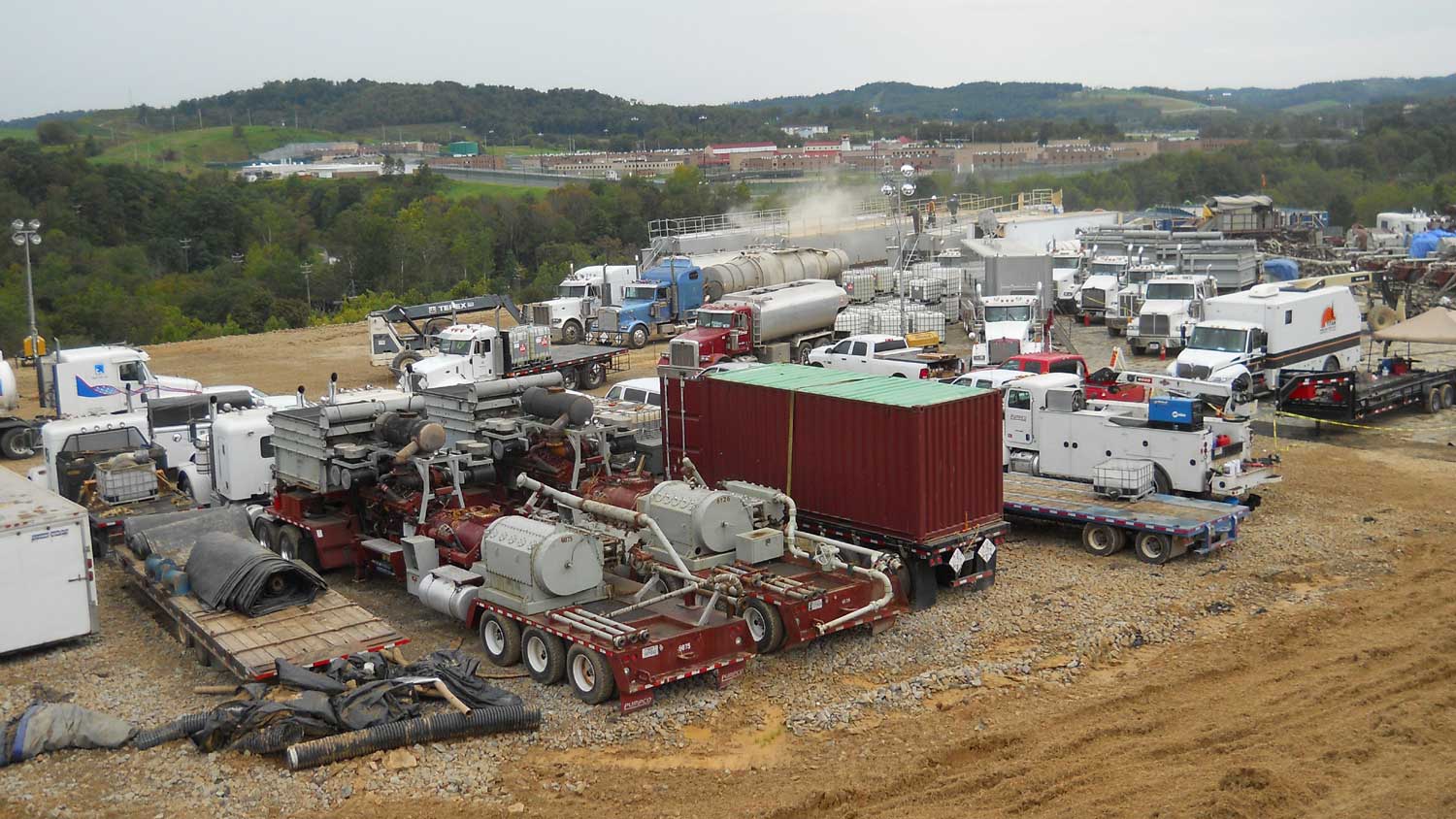
Fracking_Site_in_Warren_Center,_PA_04

A natural gas fracking site in Warren Center, PA. Photo credit: Ostroff Law

The State Corporation Commission has approved Dominion Virginia Power’s proposal for a new gas-fired power plant in Brunswick County, rejecting arguments from the Sierra Club and others that ratepayers would be better served by a combination of low-cost energy efficiency and price-stable renewable energy.

The decision in the case (PUE-2012-00128) reflects the same discouraging themes we have seen from our regulators before: a tendency to believe everything Dominion tells them, coupled with an absolute refusal to acknowledge the climate crisis bearing down upon us and the changes in the energy market that make fossil fuels increasingly risky.

As the SCC put it in its order, “The relevant statutes… do not require the Commission to find any particular level of environmental benefit, or an absence of environmental harm, as a precondition to approval.” (Note to legislators: How about fixing that?)

The SCC’s state of denial is not just about the future. Since at least the 1980s, Dominion has consistently overestimated future demand growth.

A little skepticism might be in order when Dominion projects the same level of demand growth that keeps not materializing.

But the SCC is not skeptical. Its order declares Dominion’s load forecasts “reasonable.”

Evidently one can be both reasonable and wrong. Demonstrating this in real time, only a few days after the SCC issued its order in early August, Dominion CEO Tom Farrell had to explain to shareholders why electricity demand has not grown this year in line with company predictions.

Amnesia was also in evidence at the public hearing on the case, where proponents of the gas plant – everyone from Dominion employees to the SCC staff – kept insisting on the environmental advantages of natural gas.

But congratulating each other that at least it wasn’t a coal plant seemed odd to those of us who recall the fanfare surrounding the opening of Dominion’s newest Virginia coal plant, all of one year ago.

My, how quickly things change. No one is proposing to build coal plants any more. Now that natural gas costs half what coal does, people have suddenly noticed that burning dirty black rocks to make electricity is a terrible idea. “Look at all that pollution!” they say in wonderment. “How last century!”

Hydraulic_Fracturing_Marcellus_Shale USGS

A natural gas fracking operation in the Marcellus Shale. Photo credit: U.S. Geologic Survey

But in this century, natural gas is already wearing out its welcome – and not just among unhappy landowners who say fracking has spoiled their drinking water. Scientists measuring methane escaping from extraction wells warn that high levels of “fugitive emissions” may make natural gas a major contributor to climate change.

The SCC takes no notice of climate change, but it ought to consider that others do, presenting a financial risk for any fossil fuel plant. A national plan to reduce carbon emissions could make gas very expensive.

Yet building the Brunswick plant commits Dominion ratepayers to paying whatever the market price is for natural gas for the next three decades. Worse, it’s effectively a baseload plant, designed to burn gas 24/7; it can’t ramp up and down quickly to supply power when needed on a short-term basis, such as to fill in around the power supplied by wind and solar.

Analysts predict wind and solar will increasingly become the first choice for new generation, as these renewables get steadily cheaper and offer long-term price stability as well as environmental benefits.

Indeed, wind turbines beat out natural gas plants as the largest source of new generating capacity nationwide last year. Companies are designing natural gas turbines now that integrate with renewable energy, allowing utilities to hedge their bets on gas.

Well before the end of its 36-year life, a 24/7 baseload plant like Brunswick may be reduced to a giant concrete paperweight.

It would seem wise to hold off on building this gas plant, and we could. Investments in energy efficiency would more than meet the demand the Brunswick plant is supposed to serve, at a lower cost.

The SCC brushed aside this argument, pointing out that it consistently swats down good energy efficiency proposals – and intends to continue doing it.

So Virginia ratepayers, prepare yourselves: You’ve already been stuck with one of the last coal plants to be built in America. Now get ready for 30 years of paying for a natural gas plant. As for your dreams of wind and solar, keep dreaming.

Originally published in the Hampton Roads Virginian-Pilot on August 29, 2013. 

Unknown's avatar

Virginia doesn’t need another gas plant

On April 24, Virginia’s State Corporation Commission (SCC) will consider a proposal from Dominion Virginia Power to build a new natural gas-fueled generating plant, the second of three it wants to add to its holdings. Its first plant, now under construction in Warren County, generated little opposition because it will replace old coal boilers that Dominion needs to retire.

But the latest proposal for a plant in Brunswick has come in for fierce criticism, and for good reason: we don’t need another gas plant. Dominion has exaggerated the growth in demand that it says justifies the plant, and the company could more cheaply meet its actual needs with energy efficiency and renewable energy.

Moreover, the world is changing, and the energy model of big utilities running big baseload power plants is becoming outdated. If Dominion builds another of these, Virginia could end up stuck with a giant concrete paperweight.  The SCC owes it to customers not to let this happen.

Every year Dominion tells regulators it expects demand to increase by 1.5% to 2% per year indefinitely, but its actual energy sales have been essentially flat since 2006. Sure, the recent recession threw everyone a curveball, but Dominion’s tendency to overstate future demand goes back decades. The company seems not to have anticipated widespread changes like more efficient appliances and better building codes that let consumers use less electricity even while we’re buying more gadgets.

With a little effort, we could save even more energy. Virginia ranks in the bottom half of states for energy efficiency, and Dominion is not on track to meet even the modest efficiency goals of the Virginia Energy Plan. Some of the fault for this lies with the SCC itself, which has often rejected energy efficiency programs. But nor has Dominion tried very hard. Even their rate structure is designed to encourage energy use. Greater efficiency would mean lower electricity sales, and who wants that? Not a company that makes its money building plants and selling electricity.

And this is a shame, because the cheapest energy is the energy that isn’t used. Virginians use 20% more electricity per person as our neighbors in Maryland, so we have a lot of low-hanging fruit we should pick before we build another power plant.

Even if we needed more power, though, building another baseload natural gas plant is a bad plan. A “baseload” plant is one designed to run continuously, unlike a “peaker” plant that fills in when needed. The price of natural gas fluctuates wildly, so building a baseload plant means committing customers to paying whatever the going rate happens to be, all day, every day, for the 30-year life of a gas plant. With about a third of Dominion’s power mix already coming from natural gas, surely adding more baseload gas is a reckless gamble when alternatives are available. Even Dominion CEO Tom Farrell has warned against an over-reliance on natural gas for this very reason.

It used to be that alternatives to fossil fuels weren’t much available, so a 30-year gamble was normal, and regulators didn’t trouble themselves by asking what the world would be like in 20 years. Wind and solar have changed that. When you build a wind farm or a solar facility, you know exactly what you will be paying for energy 20 years down the road, because your “fuel” is free. Building wind or solar is like locking in a fixed-rate mortgage instead of gambling on an adjustable rate mortgage with a low teaser rate. With that as an option, why should Virginians commit themselves to 30 years of buying gas at whatever the market decides is the price?

With prices dropping rapidly, wind and solar are today’s fastest growing energy technologies, and wind is second only to gas as a source of new electric generation. Of course, Virginia can’t boast a single wind farm today, and the smattering of solar across the state totals less than 1% of what New Jersey has. But even here, time and economics are on the side of renewable energy. Citigroup recently issued a report projecting that renewable energy will reach grid parity across the U.S. within the next few years and will gradually relegate all other fuels to back-up status.

This makes it an even worse idea for Dominion to invest in a plant that cannot easily adjust its output when the wind picks up or the sun comes out. Other options exist. Gas turbines are now being designed to integrate with renewable energy, combining high efficiency with the ability to ramp up and down quickly. Companies like General Electric are making big bets that this is the future of gas turbines.

Dominion, meanwhile, seems to be looking at the future as if we were back in the 20th century, and without even taking advantage of hindsight. Its plan is a bad deal for its customers, and the State Corporation Commission should reject it.

Unknown's avatar

Tom Farrell’s nuclear fantasy

Tom Farrell doesn’t get it. Dominion Power, the utility of which he is CEO, has been all about building natural gas plants for the past couple of years, as it rushes to take advantage of cheap fracked gas. Out with the aging coal plants that had been its first love, in with the next cheap thing, and never mind the pollution! Then suddenly two weeks ago, faced with a question about climate change, Farrell told reporters the answer is more nuclear plants.

Mother Earth to Tom Farrell: The correct answer is “renewable energy.”

Most of the rest of the country gets this. Wind supplied more new electric generation than natural gas did in 2012. More people work in solar energy than in coal mining. Renewable energy has overtaken nuclear worldwide. Almost no one is building nuclear plants, partly because—here’s an inconvenient truth for you, Tom—they cost too much. Almost three years ago a Duke University study found that power from new nuclear plants is more expensive than solar energy, and the cost of solar has only gone down since then.

But Farrell is convinced wind and solar can’t provide reliable electricity to power the whole grid. You’d think he’d been reading propaganda from the Koch Brothers and had come to believe that if there are solar panels somewhere and a cloud crosses the sun, the whole grid crashes.

Can I just point out here that Dominion’s own North Anna nuclear reactors shut down suddenly in 2011 following an earthquake in Virginia, and the grid did not crash? Even though nuclear is one-third of Dominion’s Virginia portfolio, and North Anna represents more than half of that? And even though, while weather forecasters are pretty good at predicting regional cloud cover, no one can yet predict an earthquake?

The reason the grid didn’t crash is that grid operators make sure there is enough surplus generation available to keep supplying power even at times of catastrophic failure. And note that the nuclear plants didn’t come back online when the clouds cleared off, either. They were down for four months.

If nuclear power is more expensive than renewables, and it has to be backed up 100% with other forms of energy, for much longer time periods, where is the place for new nuclear?

As the CEO of a utility, Tom Farrell should know better. He should also know about the new study demonstrating that renewable energy alone—onshore wind, offshore wind, and solar energy—can power the entire grid 99.9% of the time. The study authors show that doing this would actually cost less than conventional sources of electricity, assuming you include in the price the “external” cost society pays for the use of fossil fuels. That is, if you factor in the cost of climate change, it’s cheaper to build renewable energy than new fossil fuel plants.

Climate aside, there’s other evidence for the superior value of renewable energy in providing price stability for customers and a whole range of benefits for the grid. And of course, for meeting demand at the cheapest possible cost, you can’t beat energy efficiency.

It’s time to face reality, Tom Farrell. If all you care about is making money for Dominion today, your natural gas strategy probably makes sense. But if you care about tomorrow—or even about the big picture today—it doesn’t. Either way, there’s no room in the picture for expensive new nuclear plants.

And if you’re sincerely concerned about climate change, now would be a good time for Dominion to invest in energy efficiency, wind and solar.

*    *    *

Note to readers: Willett Kempton, one of the authors of the study cited above on powering the grid with renewable energy, will be speaking at a townhall meeting sponsored by Sierra Club and Environment America this Wednesday, March 13, at the MetroStage Theatre, 1201 North Royal St., Alexandria, VA. The meeting is open to the public (Tom Farrell is especially invited). To RSVP, contact Phillip Ellis at phillip.ellis@sierraclub.org or 571-970-0275.


Unknown's avatar

For electric power generation, the end of fossil fuels is in sight

The rap on renewable energy is that it’s too variable to meet society’s demand for a constant supply of electricity. The answer to the problem turns out to be: More renewables.

111022-N-OH262-322Climate change is acting like an ever-tightening vise on our energy options. Each year that passes without dramatic decreases in our use of carbon-emitting fuels means the cuts we have to make simply get more drastic. By 2030, say experts, we must entirely replace coal with efficiency and renewable energy, or fry. Even the most intrepid environmentalists wonder if it can be done without huge price hikes and wholesale changes in how we live and use energy–changes that society may not accept.

A new study out of the University of Delaware shows it is possible to power the grid 99.9% of the time with only solar and wind energy, at a cost comparable to what we are paying today. This counters the conventional wisdom that we will always need large amounts of fossil fuel as a backup when the wind doesn’t blow and the sun doesn’t shine. It also means the goal of getting largely beyond fossil fuels by 2030 is not just achievable, but practical.

The study focused on a regional transmission grid known as PJM, which encompasses parts or all of fourteen states, mostly in the Mid-Atlantic. Researchers ran 28 billion computer simulations to find the most cost-effective combinations of wind and solar that could power the entire grid, at the least possible cost and with minimal amounts of energy storage. The winning combination relied on natural gas turbines for backup on only five days out of the four years modeled.

The study authors looked for the least cost taking account of carbon and other external costs of fossil fuels, which are not being accounted for today, but they also assumed no technology improvements over time, making their cost estimates conservative overall. All the least-cost combinations used much more storage than we have today, but needed it for only 9 to 72 hours to get through the entire four years modeled.

The secret to dealing with the inherent variability of wind and solar, it turns out, is to build even more wind and solar. One wind turbine is unreliable, but tens of thousands spread across a dozen states greatly reduces the variability problem, and tens of thousands of wind turbines balanced with millions of solar panels is better still. To get to 99.9% renewables, you keep adding wind turbines and solar panels until you are producing three times the electricity that you actually need to meet demand. To power the grid with renewables just 90% of the time, you would have to produce “only” 1.8 times the electricity needed. (And yes, we have the windy sites and the sunny places to support all those projects.)

While it may sound strange to build more generation than you need, that is already the way grid operators ensure reliability. To take one example, if you were in Virginia when the “Big One” struck in 2011, you will recall that the earthquake caused the North Anna nuclear plant to shut down for four months. Nuclear energy provides a third of the electricity in Dominion Virginia Power’s service territory, and yet the lights stayed on. That’s because the grid wizards at PJM simply called on other power sources that had been idle or that had spare capacity.

The other component of reliability is the ability to match demand for power, which rises and falls with the time of day, weather, and other factors. So-called “baseload” plants like nuclear, coal, and some natural gas turbines don’t offer that flexibility and must be supplemented with other sources or stored energy. PJM currently uses more than 1,300 different generating sources, as well as about 4% storage in the form of pumped hydro. The right combination of other sources can replace baseload plants entirely.

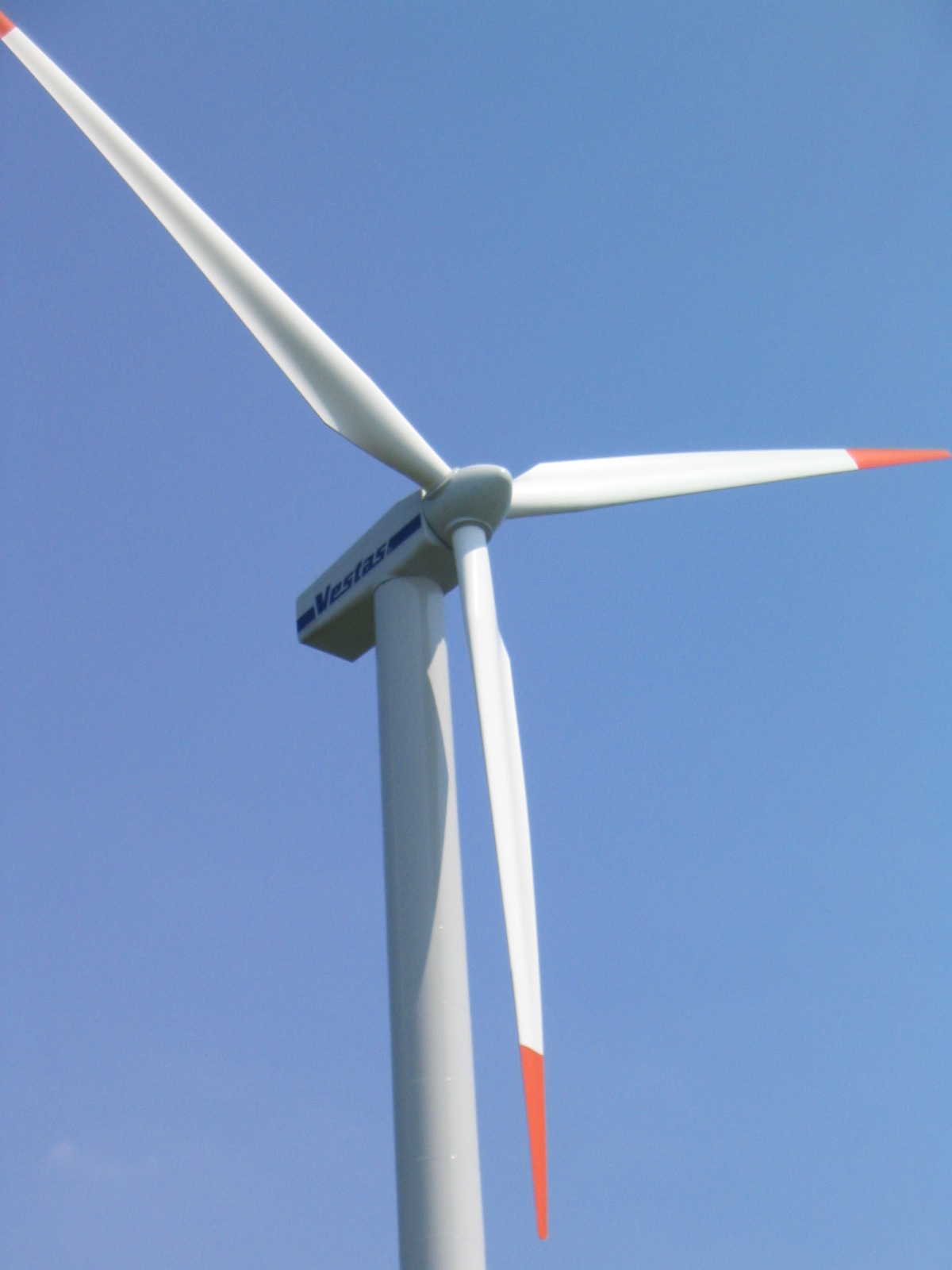
wind turbine-wikimedia

Pairing wind and solar improves their ability to meet demand reliably. Onshore wind tends to blow most strongly at night, while solar energy provides power during the peak demand times of the day. Offshore wind power is also expected to match demand well. Combining them all reduces the need for back-up power.

But until now policy makers have assumed that solar and wind won’t be able to power the grid reliably, even when combined and spread out over PJM’s more than 200,000 square miles, and with the addition of wind farms off the coast. Critics have insisted that renewable energy requires lots of back-up generating capacity, especially from some natural gas turbines that can ramp up and down quickly. New gas turbines have even been designed specifically to integrate with renewables in anticipation of increasing amounts of wind and solar coming onto the grid.

This makes the work of the U. Delaware researchers a game-changer by showing that wind and solar can be backed up primarily by more wind and solar. And so we can begin planning for a future entirely without fossil fuels, knowing that when we get there, the lights will still be on.

Unknown's avatar

The trouble with natural gas

Natural gas was supposed to be the answer to all our energy dreams. It’s produced in America, cheap, plentiful, and guilt-free, like the fuel version of Diet Coke. In the dream, it is a lifeline for struggling family farms that can make money leasing their mineral rights. It will wean us off dirty coal for generating electricity, and yet be so cheap that poor people don’t have to be cold at night. It will power the American manufacturing renaissance. It will bring down carbon emissions and stop global warming from happening, making it the savior of the whole world, including Greenland’s glaciers, the coral reefs, the polar bears, and civilization itself.

The new technique of natural gas extraction known as hydraulic fracturing with horizontal drilling, or “fracking,” has unlocked vast supplies of methane trapped in shale formations across the country, driving down the price of natural gas to historic lows and promising a supply that the government estimates will last 92 years at current consumption levels. Electric utilities have been switching from dirty coal to “clean natural gas” at record rates.

But instead of ushering in a future of boundless clean energy, natural gas has been setting off alarm bells all over the country. First, there are those family farmers and other landowners who leased their land for fracking and now say it has contaminated wells and surface water, polluted the air, killed farm animals, ruined crops, and made their lives a living hell with all-day, all-night truck traffic.

The heck with them. They signed contracts. Caveat greedy landowner, right?

Let’s offer a little more sympathy to their neighbors who suffer the consequences without getting lease payments. But keep in mind that the gas industry denies all charges. None of this happened. Or if it did, the ruined water wells were due to naturally-occurring methane or other chemicals in the area, and it is an unlucky coincidence that the pollutants reached hazardous levels in the drinking water aquifer shortly after a gas company drilled down through it en route to the natural gas thousands of feet below, with impenetrable rock layers in between.

I once heard a gas industry lobbyist inform a room full of conference attendees that it was impossible for a fracking operation to contaminate drinking water. I was reminded of the way the computer geeks in college used to insist there was no such thing as a computer error. “I’m sure you’re right,” the rest of us would answer humbly. “Now can you help us recover the data?”

At least the computer geeks would then get busy fixing the bugs so that the next time the system crashed, it was from an entirely different cause. Gas company lobbyists have been stuck at denial, and it has only done them damage with the public. Admitting to a bad well casing seems far preferable to driving a now-widespread belief that methane is migrating up through rock fissures caused by fracking.

As for the other complaints—the 24-7 truck traffic, extra air pollution from operations, polluted wastewater, and occasional surface spills—the response from the gas industry and its friends has been that this is the price of progress. Industry is not pretty. Get over it. Who entitled you to a quiet life in the countryside?

But another alarm bell has been ringing, and it gets progressively louder. This one warns that drilling for natural gas, far from being the answer to climate change, may actually be making it worse. The problem is one of  “fugitive” emissions, which sounds vaguely criminal and exciting, but simply refers to the small percentage of natural gas that escapes into the atmosphere at drilling sites. Methane, the major ingredient of natural gas, is a greenhouse gas that is much shorter-acting than carbon dioxide but twenty-five times more powerful. If recent analyses prove correct, the amount of methane that escapes during the fracking process may be enough to make natural gas worse than coal as a driver of climate change. This is especially unhappy news given that natural gas integrates well with more variable energy sources like wind and solar, and environmentalists had been counting on it to help in the transition to a future powered mainly by renewable energy.

The trillion-dollar question is whether all these problems are inherent in natural gas drilling, or whether the gas companies could solve them if they put their minds to it. After all, wind energy companies have shown they can be responsive to environmental concerns and still grow as an industry. Environmentalists have turned from being the biggest critics of wind energy to its biggest advocates. There’s no rule saying gas drillers have to stonewall, or that the companies with the best operations have to support those drillers whose operations threaten communities and the climate.

Drilling companies don’t want methane to escape, obviously, because that is lost revenue for them. But neither do they seem to be making heroic efforts to monitor and prevent fugitive emissions. A few companies have been using innovative approaches to solve other problems, however. One has developed a method that uses propane as the fracking fluid, saving millions of gallons of fresh water for every well. The propane returns to the surface with the gas to be reused in a virtuous cycle.

Unfortunately, this method turns out to be more expensive than using water, which is often free if you grab it before anyone else realizes they might need it. So while you have to admire the elegance of the propane solution, you can’t really expect any self-respecting capitalist to adopt it just because it is better for society in general.

The same is true of an experimental approach that uses CO2 as the fracking medium. When water is the medium, most of what is injected remains underground permanently. CO2 seems to behave the same way, suggesting that the fracking wells might be able to sequester enough carbon underground to offset much of the CO2 that is emitted when the gas is burned. Coupled with carbon capture technology at plants burning natural gas for electricity, this technique would significantly lower the carbon footprint of natural gas. Whether it is enough to offset the problem of fugitive methane emissions is unclear.

But CO2 is already used in oil extraction, and drilling companies can’t get enough of it as it is, because carbon capture is expensive. Sure, it’s not as expensive as adapting our coastal cities to rising sea levels caused by climate change, but that’s a cost to society; carbon capture is a cost to industry. Any gas company or utility that adopts more expensive methods than its competitors, just because it’s better for society, won’t be around for long.

Capitalism can’t solve this problem alone, or any of the other pollution issues posed by natural gas extraction. Nor are individual states able to regulate practices effectively, because companies that face higher costs in a well-regulated state will move to states with more lax regulations in order to retain their competitive position.

The only effective answer is for the federal government to impose a set of best practices that apply to all members of the industry nationwide, so the good actors aren’t placed at a competitive disadvantage. The requirements would include extraction practices that minimize the risk of groundwater and surface water contamination, reduce air pollution, and prevent the escape of methane into the air. They would provide for monitoring and analysis, so regulators and industry would know where, when and how to take corrective measures. They would also cover the consumption end of the cycle, requiring carbon capture technology for all new fossil-fueled electric generation, and ensuring that the costs to society are borne by the industry.

This isn’t a radical idea, by the way. It is how we used to approach industry-wide problems, back before fossil fuel lobbyists reframed regulation as a dirty word that meant we were no longer a free people. The natural gas industry is now in a hugely dominant position over other fossil fuels. They can afford to implement rigorous best practices across the board and still retain a competitive edge. They should be lobbying to make them universal, not fighting efforts to regulate.

The alarms bells are growing louder. Will the gas industry rise to meet the emergency, or just keep trying to cut the wires?