Unknown's avatar

How Trump’s deal with Big Oil is raising your energy bills

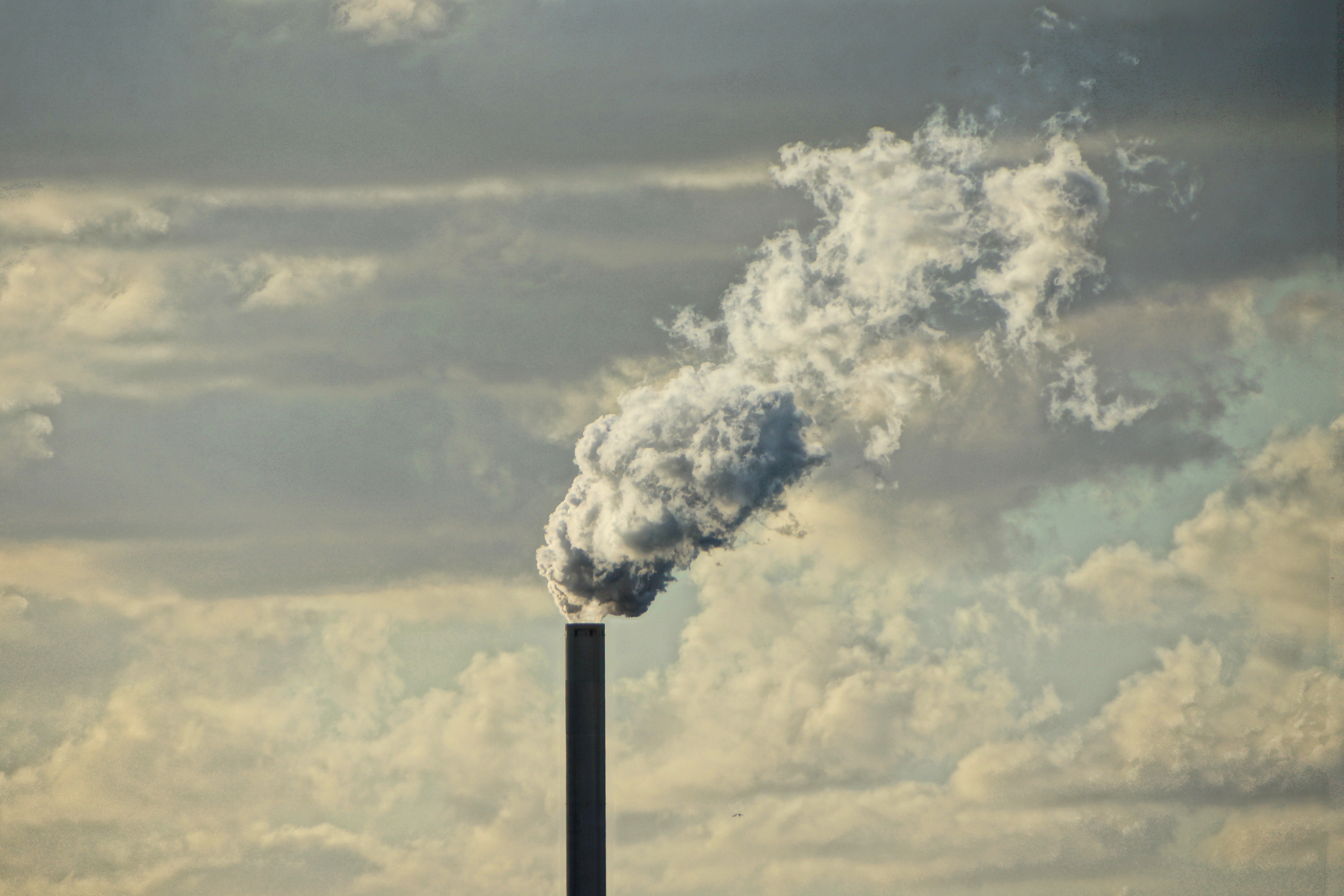
smokestack
Photo credit Stiller Beobachter

There is a principle in law that says someone intends the natural result of their actions. You cannot throw me out a window and say you didn’t mean for me to get hurt. 

By the same principle, if you block new solar and wind generation, you can’t say you didn’t intend to throttle energy production. 

President Trump has made it clear he wants to kill wind and solar, and his appointees have followed through. The Department of Interior is refusing leases and permits to wind and solar projects, even as it moves ahead on lease sales for oil and gas drilling.

Interior even issued a stop-work order on an offshore wind farm that is 80% complete. The project was on track to supply enough energy for 350,000 homes in Rhode Island and Connecticut, until the Trump administration stepped in. A judge later lifted the order, but not before the company building the project saw its share price drop to a record low

Reducing the amount of low-cost, clean electricity developers can add to the grid will have an enormous impact. Clean energy is so much less expensive and faster to build than fossils fuels that renewable energy and batteries made up over 90% of the energy capacity added in the U.S. last year. 

It’s fortunate for consumers that Trump won’t be able to stop all wind and solar projects, because the small number of fossil fuel plants under development won’t fill the gap. It takes years to develop a new gas plant, and gas turbines face an order backlog of up to 7 years.

The shortfall in new generation is happening at a time when the use of electricity is surging, mainly due to demand from data centers. Other customers, including ordinary residents, now have to compete with data centers for increasingly expensive electricity. Rates are going up as a result, and grid operators warn we may soon face power shortages

Trump’s only concession to the power crunch is to order a few fossil fuel plants to stay open that their owners had planned to close for economic reasons. Ordering an uneconomic plant to stay open means someone loses money. Trump hasn’t offered federal dollars to pay the difference. The utilities that own the plants will pass the cost on to consumers.

If throttling energy production and raising energy costs is the natural result of Trump’s actions, it’s reasonable to assume that’s his intent. So many experts have pointed out the damage his policy will do that the alternative explanation – that the president is deluded and foolishly thinks his actions will somehow result in more energy production and lower costs – doesn’t hold up.

But why would the president deliberately hamstring American energy production and raise electricity costs for consumers? 

Because that’s the deal he made with oil and gas industry leaders at a closed-door fundraiser at Mar-a-Lago last year, in exchange for the more than $200 million the industry spent to get him elected. Actually, Trump asked for a billion dollars, and in return promised to dismantle environmental regulations, go after the wind industry and scrap President Biden’s policies promoting electric vehicles. 

At a later fundraiser, he also promised to approve new natural gas exports, in spite of warnings from critics that these exports would drive U.S. prices higher – which is exactly what happened.

Promises made, promises kept, as Trump’s fans like to say. Trump’s appointees have gutted environmental protections and done their best to keep wind and solar off the grid. Most people know the “One Big Beautiful Bill” revoked tax incentives for homes and businesses to install solar; less widely reported is that it included $18 billion in tax incentives for the oil and gas industry and lowered the amounts the industry must pay to lease federal lands for drilling, among other rewards. 

Less renewable energy and higher prices means more market share and higher profits for fossil fuels. The natural result is that the American consumer will have to pay through the nose for energy. 

Too bad, folks, but that was the deal.

This article was originally published in the Richmond Times-Dispatch on September 30, 2025.

Unknown's avatar

Trump’s attack on offshore wind is hurting Virginia. Why aren’t Republican leaders fighting for us?

On May 5, attorneys general from 17 states and the District of Columbia — not including Virginia, regrettably —  sued the Trump administration over its attacks on the wind industry. The lawsuit challenges an executive order, signed by President Donald J. Trump on his first day in office, stopping all approvals, permits and funding for wind projects across the country and offshore. 

Since the order was signed, the administration hasn’t just blocked new projects, it’s issued a stop-work order for one project under construction in New York and revoked a permit for another. The actions inflict enormous damage on the wind industry and on the economies of states that need the energy and jobs this industry could deliver.

One state that will lose big under Trump’s order is Virginia, which has positioned itself to be a national leader in offshore wind deployment, supply chain and manufacturing. On top of that, Virginia badly needs the electricity from offshore wind to help meet the demand from data centers; it can’t afford to have a major new source of energy strangled in its infancy. Yet Attorney General Jason Miyares did not join the lawsuit.

Sure, Miyares wants to be a good soldier in the Trump putsch. And no doubt he wouldn’t feel at home among all those Democratic AGs (there were no Republicans signing the complaint). But he could at least speak up in his state’s interest. Some well-timed advocacy would go a long way in showing the administration that wind energy is not a partisan matter. 

It doesn’t have to be just our attorney general, either. The silence from Gov. Glen Youngkin has been equally deafening. What are they afraid of? Youngkin can’t run for reelection, and Miyares has already secured his party’s nomination in his bid for reelection this fall.

Any politician who styles himself as pro-business ought to be pushing back on the Trump administration’s interference with contracts, destruction of American jobs and infliction of billions of dollars in damage to a growing domestic industry. Especially when it is happening to their own state, the big risk is in not speaking out.

And let’s face it, attacking wind energy is Trump’s own peculiar hobbyhorse, not his party’s. Though Republican support for wind energy has dropped a bit in recent years, it remains above 50%. Onshore wind is the largest source of electricity in Iowa and South Dakota and a major source in several other Republican strongholds. Wind power is responsible for billions of dollars in economic investment while keeping utility rates low in states that rely on it. 

Offshore wind is more expensive, but states have embraced it for its potential to lower electricity bills over time while relieving grid congestion, creating well-paying jobs and providing clean, zero-carbon power to East Coast cities. Thirteen states have established offshore wind development goals, totaling over 112 gigawatts (GW) by 2050. 

In Virginia, Republican leaders have been among the biggest boosters of offshore wind for more than 15 years. Legislators from both parties supported the creation of the Virginia Offshore Wind Development Authority. With a boost from then-Gov. Bob McDonnell, the Virginia Department of Energy partnered with Dominion Energy on a research project that produced the nation’s first offshore wind turbines in federal waters. Republican support also paved the way for Dominion’s development of the 2.6 GW Coastal Virginia Offshore Wind (CVOW) project, now more than halfway to completion and expected to begin delivering electricity next year. 

Nor is CVOW a one-off; the Virginia Clean Economy Act declares twice as much offshore wind power to be “in the public interest.” At the offshore wind International Partnering Forum held in Virginia Beach last month, Dominion displayed a poster of the projects it has in the works. These include a project off Kitty Hawk, North Carolina, which Dominion acquired last October, as well as a huge lease area east of CVOW, which Dominion secured in a lease auction from the federal government last August. All told, Dominion’s projects could deliver a total of 9 GW of clean, renewable power. 

A poster displaying Dominion Energy’s planned offshore wind projects.

As important as the energy itself is, Virginia leaders believe offshore wind can be a driver of economic development and job creation for the Hampton Roads area. The Virginia Economic Development Partnership touts Virginia’s strategic location, strong maritime industry and ready workforce as draws for businesses up and down the offshore wind supply chain.

Some businesses have already set up shop in Virginia to serve the industry. These include most recently a Korean subsea cable manufacturer that is investing almost $700 million for a facility in Chesapeake. Gov. Glen Youngkin was on hand for the groundbreaking last month, calling it “a proud moment for Virginia.” Attracting the company was only possible because of Virginia’s commitment to the wind industry – as well as the availability of federal tax credits that Trump also intends to eliminate. 

CVOW will likely survive Trump’s attacks (albeit at a higher cost due to his tariffs), but Virginia’s ability to develop an offshore wind workforce and supply chain are very much at risk. The Trump administration’s war on wind power already threatens developers with losses in the billions of dollars. With permitting at a halt, companies are headed for the exits instead of creating the project pipeline necessary for offshore wind to become the powerhouse industry that it is in Europe and Asia.

Trump may have planned his economic sabotage to hurt northeastern states with Democratic governors, but the collateral damage to Virginia is considerable. As it is, our economy has taken a hit from Trump’s mass firings of federal workers, thousands of whom live here. We can’t afford to lose four years of offshore wind progress for no better reason than that Trump wills it. 

Silence is not an acceptable response. Miyares and Youngkin must speak up for Virginia.

Originally published in the Virginia Mercury on May 19, 2025.

Update: On May 20 we learned Trump’s Department of the Interior rescinded its order to shut down the $5 billion Empire Wind project in New York, reportedly after Gov. Kathy Hochul agreed to reverse a decision five years ago denying a permit to a natural gas pipeline. This is being billed as a “compromise,” which is apparently what extortion is called when the Trump administration does it.

Unknown's avatar

It’s time for Virginia to plan its next offshore wind farm

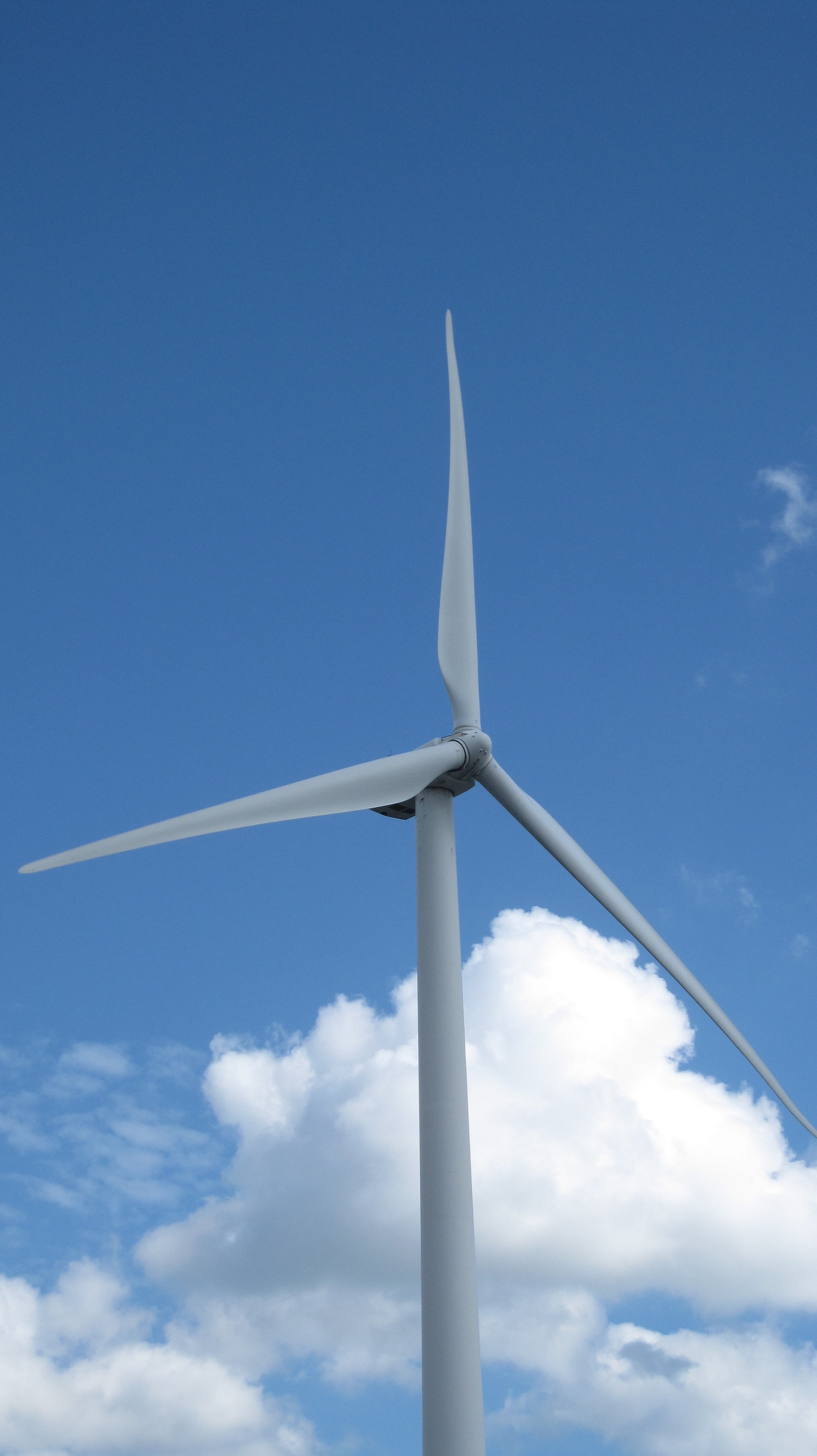
offshore wind turbines

Virginia’s first commercial offshore wind farm is on track to start construction next year and to be fully operational in 2026.  The Coastal Virginia Offshore Wind (CVOW) project being developed by Dominion Energy will be the single largest offshore wind farm in the U.S. and among the first full-scale commercial wind projects built in U.S. waters. 

Yet it has taken us 10 years to get this far. Future projects will have shorter timelines now that the industry is gaining its footing and government bodies have figured out how to regulate it. Even so, the complexity of planning, permitting and building giant wind turbines 25 miles out in the ocean means Virginia needs to start planning the next project now to ensure that the supply chain businesses that have located here, and the workers we are training to build CVOW, still have reason to remain in Virginia come 2027. 

For most Virginians, offshore wind may still feel experimental because it has produced only two small projects in the U.S.: a 5-turbine wind farm off of Rhode Island’s Block Island built in 2016 and a two-turbine pilot project 27 miles out from Virginia Beach that started generating power in 2020. But at least 30 other projects are underway up and down the East Coast, including one currently under construction off Massachusetts and another off of New York that will begin construction this year. Plans are also underway for wind farms in the Great Lakes, off the West Coast and in the Gulf of Mexico. 

Together these projects add up to more than 53,000 megawatts (MW), exceeding the Biden Administration’s 30,000 MW by 2030 goal – enough to power 10 million homes with clean, renewable energy. According to the U.S. Department of Energy, independent forecasts show that goal to be solidly realistic. The U.S. offshore wind industry itself recently announced a longer-term target of 110,000 MW, reflecting the business community’s expectations for growth. 

The industry is also far more mature in other parts of the world. Global capacity passed the 50,000 MW milestone last year, and the global pipeline stands at more than 368,000 MW. (Surprise, surprise: China is eating our lunch, installing 13,790 MW in 2021 alone.)

Perhaps the most compelling evidence for the promise of the offshore wind industry in the U.S. is the size of industry events. In the course of a dozen years, U.S. offshore wind conferences have gone from gatherings of a few hundred academics, environmentalists and entrepreneurs in a hotel ballroom to the nearly 4,000 business people and hundreds of exhibitors who packed the Baltimore convention center at the end of March for the Business Network for Offshore Wind’s International Offshore Wind Partnering Forum (IPF).

Often the governor of a state hosting one of these annual conferences uses the occasion to unveil new goals or infrastructure investments; Maryland Gov. Wes Moore did not miss his chance this year. He announced that Maryland plans to develop 8,500 MW once the federal Bureau of Ocean Energy Management makes new lease areas available, a goal behind only New Jersey’s 11,000 MW target and New York’s 9,000 MW. Virginia’s goal begins to look cautious by comparison.

The industry does face challenges. Inflation and supply chain issues have disrupted timelines and threatened profitability. There aren’t enough workers. Transmission constraints hinder the ability to get power to customers. Permitting is a pain in the neck. Here in the mid-Atlantic, it’s hard to identify new areas of the ocean suitable for wind farms, in large part because the Department of Defense wants it all for itself. 

Other challenges are more of the good kind, such as the fact that wind turbine sizes are increasing faster than ships capable of transporting and installing them can be built. Larger turbines mean more power at less cost, and no one is quite sure what the upper size limit might be. On land, the difficulty of transporting blades that can be the length of a football field means turbines are limited to about 3 MW. Fabricating parts at coastal facilities allows turbines to scale up as far as physics and advanced material manufacturing allow.

Dominion installed 6-MW turbines for its pilot project, which was seen as the new standard a few years ago. Today the company plans to use 15-MW turbines. Each one of these massive turbines is said to produce enough energy to power 20,000 European households. I have not seen that figure translated into U.S. suburban McMansions, but it is still an eye-popping amount of emissions-free power from a single structure.  

Oh, and Dominion handled the installation ship issue by building its own vessel, which it will rent out for the Massachusetts and New York projects until it is needed for Virginia’s and others in the queue. Problem solved, at least for Virginia, though the industry needs many more ships.  

Will the cost of energy come down? 

Virginia’s CVOW project has been criticized for its high overall cost, largely the result of our immature domestic industry. The Biden Administration has set a goal to lower costs by one-third by 2030. If history is any indication, this should be readily achievable. A National Renewable Energy Laboratory (NREL) analysis shows costs have fallen by more than half since 2016, and projects that by 2030, the levelized cost of energy from offshore wind turbines will fall by another third.  

Scaling up turbines to capture more wind energy is one approach to bringing the per-kilowatt-hour price down. Economies of scale, a U.S. supply chain, and a range of innovative technologies are all expected to contribute. And of course, the Inflation Reduction Act, with its tax credits for domestic manufacturing and renewable energy, is creating a gold rush of sorts, as companies compete to get a piece of the action. 

Another significant factor in reducing costs is automation and machine learning. Some of the gains are incremental, such as optimizing turbine operation and improving turbine siting through improved wind and wake modeling. Other advances seem like windows into a future where robots take charge. Multiple exhibitor booths at IPF displayed crewless, self-piloting survey and depth-monitoring vessels and underwater robots capable of doing more tasks than humans can. Biologists and geologists stay comfortably ashore while on-board computers collect information at sea around the clock and send the data back. 

Today’s innovation will inform the next great leap forward for the industry: floating wind turbines that open deep water to energy production. Right now, floating turbines must be tethered to the seafloor  and connected to cables to bring power to shore. For various reasons this technology is more expensive than fixed-foundation turbines, but here, too, the industry expects to become competitive in the future. 

Some people are thinking much bigger. Walt Musial, a principal engineer at NREL who is one of the top researchers in the field, gave an IPF audience a look into the future. There, automation and AI could make it possible for unmoored, cableless turbines to pilot themselves around the oceans, chasing the best winds, avoiding hurricanes and turning electricity into liquid fuels like ammonia to drop off at ports of call or offshore “energy islands.”  Musial even referred to these turbines as “vessels,” evoking a whole new kind of wind-powered transportation.

 A display at the Business Network for Offshore Wind’s IPF conference exhibits an autonomous wind turbine that could contribute to the nation’s future wind energy capacity. (Ivy Main/The Virginia Mercury)

It’s a great time for workers entering the industry — if you can find them 

Though un-crewed, AI-directed traveling wind turbines may be the future, the present still requires foundations, cables, service vessels and, especially, a large workforce. Attracting and training an offshore wind workforce has become such an urgent issue that the topic earned its own track at IPF. 

To its credit, this heavily male, heavily white-dominated industry says it is committed to recruiting a diverse workforce and ensuring equitable development of offshore wind, also a goal of the Biden Administration. It will have to; right now, no one has enough workers, so finding them means recruiting from overlooked communities and addressing the social and economic barriers that have kept many people out of the skilled labor force. 

While not new to other large infrastructure projects, Community Benefit Agreements with detailed commitments covering local job creation and other investments, are new for offshore wind. Dominion has not entered any such agreement in Virginia, but as part of its case before the State Corporation Commission last fall in which it received permission to proceed with CVOW, the company signed a stipulation agreeing to an extensive and diverse community outreach program. Eileen Woll, Offshore Energy Program Director for the Sierra Club’s Virginia Chapter, told me Dominion is following through on this pledge.

Woll is also part of a task force made up of academic and community groups from the Hampton Roads area that has developed a plan for community engagement and outreach to identify potential workers from harder-to-reach demographic groups. She told me the “Breaking Barriers” project team has applied for a $500,000 grant from the U.S. Department of Energy to fund their work.  

The Virginia booth at IPF. (Ivy Main)

Halting steps towards Virginia’s next project 

The Virginia Clean Economy Act made special provision for Dominion’s CVOW project as part of an overall target of 5,200 MW. If CVOW makes up 2,600 MW, where will the rest come from? A project under development off Kitty Hawk, North Carolina, would connect to the grid in Virginia Beach, but Dominion has shown no interest in buying the power; nor has Duke Energy. Dominion makes more money acting as its own developer. Huge energy users like the data centers operated by Amazon Web Services in Virginia could absorb all the energy from several Kitty Hawks, but Amazon hasn’t stepped up either.

Meanwhile, the federal Bureau of Ocean Energy Management (BOEM) has identified 1.7 million acres offshore North Carolina, Virginia, Maryland and Delaware with potential for new leasing. The challenge is to make space for wind in an area already claimed by fishing interests, the Coast Guard, and the Department of Defense. If Virginia leaders are serious about building an enduring offshore wind industry here, they will have to engage in some tough negotiations.

For his part, Gov. Glenn Youngkin seems to be trying to ensure that the next Virginia project will be subject to competitive bidding to avoid a repeat of the process that made Dominion Energy the sole developer and holder of the only Virginia lease area. The governor amended an offshore wind bill from Sen. Mamie Locke, D-Hampton, that was something of a nothingburger as passed by the General Assembly. Youngkin’s amendment turns the legislation into a plan requiring Dominion to work with the State Corporation Commission and other government agencies on a competitive solicitation process for the next offshore wind project. 

There is no guarantee that this will work, given that BOEM awards leases to high bidders. But if BOEM offers multiple wind energy areas for lease near Virginia, and awards the leases to multiple developers, then an SCC-led competitive process seems feasible, with a better result for consumers.

The governor’s language may have been inspired by a House bill from Del. Suhas Subramanyam, D-Loudoun, that would have had the SCC study the ownership structure of offshore wind projects and report on how to achieve the best outcome for consumers. Republicans killed that bill, but presumably they will be more open to promoting competition when the idea comes from their own party. 

The General Assembly will consider the governor’s amendment when it reconvenes on April 12. Let’s hope his amendment indicates that Youngkin is ready and willing to start the next phase of Virginia’s offshore wind industry.

This article was originally published in the Virginia Mercury on April 10, 2023.

Unknown's avatar

Is offshore wind expensive? Not compared to the alternatives

offshore wind turbines

A massive wind farm 27 miles off the coast of Virginia Beach moved one giant step closer to reality last November when Dominion Energy filed its Coastal Virginia Offshore Wind development plan with the State Corporation Commission. Dominion expects to begin construction on CVOW in 2024, and have all 2,587 megawatts of power connected to the grid in 2026.

But the wind farm’s price tag of $9.8 billion, and its $87 per megawatt hour levelized cost of electricity (LCOE), is causing heartburn over at the attorney general’s office. Scott Norwood, an expert for the Division of Consumer Counsel, criticized the project on three main grounds: that the cost of building CVOW is more than building a new nuclear reactor and 2-3 times as much as building solar facilities; that Dominion has overstated the benefits of the project; and that in any event, Dominion doesn’t need the energy before at least 2035. 

Recognizing that the General Assembly already made most of these points moot by declaring the project to be in the public interest, however, Norwood also recommended the SCC adopt consumer safeguards including periodic status reports and cost oversight. 

Anyone familiar with Dominion’s tendency to pad profits will say “Amen” to the call for strict SCC oversight. With a project this huge, the SCC must be especially vigilant.  Some of Norwood’s criticisms, however, seem more calculated for effect, while others miss the point. 

Norwood certainly knows his comment that CVOW is more expensive than nuclear is not true. The price tag of the only two nuclear reactors under development in the U.S. has ballooned so high ($30 billion and counting) that it almost makes Dominion’s former dream of a third nuclear reactor at North Anna look good. Norwood’s own devastating testimony likely helped kill the North Anna 3 project, which would have delivered electricity for $190 per megawatt-hour.

Norwood says Dominion has fudged the CVOW numbers and the project will cost customers more than the company admits, but still, Dominion would have to gold-plate every turbine before it could touch the cost of nuclear. 

This wasn’t the first time the General Assembly put its thumb on the scale for a Dominion project. The habit goes back to 2008, when a Dominion coal plant, the Virginia City Hybrid Energy Center, became the first project legislatively deemed “in the public interest.” Even back then its projected levelized cost of electricity was $93/MWh. Today, VCHEC loses so much money for customers that Dominion faces pressure at the SCC to close the plant. 

For that matter, I also see that my latest electricity bill from Dominion includes a non-bypassable charge for coal ash disposal of $5.68—an amount that exceeds the charges for participation in RGGI, new solar projects and the RPS program, combined. Pollution is also a cost of using fossil fuels, but it’s never included in the LCOE. 

Mr. Norwood did not suggest Dominion pursue new nuclear or new fossil fuel plants instead of offshore wind. If Dominion needed new generation, he says, solar is the low-cost alternative. It’s cheaper to build, and it produces electricity at a lower cost than offshore wind. He’s right: if all you cared about was LCOE, no one would build anything but solar in Virginia. 

But as critics never tire of pointing out, solar can’t provide electricity 24/7. Offshore wind has a hidden superpower: while solar production peaks in the middle of the day, the wind off our coast can produce electricity both day and night, is often strongest in the evening when demand rises, and is stronger in the winter when solar is less productive. Solar and offshore wind are complementary, and we can’t get to a carbon-free grid without both. So yes, we need CVOW.

Virginia’s leaders are also taking the long view on cost. In any new industry, early projects are more expensive than later ones. Europe’s 30 years of experience developing an offshore wind industry shows costs fall steadily as project experience and new technology enable developers to produce more energy with fewer turbines. States up and down the East Coast are pursuing offshore wind projects not only because they want clean energy, but because they expect these early investments to lead to lower-cost power as the industry achieves scale. 

State leaders also see economic development and job growth as important benefits, and those aren’t reflected in LCOE either. This is another area where SCC oversight can ensure the greatest public benefit from CVOW. Testimony filed by a Sierra Club expert urges that Dominion’s economic development plan be revised with specific metrics around the VCEA’s goals for diversity, equity and inclusion in the offshore wind workforce. Like reducing pollution, creating jobs for residents from low-income and minority communities adds to CVOW’s overall value.

Having criticized the VCEA’s overly-generous cost cap myself at the time, I agree with the AG’s office that the SCC has to keep a tight watch on expenses as Dominion moves forward with CVOW. But move forward it should, because Virginia needs offshore wind. 

This commentary originally appeared in the Virginia Mercury on April 1, 2022.

Unknown's avatar

It’s halftime at the GA, and do we ever have a show!

battle scene

Tense negotiations over the Clean Economy Act. (Aniello Falcone, Metropolitan Museum of Art)

Welcome to “Crossover,” the day on which the Virginia House and Senate have to finish the work on their bills and send them over to the other chamber. This is sudden death time; if a bill didn’t get across the finish line in time, it is dead for the year.

In past years, henceforth to be known as “the bad old days,” almost nothing good even got out of committee, much less reached Crossover. Clean energy advocates could pretty much plan vacations for the second half of February.

This year the Democrats are on a tear, especially in the House. Yes, a lot of good bills have been heavily watered down. This is still the Old Dominion, with the emphasis on Dominion. And it is definitely too early to break out the champagne, because the action isn’t over for the bills still in play. But overall, 2020 is shaping up to be a watershed year for clean energy.

BILLS STILL ALIVE

Energy Transition

HB1526/SB851, the Clean Economy Act, has been the subject of intense and continuous negotiation. First there were a bunch of amendments that weakened it; then there were a bunch that strengthened it. It’s been a wild ride, and we may still see more changes during the second half of Session. But it’s alive! (HB1526 passed the House 52-47; Democrats Rasoul and Carter voted no. SB851 passed the Senate on a party-line vote of 21-19.)

SB94 (Favola) rewrites the Commonwealth Energy Policy to bring it in line with Virginia’s commitment to dealing with climate change. The bill sets a target for net-zero greenhouse gas emissions economy wide by 2045, and in the electric sector by 2040. This section of the Code is for the most part merely advisory; nonetheless, it is interesting that Dominion Energy supported the bill. (Passed the Senate 21-18, on party lines.)

Delegate Reid’s HB714 is similar to SB94 but contains added details, some of which have now been incorporated into SB94. (Passed the House 55-45 with a substitute.)

HB672 (Willett) establishes a policy “to prevent and minimize actions that contribute to the detrimental effects of anthropogenic climate change in the Commonwealth.” State agencies are directed to consider climate change in any actions involving state regulation or spending. Local and regional planning commissions are required to consider impacts from and causes of climate change in adapting comprehensive plans. (Passed the House 55-44 with a substitute.)

HB547 (Delaney) establishes the Virginia Energy and Economy Transition Council to develop plans to assist the Commonwealth in transitioning from the use of fossil fuel energy to renewable energy by 2050. The Council is to include members from labor and environmental groups. (Passed the House 54-45.)

RGGI bills, good and bad

The Democratic takeover of the General Assembly means Virginia will finally join the Regional Greenhouse Gas Initiative (RGGI), either according to the regulations written by DEQ or with a system in place that raises money from auctioning carbon allowances.

HB981 (Herring) and SB1027 (Lewis) is called the Clean Energy and Community Flood Preparedness Act. It implements the DEQ carbon regulations and directs DEQ to enter the RGGI auction market. Auction allowances are directed to funds for flood preparedness, energy efficiency and climate change planning and mitigation. We are told this is the Administration’s bill. A similar bill, HB20 (Lindsey), was incorporated into HB981. (HB981 passed the House 53-46. SB1027 passed the Senate 22-18.)

SB992 (Spruill) requires the Air Board to give free allowances for three years to any new power plant that was permitted before June 26, 2019, the effective date of the carbon trading regulations. Essentially it gives special treatment to two planned gas generation plants that aren’t needed and therefore have sketchy economics unless they get this giveaway. Clean energy advocates will be looking to kill this one in the House. (Passed the Senate 27-13. A number of Democrats who should know better voted for the bill.)

RPS

The Clean Economy Act contains a renewable portfolio standard (RPS) requiring utilities to include in their electricity mix a percentage of renewable energy that ratchets up over time. In addition, HB1451 (Sullivan) is a stand-alone RPS bill that also includes an energy storage mandate. It appears to be identical to the RPS and storage provisions of the CEA (of which Sullivan is also the patron). (Passed the House 52-47.)

Customer-sited solar/net metering

Solar Freedom SB710 (McClellan) and HB572 (Keam) lifts barriers to customer-sited renewable energy such as rooftop solar. The changes include lifting the caps on PPAs and net metering, and eliminating standby charges. Nearly identical versions were filed by Delegates Lopez (HB1184) (rolled into HB572) and Simon (HB912) (ditto). SB532 (Edwards), a stand-alone bill to make PPAs legal, was rolled into SB710. (SB710 passed the Senate 22-18 with a substitute that is much more limited than the original bill. HB572 passed the House with just a minor substitute 67-31. HB1647 (Jones) is a Solar Freedom bill that also includes community solar. (Passed the House 55-45.) Several provisions of Solar Freedom also appear in the Clean Economy Act.

HOAs HB414 (Delaney) and SB504 (Petersen) clarifies the respective rights of homeowners associations (HOAs) and residents who want to install solar. The law allows HOAs to impose “reasonable restrictions,” a term some HOAs have used to restrict solar to rear-facing roofs regardless of whether these get sunshine. The bill clarifies that HOA restrictions may not increase the cost of the solar facility by more than 5%, or decrease the expected output by more than 10%. (HB414 passed the House 95-4. SB504 passed the Senate 40-0.)

Community solar

HB1647 (Jones) (see above) includes community solar in a bill that otherwise looks like Solar Freedom.

SB629 (Surovell) creates a program for “solar gardens.” (Substitute passed the Senate 39-0.)

HB1634 (Jones) requires utilities to establish shared-solar programs that allows customers to purchase subscriptions in a solar facility no greater than 5 MW. (Amended with a substitute; it now looks a lot like SB629. Passed the House 99-0.)

HB573 (Keam) affects the utility-controlled and operated “community solar” programs required by 2017 legislation. The bill requires that “an investor-owned utility shall not select an eligible generating facility that is located outside a low-income community for dedication to its pilot program unless the investor-owned utility contemporaneously selects for dedication to its pilot program one or more eligible generating facilities that are located within a low-income community and of which the pilot program costs equal or exceed the pilot program costs of the eligible generating facility that is located outside a low-income community.” (Passed the House 90-8.)

Offshore wind

The CEA contains detailed provisions for the buildout and acquisition of offshore wind. HB234 (Mugler) directs the Secretary of Commerce and Trade to develop an offshore wind master plan. (Passed House unanimously with substitute.)

SB860 (Mason) and HB1664 (Hayes) puts the construction or purchase of at least 5,200 MW of offshore wind in the public interest. (SB860 passed the Senate 22-18. HB1664 amended to incorporate HB1607, but with less gold-plating than the other bill. HB1664 passed the House 65-34.)

HB1607 (Lindsey) and SB998 (Lucas) allows Dominion to recover the costs of building offshore wind farms as long as it has a plan for the facilities to be in place before January 1, 2028 and that it has used reasonable efforts to competitively source the majority of services and equipment. All utility customers in Virginia, regardless of which utility serves them, will participate in paying for this through a non-bypassable charge. Surely this bill came straight from Dominion. (HB1607 amended to incorporate HB1664; only 1664 moves forward. SB998 passed the Senate 40-0.)

Nuclear and biomass

SB828 and SB817 declare that any time the Code or the Energy Policy refers to “clean” or “carbon-free” energy, it must be read to include nuclear energy. In subcommittee, Senator Lewis suddenly announced he was amending the bills to add “sustainable biomass” as well. After an uproar and a crash course on biomass, both bills eventually went back to being only about nuclear. (Both bills passed the Senate unanimously.) Unfortunately, some biomass from paper companies did creep into the Clean Economy Act in spite of the best efforts of clean energy advocates.

Energy Efficiency

HB1526/SB851, the Clean Economy Act, contains a mandatory energy efficiency resource standard (EERS) and contains other provisions for spending on low-income EE programs. HB981 (the RGGI bill) specifies that a portion of the funds raised by auctioning carbon allowances will fund efficiency programs.

There are also a few standalone efficiency bills. HB1450 (Sullivan) and SB354 (Bell) appear to be the same as the efficiency provisions of the CEA, though the standalone applies only to Dominion and APCo. (HB1450 passed House 75-24,picking up a respectable number of Republicans. SB354 stricken at request of patron in C&L.)

HB1576 (Kilgore) doesn’t set new efficiency targets, but it makes it harder for large customers to avoid paying for utility efficiency programs. In the past, customers with over 500 kW of demand were exempt; this bill allows only customers with more than 1 MW of demand to opt out, and only if the customer demonstrates that it has implemented its own energy efficiency measures. (Passed the House, 99-0.)

HB575 (Keam) beefs up the stakeholder process that Dominion and APCo engage in for the development of energy efficiency programs. (Passed the House 99-0 and referred to Senate C&L.)

SB963 (Surovell) establishes the Commonwealth Efficient and Resilient Buildings Board to advise the Governor and state agencies about ways to reduce greenhouse gas emissions and increase resiliency. Every agency is required to designate and energy manager responsible for improving energy efficiency and reducing greenhouse gas emissions. (Passed the Senate 40-0.)

SB628 (Surovell) requires the residential property disclosure statement provided by the Real Estate Board to include advice that purchasers should obtain a residential building energy analysis as well as a home inspection prior to settlement. (Passed the Senate 26-14.)

Energy storage

HB1183 (Lopez) requires the SCC to establish a task force on bulk energy storage resources. (Passed the House 91-9 with a substitute.)

SB 632 (Surovell) creates a storage target of 1,000 MW and states that this is in the public interest.  Senator Surovell says this bill originated with the Governor’s office. (Passed the Senate 20-19 with a substitute.)

Siting, permitting, and other issues with utility-scale renewable energy

HB1327 (Austin) allows localities to impose property taxes on generating equipment of electric suppliers utilizing wind turbines at a rate that exceeds the locality’s real estate tax rate by up to $0.20 per $100 of assessed value. Under current law, the tax may exceed the real estate rate but cannot exceed the general personal property tax rate in the locality. Wind developer Apex Clean Energy helped develop the bill and supports it. (Passed the House 81-12, now goes to Senate Finance.)

HB656 (Heretick) and SB875 (Marsden) allow local governments to incorporate into their zoning ordinances national best practices standards for solar PV and batteries. (Both bills passed their chambers unanimously with substitute language.)

HB1131 (Jones) and SB762 (Barker) authorize localities to assess a revenue share of up to $0.55 per megawatt-hour on solar PV projects, in exchange for which an existing tax exemption is expanded. (HB1131 Passed the House 54-42 with a substitute. SB762 passed Senate 40-0.)

HB657 (Heretick) and SB893 (Marsden) exempt solar facilities of 150 MW or less from the requirement that they be reviewed for substantial accord with local comprehensive plans. (HB657 passed the House with a substitute, 59-41. SB893 was passed by indefinitely—killed—in Local Government.)

HB1434 (Jones) and SB763 (Barker) reduces the existing 80% machinery and tools tax exemption for large solar projects. (HB1434 passed the House 57-41. SB763 passed the Senate 40-0.) 

SB870 (Marsden) authorizes local planning commissions to include certain regulations and provisions for conditional zoning for solar projects over 5 MW. (Passed Senate 40-0 with a substitute.)

HB1675 (Hodges) requires anyone wanting to locate a renewable energy or storage facility in an opportunity zone to execute a siting agreement with the locality. (Passed House 89-7.)

Grants, tax deductions, tax credits and other financing

HB654 (Guy) authorizes DMME to sponsor a statewide financing program for commercial solar, energy efficiency and stormwater investments. The effect would be to boost the availability of Commercial Property Assessed Clean Energy (C-PACE) in areas of the state where the locality has not developed a program of its own. (Passed House 75-23. Assigned to Senate Committee on Local Government.)

SB754 (Marsden) authorizes utilities to establish on-bill financing of energy efficiency, electrification, renewable energy, EV charging, energy storage and backup generators. (Passed Senate 40-0 with a substitute.)

HB1656 (O’Quinn) authorizes Dominion and APCo to design incentives for low-income people, the elderly, and disable persons to install energy efficiency and renewable energy, to be paid for by a rate adjustment clause. (Passed the House 95-4.)

HB1707 (Aird) makes changes to the Clean Energy Advisory Board, which is (already) authorized to administer public grant funding. (Passed the House 65-33 with a substitute. Referred to Senate Ag.)

SB634 (Surovell) establishes the Energy Efficiency Subsidy Program to fund grants to subsidize residential “efficiency” measures, interestingly defined as solar PV, solar thermal or geothermal heat pumps. It also creates a subsidy program for electric vehicles. (Passed the Senate 32-7. Senator Surovell has requested a budget amendment of $1 million for the fund. )

SB1039 (Vogel) allows a real property tax exemption for solar energy equipment to be applied retroactively if the taxpayer gets DEQ certification within a year. (Passed the Senate 40-0.)

SB542 (Edwards) repeals the sunset date on crowdfunding provisions and provides fixes for certain existing obstacles to this financing approach. (Passed the Senate 40-0.)

Customer rights to shop for renewable energy

HB868 (Bourne) and SB376 (Suetterlein and Bell) allows customers to buy 100% renewable energy from any licensed supplier, regardless of whether their own utility has its own approved tariff. (HB868 passd the House 55-44. But note that its Senate companion SB376 was passed by indefinitely in C&L.)

HB 889 (Mullin) and SB 379 (McPike), the Clean Energy Choice Act, is broader than HB868. The legislation allows all customers to buy 100% renewable energy from any licensed supplier regardless of whether their utility has its own approved tariff. In addition, large customers (over 5 MW of demand) of IOUs also gain the ability to aggregate their demand from various sites in order to switch to a competitive supplier that offers a greater percentage of renewable energy than the utility is required to supply under any RPS, even if it is not 100% renewable. Large customers in IOU territory who buy from competing suppliers must give three years’ notice before returning to their utility, down from the current five years. The SCC is directed to update its consumer protection regulations. (HB889 passed the House 56-44. But its Senate companion SB379 passed by indefinitely in C&L.)

Other utility regulation

HB528 (Subramanyam) requires the SCC to decide when utilities should retire fossil fuel generation. (Passed the House 55-44.)

HB1132 (Jones, Ware) put the SCC back in control of regulating utility rates. (Passed the House 77-23.)

SB731 (McClellan) also affects rates, in this case by addressing a utility’s rate of return. The SCC determines this rate by looking first at the average returns of peer group utilities, and then often going higher. The bill lowers the maximum level that the SCC can set above the peer group average. (Passed the Senate 38-1.)

HB167 (Ware) requires an electric utility that wants to charge customers for the cost of using a new gas pipeline to prove it can’t meet its needs otherwise, and that the new pipeline provides the lowest-cost option available to it. (Note that this cost recovery review typically happens after the fact, i.e., once a pipeline has been built and placed into service.) Last year Ware carried a similar bill that passed the House in the face of frantic opposition from Dominion Energy, before being killed in Senate Commerce and Labor. (Passed the House unanimously with a substitute. It will now go to Senate C&L, where it may still have trouble from a Dominion-friendly committee.)

DEAD FOR THE YEAR

Green New Deal HB77 (Rasoul) sets out an ambitious energy transition plan and includes a fossil fuel moratorium. (Sent from Labor and Commerce to Appropriations, where it was not brought up. This is a polite way of killing a bill without anyone having to vote on it).

Undercutting RGGI HB110 (Ware) says that if Virginia joins RGGI, DEQ must give free carbon allowances to any facility with a long-term contract predating May 17, 2017 that doesn’t allow recovery of compliance costs. Rumor has it the bill was written to benefit one particular company. (Left in Labor and Commerce.)

Clean energy standard Instead of an RPS, SB876 (Marsden) proposed a “clean energy standard” that made room for some coal and gas with carbon capture. (Recognizing a number of problems with this approach, Senator Marsden rolled his bill into SB851; that’s GA-speak for killing a bill while still giving the patron points for trying).

Greenhouse gas inventory HB525 (Subrmanyam and Reid) require a statewide greenhouse gas inventory covering all sectors of the economy. (Laid on the table in a subcommittee, which also means it was killed.)

Brownfields HB1306 (Kory) directs the Department of Mines, Minerals and Energy to adopt regulations allowing appropriate brownfields and lands reclaimed after mining to be developed as sites for renewable energy storage projects. (Stricken from docket in House Ag.) HB1133 (Jones) makes it in the public interest for utilities to build or purchase, or buy the output of, wind or solar facilities located on previously developed sites. (Continued to 2021, yet another polite way of killing a bill, though it leaves them not technically dead. So should we call them the undead? Let’s hope the concept is resurrected next year, anyway.)

Local action HB413 (Delaney) authorizes a locality to include in its subdivision ordinance rules establishing minimum standards of energy efficiency and “maintaining access” to renewable energy. (Left in Cities, Counties and Towns.)

Retail choice SB842 (Petersen) provides for all retail customers of electricity to be able to choose their supplier, and instructs the SCC to promulgate regulations for a transition to a competitive market for electricity. Existing utilities will continue to provide the distribution service. The bill also requires suppliers of electricity to obtain at least 25% of sales from renewable energy by 2025, 50% by 2030, and 100% by 2050. Renewable energy is defined to include “sustainable biomass” but not waste incineration or landfill gas. (Continued to 2021.)

Resilience hubs HB959 (Bourne) directs DMME to establish a pilot program for resilience hubs. These are defined as a simple combination of solar panels and battery storage capable of powering a publicly-accessible building in emergency situations or severe weather events, primarily to serve vulnerable communities. (Continued to 2021.)

Net metering HB1067 (Kory) deals with a specific situation where a customer has solar on one side of property divided by a public right-of-way, with the electric meter to be served by the solar array on the other side. The legislation declares the solar array to be located on the customer’s premises. (Item 4 of Solar Freedom would also solve the problem.) (Continued to 2021.)

Utility restructuring

HB1677 (Keam) replaces Virginia’s current vertically-integrated monopoly structure with one based on competition and consumer choice. Existing monopoly utilities would be required to choose between becoming sellers of energy in competition with other retail sellers, or divesting themselves of their generation portfolios and retaining ownership and operation of just the distribution system. Other features: a nonprofit independent entity to coordinate operation of the distribution system; performance-based regulation to reward distribution companies for reliable service; consumer choices of suppliers, including renewable energy suppliers; an energy efficiency standard; a low-income bill assistance program; and consumer protections and education on energy choices. (This was politely continued to 2021 in Labor and Commerce with no debate. The patrons were complimented for “starting a conversation.”)

HB206 (Ware) was, I’m told, the beta version of Delegate Keam’s HB1677. (Incorporated into HB1677, which was continued to 2021.)

SB842 (Petersen) seeks to achieve the same end as HB1677 and HB206, but it puts the SCC in charge of writing the plan. The bill provides for all retail customers of electricity to be able to choose their supplier, and instructs the SCC to promulgate regulations for a transition to a competitive market for electricity. Existing utilities will continue to provide the distribution service. The bill also requires suppliers of electricity to obtain at least 25% of sales from renewable energy by 2025, 50% by 2030, and 100% by 2050. Renewable energy is defined to include “sustainable biomass” but not waste incineration or landfill gas. (Continued to 2021.)

Anti-renewable energy bills

HB205 (Campbell) adds unnecessary burdens to the siting of wind farms and eliminates the ability of wind and solar developers to use the DEQ permit-by-rule process for projects above 100 megawatts. (Laid on the table in subcommittee.)  HB1171 (Poindexter) is a make-work bill requiring an annual report of the acreage of utility scale solar development, as well as the acreage of public or private conservation easements. (Continued to 2021.) HB1636 (Campbell) prohibits the construction of any building or “structure” taller than 50 feet on a “vulnerable mountain ridge.” You can tell the bill is aimed at wind turbines because it exempts radio, TV, and telephone towers and equipment for transmission of communications and electricity. (Laid on the table in subcommittee. FWIW, we’re told it was aimed at hotels, not wind. Yeah, sure . . .) HB1628 (Poindexter) prohibits the state from joining RGGI or adopting any carbon dioxide cap-and-trade program without approval from the General Assembly. (Passed by indefinitely in subcommittee. Yep, another way to kill a bill.)

Financing

HB461 (Sullivan) establishes a tax credit of 35%, up to $15,000, for purchases of renewable energy property. It is available only to the end-user (e.g., a resident or business who installs solar or a geothermal heat pump). Unfortunately, loose drafting would have also made the credit available for wood-burning stoves and other non-clean energy applications. (Died in a Finance subcommittee on a 5-5 vote.)

HB633 (Willett) establishes a tax deduction up to $10,000 for the purchase of solar panels or Energy Star products. (Stricken from docket in a Finance subcommittee.)

HB947 (Webert) expands the authority of localities to grant tax incentives to businesses located in green development zones that invest in “green technologies,” even if they are not themselves “green development businesses.” Green technologies are defined as “any materials, components, equipment, or practices that are used by a business to reduce negative impacts on the environment, including enhancing the energy efficiency of a building, using harvested rainwater or recycled water, or installing solar energy systems.” (Continued to 2021.)

SB1061 (Petersen) allows residential customers to qualify for local government Property Assessed Clean Energy (PACE) financing programs for renewable energy and energy efficiency improvements; currently the availability of this financing tool is restricted to commercial customers. (Continued to 2021.)

HB754 (Kilgore) establishes the Virginia Brownfield and Coal Mine Renewable Energy Grant Fund, which will support wind, solar or geothermal projects sited on formerly mined lands or brownfields. (Left in Appropriations.)

[Updated February 12 to include late votes and fix a random meaningless line, and later to correct various other screw-ups that people have kindly brought to my attention.]

Unknown's avatar

Virginia is all-in on offshore wind, but Dominion’s go-it-alone approach raises questions

John Warren speaking at AWEA

John Warren, Director of Virginia’s Department of Mines, Minerals and Energy, speaks at AWEA about the opportunities for state collaboration on supply chain development.

It’s not every day that the names of a major utility and the nation’s largest grassroots environmental organization share space on a banner. But at the American Wind Energy Association’s (AWEA) annual offshore wind conference on October 22-23 in Boston, Massachusetts, the logos of the Virginia Chapter of the Sierra Club and Dominion Energy bookended those of half a dozen state agencies, educational institutions and business development organizations on a banner proclaiming “Virginia is all-in on offshore wind.”

The banner anchored a large corner booth showcasing the strengths Virginia brings to the growing industry. Broad stakeholder support is one advantage; unlike Massachusetts, Virginia has seen little opposition to its plans for developing the 112,799-acre offshore wind energy area 27 miles out from Virginia Beach.

This broad stakeholder support is the product of more than a decade of work on the part of researchers, environmental organizations, the business community and elected leaders from both parties.

For the Sierra Club and the Northam administration, offshore wind offers carbon-free, renewable energy and a way to position the Virginia as a leader in the green economy. For the Port of Virginia and Virginia Beach Economic Development, it brings new business opportunities. For Old Dominion University and Virginia Tidewater Community College, it’s a chance to train young people and participate in ground-breaking research in ocean science and engineering. And for Dominion Energy, it offers a new avenue for profit and a way to rebrand itself as a clean energy company without having to shed its core investments in fracked gas.

Now at last it is poised to happen. Last month, Governor Ralph Northam signed an executive order targeting the full build-out of the federal offshore wind lease area off Virginia by 2026; two days later, Dominion Energy, which holds the lease, confirmed it plans to build 2,600 MW of offshore wind in three phases in 2024, 2025 and 2026. Once built, the 220 turbines are projected to produce enough electricity to power over 700,000 homes.

This commitment puts Virginia among the states pursuing offshore wind most aggressively. With other states rapidly increasing their own targets and signing contracts with developers, the East Coast could now see over 25,000 MW of offshore wind by 2030, with some conference speakers predicting the total will rise to 30,000 MW by the end of the decade. At the AWEA conference a year ago, that number stood at just 10,000 MW—and attendees were plenty jazzed then.

Virginia will also have the first wind turbines in federal waters when the 2-turbine Coastal Virginia Offshore Wind (CVOW) pilot project reaches completion next summer. Earlier this year CVOW became the first project permitted by the federal Bureau of Ocean Energy Management (BOEM).

Massachusetts hits a snag, and sends a shiver through the industry

The second project in line, the 800-MW Vineyard Wind off Massachusetts, suffered a setback this summer when the Department of Interior (DOI) decided to require an additional layer of review. Bowing to objections from the commercial fishing industry and the National Marine Fisheries Service, DOI is now requiring a supplemental Environmental Impact Statement to look at the cumulative impact of many wind farms instead of limiting review to the one project.

Project developers and advocates wonder whether the move reflects a Trump administration change in attitude towards offshore wind or merely shows the federal government is still figuring out how to balance competing ocean uses. President Trump is famously derisive of wind power, but BOEM Director Walter Cruikshank assured the AWEA audience that the administration remains committed to a successful offshore wind industry.

That may be, but meanwhile the delay in the project timeline is causing heartburn for industry members and anger among advocates. Jack Clarke, Director of Public Policy & Government Relations at Mass Audubon, commented testily that if the National Marine Fisheries Service was really so concerned about protecting fisheries, it should have acted 40 years ago before overfishing led to the collapse of Massachusetts’ cod, haddock and flounder fisheries.

Clarke is a veteran of more than a decade’s worth of battles over offshore wind, beginning with the ill-fated Cape Wind project proposed in 2001. Cape Wind was ultimately abandoned in 2017 in the face of implacable resistance from NIMBYs—but not from Mass Audubon and other wildlife groups, which championed the wind farm as part of the solution to global warming. Now, Clarke says, it is time for the government to put its full weight behind the wind projects.

Fewer conflicts seen for Virginia

Concerns about commercial fishing seem less likely to stall offshore wind plans in Virginia, where years of public engagement helped ensure the Virginia Wind Energy Area is reasonably free of conflicts with the fishing industry, as well as shipping and military operations.

AWEA panelists also agreed that careful siting and construction practices can limit harm to wildlife. Siting wind farms 25 miles or more out to sea puts them beyond the paths of migratory birds; and according to Dr. Stuart Clough, President of environmental consulting firm APEM, European data shows birds tend to avoid wind farms altogether, or keep to shipping channels that transect them.

Yet some impacts are inevitable. Sarah Courbis, Protected Species & Regulatory Specialist at consulting firm Ecology and Environment, Inc., recommended developers follow a practice known as “adaptive management,” which involves continuous monitoring during construction and operations, with contingency plans in case problems arise.

European studies have shown that marine mammals generally adapt well to wind farms, moving out of the area during construction and returning afterwards. That is expected to hold true for the U.S., though conservation groups remain worried about interference with migrating North Atlantic Right Whales, a species already perilously close to extinction. Courbis said, however, that although wind farm construction affects whale behavior, the more serious threat to the species comes from entanglement in fishing gear and ship strikes, which cause most whale fatalities.

Nonetheless, Vineyard Wind committed to curtailing construction when Right Whales are nearby, as Deepwater Wind did when building its Block Island project in 2016. Conservation groups are pressuring other developers to take similar protective measures.

One of the more interesting features of Virginia’s CVOW pilot project is that it will test how well a double “bubble curtain” can muffle construction noise to reduce interference with marine mammals.

Questions of timing and cost

Other important questions remain for the Virginia wind farm, including whether the Administration’s timeline is achievable, who will actually do the work, and—critically—what it will cost.

Completing the first 880 MW of wind turbines off Virginia by 2024 depends on many factors that aren’t entirely under the control of Dominion and state agencies: how fast a supply chain develops; whether Virginia attracts manufacturers; how quickly port facilities can be upgraded; the availability of an installation vessel capable of handling 12-MW turbines (currently there are none); and whether BOEM will be able to expeditiously review the many Construction and Operations Plans (COPs) it will receive from offshore wind developers up and down the East Coast over the next few years.

Then there is the question of who will build Virginia’s first commercial wind farm. Dominion contracted with the Danish wind giant Ørsted for CVOW, but it has not renewed the partnership for the commercial wind farm. A shareholder call on Friday, November 1, indicated that Dominion intends to develop, own and operate the project itself.

If so, that raises questions of competence and cost. Other states have proceeded with competitively-bid contracts that ensure developers are qualified and that consumers pay a fair market price for the electricity produced. The competency issue can be solved through talent acquisition, but without competition or a price guarantee, it will be a challenge for Virginia’s State Corporation Commission (SCC) to ensure electricity customers don’t overpay.

I asked Stephanie McClellan, Director of the Special Initiative on Offshore Wind at the University of Delaware, how the SCC could tackle the problem. McClellan pointed to two offshore wind contracts that had been signed without competitive bidding: the ill-fated Cape Wind, and the (also never built) Bluewater Wind project in Delaware.

In 2007 the Delaware Public Service Commission hired an independent consultant to analyze the factors that determine the cost of electricity from a wind farm. These include the output of the turbines (primarily a factor of turbine size and wind speed), construction cost (CAPEX), operations and maintenance costs (OPEX), and financing costs. On the basis of this analysis Bluewater Wind won an all-source RFP against coal and natural gas, though thereafter it failed to find financing.

Within a year the Great Recession and the fracking boom would combine to delay the offshore wind industry in the U.S. by nearly a decade, while the European build-out gained steam.

But meanwhile, the economic case for offshore wind has only strengthened. Costs have plunged 32% in the past year globally, and conference participants see further price drops ahead as the U.S. builds its own manufacturing and supply chain instead of importing European parts. Dominion is currently floating cost figure of $8 billion for the Virginia wind farm based on European parts, but that figure ought to come down with U.S. parts and technology advances.

Could Virginia emerge a winner?

The conventional wisdom is that higher wind speeds make offshore wind more cost-effective in the Northeast than in Virginia. But members of the Virginia team think we may have offsetting advantages.

John Warren, Director of Virginia’s Department of Mines, Minerals and Energy, says Virginia could see lower prices than the Northeast because of lower labor costs and the proximity of our lease area to the supply chain. He sees regional collaboration with Maryland and North Carolina as the key to a low-cost supply chain. But unlike Maryland, he told conference attendees, Virginia will not impose a local content requirement that might increase costs.

George Hagerman, Senior Project Scientist at Old Dominion University, believes new, gigantic turbines like GE’s 12 MW Haliade-X promise an advantage in the Southeast because they can capture more energy at low wind speeds. The very strong winds that sometimes blow off New England would force a turbine that size to shut down for its own protection, resulting in a lower overall output.

Hagerman has also suggested that as a utility, Dominion’s financing costs will be lower than those of an independent developer, giving it an extra cost advantage.

Hagerman has led the research on the Virginia offshore wind opportunity for over a dozen years now. In 2010 he was the lead researcher for the Virginia Coastal Energy Research Consortium (VCERC), whose report that year concluded a wind farm off Virginia Beach could be built cost-effectively within five to ten years and bring economic development and thousands of jobs to the area.

The timeline has slipped, but, the Virginia stakeholders agree, the opportunity has only gotten better.


A version of this article first appeared in the Virginia Mercury on November 4, 2019. 

Unknown's avatar

At long last, Dominion decides it’s game on for offshore wind

Offshore wind turbines

The Block Island wind farm in Rhode Island. Photo by Ionna22 via Wikimedia Commons.

When utility regulators gave Dominion Energy Virginia the go-ahead to build two offshore wind turbines last November, it was still unclear whether the pilot project might be the end as well as the beginning of offshore wind in Virginia.

Now, however, Dominion seems to have decided it’s game on. Although the company hasn’t issued any public statements about its intentions, its presentation to investors in March included $880 million in spending on offshore wind through 2023, over and above the cost of the pilot project.

This came as a surprise to everyone, including Virginia regulators at the State Corporation Commission. Commissioners were not pleased that Wall Street heard the utility’s plans before they did. Dominion’s 2018 Integrated Resource Plan did not propose building a full-sized offshore wind farm any time in the next 15 years.

Nor had the 2016 and 2017 IRPs, even though the company has been sitting on a lease for an area of ocean that could provide at least 2,000 megawatts of offshore wind power, enough for 500,000 homes.

At a hearing on the IRP this month, the company promised regulators it would submit detailed information in its future filings, and confirmed that it currently has its sights set on 2024 for the first commercial wind farm.

For now, however, Dominion remains focused on getting the two test turbines up and running in a state-held lease area 24 miles out to sea from Virginia Beach. If all goes according to plan, the Coastal Virginia Offshore Wind project will be up and running by late summer 2020.

The two, 6-MW turbines will contribute only enough electricity to the grid for about 3,000 homes, but they will be the first turbines in federal waters anywhere in the U.S.  (The nation’s first wind farm, off Block Island in Rhode Island, is closer to shore in state waters.)

With that finish line in sight, state officials, developers, business people and offshore wind researchers were at Old Dominion University in Norfolk Tuesday night to share their vision of how Virginia will leverage its baby steps into a multi-billion-dollar industry that could “reinvent” Hampton Roads.

The town hall forum, organized by the Sierra Club, emphasized the workforce, supply chain and port opportunities if Virginia succeeds in becoming a commercial hub for offshore wind farms all along the East Coast. Gov. Ralph Northam’s administration hopes to find success with this plan even if Virginia lags other states in building wind farms.

Thomas Brostrøm, president of Ørsted North America, the Danish developer that is partnering with Dominion to build its pilot, described the size of the opportunity. The “pipeline” for projects in the U.S. has now reached 20,000 MW, mostly in New England, New York, New Jersey and Maryland. A buildout of 1,000 to 1,500 MW per year is enough to support a U.S.-based supply chain, he said. This is important not just for American businesses but also for customers, since local manufacturing means lower costs.

Brostrøm also agreed with elected leaders and port officials at the forum that Virginia’s deep-water port and unobstructed access to open ocean makes it a particularly attractive base of operations for an industry that has to transport turbine blades the length of football fields.

According to Jennifer Palestrant, director of the SMART Center for Maritime and Transportation at Tidewater Community College, the area’s ability to provide a workforce and job training needed for the new industry is also a given.

“Virginia has been building ships for 300 years,” she told the audience. “We’ve got this.” Workforce training “is in the bag.”

No doubt Virginia’s port and workforce advantages merit this home-state boosterism, but leaders in other states make similar claims. Those states also aren’t leaving anything to chance; while dangling subsidies for offshore wind energy, they are requiring developers to work with local communities and businesses.

Dominion’s decision on whether and when to move forward with a commercial wind farm will thus have a huge impact on how much of the industry Hampton Roads can attract. Mark Mitchell, the company’s director of generation projects, told the town hall audience that one of the most important pieces of information the company wants to gain from CVOW is the capacity factor of the turbines — that is, how much electricity they produce as a percentage of their full “nameplate” capacity.

Currently Dominion expects the test turbines to perform at a capacity factor of 42%. If the turbines do better than that, it means they can produce electricity at lower cost. If they perform less well, costs will be higher. Virginia is at a disadvantage compared to states further north, where stronger winds drive higher capacity factors. And with lower energy prices overall than northeastern states and no subsidies to offer, getting offshore wind to pencil out here is harder.

But Mitchell sounded confident about the future of the industry in Virginia.  As Dominion sees it, he said, offshore wind is important for achieving carbon reductions, and it complements solar “without solar’s land-use issues.” By 2024, he projects costs will fall enough to make an offshore wind farm attractive. “We see the economics coming in to support that,” he said.

This is wonderful news, and also a sudden and remarkable about face for a company that has worked at a snail’s pace since winning the development rights to the Virginia lease six years ago. Other states started later and are on track to finish earlier.

From this we draw two conclusions, one surprising and the other, not so much. First, IRPs are meaningless. Far from revealing the utility’s plans for 15 years, they don’t even tell the SCC what Dominion is thinking at that very moment.  Eat your hearts out, commissioners; to this company, you are irrelevant.

And, more obviously, Dominion follows the money. None of the reasons Virginians want offshore wind — clean energy, jobs, business development, climate mitigation — mattered until a pathway to profit opened up.

No doubt Dominion needs a new profit center. For years the company expected wealth to flow from a planned $19 billion nuclear reactor at North Anna, until the economics grew from challenging to impossible. Currently it’s gambling on the $7 billion-plus Atlantic Coast Pipeline, which is facing a similar cost spiral amid a morass of lawsuits and unresolved questions of whether it has any real customers.

Offshore wind offers an entirely new business opportunity with almost unlimited potential, and one with the added benefit of working with, not against, public opinion and advances in clean energy technology.

Building a commercial wind farm in Virginia may be just the beginning for Dominion. An industry source told me the utility’s parent company, Dominion Energy, is negotiating to buy a $400 million, offshore wind turbine installation vessel.

If true, investing in one of these specialized ships could be a canny business move, since the offshore wind industry is facing a severe shortage of them worldwide, and the U.S. currently has none at all. The purchase would indicate Dominion sees an opportunity to make money on the booming offshore wind market in the Northeast, regardless of what happens in Virginia.

Before the town hall, I asked Dominion for confirmation of its plans and received this response:

“Onshore construction activities associated with CVOW are slated to begin soon.  Additionally, the company is in the early phases of developing a construction operations plan for the larger commercial lease area and expects to have a high-level timeline soon.

“As the first approved offshore wind project in federal waters, CVOW has already provided many valuable lessons learned which will ultimately benefit our customers and the environment as we move through the dozens of required surveys, reports and assessments as part of the construction operation plan for larger scale development. Mark [Mitchell] will provide remarks next week [i.e., at the Sierra Club town hall] and we will share additional information as it becomes available.”

If this seems like disappointingly little information, take heart: you now know at least as much about Dominion’s offshore wind plans as the SCC does.

This article first appeared in the Virginia Mercuron May 30, 2019. 


Unknown's avatar

All I want for Christmas is a 500 MW offshore wind farm

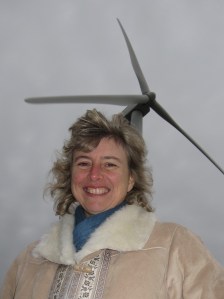
Ivy Main with wind turbine

Yes, you will say I have expensive taste. But it’s not for me, it’s for the children! Picture their shining faces on Christmas morning when they find Santa has delivered 62 SiemensGamesa 8.0-megawatt, pitch-regulated, variable speed offshore wind turbines sporting a rotor diameter of 167 meters each, to a patch of ocean 27 miles east of Virginia Beach. 

Or the turbines could be GE’s sleek Haliade 150-6 MW like my friends up in Rhode Island got two years ago, or the MHI Vestas 10 MW beast that the cool kids are talking about. It sports a hub height of 105 meters and has blades 80 meters long. A single one of those bad boys can power over 5,000 homes.

But really I am not particular; these are just suggestions. 

I know we’re getting two turbines in 2020 as a demonstration project, and I’m grateful, I really am. But all the clued-in states are serious about offshore wind, and they’re building projects of 200 MW and up. We’ll be left behind if we don’t get in the game.

The states north of us are making port upgrades, attracting new businesses, and doing workforce training. They look at offshore wind as not just a jobs generator, but as a way to save money on energy costs, meet sustainability goals, improve the environment and reduce their reliance on fracked gas and imported energy. 

They’re positioning themselves to be serious players in a huge industry that a decade from now will employ tens of thousands of Americans. In the decade after that, offshore wind turbines will start delivering power to the West Coast, Hawaii and the Great Lakes region.  The effect will be transformative, as offshore wind energy feeds East Coast cities, pushes out the last of the Midwestern coal plants and leaves the fracking industry without a market.

Think that’s just the eggnog talking? Consider these indicators of an industry that’s taking off: 

1. Offshore wind is now a global industry.Offshore wind got its start in Europe more than 20 years ago as a way to get more wind energy without sacrificing valuable land space. But just in the last few years, it has spread to China, South Korea, Taiwan, Japan, and Vietnam in addition to the U.S. Analysts estimate China alone will have 28,000 megawatts installed by 2027. 

Offshore wind has been slow to advance in the U.S. because building 600-foot tall machines and planting them twenty-five miles out to sea is not cheap or easy, and the federal government had to devise a regulatory scheme from scratch. As the kinks get worked out and a manufacturing and supply chain emerges, the U.S. will move to the forefront of the industry. We always do.

2. Offshore wind competes on price in many markets. Offshore wind is cheaper than fossil fuels and nuclear in Europe already. That hasn’t been so true in the U.S. thanks to abundant coal and fracked gas, but even here, tumbling offshore wind prices have states looking at offshore wind as a way to help customers save money on energy. Bloomberg reported that Massachusetts’ first commercial-scale offshore wind farm will save electricity users $1.4 billion over 20 years. 

3. Early movers in the U.S. are already doubling down. Massachusetts and New York, which committed to a limited number of offshore wind projects early in order to capture a piece of the jobs pie, now want more projects. New York has set a goal of 2,400 MW by 2030; this fall Governor Andrew Cuomo announced a solicitation for 800 MW. This fall New Jersey announced a solicitation for 1,100 MW of capacity, a down payment on the state’s goal of 3,500 MW by 2030. 

3. Large multinational companies are buying the entrepreneurial start-ups.This year Ørsted, the energy giant formerly known as DONG Energy (for Danish Oil and Natural Gas) acquired Deepwater Wind, the scrappy developer of the Block Island project as well as projects in other states. French company EDF Renewables bought Fishermen’s Energy, another homegrown company that sought to give fishing interests a stake in wind projects. 

Along with big developers have come big law firms. You know there’s going to be serious money involved when $800 an hour lawyers trawl for clients at industry conferences. 

4. Oil and gas companies have moved in. Shell Oil and its partner EDP Renewables just spent $135 million for the right to develop a lease area off Massachusetts large enough to accommodate 1,600 MW of wind turbines. Norway’s Equinor (formerly Statoil) also put in $135 million for another section of the lease area, with the third piece going to a European partnership. 

American oil companies haven’t shown the same level of interest yet, but their suppliers in the Gulf of Mexico are handing out cards at offshore wind conferences, advertising their offshore expertise in everything from cables to shipbuilding.

5.  Offshore wind turbines have evolved away from their land-based kin. Unfettered by space limitations, offshore turbines now average close to 6 MW, more than twice the size of the typical land-based turbine. Wind farms slated for completion over the next several years will use even larger turbines, ranging in size up to a General Electric 12 MW turbine expected to deploy in 2021, and even larger ones still on the drawing boards. 

Foundations are diversifying, too, away from the original “monopile” design that mimics its land-based counterparts. Floating turbines will become mainstream in the next decade, enormously increasing design options as well as potential locations for wind farms. 

This will prove a special boon to the U.S., because while most of the East Coast is blessed with a shallow outer continental shelf that allows for fixed foundations even 30 miles from shore, the deep waters of the West Coast require floating technology to feed energy-hungry California. And the open ocean offers a lot of space.

So what’s holding Virginia back?

Dominion Energy holds the lease on the commercial-scale Wind Energy Area off Virginia. The company won it for a mere $1.6 million back in 2013, and not a whole lot seems to have happened with it since then. Dominion needs a customer, or perhaps just competition.

But Governor Northam is determined to see Virginia become a supply chain hub for at least the Mid-Atlantic states, and he has adopted a goal of achieving 2,000-MW of wind energy off our coast by 2030. 

That means I am not the only person in Virginia who wants a wind farm in my Christmas stocking, although I am likely the only one trying to get you to picture that image.

Admittedly, even Santa could find this a tall order (ho ho ho!), but Virginia is now rife with data centers that consume huge amounts of energy, owned by corporations that have promised the energy will be clean. So far the actions of these corporate players have lagged behind their promises. 

So if Santa can’t bring the governor and me a 500 MW wind farm off the coast of Virginia, maybe Amazon will deliver.

This column originally appeared in the Virginia Mercury on December 24, 2018. As this is now December 26, perhaps you think people are asking me if I got my wind farm yesterday. But no one has. Because of course they know it is out there, only waiting for us to do the hard work to make it a reality.

Unknown's avatar

Amazon will need even more energy in Virginia. Will they make it clean?

Entrance to Crystal City Metro Station in Arlington, Virginia

Crystal City in Arlington will be the heart of Amazon’s new Virginia headquarters. Renewable energy options on site are limited. Photo credit Woogers via Wikimedia Commons.

Amazon Web Services jump-started the utility solar industry in Virginia in 2015, when it announced plans for its first solar farm in Accomack County. Three years later, Amazon remains the biggest purchaser of solar in the commonwealth, allowing it to offset some of the enormous amount of energy used by its data centers.

Yet the company’s energy footprint in Virginia far exceeds the energy output of its solar projects. The addition of a new headquarters in Arlington will further increase its need for electricity, and will attract new residents who will also use electricity. All this demand poses a problem for the company and the climate: Dominion Virginia Power will burn more coal and fracked gas to meet Amazon’s energy need, unless Amazon acts to ensure the power comes from renewable sources.

Like many big tech companies, Amazon has adopted aggressive sustainability goals, including a “long-term commitment to achieve 100% renewable energy usage” for its data centers. But the details of its commitment are fuzzy, and the qualifier “long-term” makes the commitment meaningless.

Earth to Jeff Bezos: in the “long term” climate change will put HQ2 under water.

If Amazon still wants a habitable planet to compete in, it should consider the entire energy footprint of its operations, and make sure it is meeting these needs 24/7 with clean, renewable energy. Solar should be a big part of the plan, but so should land-based wind and offshore wind, which complement solar by providing power in the evening and at night. An investment in battery storage would round out the package nicely.

Virginia officials made a perfunctory mention of renewable energy availability to Amazon in the state’s bid package (see page 184). This was accompanied by a quote from Bob Blue of Dominion Energy, promising to sell the company renewable energy. (Be pleased, Mr. Bezos; that’s not a promise he’s made to the rest of us.)

Arlington County has reportedly discussed with Amazon how to make its new campus as environmentally-friendly as possible. Arlington is considering making a commitment to 100 percent renewable energy by 2035, so it has a real incentive to ensure that newcomers are part of the solution, not part of the problem.

Given today’s building technology, there is no reason the National Landing campus should not set a new standard for energy-efficient design. Ideally that will include on-site solar as well. Local officials also want to see enough improvements to transit, pedestrian and biking routes to keep 25,000 new commuters from spewing air pollution while they sit in traffic.

Even if Amazon and Arlington do everything right, though, the campus will need to purchase electricity from off-site generation—and there is still the matter of those power-hungry data centers.

Amazon can take Bob Blue up on his offer and let Dominion supply the company with all the renewable energy it needs. Caveat emptor, though: Dominion’s idea of renewable energy includes resources of dubious value to the climate, like the burning of trash and woody biomass.

And, thanks largely to Dominion’s clout in the General Assembly, Virginia has many barriers to on-site solar, which limit customers’ ability to supply their own renewable energy. We also boast a renewable portfolio standard that works approximately opposite to that of every other state, by ensuring wind and solar will never be part of our resource mix.

Come to think of it, we could really use Amazon’s negotiating chops with our legislators.

In any case, with or without Dominion’s help, Amazon will find plenty of opportunities to procure wind as well as more solar in Virginia. Apex Clean Energy’s Rocky Forge wind farm near Roanoke is already permitted and ready for construction as soon as a customer shows up. Apex now has two additional wind farms in development in southwest Virginia—a nice way to support areas of the state outside of Northern Virginia.

Offshore wind is another opportunity to deliver energy at scale while supporting jobs in the Hampton Roads region. Although offshore wind is poised to become a huge industry in the U.S. within the next ten years, right now only the northeastern states are moving forward with offshore wind farms in the near term. Amazon could make it happen here, too.

Dominion Energy has secured approval for two test turbines off the Virginia coast, but the utility has been slow-walking plans to develop hundreds more turbines in the commercial lease area it owns the rights to. In part that’s because Dominion doesn’t see how to get the State Corporation Commission (SCC) to approve the cost to ratepayers.

That wouldn’t be an issue if Amazon were the buyer, but nor is Amazon limited to Dominion as a supplier of offshore wind. Amazon could let Dominion and its developer, Ørsted, compete against Avangrid, the developer that holds the lease on the Kitty Hawk offshore wind area just over the border in North Carolina. The power from both areas has to come to shore at the same point in Virginia Beach, where a high-voltage transmission line is available. Avangrid has already announced that it is speeding up its development work in hopes of appealing to Virginia customers.

It will take several years for Amazon to build out HQ2, but given how much electricity the company already uses in Virginia, there is no reason to wait on making new investments in renewable energy. Virginians, and the planet, will thank you.

This post first appeared in the Virginia Mercury on November 26, 2018. 

Unknown's avatar

There’s a lot to like in Northam’s energy plan, but missed opportunities abound

electric vehicle plugged in

Vehicle electrification gets a boost under the energy plan.

There is a lot to like in the Northam Administration’s new Virginia Energy Plan, starting with what is not in it. The plan doesn’t throw so much as a bone to the coal industry, and the only plug for fracked gas comes in the discussion of alternatives to petroleum in transportation.

The 2018 Energy Plan is all about energy efficiency, solar, onshore wind, offshore wind, clean transportation, and reducing carbon emissions. That’s a refreshing break from the “all of the above” trope that got us into the climate pickle we’re in today. Welcome to the 21stcentury, Virginia.

But speaking of climate, the Intergovernmental Panel on Climate Change (IPCC) just released a special report that makes it clear we need “rapid, far-reaching and unprecedented changes in all aspects of society” to keep warming below 1.5 degrees Celsius. That’s only half again the amount of warming that has already brought us melting glaciers, a navigable Arctic Ocean, larger and more destructive hurricanes, and here in Virginia, the swampiest summer in memory. The fact that things are guaranteed to get worse before they get better (if they get better) is not a happy thought.

Perhaps no Virginia politician today has the courage to rise to the challenge the IPCC describes. Certainly, Governor Northam shows no signs of transforming into a rapid-change kind of leader. But as we celebrate the proposals in his Energy Plan that would begin moving us away from our fossil fuel past, we also have to recognize that none of them go nearly far enough, and missed opportunities abound.

Let’s start with the high points, though. One of the plan’s strongest sections champions offshore wind energy. It calls for 2,000 megawatts (MW) of offshore wind by 2028, fulfilling the potential of the area of ocean 27 miles off Virginia Beach that the federal government leased to Dominion Energy. In the short term, the Plan pledges support for Dominion’s 12-MW pilot project slated for completion in 2020.

Other East Coast states like Massachusetts and New York have adopted more ambitious timelines for commercial-scale projects, but the economics of offshore wind favor the Northeast over the Southeast, and they aren’t saddled with a powerful gas-bloated monopoly utility.  For Virginia, a full build-out by 2028 would be a strong showing, and better by far than Dominion has actually committed to.

Another strong point is the Administration’s commitment to electric vehicles. The transportation sector is responsible for more carbon emissions even than the electric sector, and vehicle electrification is one key response.

Even better would have been a commitment to smart growth strategies to help Virginians get out of their cars. Overlooking this opportunity is a costly mistake, and not just from a climate standpoint. Today’s popular neighborhoods are the ones that are walkable and bikeable, not the ones centered on automobiles. If we want to create thriving communities that attract young workers, we need to put smart growth front and center in urban planning—and stop making suburban sprawl the cheap option for developers.

Speaking of developers, how about beefing up our substandard residential building code? Lowering energy costs and preparing for hotter summers requires better construction standards. Houses can be built today that produce as much energy as they consume, saving money over the life of a mortgage and making homes more comfortable. The only reason Virginia and other states don’t require all new homes to be built this way is that the powerful home builders’ lobby sees higher standards as a threat to profits.

The Energy Plan mentions that updated building codes were among the recommendations in the Virginia Energy Efficiency Roadmap that was developed with funding from the U.S. Department of Energy and published last spring. I hope the only reason the Energy Plan doesn’t include them among its recommendations is that the Administration is already quietly taking action.

Meanwhile, it is not reassuring to see that the section of the plan devoted to attaining Virginia’s ten percent energy efficiency goal simply describes how our utilities will be proposing more efficiency programs as a result of this year’s SB 966 (the “grid mod” bill).

States that are serious about energy efficiency don’t leave it up to companies whose profits depend on a lack of efficiency. They take the job away from the sellers of electricity and give it to people more motivated. So if the Governor’s plan is merely to leave it up to Dominion and APCo without changing their incentives, we should abandon all hope right now.

Indeed, it is strange how often the Energy Plan finishes an in-depth discussion of an issue with a shallow recommendation, and frequently one that has the distinct odor of having been vetted by Dominion.

That observation leads us straight to grid modernization. The plan opens with a very fine discussion of grid modernization, one that shows the Administration understands both the problem and the solution. It opens by declaring, “Virginia needs a coordinated distribution system planning process.” And it notes, “One important rationale for a focus on grid modernization is that the transitions in our electricity system include a shift away from large, centralized power stations to more distributed energy resources.”

Well, exactly! Moreover: “The grid transformation improvements that the Commonwealth is contemplating include a significant focus on the distribution system, but our current resource planning process (Integrated Resource Plan or IRP) does not fully evaluate the integration of these resources. One overarching focus of this Energy Plan is the development of a comprehensive analysis of distributed energy resources.”

But just when you feel sure that the plan is about to announce the administration is setting up an independent process for comprehensive grid modernization, the discussion comes to a screeching halt. The plan offers just one recommendation, which starts out well but then takes a sudden turn down a dead-end road:

To ensure that utility investments align with long-term policy objectives and market shifts, Virginia should reform its regulatory process to include distribution system level planning in Virginia’s ongoing Integrated Resource Planning requirement.

Seriously? We need regulatory reform, but we will let the utilities handle it through their IRPs? Sorry, who let Dominion write that into the plan?

It’s possible the Administration is punting here because it doesn’t want to antagonize the State Corporation Commission (SCC). The SCC pretty much hated the grid mod bill and resented the legislation’s attack on the Commission’s oversight authority. And rightly so, but let’s face it, the SCC hasn’t shown any interest in “reforming the regulatory process.”

The Energy Plan’s failure to take up this challenge is all the more discouraging in light of a just-released report from the non-profit Grid Lab that evaluates Dominion’s spending proposal under SB 966 and finds it sorely lacking. The report clearly lays out how to do grid modernization right. It’s disheartening to see the Administration on board with doing it wrong.

Dominion’s influence also hobbles the recommendations on rooftop solar and net metering. This section begins by recognizing that “Net metering is one of the primary policy drivers for the installation of distributed solar resources from residential, small business, and agricultural stakeholders.” Then it describes some of the barriers that currently restrain the market: standby charges, system size caps, the rule that prevents customers from installing more solar than necessary to meet past (but not future) demand.

But its recommendations are limited to raising the 1% aggregate cap on net metering to 5% and making third-party power purchase agreements legal statewide. These are necessary reforms, and if the Administration can achieve them, Virginia will see a lot more solar development. But why not recommend doing away with all the unnecessary policy barriers and really open up the market? The answer, surely, is that Dominion wouldn’t stand for it.

Refusing to challenge these barriers (and others—the list is a long one) is especially regrettable given that the plan goes on to recommend Dominion develop distributed generation on customer property. Dominion has tried this before through its Solar Partnership Program, and mostly proved it can’t compete with private developers. If it wants to try again, that’s great. We love competition! But you have to suspect that competition is not what this particular monopoly has in mind.

The need to expand opportunities for private investment in solar is all the more pressing in light of the slow pace of utility investment. Legislators have been congratulating themselves on declaring 5,000 megawatts (MW) of solar and wind in the public interest, and the Energy Plan calls for Dominion to develop 500 MW of solar annually. I suspect our leaders don’t realize how little that is. After ten years, 5,000 MW of solar, at a projected capacity factor of 25%, would produce less electricity than the 1,588-MW gas plant Dominion is currently building in Greensville, operating at a projected 80% capacity.

Offshore wind capacities are in the range of 40-45%, so 2,000 MW of offshore wind will produce the amount of electricity equivalent to one of Dominion’s other gas plants. It won’t quite match the 1,358-MW Brunswick Power Station, or even the 1,329-MW Warren County Power Station, but Dominion also has several smaller gas plants.

But at this point you get the picture. If all the solar and wind Virginia plans to build over ten years adds up to two gas plants, Virginia is not building enough solar and wind.

That gets us back to climate. The Administration can claim credit for following through on developing regulations to reduce carbon emissions from power plants by 30% by 2030, using the cap-and-trade program of the Regional Greenhouse Gas Initiative (RGGI) of the northeastern states. If successful, that still leaves us with 70% of the carbon emissions in 2030, when we need to be well on our way to zero. And for that, we don’t have a plan.

Of course, Ralph Northam has been Governor for only nine months. He has some solid people in place, but right now he has to work with a legislature controlled by Republicans and dominated by Dominion allies in both parties, not to mention an SCC that’s still way too fond of fossil fuels. Another blue wave in the 2019 election could sweep in enough new people to change the calculus on what is possible. In that case, we may yet see the kind of leadership we need.


This article first appeared in the Virginia Mercury on October 15, 2018.