Unknown's avatar

Dominion gets what it wants, but Virginia doesn’t get what we need

DominionLogoNo, you can’t always get what you want.   You can’t always get what you want.   You can’t always get what you want.     But if you try sometime you find,           You get what Dominion Power wants.

With apologies to the Rolling Stones

I guess there’s a reason I never made it as a songwriter. That last line is a disaster. But that, in a nutshell, is what happened to SB 1349, known as the rate-freeze bill, the ratepayer rip-off, or the Dominion bill, depending on whether you were pro, con, or still trying to figure it out.

The bill began and ended as a way for Dominion Virginia Power to shield excess profits from the possibility of regulators ordering refunds to customers. Along the way, Appalachian Power jumped on board, even though its president had already admitted the company had been earning more than it should.

When we last looked, SB 1349 was undergoing radical rewriting on the floor of the Senate, in real time. Conflicting amendments were being passed around. Outside the chamber, lawmakers from both parties were huddled in hallways with Dominion lobbyists. The coal caucus had already tacked on language making it harder to close coal-fired power plants. Now the Governor, progressive leaders and clean energy supporters were pushing amendments guaranteeing more solar and energy efficiency programs.

To get a sense of how impossible it was for the rank and file to follow, check out the bill history with its amendments offered and rejected, and the readings of the amendments waived.

With cameras rolling and the clock ticking, senators made speeches about provisions other people told them were now in the bill, but without anyone having the time to read the language they were expected to vote on. That being normal, they voted on the strength of promises made and assurances given.

With Dominion Power insisting on passage, the result was never in real doubt. Few legislators want to cross the most powerful force in Virginia politics, and the source of so much campaign cash, perks, and donations to local charities. But they needed to hear those promises made and assurances given; otherwise, what would they tell their constituents, when newspapers across the state had been blasting this bill?

The promises made and assurances given also quieted the environmentalists who had led the opposition. Consumers, we were told, would now see investments in solar and energy efficiency that would bring long-term savings, energy diversity and greater price stability, as well as lower pollution and new jobs. The bill would contain firm commitments and produce meaningful investments in energy efficiency and solar power.

The Senate passed the bill, and then finally everyone read what had been voted on. Yes, Dominion had got what it wanted, but then it got . . . even more of what it wanted!

The bill contains a solar provision that smooths the way for utilities to develop or buy up to 500 megawatts of solar power, using Virginia suppliers. But it doesn’t require any minimum solar investment or contain a deadline for getting that solar power on the grid.

As for efficiency, SB 1349 does now contain a provision requiring utilities to create ”pilot programs” for energy assistance and weatherization for low-income, elderly and disabled customers, but it doesn’t say how big a program has to be or how much money must be spent. A “pilot program,” by definition, is small and experimental. It is a baby step, when we were expecting adult strides.

While clean energy advocates were still trying to figure out what happened to the promise of firm commitments and deadlines on solar power, SB 1349 blew through the House.

In short, the final bill language now on the Governor’s desk gives Dominion the authority, but not the obligation, to make clean energy investments.

Virginia law gives our governor an option that most states don’t offer: rather than sign it or veto a bill outright, he can amend it and send it back to the legislature for a final vote. That makes Governor McAuliffe the one person who can still salvage something from this miserable bill. He can put in the solar numbers and dates that went missing—or raise them further—and put hard targets into the efficiency programs. Doing so would finally put McAuliffe on the path to creating all those clean energy jobs he campaigned on.

Dominion will still get what it wants, but if McAuliffe will try, we might get what we need.

Unknown's avatar

Your 2015 Virginia legislative session cheat sheet, part one: Clean energy bills

photo credit: Amadeus

photo credit: Amadeus

I’m starting my review of 2015 energy legislation with a look at bills dealing with renewable energy and energy efficiency. Most of these bills will be heard in the committees on Commerce and Labor, though bills that cost money (tax credits and grants) usually go to Finance.

Bills referred to Senate Commerce and Labor are heard by the full committee, which meets on Monday afternoons. It consists of 14 members: 11 Republicans and 3 Democrats. They form a tough lineup; none of these senators received better than a “C” on the Sierra Club’s Climate and Energy Scorecard.

The House bills are typically assigned to the 13-member Special Subcommittee on Energy (10 Republicans and 3 Democrats, no fixed schedule). Bills that do not meet the approval of Dominion Power can expect a quick death here on an unrecorded voice vote, never to be heard from again. But on the plus side, the meetings are often quite lively, like old-fashioned hangings.

Net metering bills

Net metering is the policy that allows owners of solar (or other renewable) energy systems to be credited for the excess power they feed back into the grid when the systems produce a surplus; the owners use the credits when their systems aren’t supplying power and they need to draw electricity from the grid. Virginia law restricts who can use net metering, and how much. Expanding net metering is a major goal of renewable energy advocates, who argue it offers a free market approach to growth—give customers the freedom to build solar projects, get the utility out of the way, and solar will thrive.

This year’s initiatives include:

  • SB 833 and SB 764 (Edwards—apparently identical bills), HB 1950 (McClellan), and HB 1912 (Lopez) raise the maximum size of a commercial project eligible for net metering, from 500 kilowatts (kW) currently to 2 megawatts (MW). This is a much-needed expansion of the net metering program if Virginia is going to make real headway with solar. We are told Edwards plans to conform his legislation to HB 1622, below.
  • HB 1622 (Sullivan) raises the maximum size of a commercial project to 1 MW, and the maximum size of a residential system from the current 20 kW to a whopping 40 kW. But note that it does nothing to limit the standby charges utilities can charge for residential projects over 10 kW. Given that these charges are so punitive as to kill the projects, raising the cap wouldn’t create new market opportunities unless it is accompanied by a limit on the amount of standby charges that utilities can tack on.
  • HB 1911 (Lopez) amends the language allowing utilities to impose standby charges on residential and agricultural customers with systems over 10 kW to add the requirement that the State Corporation Commission conduct a “value of solar” analysis prior to approving the charges. Most solar advocates would rather see the legislature repeal the standby charge provision altogether, given how the utilities have abused it. Barring that, legislators should set a dollar limit of no more than five or ten bucks a month. But in the absence of any such reforms, it does make sense to at least require the SCC to do this more substantive analysis, ideally building on the framework developed over the summer by the Solar Stakeholder Group.
  • HB 1636 (Minchew) establishes “community net metering” as well as increasing the commercial project cap to 2 MW. This bill is a high priority for the solar industry and the environmental community. It provides the solution for owners with shaded roofs, renters and others who can’t install solar themselves by letting them subscribe to a community generation facility in their own or a neighboring county. Other forms of renewable energy are also allowed, so residents in windy areas could go in on a small wind turbine that wouldn’t make sense for a single household.
  • HB 1729 (Sullivan) creates “solar gardens” consisting of community organizations with 10 or more subscribers. The generation facility can be as large as 2 MW. The bill seems intended to accomplish much the same purpose as Minchew’s bill, although it is limited to solar. However, it allows the utility to impose “a reasonable charge as determined by the [State Corporation Commission] to cover the utility’s costs of delivering to the subscriber’s premises the electricity generated by the community solar garden, integrating the solar generation with the utility’s system, and administering the community solar garden’s contracts and net metering credits.” Boy, we’ve seen that movie before. Given what we’ve seen the SCC do with standby charges, the bill should be amended to put a cap on the amount of that “reasonable charge” so legislators know they aren’t writing a blank check.
  • SB 350 (Edwards) authorizes programs for local governments to use net metering for municipal buildings, using renewable energy projects up to 5 MW. It also allows a form of community net metering targeted to condominiums, apartment buildings, homeowner associations, etc., with a renewable energy facility located on land owned by the association. These customers would be exempt from standby charges.

Third-party power purchase agreements (PPAs)

HB 1925 (Lopez) and SB 1160 (Edwards) replace the current PPA program in Dominion territory with one that applies to both Dominion and APCo territories. It increases the project cap from the current 500 kW to 1 MW, and raises the overall program size to 100 MW from (50 MW). As with the current program, projects under 50 kW aren’t eligible unless the customer is a tax-exempt organization.

Utility-scale solar

HB 2219 (Yost) declares it to be in the public interest for Dominion Virginia Power or Appalachian Power to build up to 500 MW of solar power—a truly welcome objective—and authorizes the utilities to apply to the SCC for a certificate of public convenience and necessity for individual facilities of at least 20 MW in size, regardless of whether the facility is located in the utility’s own service territory.

“In the public interest” are the magic words that push the SCC to approve something it might not otherwise. Both utility giants have shown an interest in building and owning utility-scale solar, even as they have taught the SCC to believe that solar owned by anyone else burdens the grid. The magic words let them escape the corner they backed themselves into. That would be necessary here, given that our SCC wrongly believes the public interest requires the lowest cost energy regardless of the consequences to public health, the environment, national security, and the economy.

The solar industry has two concerns about HB 2219: the effect on ratepayers, since Dominion’s previous solar efforts have cost well above market rates; and the effect on the Virginia solar industry—or rather, the lack of an effect, since Dominion has hired only out-of-state companies. Virginia ratepayers could save money and the state could build more solar if legislation simply required the utilities to buy 500 MW of solar, and let the market decide who builds it. But of course, that’s now how things work in Virginia.

I also think it is unfortunate that the bill allows utilities to build solar plants that are not in the utilities’ own service territories, and that it does not require them to use Virginia contractors. Surely there would be more support for a bill promising projects that support local economies with jobs and tax revenues, and that requires the hiring of local installers. These seem like small enough things to ask.

HB 2237 (Yancey) allows Dominion or APCo to recover the costs of building or buying a solar facility in the state of Virginia of at least 5 MW, plus an enhanced rate of return on equity, through a rate adjustment clause. It also states that construction or purchase of such a facility, and the planning and development activities for solar energy facilities, are in the public interest. (The magic words again.)

This bill doesn’t require anything or make huge changes. It simply treats solar the way the Code currently treats other forms of generation, with the exception that the “in the public interest” language was previously used only to endorse a coal plant (what became the Virginia City Hybrid Energy Plant in Wise County). And note that this bill requires that the facility be in Virginia, and opens up the possibility of our utilities buying the facility rather than constructing it themselves, which could open the door to competition. This seems like a good way to proceed.

Grants and tax credits

HB 1728 (Sullivan) establishes a tax credit for renewable energy. Great idea, but last year the Senate Finance Committee made it clear they would not pass a new tax credit, so I assume this is a non-starter.

Last year’s renewable energy tax credit bill was amended to create a grant program instead. It passed both houses, but without funding and with the requirement that it be passed again this year. It is back this year as HB 1650 (Villanueva). (It has been assigned to House Committee on Agriculture, Chesapeake and Natural Resources and is on the docket for 8:30 a.m. Wednesday, January 21. Odd: it ought to be in Finance.) The grant would equal 35% of the costs of a renewable energy facility, including not just wind and solar, but also things like biomass, waste, landfill gas, and municipal waste incinerators. Facilities paid for by utility ratepayers are not eligible, and the grant total is capped at $10 million per year. Prospects for the program aren’t great given the state’s tight budget situation, but the bill is a high priority for the solar industry.

Another tax-related bill is HB 1297 (Rasoul), which authorizes localities to charge a lower tax on renewable projects than on other kinds of “machinery and tools.” Last year, you may recall, the solar industry was successful in getting passage of a bill that exempted solar equipment entirely from local machinery and tools taxes. Proponents are trying to ensure that Delegate Rasoul’s well-intentioned bill doesn’t reverse last year’s victory on solar.

Bills specific to energy efficiency

HB 1730 (Sullivan) establishes energy efficiency goals for electric and natural gas utilities. The good news: the goals are mandatory. The bad news: the goals are modest to a fault: a total of 2% energy savings by 2030 for electricity and 1% for natural gas.

HB 1345 (Carr) extends the sales tax holiday for Energy Star and WaterSense products to include all Energy Star light bulbs; currently only compact fluorescent light bulbs are eligible.

PACE bills

PACE (Property Assessed Clean Energy) is a way to finance energy efficiency, renewable energy and water conservation upgrades to commercial and non-profit-owned buildings. Local governments sponsor the financing for improvements and collect payments via property tax bills. Since the energy savings more than pay for the increased assessments, PACE programs have been hugely successful in other states.

Last year a bill that would have let localities extend “service districts” to cover clean energy (PACE by another name) failed in the face of opposition from the banking industry. This year’s bills are also not labeled PACE bills, but they achieve the same end. Apparently the parties have worked out the problems, a hopeful sign that a multi-year effort will finally meet with success.

SB 801 (Watkins) and HB 1446 (Danny Marshall) are companion bills that would authorize local governments to work with third parties to offer loans for clean energy and water efficiency improvements, creating “voluntary special assessment liens” against the property getting the improvements. The Department of Mines, Minerals and Energy would develop underwriting guidelines for local loans to finance the work. HB 1665 (Minchew) is similar, and we are told it will be conformed to HB 1446.

Virginia Solar Energy Development Authority

HB 1725 (Bulova) and SB 1099 (Stuart) establish the Virginia Solar Energy Development Authority to “facilitate, coordinate, and support the development of the solar energy industry and solar-powered electric energy facilities in the Commonwealth.” This implements a proposal in the 2014 Virginia Energy Plan and is not expected to be controversial.

Virginia SREC registry

HB 2075 (Toscano) requires the SCC to establish a registry for solar renewable energy certificates (SRECs). It would not suddenly make Virginia SRECs valuable, but it would put the administrative framework in place to support a voluntary SREC market, or even a real one if Virginia were to adopt legislation requiring utilities to buy solar power.

Cross-cutting approaches to clean energy

A few bills would have a more sweeping effect on energy efficiency and renewable energy. HB 2155 (Sickles) is billed as an “Energy Diversity Plan.” It was supposed to be a “grand bargain” between utilities and the clean energy industries, with the McAuliffe administration participating as well, but we understand there are outstanding issues that make the bill’s future uncertain.

The big idea is to put all non-emitting energy sources into one category: primarily wind, solar, hydro and nuclear, but also adding in combined heat and power, demand response and energy efficiency. The bill creates a timeline that requires utilities to ramp up use of new, non-emitting sources gradually, beginning with 0.25% of retail sales in 2016 and ramping up to 35% in 2030.

The bill has the support of clean energy industries, but the idea of treating nuclear as a benign source of power on an even footing with efficiency and renewables concerns the environmental community.

I’ll write more about this bill if it looks like it has legs.

HB 1913 (Lopez) is the only bill of the bunch that directly targets Virginia’s Renewable Portfolio Standard (RPS). Maybe that shouldn’t be a surprise. Our RPS is a poor, sickly thing that most people have left for dead. To his credit, Lopez keeps trying. His bill keeps the RPS voluntary but beefs up the provisions to make the program meaningful, if a utility chooses to participate. Instead of mostly buying renewable energy certificates from things like old, out of state hydro dams, the bill would ensure that actual, real-world renewable projects get built. You know, what an RPS is supposed to do.

In addition, the bill folds into the RPS the state’s existing goal of 10% energy efficiency gains by 2022. Utilities have done very little toward meeting this goal. Putting it into the voluntary RPS might be the prod needed to get more efficiency programs underway.

Or it might cause a utility to drop out. Either way, the result would be better than what we have now, where Virginia pretends to have an RPS, and utilities pretend to care.

Update: Another net metering bill has been filed. SB 1395 (Dance) raises the commercial net metering cap from 500 kW to 2 MW.

Unknown's avatar

Virginia regulators approve Appalachian Power’s “solar tax”

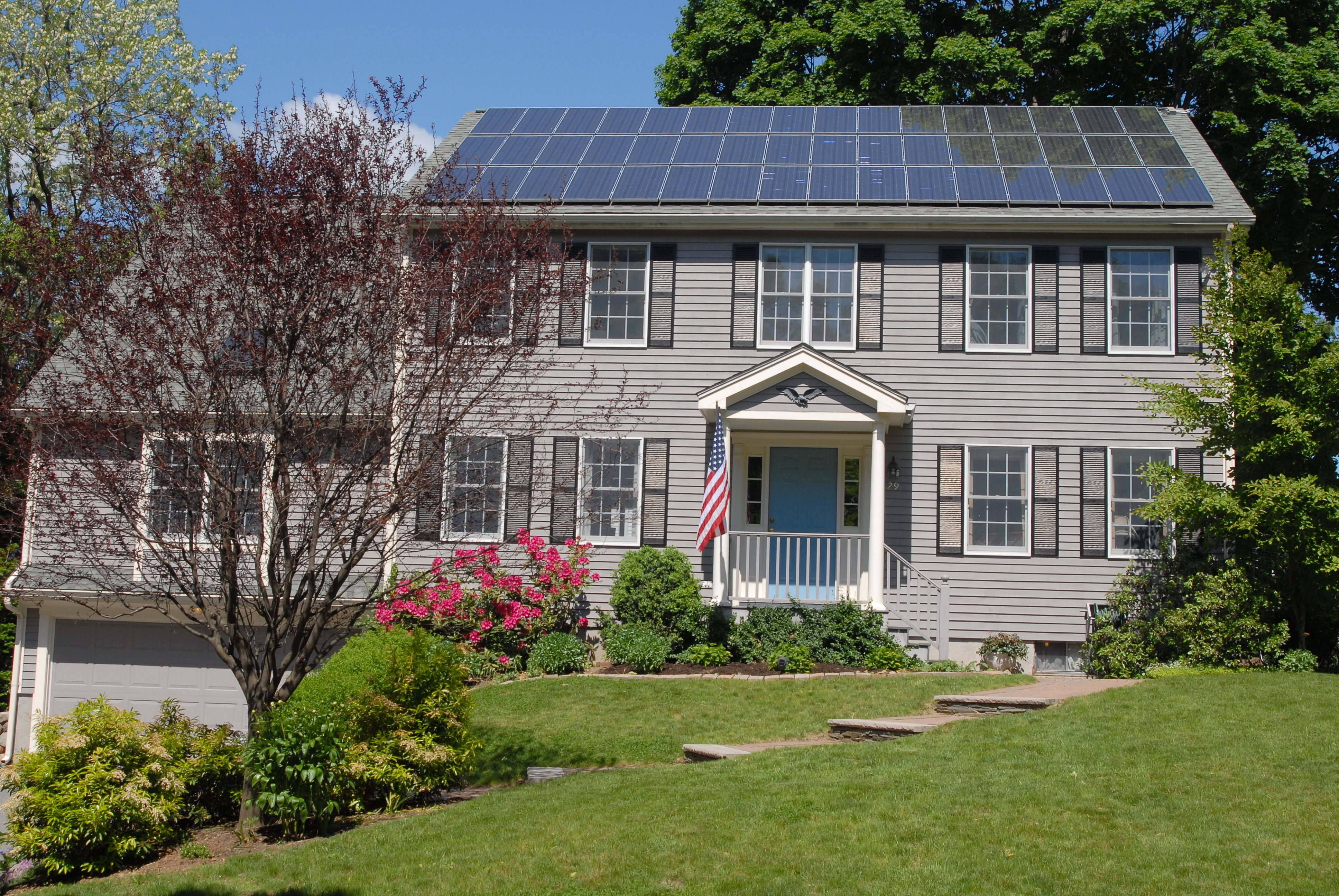
Virginia homeowners had better tell their solar installers to keep it under 10 kW. Photo credit Gray Watson

Virginia homeowners had better tell their solar installers to keep it under 10 kW. Photo credit Gray Watson

The State Corporation Commission has granted Appalachian Power Company’s request to be allowed to impose “standby” charges on residential customers with solar systems over 10 kilowatts. The charges can range up to more than $100 per month, regardless of how much electricity the homeowner actually draws from the grid.

In its Final Order in case number PUE-2014-00026, dated November 26, the SCC ruled that APCo’s standby charge complies with § 56-594 F of the Virginia Code, which provides for standby charges for net-metered residential systems between 10 and 20 kW. (The law does not allow for net metering of residential systems over 20 kW.)

Environmental groups intervened in the case and ran a grassroots campaign that generated over 1500 comments to the SCC, opposing what has been dubbed a “tax on the sun.” The result, however, was never in much doubt. The SCC has repeatedly demonstrated a willingness to accept without scrutiny utility assertions that solar customers impose costs on other customers.

Attorneys at the Southern Environmental Law Center, who argued against the standby charges on behalf of the Sierra Club and other groups, say the SCC’s reasoning is flawed. According to Cale Jaffe, Director of the SELC’s Virginia office, “Appalachian Power actually conceded during the hearing that it was ‘not in a position’ to determine whether solar customers had ‘a positive or negative impact to the distribution cost of service.’  In other words, Appalachian Power said that solar customers might be having a positive impact in helping to reduce APCo’s distribution costs, but that the power company didn’t have the data and didn’t know one way or the other.”

Jaffe added, “We saw that piece of evidence as a fatal concession, at least with respect to the distribution portion of the charge.” Yet a reading of the Final Order suggests the Commission never even considered the point.

The SCC allowed APCo, like Dominion before it, to consider only transmission and distribution costs, ignoring generation costs for now. Advocates urge that solar systems produce power at times of peak demand, reducing the need for utilities to buy expensive peak power, and therefore actually saving them money. The utilities dispute this, but it is worth noting that APCo’s most recent Integrated Resource Plan from March of this year projects that solar power will be cheaper than its avoided cost of energy by 2019. But of course, the point of standby charges isn’t about the cost of solar, but about preventing customers from generating their own power.

In spite of all the time and money APCo has spent to get approval for the standby charges, the utility has said that only five existing customers will be affected. The real impact will be to limit the number of homeowners who choose to install large solar systems going forward. The prospect of paying high standby fees will likely discourage APCo customers from buying systems over 10 kW, as has happened in Dominion’s territory after the SCC allowed Dominion Virginia Power to impose similar standby fees a year ago.

Although a 10 kW system is bigger than the average Virginia home needs by itself, people with electric cars can find their demand exceeds that limit. Moreover, Dominion Virginia Power has signaled that it would like to impose standby charges on all of its solar customers, regardless of system size.

The actions of Virginia utilities and the SCC put the commonwealth in the thick of a nationwide battle over customer-owned, “distributed” solar. While most studies analyzing the value of solar have concluded that distributed solar benefits the public and the grid, utilities fear it will eat into their profit margins. They see Virginia as a good place to establish a precedent friendly to the utility viewpoint, due to the commonwealth’s history of allowing its utilities to dictate energy policy. So far, this episode proves them right.

Unknown's avatar

Utilities’ pullout won’t affect “value of solar” study

When Virginia’s utilities made a surprise announcement on September 5th that they would no longer participate in the state’s Solar Stakeholder Group (SSG), they may have hoped that doing so would stop the group’s Value of Solar study in its tracks. Not so: on Friday, at its first meeting since the utilities withdrew, the group agreed it would issue the report on schedule, although with no further input from members—thus guaranteeing that the report reflects only input submitted while the utilities participated.

This decision was essentially a moot point, because the group had actually wrapped up its work by that September 5th date in order to give the study authors time to incorporate comments, including those from the utilities. The resulting third draft of the report was provided to the remaining group members on September 29. It reflects the work of the full 49-member committee up to September 4.

Lead authors Damian Pitt and Gilbert Michaud of Virginia Commonwealth University will do some clean-up editing and draft a cover letter. Then, in accordance with the work plan established last summer, it will be submitted to the National Renewable Energy Laboratory (NREL) for review. The study is due in to the Senate Rules Committee by November 1. But as noted previously by Jim Pierobon, it’s not clear how much weight the study will have in the General Assembly now that the utilities have disavowed it.

The utilities have not said why they decided to withdraw from participation. They wrote no memos, offered no analysis, and sent no polite email to other members expressing regret or anything else.

The SSG grew out of an informal “Small Solar Working Group” that formed in 2013 as a way to bring together those with an interest in non-utility-scale solar.* Like the SSG, the Working Group included representatives from the solar industry, environmental groups, local government, academia, trade associations and the electric utilities. But while the Working Group set its own broad agenda, the SSG was formed in response to a specific letter request from the Clerk of the Virginia Senate to DEQ and DMME. The letter asked for a study of “the costs and benefits of distributed solar generation and net metering.”

From that description, and knowing that the utilities hastily decamped, you might think that the SSG actually calculated costs and benefits and came up with a value of solar, and that the result was good for solar advocates but bad for utilities. But in fact, the study reaches no conclusions at all. It could more accurately be described as a study about how you would conduct a study, were you so inclined. Which no one was, because then the utilities might have left. As they did, but only after ensuring the study incorporates their views.

Thus the study wraps up with statements like, “The SSG recognizes that the short- and long-term value of solar will be dependent on a wide range of conditions and perspectives.” And this: “With greater time, resource, and data access, future studies could produce actual values for the net VOS under each methodology.”

There is nothing wrong with such a limited approach, so far as it goes. Professors Pitt and Michaud did an excellent and comprehensive job in surveying the literature, comparing previous studies, and discussing the factors relevant to the issue of solar’s value to the grid, utilities, customers, and society at large. But given that this Value of Solar study came nowhere near assigning a value of solar, it’s hard to understand what the utilities might have objected to.

Nor had there been any hints the utilities were unhappy with the process or with the first two drafts of the report. At Friday’s SSG meeting, many of the other members expressed their surprise and frustration with the utilities’ pull-out. They noted that the utilities participated fully every step of the way and provided copious comments, which were reflected in the drafts. Indeed, three utility representatives served on the twelve-member steering committee that created the work plan and oversaw the study, making it as much their work as anyone else’s. (The other steering committee members were Professor Pitt, three representatives of local government, two conservation group reps., two solar industry members, and one citizen representative.)

So why did the utilities pull out? In retrospect, it may have been their plan all along. By pulling out, they could signal to their allies their disapproval of the study and try to prevent a follow-on study that would actually calculate a value for solar. And by waiting until the last moment to pull out, they maximized their influence over the study’s content, lest it have credence outside their sphere of influence.

But what the utilities lost by this clever maneuver is the trust of the rest of the group. The SSG, like the Small Solar Working Group before it, provided a forum for discussion among the many different parties with an interest in distributed solar. It is incredibly important in a forum like the SSG that people trust each other to act in good faith. Otherwise, 49 people are wasting their time.

The utilities’ decision to sacrifice this trust strikes me as both stupid and unnecessary. Many of us expected that the utilities’ lobbyists would quietly tell their friends in the legislature to ignore the Value of Solar study, that they participated just to be nice guys. Openly thumbing their noses at the study did nothing except prove they aren’t nice guys and cannot be trusted.

The rural electric cooperatives will have to answer to their members, who admittedly don’t seem to pay much attention. But Dominion Virginia Power and Appalachian Power are public utilities. They hold their monopolies by the grace of the people of Virginia, and are expected to act in the interest of the people they serve. In this case, they have manifestly failed to do so.

——————

* I was one of the founding members of the Small Solar Working Group and was responsible for asking the Department of Environmental Quality’s Carol Wampler to facilitate the meetings. Ms. Wampler had led other successful stakeholder groups and had a gift for guiding people with disparate interests towards consensus. (Unfortunately for the people of Virginia, she retired from DEQ this summer.) She brought in the equally-dedicated Ken Jurman from the Department of Mines, Minerals and Energy as a co-facilitator. The divide between the utility monopolies and everyone else proved too great to produce any consensus bills that could spur the flourishing of solar in Virginia, but it did develop a level of trust, unfortunately now compromised.