Unknown's avatar

How Gov. Spanberger and a Democratic majority can make energy more affordable

An aggressive legislative agenda this year will demonstrate national leadership on managing the data center buildout while delivering climate, health and economic benefits to all Virginians

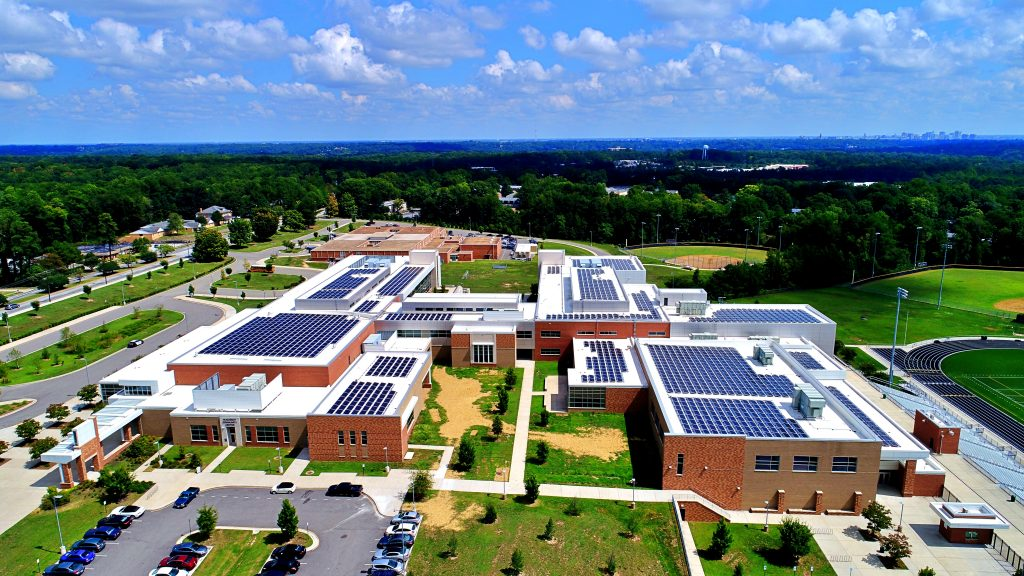
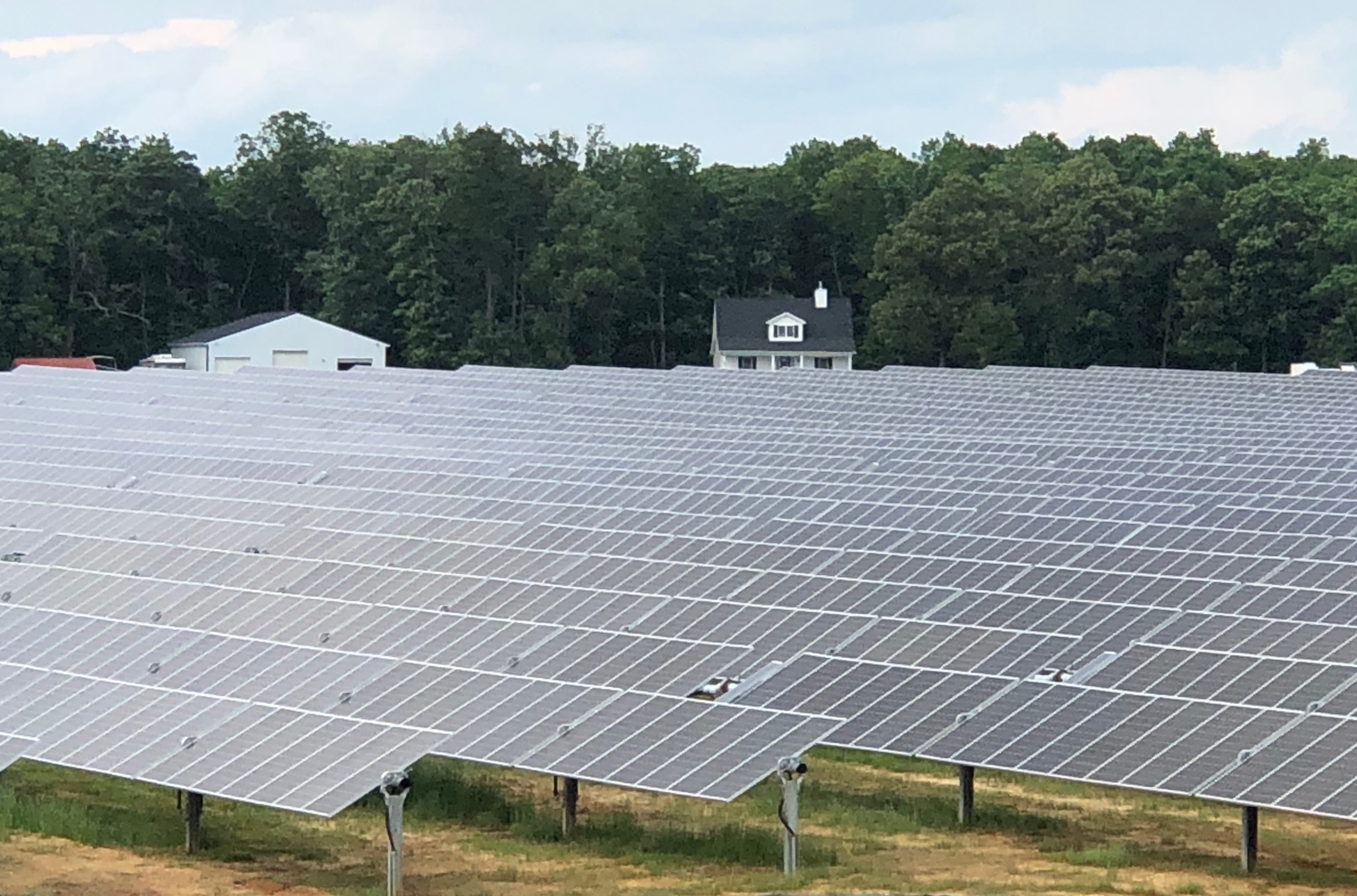
Solar on schools and other public buildings reduce pressure on the grid while saving money for taxpayers. Photo courtesy of Secure Solar Futures LLC

If Virginia’s election last month was more than an unleashing of anti-Trump sentiment (and it definitely was that), it was about affordability. Governor-elect Abigail Spanberger made the cost of living the focus of her campaign, frequently mentioning high energy bills. House Democrats, whose majority has been boosted by the addition of 13 new members of their party, are also expected to focus on these bread-and-butter issues. 

In Virginia, the cause of these high bills is not hard to identify: Data centers are driving up demand well beyond the available supply, and high fossil fuel prices are pinching a state that relies on natural gas for most of its electricity. Spanberger has committed to making data centers “pay their fair share,” and both she and legislators will be looking for other opportunities to lower costs.

The bad news is that adding ever more data centers across Virginia means the upward pressure on electricity prices will continue. If the governor and legislators don’t want to kick tech companies to states with spare capacity, and if the administration of President Donald Trump continues to throttle the energy supply with its war on wind and solar, lowering energy costs in the near term likely isn’t possible. 

Even so, there is a lot that Spanberger and the General Assembly can do to protect residential consumers from these higher prices. 

Making data centers pay their fair share means more than tweaking rate structures. Several Virginia utilities have created special rate classes for large load users like data centers. The utilities will require data center operators to sign long-term contracts committing them to paying for a large percentage of the electricity and transmission they say they need, even if they don’t end up using that much or leave the Virginia market prematurely. 

These new tariffs can help protect other customers from some – though not all – of the risk involved in serving data centers, but they don’t address the “fair share” issue. The current allocation of transmission costs, with residential ratepayers picking up most of the tab for new lines that don’t benefit them, needs to change. If the SCC determines it doesn’t have authority to do that on its own, the General Assembly and Spanberger should pass legislation to make it happen. 

The harder problem is how to make residents whole for rate increases that result from data centers gobbling up all available power. The supply and demand problem has been compounded by a lot of bad decisions, with plenty of blame to go around. The federal government has driven up fossil fuel prices by allowing the export of increasing amounts of natural gas, while hindering and even blocking solar and offshore wind projects that could make up the deficit. 

Outgoing Gov. Glenn Youngkin is to blame for illegally pulling Virginia out of the Regional Greenhouse Gas Initiative (RGGI), removing the market incentive for Virginia utilities to increase investments in low-cost renewable energy instead of burning expensive fossil fuels. (His promotion of the false narrative that gas is “cheap” doesn’t help.) 

Virginia utilities share the blame for relying too much on natural gas and high-priced electricity imported from other PJM states. And grid operator PJM is to blame for failing to approve enough new generation, including wind and solar facilities that make up the vast majority of projects waiting for approval to interconnect.

This history leaves Spanberger with a fine mess. Keeping prices in check now requires two things that can actually be accomplished during the next four years: a greater buildout of solar generation and energy storage to get more capacity on the grid; and investments in energy efficiency and rooftop solar to take pressure off the demand side.    

Solve utility solar siting with agrivoltaics. Virginia needs more energy, and solar is the only source that can be built quickly. Yet one of the knottiest problems confronting the General Assembly in the past few years has been the rise of anti-solar sentiment in rural counties. 

Landowners who want to lease their property for solar, or even to install arrays for their own use, find themselves stymied by opposition from neighbors who don’t like the look and are able to persuade county boards to deny permits. As we’ve seen, sometimes denial of a solar permit even follows approval of an energy-sucking data center.

Last year the General Assembly came close to passing a bill that would require solar developers to implement industry best practices. Passing legislation like that this year will address the legitimate concerns of localities around controlling erosion and maintaining native plant buffers. But more can be done to make solar look and function like a normal part of Virginia’s agricultural economy.

Already, solar facilities have become integrated with agriculture, as sheep and sometimes cattle take over vegetation management and farmers learn which crops do well growing between rows of solar arrays. It’s a trend that offers benefits to the land and the community alike. Farmers are struggling; solar can provide a stable income while protecting land from permanent development and putting much-needed energy on the grid. 

Businesses are ahead of public policy on this. Virginia-based Gray’s Lambscaping manages vegetation with over 800 sheep at solar farms across the state, and the company plans to grow to over 5,000 sheep by the end of this year. Meanwhile, solar panels have proven compatible with a wide range of food crops.  

Virginia should take a leading role in expanding agrivoltaics. Virginia law already recognizes the right to farm as an exception to localities’ authority over land use decisions, and this should be extended to farmers who put solar on their land, as long as they are also using the same land for traditional agricultural practices like grazing and crops. 

Install solar on new public buildings and schools. Heck, put it everywhere.  In the past ten years or so, Virginia’s commercial solar sector has blossomed while saving taxpayers money. To date, an estimated 150 Virginia schools have installed solar panels, saving schools about 25% on their energy bills. Solar on every sunny school rooftop would add up to more than 1,000 MW of carbon-free generation. Extend the effort to the roofs of all suitable public buildings across the state, and that number can go much higher. 

Dominion and APCo have long tried to squelch competition from rooftop solar, a war that looks increasingly foolish as Virginia finds itself short on energy for all customers. Earlier this year Congress drastically accelerated the phase-out of solar tax incentives, but the savings remain available for commercial and utility-scale projects for the next two years. There is no shortage of good ideas out there to be acted upon. Spanberger and legislators should take full advantage of that opportunity to install as much solar as possible. 

Battery storage at data centers does triple duty. While solar is the cheapest, cleanest, and fastest way to generate power, it needs batteries or other forms of energy storage to make it into a 24/7 resource, and storage remains relatively expensive. For tech companies, however, the calculus makes more sense.

Data centers need backup power anyway; they typically have three layers of redundancy so that they never risk losing power when the grid goes down. Today the backup power is mostly provided by massive diesel generators, sometimes three times as many as they might actually need. Most of these have no pollution controls and are therefore not supposed to run except in emergencies and for testing and maintenance. That’s sill a lot of run time — and DEQ is proposing to make matters worse by expanding the definition of “emergency” to include scheduled outages.

Some tech companies are now installing generators with selective catalytic converters that produce fewer emissions. The catch is that these can legally be used in non-emergency situations, raising the possibility that they might be used for demand-response or peak shaving. In effect, data centers would be solving the peak demand problem with one of the dirtiest forms of energy. The cumulative effect on air quality could be worrisome, and Virginia’s carbon footprint would grow at a time when the law says it should be shrinking. 

What if, instead of diesel generators, data centers installed storage as their first line of defense against power outages, leaving diesel generators to be used only in the rare case of extended grid outages? Air quality would benefit, carbon emissions would decrease, and the data centers would have the backup power they need. The tech companies would pay more upfront but could be compensated by utilities for using their storage capability for grid services and demand response, lowering their draw from the grid at peak demand times. 

All the data centers in Virginia today use 6 gigawatts of power. That much storage would exceed the targets set in the VCEA for Dominion and APCo combined.  Even limiting the requirement to two hours of storage at new data centers would bring enough storage online quickly to eliminate the expensive demand peaks that drive the high price of energy.  

Require data center operators to source their own zero-carbon electricity. Most of the tech companies have sustainability commitments that they aren’t meeting, so it isn’t asking too much of them to put them in charge of this effort. Legislation to require this as a condition of accepting Virginia’s generous tax subsidies has been defeated for the past two years. The difference this year is that rising energy prices are now affecting everyone. 

Under this proposal, the zero-carbon electricity doesn’t have to come from Virginia, as long as it is available to customers here. Maybe the tech companies could even tap into their considerable influence with the Trump administration to make electricity more plentiful and affordable by reversing its war on solar and wind energy.

Why, after all, should Virginia residents sacrifice for the richest corporations in the world? If “paying their fair share” means anything, it should mean that data centers, not residents, bear the costs of making enough energy available to Virginia, and complying with our clean energy mandate.

Lower demand with energy efficiency and distributed solar. The gap between energy supply and demand does not have to be filled entirely through supply-side solutions. Lowering demand should also be part of the solution. Virginia utilities, Dominion in particular, have done a poor job of running energy efficiency programs. Looking on the bright side, though, that means plenty of opportunities remain.

House Democrats have already started work on this issue, with a focus on lowering winter heating costs for lower-income households. As reported in the Mercury last week, HB 2, from Farifax Del. Mark Sickles, requires Dominion and APCo to make their “best, reasonable efforts” to provide energy efficiency and weatherization to 30% of income-qualified customers by the end of 2031. HB 3, from  Del. Destiny Levere Bolling, D-Henrico, sets up a task force to study income-qualified energy efficiency and weatherization.  

These steps are okay for starters, and they would be juiced by the influx of money from RGGI carbon auctions (see next section), earmarked for low-income energy efficiency. But Dominion has repeatedly failed to meet the energy efficiency targets the legislature sets for it, and after all, why stop with 30% of low-income customers when all households could benefit from more comprehensive programs? Virginia can do much better.  

My last column discussed Rewiring America’s proposal to have tech companies pay for heat pumps, solar and batteries in the residential sector, saving money for households and freeing up capacity for data centers to come online sooner. An independent provider could run the program and verify the energy savings.  

(If the tech companies complain that an awful lot of the solutions I’m proposing come at their expense, it’s true. But the industry benefits from a state tax subsidy that has reached nearly a billion dollars per year, and will only grow further as the number of data centers doubles and triples. They can afford to give back.) 

Use RGGI for long-term affordability. Gov.-elect Spanberger has committed to seeing Virginia rejoin the Regional Greenhouse Gas Initiative (RGGI), the compact of northeastern states working to lower carbon emissions by 30% by 2030. RGGI works by requiring owners of carbon-emitting generating plants to buy carbon allowances at auction, penalizing carbon-intensive generation and rewarding investments in zero-carbon facilities like wind, solar and nuclear. States collect the auction proceeds, which in Virginia are dedicated to low-income energy efficiency and climate adaptation measures.

Republicans have already renewed their attacks on RGGI, calling it a tax on energy consumers. To the extent that’s true, it’s a tax mostly paid by the largest consumers (including data centers) for the benefit of low-income residents and people most vulnerable to storms and sea level rise. Moreover, all energy consumers benefit over the longer term as low-cost clean energy increasingly replaces expensive fossil fuels. 

Beef up efficiency standards in the residential building code. Most people who buy a new home assume that modern building codes incorporate the latest standards for insulation and efficient technology. In Virginia, they do not. Buyers would be dismayed to learn that their homes are costing them more on their utility bills than they saved on a purchase price supposedly made more affordable by poorer-quality insulation and appliances. Buyers are rarely consulted on these trade-offs, and few have the expertise to question a builder’s choices. Building codes are supposed to do that job.

Unfortunately, Virginia’s Board of Housing and Community Development, which writes the code, is dominated by the homebuilding industry. The industry wants to build homes as cheaply as possible to ensure the highest profit possible on the homes it sells. Even as national model code standards have become more rigorous, homebuilders have protected their own interests by keeping weak energy efficiency requirements in Virginia’s residential building code. 

In 2021, Virginia adopted legislation requiring the board to consider and adopt energy standards “at least as stringent as” the latest national model code standards when the benefits over time to residents and the public exceed the incremental costs of construction. But the board simply didn’t do it. Will this be the year legislators realize that a board dominated by the industry it regulates won’t act in the public interest without explicit directions? 

This is Virginia’s moment. Since the passage of the Virginia Clean Economy Act in 2020, renewable energy and storage have only gotten cheaper, while energy efficiency opportunities remain plentiful. Coal has solidified its place as the most expensive baseload source, and fossil gas remains stubbornly expensive compared to solar. Spanberger and the Democratic majority have an opening this year to go big on clean energy. An aggressive legislative agenda this year will demonstrate national leadership on managing the data center buildout while delivering climate, health and economic benefits to all Virginians.  

This column was originally published in the Virginia Mercury on December3, 2025.

Unknown's avatar

Five things every Virginia candidate (and voter!) should know about energy

What lights up your life? Photo by Pixabay on Pexels.com

Running for office requires candidates to know about topics they might never have given much thought to. Most Virginia campaigns are won or lost on hot-button issues like taxes, education, reproductive rights, guns and gay marriage, so everyone who runs for office has a position on these questions. This holds true for candidates in this year’s high-stakes races for the state’s executive branch and all 100 House of Delegates seats. 

Inevitably, though, there are topics the average candidate doesn’t completely grasp. Some are narrow and – thankfully – nonpartisan. Where do you stand on Sunday hunting? Should I-81 have more lanes? How do you feel about skill games? Will you vote to save the menhaden, whatever a menhaden is? (It’s a fish, and I encourage you to say yes.)

Other topics affect the lives of every Virginian, but they are, frankly, complicated. One of these is energy. Not only is it hard to get up to speed on energy issues, but technology is changing so rapidly that keeping abreast of developments would be a full-time job. Who would spend that kind of time on such a dreary topic?

Uh, that would be me. 

So here we go: I’m going to cover five things political hopefuls need to know about energy in Virginia before you get to the General Assembly and start passing laws that affect your constituents’ wallets and futures. And for voters, these are things you should ask candidates about before they earn your vote. 

First up:

If you are going to talk about energy, you have to talk about data centers

By now you surely know that Virginia has embraced the most energy-intensive industry to come along since the steam engine launched the Industrial Revolution. Northern Virginia hosts the world’s largest concentration of data centers, which already consume an estimated 25% of the state’s electricity, with massively more development planned. The reason isn’t vacation photos or Instagram cat videos; it’s the competition to develop artificial intelligence (AI).  

After putting tax incentives in place to attract the industry 15 years ago, the General Assembly and the current governor have rejected all attempts to put guardrails on development or make data centers more energy efficient. The subsidies now cost taxpayers a billion dollars per year (and counting). Virginia asks for almost nothing in return. 

Under the best of circumstances, the skyrocketing demand for electricity would put upward pressure on energy prices. But our situation is even worse: Virginia already imports about half our electricity from other states, and the regional grid that we’re part of faces its own energy crunch. 

Grid manager PJM has been so slow to approve new generation that governors from member states, including Virginia Gov. Glenn Youngkin, wrote a letter taking PJM to task and urging it to move faster. But the damage has been done. Supply is tight, electricity prices have risen, and prices will continue to rise unless and until supply catches up.

PJM has decided to fast-track new high-cost, gas-fired generating plants ahead of the cheaper renewable energy projects that make up 95% of the queue. It’s a much-criticized move and seems more likely to increase costs. Once built, fossil gas plants burn a fuel that has doubled in price just over the past year, threatening a repeat of the post-pandemic price surge that Virginia ratepayers are still paying for. And there is no relief in sight, with utilities now having to compete with a doubling of U.S. natural gas exports.

Short of unleashing all the renewable energy stuck in the queue, there is no easy way to protect Virginia residents from higher electricity costs. Dominion Energy, Appalachian Power, and at least one of the electric cooperatives have proposed special rate classes for large-load customers, but that would shield residents from only some of the costs of serving the data centers. 

Utility bills are going up. Dominion Energy is seeking hefty rate increases that would push up residential bills by an average of more than $10 per month in base rates plus almost $11 per month in fuel costs, primarily due to those higher natural gas prices. Coal-heavy APCo has seen even steeper rate increases in the past few years.

Virginia needs new legislation ensuring data centers bear the full expense and risks of serving Big Tech, and they should be required to source their own clean energy. Localities, meanwhile, must be required to evaluate the costs to all Virginians before they issue permits to data centers, including considerations like where the energy will come from, water impacts, and the siting of transmission lines.  

You can’t get from here to there without solar

Virginia wasn’t producing all of its own energy even before the data center rush, and PJM’s problems are now pushing us into a crisis. Our near-term options are limited; new data centers are breaking ground at a breathtaking rate, and only solar can be installed on the timeline needed to prevent an energy shortfall. Even if we were willing to pay for high-priced gas or nuclear plants, developers face a backlog of as long as seven years for gas turbines, and advanced nuclear is still not commercially viable. 

Fortunately, solar is not just the fastest energy source to deploy, it’s also the cheapest and cleanest. Though President Donald Trump blames rising electricity prices on renewable energy, that’s false, just one of many myths the fossil fuel industry has propagated against solar. Nor is solar unreliable, another myth. When solar is paired with battery storage, it can match the rise and fall of demand perfectly.

It’s true, however, that while the great majority of Virginians support solar energy, many rural residents oppose it on aesthetic grounds. Of course, they would also oppose nuclear reactors and gas fracking in their neighborhoods. Legislators should  be sensitive to their concerns – but having chosen to welcome data centers, Virginia leaders can’t just shrug off the need for energy.

We also have to recognize that many farmers need to lease their land for solar in order to keep the land in their family and generate stable income. This should be as important a consideration to lawmakers as the objections of people who aren’t paying the taxes on the farm. Preventing landowners from making profitable use of their land is more likely to lead to the land being sold for development than to it remaining agricultural. 

The good news is that solar panels are compatible with agricultural uses including livestock grazing, beekeeping, vineyards and some crops. Dominion Energy uses sheep instead of lawnmowers at several of its solar facilities in Virginia and plans to expand the practice. The combination is a beautiful synergy: sheep and native grasses improve the soil, and in 30 years when the solar panels are removed, the land has not been lost to development.

While there is no getting around the need for utility-scale solar projects, rooftop solar also has an important role to play. In addition to harnessing private dollars to increase electricity generation, distributed solar saves money for customers and makes communities more resilient in the face of extreme weather.

This year the governor vetoed a bill to expand the role of distributed solar in Virginia. The legislation had garnered strong bipartisan support, so it will likely pass again next year. However, lawmakers will need to go further to encourage customer investments in solar now that federal tax credits will be eliminated for residential consumers at the end of this year.  

Batteries: For all your reliability needs

The fastest-growing energy sector today is battery storage. Batteries allow utilities to meet peaks in demand without having to build gas combustion turbines that typically run less than 10% of the time. Batteries also pair perfectly with intermittent energy sources like wind and solar, storing their excess generation and then delivering electricity when these resources aren’t available.  

Battery prices have tumbled to new lows, while the technology continues to improve. Most lithium-ion batteries provide 4 hours of storage, enough to meet evening peak demand with midday solar. When renewable energy becomes a larger part of Virginia’s energy supply (it’s less than 10% now) we will need longer term storage, such as the iron-air batteries that are part of a Dominion pilot program. This year the governor vetoed a bill that would have increased the amount of storage our utilities must invest in. Given the increasing importance of batteries to the grid, the legislation will likely be reintroduced next year.

Batteries installed at homes and businesses can also play a vital role in supporting the grid. Alone or combined with distributed solar, smart meters and electric vehicle charging, customer devices can be aggregated into a virtual power plant (VPP) to make more electricity available to the grid at peak demand times. Dominion will be developing a VPP pilot program under the terms of legislation passed this year. 

Advanced nuclear is still in Maybeland

The enormous expense of building large nuclear plants using conventional light-water technology has made development almost nonexistent in this century. Proponents believe new technology will succeed with scaled-down plants that can, in theory, be standardized and modularized to lower costs. Many political and tech leaders hope these small modular reactors (SMRs) will prove a carbon-free solution to the data center energy problem. 

It’s hard not to think they’re kidding themselves, or maybe us. Dominion Energy and Appalachian Power plan to develop one SMR each, with Dominion shooting to have one in service in 2035. Not only is this too late to meet today’s energy crunch, but a single SMR would add less energy to the supply side than new data centers add to the demand side each year. Virginia still needs near-term solutions, which means solar and batteries. 

Industry enthusiasts believe the 2035 timeline can be shortened, while critics say SMRs may never reach commercial viability. SMRs have to be able to compete on cost with much cheaper renewable energy, including wind, solar and emerging geothermal technologies, and cost parity is a long way off. The economic case for nuclear reactors also requires that they generate power all the time, including when the demand isn’t there, so SMRs need batteries almost as much as renewable energy does.

Finally, radioactive waste remains a challenging issue, as much (or more) for SMRs as for legacy nuclear plants. The U.S. has never resolved the problem of permanent storage, so nuclear waste is simply kept onsite at generating stations. The risk of accidents or sabotage makes it unlikely that communities will accept SMRs in their midst, especially if the idea is for SMRs to proliferate on the premises of privately-owned data centers near residential areas statewide.  

A nuclear technology with less of a waste problem is fusion energy. A fusion start-up plans to build its first power plant in Virginia in the “early 2030s,” if the demonstration plant it is building in Massachusetts proves successful. While fusion would be an energy game-changer, there are so many uncertainties around timeline and cost that only an inveterate gambler would bet on it helping us out of our predicament. 

Pretending climate change isn’t real won’t make it go away

We don’t have to talk about climate change to make the case for transitioning to carbon-free renewable energy, but global warming hovers in the background of any energy debate like an unwanted guest. If you need a primer or are even slightly tempted to say you “don’t know” whether human activity is responsible because you’re not a scientist, read the Intergovernmental Panel on Climate Change’s summary for policymakers. The continued habitability of the planet is too important for ignorance to be an acceptable dodge – and of course you, as a respectable candidate, would never stoop to such a thing.

Virginia codified its own action plan in 2020 with two major laws. One provides for the commonwealth to participate in the Regional Greenhouse Gas Initiative (RGGI), a multistate compact that uses auctions of carbon emission allowances to incentivize a shift away from fossil fuels and raise money for energy efficiency and climate adaptation. After taking office in 2022,  Youngkin removed Virginia from RGGI – illegally, as a court ruled. Virginia remains outside RGGI while the appeals process continues. 

The second law is the Virginia Clean Economy Act (VCEA), which creates a pathway for Dominion and APCo to transition to carbon-free electricity by 2050. The VCEA includes provisions requiring Dominion and APCo to invest in renewable energy, storage and energy efficiency and make renewable energy an increasing portion of their electricity supply. 

The VCEA contains special provisions for offshore wind, which I haven’t addressed here because  Trump is determined not to allow projects to move forward while he is in office. This is a shame, as there is bipartisan support in Virginia for this industry and the huge economic development opportunities that come with it. Still, Virginia’s Coastal Virginia Offshore Wind (CVOW) project is 60% complete and will start delivering power next year. Eventually, hopefully, it will be remembered as the first of many.

The VCEA also prohibited new investments in fossil fuel plants except under certain conditions. Dominion is currently seeking permission from the State Corporation Commission to build a $1.5 billion, fossil gas-fired peaker plant, citing data center demand and a need for reliability. Local residents, environmental organizations and ratepayer advocates oppose the plant and filed expert testimony showing that solar, storage and other less expensive technologies would better serve consumers.

In what passes for a bombshell in the energy space, Dominion was forced to admit last month that it had not obtained an independent review of the bid process before selecting its own gas plant over resources offered by third-party bidders.

“No regrets” solutions are progressive and conservative

As you’ve probably figured out by now, there is no perfect power source available today. And yet we would need new generation even if we stopped data center construction cold in its tracks – which isn’t in the plans. Solar is the cheapest, cleanest, and fastest source of generation, allowing us to preserve land – and keep options open – for the future. If the data center boom goes bust, having surplus clean energy on the grid will let us eliminate dirty sources faster, while saving money. 

Who would run against that?

First published in the Virginia Mercury on September 15, 2025.

Unknown's avatar

Is it too hot for common sense?

smokestack
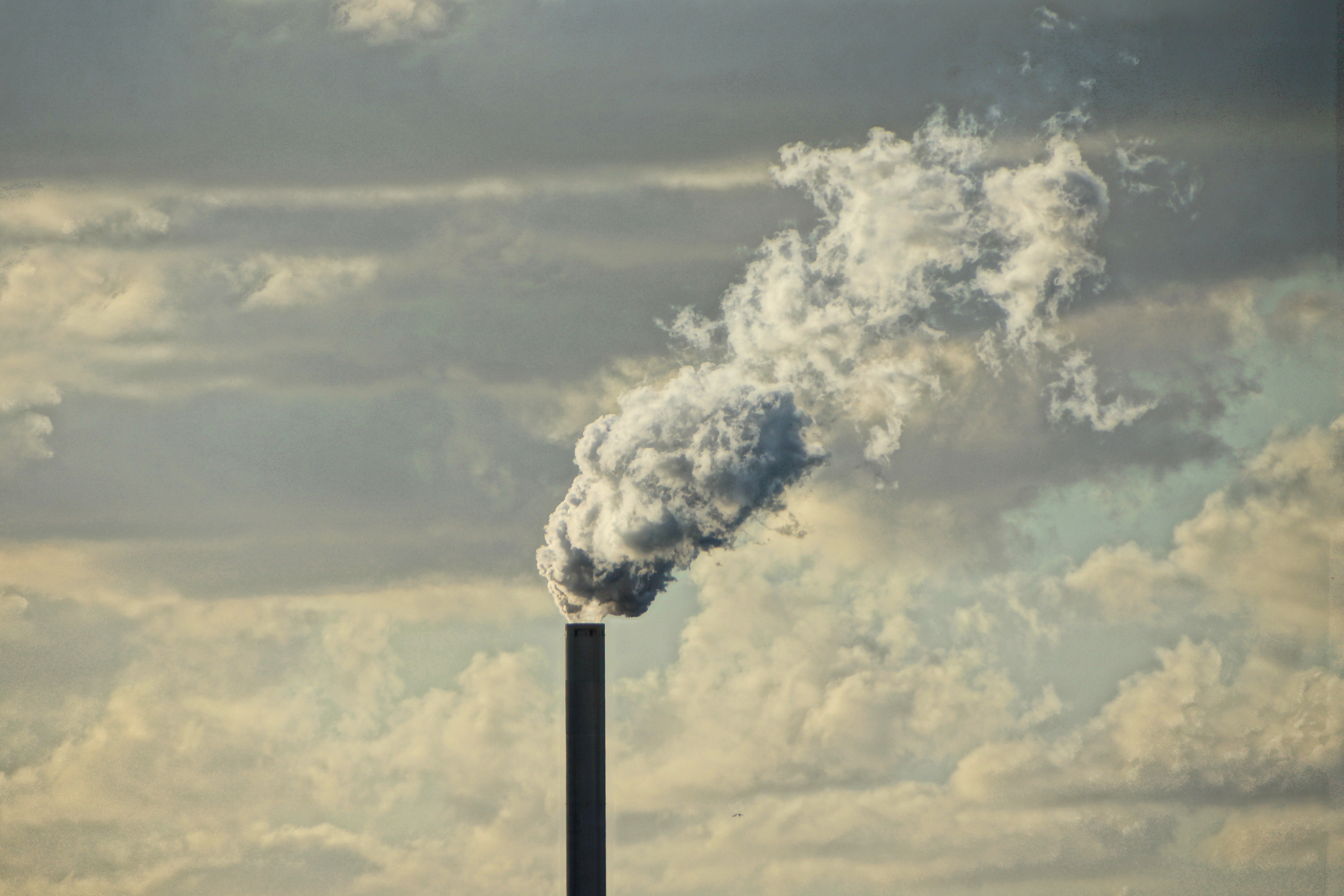
Photo credit Stiller Beobachter

Maybe it’s the heat. Heat-addled brains might explain the thinking of many Virginia lawmakers that what we need to do right now is burn more fossil fuels. 

Scientists have documented the way high temperatures affect the brain, impairing cognition and causing impulsivity and trouble concentrating. And this summer is already starting out hot, which is saying something given that 2024 was the hottest year on record, bumping 2023 off its baking pedestal. Scientists say this global fever is the natural result of burning fossil fuels and driving CO2 levels to their highest in millions of years.

Since burning more fossil fuels will drive more global warming, it’s exactly the reverse of what we should be doing.  Yes, but, these state leaders respond, how else are we going to power ever more data centers? 

Northern Virginia is the data center capital of the world, and data centers are notoriously power-hungry. Without them, Virginia electricity demand would be flat, and we could easily meet our electricity needs while gradually decarbonizing along the pathway laid out in the Virginia Clean Economy Act (VCEA).

Instead, Virginia taxpayers subsidize some of the richest corporations in America to the tune of almost a billion dollarsevery year to entice them to rip up land in Loudoun, Prince William and other Virginia counties instead of Atlanta or Dallas. In return, the tech companies keep construction workers busy, underwrite their host counties’ finances, make life miserable for nearby residents, raise everyone’s power bills, drain our rivers and aquifers and pollute our air with enough diesel generators to light up a major city.  

Virginia legislators obviously consider this a fair deal, because that’s what they keep voting for. Whether their constituents agree is another question; the evidence says they don’t.

For anyone just getting up to speed on data center issues, the Virginia Sierra Club’s new report, “Unconstrained Demand: Virginia’s Data Center Expansion and Its Impacts” (to which I contributed), covers the current state of data center development in Virginia and the problems that come with it. Fun fact: More than half of all the nation’s energy consumption attributed to data centers occurs in Virginia. 

That puts a special burden of leadership on our lawmakers. If we allow data centers to undermine our sustainability efforts here, we can only expect a race to the bottom in other states. As Virginia goes, so goes the nation. 

And yet we haven’t heard much outcry from Virginia leaders against the plans of our largest utility to build new generating plants powered by fracked gas. Dominion Energy laid out its plans in its 2024 integrated resource plan as well as a proposal for a 944 megawatts of gas combustion turbines in Chesterfield now pending before the State Corporation Commission. 

Dominion and its allies say more gas is needed for reliability, which could make it allowable under the VCEA. Indeed, “reliability” is a word that fossil fuel advocates frequently toss down like a trump card (in the unpresidential sense but with the same lack of thoughtful analysis). The claim is suspect. Fussing about reliability when your state ranks 24th in the nation for renewable energy is like worrying about the taxes you’ll owe if you win the lottery: we should be so lucky. 

Gov. Glenn Youngkin and Republican legislators are explicit in wanting to see the VCEA repealed and more gas plants built. Democrats defend the VCEA’s goals, but worry about the challenges of implementation and the effect on electricity rates. They all cite data center demand as the reason they contemplate backsliding on clean energy.

I wish I could say that our rich and powerful tech companies were aggressively championing carbon-free energy for their data centers in Virginia, but they are not. I attended a meeting of the Commission on Electric Utility Regulation where legislators were hashing out the problems of too much demand and too little supply. Representatives from the Data Center Coalition stood in the back of the room, observing but refusing to engage. Out of sight, they successfully lobbied against any bills that would slow the data center boom, force them to absorb more of its costs, or require them to source their own clean energy. 

Publicly, many tech companies tout their commitments to decarbonization. Amazon says it even met its goal to run its operations entirely on renewable energy. Yes, and I’m the Queen of Sheba. In fact, these companies are in a fierce competition to develop artificial intelligence as fast as possible. They’d like carbon-free power, but really, they’ll take whatever energy they can get wherever they can get it, and even among the industry’s best actors, climate now takes a back seat

Yet the likes of Mark Zuckerberg and Jeff Bezos would not be significantly worse off if forced to meet their climate commitments. Virginia leaders know – or at any rate, they have been exposed to the information, which I realize is not the same thing – that building new fossil gas generating plants is not just bad for the planet but more expensive than pursuing carbon-free alternatives.

Oh, I know, Congress just yanked back the federal tax incentives that helped make wind and solar as cheap as it is, one of the myriad ill-considered elements of the big beautiful debt bomb Republicans adopted against everyone’s better judgment. (Apparently heat affects spines as well as brains.) With passage of that bill, developers will need to have begun construction on new facilities by this time next year in order to qualify for the existing tax credits. 

There will be a mad rush to get construction underway immediately for facilities in the development pipeline. Thereafter, projects on the margin won’t get built. But others will, because even the loss of federal subsidies won’t destroy solar’s competitive edge against most new-build gas. 

Even so, utilities and their customers will pay higher prices for unsubsidized new renewable energy – as well as for existing fossil fuel generation that will command higher prices in the coming supply crunch. The Clean Energy Buyers Association estimates that commercial electricity costs in Virginia will be about 10% higher after the phase-out of federal incentives. 

A years-long backlog for orders of gas turbines will further squeeze energy supply and drive up prices for fossil power. On the plus side, the lack of available turbines will make fast-to-deploy solar not just the better option, but sometimes the only option.

I’ve never understood the conservative love affair with fossil fuels, when today’s clean technology is cleaner, cheaper and quicker to deploy. Trump would like to crush wind and solar altogether, which would eliminate 90% of the power capacity waiting to be connected to the grid and catapult the U.S into a serious energy crisis. In addition to much higher power prices, observers warn we would likely see a loss of data centers and other energy-intensive industries to parts of the world that are not on a mission to kill low-cost clean energy. 

Well, that would be one way to rid Virginia of the data center scourge.

Fortunately, the worst attacks on solar in Trump’s budget bomb did not survive, but the bill should nonetheless serve as a wake-up call for Virginia leaders. With little time left to secure federal clean energy incentives, our utilities need to acquire all the solar and storage they can right now. With or without data centers, locking in as much fuel-free generation as possible while it’s available at a discount is a prudent move to avoid the coming shortages and escalating costs of energy.

As for the tech companies, lawmakers should embrace the simplest approach to this problem, which happens also to be the one that spares ordinary Virginians from bearing the costs of the data center buildout: shifting responsibility for sourcing electricity onto the companies themselves, and requiring that they live up to their climate claims by making the power they buy carbon-free. 

It’s an approach other states can follow, holding Big Tech to the same responsibility no matter where they put their data centers. Certainly the tech titans can afford it; they just won big with massive tax cuts that our poorest residents will pay for. 

No doubt they will complain. Everyone would like somebody else to pay for what benefits them. But Virginians can’t afford to subsidize Big Tech, and we don’t want to. 

As for those legislators who think we should continue to do it anyway – well, all I can think is, it’s got to be the heat.

This article was originally published on July 8, 2025. On July 7, President Trump signed an executive order directing cabinet members to find more ways to hobble wind and solar energy, including directing the Secretary of the Treasury to interpret “beginning of construction” in a way that requires “a substantial portion” of a facility to have been built in order to qualify for tax incentives, counter to current regulation.

Unknown's avatar

The war on woke…energy?


I’ve been thinking a lot about language lately, and the strange way words that used to mean good things are now attacked as bad, and vice-versa. Diversity, equity and inclusion are radioactive. Mentioning environmental justice or climate change will get your federal program canceled. Coal is clean, even beautiful, and pointing out the connection to global warming makes you an alarmist, because speaking up when your government steers you towards disaster is now a bad thing to do. 

Recently I received an email excoriating “woke” energy policy, which seemed especially curious. I can see how awareness of historic racial injustice against Black people might nudge policy makers into greater support for renewable energy, given that pollution from fossil fuels tends to have a disparate impact on communities of color. But judging from the hostile tone of the email, I believe we may have different understandings of wokeness.  

Sometimes, though, words mean different things to different people without anyone realizing they aren’t using the same definition. That may be the case when Virginia leaders talk about the reliability of the electricity supply. Everyone agrees reliability is critical – but they may not be talking about the same thing.

Virginia’s need for power is growing at a terrific pace. Data centers consume so much electricity that our utilities can’t keep up, causing them to increase imports from out of state. That’s okay for now; West Virginia is not a hostile foreign nation. Also, Virginia is a member of a larger grid, the 13-state (plus D.C.) PJM Interconnection, which manages thousands of generating facilities to ensure output matches demand across the region. But even across this wider area, demand is increasing faster than supply, pushing up prices and threatening a shortfall. Unless we tell data centers to go elsewhere, we need more generation, and fast.

Democrats and Republicans are divided over how to increase the power supply. Democrats remain committed to the Virginia Clean Economy Act, which requires Virginia’s electricity to decarbonize by 2050. Meeting the VCEA’s milestones requires investments in renewable energy and storage, both to address climate change and to save ratepayers from the high costs of coal and fracked gas. 

Gov. Glenn Youngkin and members of his party counter that fossil fuels are tried-and-true, baseload sources of energy. They advocate abandoning the VCEA and building more gas plants, arguing that renewable energy just isn’t reliable. 

Note that these Republicans are not alarmists, so they ignore climate change. If they were the proverbial frog in a pot of water on the stove, they would consider it a point of pride that they boiled to death without acknowledging the reason.

Youngkin takes every chance he gets to slam the VCEA. As I’ve previously described, the governor sought to amend various energy-related legislation to become VCEA repeal bills, regardless of the original subject matter or how much good it could do.

Last month, Youngkin’s Director of the Department of Energy sent a report on performance-based utility regulation to the State Corporation Commission. With it was a cover letter that had nothing to say about performance-based regulation, but a lot to say about the big, bad VCEA. The letter insists that “By all models, VCEA is unable to meet Virginia’s growing energy demand” and urges the SCC to “prioritize ratepayer affordability and grid reliability over long-term VCEA compliance.” 

Unfortunately for the Youngkin administration, affordability hasn’t been an argument in favor of fossil fuels for many years now. A new solar farm generates a megawatt of electricity more cheaply than a new fossil gas plant, and that will still be true even if Congress revokes renewable energy subsidies – though doing so will make electricity less affordable. 

The argument from fossil fuel defenders then becomes that the cheapest megawatt is not a reliable megawatt. And that’s where meaning matters.

Reliability is so important that even the decarbonization mandate of the VCEA contains an important exception: a utility can build fossil fuel generation under certain circumstances, if it is the only way to keep the lights on. 

Dominion Energy is relying on this escape clause as it seeks regulatory approval to build new fossil gas combustion turbines on the site of an old coal plant in Chesterfield. The move is opposed by local residents, environmental justice advocates and climate activists. (No word on whether they are alarmists or simply alarmed.) They argue Dominion hasn’t met the conditions set out in the VCEA to trigger the escape clause, including achieving energy efficiency targets and proving it can’t meet its needs with renewable energy, energy storage and demand response programs.

Virginia Republicans not only side with Dominion on this, they increasingly favor building gas plants over renewables as a general matter, urging the reliability point. It’s an argument that never made much sense for me, given that renewables make up only 5% of PJM’s electricity. That’s way less than the national average of over 21%, and other grids aren’t crashing right and left. 

The light bulb went off for me while I was watching the May meeting of the Commission on Electric Utility Regulation. A PJM representative showed a chart of how the grid operator assigns numbers to different resources according to how they contribute to the electricity supply. Nuclear plants get the highest score because they run constantly, intermittent wind and solar sources get lower scores, with fossil fuel plants in the middle. PJM calls that a reliability score.

For some Republicans, that’s a slam-dunk: the chart proves renewable energy is unreliable. But in spite of its label, the chart doesn’t actually measure reliability; it gives points for availability, which is not the same thing. 

As I once heard a solar installer testify, few things are as reliable as the sun rising every morning (or rather, the earth rotating). With modern weather forecasting, grid operators can predict with great precision how much electricity from solar they can count on at any given time from solar facilities arrayed across the region. Solar energy is highly reliable, even though it is not always available. Add storage, and the availability issue is also resolved.

Obviously, the grid would not be reliable if solar were the only resource operators had to work with. But it isn’t. PJM calls on a mix of different sources, plus storage facilities and demand response, to ensure generation precisely matches the peaks and valleys of demand. Reliability is a matter of keeping resources in sync and ensuring a robust transmission and distribution system.

The threat to reliability today comes from the mad rush to connect new data centers. PJM has been roundly criticized for not approving new generating and storage facilities’ connection to the grid at a fast enough pace to keep up with the increase in demand and retirements of old, money-losing fossil fuel plants. Scrambling to recover, recently it decided to prioritize a smaller number of big, new gas plants over the thousands of megawatts of renewable energy and storage still languishing on its waiting list. 

Meanwhile, PJM wants utilities to keep operating coal plants even though it will make electricity less affordable and violate state climate laws. In this it is joined by the Trump administration, which wants to require utilities to keep running coal plants explicitly to support the coal industry

Analysts say this is the wrong way to achieve reliability. A recent report from the consulting firm Synapse estimates that PJM’s approach will raise residential electricity bills by 60% by 2036-2040. By contrast, reforming its interconnection process and enabling more renewable energy and storage to come online would lower bills by 7%. By Synapse’s calculation, Virginia would see the most savings of any state. 

In other words, Virginia Republicans are pursuing reliability the wrong way. Instead of pressuring Democrats to back away from the VCEA, they ought to be pressuring PJM to reform its approach. Reliable power doesn’t have to be expensive, if you take the politics out of it.

This article was originally published in the Virginia Mercury on June 3, 2025.

Unknown's avatar

Trump’s attack on offshore wind is hurting Virginia. Why aren’t Republican leaders fighting for us?

On May 5, attorneys general from 17 states and the District of Columbia — not including Virginia, regrettably —  sued the Trump administration over its attacks on the wind industry. The lawsuit challenges an executive order, signed by President Donald J. Trump on his first day in office, stopping all approvals, permits and funding for wind projects across the country and offshore. 

Since the order was signed, the administration hasn’t just blocked new projects, it’s issued a stop-work order for one project under construction in New York and revoked a permit for another. The actions inflict enormous damage on the wind industry and on the economies of states that need the energy and jobs this industry could deliver.

One state that will lose big under Trump’s order is Virginia, which has positioned itself to be a national leader in offshore wind deployment, supply chain and manufacturing. On top of that, Virginia badly needs the electricity from offshore wind to help meet the demand from data centers; it can’t afford to have a major new source of energy strangled in its infancy. Yet Attorney General Jason Miyares did not join the lawsuit.

Sure, Miyares wants to be a good soldier in the Trump putsch. And no doubt he wouldn’t feel at home among all those Democratic AGs (there were no Republicans signing the complaint). But he could at least speak up in his state’s interest. Some well-timed advocacy would go a long way in showing the administration that wind energy is not a partisan matter. 

It doesn’t have to be just our attorney general, either. The silence from Gov. Glen Youngkin has been equally deafening. What are they afraid of? Youngkin can’t run for reelection, and Miyares has already secured his party’s nomination in his bid for reelection this fall.

Any politician who styles himself as pro-business ought to be pushing back on the Trump administration’s interference with contracts, destruction of American jobs and infliction of billions of dollars in damage to a growing domestic industry. Especially when it is happening to their own state, the big risk is in not speaking out.

And let’s face it, attacking wind energy is Trump’s own peculiar hobbyhorse, not his party’s. Though Republican support for wind energy has dropped a bit in recent years, it remains above 50%. Onshore wind is the largest source of electricity in Iowa and South Dakota and a major source in several other Republican strongholds. Wind power is responsible for billions of dollars in economic investment while keeping utility rates low in states that rely on it. 

Offshore wind is more expensive, but states have embraced it for its potential to lower electricity bills over time while relieving grid congestion, creating well-paying jobs and providing clean, zero-carbon power to East Coast cities. Thirteen states have established offshore wind development goals, totaling over 112 gigawatts (GW) by 2050. 

In Virginia, Republican leaders have been among the biggest boosters of offshore wind for more than 15 years. Legislators from both parties supported the creation of the Virginia Offshore Wind Development Authority. With a boost from then-Gov. Bob McDonnell, the Virginia Department of Energy partnered with Dominion Energy on a research project that produced the nation’s first offshore wind turbines in federal waters. Republican support also paved the way for Dominion’s development of the 2.6 GW Coastal Virginia Offshore Wind (CVOW) project, now more than halfway to completion and expected to begin delivering electricity next year. 

Nor is CVOW a one-off; the Virginia Clean Economy Act declares twice as much offshore wind power to be “in the public interest.” At the offshore wind International Partnering Forum held in Virginia Beach last month, Dominion displayed a poster of the projects it has in the works. These include a project off Kitty Hawk, North Carolina, which Dominion acquired last October, as well as a huge lease area east of CVOW, which Dominion secured in a lease auction from the federal government last August. All told, Dominion’s projects could deliver a total of 9 GW of clean, renewable power. 

A poster displaying Dominion Energy’s planned offshore wind projects.

As important as the energy itself is, Virginia leaders believe offshore wind can be a driver of economic development and job creation for the Hampton Roads area. The Virginia Economic Development Partnership touts Virginia’s strategic location, strong maritime industry and ready workforce as draws for businesses up and down the offshore wind supply chain.

Some businesses have already set up shop in Virginia to serve the industry. These include most recently a Korean subsea cable manufacturer that is investing almost $700 million for a facility in Chesapeake. Gov. Glen Youngkin was on hand for the groundbreaking last month, calling it “a proud moment for Virginia.” Attracting the company was only possible because of Virginia’s commitment to the wind industry – as well as the availability of federal tax credits that Trump also intends to eliminate. 

CVOW will likely survive Trump’s attacks (albeit at a higher cost due to his tariffs), but Virginia’s ability to develop an offshore wind workforce and supply chain are very much at risk. The Trump administration’s war on wind power already threatens developers with losses in the billions of dollars. With permitting at a halt, companies are headed for the exits instead of creating the project pipeline necessary for offshore wind to become the powerhouse industry that it is in Europe and Asia.

Trump may have planned his economic sabotage to hurt northeastern states with Democratic governors, but the collateral damage to Virginia is considerable. As it is, our economy has taken a hit from Trump’s mass firings of federal workers, thousands of whom live here. We can’t afford to lose four years of offshore wind progress for no better reason than that Trump wills it. 

Silence is not an acceptable response. Miyares and Youngkin must speak up for Virginia.

Originally published in the Virginia Mercury on May 19, 2025.

Update: On May 20 we learned Trump’s Department of the Interior rescinded its order to shut down the $5 billion Empire Wind project in New York, reportedly after Gov. Kathy Hochul agreed to reverse a decision five years ago denying a permit to a natural gas pipeline. This is being billed as a “compromise,” which is apparently what extortion is called when the Trump administration does it.

Unknown's avatar

Facing data center sprawl and an energy crisis, Virginia legislators leap into action. Nah, just kidding.

This was supposed to be the year the General Assembly did something about data centers. Two years ago, it crushed the first tentative efforts to regulate construction, choosing instead to goose the pace. Last year it again killed all attempts at regulation, punting in favor of a study by the Joint Legislative Audit and Review Commission (JLARC). 

JLARC’s report was released in December to a soundtrack of alarm bells ringing. Unconstrained data center growth is projected to triple electricity demand in Virginia over just the next 15 years, outstripping the state’s ability to build new generation and driving up utility bills for everyone. On top of the energy problem, the industry’s growth is taxing water supplies and spawning billions of dollars’ worth of transmission infrastructure projects needed to serve the industry.

Yet the most popular strategy for addressing the biggest energy crisis ever to face Virginia is to continue the status quo – that is to say, to keep the data center sprawl sprawling. Of the two dozen or so bills introduced this year that would put restrictions on growth, manage its consequences, or impose transparency requirements, barely a handful have survived to the session’s halfway point this week. 

The surviving initiatives address important aspects of local siting, ratepayer protection and energy, though they will face efforts to further weaken them in the second half of the session. Even if the strongest bills pass, though, they will not rein in the industry, provide comprehensive oversight or address serious resource adequacy problems. 

HB1601 from Del. Josh Thomas, D-Gainesville, is the most meaningful bill to address the siting of data centers. It requires site assessments for facilities over 100 MW to examine the sound profile of facilities near residential communities and schools. It also allows localities to require site assessments to examine effects on water and agricultural resources, parks, historic sites or forests. In addition, before approving a rezoning, special exception or special use permit, the locality must require the utility that is serving the facility to describe any new electric generating units, substations and transmission voltage that will be required. Existing sites that are seeking to expand by less than 100 MW are excluded. HB1601 passed the House 57-40, with several Republicans joining all Democrats in favor. 

SB1449 from Sen. Adam Ebbin, D-Alexandria, is similar to HB1601 but does not include the language on electricity and transmission lines. SB1449 passed the Senate 33-6. 

Typically, when the House and the Senate each pass similar but different bills, they each try to make the other chamber’s bill look like theirs, then work out the differences in a conference committee. If that happens here, the House will amend SB1449 to conform it to HB1601 before passing it. The Senate might amend the House bill to match its own. In this case, however, Ebbin’s bill never had the language on electricity and transmission. It’s possible the Senate will recognize that HB1601 is better and pass it as is rather than watering it down to match SB1449; otherwise, the bills will have to go to conference.

Only two ratepayer protection bills passed.  SB960 from Sen. Russet Perry, D-Leesburg, is the better of the two. It requires the SCC to determine if non-data center customers are subsidizing data centers or incurring costs for new infrastructure that is needed only because of data center demand; if so, the SCC is to take steps to eliminate or minimize the cross-subsidy. The bill incorporates a similar measure from Sen. Richard Stuart, R-Westmoreland. It passed the Senate by a healthy 26-13, but leaves the question of why those 13 Republicans voted against a bill designed to protect residential customers from higher rates. 

Over in the House, HB2084 from Del. Irene Shin, D-Herndon, started out similar to Perry’s bill but was weakened in committee to the point that its usefulness is questionable. It now merely requires the SCC to use its existing authority during a regular proceeding sometime in the next couple of years to determine whether Dominion and Appalachian Power are using reasonable customer classifications in setting rates, and if not, whether new classifications are reasonable. It passed the House 61-35. Hopefully the House will see the wisdom of adopting SB960 as the better bill, but again, these could end up going to conference.

The only data center legislation related to energy use to have made it this far is SB1047 from Sen. Danica Roem, D-Manassas. It requires utilities to implement demand-response programs for customers with a power demand of more than 25 MW, which could help relieve grid constraints. It passed the Senate 21-17.

The data center industry and its labor allies were successful in killing all other data center initiatives, including the only bills that dealt with the energy issues head-on. This included legislation that basically called on the industry to live up to its sustainability claims. SB1196, Sen. Creigh Deeds, D-Charlottesville and HB2578, Del. Rip Sullivan, D-Fairfax, would have conditioned state tax subsidies on data centers meeting conditions for energy efficiency, zero-carbon energy and cleaner back-up generators. Sullivan’s bill also set up pathways for data center developers to meet the energy requirements and work towards cleaner operations.

None of this mattered. Republicans were united in their determination not to put anything in the way of continued data center sprawl, and they were joined by a number of Democrats who were persuaded that requiring corporations to act responsibly threatens construction jobs. HB2578 died in subcommittee, with Democrats Charniele Herring and Alfonso Lopez joining Republicans in voting to table the bill. SB1196 was never even granted a committee hearing. 

Yet the idea of adding conditions to the tax subsidies is not dead. Senator Deeds put in a budget amendment to secure the efficiency requirements that had been in his bill. His amendment takes on a House budget amendment requested by Delegate Terry Kilgore, R-Gate City, that extends the tax subsidies out to 2050 from their current sunset date of 2035, with no new conditions whatsoever. 

It seems like a reasonable ask for the tech industry to meet some efficiency requirements in exchange for billions of dollars in subsidies and the raiding of Virginia’s water and energy supplies. Indeed, the industry could have had it worse. Senator Stuart had introduced a bill to end the tax subsidies Virginia provides to data centers altogether. Alas, like several other more ambitious bills intended to bring accountability to the data center industry, it failed to even get a hearing in committee.  

Now, maybe Virginia will get lucky – or unlucky, depending on how you look at it – and the data center boom will go bust. The flurry of excitement around China’s bid to provide artificial intelligence at a fraction of the cost of American tech joins other news items about efficiency breakthroughs that could mean the tech industry needs far fewer data centers, using far less energy and water. That would be good for the planet, not to mention Virginia ratepayers, but it would leave a lot of empty buildings, upend local budgets, and strand potentially billions of dollars in new generation and transmission infrastructure. A little preparation and contingency planning would seem to have been the wiser course.  

Failed bills.

Most bills to regulate data centers never made it out of committee, but the problems of data center sprawl and resource consumption will only increase in coming years. In addition to the energy legislation from Senator Deeds and Delegate Sullivan, here are other bills we may see come back again in another form. 

SB1448 from Sen. Richard Stuart, R-Westmoreland, would have required any new resource-intensive facility (defined as drawing more than 100 MW or requiring more than 500,000 gallons of water per day) to get a permit from the Department of Environmental Quality. DEQ is to permit the facility only “upon a finding that such facility will have no material adverse impact on the public health or environment.” The impacts are broadly defined and include transmission lines and cumulative impacts from multiple facilities in the same area. The bill reported from Senate Agriculture, Conservation and Natural Resources but was then sent to Finance and Appropriations, never to be heard from again. 

A bill from Del. Thomas would have required localities to change their zoning ordinances to designate data centers as industrial uses and to consider changes in how they evaluate data center siting, especially around noise impacts. HB2026 was tabled unanimously in subcommittee. 

HB2712 from Del. Ian Lovejoy, D-Manassas, would have authorized a locality that is weighing a permit application for a data center to consider factors like water use, noise and power usage, and to require the applicant to provide studies and other information. It lost on a bipartisan subcommittee vote. 

Lovejoy’s HB1984 would have required data centers to be located at least one-quarter mile from parks, schools and residential neighborhoods. It was killed on an 8-0 subcommittee vote. 

A third Lovejoy bill, HB2684, would have required Dominion to file a plan with the SCC every two years to address the risk that infrastructure built to serve data centers might become stranded assets that other customers would be left paying for. It was never docketed. 

A bill that did not mention data centers but originated with local fights over the siting of transmission lines needed to serve them was Roem’s SB1049. It would have prohibited new overhead transmission lines unless the SCC determined that putting them underground was not in the public interest. It lost in a 4-11 vote in committee.  

This article (minus the section on failed bills) was published in the Virginia Mercury on February 10, 2025.

Unknown's avatar

It’s the fossil fuels, stupid

For low-cost electricity, Virginia needs renewable energy — not gas plants

smokestack
Photo credit Stiller Beobachter via Wikimedia.

Southwest Virginia leaders are up in arms over electricity rate hikes. It’s understandable: Appalachian Power, which serves residents in 34 counties, has raised rates by over 46% since July 2021, and its rates now rank among the state’s highest. Last March, it sought another increase that would have resulted in residents paying $10.22 more per month on average. Although the State Corporation Commission’s November ruling granted APCo a much smaller rate hike, customers are raising a ruckus about the high bills.

Complaints have reached such a fever pitch that Del. James Morefield, a Republican who represents parts of five southwest Virginia counties, filed legislation this month to cap the rates APCo can charge. Over in the Senate, another southwest Virginia Republican, Travis Hackworth, has launched a direct attack on APCo’s monopoly: His legislation would allow any residential customer of APCo whose monthly bill exceeds 125% of the statewide average to buy electricity from another provider.  

These bills might be more performative than serious. But in this case, legislators themselves are at least partly to blame. In 2023, another Southwest Virginia Republican, Israel O’Quinn, drove legislation that excused APCo from having to write integrated resource plans (IRPs) – those pesky documents that tell regulators how a utility plans to comply with state laws and meet the needs of customers at least cost. Both Hackworth and Morefield voted for the bill. 

In 2024, O’Quinn also championed legislation that allows APCo to charge customers for costs of developing a small modular nuclear reactor. Hackworth also supported this new burden on ratepayers, though Morefield did not.

This year, the Commission on Electric Utility Regulation is promoting legislation to reform the IRP process, including making APCo file plans again. That may help. Fundamentally, though, the primary reason APCo’s customers are paying so much is that the utility remains so dependent on fossil fuels. As of the date of its 2022 IRP, APCo relied on coal and fracked gas for 85% of its electricity. Prices for both fuels spiked so high in 2021 and 2022 that utilities were left with huge bills to pay. 

 In 2022, APCo told the SCC it had spent an extra $361 million over budget on gas and coal. Virginia law allows fuel costs to be passed through to customers, so the SCC couldn’t prevent bills from rising to cover the outlay. Instead, the SCC allowed the company to recover the excess fuel costs from its customers over two years by charging roughly $20 more per month to residents, spreading out the pain but also extending it. O’Quinn’s 2023 legislation let the company finance the costs, which meant customers pay interest on top of the fuel costs.

 APCo was not the only utility passing along high gas costs. Dominion Energy Virginia also got caught off guard and asked to spread its excess fuel costs out over three years, adding an average of $15 to residential customer bills. Dominion customers are not happy either. 

 Gas prices have since dropped, and the remarkably short memories of legislators have led them to think they will now stay low forever. Having learned precisely nothing, they also insist that the only way to ensure an adequate supply of reliable, low-cost energy to serve the data center boom is for Virginia to increase its reliance on gas instead of transitioning away from it.    

 The evidence does not support this fantasy. Contrary to Republican orthodoxy, new renewable energy is cheaper than new fossil fuel generation. That’s why in 2024, 94% of all new power capacity in the U.S. came from solar, batteries and wind energy. Fossil gas made up just 4% of new generating capacity. Yes, many states are now proposing to build new gas plants, so the trend could reverse, but that’s only because the rush of data centers and new manufacturing has made large users desperate for more energy at any cost. 

 It’s true that solar, Virginia’s least-cost resource, only produces electricity when the sun shines. But even adding battery storage to solar energy, allowing it to serve as baseload power or a peak power resource, still results in lower electricity costs than the gas combustion plants that are used to produce electricity at peak times. (In Virginia, Del. Rip Sullivan, D-Fairfax, has introduced legislation to expand storage targets for Dominion and APco, including for long-duration storage.)

 The era of low-cost renewable energy is fairly new, but it is already impacting utility bills across the country. Virginia used to boast of its low rates; now there are 22 states with lower residential electricity rates than Virginia. And of those, U.S. Energy Information data shows that all but five generate a higher percentage of their electricity from renewable energy. 

With data centers proliferating across Virginia unchecked, utility rates are under even more pressure now. The Joint Legislative and Audit Review Commission data center study, released last month, warns that ratepayer costs will inevitably rise under an “unrestrained growth” scenario that reflects current policy.

It’s too early to tell whether any of the many bills to protect residential ratepayers and put guardrails on data center development will pass. For now, the governor and many Republicans seem to prefer to use the crisis to crush the transition to renewable energy. As in past years, Republicans have introduced bills to repeal the Virginia Clean Economy Act or undermine it in various ways.

Making solar more difficult and expensive to build is also part of the strategy. The party that used to stand for individual liberty and personal property rights now instead champions local governments that deny farmers the ability to put solar on their land.

Talking up fossil fuels and dumping on solar may make for good politics with the folks in rural districts. That doesn’t mean it’s in their interests. If high utility bills are what really matter, legislators should be pushing renewable energy and storage, not expensive gas plants. 

This article appeared in the Virginia Mercury on January 20, 2025. Interestingly, today writers at two other publications, Cardinal News and Bacon’s Rebellion, took up one aspect of this topic that I only alluded to, the fact that Virginia “imports” more electricity than any other state. Virginia politicians have been exercised on this topic for as long as I’ve been writing, and it has always struck me as strange. It’s not like we need to worry about the political ramifications of a trade imbalance with Pennsylvania.

But as Duane Yancey noted, those electrons coming into Virginia from elsewhere in PJM do tend to be dirty. That’s especially the case for APCo, which operates coal plants in West Virginia and has been ordered by the West Virginia Public Utilities Commission to run those plants at a 69% capacity factor, regardless of the economics. I have not been able to find out anywhere the percentage of APCo’s generation that comes from coal as opposed to gas, but the West Virginia PUC order unquestionably means APCo’s Virginia customers are paying too much.

One other thing to note on the topic of imports: when I wrote that APCo’s resource mix is 85% fossil fuels, that did not mean the other 15% is renewable. In fact, most of the rest is purchased power, meaning mostly fossil fuels also.

By the way, readers may notice a few discrepancies among the articles, which is worth explaining. Both Yancey and James Bacon cite figures for Virginia electricity rates and how they compare to other states that are different from my numbers. The reason is that they are working from combined rates for residential, commercial and industrial, where I’m using residential only. Virginia’s combined rate compares more favorably to those of other states than does its residential rate because our commercial and industrial rates are lower.

Virginia’s low commercial rates have been a major draw for data centers. But if you’re a residential customer right now, maybe that’s pretty cold comfort.

Unknown's avatar

The clean energy revolution will continue

Photo credit iid.com

Eight years ago last week, I wrote a column titled, “Why Trump won’t stop the clean energy revolution.” Calling global warming a hoax, businessman and reality TV star Donald J. Trump had just been elected with a promise to save coal jobs and pull the U.S. out of the Paris climate accord. 

Climate activists were deeply distraught then, as now. I wrote in 2016, “Reading the news Wednesday morning was like waking up from a nightmare to discover that there really is a guy coming after you with a meat cleaver.”

But as I also wrote, there is only so much damage a president can do when technology, popular opinion and – especially – economics don’t support his agenda. Trump couldn’t save the coal industry (though he tried). Instead, his administration oversaw a 24% decline in coal employment. And where coal supplied 30% of U.S. electricity in 2016, by the time Trump left office it had fallen to 20%. 

In the intervening years, Trump seems to have lost interest in coal mining, even as he continues to embrace fossil gas production. His enthusiasm for gas fracking fits with his drill-baby-drill approach to energy, but it was also intended to win over voters in Pennsylvania, a major producer of shale gas. Ironically, the gas industry insists on calling methane “clean” precisely because burning it emits less CO2 than coal. 

While coal was dying, wind and solar were well on their upswing when Trump took office in 2017, and they continued to advance through his first administration. By 2020, wind and solar had become the cheapest forms of new electric generation. Today, renewable energy supplies more than 21% of the nation’s electricity, while coal’s share has dropped further, to just 16%. Trump or no Trump, technological advances and a thirst for cleaner energy continue to drive new wind and solar generation.

Indeed, the offshore wind industry – famously reviled by Trump – wasted no time last week in congratulating its erstwhile foe on his victory and insisting, hilariously, that his election is a big win for the industry. The first Trump administration, they noted hopefully, “laid out the fundamental framework for our modern offshore wind industry.”

Well, okay. From their lips to Trump’s ears. Trump is hardly known for consistency, and it is not impossible to imagine him softening his position on an industry that is creating well-paying jobs for the blue-collar workers who make up a portion of his base. His Virginia acolyte, Republican Gov. Glenn Youngkin, boasts of overseeing the building of the nation’s largest offshore wind farm. Why shouldn’t Trump pivot? 

Early in the Republican primaries, one candidate opined that all the solar panels and batteries sold in the U.S. are made in China. That wasn’t actually true. For years one U.S. company, First Solar, has ranked among the world’s top ten solar panel manufacturers. Among the domestic manufacturers of both EVs and batteries, one of the largest is Tesla, whose CEO Elon Musk is now a Trump darling. It is going to be fascinating to find out whether Musk uses his influence to benefit the clean energy transition generally, or only himself. 

Yet the notion that China dominates solar and battery production is also not wrong. China is eating our lunch on clean energy. Chinese companies produce 80% of the world’s solar panels and more than half of its electric vehicles. Sadly, perhaps, these are not cheap imitations of superior American products. They are world-leading technology. 

Chinese dominance of the world market was a major reason that President Joe Biden’s signature climate law, the Inflation Reduction Act (IRA), put so much emphasis on supporting domestic manufacturing. Tariffs on Chinese goods, Trump’s preferred approach, help U.S. companies compete for American consumers, but they don’t support an export market when other countries produce better goods for less money. Even at home, critics note, tariffs mostly just raise prices.

Yet Trump has vowed to repeal the IRA, and given that Congress passed it without Republican support, there is certainly a danger that a Republican Congress will comply. On the other hand, observers note that 80% of the manufacturing tax credits have gone to red states, and this August, 18 House Republicans signed a letter to Speaker Mike Johnson asking to keep the credits. 

I don’t want to sound too optimistic. Wait, let me rephrase that: I don’t feel optimistic at all. We are facing headwinds today that weren’t around in 2016. At that time, gains in energy efficiency meant electricity demand was not increasing, in spite of a growing population. With wind and solar displacing coal, there was a clear pathway for CO2 emissions from the electric sector to continue falling. 

Today, however, the skyrocketing demand for electricity from data centers threatens the progress we’ve made on clean energy. It remains to be seen whether artificial intelligence will unleash efficiency gains and novel technologies that can put carbon reductions back on track. Right now, though, tech companies are so desperate for power that they will take it from wherever they can get it, and regardless of carbon content.  (I notice, though, that they still want it to be cheap and are happy to greenwash it to meet their sustainability goals). 

Perhaps the biggest change from eight years ago is simply that we are that much closer to reaching catastrophic climate tipping points. 2023 was the warmest year on record, and 2024 is on track to surpass it. The effects are evident in the number and costliness of severe weather and wildfires made worse by global warming. (Just ask insurance companies.) It is frustrating, to say the least, to contemplate losing the next four years to an administration that thinks climate change wouldn’t be an issue if we would just stop talking about it.  

Yet Americans of all political stripes continue to support renewable energy by wide margins. And apart from a small minority of vocal climate deniers, most Americans want the U.S. to take stronger action on climate. 

This election revealed deep fault lines among the American public, but one thing we all have in common is the faith that our ability to solve intractable problems is stronger even than our tendency to wish the problems away. 

That’s why, even in the face of such serious headwinds, the clean energy revolution will continue. 

This column was originally published in the Virginia Mercury on November 12, 2024.

Unknown's avatar

Once again, Dominion’s energy plan falls short. This time, the SCC isn’t having it.

Dominion Energy headquarters, Richmond, VA

On October 15, Dominion Energy Virginia filed its 2024 integrated resource plan (IRP), and just as in 2023, the company shows no inclination to meet the carbon-cutting requirements of the Virginia Clean Economy Act (VCEA). Blaming soaring load growth from data centers, Dominion models only scenarios with increasing amounts of fossil fuel generation to supplement its investments in renewable energy and nuclear. A scenario that would actually comply with the law is discussed only as something stakeholders asked for, then dismissed as “infeasible.”

Tellingly, the company notes casually that its own scenarios “evaluate the impacts of” the VCEA, as if the law were merely advisory, while the utility retained the final say. It’s kind of like a driver thoughtfully “evaluating the impact” of a speed limit – and then accelerating.

To be fair, this used to work for Dominion. The State Corporation Commission (SCC) has a long history of criticizing Dominion’s IRPs and ordering the company to do better next time, but never outright rejecting a plan. If traffic cops only ever gave out warnings, you would expect to see more scofflaws.

This year, though, the three-member SCC has two new commissioners, and already they have shown they intend to take their oversight role seriously. The commission didn’t even wait to see what Dominion would come up with before demanding improvements. On October 11, four days before Dominion submitted its IRP, the SCC issued an order instructing the utility to supplement its filing with additional work, to be submitted by November 15.

The task list includes modeling plans that meet the requirements of the VCEA, with at least one that incorporates data center load and one that doesn’t, as well as least-cost plans with and without data centers. In addition, the SCC wants Dominion to break down the costs of new transmission projects to identify the expenses that are primarily due to data center demand. 

The order tacitly acknowledges that the staggering growth of the data center industry in Virginia has upended utility planning. At the same time, the SCC is not giving Dominion a free pass, either on costs or on VCEA requirements. If Dominion believes it can only meet demand reliably by adding expensive gas peaker plants, it is going to have to prove it.

As I wrote a few weeks ago, the SCC plans to convene a technical conference in December to examine issues around serving data center load. Of paramount interest to the commission are the questions of how much it will cost to meet the burgeoning demand, and how to protect other consumers from rate increases for new generation and transmission infrastructure needed only because of one industry. 

The SCC is not alone in its concerns about Dominion’s cavalier approach to its IRP obligations. Last year, with a goal of improving utility oversight, the General Assembly revitalized its Commission on Electric Utility Regulation, which formerly served as a graveyard for utility reform bills. (CEUR used to be pronounced “sewer,” but commission members would dearly love it if you would now call it “the cure.”) 

In a September 16 memo, CEUR director Carrie Hearne recommended members consider a list of reforms that would, among other things, require Dominion to include in its IRP “a VCEA conforming scenario that does not assume to exercise an immediate exemption due to reliability concerns.” This scenario would have to incorporate the social cost of carbon, meet energy efficiency metrics (another area where Dominion has fallen short), plan for the retirement of fossil fuel plants targeted for closure in the VCEA, and assume an “unobstructed” buildout of renewable energy and storage (removing the artificial caps Dominion currently employs). 

In other words, CEUR would like Dominion to follow the law.

Ratepayer and environmental advocates have applauded the more muscular approach being taken by CEUR and the SCC. Dominion, however, has remained steadfastly oblivious to the hints flung at it from all sides.

The company remains unapologetic. In an op-ed, Dominion Energy Chairman Bob Blue insists the company is pursuing an “all of the above” strategy that will produce electricity that is “reliable, affordable and increasingly clean” – an assertion he repeats three times, as if saying it often enough makes it true. 

As the IRP puts it, however, “perceptions of affordability are subjective.” Analyzing its favored scenario using the methodology directed by the SCC, Dominion projects residential bills will rise over the next 15 years from an average of $142.77 today to $315.25 in 2039. 

Let’s be charitable, though. Maybe when Mr. Blue said the company was committed to affordable energy, he meant for data centers.

“Increasingly clean” is even more counter-factual. As reported in the Mercury, “The utility’s previous plan projection said about 95% of electricity generation would be pulled from renewable sources. Tuesday’s updated plan calls for about 80% of generation to be spurred by renewables.” And as with the 2023 IRP, Dominion plans to keep expensive and highly polluting coal plants operating beyond their previous retirement dates, putting the company even further away from “clean.”

Dominion’s 2023 IRP received considerable criticism for projecting a doubling of greenhouse gas emissions by 2048, a year when they should be at zero under the terms of the VCEA. Dominion appears to have learned a lesson from that public shaming, but not the right lesson. The 2024 plan shortens the emissions time frame to 5 years, cutting out reporting for the later years when the proposed new methane gas plants would be in service and spewing out CO2. Instead, the IRP brags about lowering “emissions intensity,” a success it can achieve without cutting carbon, just by selling more electricity.  

Participants at a “people’s hearing” on October 29 protested Dominion’s plans for a new methane gas plant in Chesterfield, Virginia. Photo courtesy Friends of Chesterfield.

So much for affordable and increasingly clean. As for reliable, burning more methane will only exacerbate the climate change and extreme weather that have been wreaking havoc on southeastern utilities’ ability to keep the lights on. The recent storms should be a wake-up call for utilities to ramp up renewables, including distributed solar generation and storage to serve communities, rather than building more centralized, carbon-intensive fossil fuel plants to power data centers.

But some companies, like some people, never learn. Finding itself deep in a hole, Dominion proposes to keep on digging.

This article was first published in the Virginia Mercury on October 28, 2024.

A message to my Northern Virginia friends and climate advocates: please consider joining me at a fundraiser on Sunday, November 10 from 5-7 pm to support the work of the Sierra Club’s Virginia Chapter. Special guests include the fabulous Connor Kish, chapter director, and Sierra Club executive director Ben Jealous. RSVP and get more information here. Hope to see you there!

Unknown's avatar

The strange obsession with low birth rates


The human population of the Earth passed 8 billion in 2022, up from 7 billion in 2011 and less than 2 billion just a century ago. The United Nations projects that by 2050, the world will hit 9.7 billion people and continue rising to 10.9 billion in 2100. The average number of children women have in their lifetimes remains above the replacement rate of 2.1. 

So why is there so much hand-wringing about a population bust

It is true that population trends are uneven across the world, and some European and East Asian countries are struggling to address a decline in numbers. This is not the case in the U.S., however. Although our birth rate has been below the replacement rate for years, the Census projects our population increasing by another 33 million before it peaks in 2080. By 2100, the Census expects there will still be almost 10% more people in the U.S. than there are today. 

Frankly, it’s more than a little odd to worry about something that won’t happen for at least three-quarters of a century, while ignoring that in the meantime, an ever-growing population using too many resources is pushing the planet to the brink of ecological collapse. You would think we could worry about that now, and save the hysterics over population decline for the next century. 

Yet conservatives see the sky falling. The fear is most palpable among white supremacists spouting replacement theory, the notion that pale-skinned people, who are having fewer children, will be swamped by brown people, who are having more. They are pretty sure this is, in fact, a nefarious plan concocted by Jewish people, who apparently don’t count as white, with a goal of destroying Western civilization and all the great things that America stands for — by which they definitely do not mean democracy and civil rights

Even some liberal Americans say they’re worried about the birth rate, and argue we need child tax credits, mandatory parental leave and publicly-subsidized daycare to reverse the decline. Of course, progressives support these policies anyway, so it’s hard to know how sincere their concern over birth rates really is. 

I’m not sure about the sincerity on the right, either. Most of the people who express alarm about a declining birth rate are red-state Republicans who celebrate rural living and the small-town lifestyle. They hate traffic and the plethora of rules necessary to make life tolerable in crowded communities. 

Meanwhile, I guarantee you no one in New York or LA looks around and says, “You know what would make this place better? More people!”  

Of course, the pro-population-growth crowd absolutely rejects the one sure way to increase the US population: allowing more immigrants in. 

They say it’s not racism. Theirs is just a preference for people who look like them, sound like them and do things the way they do them. 

Yet immigration does all the things that the population alarmists say we need. It fills schools with children, bolsters the workforce, and keeps contributions flowing to Social Security and Medicare, extending the solvency of these programs. 

Vastly more would-be immigrants are knocking at our doors than we are willing to allow in, and the numbers will only increase as climate change and the collapse of ecosystems spark further conflict and make it harder to eke out a living in more parts of the world. Countries that are able and willing to absorb the outflow of migrants from devastated areas will not be challenged by depopulation. 

The U.S. is home to more migrants than any other country. Clearly many Americans, themselves descended from immigrants, are ready to shut the door behind them, but economists agree immigration is the secret sauce of our economic strength. That doesn’t mean the doors need to be wide open, with no one managing the flow, or that we shouldn’t try to help solve the crises that drive people to leave their home countries in the first place. And we still urgently need to work on transforming our consumption-based economy into a sustainable one.

But it does mean we needn’t fear a population bust in our lifetimes. While other advanced countries are figuring out how to retool their economies for a shrinking population, we will always have the numbers we desire, so long as we remain a society committed to equal opportunity, democracy and the striving for justice.    

Obviously, this is not what the nativist right wants. But what they want — more American-born babies and limitless population growth, achieved by controlling women’s bodies rather than by strengthening the welfare state — is a fantasy served up with a helping of bad policy. 

This article was previously published in the Virginia Mercury on August 20, 2024.