Unknown's avatar

How Gov. Spanberger and a Democratic majority can make energy more affordable

An aggressive legislative agenda this year will demonstrate national leadership on managing the data center buildout while delivering climate, health and economic benefits to all Virginians

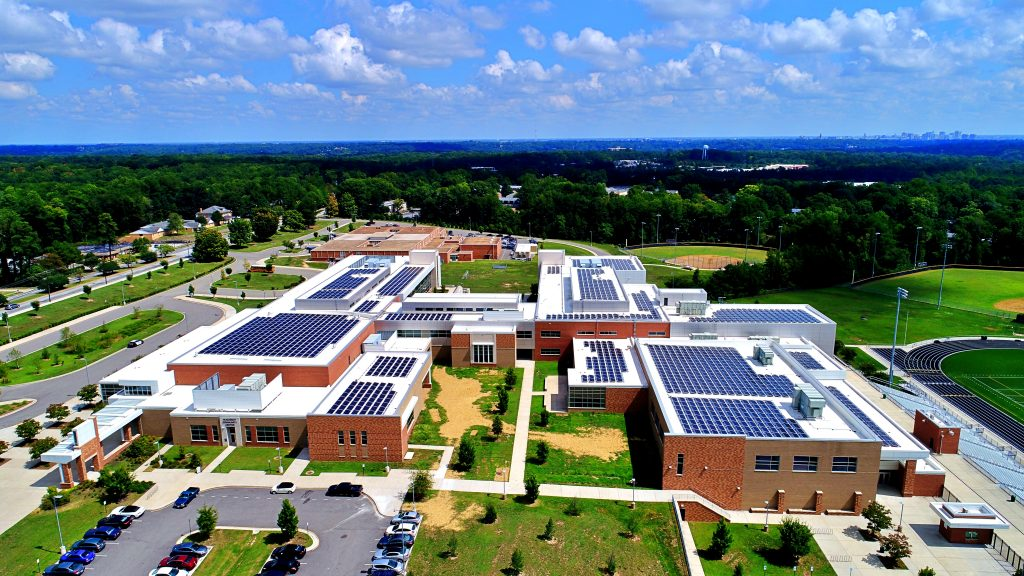
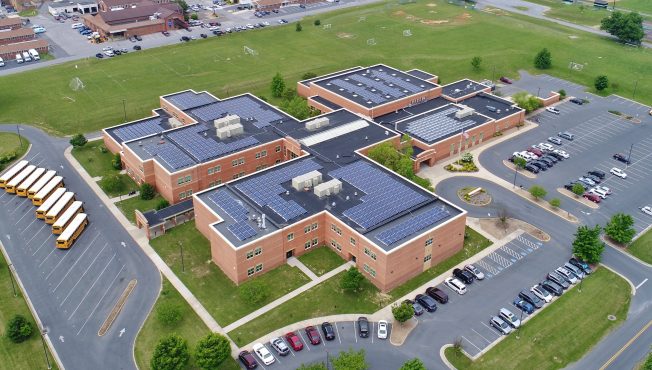
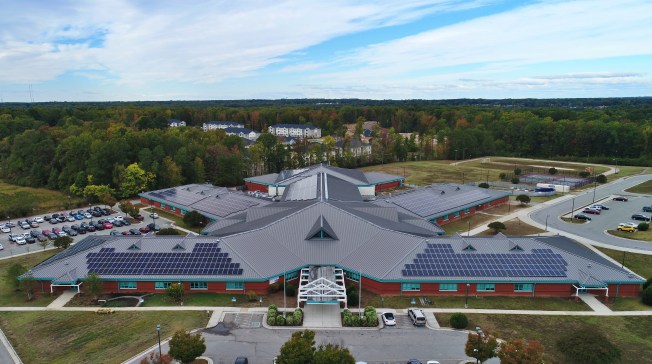
Solar on schools and other public buildings reduce pressure on the grid while saving money for taxpayers. Photo courtesy of Secure Solar Futures LLC

If Virginia’s election last month was more than an unleashing of anti-Trump sentiment (and it definitely was that), it was about affordability. Governor-elect Abigail Spanberger made the cost of living the focus of her campaign, frequently mentioning high energy bills. House Democrats, whose majority has been boosted by the addition of 13 new members of their party, are also expected to focus on these bread-and-butter issues. 

In Virginia, the cause of these high bills is not hard to identify: Data centers are driving up demand well beyond the available supply, and high fossil fuel prices are pinching a state that relies on natural gas for most of its electricity. Spanberger has committed to making data centers “pay their fair share,” and both she and legislators will be looking for other opportunities to lower costs.

The bad news is that adding ever more data centers across Virginia means the upward pressure on electricity prices will continue. If the governor and legislators don’t want to kick tech companies to states with spare capacity, and if the administration of President Donald Trump continues to throttle the energy supply with its war on wind and solar, lowering energy costs in the near term likely isn’t possible. 

Even so, there is a lot that Spanberger and the General Assembly can do to protect residential consumers from these higher prices. 

Making data centers pay their fair share means more than tweaking rate structures. Several Virginia utilities have created special rate classes for large load users like data centers. The utilities will require data center operators to sign long-term contracts committing them to paying for a large percentage of the electricity and transmission they say they need, even if they don’t end up using that much or leave the Virginia market prematurely. 

These new tariffs can help protect other customers from some – though not all – of the risk involved in serving data centers, but they don’t address the “fair share” issue. The current allocation of transmission costs, with residential ratepayers picking up most of the tab for new lines that don’t benefit them, needs to change. If the SCC determines it doesn’t have authority to do that on its own, the General Assembly and Spanberger should pass legislation to make it happen. 

The harder problem is how to make residents whole for rate increases that result from data centers gobbling up all available power. The supply and demand problem has been compounded by a lot of bad decisions, with plenty of blame to go around. The federal government has driven up fossil fuel prices by allowing the export of increasing amounts of natural gas, while hindering and even blocking solar and offshore wind projects that could make up the deficit. 

Outgoing Gov. Glenn Youngkin is to blame for illegally pulling Virginia out of the Regional Greenhouse Gas Initiative (RGGI), removing the market incentive for Virginia utilities to increase investments in low-cost renewable energy instead of burning expensive fossil fuels. (His promotion of the false narrative that gas is “cheap” doesn’t help.) 

Virginia utilities share the blame for relying too much on natural gas and high-priced electricity imported from other PJM states. And grid operator PJM is to blame for failing to approve enough new generation, including wind and solar facilities that make up the vast majority of projects waiting for approval to interconnect.

This history leaves Spanberger with a fine mess. Keeping prices in check now requires two things that can actually be accomplished during the next four years: a greater buildout of solar generation and energy storage to get more capacity on the grid; and investments in energy efficiency and rooftop solar to take pressure off the demand side.    

Solve utility solar siting with agrivoltaics. Virginia needs more energy, and solar is the only source that can be built quickly. Yet one of the knottiest problems confronting the General Assembly in the past few years has been the rise of anti-solar sentiment in rural counties. 

Landowners who want to lease their property for solar, or even to install arrays for their own use, find themselves stymied by opposition from neighbors who don’t like the look and are able to persuade county boards to deny permits. As we’ve seen, sometimes denial of a solar permit even follows approval of an energy-sucking data center.

Last year the General Assembly came close to passing a bill that would require solar developers to implement industry best practices. Passing legislation like that this year will address the legitimate concerns of localities around controlling erosion and maintaining native plant buffers. But more can be done to make solar look and function like a normal part of Virginia’s agricultural economy.

Already, solar facilities have become integrated with agriculture, as sheep and sometimes cattle take over vegetation management and farmers learn which crops do well growing between rows of solar arrays. It’s a trend that offers benefits to the land and the community alike. Farmers are struggling; solar can provide a stable income while protecting land from permanent development and putting much-needed energy on the grid. 

Businesses are ahead of public policy on this. Virginia-based Gray’s Lambscaping manages vegetation with over 800 sheep at solar farms across the state, and the company plans to grow to over 5,000 sheep by the end of this year. Meanwhile, solar panels have proven compatible with a wide range of food crops.  

Virginia should take a leading role in expanding agrivoltaics. Virginia law already recognizes the right to farm as an exception to localities’ authority over land use decisions, and this should be extended to farmers who put solar on their land, as long as they are also using the same land for traditional agricultural practices like grazing and crops. 

Install solar on new public buildings and schools. Heck, put it everywhere.  In the past ten years or so, Virginia’s commercial solar sector has blossomed while saving taxpayers money. To date, an estimated 150 Virginia schools have installed solar panels, saving schools about 25% on their energy bills. Solar on every sunny school rooftop would add up to more than 1,000 MW of carbon-free generation. Extend the effort to the roofs of all suitable public buildings across the state, and that number can go much higher. 

Dominion and APCo have long tried to squelch competition from rooftop solar, a war that looks increasingly foolish as Virginia finds itself short on energy for all customers. Earlier this year Congress drastically accelerated the phase-out of solar tax incentives, but the savings remain available for commercial and utility-scale projects for the next two years. There is no shortage of good ideas out there to be acted upon. Spanberger and legislators should take full advantage of that opportunity to install as much solar as possible. 

Battery storage at data centers does triple duty. While solar is the cheapest, cleanest, and fastest way to generate power, it needs batteries or other forms of energy storage to make it into a 24/7 resource, and storage remains relatively expensive. For tech companies, however, the calculus makes more sense.

Data centers need backup power anyway; they typically have three layers of redundancy so that they never risk losing power when the grid goes down. Today the backup power is mostly provided by massive diesel generators, sometimes three times as many as they might actually need. Most of these have no pollution controls and are therefore not supposed to run except in emergencies and for testing and maintenance. That’s sill a lot of run time — and DEQ is proposing to make matters worse by expanding the definition of “emergency” to include scheduled outages.

Some tech companies are now installing generators with selective catalytic converters that produce fewer emissions. The catch is that these can legally be used in non-emergency situations, raising the possibility that they might be used for demand-response or peak shaving. In effect, data centers would be solving the peak demand problem with one of the dirtiest forms of energy. The cumulative effect on air quality could be worrisome, and Virginia’s carbon footprint would grow at a time when the law says it should be shrinking. 

What if, instead of diesel generators, data centers installed storage as their first line of defense against power outages, leaving diesel generators to be used only in the rare case of extended grid outages? Air quality would benefit, carbon emissions would decrease, and the data centers would have the backup power they need. The tech companies would pay more upfront but could be compensated by utilities for using their storage capability for grid services and demand response, lowering their draw from the grid at peak demand times. 

All the data centers in Virginia today use 6 gigawatts of power. That much storage would exceed the targets set in the VCEA for Dominion and APCo combined.  Even limiting the requirement to two hours of storage at new data centers would bring enough storage online quickly to eliminate the expensive demand peaks that drive the high price of energy.  

Require data center operators to source their own zero-carbon electricity. Most of the tech companies have sustainability commitments that they aren’t meeting, so it isn’t asking too much of them to put them in charge of this effort. Legislation to require this as a condition of accepting Virginia’s generous tax subsidies has been defeated for the past two years. The difference this year is that rising energy prices are now affecting everyone. 

Under this proposal, the zero-carbon electricity doesn’t have to come from Virginia, as long as it is available to customers here. Maybe the tech companies could even tap into their considerable influence with the Trump administration to make electricity more plentiful and affordable by reversing its war on solar and wind energy.

Why, after all, should Virginia residents sacrifice for the richest corporations in the world? If “paying their fair share” means anything, it should mean that data centers, not residents, bear the costs of making enough energy available to Virginia, and complying with our clean energy mandate.

Lower demand with energy efficiency and distributed solar. The gap between energy supply and demand does not have to be filled entirely through supply-side solutions. Lowering demand should also be part of the solution. Virginia utilities, Dominion in particular, have done a poor job of running energy efficiency programs. Looking on the bright side, though, that means plenty of opportunities remain.

House Democrats have already started work on this issue, with a focus on lowering winter heating costs for lower-income households. As reported in the Mercury last week, HB 2, from Farifax Del. Mark Sickles, requires Dominion and APCo to make their “best, reasonable efforts” to provide energy efficiency and weatherization to 30% of income-qualified customers by the end of 2031. HB 3, from  Del. Destiny Levere Bolling, D-Henrico, sets up a task force to study income-qualified energy efficiency and weatherization.  

These steps are okay for starters, and they would be juiced by the influx of money from RGGI carbon auctions (see next section), earmarked for low-income energy efficiency. But Dominion has repeatedly failed to meet the energy efficiency targets the legislature sets for it, and after all, why stop with 30% of low-income customers when all households could benefit from more comprehensive programs? Virginia can do much better.  

My last column discussed Rewiring America’s proposal to have tech companies pay for heat pumps, solar and batteries in the residential sector, saving money for households and freeing up capacity for data centers to come online sooner. An independent provider could run the program and verify the energy savings.  

(If the tech companies complain that an awful lot of the solutions I’m proposing come at their expense, it’s true. But the industry benefits from a state tax subsidy that has reached nearly a billion dollars per year, and will only grow further as the number of data centers doubles and triples. They can afford to give back.) 

Use RGGI for long-term affordability. Gov.-elect Spanberger has committed to seeing Virginia rejoin the Regional Greenhouse Gas Initiative (RGGI), the compact of northeastern states working to lower carbon emissions by 30% by 2030. RGGI works by requiring owners of carbon-emitting generating plants to buy carbon allowances at auction, penalizing carbon-intensive generation and rewarding investments in zero-carbon facilities like wind, solar and nuclear. States collect the auction proceeds, which in Virginia are dedicated to low-income energy efficiency and climate adaptation measures.

Republicans have already renewed their attacks on RGGI, calling it a tax on energy consumers. To the extent that’s true, it’s a tax mostly paid by the largest consumers (including data centers) for the benefit of low-income residents and people most vulnerable to storms and sea level rise. Moreover, all energy consumers benefit over the longer term as low-cost clean energy increasingly replaces expensive fossil fuels. 

Beef up efficiency standards in the residential building code. Most people who buy a new home assume that modern building codes incorporate the latest standards for insulation and efficient technology. In Virginia, they do not. Buyers would be dismayed to learn that their homes are costing them more on their utility bills than they saved on a purchase price supposedly made more affordable by poorer-quality insulation and appliances. Buyers are rarely consulted on these trade-offs, and few have the expertise to question a builder’s choices. Building codes are supposed to do that job.

Unfortunately, Virginia’s Board of Housing and Community Development, which writes the code, is dominated by the homebuilding industry. The industry wants to build homes as cheaply as possible to ensure the highest profit possible on the homes it sells. Even as national model code standards have become more rigorous, homebuilders have protected their own interests by keeping weak energy efficiency requirements in Virginia’s residential building code. 

In 2021, Virginia adopted legislation requiring the board to consider and adopt energy standards “at least as stringent as” the latest national model code standards when the benefits over time to residents and the public exceed the incremental costs of construction. But the board simply didn’t do it. Will this be the year legislators realize that a board dominated by the industry it regulates won’t act in the public interest without explicit directions? 

This is Virginia’s moment. Since the passage of the Virginia Clean Economy Act in 2020, renewable energy and storage have only gotten cheaper, while energy efficiency opportunities remain plentiful. Coal has solidified its place as the most expensive baseload source, and fossil gas remains stubbornly expensive compared to solar. Spanberger and the Democratic majority have an opening this year to go big on clean energy. An aggressive legislative agenda this year will demonstrate national leadership on managing the data center buildout while delivering climate, health and economic benefits to all Virginians.  

This column was originally published in the Virginia Mercury on December3, 2025.

Unknown's avatar

A 5-point plan for Virginia’s data centers

Data center between housing community and a bike path
Data centers increasingly dot the landscape of Northern Virginia, like this one sandwiched between a housing community and the W&OD bike path in Ashburn. Photo by Hugh Kenny, Piedmont Environmental Council.

None of the sessions at last month’s Virginia Clean Energy Summit(VACES) in Richmond were devoted to data centers, but data centers were what everyone was talking about. Explosive growth in that energy-hungry industry has everyone — utilities, the grid operator, and the industry itself — scrambling to figure out how Virginia will provide enough new power generation and transmission. And, worryingly, no one seems to have an answer. 

Or rather, lots of people have answers, but none of them achieve the trifecta of providing data centers the energy they need while continuing the explosive growth trajectory that state leaders seem to want, and at the same time keeping Virginia’s transition to zero-carbon energy on track. Something has to give. Which will it be?

With no action, the “give” comes from the people of Virginia. Residents will see growth they don’t want, pay for infrastructure that doesn’t serve them, suffer from pollution that is not of their making, and see their tax dollars subsidize an industry that employs almost no one.

The no-action option isn’t a solution

But first, a quick recap. Northern Virginia already has the largest concentration of data centers in the world. As of late 2022, data center electricity demand had grown to 21% of Dominion Energy Virginia’s entire load, and likely an even larger percentage of the load of Northern Virginia Electric Cooperative (NOVEC), which serves much of Data Center Alley.

Worse, the industry is just getting started. Grid operator PJM’s grid forecast projects Dominion’s data center load will quadruple over the next 15 years, while NOVEC’s will rise to ten times what it is today. Other rural electric cooperatives in Virginia told PJM they also expect a huge demand from data centers, a prediction confirmed by news that Amazon Web Services expects to spend $11 billion on data centers in Louisa County, in the territory of Rappahannock Electric Cooperative. 

In its Integrated Resource Plan (IRP) filing in May of this year, Dominion told the State Corporation Commission (SCC) that due to data center demand, it plans to ignore Virginia’s commitment to achieving a zero-carbon economy. Instead of increasing the pace of renewable energy and storage construction, it wants to keep coal plants running past their mandatory retirement dates and even build new gas combustion turbines as well as billions of dollars’ worth of new transmission infrastructure. The result will be higher costs for consumers and massive increases in carbon emissions, violating the carbon-cutting mandate of the Virginia Clean Economy Act. 

Bill Murray, Dominion senior vice president for corporate affairs and communications, seems to have tried for a more conciliatory tone in talking to Senate Finance Committee members last week about the challenge of meeting data center load. Murray is quoted in the Richmond Times-Dispatch telling members, “We have worked through these challenges before.” Isn’t that reassuring? If only it were true. 

If Dominion’s response has been less than adequate, others have not done better. PJM, already woefully behind on approving new renewable energy generation interconnection requests, blames states for wanting clean energy rather than doing its own job to help the market provide it. A PJM representative told the VACES audience utilities should just keep their fossil fuel plants running until it can work its way through the backlog, hopefully by 2026.

Virginia’s Data Center Coalition doesn’t see energy as its problem to solve, and its members seem strangely content to run on fossil fuels. Others in the industry are trying to do better, though. Whole conferences are devoted to the subject of lowering the carbon footprint of data centers. In addition to a pledge to use renewable energy 24/7, Google has achieved remarkable levels of energy efficiency (for you nerds, they claim an average PUE of 1.1). Google, however, has only a small footprint in Virginia. 

Amazon Web Services, the biggest data center company in Virginia, buys renewable energy but is not striving for the 24/7 standard. AWS’ senior manager for energy and environment public policy, Craig Sundstrom, told a panel at VACES that by 2025, AWS will have offset its use of grid power with purchases of renewable energy on the PJM grid, and he pointed to 16 solar projects the company has in operation or under development in Virginia. That’s a great start, but it’s only a start. With no battery storage in the mix, AWS will still be using grid power from fossil fuels most of the time.

Wishful thinking will not solve this 

So what should data centers do? Or, since most of the industry doesn’t want to do anything, what should Virginia utilities and policymakers do? 

VACES conference attendees had a few suggestions. The nuclear energy true believers were there, touting small modular reactors (SMRs). Gov. Youngkin and many Virginia legislators are fans of nuclear, but the timing was unfortunate. A few weeks after VACES, the first SMR in development — the one that’s supposed to prove how great the technology is — lost its customers due to increasing cost projections. The chances of SMRs ever outcompeting solar paired with storage seems more remote than ever.

Green hydrogen, a vital part of our energy future, has cost and availability problems right now, too. Microgrids powered by hydrogen fuel cells would be a fantastic solution. I’ll set my alarm for 2030 to check on how that’s going. 

Meanwhile, representatives of Washington Gas and Roanoke Gas earnestly tried to sell the VACES audience on the virtues of methane captured from wastewater treatment plants and hog waste cesspools like those at Smithfield Farms’ concentrated animal feeding operations (CAFOs). 

Some of this so-called renewable natural gas (RNG) may be available now, but it is exceedingly hard to imagine there would ever be enough to supply even the back-up generators at Virginia data centers, to say nothing of meeting 21% (and growing!) of Dominion’s total load. North Carolina has incentivized pig waste biogas for many years, but it still makes up only a fraction of a percentage point of that state’s energy supply.

To hear the gas folks tell it, though, RNG is not just carbon-neutral but carbon-negative, achieving this Holy Grail status by capturing and burning methane that would otherwise escape into the air. They assert that mixing a mere 5% of this biogas into ordinary fossil methane will effectively decarbonize the entire pipeline. In other words, we should be glad CAFOs are such an environmental disaster. 

That dog won’t hunt. If gas companies get to claim the virtues of pig waste biogas, they also have to account for its vices, including the greenhouse gas emissions and other pollution associated with methane capture and leakage throughout collection and delivery.

Also, if factory farming is the answer to the needs of data centers, God help us. Maybe the tech industry should move to Iowa. 

A better approach

One of the better ideas coming out of VACES was a simple one: if clean energy can’t come to the load, the load should go to clean energy. Iowa, in fact, is just one of several states that get more than half their electricity from wind and solar. And indeed, some large tech companies are looking at separating their operations between those that are time-critical and need to be next to load centers and those that don’t, with the latter able to take advantage of better climates and greener energy.  

Tech companies don’t necessarily have to look beyond Virginia to take their operations to clean energy. Nothing prevents them from locating in rural counties where they can surround their data centers with fields of solar panels and banks of batteries. For that matter, a large operator like AWS could buy offshore wind, starting with the Kitty Hawk project that is still seeking a customer

Many Virginia data center operators, though, will still need to access the PJM market. They should be expected to follow Google and buy renewable energy and storage to meet at least most of their electricity needs on a 24/7, hourly matching basis. Given the PJM bottleneck, they will need a grace period of two or three years. After that: no renewable energy, no tax subsidy.

That’s point one of our data center strategy. Point two: data centers that have to source their own renewable energy will be motivated to use less energy, but Virginia can also set an energy efficiency minimum they should meet to qualify for Virginia’s tax subsidies. They need not match Google’s success, but they should come close.  

Point three: Dominion claimed in its IRP that it could not build enough solar itself to meet the soaring data center demand; this was its excuse for keeping expensive coal plants running beyond their planned retirement dates. If Dominion can’t build it, let others do it. The General Assembly should remove the 35% limit on the amount of solar and storage capacity that third-party developers can provide. A little free-market competition never hurt anyone.  

Point four: If the growth of data centers requires utilities to invest more for energy generation and power lines, the data centers should be the ones paying the extra cost, not residential customers. 

Point five: Leaders should not separate the joy they feel in attracting data centers from the pain their constituents feel in living with data centers and transmission lines, breathing pollution from diesel back-up generators and having the quality and quantity of their freshwater resources threatened. Data center developers and revenue-hungry local governments are not the appropriate decision makers for development at this scale. The administration should convene a task force with the job and power to do comprehensive planning for data center siting, development and resource use. 

Adopting these five points will not stop data centers from locating in Virginia, and that isn’t the goal. What it will ensure is that the development is well planned out, fair and equitable to everyone.

This article appeared in the Virginia Mercury on November 21, 2023.

Unknown's avatar

Is your electricity bill keeping you in the dark?

A seemingly simple question came across my desk a few weeks ago: What does Dominion Energy Virginia charge residents per kilowatt-hour (kWh)? Given how frequently I write about Dominion, I was embarrassed not to have a quick answer. In my own defense, though, Dominion makes it hard to find out. And when you do find out, the answer is, it depends. 

Examine a recent bill, and you will see the number of kilowatt-hours you used in the preceding month, a confusing list of charges and the dollar amount that you owe. You can do the math to figure out what you paid this month per kilowatt-hour, but that’s more of a snapshot than the whole picture.

 A Fairfax resident’s Mar. 6, 2023 Dominion Energy electricity bill. (Ivy Main/The Virginia Mercury)

I asked colleagues to send me their utility bills to see what people were actually paying, and I got out my calculator. Everyone’s rate was different, and the more electricity they used, the less they paid per kWh. Even after I removed state and local taxes from the equation, rates ranged from a low of 12.2 cents per kWh for a home that used 2930 kWh in February, to a high of 17.3 cents for a home that, thanks to solar panels, drew just 179 kWh from the grid in the same time period. 

As that solar home shows, the flat rate of the basic customer charge skews the average price higher. That basic charge is currently $6.58 per month, according to Dominion’s residential rate schedule, but you won’t see it on your bill. 

The rate schedule reveals other information your bill doesn’t tell you, and that’s where the real impact lies: you pay less per kWh, in both generation and distribution charges, for the electricity you use in excess of 800 kilowatts per month from October through May. From June to September, you pay less in distribution charges for every kilowatt over 800, but more in generation charges.

You’re also charged a single rate year-round for transmission, which is different from distribution. Plus, every kilowatt-hour is subject to a list of riders – “charges applied to certain rate schedules to recover various costs associated with Dominion Energy’s electric operations and electricity production,” according to Dominion – and non-bypassable charges. The rate schedule doesn’t identify these charges, but the bill does, albeit with no explanation for how the amounts are determined. Your bill also lists fuel as a separate charge under Electricity Supply, though fuel does not appear in the rate schedule. 

Still with me? No? All of this must make sense to the State Corporation Commission, which approved the rate schedule, but it is thoroughly opaque to customers. 

The sufficiently dogged can find a worksheet on Dominion’s website that breaks out all these costs. If you plug in the month and a number of kWh you used, it will calculate a bill. You still need to do the math yourself to arrive at the price per kWh, but you can then play with numbers to see how usage affects rates. 

Doing that confirms what I saw in my colleagues’ bills. Assuming 1,000 kWh, the number Dominion uses to represent the “typical” customer, the price works out to 14 cents in winter.  Change that to a frugal 500 kWh and you get 15 cents. Raise it to 2,000 kWh, and it goes down to about 13 cents. 

When challenged about this in the past, Dominion justified its buy-more, pay-less winter rate structure by arguing it was needed to make bills affordable for customers with electric heating, whose use can double or triple in the wintertime. The company didn’t mention that it also benefits wealthier people with large homes, and decreases the incentive for customers to conserve energy.

It also turns out that large homes do well in summer, too. According to the worksheet, a customer using 1,000 kWh in June would pay 14.6 cents per kWh. For 2,000 kWh, it rises slightly to 14.7 cents. The customer who uses only 500 kWh pays the highest rate, at 15 cents. Energy efficiency, alas, is not rewarded. 

So Dominion’s bills aren’t just confusing, they mask a perverse incentive in the rate structure that rewards people who use more electricity. This year’s utility legislation changes a lot of things, but it doesn’t require greater clarity in billing,  nor does it fix that upside-down incentive.

All utility bills are not equal

This perverse incentive is shared by some other Virginia utilities, though not all, and not all hide the ball the way Dominion does. Appalachian Power’s website shows it charges a single rate no matter how much you use. There’s neither a price break nor a penalty for higher consumption. The website provides two examples, for customers using 1,000 and 2,000 kWh, respectively. This makes it easy to calculate what you’re paying per kWh (about 16.5 cents), though you won’t find that number on either the website or the bills themselves. But neither the bill nor APCo’s website mentions the existence or amount of the basic customer charge, which can only be inferred from the website examples.

I also looked at February bills sent me by customers of Northern Virginia Electric Cooperative (NOVEC) and Rappahannock Electric Cooperative (REC). In both cases the bills were easy to understand. They identify the flat monthly charge, though in both cases the charge is unfortunately more than twice as high as Dominion’s. The bills also list the rates applicable per kWh for generation, transmission and distribution. Both utilities give a year-round volume discount on the distribution charge for higher levels of usage, another regrettable feature. However, REC’s SCC filing shows it imposes a higher electricity supply charge in summer for monthly usage over 800 kWh. I could not find current information about NOVEC’s rates online; I hope its customers have better access. 

Being able to understand your electric bill matters. Virginia’s average residential rates increased 20% between December 2021 and December 2022, according to the U.S. Energy Information Agency, mostly due to last year’s spike in the price of methane gas and coal. Even before last year, our bills were higher than those in most other states. 

Consumers have an array of options to help them lower their energy costs, including new federal and state programs and incentives for weatherization, energy efficient appliances and renewable energy. But customers who are confused about what they currently pay are less likely to act.

For the same reason, utility rate structures should incentivize customers to take steps that conserve energy. Lower rates for using more electricity undercut the value of investments in energy efficiency. 

If utilities want to help their customers, they can start by sending the right message.

This article was originally published in the Virginia Mercury on March 16, 2023.

Unknown's avatar

Increasing fixed charges on electricity bills hurts customers–and society 

solar panels on a house
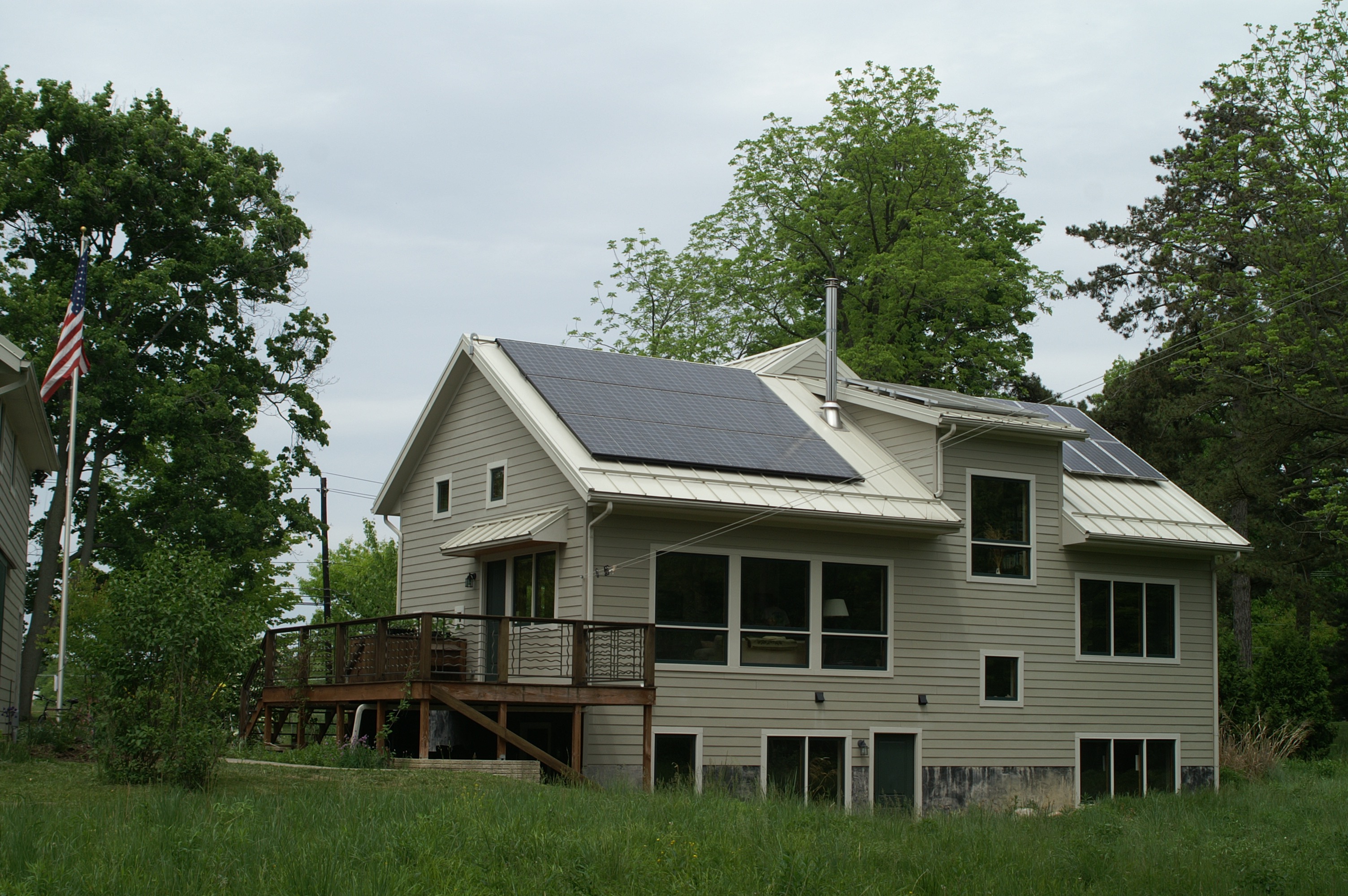
SVEC’s fixed charges would discourage customers from pursuing net zero homes like this one. Photo by Ivy Main

Okay, folks, the kids are back in school, so in their honor we are all going to do a word problem! 

Bob Rich lives in a sprawling subdivision of large, single-family homes. Bob has a pool and a hot tub and outdoor lights he keeps on all night. Bob’s four children have loads of electronic gadgetry, plus a habit of leaving windows open when the air conditioner is blasting. Needless to say, the Rich family uses a lot of electricity. But Bob doesn’t worry too much about his utility bill. It’s really not that much compared to all the other bills he pays; and fortunately, his wife is a hedge fund lawyer so he can afford it. 

John Poore, on the other hand, lives in a small apartment and uses as little electricity as possible to save money. He works a low-wage job, and his best efforts to attract a wealthy spouse have not yet panned out. John uses air conditioning only on the hottest summer days. He switched out his incandescent lightbulbs for LEDs, caulked the cracks around his windows where air leaked in, and when his old refrigerator broke, he replaced it with an EnergyStar model. 

Bob and John are both customers of Shenandoah Valley Electric Cooperative, in western Virginia. SVEC says its costs are going up, so it has been “adjusting” its rates. What would you expect the effects to be?

A) Bob’s bills go up more than John’s. 

B) Both Bob and John’s bills go up by the same amount. 

C) John’s bills go up more than Bob’s (and Bob’s might even go down).

You probably already figured out it’s a trick question. We’re dealing with a Virginia utility, so the answer can’t be (A) regardless of that being the obvious and rational answer. 

Indeed, answer (A) is how most utilities operate: Every customer pays a small fixed fee, typically under $10, and the rest of the bill is determined by how much electricity the customer uses. People who use a lot of electricity pay the most. They are usually better able to afford it, but if they don’t like the size of their bills, they can turn off the lights in empty rooms, change their thermostat setting, invest in energy efficiency, or put solar panels on the roof. Conserving energy and adding renewable energy happen to be public policy priorities, so the incentives are aligned with the behavior society wants to encourage. 

But SVEC notes that a lot of its costs aren’t dependent on how much electricity customers use; it has wires to maintain and so forth, plus it recently “invested” in a beautiful and spacious new headquarters that it swore wouldn’t mean rate increases (but, well, you know how that goes). SVEC says Bob and John benefit equally from all these investments, and wants their bills to reflect that. Early last year SVEC “adjusted” its rate structure to increase the fixed customer fee from $13 to $25 and decrease the rate per kilowatt-hour of electricity used. If you chose answer (C), you were correct!

This year, to raise more revenue, SVEC proposes to increase everybody’s fixed fee again, this time to $30. For customers who don’t use much electricity, that fixed fee could become the biggest charge on the bill, and one that can’t ever be reduced by any amount of energy conservation, efficiency or solar panels. They may also wonder whether $30 is just a stop on the way to even higher fixed fees that will further undercut their energy-saving investments.

SVEC didn’t need anyone’s approval when it almost doubled the fixed fee last year. But this year, the State Corporation Commission has to approve the additional changes, so customers finally have a chance to challenge them. Utilities around the state are watching what the SCC does. If SVEC gets approval to shift more of its costs away from customers who use a lot of electricity and onto those who use the least, other utilities will see that as a green light to do the same

Utilities prefer fixed charges because they provide revenue certainty; left to their own devices, they will move as much of their revenue into the fixed-cost category and increase fixed charges as high as they can. Unfortunately, doing so creates an incentive for utilities to spend as much as possible on infrastructure costs that can be recovered through fixed rates. That will raise costs for everyone and produce a further perverse incentive for the utility to encourage energy consumption (and waste) in order to make maximum use of the infrastructure.

This isn’t the result anyone should want, and especially a nonprofit electric cooperative. More affluent, high-use customers will benefit from lower rates per kilowatt-hour, while low-income customers will be less able to control their bills, an inequity that flies in the face of Virginia’s efforts to limit the energy burden on low-income residents. And customers who are considering investing in energy efficiency or solar will find they are looking at a longer payback time, discouraging the energy-saving measures that Virginia strives to promote.

The SCC is holding a hearing today to consider SVEC’s proposed rate increase. The commission should reject SVEC’s efforts to raise fixed charges for customers and send the utility back to the rate-drawing board. 

This article originally appeared in the Virginia Mercury on October 5, 2021.

Unknown's avatar

With a federal windfall incoming, Virginia should require school districts to build to green standards

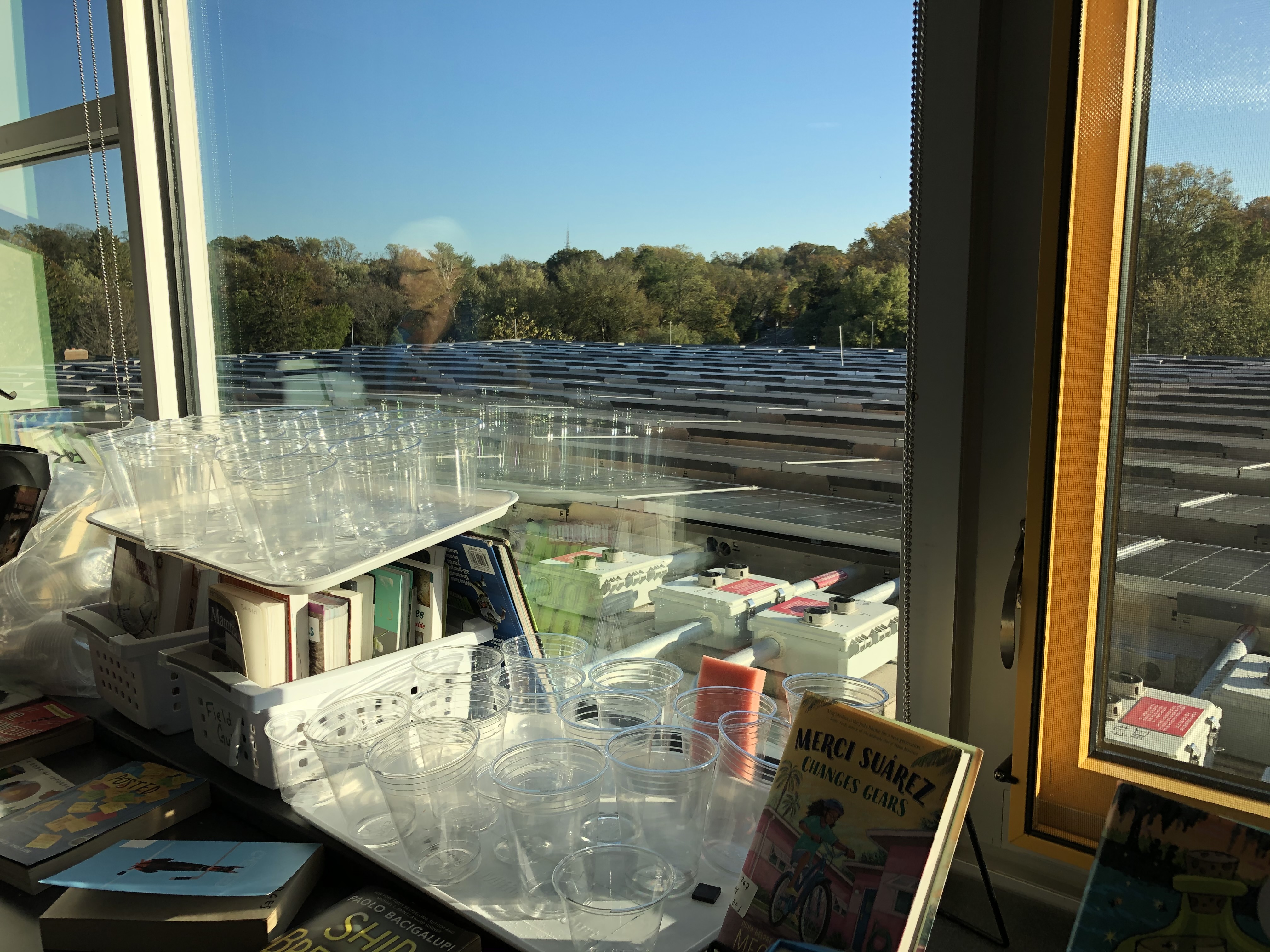
The solar panels powering Arlington, Virginia’s Discovery Elementary School, seen through the windows of a science classroom. Photo by Ivy Main

More than $4.3 billion in federal stimulus dollars will be flowing to Virginia this year as part of the American Rescue Plan, with cities and counties in line for another $2.7 billion. In a joint statement in May, Governor Northam and Democratic leaders laid out spending priorities that included rehabilitating and upgrading the infrastructure in public schools. The General Assembly plans to meet for a special legislative session in August to allocate the funds. In addition to the federal money, Virginia also finds itself in the happy position of having surplus funds of its own to spend.

As it stands now, the federal funds cannot be used for new school construction, a restriction that upsets school officials in areas with aging schools and no budget to replace them. But whether some money is spent on new schools or not, the General Assembly should not just throw dollars out the door and hope for the best. Virginia has an enormous opportunity to improve student health and learning, correct historic injustices, and meet the demands of the climate crisis, but only if the right standards are in place from the outset.

First, funding should be prioritized to Title 1 schools, which are those with at least 40 percent of children from low-income families. Given Virginia’s history of segregation and racism, a high number of Title 1 schools are in Black communities, while others are in parts of rural Virginia that have been left behind economically.  Title 1 schools on average are older and in worse condition than schools in more affluent areas, and the students are more likely to suffer from asthma and other health problems that are exacerbated by mold and poor indoor air quality. Improving indoor air quality and student well-being should be the primary goals for all new or renovated facilities, and it makes sense to start with the students most in need.

Second, while many localities are attracted to the idea of shiny new schools, in most cases it takes less time and costs less to retrofit an old school that is structurally sound than to tear it down and build new. It’s also better for the environment, even if the new school would be built to a “green” standard. Children don’t need new buildings; they need healthy, high-performing buildings. A beautiful remodel of the historic school their parents and grandparents attended could be just what the doctor ordered.

Third, new or renovated schools should be required to meet the highest standards for energy efficiency, including windows, insulation and HVAC. New construction should also be all-electric, as should most renovated buildings. This maximizes taxpayer savings on energy costs over the lifetime of the building, supports the goal of healthy indoor air, and is consistent with Virginia’s commitment to phase out fossil fuels.

Fourth, if the roof will be new or upgraded, it should be made solar-ready, allowing the school to take advantage of third-party power purchase agreements (PPAs) or solar services agreements to install solar panels. Leveraging private capital to pay for the school’s primary energy source stretches construction dollars. These agreements provide financing for solar facilities at no upfront cost and typically save money for schools from the outset. Once the solar panels are paid off, energy bills plummet and savings pile up.

New schools and deep retrofits can even achieve net-zero status affordably, and ought to be required to do so in most cases. Net-zero schools become a source of community pride and offer educational benefits as students learn about energy and how solar panels work. According to a study conducted for Fairfax County Public Schools, the additional upfront cost of building a net-zero-ready school (one that will produce as much energy as it uses once solar panels are added) is only about 5 percent more than standard construction, and the additional cost is recovered through energy savings in under 10 years. Renovating older schools to net-zero costs 11 percent more, but still pays off in 15 years.

Even if we weren’t worried about climate, these standards would make sense for student health and taxpayer savings. Yet today, school districts are not required to build high performance schools, and most don’t. The result is higher operating costs, and in some cases school boards being told that their brand-new schools won’t support solar. Solar companies say it’s probable that solar would be just fine, but this shouldn’t even be an issue. Yet it will continue to be cited as an obstacle if solar-readiness is not made standard.

Our children deserve better. Virginia should seize this year’s historic opportunity to invest in healthy, high-performing schools that are free of fossil fuels and will deliver long-term benefits for taxpayers and the climate.

Unknown's avatar

The session may be short, but the list of energy bills is long

Clean energy advocates expected this legislative session to feature fewer initiatives of interest, in part because of the shorter session and bill limits for legislators. Good news (I guess): the number of bills we are following is growing longer by the hour. 

Below are a number of bills of interest, organized by category, and then with House bills first, Senate bills second, in ascending order. I will update this post as I learn of other bills.

If you are interested in supporting or opposing any of these, you will want to act fast, since committees are hearing bills already. In Virginia, if a subcommittee or a committee votes against a bill, it is usually gone for good. 

Renewable energy and storage

HB1925 (Kilgore) Establishes, but does not fund, the Virginia Brownfield and Coal Mine Renewable Energy Grant Fund and Program. Kilgore put in a similar bill last year, which unfortunately did not pass. With no budget impact, this ought to pass easily. But I said that last year, too. 

HB1937 (Rasoul) is this year’s version of the Green New Deal Act. It contains policy initiatives to prioritize jobs and benefits for EJ populations and displaced fossil fuel workers and requires a transition to renewable energy by 2035, though these latter provisions are poorly integrated into the VCEA.

HB1994 (Murphy) and HB2215 (Runion) expands the definition of small agriculture generators to include certain small manufacturing businesses such as breweries, distilleries and wineries for the purposes of the law allowing these businesses to aggregate meters and sell renewable energy to a utility.

HB2006 (Heretick) exempts energy storage systems from state and local taxation but allows a revenue share assessment. This is a priority bill for renewable energy industry associations.

HB2034 (Hurst) and SB1420 (Edwards) clarifies that the program allowing third-party power purchase agreements (PPAs) applies to nonjurisdictional customers (i.e., local government and schools) as well as jurisdictional customers (most other customers). Currently, PPA projects with local governments in APCo territory have been held up due to a contract provision between the localities and APCo, and it is hoped this legislation will break the logjam.

HB2048 (Bourne) restores the right of customers to buy renewable energy from any supplier even once their own utility offers a renewable energy purchase option.  In addition, third party suppliers of renewable energy are required to offer a discounted renewable energy product to low-income customers, saving them at least 10% off the cost of regular utility service.  

HB2067 (Webert) lowers from 150 MW to 50 MW the maximum size of a solar facility that can use the Permit by Rule process. 

HB2148 (Willett) provides for energy storage facilities below 150 MW to be subject to the DEQ permit by rule process as “small renewable energy projects.” Although 150 MW is not “small,” the permit by rule process has worked pretty well, so this should be acceptable. This is a priority bill for renewable energy industry associations.

HB2201 (Jones) expands provisions related to siting agreements for solar projects located in an opportunity zone to include energy storage projects; however, according to existing language, the provision only takes effect if the GA also passes legislation authorizing localities to adopt an ordinance providing for the tax treatment of energy storage projects. (Why doesn’t the bill just go ahead and include that authorization? Don’t ask me.) This is another renewable energy industry bill.

HB2269 (Heretick) provides for increases in the revenue share localities can require for solar projects based on changes in the Consumer Price Index.  

SB1201 (Petersen) changes the definition of an “electric supplier” to include the operator of a storage facility of at least 25 MW, and subjects them to the same reporting obligations as other suppliers. 

SB1207  (Barker) is a companion to HB2201.

SB1258 (Marsden) requires the State Water Control Board to administer a Virginia Erosion and Sediment Control Program (VESCP) on behalf of any locality that notifies the Department of Environmental Quality that it has chosen not to administer a VESCP for any solar photovoltaic (electric energy) project with a rated electrical generation capacity exceeding five megawatts. The provisions become effective only if the program is funded; Marsden has submitted a budget amendment. This is also a priority bill for renewable energy industry associations.

SB1295 (DeSteph) requires utilities to use Virginia-made or US-made products in constructing renewable energy and storage facilities “if available,” but it does not require any added cost to be reasonable.

SB1420 (Edwards) is a companion bill to HB2034, clarifying PPA language for Appalachian Power territory.

Energy efficiency and buildings

HB1811 (Helmer) adds a preference for energy efficient products in public procurement.

HB1859 (Guy) amends last year’s legislation on Commercial Property Assessed Clean Energy (C-PACE) loans to allow these loans to be extended to projects completed in the previous 2 years; it also expressly excludes residential buildings of less than 5 units and residential condominiums.

HB2001 (Helmer) requires state and local government buildings to be constructed or renovated to include electric vehicle charging infrastructure and the capability of tracking energy efficiency and carbon emissions.

HB2227 (Kory) is the same as SB1224, below.

SB1224 (Boysko) requires the Board of Housing and Community Development to adopt amendments to the Uniform Statewide Building Code within one year of publication of a new version of the International Code Council’s International Energy Conservation Code (IECC) to address changes related to energy efficiency and conservation. The bill requires the Board to adopt Building Code standards that are at least as stringent as those contained in the new version of the IECC. This is one of the important bills I wrote about last week. 

Financing

HB1919 (Kory) authorizes a locality to establish a green bank to finance clean energy investments. Fairfax County has requested this authority. 

Fossil fuels 

HB1834 (Subramanyam) requires owner of carbon-emitting power plants to conduct a study at least every 18 months to determine whether the facility should be retired. It also requires notice of any decision to retire a facility to be submitted to state and local leaders within 14 days, a step that allows transition planning.

HB1899 (Hudson) sunsets coal tax credits, because it is absolutely crazy that Virginia continues to subsidize coal mining while we’ve committed to close coal plants.

HB1934 (Simon) requires local approval for construction of any gas pipeline over 12 inches in diameter in a residential subdivision. The genesis of this bill is a particular project in Simon’s district, but I was surprised this isn’t a requirement already. 

HB2292 (Cole) is similar to Rasoul’s Green New Deal bill but without the speeded-up RPS timeline. It contains a moratorium on permits for new fossil fuel infrastructure and requires programs for transitioning fossil fuel workers that guarantees them jobs at the same income they had before, and with early retirement benefits and pension guarantees. It also requires development of new job training programs; requires that 40% of energy efficiency and clean energy funding go to EJ communities; and mandates that 50 percent of the clean energy workforce come from EJ communities. 

SB1247 (Deeds) is a companion to HB1834.

SB1252 (McPike) sunsets the coal tax credits. 

SB1265 (Deeds) makes it easier for DEQ to inspect and issue stop-work orders during gas pipeline construction. 

SB1311 (McClellan) requires DEQ to revise erosion and sediment control plans or stormwater management plans when a stop work order has been issued for violations related to pipeline construction.

Climate bills 

HB2281 (Ware) would exempt certain companies that use a lot of energy from paying for their share of the costs of Virginia’s energy transition under the VCEA, driving up costs for all other ratepayers. And thus the slow chipping away at the VCEA begins. Everybody’s got a reason they’re special.

SB1282 (Morrissey) directs DEQ to conduct a statewide greenhouse gas inventory, to be updated and published every four years.

SB1284 (Favola) changes the name of the Commonwealth Energy Policy to the Commonwealth Clean Energy Policy, and streamlines the language without making major changes to the policies set out last year in Favola’s successful SB94. That bill overhauled the CEP, which until then had been a jumble of competing priorities, and established new targets for Virginia to achieve 100% carbon-free electricity by 2040 and net-zero carbon economy-wide by 2045. This year’s bill shows the Northam Administration is now fully on board, and the result is a policy statement that is more concise and coherent. 

SB1374 (Lewis) would set up a Carbon Sequestration Task Force to consider methods of increasing carbon sequestration in the natural environment, establish benchmarks, and identify carbon markets. 

And because this category would not be complete without a bill from a legislator who thinks climate action is a bunch of hooey, we have HB2265 (Freitas), which would repeal provisions of the VCEA phasing out carbon emissions from power plants, repeal the restrictions on SCC approval of new carbon-emitting facilities, and nix the provisions declaring wind, solar, offshore wind and energy storage to be in the public interest. Oh, but in case you thought Freitas was just a free market believer, or cared about cost, the bill provides that planning and development of new nuclear generation is in the public interest. 

Utility reform

Advocacy groups worked with legislators to develop a slate of bills, each a little different, that restore SCC oversight over utilities and/or benefit customers with refunds. More information about these bills is available on the Clean Virginia website.

HB1835 (Subramanyam) eliminates provisions that limit rate reductions to $50 million in the next SCC review of Dominion’s rates.

HB1914 (Helmer) changes “shall” to “may” in a number of places, giving the SCC discretion over when to count utility costs against revenues.

HB1984 (Hudson) gives the SCC added discretion to determine a utility’s fair rate of return and to order rate increases or decreases accordingly.

HB2049 (Bourne) would prevent utilities from using overearnings for new projects instead of issuing refunds.

HB2057 (Ware) changes how the SCC determines a fair rate of return for utilities and gives the SCC discretion in the treatment of certain utility generation and distribution costs, as well as in determining when a rate increase is appropriate. It also provides that when a utility has earnings above the authorized level, 100% of the overearnings must be returned to customers, up from 70% today. The SCC is also given authority to determine when a utility’s capital investments should offset overearnings. 

HB2160 (Tran) gives the SCC greater authority to determine when a utility has overearned and gives the Commission greater discretion in determining whether to raise or lower rates and order refunds. It also requires 100% of overearnings to be credited to customers’ bills, instead of 70%, as is the case today.

HB2200 (Jones) makes a number of changes to SCC rate review proceedings, including setting a fair rate of return, requiring 100% of overearnings to be credited to customers’ bills, and eliminating the $50 million limit on refunds to Dominion customers in the next rate review proceeding.

SB1292 (McClellan) requires 100% of overearnings to be credited to customers’ bills, instead of 70%, as is the case today.

EVs and Transportation energy

The Virginia Mercury ran a good article this week that covered most of these bills.  

HB1850 (Reid) increases the roadway weight limit for electric and natural gas-fueled trucks to accommodate the extra weight of batteries or natural gas fuel systems.

HB1965 (Bagby) is the Clean Car Standard bill, which would require manufacturers to deliver more electric vehicles to Virginia dealers beginning in 2025.

HB1979 (Reid) creates a rebate program for new and used electric vehicles. 

HB2118 (Keam) establishes an Electric Vehicle Grant Fund and Program to assist school boards in replacing diesel buses with electric, installing charging infrastructure, and developing workforce education to support the electric buses. 

HB2282 (Sullivan) directs the SCC to develop and report on policy proposals to accelerate transportation electrification in the Commonwealth. The bill also limits how utilities get reimbursed for investments in transportation electrification: they must recover costs through normal rates for generation and distribution, and not through rate adjustment clauses or customer credit reinvestment offsets.

HJ542 (McQuinn) requests a statewide study of transit equity and modernization. 

SB1223 (Boysko) adds a requirement to the Virginia Energy Plan to include an analysis of electric vehicle charging infrastructure and other infrastructure needed to support the 2045 net-zero carbon target in the transportation sector. 

SB1380 (Lucas) authorizes electric utilities to partner with school districts on electric school buses. The utility can own the batteries and the charging infrastructure and use the batteries for grid services and peak shaving.  

Code update

SB1453 (Edwards) revises Titles 45.1 and 67 of the Virginia Code. “The bill organizes the laws in a more logical manner, removes obsolete and duplicative provisions, and improves the structure and clarity of statutes pertaining to” mining and energy. The bill is a recommendation of the Virginia Code Commission. 

This post has been updated to add bills and correct a misstatement about the development of the utility reform agenda.

Unknown's avatar

COVID-19 throws a lemon at Virginia’s plan for an energy transition. It’s time for lemonade.

solar panels on a school roof

The solar panels on Wilson Middle School are saving money for Augusta County taxpayers. Photo courtesy of Secure Futures.

In mid-March, the Virginia General Assembly passed legislation to transition our economy from fossil fuels to clean energy over the coming years. Two weeks later, Virginia shut down in response to the COVID-19 pandemic. Among the businesses whose very existence is now in peril are the energy efficiency companies and solar installers we will be counting on to get us off fossil fuels.

Home weatherization and energy efficiency programs have come to an almost complete halt in Virginia, including programs run by Dominion Energy Virginia. Nationwide, the energy efficiency sector has lost almost 70,000 jobs. Meanwhile, companies that install solar, especially rooftop systems, report plummeting sales. The Solar Energy Industries Association reports that nationally, 55 percent of solar workers are already laid off or suffering cutbacks.

The timing seems terrible — although to be fair, there’s no good time for an economy-crushing, worldwide pandemic. Eventually, however, the virus will run its course or be defeated through vaccine or cure. At that point, we will face a choice: we can stagger blinking out into the sunlight aimlessly wondering now what?, or we can execute the well-developed plan we have spent these weeks and months formulating.

Let’s go with the second option.

First, it’s worth remembering that nothing happening now will change the trajectory of clean energy. Solar and wind had banner years in 2019, continuing their steady march to dominance. Wind has become the largest single source of electricity in two states, Iowa and Kansas. The island of Kauai in Hawaii is now 56 percent powered by renewable energy, mostly solar. Across the U.S. wind, solar and hydro produce more electricity than coal. Wind is the cheapest form of new electric generation nationally; solar takes pride of place in Virginia.

Meanwhile, fossil fuel is even more firmly on its way out. Six of the top seven U.S. coal companies have gone into bankruptcy since 2015. That was before the lockdown sent energy demand down, further hurting high-priced coal.

Fracked gas helped kill coal but is itself vulnerable to price competition from renewables. Odd as it sounds, the collapse in oil prices will make natural gas more expensive. That’s because oil producers in Texas and North Dakota are closing wells that produced natural gas along with oil. The tightening supply of gas may finally make fracking companies in Appalachia profitable, but it means higher prices for utilities. Wind and solar will just keep looking better.

The Trump administration is still trying futilely to hold back the tide, but the U.S. will get a lot farther riding the wave than struggling against it. Congressional leaders should declare the country “all in” on clean energy. Instead of bailing out the highly polluting fossil fuel industries, they should put that money to work creating more jobs and economic development — and actually doing something about climate change — with energy efficiency and renewables.

Congress should return the Investment Tax Credit for solar (and offshore wind) to the 30 percent level in effect last year and keep it there, instead of continuing the phase-out now in effect. Congress should also give solar owners the option of taking the credit as a cash grant, as it did during the last recession, and for the same reason: tax-based incentives are less useful in a recession, when companies can’t use the credits.

Virginia’s Sens. Tim Kaine and Mark Warner have a critical role to play in convincing their colleagues to support solar. So far neither is rising to the task.

On the state level, Northam did the right thing in signing this year’s energy legislation, allowing utilities and industry members to start planning for the future. But the Clean Economy Act gets wind and solar off to a very slow start; Dominion doesn’t have to build Virginia solar for five years yet. And though the new laws remove many policy constraints on customer-sited solar, they offer next to nothing in the way of financial incentives.

Governor Northam should make it clear he intends to make rooftop solar a priority for next year, along with projects on closed landfills, former coal mine areas, and other brownfields, with a special focus on areas hardest-hit economically. He can also encourage corporations that do business in Virginia to meet their sustainability goals with Virginia wind and solar, starting right now.

The governor should also prioritize building efficiency. Virginia will be adopting a new residential building code this year, and if past years are any indication, its energy efficiency provisions will fall short of the most recent model code standard. It’s up to the governor to make sure Virginia adopts the full code.

Local governments are already taking advantage of suddenly-empty buildings to accelerate maintenance and repairs. But it’s a good time to think bigger, with new financing tools available that make energy efficiency retrofits and solar facilities cash-positive right from the start.

Energy performance contracting allows the energy savings to pay for retrofits. The Department of Mines, Minerals and Energy keeps a list of pre-qualified energy service companies and offers expertise to help local government employees navigate the process.

This year’s legislation also greatly expanded local governments’ ability to finance on-site solar through third-party power purchase agreements, effective July 1. The PPAs are structured so that a school district, municipality or any commercial or non-profit customer can have a solar array installed at no cost, paying just for the energy produced.

In December, Fairfax County awarded contracts for PPAs to install solar on more than a hundred sites, including schools and other government buildings. The county’s contract is “rideable,” which allows other counties and cities to piggyback, getting the same terms without the need for new contract negotiations.

Unfortunately, local governments in southwest Virginia are prevented from pursuing PPAs — not by state legislation, which allows it starting July 1, but by a contract with Appalachian Power that governs their electricity purchases from the utility. The contract is up for renewal this year; disgracefully, APCo is refusing to agree to new terms allowing the localities to use solar PPAs. APCo should back off, and let local governments in economically depressed southwest Virginia start saving money and supporting solar jobs this year.

Arlington County has gone beyond on-site solar, contracting for a share of a large solar farm in southern Virginia that will provide more than 80 percent of the electricity for county government operations. It’s a model any locality can adopt.

Virginia residents and businesses also have good reasons to focus on clean energy. The enforced down-time many people are experiencing means more time to research options, and companies are motivated to offer low prices on energy efficiency upgrades and rooftop solar.

The federal government offers more generous tax credits this year than next. Credits for residential energy efficiency equipment and a deduction for energy efficient commercial buildings expire at the end of this year.

The investment tax credit for solar (as well as for geothermal heat pumps, fuel cells and small wind turbines) stands at 26% for projects placed in operation this year, but it will drop to 22% in 2021. It falls to 10% for commercial customers and disappears altogether for residential customers in 2022. If Congress acts to raise the credit to 30%, buyers will get an even bigger boost. If it doesn’t, there will be a rush this year to get projects done by the end of the year, so customers should secure their place in line now.

Virginia nonprofits have helped hundreds of residents and businesses save money on solar and EV chargers through bulk purchasing programs. Virginia Solar United Neighbors just announced a series of virtual information sessions to promote the Arlington Solar EV Co-op. And LEAP, which closed operations temporarily due to the virus, reports it has restarted two programs, Solarize NOVA and Solarize Piedmont.

In an ideal world, the U.S. would already be well along in executing a comprehensive plan for a clean energy transition, one that includes job retraining for workers, and that resists counterproductive efforts to save the fossil fuel industry. But we can do the next best thing, and use the tools of government, the market and consumer choice to speed us in the right direction.

COVID-19 has handed all of us a big, fat lemon. Let’s make some lemonade.


A version of this article appeared originally in the Virginia Mercury on April 30, 2020.


Unknown's avatar

It was a messy, chaotic General Assembly Session. It also worked out pretty well.

Solar arrays on Richmond Public Schools were some of the last projects to go forward before a statutory limit on PPAs halted similar projects across the state. Legislation this year raises the cap on PPAs. Photo credit Secure Futures.

This time last year, I didn’t have much good to say about the General Assembly session that had just concluded. This year, try as I might to be cynical and gloomy (and I do make a good effort), I see mostly blue skies. Or at worst, light gray. What follows is a brief run-down of the bills that passed.

Bills that were still alive at the time of my halftime report but that don’t appear in today’s roundup are dead for the year.

Most of these bills don’t yet have the Governor’s signature. Virginia allows the Governor to propose amendments, so what you see here may not be the final word. Bills that do get signed take effect July 1.

Energy Transition

HB1526/SB851, the Clean Economy Act, is an omnibus energy bill that contains a two-year moratorium on new fossil fuel plants, mandatory carbon reductions, mandatory energy efficiency savings, mandatory construction of wind, solar and offshore wind, mandatory energy storage acquisition targets, mandatory closures of some coal and biomass plants, and a mandatory renewable portfolio standard, along with cost recovery provisions, a new program to limit utility bills of low-income earners, and some loosening of restrictions on net metering and third-party power purchase agreements.

The bill is not perfect, and the clean energy transformation it strives for is incomplete. Its provisions mostly don’t apply to electric cooperatives, and while it forces the eventual closure of Dominion’s biomass plants, it actually requires utility customers to subsidize biomass use by paper companies. Dominion is given too free a rein on spending, the energy efficiency targets are weak, and the bill focuses on utility-scale projects to the almost total exclusion of customer-sited projects.

For all that, the legislation is groundbreaking and transformational. Advocates will be back next year with refinements to the bill and proposals to fill the gaps, but putting this necessary framework in place is a huge achievement for Virginia.

SB94 (Favola) and HB714 (Reid) rewrites the Commonwealth Energy Policy to bring it in line with Virginia’s commitment to dealing with climate change, and even to challenge leaders to do more. The bill sets a target for net-zero greenhouse gas emissions economy wide by 2045, and in the electric sector by 2040. These targets are more ambitious than what is in the Clean Economy Act; not only is the electric sector decarbonization deadline earlier (and inclusive of the coops), this is the first legislation to set a target for the economy as a whole. The Commonwealth Energy Policy is advisory and tends to be ignored in practice; however, the bill also requires that the Virginia Energy Plan, developed every four years in the first year of a new governor’s term, include actions to achieve a net-zero economy by 2045 for all sectors.

HB672 (Willett) establishes a policy “to prevent and minimize actions that contribute to the detrimental effects of anthropogenic climate change in the Commonwealth.” State agencies are directed to consider climate change in any actions involving state regulation or spending. Local and regional planning commissions are required to consider impacts from and causes of climate change in adapting comprehensive plans.

RGGI

The Democratic takeover of the General Assembly means Virginia will finally join the Regional Greenhouse Gas Initiative (RGGI). HB981 (Herring) and SB1027 (Lewis), the Clean Energy and Community Flood Preparedness Act, directs DEQ to enter the RGGI auction market. Auction allowances are directed to funds for flood preparedness, energy efficiency and climate change planning and mitigation. As with the Clean Economy Act, votes for the RGGI fell along partisan lines but for one Republican senator, Jill Vogel, who voted for both.

RPS

The Clean Economy Act contains a mandatory renewable portfolio standard (RPS) requiring utilities to include in their electricity mix a percentage of renewable energy that ratchets up over time. It’s weak, especially for distributed solar, and it allows paper company biomass to qualify—an inexcusable corporate welfare provision for politically powerful WestRock and International Paper.

Customer-sited solar/net metering

Watch this space for a post dedicated to net metering, PPAs and community solar bills. Meanwhile, here’s the short version:

Solar Freedom SB710 (McClellan), HB572 (Keam) and HB1184 (Lopez) lift barriers to customer-sited renewable energy such as rooftop solar. HB1647 (Jones) contains some of the elements of Solar Freedom, but a few provisions are in conflict. Advocates have asked the Governor to sign the first three bills but not the fourth. Some Solar Freedom provisions are also in the Clean Economy Act. The new provisions lift the net metering cap to 6% for IOUs; raise the PPA cap to 1,000 MW in Dominion territory and 40 MW in APCo territory; remove standby charges below 15 kW in Dominion territory and completely for APCo; raise the residential size cap to 25 kW and the commercial project size cap to 3 MW; allow Dominion customers to install enough solar to meet 150% of the previous year’s demand (APCo stays at 100%); allow shared solar on multifamily buildings; and enable a 5 MW landfill solar project in Fairfax County to move forward. The provisions do not apply to electric cooperatives.

HOAs HB414 (Delaney) and SB504 (Petersen) clarifies the respective rights of homeowners associations (HOAs) and residents who want to install solar. The law allows HOAs to impose “reasonable restrictions,” a term some HOAs have used to restrict solar to rear-facing roofs regardless of whether these get sunshine. The bill clarifies that HOA restrictions may not increase the cost of the solar facility by more than 5%, or decrease the expected output by more than 10%.

Community solar

SB629 (Surovell) and HB1634 (Jones) creates a program for shared-solar that allows customers to purchase subscriptions in a solar facility no greater than 5 MW.

HB573 (Keam) requires that an investor-owned utility that offers a so-called “community solar” program as authorized by 2017 legislation must include facilities in low-income communities “of which the pilot program costs equal or exceed the pilot program costs of the eligible generating facility that is located outside a low-income community.”

Offshore wind

The Clean Economy Act contains detailed provisions for the buildout and acquisition of offshore wind. SB998 (Lucas), SB860 (Mason) and HB1664 (Hayes) puts the construction or purchase of at least 5,200 MW of offshore wind in the public interest and governs cost recovery for the wind farms under development by Dominion. The bills appear to have the same language that is in the Clean Economy Act.

HB234 (Mugler) establishes a Division of Offshore Wind within the Department of Mines, Minerals and Energy. Its role is to help facilitate the Hampton Roads region as a wind industry hub, coordinate the word of state agencies, develop a stakeholder engagement strategy, and basically make sure this industry gets underway.

Nuclear

SB828 (Lewis) defines “clean” and “carbon-free” energy to include nuclear energy for purposes of the Code. SB817 (Lewis) declares that nuclear energy is considered a clean energy source for purposes of the Commonwealth Energy Policy.

HB1303 (Hurst) and SB549 (Newman) direct DMME to develop a strategic plan for the role of nuclear energy in moving toward renewable and carbon-free energy.

Energy Efficiency

HB1526/SB851, the Clean Economy Act, contains a mandatory energy efficiency resource standard (EERS) and other provisions for spending on low-income EE programs. HB1450 (Sullivan) appears to be the same as the efficiency provisions of the Clean Economy Act. A sentence added late in the process provides that the bill won’t take effect until passed again in 2021. Presumably the passage of the Clean Economy Act makes this bill moot.

HB981 (the RGGI bill) specifies that a portion of the funds raised by auctioning carbon allowances will fund efficiency programs.

HB1576 (Kilgore) makes it harder for large customers to avoid paying for utility efficiency programs. In the past, customers with over 500 kW of demand were exempt; this bill allows only customers with more than 1 MW of demand to opt out, and only if the customer demonstrates that it has implemented its own energy efficiency measures.

HB575 (Keam) beefs up the stakeholder process that Dominion and APCo engage in for the development of energy efficiency programs.

SB963 (Surovell) establishes the Commonwealth Efficient and Resilient Buildings Board to advise the Governor and state agencies about ways to reduce greenhouse gas emissions and increase resiliency. Every agency is required to designate and energy manager responsible for improving energy efficiency and reducing greenhouse gas emissions.

SB628 (Surovell) requires the residential property disclosure statement provided by the Real Estate Board on its website to include advice that purchasers should obtain a residential building energy analysis as well as a home inspection prior to settlement.

Energy storage

The Clean Economy Act requires that by 2035, Appalachian Power will construct 400 MW of energy storage and Dominion 2,700 MW. None of the projects can exceed 500 MW, except for one project of up to 800 MW for Dominion (a possible reference to the pumped storage project Dominion is reportedly considering). Projects must meet competitive procurement requirements, and at least 35% of projects must be developed by third-party developers.

SB632 (Surovell) has a fair amount of overlap with the Clean Economy Act, but the details are different, and it will be interesting to see what the Governor does about that. SB632 makes it in the public interest to develop 2,700 MW of energy storage located in Virginia by 2030. At least 65% must take the form of a “purchase by a public utility of energy storage facilities owned by persons other than a public utility or the capacity from such facilities.” Up to 25% of facilities do not have to satisfy price competitiveness criteria “if the selection of the energy storage facilities materially advances non-price criteria, including favoring geographic distribution of generating facilities, areas of higher employment, or regional economic development.” Utility Integrated Resource Plans must include the use of energy storage and must include “a long-term plan to integrate new energy storage facilities into existing generation and distribution assets to assist with grid transformation.”

SB632 also fixes a problem introduced a couple of years ago, when the ownership or operation of storage facilities was added to the definition of a utility in one chapter of the Code (§56.265.1), though not in others. With the fix, a public utility may own or operate storage, but so can third parties without them thereby becoming utilities.

HB1183 (Lopez) requires the SCC to establish a task force on bulk energy storage resources.

Siting, permitting, and other issues with utility-scale renewable energy 

HB1327 (Austin) allows localities to impose property taxes on generating equipment of electric suppliers utilizing wind turbines at a rate that exceeds the locality’s real estate tax rate by up to $0.20 per $100 of assessed value. Under current law, the tax may exceed the real estate rate but cannot exceed the general personal property tax rate in the locality.

HB656 (Heretick) and SB875 (Marsden) allow (but do not require) local governments to incorporate into their zoning ordinances national best practices standards for solar PV and batteries.

HB1131 (Jones) and SB762 (Barker) authorize localities to assess a revenue share of up to $1,400 per megawatt on solar PV projects, in exchange for which an existing tax exemption is expanded.

HB657 (Heretick) exempts solar facilities of 150 MW or less from the requirement that they be reviewed for substantial accord with local comprehensive plans, if the locality waives the requirement.

HB1434 (Jones) and SB763 (Barker) provides a step-down of the existing 80% machinery and tools tax exemption for large solar projects, and eliminates it after 2030 for projects over 5 MW.

SB870 (Marsden) authorizes local planning commissions to grant special exceptions for solar PV projects in their zoning ordinances and include certain regulations and provisions for conditional zoning for solar projects.

HB1675 (Hodges) requires anyone wanting to locate a renewable energy or storage facility in an opportunity zone to execute a siting agreement with the locality.

Grants, tax deductions, tax credits and other financing

HB654 (Guy) authorizes DMME to sponsor a statewide financing program for commercial solar, energy efficiency and stormwater investments. The effect would be to boost the availability of Commercial Property Assessed Clean Energy (C-PACE) in areas of the state where the locality has not developed a program of its own.

SB754 (Marsden) authorizes electric cooperatives to establish on-bill financing programs for energy efficiency and renewable energy.

HB1656 (O’Quinn) authorizes Dominion and APCo to design incentives for low-income people, the elderly, and disable persons to install energy efficiency and renewable energy, to be paid for by a rate adjustment clause.

HB1707 (Aird) makes changes to the Clean Energy Advisory Board, which is (already) authorized to administer public grant funding.

SB1039 (Vogel) allows a real property tax exemption for solar energy equipment to be applied retroactively if the taxpayer gets DEQ certification within a year.

SB542 (Edwards) repeals the sunset date on crowdfunding provisions and provides fixes for certain existing obstacles to this financing approach.

Customer rights to shop for renewable energy

HB868 (Bourne) allows customers to buy 100% renewable energy from any licensed supplier, regardless of whether their own utility has its own approved tariff. The Senate killed a companion bill, and Commerce and Labor passed HB868 only with an amendment that requires the bill to be reenacted in 2021. (Credit Edwards, Deeds, Ebbin and Bell for not going along with the amendment.) After Senate passage the bill went to conference, and the House conferees caved. So technically the bill passed, but it has no effect. Interesting note: 41 House Republicans still voted against it in the end.

HB 889 (Mullin) was originally broader than HB868, but after the Senate got through with it, the bill is now a pilot program for the benefit of just those large corporations that, as of February 25, 2019, had filed applications seeking to aggregate their load in order to leave Dominion and buy renewable energy elsewhere. The pilot program is capped at 200 MW, and the SCC will review it in 2022.

Other utility regulation

HB528 (Subramanyam) requires the SCC to determine the amortization period for recovery of costs due to the early retirement of generating facilities owned or operated by investor-owned utilities. In the absence of this legislation, Dominion would have been allowed to use excess earnings for immediate payoffs of the costs of early fossil fuel plant closures; this puts the SCC back in charge of the schedule. The fact that this bill passed is nothing short of miraculous. House Republicans voted against it en masse, and it made it through Senate Commerce and Labor over the objections of Dominion’s best friends from both parties (though most came around for the floor vote when it was clear it would pass).

SB731 (McClellan) affects a utility’s rate of return. The SCC determines this rate by looking first at the average returns of peer group utilities, and then often going higher. The bill lowers the maximum level that the SCC can set above the peer group average. Note that although this bill is recorded as having passed both chambers, it looks like there were amendments that do not appear on the Legislative Information Service website.

HB167 (Ware) requires an electric utility that wants to charge customers for the cost of using a new gas pipeline to prove it can’t meet its needs otherwise, and that the new pipeline provides the lowest-cost option available to it. (Note that this cost recovery review typically happens after the fact, i.e., once a pipeline has been built and placed into service.) Ware acceded to some amendments that Dominion wanted, and eventually Dominion told legislators the company was not opposed to the bill. Hence it passed both chambers unanimously. Notwithstanding Dominion’s happy talk, this bill makes cost recovery for the Atlantic Coast Pipeline much, much more difficult, one more indication that Dominion may be preparing to fold up shop on this project.

[Updated March 17 to correct an error–I had included a bill as having passed that in fact died in the House. Bummer.]

Unknown's avatar

And finally, energy efficiency and storage bills

advocates holding clean energy signs

Hundreds of grassroots activists turned out on January 14 to lobby for clean anergy. Photo by Alex Kambis.

You’ve heard these statistics before: Virginia residents pay the 7th highest bills in the nation, due in large part to the fact that our utilities rank among the lowest in the nation for energy efficiency programs. 2018’s “grid mod” bill required massive utility investments in efficiency spending, but the legislation did not actually mandate results, and Dominion has been slow to propose programs.

That leaves Virginia with a lot of low-hanging fruit that looks mighty tempting as we seek to decarbonize our energy supply at the least possible cost.

Not surprisingly, then, spending on energy efficiency programs is central to the big energy transition bills like HB77, the Green New Deal, and HB1526/SB851, the Clean Economy Act. RGGI bills generally also specify that a portion of the funds raised by auctioning carbon allowances will fund efficiency programs.

There are also a few standalone efficiency bills. HB1450 (Sullivan) and SB354 (Bell) appear to be the same as the efficiency provisions of the CEA, though the standalone applies only to Dominion and APCo.

HB1576 (Kilgore) doesn’t set new efficiency targets, but it makes it harder for large customers to avoid paying for utility efficiency programs. In the past, customers with over 500 kW of demand were exempt; this bill allows only customers with more than 1 MW of demand to opt out, and only if the customer demonstrates that it has implemented its own energy efficiency measures.

HB413 (Delaney) authorizes a locality to include in its subdivision ordinance rules establishing minimum standards of energy efficiency and “maintaining access” to renewable energy.

HB575 (Keam) beefs up the stakeholder process that Dominion and APCo engage in for the development of energy efficiency programs.

SB963 (Surovell) establishes the Commonwealth Efficient and Resilient Buildings Board to advise the Governor and state agencies about ways to reduce greenhouse gas emissions and increase resiliency. Every agency is required to designate and energy manager responsible for  improving energy efficiency and reducing greenhouse gas emissions.

SB628 (Surovell) requires the residential property disclosure statement provided by the Real Estate Board to include advice that purchasers should obtain a residential building energy analysis as well as a home inspection prior to settlement.

Funding efficiency

These bills are also covered under the renewable energy roundup.

HB633 (Willett) establishes a tax deduction up to $10,000 for the purchase of solar panels or Energy Star products.

HB654 (Guy) authorizes DMME to sponsor a statewide financing program for commercial solar, energy efficiency and stormwater investments. The effect would be to boost the availability of Commercial Property Assessed Clean Energy (C-PACE) in areas of the state where the locality has not developed a program of its own.

HB947 (Webert) expands the authority of localities to grant tax incentives to businesses located in green development zones that invest in “green technologies,” even if they are not themselves “green development businesses.” Green technologies are defined as “any materials, components, equipment, or practices that are used by a business to reduce negative impacts on the environment, including enhancing the energy efficiency of a building, using harvested rainwater or recycled water, or installing solar energy systems.”

SB754 (Marsden) authorizes utilities to establish on-bill financing of energy efficiency, electrification, renewable energy, EV charging, energy storage and backup generators.

HB1656 (O’Quinn) authorizes Dominion and APCo to design incentives for low-income people, the elderly, and disable persons to install energy efficiency and renewable energy, to be paid for by a rate adjustment clause.

HB1701 (Aird) authorizes the Clean Energy Advisory Board to administer public grant funding, and makes small changes to the Board.

SB634 (Surovell) establishes the Energy Efficiency Subsidy Program to fund grants to subsidize residential “efficiency” measures, interestingly defined as solar PV, solar thermal or geothermal heat pumps. It also creates a subsidy program for electric vehicles.

SB1061 (Petersen) allows Property Assessed Clean Energy (PACE) loan programs to include residential as well as commercial customers.

Energy storage

HB1183 (Lopez) requires the SCC to establish a task force on bulk energy storage resources.

SB 632 (Surovell) creates a storage target of 1,000 MW and states that this is in the public interest.  Senator Surovell says this bill originated with the Governor’s office.

HB1306 (Kory) directs the Department of Mines, Minerals and Energy to adopt regulations allowing appropriate brownfields and lands reclaimed after mining to be developed as sites for renewable energy storage projects.


Unknown's avatar

A revised generation plan leaves Dominion’s case for its pipeline in shambles

In December of last year, regulators at the State Corporation Commission (SCC) took the unprecedented step of rejecting Dominion Energy Virginia’s Integrated Resource Plan (IRP). Among other reasons, the SCC said the utility had over-inflated projections of how much electricity its customers would use in the future.

On March 8, Dominion came back with a revised plan. And sure enough, when it plugged in the more realistic demand projections used by independent grid operator PJM, and accounted for some energy efficiency savings, the number of new gas plants it planned for dropped in half. Instead of 8-13 new gas combustion turbines, the revised plan listed only 4-7 of these small “peaker” units.

Yet there is a good chance Dominion is still overinflating its demand numbers.  Although the re-filed IRP is short and vague, it appears Dominion isn’t figuring in the full amount of the energy efficiency programs it must develop under legislation passed last year.

SB 966 required Dominion to propose $870 million in energy efficiency and demand-response programs designed to reduce energy use and the need for new generation. But Dominion has proposed just $118 million in its separate demand-side management filing (case PUR-2018-00168).

Moreover, the company has concocted a theory whereby it can satisfy that $870 million requirement by spending just 40 or 50 percent of it and pocketing the rest. In its DSM case Dominion argues that since the Virginia Code allows a utility to recover lost revenue resulting from energy efficiency savings, it can simply reduce the required spending by the amount of lost revenue it anticipates.

It’s a great theory, and suffers only from being wrong. (Oh, and also from infuriating legislators, energy efficiency advocates, and pretty much everyone else who was involved in crafting SB 966.)

It also indicates that Dominion’s demand figures in the IRP are based on plans to spend just a fraction of the $870 million in energy efficiency, achieving much less demand reduction than backers of the law envisioned.

If the SCC decides Dominion can’t withhold hundreds of millions of dollars in efficiency spending, that additional spending will have to be factored into demand projections. Thus the IRP’s demand projection can only go down—and with it, the number of gas plants that might be “needed.”

And yet even the resulting number is likely too high. Several of Dominion’s large corporate customers have been trying to leave its fond embrace to seek better renewable energy offerings elsewhere. (The SCC recently rejected Walmart’s effort to defect.) If they were allowed to leave, how much would that further reduce the need for new generation?

For that matter, those customers and many others, including many of the tech companies responsible for what demand growth there is, say they want renewable energy, not fossil fuels. Dominion claims the renewable generation will have to be backed by gas peaker plants, but energy storage would serve the same purpose and further reduce the need for gas. The SCC will rule on that question when—and if—Dominion ever requests permission to build one of those peakers. It is possible the utility will never build another gas plant.

That’s bad news for Dominion Energy’s other line of business, gas transmission and storage. With demand for new gas generation falling off a cliff, Dominion’s ability to rely on its customer base as an anchor client for the Atlantic Coast Pipeline becomes increasingly doubtful.

Dominion may actually have conceded as much in its re-filed IRP. In response to the SCC’s order that Dominion include pipeline costs in its modeling of the costs of gas generation, Dominion merely stated, without discussion, that it is using the tariff of the pipeline owned by the ACP’s competitor Transco, which supplies gas to Dominion’s existing plants.

This statement continues a pattern of Dominion avoiding any mention of the ACP in SCC proceedings, lest it invite hard questions. But Dominion can’t have it both ways. If it will use Transco, it doesn’t need the ACP. If it plans to use the much more expensive ACP and just isn’t saying so, it has lowballed the cost of gas generation and is misleading the SCC.

This is unfair to customers, and it may backfire on Dominion. The ACP received its federal permit on the strength of contracts with affiliate utilities, but Dominion hasn’t yet asked the SCC to approve the deal. Leaving the ACP out of the discussion in the IRP year after year makes it harder to win approval. When and if the company finally asks the SCC for permission to (over)charge ratepayers for its contract with the ACP, it will not have built any kind of a case for a public need or benefit.

This is not just a risk that Dominion Energy chose to take, it is a risk of the company’s own creation. It defied the Sierra Club’s efforts to have the SCC review the ACP contract early on, knowing it would face vigorous opposition from critics. But since then, its chances for approval have only gotten worse. Back then, the pipeline cost estimate came in at $3 billion less than it is today, Dominion Virginia Power was halfway through a massive buildout of combined-cycle gas plants, and the IRP included several more big, new, gas-hungry combined-cycle plants.

Now the ACP’s cost has climbed above $7 billion and may go as high as $7.75 billion, excluding financing costs, CEO Tom Farrell told investors last month in an earnings call. Meanwhile, the IRP includes an ever-shrinking number of gas plants, to be served by a different pipeline.

One investment management company told clients in January the spiraling price tag may make the ACP uncompetitive with existing pipelines. And Farrell faced a host of cost-related questions in his call with investors.

But Farrell downplayed the risk when it came to a question from Deutsche Bank about the need for SCC approval. Managing Director Jonathan Arnold asked, “On ACP, when you guys are talking about customers, does that include the anchor utility customers, your affiliate customers? Does whatever you’re going to negotiate with them need to be approved by the state regulatory bodies?”

Farrell’s answer sounds nonchalant. “In Virginia, it’s like any other part of our fuel clause. It will be part of the fuel clause case in 2021 or 2022 along with all the other ins and outs of our fuel clause.”

Oh, Mr. Farrell, it is not going to be that easy.

An earlier version of this article first appeared in the Virginia Mercury on March 20, 2019.