Unknown's avatar

Dominion wins Virginia offshore wind lease: well, duh

And the winner is . . . Dominion Power!

Okay, you knew that. Dominion had the deck so stacked in its favor for Wednesday’s Virginia offshore wind lease auction that the question everyone was asking at the end wasn’t “who won?” but “who bid against Dominion, and why did they bother?”

The answer to the first question proved to be Charlottesville-based Apex Energy, a far more experienced player in the wind industry—but one without Dominion’s lock on the Virginia power market.

There was much to criticize about the auction format and the process that led inevitably to Dominion’s win, but this historic step is still hugely exciting for offshore wind advocates. If Dominion follows through on the commitment it just made to develop offshore wind, Virginia will be a winner, too.

That “if” has a lot of people worried, given that Dominion is both a participant in the offshore wind industry and one of its loudest detractors. Company executives talk about their desire to develop the lease area, and also their opinion that offshore wind energy is way too expensive to succeed. Often they make both points in the same conversation.

Observers can’t help wondering why a company would pour money into a venture if it doesn’t believe it can sell its own product. Two possible reasons come to mind: one, because it is willing to gamble on political and market changes that will make its venture successful after all; or two, because by spending the money to win the lease, the company prevents any competitor from occupying the space. One is gutsy, the other is evil. It is possible for both to be true.

So what did Dominion win? The lease area, a 112,800-acre swath of ocean beginning more than 23 miles off Virginia Beach, is expected to support at least 2,000 megawatts of wind turbines—enough to power about 700,000 homes. It’s the second Wind Energy Area to be auctioned off in the U.S.; the first lies off Rhode Island and Massachusetts, and was auctioned off in August.

Under rules set by the Bureau of Ocean Energy Management (BOEM), the entire Virginia area was treated as one tract (a bad idea, in the view of advocates and industry members who aren’t Dominion, because it further reduced competition). Dominion won with a high bid of $1.6 million.

A formal announcement of the winning bid is expected in October, following federal antitrust review. As the winning bidder, Dominion will have five years to conduct the studies required for development of the area, with interim deadlines including submission of a Site Assessment Plan next summer.

After the five years is up, Dominion could decide not to proceed, releasing the area for BOEM to offer in a new auction. That result would be an unqualified disaster for Virginia’s ability to develop an offshore wind industry here. With states to the north proceeding, we would lose not just construction jobs, but the entire supply chain, and likely the marine services as well. Many thousands of jobs now ride on Dominion following through.

If Dominion decides to proceed, it will have to submit a Construction and Operations Plan at least six months before the expiration of the five-year site assessment period—that is, by the summer of 2018. BOEM will then evaluate the plan in accordance with the National Environmental Policy Act, producing an Environmental Impact Statement in 18-24 months, before construction can begin. That timeline puts construction underway no later than 2020, with electricity from the first turbines flowing by 2022.

The process doesn’t have to take as long as this; Deepwater Wind, which won the two leases in the Rhode Island/Massachusetts area last month, says construction there “could begin as early as 2017, with commercial operations by 2018.”

But Dominion had previously indicated its preference for the slowest possible approach. The company’s original idea was to build some wind turbines, think about it for a while, and five years later start all over again. Then five years later, round three. Another five years, round four. So 20 years on, if Dominion liked what it saw each time, Virginia would finally have its 2,000 megawatts.

In accordance with this plan, Dominion’s surrogate, the Virginia government, asked BOEM to make the lease term for Virginia’s Wind Energy Area 45 years instead of 25.

Other developers and the environmental community cried foul, pointing out that such an approach would mean a generation would be born, grow up and go off to college before we had all our wind turbines—hardly the way to build an industry or stave off climate change.

BOEM conceded half a loaf and agreed to a 33-year term that allows time for a phased approach, but a faster one. The agency expects the construction plan will consist of four, two-year phases, ensuring completion of the build-out in 8 years—or by 2028, to be followed by 25 years of operation.

We can only hope that BOEM’s confidence is not misplaced. Dominion employees have said candidly that right now, under current market conditions, the company has no intention of actually building offshore wind turbines.

What will it take to change its mind? The company talks about costs and the difficulty of getting approval from Virginia regulators. It seems likely that the company will follow through with construction only if some combination of events happens in the next few years:

  • Continuing advancements in technology bring the cost of offshore wind energy down. Already the latest cost estimates put offshore wind power well below the sky-high figures Dominion cites.
  • Congress or the EPA tackles climate change through incentives for renewable energy (or disincentives for fossil fuels);
  • The Virginia government passes legislation to create a market in Virginia for offshore wind power;
  • Virginia’s State Corporation Commission (SCC), which regulates utilities, alters the way it views renewable energy.

Of these contingencies, the last might be the hardest. The SCC seems to believe the public interest is served only by providing the cheapest possible electricity available today. It shows no interest in climate change, or the pollution costs of fossil fuels, or long-term price stability, or job creation, or asthma rates. Ignoring the actual language of the Virginia Code, it declared this summer that Virginia law doesn’t require it to consider the environment in evaluating a new electric generation facility.

But the offshore wind industry is now off and running in the U.S., and the only question is whether Virginia wants to be part of it. On that answer depend thousands of jobs for our residents, an abundant source of stably-priced energy, and Virginia’s ability to move beyond fossil fuels in the face of climate change.

Virginians overwhelmingly want to move forward on offshore wind; now our challenge will be to make it happen.
Unknown's avatar

For electric power generation, the end of fossil fuels is in sight

The rap on renewable energy is that it’s too variable to meet society’s demand for a constant supply of electricity. The answer to the problem turns out to be: More renewables.

111022-N-OH262-322Climate change is acting like an ever-tightening vise on our energy options. Each year that passes without dramatic decreases in our use of carbon-emitting fuels means the cuts we have to make simply get more drastic. By 2030, say experts, we must entirely replace coal with efficiency and renewable energy, or fry. Even the most intrepid environmentalists wonder if it can be done without huge price hikes and wholesale changes in how we live and use energy–changes that society may not accept.

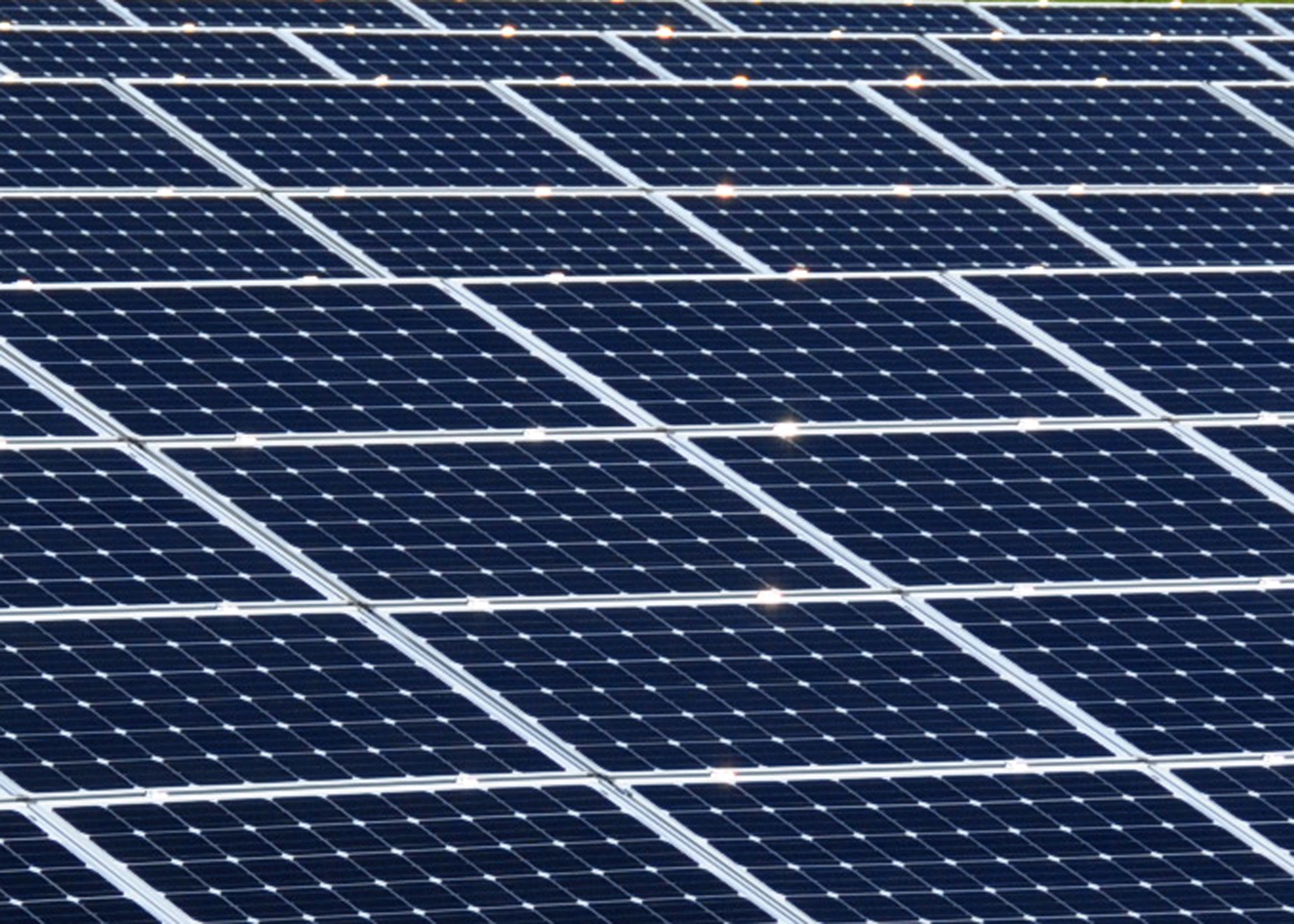
A new study out of the University of Delaware shows it is possible to power the grid 99.9% of the time with only solar and wind energy, at a cost comparable to what we are paying today. This counters the conventional wisdom that we will always need large amounts of fossil fuel as a backup when the wind doesn’t blow and the sun doesn’t shine. It also means the goal of getting largely beyond fossil fuels by 2030 is not just achievable, but practical.

The study focused on a regional transmission grid known as PJM, which encompasses parts or all of fourteen states, mostly in the Mid-Atlantic. Researchers ran 28 billion computer simulations to find the most cost-effective combinations of wind and solar that could power the entire grid, at the least possible cost and with minimal amounts of energy storage. The winning combination relied on natural gas turbines for backup on only five days out of the four years modeled.

The study authors looked for the least cost taking account of carbon and other external costs of fossil fuels, which are not being accounted for today, but they also assumed no technology improvements over time, making their cost estimates conservative overall. All the least-cost combinations used much more storage than we have today, but needed it for only 9 to 72 hours to get through the entire four years modeled.

The secret to dealing with the inherent variability of wind and solar, it turns out, is to build even more wind and solar. One wind turbine is unreliable, but tens of thousands spread across a dozen states greatly reduces the variability problem, and tens of thousands of wind turbines balanced with millions of solar panels is better still. To get to 99.9% renewables, you keep adding wind turbines and solar panels until you are producing three times the electricity that you actually need to meet demand. To power the grid with renewables just 90% of the time, you would have to produce “only” 1.8 times the electricity needed. (And yes, we have the windy sites and the sunny places to support all those projects.)

While it may sound strange to build more generation than you need, that is already the way grid operators ensure reliability. To take one example, if you were in Virginia when the “Big One” struck in 2011, you will recall that the earthquake caused the North Anna nuclear plant to shut down for four months. Nuclear energy provides a third of the electricity in Dominion Virginia Power’s service territory, and yet the lights stayed on. That’s because the grid wizards at PJM simply called on other power sources that had been idle or that had spare capacity.

The other component of reliability is the ability to match demand for power, which rises and falls with the time of day, weather, and other factors. So-called “baseload” plants like nuclear, coal, and some natural gas turbines don’t offer that flexibility and must be supplemented with other sources or stored energy. PJM currently uses more than 1,300 different generating sources, as well as about 4% storage in the form of pumped hydro. The right combination of other sources can replace baseload plants entirely.

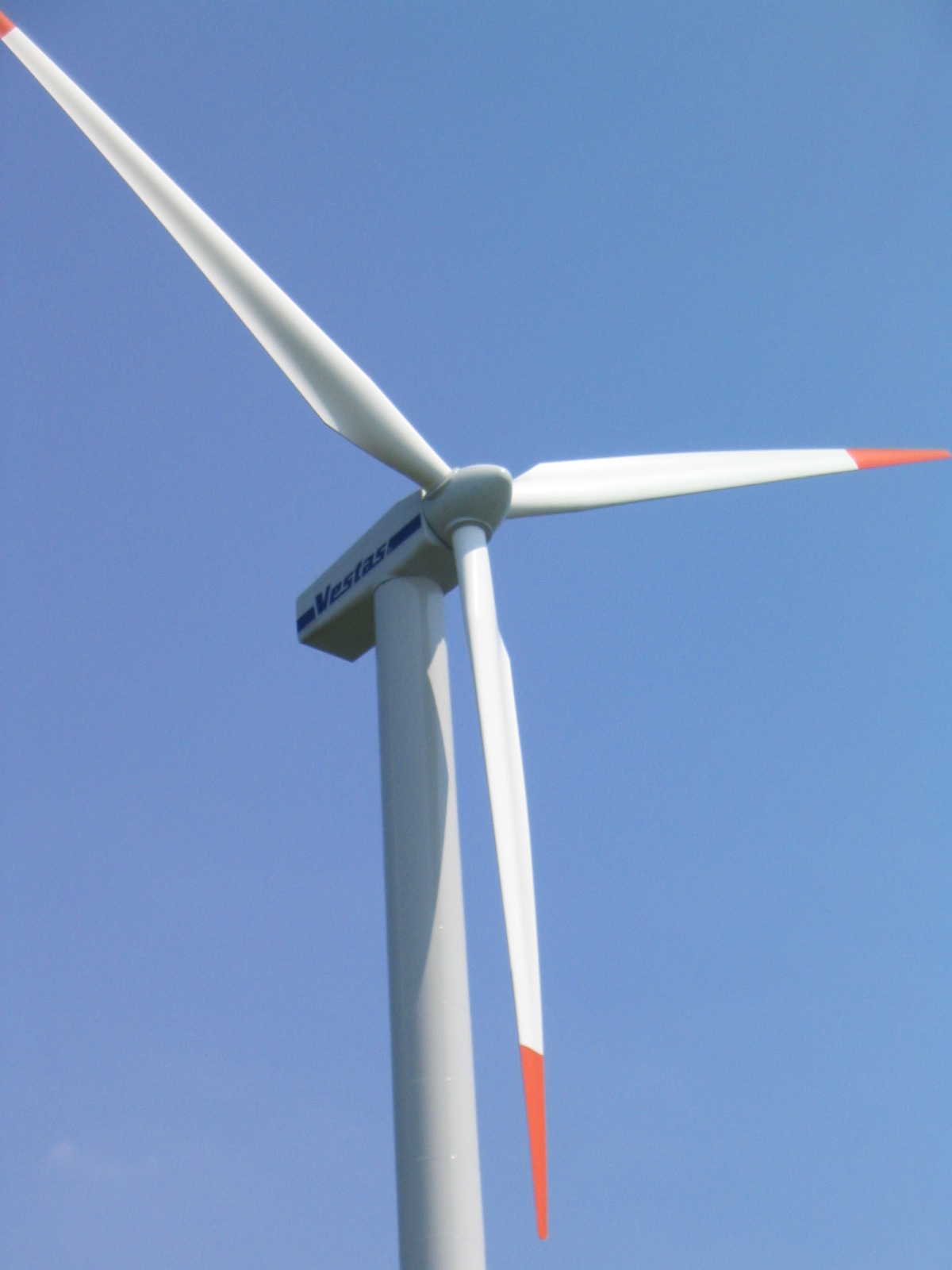
wind turbine-wikimedia

Pairing wind and solar improves their ability to meet demand reliably. Onshore wind tends to blow most strongly at night, while solar energy provides power during the peak demand times of the day. Offshore wind power is also expected to match demand well. Combining them all reduces the need for back-up power.

But until now policy makers have assumed that solar and wind won’t be able to power the grid reliably, even when combined and spread out over PJM’s more than 200,000 square miles, and with the addition of wind farms off the coast. Critics have insisted that renewable energy requires lots of back-up generating capacity, especially from some natural gas turbines that can ramp up and down quickly. New gas turbines have even been designed specifically to integrate with renewables in anticipation of increasing amounts of wind and solar coming onto the grid.

This makes the work of the U. Delaware researchers a game-changer by showing that wind and solar can be backed up primarily by more wind and solar. And so we can begin planning for a future entirely without fossil fuels, knowing that when we get there, the lights will still be on.

Unknown's avatar

Is offshore wind in Virginia’s future?

The past couple of years have been tough ones for the offshore wind industry, which is still struggling to launch. The recession has made states reluctant to invest, even when the payoff looks huge. Cheap natural gas is hurting the market for renewable energy just as wind and solar have started hitting their stride. Congressional dysfunction has prevented the renewal of critical tax credits that the wind industry still needs to compete.

A few other states are making fitful progress towards building offshore wind farms, but they have conditions Virginia doesn’t: higher energy prices that make offshore wind more competitive with fossil fuels, renewable energy standards that push utilities to become buyers for the electricity, and congested transmission grids that favor local generation.

But of course, Virginia has its own advantages, including possibly the best wind resources in the mid-Atlantic, skilled workers, and extremely competitive port facilities. And the enthusiasm of our legislators and public for the idea of offshore wind matches that of any state.

At the same time, though, our governor and our major utility give decidedly mixed signals, extolling our offshore wind potential at one moment, and in the next opining that no one would actually want to pay for it. And yet Dominion Power hopes to buy up all the Virginia-area offshore wind leases that are offered for bid this fall. So what gives with Dominion and offshore wind?

One answer comes from Guy Chapman, Dominion’s Director of Renewable Energy Research and Program Development, who spoke at a wind conference held at James Madison University this past June. He said that right now with natural gas so cheap, the company doesn’t expect to build any wind at all, on land or at sea. But if conditions improve, the company wants to be in a position to change its mind, and that means buying up the offshore leases and doing site surveys, technical and environmental studies, and other planning that will add up to $40 or 50 million. Dominion would rather lose the money than be locked out of a potential new growth area.

What this means for the rest of us is that when we read somewhere that Dominion has “plans” for offshore wind, or that it has two wind farms in Virginia’s mountains “under development,” we should realize it defines those terms to mean, “Don’t hold your breath, honey.”

This presents something of a puzzle for decision-makers at the federal Department of Interior. If they let Dominion buy up the leases for the whole Virginia wind energy area, knowing the company isn’t actually planning to build a wind farm, then they aren’t advancing the cause of offshore wind any. By contrast, the other bidders include companies like Apex Wind and Fishermen’s Energy that make their money by building wind farms, so they are highly motivated to follow through.

Selling the lease to Dominion might mean no one builds a wind farm off Virginia. That would be okay with Dominion—for a monopoly, keeping out competition is an end in itself—but it wouldn’t serve the public interest.

On the other hand, if something happened to make Dominion actually want to build, the fact that it’s a regulated utility means they could probably do it more cheaply than Apex or Fishermen’s. That would benefit ratepayers and make the energy more competitive with other fuels, like natural gas.

What might make Dominion want to build? Some combination of the following factors would likely play a part:

The cost of offshore wind might come down relative to fossil fuels. With no offshore wind farms operating in the U.S. yet, cost projections are still speculative. The first projects here will be expensive, as all “firsts” are, but industry members are confident that prices will come down dramatically as the industry matures. Dominion and other companies and researchers, using federal grants, are currently studying opportunities to slash costs.

Virginia might grow bolder. It’s conceivable, though not really likely, that Virginia will take a decisive step towards offshore wind by enacting an effective renewable energy standard or offshore wind mandate, to replace the sham that is our current renewable energy law. This wouldn’t happen under Bob McDonnell’s leadership; in spite of his “all of the above” rhetoric, he is adamantly opposed to real change in state policies that favor coal. Chances would improve in 2014 under Terry McAuliffe or possibly Bill Bolling (but not Ken Cuccinnelli).

Congress might finally take action to deal with climate change. Sure, and pigs might fly. But drought and heat waves are changing minds across the country about the reality of global warming. Even skeptics may decide to hedge their bets. And even if not, the economic and national security case for renewable energy has already swayed some conservatives, and may bring more on board as other countries outpace us. A carbon tax, a national renewable electricity standard, or some other incentive would do for offshore wind in Virginia what Virginia isn’t likely to do itself.