Unknown's avatar

It’s time for Virginia to plan its next offshore wind farm

offshore wind turbines

Virginia’s first commercial offshore wind farm is on track to start construction next year and to be fully operational in 2026.  The Coastal Virginia Offshore Wind (CVOW) project being developed by Dominion Energy will be the single largest offshore wind farm in the U.S. and among the first full-scale commercial wind projects built in U.S. waters. 

Yet it has taken us 10 years to get this far. Future projects will have shorter timelines now that the industry is gaining its footing and government bodies have figured out how to regulate it. Even so, the complexity of planning, permitting and building giant wind turbines 25 miles out in the ocean means Virginia needs to start planning the next project now to ensure that the supply chain businesses that have located here, and the workers we are training to build CVOW, still have reason to remain in Virginia come 2027. 

For most Virginians, offshore wind may still feel experimental because it has produced only two small projects in the U.S.: a 5-turbine wind farm off of Rhode Island’s Block Island built in 2016 and a two-turbine pilot project 27 miles out from Virginia Beach that started generating power in 2020. But at least 30 other projects are underway up and down the East Coast, including one currently under construction off Massachusetts and another off of New York that will begin construction this year. Plans are also underway for wind farms in the Great Lakes, off the West Coast and in the Gulf of Mexico. 

Together these projects add up to more than 53,000 megawatts (MW), exceeding the Biden Administration’s 30,000 MW by 2030 goal – enough to power 10 million homes with clean, renewable energy. According to the U.S. Department of Energy, independent forecasts show that goal to be solidly realistic. The U.S. offshore wind industry itself recently announced a longer-term target of 110,000 MW, reflecting the business community’s expectations for growth. 

The industry is also far more mature in other parts of the world. Global capacity passed the 50,000 MW milestone last year, and the global pipeline stands at more than 368,000 MW. (Surprise, surprise: China is eating our lunch, installing 13,790 MW in 2021 alone.)

Perhaps the most compelling evidence for the promise of the offshore wind industry in the U.S. is the size of industry events. In the course of a dozen years, U.S. offshore wind conferences have gone from gatherings of a few hundred academics, environmentalists and entrepreneurs in a hotel ballroom to the nearly 4,000 business people and hundreds of exhibitors who packed the Baltimore convention center at the end of March for the Business Network for Offshore Wind’s International Offshore Wind Partnering Forum (IPF).

Often the governor of a state hosting one of these annual conferences uses the occasion to unveil new goals or infrastructure investments; Maryland Gov. Wes Moore did not miss his chance this year. He announced that Maryland plans to develop 8,500 MW once the federal Bureau of Ocean Energy Management makes new lease areas available, a goal behind only New Jersey’s 11,000 MW target and New York’s 9,000 MW. Virginia’s goal begins to look cautious by comparison.

The industry does face challenges. Inflation and supply chain issues have disrupted timelines and threatened profitability. There aren’t enough workers. Transmission constraints hinder the ability to get power to customers. Permitting is a pain in the neck. Here in the mid-Atlantic, it’s hard to identify new areas of the ocean suitable for wind farms, in large part because the Department of Defense wants it all for itself. 

Other challenges are more of the good kind, such as the fact that wind turbine sizes are increasing faster than ships capable of transporting and installing them can be built. Larger turbines mean more power at less cost, and no one is quite sure what the upper size limit might be. On land, the difficulty of transporting blades that can be the length of a football field means turbines are limited to about 3 MW. Fabricating parts at coastal facilities allows turbines to scale up as far as physics and advanced material manufacturing allow.

Dominion installed 6-MW turbines for its pilot project, which was seen as the new standard a few years ago. Today the company plans to use 15-MW turbines. Each one of these massive turbines is said to produce enough energy to power 20,000 European households. I have not seen that figure translated into U.S. suburban McMansions, but it is still an eye-popping amount of emissions-free power from a single structure.  

Oh, and Dominion handled the installation ship issue by building its own vessel, which it will rent out for the Massachusetts and New York projects until it is needed for Virginia’s and others in the queue. Problem solved, at least for Virginia, though the industry needs many more ships.  

Will the cost of energy come down? 

Virginia’s CVOW project has been criticized for its high overall cost, largely the result of our immature domestic industry. The Biden Administration has set a goal to lower costs by one-third by 2030. If history is any indication, this should be readily achievable. A National Renewable Energy Laboratory (NREL) analysis shows costs have fallen by more than half since 2016, and projects that by 2030, the levelized cost of energy from offshore wind turbines will fall by another third.  

Scaling up turbines to capture more wind energy is one approach to bringing the per-kilowatt-hour price down. Economies of scale, a U.S. supply chain, and a range of innovative technologies are all expected to contribute. And of course, the Inflation Reduction Act, with its tax credits for domestic manufacturing and renewable energy, is creating a gold rush of sorts, as companies compete to get a piece of the action. 

Another significant factor in reducing costs is automation and machine learning. Some of the gains are incremental, such as optimizing turbine operation and improving turbine siting through improved wind and wake modeling. Other advances seem like windows into a future where robots take charge. Multiple exhibitor booths at IPF displayed crewless, self-piloting survey and depth-monitoring vessels and underwater robots capable of doing more tasks than humans can. Biologists and geologists stay comfortably ashore while on-board computers collect information at sea around the clock and send the data back. 

Today’s innovation will inform the next great leap forward for the industry: floating wind turbines that open deep water to energy production. Right now, floating turbines must be tethered to the seafloor  and connected to cables to bring power to shore. For various reasons this technology is more expensive than fixed-foundation turbines, but here, too, the industry expects to become competitive in the future. 

Some people are thinking much bigger. Walt Musial, a principal engineer at NREL who is one of the top researchers in the field, gave an IPF audience a look into the future. There, automation and AI could make it possible for unmoored, cableless turbines to pilot themselves around the oceans, chasing the best winds, avoiding hurricanes and turning electricity into liquid fuels like ammonia to drop off at ports of call or offshore “energy islands.”  Musial even referred to these turbines as “vessels,” evoking a whole new kind of wind-powered transportation.

 A display at the Business Network for Offshore Wind’s IPF conference exhibits an autonomous wind turbine that could contribute to the nation’s future wind energy capacity. (Ivy Main/The Virginia Mercury)

It’s a great time for workers entering the industry — if you can find them 

Though un-crewed, AI-directed traveling wind turbines may be the future, the present still requires foundations, cables, service vessels and, especially, a large workforce. Attracting and training an offshore wind workforce has become such an urgent issue that the topic earned its own track at IPF. 

To its credit, this heavily male, heavily white-dominated industry says it is committed to recruiting a diverse workforce and ensuring equitable development of offshore wind, also a goal of the Biden Administration. It will have to; right now, no one has enough workers, so finding them means recruiting from overlooked communities and addressing the social and economic barriers that have kept many people out of the skilled labor force. 

While not new to other large infrastructure projects, Community Benefit Agreements with detailed commitments covering local job creation and other investments, are new for offshore wind. Dominion has not entered any such agreement in Virginia, but as part of its case before the State Corporation Commission last fall in which it received permission to proceed with CVOW, the company signed a stipulation agreeing to an extensive and diverse community outreach program. Eileen Woll, Offshore Energy Program Director for the Sierra Club’s Virginia Chapter, told me Dominion is following through on this pledge.

Woll is also part of a task force made up of academic and community groups from the Hampton Roads area that has developed a plan for community engagement and outreach to identify potential workers from harder-to-reach demographic groups. She told me the “Breaking Barriers” project team has applied for a $500,000 grant from the U.S. Department of Energy to fund their work.  

The Virginia booth at IPF. (Ivy Main)

Halting steps towards Virginia’s next project 

The Virginia Clean Economy Act made special provision for Dominion’s CVOW project as part of an overall target of 5,200 MW. If CVOW makes up 2,600 MW, where will the rest come from? A project under development off Kitty Hawk, North Carolina, would connect to the grid in Virginia Beach, but Dominion has shown no interest in buying the power; nor has Duke Energy. Dominion makes more money acting as its own developer. Huge energy users like the data centers operated by Amazon Web Services in Virginia could absorb all the energy from several Kitty Hawks, but Amazon hasn’t stepped up either.

Meanwhile, the federal Bureau of Ocean Energy Management (BOEM) has identified 1.7 million acres offshore North Carolina, Virginia, Maryland and Delaware with potential for new leasing. The challenge is to make space for wind in an area already claimed by fishing interests, the Coast Guard, and the Department of Defense. If Virginia leaders are serious about building an enduring offshore wind industry here, they will have to engage in some tough negotiations.

For his part, Gov. Glenn Youngkin seems to be trying to ensure that the next Virginia project will be subject to competitive bidding to avoid a repeat of the process that made Dominion Energy the sole developer and holder of the only Virginia lease area. The governor amended an offshore wind bill from Sen. Mamie Locke, D-Hampton, that was something of a nothingburger as passed by the General Assembly. Youngkin’s amendment turns the legislation into a plan requiring Dominion to work with the State Corporation Commission and other government agencies on a competitive solicitation process for the next offshore wind project. 

There is no guarantee that this will work, given that BOEM awards leases to high bidders. But if BOEM offers multiple wind energy areas for lease near Virginia, and awards the leases to multiple developers, then an SCC-led competitive process seems feasible, with a better result for consumers.

The governor’s language may have been inspired by a House bill from Del. Suhas Subramanyam, D-Loudoun, that would have had the SCC study the ownership structure of offshore wind projects and report on how to achieve the best outcome for consumers. Republicans killed that bill, but presumably they will be more open to promoting competition when the idea comes from their own party. 

The General Assembly will consider the governor’s amendment when it reconvenes on April 12. Let’s hope his amendment indicates that Youngkin is ready and willing to start the next phase of Virginia’s offshore wind industry.

This article was originally published in the Virginia Mercury on April 10, 2023.
Unknown's avatar

Yes, RGGI works

At the heart of the political fight over Virginia’s participation in the Regional Greenhouse Gas Initiative (RGGI) is a seemingly simple question: does a requirement that Virginia power plants pay for the right to spew CO2 actually lower CO2 emissions? Critics argue no; supporters say yes. There is evidence for both, but in the long run, the benefits of RGGI for both Virginia and the climate are clear.

RGGI operates as a carbon cap-and-trade agreement between 12 northeastern states. Carbon-emitting power plants must buy allowances through an auction process. This makes high-carbon fossil fuel electricity more expensive relative to zero-carbon sources like wind, solar and nuclear. The result, in theory, is that utilities are incentivized to buy less of the former and more of the latter. In states like Virginia, where utilities own generating plants, RGGI provides an incentive for them to abandon coal plants and build more zero-carbon sources. 

RGGI administrators say it has succeeded in lowering carbon emissions in member states by more than 50%, twice as fast as the nation as a whole. RGGI states typically spend at least some of the money raised in the carbon allowance auctions on energy efficiency improvements that allow people to use less electricity, further reducing emissions.

But RGGI doesn’t operate in isolation. Several RGGI states are members of the PJM regional grid, comprising 13 states, including some that don’t participate in RGGI. Critics point out that, instead of building or buying renewable energy, a utility in a RGGI state can buy electricity produced in a state that doesn’t participate in RGGI. Fossil fuel plants in a non-RGGI state like West Virginia don’t have to pay to pollute, giving them a competitive edge over similar Virginia plants. 

This is known as “leakage,” a loophole that lets fossil fuel energy “leak” into RGGI states. If there were enough leakage, lower carbon emissions in RGGI could be offset by the higher emissions elsewhere in PJM, leaving overall emissions unchanged.

Stephen Haner, a respected advocate for low energy rates at the conservative Thomas Jefferson Institute for Public Policy, says this is what’s happening in Virginia. He cites data to show a big jump in electricity imports from 2020 to 2022. According to this calculation, CO2 emissions actually increased under RGGI, when they were supposed to be decreasing.

But there are problems with this analysis, starting with the fact that Virginia entered RGGI in 2020, at the onset of the pandemic. That year saw energy demand — and emissions — plummet. It would be strange indeed if Virginia emissions did not rise when the economy rebounded. 

Energy demand is also increasing in Virginia due to the boom in data center construction. Data centers are huge energy hogs, and they are being built faster than our utilities can build new electricity generation to serve them. The new generation will be zero-emission solar and, soon, offshore wind; meanwhile the electricity has to be imported from elsewhere in PJM.

Bill Shobe, an economist with the Weldon Cooper Center at the University of Virginia who has done extensive work in support of Virginia’s energy transition, told me in an email there are other reasons to be skeptical of the conclusion that RGGI caused Virginia’s carbon emissions to increase. I’ll spare you the weedy details, but among other things, Virginia’s nuclear production decreased significantly from 2020 to 2021, which has nothing to do with RGGI. And as Shobe notes, the data centers would get built somewhere, if not here, so perhaps they should not be counted against us.

I am not as forgiving of data centers as Shobe is. Tech companies have chosen Virginia for its fiber optic network and generous tax incentives, and they point to Virginia’s climate laws as progress in meeting their own sustainability commitments. Data centers are taking our money and busting our carbon cap; they owe it to us to procure their own renewable energy, if not in Virginia, then within PJM.

Data centers notwithstanding, Shobe’s own calculations show leakage to be much less than Haner’s data suggests. “It is abundantly clear that emission leakage is relatively modest,” he told me. “In the end, the other advantages of RGGI (lowering compliance costs, revenue for efficiency and flood resilience, etc.) will swamp the small leakage margin.” 

For RGGI critics like Haner and Gov. Glenn Youngkin, of course, effects on CO2 emissions are really beside the point anyway. They would gladly accept higher emissions if it meant lower rates. 

This is analogous to what happens when American manufacturers move operations to countries with cheaper labor and lax environmental laws. One way to stem the tide would be to lower our own environmental standards and suppress wages in the U.S., removing the incentive to offshore operations by making life equally miserable everywhere. 

The better alternative is to raise the bar everywhere so that everyone benefits. That’s not just the right thing to do; it actually works. In the international arena, American leadership on clean energy investment is already forcing other countries to discuss upping their game. Here in the U.S., RGGI has attracted new member states — like Virginia — and prompted discussions within PJM about creating a region-wide clean energy market.

Of course, Virginia alone doesn’t have the market power to force other states to change. Fortunately for us and for the climate, leakage will become less of an issue over time as renewable energy outcompetes fossil fuel power everywhere. PJM’s carbon emissions have trended steadily lower, first as methane displaced coal, and more recently as renewable energy displaces all fossil fuels. That displacement will accelerate with federal clean energy incentives in place and innovation continuing to drive renewable energy costs lower. 

Meanwhile, Virginia crafted its energy transition framework with an eye for ensuring our economy gains, no matter what other states do. As Shobe noted, lowering carbon emissions is just one benefit of RGGI membership; carbon auctions fund energy efficiency and flood control projects here, and the switch away from high-emission coal plants means our residents breathe cleaner air. 

Our RGGI law is also part of a larger package designed to create jobs and economic development here at home. The Virginia Clean Economy Act provides for utilities to procure electricity from solar and wind generating facilities and battery storage located in Virginia, which will reduce leakage over time. It also requires an increasing percentage of Dominion and Appalachian Power’s electricity to come from renewable energy. After 2025, most of that must come from in-state facilities. 

As I’ve shown before, building low-cost wind and solar helps to lower rates and provides price stability when fossil fuel costs spike. Virginia’s energy transition is just getting underway, but it will deliver benefits for years to come. 

This article was originally published in the Virginia Mercury on March 29, 2023.

Unknown's avatar

These bills could bring more clean energy to your community

Solar schools, climate resiliency, energy efficiency: Local governments are now involved in energy planning – whether they feel ready for it or not. Some localities have adopted climate goals that require them to look for ways to lower carbon emissions; others just want to save money on high energy bills.

Virginia has chipped away at the barriers to renewable energy and started putting hundreds of millions of dollars into energy efficiency programs, thanks to laws like Solar Freedom, the Virginia Clean Economy Act (VCEA) and the Clean Energy and Community Flood Preparedness Act, which made Virginia part of the Regional Greenhouse Gas Initiative (RGGI). 

But even a positive policy environment doesn’t flatten all barriers. At all levels of government — and for that matter, in homes and businesses — energy-saving projects get stalled by confusing information, lack of money or financing, layers of opaque bureaucracy or fear of uncertain outcomes. 

Attacks on Virginia’s clean energy transition framework and utility reform get most of the ink during this legislative session, but some less-noticed bills are focused on moving ahead by removing stumbling blocks to clean energy and identifying funding. 

I made a brief mention of some of these in my bill round-up last week, including House Joint Resolution 545 from Briana Sewell, D-Prince William, asking the Department of Energy to recommend ways to overcome barriers that keep local governments and their constituents from purchasing clean energy. There is also Senate Bill 1333 from Ghazala Hashmi, D-Richmond, to facilitate local clean energy projects for low- and moderate-income residents. Senate Bill 1419 from David Suetterlein, R-Roanoke, would allow retail choice in renewable energy purchasing, and Senate Bill 949 from Chap Petersen, D-Fairfax, would allow residents to access low-cost public financing of clean energy. 

The shared solar bills I covered last week also allow local governments to participate. And although I’m not tracking them myself, there are other bills that encourage local resiliency planning, give localities authority to require electric vehicle charging infrastructure or support transit solutions. 

Overwhelmingly — but not exclusively! — the bills this year that try to move the ball forward on clean energy come from Democrats, a bad sign when the House and governor are Republican. I have seen many bills die in committee for reasons that have little to do with the bill, and Gov. Youngkin notoriously vetoed bills last year seemingly  as a “personal and political move” against the bills’ patron senator.  It’s also a short session this year, so if a bill is complicated or has opposition from favored industries, it goes into committee with a strike against it. 

But many of these bills support private investments or save money for taxpayers, which are thankfully still bipartisan priorities. And some energy innovations are now mainstream across Virginia, in red counties as well as blue. Among these are solar schools. 

So let’s take a deeper look at one piece of legislation, the solar school roofs study at the center of Senate Bill 848 from Barbara Favola, D-Arlington, and House Bill 1852 from Suhas Subramanyam, D-Loudoun.

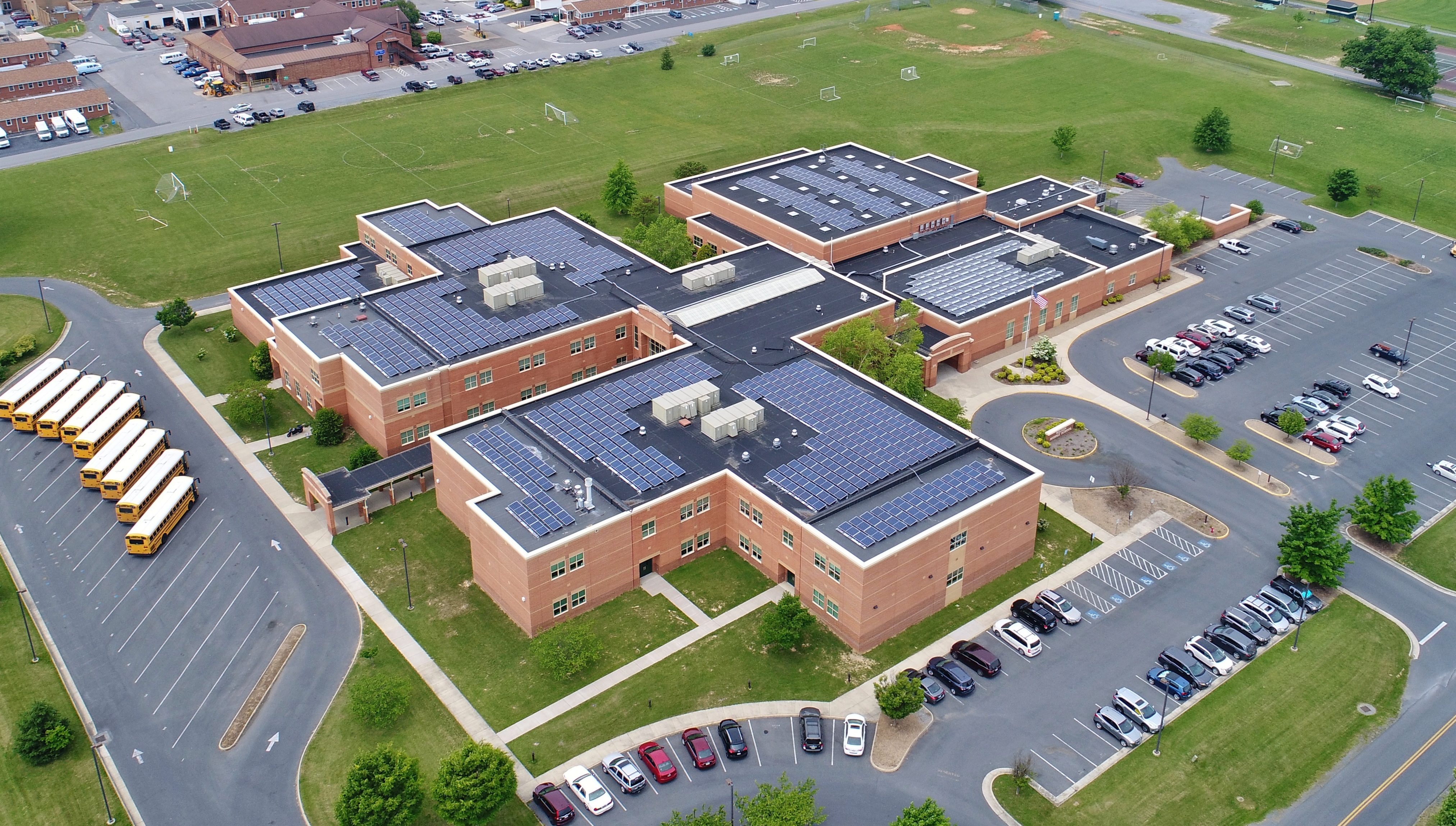
solar panels on a school roof
Wilson Middle School, Augusta County. Photo courtesy of Secure Futures.

 I wish they all could be solar schools

In the summer of 2021, I was dismayed to learn that the school board for the city of Norfolk had been told none of their brand-new schools could be outfitted with solar panels because the roofs weren’t designed to take the extra weight. As a result, Norfolk could not do what dozens of school districts across Virginia have been doing: installing solar arrays to provide some or all of the energy the school consumed, saving money for taxpayers and giving students hands-on exposure to a fast-growing technology with terrific career potential.   

What a missed opportunity, and yet, Norfolk wasn’t alone. I soon learned about a new school in Richmond where educators were eager for solar, but the steep pitch of the roof on the main part of the building wasn’t suitable. That left only a flat-roofed side wing that couldn’t hold enough panels to meet more than a fraction of the school’s needs.

From conversations with architects and solar developers, I know that building a school with a roof that can hold solar panels doesn’t have to be an added expense; mainly, you just have to plan for it. Wyck Knox, the architect who designed Arlington’s two net-zero energy schools (among others), says even building a school that can produce as much energy as it uses doesn’t have to cost more, if you simply approach the design process with that goal

Designing a school with a solar-ready roof pays off when the school district enters a power purchase agreement (PPA) with a solar company that installs and owns the solar array. The school pays just for the electricity it produces, typically at a rate lower than what the utility charges. 

As of this year, the financing options have expanded. The Inflation Reduction Act allows tax-exempt entities like local governments and schools to claim federal tax credits for renewable energy and batteries directly. 

So why aren’t all schools solar schools? The answers might differ from one school district to the next, but generally it’s because nobody thought of it at the right time, or they don’t know how to go about it, or the right people aren’t on board. One stubborn facilities manager can stall a project indefinitely. 

The U.S. Department of Energy says energy is the second largest expensefor schools, after teacher salaries. Taxpayers should be able to expect their school districts will pursue strategies like onsite solar that reduce energy costs. 

Personally, I support requiring school districts to, at the very least, analyze whether they could save money with solar roofs before they lock in designs that don’t include them. However, House Republicans killed an effort last year to impose such a requirement. And some school officials say it isn’t needed because they want to do solar; they just need help with the process. 

With that in mind, Senate Bill 848 and House Bill 1852 task the Commission on School Construction and Modernization with developing recommendations to help schools incorporate renewable energy in the construction or renovation of schools. 

The commission itself recommended several pieces of legislation that are now before the General Assembly, including some around construction funding. That should make it easier to integrate solar recommendations into their other work. 

Favola said, “I am extraordinarily excited about the possibility of providing school systems with technical assistance on how to incorporate solar and other renewable energy components in their renovations and new buildings.”

You and me both, Senator. You and me both. 

This article was originally published in the Virginia Mercury on January 26, 2023.

Update January 27: I may have given Republicans too much credit, at least those in the House. Although Senator Favola’s bill sailed through a Senate committee and is headed for a floor vote, a House subcommittee killed Delegate Subramanyam’s companion bill–in spite of a long line of speakers in support and no opposition. It was a bad meeting for Subramanyam; his shared solar bill also died in that committee. Senator Sutterlein’s retail competition bill has also been killed in a bipartisan vote in Senate Commerce and Labor, a Dominion-friendly committee.

Unknown's avatar

Dominion Energy says solar will dominate by 2040

Photo credit iid.com

When the Virginia General Assembly convenes this week for the 2023 session, Republicans will once again try to undo the commonwealth’s framework for a transition to renewable energy. Led by Gov. Glenn Youngkin, they will attack Virginia’s participation in the Regional Greenhouse Gas Initiative and the Virginia Clean Economy Act (VCEA) and continue seeking ways to keep a money-losing coal plant in Wise County in operation. 

Meanwhile, Virginia’s largest utility has already decided that renewable energy, especially solar, is the future. Dominion Energy’s just-released Climate Report 2022 projects that under every set of assumptions modeled, solar energy will become the mainstay of its electricity generation fleet no later than 2040. 

As for coal, it disappears from the energy mix by 2030 even in a scenario that assumes no change from present policy, in spite of the fact that the VCEA allows the Wise County coal plant to operate until 2045. As for fracked gas, it hangs on longer but in ever-smaller amounts, mostly to help meet winter peak demand. 

Dominion modeled three scenarios for this report. The “current policy” scenario assumes the policy landscape and technology options stay the same as they are presently, and that Dominion does its part in driving a global temperature increase of 2.1°C by 2050. That’s in keeping with Virginia’s climate law, and also with Dominion’s internal commitment to achieve net-zero emissions by 2050. 

That much warming is not a good outcome, considering the climate chaos the planet is experiencing today with barely over 1 degree of warming. Yet even under a 2.1°C scenario, Dominion’s model predicts solar energy will provide 40% of the electricity supply by 2040, followed by nuclear at 30% and (offshore) wind at 19%. 

The “emerging technologies” scenario also assumes a temperature increase of 2.1°C by 2050, but adjusts for the likelihood that technological change will lead to “advanced dispatchable zero-carbon technology” options that could displace much of the need for energy storage. These might include hydrogen, carbon sequestration and storage, and methane gas produced as the result of poor animal waste disposal practices at factory farms — what Dominion calls renewable natural gas, or RNG. 

Small modular reactors, SMRs, are not included in this scenario (and are hardly mentioned at all in the report), perhaps because operating them as peaker plants would be crazy expensive. Even without SMRs, though, the report says overall cost savings would be slight for this scenario, and solar would still be the leading source of electricity by 2040. 

Finally, the report models an “accelerated transition” scenario that reduces emissions more aggressively, in line with an effort to keep the global temperature increase to 1.5°C by 2050. This is the upper bound of warming considered tolerable by many climate scientists, but it would require Dominion’s electricity business to reach net zero by 2035. Dominion’s model shows solar would make up nearly two-thirds of the electric supply in that scenario. Offshore wind would be held to just 17%, apparently because at that point more wouldn’t be needed. 

I’d argue that offshore wind should carry more of the load to create a more balanced portfolio, but it’s a moot point: The report writers clearly think this scenario is just a thought exercise. The scenario consistent with keeping global warming to 1.5°C is described in a way that seems intended to discourage anyone from pursuing the matter.

“The heavier reliance on renewable capacity in this scenario,” it warns, “would require significantly greater capital investment at a much more rapid pace in preparation for a net zero mix by 2035. … Achieving such a rapid pace of emissions reductions would require predictable, dependable, and rapid wholesale shifts in public policy and technology advancements capable of maintaining system reliability and customer affordability. Also necessary would be supportive regulatory treatment and timely permitting for significant near-term zero-carbon infrastructure development and transmission system enhancements.”

In other words, the report seems to say, fuggedaboutit. It’s just too hard.

If that feels defeatist, it’s worth remembering how far Dominion has come to reach a point where it is even writing climate reports, not to mention declaring on page 1 that “climate change presents one of the greatest challenges of our time, and we take seriously our leadership role in helping to mitigate it.”

This is new, and you have to look back only a decade to appreciate how radical this declaration is. When 2013 opened, Dominion had just completed construction of that regrettable coal plant in Wise County and had begun a fracked gas plant building spree that would continue even after solar emerged as the cheapest source of new electricity in Virginia. Climate activists like myself were dismissed when we warned that new gas plants would be reduced to giant concrete paperweights well before the end of their design life, leaving ratepayers paying off stranded assets.

Even in 2016, when now-CEO Bob Blue was president of Dominion Virginia Power, Blue was proclaiming natural gas “the new default fuel” for electric generation. As late as the spring of 2020, the company’s integrated resource plan still called for building more gas plants. That plan acknowledged the strategy would violate Virginia’s new climate law, so it argued against the law. 

Yet I suspect Blue may deserve credit for the remarkable about-face at Dominion beginning in 2020. That summer Dominion Energy began significantly reducing its investments in fossil gas outside of the electric sector, scrapping plans for the Atlantic Coast Pipeline and selling off its gas transmission and storage assets. That year it also sold half of its interest in the Cove Point liquified natural gas export facility. It is reportedly considering selling the other half now as part of what Blue called in November “a ‘top-to-bottom’ business review aimed at ensuring that it is best positioned to generate substantial long-term value for shareholders.” 

Maybe Blue got religion on climate, maybe he’s just a savvy businessman. It’s a really good sign of the times that you can’t always tell the difference. 

But of course, Dominion is stuck with a heck of a lot of gas generating plants that it has to justify post hoc, which helps to explain its lack of enthusiasm for the 1.5°C scenario. Another part of the explanation lies in Dominion’s remaining gas investments outside the electric sector. Although Dominion Energy Virginia is solely an electric utility and does not supply gas to retail customers in Virginia, a separate Dominion Energy subsidiary sells gas in other states. So far these assets don’t seem to be going the way of the gas transmission business and Cove Point.

Dominion’s climate report tries valiantly to justify holding onto its retail gas business. The report declares, “Natural gas is also part of our long-term vision and consistent with our Net Zero commitment.” 

Sure, and the Tooth Fairy is real. Of the greenhouse gas reduction approaches cited — fixing leaks, making “renewable” methane from waste products, blending hydrogen into pipelines, and using creative carbon accounting with “offsets” — none make sense either economically or from a climate standpoint. 

Maybe he cares about climate, but apparently Blue doesn’t want to give up yet on a profitable business. Fortunately, at least for the planet, the retail gas business is about to enter a terminal decline as homes and businesses electrify. Getting out now would be the smart move from both the business and climate perspective.

Because what will eventually power all these homes, no matter which scenario you choose?  Renewable energy, and especially solar.

This article was originally published in the Virginia Mercury on January 6, 2023.

Unknown's avatar

You call that an energy plan?

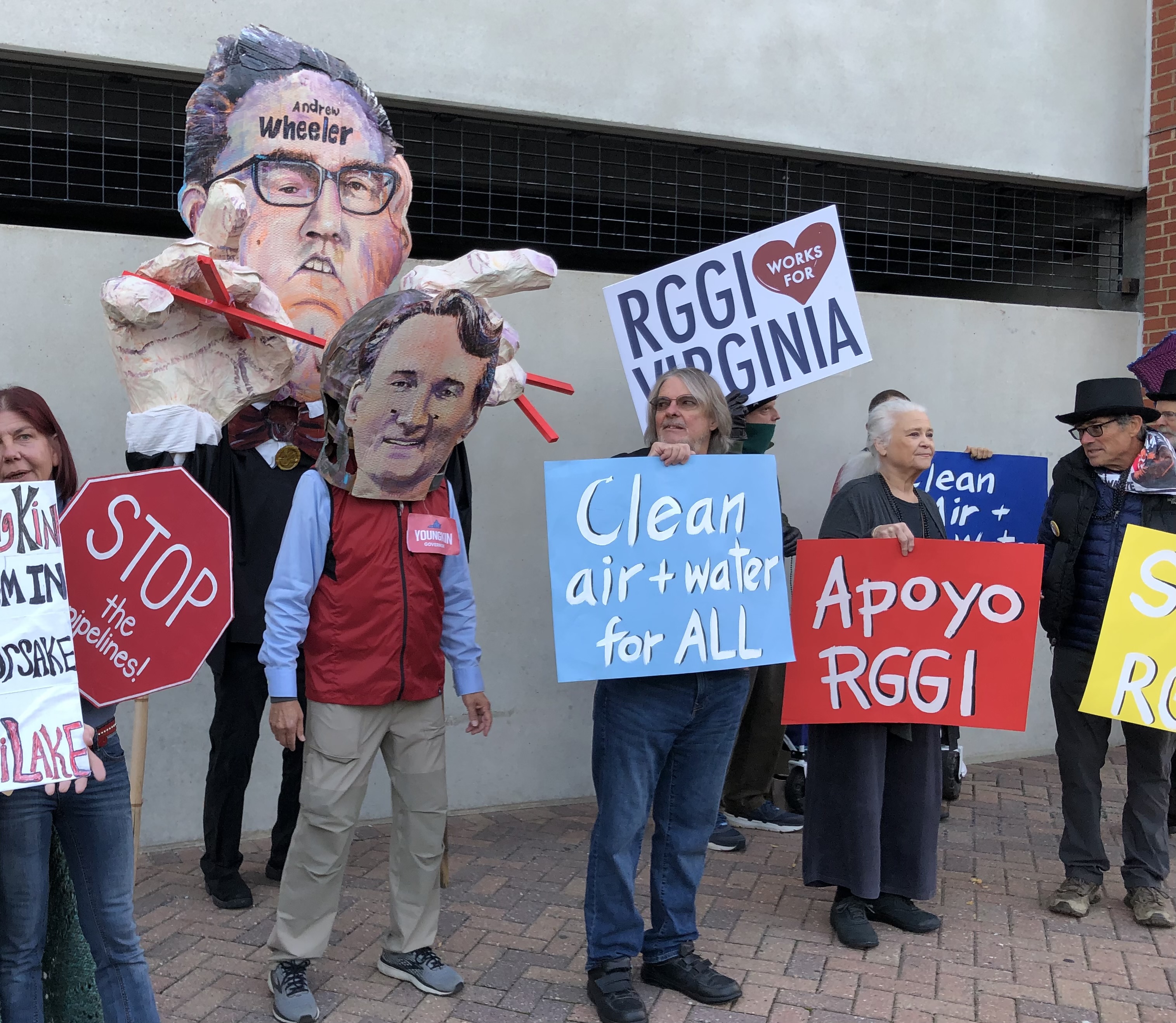
Protesters outside the Virginia Clean Energy Summit on October 21.

Governor Glenn Youngkin issued a press release on October 3 presenting what he says is his energy plan. Accompanying the press release was 26 pages labeled “2022 Virginia Energy Plan,” but that can’t be what he’s referring to. I mean, the Virginia Code is pretty specific about what makes up an energy plan, and this isn’t it.

Under Virginia law, the energy plan must identify steps the state will take over the next 10 years consistent with the Commonwealth Clean Energy Policy’s goal of a net-zero carbon economy by 2045 “in all sectors, including the electric power, transportation, industrial, agricultural, building, and infrastructure sectors.”  Not only does Youngkin’s document not do that, it doesn’t even mention the policy it’s supposed to implement.

It’s also missing critical pieces. The plan is supposed to include a statewide inventory of greenhouse gas emissions, but it’s nowhere to be found. The inventory is the responsibility of the Department of Environmental Quality, which reports previous inventories on its website from 2005, 2010 and 2018. The one specifically required to be completed by October 1, 2022 isn’t there, nor is there any indication it’s in the works and just unfortunately delayed. Did I miss some fine print about how the requirement doesn’t apply if the governor is a Republican?

In fact, there is no discussion about climate change in Youngkin’s energy plan.  The word “climate” appears nowhere. He simply ignores the problem: a modern Nero, fiddling while the planet burns.

Instead, Youngkin’s document mostly attacks the laws Virginia has passed in recent years to implement its decarbonization goals, including the Virginia Clean Economy Act, legislation allowing the state to participate in the Regional Greenhouse Gas Initiative and the Clean Cars law. In their place he offers a bunch of random ideas — some with merit, some without, some spinning off on tangents.

I did not really expect a conservative Republican with presidential aspirations to embrace all the recommendations for the energy plan that I laid out last month, or those from the many environmental, faith and consumer groups that support Virginia’s clean energy transition. Going further and faster down the road to decarbonization is a tall order for politicians beholden to fossil fuel interests, no matter how much it would benefit the public.

Yet Youngkin doesn’t have a lot of ammunition to use against the switch to renewable energy. With soaring coal and natural gas prices, it’s hard to keep pretending that fossil fuels are low-cost. The insistence that we need them for reliability is the only straw left to grasp at.

https://www.virginiamercury.com/blog-va/regulators-approve-dominion-bill-increase-for-rising-fuel-costs-appalachian-power-also-seeking-hike/embed/#?secret=Vd8muOhz01

And indeed, underlying Younkin’s attack on the VCEA is a misunderstanding of how grid operators manage electricity. The critique boils down to “baseload good, intermittent bad.” But baseload is not the point; meeting demand is the point. Demand fluctuates hugely by day and hour. If grid operators had nothing to work with but slow-ramping coal plants or on/off nuclear reactors and no storage, they’d have as much trouble matching demand as if they had nothing but renewable energy and no storage. Pairing low-cost wind and solar with batteries makes them dispatchable — that is, better than baseload.

That’s not to say there aren’t good reasons to invest in higher-cost resources, but “baseload” is a red herring that stinks up Youngkin’s entire argument.

To his credit — and notwithstanding his “baseload” fixation — Youngkin supports Virginia’s move into offshore wind energy even with the high cost of the Coastal Virginia Offshore Wind project and other early U.S. developments. (The plan notes that Virginia’s project will be the largest “in the Free World,” a weirdly retro way to tell us China has leapt far ahead in installing offshore wind.)

The plan also supports removing barriers to customer purchases of solar energy, including shared solar and a greater ability for renewable energy suppliers to compete with utilities for retail sales. This is all phrased as a consumer choice issue rather than an endorsement of greater utility investments in solar; regardless, these would be welcome moves.

It’s also good to see the governor’s endorsement of rate reform. Republicans have been at least as much to blame as Democrats for Dominion Energy’s success in getting laws passed that let it bilk ratepayers. It will be interesting to see if Youngkin actually pursues the reforms he touts.

Less encouraging are Youngkin’s desires to jump into hydrogen (I’m guessing not the green kind, since we hardly have an excess of renewable energy) and, worse, to deploy “the nation’s first” commercial small modular nuclear reactor (SMR) in Southwest Virginia within 10 years.

You know what will happen there, right? Ratepayers will foot the bill, and it will be very expensive.

But unlike offshore wind, SMRs aren’t proven technology; they remain firmly in the research phase. The U.S. Department of Energy is hoping for a demonstration project “this decade.” If successful, the industry believes SMRs will eventually be able to produce electricity at a price that’s only two or three times that of solar and wind energy. Which begs an obvious question: Is there a reason to build SMRs?

Nor has anyone figured out the nagging problem of what to do with the radioactive waste, including the waste piling up at today’s nuclear plants because it’s too dangerous to move and there’s no place to put it. So Youngkin’s plan also “calls for developing spent nuclear fuel recycling technologies that offer the promise of a zero-carbon emission energy system with minimal waste and a closed-loop supply chain.” Great idea! But how about focusing on that first, Governor?

That’s not where Younkin is putting his focus, though. Last week, he proposed spending $10 million on a Virginia Power Innovation Fund, with half of that earmarked for SMR research and development.  The announcement said nothing about waste.

Look, I happen to know some earnest climate advocates who believe SMRs are the silver bullet we’ve been waiting for. I follow the research with an open mind while also noting the astonishing advances in renewable energy technology announced almost daily. But the climate crisis is here and now. We can’t afford to press pause on known carbon-free technologies for 10 years in the hope that something even better will pan out.

Investing in research and development of new technologies is an important role for government, but kicking the climate can down the road isn’t an option. Rather than attacking our energy transition, Youngkin would have done more for Virginia by using his plan to build on it.

This article appeared first in the Virginia Mercury on October 18, 2022.

Unknown's avatar

The other shoe drops: APCo follows Dominion in seeking rate increase due to high fossil fuel costs

Virginia residents who buy electricity from Appalachian Power will see a rate increase of almost 16% this year if the State Corporation Commission approves the utility’s request to recover more than $361 million it has spent on higher-than-expected coal and natural gas prices. APCo proposes to recover the excess over two years, meaning rates will remain elevated even if fossil fuel prices drop. According to the filing, a customer who uses 1,000 kWh per month would see an increase of $20.17.

The SCC is likely to approve the request because it has little room to do otherwise. Virginia law allows utilities to recover their spending on fuel dollar-for-dollar, though they cannot tack on a profit for themselves. Last month, the SCC approved Dominion’s request to increase rates by an average of nearly $15 per month for the next three years to cover past excess fuel costs. 

The good news, says APCo, is that Virginia customers will see lower bills in the future because the utility is investing in renewable energy. “Incorporating more renewable sources of power into the company’s energy mix is another step in reducing customer fuel costs,” declares the company’s press release, issued the same day as its SCC filing. “As Appalachian Power adds more renewables, there is less need for coal and natural gas to generate power.”

Well, yes, but wouldn’t it have been nice if APCo had come to this conclusion before now? The current situation was entirely predictable. A supply glut kept natural gas prices low for almost a decade, but drilling companies weren’t making money. Today’s higher prices make it profitable to drill for gas, but oil and gas companies don’t trust that the market will stay strong, so they are returning profits to shareholders rather than investing in new wells. So tight supplies may keep prices high. Or not! Nobody knows. (As for coal, natural gas generation and coal are ready substitutes for each other, so coal prices track natural gas prices.) 

For years clean energy advocates like me have been urging utilities and the SCC to value price stability in generation planning, only to be ignored. Other states took the lead in installing price-stable renewable energy, while Virginia added more gas plants. When I dug into the data this summer, it became clear that the great majority of states with lower rates than Virginia also had higher amounts of renewable energy in their generation mix. I’ve reprinted a summary table here. 

StatePrice cents/kWh% REsource of RE
Virginia12.837biomass, hydro, solar
Idaho9.8674mostly hydro
Washington10.1275mostly hydro
North Dakota10.4840mostly wind
Utah10.6615mostly solar
Montana11.0052mostly hydro
Wyoming11.0619mostly wind
Nebraska11.1128mostly wind
Oregon11.2268mostly hydro, some wind
Missouri11.5412mostly wind
Arkansas11.7510mostly hydro
Louisiana11.984biomass
South Dakota12.0382wind, hydro
Iowa12.0960almost all wind
North Carolina12.2616mostly solar and hydro
Oklahoma12.3845mostly wind
Kentucky12.637hydro

I compiled this table in July, using then-current Energy Information Agency data. Now EIA has updated its data, and Virginia’s position is worse than ever. As of July 2022, Virginia’s average residential electricity rate has now hit 14.42 cents/kWh. This puts us above every state in the South Atlantic except Georgia. (Poor Georgia comes in at 16.02, but that’s what building nuclear plants will do for your rates.) Meanwhile, the states whose rates increased the least are those with high levels of wind, solar and hydro. 

This isn’t rocket science, folks. Wind and solar have lower levelized costs than coal and gas, and they insulate consumers from the volatility of the world oil and gas markets. You don’t have to be a climate advocate to understand this, but apparently it helps.

Unknown's avatar

Buckle up, folks: this federal climate bill is going to supercharge Virginia’s energy transition

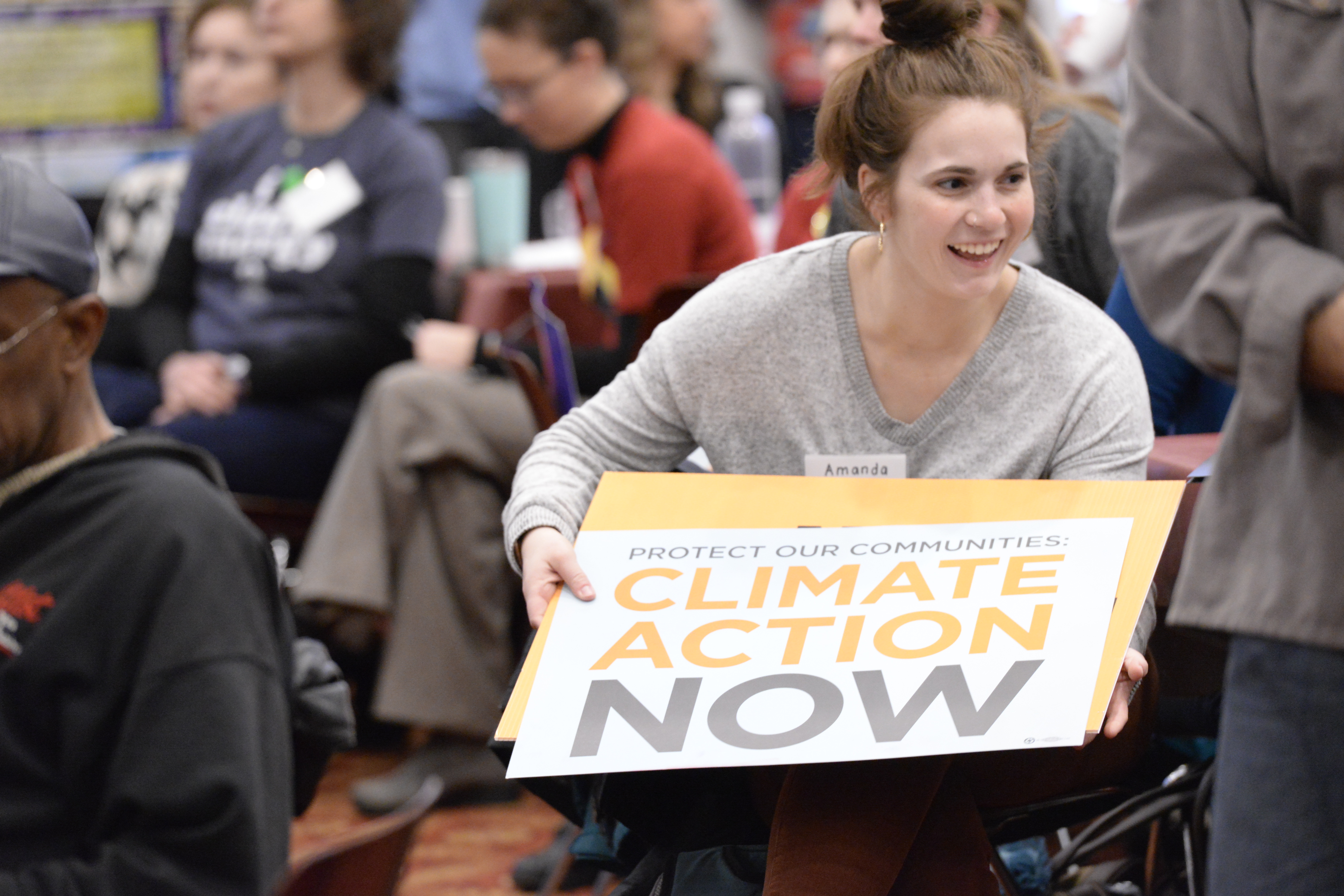
Young woman holding sign that says Climate Action Now
Photo by Alex Kambis.

On Sunday the U.S. Senate passed the historic climate legislation package hammered out between Senate Majority Leader Chuck Schumer and West Virginia Senator Joe Manchin. The House is expected to follow suit this week, giving President Joe Biden a huge win on one of his administration’s priorities and finally making good on his pledge to tackle climate change.

The bill is titled the Inflation Reduction Act (IRA), apparently because the senators think inflation is the only thing most Americans care about right now. But whether it reduces inflation is beside the point. The IRA marks the federal government’s most significant investment in clean energy and transportation ever. Its $370 billion of climate spending will cut U.S. emissions roughly 42% below 2005 levels by 2030, only slightly less than the reductions that would have been achieved through Biden’s signature Build Back Better bill.

This is a huge piece of legislation, though, and some of the compromises Schumer was forced to make are not climate-friendly. Manchin, after all, is a coal baron representing a state so dominated by the extraction industries that it has lost sight of any other future. Climate hawks have to hold their noses (beaks?) to accept some noxious provisions, such as the bill’s requirement for new offshore drilling lease sales. No doubt that one will cheer motorists who wrongly assume the government could lower gasoline prices just by turning on a spigot, if only it wanted to.

The bill also comes with a side deal meant to ensure completion of the Mountain Valley Pipeline, which starts in Manchin’s home state. That news promptly soured many activists in Virginia on the whole package.

Hang in there, people. The pipeline deal isn’t actually part of the IRA, and Manchin knows better than anyone that a promise of some second bill to be voted on in the future is a castle in the air. Maybe he’ll get it, maybe he won’t. Meanwhile, the IRA’s incentives for renewable energy, energy storage, energy efficiency, building electrification and electric vehicles are overwhelmingly more impactful than provisions designed to increase oil and gas production. The business case for new pipelines will only get worse.

Three recurring themes stand out in the IRA. One is the attention paid to ensuring benefits flow to low- and moderate-income residents and communities impacted by fossil fuel extraction. A second is the effort to incentivize manufacturing and supply chain companies to bring operations back to the U.S., using tax credits for manufacturing and requirements for U.S.-made components. The third is job creation and training for career jobs that pay well. The combined effect is that the law will benefit former coal workers in Southwest Virginia looking for employment at least as much as Northern Virginia suburbanites jonesing for Teslas.

Every state will see clean energy investments soar if the bill becomes law, but Virginia is especially well positioned. Though we have embarrassingly little wind and solar in our energy mix today, we have huge potential for both, a strong tech sector and a well-educated workforce.

Just as important, laws passed by the General Assembly in the past few years already provide the framework for our energy transition. Among them, the Virginia Clean Economy Act and participation in the Regional Greenhouse Gas Initiative are pushing our utilities to decarbonize, including through investments in energy efficiency, solar and offshore wind. Solar Freedom removed barriers to private investments in distributed solar, while the Grid Modernization Act authorized upgrades to the distribution grid, and the Clean Cars Act started us down the road to vehicle electrification. For all of these, the IRA’s incentives make compliance easier and less expensive for both utilities and customers.

Renewable energy tax credits with an emphasis on equity and jobs

Photo courtesy of NREL

The IRA is a big bill with a lot of fine print detailing incentives for a wide range of technologies, mostly clean but with a few clunkers. (Hydrogen made from fracked gas, anyone?) Still, the largest share of the renewable energy tax credits will go to companies involved in the wind and solar industries. The credits will remain fixed for 10 years before ramping down, finally providing the business certainty and long planning window that clean tech companies have been begging for.

The more utilities take advantage of the law to install renewable energy, the greater the benefit to electricity customers. Renewable energy helps stabilize electricity costs, dampening the impact of high fossil fuel prices. The IRA’s tax credits will lower the cost of building wind and solar, saving money for Virginia customers as our utilities meet and exceed the VCEA’s targets for solar, storage and wind. (So, yes, the Inflation Reduction Act will live up to its name when it comes to electricity prices.)

For utility-scale projects like solar farms and offshore wind, obtaining the maximum tax credit requires that a steadily increasing percentage of the equipment used be American made. Credits available to manufacturers are intended to draw the supply chain back to the U.S. and will help those parts be cost-competitive. New prevailing wage and apprenticeship program requirements favor union labor and middle-class incomes for careers in green energy.

While large renewable energy facilities will contribute most to decarbonizing the grid, the most generous incentives in the IRA are reserved for distributed generation facilities under 1,000 kilowatts AC (1,300 kW DC), a category that includes most rooftop solar. For these projects, the investment tax credit will return to 30% for the next 10 years, with adders available if the facility is located on a brownfield or in an “energy community” (10%), uses domestic content (10%) or serves low-income residents (10-20%). The credits can be combined, making it entirely possible for a solar project on low-income housing in Virginia’s coalfields, built using American-made equipment, to qualify for tax credits of up to 70% of the cost.

Not only that, but taxpayers will be allowed to sell the credits, so people with no tax liability can still take advantage of the discounts. This feature will make solar affordable for homeowners who don’t owe enough in federal taxes to use the tax credits themselves. It will also make it possible for installers to discount the upfront cost of a solar array by the amount of the tax credit so customers don’t have to wait months for a tax refund.

A final feature is that the tax credits will now also be available as direct payments to tax-exempt entities like local governments, schools and churches. Direct pay will have the biggest impact in states that don’t allow third-party power purchase agreements (PPAs), but it’s a great option anywhere.

The “adder” for brownfields will be of interest to many Virginia localities that want to find ways to safely use closed landfills and old industrial sites, while Virginia’s government has already identified brownfields as a great opportunity for solar.

But the biggest market opportunities would seem to be for solar on low-income housing and in areas impacted by fossil fuel extraction. Carrie Hearne, associate director for renewable energy and energy efficiency at Virginia’s Department of Energy, said the many federal funding programs laid out in the IRA “would provide great opportunities for energy infrastructure investments in communities that are most in need, and in turn, help to lower energy bills. These federal funds could also contribute to the commonwealth’s goal of competitive rates, reliable and responsible delivery of energy alongside rural economic development.”

To understand how the solar industry sees these opportunities, I called the leaders of three solar companies that develop onsite solar in low-income areas and in the coalfields: Dan Conant of West Virginia-based Solar Holler, Tony Smith of Staunton-based Secure Futures and Ruth Amundsen of Norfolk Solar. Not surprisingly, they all predicted stunning growth in both distributed solar and jobs as a result of the IRA.

Solar has made fewer inroads in Southwest Virginia than in other parts of the state, which Conant sees as an opportunity. One of the few unionized solar companies in the area, and the only one I know of focused exclusively on Appalachia, Solar Holler has been expanding into Southwest Virginia and hiring workers at a steady clip. (Disclosure: I own a tiny stake in Solar Holler.)

The company already uses American-made components, so Conant said coalfields residents will be able to take advantage of two of the adders to install solar on their homes and businesses at half price, with low-income residents paying even less. The IRA’s manufacturing tax credits for American solar companies will further reduce the cost of the projects.

Conant was especially excited about the IRA’s impact on jobs in Appalachia. He expects to ramp up hiring significantly once the IRA becomes law. It took no prodding from me for him to add, “I truly believe this bill will let us get to 100% clean energy in 15 years.”

Secure Futures also has projects underway in Southwest Virginia as well as elsewhere across the state. The company uses third-party PPAs to allow tax-exempt customers like schools and nonprofits to go solar with no money down, paying just for the electricity produced by the panels. Although the IRA allows these customers to get the tax benefits without a PPA, Secure Futures president Tony Smith said tax-exempt entities will still do better using PPAs to take advantage of accelerated depreciation.

Smith said the IRA will make an already strong solar market in Virginia even stronger, as the higher tax credits will push down prices and the transferability of the credits will make it easier to attract more investors to solar. At the same time, a provision of the VCEA requiring Dominion Energy Virginia to acquire renewable energy certificates (RECs) from distributed generation facilities has created a strong market for these certificates, helping to finance projects and making solar even more affordable for institutional customers that sell their solar RECs.

On the other side of the commonwealth, Norfolk Solar also installs solar in low-income communities, offering PPAs to both commercial customers and low-income residents in economically distressed areas that qualify for special tax treatment as Qualified Opportunity Zones. (Under Virginia law, residential PPAs are available only to low-income customers.) Amundsen pointed out that the 10-year time horizon of the tax credits is an added benefit of the IRA to both her customers and potential investors because it allows for long-range planning and multi-year projects.

Energy storage will stand on its own

The VCEA established one of the most ambitious goals for energy storage development in the nation. But current federal law offers tax credits for energy storage only when it is part of a renewable energy project. The limitation has led to the proliferation of solar-plus-batteries projects around the country. It’s an ideal combination because it allows solar energy to be used when it is needed, unshackled from the time of day that it’s produced.

But uncoupling storage from renewable energy projects is a more efficient way to manage the grid, said Steve Donches, a Loudoun County attorney who represents battery storage companies and recently served on the Virginia Energy Storage Task Force.

“In many instances, the best location for storage supporting the grid is not where the renewables are located but rather near grid chokepoints or inside load pockets,” he said. “Moreover, site selection flexibility can often be important from a zoning permitting perspective. The new approach allows developers to be more nimble and locate where it is most useful and cost efficient.”

Recognizing this, the IRA provides a tax credit of up to 30% for energy storage whether or not it is part of a renewable energy facility.

This will make grid storage less expensive and easier for our utilities to install, and it will also benefit customers who want to put batteries in their buildings for back-up power. Amundsen noted that her customers sometimes can’t afford to include a battery at the time they install solar; the IRA will let them take the tax credit for storage even if they buy the battery later. This is especially important, she said, for resilience in low-income neighborhoods, where adding a battery to a solar-powered church or community center allows it to “island” during a power outage and provide a refuge for neighbors.

Homeowners will see huge benefits from building electrification

A cleaner electricity grid makes it possible to decarbonize other sectors of the economy by substituting electricity for fossil fuels in transportation and buildings; hence the climate advocates’ mantra “Electrify everything.” Yet while new electric appliances have become more energy efficient and attractive to consumers than the ones they replace, the switch comes with a price tag.

Under the new law, price will no longer be a barrier. The IRA offers rebates to residents to upgrade their homes with new electric technology such as heat pumps for heating and cooling (up to $8,000), electric induction stoves ($840), heat pump water heaters ($1,750) and upgrades to home electrical systems to support all the new load ($4,000). The rebates phase out for higher-income earners. Lower-income families replacing old and inefficient appliances will see the greatest energy savings as well as the highest rebates.

The federal rebates are a fantastic complement to existing Virginia programs for low-income energy efficiency upgrades. A major attraction of Virginia’s participation in the Regional Greenhouse Gas Initiative is the hundreds of millions of dollars it raises for low-income efficiency programs such as those devoted to upgrading multifamily housing like apartment buildings. Coordinating the state programs with the new federal rebates should be an urgent priority to ensure the broadest possible benefits to low-income Virginians.

Meanwhile, gas utilities had better start planning for the end of their business. There is no longer any reason to expand and upgrade gas distribution pipelines, because from here on in their customer base will be shrinking, not growing, resulting in stranded assets.

Electric vehicles aren’t just for the rich any more

Santeri Viinamäki, CC BY-SA 4.0 , via Wikimedia Commons

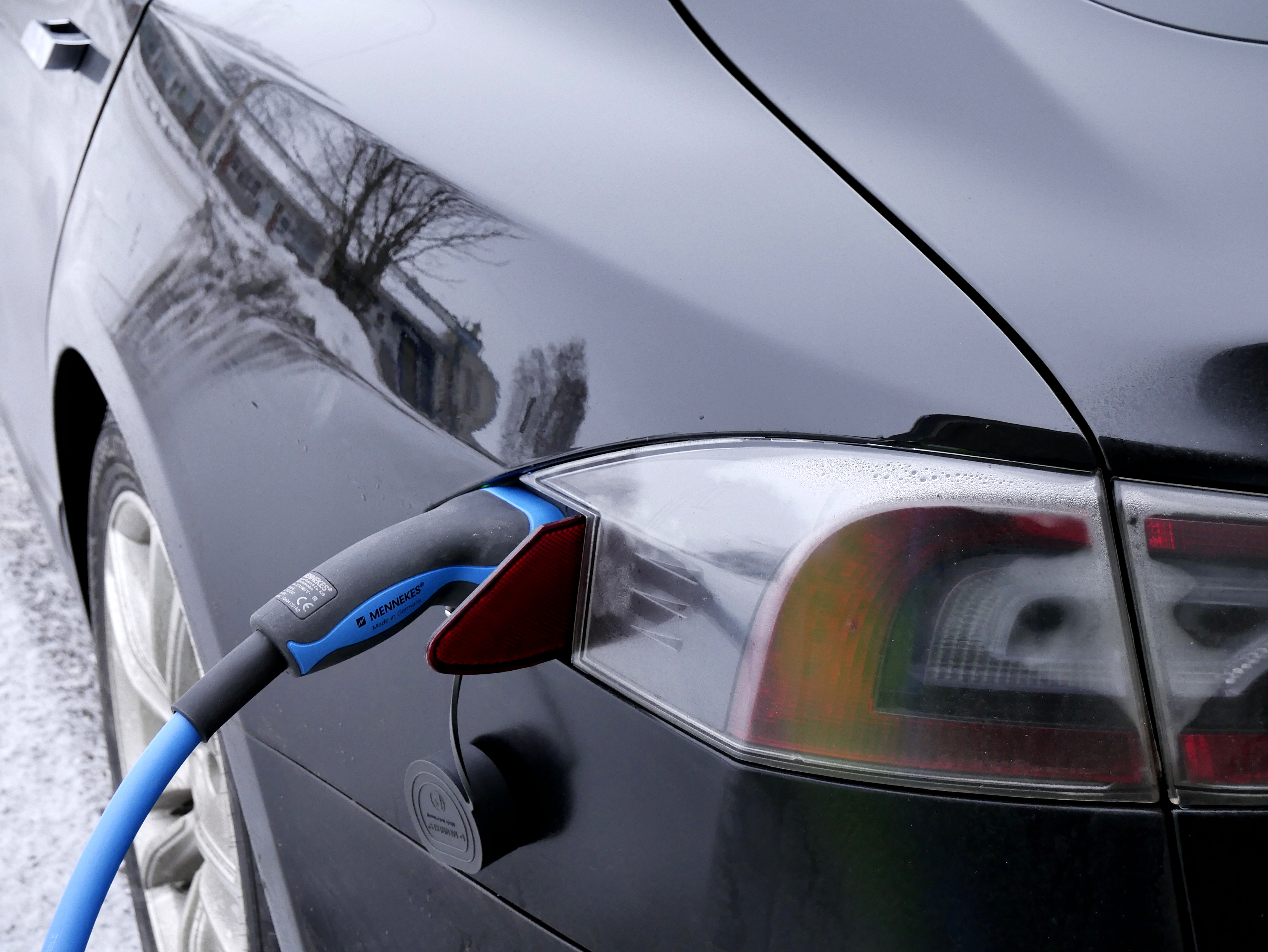
The IRA provides a $7,500 EV tax credit for new vehicles, including those made by manufacturers like Tesla and Toyota that had reached volume caps in previous law. Restrictions apply, including income limits, vehicle price caps and supply chain sourcing rules. The act also now adds a credit of up to $4,000 for used vehicles, making ownership possible for more people at all income levels.

Virginia is committed to vehicle electrification through its adoption of clean cars legislation in 2021 and a 2022 law requiring state agencies to buy electric light-duty vehicles whenever the total cost of ownership is less than it would be for a vehicle with an internal combustion engines. But further speeding up the transition to EVs will create ripple effects requiring careful planning. Electricity demand will increase and do so unevenly, requiring load management programs and upgrades to parts of the distribution grid.

https://www.virginiamercury.com/2021/05/05/data-centers-and-electric-vehicles-will-drive-up-virginia-electricity-demand-uva-forecaster-predicts/embed/#?secret=EvWicAM2Bx

Charging all these vehicles will also be an issue. Many would-be EV customers lack the ability to charge at home, either because they don’t own the space where they park or because their homes aren’t wired for easy installation of a charger. The problem is especially acute for people who rent apartments in buildings that lack charging stations.

No matter how generous the credits, people won’t buy EVs if they can’t charge them. Virginia must require multifamily buildings to include enough charging stations for all the residents who want them, ensure public charging stations are plentiful and convenient in low-income neighborhoods and improve its residential housing code to ensure new homes are wired to facilitate installation of chargers.

For best results, lean in

Photo credit iid.com

Virginia law requires each new governor to produce an energy plan in October of the first year in office, so Virginia’s Department of Energy is currently in the process of writing a plan that will have Gov. Glenn Youngkin’s stamp on it. The plan must be one that “identifies actions over a 10-year period consistent with the goal of the Commonwealth Clean Energy Policy set forth in § 45.2-1706.1 to achieve, no later than 2045, a net-zero carbon energy economy for all sectors, including the electricity, transportation, building, agricultural, and industrial sectors.”

Governor Youngkin hasn’t shown much enthusiasm for Virginia’s energy transition to date, having tried to gut the VCEA and repeal RGGI. Yet with the IRA making so many incentives available for clean energy and electric vehicles, leaning in to the energy transition now will allow the commonwealth to reap huge rewards in the form of economic development, job growth, cleaner air and lower energy bills.

The opportunities for Virginia are enormous; the governor should make the most of them.

This article originally ran in the Virginia Mercury on August 9, 2022.

Dear readers: Many of you know that although I write independently of any organization, I also volunteer for the Sierra Club and serve on its legislative committee. The Sierra Club’s Virginia Chapter urgently needs funds to support its legislative and political work towards a clean energy transition. So this summer I’m passing the hat and asking you to make a donation to our “Ten Wild Weekends” fundraising campaign. Thanks!

Unknown's avatar

Your electric bills are skyrocketing. Blame our failure to invest in renewable energy.

Photo by Pixabay on Pexels.com

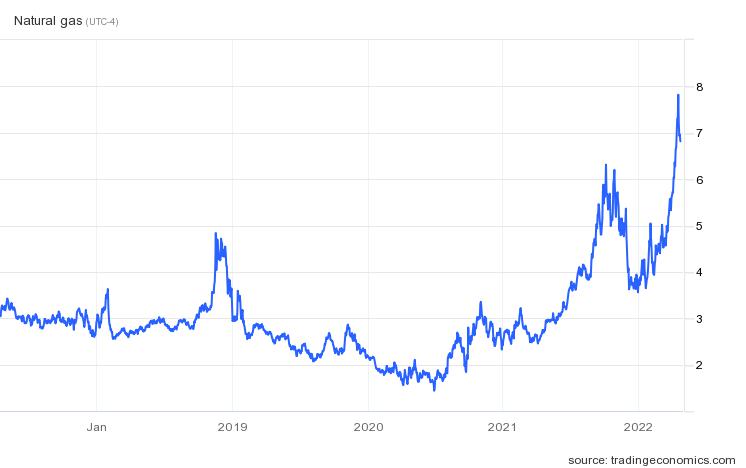
Fossil fuel prices are higher everywhere, and the effect is hitting electric bills as well as prices at the gas pump. 

Utilities that generate power from natural gas and coal face fuel costs two or three times as high as they were just a couple of years ago —and those costs are passed on to customers. Some utilities employ hedging strategies and long-term contracts to reduce the impact of price spikes. But as a general matter, how painful your bill increase will be is a function of how much electricity your utility generates from fossil fuels. 

Gee, don’t you wish we had more renewable energy in Virginia? 

Let’s review the problem. Dominion Energy Virginia, our largest utility, generates most of its electricity from gas and coal, with 29 percent from nuclear and a tiny percentage from solar and biomass. Our second-largest utility, Appalachian Power, derives 85 percent of its power from coal and gas and only 15 percent from renewable energy, primarily wind and hydro. 

Both utilities are investing more in renewables now, but for years they lagged other states even as wind and solar became the lowest-cost sources of energy nationwide. Because the “fuel” for wind turbines and solar panels is free, those sources generate electricity at a stable price that looks even better when coal and gas prices go up. (Nuclear reactors are fueled by uranium, so they aren’t affected by the fossil fuel crunch either; even so, most of them need subsidies to compete in the wholesale market.) 

As previously reported in the Mercury, Dominion filed a request with the State Corporation Commission in May to increase the “fuel factor” portion of its customer bills, citing the higher prices. In the past year, according to Dominion, the price of the natural gas it bought has gone up 100 percent. High gas prices cause utilities to switch to coal generation when it’s cheaper, so the price of coal also rose by 92 percent. In all, the company said it incurred more than a billion dollars more in fuel costs over the past year than it budgeted for a year ago. 

Under Virginia law, Dominion and APCo “pass through” the costs of fuel directly to customers. They don’t collect a profit, but they don’t have to swallow unexpected increases themselves. Customers will have to pay higher rates for as long as it takes Dominion to recoup the extra spending. The only question for the SCC is how quickly Dominion should collect the money.

Consumers in other states are also being hit by higher electricity bills, but the effect is uneven across the country. States that built more renewable energy protected their residents from fuel price increases. 

Data collected by the U.S. Energy Information Agency shows that with few exceptions, states with lower electricity rates than Virginia’s have more renewable energy than we do. Since the EIA data doesn’t reflect all the planned increases due to rising coal and gas prices, the disparity will become even more pronounced over the coming year. 

States in the Pacific Northwest with a lot of inexpensive hydroelectric power have especially low rates, but wind and solar are the cheapest forms of new energy. The higher fossil fuel prices go, the better wind and solar look by comparison. 

States in the Great Plains have been building wind for years because it outcompetes everything else, so their rates are low and increasingly insulated from fossil fuel volatility. South Dakota residents pay less per kilowatt-hour than Virginians do, and the state gets a whopping 83 percent of its electricity from renewable energy, primarily wind. Even North Dakota, a deep red state wedded to fossil fuels, gets more than 35 percent of its electricity from wind and another 5 percent from hydro. Its rates are already much lower than Virginia’s, and its renewable energy will cushion fuel cost increases. 

Investments in solar are also paying off. Take Utah for example, where residential rates are also far lower than Virginia’s. Utah has a coal problem, with 61 percent of its electricity from that one dirty source, and another 24 percent from natural gas. But, as EIA reports, “almost all the rest of in-state generation came from renewable energy, primarily solar power.” Moreover, “solar energy powers about 93 percent of Utah’s electric generating capacity added since 2015.” Evidently, Utah spent the past seven years working to future-proof its energy supply, while Dominion kept building more gas plants. 

Virginia’s slow start on the transition to renewable energy is the direct result of poor investment decisions by our utilities and a disgraceful myopia on the part of the State Corporation Commission. Environmental advocates pointed out for years that our over-commitment to fracked gas meant we’ve been gambling on fuel costs and undervaluing price stability. But the SCC kept approving new fossil fuel projects, and actually urged Dominion to build more gas plants.

Indeed, our situation would be even worse if the General Assembly had not passed the Virginia Clean Economy Act in 2020. The VCEA requires our utilities to transition to carbon-free electricity by 2050 and establishes wind and solar targets for Dominion and APCo to achieve by 2035. The targets are still too low to meet the climate emergency — but until the VCEA became law, Dominion was planning to build even more gas plants

Now customers have to pay for Dominion’s folly. Dominion’s filing states that if it recovers the entire $1 billion shortfall over the coming year, residential bills would have to go up by 19.8 percent. Dominion instead proposes to spread the higher charges over three years to ease the shock, making the bill increase 12.2 percent.  The effect would be further moderated this year by other adjustments the company proposes, like moving the costs of participating in the Regional Greenhouse Gas Initiative into base rates, where they can be absorbed because those rates are so inflated. (On the other hand, the SCC just granted Dominion a separate rate increase for spending to extend the life of its aging nuclear plants—an undertaking projected to cost nearly $4 billion.) 

An SCC hearing examiner heard testimony in Dominion’s rate case on July 6 and 7. A ruling is expected later this summer, and the SCC seems likely to approve the three-year plan. 

Spreading the cost of higher fuel prices out over a longer time may reduce the rate shock, but there are drawbacks to this approach. First, Dominion will charge customers the financing costs of deferring collection on the full amount, adding to the total cost burden. (What, did you think the company was offering to absorb that cost itself?) The way it works is that ratepayers will borrow money to pay off our debt to Dominion, then repay the loan with interest over the next three years. 

The second problem is that if the high cost of fossil fuel isn’t temporary, extending the recovery period will lead to even greater shocks in coming years. If prices stay high and we keep kicking the can down the road, we will pay more financing costs and pile up more debt. Where does this end?

This is not mere speculation. Dominion’s filing already projects that “fuel costs will remain elevated over the next year,” and expert witness testimony in the case notes that Dominion revised its natural gas price projections upwards after it filed its request, without updating the amount it is seeking to collect to reflect the higher projections. 

Over at Appalachian Power the situation may not be any better. APCo typically seeks its fuel factor rate increases in September of each year. Last year the utility sought a $3 average increase in residential bills to cover higher fuel costs, at a time when coal and gas prices were still well below this year’s prices. When the company files for its next fuel factor increase two months from now, the rate increase it seeks is likely to pack a much bigger punch. 

What of other Virginia utilities? Our smallest publicly-owned utility, Kentucky Utilities (Old Dominion Power, which serves five counties in southwest Virginia), is also heavily dependent on fossil fuels although now planning to build more renewables. ODP filed for a modest rate increase in February of this year, just before Russia invaded Ukraine and sent world natural gas prices to heights not seen since the start of the fracking revolution. 

Chris Whelan, vice president for communications and corporate responsibility, told me ODP is able to dampen the effect of fuel price volatility through a “flexible fuel procurement strategy that includes long-term contracts to help hedge against price swings as well as the ability to purchase fuel on the spot market when prices drop.” Still, ODP will have to seek another increase next February unless prices suddenly plummet. The utility recovers excess fuel costs (or lowers rates if fuel costs fall) on an annual basis, so customers would pay off the full amount over 12 months. 

Electric cooperatives that buy electricity from Old Dominion Electric Cooperative also face price increases due to high fossil fuel prices and a paucity of renewables. ODEC’s 2021 energy profile shows it generates 38 percent of its electricity from gas, 14 percent from nuclear, and 4 percent from coal. It purchases the rest from the wholesale market (38 percent) and from renewable energy projects (6 percent). Electricity sold on the PJM wholesale market is generated mainly by natural gas, nuclear and coal, so wholesale market prices are also higher now.

According to Kirk Johnson, ODEC’s senior vice president for member engagement, ODEC has had to raise energy prices twice since the beginning of the year, effective May 1 and July 1. Assuming individual distribution cooperatives passed those costs through immediately, residential co-op customers will have seen a 16 percent increase in their electricity rates since Jan. 1. That’s a really steep increase, but Johnson notes ODEC will collect the full amount of the excess cost by Jan. 1, 2023. 

ODEC’s increase for six months is almost four percentage points lower than the increase Dominion would impose for 12 months if it were to collect its full $1 billion in the shortest time possible. Johnson said ODEC engages in a hedging strategy that acts like an insurance policy to limit the effect of fuel price volatility, and that this strategy has saved their ratepayers hundreds of millions of dollars.

So hedging and long-term contracts can smooth out fossil fuel volatility, but rates are going up everywhere in Virginia. The lesson is clear enough: “cheap” fracked gas was a bad bargain. Our utilities should have been building wind and solar over the last several years to protect us from fossil fuel price volatility, rather than waiting for the General Assembly to force them to act. 

Going forward, the more we invest in wind and solar, the more price stability we will have in our electricity rates, and the less we will have to worry about high fossil fuel prices in the future.  

This article originally appeared in the Virginia Mercury on July 18, 2022. I’ve corrected information for Utah.

*EIA’s webpage lists each state’s average residential price of electricity per kilowatt-hour, but finding the fuel mix for each state requires looking up each one separately. For those of you who like to dive into these details, I’ve assembled the information for you. Note that most of EIA’s data is for 2021, but some state data is for 2020. Unfortunately this includes Virginia.

StatePrice cents/kWh% REsource of RE
Virginia12.837biomass, hydro, solar
Idaho9.8674mostly hydro
Washington10.1275mostly hydro
North Dakota10.4840mostly wind
Utah10.6615mostly solar
Montana11.0052mostly hydro
Wyoming11.0619mostly wind
Nebraska11.1128mostly wind
Oregon11.2268mostly hydro, some wind
Missouri11.5412mostly wind
Arkansas11.7510mostly hydro
Louisiana11.984biomass
South Dakota12.0382wind, hydro
Iowa12.0960almost all wind
North Carolina12.2616mostly solar and hydro
Oklahoma12.3845mostly wind
Kentucky12.637hydro

Dear readers: Many of you know that although I write independently of any organization, I also volunteer for the Sierra Club and serve on its legislative committee. The Sierra Club’s Virginia Chapter urgently needs funds to support its legislative and political work towards a clean energy transition. So this summer I’m passing the hat and asking you to make a donation to our “Ten Wild Weekends” fundraising campaign. Thanks!

Unknown's avatar

What new Virginia laws reveal about how the natural gas industry sees its future 

Natural gas is having a moment. The war in Ukraine spotlighted Europe’s heavy reliance on Russian gas and the challenge of replacing it with new supplies from elsewhere. Suddenly the Biden administration, after talking so much about the need to get off fossil fuels, wants to expand oil and gas production and boost exports of liquified natural gas. 

The president still intends to address the climate crisis, just not right now. The sudden shift brings to mind St. Augustine’s prayer: “Lord, make me virtuous, but not yet!”

Don’t be fooled, though. In fact, natural gas is facing an existential crisis. Back when it was cheap, it wasn’t profitable; now that prices are high, U.S. consumers have better alternatives. Europeans will want to import our expensive LNG only until they have other options. Today’s tight supplies obscure the big-picture reality that the gas industry is in the fight for its life. 

The fracking industry likes to bill its product as the cleaner and cheaper alternative to coal in generating electricity. And indeed, advances in fracking technology produced a years-long glut of gas, driving prices so low that gas overtook coal as the top fuel in U.S. power generation beginning in 2015. Gas made up 38.3 percent of electricity in 2021 compared to coal’s 21.8 percent. 

But competition from ever-cheaper wind and solar have stalled the gas industry’s growth in the power sector. Today utilities are more interested in building renewable energy and battery storage than new gas plants. Natural gas was projected to make up only 16 percent of new U.S. electricity generating capacity in 2021, compared to 39 percent for solar and 31 percent for wind. 

High prices will exacerbate this trend. Natural gas prices today are higher than at any time since 2008, having more than trebled in just the past two years. The rise began well before the war in Ukraine, and now international market demand has pushed it higher. This is good for fracking companies that spent the last 10 years losing money, but from a utility’s perspective, price-stable renewables just look better and better. 

Graph of 5 years of natural gas prices in US dollars.
Natural gas (USD/MMBtu) https://tradingeconomics.com/commodity/natural-gas

Fortunately for the gas industry, making electricity is just one use for its product. Methane remains the dominant fuel for heating buildings, with about half of U.S. homes and businesses using it for space heating, water heating, cooking and other appliances. It is also a feedstock for many industrial operations, including fertilizer and plastics manufacturing. Protecting the first use, and expanding the second, are critical to staving off obsolescence. 

That explains three pieces of legislation passed in Virginia in the past two years, all modeled on bills enacted in other states. One, which I’ll discuss in a minute, originally would have prohibited local governments from banning new gas connections within their jurisdiction, protecting the industry’s access to new retail customers. Another sets up a way for gas companies to include methane from pig waste lagoons and other non-fossil sources in their pipelines, allowing them to claim green credit — and subsidies — for marketing what they call renewable natural gas. 

Finally, 2021 legislation promotes “advanced recycling” of waste plastics — using a process called chemical conversion to turn plastic into other plastic or into fuel and then burning it — in part to forestall efforts to phase out single-use plastics like Styrofoam food containers and plastic bags. As a technology, chemical conversion is inelegant, being energy-intensive and highly polluting. As a business, the economics are questionable (and the main company benefiting from the law canceled plans for a facility in Virginia). But as PR, the reframing is brilliant. Why not expand plastics production forever if we can turn the waste into fuel or new plastic?

Indeed, the success of the law can be seen in Gov. Glen Youngkin’s new executive order ostensibly promoting recycling while overturning a previous order from Ralph Northam that required executive agencies to give up single-use plastics by 2025. General Assembly members are also falling for the propaganda, proposing via the state budget to delay the ban on polystyrene food containers that was to have taken effect beginning next year. 

Banning the bans: the gas industry fights building electrification

RNG and plastics are important for the gas industry, but protecting its market share in the building sector is central to its future. Ultimately it is doomed to failure. All-electric buildings are a requirement for a fully decarbonized economy, and their health and safety advantages make a compelling case for localities that want to help meet climate targets by preventing new homes from being connected to gas lines. Some cities in solidly blue states have banned new gas hook-ups; elsewhere, red state legislatures are passing laws to ban the bans.

Public support for these bans will grow as people learn more about the hazards of using gas in their homes. Read enough stories about methane leaking from underground pipes and in homes (and occasionally exploding and setting fire to buildings), or about the health impacts of indoor air pollution from gas heaters and stoves, and you may wonder why we ever thought it a good idea to have open flames in our homes. Yet once a house is built with a gas furnace and appliances, it is much harder for a homeowner to go all-electric. 

To be clear, though, no Virginia jurisdiction has sought to ban gas connections, and it’s not clear whether they could do so in a Dillon Rule state like Virginia. Right now, a law to keep them from doing so sounds a little on the hysterical side, like prohibiting people from walking tigers off-leash. 

Indeed, the proponents of HB1257 could cite only a much narrower threat. The City of Richmond recently committed itself to achieving net zero greenhouse gas emissions by 2050. Unlike almost any other city in Virginia, Richmond owns a gas utility that serves its residents and businesses. Sometime in the next 28 years, if the city is serious, it will have to sell the utility or shut down gas service, forcing customers to look elsewhere if they want gas. 

The gas industry and its industrial customers used this far-off threat as a pretext for a Virginia ban-the-ban bill. In its original form, HB1257 (Kilgore) declared it the right of every person to access natural gas, calling this “energy justice,” and explicitly forbidding any public entity from doing anything to interfere with this sacred right. (Oh, except that gas utilities don’t have to supply gas even to willing customers if they can’t make money doing so, and they are free to cut off service to anyone who can’t pay their bills. Justice stretches only so far as profit permits.) 

The Republican-led House passed the whole bill, but the Democratic-led Senate pared it back to deal just with a locality that gets out of the gas utility business, requiring that it give three years’ notice and try to sell or auction off the utility. The final version omits the “energy justice” language that was such an inspiring tribute to George Orwell, but it solves the “immediate” problem in Richmond. 

But it’s not likely that we have seen the end of legislative efforts in Virginia to ban local restrictions on natural gas connections. The gas industry needs to lock in new customers now, because its future is looking very bleak indeed. 

This column originally appeared in the Virginia Mercury on April 21, 2022.

Unknown's avatar

Questions Dominion didn’t answer at its shareholder meeting

Dominion Energy headquarters, Richmond, VA

Dominion Energy held its annual shareholder meeting virtually on May 5. Prior to the meeting, some shareholders submitted questions to the company in hopes of getting better transparency about its thinking regarding a range of pressing questions facing both the company and society at large. In an article that ran in the Virginia Mercury the week before the meeting, I offered a list of questions I’d really like answers to as well. 

I wasn’t able to attend the shareholder meeting, but I understand the questions mostly did not get answers at that time, with the exception of a non-sequitur CEO Bob Blue offered up in response to a question about third-party sales of renewable energy (read on!).  The company has promised to email responses to the people who submitted questions. 

Here are my questions:

1. We learned in Dominion’s Integrated Resource Plan (IRP) case last year that the Virginia City Hybrid Energy Center, the coal plant it owns in Wise County, has a 10-year net present value of negative $472 million. Why isn’t Dominion retiring it immediately to save money and reduce the number of emission allowances it has to buy now that Virginia has joined the Regional Greenhouse Gas Initiative?

2. In last year’s IRP, Dominion’s preferred scenario would have it keeping its gas plants open indefinitely, even past 2045, when the Virginia Clean Economy Act requires them to be closed. The refusal to plan for full compliance with the law almost certainly impacts the decisions Dominion is making today. Now that Bob Blue has taken over the reins of Dominion from former CEO Tom Farrell, has that changed, and can we expect Dominion to take actions consistent with a full phase-out of fossil fuels before 2045?

3. The energy transition will require construction of tens of thousands of megawatts of solar on hundreds of thousands of acres of land across Virginia. However, community resistance to utility-scale solar farms in Virginia is growing, in large part because they look more like industrial uses than like agricultural uses. As a result, some projects are not being permitted, a costly waste of the company’s time and resources. It’s possible to combine solar with traditional agricultural uses like animal grazing, or to install native plants to support pollinators and provide wildlife habitat, both of which would increase community acceptance. Dominion installs pollinator plantings along some of its transmission line rights-of-way, so the company has experience in this area. Will Dominion begin doing this at its solar projects? If not, what is Dominion doing to “sweeten the pot” for local communities in order to secure permits? 

4. Dominion offers residential customers the option of a renewable energy product that includes biomass energy, a source that is not carbon-free and produces more air pollution than coal. The inclusion of biomass also makes the tariff more expensive than it would be without biomass. In contrast to this unattractive option, two years ago Dominion received SCC approval to sell solar to residential customers via a “community solar” product. This would have appealed to far more customers, but Dominion never followed through.  Why not? 

5. With no solar option available, residents who don’t own a house with a sunny roof are currently shut out of the solar market in Dominion’s Virginia territory. In 2019 and 2020 the General Assembly considered legislation that would have allowed customers to buy renewable energy from third party providers. The bill passed the House each year but failed in a Senate committee due to Dominion’s opposition. If Dominion isn’t interested in selling solar to its customers today, why not let them buy it from others? 

Mr. Blue reportedly answered this question at the meeting by exclaiming, “Because deregulated markets don’t work, they fail! Look at Texas!” 

I can, with difficulty, draw a line from the question to Blue’s answer, but it is not a straight one. Nor is it an honest one, since the causes of the Texas debacle don’t apply here (beyond a similar overreliance on natural gas). 

Here is the answer that is most probably true: “We threw together our so-called renewable energy offering for the sole purpose of blocking out competitors, and the SCC stupidly let us get away with it. If we cared about climate change, we would offer a clean renewable energy product people actually want, but we only care about profit. That requires us to keep our customers locked in, but nothing says we have to make them happy.”

But because hope springs eternal, I’ll also add an answer that I would much prefer Mr. Blue to give: “Under my new leadership, we are taking climate science seriously and will develop the renewable energy options our customers want. My goal is to offer a solar tariff so good that none of our customers will want to look elsewhere, and the question will become moot.”

6. According to Dominion’s 2020 IRP, data centers make up 12 percent of Dominion’s load in Virginia, a number that has been increasing by 20 percent per year. Data center operators say they want renewable energy but have trouble getting it from Dominion. The biggest tech companies negotiate deals for solar, but smaller customers have fewer attractive options. What is Dominion doing to ensure that data centers have access to solar energy at attractive market rates?

Notice how the answers to the previous question apply here. Dominion has a huge opportunity to lead on climate, requiring only that the company actually care.

7. A year ago Dominion canceled the Atlantic Coast Pipeline, losing the almost $3 billion already spent on the project but saving the additional $5 billion-plus it would have cost to complete the project. About the same time, Dominion sold off its entire gas transmission business, indicating it had come to see pipelines as poor investments. This makes sense since the company already gets all the gas it needs through existing pipelines, and going forward, climate policies and the increasing competitiveness of renewable energy and battery storage mean gas use will decline. But then the company contracted for 12.5% of the shipping capacity of the Mountain Valley Pipeline through its subsidiary Public Service Company of North Carolina, at a cost of at least $50 million per year. How can the company justify this investment? Is there an exit clause in the contract, or will shareholders suffer in the event the company is not allowed to pass this cost on to ratepayers?

8. Dominion is currently pursuing relicensing of its two aging nuclear reactors at North Anna, which are already beyond their 40-year design life. According to the 2020 IRP, Dominion plans to run the North Anna reactors, as well as its two reactors in Surry County, at least through 2045, the period covered by the IRP. Nuclear is a carbon-free resource, but so are wind and solar, and nuclear plants in other states are closing because they are no longer economically competitive. What will it cost Dominion to refurbish these nuclear plants to keep them in operation safely so far beyond their design life? And what will it cost the company if, in spite of refurbishing, one or more of the reactors can’t pass a safety inspection, or even suffers a major failure?

9. Millions of customers in Virginia, North Carolina and South Carolina are at risk from hurricanes and other weather events that can knock out power for many days at a time. Today, onsite solar-plus-storage can keep critical facilities operating and allow community centers and schools to serve local residents who have lost power, ensuring they have a place to store medicines that need refrigeration and to charge cellphones, motorized wheelchairs and other devices. If Dominion were to supply the batteries for these facilities, the company could access them for grid storage and services when they are not needed as backup power. In addition to offering a new profit center, it would relieve some of the pressure on line crews who work to restore power after a storm. When will Dominion offer this lifesaving service to its customers? 

10. Electric vehicle charging will increase demand for electricity in Virginia, and it also offers an opportunity for the company to deploy vehicle-to-grid technology, making use of the batteries in buses and private vehicles to help balance the grid. Virginia’s General Assembly rejected legislation that would have allowed Dominion to own and control the batteries in school buses in Virginia, but it passed a bill to help local school districts buy electric buses. Will Dominion now support the ability of the school districts to buy electric school buses and own the batteries themselves, and work with them to implement a vehicle-to-grid program?