More than 30 states have Renewable Portfolio Standards (RPS) to increase the amount of renewable energy their residents use. Renewable energy does not always cost more than conventional energy, but when it does, renewable energy certificates (RECs) may provide the means for making up the cost difference. Whether RPS laws work well, or whether they cost their residents money without providing a value, depends on how well the laws are written. Policy makers, industry watchdogs, and the public all need a basic understanding of how RPS laws and the REC markets work to ensure that the laws are actually serving the public.
So what the heck is a REC?
“REC” stands for “renewable energy certificate.” A REC is a way to monetize the environmental attributes of energy from a renewable resource, so the extra value can be bought and sold independent of the electrons that form the energy itself.
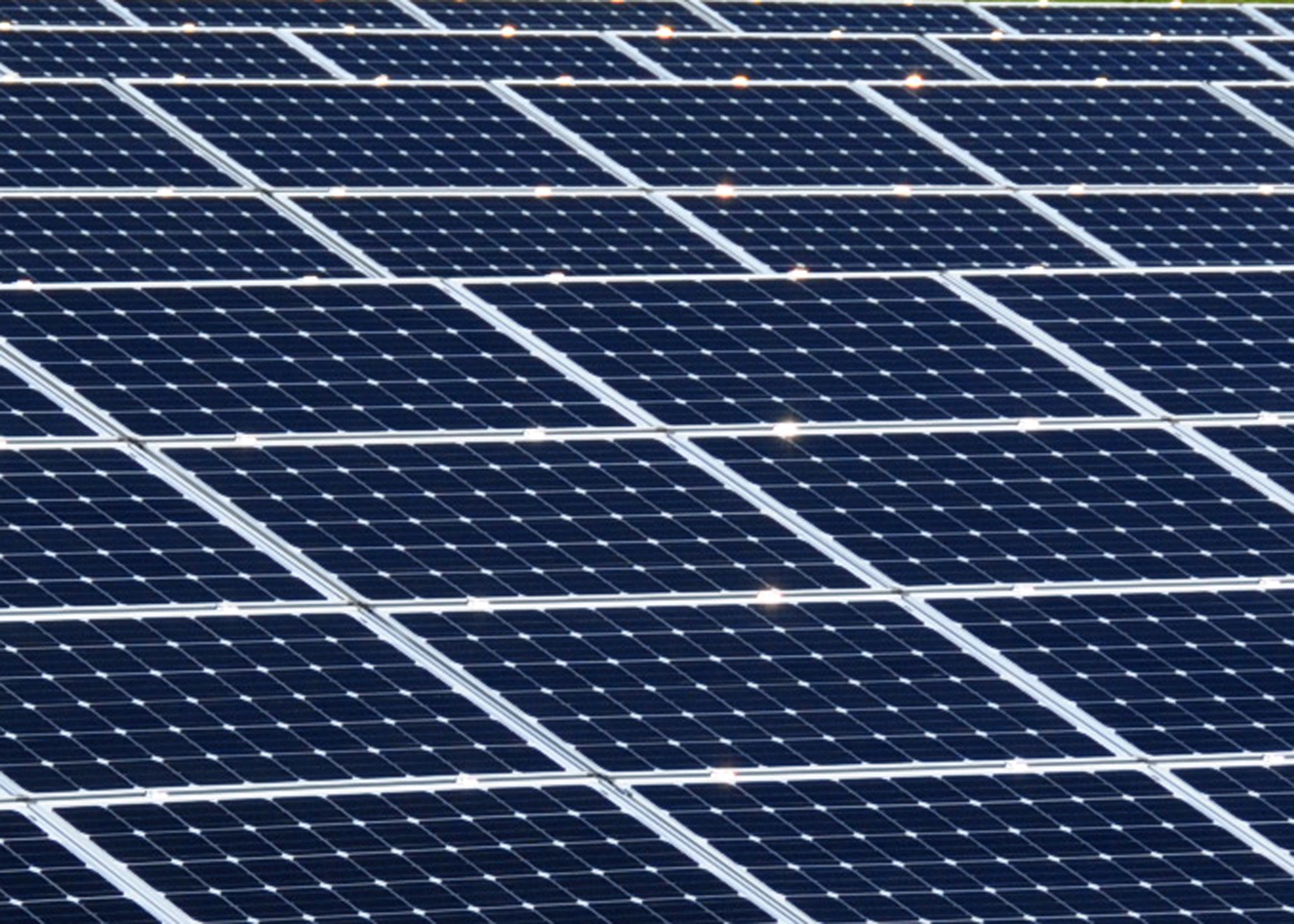
We’ll use an example to make it easier to understand. Say you want to put solar panels on your roof, but you can’t because your house is shaded by tall trees. So you go to your neighbor with the sunny location next door and tell her that if she will put solar panels on her roof, you will buy the electricity from her. You work out a deal, call a solar installer, and soon she’s got a solar array that produces, on average, exactly the amount of electricity your house uses. [1]
As it happens, though, you can’t buy the actual solar energy her panels are producing. That electricity is powering her house, and any excess electricity is feeding into the grid through her meter. Once power is in the grid, it’s all just electrons. The electrons don’t look different whether they come from a coal plant or a wind farm or a solar array. So there is no way to identify and claim the specific electrons that come on the grid from specific solar panels.
What you can buy from your neighbor is the right to say you’re running your house on solar energy, up to whatever amount of power her solar panels produce. This is the essence of a renewable energy certificate. A REC doesn’t represent electricity, but rather the extra value to society of that electricity having been produced by solar panels. So you continue to buy your electricity off the grid from your utility, and then you pay your neighbor something extra for the RECs. You are not actually using solar power, but you are paying for the right to say you are.
Chances are, there won’t be any actual paper certificates involved. You will simply have a contract with your neighbor that states how much you’re paying her per kilowatt-hour. Your contract would also prevent her from making the same deal with any other neighbor, double-dipping by selling the RECs twice.
It is a short step from there to creating a whole market for RECs as a commodity. If you were to stop buying your neighbor’s RECs, she could sell them to someone else, perhaps a “green” business that wanted to say it was running its store on solar power. The price would depend on supply and demand for renewable energy in your area.
What’s a REC got to do with an RPS?
Now let’s scale up our example and add utilities to the story. Your state, it turns out, has a Renewable Portfolio Standard (RPS), a law that tells utilities that they must obtain a certain percentage of their power from renewable sources. Utilities that own their own generation sources may choose to invest in wind, solar, biomass, or other renewable generation facilities, depending on what the law defines as renewable. Utilities that don’t own their own generation, or that can’t produce enough renewable electricity, have to buy that power from others.
This is where RECs come in. When the utility offers to buy renewable power from someone who is generating it, it will want to buy the RECs as well. Buying the RECs allows the utility to demonstrate its compliance with RPS targets. Indeed, in some states, RECs are the only measure of compliance.
If the utility has to go beyond its own service area to find enough renewable energy, the RECs can take on a life of their own as they get bought and sold independently of the power generated. If the state RPS law allows it, a utility could even buy RECs from a renewable power facility that isn’t part of the same regional transmission grid. In that case, the facility sells the power to its local utility, and sells the RECs to the utility that needs them for its RPS obligations. There is no longer any connection between the electricity and its renewable attributes.
The problem with separating RECs from the energy itself
The REC market is important for making an RPS work, and it makes sense when the power generated is within the state that sets the RPS. But when a utility goes beyond the borders of a state, or even of its own service area, to buy RECs, the usefulness of the program to ratepayers declines, and the likelihood of double-counting and confusion increases.
Let’s go back to our example of the two houses. You have a contract with your neighbor to buy the RECs from her solar panels. Buying the RECs gives you the right to say you are powering your home with solar power. But here’s the rub: now that you’ve bought her RECs, she doesn’t have the right to say she is powering her home with solar, even though the panels are on her house. After all, you can’t both claim the same solar power, right?
You can see how easy it would be for double-counting to occur. She has the solar panels, you have the RECs, but there’s only one house’s worth of solar being produced.
Now let’s scale up again to the utility level, where it can get really weird. No two states have the same RPS laws. Some states have strict requirements for what counts as renewable, some have looser requirements, and some have no RPS at all. Utilities want to spend as little as possible to meet their requirements, so they may buy and sell RECs to make sure that the most expensive RECs (usually from solar power) are being used to meet only the toughest standards. If a state doesn’t have a minimum requirement for solar, the utility will try to sell any solar RECs it’s holding to a utility in another state that requires solar, and then buy cheaper RECs (perhaps from landfill gas or older hydroelectric projects) to satisfy its own state’s less-stringent requirements.
The result is just like the example of the two houses: a utility might own a big wind farm or a giant solar array, but if the state has no RPS or only a weak one, it will sell the RECs from that wind or solar facility to utilities in states that do have strong RPS laws. The utility that buys the RECs buys the right to claim that it is providing its customers with renewable energy. The utility that sells the RECs has sold the right to make that same claim. It may own a wind farm, and power from it may flow through its wires, but legally, it’s just selling electrons.
This is not just a theoretical problem. Dominion Virginia Power does precisely this when it advertises its West Virginia wind farms as producing power for Virginia. In fact, it sells the RECs to utilities in other states that have tougher RPS laws than Virginia’s. In this case, Virginia is getting neither the benefit of the wind jobs nor the right to say it is using renewable energy. Meanwhile, the ratepayers in the state with the tougher RPS, who pay for those RECs, are getting the bragging rights and paying the bill, but they are not seeing the clean energy jobs that the RPS incentivizes. Only West Virginia gets those jobs, along with the actual wind farms.
The ratepayers are like the owners of the two houses. People in the state where the renewable energy is produced may think they are getting renewable energy, but so do the people in the state whose utility is buying the RECs. Customers in the state with the tough RPS are paying for the renewable energy to be produced, but the benefits—jobs, economic development and cleaner air—go to the state where the project is. They are told they are buying renewable energy, but if they understand what is happening, they might well feel like chumps.
What does a good RPS look like?
The problem we just described is why a well-crafted RPS will limit out-of-state RECs purchased separately from the power itself.[2] It is in the interest of ratepayers to create a market for renewable energy in their own area, so jobs are created close to home, and so nearby dirty energy sources are displaced by clean energy, resulting in healthier air and cleaner streams and rivers.
An effective RPS will also include “carve-outs” (minimum levels) for higher-value types of renewable energy like wind and solar that may cost more to produce than biomass, landfill gas, or hydro. Creating demand for wind and solar supports higher prices and can make a project economically feasible when it wouldn’t be otherwise. Again, stimulating these investments means jobs and economic development in the state as well as cleaner air and water when older, dirtier facilities are shut down.
The worst RPS laws are ones that allow RECs from energy that isn’t really renewable (like coal-bed methane), from projects that don’t actually produce energy (like research and development), or that would be produced anyway (like energy from facilities that pre-date the RPS law). Giving credit for these kinds of power devalues the RECs from new and truly renewable projects and undercuts the economic incentives that can make new investments in renewable energy possible.
What does this mean for policy-makers and the public?
There are two main lessons from all this:
- Don’t be fooled by appearances. If your state’s RPS can be met with out-of-state RECs from old hydro plants, don’t assume it’s being met with energy from that new wind farm or utility-scale solar array you’ve been reading about here in your state. Those RECs are being sold somewhere else. The only way to find out what you’re paying for in your state’s RPS is to require your utilities to disclose the sources it is using—and then check.
- Looser requirements are not better. A kitchen-sink approach to what qualifies as renewable energy ends up being counter-productive because the cheapest sources will always be chosen over higher-quality projects.
Mandatory vs. voluntary RPS lawsIn most states, the RPS is mandatory; utilities that don’t meet the targets are fined by means of an “alternative compliance payment.” In Virginia, which has a “voluntary” RPS, utilities are free to decide whether they want to participate in the program. There is no fine for failing to meet the goals; instead, utilities are rewarded for meeting them, by being allowed to earn a significantly greater profit on their sales of electricity. Since this means charging ratepayers more, this voluntary RPS will cost ratepayers more than a mandatory RPS for the same amount of renewable energy incentivized.
Virginia’s all-carrot, no-stick approach ensures that no utility declines to participate because it costs them nothing to do so (all the costs of compliance are passed through to the consumers), while generating bonus money. The “voluntary” nature of the program is therefore meaningless—and after all, it is mandatory for the ratepayers.
Conclusion: Caveat ratepayer!
Mandatory RPS laws, requirements that the energy be produced in state or that RECs come “bundled” with the energy they represent, stricter standards for what counts as renewable, and carve-outs for wind and solar all produce the most value for the residents who are paying the bills.
Done right, RPS laws and RECs can lead to more renewable energy, job growth, economic development, and a healthier environment for all. But poorly-crafted laws do a disservice to ratepayers and fail at their central purpose. Policy-makers and the public must act like smart consume
[1] Your neighbor will likely enter into a “net-metering” arrangement with your utility, under which she feeds extra power into the grid on sunny days but draws electricity off the grid at night and on cloudy days. Most states now have laws allowing net-metering, but details differ.
[2] Although states are increasingly limiting their RPS programs to in-state RECs, there is some question whether doing so, at least for mandatory programs, could violate the Commerce Clause of the U.S. Constitution. See, e.g., Elefant and Holt, “The Commerce Clause and Implications for State Renewable Portfolio Standard Programs.” Clean Energy States Alliance, March 2011.

 Climate change is acting like an ever-tightening vise on our energy options. Each year that passes without dramatic decreases in our use of carbon-emitting fuels means the cuts we have to make simply get more drastic. By 2030, say experts, we must entirely replace coal with efficiency and renewable energy, or fry. Even the most intrepid environmentalists wonder if it can be done without huge price hikes and wholesale changes in how we live and use energy–changes that society may not accept.
 Power for the People VA