Unknown's avatar

Fiscal and environmental sanity get a boost as McAuliffe proposes to roll back coal subsidies

Your taxpayer dollars at work!

Your taxpayer dollars at work!

Thanks to the state’s budget deficit, Virginia may finally scale way back a notorious fossil fuel subsidy that currently transfers tens of millions of dollars annually from taxpayers to the pockets of corporations that mine Virginia coal. The Richmond Times Dispatch reports that if Governor McAuliffe has his way, the Virginia Coal Employment and Production Incentive Tax Credit and the Coalfield Employment Enhancement Tax Credit will be limited to $500,000 per year, saving the government $20 million per year.

The refundable tax credits were intended to make Virginia coal cheaper for utilities to buy, and thus more competitive with coal mined in other states. In theory, that was supposed to mean more coal mining jobs in southwest Virginia. In practice, the subsidies meant some coal companies paid no state taxes, and actually received significant cash handouts, even as coal jobs declined. And because the subsidies are based on tons of coal mined and not on the number of people employed, mining companies suffered no penalty from capital investments that maximized production while cutting jobs.

Critics of the subsidies thought they had won their point three years ago when the Joint Legislative Audit and Review Committee (JLARC) issued a critique of the various Virginia tax credits that was especially critical of the handouts to coal companies. As it describes beginning on page 67, the subsidies did not stop coal employment from falling 54% since 1990, or slow the steady decline in production:

“The precursor to one of the current coal credits was in place before the decline began, while the other was enacted shortly thereafter. It is important to note that with or without the credits, the decline in Virginia coal production was predicted by numerous analysts because over two-thirds of recoverable coal reserves in Virginia have already been mined.”

Indeed, the report continued, coal employment and production was actually worse with the credits in place:

“In the process of developing and refining the credit, analysts projected that coal employment and production would decline by 28 percent between 1996 and 2005 without the credit. However, actual mining employment was substantially lower than expected during this period, declining 36 percent.”

In spite of this damning analysis, in 2012 the General Assembly actually extended the expiration date of the coal subsidies until 2017. Insiders say Senate Democrats were persuaded to vote for the extension as a favor to coalfields senator Phil Puckett, who needed the backing of coal companies to hold his seat in 2013 and keep Democrats in control of the Senate. (Some might say he failed to return the favor.)

The coal subsidies have long infuriated environmentalists and community activists in the Coalfields region. In their view, Virginia taxpayers should not be forced to reward mining companies for blowing off the tops of our mountains, filling ancient stream valleys with rubble, poisoning wells and rivers, and destroying homes to get at the last, thin seams of Virginia coal.

So Coalfields activists welcomed the Governor’s proposal as a “good first step” in planning a future where coal is no longer the economic engine it once was. “We need to take our heads out of the sand and invest heavily in diversifying our economy in Southwest Virginia,” said Wise County resident Jane Branham, Vice President of Southern Appalachian Mountain Stewards. “Supporting outdoor recreation, tourism, sustainable agriculture, reforestation and a new generation of entrepreneurs is the path forward in the mountains, not subsidizing bad actor coal companies that continue to poison the natural resources our future depends on.”

Renewable energy advocates have also complained that by making coal cheaper, the subsidies make it harder for other forms of energy to compete. One would expect this argument to resonate with free market advocates, a category that supposedly includes all Virginia Republicans and a lot of the Democrats. Yet in spite of criticism from some Democrats, the subsidies have not faced serious opposition before now.

Acquiescence in such an expensive and counter-productive corporate welfare program mostly reflects the influence of the Virginia coal industry. (See last week’s post for a sampling of how coal companies work to buy votes with campaign cash.) But the drafters sweetened the deal with a provision that siphons off a portion of the excess cash to fund the Virginia Coalfield Economic Development Authority (VACEDA), which is supposed to help the region diversify beyond coal. (It might work better if coal executives didn’t sit on the board.)

Under McAuliffe’s proposal, VACEDA would get a direct appropriation of $1.2 million to replace the money it would lose by the scaling back of the tax credits. That should satisfy those legislators whose primary concern is helping residents of southwest Virginia.

Those whose primary concern is helping coal companies, however, aren’t likely to be happy. Congressman Morgan Griffith has already been quoted as suggesting Governor McAuliffe’s proposal to scale back the coal subsidies amounts to a “war on coal.”

He expressed no concern about coal’s war on the people of southwest Virginia. For those who care about that, Governor McAuliffe’s move feels like a breath of clean air.

——————–

Addendum: Senator Bill Carrico (R-Alpha Natural Resources) has now filed a bill, S741, to extend the coal subsidies until 2022. 
Unknown's avatar

Where ethics and utility profits intersect, a stain spreads across the “Virginia Way”

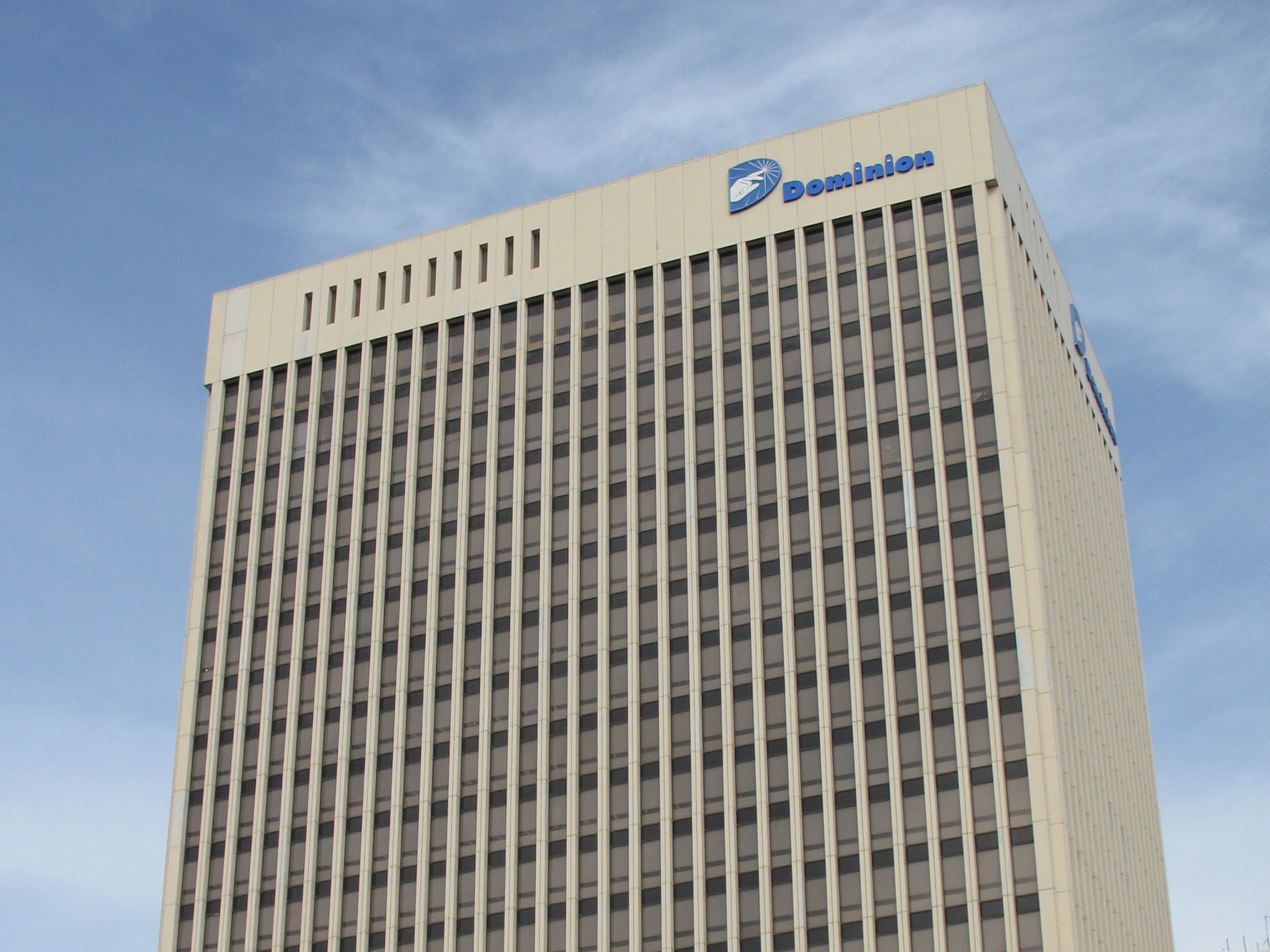
Dominion buildingThe Virginia General Assembly has punted on ethics reform, preparing to pass watered-down legislation that does very nearly nothing. At the same time, legislators are about to pass a law that will cost Dominion Power’s customers more than half a billion dollars as a down payment on a nuclear plant that hasn’t been approved and isn’t likely to be built.

These are not separate issues.

Virginia has had an ethics problem since long before Bob McDonnell met Jonnie Williams. As many people have noted, the real scandal is how hard it is to break our ethics laws. So long as you fill out a form disclosing the gift, it’s legal for politicians to accept anything of value from anyone, to use for any purpose. By this standard, McDonnell’s biggest failure was one of imagination.

The legislation that appears likely to come out of the General Assembly merely puts a $250 cap on the price tag of any one gift, with no limit on the number of lesser gifts and no limit on the value of so-called “intangible” gifts like all-expense-paid vacations. The mocking of this bill has already begun.

Conveniently, the bill deals with a tiny side stream of tainted cash compared to the river of money flowing from corporations and ladled out by lobbyists. Corporations don’t usually give out Rolexes and golf clubs. Instead, they give campaign contributions. Here again, Virginia law places no limits on the amount of money a politician can take from any donor. Five thousand or seventy-five thousand, as long as your campaign reports the gift, you can put it in your wallet.

And here’s the interesting part: you don’t have to spend the money on your campaign. If gerrymandering has delivered you a safe district, you can use your war chest to help out another member of your party—or you can buy groceries with it. The distinction between campaign money and personal money is merely rhetorical. A spokeswoman for the State Board of Elections was quoted in the Washington Post saying, “If they wanted to use the money to send their kids to college, they could probably do that.”

In an eye-popping editorial, the Post ripped into one Virginia delegate who charged his campaign more than $30,000 in travel and meals, and another $9600 in cellphone charges, in the course of just 18 months.

As with taking the money, the only rule in spending campaign funds is that you file timely paperwork showing what you spent it on; the reports are not even audited. The theory originally may have been that the threat of public disclosure would keep a gentleman from taking money from unsavory persons. If you took it anyway, the voters would learn of it and throw you out. How quaintly respectful of the energy and capabilities of voters! How pre-gerrymandering.

And how pre-corporation. The smartest companies today spread the wealth around: more to the legislators in charge of the important committees, less where they just need floor votes. The largesse is bipartisan, making everyone happy but the voters. Certainly, a legislator who accepts thousands of dollars from a lobbyist would be churlish to criticize the company writing the check.

So what do you call someone who pays for his meals out of the check he gets from a company?

How about, “an employee”?

Environmental groups and good-government advocates have long decried the influence of corporate money in Virginia politics. In their 2012 report, Dirty Money, Dirty Power, the Sierra Club, Appalachian Voices, and Chesapeake Climate Action Network documented the rising tide of utility and coal company contributions to Virginia politicians, coinciding with a series of votes enriching these special interests.

Dominion Power has consistently led the “dirty money” pack. As the single largest donor of campaign funds aside from the Republican and Democratic parties themselves, its influence in Richmond is widely acknowledged, even taken for granted.  Most legislators will not bother to introduce a bill that Dominion opposes, even if they like it themselves. Critics joke that the General Assembly is a wholly-owned subsidiary of Dominion Resources.

According to Dirty Money, Dirty Power, Dominion’s contributions to elected officials totaled $5.2 million from 2004 to 2011. The Virginia Public Access Project shows another $1.4 million in 2012 and 2013. The contributions overall somewhat favor Republicans, but often the contributions are so even-handed as to be comical, like the $20,000 each to Mark Herring and Mark Obenshain in the Attorney General’s race last fall. These contributions are not about supporting a preferred candidate; they are about buying influence.

Note that much of the donations don’t go directly to General Assembly members but to the parties’ PACs, which then dole out the money. This gives Dominion extra influence with party leaders—again, on both sides.

The result has been spectacularly successful for Dominion, which rarely fails to get its way. Bills it opposes die in subcommittee (witness this year’s bills to expand net metering). Bills it wants succeed.

That brings us to this year’s money bills. As you may have read here or in Virginia papers, Dominion has been “over-earning,” collecting more money from ratepayers than allowed by law. In the ordinary course of things, this would result in both a rebate to customers and a resetting of rates going forward to produce less revenue for the utility.

For Dominion, the solution is a bill that lets the company charge ratepayers for expenses it isn’t entitled to pass along under current law. (Indeed, in a nice touch, the bill actually requires Dominion to pass along these expenses.) Presto: it’s no longer earning too much, owes no rebate, and doesn’t have to cut rates.

In return, the ratepayers get the satisfaction of assuming the sunk costs of a new nuclear reactor that will probably never be built, plus whatever more money the utility spends on it going forward. I believe the technical parlance for this is “blank check.”

“But we must have nuclear,” our legislators murmur as they sign our names on the check. Um, why? Nuclear energy today can’t compete economically. Just last year Duke Energy gave up on two nuclear plants it had been building, after billing ratepayers close to a billion dollars in construction costs. (BloombergBusinessweek headlined its article on the subject, “Duke Kills Florida Nuclear Project, Keeps Customers’ Money.”)

Dominion itself understands the wretched economics of nuclear perfectly well; its parent company, Dominion Resources, just closed an existing nuclear plant in Kewaunee, Wisconsin, because it couldn’t produce power cheaply enough to attract customers. And that’s from a plant that’s paid for; energy from new plants is now more expensive than natural gas, wind, and even some solar.

Memo to Democrats: when the cheaper alternative is renewable energy, no self-respecting progressive signs on to nuclear.

The steadily falling price of wind energy, and more recently, solar energy, helps explain why nuclear is on its way out nationwide. The only nuclear plants under construction in the U.S. today are over budget and reliant on billions of dollars in federal loan guarantees.

Memo to Republicans: no self-respecting, Solyndra-bashing conservative signs on to nuclear.

The State Corporation Commission also understands the economic picture, and it has been skeptical of Dominion’s nuclear ambitions. On top of that, there are serious concerns whether a third reactor at North Anna could even get a license from the Nuclear Regulatory Commission in the wake of the earthquake that shut the existing units for four months in 2011. (For a good short history of the North Anna reactors, including the fine Dominion paid in 1975 for hiding the existence of the fault line, see this article in the local Fluvanna Review.)

So there’s a pretty good chance that Virginia ratepayers will find themselves following in the path of Duke Energy’s customers, with many hundreds of millions of dollars thrown down a rathole and nothing to show for it.

The elected officials voting for this boondoggle, on the other hand, will have plenty to show for it, unfettered by rules of ethics.