Unknown's avatar

Dominion takes the wrong way on solar

On February 12, Virginia’s State Corporation Commission held a public hearing to decide whether to approve Dominion Virginia Power’s plan to buy 3 megawatts of solar power from Virginia residents and businesses to sell to the company’s voluntary Green Power Program. Sound like a good idea? It’s not.

Yes, Virginians want solar power. Investing in solar means stably priced electricity, cleaner air and lower greenhouse gas emissions. Solar power is now cost-effective in Virginia even in the absence of state incentives, thanks to federal tax credits and a steep decline in the price of solar panels. But a high upfront cost still limits who can afford to install it.

Utilities and the SCC have a role to play in bringing new solar power onto the grid. Dominion’s program to install 30 megawatts of solar on leased rooftops, which the SCC approved this fall, provides an example of how utilities can strengthen the grid, diversify their power sources, supply valuable peak-demand electricity, and contribute to their own learning curve on integrating renewable energy, all while meeting a portion of their customers’ demand for clean power.

The 3-megawatt program, on the other hand, gets nothing right. Under the program, customers who have solar panels would sell all their solar power to Dominion for 15 cents per kilowatt-hour (kWh), and buy regular fossil-fuel electricity (known as “brown power”) from Dominion at the normal retail rate of about 11 cents. Cost to Dominion: 4 cents/kWh.

Dominion would then resell the solar power to the participants in its Green Power Program, not for the 4 cents it costs the company, but for 11 cents. Dominion would keep 7 cents/kWh.

Dominion tells us that the 7 cents would go to its rate base, not its own bottom line. But it’s clear who loses. The do-gooders who pay extra on their utility bills for the Green Power Program would pay 11 cents for something Dominion bought for 4 cents. They are being played for chumps.

Last year the Green Power Program bought Virginia solar power directly for 4 cents/kWh through the purchase of renewable energy certificates. So why should the program pay 11 cents for something it can get for 4?

Since Dominion administers the program, it will be up to the SCC to prevent this misuse of its funds.

This is only part of the problem. The reason Dominion wants to shift the cost of the solar purchase onto the Green Power Program is its insistence that the value of solar energy isn’t the retail rate of electricity, but is the utility’s “avoided cost”—roughly, the price at which it can buy brown power on the wholesale market, which is around 4 cents/kWh.

Of course, if the current wholesale price were the only thing that mattered, you’d have to question why Dominion ever builds its own electric generation, including its new coal-fired plant that delivers power at 9.3 cents/kWh.

The SCC allows Dominion to build its own generation in Virginia for a host of other reasons, all of which apply equally to Virginia solar. Rooftop solar also provides significant additional benefits to the utility and the electric grid that utility-supplied brown power does not. A number of recent studies have quantified these benefits to prove that net-metered solar (where customers sell solar power to the grid at the retail rate) lowers costs for everyone.

Yet Dominion wants to shift costs onto a voluntary program, while keeping the benefits. This is bad for the Green Power Program, and it sets a terrible precedent for valuing solar that could retard its growth in Virginia. And that would be bad for all of us.

Unknown's avatar

Renewable energy makes small gains in Virginia’s 2013 legislative session

The Virginia General Assembly will soon wrap up its work on the 2013 legislative session. Renewable energy advocates began the session with high hopes for a series of bills that promised to reform our renewable energy law, expand net-metering, and open up new opportunities for financing solar systems and small wind turbines.

So how did we do? Well, this is Virginia. Progress is slow, the utilities are powerful, and half the legislature doesn’t believe in climate change. On the other hand, they do believe in business. Under the circumstances, we did okay.

Renewable Portfolio Standards: bye-bye, bonuses

Readers of this blog already know the long, miserable tale of Virginia’s weak and ineffective, voluntary renewable portfolio standard (RPS), which has enriched utilities with tens of millions of dollars in incentives without bringing any new renewable energy projects to Virginia. This year the legislature went halfway to fixing the problem. Legislation negotiated between the office of the Attorney General and the utilities will deprive utilities of future ill-gotten gains for meeting the RPS law, but won’t change the pathetic nature of the law itself.

Stripping out the RPS incentives was only part of a bigger, more complex bill that sweetens the deal for utilities in other ways, so it’s hard to judge whether the legislation as a whole marks a victory for consumers. Skeptics will note that Dominion’s stock price has actually gone up several percentage points since the deal was announced, which you wouldn’t expect if the AG were correct that the bill will save consumers close to a billion dollars over time.

What is clear is that the RPS remains as voluntary and as crummy as it ever was, but the utilities can no longer use it to rip off ratepayers while pretending to be good citizens. Some environmental groups consider stripping out the incentives a bad thing, on the theory that only by giving utilities a bonus can we expect them to meet the goals. Other groups (including the Sierra Club) believe Dominion, at least, will want to maintain its greenwashed public image by continuing to meet the RPS goals, and that ending the consumer rip-off is worth celebrating.

Sure, if the goals had brought wind and solar to Virginia, the Sierra Club would have considered the incentives a tolerable price to pay. As it happened, Dominion and the other utilities continuously rebuffed efforts over the years to improve the RPS. Had Dominion approached the RPS as an opportunity to bring real renewable energy to Virginia rather than as a cash cow to be milked for its own advantage, the company would have saved itself a public relations fiasco and likely kept its bonuses, too. Surely, someone at HQ should be out of a job right now.

Taking the long view, it is also worth noting that getting rid of the free money is a necessary first step towards a mandatory RPS in Virginia, which would unleash market forces for renewable energy that don’t emerge with a voluntary law. Utilities would oppose such a move more vigorously if they still had incentives to protect that were available only under the voluntary program.

. . . but reform efforts fail again

These views all assume the legislature will someday pass a bill to improve the goals and bring wind and solar projects to Virginia, without which the RPS is meaningless anyway. Surely legislators must recognize how pointless it is to have an RPS that can be met with out-of-state, pre-World War II hydro, plus some trash and wood-burning and a few assorted projects that put no power on the grid. (Even without the performance incentives, utilities remain entitled to pass along to customers the cost of meeting the RPS goals.)

Bills to improve the goals should have passed the legislature this year as part of the reform package. HB 1946 (Lopez) and SB 1269  (McEachin) even received the support of Dominion Power for provisions that would limit most future purchases for the RPS to high-quality projects like wind and solar. What killed the bills seems to have been a combination of opposition from vested interests and sheer cussedness on the part of some Republicans, who were engaged in partisan maneuvers that had nothing at all to do with renewable energy.

As usual, we are left hoping for better luck next year.  Meanwhile, however, a couple of other RPS bills made incremental progress. Most notably, HB 1917 (Surovell) adds solar thermal energy to the definition of renewable energy; as of this writing it has passed the House and is on the Senate floor.

A loss for more honest competition among fuels

There are more ways to support renewable energy than through an RPS, of course. One of my favorite bills would have required utilities and the State Corporation Commission to consider the long-term price stability of fuels used in electric power generation. HB 1943 (Lopez) would have helped price-stable wind and solar compete against notoriously price-volatile natural gas. It’s an idea that should appeal to fair-minded conservatives, so it’s a shame it hasn’t gained traction since first being introduced in 2012. However, it died in committee in the face of opposition from Dominion Power, which doesn’t want any interference with its plans for new natural gas plants.

Power Purchase Agreements get a “pilot”

Two bills passed the legislature to allow some third-party power purchase agreements (PPAs) for wind and solar within Dominion’s territory. Under a PPA, an installer retains ownership of the solar equipment, with the customer buying the electricity that is generated. This arrangement has two primary advantages: the customer can “go solar” with no money down and no responsibility for the equipment; and in the case of a tax-exempt entity like a church or a university, it provides a way to access federal tax credits worth 30% of the system cost.

The bills were designed to prevent a recurrence of a dispute that erupted in 2011 when a Staunton-based solar company, Secure Futures, installed a large solar system at Washington & Lee University under a PPA. Dominion issued “cease and desist” letters insisting that only it could sell electricity in its assigned territory. Although Virginia law is unclear on this point, the university and the solar company capitulated in the face of massive litigation costs. Since then Dominion’s army of lawyers has proven as effective as any statute in stopping further efforts to use PPAs in Virginia.

This year’s bills, SB 1023 (Edwards) and HB 2334 (Yancey), were originally written to allow third-party PPAs wherever customers can currently install renewable energy systems that they own themselves. They were significantly scaled back to win acceptance from Dominion Power. (AEP and the coops wouldn’t play at all, so legal ambiguity remains the rule in their territories.)

The bills allow up to 50 megawatts’ worth of solar and wind installations using PPAs, in Dominion territory only, as a pilot program.  Whether net-metered or not, they will be counted against the current net-metering cap of 1% of the utility’s generation. Tax-exempt entities can have a facility of any size up to 1 megawatt (500 kW if they net meter); taxable entities must have a minimum size of at least 50 kW (so no homeowner need apply). PPAs that do not meet the requirements are expressly prohibited in Dominion territory.

Agricultural net metering, yes; community net metering, no

A bill to allow agricultural net metering also passed this year. HB 1695 (Minchew) allows the electricity from a single solar, wind, or digester gas facility to be attributed to two or more electricity meters as long as they are all on the same property and have the same owner. Thus, for example, a farmhouse, barn and other out-buildings can all share in the benefits of solar panels on one of the buildings, even if each building is separately metered.

Originally the bill would also have enabled community net metering, sometimes known as solar gardens, but the utilities opposed it. Bowing to political reality, Delegate Minchew scaled it back. The bill is notable, however, for making progress without including any provisions that seem capable of doing mischief.

A note about all the bills: In Virginia, the governor can sign a bill, veto it, or send it back to the legislature with amendments of his own, so none of these bills are final as of this writing.

Unknown's avatar

Greenwashing Virginia’s renewable energy law, part 1: Honey, I shrank the goals!

Criticism of Dominion Virginia Power has been steadily mounting over the $76 million dollars the company has been awarded as a “bonus” for complying with Virginia’s voluntary renewable energy law. Last week Attorney General Ken Cuccinelli weighed in with a report echoing the charges environmentalists have been making for the past year: Dominion has succeeded in meeting the letter of the law, and collecting bonus money from its customers, without investing in any new renewable energy projects.

The AG’s office exonerates Dominion, claiming the real failure is the legislature’s for passing a law that allowed this to happen. Silly Mr. Cuccinelli: this is Virginia. Dominion wrote the law.

But it’s worse than you know. The money-for-nothing issue is partly a result of the statute’s failure to require new investments in high-value projects like wind and solar energy as a condition of earning the bonus, but it is also a function of the extremely modest targets set by the statute itself. Virginia’s renewable energy goal is usually stated as 15% renewable energy by 2025, but when 2025 rolls around, the goal will be met with less than half this percentage, possibly much less.

The greenwash works like this: the statute sets a 2025 target for renewable energy to make up 15% of “total electric energy sold.” You probably think you know what “total electric energy sold” means. You don’t. Only if you are whiling away an idle afternoon reading the definitions section of the statute do you learn that “total electric energy sold” is defined as the total amount of electricity sold, minus the amount provided by nuclear power. In the case of Dominion Power, nuclear is about a third of the total. So for Dominion, 15% of “total electric energy sold” actually means only 10% of its electricity sales.

You will rarely see Dominion acknowledge this, though until recently its executives worded their statements carefully so they could not be accused of actually lying to anyone. Lately, however, the company has grown careless with the truth. A press release dated October 4, 2012 includes this fun quiz question and answer: “Is Dominion investing in renewable power sources? (A) Yes, in Virginia Dominion has committed to getting 15 percent of its power from renewable sources by 2025.”

Yet even if this statement said Dominion would get 15% of its “non-nuclear power” from renewable energy by 2025, it would still be wrong. When 2025 arrives, meeting the goal won’t require Dominion to achieve anywhere near 15% of its non-nuclear sales (10% of total) from renewable energy. That’s because the target percentage is measured against 2007 sales, not 2025 sales, and Virginia is growing. Assuming sales increase a little under 2% per year as Dominion projects, by the time 2025 rolls around, meeting the goal will require only about 7% renewables. If Dominion builds the new nuclear plant it wants, that number will shrink further.

Conceivably the number could go even lower. Since 2007, Virginia politicians have twice demonstrated how much they love renewable energy by watering the goal down even further, but doing it in a way that makes it sound awesome. They passed bills that say utilities will get double credit for any wind and solar they use to meet the goal. In fact—what the heck—if they build offshore wind farms, we’ll give them triple credit!

Wow, triple credit! That’s great! Isn’t it?

Come to think of it, no. Combine that with the other sleights-of-hand, and now Dominion could satisfy Virginia’s entire 15% renewable portfolio goal with about 3.5% of our electricity coming from solar energy or wind farms on land. For offshore wind, less than two and a half percent would do it. And that’s thirteen years from now.

Chances are, this doubling and tripling will never matter. Dominion “earned” its $76 million bonus for meeting the letter of the law with electricity from old dams and biomass (i.e., wood-burning), and by buying cheap credits from out of state. Dominion can get enough of this cheap renewable energy that it will be able to meet the goals through 2025 without investing in wind and solar.

Given Dominion’s approach to meeting the goals, it might be just as well that the target is so low. But then you have to wonder: $76 million for that?

Unknown's avatar

Offshore oil drilling in Virginia: undead and ugly

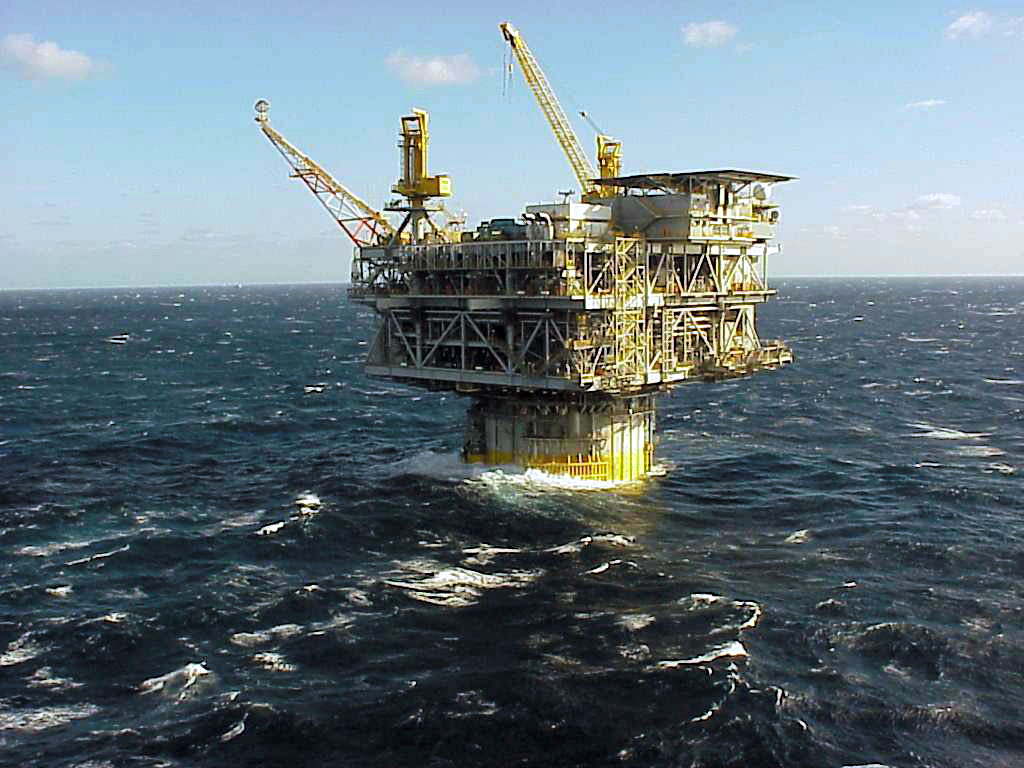
Photo: U.S. Coast Guard

Drilling for oil off Virginia’s coast is once again a possibility, popping up like a zombie when we thought it was dead (again). As the New York Times reported, “Efforts are focusing on Virginia because the public, politicians in both parties and energy companies all favor opening the waters to drilling.”

It will be news to many members of the Virginia public that we favor drilling off our coast, but there’s no doubt that oil companies are itching to open the Atlantic coast to drilling rigs, and plenty of Virginia politicians make it a talking point. Senators Warner and Webb are on board, as is Senator-elect Tim Kaine. Most famously, Governor McDonnell came into office dreaming of the highways he would build when his tanker ship came in.

For oil companies, Virginia is the thin edge of the wedge. Our share of federal waters is quite small because of the odd way that boundary lines are drawn. Virginia is targeted mainly as a means of cracking the line of resistance created by other eastern states. It’s a shame so many of our politicians are eager to help in the cracking.

It used to be that when Democrats and Republicans agreed on something, that improved the odds of it being a good idea. These days, it often just means they are taking money from the same corporations. Money alone may not buy a politician’s votes, but it most certainly buys lobbyists access to politicians, and access has a way of producing votes. So perhaps the surprise is not how many politicians have jumped on the drill-baby-drill bandwagon, but how many have not.

Some naysayers, including Congressman Gerry Connolly (D-Fairfax), point out that drilling off our coast is opposed by the U.S. Navy, which uses most of Virginia’s leasing area for its operations. These include testing air and surface missiles and bombs, which traditionally don’t pair well with oil rigs and tankers. (On the other hand, the Navy supports offshore wind farms, which would be located away from operations.)

Other legislators, like Congressman Bobby Scott (D-Newport News) oppose drilling because of the environmental hazards, and the danger posed to fishing and tourism.

Of course, no politician will admit to being unconcerned about the environment, including the ones who are very obviously unconcerned about the environment. This is why they say they support “environmentally safe offshore oil drilling.” The phrase is so familiar that we have come to take it for granted, but it actually bears some thinking about. Saying he supports “safe oil drilling” suggests a politician has in mind another kind of oil drilling–the unsafe kind–that he would not support.

But you’d be hard-pressed to find any restrictions on the drilling industry that the drill-baby-drill crowd supports. These politicians considered offshore drilling “environmentally safe” right up to the day millions of barrels of oil began gushing into the Gulf of Mexico and causing billions of dollars’ worth of damage. Drilling methods haven’t changed since the Deepwater Horizon disaster, and oil spills have continued to occur in the Gulf and elsewhere.

So let’s put in a plug for Truth in Advertising. Politicians, if you think extra American oil is worth the occasional catastrophic oil spill, then say so. Pretending there will never again be another Deepwater Horizon makes you look out of touch with reality, and the fact that a significant proportion of the voters are also out of touch with reality is not an excuse.

If you’re okay with drilling, tell us your Plan B for Virginia: how you would deal with the effects of a spill that fouls our coastline, kills wildlife, and contaminates everything that lives in the ocean, over an area that could be hundreds or thousands of square miles. If winds and tides spread the contamination onto Assateague Island or into the Chesapeake Bay, what’s your plan?

The folks in our commercial and fishing industries, and all the people who live and work in beach towns, should hear you talk about how confident you are in their ability to get by for a season on government handouts; if there’s longer-lasting damage, how maybe they can move to Northern Virginia and work in retail. I’m sure you can make it sound appealing.

And if you can’t, then maybe it’s time to kill the drilling zombie for good. You may be taking money from oil companies, but your job is to look out for Virginia.

Unknown's avatar

RPS Wars: The Empire Nips Back

The $76 million rip-offf

For much of the past year, critics have been assailing Dominion Power for its “$76 million rip-off”: a bonus the company claimed for meeting Virginia’s renewable energy goals using old dams, trash and wood, much of it out of state. Environmental groups say Dominion should get a bonus only if the company invests in new wind and solar projects in Virginia. Attorney General Ken Cuccinelli says utilities shouldn’t get bonuses for renewable energy at all.

This month the company finally piped up, appearing to deny all charges.  Ratepayers haven’t had to pay anything, said the carefully-worded response to a media inquiry. Base rates are frozen until December 1, 2013, and its compliance with the renewable energy goal will “be only one of a large number of factors that affect the SCC setting our rates going forward.”

Reporters were left scratching their heads. A year ago the State Corporation Commission, which regulates Virginia utilities, determined that the company has “earned” the $76 million bonus by meeting the absurdly lax terms of the state’s renewable energy law. (See SCC case PUE-2011-00027.)  So if customers aren’t paying, how is Dominion collecting?

But of course, customers are paying, and you can bet Dominion intends to get every dime. To understand how this can happen, imagine that you hire a contractor for a long-term project. You agree to pay her a set amount every month. Out of your payments, the contractor will take her expenses and profit, and when she meets a particular goal, she can take out a bonus as well. At the end of two years, you will recalculate your monthly payments to ensure the contractor recoups anything still owed to her, as well as to cover what she is entitled to going forward—expenses, profit and bonuses—and the work will continue.

This is roughly how electric rates are determined in Virginia (although utility customers’ payments also depend on how much electricity they use). Regulators set the rates, and Dominion takes its expenses and profit, including any bonus, out of the payments it receives from customers. If there is money left over at the end of the rate period, Dominion has to refund 60 percent of the excess to ratepayers. (Why doesn’t the company have to refund the entire overcharge, you ask? Sorry, that’s a different rip-off, and I can handle only one at a time.)

On the other hand, if the rates don’t bring in enough revenue to cover expenses and profit, they will be reset at a higher level for the next rate period. One way or another, the utility get its money.

So Dominion’s lawyerly response to critics turns out to be both correct, and irrelevant.  Utility rates are currently frozen, but that tells us nothing about whether the company is collecting its bonus. And if Dominion does not collect the full $76 million before the end of 2013, it will be one of the “factors that affect the SCC setting our rates going forward.” That is, rates will be set to ensure Dominion collects the full amount.

Sorry, ratepayers. The rip-off continues.

Unknown's avatar

Virginia, Energy Suburb

Today marks the start of the third Governor’s Conference on Energy in Virginia, which means it is the third year of the Governor’s Confusion of Virginia with some other state, because he is once again promoting the slogan, “Virginia, Energy Capital of the East Coast.”

The first year, nobody said anything. He was a new governor, and it didn’t seem polite to point out the error. Rookie mistake, the conference attendees told each other. Someone will clue him in.

The second year, the slogan reappeared, and we were dumbfounded. People nudged each other and said, “You tell him.” “No, you tell him.” We drew straws, but apparently whoever got the short straw welched. And now, after three years, well, it would be really, really awkward to point out that while the slogan is charming, it is not exactly factual.

In factual terms, Virginia isn’t an energy capital, or even an energy major city. If Governor McDonnell were to call Virginia the Energy Suburb of the East Coast, that would be closer to the truth. We’re a bigger importer of electricity than any state except California. Of course it’s not like we’re importing our electrons from a hostile foreign nation. West Virginia isn’t suddenly going to cut us off if we don’t release their political prisoners.

And really, you might think there is something to be said for letting other states foul their own air with power plants while sending the electrons over to us. It’s like outsourcing manufacturing to China; they get the jobs and the pollution, we get cheap electronics that we toss in our landfills every time there’s an upgrade. In the case of out-of-state power plants, we get the electricity to run the cheap electronics.

But since emissions from power plants sneak across state lines and head straight for anyone who happens to be breathing, we are getting the pollution as well as the electrons, and all we’re losing to other states is the jobs. To a governor, losing jobs to other states is the Worst Thing Ever. If you are a governor, your highest priority is luring businesses to your state instead of to the state next door, to keep up with whatever luring that state is doing to get business away from your state. The governor with the most jobs wins.

So Governor McDonnell has been trying very hard to develop energy projects in Virginia. His signature plan was to open our coast to environmentally safe offshore oil drilling, with Congress cutting Virginia in on the royalties so we could fund our transportation priorities without taxing ourselves. But while Congress was still giggling at the revenue-sharing proposal, an environmentally safe offshore oil rig exploded and sent 5 million barrels of environmentally unsafe crude oil into the Gulf of Mexico, shutting down the fishing industry and fouling several hundred miles of Louisiana shoreline.

Our governor did not blink. He is not a man to learn from mere actual events. Nonetheless, he turned his attention to other projects that could still make Virginia an energy leader. After all, McDonnell is an “all of the above” man, so in addition to oil, he likes nuclear, coal and natural gas. These haven’t worked out so well, either. The Energy Information Agency has since announced that the price tag for new nuclear now exceeds that for solar energy. Since Virginians regard solar as a luxury for wine-sipping liberal urbanites, that can only be a bad sign for nuclear.

And then there’s coal. McDonnell came into office a champion of coal, in proportion to the amount of campaign money he received from coal and coal-burning utilities. You cannot accuse the man of disloyalty. When some critics tried to suggest that taxpayers should not be shelling out $45 million per year in handouts for coal mining, he took umbrage. He also took more money. All that give and take did nothing to prevent the coal industry in Virginia from continuing its long decline.

This leaves natural gas. One of the panels for this year’s conference is titled, “What do we do with all this natural gas?” There isn’t an exclamation point at the end of the question, but there should be. Nationally, gas fracking has saved energy’s Old Guard, just when it looked like fossil fuels were washed up. The old energy guys are ecstatic. It’s not like they would ever have admitted that God’s carbon gifts might be finite, but there was an ugly shadow looming for a while that has backed off. They are hoping they can shove it into a closet with other difficult ideas, like groundwater pollution, global warming, ocean acidification and sea level rise.

From Governor McDonnell’s perspective, the only problem with Virginia being the Fracking Capital of the East Coast is how little shale gas we have, compared with Pennsylvania and New York. Still, a few counties in the western part of the state could host drilling rigs if they chose, along with the round-the-clock truck traffic, land disturbance, noise, and inevitable spills of contaminated wastewater. For some reason, they’ve rejected the idea. Look for legislation this year to take away their right to refuse.

Meanwhile, what can our governor do to make Virginia a leader on energy? There’s only one area left untried: renewable energy. We could build wind and solar facilities in Virginia, adding jobs without pollution. We know we have the resources and the businesses eager to build if the state wants them.

Until 2008, our annual energy conference was known as the Commonwealth of Virginia Energy and Sustainability Conference (COVES). Governor McDonnell discarded  “sustainability,” and since then the conference has offered less and less to interest wind and solar businesses. Yet there’s no law saying the only way to become the Energy Capital of the East Coast is by burning coal and gas.

At least, there isn’t yet. I shouldn’t give the governor any ideas.

Unknown's avatar

The case for diversity: natural gas plus renewables

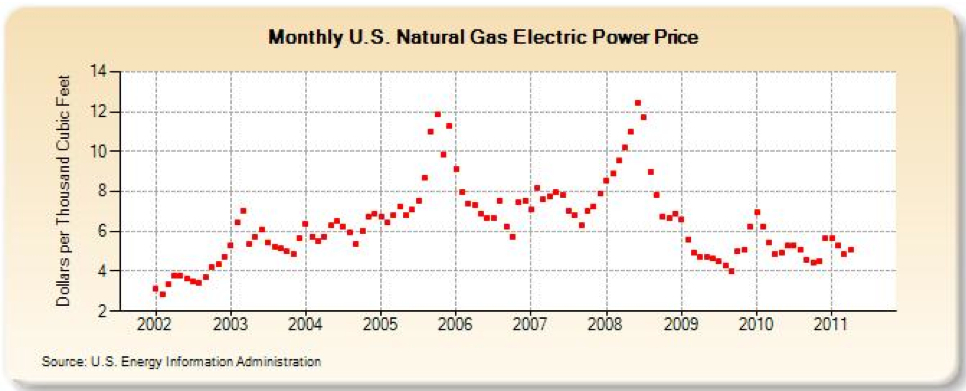
Natural gas is currently cheap. It’s so cheap right now that some producers are losing money with every cubic foot they pump out of the ground. So what better time to be a buyer, right? That’s the thinking of utilities like Dominion Virginia Power, which plans to shut its oldest, worst-performing coal plants and replace them only with new natural gas-fired electric generation.

In fact, it’s the thinking of utilities across the U.S., many of which are planning the same move. But ratepayers and regulators at Virginia’s State Corporation Commission should insist that Dominion take this opportunity to diversify its fuels. New natural gas generation should be at least evenly balanced with price-stable renewable energy like wind and solar. Here are three reasons why.

Natural gas prices will not stay low. Producers are currently pulling back on production because they can’t afford to lose money selling below their costs. And with utilities rushing to build new gas-fired electric generating plants, demand is set to soar in the coming years. Exports of liquid natural gas (LNG) will also serve new markets overseas, where gas prices are much higher than in the U.S., further pushing up demand here. Finally, with the price of oil about 10 times the current price of gas when measured per unit of energy, gas will increasingly displace oil in other uses such as powering heavy trucks and possibly conversion of gas to liquid fuels.

With all these factors pushing up demand, the price of natural gas has to go up, and the only question is how high. Longer term production will likely increase as well, dampening the price shocks, but natural gas prices have a long history of volatility, and there is no reason to think they will stabilize now.

Gas plants might outlive the boom. The Energy Information Agency says the U.S. has enough “technically recoverable” natural gas to last us 92 years at 2010 consumption levels,[1] a figure it has revised so often, and by so much, that no one places much confidence in it. Assuming they have it right this time, 92 years at 2010 levels is not as reassuring as it sounds. Higher consumption rates as utilities replace coal with gas plants, coupled with a rise in exports of LNG into the international market, will cause that 92 year-supply figure to shrink dramatically. Supplying gas generating plants for their full 30-plus year lifespans might require us to pay much higher prices or to import LNG at whatever price the international market sets. (Indeed, LNG terminals conceived just a few years ago were built as import terminals.)

Recoverable gas supplies could also decrease dramatically if states or localities impose drilling bans or cutbacks due to concerns about drinking water contamination and air pollution associated with gas “fracking”; because of problems disposing of the contaminated wastewater; or due to an unwillingness in dry states to allocate the huge amounts of fresh water consumed in the fracking process.

Price stability doesn’t matter to utilities—but it does to consumers. Utilities pass through the cost of fuel directly to ratepayers, so price spikes have no effect on a utility’s bottom line. Dominion Virginia Power earns a high profit on the capital cost of a new generating plant, so its incentive is to build as much new generation as it can. From a profit standpoint, it is indifferent to fuel costs.

From a consumer’s perspective, however, fuel costs matter very much. We pay for both the construction of the new plant and for the cost of fuel for as long as the plant operates.  For us, a new coal or gas plant is like a variable rate mortgage; we know what our monthly payment will be in the first year, but after that it is anybody’s guess. Worse, we’re locked in for 30 years with no ability to refinance or renegotiate. If you had a choice, would you agree to buy something for 30 years when you only know the price today?

As it happens, we do have a choice. Wind turbines and solar panels are like a fixed-rate mortgage. Once you’ve built the wind farm or installed the solar panels, the fuel is free. You know from the start exactly what you will be paying over the life of the project. People choose higher fixed-rate mortgages over variable rate mortgages for the same reasons we should favor renewable energy over new fossil fuel plants, even with the ultra-low teaser rate being offered for natural gas today.

Virginia’s State Corporation Commission has been reluctant to embrace renewable energy, feeling itself on solid ground only with the certainty of fossil fuels priced with time horizons of three years or less. This attitude has likely influenced Dominion to favor a natural-gas-only strategy over one that would hedge unsustainably low current gas prices with the long-term price stability of renewable energy. Yet a hedging strategy would be the more prudent one. Using the savings from cheap gas today to pay for equal amounts of renewable energy would give us lower electricity costs both now and for the next thirty years, compared to what we would have with natural gas alone.

There are many other reasons for Virginia to invest in renewable energy, from job creation to cleaner air and water, to getting in on the ground floor of innovative technologies. Dominion should not close off these options by filling all its new generation needs with natural gas plants that commit us for the next 30 years. Ratepayers should insist on a strategy that incorporates at least as much renewable energy as natural gas.

A version of this article originally appeared in the Virginian-Pilot on September 16, 2012 

Unknown's avatar

Is offshore wind in Virginia’s future?

The past couple of years have been tough ones for the offshore wind industry, which is still struggling to launch. The recession has made states reluctant to invest, even when the payoff looks huge. Cheap natural gas is hurting the market for renewable energy just as wind and solar have started hitting their stride. Congressional dysfunction has prevented the renewal of critical tax credits that the wind industry still needs to compete.

A few other states are making fitful progress towards building offshore wind farms, but they have conditions Virginia doesn’t: higher energy prices that make offshore wind more competitive with fossil fuels, renewable energy standards that push utilities to become buyers for the electricity, and congested transmission grids that favor local generation.

But of course, Virginia has its own advantages, including possibly the best wind resources in the mid-Atlantic, skilled workers, and extremely competitive port facilities. And the enthusiasm of our legislators and public for the idea of offshore wind matches that of any state.

At the same time, though, our governor and our major utility give decidedly mixed signals, extolling our offshore wind potential at one moment, and in the next opining that no one would actually want to pay for it. And yet Dominion Power hopes to buy up all the Virginia-area offshore wind leases that are offered for bid this fall. So what gives with Dominion and offshore wind?

One answer comes from Guy Chapman, Dominion’s Director of Renewable Energy Research and Program Development, who spoke at a wind conference held at James Madison University this past June. He said that right now with natural gas so cheap, the company doesn’t expect to build any wind at all, on land or at sea. But if conditions improve, the company wants to be in a position to change its mind, and that means buying up the offshore leases and doing site surveys, technical and environmental studies, and other planning that will add up to $40 or 50 million. Dominion would rather lose the money than be locked out of a potential new growth area.

What this means for the rest of us is that when we read somewhere that Dominion has “plans” for offshore wind, or that it has two wind farms in Virginia’s mountains “under development,” we should realize it defines those terms to mean, “Don’t hold your breath, honey.”

This presents something of a puzzle for decision-makers at the federal Department of Interior. If they let Dominion buy up the leases for the whole Virginia wind energy area, knowing the company isn’t actually planning to build a wind farm, then they aren’t advancing the cause of offshore wind any. By contrast, the other bidders include companies like Apex Wind and Fishermen’s Energy that make their money by building wind farms, so they are highly motivated to follow through.

Selling the lease to Dominion might mean no one builds a wind farm off Virginia. That would be okay with Dominion—for a monopoly, keeping out competition is an end in itself—but it wouldn’t serve the public interest.

On the other hand, if something happened to make Dominion actually want to build, the fact that it’s a regulated utility means they could probably do it more cheaply than Apex or Fishermen’s. That would benefit ratepayers and make the energy more competitive with other fuels, like natural gas.

What might make Dominion want to build? Some combination of the following factors would likely play a part:

The cost of offshore wind might come down relative to fossil fuels. With no offshore wind farms operating in the U.S. yet, cost projections are still speculative. The first projects here will be expensive, as all “firsts” are, but industry members are confident that prices will come down dramatically as the industry matures. Dominion and other companies and researchers, using federal grants, are currently studying opportunities to slash costs.

Virginia might grow bolder. It’s conceivable, though not really likely, that Virginia will take a decisive step towards offshore wind by enacting an effective renewable energy standard or offshore wind mandate, to replace the sham that is our current renewable energy law. This wouldn’t happen under Bob McDonnell’s leadership; in spite of his “all of the above” rhetoric, he is adamantly opposed to real change in state policies that favor coal. Chances would improve in 2014 under Terry McAuliffe or possibly Bill Bolling (but not Ken Cuccinnelli).

Congress might finally take action to deal with climate change. Sure, and pigs might fly. But drought and heat waves are changing minds across the country about the reality of global warming. Even skeptics may decide to hedge their bets. And even if not, the economic and national security case for renewable energy has already swayed some conservatives, and may bring more on board as other countries outpace us. A carbon tax, a national renewable electricity standard, or some other incentive would do for offshore wind in Virginia what Virginia isn’t likely to do itself.

Unknown's avatar

Why Virginia Lags on Solar

Solar energy is one of the fastest-growing industries in the country. Solar PV installations grew 109% in 2011, and the industry now employs over 100,000 Americans. Yet it is almost invisible in Virginia. The installed total in the commonwealth is about 5 megawatts (MW), a pittance compared to the 1,200 MW in California and over 800 in New Jersey. Maryland and North Carolina each have more than ten times as much solar PV as we do.

Part of the reason is our lack of incentives. Unlike many other states in the northeast and mid-Atlantic, Virginia offers no tax credits or rebates on solar systems to supplement the federal tax credit. And our voluntary renewable portfolio standard is so flabby that our utilities will never need solar to meet it.

Virginia also isn’t known for getting out ahead of the curve on energy. Instead of embracing the promise of clean power, the state clings to an old energy model dominated by fossil fuels. Just this year, the General Assembly renewed a subsidy that takes about $45 million every year out of the pockets of taxpayers to support coal mining.

But as a recent article in the New York Times Magazine described (http://www.nytimes.com/2012/08/12/magazine/the-secret-to-solar-power.htm?src=dayp), the future has come knocking. With the price of solar energy tumbling, solar now makes economic sense across much of the country. New financing models make it possible to install solar with no upfront capital cost to the customer, who may see immediate savings over grid-delivered “brown” energy.

Among these new models, leases have become especially popular for homeowners and businesses, but only power purchase agreements (PPAs) allow non-profits to take advantage of tax credits. Under a PPA, the solar installer retains ownership of the solar system and uses the tax credits to offset profits, passing along the savings as it sells the power to the nonprofit.

PPAs could permit the solar market in Virginia to blossom in a big way. Colleges and universities, private schools, churches, charities and local governments are now looking at solar systems as a way to meet carbon-reduction targets and reduce energy costs over the long haul.

Unfortunately, this new enthusiasm has run headlong into the immovable force known as Dominion Power. Dominion blocked a PPA at Washington & Lee University last fall, and its threat of legal action has kept other non-profits from moving forward with plans for solar installations.

Dominion is a regulated monopoly in Virginia, a status that gives it the sole right to sell power in its territory, with a few exceptions. One of the exceptions gives sellers of 100% renewable electricity the right to sell to Dominion’s customers if the company itself doesn’t offer that option—which, indisputably, it does not. (Its Green Power Program relies on certificates, not actual green electricity.)

So Dominion’s interpretation of the statute appears to be wrong on its face, but one of the nice things about being a giant monopoly is that you have more lawyers and more money than the people you threaten.

Unable to fund a lawsuit, the solar industry tried last year to get relief from the General Assembly in the form of HB 129, a bill that would have made explicit the right of renewable energy companies to sell power to their customers through PPAs. Delegate Jerry Kilgore (R-Gate City) shepherded the bill through the House, where it passed without a single dissenting vote. Once in the Senate, though, it was “carried over” (effectively, killed) by a Senate committee stacked with Dominion allies like Dick Saslaw (D-Fairfax) and Chairman John Watkins (R-Midlothian).

Quick quiz, but not a toughie: according to the Virginia Public Access Project, www.vpap.org, who is the top donor to the campaign chests of Dick Saslaw and John Watkins?

The failure of HB 129 leaves a lot of would-be solar and wind customers in limbo, keeps Virginia companies from growing and adding jobs, and prevents churches, colleges and universities from benefiting from the federal tax credits that are available to residents of other states where PPAs are common.

It has also given Dominion a black eye with the public and local officials. Critics say the heavy-handed effort to squash small solar companies shows the utility giant has grown overly complacent about its status as the most powerful force in Richmond.

Dominion should back down from its unreasonable opposition to PPAs. It has little to lose by allowing private companies the space to compete and innovate in a market Dominion itself doesn’t serve. And if it won’t back off, then the public needs to remind its legislators who they serve. Hint: it’s not supposed to be Dominion.

Unknown's avatar

Virginia needs clean energy

Welcome to Power for the People VA! I’ve been advocating for wind and solar energy in Virginia for a good many years, and yet we are still stuck in the starting block. So let’s talk about why that is, and what we can do about it.