Sharon Fisher (second from left) and other members of Southwest Virginia Nuclear Watch. Courtesy of Fisher.
Gov. Glenn Youngkin wants to bring a small modular nuclear reactor (SMR) to Southwest Virginia in the course of the next decade. The administration has put together a small amount of funding to search for a larger amount of funding to pay for a study. One of the study questions is what they would use the reactor for – research, possibly, and to provide electricity for the University of Virginia at Wise, or perhaps a data center that the region has yet to attract.
If this all sounds a little sketchy, that’s because SMRs remain a little sketchy. Nuclear companies haven’t yet demonstrated they can attain the holy grail of safe, 24/7 carbon-free power at a competitive cost.
It’s not for lack of trying. At last count, the Nuclear Energy Agency was tracking some 98 different design technologies around the world for SMRs ranging in size from 1 MW microreactors to utility-scale reactors of more than 300 MW. Only a handful of these have reached the construction phase, and none are operational in the U.S.
This meager track record hardly reflects the enthusiasm surrounding the industry. It’s not just politicians and profit-seekers; many climate advocates believe the industry must succeed if the world is to have any hope of transitioning our energy supply away from fossil fuels. And polling shows that 56% of the public supports building more nuclear plants. That’s way less than the levels of support for wind and solar but more than support for fracking and coal mining. Still, concerns remain about safety and the proliferation of nuclear waste, a problem neither the industry nor the government yet has a strategy to deal with.
And then there’s the cost. SMRs haven’t shown an ability to compete in the energy marketplace, even against other carbon-free alternatives. As renewable energy and storage technologies continue to drop in price, the economic case for new nuclear remains an open question.
Nonetheless, both of Virginia’s publicly-owned utilities are exploring SMRs, having secured legislation last year that will allow them to charge customers for millions of dollars in early development costs. Appalachian Power is targeting a site near Lynchburg (not Southwest Virginia), while Dominion Energy says it is evaluating the feasibility of an SMR next to its existing conventional reactors at North Anna.
Dominion’s 2024 integrated resource plan shows an SMR could be part of its power mix as early as 2035; APCo has no timeline. For either utility, actually building an SMR will require making the economic case to the State Corporation Commission.
The slow timeline and cloudy cost picture have not dampened enthusiasm for nuclear among Virginia’s elected leaders. The data center boom is exacerbating a shortage of energy and causing utility bills to skyrocket. Keeping the party going means making messy tradeoffs between polluting fuels with volatile prices and low-cost but land-hungry solar. No wonder Youngkin and other leaders hope nuclear will magically allow them to sidestep the hard decisions and party on.
But wishful thinking doesn’t put megawatts on the grid. A recent article surveying the state of the nuclear industry makes it clear that these are early times in the nuclear renaissance, if such it is. The industry won’t be able to scale unless and until production-line manufacturing becomes a reality, and that will be years from now.
Fortunately for the nuclear industry, it has always been a darling of U.S. policymakers, and that remains true. Nuclear subsidies survived the axe in this year’s Republican budget law, while tax credits for wind and solar were revoked.
Indeed, President Donald J. Trump is doing his best to further the industry’s prospects, albeit in a ham-handed fashion that almost seems calculated to erode public trust.
Last month a representative of his Department of Government Efficiency reportedly told the head of the Nuclear Regulatory Commission, charged with ensuring the safety of the industry, that it was expected to provide “rubber stamp” approval to nuclear plant applications after they were tested by the Department of Energy or Defense. A few days later, Trump dismissed all but one of the members of the U.S. Nuclear Waste Technical Review Board, which provides oversight of spent fuel storage.
These alarming moves may not do much to dampen the enthusiasm of the Youngkin administration and other boosters. The administration even hopes to lure nuclear manufacturing to Virginia – but it would be in Lynchburg, not Southwest Virginia.
That calls into question Youngkin’s claims of economic benefits for an SMR in Wise County. If the SMR would be just a one-off for “research” purposes and needs a rich company or state-supported customer to buy the electricity, is it really an investment in the region, or a solution in search of a problem?
Many local residents are skeptical of the administration’s plans, trusting neither the governor nor the nuclear industry. Sharon Fisher, one of the leaders of the Southwest Virginia Nuclear Watch grassroots movement, told me in an email that her group “has extensively researched the nuclear industry with its enormous costs and contaminations.”
She pointed me to a 2023 study of health trends in a Tennessee county where a company called Nuclear Fuel Services generates highly enriched uranium fuels for naval reactors. Over the years, unintended releases of enriched uranium, plutonium and other substances have caused an accumulation of radioactivity in the local air, water, and food. The study documented rising cancer and mortality rates in the county, including a rate of premature deaths that is 61% above the U.S. average.
Rees Shearer, an activist with the Appalachian Peace Education Center, told me in a phone call that SMRs are “the next wave of exploitation” of Southwest Virginia’s resources.
“First they came for the timber, then they came for the coal, now they are coming with radioactivity,” Shearer said.
He explained, “Coal left a terrible legacy of abandoned mines, polluted creeks, and leaking methane. But this pales compared to the potential legacy of high-level nuclear waste stored on site. With SMRs, the amount of this waste can be 100 times more per megawatt than conventional nuclear. This is waste that will last millions of years. This isn’t a fair trade.”
An SMR would also come with the risk of terrorism, either from hacking or a drone attack. “It makes a place that was never a target into a target,” he noted.
Both Fisher and Shearer challenged the notion that SMRs would provide jobs for Wise County residents, even in the construction phase. Modular facilities would be manufactured offsite and assembled by an expert crew from out of the area. The Nuclear Regulatory Commission has even approved remote operation of nuclear reactors from an offsite facility, they pointed out.
Well-paying jobs are certainly a priority for the area. Unemployment rates for Southwest Virginia counties have risen only slightly from their Biden-era lows, but poverty rates in some counties remain stubbornly high.
But Fisher says the key to a healthy economy lies in diversification.
“Wise County was once a major producer of apples. We have vineyards and breweries, and fields for growing grains. Tourism is growing. [We should be] investing in local entrepreneurs and farmers, getting equitable tax revenues from the thousands of large absentee landholdings, which should be used for housing and development.”
Energy jobs needn’t be off the table, but, said Shearer, “We think the better approach is to put solar on the abandoned mines. We have a ready workforce already trained to do this.” He pointed to an effort already underway that’s being spearheaded by the environmental group Appalachian Voices.
What the region shouldn’t do, concluded Fisher, is “rely on one industry again that puts our lives and land at tremendous risk.”
This article was originally published in the Virginia Mercury on August 4, 2025.
On May 5, attorneys general from 17 states and the District of Columbia — not including Virginia, regrettably — sued the Trump administration over its attacks on the wind industry. The lawsuit challenges an executive order, signed by President Donald J. Trump on his first day in office, stopping all approvals, permits and funding for wind projects across the country and offshore.
Since the order was signed, the administration hasn’t just blocked new projects, it’s issued a stop-work order for one project under construction in New York and revoked a permit for another. The actions inflict enormous damage on the wind industry and on the economies of states that need the energy and jobs this industry could deliver.
One state that will lose big under Trump’s order is Virginia, which has positioned itself to be a national leader in offshore wind deployment, supply chain and manufacturing. On top of that, Virginia badly needs the electricity from offshore wind to help meet the demand from data centers; it can’t afford to have a major new source of energy strangled in its infancy. Yet Attorney General Jason Miyares did not join the lawsuit.
Sure, Miyares wants to be a good soldier in the Trump putsch. And no doubt he wouldn’t feel at home among all those Democratic AGs (there were no Republicans signing the complaint). But he could at least speak up in his state’s interest. Some well-timed advocacy would go a long way in showing the administration that wind energy is not a partisan matter.
It doesn’t have to be just our attorney general, either. The silence from Gov. Glen Youngkin has been equally deafening. What are they afraid of? Youngkin can’t run for reelection, and Miyares has already secured his party’s nomination in his bid for reelection this fall.
Any politician who styles himself as pro-business ought to be pushing back on the Trump administration’s interference with contracts, destruction of American jobs and infliction of billions of dollars in damage to a growing domestic industry. Especially when it is happening to their own state, the big risk is in not speaking out.
And let’s face it, attacking wind energy is Trump’s own peculiar hobbyhorse, not his party’s. Though Republican support for wind energy has dropped a bit in recent years, it remains above 50%. Onshore wind is the largest source of electricity in Iowa and South Dakota and a major source in several other Republican strongholds. Wind power is responsible for billions of dollars in economic investment while keeping utility rates low in states that rely on it.
Offshore wind is more expensive, but states have embraced it for its potential to lower electricity bills over time while relieving grid congestion, creating well-paying jobs and providing clean, zero-carbon power to East Coast cities. Thirteen states have established offshore wind development goals, totaling over 112 gigawatts (GW) by 2050.
In Virginia, Republican leaders have been among the biggest boosters of offshore wind for more than 15 years. Legislators from both parties supported the creation of the Virginia Offshore Wind Development Authority. With a boost from then-Gov. Bob McDonnell, the Virginia Department of Energy partnered with Dominion Energy on a research project that produced the nation’s first offshore wind turbines in federal waters. Republican support also paved the way for Dominion’s development of the 2.6 GW Coastal Virginia Offshore Wind (CVOW) project, now more than halfway to completion and expected to begin delivering electricity next year.
Nor is CVOW a one-off; the Virginia Clean Economy Act declares twice as much offshore wind power to be “in the public interest.” At the offshore wind International Partnering Forum held in Virginia Beach last month, Dominion displayed a poster of the projects it has in the works. These include a project off Kitty Hawk, North Carolina, which Dominion acquired last October, as well as a huge lease area east of CVOW, which Dominion secured in a lease auction from the federal government last August. All told, Dominion’s projects could deliver a total of 9 GW of clean, renewable power.
A poster displaying Dominion Energy’s planned offshore wind projects.
As important as the energy itself is, Virginia leaders believe offshore wind can be a driver of economic development and job creation for the Hampton Roads area. The Virginia Economic Development Partnership touts Virginia’s strategic location, strong maritime industry and ready workforce as draws for businesses up and down the offshore wind supply chain.
Some businesses have already set up shop in Virginia to serve the industry. These include most recently a Korean subsea cable manufacturer that is investing almost $700 million for a facility in Chesapeake. Gov. Glen Youngkin was on hand for the groundbreaking last month, calling it “a proud moment for Virginia.” Attracting the company was only possible because of Virginia’s commitment to the wind industry – as well as the availability of federal tax credits that Trump also intends to eliminate.
CVOW will likely survive Trump’s attacks (albeit at a higher cost due to his tariffs), but Virginia’s ability to develop an offshore wind workforce and supply chain are very much at risk. The Trump administration’s war on wind power already threatens developers with losses in the billions of dollars. With permitting at a halt, companies are headed for the exits instead of creating the project pipeline necessary for offshore wind to become the powerhouse industry that it is in Europe and Asia.
Trump may have planned his economic sabotage to hurt northeastern states with Democratic governors, but the collateral damage to Virginia is considerable. As it is, our economy has taken a hit from Trump’s mass firings of federal workers, thousands of whom live here. We can’t afford to lose four years of offshore wind progress for no better reason than that Trump wills it.
Silence is not an acceptable response. Miyares and Youngkin must speak up for Virginia.
Update: On May 20 we learned Trump’s Department of the Interior rescinded its order to shut down the $5 billion Empire Wind project in New York, reportedly after Gov. Kathy Hochul agreed to reverse a decision five years ago denying a permit to a natural gas pipeline. This is being billed as a “compromise,” which is apparently what extortion is called when the Trump administration does it.
This year’s General Assembly session notably failed to produce legislation addressing the widening gap between electricity demand and supply in Virginia. Legislators shied away from measures that would address the growing demand from data centers, but they also couldn’t bring themselves to improve the supply picture by supporting landowners who want to host solar facilities. By the time the session ended, a mere handful of bills had passed that could improve our ability to meet demand.
Still, the initiatives that did pass offered positive steps forward on energy efficiency, distributed generation, interconnection of rooftop solar, energy storage, EV charging and utility planning. In addition, two data center-related bills passed requiring more planning and transparency during the local permitting process and tasking utilities with developing a demand response program to relieve some of the added burden on the grid.
Sadly, however, Republican Gov. Glen Youngkin decided to use his powers of veto and amendment to water down or scuttle the limited (and mostly bipartisan) progress legislators made. The only two data center bills were effectively killed, as were most energy bills – some by veto, others by amendments that made them worse than no action at all.
There’s nothing very subtle going on here. The governor loves data centers and isn’t about to limit their growth, regardless of the consequences to residential ratepayers and communities. He’s also stuck in a rut of attacking the Virginia Clean Economy Act (VCEA), which prioritizes low-cost renewable energy over legacy fossil fuels. He won’t be in office when the chickens come home to roost in the form of an electricity shortfall and skyrocketing rates, but he’s setting up his party to cast blame on the liberal climate agenda.
Data centers
The General Assembly failed to pass legislation that would have shifted responsibility for sourcing clean energy onto the data center operators. The only bill to pass that even makes energy a consideration in the siting of data centers is HB 1601, sponsored by Del. Josh Thomas, D-Gainesville. In addition to site assessment provisions at the permitting stage, it requires the utility serving the facility to describe any new electric generating units, substations and transmission voltage that would be required.
Limited as these provisions are, the governor proposed amendments to further weaken the bill, then added a clause requiring that for the bill to take effect, it has to be passed all over again in 2026. That’s a veto by another name.
SB 1047 from Sen. Danica Roem, D-Manassas, requires utilities to implement demand-response programs for customers with a power demand of more than 25 MW, a way of relieving grid constraints during times of high demand. The governor vetoed the bill, deeming it unnecessary.
The only data center-related bill that did get the governor’s approval is one of questionable utility. HB 2084 from Del. Irene Shin, D-Herndon, merely requires the SCC to use its existing authority during a regular proceeding sometime in the next couple of years to determine whether Dominion and Appalachian Power are using reasonable customer classifications in setting rates, and if not, whether new classifications are reasonable. The SCC seems to be doing this already anyway, but maybe this lets our leaders claim they are doing something to protect residential ratepayers. Plus, they can now call it a bipartisan effort!
Utility reform
With Virginia fixed on a collision course between growing demand for energy from data centers and our leaders’ refusal to support low-cost solar to provide the power, it is more important than ever that our utilities engage in transparent and comprehensive planning through the integrated resource plans (IRPs) filed with the State Corporation Commission. Over the course of last fall, the Commission on Electric Utility Regulation hammered out what I think is truly good legislation to ensure Dominion and APCo present the information the SCC and the public need to be sure our utilities are making the decisions that will improve our energy position and put the needs of ratepayers ahead of corporate profits.
In vetoing SB 1021 from Sen. Scott Surovell, D-Fairfax, and HB 2413 from Del. Candi Mundon King, D-Dumfries, the governor offered this muddled statement: “The State Corporation Commission has the expertise and the authority to make requirements and changes to the integrated resource plan process. The Virginia Clean Economy Act is failing Virginia and those that champion it should stop trying to buttress this failing policy. But rather should be focused on procuring the dependable power needed to meet our growing demand through optimizing for reliability, affordability, and increasingly clean power generation.”
We get it: Johnny One-Note doesn’t like the VCEA. He said that already. But right now, APCo isn’t filing IRPs at all, and the SCC has been so frustrated with Dominion’s filings that it didn’t approve the last one, and demanded a supplement to the most recent one even before it was filed. Clearly the SCC could use a little help here.
Distributed energy sources
Advocates for small-scale solar were more successful this year than their colleagues who focus on utility-scale projects. Bipartisan majorities seemed to agree that if we can’t or won’t site large solar farms, at least we should make it easier to put solar on rooftops and other small sites close to users.
Sadly, however, only one bill survived the governor’s scrutiny relatively unscathed, though it’s an important one for customer-sited solar. HB 2266 from Del. Kathy Tran, D-Springfield, resolves the interconnection dispute that has stalled commercial solar projects in the 250 kW to 3 MW size range, which includes most rooftop solar on schools. Tran’s bill requires the SCC to approve upgrades to the distribution system that utilities say are needed to accommodate grid-connected solar, a safeguard that will prevent the utility from larding on costs. The utility must then spread the costs across all projects that benefit from the expanded capacity.
Youngkin’s proposed amendment rearranges the language a bit and places it into a new section of code, but does not otherwise change it. He then adds a provision in the tax code to make grid upgrades tax-deductible. I would have thought they would be anyway, as business expenses, but it can only be helpful to spell it out.
Unfortunately, that’s it for the good news.
HB 1883 from Del. Katrina Callsen, D-Charlottesville, and SB 1040 from Sen. Schuyler VanValkenburg, D-Richmond, contain several provisions aimed at increasing the amount of distributed solar in Virginia. Among other things, the legislation increases the percentage of Dominion’s renewable portfolio standard (RPS) obligation that must be met with renewable energy certificates (RECs) from behind-the-meter small solar projects, a change that would make rooftop and other distributed solar more profitable for homeowners and businesses.
HB 1883 also increases to 3 MW from 1 MW the size of solar projects that could qualify for this favored category. Additionally, for the first time it would give all residential ratepayers the right to use power purchase agreements (PPAs) to install solar with no money down, and would increase the amount of electricity Dominion would build or buy from solar facilities on previously developed project sites. To give the market a chance to ramp up, Callsen’s bill excuses Dominion from having to meet its REC obligations from Virginia projects for an additional two years, pushing that date from this year to 2027.
Among all those changes, the only one the governor liked is the idea of softening the requirements around REC purchases. His proposed amendment would make all REC compliance voluntary for four years. Effectively, Virginia would have no renewable energy requirements until 2028, undercutting solar development of any size. His preferred version scraps all of the provisions of Callsen’s bill, leaving no provisions to support solar development and replacing them with an open attack on the VCEA.
I checked in with Callsen by email to get her reaction. She responded, “We sent the administration bipartisan legislation that protects ratepayers, gives Virginians more options for solar on our homes and businesses, and saves rural land. Rather than sign HB 1883 into law,” Callsen wrote, “the governor used this opportunity to attack the Clean Economy Act from 2020. Instead of looking at the past, our Administration should look around; we have a developing energy crisis and are reliant on importing energy to meet our needs.”
The governor also offered a destructive amendment to HB 2346 from Del. Phil Hernandez, D-Norfolk, and SB 1100 from Sen. Ghazala Hashmi, D-Richmond, legislation establishing a pilot program in Dominion territory for virtual power plants (VPPs), which aggregate customer solar and storage resources and demand response capabilities. Although VPPs don’t by themselves add electricity on the grid, they allow time-shifting and other efficiencies that make it easier for utilities to meet peak demand without having to build new generation. The payments utilities make to customers for this service can justify customers’ investments in things like solar, battery storage and smart appliances.
Instead of improving on the pilot program, however, the governor’s amendment scraps it and calls for the SCC to convene a proceeding to talk about VPPs. On the plus side, Youngkin suggests that the conversation include Appalachian Power as well as Dominion, and consider allowing the service to be provided by either the utilities or third-party aggregators, the latter being the favored approach of many industry members. Still, the amendment pushes off any hope of a program for at least another year, until the SCC has made its recommendations. Since it would have been feasible to both start a pilot program this year and have the SCC consider parameters for a broader program in the future, it’s hard to see the governor’s amendment as a step forward.
When I asked her for a comment, Hashmi did not mince words, saying it was “incredibly disappointing” that Youngkin chose to offer a substitute instead of signing the legislation.
“This legislation was the result of several months of conversation among a variety of stakeholders, including our utility companies, energy partners, and environmental groups. The Virtual Power Plant has the promise of helping Virginia meet the goals of our increasing energy demands. The Governor’s substitute shows that he is not serious about responding to the growth of Virginia’s energy needs,” Hashmi wrote.
Other solar bills drew outright vetoes, including Mundon King’s HB 2356, establishing an apprenticeship program to help develop a clean energy workforce. The bill requires participants to be paid prevailing wages, a provision that was a certain veto magnet for Youngkin, whose veto statement reads, “This bill will increase the construction costs which will ultimately be passed along to ratepayers, raising costs for consumers.”
Another bill that drew an outright veto was HB 2037 from Del. David Bulova, D-Fairfax. His bill would allow local governments to include in their land development ordinances a requirement that certain non-residential applicants install solar on a portion of a parking lot.
The governor vetoed it because, he said, it would be expensive for developers, and if it weren’t, they would do it without having to be told. (It’s a strange objection. Does he not understand the whole concept of government acting in the public good? Well, maybe not; see the veto.)
Also vetoed was Shin’s HB 2090, changing the rules around multifamily solar. Admittedly I was not crazy about this bill; although it allows solar facilities to be placed on nearby commercial buildings instead of being restricted to the multifamily building itself, it also imports the requirement for minimum bills that has made other shared solar programs in Virginia unworkable for all but the low-income customers who are excused from the minimum bills.
Maybe the trade-off would have opened new opportunities for apartment buildings serving low-income households, which would make it a plus on balance. But among his objections to HB2090, the governor noted that excusing low-income customers from high minimum bills would shift costs onto other customers.
Energy efficiency
The governor vetoed SB 1342 from Sen. Lamont Bagby, D-Richmond, and HB 2744 from Del. Mark Sickles, D-Franconia, that would have pushed Dominion and APCo harder to provide energy efficiency upgrades to low-income homes, setting a target of 30% of qualifying households.
He also vetoed SB 777 from Sen. Mamie Locke, D-Hampton, and HB 1935from Del. Destiny LeVere Bolling, D-Richmond, which would have established a task force to address the needs of low-income customers for weatherization and efficiency upgrades. The governor said it isn’t needed.
If you notice a pattern here when it comes to helping low-income households with their energy burden, you are not alone.
Reached on maternity leave, LeVere Bolling had this to say: “Across our Commonwealth, high utility bills are forcing Virginians to choose between essentials like groceries and medication and keeping their home at a safe temperature during hot summers and cold winters. Virginia has the 10th least affordable residential energy bills in the country. Over 75% of Virginia households have an energy burden higher than the 6% affordability threshold.” She added that the governor’s veto represents a “missed opportunity to address the pressing energy needs of Virginia’s most vulnerable communities.”
Electric vehicles
The governor offered a substitute for a bill intended to support electric vehicle charging. As passed by the General Assembly, Shin’s HB 2087requires Dominion and APCo to file detailed plans to “accelerate transportation electrification,” including for rural areas and economically disadvantaged communities. It also allows the utilities to file proposed tariffs with the SCC to supply the distribution infrastructure necessary for EV charging stations.
The utilities are also authorized to develop their own fast-charging stations, but only at a distance from privately-owned charging stations, with the SCC determining the proper distance. This provision responds to the request of gas station chains like Sheetz that say they want to expand their EV charging options, but don’t want to face unfair competition from utilities that can rate-base their investments.
The governor’s amendment would prohibit Dominion and APCo from owning EV charging stations at all; in addition, it would allow retail providers of EV charging stations to buy electricity from any competitive service provider. However, the amendment repeals the section of code that allows the utilities to recover costs of investments in transportation electrification.
According to Steve Banashek, EV legislative lead with the Virginia Sierra Club, that “negates the purpose of the enrolled bill.” The amendment, he told me in an email, “removes the requirement for utilities to file for tariffs to support implementation of EV charging and to plan for transportation electrification growth via the IRP process, which is critical for speeding up the transition to electric transportation.”
As for the prohibition on the utilities owning charging stations, Banashek noted that there are areas of the state where private businesses aren’t likely to do it, including in those economically disadvantaged and rural communities. If we don’t want these areas left behind, either the utilities have to step up, or the state does.
Apparently, however, Youngkin doesn’t intend for the state to do it either. Along with his amendments to Shin’s bill, the governor also vetoed HB 1791 from Sullivan, creating a fund to support EV charging in rural areas of the state.
Energy storage
The need for more energy storage seems like it would be one area of bipartisan consensus. Batteries and other forms of energy storage are critical to filling in the generation gaps for low-cost, intermittent forms of energy like wind and solar.
But storage is also required to make full use of baseload sources like nuclear that either can’t be ramped down at times when there is a surplus of energy being produced, or where doing so makes it harder to recover the cost of building the generation. (The already-high projected cost of electricity from small modular nuclear reactors becomes even higher if you assume they don’t run when the power isn’t needed.)
Sullivan’s HB 2537 increases the energy storage targets for Dominion and APCo, and includes new targets for long-duration energy storage. Unfortunately, Youngkin’s substitute language repeals the entire section of code that includes Virginia’s renewable portfolio standard as well as even the existing storage targets. It’s another bit of anti-VCEA flag-waving that won’t help anyone.
Just in case you thought Youngkin might be adhering to conservative free market principles with some kind of consistency, I note that he signed HB 2540 and SB 1207 from two Republicans, Del. Danny Marshall of Danville and Sen. Tammy Brankley Mulchi of Clarksville, which provides a $60 million grant to a manufacturer of lithium-ion battery separators.
I asked Sullivan for a comment on the governor’s action on his bill. He replied, “The Governor’s ridiculous ‘recommendation’ on HB 2537 was disappointing, but hardly surprising. This was not an amendment; he deleted everything – everything – having to do with energy storage, and turned it into a one-sentence bill which would repeal the entire Clean Economy Act.”
Moreover, wrote Sullivan, “HB 2537 was the most closely and extensively negotiated bill among stakeholders that I’ve been involved with since the VCEA. It had broad support – including from Dominion – and should have easily fit into the Governor’s ‘all of the above’ energy strategy and his economic development goals, since it would have brought all sorts of business, jobs, and companies to the Commonwealth.”
Sullivan concluded, “Needless to say, we cannot agree to the amendment. We’ll easily pass this bill next session, and I suspect Governor Spanberger will sign it.”
Sullivan may be right that it will take a new administration before Virginia gets serious about meeting its energy challenges – if it does even then – but this session needn’t have ended in a partisan stalemate and near-zero progress. Most of the bills the governor vetoed or gutted were passed with the help of Republicans, making Youngkin’s actions less of a rebuke to Democrats than to the members of his own party who were simply trying to do their job. The results, sadly, are bad for everyone.
This article originally appeared in the Virginia Mercury on April 1, 2025.
UPDATE May 8: As expected, the General Assembly rejected the governor’s destructive amendments to the bills described. The governor then vetoed all but one. The exception is HB2346 from Hernandez and SB1100 from Hashmi, establishing a pilot program in Dominion territory for virtual power plants (VPPs). That one has been signed into law, along with Tran’s HB2266.
The only real question is why it has taken so long. (DOD photo by U.S. Air Force Staff Sgt. Brittany A. Chase)
Virginia Gov. Glenn Youngkin can’t run for reelection, so it’s frustrating to see him spending so much time trying to score political points. The latest episode came earlier this month, when according to Fox News, Youngkin sent a letter to Defense Secretary Lloyd Austin questioning the Pentagon’s plan, announced back in January, to install solar panels on the building’s massive roof. Youngkin complained that the plan included no requirements for American-made technology, raising the question “whether American taxpayer dollars will be used to purchase solar equipment from the Chinese Communist Party.”
A few days later, Fox News reported the Pentagon offered reassurance that it had a “rigorous and extensive oversight process to ensure compliance” with the Buy American Act and other laws requiring domestic content.
According to this second article, a Youngkin spokesperson quoted the governor as “pleased that Secretary Austin will follow his recommendations to adopt the ‘Made in America’ requirements for procuring Chinese solar panels.”
Younkin’s attempt to snatch victory while still clenched in the jaws of defeat is amusing, but more than a little puzzling. Apparently Younkin is under the impression that solar panels are inherently Chinese.
Let’s be clear: Solar energy is one of the great American success stories. Americans invented solar photovoltaic technology, nurtured it and led the world in its development for half a century. American ingenuity put solar on the path to becoming today’s low-cost leader for power generation, to the point that it is projected to become the world’s dominant source of electricity by 2050.
However, as with a lot of American manufacturing, most solar panel production migrated overseas as the technology matured. Starting in 2010, China bet big on renewable energy, investing in solar technology itself and driving down panel prices to the point where most manufacturers in Europe and the U.S. were driven out of business. Only one U.S company remains in the top ten worldwide.
Chinese companies also likely benefited from the use of forced labor in the production of polysilicon, the raw material for most solar panels. The U.S. banned the importation of solar panels made with forced labor in 2021.
By then, however, China had developed a mature supply chain and technological know-how to support low-cost production. Today China dominates every aspect of solar manufacturing, with about 80% of the world’s market share. Chinese solar companies have expanded production capacity beyond the ability of world markets to absorb, driving down already-low prices by 42% in 2023.
Domination of the world market is only half the story, though. China also leads the world in deploying solar at home. China installed as much solar PV capacity in 2022 as the rest of the world combined, and then doubled that in 2023. China also leads the world in offshore wind deployment and electric vehicle sales and dominates production of lithium-ion batteries.
So the concern that the Chinese are winning the clean energy race is well justified, and Youngkin is not the only American who hates the taste of second place. But our leaders only have two choices: stand around talking trash about the competition, or get in the game.
That’s what Congress did in passing laws like the Bipartisan Infrastructure Act and the Inflation Reduction Act (IRA) that support American investment in solar panels, wind turbines, electric vehicles and other components of a green revolution. More controversially, President Joe Biden also extended Trump-era tariffs on Chinese-made polysilicon solar panels to give American manufacturers a chance to scale up.
Not everyone supports tariffs on Chinese-made solar panels, given the inflationary impact of trade barriers and the urgent need to deploy as much renewable energy as possible to lower CO2 emissions. Still, the learning rateof solar is expected to continue driving prices lower over the long term. Even with a less-mature, more expensive supply chain, American-made panels are projected to become cheaper than imported panels by 2026.
One year after the IRA’s passage, a Goldman-Sachs analysis found the law was meeting its objectives of driving private sector investment and job creation in the clean-tech sector, including manufacturing. This month, Wood Mackenzie reported that U.S. solar manufacturing capacity increased 71% in the first quarter of 2024, making it the largest quarter of solar manufacturing growth in history.
The Pentagon is not known for caring about saving money, so maybe it isn’t surprising that it is only now following the example of millions of Americans by putting solar panels on the roof. Defense Department officials say the move is intended to support the resurgence in American manufacturing and to deliver the benefits of increased energy resilience and reliability, including having an uninterrupted power source in case of a cyberattack or a grid outage.
Low-cost, clean power, resilience and energy security are all part of the great American success story that is solar energy. A note of congratulation, not complaint, would be the better response from Youngkin.
This article first appeared in the Virginia Mercury on June 26, 2024. It has been edited to remove a reference to the Pentagon being located in Virginia because, for reasons worth a digression, it is not.
The letter landed in email inboxes Monday morning like a grenade tucked into a plain manila envelope. In keeping with Gov. Glenn Youngkin’s Executive Directive Number One requiring agencies to eliminate 25% of government regulations “not mandated by federal or state statute,” the administration planned to take its axe to the building code.
Yes, the building code. The Board of Housing and Community Development has been told to remove a quarter of the rules that protect homes and businesses against fires, bad weather and shoddy workmanship.
The Board only last summer completed its triennial update of the Virginia building code, so you’d think they would have removed any unnecessary provisions already. But that’s not the point. The point is that the Axe of Freedom must fall wherever regulations gather in big bunches, and the building code is, by definition, a bunch of regulations.
Wasting no time, the board plans to meet on January 26 to kick off what it is calling “the reduction cycle.” Virginians will have a chance to comment, although in keeping with what I’ve found to be board practice, only the comments the board likes will count. And as the governor appoints the board members, successful opinions will be those that confirm Youngkin’s vision.
From that perspective, the building code is shot full of nanny state rubbish. It dictates things like safe wiring and roofs that don’t fly off in a storm and plumbing that actually works. The governor no doubt believes we can safely trust these kinds of things to profit-maximizing corporations without state inspectors second-guessing their work. (I assume the requirement for inspections also falls to the Axe. There is nothing more nanny-state than inspections.)
But if the government does away with standards, won’t builders cut corners? Yes, of course they will. That is the whole point, because then they can make more money. And making money is the ultimate conservative value, second only to owning the libs.
As for the people who wind up living in unsafe, flimsy firetraps, I expect the administration thinks it’s about time those snowflakes took personal responsibility for the quality of their homes. If they can’t correct hidden defects before a house erupts in flames or grows black mold or the basement floods, that’s on them.
Housing advocates worry the administration might especially target energy efficiency requirements, though Lord knows the board already watered those down plenty, and illegally so. But things can always get worse, and Youngkin seems committed to ensuring they do.
(Indeed, that would make a great tagline for Youngkin’s 25% initiative. “Glenn Youngkin: Making Virginia Government One-Quarter Worse.” Feel free to use it, governor, with my compliments.)
Anyway, excising the energy efficiency section of the housing code could be a retro move to appeal to old folks’ nostalgic yearning for the days when houses were so drafty you could feel a breeze with the windows closed. Maybe you never thought we’d let new homes get built that were like those of my childhood, where the kitchen pipes froze when the temperature plunged unless you put a hot water bottle in the cupboard under the sink and left the faucet dripping.
But here we are. Will the board also remove the bans on lead paint and asbestos insulation?
The building code may be the first place to look for regulations to cut, but reaching his 25% goal will require Youngkin to take the Axe of Freedom to regulations wherever they lurk. And they lurk all over the place. Virginia’s administrative code contains 24 titles.
One colleague suggests simply removing every fourth word from every section of every title, which would have the virtue of wreaking havoc with the entire Deep State bureaucracy at once. And it would keep lawyers busy! Though not everyone would appreciate that feature (and sure enough, my colleague is a lawyer).
Another easy option might be to just remove a quarter of the titles indiscriminately. Chopping off the last 6 of the 24 would eliminate the following:
• Public safety (creating an interesting experiment in anarchy)
• Public utilities and telecommunications (turning the management of these critical functions over to the private sector, but what could go wrong?)
• Securities and retail franchising (as I have only a dim idea of what those are all about, it’s okay by me, but I expect these things have their defenders)
• Social services (this could be dicey when combined with the anarchy thing)
• Taxation (a popular title to jettison, with the added benefit of making the rest of government unworkable) and
• Transportation and motor vehicles (which would either allow everyone to speed to their heart’s content, or mean no one would do road repair; we’d just have to see how that went)
You will object that I’m proposing a totally mindless approach to regulatory reform. On the contrary, I’m just trying to help implement the governor’s regulatory reform agenda using the same level of care and foresight he did.
Let the Axe of Freedom fall!
This article was published in the Virginia Mercury on January 25, 2023. Later that day, the Department of Housing and Community Development sent out another letter, this one scheduling an additional meeting for January 31 due to “quorum concerns” surrounding the upcoming January 26 meeting. No explanation was offered as to why board members had chosen to absent themselves.
Data centers increasingly dot the landscape of Northern Virginia, like this one sandwiched between a housing community and the W&OD bike path in Ashburn. Photo by Hugh Kenny, Piedmont Environmental Council.
None of the sessions at last month’s Virginia Clean Energy Summit(VACES) in Richmond were devoted to data centers, but data centers were what everyone was talking about. Explosive growth in that energy-hungry industry has everyone — utilities, the grid operator, and the industry itself — scrambling to figure out how Virginia will provide enough new power generation and transmission. And, worryingly, no one seems to have an answer.
Or rather, lots of people have answers, but none of them achieve the trifecta of providing data centers the energy they need while continuing the explosive growth trajectory that state leaders seem to want, and at the same time keeping Virginia’s transition to zero-carbon energy on track. Something has to give. Which will it be?
With no action, the “give” comes from the people of Virginia. Residents will see growth they don’t want, pay for infrastructure that doesn’t serve them, suffer from pollution that is not of their making, and see their tax dollars subsidize an industry that employs almost no one.
The no-action option isn’t a solution
But first, a quick recap. Northern Virginia already has the largest concentration of data centers in the world. As of late 2022, data center electricity demand had grown to 21% of Dominion Energy Virginia’s entire load, and likely an even larger percentage of the load of Northern Virginia Electric Cooperative (NOVEC), which serves much of Data Center Alley.
Worse, the industry is just getting started. Grid operator PJM’s grid forecast projects Dominion’s data center load will quadruple over the next 15 years, while NOVEC’s will rise to ten times what it is today. Other rural electric cooperatives in Virginia told PJM they also expect a huge demand from data centers, a prediction confirmed by news that Amazon Web Services expects to spend $11 billion on data centers in Louisa County, in the territory of Rappahannock Electric Cooperative.
In its Integrated Resource Plan (IRP) filing in May of this year, Dominion told the State Corporation Commission (SCC) that due to data center demand, it plans to ignore Virginia’s commitment to achieving a zero-carbon economy. Instead of increasing the pace of renewable energy and storage construction, it wants to keep coal plants running past their mandatory retirement dates and even build new gas combustion turbines as well as billions of dollars’ worth of new transmission infrastructure. The result will be higher costs for consumers and massive increases in carbon emissions, violating the carbon-cutting mandate of the Virginia Clean Economy Act.
Bill Murray, Dominion senior vice president for corporate affairs and communications, seems to have tried for a more conciliatory tone in talking to Senate Finance Committee members last week about the challenge of meeting data center load. Murray is quoted in the Richmond Times-Dispatch telling members, “We have worked through these challenges before.” Isn’t that reassuring? If only it were true.
If Dominion’s response has been less than adequate, others have not done better. PJM, already woefully behind on approving new renewable energy generation interconnection requests, blames states for wanting clean energy rather than doing its own job to help the market provide it. A PJM representative told the VACES audience utilities should just keep their fossil fuel plants running until it can work its way through the backlog, hopefully by 2026.
Virginia’s Data Center Coalition doesn’t see energy as its problem to solve, and its members seem strangely content to run on fossil fuels. Others in the industry are trying to do better, though. Whole conferences are devoted to the subject of lowering the carbon footprint of data centers. In addition to a pledge to use renewable energy 24/7, Google has achieved remarkable levels of energy efficiency (for you nerds, they claim an average PUE of 1.1). Google, however, has only a small footprint in Virginia.
Amazon Web Services, the biggest data center company in Virginia, buys renewable energy but is not striving for the 24/7 standard. AWS’ senior manager for energy and environment public policy, Craig Sundstrom, told a panel at VACES that by 2025, AWS will have offset its use of grid power with purchases of renewable energy on the PJM grid, and he pointed to 16 solar projects the company has in operation or under development in Virginia. That’s a great start, but it’s only a start. With no battery storage in the mix, AWS will still be using grid power from fossil fuels most of the time.
Wishful thinking will not solve this
So what should data centers do? Or, since most of the industry doesn’t want to do anything, what should Virginia utilities and policymakers do?
VACES conference attendees had a few suggestions. The nuclear energy true believers were there, touting small modular reactors (SMRs). Gov. Youngkin and many Virginia legislators are fans of nuclear, but the timing was unfortunate. A few weeks after VACES, the first SMR in development — the one that’s supposed to prove how great the technology is — lost its customers due to increasing cost projections. The chances of SMRs ever outcompeting solar paired with storage seems more remote than ever.
Green hydrogen, a vital part of our energy future, has cost and availability problems right now, too. Microgrids powered by hydrogen fuel cells would be a fantastic solution. I’ll set my alarm for 2030 to check on how that’s going.
Meanwhile, representatives of Washington Gas and Roanoke Gas earnestly tried to sell the VACES audience on the virtues of methane captured from wastewater treatment plants and hog waste cesspools like those at Smithfield Farms’ concentrated animal feeding operations (CAFOs).
Some of this so-called renewable natural gas (RNG) may be available now, but it is exceedingly hard to imagine there would ever be enough to supply even the back-up generators at Virginia data centers, to say nothing of meeting 21% (and growing!) of Dominion’s total load. North Carolina has incentivized pig waste biogas for many years, but it still makes up only a fraction of a percentage point of that state’s energy supply.
To hear the gas folks tell it, though, RNG is not just carbon-neutral but carbon-negative, achieving this Holy Grail status by capturing and burning methane that would otherwise escape into the air. They assert that mixing a mere 5% of this biogas into ordinary fossil methane will effectively decarbonize the entire pipeline. In other words, we should be glad CAFOs are such an environmental disaster.
That dog won’t hunt. If gas companies get to claim the virtues of pig waste biogas, they also have to account for its vices, including the greenhouse gas emissions and other pollution associated with methane capture and leakage throughout collection and delivery.
Also, if factory farming is the answer to the needs of data centers, God help us. Maybe the tech industry should move to Iowa.
A better approach
One of the better ideas coming out of VACES was a simple one: if clean energy can’t come to the load, the load should go to clean energy. Iowa, in fact, is just one of several states that get more than half their electricity from wind and solar. And indeed, some large tech companies are looking at separating their operations between those that are time-critical and need to be next to load centers and those that don’t, with the latter able to take advantage of better climates and greener energy.
Tech companies don’t necessarily have to look beyond Virginia to take their operations to clean energy. Nothing prevents them from locating in rural counties where they can surround their data centers with fields of solar panels and banks of batteries. For that matter, a large operator like AWS could buy offshore wind, starting with the Kitty Hawk project that is still seeking a customer.
Many Virginia data center operators, though, will still need to access the PJM market. They should be expected to follow Google and buy renewable energy and storage to meet at least most of their electricity needs on a 24/7, hourly matching basis. Given the PJM bottleneck, they will need a grace period of two or three years. After that: no renewable energy, no tax subsidy.
That’s point one of our data center strategy. Point two: data centers that have to source their own renewable energy will be motivated to use less energy, but Virginia can also set an energy efficiency minimum they should meet to qualify for Virginia’s tax subsidies. They need not match Google’s success, but they should come close.
Point three: Dominion claimed in its IRP that it could not build enough solar itself to meet the soaring data center demand; this was its excuse for keeping expensive coal plants running beyond their planned retirement dates. If Dominion can’t build it, let others do it. The General Assembly should remove the 35% limit on the amount of solar and storage capacity that third-party developers can provide. A little free-market competition never hurt anyone.
Point four: If the growth of data centers requires utilities to invest more for energy generation and power lines, the data centers should be the ones paying the extra cost, not residential customers.
Point five: Leaders should not separate the joy they feel in attracting data centers from the pain their constituents feel in living with data centers and transmission lines, breathing pollution from diesel back-up generators and having the quality and quantity of their freshwater resources threatened. Data center developers and revenue-hungry local governments are not the appropriate decision makers for development at this scale. The administration should convene a task force with the job and power to do comprehensive planning for data center siting, development and resource use.
Adopting these five points will not stop data centers from locating in Virginia, and that isn’t the goal. What it will ensure is that the development is well planned out, fair and equitable to everyone.
This article appeared in the Virginia Mercury on November 21, 2023.
Virginia voters will decide next month who will represent them at the State Capitol in January.
How much do Virginia’s elections matter in an off year? Measured by the turnout in past elections, you’d think the answer is “not much.” The percentage of registered voters who show up at the polls in Virginia typically drops well below 50% when no federal or statewide candidates are on the ballot.
But measured by how much the outcome of this year’s election could affect the lives of regular people, the battle for control of the Virginia Senate and House of Delegates matters enormously. With a Republican in the governor’s mansion, a Democratic edge in either or both chambers would continue the status quo of divided government and (mostly) consensus-based lawmaking. A Republican takeover of both chambers, on the other hand, would lead to a wave of new legislation imposing the conservative social agenda on abortion, gay rights, transgender issues, education and welfare.
It would also put an end to Virginia’s leadership on climate and clean energy and lead to costly initiatives protecting fossil fuels, at the expense of consumers and the environment.
Some of the divisions between the two parties are well-known, and the consequences of one party edging out the other are clear. For some issues, however, the party positions are not as obvious, and it takes a look under the hood to understand where elections matter.
Virginia’s clean energy transition is at risk
Let’s start with the obvious: the broad framework of Virginia’s energy transition to clean energy is a signature achievement of Democrats that Republicans have in the crosshairs.
Three and a half years ago, Virginia made history as the first Southern state to commit to zero-carbon electricity by 2050 with detailed and specific guidance. The next year, the General Assembly followed up with legislation to begin the transition to electric vehicles.
Clean energy investments soared after passage of the Virginia Clean Economy Act (VCEA). Solar installations in 2020 and 2021 dwarfed previous numbers, and the state solar market is now a $5.1 billion industry employing over 4,700 workers. Private investment dollars have poured into small-scale renewable energy as well, funding solar on schools, churches and government buildings.
The VCEA’s support for offshore wind gave that industry the certainty it needed to move beyond the pilot project stage. Foundations for the first of 176 turbines of the Coastal Virginia Offshore Wind project are currently on their way to the Portsmouth Marine Terminal. By the end of 2026, the turbines are expected to provide enough electricity to power more than 600,000 homes.
Communities benefited from Virginia’s entry into the carbon-cutting Regional Greenhouse Gas Initiative (RGGI), as $730 million in new revenue flowed to the Commonwealth for flood mitigation and low-income home weatherization.
And after passage of the Clean Cars law, sales of electric vehicles in Virginia are set to double by the end of next year, and to double again by 2026.
In 2021, however, the election of Gov. Glenn Youngkin and a narrow Republican majority in the House of Delegates put these gains at risk. Early on, Youngkin declared his intent to repeal the VCEA and the Clean Cars law and pull Virginia out of RGGI. Only a Democratic majority in the Senate stopped legislative rollbacks passed by House Republicans in 2022 and 2023. Loss of that majority would ensure repeal of Clean Cars and the evisceration of VCEA.
As for RGGI, the failure to repeal the law led Youngkin to attempt to pull Virginia out through an administrative rulemaking that will be contested in court. He could sidestep a court battle and do it legally through legislation if his party takes control of the General Assembly.
“No-brainer” bills killed in small committees
While a clear divide separates the two parties on signature Democratic initiatives like VCEA and RGGI, party membership is the determining factor on other energy and climate bills in less obvious ways. House rules allow a subcommittee consisting of as few as 5 members to vote down a bill by majority vote, keeping it from being heard by the full committee. With Republicans in control of the House, every subcommittee has a Republican majority, and Democratic bills routinely die on 3-2 votes. This can be true even if a bill has already passed the Senate, and even if the Senate vote was bipartisan – or for that matter, unanimous.
The Senate operates very differently. There, a subcommittee can only make recommendations. It takes a vote of the full committee to kill a bill in the Senate.
You might wonder: if a bill is such a no-brainer that it passes the Senate unanimously or by a wide bipartisan majority, why would it get voted down in the House at all? Wouldn’t the bipartisan endorsement suggest this is actually a good bill that even the party in charge of the House would want to support, or at least have heard in full committee?
Indeed, when a no-brainer bill is killed in a tiny House subcommittee along party lines, it is rarely because the bill’s patron just happened to find the only few people in the General Assembly who don’t like the bill. More typically, it’s because the governor or the caucus itself has taken a position against the bill, but doesn’t want to draw attention to that fact. The subcommittee members tasked with doing the killing let everyone else in the party keep their hands clean.
This explains the fate of Fairfax Democrat Sen. Chap Petersen’s bill to study the effect of data centers on Virginia’s environment, economy, energy resources and ability to meet carbon-reduction goals. The bill passed unanimously by voice vote in the Senate before dying at the hands of three Republicans in a five-person subcommittee of the House Rules committee.
The data center study was the very definition of a no-brainer bill. The unbridled growth of data centers has ignited protests in communities across Virginia, and the industry’s voracious appetite for energy is blowing up Virginia’s climate goals, according to Dominion Energy. How can it be that House Republicans don’t even want to study the issue?
The answer lies in the fact that the Youngkin administration testified against the three data center bills that were heard in the Senate. One of Youngkin’s proudest achievements in office was the deal with Amazon to bring another $35 billion worth of data centers to Virginia. He does not want a study that would bring negative realities to light, so the bill had to die. The Republican members of the subcommittee were merely the executioners.
Another no-brainer bill that never made it to a full committee vote is one that gets introduced year after year: a prohibition on using campaign funds for personal purposes. This year’s legislation passed the Senate unanimously before just five Republicans voted to scuttle the bill in a House Privileges and Elections subcommittee.
My guess is you could not find a voter anywhere in Virginia who thinks legislators should be able to take money donated to their election campaigns and spend it on themselves. Justifying it requires legislators to turn themselves into logical pretzels.
The combination of unlimited campaign giving by donors and unrestricted spending by the recipients makes it easy for powerful corporations like Dominion Energy to buy influence. Dominion has long been the largest corporate donor to legislators of both parties. The company’s influence has cost consumers billions of dollars and kept its fossil fuel plants burning.
Dominion’s influence was clearly at work this year when a House subcommittee killed a bill from Fairfax Senator Scott Surovell that would have made shared solar available to more Virginians, over Dominion’s opposition. The bill passed the Senate with bipartisan support before losing 4-2 on a party-line vote in a House Commerce and Energy subcommittee.
It is less clear whether Dominion had a hand in the death of a bill that would help localities put solar on schools. The legislation passed the Senate unanimously before being killed in House Appropriations, again on a straight party-line vote.
Certainly, there have been plenty of Democrats over the years who have voted for Dominion’s interest time and again. Conversely, not all the no-brainer bills killed by House Republicans reflect a hostility to the energy transition; sometimes the problem seems to be a hostility to environmental protections in general. Thus a bill to require customer notification when water tests show contamination from PFAS – known commonly as “forever chemicals” – passed the Senate unanimously and then was killed in a House subcommittee on, yet again, a party-line vote.
It would be hard to identify a consistent line of reasoning behind all the anti-environment votes across all the various subcommittees, but the pattern is clear enough. It reflects not just the positions of individual legislators, but a firm party line.
Whether voters care about these votes now is not clear, mainly because the news media rarely look at the role of the environment, climate and energy in elections. Regardless, these issues will be very much at stake at the polls next month.
This article originally appeared in the Virginia Mercury on October 4, 2023.
In my last column I took Dominion’s Integrated Resource Plan (semi-) seriously, giving the utility the benefit of the doubt in its projections for data center growth and the alleged need for more fossil fuels to keep up with the power demands of that ravenous industry. But as I also noted, Dominion doesn’t deserve to be taken seriously with this document.
Under Virginia law, an Integrated Resource Plan (IRP) is supposed to explain how the utility expects to meet demand reliably and at low cost within the constraints of the law. In this IRP, however, Dominion asked a different question: how to make Gov. Glenn Youngkin happy by keeping fossil fuels dominant regardless of both law and cost.
Coming up with a favorable answer required Dominion to ignore the Virginia Clean Economy Act (VCEA), create arbitrary limits on solar deployment, use wishful thinking instead of facts and, for good measure, do basic math wrong. They also assume the Youngkin administration will succeed in pulling Virginia out of the carbon-cutting Regional Greenhouse Gas Initiative (RGGI), a move that is being challenged in court. This makes Dominion’s IRP, with its plan to double carbon emissions, a sort of evil twin to a plan from any RGGI state.
Sure enough, the governor loves it. Elsewhere, however, this evil twin found a cold reception. Experts retained by environmental, consumer and industry groups all agree that this IRP should be chucked in the trash bin and Dominion told to start over.
It’s worth taking a look at the testimony from these groups to understand where Dominion went so badly wrong, and what a better plan might look like.
It’s all about the data centers
Northern Virginia data centers are the driving force behind Dominion’s plans to burn more coal and gas, but there is some disagreement whether their growth will be absolutely off-the-charts crazy, or merely eye-poppingly huge. Dominion’s IRP projects the data center industry’s power use in its territory will quadruple over the next 15 years, rising from 2,767 megawatts (MW) in 2022 to more than 11,000 MW in 2038. At that point it would represent close to 40% of Dominion’s load.
Experts testifying in the IRP case believe data center demand won’t reach the dizzying heights Dominion projects. They question whether Virginia communities will accept so much new data center development, given the pushback already evident in localities like Prince William and Fauquier Counties. Their thinking is essentially that if things can’t go on this way, they probably won’t.
They also suggest that some of the demand Dominion expects may also be reflected in the plans of other utilities serving Northern Virginia’s Data Center Alley, leading to double-counting. A load forecast published by grid operator PJM shows that Northern Virginia Electric Cooperative (NOVEC) projects its data center demand to rise from about 400 MW in 2022 to 4,000 by 2028 and 8,000 by 2034. Two other cooperatives project a combined 3,000 MW of data center development in the same time period.
Aside from data centers, demand for electricity in Dominion territory is flat or declining over the next fifteen years; presumably this is due to the increased efficiency of homes and businesses offsetting the increased demand from electric vehicles and building electrification.
If you were already experiencing vertigo over Dominion’s data center numbers, and you are now hearing for the first time that Dominion’s numbers represent only half of the total projected data center load coming to Virginia, maybe you won’t find it all that cheering that some of that added demand could be illusory. Still, it is a reasonable point. If you reduce demand by a few thousand megawatts here and there, pretty soon you might not “need” a new gas plant.
As an aside, one Virginia utility stands out for apparently not expecting much in the way of new data centers in its territory. Appalachian Power, which serves customers in Southwest Virginia, West Virginia and Tennessee, has experienced declining demand for years, and rural Virginia leaders would dearly love to see data centers come there. Yet the PJM forecast shows Appalachian Power’s parent company, American Electric Power (AEP), told grid operators it expected only about another 200 MW on top of the 500 MW of data center load it serves across its entire 11-state territory. AEP seems to regard this as quite a lot, which, when compared with what is happening in Northern Virginia, seems rather sweet.
I can’t help but wonder how Gov. Youngkin managed to make a deal with Amazon to bring $35 billion worth of new data centers to Virginia without securing a guarantee that many of the facilities would be located in a part of the state that actually has surplus energy capacity and desperately needs new economic development. Southwest Virginia voters may have put Youngkin in office; you’d think he’d be looking out for them.
Instead of real investment today, Youngkin promises the area a little nuclear plant a decade from now, when and if small modular reactors (SMRs) prove viable. Local leaders must be muttering, “Gee, thanks.”
And this leads to another point raised by several of the experts in the IRP case: All of the load growth Dominion projects is due to a single industry in Northern Virginia; elsewhere, demand is decreasing. Yet, instead of crafting a solution specific to the industry and region experiencing runaway growth, Dominion proposes to build a fossil fuel plant 140 miles away in Chesterfield and a nuclear plant 300 miles away in another utility’s territory.
Gregory Abbott, a former SCC Deputy Director, offers a particularly withering assessment of the IRP in his testimony on behalf of environmental advocacy group Appalachian Voices. Dominion’s computer model, he says, “is proposing supply-side solutions that are not focused on solving the actual problem, are likely unnecessary, and driving costs higher than they should be.”
Although Dominion insists this IRP represents just a “snapshot in time,” Abbott says that’s misleading: The IRP “sets the stage for multi-billion-dollar investments that Dominion’s customers will pay for decades to come. If a future snapshot in time changes, based on new public policy goals or market dynamics, ratepayers are stuck with paying for these sunk costs.”
Garbage in, garbage out
Abbott and others also note that unlike factories or other high consumers of energy, data center operators can shift some functions to other data centers elsewhere for short periods of time. Dominion could save money and reduce the need for new investments by capitalizing on this capability to develop demand-response programs tailored specifically to this industry.
Instead, Dominion treated the surge in demand as if it were statewide and spread across all its customers; then it used a computer model to figure out how to meet the soaring demand.
An expert for the Sierra Club, Devi Glick of Synapse Energy Economics, noted several problems with Dominion’s approach. Among them: the company told its computer model that it couldn’t select energy efficiency as a resource; it had to include gas combustion turbines in 2028; it had to adhere to artificial limits on solar, wind and battery storage; and it had to assume prices for solar that were “substantially higher than industry projections.” Dominion also did not instruct the model to account for proposed (and since finalized) new federal pollution limits that will raise the cost of burning fossil fuels, and miscalculated — by a billion dollars — the penalties associated with failure to meet the VCEA’s renewable energy requirements.
As they say, garbage in, garbage out. The model did what it was told, and produced plans that limited solar and battery storage, called for new gas combustion turbines and/or SMRs, and kept uneconomic coal plants running past their previously-planned retirement dates. Accordingly, none of the modeled scenarios complied with Virginia law and all would be unnecessarily expensive for customers.
Synapse ran its own computer model that kept most of Dominion’s load and cost assumptions but corrected for the company’s errors and artificial constraints. The results, not surprisingly, show that building more solar and storage and retiring coal plants earlier than Dominion wants to will lower carbon emissions and “reduce costs for Dominion’s ratepayers by between $4.1 and $9.0 billion over the 25-year study period.”
When Synapse then tweaked the model to reflect the new federal pollution rules and prices for solar and battery storage in line with industry projections, the results saw solar and battery investments soaring, while the “need” for firm capacity such as a new gas plant disappeared altogether during the planning period.
Clean energy, vindicated
So finally, we begin to see a path forward founded on real data and not constrained by political expediency. With none of its plans meeting the basic requirements of Virginia law, Dominion should be ordered to go back to the drawing board. The company should reexamine its data center load projections and design a demand-response program tailored to that industry. Then it should re-run its computer model with energy efficiency allowed as a resource, with no artificial constraints on battery storage and renewable energy,with federal and state compliance costs associated with fossil fuels fully included and with cost estimates for solar and storage consistent with industry norms.
The General Assembly has a role to play, too, in ensuring the data center industry does not shift costs onto other customers and cause Virginia to fall short of its carbon reduction goals. Data centers should be required to meet energy efficiency targets and to secure an increasing percentage of renewable energy on their own as a condition of obtaining generous state tax subsidies. Likewise, the State Corporation Commission should be required to ensure that data centers pay for the transmission upgrades they need. Finally, the General Assembly should pass the data center study bill adopted by the Senate this year before being killed in the House.
Finally, it’s clear that the computer models will select as much low-cost solar as they are allowed to, so the General Assembly should make it easier to build solar projects at competitive rates. They can do this by further opening the market to third-party developers, who are currently constrained by an interpretation of the VCEA that caps their share of the solar Dominion procures at 35%.
The SCC will hold a hearing on the IRP beginning September 18.
An earlier version of this article appeared in the Virginia Mercury on September 5, 2023.
Virginia’s embrace of the data center industry produced new fallout this spring when Dominion Energy Virginia released its latest Integrated Resource Plan (IRP). With data center growth the “key driver,” Dominion projects a massive increase in the demand for electricity. As a result, the utility claims the state-mandated transition to clean energy is now impossible to achieve.
Jettisoning its commitment to the Virginia Clean Economy Act (VCEA), Dominion proposes to keep running uneconomic coal and biomass plants that were previously slated for closure, build a new fossil gas plant and pay penalties instead of meeting state renewable energy targets, all of which mean higher costs for customers.
As I said at the time, this IRP is primarily a political document aimed at currying favor with a gas-loving governor. It is not a serious plan. For example, a Sierra Club filing with the State Corporation Commission describes how Dominion put artificial constraints into its computer modeling (including limits on new solar) to ensure the plan came out fossil-friendly. Moreover, Dominion’s demand projections are inflated, according to the clean energy industry group Advanced Energy United.
But for the sake of discussion, let’s take the IRP at face value. And in that case, I have some questions. How did Dominion let itself get blindsided by the data center growth spurt? Why are the rest of us expected to pay for infrastructure that’s only needed for data centers? Does the Governor understand that his deal to bring another $35 billion worth of new Amazon data centers to Virginia is driving up energy rates for everyone else?
Oh, and while I’m at it, are tech company commitments to sourcing renewable energy just a pack of lies?
Virginia’s data center problem is well known. Northern Virginia has the largest concentration of data centers in the world, by far. Data centers are Dominion’s single largest category of commercial power users, already consuming more than 21% of total electricity supply and slated to hit 50% by 2038. In addition to the new generation that will be required, data centers need grid upgrades including new transmission lines, transformers and breakers, with the costs spread to all ratepayers.
Residents are not happy. Controversy around data centers’ diesel generators, their water use, noise and visual impacts have spread outward from Loudoun County into Prince William, Fauquier, and even other parts of Virginia as massive new developments are proposed.
Data center developers don’t build without assurance they will have access to the huge amount of electricity they need for their operations, so they have to start discussions with their utility early. Yet in July of 2022, Dominion stunned the data center industry by warning it would not be able to meet new demand in Loudoun County until 2025 or 2026. The utility said, however, that the problem was not generating capacity, but transmission. So, what gives?
Not that it would be better if Dominion anticipated the oncoming tsunami but kept it secret until this spring. You have to wonder whether the General Assembly would have approved hundreds of millions of dollars in grants and tax subsidies for new Amazon data centers in February if legislators understood the effect would be to upend the VCEA and drive up energy costs for residents.
Some Republicans are no doubt pleased that Dominion’s IRP undermines the VCEA, but they shouldn’t be. Dominion proposes keeping coal plants open not for economic reasons, but in spite of them. These plants were slated for closure in previous IRPs because they were costing ratepayers too much money. Now Dominion says it needs more generating capacity and can’t (or rather, won’t) build enough low-cost solar to keep up with new data center demand.
Dominion also proposes to build a new methane gas combustion “peaker” plant that wasn’t in its last IRP, and again the company points to data center growth as the reason. Peaker plants are an expensive way to generate power; on average, the cost of energy from gas combustion is about double that of a solar/storage combination, or even triple once you factor in federal clean energy incentives.
Keeping the fossil fuel party going instead of embracing more solar isn’t the only way this IRP drives rates higher for customers. Limiting its solar investments means Dominion expects to miss the VCEA’s renewable energy percentage targets by a mile. The shortfall would subject Dominion to significant penalties. The kicker is, Dominion can pass the cost of those penalties on to ratepayers, too.
Regardless of your political persuasion, then, this IRP is bad news for Virginia consumers.
It’s also concerning that the driver of all these higher costs and carbon emissions is the high-tech industry that is so eager to be seen as a leader in sustainability. If these tech companies were meeting their power needs with renewable energy, Dominion wouldn’t be able to claim a “need” to keep its old coal plants belching away.
Amazon, the number one beneficiary of state data center largesse, says it is the leading corporate purchaser of renewable energy globally. Its website claims the company is “on a path to powering our operations with 100% renewable energy by 2025.” A map shows it has developed around 16 solar projects in Virginia, adding up to over 1,100 megawatts. That’s great, but the company’s Virginia data centers are such energy hogs that they would need many times as much solar, plus a huge amount of battery storage to meet their 24/7 demand. And of course, Amazon’s demand will skyrocket with that next $35 billion in new data centers.
That same map, by the way, shows that Amazon has on-site solar at warehouses and Whole Foods stores all over the Northeast, but none in Virginia. Northeastern states have higher commercial power rates than Virginia does, so on-site solar means bigger bill savings in those states. One cannot help but suspect that Amazon’s commitment to renewable energy is really just a commitment to cheap energy.
The Data Center Coalition’s filing in the IRP case does nothing to reassure us otherwise. Instead of chiding Dominion for reneging on its clean energy commitments, the Coalition’s Josh Levi essentially argues data centers are so important it doesn’t matter.
I have no beef with data centers as a general proposition. They are an integral component of today’s economy, and the developments that now drive their explosive growth — machine learning and artificial intelligence — will also help us achieve a zero-carbon future.
I just think data centers should try a little harder to be part of the solution instead of part of the problem.
This article was first published in the Virginia Mercury on August 16, 2023.
For followers of Virginia energy policy, 2023 will be remembered as the year Dominion Energy lost its stranglehold on the General Assembly. The utility’s all-out campaign to boost its return on equity earned it little more than crumbs. By contrast, a bill to return authority over rates to the State Corporation Commission garnered overwhelming support.
Another surprise loser was the nuclear industry. Gov. Youngkin and boosters of small modular reactors (SMRs) expected a lot more love, and incentives, than legislators proved willing to dole out this early in the technology’s development.
Less noticed was the rise to political power of one of Dominion’s largest customers, Amazon Web Services. Many legislators may still not have caught on, but the corps of lobbyists who haunt the hallways of the General Assembly building know a 500-pound gorilla when they see one. As one lobbyist put it: “Amazon is the new Dominion.”
These are the standout takeaways from a legislative session in which, otherwise, few significant energy bills emerged from the scrum. Senate Democrats ably protected the energy transition framework established in 2020 and 2021, but modest efforts to accelerate the transition mostly failed. Of the roughly 60 bills I followed this session, only a handful made it to the governor’s desk.
Republican attacks on the energy transition failed
The three foundational bills of Virginia’s energy transition — the Regional Greenhouse Gas Initiative (RGGI), the Virginia Clean Economy Act (VCEA) and Clean Cars — all came under attack this year, as they did last year. And again, repeal efforts failed every time.
Senate Democrats blocked the one bill that would have pulled Virginia out of RGGI. Gov. Youngkin remains bent on achieving the pullout by regulation through Department of Environmental Quality rulemaking.
In the transportation sector, every bill to repeal the Air Pollution Control Board’s authority to implement the Advanced Clean Car Standard failed in the Senate as Democrats held the line.
Efforts to undermine key parts of the VCEA failed, including House and Senate bills that would have given the State Corporation Commission more authority over closures of fossil fuel plants and require it to conduct annual reviews designed to second-guess the VCEA’s framework for lowering emissions and building renewable energy.
A House bill that would have exempted certain industrial customers categorized as “energy-intensive trade-exposed industries” from paying their share of the VCEA’s costs passed the House on a party-line basis. However, with the bill facing certain death in Senate Commerce and Labor, patron Lee Ware, R-Powhatan, requested it be stricken. At the time, he had reason to expect that a compromise approach proposed by Sen. Jeremy McPike, D-Prince William, would pass. McPike’s bill would have had the SCC put together a group of experts to study the issue and make recommendations. After passing the Senate, however, McPike’s study bill went to House Energy and Commerce, which insisted on amending it to mirror Del. Ware’s bill. That did not go over well in the Senate, where the House substitute was unanimously rejected. McPike then asked the Senate to kill his own bill, and the energy-intensive trade-exposed industries got nothing.
Raids on the VCEA produced mixed results
One of the VCEA’s strengths is in creating incentives for clean energy. That’s also a vulnerability, because everybody and their brother wants in on the incentives — and this year, once again, the brothers came peddling some pretty sketchy stuff.
In the end, however, the VCEA sustained little damage. An effort to open up the renewable energy category to coal mine methane was modified to become simply a policy to encourage the beneficial capture and use of methane that would otherwise escape from old coal mines into the air. However, methane extraction jobs in four Southwest Virginia counties will now qualify for a “green jobs” tax credit.
More successful was an effort by the forestry industry to allow more woody biomass to qualify for the renewable portfolio standard (RPS); this was in spite of drawbacks including high levels of pollution, expense and large climate impact. As passed, the House and Senate bills will allow Dominion-owned biomass plants to remain open and have their output qualify for the RPS, so long as they burn only waste wood from forestry operations. Climate advocates opposed the change, but remain hopeful that Dominion and the SCC will want to close these uneconomic biomass plants to protect ratepayers.
Two different Housebills that tried to shoehorn nuclear and hydrogen into the RPS failed in the Senate. A third bill promoting small modular nuclear reactors (SMRs) got more traction initially; it would have had the SCC develop a pilot program for SMRs with a goal of having the first one operational by 2032. After it passed the House, the Senate Commerce and Labor committee adopted amendments to require the SCC to examine the cost of any SMRss relative to alternatives, and to prevent ratepayers from being charged for the costs if an SMR never became operational. The Senate voted unanimously for the bill with these protections included, but the House rejected them. Ultimately, the bill died, a remarkable setback for the governor’s nuclear ambitions.
Utility reform consumed most of the session (again)
Dominion’s money grabs have turned into near-annual food fights. This one almost wrecked the cafeteria.
The action proceeded along two fronts. One consisted of bipartisan, pro-consumer House and Senate legislation promoted as the Affordable Energy Act, intended to return ratemaking authority to the SCC. As passed, it merely authorizes the SCC to modify Dominion’s or Appalachian Power’s base rates going forward, if it determines that current rates will produce revenues outside the utility’s authorized rate of return. If that strikes you as hard to argue with, you’re not alone; no one in either chamber voted against it.
Far more divisive was Dominion’s own effort to secure an increased rate of return on equity (ROE). This legislation earned its own bipartisan support from Dominion loyalists, led by Senate Majority Leader Dick Saslaw, D-Fairfax, for the Senate bill and House Majority Leader Terry Kilgore, R-Scott, for the House bill.
As initially drafted, it probably should have been called the Unaffordable Energy Act instead of the reassuringly bureaucratic-sounding Virginia Electric Utility Regulation Act. The bill described a formula for determining Dominion’s allowed ROE that SCC staff calculated could result in an ROE as high as 11.57%, up from the currently-allowed 9.35%. SCC staff told legislators this could cost ratepayers $4 billion through 2040. In return, the bill offered some near-term savings for customers but also would have removed the last vestige of retail competition and opened VCEA coal plant retirement commitments to second-guessing by the SCC.
Dominion pulled out all the stops. The company supplemented its own in-house lobbying corps of 13 with another 17 top lobbyists from around Richmond. Former senator John Watkins signed on, as did former FERC commissioner Bernard McNamee. CEO Bob Blue showed up personally to push the bill. Dominion ran full-page ads in the Washington Post and Virginia newspapers touting a provision of the bill that would save ratepayers $300 million (neglecting to mention that it was the ratepayers’ own money). The ad featured a dog so people could be sure Dominion was being friendly.
It didn’t work. The consumer advocates hung tough, and Gov. Youngkin, possibly a cat person, added his weight to the resistance. As the Mercury reported, the “compromise” that all parties now swear they are delighted with gives Dominion very little kibble. The coal plants will be retired on schedule, ratepayers will see savings and a larger percentage of over earnings will be returned to customers in the future. In exchange, Dominion’s future return on equity will be bumped up to 9.7%, but only for two years, after which the SCC will have discretion to set the ROE as it deems fair. (That is, if Dominion doesn’t start the next food fight first.)
Appalachian Power had its own troubles this session. APCo-only legislationthat would have replaced the requirement for an integrated resource plan with an “annual true-up review” was radically amended to become an entirely different bill. It now allows both utilities to finance the high fuel costs they’ve incurred due to soaring natural gas and coal prices. The amendments were welcomed both as a way to handle the fuel debt and so that no one had to figure out what a true-up review is. The bills passed handily.
One other successful piece of legislation may help avoid future food fights. Sen. Scott Surovell, D-Fairfax, and Del. Kilgore worked together to resuscitate the Commission on Electric Utility Regulation (CEUR) and create more transparency around utility planning. The original bill also created a structure for state energy planning, but that proved too much for House Republicans, who amended it down to the lean bill that passed.
Over the years CEUR earned a bad reputation as an entity that rarely met but that served as an excuse for legislators to defer action on pro-consumer bills. That makes advocates somewhat wary of this bill. On the other hand, provisions welcoming stakeholders into the utility integrated resource planning process seems likely to benefit the public, if not the utilities.
Elsewhere, consumers did poorly
Dominion may have taken a drubbing on its money grab, but it did pretty well in guarding its monopoly. The Dominion-friendly Senate Commerce and Labor committee killed a bill to allow customers to buy renewable energy at a competitive rate from a provider other than their own utility. Bills to expand shared solar passed the Senate but died in the House.
Indeed, the House turned into a killing field for any bill with the word “solar” in it, no matter how innocuous or popular. A House Rules subcommittee killed a bill that would have helped schools take advantage of onsite solar, though it had passed the Senate unanimously. A resolution to study barriers to local government investments in clean energy was left in House Rules. A bill to create a solar and economic development fund passed the Senate but was tabled in House Appropriations. A resolution directing the Department of Transportation to study the idea of putting solar panels in highway medians never got a hearing in House Rules. A consumer-protection effort for buyers of rooftop solar was tabled in House Commerce and Energy. A bill clarifying the legality of solar leases passed the Senate unanimously, only to be left in House Commerce and Energy.
Do we detect a little frustration on the part of House Republicans at the complete failure of their anti-clean energy agenda? Why, yes. Yes, we do.
The only pro-consumer legislation to pass was a very modest bill requiring the SCC to establish annual energy efficiency savings targets for Dominion customers who are low-income, elderly, disabled or veterans of military service. But legislation that would have made homeowners eligible for low-cost loans through property-assessed clean energy (PACE) programs failed.
Offshore wind remains on track
Dominion beat back an effort to make it hold ratepayers harmless if its Coastal Virginia Offshore Wind project fails to produce as much energy as expected. A bill to allow the company to create an affiliate to secure financing for the project passed.
Legislation to move up the VCEA’s deadline for offshore wind farm construction from 2034 to 2032 passed; the law now also requires that the SCC consider economic and job creation benefits to Virginia in overseeing cost recovery. However, a bill that would have required the SCC to issue annual reports on the progress of CVOW failed. That bill would also have required the SCC to analyze alternative ownership structures that might save ratepayers money.
The gas ban ban fails again
This year’s attempt to bar local governments from prohibiting new gas connections passed the House on a party-line vote but was killed in Senate Commerce and Labor. A Senate companion bill from Democrat Joe Morrissey, which had caused something of a tizzy initially, was stricken at Morrissey’s request.
And this year’s big winner is … Amazon!
With data centers now making up over 21% of Dominion’s load and since they have already sucked up over a billion dollars in tax subsidies, this should have been the year Virginia government woke up to the need for state oversight of the industry. Alas, no. Bills that would limit where data centers could be sited failed. Senate legislation that would have simply tasked the Department of Energy with studying the impact of data centers passed the Senate on a voice vote but was killed in a subcommittee of House Rules on a 3-2 vote, the same fate suffered by a similar House bill.
Who could be against studying the impact of an industry this big? Aside from the data center industry that is enjoying the handouts, the answer is the Youngkin administration. The governor is so pleased with Amazon’s plan to spend $35 billion on more data centers across Virginia that he promised the company even greater handouts.
Those handouts take the form of a bill creating the Cloud Computing Cluster Infrastructure Grant Fund, with parameters that ensure only Amazon gets $165 million. In addition, the far more impactful sales and use tax exemption, currently set to expire in 2035, will be continued out to 2040 with an option to go to 2050; again, this is all just for Amazon, unless some other company manages to pony up $35 billion in data center investments. In return, Amazon must create a total of just 1,000 new jobs across the entire commonwealth, and only 100 of them must pay “at least one and a half times the prevailing wage.” A jobs bill, this is not.
With the sales and use tax exemption already costing Virginia $130 million per year and growing rapidly, this legislation will be very costly. You would not know it, though, from the budget analysis performed for legislators. Through the magic of accounting rules, that analysis managed to conclude that the budget impact of this legislation would be zero.
As preposterous as that is, it may explain why only a few legislators voted against the bill. They have no idea what the governor is getting us into.

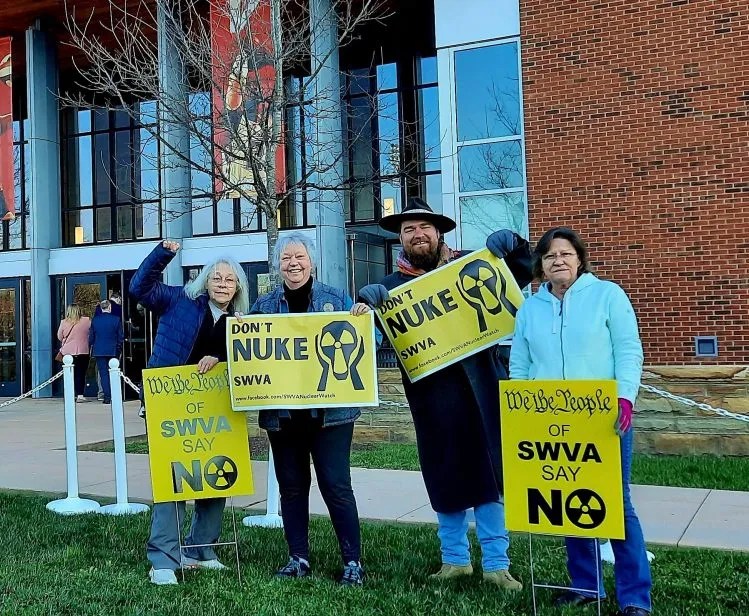





 Power for the People VA