Unknown's avatar

The trouble with natural gas

Natural gas was supposed to be the answer to all our energy dreams. It’s produced in America, cheap, plentiful, and guilt-free, like the fuel version of Diet Coke. In the dream, it is a lifeline for struggling family farms that can make money leasing their mineral rights. It will wean us off dirty coal for generating electricity, and yet be so cheap that poor people don’t have to be cold at night. It will power the American manufacturing renaissance. It will bring down carbon emissions and stop global warming from happening, making it the savior of the whole world, including Greenland’s glaciers, the coral reefs, the polar bears, and civilization itself.

The new technique of natural gas extraction known as hydraulic fracturing with horizontal drilling, or “fracking,” has unlocked vast supplies of methane trapped in shale formations across the country, driving down the price of natural gas to historic lows and promising a supply that the government estimates will last 92 years at current consumption levels. Electric utilities have been switching from dirty coal to “clean natural gas” at record rates.

But instead of ushering in a future of boundless clean energy, natural gas has been setting off alarm bells all over the country. First, there are those family farmers and other landowners who leased their land for fracking and now say it has contaminated wells and surface water, polluted the air, killed farm animals, ruined crops, and made their lives a living hell with all-day, all-night truck traffic.

The heck with them. They signed contracts. Caveat greedy landowner, right?

Let’s offer a little more sympathy to their neighbors who suffer the consequences without getting lease payments. But keep in mind that the gas industry denies all charges. None of this happened. Or if it did, the ruined water wells were due to naturally-occurring methane or other chemicals in the area, and it is an unlucky coincidence that the pollutants reached hazardous levels in the drinking water aquifer shortly after a gas company drilled down through it en route to the natural gas thousands of feet below, with impenetrable rock layers in between.

I once heard a gas industry lobbyist inform a room full of conference attendees that it was impossible for a fracking operation to contaminate drinking water. I was reminded of the way the computer geeks in college used to insist there was no such thing as a computer error. “I’m sure you’re right,” the rest of us would answer humbly. “Now can you help us recover the data?”

At least the computer geeks would then get busy fixing the bugs so that the next time the system crashed, it was from an entirely different cause. Gas company lobbyists have been stuck at denial, and it has only done them damage with the public. Admitting to a bad well casing seems far preferable to driving a now-widespread belief that methane is migrating up through rock fissures caused by fracking.

As for the other complaints—the 24-7 truck traffic, extra air pollution from operations, polluted wastewater, and occasional surface spills—the response from the gas industry and its friends has been that this is the price of progress. Industry is not pretty. Get over it. Who entitled you to a quiet life in the countryside?

But another alarm bell has been ringing, and it gets progressively louder. This one warns that drilling for natural gas, far from being the answer to climate change, may actually be making it worse. The problem is one of  “fugitive” emissions, which sounds vaguely criminal and exciting, but simply refers to the small percentage of natural gas that escapes into the atmosphere at drilling sites. Methane, the major ingredient of natural gas, is a greenhouse gas that is much shorter-acting than carbon dioxide but twenty-five times more powerful. If recent analyses prove correct, the amount of methane that escapes during the fracking process may be enough to make natural gas worse than coal as a driver of climate change. This is especially unhappy news given that natural gas integrates well with more variable energy sources like wind and solar, and environmentalists had been counting on it to help in the transition to a future powered mainly by renewable energy.

The trillion-dollar question is whether all these problems are inherent in natural gas drilling, or whether the gas companies could solve them if they put their minds to it. After all, wind energy companies have shown they can be responsive to environmental concerns and still grow as an industry. Environmentalists have turned from being the biggest critics of wind energy to its biggest advocates. There’s no rule saying gas drillers have to stonewall, or that the companies with the best operations have to support those drillers whose operations threaten communities and the climate.

Drilling companies don’t want methane to escape, obviously, because that is lost revenue for them. But neither do they seem to be making heroic efforts to monitor and prevent fugitive emissions. A few companies have been using innovative approaches to solve other problems, however. One has developed a method that uses propane as the fracking fluid, saving millions of gallons of fresh water for every well. The propane returns to the surface with the gas to be reused in a virtuous cycle.

Unfortunately, this method turns out to be more expensive than using water, which is often free if you grab it before anyone else realizes they might need it. So while you have to admire the elegance of the propane solution, you can’t really expect any self-respecting capitalist to adopt it just because it is better for society in general.

The same is true of an experimental approach that uses CO2 as the fracking medium. When water is the medium, most of what is injected remains underground permanently. CO2 seems to behave the same way, suggesting that the fracking wells might be able to sequester enough carbon underground to offset much of the CO2 that is emitted when the gas is burned. Coupled with carbon capture technology at plants burning natural gas for electricity, this technique would significantly lower the carbon footprint of natural gas. Whether it is enough to offset the problem of fugitive methane emissions is unclear.

But CO2 is already used in oil extraction, and drilling companies can’t get enough of it as it is, because carbon capture is expensive. Sure, it’s not as expensive as adapting our coastal cities to rising sea levels caused by climate change, but that’s a cost to society; carbon capture is a cost to industry. Any gas company or utility that adopts more expensive methods than its competitors, just because it’s better for society, won’t be around for long.

Capitalism can’t solve this problem alone, or any of the other pollution issues posed by natural gas extraction. Nor are individual states able to regulate practices effectively, because companies that face higher costs in a well-regulated state will move to states with more lax regulations in order to retain their competitive position.

The only effective answer is for the federal government to impose a set of best practices that apply to all members of the industry nationwide, so the good actors aren’t placed at a competitive disadvantage. The requirements would include extraction practices that minimize the risk of groundwater and surface water contamination, reduce air pollution, and prevent the escape of methane into the air. They would provide for monitoring and analysis, so regulators and industry would know where, when and how to take corrective measures. They would also cover the consumption end of the cycle, requiring carbon capture technology for all new fossil-fueled electric generation, and ensuring that the costs to society are borne by the industry.

This isn’t a radical idea, by the way. It is how we used to approach industry-wide problems, back before fossil fuel lobbyists reframed regulation as a dirty word that meant we were no longer a free people. The natural gas industry is now in a hugely dominant position over other fossil fuels. They can afford to implement rigorous best practices across the board and still retain a competitive edge. They should be lobbying to make them universal, not fighting efforts to regulate.

The alarms bells are growing louder. Will the gas industry rise to meet the emergency, or just keep trying to cut the wires?

Unknown's avatar

Greenwashing Virginia’s renewable energy law, part 3: you can’t clean ugly

If you’ve been following the woeful tale of Virginia’s renewable portfolio standard, by now you know it hasn’t produced a single electron of wind or solar power in the commonwealth, nor is it ever likely to. Fellow citizens, what is to be done?

Let’s review what happened in last year’s legislative session, when word got out that Dominion Power was meeting the state’s renewable energy goals by buying cheap renewable energy certificates from decades-old projects involving dams, trash and wood—and collecting tens of millions of dollars annually as a “bonus” for doing so. Outraged environmentalists pushed for a reform bill that would let utilities collect this bonus from their customers only if they invest in new, Virginia-made wind and solar projects—essentially, what we thought the law was about in the first place.

It was a well-crafted, solid, common-sense bill. It died without even a hearing.

But meanwhile, Governor McDonnell got two bills passed that actually made the law worse. The first one said that in addition to energy from old dams, trash and wood, utilities can meet our goals by purchasing renewable energy certificates generated by universities showing they’ve done some research into renewable energy.

Research is an admirable activity. Most of us approve of research. We approve of universities, too. But even when you put universities and research together, not a single electron of energy flows into anyone’s home. Under what possible theory does it qualify as renewable energy?

Also newly qualifying, thanks to the governor, are certificates representing an industrial process used by a Virginia corporation called MeadWestvaco. This also won’t put energy on the grid, but it creates a brand-new income stream for MeadWestvaco, paid for by utility customers—though not by large industrial users like MeadWestvaco itself, which got themselves exempted from paying for the added cost to utilities of renewable energy.

Lobbyists, my friends, are worth every dime of their inflated paychecks.

No doubt this clever bill will stimulate the creative juices of other corporations to figure out how they, too, can feed at the renewable energy trough. As a service to anyone wondering how to get their ideas into law, I note that MeadWestvaco gave $75,000 to Bob McDonnell’s campaign for governor and his inaugural committee. This is what we call the Virginia Way.

After these two bills passed, Governor McDonnell announced he had taken important steps to promote renewable energy. Advocates of renewable energy promptly asked him not to do us any more favors. Heading into the next session, we’re gravely concerned that he wasn’t listening.

Attorney General Ken Cuccinelli offered a different approach: repeal the RPS law, or at least repeal the bonus utilities get. Mr. Cuccinelli is more famous for attacking the credibility of climate scientists than for embracing renewable energy, but with the environmentalists’ reform bill dead, the Sierra Club ended up supporting the AG’s bill rather than see the consumer rip-off continue.

But that bill failed, too, though it got several votes from Cuccinelli allies in the House, some of whom are pretty sure that if renewable energy succeeds, the United States will become a failed socialist state occupied by blue-helmeted U.N. troops. (If you think I am making that up, check out some Virginia Tea Party websites.) It is safe to conclude that votes for the AG’s bill were not votes for renewable energy.

Cuccinelli’s bill shared the same fatal flaw as the reform bill: Dominion Power opposed it. In case you haven’t caught on by now, Dominion almost always gets its way in the legislature, and it sure isn’t going to allow either the AG or the Sierra Club to take away its free money.

The upcoming session could be interesting. Mr. Cuccinelli is running for governor next year, which makes him the leading Republican in the state, with all due respect to Bob “Lame Duck” McDonnell. This fall Cuccinelli issued a report critical of Virginia’s appalling RPS, and has signaled he plans to go after the bonuses again.

Which is more powerful for Republicans, political allegiance or Dominion’s campaign cash? Which matters more to Democrats, renewable energy or Dominion’s campaign cash? Which matters more to Governor McDonnell, his party or his tight relationship with Dominion’s CEO (not to mention the campaign cash)? Not surprisingly, legislators are begging Dominion and the AG’s office to work something out together so they won’t have to pick sides.

Concerned that a “compromise” may serve political ends but leave the public out in the cold, environmental groups plan to bring their own citizen’s army to Richmond in support of reform. They’d like to see a compromise that lets Dominion keep its bonus payments by earning them with Virginia-made wind and solar. It’s so little to ask–yet, based on past years’ experience, it may still be too much to hope for.

Which brings us to the third option for outraged citizens. Buy Dominion stock. Seriously, if the company is going to wind up on top every time, you may as well get in on the profits.

Maybe you can use your dividends to buy solar panels.

Unknown's avatar

Greenwashing Virginia’s renewable energy law, part 2: Check, please!

Maybe not quite what we had in mind.

Maybe not quite what we had in mind.

In our last column, we looked at Virginia’s renewable energy standard, trying to grab hold of its 15% goal as it shrank three sizes in the greenwash. At the end of that discussion, you may have consoled yourself with the thought that 10% or 5% or 3% is, at least, better than nothing. Besides which, the law is only voluntary, so how much harm can it do?

Voluntary” has such a nice ring to it, doesn’t it?  You probably think it has something to do with customers deciding whether to participate. You might think it’s for those virtuous people who sign up to buy “green” power, and the rest of us will just go on burning coal.

That is not what voluntary means at all. “Voluntary” means your utility gets to choose whether to participate, and then you have to go along with it. The law says that if your utility opts in, it will spend some of your money on renewable energy, and then because it did all that work, you have to add a big tip to your utility bill.

I suppose, in theory, a utility like Dominion Power might decide it didn’t want to spend your money, and it could just skip the fat tip. In reality, refusing a tip isn’t part of a corporation’s DNA any more than it is of a waiter’s. Tom Farrell’s momma didn’t bring him up to be a fool who leaves money on the table. So our voluntary RPS is kind of like one of those annoying restaurants where they automatically add the tip to the bill for parties of six or more.

In this case, the tip adds up to more than $38 million per year. Mind you, this is on top of the profit they had already added to your bill. This is a very lucrative line of business.

Well, you might think, at least I got fed. You like renewable energy, after all. It replaces smog-causing fossil fuels. It lowers our carbon footprint. It creates jobs and enhances our national security. A utility shouldn’t have to be bribed into buying it for you, but at least now it’s part of the meal.

But look more closely. If that renewable energy were food, you’d send it back. You assumed you were getting fresh, Virginia-grown electrons, made with the sun and the wind—and what is this stuff they are serving? Energy from dams, trash and wood, most of it fifty years old or more, of such poor quality that no other state will let it be served to their customers. They only call it “green” because it’s practically moldy. (And such small portions!)

You call your utility over and demand an explanation. “Where’s the wind energy? Where’s the solar? Why isn’t this fresh and local?” And your utility looks down its nose at you and answers, “Those things cost more. We have an obligation to be careful of your money. So for you, we go dumpster diving.”

At that point, you might be glad the renewable energy portion of your meal barely amounts to a garnish. The trouble is, you can’t take your business elsewhere. Your utility has a monopoly, and it guards your patronage jealously. So you’re stuck with the meal they serve you. The closest you’re going to get to real renewable energy is the picture of a wind turbine on the cover of the menu.

It’s only now that you notice an asterisk by the wind turbine and fine print that reads: “Coming soon!” And below that, in print so tiny you have to reach for your glasses: “Or not.”

Unknown's avatar

Greenwashing Virginia’s renewable energy law, part 1: Honey, I shrank the goals!

Criticism of Dominion Virginia Power has been steadily mounting over the $76 million dollars the company has been awarded as a “bonus” for complying with Virginia’s voluntary renewable energy law. Last week Attorney General Ken Cuccinelli weighed in with a report echoing the charges environmentalists have been making for the past year: Dominion has succeeded in meeting the letter of the law, and collecting bonus money from its customers, without investing in any new renewable energy projects.

The AG’s office exonerates Dominion, claiming the real failure is the legislature’s for passing a law that allowed this to happen. Silly Mr. Cuccinelli: this is Virginia. Dominion wrote the law.

But it’s worse than you know. The money-for-nothing issue is partly a result of the statute’s failure to require new investments in high-value projects like wind and solar energy as a condition of earning the bonus, but it is also a function of the extremely modest targets set by the statute itself. Virginia’s renewable energy goal is usually stated as 15% renewable energy by 2025, but when 2025 rolls around, the goal will be met with less than half this percentage, possibly much less.

The greenwash works like this: the statute sets a 2025 target for renewable energy to make up 15% of “total electric energy sold.” You probably think you know what “total electric energy sold” means. You don’t. Only if you are whiling away an idle afternoon reading the definitions section of the statute do you learn that “total electric energy sold” is defined as the total amount of electricity sold, minus the amount provided by nuclear power. In the case of Dominion Power, nuclear is about a third of the total. So for Dominion, 15% of “total electric energy sold” actually means only 10% of its electricity sales.

You will rarely see Dominion acknowledge this, though until recently its executives worded their statements carefully so they could not be accused of actually lying to anyone. Lately, however, the company has grown careless with the truth. A press release dated October 4, 2012 includes this fun quiz question and answer: “Is Dominion investing in renewable power sources? (A) Yes, in Virginia Dominion has committed to getting 15 percent of its power from renewable sources by 2025.”

Yet even if this statement said Dominion would get 15% of its “non-nuclear power” from renewable energy by 2025, it would still be wrong. When 2025 arrives, meeting the goal won’t require Dominion to achieve anywhere near 15% of its non-nuclear sales (10% of total) from renewable energy. That’s because the target percentage is measured against 2007 sales, not 2025 sales, and Virginia is growing. Assuming sales increase a little under 2% per year as Dominion projects, by the time 2025 rolls around, meeting the goal will require only about 7% renewables. If Dominion builds the new nuclear plant it wants, that number will shrink further.

Conceivably the number could go even lower. Since 2007, Virginia politicians have twice demonstrated how much they love renewable energy by watering the goal down even further, but doing it in a way that makes it sound awesome. They passed bills that say utilities will get double credit for any wind and solar they use to meet the goal. In fact—what the heck—if they build offshore wind farms, we’ll give them triple credit!

Wow, triple credit! That’s great! Isn’t it?

Come to think of it, no. Combine that with the other sleights-of-hand, and now Dominion could satisfy Virginia’s entire 15% renewable portfolio goal with about 3.5% of our electricity coming from solar energy or wind farms on land. For offshore wind, less than two and a half percent would do it. And that’s thirteen years from now.

Chances are, this doubling and tripling will never matter. Dominion “earned” its $76 million bonus for meeting the letter of the law with electricity from old dams and biomass (i.e., wood-burning), and by buying cheap credits from out of state. Dominion can get enough of this cheap renewable energy that it will be able to meet the goals through 2025 without investing in wind and solar.

Given Dominion’s approach to meeting the goals, it might be just as well that the target is so low. But then you have to wonder: $76 million for that?

Unknown's avatar

Offshore oil drilling in Virginia: undead and ugly

Photo: U.S. Coast Guard

Drilling for oil off Virginia’s coast is once again a possibility, popping up like a zombie when we thought it was dead (again). As the New York Times reported, “Efforts are focusing on Virginia because the public, politicians in both parties and energy companies all favor opening the waters to drilling.”

It will be news to many members of the Virginia public that we favor drilling off our coast, but there’s no doubt that oil companies are itching to open the Atlantic coast to drilling rigs, and plenty of Virginia politicians make it a talking point. Senators Warner and Webb are on board, as is Senator-elect Tim Kaine. Most famously, Governor McDonnell came into office dreaming of the highways he would build when his tanker ship came in.

For oil companies, Virginia is the thin edge of the wedge. Our share of federal waters is quite small because of the odd way that boundary lines are drawn. Virginia is targeted mainly as a means of cracking the line of resistance created by other eastern states. It’s a shame so many of our politicians are eager to help in the cracking.

It used to be that when Democrats and Republicans agreed on something, that improved the odds of it being a good idea. These days, it often just means they are taking money from the same corporations. Money alone may not buy a politician’s votes, but it most certainly buys lobbyists access to politicians, and access has a way of producing votes. So perhaps the surprise is not how many politicians have jumped on the drill-baby-drill bandwagon, but how many have not.

Some naysayers, including Congressman Gerry Connolly (D-Fairfax), point out that drilling off our coast is opposed by the U.S. Navy, which uses most of Virginia’s leasing area for its operations. These include testing air and surface missiles and bombs, which traditionally don’t pair well with oil rigs and tankers. (On the other hand, the Navy supports offshore wind farms, which would be located away from operations.)

Other legislators, like Congressman Bobby Scott (D-Newport News) oppose drilling because of the environmental hazards, and the danger posed to fishing and tourism.

Of course, no politician will admit to being unconcerned about the environment, including the ones who are very obviously unconcerned about the environment. This is why they say they support “environmentally safe offshore oil drilling.” The phrase is so familiar that we have come to take it for granted, but it actually bears some thinking about. Saying he supports “safe oil drilling” suggests a politician has in mind another kind of oil drilling–the unsafe kind–that he would not support.

But you’d be hard-pressed to find any restrictions on the drilling industry that the drill-baby-drill crowd supports. These politicians considered offshore drilling “environmentally safe” right up to the day millions of barrels of oil began gushing into the Gulf of Mexico and causing billions of dollars’ worth of damage. Drilling methods haven’t changed since the Deepwater Horizon disaster, and oil spills have continued to occur in the Gulf and elsewhere.

So let’s put in a plug for Truth in Advertising. Politicians, if you think extra American oil is worth the occasional catastrophic oil spill, then say so. Pretending there will never again be another Deepwater Horizon makes you look out of touch with reality, and the fact that a significant proportion of the voters are also out of touch with reality is not an excuse.

If you’re okay with drilling, tell us your Plan B for Virginia: how you would deal with the effects of a spill that fouls our coastline, kills wildlife, and contaminates everything that lives in the ocean, over an area that could be hundreds or thousands of square miles. If winds and tides spread the contamination onto Assateague Island or into the Chesapeake Bay, what’s your plan?

The folks in our commercial and fishing industries, and all the people who live and work in beach towns, should hear you talk about how confident you are in their ability to get by for a season on government handouts; if there’s longer-lasting damage, how maybe they can move to Northern Virginia and work in retail. I’m sure you can make it sound appealing.

And if you can’t, then maybe it’s time to kill the drilling zombie for good. You may be taking money from oil companies, but your job is to look out for Virginia.

Unknown's avatar

Mother Nature to be sued for copyright infringement

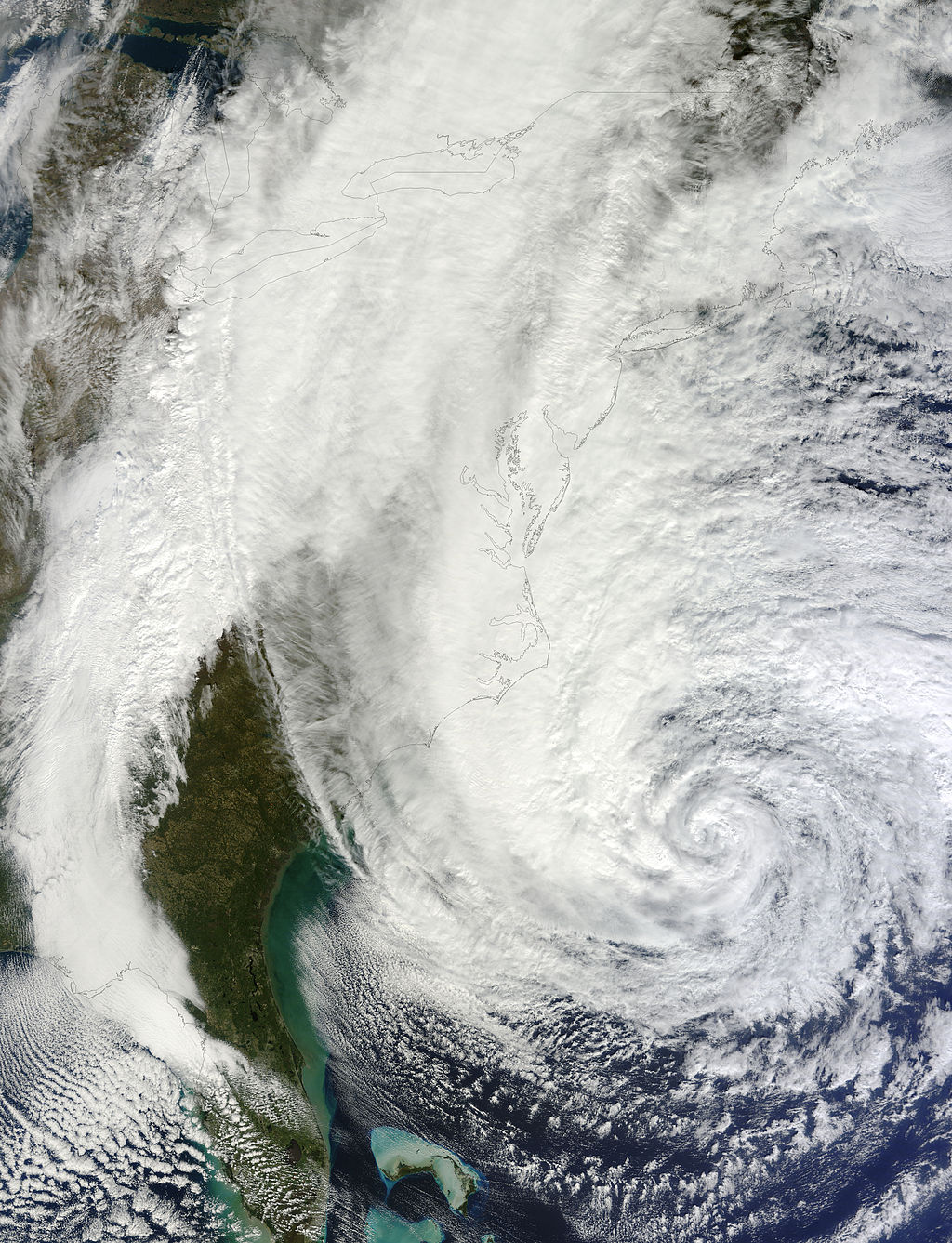
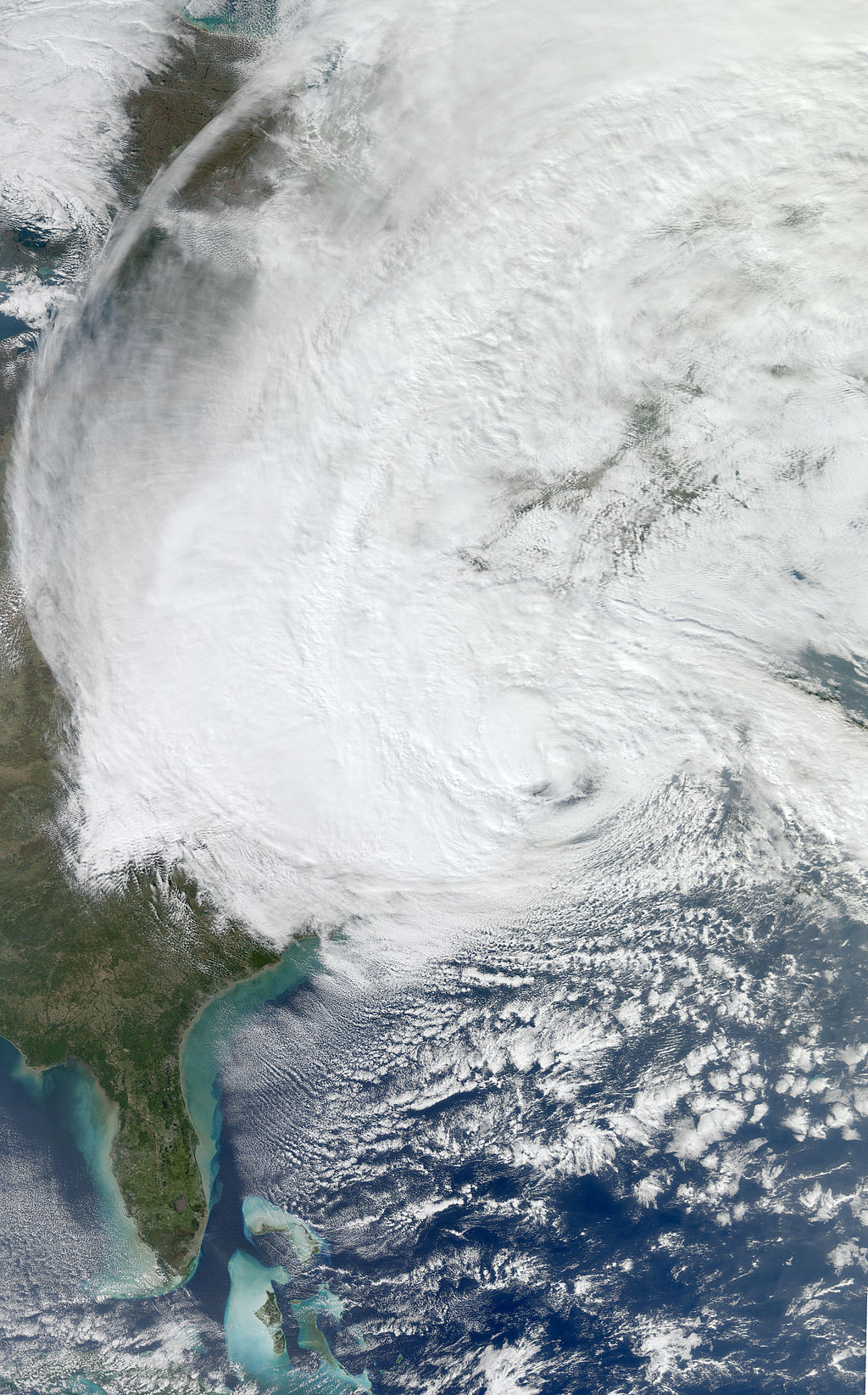
Hurricane Sandy, in an image clearly copied from “The Day After Tomorrow”

To: Mother Nature, d/b/a “Hurricane Sandy”

Re: Copyright infringement

Dear Ms. Nature,

It has come to our attention that you and/or your agents have made unauthorized use of certain intellectual property belonging to our client, Twentieth Century Fox Film Corporation (“Fox”), including images, illustrations, plotlines, audio and video unlawfully appropriated from “The Day After Tomorrow,” a motion picture owned by Fox. This letter is to notify you that we believe your actions constitute a violation of U.S. copyright law, 17 U.S.C. § 101 et seq.

It is clear that the plotline of Hurricane Sandy has been substantially copied from portions of “The Day After Tomorrow.” The motion picture is a dramatization in which a storm of epic proportions bears down on the eastern United States, causing massive destruction and widespread flooding, including in Manhattan. Scientists in the movie say human-induced climate change is the reason for the storm’s unusual size and damaging force.

Your agent, Hurricane Sandy, was a storm of epic proportions that bore down on the eastern United States, causing massive destruction and widespread flooding, including in Manhattan. Scientists in real life say human-induced climate change is the reason for the storm’s unusual size and damaging force.

Certain scenes from Hurricane Sandy appear to be copied directly from portions of the motion picture. Photographs taken during and after your storm depict waves swamping buildings, taxicabs in floodwaters up to the windows, lower Manhattan completely dark, and a flooded subway system—images closely replicating events in “The Day After Tomorrow.” We believe this demonstrates a clear infringement of our client’s copyright.

Moreover, we feel it is incumbent on us to point out that your actions in turning a fictional and hypothetical entertainment into actual fact violate the expectations of the public that climate change is and will remain a matter of mere speculation concerning events that are firmly in the future. The American audience expects the continued burning of fossil fuels to produce entertaining epics like “The Day After Tomorrow,” while having no actual effect whatsoever on their lives. Your insistence on demonstrating that a warming ocean will produce larger and more damaging hurricanes is, frankly, in poor taste.

This letter will serve as notice of our intent to pursue any and all remedies available to our client under applicable law, including an injunction against further infringing activities.

Yours truly,

I.M. Cole

Law Offices of Cole & Oyle, LLC

Unknown's avatar

Coal and the big lie

Hurricane Sandy swept into town this week, reminding Americans that climate change may be the Issue That Cannot Be Talked About, but that doesn’t mean it has gone away. Suddenly the fact that the two presidential candidates have been trying to outdo each other in professing their love for coal comes across as unseemly, if not downright perverse. Surely this would be a good time to acknowledge the impossibility of preventing the catastrophic effects of increasing carbon emissions if we are unwilling to stop burning the things that emit carbon—chief among them, coal.

So a war on coal might be a good idea, although the idea that the Obama Administration has been waging one is nonsense. The reasons for the decline of the coal industry are primarily the flood of cheap natural gas, which is out-competing coal as a fuel for electric generation, and the increasing cost of coal, especially in Appalachia.

Indeed, the Appalachian coal industry has been on the decline for years. The richest and most easily-reached coal has been mined, leaving thin seams that take more effort and expense to extract, pushing the price of Central Appalachian coal well above that of coal from the Powder River Basin further west.

From 1990 to 2006–before the recession, before the Obama presidency, and before the price of natural gas collapsed–Virginia coal mining declined from about 10,000 workers to about 4,500.  The U.S. Energy Information Agency projects that Virginia coal production will continue to decline through the rest of this decade.

But coal executives prefer to lie to workers than admit they can’t compete in the free market, and the politicians who’ve taken hundreds of thousands of dollars from the coal companies would rather parrot their lies than admit they have failed their constituents. Coal companies and their political bedfellows have been exploiting coal miners for two centuries; it’s no surprise to see them using these workers now as pawns in the presidential campaign.

But fingering the real culprits for coalworkers’ distress is the easy part; what’s harder is helping the residents of the coalfields areas find new jobs to replace the ones that are never coming back.

Ironically, in Virginia it has been environmental groups like the Sierra Club and Appalachian Voices that have championed a plan to do just that. For several years they have been urging an end to the approximately $45 million annually in state taxpayer subsidies that currently go to enrich coal companies, and replacing them with incentives to support new jobs in tourism, technology, clean energy and other industries.

This proposal should have gotten traction last year, when a report by the state’s Joint Legislative Audit and Review Commission (JLARC) concluded that the subsidies do not achieve their goal of supporting coal employment, and indeed that  “changes in coal mining activity appear unaffected by the credits.”

One would have thought that Republicans especially might have jumped at the chance to cut $45 million per year of wasteful spending, or that Governor “Bob-for-Jobs” McDonnell would have gladly seized the opportunity to build a jobs program that did not add a new line-item to the budget.

Following the release of the JLARC study, the legislature and the Governor did act—to extend the coal company subsidies for several more years. The message to the residents of southwest Virginia could not have been any clearer: it’s the coal company executives and their money we care about, not the miners and their families.

The presidential election will be over in a few days. Regardless of who wins, the Virginia coal industry will continue its decline. The only question left is how long the miners will accept being lied to.

Unknown's avatar

What the heck is a REC? Renewable Electricity Certificates, Renewable Portfolio Standards, and why it all matters anyway

More than 30 states have Renewable Portfolio Standards (RPS) to increase the amount of renewable energy their residents use. Renewable energy does not always cost more than conventional energy, but when it does, renewable energy certificates (RECs) may provide the means for making up the cost difference. Whether RPS laws work well, or whether they cost their residents money without providing a value, depends on how well the laws are written. Policy makers, industry watchdogs, and the public all need a basic understanding of how RPS laws and the REC markets work to ensure that the laws are actually serving the public.

So what the heck is a REC?

“REC” stands for “renewable energy certificate.” A REC is a way to monetize the environmental attributes of energy from a renewable resource, so the extra value can be bought and sold independent of the electrons that form the energy itself.

We’ll use an example to make it easier to understand. Say you want to put solar panels on your roof, but you can’t because your house is shaded by tall trees. So you go to your neighbor with the sunny location next door and tell her that if she will put solar panels on her roof, you will buy the electricity from her. You work out a deal, call a solar installer, and soon she’s got a solar array that produces, on average, exactly the amount of electricity your house uses. [1]

As it happens, though, you can’t buy the actual solar energy her panels are producing. That electricity is powering her house, and any excess electricity is feeding into the grid through her meter. Once power is in the grid, it’s all just electrons. The electrons don’t look different whether they come from a coal plant or a wind farm or a solar array. So there is no way to identify and claim the specific electrons that come on the grid from specific solar panels.

What you can buy from your neighbor is the right to say you’re running your house on solar energy, up to whatever amount of power her solar panels produce. This is the essence of a renewable energy certificate. A REC doesn’t represent electricity, but rather the extra value to society of that electricity having been produced by solar panels. So you continue to buy your electricity off the grid from your utility, and then you pay your neighbor something extra for the RECs. You are not actually using solar power, but you are paying for the right to say you are.

Chances are, there won’t be any actual paper certificates involved. You will simply have a contract with your neighbor that states how much you’re paying her per kilowatt-hour. Your contract would also prevent her from making the same deal with any other neighbor, double-dipping by selling the RECs twice.

It is a short step from there to creating a whole market for RECs as a commodity. If you were to stop buying your neighbor’s RECs, she could sell them to someone else, perhaps a “green” business that wanted to say it was running its store on solar power. The price would depend on supply and demand for renewable energy in your area.

What’s a REC got to do with an RPS?

Now let’s scale up our example and add utilities to the story. Your state, it turns out, has a Renewable Portfolio Standard (RPS), a law that tells utilities that they must obtain a certain percentage of their power from renewable sources. Utilities that own their own generation sources may choose to invest in wind, solar, biomass, or other renewable generation facilities, depending on what the law defines as renewable. Utilities that don’t own their own generation, or that can’t produce enough renewable electricity, have to buy that power from others.

This is where RECs come in. When the utility offers to buy renewable power from someone who is generating it, it will want to buy the RECs as well. Buying the RECs allows the utility to demonstrate its compliance with RPS targets. Indeed, in some states, RECs are the only measure of compliance.

If the utility has to go beyond its own service area to find enough renewable energy, the RECs can take on a life of their own as they get bought and sold independently of the power generated. If the state RPS law allows it, a utility could even buy RECs from a renewable power facility that isn’t part of the same regional transmission grid. In that case, the facility sells the power to its local utility, and sells the RECs to the utility that needs them for its RPS obligations. There is no longer any connection between the electricity and its renewable attributes.

The problem with separating RECs from the energy itself

The REC market is important for making an RPS work, and it makes sense when the power generated is within the state that sets the RPS. But when a utility goes beyond the borders of a state, or even of its own service area, to buy RECs, the usefulness of the program to ratepayers declines, and the likelihood of double-counting and confusion increases.

Let’s go back to our example of the two houses. You have a contract with your neighbor to buy the RECs from her solar panels. Buying the RECs gives you the right to say you are powering your home with solar power. But here’s the rub: now that you’ve bought her RECs, she doesn’t have the right to say she is powering her home with solar, even though the panels are on her house. After all, you can’t both claim the same solar power, right?

You can see how easy it would be for double-counting to occur. She has the solar panels, you have the RECs, but there’s only one house’s worth of solar being produced.

Now let’s scale up again to the utility level, where it can get really weird. No two states have the same RPS laws. Some states have strict requirements for what counts as renewable, some have looser requirements, and some have no RPS at all. Utilities want to spend as little as possible to meet their requirements, so they may buy and sell RECs to make sure that the most expensive RECs (usually from solar power) are being used to meet only the toughest standards. If a state doesn’t have a minimum requirement for solar, the utility will try to sell any solar RECs it’s holding to a utility in another state that requires solar, and then buy cheaper RECs (perhaps from landfill gas or older hydroelectric projects) to satisfy its own state’s less-stringent requirements.

The result is just like the example of the two houses: a utility might own a big wind farm or a giant solar array, but if the state has no RPS or only a weak one, it will sell the RECs from that wind or solar facility to utilities in states that do have strong RPS laws. The utility that buys the RECs buys the right to claim that it is providing its customers with renewable energy. The utility that sells the RECs has sold the right to make that same claim. It may own a wind farm, and power from it may flow through its wires, but legally, it’s just selling electrons.

This is not just a theoretical problem. Dominion Virginia Power does precisely this when it advertises its West Virginia wind farms as producing power for Virginia. In fact, it sells the RECs to utilities in other states that have tougher RPS laws than Virginia’s. In this case, Virginia is getting neither the benefit of the wind jobs nor the right to say it is using renewable energy.  Meanwhile, the ratepayers in the state with the tougher RPS, who pay for those RECs, are getting the bragging rights and paying the bill, but they are not seeing the clean energy jobs that the RPS incentivizes. Only West Virginia gets those jobs, along with the actual wind farms.

The ratepayers are like the owners of the two houses. People in the state where the renewable energy is produced may think they are getting renewable energy, but so do the people in the state whose utility is buying the RECs. Customers in the state with the tough RPS are paying for the renewable energy to be produced, but the benefits—jobs, economic development and cleaner air—go to the state where the project is. They are told they are buying renewable energy, but if they understand what is happening, they might well feel like chumps.

What does a good RPS look like?

The problem we just described is why a well-crafted RPS will limit out-of-state RECs purchased separately from the power itself.[2] It is in the interest of ratepayers to create a market for renewable energy in their own area, so jobs are created close to home, and so nearby dirty energy sources are displaced by clean energy, resulting in healthier air and cleaner streams and rivers.

An effective RPS will also include “carve-outs” (minimum levels) for higher-value types of renewable energy like wind and solar that may cost more to produce than biomass, landfill gas, or hydro. Creating demand for wind and solar supports higher prices and can make a project economically feasible when it wouldn’t be otherwise. Again, stimulating these investments means jobs and economic development in the state as well as cleaner air and water when older, dirtier facilities are shut down.

The worst RPS laws are ones that allow RECs from energy that isn’t really renewable (like coal-bed methane), from projects that don’t actually produce energy (like research and development), or that would be produced anyway (like energy from facilities that pre-date the RPS law). Giving credit for these kinds of power devalues the RECs from new and truly renewable projects and undercuts the economic incentives that can make new investments in renewable energy possible.

What does this mean for policy-makers and the public?

There are two main lessons from all this:

  1. Don’t be fooled by appearances. If your state’s RPS can be met with out-of-state RECs from old hydro plants, don’t assume it’s being met with energy from that new wind farm or utility-scale solar array you’ve been reading about here in your state. Those RECs are being sold somewhere else. The only way to find out what you’re paying for in your state’s RPS is to require your utilities to disclose the sources it is using—and then check.
  1. Looser requirements are not better. A kitchen-sink approach to what qualifies as renewable energy ends up being counter-productive because the cheapest sources will always be chosen over higher-quality projects.

Mandatory vs. voluntary RPS lawsIn most states, the RPS is mandatory; utilities that don’t meet the targets are fined by means of an “alternative compliance payment.” In Virginia, which has a “voluntary” RPS, utilities are free to decide whether they want to participate in the program. There is no fine for failing to meet the goals; instead, utilities are rewarded for meeting them, by being allowed to earn a significantly greater profit on their sales of electricity. Since this means charging ratepayers more, this voluntary RPS will cost ratepayers more than a mandatory RPS for the same amount of renewable energy incentivized.

Virginia’s all-carrot, no-stick approach ensures that no utility declines to participate because it costs them nothing to do so (all the costs of compliance are passed through to the consumers), while generating bonus money. The “voluntary” nature of the program is therefore meaningless—and after all, it is mandatory for the ratepayers.

Conclusion: Caveat ratepayer!

Mandatory RPS laws, requirements that the energy be produced in state or that RECs come “bundled” with the energy they represent, stricter standards for what counts as renewable, and carve-outs for wind and solar all produce the most value for the residents who are paying the bills.

Done right, RPS laws and RECs can lead to more renewable energy, job growth, economic development, and a healthier environment for all. But poorly-crafted laws do a disservice to ratepayers and fail at their central purpose. Policy-makers and the public must act like smart consume


[1] Your neighbor will likely enter into a “net-metering” arrangement with your utility, under which she feeds extra power into the grid on sunny days but draws electricity off the grid at night and on cloudy days. Most states now have laws allowing net-metering, but details differ.

[2] Although states are increasingly limiting their RPS programs to in-state RECs, there is some question whether doing so, at least for mandatory programs, could violate the Commerce Clause of the U.S. Constitution. See, e.g., Elefant and Holt, “The Commerce Clause and Implications for State Renewable Portfolio Standard Programs.” Clean Energy States Alliance, March 2011.

Unknown's avatar

RPS Wars: The Empire Nips Back

The $76 million rip-offf

For much of the past year, critics have been assailing Dominion Power for its “$76 million rip-off”: a bonus the company claimed for meeting Virginia’s renewable energy goals using old dams, trash and wood, much of it out of state. Environmental groups say Dominion should get a bonus only if the company invests in new wind and solar projects in Virginia. Attorney General Ken Cuccinelli says utilities shouldn’t get bonuses for renewable energy at all.

This month the company finally piped up, appearing to deny all charges.  Ratepayers haven’t had to pay anything, said the carefully-worded response to a media inquiry. Base rates are frozen until December 1, 2013, and its compliance with the renewable energy goal will “be only one of a large number of factors that affect the SCC setting our rates going forward.”

Reporters were left scratching their heads. A year ago the State Corporation Commission, which regulates Virginia utilities, determined that the company has “earned” the $76 million bonus by meeting the absurdly lax terms of the state’s renewable energy law. (See SCC case PUE-2011-00027.)  So if customers aren’t paying, how is Dominion collecting?

But of course, customers are paying, and you can bet Dominion intends to get every dime. To understand how this can happen, imagine that you hire a contractor for a long-term project. You agree to pay her a set amount every month. Out of your payments, the contractor will take her expenses and profit, and when she meets a particular goal, she can take out a bonus as well. At the end of two years, you will recalculate your monthly payments to ensure the contractor recoups anything still owed to her, as well as to cover what she is entitled to going forward—expenses, profit and bonuses—and the work will continue.

This is roughly how electric rates are determined in Virginia (although utility customers’ payments also depend on how much electricity they use). Regulators set the rates, and Dominion takes its expenses and profit, including any bonus, out of the payments it receives from customers. If there is money left over at the end of the rate period, Dominion has to refund 60 percent of the excess to ratepayers. (Why doesn’t the company have to refund the entire overcharge, you ask? Sorry, that’s a different rip-off, and I can handle only one at a time.)

On the other hand, if the rates don’t bring in enough revenue to cover expenses and profit, they will be reset at a higher level for the next rate period. One way or another, the utility get its money.

So Dominion’s lawyerly response to critics turns out to be both correct, and irrelevant.  Utility rates are currently frozen, but that tells us nothing about whether the company is collecting its bonus. And if Dominion does not collect the full $76 million before the end of 2013, it will be one of the “factors that affect the SCC setting our rates going forward.” That is, rates will be set to ensure Dominion collects the full amount.

Sorry, ratepayers. The rip-off continues.

Unknown's avatar

Virginia, Energy Suburb

Today marks the start of the third Governor’s Conference on Energy in Virginia, which means it is the third year of the Governor’s Confusion of Virginia with some other state, because he is once again promoting the slogan, “Virginia, Energy Capital of the East Coast.”

The first year, nobody said anything. He was a new governor, and it didn’t seem polite to point out the error. Rookie mistake, the conference attendees told each other. Someone will clue him in.

The second year, the slogan reappeared, and we were dumbfounded. People nudged each other and said, “You tell him.” “No, you tell him.” We drew straws, but apparently whoever got the short straw welched. And now, after three years, well, it would be really, really awkward to point out that while the slogan is charming, it is not exactly factual.

In factual terms, Virginia isn’t an energy capital, or even an energy major city. If Governor McDonnell were to call Virginia the Energy Suburb of the East Coast, that would be closer to the truth. We’re a bigger importer of electricity than any state except California. Of course it’s not like we’re importing our electrons from a hostile foreign nation. West Virginia isn’t suddenly going to cut us off if we don’t release their political prisoners.

And really, you might think there is something to be said for letting other states foul their own air with power plants while sending the electrons over to us. It’s like outsourcing manufacturing to China; they get the jobs and the pollution, we get cheap electronics that we toss in our landfills every time there’s an upgrade. In the case of out-of-state power plants, we get the electricity to run the cheap electronics.

But since emissions from power plants sneak across state lines and head straight for anyone who happens to be breathing, we are getting the pollution as well as the electrons, and all we’re losing to other states is the jobs. To a governor, losing jobs to other states is the Worst Thing Ever. If you are a governor, your highest priority is luring businesses to your state instead of to the state next door, to keep up with whatever luring that state is doing to get business away from your state. The governor with the most jobs wins.

So Governor McDonnell has been trying very hard to develop energy projects in Virginia. His signature plan was to open our coast to environmentally safe offshore oil drilling, with Congress cutting Virginia in on the royalties so we could fund our transportation priorities without taxing ourselves. But while Congress was still giggling at the revenue-sharing proposal, an environmentally safe offshore oil rig exploded and sent 5 million barrels of environmentally unsafe crude oil into the Gulf of Mexico, shutting down the fishing industry and fouling several hundred miles of Louisiana shoreline.

Our governor did not blink. He is not a man to learn from mere actual events. Nonetheless, he turned his attention to other projects that could still make Virginia an energy leader. After all, McDonnell is an “all of the above” man, so in addition to oil, he likes nuclear, coal and natural gas. These haven’t worked out so well, either. The Energy Information Agency has since announced that the price tag for new nuclear now exceeds that for solar energy. Since Virginians regard solar as a luxury for wine-sipping liberal urbanites, that can only be a bad sign for nuclear.

And then there’s coal. McDonnell came into office a champion of coal, in proportion to the amount of campaign money he received from coal and coal-burning utilities. You cannot accuse the man of disloyalty. When some critics tried to suggest that taxpayers should not be shelling out $45 million per year in handouts for coal mining, he took umbrage. He also took more money. All that give and take did nothing to prevent the coal industry in Virginia from continuing its long decline.

This leaves natural gas. One of the panels for this year’s conference is titled, “What do we do with all this natural gas?” There isn’t an exclamation point at the end of the question, but there should be. Nationally, gas fracking has saved energy’s Old Guard, just when it looked like fossil fuels were washed up. The old energy guys are ecstatic. It’s not like they would ever have admitted that God’s carbon gifts might be finite, but there was an ugly shadow looming for a while that has backed off. They are hoping they can shove it into a closet with other difficult ideas, like groundwater pollution, global warming, ocean acidification and sea level rise.

From Governor McDonnell’s perspective, the only problem with Virginia being the Fracking Capital of the East Coast is how little shale gas we have, compared with Pennsylvania and New York. Still, a few counties in the western part of the state could host drilling rigs if they chose, along with the round-the-clock truck traffic, land disturbance, noise, and inevitable spills of contaminated wastewater. For some reason, they’ve rejected the idea. Look for legislation this year to take away their right to refuse.

Meanwhile, what can our governor do to make Virginia a leader on energy? There’s only one area left untried: renewable energy. We could build wind and solar facilities in Virginia, adding jobs without pollution. We know we have the resources and the businesses eager to build if the state wants them.

Until 2008, our annual energy conference was known as the Commonwealth of Virginia Energy and Sustainability Conference (COVES). Governor McDonnell discarded  “sustainability,” and since then the conference has offered less and less to interest wind and solar businesses. Yet there’s no law saying the only way to become the Energy Capital of the East Coast is by burning coal and gas.

At least, there isn’t yet. I shouldn’t give the governor any ideas.