Unknown's avatar

And the coal gravy train rolls on

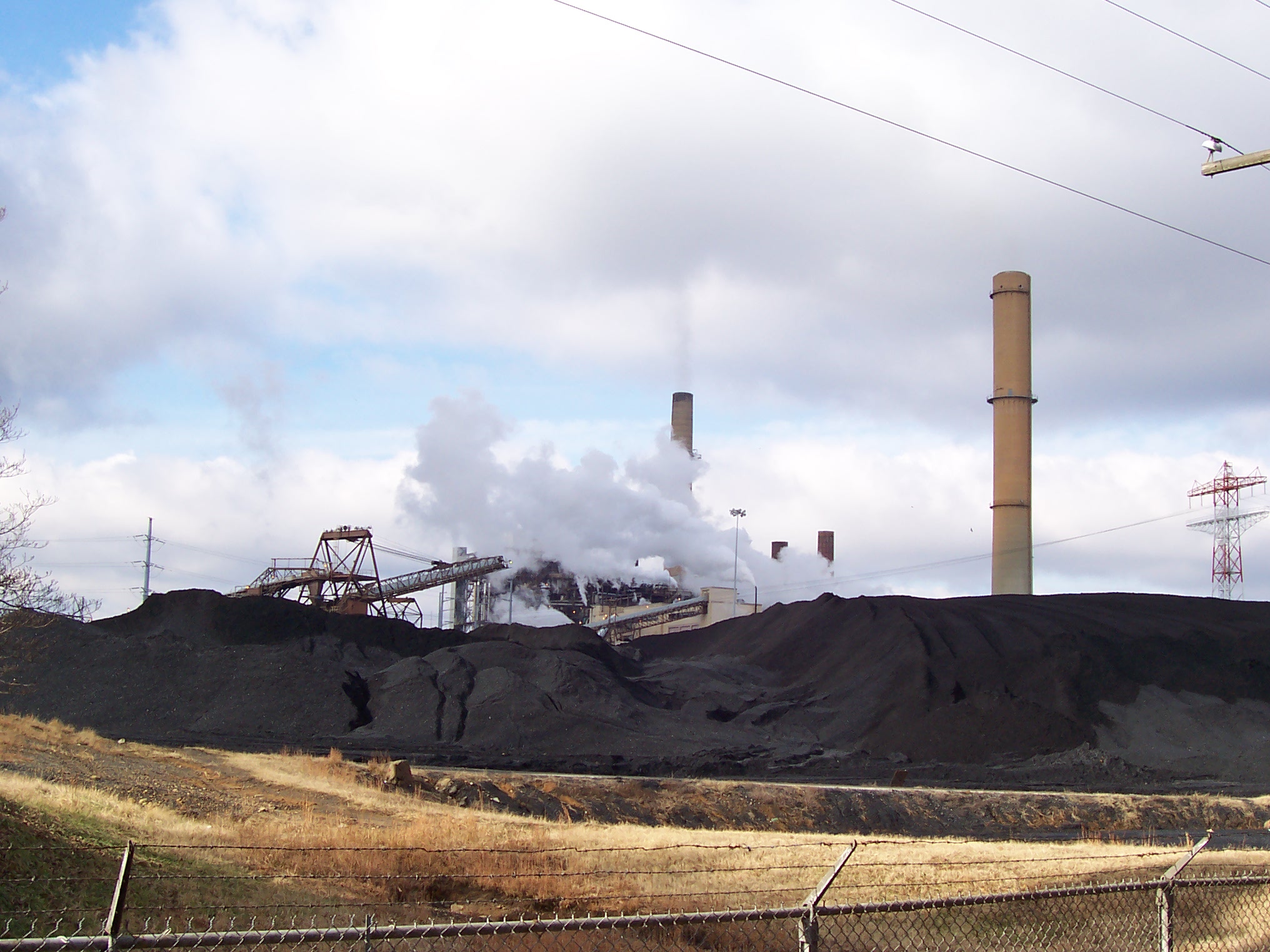
Your taxpayer dollars at work!

Your taxpayer dollars at work!

This should have been the year to end more than two decades of corporate welfare for companies whose business model involves the destruction of Virginia’s mountains. All the facts line up against the coal subsidies: the unremitting decline of coal employment since the 1990s, the waste of half a billion dollars that could have gone towards diversifying the southwest Virginia economy, the unfair advantage it gives coal over 21st century clean energy technologies that promise real job growth, and even all that anti-subsidy rhetoric from Republicans that ought to make them uncomfortable with crony capitalism and a blatant giveaway to a mature industry.

Delegate Toscano led a spirited charge against them that included a hard-hitting op-ed in the Richmond Times-Dispatch. But the coal companies whined in committee hearings, and Dominion’s Bill Murray explained that the utility supports making coal cheaper, saying ratepayers would benefit. (Since the money comes out of taxpayers’ pockets, and taxpayers are also presumably ratepayers, it’s a little hard to follow this logic. If you want to get your money’s worth, use more energy?)

No one but a few lonely environmentalists spoke up against the subsidies. Where are the clean energy businesses? Where is the Tea Party? Where are the people who actually care about the dire need for new industries and new jobs in southwest Virginia?

They certainly weren’t being heard in the General Assembly. By mid-week it was clear the giveaway will continue, though perhaps with one welcome change. Under HB 1879, reported from House Finance on Wednesday, the credit for the companies that mine the coal would have a limit on how much any given coal company can claim. However, the credit for those who burn coal is not limited and will actually be extended out to 2019, keeping coal’s unfair advantage over other fuels. (Like, say, renewable energy.)

SB 741, which passed the Senate 32-6 on Thursday, merely contains the extension of the subsidy for coal use out to 2019. So few Senators seem to have their heads on straight on this issue that it’s worth thanking them by name here: Adam Ebbin, Barbara Favola, Janet Howell, Mamie Locke, Donald McEachin, and Jennifer Wexton.

SB 1161 (Colgan), which also passed the Senate, contains the same limitation found in HB 1879. In this case, passing the bill was better than the status quo.


Update: On February 19, the Richmond Times-Dispatch reported, “The House of Delegates and state Senate have agreed to leave untouched a tax credit for electric utilities that burn Virginia coal, even though the policy reversal will create a $5.2 million hole in each chamber’s proposed budget. The House amended and passed Senate Bill 1161, introduced by Sen. Charles J. Colgan, D-Prince William, to include a substitute drafted by Dominion Virginia Power, the state’s largest power company.”


Unknown's avatar

Your 2015 Virginia legislative session cheat sheet, part 2: Fossil Fuels

Photo credit: Corrina Beall

Photo credit: Corrina Beall

My last post covered clean energy bills introduced into the 2015 legislative session, which began last week and ends at the end of February. Time to hustle on to the oil, gas, and coal bills.

Coal subsidies

Coal companies claim to be victims of a “war on coal,” but for nearly two decades they’ve been conducting a war on Virginia taxpayers. Virginia’s tax code offers so many preferences that a 2012 study concluded the coal industry costs Virginia more than it gives back. Among other preferences, two different subsidies in the Code have allowed coal companies to siphon off tens of millions of dollars annually from the General Fund since 1996.

The subsidies come with nominal sunset dates, currently January 1, 2017. Over nearly twenty years, no matter how fat or lean the state’s financial condition, the legislature has repeatedly passed extensions, and they are being asked to do so again this year. HB 1879 (Kilgore) and SB 741 (Carrico) would extend the giveaway out to 2022.

(According to VPAP.org, Delegate Kilgore, chairman of the Commerce and Labor Committee, gets a check for $10,000 every year from coal giant Alpha Natural Resources. Alpha also gives ten grand a year to Senator Carrico, who just happens to sit on Senate Finance, which will hear the bill. I mention these facts only in passing. It would be cynical to suggest a connection.)

Supporters of the subsidies seem to believe coal companies need the inducement to blow up our mountains and dump waste into stream valleys. And they maintain this is a good thing for the people of Southwest Virginia, who can enjoy gainful employment by participating in the destruction of their communities.

The coal companies certainly do benefit from this arrangement, but coal jobs have declined to less than 5,000 total in Virginia today, and it’s clear to everyone that Southwest Virginia needs to diversify its economy or face a future of poverty and high unemployment. The coal subsidies suck up money that could be spent on new jobs and a better-educated workforce.

The McAuliffe administration, facing a budget shortfall, has suggested cutting the subsidies way back, and has no plans to extend them. HB 2181 (Toscano) reduces the amount of the subsidies for 2015 and 2016 but does not eliminate them. It also limits the amount that can be claimed on any one tax return to $500,000 under each Code provision.

HB 1877 (Krupicka) would end the subsidies altogether a year early. His bill goes further: it would redirect the savings into a fund to provide grants to students enrolled in Virginia public colleges and universities. Half the money would be required to go to students from the Coalfields region.

Natural gas

SB 1338 (Hanger) repeals a provision of the Code known as the Wagner Act (after Senator Frank Wagner, who introduced the legislation ten years ago). That provision allows interstate natural gas companies to enter private property without the consent of the owner in order to make “examinations, tests, hand auger borings, appraisals, and surveys.”

The Wagner Act gained notoriety last year when Dominion Power sued landowners who resisted efforts to survey their land. We think of Dominion as an electric utility, but Dominion Resources also owns a gas transmission company, and it plans to build a huge new pipeline to bring fracked gas from Ohio and West Virginia and deliver it to industrial customers and export facilities on the coast. Turns out, a lot of people don’t like strangers coming on their land without permission, especially when the point is to let the strangers decide whether they might want to seize the land for a pipeline. Well, who could have expected that?

But in case the GA doesn’t have an appetite for repealing the Wagner Act, how about making it harder to use? SB 1169 (Hanger again) amends it to add a pre-condition. Before any natural gas company can enter someone’s property without permission, the governing board of the locality must have adopted a resolution in support of the pipeline or gas works. Moreover, the resolution “shall not be adopted unless the governing body has found that locating the line or works within the city or county is consistent with its comprehensive plan, master plan, or any general development plan and that there exists a demonstrated public need for the line or works.”

HB 1475 (Ware) and SB 1163 (Saslaw) allow natural gas utilities to expand their systems to reach more retail customers. This legislation is not related to the interstate gas pipelines sought by Dominion and others. It deals with pipelines within the state that would connect customers who currently don’t have access to natural gas for heating and cooking (a more efficient use of energy than burning gas for electricity to perform the same functions).

But the gas utilities have taken a page from the Dominion playbook and overreached with their legislative language, including by declaring its plans and business goals to be “in the public interest” (the magic words that limit SCC review). We hear the bill is likely to be amended to take out the offending language.

Really a bill about energy efficiency, SB 1331 (Petersen) changes how the SCC evaluates natural gas conservation programs proposed by utilities. It instructs the SCC to determine the cost-effectiveness of a program by looking at the utility’s whole portfolio of conservation programs and not each judged separately. This should make it easier to get conservation programs approved, and it’s to the credit of the retail gas companies that they want it passed. Senator Petersen’s office informed me the bill originated with the governor’s office, which supports it.

Offshore oil drilling

Virginia doesn’t control the deep waters off our coast where oil may be lurking, and drilling is still years away, if it happens at all. But that has never stopped state lawmakers from making plans to spend the money we might earn from oil drilling, if Congress were to share some of the revenue with us. Most of us will recognize this game as, “Imagine if you won the lottery.”

Back in 2010, Governor McDonnell pushed through a bill to fund transportation projects with the imaginary money. In 2014, the law was amended to put $50 million into an emergency response fund to combat what would have to be a pretty small imaginary oil spill, with all the extra imaginary money going to the General Fund.

HB 1702 (Davis) proposes to amend the law again to take half of the imaginary General Fund money and put it into public schools. Well, who could object to that? Except for the imaginary part, of course.

Unknown's avatar

Virginia’s amazing year in energy: gas rises, coal falls, and solar shines (but it’s still not okay to say “climate change”)

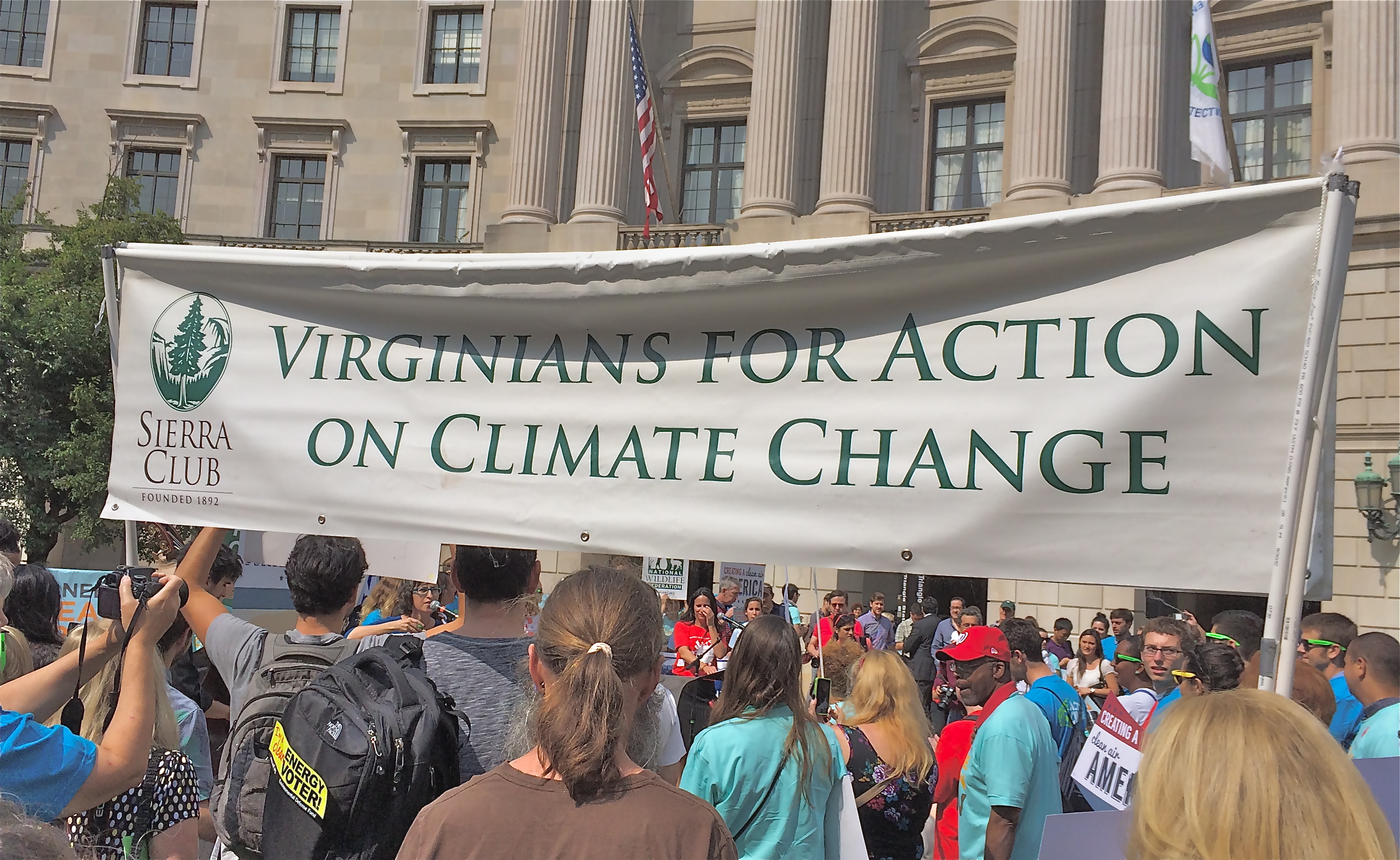
Virginians rally in front of U.S. EPA Headquarters in Washington, DC in support of the Clean Power Plan

Virginians rally in front of U.S. EPA Headquarters in Washington, DC in support of the Clean Power Plan

Nobody laughed a few years ago when former governor Bob McDonnell dubbed Virginia the “Energy Capital of the East Coast”; we were all too astounded by the hyperbole. And today, even “Energy Suburb” still seems like a stretch. Yet, if you measure achievement by the sheer level of activity, Virginia is making a play for importance. The year’s top energy stories show us fully engaged in the worldwide battle between fossil fuels and renewable energy. Of course, while the smart money says renewables will dominate by mid-century, Virginia seems determined to drown rather than give up its fossil fuel addiction.

Coal falls hard; observers disagree on whether it bounces or goes splat. Nationwide, 2014 was a bad year for the coal industry. Coal stocks fell precipitously; mining jobs continued to decline; and the one thing electric utilities and the public found to agree on is that no one likes coal. Even in Virginia, with its long history of mining, coal had to play defense for what may have been the first time ever. So when Governor McAuliffe released the state’s latest energy plan in October, what was otherwise a paean to “All of the Above” omitted the stanza on coal. And this month, the governor proposed a rollback of the subsidies coal companies pocket by mining Virginia coal.

Of course, coal is not going quietly; Senator Charles Carrico (himself heavily subsidized by Alpha Natural Resources) has already responded with a bill to extend the subsidies to 2022.

EPA opens a door to a cleaner future, and Republicans try to brick it up. Speaking of hard times for coal, in June the EPA unveiled its proposal to lower carbon emissions from existing power plants 30% nationwide by 2030. Instead of targeting plants one-by-one, EPA proposed a systemic approach, offering a suite of options for states to reach their individualized targets.

The proposal drew widespread support from the public, but Virginia’s 38% reduction target set off howls of protest from defenders of the status quo. The staff of the State Corporation Commission claimed the rule was illegal and would cost ratepayers $6 billion. Republicans convened a special meeting of the House and Senate Energy and Commerce Committees, where they tried out a number of arguments, not all of which proved ready for prime time. The rule, they said, threatens Virginia with a loss of business to more favored states like—and I am not making this up—West Virginia. Also, Virginia should have received more credit for lowering its carbon emissions by building nuclear plants back in the 1970s when no one was thinking about carbon emissions.

Meanwhile, the Southern Environmental Law Center analyzed the rule and concluded that actually, compliance will not be hard. Virginia is already 80% of the way there, and achieving the rest will produce a burst of clean-energy jobs coupled with savings for consumers through energy efficiency.

Undaunted, Republicans have already introduced a thumb-your-nose-at-EPA bill developed by the fossil fuel champions at the American Legislative Exchange Council.

The “solarize” movement takes Virginia by storm. For the last few years, solar energy has been exploding in popularity across the U.S., but Virginia always seemed to be missing the party. So it surprised even advocates this year when pent-up consumer demand manifested itself in the blossoming of local solar buying cooperatives and other bulk-purchase arrangements. “Solarize Blacksburg” made its debut in March, going on to sign up hundreds of homeowners for solar installations. It was followed in quick succession by the launch of similar programs in Richmond, Charlottesville, Harrisonburg, Northern Virginia, Halifax, Floyd, and Hampton Roads.

The main reason for the solarize programs’ success was the steep decline in the cost of solar energy. 2014 saw the cost of residential installations in Virginia fall to record low prices, making the investment worthwhile to a broad swath of homeowners for the first time.

Utilities say maybe to solar, but only for themselves. Virginia still boasts no utility-scale solar, but utilities elsewhere signed long-term power purchase contracts for solar energy at prices that were sometimes below that of natural gas: under 6.5 cents/kilowatt-hour in Georgia, and under 5 cents in Texas. Compare that to the estimated 9.3 cents/kWh cost of power from Dominion Virginia Power’s newest and most up-to-date coal plant, the Virginia City Hybrid Energy Plant, and you’ll understand why Dominion has suddenly taken an interest in solar projects. Sadly, it’s own foray into rooftop solar so far stands as an example of what not to do, and a testament to why the private market should be allowed to compete.

Yet Virginia utilities continued their hostility to customer-owned solar. Dominion put the kibosh on a bill that would have expanded access to solar energy through community net-metering, while Appalachian Power matched Dominion’s earlier success in imposing punitive standby charges on owners of larger residential systems.

Fracking, pipelines, and gas plants, oh my! Renewable energy may be the future, but the present belongs to cheap natural gas. Yes, the fracking process is dirty, noisy and polluting, and yes, methane leakage around gas wells is exacerbating climate change. But did we mention gas is cheap?

2014 saw proposals to drill gas wells east of I-95, while the Virginia government began updating its regulations to govern fracking. Dominion Power started construction on a second new gas power plant, and talked up its plans for a third. The utility giant, a major player in the gas transmission business, also got approval to turn its liquefied natural gas import terminal in Cove Point, Maryland, into an export terminal. With visions of customers dancing in its head, it also announced plans for a major new pipeline to bring fracked gas from West Virginia through Virginia and into North Carolina—one of three proposed pipelines that would cut through the Virginia countryside and across natural treasures like the Appalachian Trail. The pipeline created an instant protest movement but gained the wholehearted approval of Governor McAuliffe.

Flooding in Hampton Roads becomes the new normal; it’s still not okay to ask what’s causing it. A cooler-than-normal year for the eastern United States gulled many landlubbers into believing that global warming was taking a breather, but meanwhile the ocean continued its inexorable rise along Virginia’s vulnerable coastline. It’s one thing to shrug off the occasional storm, said residents; it’s harder to ignore seawater that cuts off your parking lot at every high tide. 2014 will go down as the year everyone finally agreed we have a problem—even in the General Assembly, which passed legislation to develop a response to the “recurrent flooding.” But while the bill recognized that the problem will just get worse, it avoided noting why.

The public gets it, though. The Richmond Times-Dispatch reports that climate change was the number one topic of interest to writers of letters to the editor in 2014. And loud cheers greeted Governor McAuliffe’s announcement that he would reestablish the state’s commission on climate change, which Bob McDonnell had disbanded. As one environmental leader quipped, “People in Tidewater are tired of driving through tidal water.”

Public corruption: in Virginia, it’s not just for politicians. Everyone can agree that it was a really bad year for the Virginia Way, that gentlemanly notion that persons of good character don’t need no stinkin’ ethics laws. But we also saw plenty to prove the adage that the real scandal is what’s legal. As we learned, Virginia law allows unlimited corporate contributions to campaigns, and puts no limits on what campaigns can spend money on. So if some legislators act more like corporate employees than servants of the public, well, that’s how the system was set up to work.

But the system only works when corporations get their money’s worth from the politicians, and that quid pro quo usually comes at the public’s expense. For example, take Dominion Power’s North Anna 3 shenanigans (please). In an exceptionally bold exploitation of the Virginia Way, Dominion Power secured passage of legislation allowing it to bill customers for hundreds of millions of dollars it had spent towards a new nuclear plant that it is unlikely to build. (And the irony is that ratepayers will still be better off throwing the money down that rathole than they will be if Dominion does manage to build it.)

So as we look ahead to 2015’s energy battles, anyone wondering who the winners and losers will be needs only one piece of guidance: in Virginia, just follow the money.

Unknown's avatar

Fiscal and environmental sanity get a boost as McAuliffe proposes to roll back coal subsidies

Your taxpayer dollars at work!

Your taxpayer dollars at work!

Thanks to the state’s budget deficit, Virginia may finally scale way back a notorious fossil fuel subsidy that currently transfers tens of millions of dollars annually from taxpayers to the pockets of corporations that mine Virginia coal. The Richmond Times Dispatch reports that if Governor McAuliffe has his way, the Virginia Coal Employment and Production Incentive Tax Credit and the Coalfield Employment Enhancement Tax Credit will be limited to $500,000 per year, saving the government $20 million per year.

The refundable tax credits were intended to make Virginia coal cheaper for utilities to buy, and thus more competitive with coal mined in other states. In theory, that was supposed to mean more coal mining jobs in southwest Virginia. In practice, the subsidies meant some coal companies paid no state taxes, and actually received significant cash handouts, even as coal jobs declined. And because the subsidies are based on tons of coal mined and not on the number of people employed, mining companies suffered no penalty from capital investments that maximized production while cutting jobs.

Critics of the subsidies thought they had won their point three years ago when the Joint Legislative Audit and Review Committee (JLARC) issued a critique of the various Virginia tax credits that was especially critical of the handouts to coal companies. As it describes beginning on page 67, the subsidies did not stop coal employment from falling 54% since 1990, or slow the steady decline in production:

“The precursor to one of the current coal credits was in place before the decline began, while the other was enacted shortly thereafter. It is important to note that with or without the credits, the decline in Virginia coal production was predicted by numerous analysts because over two-thirds of recoverable coal reserves in Virginia have already been mined.”

Indeed, the report continued, coal employment and production was actually worse with the credits in place:

“In the process of developing and refining the credit, analysts projected that coal employment and production would decline by 28 percent between 1996 and 2005 without the credit. However, actual mining employment was substantially lower than expected during this period, declining 36 percent.”

In spite of this damning analysis, in 2012 the General Assembly actually extended the expiration date of the coal subsidies until 2017. Insiders say Senate Democrats were persuaded to vote for the extension as a favor to coalfields senator Phil Puckett, who needed the backing of coal companies to hold his seat in 2013 and keep Democrats in control of the Senate. (Some might say he failed to return the favor.)

The coal subsidies have long infuriated environmentalists and community activists in the Coalfields region. In their view, Virginia taxpayers should not be forced to reward mining companies for blowing off the tops of our mountains, filling ancient stream valleys with rubble, poisoning wells and rivers, and destroying homes to get at the last, thin seams of Virginia coal.

So Coalfields activists welcomed the Governor’s proposal as a “good first step” in planning a future where coal is no longer the economic engine it once was. “We need to take our heads out of the sand and invest heavily in diversifying our economy in Southwest Virginia,” said Wise County resident Jane Branham, Vice President of Southern Appalachian Mountain Stewards. “Supporting outdoor recreation, tourism, sustainable agriculture, reforestation and a new generation of entrepreneurs is the path forward in the mountains, not subsidizing bad actor coal companies that continue to poison the natural resources our future depends on.”

Renewable energy advocates have also complained that by making coal cheaper, the subsidies make it harder for other forms of energy to compete. One would expect this argument to resonate with free market advocates, a category that supposedly includes all Virginia Republicans and a lot of the Democrats. Yet in spite of criticism from some Democrats, the subsidies have not faced serious opposition before now.

Acquiescence in such an expensive and counter-productive corporate welfare program mostly reflects the influence of the Virginia coal industry. (See last week’s post for a sampling of how coal companies work to buy votes with campaign cash.) But the drafters sweetened the deal with a provision that siphons off a portion of the excess cash to fund the Virginia Coalfield Economic Development Authority (VACEDA), which is supposed to help the region diversify beyond coal. (It might work better if coal executives didn’t sit on the board.)

Under McAuliffe’s proposal, VACEDA would get a direct appropriation of $1.2 million to replace the money it would lose by the scaling back of the tax credits. That should satisfy those legislators whose primary concern is helping residents of southwest Virginia.

Those whose primary concern is helping coal companies, however, aren’t likely to be happy. Congressman Morgan Griffith has already been quoted as suggesting Governor McAuliffe’s proposal to scale back the coal subsidies amounts to a “war on coal.”

He expressed no concern about coal’s war on the people of southwest Virginia. For those who care about that, Governor McAuliffe’s move feels like a breath of clean air.

——————–

Addendum: Senator Bill Carrico (R-Alpha Natural Resources) has now filed a bill, S741, to extend the coal subsidies until 2022. 

Unknown's avatar

Virginia’s SCC staff attacks EPA over the Clean Power Plan

Virginians rally in front of U.S. EPA Headquarters in Washington, DC in support of the Clean Power Plan

Virginians rally in front of U.S. EPA Headquarters in Washington, DC in support of the Clean Power Plan

In recent years paleontologists have come to believe that the dinosaurs did not go extinct; they evolved into today’s chickens and other birds. It turns out, however, that some of them did not evolve. Instead, they took jobs at Virginia’s State Corporation Commission.

Now they’ve put their DNA on full display with comments they filed on the EPA’s Clean Power Plan. The proposed EPA rules, under section 111(d) of the Clean Air Act, would require states to reduce the power plant CO2 emissions driving climate change. The staffers assert primly that they “take no position on the broad policy issues,” but that they feel “compelled” to point out all the ways the plan is “arbitrary, capricious, unsupported, and unlawful.” These mostly boil down to their claims that the plan will force coal plant closures, raise rates significantly and threaten service reliability—claims experts say are badly off-base.

Note that the commissioners themselves didn’t sign onto these comments. They come from the career staff at the Energy Regulatory Division, led by Bill Stevens, the Director, and Bill Chambliss, the General Counsel. This is pretty peculiar. I can’t think of a single other agency of government where the staff would file comments on a federal rulemaking without the oversight of their bosses.

Bill and Bill acknowledge in a footnote that the staff comments represent only their own views and not those of the commissioners. But that distinction has already been lost on at least one lawmaker. Today Speaker of the House William J. Howell released a statement declaring, “The independent, nonpartisan analysis of the State Corporation Commission confirms that President Obama’s environmental policies could devastate Virginia’s economy.”

And really, “devastate”? But that’s the kind of hysteria you hear from opponents of the Clean Power Plan. While the rest of us see healthier air, huge opportunities for job growth in the clean energy sector, and the chance to avoid the worst effects of climate disruption, the Friends of Coal see only devastation. And no wonder: Howell accepted $14,000 from the coal industry just this year alone.

But back to what the Bills over at the SCC think about the Clean Power Plan. How did they arrive at their conclusion that it would raise rates? According to Cale Jaffe, a lawyer with the Southern Environmental Law Center who practices extensively before the SCC, “Staff never did an analysis of an actual plan to comply with the Clean Power Plan, which has a lot of flexibility built into it. Instead, the Staff simply took Dominion Virginia Power’s last Integrated Resource Plan from 2013 and used it as a proxy for a compliance plan. That’s a significant flaw that skews the Staff’s analysis.  The Dominion plan, after all, was released nearly a year before the EPA even announced its rule.”

Compounding the error, says Jaffe, the staff “artificially inflated the cost by assuming that the only compliance strategy would be for Dominion to build a new nuclear reactor: the most expensive resource, which is not a required compliance option.”

We can all agree with the staff that nuclear plants are appallingly expensive. That may be why the EPA doesn’t assume most states will build them as part of their compliance strategy. To the contrary, the expectation is that states will respond with energy efficiency, wind and solar—all resources that are plentiful in Virginia but largely untapped so far.

As Jaffe notes, “an independent analysis of the actual Clean Power Plan itself shows that Virginia can achieve its goals at a fraction of the cost while lowering Virginians’ bills by 8%.”

We have seen time and again that the SCC staff has never been friendly to either renewable energy or energy efficiency, so it’s no surprise that their comments dismiss them as unworkable. Indeed, it is clear from the comments they filed that their real interest is promoting an anti-EPA, pro-coal agenda. Otherwise it would be hard to understand why they would stray so far from their own area of practice to attack the very legality of the Clean Power Plan.

Jaffe lists a number of other ways the SCC staff screwed up, but you get the picture: careful, reasoned analysis wasn’t the point. Still, you’d think that if agency staffers decide to go rogue like this, they would be careful to get the facts right.

———————————

Update: I have heard from some sources that the SCC staff had the blessing of at least one commissioner in putting forth their comments, and that all three commissioners may have known. If so, that’s even worse.

Unknown's avatar

McAuliffe’s Energy Plan has a little something for (almost) everyone

On October 1, the Virginia Department of Mines, Minerals and Energy released the McAuliffe administration’s rewrite of the Virginia Energy Plan. Tomorrow, on October 14, Governor McAuliffe is scheduled to speak about the plan at an “executive briefing” to be held at the Science Museum of Virginia in Richmond. Will he talk most about fossil fuels, or clean energy? Chances are, we’ll hear a lot about both.

Like the versions written by previous governors, McAuliffe’s plan boasts of an “all of the above” approach. But don’t let that put you off. In spite of major lapses of the drill-baby-drill variety, this plan has more about solar energy, offshore wind, and energy efficiency, and less about coal, than we are used to seeing from a Virginia governor.

Keep in mind that although the Virginia Code requires an energy plan rewrite every four years, the plan does not have the force of law. It is intended to lay out principles, to be the governor’s platform and a basis for action, not the action itself. This is why they tend to look like such a hodge-podge: it’s just so easy to promise every constituency what it wants. The fights come in the General Assembly, when the various interests look for follow-through.

Here’s my take on some of the major recommendations: IMG_3954

Renewable energy. Advocates and energy libertarians will like the barrier-busting approach called for in the Energy Plan, including raising the cap on customer-owned solar and other renewables from the current 1% of a utility’s peak load to 3%; allowing neighborhoods and office parks to develop and share renewable energy projects; allowing third-party power purchase agreements (PPAs) statewide and doubling both the size of projects allowed and the overall program limit; and increasing the size limits on both residential (to 40 kW) and commercial (to 1 MW) net metered projects, with standby charges allowed only for projects over 20 kW (up from the current 10 kW for residential, but seemingly now to be applied to all systems).

It also proposes a program that would allow utilities to build off-site solar facilities on behalf of subscribers and provide on-bill financing to pay for it. This sounds rather like a true green power program, but here the customers would pay to build and own the project instead of simply buying electricity from renewable energy projects.

Elsewhere in the recommendations, the plan calls for “flexible financing mechanisms” that would support both energy projects and energy efficiency.

In case unleashing the power of customers doesn’t do enough for solar, the plan also calls for the establishment of a Virginia Solar Energy Development Authority tasked with the development of 15 megawatts (MW) of solar energy at state and local government facilities by June 30, 2017, and another 15 MW of private sector solar by the same date. Though extremely modest by the standards of Maryland and North Carolina, these goals, if met, would about triple Virginia’s current total. I do like the fact that these are near-term goals designed to boost the industry quickly. But let’s face it: these drops don’t even wet the bucket. We need gigawatts of solar over the next few decades, so let’s set some serious long-term goals for this Authority, and give it the tools to achieve them.

Finally, the plan reiterates the governor’s enthusiasm for building offshore wind, using lots of exciting words (“full,” “swift,” “with vigor”), but neglecting how to make it happen. Offshore wind is this governor’s Big Idea. I’d have expected more of a plan.

And while we’re in “I’d have expected more” territory, you have to wonder whatever happened to the mandatory Renewable Portfolio Standard that McAuliffe championed when running for office. Maybe our RPS is too hopeless even for a hopeless optimist.

Energy Efficiency. Reducing energy consumption and saving money for consumers and government are no-brainer concepts that have led to ratepayers in many other states paying lower electricity bills than we do, even in the face of higher rates. Everyone can get behind energy efficiency, with the exception of utilities that make money selling more electricity. (Oh, wait—those would be our utilities.) The Energy Plan calls for establishing a Virginia Board on Energy Efficiency, tasked with getting us to the state’s goal of 10% savings two years ahead of schedule. But glaringly absent is any mention of the role of building codes. Recall that Governor McDonnell bowed to the home builders and allowed a weakened version of the residential building code to take effect. So far Governor McAuliffe hasn’t reversed that decision. If he is serious about energy efficiency, this is an obvious, easy step. Where is it?

Fracking_Site_in_Warren_Center,_PA_04

Natural Gas. Did I say offshore wind was the governor’s Big Idea? Well, now he’s got a bigger one: that 500-mile long natural gas pipeline Dominion wants to build from West Virginia through the middle of Virginia and down to North Carolina. Governor McAuliffe gets starry-eyed talking about fracked gas powering a new industrial age in Virginia. So it’s not surprising that the Energy Plan includes support for gas pipelines among other infrastructure projects. As for fracking itself, though, the recommendations have nothing to say. A curious omission, surely? And while we are on the subject of natural gas, this plan is a real testament to the lobbying prowess of the folks pushing for natural gas vehicles. Given how little appetite the public has shown for this niche market, it’s remarkable to see more than a page of recommendations for subsidies and mandates. Some of these would apply to electric vehicles as well. But if we really want to reduce energy use in transportation, shouldn’t we give people more alternatives to vehicles? It’s too bad sidewalks, bicycles and mass transit (however fueled) get no mention in the plan.

Photo credit Ed Brown, Wikimedia Commons.

Coal. Coal has fallen on hard times, indeed, when even Virginia’s energy plan makes no recommendations involving it. Oh, there’s a whole section about creating export markets for coal technology, as in, helping people who currently sell equipment to American coal companies find a living in other ways. These might be Chinese coal mining companies; but then again, they might be companies that mine metals in Eastern Europe, or build tunnels, or do something totally different. The Energy Plan seems to be saying that coal may be on its way out, but there’s no reason it should drag the whole supply chain down with it. Good thinking.

Nuclear. If you think the coal industry has taken a beating these past few years, consider nuclear. Nationwide, the few new projects that haven’t been canceled are behind schedule and over budget, going forward at all only thanks to the liberality of Uncle Sam and the gullibility of state lawmakers. But there it is in the Energy Plan: we’re going to be “a national and global leader in nuclear energy.” Watch your wallets, people. Dominion already raided them for $300 million worth of development costs for a third plant at North Anna. That was just a down payment.

Photo: U.S. Coast Guard

Photo: U.S. Coast Guard

Offshore drilling. As with nuclear, favoring offshore oil drilling seems to be some kind of perverse obsession for many Virginia politicians. Sure enough, the energy plan says we should “fully support” it. As for the downside potential for a massive spill of crude oil fouling beaches, ruining fishing grounds, destroying the coastal tourism economy, and killing vast numbers of marine animals, the plan says we must be prepared “to provide a timely and comprehensive response.” I bet Louisiana was at least equally prepared.

Unknown's avatar

Who’s afraid of a Carbon Rule?

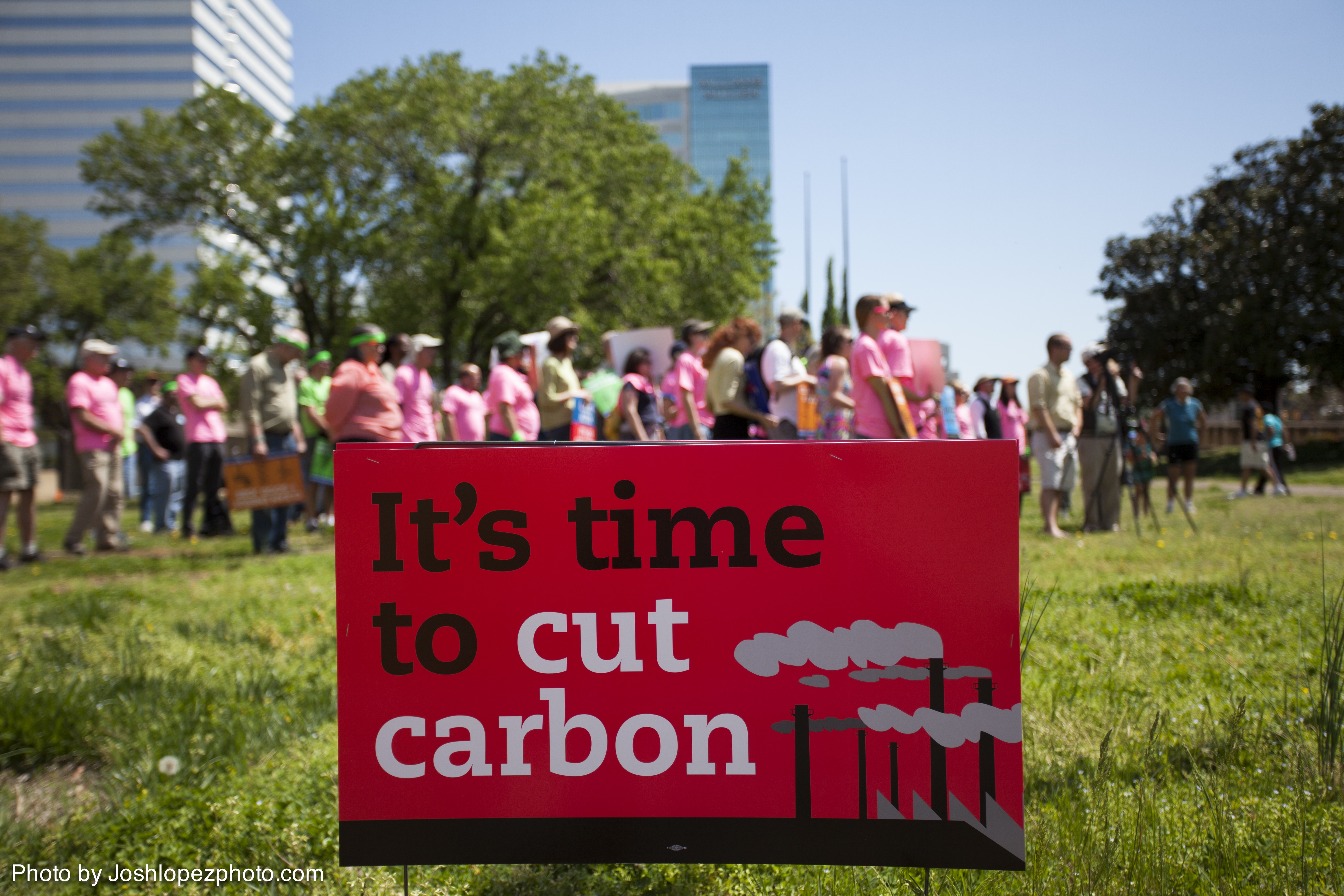
Climate activists urge action to curb carbon emissions at a demonstration in Richmond, Virginia. Photo by Josh Lopez, courtesy of the Sierra Club.

Climate activists urge action to curb carbon emissions at a demonstration in Richmond, Virginia. Photo by Josh Lopez, courtesy of the Sierra Club.

When I was a law student working at the U.S. EPA in the ‘80s, we sued a company that had been polluting a Maine river for years. Back then, EPA calculated penalties based on the amount of money a polluter saved by ignoring the requirements of the Clean Water Act. The idea was to take away the economic benefit of pollution so that companies would make out better by installing treatment systems than by imposing their toxic waste on the community.

Not surprisingly, the company’s lawyers tried to prevent their client from having to pay a penalty for all those years it had been dumping pollution into the river. But their reasoning was interesting. Faced with the lawsuit, the company overhauled its industrial process and eliminated most of its waste products, which turned out to be a money-saving move. Thus, said the lawyers, the company hadn’t gained any competitive advantage by polluting the river; it had actually lost money doing so. Really, they’d have made a lot more money if we’d forced them to clean up their act sooner.

Needless to say, the argument didn’t fly, and the company paid a fine. But its experience turns out to have been a common one. When it comes to environmental regulation, industry screams that the sky is falling, but then it gets to work to solve the problem, and frequently ends up stronger than ever.

This is one reason to be skeptical of ad campaigns from the U.S. Chamber of Commerce and the National Mining Association trying to convince the public that the EPA’s new regulations on carbon pollution from power plants, to be announced on June 2, will destroy the American economy. They’ve cried wolf so many times they have lost all credibility.

And in case you are of a generous nature and inclined to forgive previous false alarms, it’s worth noting that the National Mining Association campaign earned the maximum four Pinocchios from the Washington Post fact-checker—meaning, it’s a pack of lies. The EPA has been scarcely kinder in its analysis of the Chamber’s campaign, and the economist Paul Krugman says the Chamber’s own numbers actually prove compliance with the carbon rule will be cheap.

At least we can understand the American Mining Association’s fabricating facts. These are coal mining companies, after all; of course they are opposed to limits on carbon! They’re like the tobacco companies fighting limits on smoking. In fact, they’re in a worse position, because a good many smokers say they like tobacco, whereas nobody who isn’t making money from it likes coal.

But we can’t cut the Chamber the same kind of slack. There is little reason to fear the economy will suffer by continuing the gradual phase-out of coal that is already underway. No one was building new coal plants anyway; they are too expensive compared to natural gas plants and wind farms. The old, dirty, but fully amortized coal plants will gradually be retired, and good riddance. We have paid dearly for that “cheap” power in health care for asthma and heart disease, in premature deaths, and in babies born with neurological damage from mercury in their mothers’ bodies.

Nor does the Chamber’s anti-carbon rule stance accurately reflect the opinions of the energy sector as a whole. Even those electric utilities that once relied heavily on coal have proven to be fickle friends. Many of them have already said they can live with a carbon rule that lets them swap fuel sources.

And while coal declines, other energy industries are growing and flourishing. The breathtaking pace of advances in wind, solar and battery technologies make it clear that the age of fossil fuels will end in this century. There will be winners and losers, as there always are in a free market, but the new energy economy offers so many opportunities for American companies and workers that one wishes the fear-mongers at the Chamber would stretch their necks out of their bunker far enough to see the horizon.

As for society in general, we have seldom seen a limit on pollution that didn’t make us collectively better off, and carbon will be no exception. It is always easier and cheaper to stop pollution at its source than to clean it up later or pay for the damage. That will be true here in spades, where the damage includes hotter summers, more crop losses, more disease, more destructive storms, and whole communities swamped by rising sea levels. These are already happening, and they affect both our health and our wallets. Failing to limit carbon condemns us all to economic decline and slow self-destruction.

Surely, all we have to fear about the EPA’s upcoming carbon rule is that it might not be strong enough.


Unknown's avatar

Energy bills to watch in 2014

photo credit: Amadeust

photo credit: Amadeust

Every year, hundreds of energy bills are fed into Virginia’s sausage-making machine, but little of interest to clean energy advocates makes it out the other end. Utilities and coal companies largely control the outcome, thanks to their generosity in funding legislators’ campaigns, and they do not share our desire for change.

Yet the start of each new Session, like the new year itself, always produces hope and excitement about the possibilities at hand. 2014 is no exception. There are a lot of bills here worth watching, and even rooting for. The list below is not comprehensive, and new bills keep coming in while existing ones get amended faster than I can keep up with, so take this summary only for what it’s worth today.

One point worth noting is that many of the most promising bills come from Republicans. Renewable energy and energy efficiency, once identified with progressives, seem to have gone mainstream in Virginia. Well, why not? In addition to lowering our carbon footprint and helping residents save money, they make business sense and create jobs.

How to look up a bill: The links in this article will take you to the summary page for a bill on the website of Virginia’s Legislative Information Service. The bill summary is not guaranteed accurate and does not change even if the bill language changes substantially, so always follow the links to the latest version of the bill to read the text. The summary page also shows what committee the bill has been assigned to; following the links will show you who is on the committee, when it meets, and what other bills have been assigned.

Investment tax credit. The bill with the potential to do most for renewable energy in Virginia is HB 910 (Villanueva), which would provide tax credits for renewable energy projects. The top priority this year for the solar industry, the bill would go a long way towards helping renewable energy compete in a state that still shells out millions of dollars every year in coal subsidies. A companion bill from a Senate Republican is also expected but has not been filed as of the time of this posting. The combination would be a powerful statement of support from a party that has not always been a friend to renewable energy.

In a bid to create broad support, HB 910 is not limited to emission-free projects like wind and solar. It would be hugely unfortunate if a few large biomass projects were to gobble up the credits, so we hope the patrons will commit to making any necessary fixes in future years if that happens.

Expanding net metering. Three-quarters of utility customers can’t take advantage of solar energy because their property isn’t suitable for solar panels. HB 879 (Yost), HB 906 (Krupicka) and SB 350 (Edwards) would allow customers in multifamily housing to participate in shared renewable energy systems, a limited form of community net metering. The bills would also allow something called “municipal net metering,” under which local governments could build a single renewable energy facility and attribute the energy from it to multiple meters on property owned by the locality. In addition to solar, these projects could include wind, landfill gas or gas from aerobic or anaerobic digesters.

Although these three bills look to be the same right now, I’m told they may be changed so that one House bill deals with multifamily housing and the other with municipal net metering.

Defining solar panels as pollution control equipment. SB 418 (Hangar) is primarily a useful workaround to address a tax problem that is holding back solar power purchase agreements. Odd as this sounds, currently third-party-owned solar systems are subject to local tax as manufacturing equipment. In many jurisdictions where solar PPAs have the most potential to help churches, schools, and other non-profits go solar, the tax is so high as to make the projects impossible to finance. Many localities want to help solar but are paralyzed by fear of opening a Pandora’s Box of unintended consequences. To solve the problem, SB 418 would extend to solar panels a tax exemption currently available to landfill gas projects and wood mulching equipment. Beyond helping PPAs, the legislation would also exempt solar equipment from state sales tax, which would make solar systems more affordable to all solar customers.

RPS bills. Several bills seek to improve Virginia’s pathetic voluntary renewable portfolio standard law by restricting the kinds of energy or credits that can be used to meet it. None of them would make the RPS mandatory, so they can’t deliver the kind of robust market in renewable energy credits (RECs) that supports the wind and solar industries in other states. For the most part, they aim for small fixes that could cue up stronger bills in future years, and reduce the consumer rip-off that characterizes the current RPS.

Of these, HB 1061 (Surovell) is the solar industry favorite. It would create the beginnings of a solar REC market here even within the framework of the voluntary RPS. This “Made in Virginia” bill would require Dominion Virginia Power to meet a portion of its voluntary target with renewable energy certificates representing distributed generation produced in Virginia, or by contributions to the state’s voluntary solar resource fund, which provides loans for solar projects. The State Corporation Commission would be tasked with the job of creating a system for registering and trading Virginia-based renewable energy certificates (RECs).

HB 881 (Yost) similarly sets up a system of renewable energy certificate registration and tracking at the SCC. It also eliminates the double and triple credits that the RPS currently gives to certain types of energy, only grandfathering in some wind RECs that Appalachian Power had already contracted for.

SB 498 (McEachin) makes a number of changes to the voluntary RPS to put it on a stronger footing going forward. It limits a utility’s ability to satisfy the goals with purchases of low-quality RECs like those from old hydroelectric dams and landfill gas, and ensures that most future purchases of energy and RECs will represent high-quality resources like wind and solar. It does not, however, include a carve-out for Virginia distributed generation. A similar bill last year received the blessing of Dominion but died in the face of opposition from the Virginia Alternative and Renewable Energy Association, arguing for the interests of the producers of crappy RECs.

Delegate Alfonso Lopez spent much time and effort over the past year trying to broker a deal between the utilities, environmental groups and renewable energy companies to produce a modest consensus bill. The result, HB 822, would seem to be a testament to how little consensus there is; it includes only a two-year limit on banking RECs for use in future years and the elimination of double credit for energy from animal waste. (I’m guessing the animal waste people weren’t at the table.) It also strengthens existing wording about the RPS serving the public interest, which may help utilities get SCC approval for expenditures to meet the targets.

On-bill financing for energy efficiency. Advocates of clean energy say the best way to get homeowners and businesses to weatherize buildings and install efficiency upgrades is to let customers pay the cost through their utility bills, often out of the energy savings they reap.  HB 1001 (Yancey) would require electric utilities to offer on-bill financing for energy efficiency measures. The bill would be stronger if it included gas utilities and did not insist on a five-year payback period, which is too short a time for many weatherization measures, but it’s still a great start.

Service districts. HB 766 (Bulova) adds energy and water conservation management services to the list of items that can be owned and maintained by local service districts. This adds a new tool for local governments to finance energy efficiency and renewable energy projects, allowing payments to be made via local property tax bills.

Virginia Commission on Energy and the Environment. The Virginia Energy Plan is due to be updated in 2014, and boy, does it need it. Anyone who has ever tried to make sense of the plan has probably given it up as a hopeless hodgepodge of contradictory ideas. Anything you like, it’s in there. Anything you don’t like is in there, too, and none of it means anything because the provisions for the most part have no teeth. HB 818 (Lopez) hopes to turn this mishmash into a coherent plan for Virginia’s energy future by creating a new legislative commission to perform a comprehensive review of the energy landscape.

Price stability. HB 808 (Lopez) adds consideration of long-term price stability to the factors that utilities and the State Corporation Commission must look at when evaluating a proposed new electric generating facility. This would help to level the field for renewable energy, since fuel prices for fossil fuels are highly volatile and largely unpredictable over the full 30-year design life of a facility, whereas wind and solar are famously price stable.

Consideration of the environment. In a case decided last summer (PUE-2012-00128), the State Corporation Commission essentially interpreted the Virginia code to eliminate its own role in protecting the environment when it approves electric generating facilities. HB 363 (Kory) beefs up the code just enough to make it clear the SCC still has a job to do even when state agencies have issued all the relevant permits. The bill requires the SCC to consider matters not covered by permits, such as carbon emissions and the overall effect of electric generation facilities on the health and welfare of residents.

Dealing with climate change. Hampton Roads is facing a crisis as sea level rise combines with sinking land to swamp low-lying coastal areas with every major storm, a problem predicted to get steadily worse over the course of the century. SJ 3 (Locke) and HJ 16 (Stolle) establish a Recurrent Flooding Planning Committee to examine ways to respond. It’s a good bill, but really, it’s weird to address recurrent flooding with no mention of what’s causing it. Dealing with recurrent flooding in Hampton Roads without talking about climate change is like addressing the obesity epidemic without mentioning diet and exercise. Why kid ourselves?

Carbon Dioxide Emission Control Plan. Speaking of kidding ourselves, SB 615 (Carrico) would establish a commission with the job of limiting carbon emissions without limiting the sources of those emissions. Indeed, the bill would be more accurately titled the Carbon Pollution Continuance Plan. It’s too bad to see legislators fighting to keep coal plants running full-tilt when we have better, cleaner, and cheaper options—ones that don’t put us on a course to make “recurrent flooding” a daily occurrence.

Unknown's avatar

Can carbon sequestration save Virginia’s coalfields?

Mountaintop removal coal mining

Mountaintop removal coal mining

Many elected officials who care about the stark challenges confronting America’s coal-producing regions today are pinning their hopes on carbon capture and sequestration. This technology takes carbon dioxide out of power plant emissions and stores it underground. Since coal is the number one emitter of carbon dioxide, the greenhouse gas primarily responsible for heating the planet, carbon sequestration might be the only way to continue our use of coal in a world increasingly worried about climate disruption.

Virginia’s newly-elected governor, Terry McAuliffe, has high hopes for carbon sequestration. McAuliffe is confronting a problem that confounded his predecessors: how to deal with the continuing economic decline of southwest Virginia’s coal-producing counties. But, enthusiastic as he is about new technology, McAuliffe should be skeptical of suggestions that carbon sequestration offers a solution to Virginia’s coal decline. It does not.

This decline has been going on for decades. It predates the recession and the Obama presidency and tighter regulations aimed at protecting public health. It predates the explosion in natural gas fracking that has made gas cheaper than coal. Coal employment in Virginia has steadily dropped and is now below 5,000 workers, less than half of what it was in 1990. The best coal seams have been mined out, exacerbating the problem that Virginia coal is more expensive to mine than coal from other states. To get at the remaining seams as cheaply as possible, coal companies increasingly resort to mountaintop removal, destroying vast tracts of the Appalachians with explosives and giant machines (but very few workers). Even if carbon capture and storage proves successful, coal employment in the commonwealth won’t recover.

We aren’t the only Appalachian state facing this problem, but others are tackling it head-on. Kentucky, facing an even steeper decline in its coal-producing areas, has launched a bipartisan effort to help the region move beyond coal. This doesn’t mean they are happy about it, but they are willing to look facts in the face.

In Virginia, on the other hand, the response for some years has been to throw money at the coal companies and hope for the best. Virginia taxpayers shell out millions of dollars every year to corporations that mine Virginia coal. Legislators keep renewing the coal subsidies even though a 2011 review by the Joint Legislative Audit and Review Committee concluded they aren’t effective.

If throwing money at coal companies can’t halt the slide in Virginia coal, it’s hard to see how carbon sequestration technology could do it, even if the government were to pay for it. And given the environmental destruction involved in mountaintop removal mining, prolonging the end of the coal era in Virginia shouldn’t be anyone’s priority.

The start of a new administration offers a chance for a new strategy. Admittedly, it won’t be easy. The challenge of bringing new industries to a remote and mountainous region is a tough one, and support for coal still remains high in the area. Why, then, insist on confronting cold reality?

Because it has to be done.

Terry McAuliffe campaigned on jobs, and has given every indication he means it. Given his background, connections and talents, he is in as good a position as any governor in recent times to take on the challenge of helping southwest Virginia diversify its economy. He can work with the legislature to redirect the millions of dollars currently going to ineffective coal subsidies into tax credits for jobs in new industries and support for projects like home weatherization that create jobs and make a difference in people’s lives. He can challenge the entrenched interests, twist arms, enlist allies, recruit businesses, use the media—in short, make this a priority. The residents of the coalfields deserve as much.

Unknown's avatar

Nuclear power: lessons from Japan (and Murphy)

Dominion Virginia Power said Monday that it intends to move forward with plans for a third reactor at its North Anna Power Station as the international nuclear energy industry reels from the disaster at the Dai-ichi nuclear plant in Japan.—WSLS10, March 15, 2011

The operator of Japan’s tsunami-hit nuclear power plant sounded the alarm on the gravity of the deepening crisis of containment at the coastal site on Friday, saying that there are more than 200,000 tons of radioactive water in makeshift tanks vulnerable to leaks, with no reliable way to check on them or anywhere to transfer the water. –The New York Times, August 23, 2013

A friend asked me recently whether I thought the ongoing disaster at the Fukishima nuclear plant in Japan would have repercussions here in Virginia, where Dominion Power operates four nuclear reactors at two plants and wants to build another. I feel pretty sure the answer is no. Economics will kill Dominion’s nuclear dream, but not risk. We just don’t think that way.

We think like this: Fukishima was taken out by a tsunami. There are no tsunamis in central Virginia. Ergo, there is no risk to Virginia’s nuclear plants from a tsunami, so Japan’s sudden revulsion against nuclear power shouldn’t put us off our feed half a world away.

So why did countries like Germany, which also has no tsunamis, freak out and swear off nuclear for good?

They drew an entirely different lesson: Japan is a smart, technologically-advanced nation. Japan did not anticipate the disaster that destroyed Fukishima. Ergo, unanticipated disasters happen even in smart, technologically-advanced nations.

Or put another way: Murphy’s Law also applies to nuclear plants. We ignore Murphy at our peril.

But ignore him we do. We had our own brush with nuclear disaster two years ago, when a rare, magnitude 5.8 earthquake shook central Virginia and led to a months-long shutdown of the two North Anna nuclear reactors. No one expected an earthquake of this strength there, least of all the plants’ designers. Fortunately, the reactors survived intact, but I don’t know of anyone who wants to repeat the experiment. Presumably Dominion intends the “next” North Anna reactor to be designed to withstand stronger earthquakes. Do you feel better about nuclear now, or worse?

Murphy’s Law operates with ferocity across the energy sector. An industry expert told me the BP oil spill in the Gulf happened in spite of four different safeguards in place on the drilling rig, each of which should have stopped the blowout from happening. And that spill was not an isolated incident; only the year before, a similar blowout off the coast of Australia created a 2,300 square mile oil slick—about the size of Delaware. U.S. papers largely ignored it. Spills are so common in oil drilling that they rarely warrant a headline. Yet somehow those who support offshore oil drilling off the coast of Virginia feel sure it won’t happen here.

Or take mountaintop removal coal mining (please). Right now powerful explosives are blasting away the tops of mountains in southwest Virginia and across Appalachia. The rubble is being dumped into stream valleys, while huge machines scrape off the thin seams of coal. Federal law provides that no streams should be harmed, and the mountains should afterwards be restored—requirements so fanciful that neither mining companies nor state officials take them seriously. So it’s not surprising that streams and rivers are polluted, species disappear, building foundations crack, and residents die young. That’s not the plan going wrong, it’s the plan.

In the past most Americans participated in an unspoken agreement to ignore the risks involved in producing energy, because we had no intention of stopping what we were doing. If it’s a choice between risky energy and no energy, we will go with risky every time. Denying the risks is a coping mechanism that lets us sleep at night. Not incidentally, this is also the strategy used by fossil fuel interests to keep the public from demanding action on climate change.

But the widespread availability of cleaner alternatives gives us energy options we didn’t feel we had before. Increases in energy efficiency and tumbling prices for wind and solar mean we can afford to look more honestly at the damage we do and the risks we run by powering our 21st century economy with 20th century fuels.

I like to think the Virginia legislature’s decision to maintain the ban on uranium mining—for now—shows that our ability to ignore risks has its limits. Mining anything hazardous is inherently risky in a climate like Virginia’s, where rainfall continually recharges the water table. Put nasty stuff between the rain and the water table, and you will find contamination downstream. The idea that water can be kept out of millions of tons of radioactive mine tailings for thousands of years strains credulity. The idea that this might be accomplished by a mining company whose sole purpose is to make money shatters credulity altogether.

The fact that a good many of Virginia’s politicians lined up on the side of the mining company anyway is not necessarily evidence of their capacity for ignoring risk. More likely, it simply demonstrates how extreme is the corrupting power of money in Virginia politics. Unfortunately, that shows no signs of changing.