Unknown's avatar

Will Virginia run roughshod over local zoning power to help gas drilling companies?

Although Virginia’s 2017 General Assembly session is still more than three months off, fossil fuel interests will already be planning how to win more special favors from the legislature. In past years they’ve gotten subsidies or a relaxation of environmental safeguards. This year, it could be help dealing with pesky local governments that want to protect communities from fracking. Guest blogger Linda Burchfiel brings us the story.

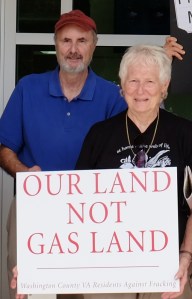
Photo credit Virginia Sierra Club

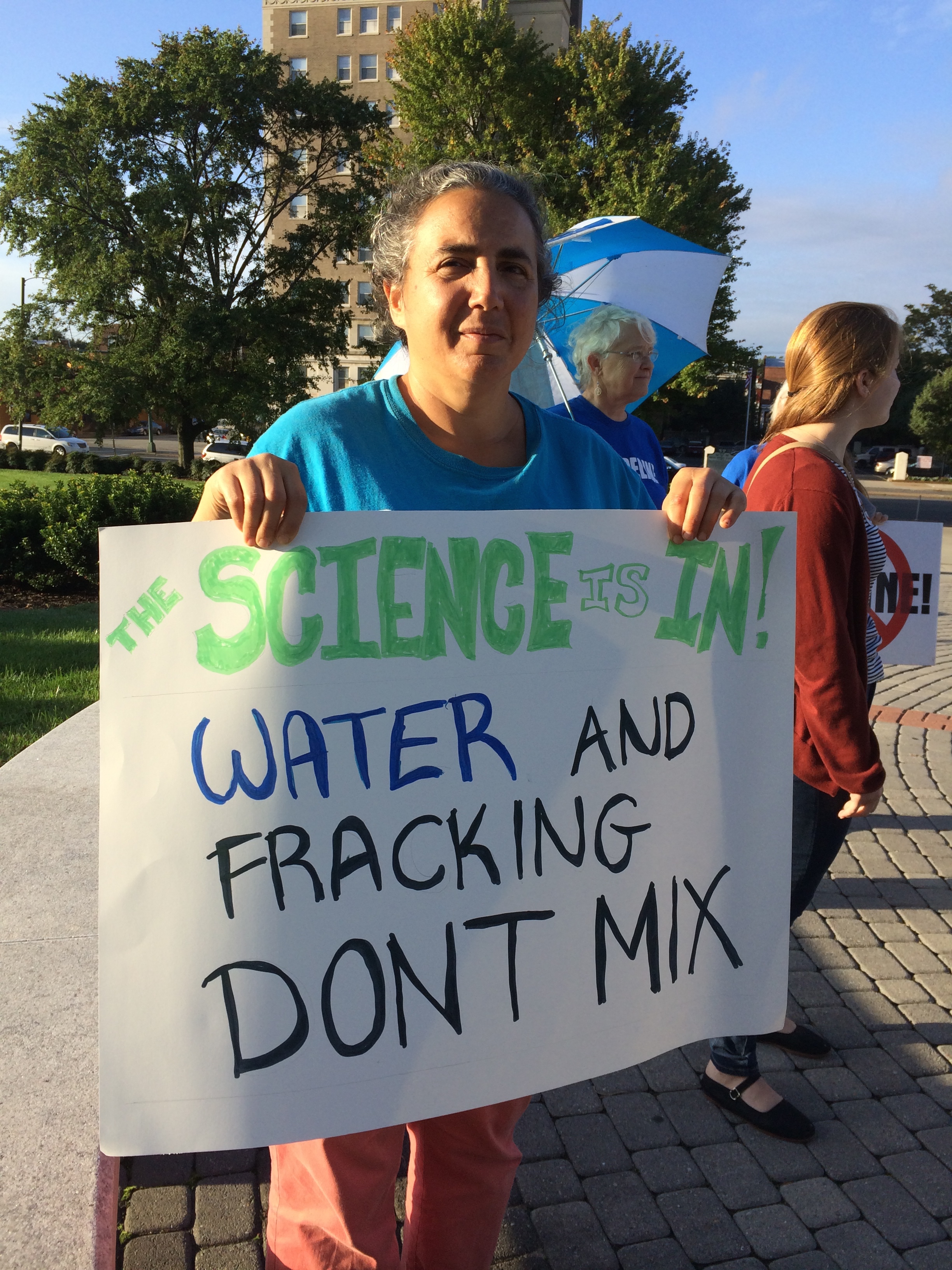
Photo credit Virginia Sierra Club

Even in a Dillon Rule state like Virginia, where local governments have only the authority conferred on them by the state, localities have some authority over matters that affect the daily life of residents. Traditionally they have authority to enact zoning ordinances to maintain their sense of community. Recently, counties have started to use their authority to limit the ability of natural gas drilling companies to conduct fracking operations within their borders. Now the industry is pushing back—hard.

Indeed, any action that limits fracking sends the oil and gas industry into high gear. The industry is already working to undermine new state regulations governing disclosure of chemicals used in fracking operations. Based on the experience of other states, we expect to see the industry seek legislation in Virginia’s upcoming General Assembly Session to block local authority over fracking.

New forms of “unconventional drilling,” including hydraulic fracturing or “fracking,” make drilling for natural gas potentially profitable in parts of Virginia that have no history of oil and gas development. Fracking companies have been travelling to new areas, leasing acres of land and approaching local governments for permits. Before considering permits, some local governments have insisted on researching fracking and its consequences.

This happened in 2010 in Rockingham County, which sits in the Shenandoah Valley atop a sliver of the Marcellus Shale. When a Texas-based drilling company requested permits to conduct fracking operations there, county supervisors decided they had better educate themselves on the subject. A Republican board member took the lead, investigating the safety records of fracking companies in other states and sounding the alarm about his findings. Facing growing opposition and unwilling to wait, and with falling gas prices making fracking in the county less profitable, the drilling company eventually withdrew its request.

Fracking also threatens the Tidewater area, where the U.S. Geological Survey estimates the Taylorsville Basin may contain over a trillion cubic feet of shale gas in an area underlying parts of more than a dozen Virginia counties. (A map of the Taylorsville Basin can be found here.) But while the potential for industry profits may be good, the potential risks are much greater. This low-lying region is in the Chesapeake Bay watershed and contains the Potomac Aquifer, which supplies water for drinking, agriculture and industry for almost half of Virginia’s population. In recognition of these unique environmental challenges, the Virginia Oil and Gas Act includes special provisions to protect the Tidewater Region. Two such provisions are the requirement of an environmental impact assessment for a permit, and a prohibition of drilling for oil or natural gas within 500 feet of the Chesapeake Bay or any tributary.

To add further safeguards, the King George Board of Supervisors proposed an ordinance in August 2015 with specific restrictions intended to protect the community from the noise, traffic and environmental degradation of fracking. After the gas industry threatened to sue, the Board held a new public hearing this year, then passed the ordinance with only slight modifications. Restrictions include a prohibition on well drilling within 750 feet of a waterway or road or occupied building, limiting drill sites to four acres, prohibiting holes from being bored within 100 feet of a property line, and requiring each company interested in drilling to apply for a special exception permit and to submit extensive information.

Although the oil and gas industry had tried to influence the Board’s decision with the threat of long and expensive litigation, its legal theory is weak. A 2015 opinion by Attorney General Mark Herring affirms that municipalities have the authority to use zoning ordinances to restrict fracking, including authority to prohibit it entirely within a jurisdiction. His opinion overturned that of the previous Attorney General, Ken Cuccinelli, who had stated that localities could not “ban altogether” oil and gas exploration and drilling through zoning ordinances. Even Cuccinelli, however, had conceded that a county “may adopt a zoning ordinance that places restrictions on the location and siting of oil and gas wells that are reasonable in scope and consistent” with applicable state laws.

If the industry can’t win in court, though, it may attempt to use the legislature to pass legislation taking away local governments’ ability to limit fracking. Given the historic influence the fossil fuel industry has on Virginia’s General Assembly, this poses a serious threat to localities that want to control their own fate.

The industry has an ally in this effort: the American Legislative Exchange Council (ALEC), a lobbying organization heavily funded by the fossil fuel industry. ALEC counts many conservative Virginia legislators among its members, as well as utility giant Dominion Resources. ALEC members draft and share model state-level legislation that favors corporate interests. ALEC claims to support sending power back to the local level, but in fact it consistently favors unlimited fossil-fuel extraction and burning, regardless of ALEC’s ostensible principles. So if local governments want to restrict fracking, while state legislatures are less inclined to do so, ALEC will likely favor blocking local government restrictions.

A recent news account revealed that ALEC and its local government affiliate, the American City-County Exchange (ACCE) are working to block local government action in states where the state legislature is more corporate-friendly than local governments. Thus we should be prepared to see ALEC insert itself in Virginia’s legislative process to try to block local restrictions on fracking.

Indeed, ALEC has already been working in other states to stop local governments from restricting fracking. This includes Texas, which passed a preemptive ban on local government efforts to stop fracking in 2015. In Florida, a similar ALEC-supported ban was defeated after opponents pointed out that the measure threatened localities’ traditional control over other local issues, such as education.

Linda Burchfiel is the Fracking Issues Chair for the Virginia Chapter of the Sierra Club.

Unknown's avatar

Southeastern electric utilities find their way to higher profits through gas pipelines and captive consumers

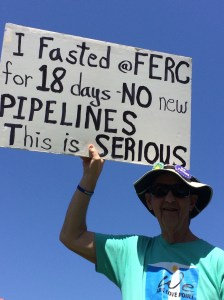
Charlie Strickler of Harrisonburg, Virginia, was one of a dozen activists who fasted last September in protest of FERC's role in approving natural gas pipelines, citing their contribution to climate change and harm to communities in their path. Photo by Ivy Main.

Charlie Strickler of Harrisonburg, Virginia, was one of a dozen activists who fasted last September in protest of FERC’s role in approving natural gas pipelines, citing their contribution to climate change and harm to communities in their path. Photo by Ivy Main.

Duke Energy, Southern Company, NextEra Energy and Dominion Resources—four of the largest investor-owned utilities in the U.S., all headquartered in the Southeast—have simultaneously adopted a growth strategy reliant on large volumes of fracked gas. With the nation’s energy sector turning decisively away from coal and nuclear energy, these companies are betting natural gas will be the dominant fuel for at least the next several decades. All four are investing billions of dollars in gas pipelines and other gas infrastructure to profit from the fracking boom.

Pipelines are attractive investments because they are typically allowed rates of return of around 14%, compared with the average regulated utility return allowed by public utility commissions of about 10%.

For the southeastern utilities, however, that rate of return is only part of the attraction. In a strategy that ought to concern regulators and electricity consumers, Duke, Dominion and NextEra all plan to use their regulated electric power subsidiaries to guarantee demand for the pipelines they’re building. The subsidiaries will build natural gas generating plants, paid for by electricity consumers, to be supplied with gas carried through the pipelines owned by their sister companies.

Southern is also investing in pipelines, but it currently doesn’t need new generation beyond the coal and nuclear plants it is struggling to complete—themselves object lessons in why coal and nuclear are kaput.

Southern just announced completion of its $12 billion acquisition of AGL Resources, a natural gas pipeline and distribution company. The move makes Southern Company “the nation’s second-largest combined gas and electric utility by customer base,” according to Utility Dive.

Dominion Resources was already heavily invested in the natural gas sector before it announced a $4.4 billion purchase of Questar Corp. News reports say the acquisition will bring Dominion an additional 27,500 miles of gas distribution pipelines, 3,400 miles of gas transmission pipeline and 56 billion cubic feet of working gas storage.

Duke Energy is making a $4.9 billion purchase of Piedmont Natural Gas, a natural gas transmission and distribution company. And NextEra recently spent $2.1 billion to acquire Texas-based NET Midstream through the limited partnership it formed, NextEra Partners, LLC.

Moody’s Investor Services issued a report in March criticizing Dominion, Southern and Duke for their natural gas transmission buys, saying the added financial risks offset the benefits of diversifying their businesses.

Moody’s may not have known how the utilities plan to use electricity customers as a hedge for at least two planned pipelines, the Atlantic Coast Pipeline (ACP) and Sabal Trail.

Using electricity customers to pay for pipelines

Companies owned by Duke, Southern and Dominion are partners in the 550-mile ACP, which will carry fracked gas from West Virginia through Virginia to the North Carolina coast. Duke and NextEra are partners in Sabal Trail, a 515-mile pipeline proposed to run from an existing pipeline in Alabama through Georgia to Florida, where Duke says it will fuel gas plants owned by Duke Energy Florida and Florida Power and Light, a subsidiary of NextEra.

ACP and Sabal Trail are only two of 15 new pipelines proposed on the East Coast competing to carry fracked gas flowing out of the Marcellus shale in Pennsylvania and West Virginia. So many pipelines are in development that analysts say there simply isn’t enough gas to fill them all. At the 2016 Marcellus-Utica Midstream Conference in February, attendees were warned that pipeline capacity “will be largely overbuilt by the 2016-2017 timeframe.”

But the ACP and Sabal Trail have an advantage most of the competition lacks. The utility partners all own electric power subsidiaries that use fracked gas to generate electricity. If the subsidiaries build new gas plants, these pipelines will be guaranteed a customer base. That means they can be profitable for their investors even when other pipelines struggle to find customers.

Indeed, Duke and Dominion’s electricity subsidiaries are making the kinds of investments you’d expect to see if the success of the pipelines were their top priority. Dominion Virginia Power is in the middle of a three-plant, 4,300 MW gas generation build-out. In the ACP’s application to the Federal Energy Regulatory Commission (FERC), Dominion Resources justifies the ACP in part by saying it will supply the newer of these plants. And the utility is just getting started with new gas generation; Dominion Virginia Power told Virginia officials last fall it expects to build another 9,000 MW of gas plants by 2040.

Meanwhile, Duke’s regulated subsidiaries, Duke Energy Carolinas and Duke Energy Progress, filed integrated resource plans in North and South Carolina that call for up to nine new natural gas generating units, totaling 8,300 MW. In February of this year, Duke received approval to build two 280 MW gas units in Asheville, NC, and sought approval for a third.

Bigger investments, greater risks

Linking pipelines to captive customers should prove a profitable arrangement for the utilities. For the customers who bear the costs and risks, it’s much more problematic. But state law gives them no say in the matter. In these southern states, the electric power subsidiaries hold legal monopolies in their designated territories. Once federal regulators approve the pipelines and state regulators approve the gas plants, the captive customers bear the loss if the bet turns sour.

Any one of several scenarios would make the gas investments a bad bet. The age of plentiful shale gas could end almost as quickly as it started, as some analysts predict, or gas prices could resume their historic volatility for other reasons. The U.S. could adopt newer, tighter carbon rules to meet international climate obligations, or enact a carbon tax that increases the cost of fossil fuels. Alternatives like wind, solar and energy storage seem likely to continue their astonishing march towards domination of the electric sector. As they become increasingly competitive, much new gas infrastructure is destined to become stranded investments.

And finally, the demand for natural gas, and for the pipelines themselves, may simply not be there; Americans are using less electricity, and generating more of it themselves through rooftop solar systems. The vertically-integrated, monopoly utility model that prevails in the Southeast relies on ever-increasing sales, which means it doesn’t require much of a change in consumer behavior to turn black ink red.

So while environmentalists are enraged by the recklessness of the southeastern utilities’ natural gas strategy in an age of climate change, customers who only care about the bottom line on their utility bills have reason to be just as upset. Capitalism is supposed to ensure that corporate shareholders bear the costs as well as receive the benefits of risky bets. With the risks of their gas gamble shifted onto captive customers, the utilities won’t be punished for not choosing clean energy instead.

Bucking the trend towards renewables and efficiency

It’s worth noting that the plans of Dominion, Duke and their fellow monopoly utilities run counter to the expressed desires of their customers. Natural gas companies work to brand their product as “clean,” but polls show Americans overwhelmingly believe the U.S. should emphasize wind and solar over oil and gas production, and oppose the use of fracking to extract oil and gas. Major corporations now threaten to vote with their feet, refusing to locate where they can’t access electricity from renewable sources.

It is not a coincidence that Duke and Dominion fall near the bottom of a just-released survey conducted by Ceres that ranks major utilities by their performance on energy efficiency and renewable energy. NextEra and Southern do no better. NextEra’s electricity subsidiary, Florida Power and Light, came in dead last for renewable energy sales. Ceres says it was unable to include Southern this year because it did not respond to requests for data, but in 2014 Southern ranked 31 out of 32 on renewable energy sales.

The southeastern utilities stand in marked contrast to utilities like Berkshire Hathaway’s Mid-American, which has announced a goal of meeting 85% of its customers’ needs with wind power. Even Dominion’s Virginia rival, Appalachian Power Company, filed an integrated resource plan last year with more new wind and solar generation projected than new natural gas. Perhaps that’s because neither Appalachian Power nor its parent company, American Electric Power, own any gas pipelines.

Effects on competition and consumers trigger an antitrust complaint

Customers may be the biggest losers when utilities use their electricity subsidiaries to guarantee the success of their gas subsidiaries, but the arrangement also harms other business interests. These include pipeline operators who don’t have the same self-dealing opportunity; non-utility electricity generators who can’t sell their product to utilities because the utilities now prefer to build their own gas generation; and companies that build wind and solar projects, who find themselves boxed out.

Already one non-utility generator is crying foul: Columbia Energy LLC, an operator of a 523 MW independent combined cycle gas generating plant that wants to sell electricity to Duke Power but finds itself left out in the cold. Columbia is challenging both Duke’s application for approval of a new gas plant in Ashville and the merger of Duke with Piedmont Natural Gas, another partner in the Atlantic Coast Pipeline.

The potential of the ACP to harm consumers and competition led to the filing in May of a complaint with the Federal Trade Commission (FTC). The complainant, retired Department of Justice antitrust lawyer Michael Hirrel, believes the utilities’ abuse of their legitimate monopoly power violates federal antitrust laws, and he is urging the FTC to investigate.

The Virginia Chapter of the Sierra Club, which opposes both the ACP and Dominion’s gas build-out, followed up with its own letter delving more deeply into the facts of Duke and Dominion’s self-dealing. (The letter and supporting documents, including Hirrel’s complaint, can be found at http://wp.vasierraclub.org/LetterInFull.pdf. Note that it’s a big file and may take time to load.) Hirrel has added both documents to the FERC file on the ACP application.

(Full disclosure: I led the team compiling the information for the Sierra Club submission. I’ve never met Mr. Hirrel and only learned about his complaint weeks after it was filed. However, I had been doing my own complaining—though evidently not to the proper authorities—about the utilities’ conflict of interest.)

But is anyone listening?

Aside from the FTC filing, opponents of the gas plants have pinned their hopes on state public utility commissions, while pipeline opponents are focused on the Federal Energy Regulatory Commission (FERC). Neither venue offers grounds for optimism. Virginia’s State Corporation Commission (SCC) has approved three of Dominion’s new gas plants in a row over the objections of environmental advocates, and North Carolina’s Utility Commission recently approved Duke’s new gas units in Asheville (though for now it has turned down a request for a third).

FERC poses its own challenge. Activists want FERC to review gas transmission proposals collectively instead of singly, to avoid overbuilding and the unnecessary damage to the environment and local communities that would result. This would be a departure for the agency, which traditionally reviews proposals individually, and has approved nearly every pipeline proposal that has come before it.

So far FERC has resisted arguments of this nature, as well as objections based on climate concerns. But in a possible sign that the agency recognizes times are changing, it has recently slowed the approval process for some proposed new pipelines, apparently to conduct more thorough environmental reviews.

There is no sign yet that the public utility commissions and FERC are communicating with each other or with the FTC. That leaves anti-pipeline groups and environmental activists in a difficult position. They can make a strong case the utilities are taking unfair advantage of captive ratepayers for a purpose that harms both the environment and the public. But is anyone listening?


Unknown's avatar

Complaint: utilities’ role in Atlantic Coast Pipeline violates antitrust laws

pipelinemadnessDominion Resources’ plan to use the captive ratepayers of its electricity subsidiary to guarantee a customer base for its Atlantic Coast Pipeline venture has caused critics—including me—to complain that the scheme presents a clear conflict of interest. According to a complaint filed with the Federal Trade Commission (FTC), it’s also a violation of federal antitrust laws.

Lawyer Michael Hirrel, who retired last year from the Antitrust Division of the U.S. Department of Justice, has asked the FTC to investigate “whether ACP’s project constitutes a prohibited monopolization by Dominion, Duke and Piedmont, under Section 2 of the Sherman Act, and an unfair method of competition, under Section 5 of the Federal Trade Commission Act.”

Dominion Virginia Power is currently engaged in an aggressive build-out of natural gas generating plants, with three new units representing 4,300 megawatts of generating capacity, coming online between 2014 and 2019. The company’s latest integrated resource plan and presentations to stakeholders reveal plans for over 9,000 megawatts more. By comparison, the company has promised a mere 400 megawatts of solar.

Where there are gas plants, there must be gas, and this massive build-out means a guaranteed stream of income for the lucky owners of gas transmission pipelines. The fact that one such pipeline is partly owned by Dominion Virginia Power’s parent corporation is clearly a conflict of interest. Because Dominion holds a monopoly on electricity sales, its customers will be stuck paying for gas—and guaranteeing a revenue stream for pipeline owners—for decades to come.

This is a bad deal for customers and the climate, but according to Hirrel, it is also anticompetitive and warps the normal decision-making of the companies involved.

(In addition to Dominion Resources, the other owners of the Atlantic Coast Pipeline are Duke Energy, Piedmont Natural Gas and AGL Resources. AGL is being acquired by Southern Company, meaning three of the four partners own electricity subsidiaries that are regulated monopolies that can stick ratepayers with the cost of paying for gas. As for the fourth partner, Piedmont is a regulated monopoly distributor of natural gas. Just to make things even more cozy, Piedmont is being acquired by Duke.)

Hirrel’s complaint notes: “If Dominion, Duke and Piedmont were to acquire their gas and its transportation, plus electricity generation, in competitive markets, they would, the Commission must suppose, engage in a very different decision making process. But that process will be rendered moot when they acquire and transport their own natural gas, and generate their own electricity. They will distribute the electricity and gas to their own monopoly retail customers, who have no alternative. Those customers must pay the costs of Dominion, Duke and Piedmont’s decisions, whether the costs were efficiently assumed or not.”

Hirrel also points out that in a truly competitive market, Dominion and Duke might not pursue a natural gas strategy at all, because of the economic risks involved. They might, for example, consider whether investments in wind and solar would be more economical and avoid the potential for stranded investments.

“But in the present universe,” he concludes, “the one in which Dominion, Duke and Piedmont propose to become the monopoly suppliers of the inputs for their own monopoly customers, they need not engage in any such economically efficient decision making process. If they make bad decisions, they will not suffer. The costs of those bad decisions will be borne by the monopoly customers of their retail electricity and natural gas distribution systems.”

I called Mr. Hirrel to ask what action he expects the FTC to take. He says the Commission typically takes anywhere from two weeks to two months to determine whether to open an investigation when it receives a complaint like this. If it chooses to investigate, it may also ask the Federal Energy Regulatory Commission (FERC) to delay its approval process for the ACP pending conclusion of the FTC investigation.

Hirrel copied FERC on his complaint, making it a public document within the ACP docket (CP15-554).

Update: on June 23, the Virginia Chapter of the Sierra Club submitted a letter to the FTC providing further information supporting the antitrust complaint. The letter and supporting documents can be found at http://wp.vasierraclub.org/LetterInFull.pdf.

Unknown's avatar

Governor McAuliffe considers changes to Virginia fracking regulations, currently among worst in nation

Over the past year, guest blogger John Bloom has been studying Virginia’s regulations governing hydraulic fracturing with horizontal drilling–fracking–and assessing the commonwealth’s readiness to welcome natural gas drilling companies into communities where they have never operated before. With the McAuliffe Administration preparing to address the issue for the first time with new regulations, I asked Bloom to take over the blog this week and tell us how things look. –I.M.

IMG_0634Proposed changes to Virginia’s gas drilling regulations are on their way to Virginia Governor Terry McAuliffe for review. If he approves, the revisions will go out for public comment. Public safety and environmental advocates generally welcome the changes, as far as they go. There’s just one problem: the changes fail to address many of the serious risks posed by fracking.

The dismal state of Virginia’s regulatory regime has become a pressing issue because, if the fossil fuel industry has its way, unconventional shale gas drilling – fracking[1] — will soon be a part of Virginia’s landscape. The gas industry sees opportunities to drill into the Marcellus Shale in western Virginia and the Taylorsville Basin in Tidewater Virginia, where 80,000 acres are under lease already.

Is Virginia ready for this kind of fracking? The fracking industry seems to think so, and Virginia’s Division of Mines, Minerals and Energy (DMME), the agency in charge of regulating gas drilling, seems to think its regulations just need a few tweaks to make fracking safe in Virginia.

Before deciding whether or not a few tweaks is all we need, let’s consider the views of a drilling industry insider. According to Louis Allstadt, Mobil Oil Corporation’s former head of oil and gas drilling in the Western Hemisphere, “making fracking safe is simply not possible, not with the current technology, or with the inadequate regulations being proposed.”[2] He warns that “the industry will tell you that fracking has been around a long time. While that is true, the magnitude of the modern technique is very new.” Fracking now requires 50 to 100 times more chemicals and water than older wells, according to Allstadt. “This requires thousands of trucks coming and going. It is much more a heavy industrial activity.” Further, he warns that methane, which is 86 times more potent as a greenhouse gas than carbon dioxide over a 20-year period, “is leaking from wells at far greater rates than were previously estimated.”

The health and environmental risks of fracking include a litany of short-term and long-term threats to air, water, land, and human and animal health. The risks come from many directions, including the drilling process, the fracking process, the chemicals used, which typically include potent carcinogens and endocrine disruptors, the handling and disposal of large quantities of toxic wastewater, potential earthquakes, the pipelines and compressor stations needed to transport the gas, and disruption of local communities with lights, noise, heavy truck traffic, and the constant prospect of disastrous explosions and other industrial accidents. For an excellent review of recent findings, check out A Compendium of Scientific, Medical, and Media Findings Demonstrating Risks and Harms of Fracking (Unconventional Gas and Oil Extraction), published by Concerned Health Professionals of New York in December 2014.

After carefully studying the risks, Maryland and New York recently declared statewide moratoriums on fracking. Like Allstadt, they found that the risks outweighed the benefits. Other states, such as Pennsylvania, Ohio and West Virginia, have embraced drilling and are learning the hard way that modern fracking – if it’s going to happen at all – requires much more careful regulatory oversight than traditional drilling.

Proposed Revisions to Virginia’s Drilling Regulations Are Grossly Inadequate

Virginia’s regulations start off in an embarrassing place. According to a 2013 survey of shale gas regulations across the country, using two different methodologies, Virginia had the least stringent regulations of all 31 states with actual or potential shale gas production.[3] Given that, and given the rapid pace at which other states are learning from mistakes and tightening regulations, you might expect Virginia to study the potential risks of modern fracking techniques carefully, as Maryland and New York did, before deciding whether to allow them. At the very least, you might expect Virginia to conduct a rigorous review and update of its regulations. Unfortunately, you would be wrong.

Instead of a thorough review, Virginia’s DMME conducted a controlled review intended to update only a few aspects of the regulations. A driving force behind the review seemed to be a request by the drilling industry for Virginia to join an industry-endorsed approach to disclosing fracking fluid ingredients while continuing to protect alleged trade secrets.

DMME convened a review panel that notably lacked anyone from the Virginia Department of Health (VDH) or anyone else with public health expertise, despite the major public health issues involved in fracking. DMME staff led the panel through a handful of issues. The panel came up with exactly what was intended: piecemeal updates when a broader effort was badly needed. When environmental groups proposed a more thorough regulatory review, they were told their proposals were simply beyond the scope of what DMME would consider.

So what are the shortcomings of the proposed revisions? There are many, and the devil is in the details. Here are just a few examples:

  • The regulations would continue to allow drilling wastewater to be disposed of by spreading it on roadways, agricultural and forest land. Other states have correctly concluded that this is simply not a safe way to dispose of fracking waste.
  • The regulations would continue to allow the industry to use open pits to store toxic wastewater, while other states such as Pennsylvania now require closed tanks to avoid leaks, spills, and harm to wildlife.
  • The regulations authorize disposing of wastewater at an “offsite facility,” yet water treatment plants in Virginia cannot effectively process fracking waste. This would result in toxins passing through untreated, damaging Virginia’s waterways. How toxic wastewater will be tracked and disposed of needs to be more clearly spelled out and regulated, as it is in other states.
  • In western Virginia, drilling companies would still be allowed to bury drilling muds and cuttings (drilling waste products) at the well-site instead of hauling them offsite for safe disposal. This practice can result in heavy metals, radioactive materials, and other toxins leaching into the groundwater and contaminating soils. That practice is now forbidden in Tidewater Virginia, reflecting a growing double-standard between protections offered to eastern versus western parts of the state. Is western Virginia somehow less worthy of protection?
  • Virginia’s regulations contain no testing requirements or limits on hazardous air pollution and methane emissions from gas drilling operations, despite the recognition of methane as a potent greenhouse gas. Federal regulations may provide a floor in this area, but Virginia should enact higher standards.
  • Virginia regulations contain only a single setback requirement that wells be at least 200 feet from an occupied building – literally a stone’s throw. Other states have developed much more protective siting requirements taking into account floodplains, public water supply watersheds, fisheries, special lands, schools, hospitals and other important considerations. Virginians should have similar protections spelled out in regulations.

Correcting these deficiencies, and many other suggestions made by the Sierra Club and other environmental groups, were rejected as beyond the scope of DMME’s review.

Now It’s Up to Governor McAuliffe

Three actions are needed at this point, and all of them fall squarely within the authority of Governor McAuliffe. The Governor should:

  1. Direct his Administration to conduct a broad study of the health, environmental, economic and other risks and benefits of unconventional shale fracking in Virginia, so that a considered decision can be made about whether these new forms of fracking should be allowed, and if so, what regulations are needed.
  2. Direct DMME to conduct a thorough regulatory review that takes into account the findings of the Administration’s study and the extensive lessons learned from other states.
  3. Direct that no permits for unconventional shale drilling be approved until the first two steps have been completed.

As long as he takes the steps outlined above, it doesn’t matter much what the Governor does with the weak piecemeal regulatory revisions currently under his review. They could be folded into the broader regulatory review or enacted separately. The important thing is that the Governor isn’t fooled into thinking that these revisions are an adequate response to the threat fracking poses to Virginia’s health, safety and environment.

Taking these three steps should not be difficult for Governor McAuliffe. It would put into practice precisely the position on fracking that he took as a candidate in 2011:

“We should not do any of these techniques here in Virginia until everyone is 100 percent – 100 percent – sure of safety as it relates not only to the watershed but everything that comes off of that, as it relates to uranium, natural gas fracking… Let’s look at all the alternatives. Wind is clean, wind is safe. Solar is clean, solar is safe. So let’s get everything moving forward (while) studying these other things.”[4]

*  *  *  *

John Bloom, a public interest consultant, is chair of public health issues for the Virginia Chapter of the Sierra Club and serves on the Executive Committee of the Sierra Club’s Mount Vernon Group.

_____________________________________________________________________

[1] As used here, “fracking” and “unconventional drilling” refer to newer forms of high volume hydraulic fracturing, or similar forms of well stimulation using liquid nitrogen or other materials, combined with horizontal drilling.

[2] Allstadt was referring to draft regulations in New York, which were much more stringent than Virginia’s. See Brian Neering, Albany Times-Union, April 22, 2014, “Former Mobil Oil exec urges brakes on gas fracking,” available online at http://www.timesunion.com/business/article/Former-Mobil-Oil-exec-urges-brakes-on-gas-fracking-5422292.php.

[3] Nathan Richardson et al, The State of State Shale Gas Regulation, at pages 18, 20 (June 2013), available at http://www.rff.org/rff/documents/RFF-Rpt-StateofStateRegs_Report.pdf.

[4] Terry McAuliffe, in an interview with Jan Paynter, Host, Politics Matters, September 2011. Available online at https://www.youtube.com/watch?v=EFvDrh92xpM.


Unknown's avatar

In reversal, Virginia AG says localities may ban fracking

fracking signVirginia Attorney General Mark Herring issued an official advisory opinion on May 5 holding that Virginia localities have the right to prohibit hydraulic fracturing (or “fracking”) as part of their power to regulate land use within their boundaries. The letter reverses a two-year-old opinion by former Attorney General Ken Cuccinelli.

Herring’s opinion cites §15.2-2280 of the Virginia Code, which grants broad zoning powers to localities. These include the power to “regulate, restrict, permit, prohibit, and determine” land uses, such as “the excavation or mining of soil or other natural resources.” Thus, writes Herring, “I conclude that the General Assembly has authorized localities to pass zoning ordinances prohibiting fracking. The plain language of the stature also authorizes localities to regulate fracking in instances where it is permitted.”

Herring’s opinion comes in a letter to Senator Richard Stuart, who had asked whether Virginia law allows localities to prohibit “unconventional gas and oil drilling,” commonly known as fracking, and whether they may use their zoning authority “to regulate aspects of fracking, such as the timing of drilling operations, traffic, or noise.”

The letter overrules a January 11, 2013 opinion by then-Attorney General Ken Cuccinelli, which held that the General Assembly had preempted localities’ right to regulate or ban drilling when it passed the Virginia Gas and Oil Act. Under §45.1-361.5, localities may not “impose any condition, or require any other local license, permit, fee, or bond to perform any gas, oil or geophysical operations which varies from or is in addition to the requirements of this chapter.”

But, Herring notes, the statute “also includes a savings clause stating that the Act does not ‘limit or supersede the jurisdiction and requirements of . . . local land-use ordinances.’” Thus, it explicitly preserves local zoning authority to prohibit or limit fracking.

Herring concludes, “To the extent that the 2013 Opinion conflicts with this conclusion, it is overruled.”

Interestingly, if localities choose to restrict fracking but not prohibit it, they may actually leave themselves more open to challenge. Herring’s opinion reaffirms that portion of Cuccinelli’s opinion that upheld the right of localities to impose some restrictions on fracking, short of outright prohibition. However, the restriction must be “reasonable in scope” and “not inconsistent with the Act or regulations properly enacted pursuant to the Act.” As a result, a fracking company might have a better shot at challenging a restriction than it would an outright ban.

Herring adds, “Determining the extent to which particular zoning restrictions on fracking may possibly be preempted by state law will be governed by the particular facts, restrictions, and regulations at issue. Consequently, I can express no opinion on whether any particular zoning restriction has been preempted.”

Unknown's avatar

Dominion’s natural gas gamble looks risky for ratepayers

Opposition to Dominon's planned Atlantic Coast Pipeline has spurred protests from landowners and environmental advocates and led to more than 5,000 comments to the McAuliffe Administration opposing the pipeline. Photo courtesy of Linda Muller.

Opposition to Dominon’s planned Atlantic Coast Pipeline has spurred protests from landowners and environmental advocates and led to more than 5,000 comments to the McAuliffe Administration opposing the pipeline. Photo courtesy of Linda Muller.

Dominion Resources and its regulated subsidiary, Dominion Virginia Power, are gambling big on natural gas. But while the utility giant will be a winner if gas prices stay low over the next 20 years, the risk of losing this bet is very real—and the risk is being borne disproportionately by Virginia consumers.

Ever since the shale gas boom sent natural gas prices into a tailspin beginning in 2008, Dominion has increasingly been putting its chips into gas. Its Virginia subsidiary just completed a 1,329 megawatt (MW) natural gas plant in Warren County, began construction last year on a 1,358 MW gas plant in Brunswick County, and last month announced plans for a 1,600 MW plant in Greenville County, to be operational in 2019. Virginia ratepayers will foot the bill for construction costs, plus the cost of operating and fueling these mammoth plants for decades to come.

But while Virginians tend to think of Dominion as an electricity provider, its bigger business line is in natural gas transmission and storage. According to the Dominion website, its subsidiary Dominion Transmission, Inc. maintains 7,800 miles of pipeline in six states and operates what it says is one of the largest underground natural gas storage facilities. Another subsidiary operates 1,500 miles of pipeline in South Carolina and Georgia. The company is moving aggressively to add and upgrade compressor stations and build additional pipeline capacity in West Virginia and Pennsylvania.

It is also angling to add a massive 42-inch diameter, 550-mile gas pipeline to run from West Virginia through Virginia to the coast in North Carolina. Promising a vast new supply of cheap fracked gas for industrial users, Dominion has won the support of lawmakers like Virginia Governor Terry McAuliffe while galvanizing opposition from landowners and environmentalists.

Meanwhile, Dominion has another game afoot, with plans to begin exporting liquefied natural gas from its Cove Point, Maryland facility. Upgrading the facility will cost the company $3.8 billion, and running the liquefaction facility will require 240 MW of power (using more natural gas). Natural gas is so much more expensive in foreign markets that Dominion considers the gamble worthwhile, even as it cites a U.S. Energy Information Administration study for the proposition that little or no natural gas would be exported if the U.S. price “increases much above current expectations.”

All of these ventures depend on one crucial assumption: that natural gas prices will remain low for as many years as it takes to fully recover the cost of these investments, and then some. For electric generation, moreover, gas has to be able to outcompete other fuel sources. That includes not just coal and nuclear, both of which are being abandoned in droves in the face of cheap gas, but also new sources like solar and wind, which have trended steadily downward in price over the past two decades. In some regions of the country (although not yet Virginia), wind and solar prices already outcompete natural gas.

Gas does have the advantage of dispatchability—the ability to provide power according to the peaks and valleys of demand, allowing it to fill in around variable energy sources like wind and solar. That makes gas vital for backup generation, at least until power storage technologies become cheaper. But it wouldn’t justify the large-scale shift to gas for baseload generation, as Dominion’s plans envision, unless the company is right that gas prices will stay low.

If Dominion’s assessment of the market is wrong, its shareholders will take a hit. Higher natural gas prices could make the export business fizzle, and there might not be enough customers to justify the pipeline buildout. That’s why the company is moving so quickly to build the three massive new natural gas generating plants in Virginia under the ownership of its regulated subsidiary. Dominion is protecting its bet by locking Virginia electricity customers into gas for the long term, guaranteeing itself a market not just for its natural gas generating plants but also for its pipeline business. If the shale boom becomes a bust, or if prices rise to pre-boom levels, it will be Virginia ratepayers who pay through the nose or get stuck with stranded assets.

How big the risk is depends on whom you ask. The gas industry claims supplies will be sufficient to meet demand for decades to come. The U.S. Energy Information Agency, that voracious consumer of yesterday’s news, largely agrees (though it has more recently begun tempering its enthusiasm). If the optimists are right, production from the major shale gas plays will increase 40% by 2030 over today’s production levels, enough to support the mad rush to gas by Dominion and other utilities like it, without upward pressure on prices.

But a more pessimistic view is gaining adherents. As described in the December 2014 issue of the journal Nature, a team of a dozen geoscientists, petroleum engineers and economists at the University of Texas at Austin (UTA) has been analyzing assumptions behind the industry’s rosy outlook, and concludes it is wrong. Instead, the UTA study indicates production of natural gas from the “big four” shale plays will slow significantly after 2016, peak by about 2020, and then decline, dropping 20% from current levels by 2030. If so, the amount of natural gas coming to market in the U.S. will be less than half of what the optimists expect. The upward pressure on prices will be enormous.

The UTA team joins a growing chorus of doubters, whose studies suggest that the shale juggernaut can’t be maintained profitably. If these pessimists are correct, we should begin seeing evidence of it well before 2020. For now, there is at the least a very serious risk that cheap gas won’t last, and anyone who can’t afford to lose big would be well advised to wait it out.

IMG_0634There are other reasons Virginians should be wary of over-investment in natural gas infrastructure, both generating plants and pipelines. The need to fill pipelines will put pressure on the state to welcome fracking companies, both in the Marcellus shale in the western part of the state, and in the Taylorsville Basin in the east. Until 2010, Dominion itself owned gas drilling leases, and according to the Center for Media and Democracy, “Dominion is a member of several special interest groups that push for expanded drilling rights and limited or no regulation of fracking.”

With pollution of air and water a serious concern, and given the state’s tradition of lax regulation on industry, some localities are already looking for ways to exclude drilling companies from their borders. If we are going to have this fight, it shouldn’t be because one powerful corporation made a bad bet.

Finally, of course, there is the climate cost of natural gas. As we congratulate ourselves for leaving coal in the rear-view mirror, we need to recall that we have a long way to go to reach the carbon-free grid, and stalling out at the halfway point isn’t grounds for celebration.

Natural gas has a role to play in the transition period before wind, solar, and other carbon-free sources take over permanently, and it will remain useful as a back-up source when wind and solar aren’t producing power. But a wise energy policy today focuses on developing those renewable sources as fast as possible, reducing demand through investments in energy efficiency, and using natural gas as a backstop rather than as a primary source of power.

This approach reduces risk to the national economy if shale gas production declines, and it reduces risk to ratepayers stuck paying whatever the price of natural gas may be when demand outstrips supply.

Dominion Resources is an investor-owned corporation. As such, it is entitled to place risky bets in the hopes of making a killing for its shareholders. What it is not entitled to do is to shift the risk of losing the bet onto its captive ratepayers in Virginia.

With the odds so stacked against consumers, Virginia should refuse to play.

Thanks go to Richard Ball, PhD., Energy Chair of the Virginia Sierra Club, for his research and analysis of shale gas supplies.

Unknown's avatar

Your 2015 Virginia legislative session cheat sheet, part 2: Fossil Fuels

Photo credit: Corrina Beall

Photo credit: Corrina Beall

My last post covered clean energy bills introduced into the 2015 legislative session, which began last week and ends at the end of February. Time to hustle on to the oil, gas, and coal bills.

Coal subsidies

Coal companies claim to be victims of a “war on coal,” but for nearly two decades they’ve been conducting a war on Virginia taxpayers. Virginia’s tax code offers so many preferences that a 2012 study concluded the coal industry costs Virginia more than it gives back. Among other preferences, two different subsidies in the Code have allowed coal companies to siphon off tens of millions of dollars annually from the General Fund since 1996.

The subsidies come with nominal sunset dates, currently January 1, 2017. Over nearly twenty years, no matter how fat or lean the state’s financial condition, the legislature has repeatedly passed extensions, and they are being asked to do so again this year. HB 1879 (Kilgore) and SB 741 (Carrico) would extend the giveaway out to 2022.

(According to VPAP.org, Delegate Kilgore, chairman of the Commerce and Labor Committee, gets a check for $10,000 every year from coal giant Alpha Natural Resources. Alpha also gives ten grand a year to Senator Carrico, who just happens to sit on Senate Finance, which will hear the bill. I mention these facts only in passing. It would be cynical to suggest a connection.)

Supporters of the subsidies seem to believe coal companies need the inducement to blow up our mountains and dump waste into stream valleys. And they maintain this is a good thing for the people of Southwest Virginia, who can enjoy gainful employment by participating in the destruction of their communities.

The coal companies certainly do benefit from this arrangement, but coal jobs have declined to less than 5,000 total in Virginia today, and it’s clear to everyone that Southwest Virginia needs to diversify its economy or face a future of poverty and high unemployment. The coal subsidies suck up money that could be spent on new jobs and a better-educated workforce.

The McAuliffe administration, facing a budget shortfall, has suggested cutting the subsidies way back, and has no plans to extend them. HB 2181 (Toscano) reduces the amount of the subsidies for 2015 and 2016 but does not eliminate them. It also limits the amount that can be claimed on any one tax return to $500,000 under each Code provision.

HB 1877 (Krupicka) would end the subsidies altogether a year early. His bill goes further: it would redirect the savings into a fund to provide grants to students enrolled in Virginia public colleges and universities. Half the money would be required to go to students from the Coalfields region.

Natural gas

SB 1338 (Hanger) repeals a provision of the Code known as the Wagner Act (after Senator Frank Wagner, who introduced the legislation ten years ago). That provision allows interstate natural gas companies to enter private property without the consent of the owner in order to make “examinations, tests, hand auger borings, appraisals, and surveys.”

The Wagner Act gained notoriety last year when Dominion Power sued landowners who resisted efforts to survey their land. We think of Dominion as an electric utility, but Dominion Resources also owns a gas transmission company, and it plans to build a huge new pipeline to bring fracked gas from Ohio and West Virginia and deliver it to industrial customers and export facilities on the coast. Turns out, a lot of people don’t like strangers coming on their land without permission, especially when the point is to let the strangers decide whether they might want to seize the land for a pipeline. Well, who could have expected that?

But in case the GA doesn’t have an appetite for repealing the Wagner Act, how about making it harder to use? SB 1169 (Hanger again) amends it to add a pre-condition. Before any natural gas company can enter someone’s property without permission, the governing board of the locality must have adopted a resolution in support of the pipeline or gas works. Moreover, the resolution “shall not be adopted unless the governing body has found that locating the line or works within the city or county is consistent with its comprehensive plan, master plan, or any general development plan and that there exists a demonstrated public need for the line or works.”

HB 1475 (Ware) and SB 1163 (Saslaw) allow natural gas utilities to expand their systems to reach more retail customers. This legislation is not related to the interstate gas pipelines sought by Dominion and others. It deals with pipelines within the state that would connect customers who currently don’t have access to natural gas for heating and cooking (a more efficient use of energy than burning gas for electricity to perform the same functions).

But the gas utilities have taken a page from the Dominion playbook and overreached with their legislative language, including by declaring its plans and business goals to be “in the public interest” (the magic words that limit SCC review). We hear the bill is likely to be amended to take out the offending language.

Really a bill about energy efficiency, SB 1331 (Petersen) changes how the SCC evaluates natural gas conservation programs proposed by utilities. It instructs the SCC to determine the cost-effectiveness of a program by looking at the utility’s whole portfolio of conservation programs and not each judged separately. This should make it easier to get conservation programs approved, and it’s to the credit of the retail gas companies that they want it passed. Senator Petersen’s office informed me the bill originated with the governor’s office, which supports it.

Offshore oil drilling

Virginia doesn’t control the deep waters off our coast where oil may be lurking, and drilling is still years away, if it happens at all. But that has never stopped state lawmakers from making plans to spend the money we might earn from oil drilling, if Congress were to share some of the revenue with us. Most of us will recognize this game as, “Imagine if you won the lottery.”

Back in 2010, Governor McDonnell pushed through a bill to fund transportation projects with the imaginary money. In 2014, the law was amended to put $50 million into an emergency response fund to combat what would have to be a pretty small imaginary oil spill, with all the extra imaginary money going to the General Fund.

HB 1702 (Davis) proposes to amend the law again to take half of the imaginary General Fund money and put it into public schools. Well, who could object to that? Except for the imaginary part, of course.

Unknown's avatar

Virginia’s amazing year in energy: gas rises, coal falls, and solar shines (but it’s still not okay to say “climate change”)

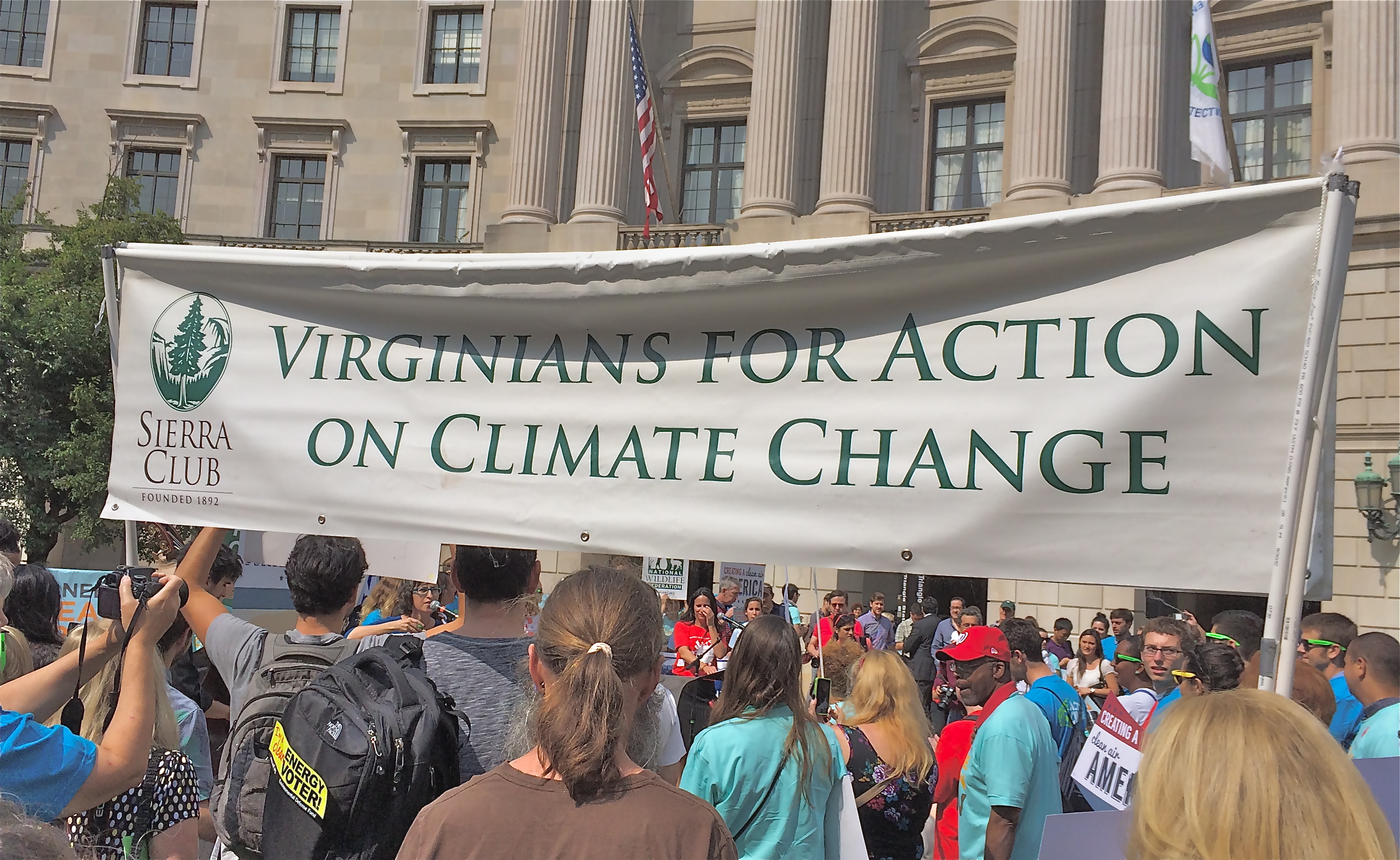
Virginians rally in front of U.S. EPA Headquarters in Washington, DC in support of the Clean Power Plan

Virginians rally in front of U.S. EPA Headquarters in Washington, DC in support of the Clean Power Plan

Nobody laughed a few years ago when former governor Bob McDonnell dubbed Virginia the “Energy Capital of the East Coast”; we were all too astounded by the hyperbole. And today, even “Energy Suburb” still seems like a stretch. Yet, if you measure achievement by the sheer level of activity, Virginia is making a play for importance. The year’s top energy stories show us fully engaged in the worldwide battle between fossil fuels and renewable energy. Of course, while the smart money says renewables will dominate by mid-century, Virginia seems determined to drown rather than give up its fossil fuel addiction.

Coal falls hard; observers disagree on whether it bounces or goes splat. Nationwide, 2014 was a bad year for the coal industry. Coal stocks fell precipitously; mining jobs continued to decline; and the one thing electric utilities and the public found to agree on is that no one likes coal. Even in Virginia, with its long history of mining, coal had to play defense for what may have been the first time ever. So when Governor McAuliffe released the state’s latest energy plan in October, what was otherwise a paean to “All of the Above” omitted the stanza on coal. And this month, the governor proposed a rollback of the subsidies coal companies pocket by mining Virginia coal.

Of course, coal is not going quietly; Senator Charles Carrico (himself heavily subsidized by Alpha Natural Resources) has already responded with a bill to extend the subsidies to 2022.

EPA opens a door to a cleaner future, and Republicans try to brick it up. Speaking of hard times for coal, in June the EPA unveiled its proposal to lower carbon emissions from existing power plants 30% nationwide by 2030. Instead of targeting plants one-by-one, EPA proposed a systemic approach, offering a suite of options for states to reach their individualized targets.

The proposal drew widespread support from the public, but Virginia’s 38% reduction target set off howls of protest from defenders of the status quo. The staff of the State Corporation Commission claimed the rule was illegal and would cost ratepayers $6 billion. Republicans convened a special meeting of the House and Senate Energy and Commerce Committees, where they tried out a number of arguments, not all of which proved ready for prime time. The rule, they said, threatens Virginia with a loss of business to more favored states like—and I am not making this up—West Virginia. Also, Virginia should have received more credit for lowering its carbon emissions by building nuclear plants back in the 1970s when no one was thinking about carbon emissions.

Meanwhile, the Southern Environmental Law Center analyzed the rule and concluded that actually, compliance will not be hard. Virginia is already 80% of the way there, and achieving the rest will produce a burst of clean-energy jobs coupled with savings for consumers through energy efficiency.

Undaunted, Republicans have already introduced a thumb-your-nose-at-EPA bill developed by the fossil fuel champions at the American Legislative Exchange Council.

The “solarize” movement takes Virginia by storm. For the last few years, solar energy has been exploding in popularity across the U.S., but Virginia always seemed to be missing the party. So it surprised even advocates this year when pent-up consumer demand manifested itself in the blossoming of local solar buying cooperatives and other bulk-purchase arrangements. “Solarize Blacksburg” made its debut in March, going on to sign up hundreds of homeowners for solar installations. It was followed in quick succession by the launch of similar programs in Richmond, Charlottesville, Harrisonburg, Northern Virginia, Halifax, Floyd, and Hampton Roads.

The main reason for the solarize programs’ success was the steep decline in the cost of solar energy. 2014 saw the cost of residential installations in Virginia fall to record low prices, making the investment worthwhile to a broad swath of homeowners for the first time.

Utilities say maybe to solar, but only for themselves. Virginia still boasts no utility-scale solar, but utilities elsewhere signed long-term power purchase contracts for solar energy at prices that were sometimes below that of natural gas: under 6.5 cents/kilowatt-hour in Georgia, and under 5 cents in Texas. Compare that to the estimated 9.3 cents/kWh cost of power from Dominion Virginia Power’s newest and most up-to-date coal plant, the Virginia City Hybrid Energy Plant, and you’ll understand why Dominion has suddenly taken an interest in solar projects. Sadly, it’s own foray into rooftop solar so far stands as an example of what not to do, and a testament to why the private market should be allowed to compete.

Yet Virginia utilities continued their hostility to customer-owned solar. Dominion put the kibosh on a bill that would have expanded access to solar energy through community net-metering, while Appalachian Power matched Dominion’s earlier success in imposing punitive standby charges on owners of larger residential systems.

Fracking, pipelines, and gas plants, oh my! Renewable energy may be the future, but the present belongs to cheap natural gas. Yes, the fracking process is dirty, noisy and polluting, and yes, methane leakage around gas wells is exacerbating climate change. But did we mention gas is cheap?

2014 saw proposals to drill gas wells east of I-95, while the Virginia government began updating its regulations to govern fracking. Dominion Power started construction on a second new gas power plant, and talked up its plans for a third. The utility giant, a major player in the gas transmission business, also got approval to turn its liquefied natural gas import terminal in Cove Point, Maryland, into an export terminal. With visions of customers dancing in its head, it also announced plans for a major new pipeline to bring fracked gas from West Virginia through Virginia and into North Carolina—one of three proposed pipelines that would cut through the Virginia countryside and across natural treasures like the Appalachian Trail. The pipeline created an instant protest movement but gained the wholehearted approval of Governor McAuliffe.

Flooding in Hampton Roads becomes the new normal; it’s still not okay to ask what’s causing it. A cooler-than-normal year for the eastern United States gulled many landlubbers into believing that global warming was taking a breather, but meanwhile the ocean continued its inexorable rise along Virginia’s vulnerable coastline. It’s one thing to shrug off the occasional storm, said residents; it’s harder to ignore seawater that cuts off your parking lot at every high tide. 2014 will go down as the year everyone finally agreed we have a problem—even in the General Assembly, which passed legislation to develop a response to the “recurrent flooding.” But while the bill recognized that the problem will just get worse, it avoided noting why.

The public gets it, though. The Richmond Times-Dispatch reports that climate change was the number one topic of interest to writers of letters to the editor in 2014. And loud cheers greeted Governor McAuliffe’s announcement that he would reestablish the state’s commission on climate change, which Bob McDonnell had disbanded. As one environmental leader quipped, “People in Tidewater are tired of driving through tidal water.”

Public corruption: in Virginia, it’s not just for politicians. Everyone can agree that it was a really bad year for the Virginia Way, that gentlemanly notion that persons of good character don’t need no stinkin’ ethics laws. But we also saw plenty to prove the adage that the real scandal is what’s legal. As we learned, Virginia law allows unlimited corporate contributions to campaigns, and puts no limits on what campaigns can spend money on. So if some legislators act more like corporate employees than servants of the public, well, that’s how the system was set up to work.

But the system only works when corporations get their money’s worth from the politicians, and that quid pro quo usually comes at the public’s expense. For example, take Dominion Power’s North Anna 3 shenanigans (please). In an exceptionally bold exploitation of the Virginia Way, Dominion Power secured passage of legislation allowing it to bill customers for hundreds of millions of dollars it had spent towards a new nuclear plant that it is unlikely to build. (And the irony is that ratepayers will still be better off throwing the money down that rathole than they will be if Dominion does manage to build it.)

So as we look ahead to 2015’s energy battles, anyone wondering who the winners and losers will be needs only one piece of guidance: in Virginia, just follow the money.

Unknown's avatar

McAuliffe’s Energy Plan has a little something for (almost) everyone

On October 1, the Virginia Department of Mines, Minerals and Energy released the McAuliffe administration’s rewrite of the Virginia Energy Plan. Tomorrow, on October 14, Governor McAuliffe is scheduled to speak about the plan at an “executive briefing” to be held at the Science Museum of Virginia in Richmond. Will he talk most about fossil fuels, or clean energy? Chances are, we’ll hear a lot about both.

Like the versions written by previous governors, McAuliffe’s plan boasts of an “all of the above” approach. But don’t let that put you off. In spite of major lapses of the drill-baby-drill variety, this plan has more about solar energy, offshore wind, and energy efficiency, and less about coal, than we are used to seeing from a Virginia governor.

Keep in mind that although the Virginia Code requires an energy plan rewrite every four years, the plan does not have the force of law. It is intended to lay out principles, to be the governor’s platform and a basis for action, not the action itself. This is why they tend to look like such a hodge-podge: it’s just so easy to promise every constituency what it wants. The fights come in the General Assembly, when the various interests look for follow-through.

Here’s my take on some of the major recommendations: IMG_3954

Renewable energy. Advocates and energy libertarians will like the barrier-busting approach called for in the Energy Plan, including raising the cap on customer-owned solar and other renewables from the current 1% of a utility’s peak load to 3%; allowing neighborhoods and office parks to develop and share renewable energy projects; allowing third-party power purchase agreements (PPAs) statewide and doubling both the size of projects allowed and the overall program limit; and increasing the size limits on both residential (to 40 kW) and commercial (to 1 MW) net metered projects, with standby charges allowed only for projects over 20 kW (up from the current 10 kW for residential, but seemingly now to be applied to all systems).

It also proposes a program that would allow utilities to build off-site solar facilities on behalf of subscribers and provide on-bill financing to pay for it. This sounds rather like a true green power program, but here the customers would pay to build and own the project instead of simply buying electricity from renewable energy projects.

Elsewhere in the recommendations, the plan calls for “flexible financing mechanisms” that would support both energy projects and energy efficiency.

In case unleashing the power of customers doesn’t do enough for solar, the plan also calls for the establishment of a Virginia Solar Energy Development Authority tasked with the development of 15 megawatts (MW) of solar energy at state and local government facilities by June 30, 2017, and another 15 MW of private sector solar by the same date. Though extremely modest by the standards of Maryland and North Carolina, these goals, if met, would about triple Virginia’s current total. I do like the fact that these are near-term goals designed to boost the industry quickly. But let’s face it: these drops don’t even wet the bucket. We need gigawatts of solar over the next few decades, so let’s set some serious long-term goals for this Authority, and give it the tools to achieve them.

Finally, the plan reiterates the governor’s enthusiasm for building offshore wind, using lots of exciting words (“full,” “swift,” “with vigor”), but neglecting how to make it happen. Offshore wind is this governor’s Big Idea. I’d have expected more of a plan.

And while we’re in “I’d have expected more” territory, you have to wonder whatever happened to the mandatory Renewable Portfolio Standard that McAuliffe championed when running for office. Maybe our RPS is too hopeless even for a hopeless optimist.

Energy Efficiency. Reducing energy consumption and saving money for consumers and government are no-brainer concepts that have led to ratepayers in many other states paying lower electricity bills than we do, even in the face of higher rates. Everyone can get behind energy efficiency, with the exception of utilities that make money selling more electricity. (Oh, wait—those would be our utilities.) The Energy Plan calls for establishing a Virginia Board on Energy Efficiency, tasked with getting us to the state’s goal of 10% savings two years ahead of schedule. But glaringly absent is any mention of the role of building codes. Recall that Governor McDonnell bowed to the home builders and allowed a weakened version of the residential building code to take effect. So far Governor McAuliffe hasn’t reversed that decision. If he is serious about energy efficiency, this is an obvious, easy step. Where is it?

Fracking_Site_in_Warren_Center,_PA_04

Natural Gas. Did I say offshore wind was the governor’s Big Idea? Well, now he’s got a bigger one: that 500-mile long natural gas pipeline Dominion wants to build from West Virginia through the middle of Virginia and down to North Carolina. Governor McAuliffe gets starry-eyed talking about fracked gas powering a new industrial age in Virginia. So it’s not surprising that the Energy Plan includes support for gas pipelines among other infrastructure projects. As for fracking itself, though, the recommendations have nothing to say. A curious omission, surely? And while we are on the subject of natural gas, this plan is a real testament to the lobbying prowess of the folks pushing for natural gas vehicles. Given how little appetite the public has shown for this niche market, it’s remarkable to see more than a page of recommendations for subsidies and mandates. Some of these would apply to electric vehicles as well. But if we really want to reduce energy use in transportation, shouldn’t we give people more alternatives to vehicles? It’s too bad sidewalks, bicycles and mass transit (however fueled) get no mention in the plan.

Photo credit Ed Brown, Wikimedia Commons.

Coal. Coal has fallen on hard times, indeed, when even Virginia’s energy plan makes no recommendations involving it. Oh, there’s a whole section about creating export markets for coal technology, as in, helping people who currently sell equipment to American coal companies find a living in other ways. These might be Chinese coal mining companies; but then again, they might be companies that mine metals in Eastern Europe, or build tunnels, or do something totally different. The Energy Plan seems to be saying that coal may be on its way out, but there’s no reason it should drag the whole supply chain down with it. Good thinking.

Nuclear. If you think the coal industry has taken a beating these past few years, consider nuclear. Nationwide, the few new projects that haven’t been canceled are behind schedule and over budget, going forward at all only thanks to the liberality of Uncle Sam and the gullibility of state lawmakers. But there it is in the Energy Plan: we’re going to be “a national and global leader in nuclear energy.” Watch your wallets, people. Dominion already raided them for $300 million worth of development costs for a third plant at North Anna. That was just a down payment.

Photo: U.S. Coast Guard

Photo: U.S. Coast Guard

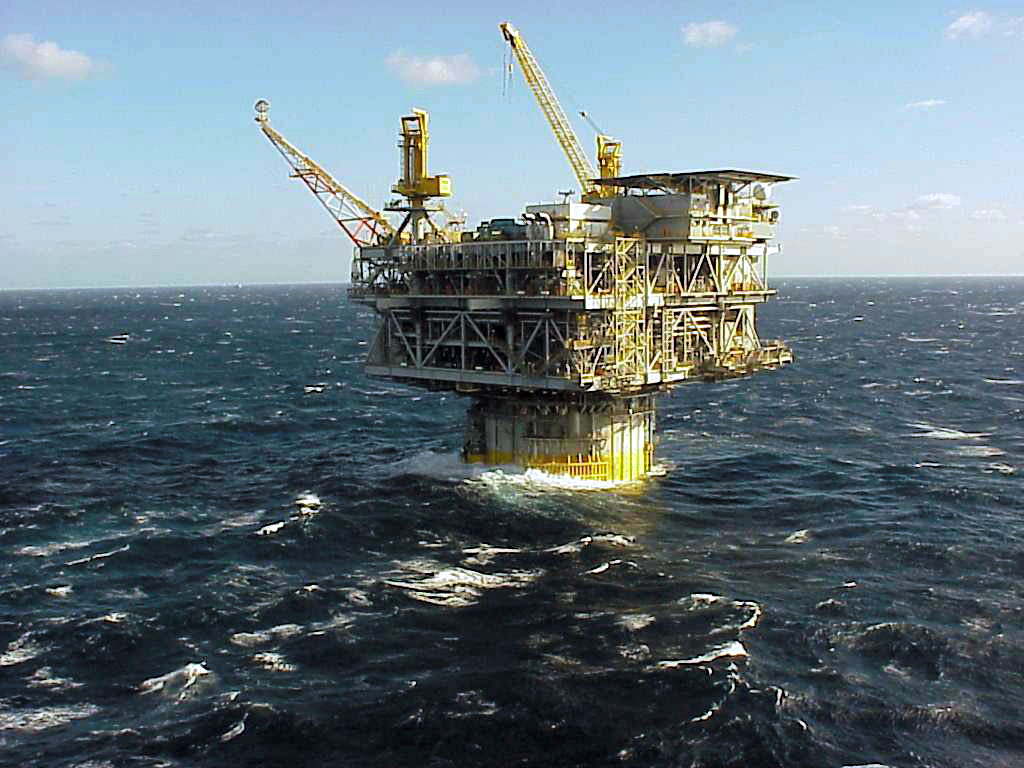
Offshore drilling. As with nuclear, favoring offshore oil drilling seems to be some kind of perverse obsession for many Virginia politicians. Sure enough, the energy plan says we should “fully support” it. As for the downside potential for a massive spill of crude oil fouling beaches, ruining fishing grounds, destroying the coastal tourism economy, and killing vast numbers of marine animals, the plan says we must be prepared “to provide a timely and comprehensive response.” I bet Louisiana was at least equally prepared.

Unknown's avatar

Why we can’t just shut up and eat our cookies (or embrace natural gas)

Fracking site, Marcellus Shale. Photo courtesy of U.S. Geologic Survey.

Fracking site, Marcellus Shale. Photo courtesy of U.S. Geologic Survey.

I grew up with brothers, so I knew from an early age that the easiest way to make friends with guys was to feed them chocolate chip cookies. I took this strategy with me to college, commandeering the tiny kitchen in our coed dorm. The aroma wafting down the hallways reliably drew a crowd.

One fan was so enthusiastic that he wanted to learn to make cookies himself. So the next time, he showed up at the start of the process. He watched me combine sugar and butter, eggs and white flour.

Instead of being enthusiastic, he was appalled. It had never occurred to him that anything as terrific as a cookie could be made of stuff so unhealthy. It’s not that he thought they were created from sunshine and elf magic; he just hadn’t thought about it at all. He left before the cookies even came out of the oven.

I felt so bad about it, I ate the whole batch.

But I can empathize with that guy when I’m told that as an environmentalist, I should love natural gas. Natural gas is the chocolate chip cookie of fossil fuels. At the point of consumption, everybody loves it. It’s cheap, there’s gobs of it, and it burns cleaner than coal, with only half the carbon dioxide emissions. Disillusionment sets in only when you look at the recipe. (“First, frack one well. . .”)

I realize we have only ourselves to blame. For years, environmentalists talked about gas as a “bridge fuel” that could carry us from a fossil fuel past to a future powered by renewable energy. No one would tarry on that bridge, we figured, because gas was expensive. We’d hurry along to the promised land of wind and solar.

But that was before hydrofracking and horizontal drilling hit the scene. Fracking opened up vast swaths of once-quiet forest and farmland to the constant grinding of truck traffic heading to drilling rigs that operate all day and night, poisoning the air with diesel fumes and sometimes spilling toxic drilling fluids onto fields and into streams. It was before studies documented well failures that let toxic chemicals and methane seep back up along the well borings and into aquifers, contaminating drinking water.

And it was before scientists sounded the alarm on “fugitive” methane emissions from wellheads: gas that escapes into the air unintentionally, sometimes at levels so high as to cancel out the climate advantage of burning natural gas instead of coal.

But just as environmentalists were thinking, “Whoa, natural gas turns out to be a bridge to nowhere,” electric utilities were embracing fracked gas in a big way. Fracking has made gas so cheap that giving up coal is no sacrifice. It’s so cheap they see no reason to get off the bridge and embrace renewable energy. At one conference I attended, a gas company executive gushed, “Natural gas is no longer a bridge fuel. It’s a destination fuel!”

All I could think was, “In that case, the destination must be Cleveland.” Which was surely unfair to Cleveland.

Just to be clear: environmentalists are not opposed to gas because we are spoil-sports, or purists, or hold stock in solar companies. The problem with natural gas is that it isn’t made by Keebler elves, but extracted through a nasty process that is harming the planet in ways both local and global.

If the best anyone can say about natural gas is that it’s not as bad as coal, then lingering on the bridge makes no sense. And anything we do that keeps us here—opening up Virginia to fracking, or building a huge new pipeline to bring fracked gas from other states—is both foolish and dangerous. Foolish, because embracing cheap gas distracts us from the serious business of building wind and solar and using energy more efficiently; and dangerous, because the planet will not stop warming while we play shell games with carbon.