Unknown's avatar

Tiny Virginia subcommittee tasked with deciding future of bills related to EPA’s Clean Power Plan; meeting set for December 17

Photo credit: Sierra Club

Photo credit: Sierra Club

The EPA’s proposed Clean Power Plan could reshape Virginia’s energy future for the next fifteen years, and possibly permanently. If the state takes advantage of this opportunity, it will reduce carbon pollution, improve human health, save money for consumers, drive job creation in the fast-growing technology sector, and make our grid stronger and more secure.

If the state doesn’t act, EPA will design its own plan for Virginia, ensuring reduced carbon emissions but without the flexibility the state would have by doing it for itself.

This presents a conundrum for Virginia’s General Assembly, which is not known for embracing federal environmental regulations. The usual skepticism was on display on November 19, when the Senate and House Commerce and Labor Committees met in a joint session to take up the Clean Power Plan—or more precisely, to give utilities and the State Corporation Commission staff the chance to attack it.

At the conclusion of that meeting, the two Republican committee chairs, Senator John Watkins and Delegate Terry Kilgore, named three members of each committee—two Republicans and one Democrat from each chamber—to a special subcommittee tasked with deciding what kind of legislative action the General Assembly should take in response to the Clean Power Plan. Kilgore also put himself on the subcommittee, which will now take up any bills that Virginia legislators introduce related to the Plan.

This subcommittee has scheduled its first meeting for December 17 at 1:00 p.m. in Senate Room A of the General Assembly building in Richmond. By law, all committee meetings are open to the public.

According to General Assembly procedure, before anyone else in the entire legislature can consider a bill, it will have to pass muster with these seven men. So who are these hugely important people, and what is the likelihood that they will seize this historic opportunity to make Virginia a leader in clean energy?

The Senate members consist of Republicans Frank Wagner and Benton Chafin and Democrat Dick Saslaw. Wagner and Saslaw were obvious choices given their seniority on the committee and active role on energy issues. Chafin—well, we’ll get to him in a moment.

Frank Wagner is from Virginia Beach and is known for his interest in energy generally, and especially in promoting new projects. He sponsored the legislation that led to the Virginia Energy Plan in 2006 and has been an important supporter of offshore wind development, perhaps reflecting his undergraduate degree in Ocean Engineering and his Tidewater residence.

The General Assembly website says Wagner is the president of Davis Boatworks, a vessel repair facility whose principal customer is the Defense Department. Living in the Hampton Roads area, Wagner is aware of how real sea level rise is; presumably he understands the connection to climate change.

In spite of his interest in offshore wind, coal rules when it comes to funding Wagner’s political campaigns. The Virginia Public Access Project shows coal giant Alpha Natural Resources was Wagner’s second-best donor over the years, with a total of $43,643 in campaign money since 2003, ahead of Dominion Power’s $37,350. Energy and mining interests combined gave gifts totaling $188,152. Of this, $350 came from Highland New Wind Development LLC back in 2008 and $250 came from the offshore wind company Seawind in 2010.

Of course, who gives money to an elected official does not necessarily dictate how that official votes. But it probably should be mentioned that for the 2014 session, Wagner earned an F on the Sierra Club’s Climate and Energy Scorecard, disappointing clean energy advocates who have sometimes had reason to see him as an ally.

Also a low performer on the energy scorecard is Dick Saslaw, scraping by with a D. Saslaw is a career politician who was first elected to the GA in 1976, when he was 36. (He is now 74.) His biography lists his background as an owner and operator of gas stations.

Saslaw is the Senate Democratic Leader and used to be Chair of the Senate Commerce and Labor Committee, until his party lost the Senate. In theory, his leadership position in the Democratic Party should make him a defender of President Obama’s climate initiative. In practice, not so much.

Although he is a Fairfax County Democrat, Saslaw does not share his constituents’ enthusiasm for wind and solar, nor in general, their concern for the environment. Somebody once told him that renewable energy costs a lot; that’s been his story ever since, and he’s sticking with it, facts be damned.

Saslaw is proud of his close ties to Dominion Virginia Power, whose interests reliably predict his votes on any given bill. The Virginia Public Access Project reports that Dominion has given more money to Saslaw than to any other legislator. In 2014 alone, Dominion gave Saslaw $25,000. Over the years, Dominion’s contributions to Saslaw have totaled $240,508, making the utility Saslaw’s top donor.

Saslaw has also received more money from Appalachian Power than any other Democrat–$44,000–even though that utility does not provide service anywhere in his district. In addition, coal interests gave him $90,250, natural gas companies ponied up $50,250, and the nuclear industry chipped in $28,000.

A single contribution of $250 makes up the only entry under “alternative energy.”

This brings us to new Senator Ben Chafin, the Republican delegate from Southwest Virginia who replaced Democratic Senator Phil Puckett (he of the Tobacco Commission scandal). Chafin is a lawyer and farmer, and as his website informs us, “Ben Chafin has a proven record fighting for the coal industry. Ben sponsored successful legislation (House Bill 1261) to fight against Obama EPA’s effort to kill the industry through over-regulation. Ben will continue to work in Richmond to protect coal and grow other Southwest industries like natural gas.”

Not surprisingly, coal interests led all other industry donors to Chafin’s 2013 campaign for Delegate and his 2014 campaign for Senate ($59,000 altogether), though he did pretty well by natural gas, too ($14,150). As a delegate, Chafin earned a gentleman’s C on the Sierra Club scorecard, but it would probably be a mistake to pin our hopes on his becoming a clean energy champion. His role on the subcommittee is surely to give Coal a voice.

On the other hand, Chafin must recognize that the economics of fracked gas and ever-more competitive wind and solar means Virginia coal has no chance of ever regaining its former glory. Southwest Virginia now needs to craft a strategic retreat from mining and work on economic diversification. That’s not inconsistent with the Clean Power Plan.

On the House side—but here I have to digress for a moment to comment on the seemingly random composition of the House Commerce and Labor Committee. The Senate side is bad enough; any Democrat who has evinced environmental sympathies over the years has been dumped from the Senate Commerce and Labor, and when he was in power, Saslaw did a lot of the dumping.

But it’s worse over at the House. The leadership keeps reshuffling its energy committee, as if in a frantic effort to make sure nobody learns anything, while the delegates who actually came to the job with an interest and knowledge of energy never seem to get a turn. Energy law is a hard area to learn. It’s complicated, and if you don’t have time to master it, you are even more likely to accept guidance from either the party leader who tells you how he wants you to vote, or the glib industry lobbyists who assure you they have the public’s welfare at heart just as much as you do. (Plus they give you money!)

So Chairman Terry Kilgore had little enough to work with on his committee. The three delegates he named to this incredibly important subcommittee, though they are undoubtedly smart and hardworking people, bring no discernable expertise on either climate or energy to the General Assembly’s review of the Clean Power Plan.

Well, digression over.

Terry Kilgore himself is a lawyer and a 20-year member of the House from the coalfields region of southwest Virginia. Dominion is his top individual donor, at $122,000, but coal interests together make up the single biggest category of givers to his campaigns, at $243,188, with electric utilities at $218,680, natural gas at $97,830, the oil industry at $16,400, and nuclear energy at $8,500. Just since 2013, he’s taken in over $136,000 from energy and mining interests.

That’s awfully good money for a safe seat, and his votes have reflected it. His energy votes earned him a D on the Sierra Club scorecard. It’s unlikely that he will abandon his coal friends, but like Senator Chafin, he will serve his constituents best if he works to attract new business to his struggling region. Home weatherization and energy efficiency programs would be popular there, and solar energy is one of the fastest-growing industries in America.

The other House subcommittee members Kilgore appointed are Republicans Jackson Miller and Ron Villanueva and Democrat Mathew James. Jackson Miller is a Manassas Realtor and former police officer who has been in the House since 2006. The bills he has introduced primarily reflect his interests in real estate and criminal law, although he also introduced legislation supporting uranium mining. He has received a total of $79,252 from energy and mining companies since 2010, primarily electric utilities, natural gas, coal, nuclear, and uranium. He earned a D on the Climate and Energy Scorecard. Why he is on this subcommittee is anyone’s guess, but certainly Northern Virginia stands to gain a lot of technology jobs if the state develops its clean energy industries as it should.

Virginia Beach Republican Ron Villanueva has not been as popular with the energy and mining companies, whose donations to his campaigns have totaled $20,550. Villanueva’s website says he was the first Filipino-American elected to state office in Virginia when he became a delegate in 2009. Villanueva has been friendly to the solar industry, and while he received a D on the scorecard, he also received an award from the Sierra Club for his work on a bill to provide a tax credit for renewable energy projects. (The bill was converted to a grant in the Senate but not funded.)

Like Delegate James and Senator Wagner, Villanueva lives in an area that is feeling the effects of climate change sooner than any other part of Virginia, so his constituents know how much the Clean Power Plan matters. For that matter, his day job as a partner with SEK Solutions, a military contractor, should mean he’s aware of the Pentagon’s focus on climate change as a national security issue, as well as a threat to its coastal assets.

Portsmouth Democrat Matthew James also hasn’t been especially popular in the energy industry. Since 2009, when he first ran for delegate, he has accepted a mere $5,000 from Dominion, $3,500 from coal interests, and $3,350 from the natural gas companies—token amounts by Virginia standards, but they may be due for a sudden increase.

James does not seem to have introduced any energy-related bills. However, his votes earned him an A on the Sierra Club scorecard. James is listed as the President and CEO of the Peninsula Council for Workforce Development. Maybe he will see an opportunity in the Clean Power Plan to develop jobs in the solar, wind, and energy efficiency industries, which have outperformed the economy generally.

So there you have the five Republicans and two Democrats who get first crack at any bill either facilitating Virginia’s compliance with the Clean Power Plan, or hostile to it. If they like a bill, it moves to the full Commerce and Labor committees. If they scuttle a bill, no one else in the entire legislature will get to vote on it.

That’s how it works, or doesn’t, in the Old Dominion.
Unknown's avatar

McAuliffe’s Energy Plan has a little something for (almost) everyone

On October 1, the Virginia Department of Mines, Minerals and Energy released the McAuliffe administration’s rewrite of the Virginia Energy Plan. Tomorrow, on October 14, Governor McAuliffe is scheduled to speak about the plan at an “executive briefing” to be held at the Science Museum of Virginia in Richmond. Will he talk most about fossil fuels, or clean energy? Chances are, we’ll hear a lot about both.

Like the versions written by previous governors, McAuliffe’s plan boasts of an “all of the above” approach. But don’t let that put you off. In spite of major lapses of the drill-baby-drill variety, this plan has more about solar energy, offshore wind, and energy efficiency, and less about coal, than we are used to seeing from a Virginia governor.

Keep in mind that although the Virginia Code requires an energy plan rewrite every four years, the plan does not have the force of law. It is intended to lay out principles, to be the governor’s platform and a basis for action, not the action itself. This is why they tend to look like such a hodge-podge: it’s just so easy to promise every constituency what it wants. The fights come in the General Assembly, when the various interests look for follow-through.

Here’s my take on some of the major recommendations: IMG_3954

Renewable energy. Advocates and energy libertarians will like the barrier-busting approach called for in the Energy Plan, including raising the cap on customer-owned solar and other renewables from the current 1% of a utility’s peak load to 3%; allowing neighborhoods and office parks to develop and share renewable energy projects; allowing third-party power purchase agreements (PPAs) statewide and doubling both the size of projects allowed and the overall program limit; and increasing the size limits on both residential (to 40 kW) and commercial (to 1 MW) net metered projects, with standby charges allowed only for projects over 20 kW (up from the current 10 kW for residential, but seemingly now to be applied to all systems).

It also proposes a program that would allow utilities to build off-site solar facilities on behalf of subscribers and provide on-bill financing to pay for it. This sounds rather like a true green power program, but here the customers would pay to build and own the project instead of simply buying electricity from renewable energy projects.

Elsewhere in the recommendations, the plan calls for “flexible financing mechanisms” that would support both energy projects and energy efficiency.

In case unleashing the power of customers doesn’t do enough for solar, the plan also calls for the establishment of a Virginia Solar Energy Development Authority tasked with the development of 15 megawatts (MW) of solar energy at state and local government facilities by June 30, 2017, and another 15 MW of private sector solar by the same date. Though extremely modest by the standards of Maryland and North Carolina, these goals, if met, would about triple Virginia’s current total. I do like the fact that these are near-term goals designed to boost the industry quickly. But let’s face it: these drops don’t even wet the bucket. We need gigawatts of solar over the next few decades, so let’s set some serious long-term goals for this Authority, and give it the tools to achieve them.

Finally, the plan reiterates the governor’s enthusiasm for building offshore wind, using lots of exciting words (“full,” “swift,” “with vigor”), but neglecting how to make it happen. Offshore wind is this governor’s Big Idea. I’d have expected more of a plan.

And while we’re in “I’d have expected more” territory, you have to wonder whatever happened to the mandatory Renewable Portfolio Standard that McAuliffe championed when running for office. Maybe our RPS is too hopeless even for a hopeless optimist.

Energy Efficiency. Reducing energy consumption and saving money for consumers and government are no-brainer concepts that have led to ratepayers in many other states paying lower electricity bills than we do, even in the face of higher rates. Everyone can get behind energy efficiency, with the exception of utilities that make money selling more electricity. (Oh, wait—those would be our utilities.) The Energy Plan calls for establishing a Virginia Board on Energy Efficiency, tasked with getting us to the state’s goal of 10% savings two years ahead of schedule. But glaringly absent is any mention of the role of building codes. Recall that Governor McDonnell bowed to the home builders and allowed a weakened version of the residential building code to take effect. So far Governor McAuliffe hasn’t reversed that decision. If he is serious about energy efficiency, this is an obvious, easy step. Where is it?

Fracking_Site_in_Warren_Center,_PA_04

Natural Gas. Did I say offshore wind was the governor’s Big Idea? Well, now he’s got a bigger one: that 500-mile long natural gas pipeline Dominion wants to build from West Virginia through the middle of Virginia and down to North Carolina. Governor McAuliffe gets starry-eyed talking about fracked gas powering a new industrial age in Virginia. So it’s not surprising that the Energy Plan includes support for gas pipelines among other infrastructure projects. As for fracking itself, though, the recommendations have nothing to say. A curious omission, surely? And while we are on the subject of natural gas, this plan is a real testament to the lobbying prowess of the folks pushing for natural gas vehicles. Given how little appetite the public has shown for this niche market, it’s remarkable to see more than a page of recommendations for subsidies and mandates. Some of these would apply to electric vehicles as well. But if we really want to reduce energy use in transportation, shouldn’t we give people more alternatives to vehicles? It’s too bad sidewalks, bicycles and mass transit (however fueled) get no mention in the plan.

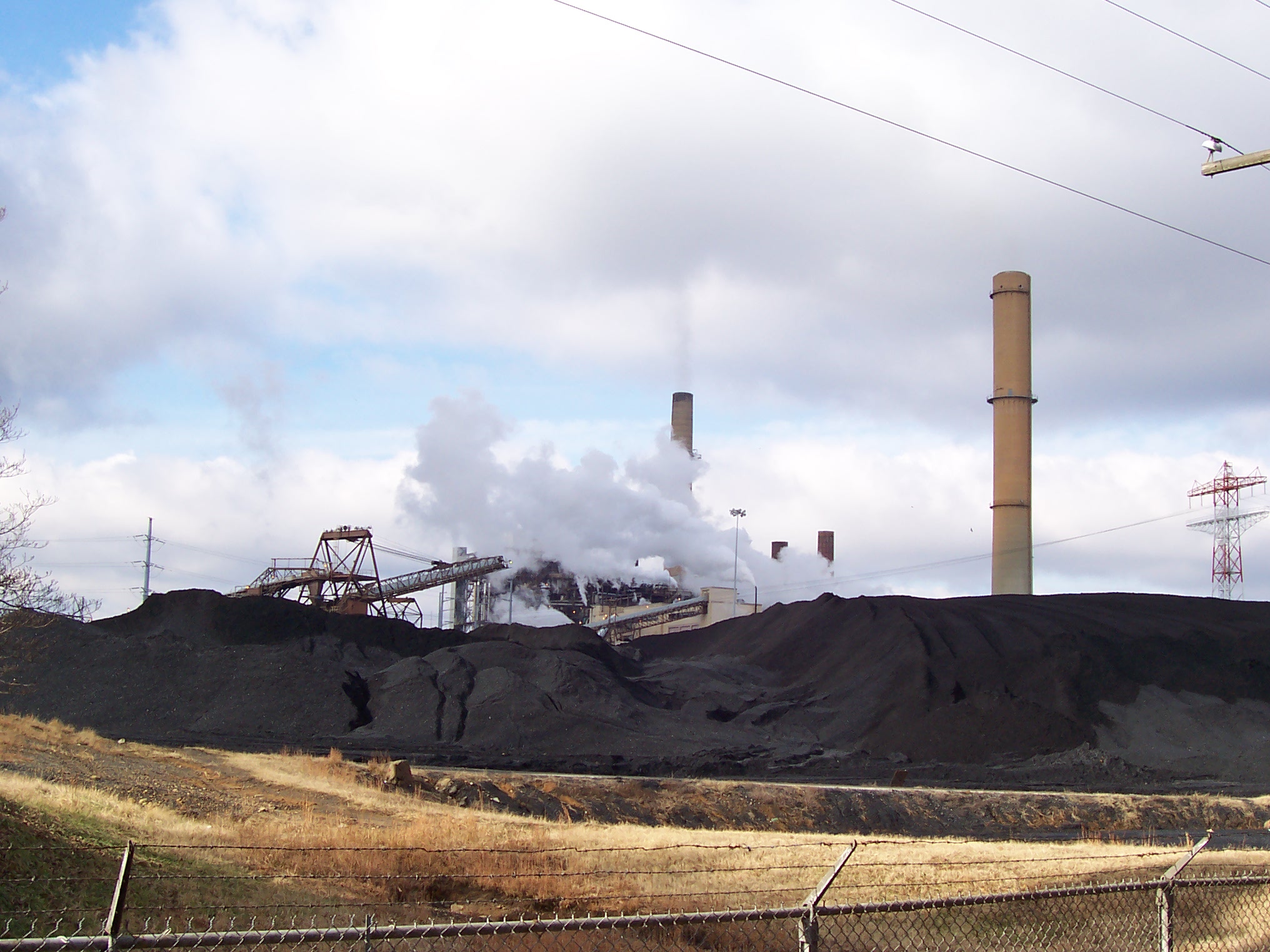
Photo credit Ed Brown, Wikimedia Commons.

Coal. Coal has fallen on hard times, indeed, when even Virginia’s energy plan makes no recommendations involving it. Oh, there’s a whole section about creating export markets for coal technology, as in, helping people who currently sell equipment to American coal companies find a living in other ways. These might be Chinese coal mining companies; but then again, they might be companies that mine metals in Eastern Europe, or build tunnels, or do something totally different. The Energy Plan seems to be saying that coal may be on its way out, but there’s no reason it should drag the whole supply chain down with it. Good thinking.

Nuclear. If you think the coal industry has taken a beating these past few years, consider nuclear. Nationwide, the few new projects that haven’t been canceled are behind schedule and over budget, going forward at all only thanks to the liberality of Uncle Sam and the gullibility of state lawmakers. But there it is in the Energy Plan: we’re going to be “a national and global leader in nuclear energy.” Watch your wallets, people. Dominion already raided them for $300 million worth of development costs for a third plant at North Anna. That was just a down payment.

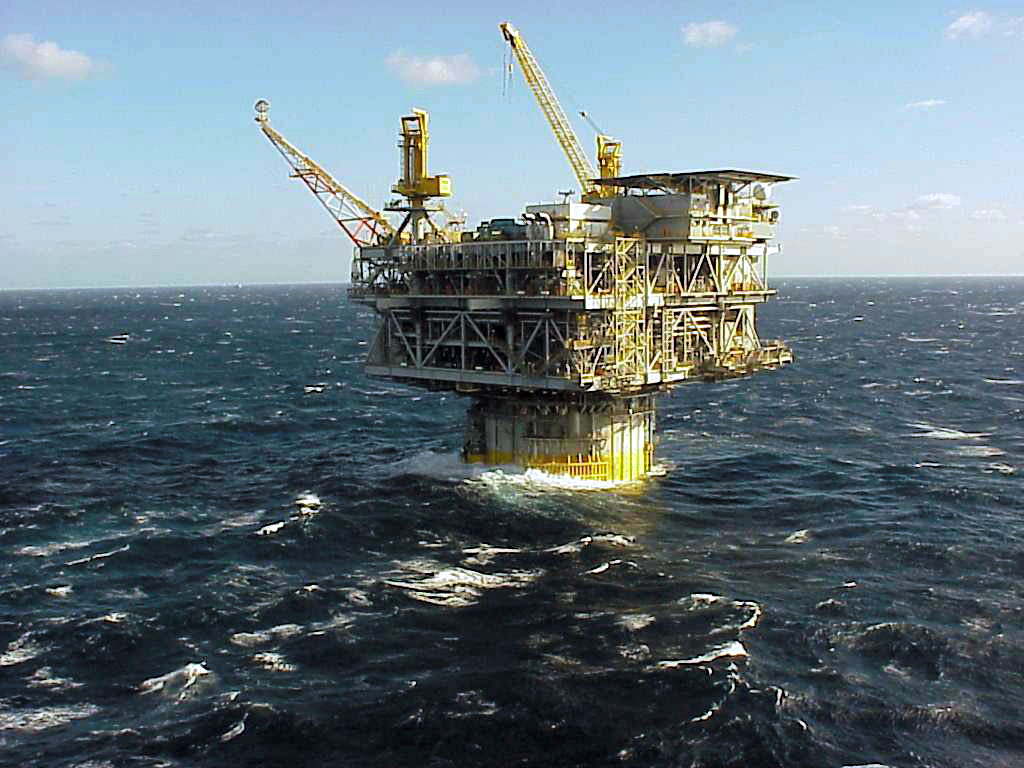
Photo: U.S. Coast Guard

Photo: U.S. Coast Guard

Offshore drilling. As with nuclear, favoring offshore oil drilling seems to be some kind of perverse obsession for many Virginia politicians. Sure enough, the energy plan says we should “fully support” it. As for the downside potential for a massive spill of crude oil fouling beaches, ruining fishing grounds, destroying the coastal tourism economy, and killing vast numbers of marine animals, the plan says we must be prepared “to provide a timely and comprehensive response.” I bet Louisiana was at least equally prepared.

Unknown's avatar

Who’s afraid of a Carbon Rule?

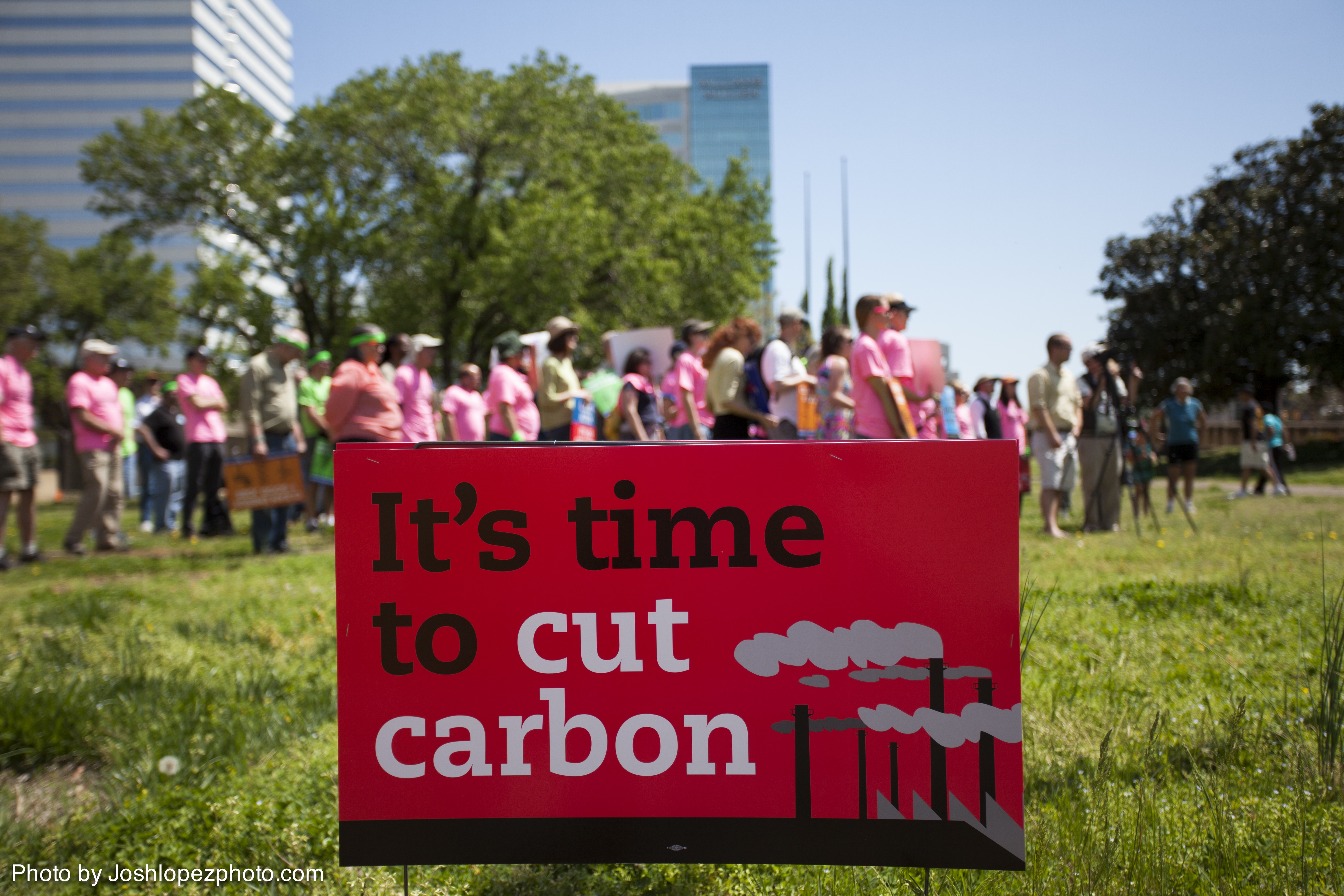
Climate activists urge action to curb carbon emissions at a demonstration in Richmond, Virginia. Photo by Josh Lopez, courtesy of the Sierra Club.

Climate activists urge action to curb carbon emissions at a demonstration in Richmond, Virginia. Photo by Josh Lopez, courtesy of the Sierra Club.

When I was a law student working at the U.S. EPA in the ‘80s, we sued a company that had been polluting a Maine river for years. Back then, EPA calculated penalties based on the amount of money a polluter saved by ignoring the requirements of the Clean Water Act. The idea was to take away the economic benefit of pollution so that companies would make out better by installing treatment systems than by imposing their toxic waste on the community.

Not surprisingly, the company’s lawyers tried to prevent their client from having to pay a penalty for all those years it had been dumping pollution into the river. But their reasoning was interesting. Faced with the lawsuit, the company overhauled its industrial process and eliminated most of its waste products, which turned out to be a money-saving move. Thus, said the lawyers, the company hadn’t gained any competitive advantage by polluting the river; it had actually lost money doing so. Really, they’d have made a lot more money if we’d forced them to clean up their act sooner.

Needless to say, the argument didn’t fly, and the company paid a fine. But its experience turns out to have been a common one. When it comes to environmental regulation, industry screams that the sky is falling, but then it gets to work to solve the problem, and frequently ends up stronger than ever.

This is one reason to be skeptical of ad campaigns from the U.S. Chamber of Commerce and the National Mining Association trying to convince the public that the EPA’s new regulations on carbon pollution from power plants, to be announced on June 2, will destroy the American economy. They’ve cried wolf so many times they have lost all credibility.

And in case you are of a generous nature and inclined to forgive previous false alarms, it’s worth noting that the National Mining Association campaign earned the maximum four Pinocchios from the Washington Post fact-checker—meaning, it’s a pack of lies. The EPA has been scarcely kinder in its analysis of the Chamber’s campaign, and the economist Paul Krugman says the Chamber’s own numbers actually prove compliance with the carbon rule will be cheap.

At least we can understand the American Mining Association’s fabricating facts. These are coal mining companies, after all; of course they are opposed to limits on carbon! They’re like the tobacco companies fighting limits on smoking. In fact, they’re in a worse position, because a good many smokers say they like tobacco, whereas nobody who isn’t making money from it likes coal.

But we can’t cut the Chamber the same kind of slack. There is little reason to fear the economy will suffer by continuing the gradual phase-out of coal that is already underway. No one was building new coal plants anyway; they are too expensive compared to natural gas plants and wind farms. The old, dirty, but fully amortized coal plants will gradually be retired, and good riddance. We have paid dearly for that “cheap” power in health care for asthma and heart disease, in premature deaths, and in babies born with neurological damage from mercury in their mothers’ bodies.

Nor does the Chamber’s anti-carbon rule stance accurately reflect the opinions of the energy sector as a whole. Even those electric utilities that once relied heavily on coal have proven to be fickle friends. Many of them have already said they can live with a carbon rule that lets them swap fuel sources.

And while coal declines, other energy industries are growing and flourishing. The breathtaking pace of advances in wind, solar and battery technologies make it clear that the age of fossil fuels will end in this century. There will be winners and losers, as there always are in a free market, but the new energy economy offers so many opportunities for American companies and workers that one wishes the fear-mongers at the Chamber would stretch their necks out of their bunker far enough to see the horizon.

As for society in general, we have seldom seen a limit on pollution that didn’t make us collectively better off, and carbon will be no exception. It is always easier and cheaper to stop pollution at its source than to clean it up later or pay for the damage. That will be true here in spades, where the damage includes hotter summers, more crop losses, more disease, more destructive storms, and whole communities swamped by rising sea levels. These are already happening, and they affect both our health and our wallets. Failing to limit carbon condemns us all to economic decline and slow self-destruction.

Surely, all we have to fear about the EPA’s upcoming carbon rule is that it might not be strong enough.


Unknown's avatar

Can carbon sequestration save Virginia’s coalfields?

Mountaintop removal coal mining

Mountaintop removal coal mining

Many elected officials who care about the stark challenges confronting America’s coal-producing regions today are pinning their hopes on carbon capture and sequestration. This technology takes carbon dioxide out of power plant emissions and stores it underground. Since coal is the number one emitter of carbon dioxide, the greenhouse gas primarily responsible for heating the planet, carbon sequestration might be the only way to continue our use of coal in a world increasingly worried about climate disruption.

Virginia’s newly-elected governor, Terry McAuliffe, has high hopes for carbon sequestration. McAuliffe is confronting a problem that confounded his predecessors: how to deal with the continuing economic decline of southwest Virginia’s coal-producing counties. But, enthusiastic as he is about new technology, McAuliffe should be skeptical of suggestions that carbon sequestration offers a solution to Virginia’s coal decline. It does not.

This decline has been going on for decades. It predates the recession and the Obama presidency and tighter regulations aimed at protecting public health. It predates the explosion in natural gas fracking that has made gas cheaper than coal. Coal employment in Virginia has steadily dropped and is now below 5,000 workers, less than half of what it was in 1990. The best coal seams have been mined out, exacerbating the problem that Virginia coal is more expensive to mine than coal from other states. To get at the remaining seams as cheaply as possible, coal companies increasingly resort to mountaintop removal, destroying vast tracts of the Appalachians with explosives and giant machines (but very few workers). Even if carbon capture and storage proves successful, coal employment in the commonwealth won’t recover.

We aren’t the only Appalachian state facing this problem, but others are tackling it head-on. Kentucky, facing an even steeper decline in its coal-producing areas, has launched a bipartisan effort to help the region move beyond coal. This doesn’t mean they are happy about it, but they are willing to look facts in the face.

In Virginia, on the other hand, the response for some years has been to throw money at the coal companies and hope for the best. Virginia taxpayers shell out millions of dollars every year to corporations that mine Virginia coal. Legislators keep renewing the coal subsidies even though a 2011 review by the Joint Legislative Audit and Review Committee concluded they aren’t effective.

If throwing money at coal companies can’t halt the slide in Virginia coal, it’s hard to see how carbon sequestration technology could do it, even if the government were to pay for it. And given the environmental destruction involved in mountaintop removal mining, prolonging the end of the coal era in Virginia shouldn’t be anyone’s priority.

The start of a new administration offers a chance for a new strategy. Admittedly, it won’t be easy. The challenge of bringing new industries to a remote and mountainous region is a tough one, and support for coal still remains high in the area. Why, then, insist on confronting cold reality?

Because it has to be done.

Terry McAuliffe campaigned on jobs, and has given every indication he means it. Given his background, connections and talents, he is in as good a position as any governor in recent times to take on the challenge of helping southwest Virginia diversify its economy. He can work with the legislature to redirect the millions of dollars currently going to ineffective coal subsidies into tax credits for jobs in new industries and support for projects like home weatherization that create jobs and make a difference in people’s lives. He can challenge the entrenched interests, twist arms, enlist allies, recruit businesses, use the media—in short, make this a priority. The residents of the coalfields deserve as much.

Unknown's avatar

For electric power generation, the end of fossil fuels is in sight

The rap on renewable energy is that it’s too variable to meet society’s demand for a constant supply of electricity. The answer to the problem turns out to be: More renewables.

111022-N-OH262-322Climate change is acting like an ever-tightening vise on our energy options. Each year that passes without dramatic decreases in our use of carbon-emitting fuels means the cuts we have to make simply get more drastic. By 2030, say experts, we must entirely replace coal with efficiency and renewable energy, or fry. Even the most intrepid environmentalists wonder if it can be done without huge price hikes and wholesale changes in how we live and use energy–changes that society may not accept.

A new study out of the University of Delaware shows it is possible to power the grid 99.9% of the time with only solar and wind energy, at a cost comparable to what we are paying today. This counters the conventional wisdom that we will always need large amounts of fossil fuel as a backup when the wind doesn’t blow and the sun doesn’t shine. It also means the goal of getting largely beyond fossil fuels by 2030 is not just achievable, but practical.

The study focused on a regional transmission grid known as PJM, which encompasses parts or all of fourteen states, mostly in the Mid-Atlantic. Researchers ran 28 billion computer simulations to find the most cost-effective combinations of wind and solar that could power the entire grid, at the least possible cost and with minimal amounts of energy storage. The winning combination relied on natural gas turbines for backup on only five days out of the four years modeled.

The study authors looked for the least cost taking account of carbon and other external costs of fossil fuels, which are not being accounted for today, but they also assumed no technology improvements over time, making their cost estimates conservative overall. All the least-cost combinations used much more storage than we have today, but needed it for only 9 to 72 hours to get through the entire four years modeled.

The secret to dealing with the inherent variability of wind and solar, it turns out, is to build even more wind and solar. One wind turbine is unreliable, but tens of thousands spread across a dozen states greatly reduces the variability problem, and tens of thousands of wind turbines balanced with millions of solar panels is better still. To get to 99.9% renewables, you keep adding wind turbines and solar panels until you are producing three times the electricity that you actually need to meet demand. To power the grid with renewables just 90% of the time, you would have to produce “only” 1.8 times the electricity needed. (And yes, we have the windy sites and the sunny places to support all those projects.)

While it may sound strange to build more generation than you need, that is already the way grid operators ensure reliability. To take one example, if you were in Virginia when the “Big One” struck in 2011, you will recall that the earthquake caused the North Anna nuclear plant to shut down for four months. Nuclear energy provides a third of the electricity in Dominion Virginia Power’s service territory, and yet the lights stayed on. That’s because the grid wizards at PJM simply called on other power sources that had been idle or that had spare capacity.

The other component of reliability is the ability to match demand for power, which rises and falls with the time of day, weather, and other factors. So-called “baseload” plants like nuclear, coal, and some natural gas turbines don’t offer that flexibility and must be supplemented with other sources or stored energy. PJM currently uses more than 1,300 different generating sources, as well as about 4% storage in the form of pumped hydro. The right combination of other sources can replace baseload plants entirely.

wind turbine-wikimedia

Pairing wind and solar improves their ability to meet demand reliably. Onshore wind tends to blow most strongly at night, while solar energy provides power during the peak demand times of the day. Offshore wind power is also expected to match demand well. Combining them all reduces the need for back-up power.

But until now policy makers have assumed that solar and wind won’t be able to power the grid reliably, even when combined and spread out over PJM’s more than 200,000 square miles, and with the addition of wind farms off the coast. Critics have insisted that renewable energy requires lots of back-up generating capacity, especially from some natural gas turbines that can ramp up and down quickly. New gas turbines have even been designed specifically to integrate with renewables in anticipation of increasing amounts of wind and solar coming onto the grid.

This makes the work of the U. Delaware researchers a game-changer by showing that wind and solar can be backed up primarily by more wind and solar. And so we can begin planning for a future entirely without fossil fuels, knowing that when we get there, the lights will still be on.

Unknown's avatar

Mother Nature to be sued for copyright infringement

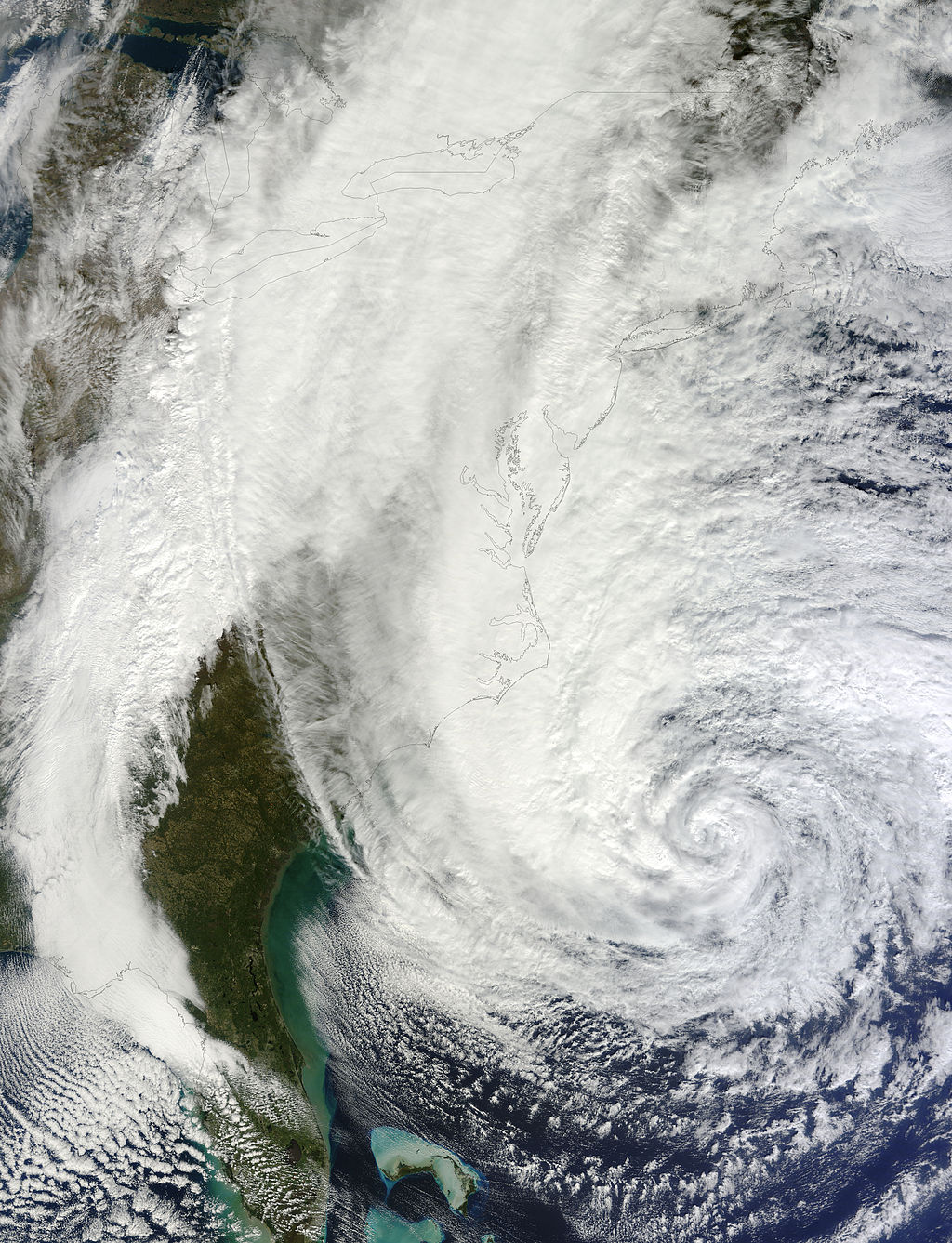
Hurricane Sandy, in an image clearly copied from “The Day After Tomorrow”

To: Mother Nature, d/b/a “Hurricane Sandy”

Re: Copyright infringement

Dear Ms. Nature,

It has come to our attention that you and/or your agents have made unauthorized use of certain intellectual property belonging to our client, Twentieth Century Fox Film Corporation (“Fox”), including images, illustrations, plotlines, audio and video unlawfully appropriated from “The Day After Tomorrow,” a motion picture owned by Fox. This letter is to notify you that we believe your actions constitute a violation of U.S. copyright law, 17 U.S.C. § 101 et seq.

It is clear that the plotline of Hurricane Sandy has been substantially copied from portions of “The Day After Tomorrow.” The motion picture is a dramatization in which a storm of epic proportions bears down on the eastern United States, causing massive destruction and widespread flooding, including in Manhattan. Scientists in the movie say human-induced climate change is the reason for the storm’s unusual size and damaging force.

Your agent, Hurricane Sandy, was a storm of epic proportions that bore down on the eastern United States, causing massive destruction and widespread flooding, including in Manhattan. Scientists in real life say human-induced climate change is the reason for the storm’s unusual size and damaging force.

Certain scenes from Hurricane Sandy appear to be copied directly from portions of the motion picture. Photographs taken during and after your storm depict waves swamping buildings, taxicabs in floodwaters up to the windows, lower Manhattan completely dark, and a flooded subway system—images closely replicating events in “The Day After Tomorrow.” We believe this demonstrates a clear infringement of our client’s copyright.

Moreover, we feel it is incumbent on us to point out that your actions in turning a fictional and hypothetical entertainment into actual fact violate the expectations of the public that climate change is and will remain a matter of mere speculation concerning events that are firmly in the future. The American audience expects the continued burning of fossil fuels to produce entertaining epics like “The Day After Tomorrow,” while having no actual effect whatsoever on their lives. Your insistence on demonstrating that a warming ocean will produce larger and more damaging hurricanes is, frankly, in poor taste.

This letter will serve as notice of our intent to pursue any and all remedies available to our client under applicable law, including an injunction against further infringing activities.

Yours truly,

I.M. Cole

Law Offices of Cole & Oyle, LLC

Unknown's avatar

Is the EPA killing coal?

Coal industry executives, their friends at Fox News, and politicians trolling for votes in coal country are up in arms about what they are calling “the war on coal.” The “war” consists of EPA regulations affecting both the oldest coal-burning electric generation plants and ones not yet built. Under the first set of rules, the aging dinosaurs in the coal fleet—those grandfathered in under the original Clean Air Act in the 1970s–will finally have to meet modern-day pollution standards for mercury and smog-forming chemicals, so they kill fewer people. These plants have all outlived their 30-year design life, and many of them are 60 years old or more. They aren’t worth retrofitting, so they are closing down.

If that seems like too slim a provocation for rebellion, look at the war’s other front: another EPA rule that pretty much outlaws construction of anything but those “clean coal” plants that grab carbon dioxide right out of the smokestack and shove it underground. Given that those plants are thus far only creatures of myth and longing, it’s fair to say the EPA carbon rule would stop a new coal plant.

And yet, the EPA rule has absolutely nothing to do with why no one is building coal plants in America.

The situation reminds me of a nature hike I went on once, where we came across a box turtle. The naturalist told us that the box turtle might be extinct, only it didn’t know it yet. This odd state of affairs is because, for various reasons, the turtles seem not to be reproducing. No matter how many of them there are today, if there aren’t any babies, they are effectively extinct.

That’s the case with coal-fired power plants in America. There are hundreds of them in existence, and they still supply a third of our electricity, but nobody is building any new ones.

This has been true for the last few years, so blaming the Obama EPA smacks of political opportunism. Not that anyone would accuse politicians of that.

Of course, there are differences between a turtle and a coal plant. For one thing, everybody likes turtles. Coal plants, not so much. Over the last decade, all across the country, local people have banded together to shut the worst coal plants and to stop new ones from being built, citing health costs from breathing toxic pollutants and eating mercury-contaminated fish, the effects of mountaintop removal coal mining, and problems dealing with the toxic ash that is the primary waste product of coal burning.

But I think the real reason no one wants a new coal plant has to do with an ad campaign the coal industry ran when environmentalists started attacking the myth of “clean coal.” The coal industry figured it was just setting the record straight when it ran its own ads trumpeting the information that burning coal is a major way America gets electricity. “Coal keeps the lights on!” they announced.

And Americans, who thought their electricity came from little switches on the wall, were appalled.

“We’re burning what?” they asked each other. And that was the beginning of the end for coal.

Still, what Americans want, and what actually happens, doesn’t always coincide, so let’s move on to a second cause of coal’s decline. We’re talking about a force more powerful than either Fox News or public opinion: money.

That’s right: if you really want to find the culprit behind the death of coal, you have to finger the free market. That’s because coal’s chief competitor for making electricity is natural gas, and natural gas is ridiculously cheap today. For this we have to thank new methods of shale fracking that have people almost as upset as they are about coal burning, but with less success because gas is profitable and coal is not.

If you thought it was a bad idea for utilities to be single-mindedly dependent on coal, then you probably also think it’s bad that, after dropping coal like so much fool’s gold, the same utilities are now panting just as hard after natural gas. But if you stood up for coal on the basis that it was (a) cheap and (b) American, then you really can’t be heard to complain about its death at the hands of natural gas.

It’s far more convenient to blame the EPA, because it had the courage to come out of its mouse-hole, wave its tiny sword around, and announce, once no one wanted any new coal plants, that it was going to make it darn hard to build any new coal plants.

Puh-leeze.

The EPA isn’t waging a war on coal; the free market is. But that makes for a lousy sound bite.