Unknown's avatar

So many bills filed, so few remain: almost-halftime status report on climate and energy legislation

Virginia statehouse, where the General Assembly meetsTuesday, January 5 marks “crossover” at the Virginia General Assembly, the date when House bills go over to the Senate, and Senate bills to the House. Any legislation that hasn’t made it through the gantlet to a successful vote in its starting chamber evaporates in a puff of smoke, if it has not already died due to causes natural or unnatural.

I’ve hot-linked the bill numbers to their pages in the Legislative Information Service; follow the links on the page to read the legislation or see vote results. The information below is based on what was available as of yesterday, February 3.

Many of the committee hearings were recorded on video.

Renewable energy bills

Solar Freedom, the bill to remove barriers to customer-owned solar statewide, met implacable resistance from Republicans in control of the Commerce and Labor committees, as did narrower bills focused just on power purchase agreements (PPAs). That meant the only significant renewable energy legislation moving forward is a bill negotiated between the rural electric cooperatives and solar advocates that will ease restrictions on customer solar in coop territory. See HB 2547 (Hugo) and SB 1769 (Sturtevant), below.

Two bills that would have provided financial support for solar have passed their committees, but only after the money part got taken out.

A watered-down municipal renewable energy bill survives, but in a disappointingly limited form. An interesting solar-on-schools bill now looks less interesting.

Legislation enabling localities to impose new decommissioning requirements on large solar farms will likely move forward.

Here is the status of the renewable energy bills I’ve been tracking, with a little color commentary sprinkled in:

 HB 2329 (Keam) and SB 1456 (McClellan and Edwards) is the Solar Freedom bill that would have removed 8 barriers to renewable energy installations by utility customers, including lifting the 1% net metering cap, removing PPA caps, and allowing municipal net metering.  Advocates gave this everything they had, with hundreds of citizens lobbying for the bill and showing up at the subcommittee hearings.But Republicans held firm for their utility friends. HB 2329 was defeated in Commerce and Labor 8-7 on a party-line vote with two Democrats absent and one (Lindsay) present but strangely not voting. The Senate companion was killed in Commerce and Labor on a 10-3 party-line vote. Some of the reforms in Solar Freedom also appear in weakened form in one bill (HB 2547 and SB 1769) that moves forward—but only for the electric cooperatives.   

HB 1683 (Ware) gives electric cooperatives greater autonomy, including authority to raise their total system caps for net metering up to 5% of peak load. Amended to remove the net metering language, then withdrawn by patron.

HB 1809 (Gooditis) follows up on last year’s HB 966 by making the renewable energy and energy efficiency provisions mandatory. If utilities don’t meet annual targets, they have to return their retained overearnings to customers. Defeated in Commerce and Labor subcommittee 3 on party-line vote, with only Democrats supporting.

HB 1869 (Hurst), SB 1483 (Deeds) and SB 1714 (Edwards) creates a pilot program allowing schools that generate a surplus of solar or wind energy to have the surplus credited to other schools in the same school district. HB 1869 defeated in Commerce and Labor subcommittee 3 on party-line vote. In Senate Commerce and Labor, SB 1714 was incorporated into SB 1483, then defeated unanimously.

HB 1902(Rasoul) would provide a billion dollars in grant funding for solar projects, paid for by utilities, who are required to contribute this amount of money through voluntary contributions (sic). Killed in Appropriations subcommittee on party-line vote.

HB 1928 (Bulova) and SB 1460 (McClellan) expands utility programs allowing third-party power purchase agreements (PPAs) for renewable energy while continuing to restrict the classes of customers who are allowed to have access to this important financing tool. In committee hearings, utility lobbyists claimed there was no need for the legislation because there is “plenty of room left” under the existing caps. Industry members testified that there is a lot more in the queue than is public, and caps will likely be reached this year. HB 1928 killed in Commerce and Labor subcommittee 3 by a 6-4 vote; Republican Tim Hugo voted with Democrats in support of the bill. SB 1460 killed in Senate Commerce and Labor 10-3, with only Democrats supporting.

HB 2117 (Mullin) and SB 1584 (Sutterlein) fixes the problem that competitive service providers can no longer offer renewable energy to a utility’s customers once the utility has an approved renewable energy tariff of its own. Now that the SCC has approved a renewable energy tariff for APCo, this is a live issue. HB 2117 defeated in Commerce and Labor subcommittee 3 on party-line vote. Although the patron of SB 1584, David Sutterlein, is a Republican, his bill died in Senate Commerce and Labor 11-1, with only fellow Republican Ben Chafin voting for it, and Republican Stephen Newman abstaining.

STILL ALIVE: HB 2165 (Davis and Hurst) and HB 2460 (Jones and Kory), and SB 1496 (Saslaw) provide an income tax credit for nonresidential solar energy equipment installed on landfills, brownfields, in economic opportunity zones, and in certain utility cooperatives. This is a Rubin Group bill. HB 2165 and HB 2460 remain stuck in the Committee on General Laws (not a good sign). SB 1496 was amended in Finance to change it from a tax credit to a grant-funded program, but with no money. Then it passed the committee unanimously. 

STILL ALIVE:  HB 2192 (Rush) and SB 1331 (Stanley) is a school modernization initiative that includes language encouraging energy efficient building standards and net zero design. It also encourages schools to consider lease agreements with private developers (apparently there is one particular North Carolina firm that wants this). It does not contemplate the more common use of third-party power purchase agreements. HB 2192 was amended in General Laws, where it passed unanimously. It still has nice (but not mandatory) language on net zero schools. It allows leases with private developers who will construct and operate buildings and facilities. It permits public schools to contract with utilities for solar energy as part of the school modernization project. New language requires that renewable energy facilities must be on school property and cannot be used to serve any other property. PPAs are still not mentioned. Ambiguous language in these provisions may cause problems for schools. SB 1331 was amended with what appears to be the same language as its House counterpart. It reported unanimously from Finance.

HB 2241 (Delaney) establishes a green jobs training tax credit. Failed in House Finance subcommittee on party-line vote.

HB 2500 (Sullivan) establishes a mandatory renewable portfolio standard (RPS) for Virginia, eliminates carbon-producing sources from the list of qualifying sources, kicks things off with an extraordinarily ambitious 20% by 2020 target, and ratchets up the targets to 80% by 2027. Failed in Commerce and Labor subcommittee 3 with only Democrat Mark Keam supporting it.

STILL ALIVE:  HB 2547 (Hugo) and SB 1769 (Sturtevant) makes changes to the net metering program for customers of electric cooperatives. The overall net metering cap is raised from the current 1 percent to a total of 5%, divided into separate buckets by customer type and with an option for coops to choose to go up to 7%. Customers will be permitted to install enough renewable energy to meet up to 125% of previous year’s demand, up from 100% today. Third-party PPAs are generally legal, with a self-certification requirement. However, the coops will begin imposing demand charges on customers with solar, to be phased in over several years, replacing any standby charges. This bill was negotiated between the coops and the solar industry via the “Rubin Group.” You have to hand it to the coops, this is huge movement on their part, if not perfect, and it is too bad that Dominion and APCo held fast to their obstructionist position rather than allow their customers more freedom to install solar. An amendment to the bill establishes a stakeholder group for further discussions with Dominion and APCo on net metering, a prospect that will appeal only to eternal optimists and amnesiacs who don’t remember the past five years of time-wasting, fruitless negotiations. Delegate Hugo told me he tried to get Dominion and APCo to sign on to the coop deal but couldn’t persuade them—and I understand from others that he did make a real effort. But he scoffed at my suggestion that maybe Dominion shouldn’t have the final say. HB 2547 reported unanimously from Commerce and Labor. SB 1769 was amended to include the same stakeholder language requiring the mice to continue negotiations with the cat. It has now passed the Senate unanimously.

STILL ALIVE: HB 2621 (Ingram) and SB 1398 (Stanley) authorize a locality to require the owner or developer of a solar farm, as part of the approval process, to agree to a decommissioning plan. This is a Rubin Group bill. An amended version of HB 2621 reported from Counties, Cities and Towns unanimously. SB 1398 was incorporated into SB 1091.

HB 2641 (Gooditis) makes third-party power purchase agreements for distributed renewable energy resources legal statewide. Killed in Commerce and Labor subcommittee 3 by a 6-3 vote. Delegate Hugo, who had voted for Bulova’s narrower PPA bill, joined the other Republicans in voting against this broader one.

HB 2692 (Sullivan) allows the owner of a multifamily residential building to install a renewable energy facility and sell the output to occupants or use for the building’s common areas. Stricken from docket.

STILL ALIVE: HB 2741 (Aird) establishes a rebate program for low and moderate-income households that install solar. Amended so it retains the structure of the program but removes funding; otherwise it was going to be sent to Appropriations to die. As amended it was reported Commerce and Labor unanimously.

STILL ALIVE: HB 2789 (O’Quinn) requires Dominion and APCo to apply for approval of three-year programs to incentivize low-income energy efficiency and solar totaling $25 million each. The efficiency spending comes out of the money utilities are required to spend under last year’s grid mod legislation. The solar spending is new money. Somehow I missed this bill in my earlier round-up. It passed the House 88-11. The nay votes are  all Republicans: Adams, L.R., Byron, Cole, Fariss, Freitas, Gilbert, Landes, Poindexter, Wright, Brewer and LaRock.

STILL ALIVE: HB 2792 (Tran) and SB 1779 (Ebbin) establishes a 6-year pilot program for municipal net metering for localities that are retail customers of investor-owned utilities. The initial bill negotiated with the utilities was predictably much more limited than most localities wanted; further amendments have left it useful for only a few small on-site projects that don’t need PPAs. Fairfax County supervisor Jeff McKay testified in committee it would do nothing to help the county’s projects.Tran presented the amended bill in committee just a day or two after coming under fire from conservative Republicans for a bill that would ease one restriction on late-term abortions. In an obviously orchestrated attempt to demonstrate that conservative middle-aged white men still wield the power in Richmond, Delegate Hugo said he needed time to read the amendment. Committee chairman Terry Kilgore obliged, saying they would come back to it. Kilgore then kept Tran waiting through several hours of other bills, many of which also had new amendments, before letting her bill come back up. (Proving once again that middle school has nothing on the General Assembly.) As amended, HB 2792 reported from Commerce and Labor 19-2, with only Republicans Hugo and Head voting no.

HJ 656 (Delaney) would have the Virginia Resources Authority study the process of transitioning Virginia’s workforce from fossil-fuel jobs to green energy jobs. Failed to report from Rules subcommittee on party-line vote, all Republicans voting against it.

STILL ALIVE: SB 1091 (Reeves) imposes expensive bonding requirements on utility-scale solar farms, taking a more drastic approach than HB 2621 (Ingram) and SB 1398 (Stanley) to resolving the concerns of localities about what happens to solar farms at the end of their useful life. SB 1091 was amended to conform to the compromise language of HB 2621 and has passed the Senate unanimously.

Energy Efficiency (some of which have RE components)

We’re seeing modest progress in efficiency bills this year, mostly of the greasing-the-wheels variety. One of particular interest is Chap Petersen’s bill enabling Property Assessed Clean Energy (PACE) financing programs for residential buildings.

HB 2243 (Sullivan) creates an energy efficiency revolving fund to offer no-interest loans to local government, public schools, and public institutions of higher learning. Killed in Appropriations subcommittee on party-line vote.

STILL ALIVE: HB 2292 (Sullivan) and SB 1662 (Wagner), dubbed the “show your work bill,” requires the SCC to provide justification if it rejects a utility energy efficiency program. HB 2292 reported from Commerce and Labor with a substitute. SB 1662 passed the Senate with only 6 Republicans in opposition.

STILL ALIVE: HB 2293 (Sullivan) establishes a stakeholder process to provide input on the development of utility energy efficiency programs. Reported unanimously from Commerce and Labor with a substitute.

HB 2294 (Sullivan) establishes mandatory energy efficiency goals for electric and gas utilities. Killed in Commerce and Labor subcommittee 3 on party-line vote.

HB 2295 (Sullivan) creates an energy efficiency fund and board to administer it. Killed in an Appropriations subcommittee on a party-line vote.

STILL ALIVE: HB 2332 (Keam) protects customer data collected by utilities while allowing the use of aggregated anonymous data for energy efficiency and demand-side management efforts. Reported unanimously from Commerce and Labor with a substitute.

SB 1111 (Marsden) requires utilities to provide rate abatements to certain customers who invest at least $10,000 in energy efficiency and, by virtue of their lower consumption, end up being pushed into a tier with higher rates. Stricken at the request of the patron.

STILL ALIVE: SB 1400 (Petersen) removes the exclusion of residential buildings from the Property Assessed Clean Energy (PACE) program, which allows localities to provide low-interest loans for energy efficiency and renewable energy improvements on buildings. Passed the Senate unanimously.

HB 2070 (Bell, John) provides a tax deduction for energy saving products, including solar panels and Energy Star products, up to $10,000. Stricken from docket in Finance subcommittee.

Energy transition and climate

Bills designed to push Virginia towards a clean energy future died in the face of unanimous Republican opposition. House Republicans also united to pass a bill prohibiting Virginia from implementing its carbon reduction plan. But in a faint nod to reality, most Republicans and Democrats support legislation to help southwest Virginia develop renewable energy and energy storage (as long as it doesn’t cost anything).

HB 1635 (Rasoul, with 9 co-patrons) imposes a moratorium on fossil fuel projects, including export facilities, gas pipelines and related infrastructure, refineries and fossil fuel exploration; requires utilities to use clean energy sources for 80% of electricity sales by 2028, and 100% by 2036; and requires the Department of Mines, Minerals and Energy to develop a (really) comprehensive climate action plan, which residents are given legal standing to enforce by suit. This is being referred to as the “Off Act.” Defeated on the floor of the House 86-12.

HB 1686 (Reid, with 14 co-patrons) and SB 1648 (Boysko) bans new or expanded fossil fuel generating plants until Virginia has those 5,500 MW of renewable energy we were promised. This is referred to as the “Renewables First Act.” HB 1686: Defeated in Commerce and Labor Subcommittee 3. 2 Democrats voted for it, 6 Republicans and 1 Democrat against. SB 1648 PBI’d 12-0 in Commerce and Labor.

STILL ALIVE: HB 2611 (Poindexter) would prohibit Virginia from joining or participating in RGGI without support from two-thirds of the members of the House and Senate, making it sort of an anti-Virginia Coastal Protection Act. Passed the House on party-line vote.

HB 2501 (Rasoul) directs the Division of Energy at DMME to include a greenhouse gas emissions inventory in the Virginia Energy Plan. Killed in Commerce and Labor subcommittee 3 on party-line vote.

HB 2645 (Rasoul, with 13 co-patrons), nicknamed the REFUND Act, prohibits electric utilities from making nonessential expenditures and requires refunds if the SCC finds they have. It also bars fuel cost recovery for more pipeline capacity than appropriate to ensure a reliable supply of gas. Other reforms in the bill would undo some of the provisions of last year’s SB 966, lower the percentage of excess earnings utilities can retain, and require the SCC to determine rates of return based on cost of service rather than peer group analysis. Democrat Steve Heretick voted with Republicans to kill the bill in Commerce and Labor subcommittee 3.

HB 2735 (Toscano) and SB 1666 (Lewis and Spruill) is this year’s version of the Virginia Coastal Protection Act, which would have Virginia formally join the Regional Greenhouse Gas Initiative (RGGI). It dedicates money raised by auctioning carbon allowances to climate adaptation efforts, energy efficiency programs, and coalfields transition. HB 2735 died in Commerce and Labor subcommittee 3 on party-line vote. SB 1666 met the same fate in Agriculture, Conservation and Natural Resources, with Democrat Rosalyn Dance abstaining.

STILL ALIVE: HB 2747 (Kilgore) and SB 1707 (Chafin) create a Southwest Virginia Energy Research and Development Authority which will, among other things, promote renewable energy on brownfield sites, including abandoned mine sites, and support energy storage, including pumped storage hydro. HB 2747 reported unanimously from Commerce and Labor and was referred to Appropriations, where it passed with a substitute (presumably removing its fiscal impact, though I haven’t looked closely enough to confirm that). SB 1707 reported from Local Government and then from Finance, also with a substitute, presumably the same one.

HJ 724 (Rasoul) is a resolution “Recognizing the need for a Green New Deal in Virginia which promotes a Just Transition to a clean energy economy through lifting working families.” This was referred to Commerce and Labor subcommittee 3, but there is no further information about it in the LIS.

Other utility regulation

 Bills that preserve, protect, and extend the monopoly power of our utilities are doing well. On the other hand, Dominion has so far failed to kill a bill strengthening the standards of review the SCC will use in considering whether to allow rate recovery for pipeline capacity. 

STILL ALIVE: HB 1718 (Ware) requires an electric utility to demonstrate that any pipeline capacity contracts it enters are the lowest-cost option available, before being given approval to charge customers in a fuel factor case. The discussion in the committee was lively. Delegate Ware assured the committee the bill was not intended to stop the Atlantic Coast Pipeline, but would simply guide the SCC’s review of a rate request after the pipeline is operational. Dominion’s lobbyist argued the legislation was unnecessary because the SCC already has all the authority it needs, and it shouldn’t be allowed to look back to second-guess the contents of the ACP contract. The bill passed the committee 11-8, with Democrats Keam, Kory, Bagby, Toscano, Heretick, Mullin and Bourne joining Republicans Ware, Byron, Webert and Wilt in support.  Republicans voting against were Kilgore, Hugo, Marshall, Robert Bell, O’Quinn, Yancey, Ransone, and Head. Democrat Eileen Filler-Corn abstained. [UPDATE 2/5/19: HB 1718 passed the House on a bipartisan vote of 57-40, with Filler-Corn abstaining again. Here is the tally of who voted on which side.]

STILL ALIVE: HB 1840 (Danny Marshall) allows utilities to develop transmission infrastructure at megasites in anticipation of development, charging today’s customers for the expense of attracting new customers. Reported from Commerce and Labor with a substitute. Democrats Bagby, Heretick, Mullin and Bourne joined the Republicans in support.

STILL ALIVE: HB 2477 (Kilgore) would eliminate one of the few areas of retail choice allowed in Virginia by preventing large customers from using competitive retail suppliers of electricity, including for the purpose of procuring renewable energy, in any utility territory with less than 2% annual load growth. A substitute bill in Commerce and Labor removes this language but replaces it with other requirements designed to make it difficult for large customers to leave the embrace of their incumbent monopoly. The substitute passed 15-2, with only Delegates Filler-Corn and Keam opposed.

HB 2503 (Rasoul) requires the State Corporation Commission to conduct a formal hearing before approving any changes to fuel procurement arrangements between affiliates of an electric utility or its parent company that will impact rate payers. This addresses the conflict of interest issue in Dominion Energy’s arrangement to commit its utility subsidiary to purchase capacity in the Atlantic Coast Pipeline.  Stricken from docket.

STILL ALIVE: HB 2691 (O’Quinn) establishes a pilot program for electric utilities to provide broadband services in underserved areas, and raise rates for the rest of us to pay for it, proclaiming this to be in the public interest. A substitute bill has utilities only providing the capacity on their lines to private broadband suppliers, and makes the investment eligible for recovery as an electric grid transformation project (seriously!), but prevents utilities from going into broadband services themselves. The amended bill passed Commerce and Labor unanimously.

HB 2697 (Toscano) and SB 1583 (Sutterlein) supports competition by shortening the time period that a utility’s customer that switches to a competing supplier is barred from returning as a customer of its utility from 5 years to 90 days. HB 2697 died in House Commerce and Labor subcommittee 3 on a party-line vote, with all the Republicans voting against it. SB 1583 died in Senate Commerce and Labor 11-2, with only Republicans Newman and Chafin voting for it. Democrats Saslaw, Dance and Lucas joined the rest of the Republicans in demonstrating their Dominion-friendly bonafides.

STILL ALIVE: HB 2738 (Bagby) and SB 1695 (Wagner) authorizes utilities to acquire rights of way on land that the Virginia Economic Development Partnership Authority decides could attract new customers to the site, and allows utilities to recover costs from existing customers. Because, you know, having utilities seize Virginians’ land for speculative development is already going so well for folks in the path of the pipelines. Who could complain about paying higher rates to help it happen more places?  A substitute tightens the requirements somewhat without changing the basics. HB 2738 reported from Commerce and Labor 19-1 (Kory opposing, Keam abstaining). SB 1695 now has a similar amendment; it passed the Senate 34-6 and has been referred to House Commerce and Labor. The dissenting senators are an interesting mix of Rs and Ds: Chase, McPike, Newman, Peake, Spruill, and Suetterlein.

SB 1780 (Petersen) requires, among other things, that utilities must refund to customers the costs of anything the SCC deems is a nonessential expenditure, including spending on lobbying, political contributions, and compensation for employees in excess of $5 million. It directs the SCC to disallow recovery of fuel costs if a company pays more for pipeline capacity from an affiliated company than needed to ensure a reliable supply of natural gas. It requires rate reviews of Dominion and APCo in 2019 and makes those biennial instead of triennial, and provides for the SCC to conduct an audit going back to 2015. It tightens provisions governing utilities’ keeping of overearnings and provides for the allowed rate of return to be based on the cost of providing service instead of letting our utilities make what all the other monopolists make (“peer group analysis”).  Killed in Commerce and Labor 12-1, with only Republican Richard Stuart supporting the bill.

Unknown's avatar

How Virginia localities will get to 100% renewable

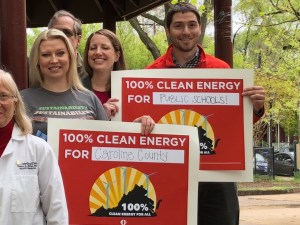
Supporters of clean energy gathered in Richmond on April 25 to launch the 100% Virginia Campaign. Photo courtesy of the Sierra Club.

Last week a coalition led by the Sierra Club launched a “100% Virginia” campaign designed in part to encourage more localities to follow the lead of Blacksburg and Floyd in committing to a 100% renewable energy future. For many people this energy transition now feels inevitable, at least in the long run. In the short run, though, it still feels very difficult.

Consider the obstacles we face in Virginia. Most localities have to deal with Dominion Energy Virginia (Dominion) or Appalachian Power (APCo), which have monopolies in their service territories. With few exceptions, customers can’t just sign up with another supplier who will offer a cleaner energy mix. And most local governments themselves buy electricity collectively from Dominion under a contract that gives them an attractive price but constrains their ability to generate power for themselves.

Our utilities themselves show no interest in abandoning fossil fuels. Dominion Energy Virginia’s parent company, Dominion Energy, is heavily invested in natural gas transmission, storage and export. The parent company needs the electric utility it owns to keep burning fracked gas for electricity so it can fill pipelines like its $6 billion Atlantic Coast Pipeline. Dominion has sunk billions of dollars of its customers’ money into new gas generating plants, which it won’t want to close early. And Dominion’s 2017 Integrated Resource Plan (IRP) showed the company expected to see its CO2 emissions actually increase over the next 25 years.

For its part, APCo is a subsidiary of Ohio-based American Electric Power (AEP). AEP has reduced its use of coal in recent years and plans major investments in renewable energy, but it won’t reach its planned 80% reduction in CO2 emissions until 2050. Meanwhile it is increasing its use of fracked gas.

Both Dominion Energy Virginia and APCo make money by building new infrastructure, so they need customers to use more energy, not less. They oppose mandatory efficiency savings as well as customer-owned and third-party owned solar, both of which would reduce their own sales. One result is Virginia’s abysmal showing on energy efficiency rankings.

Virginia lacks a mandatory renewable portfolio standard (RPS), relying on a weak and voluntary standard. As a result, Dominion Energy Virginia’s energy mix is currently less than 4% renewable energy, none of it from wind or solar. (Dominion does generate a tiny amount of solar energy but sells the renewable energy certificates, so legally it no longer qualifies as energy from solar. This will be an ongoing problem as Dominion builds more solar.) APCo has more wind in its energy mix than Dominion does, but also more coal.

Customers who want to generate their own renewable energy face a long list of policy barriers, and Virginia lacks incentives like tax credits, rebates, or a REC market that would spur private investment. Under pressure from Dominion, APCo and the rural electric cooperatives, the General Assembly routinely defeats proposals that would boost investment in rooftop solar. A recent report gave Virginia an F on solar policy, ranking us among the “10 States Blocking Distributed Solar.”

If the General Assembly is unhelpful, Virginia’s State Corporation Commission (SCC) is actively hostile to renewable energy and energy efficiency. The SCC cares about low rates and not much else.

It’s also hard for local governments to fill the policy gap. Virginia is a Dillon Rule state, meaning local governments have only the power granted to them by state government. A city or county can’t adopt a building code requiring homes to be more energy efficient than called for in the statewide code, or require new buildings to have solar panels or green roofs.

With all these obstacles, the prospects for meaningful change once looked grim. But two trends have converged to change the outlook. First, the economics of electric generation have now shifted decisively in favor of renewable energy and away from fossil fuels (though a lot of people don’t know it yet). And second, customer demand for renewable energy has surged across the political spectrum, with major corporations driving much of the action.

As a result, even in Virginia a number of trends favor renewable energy:

Dominion’s 2017 IRP dropped plans for new baseload gas plants before at least 2025, a sharp change from 2016. That IRP for the first time identified solar as the least cost resource in Virginia, though it proposed a build-out of only 240 MW per year. Dominion’s 2018 IRP, due out May 1, will almost surely call for more than that, in keeping with 2018 legislation, SB 966, putting more than 5,000 MW of wind and solar by 2028 in the public interest.

SB 966 also called for a billion dollars in new spending on energy efficiency programs, and limited the SCC’s ability to reject proposed efficiency programs. Meanwhile, localities are putting in place Commercial Property Assessed Clean Energy (C-PACE) lending programs that will allow businesses and non-profits to access low-cost financing for both energy efficiency and renewable energy.

Corporate demand has created new solar options, including some from Dominion but also some that don’t involve our utilities. For example, the 500 MW solar farm that will serve Microsoft and others appears to be structured to bypass Dominion entirely. The deal uses what is known as a wholesale power purchase agreement, an option increasingly popular with corporations, institutions, local governments, and other large purchasers of energy. The Northern Virginia Regional Commission is currently working with local governments in its area to do something similar.

Legislation passed in 2017 is also finally producing a solar option for Dominion customers that will likely be available by the end of this year. As proposed, it will offer electricity generated from solar facilities in Virginia at a cost comparable to that of Dominion’s wretched Green Power Program.

Offshore wind has not gotten much attention in Virginia recently, but Dominion’s partnership with the Danish company Orsted, the world’s leading offshore wind developer, puts Virginia’s 12-MW pilot project on track for completion in 2020, with the commercial lease area likely to see the full build-out of 2,000 MW occur during the 2020s.

Finally, the Northam Administration is finalizing new regulations designed to reduce greenhouse gas emissions from power plants by having Virginia utilities trade carbon allowances with those in states that are members of the Regional Greenhouse Gas Initiative (RGGI). It’s not clear yet how much this will incentivize utilities to build wind and solar.

Localities considering a commitment to 100% renewable energy should feel optimistic about these developments. As renewable energy costs continue to tumble, charting a path to 100% also means saving money for taxpayers.

The exact path to 100% may not be clear, but it will likely involve a combination of some or all these options:

  • Prioritizing energy efficiency in both public and private buildings;
  • Investing in large offsite solar (and wind) facilities, and encouraging corporate and institutional customers to participate in similar investments;
  • Putting solar on rooftops and parking lots of municipal buildings and schools, using third-party PPA financing to avoid upfront capital costs;
  • Offering C-PACE financing to businesses for energy efficiency and solar;
  • Sponsoring and promoting “solarize” bulk purchasing programs that make it easier and cheaper for residential and commercial customers to install solar;
  • Promoting utility-sponsored renewable energy purchase options for residents and businesses as they become available; and
  • If adequate utility options don’t emerge, using municipal aggregation to purchase renewable electricity from another supplier.

Localities also have to do a better job advocating for clean energy at the General Assembly and with the Governor, where they are currently underrepresented in the energy debate. They need to become squeaky wheels about things like the barriers to customer-owned solar, the paucity of renewable energy options and our substandard residential building code.

But most of all, localities have to begin taking advantage of the efficiency and solar options that already exist. Too many boards of supervisors and city councils waste time dithering and second-guessing and deferring to unmotivated staff and wondering if, gee, maybe it would be better to wait for someone else to go first.

Getting to 100% may not be easy, but it’s impossible if you never start.

Unknown's avatar

General Assembly chews on, spits out healthy legislation, while still trying to digest a huge hunk of pork

They just keep getting fatter.

If you were bewildered by the sheer volume of bills addressing solar, efficiency, storage, and other energy topics that I outlined last month, take heart: clean energy advocates don’t have nearly as many bills to keep track of now. So few bills survived the Finance and Commerce and Labor Committees that it will be easier to talk about what is left than what got killed.

The bigger story, of course, is the Dominion Ratepayer Rip-Off Act of 2018, which the utility would dearly love you to think of as the “grid modernization bill,” but which might be better imagined as an oozing pork barrel. Recent amendments do make it less obnoxious than it was last week (begging the question of why it wasn’t introduced that way in the first place). The Governor now says he supports the bill, the Attorney General continues to oppose it, and the SCC keeps issuing poisonous analyses.

But right now let’s just run down the fate of the other bills we’ve been following. For explanations of these bills, see previous posts on solar; efficiency, storage and EVs; and energy choice, carbon and coal.

Of the bills affecting customer-sited solar, only a handful remain:

  • HB 1252 (Kilgore), expanding the pilot program for third-party PPAs in APCo territory to cover all nonprofits and local government: amendment ensures current Dominion pilot is unchanged, passes the House, goes to the Senate
  • HB 1451 (Sullivan), allowing a school district to attribute surplus electricity from a solar array on one school to other schools in the district: amendment turns it into a pilot program, passes House C&L
  • SB 191 (Favola), allowing customers to install solar arrays large enough to meet 125% of previous demand (up from 100% today): amended to exclude customers in coop territory*, passes Senate C&L

Delegate Toscano’s bills promoting energy storage remain alive. HB 1018, offering a tax credit for energy storage devices, passed a House Finance subcommittee last week with an amendment to delay its start date to 2020. HJ 101, calling for a study, passed Rules but then was sent to Appropriations, where it was to be heard yesterday. (The Legislative Information Service does not yet show its fate.)

HB 922 (Bulova), allowing localities to install EV charging stations, has been reported from General Laws with amendments. The companion bill, SB 908 (McClellan) passed the Senate.

The Rubin Group’s land use bills passed their respective houses with amendments. The bills are SB 429 (Stanley), its companion bill HB 508 (Hodges), SB 179 (Stanley) and companion bill HB 509 (Hodges).

All other customer-focused solar bills died. So did energy efficiency goals, the mandatory renewable portfolio standard, LED light bulb requirements, and tax credits for EVs and renewable energy. Direct Energy’s energy choice legislation died in both House and Senate in the face of Dominion’s opposition, in spite of an astonishingly diverse array of business supporters; even the support of Conservatives for Clean Energy was not enough to garner any Republican votes in the House C&L subcommittee.

Republicans also killed the Governor’s RGGI bills while passing Delegate Poindexter’s anti-RGGI bill, HB 1270, in the House. Delegate Yancey’s anti-regulation HB 1082, appears to be alive in a subcommittee, though Delegate Freitas’ anti-regulation bill died, and Senator Vogel’s effort to change the constitution to allow legislative vetoes of regulations died in committee.

Delegate Kilgore’s HB 665, restoring tax subsidies to coal companies to facilitate destroying Virginia mountains, passed House Finance on a party-line vote. Shockingly, Senator Chafin’s similar bill, SB 378, passed the Senate with support from Democrats Marsden, Petersen, Edwards, Dance, Lewis, Mason and Saslaw.

So once again, in spite of a remarkable election that swept progressive Democrats into the House and nearly upended Republican rule, clean energy advocates have done poorly this year. Some of their priorities are now part of the Dominion pork barrel legislation, to be sure. But that legislation enables utility solar and utility spending; it does nothing for customer-owned renewable energy, market competition, climate action, or consumer choice.

Dominion still rules the General Assembly, though the legislators who voted in line with the utility’s wishes won’t admit it—or give any other explanation. The Republican members of the House Commerce and Labor subcommittee slashed their way through the pro-consumer bills with ruthless efficiency, and did not bother explaining their votes. (A special shout-out goes to Democratic delegates Kory, Ward, Heretick and Bourne for just as stubbornly voting in support of the good bills.)

But over in Senate C&L, chairman Frank Wagner tried to maintain the pretense that he was merely “referring” his colleagues’ bills to the Rubin Group instead of actually killing them.

The closed-door, private, invitation-only, utility-centric Rubin Group has no legislators among its members and proposes only changes to the law that all its members like, so “sending” a bill there that the utilities oppose is pure farce. Yet that was the fate of Senator Edwards’ bills on third party PPAs, agricultural net metering, and community solar, and Senator Wexton’s community solar bill. Wagner instructed these Senators to “work with” the Rubin Group on their bills. None of the other committee members objected.

But it’s not like the Rubin Group achieved much, either. Its hallmark legislation putting 4,000 MW of utility solar in the public interest got thrown into the Dominion pork barrel (and was later upped to 5,000 MW), along with energy efficiency bills designed to eliminate the SCC’s over-reliance on the RIM test, requirements for utility spending on energy efficiency, and Delegate Habeeb’s nice battery storage pilot program. They all became tasty morsels designed to offset legislators’ queasiness over the ratepayer rip-off and, not incidentally, to maneuver advocates and bill patrons into supporting Dominion’s bill as the only way to get their own legislation passed into law.


Unknown's avatar

More 2018 bills: energy efficiency, storage, and electric vehicles


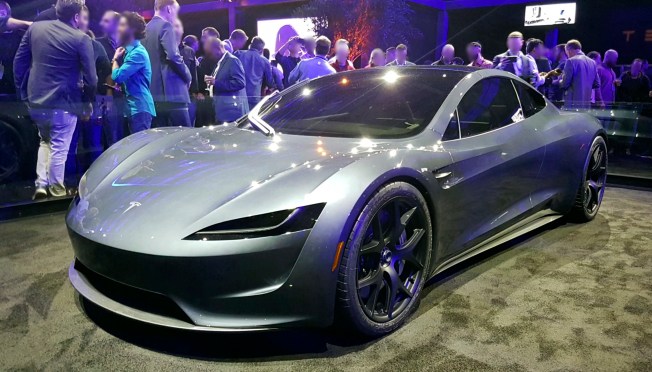
This prototype of the 2020 Tesla Roadster is not among the EVs available for test drives at Conservation Lobby Day. I’m using the picture anyway because it is as close as I will ever come to owning one. Photo credit Smnt via Wikimedia Commons.

My post last week covered the significant renewable energy bills, especially solar bills, introduced by the end of the first week of the 2018 legislative session. In this post I tackle three other bill categories of interest to clean energy advocates: energy efficiency, energy storage, and electric vehicles.

There is more to some of these bills than my brief description indicates; I just highlight the points I think are most interesting. Also, as with the solar bills, there may be more bills added in the coming week, so keep checking back for updates.

Energy Efficiency

Virginia’s woeful performance on energy efficiency was the subject of a recent guest post here by my colleague Melissa Christensen. A number of legislators have tried in recent years to turn this around, with remarkably little success.

Delegate Rip Sullivan has worked as hard as anyone on finding legislative fixes. He has several efficiency bills this year. HB 963 is the most impactful, requiring electric and gas utilities to meet energy efficiency targets, and to submit plans to the State Corporation Commission (SCC) for its approval describing how they will achieve the targets. The bill would also require utilities and the SCC to prioritize money-saving efficiency measures over proposals for new generation or transmission facilities.

Taking a narrower approach to the problem, two other Sullivan bills address the four tests the SCC uses to determine whether to approve an energy efficiency program proposed by a utility. The SCC has relied on the Ratepayer Impact Measure (RIM) test to reject programs that otherwise would provide cost-effective energy savings. HB 964 removes the RIM test from the list of tests the SCC is required to consider when determining that an energy efficiency program proposed by an electric utility is in the public interest. Instead, the SCC would consider whether the net present value of a program’s benefits exceeds the net present value of its costs as determined under the Total Resource Cost Test, the Utility Cost Test, and the Participant Test.

Taking a different tack, HB 965 defines the Total Resource Cost Test as a test to determine if the benefit-cost ratio of a proposed energy efficiency program or measure is greater than one. An energy efficiency program or measure that meets the Total Resource Cost Test is declared to be in the public interest. If it fails the test, it would then be reviewed under the other tests.

Delegate Tim Hugo’s HB 1261 proposes another way to undercut the SCC’s over-reliance on the RIM test. The bill provides that an energy efficiency program proposed by an electric utility is in the public interest if the net present value of the benefits exceeds the net present value of the costs as determined by any three of the existing law’s four benefit-cost tests. At least, that is surely the intent. Other reviewers say the bill’s wording could potentially be interpreted in a way that undermines its intent.

Two other Sullivan bills also deserve mention. HB 560 establishes a revolving fund to provide no-interest loans to any locality, school division, or public institution of higher education for energy conservation or efficiency projects. HB 204 would allow localities to adopt ordinances to assist commercial building owners in getting energy usage data for tenants in the building.

Finally, Delegate Bell’s HB 58 would generally require state agencies to use LED bulbs instead of incandescent light bulbs for new outdoor lighting fixtures or when replacing bulbs in existing fixtures.

Energy storage

Energy storage is one of the hot topics in energy today. In most states, the focus is on advanced battery technology, which can take the form of battery packs small enough for residential and commercial customers, or arrays large enough to provide utilities with an alternative to new generating plants. The value of customer-sited battery systems goes beyond being able to use solar energy at night; batteries can also provide grid services and help communities prepare for widespread power outages caused by storms or attacks on the grid.

In Virginia, Dominion Energy currently seems more interested in pumped storage hydropower, a decades-old technology that uses reservoirs to store surplus energy, traditionally energy generated at night from coal and nuclear plants, for use in the daytime. A 2017 law gives Dominion support for pumped storage using old coal mines, potentially a boost for the economy of Southwest Virginia but an unproven technology rife with questions about its economic viability and environmental impacts.

At any rate, energy storage will be playing an increasingly important role in Virginia as elsewhere, and three of this year’s bills address it. Delegate Toscano’s HB 1018 seeks to incentivize customer acquisition of energy storage systems with a tax credit of 30% of an energy storage system’s cost, up to $5,000 for a residential storage system or $75,000 for a commercial system. Delegate Habeeb’s HB 782 addresses energy storage at the utility level. It requires the SCC to establish a pilot program under which Dominion and APCo would submit proposals to deploy batteries, up to 10 MW for APCo and up to 30 MW for Dominion.

HJ 101 (Toscano) is a study bill. It tasks the Department of Mines, Minerals and Energy with conducting a two-year study to determine what regulatory reforms and market incentives are necessary to increase the use of energy storage devices in Virginia (including pumped storage hydropower).

Electric Vehicles

As with battery storage, electric vehicle technology is only just starting to register as an important topic in Virginia, and its impact—on utilities, the grid, air pollution and the economy—is just beginning to be discussed. This may be the year legislators become engaged. DriveElectric RVA, an electric vehicle advocacy group, plans to offer test drives of EVs at the capitol on January 22, Conservation Lobby Day.

Three bills deal with EVs this year. HB 469 (Reid) offers a tax credit of up to $3,500 for purchase of a new electric vehicle. HB 922 authorizes local governments to install charging stations and charge for the electricity (individuals and businesses can already do so). HJ 74 (Reid) requires a study of the impacts of vehicle electrification, including on workers in the automotive repair industry. One of the selling points for EVs is that they require minimal maintenance.

Unknown's avatar

Memo to legislators: Virginia is not a low-cost energy state

Sure, there is something to be said for using a lot of energy–if you’re a Jack Russel Terrier. For the rest of us, not so much.
Photo credit Steve-65 – Own work, CC BY-SA 3.0, https-::commons.wikimedia.org:w:index.php?curid=17865919

Anyone who has attended the annual meeting of the House Energy Subcommittee has watched the Republican majority vote down all manner of legislation designed to improve Virginia’s poor ranking on energy efficiency. Since energy bills have to survive this subcommittee before the rest of the General Assembly gets to hear them, this little band of naysayers effectively holds back progress on initiatives that would save money and reduce energy use.

Why would they do that? As discussed in my last post, these delegates almost invariably vote the way Dominion Virginia Power wants them to. And Dominion doesn’t like these bills. The utility is in the business of selling electricity, and energy efficiency is bad for business.

Of course the utilities don’t put it that way. At this year’s subcommittee meeting, Dominion Virginia Power lobbyist Bill Murray explained his company’s opposition to one of Delegate Rip Sullivan’s energy efficiency bills by saying that real efficiency gains depend on the actions of individuals, and Virginians aren’t incentivized to take these actions because Dominion keeps our rates so admirably low.

This might put you in mind of former Vice President Dick Cheney’s dismissal of conservation as a sign of personal virtue but not a sound basis for energy policy. Let’s set that aside. Murray’s comments might also be thought unfair to his own client, which has tried and failed to get approval from the State Corporation Commission for various programs that would help consumers practice personal virtue. (If you wonder why, in that case, he was standing there opposing legislation designed to produce a better result, you are missing the point of the Subcommittee Hearing. It’s Kabuki theatre, people, and you really shouldn’t miss it.)

For now, however, let’s simply ask whether Mr. Murray’s claim is correct. Are we really paying less for energy than residents of other states?

We should first clarify whether we are talking about rates, or bills. Dominion prefers to focus on rates, but what people pay are bills. Few people can tell you what their electricity rate is, but most have a sense of the bottom line on their monthly bill.

According to the U.S. Energy Information Agency, Virginia’s 2016 residential rates stand at an average of 10.72 cents per kilowatt-hour, which is indeed about 12% below the national average of 12.21.* The average for our peer group, the South Atlantic region, is 11.11 cents per kWh, with Maryland at the high end (14.01 cents), and Georgia at the low end (9.92 cents).

When it comes to monthly bills, however, Virginia residential customers ($130.58) pay almost exactly the South Atlantic average ($131.20), but we are way above the national average ($114.03). (Note the bills are based on 2015 data; the EIA has not updated this chart for 2016.) If having to pay more for electricity is the primary motivation to adopt energy efficiency measures, Virginians are more motivated than most Americans.

Several factors can make a state have lower bills despite higher rates. Among these is energy efficiency. Energy efficiency is why a state like California, with high incomes and notoriously high residential electricity rates (16.99 cents/kWh), still has average monthly bills ($94.59) that are 30% below Virginia’s. California has succeeded in keeping per capita energy use flat for decades while the U.S. average climbed steadily, only flattening out in the past ten years. California is currently ranked 49th in the nation for per capita energy consumption, and 49th in total energy costs. “California” is a bad word among Virginia Republicans, who assume anything that state does must be bad, but California’s experience has to be considered by anyone who cares about energy costs.

Back at the Energy Subcommittee meeting, Bill Murray did not mention California, but he did offer his opinion on the cause of Virginia’s higher-than-average bills. He noted that many Virginians use electric heat pumps to heat their homes, which drives up winter electricity use, resulting in higher bills on average. (An EIA analysis using 2009 data showed that 55% of Virginia households heat with electricity, higher than the U.S. average but less than the South Atlantic average.)

To get a look at the whole energy picture across states, I created the table below that compares residents’ costs of electricity, natural gas and fuel oil across the U.S. Virginia ranked 18th out of 51. Because it isn’t weather-adjusted, it can’t tell the full story. However you slice it, though, Virginia is not a low-cost energy state.

It may still be true that middle-class homeowners don’t feel the bite of energy bills enough to go to the trouble of figuring out what they should do to save energy. If it’s hard, people don’t do it—which is one reason energy efficiency programs are designed to make it easier. But middle-class homeowners also aren’t the only ones who would benefit. Across Virginia, people with incomes below 50% of the poverty level spend at least 40%, and often more than half their income, on energy bills.

So if cost equals motivation, Virginians are motivated. What’s lacking are the energy efficiency programs to help people save energy, and the laws to enable those programs.


Overall Rank State Total Energy Cost Monthly Electricity Cost (Rank) Monthly Natural-Gas Cost (Rank) Monthly Home Heating-Oil Cost (Rank)
1 Connecticut $304 $155

(7)

$44

(20)

$104

(1)

2 Rhode Island $259 $107

(39)

$61

(5)

$91

(4)

3 Massachusetts $253 $115

(34)

$60

(6)

$78

(6)

4 Alaska $241 $129

(20)

$53

(13)

$59

(7)

5 New Hampshire $234 $127

(25)

$20

(44)

$87

(5)

6 Vermont $231 $120

(30)

$18

(48)

$93

(3)

7 New York $220 $115

(32)

$66

(3)

$39

(9)

8 Maine $217 $107

(40)

$6

(49)

$104

(2)

9 Pennsylvania $211 $121

(28)

$50

(15)

$40

(8)

10 Maryland $209 $145

(13)

$43

(22)

$21

(11)

11 Delaware $208 $152

(9)

$37

(26)

$19

(12)

12 Georgia $203 $157

(6)

$46

(19)

$0

(42)

13 New Jersey $200 $115

(33)

$63

(4)

$22

(10)

14 Alabama $197 $171

(3)

$26

(40)

$0

(39)

15 South Carolina $196 $177

(1)

$19

(47)

$0

(32)

16 Mississippi $184 $163

(4)

$21

(43)

$0

(49)

17 Ohio $183 $120

(29)

$59

(7)

$4

(19)

18 Virginia $182 $141

(14)

$31

(32)

$10

(13)

18 Hawaii $182 $177

(2)

$5

(50)

$0

(51)

20 Kansas $181 $125

(27)

$56

(11)

$0

(47)

21 Michigan $180 $106

(43)

$72

(2)

$2

(25)

22 North Dakota $179 $140

(15)

$32

(31)

$7

(15)

22 Texas $179 $155

(8)

$24

(41)

$0

(50)

24 Missouri $178 $134

(18)

$44

(21)

$0

(36)

25 Indiana $177 $129

(21)

$47

(17)

$1

(29)

26 Illinois $176 $96

(47)

$80

(1)

$0

(35)

27 Oklahoma $175 $135

(17)

$40

(24)

$0

(43)

28 Tennessee $174 $147

(10)

$27

(37)

$0

(37)

29 Wisconsin $171 $109

(37)

$57

(9)

$5

(17)

30 Minnesota $170 $108

(38)

$57

(10)

$5

(16)

31 Louisiana $169 $146

(11)

$23

(42)

$0

(46)

32 North Carolina $168 $145

(12)

$20

(45)

$3

(22)

33 Kentucky $167 $136

(16)

$30

(34)

$1

(30)

33 South Dakota $167 $129

(23)

$34

(28)

$4

(20)

35 Florida $164 $160

(5)

$4

(51)

$0

(44)

36 West Virginia $162 $126

(26)

$32

(30)

$4

(18)

36 Iowa $162 $109

(36)

$52

(14)

$1

(27)

38 Nevada $161 $128

(24)

$33

(29)

$0

(31)

38 Nebraska $161 $119

(31)

$42

(23)

$0

(33)

40 Arkansas $158 $129

(22)

$29

(36)

$0

(41)

41 Wyoming $154 $107

(41)

$46

(18)

$1

(28)

42 Arizona $153 $134

(19)

$19

(46)

$0

(48)

43 District of Columbia $148 $82

(51)

$58

(8)

$8

(14)

44 Idaho $146 $113

(35)

$30

(35)

$3

(23)

45 Montana $145 $103

(44)

$40

(25)

$2

(26)

46 Utah $144 $89

(49)

$55

(12)

$0

(34)

47 Colorado $141 $92

(48)

$49

(16)

$0

(38)

48 Oregon $135 $107

(42)

$26

(38)

$2

(24)

49 California $126 $96

(45)

$30

(33)

$0

(40)

50 Washington $125 $96

(46)

$26

(39)

$3

(21)

51 New Mexico $124 $88

(50)

$36

(27)

$0

(45)


Data derived from WalletHub, “2016’s Most & Least Energy-Expensive States,’ July 13, 2016, https://wallethub.com/edu/energy-costs-by-state/4833/#methodology. I was only interested in energy consumption in buildings, so I backed out the numbers for motor fuel cost.

______________________________

*The EIA data reflect statewide averages. Dominion’s own residential rates tend to be lower than Virginia’s statewide average. It costs more to bring electricity to rural areas, so APCo and the coops would be expected to have higher rates. And urban dwellers use less electricity on average than rural residents, which keeps bills lower for city folks in Dominion territory. But since most states have a mix of urban and rural residents, it seems correct to compare statewide averages.

Note, too, that the discussion here—and at the Energy Subcommittee meeting—concerned residential rates. Virginia’s commercial rates are significantly better than the U.S. average.


Unknown's avatar

While U.S. leaders were worrying about coal jobs, clean energy snatched the lead: even Virginia now has more people working in solar than coal.


va-electric-sector-jobs

Jobs in electric generation do not include fuel jobs, so for example, the coal jobs in the two charts have to be added together to get total employment. Wind and solar, of course, have no fuel costs. Charts come from DOE.

Jobs in electric generation do not include fuel jobs, so for example, the coal jobs in the two charts have to be added together to get total employment. Wind and solar, of course, don’t need employees to produce their “fuel.” Charts come from DOE.

A new report from the U.S. Department of Energy takes stock of energy employment in the U.S. and comes up with fresh evidence of the rapid transformation of our nation’s electricity supply: more people today work in the solar and wind industries than in natural gas extraction and coal mining.

According to the January 2017 U.S. Energy and Employment Report, 373,807 Americans now work in solar electric power generation, while 101,738 people work in wind. By comparison, a total of 362,118 people work in the natural gas sector, including both fuel supply and generating plants.

Total coal employment stands at 160,119. And while renewable power employment grew by double digits last year—25% for solar, 32% for wind—total job numbers actually declined across the fossil fuel sectors, where machines now do most of the work.

If generating electricity employs a lot of people, not generating it employs even more. The number of Americans working in energy efficiency rose to almost 2.2 million, an increase of 133,000 jobs over the year before.

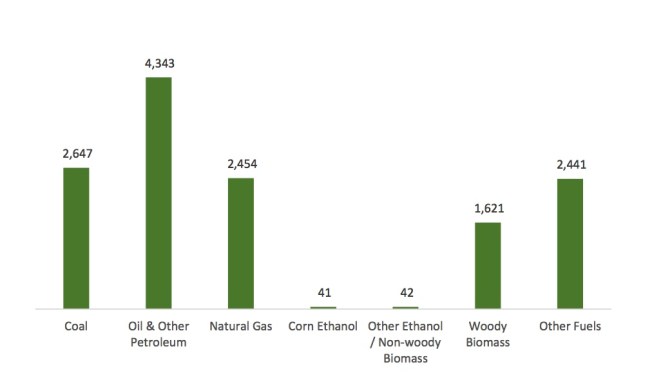
Those are nationwide figures, but the report helpfully breaks down the numbers by state. For Virginia, 2016 was a watershed year. In spite of the fact that our solar industry is still in its infancy and we have no operating wind farms yet, more Virginians now work in renewable energy than in the state’s storied coal industry. A mere 2,647 Virginians continue to work in coal mining, compared to 4,338 in solar energy and 1,260 in wind.

Dwarfing all of these numbers is the statistic for employment in energy efficiency in Virginia: 75,552.

Unknown's avatar

Sierra Club scorecard plumbs divisions among Virginia legislators

SC ScorecardBy and large, Virginia Republicans are still locked in a fossil fuel echo chamber, where “all of the above” and “war on coal” guide their votes. Virginia Democrats mostly acknowledge the damage climate change is doing to the commonwealth and around the planet and support a course correction. And regardless of ideology, large majorities from both parties vote for whatever Dominion Power wants.

These are the major takeaways from this year’s legislative session and the 2016 Climate and Energy Scorecard, just released by the Virginia Chapter of the Sierra Club. Constituents and clean energy advocates will want to look at not just the raw grades of individual legislators, but also the discussion provided in the report, to understand the dynamics of our General Assembly.

Twenty-eight Democrats earned perfect scores. All but a handful of Republicans earned failing grades. Sierra Club gave extra credit to legislators who introduced bills that advanced clean energy. This included several Republicans highlighted in the scorecard, but their bad votes on other bills dragged down their overall scores.

This is really a shame, since some Republicans have worked hard to advance clean energy legislation. Leesburg Delegate Randy Minchew comes to mind here for his dogged efforts on behalf of distributed solar energy, something you might not guess from his overall grade of D.

Often, it seems, reform-minded Republicans go along with their party’s more retrograde positions where they are pressured to do so by their party leaders, or where the votes are so lopsided that there is nothing to gain from breaking with the majority.

If party leaders have an outsize influence on voting, so too does Dominion Power. In fact, if you want to know who the true champions of the people are, don’t look at party affiliation. Look for the few legislators who will stand up to the most powerful political force in Richmond.

That assumes you can find votes to examine. In the introduction to the Sierra Club scorecard, Legislative Chair Susan Stillman noted with frustration this year’s paucity of recorded votes available to score:

The challenges of producing a fair and even scorecard are growing, as are the opportunities for Virginia citizens to have a clear and accurate picture of their elected representative’s voting record. Transparency in the General Assembly sunk to a new low this year: 95% of the bills defeated in the House of Delegates were done so on an unrecorded vote or no vote at all. This is not business-as-usual: just over a decade ago, nearly every bill that passed through the House received a recorded vote.

An ongoing problem, both for scorecard referees and for clean energy advocates, is that most bills that would advance the cause of renewable energy and energy efficiency never make it out of committee; in the House, the bills are heard in a tiny subcommittee. Not only do votes go unrecorded, but this approach deprives most of our elected representatives of the opportunity to vote on some of the most important energy policy issues facing Virginia.

And then there was this year, in which even the subcommittee members never got a chance to vote. A dozen or so of the most promising clean energy bills were never heard at all, but were sent to a newly-formed interim study subcommittee, ostensibly for the purpose of giving these bills the benefit of greater deliberation. The effect was to kill them quietly for the year.

As Stillman notes, all these unrecorded votes make it hard to know where the vast majority of legislators stand:

Without a recorded vote, the public is deprived of the full measure of his or her elected official’s voting history. And the problem of unrecorded votes is growing worse. This year’s unprecedented rate of unrecorded votes in the House is up from 76% in 2015—a 25% jump in one year. Virginia legislators are killing more bills than ever without accountability for their actions. This practice is wrong, and it’s dangerous for our democracy.

Stillman gives a shout-out to the founding members of the new, bipartisan Transparency Caucus for its efforts to make all votes public and ensure every bill gets a hearing.

These would be modest reforms, but welcome. If sunlight is the best disinfectant, there’s a big, dirty House (and Senate) in Richmond that need cleaning.

Unknown's avatar

Virginia legislators named to review clean energy bills

Workers install solar panels at the University of Richmond.

Workers install solar panels at the University of Richmond.

Virginia’s 2016 legislative session began with a host of worthy bills promoting energy efficiency, wind and solar, but ended with almost none of the legislation even having been considered in committee. The Republican chairmen of the Senate and House Commerce and Labor committees instead “carried over” the bulk of the bills, announcing plans for a new subcommittee to study them and make recommendations for 2017.

Members of the subcommittee have now been named. Senator Frank Wagner has tapped Senators Black, Cosgrove, Stuart and Dance to serve. This information is now on the General Assembly website. Delegate Terry Kilgore has named Delegates Ware, Hugo, Ransome, Miller and Keam.

No meeting schedule has been announced, but lobbyists for the utilities and the solar industry trade association, MDV-SEIA, have begun meeting in private to discuss potential compromises. This can’t be called a stakeholder process; the meetings are not open to the public, and they have not invited participation by environmentalists or, with one exception, anyone on the consumer side representing the interests of local government, colleges and universities, churches, eco-friendly businesses or residential customers.

(The exception is a lobbyist for Loudoun County landowner Karen Schaufeld, a newcomer to energy issues who formed a group called Powered by Facts and hired lobbyists to advocate for expanded agricultural net metering and other pro-solar reforms.)

Anything that emerges from these meetings will likely have a significant impact on the subcommittee. Yet, given the importance of this issue to the commonwealth, the subcommittee should ensure it hears from all solar stakeholders. More importantly, committee members should explicitly adopt as their measure of progress a simple test: whether the language of a bill will lead to greater private investment in solar in Virginia. Wagner and Kilgore have said they want to see the growth of solar here, and all of the legislators publicly subscribe to the values of free market competition and consumer choice. But without a guidepost, we are likely to see the utilities bully the solar industry into a “compromise” that shifts the ground a bit but continues to strangle the private market–and leaves us further than ever behind other states.

Who’s who on the committee

All of the legislators named to the study committee are Commerce and Labor committee members, but beyond that, many of these appointments are surprising, as they don’t necessarily reflect demonstrated interest in the subject. It is also disturbing that only one Democrat was named from each side. (Dance is the Senate Democrat, Keam the House Democrat. They are also the only minorities represented.) There is no reason energy efficiency and renewable energy should be partisan issues, but in the past, party affiliation has been the single most powerful predictor of votes on clean energy.

To gage how these legislators approach the issues, I took a look at the Sierra Club’s Climate and Energy Scorecard for 2014 and 2015. Scores for 2016 are not yet available. It is important to note that in the House, most renewable energy legislation has been killed by unrecorded voice votes in the Commerce and Labor subcommittee, preventing the votes from being scored. So the scorecard is only a starting point.

The Senators

Frank Wagner himself earned a D in 2015, with a voting percentage of 60%. This was up from an F in 2014. The Virginia Beach Republican is the only member on this subcommittee to have exhibited a serious interest in energy issues, having shaped many of Virginia’s current policies. Unfortunately, he is closely allied with Dominion Power, voted for tax subsidies for the coal industry, tends to doubt the reality of climate change, and has been sharply critical of the EPA Clean Power Plan. On the plus side, he believes renewable energy should play an important role and was instrumental in launching the state’s bid for offshore wind. He also genuinely welcomes input from the public at meetings he runs.

That makes his committee choices all the more peculiar. Dick Black is better known as a social crusader who lines up with the far right wing of his party, most notably in opposition to abortion, gay rights and gun limits. Most recently, he made headlines by meeting with Syrian president Bashar Assad and urging the U.S. to lift economics sanctions against the Assad regime.

Black is a climate denier of the delusional variety, insisting at an event last August that global temperatures have not risen in 17 years and that no major hurricanes have hit the American mainland in 9 years. (2014 was the hottest year on record until 2015 seized the trophy. Superstorm Sandy, the largest Atlantic hurricane on record, struck in 2012.)

The forum was an “American for Prosperity grassroots event” (sic). The “crowd of about 18 people” included former Senator Ken Cuccinelli, no slouch himself in the climate denial department. Black compared EPA employees to “Bolshevik communists.” He and Cuccinelli used the event to criticize the Clean Power Plan as “part of a government scheme to send billions in taxpayer funds to ‘wind and solar scams’ and ‘billionaire liberals.’”

He received a grade of F from the Sierra Club in both 2014 and 2015. With a voting percentage of just 14% last year, he had the worst record in the Senate on climate and energy bills. In sum, the appointment of Dick Black to this committee can’t be called an effort to seek out thoughtful voices on the issues.

John Cosgrove is a solid conservative on name-brand issues like guns and abortion, though decidedly lacking Black’s flair for headlines. With a 67% score, he received a grade of D from the Sierra Club in 2015, up from an F in 2014. A review of the bills he has introduced in the last two years showed none related to climate or energy, again raising the question of why he was chosen for this particular subcommittee.

Richard Stuart’s voting record of 50% earned him an F in 2015, down from a C in 2014. However, he earned an award from the Sierra Club in 2014 for introducing a bill to regulate fracking; the bill did not pass. Senator Stuart also received “extra credit” on the 2015 scorecard for introducing the bill that established the Virginia Solar Energy Development Authority. In 2016, he also introduced one of the more ambitious renewable energy bills, working with Schaufeld’s Powered by Facts.

Roslyn Dance is the lone Democrat and only woman selected from the Senate. She has consistently voted on the side of clean energy, and was the patron of 2015 legislation raising the size limit on net-metered projects from 500 kW to 1 megawatt. This work earned her an award from the Sierra Club that year.

Dance scored 100% on both the 2014 scorecard (when she was a delegate) and the 2015 scorecard, for a grade of A+ each year. However, she came in for intense criticism in the 2016 session for abstaining on Senator Surovell’s coal ash bill, knowing it would fail in committee without her vote. The bill would have required Dominion Virginia Power to move stored coal ash out of unlined ponds along rivers for disposal in lined facilities away from water sources. Dance’s abstention was widely thought to be a favor to Dominion Power, saving the company from what might have been a nasty fight on the Senate floor.

The Delegates

Terry Kilgore, Chairman of House Commerce and Labor, represents part of rural southwest Virginia, and has close ties to Appalachian Power Company and the coal industry, both of which contribute generously to his campaigns. Bills opposed by utilities have little chance in his committee. In 2015, he earned an F on the energy and climate scorecard, with a 50% score, down from a D (63%) in 2014.

Lee Ware represents a suburban and rural area west of Richmond, stretching from the western side of Chesterfield County. He earned a C (75%) in 2014 and an F (50%) in 2015. In spite of these scores, he has shown an independent, thoughtful approach to energy legislation, and has demonstrated a serious interest in promoting energy efficiency. His bill to change how the State Corporation Commission evaluates utility efficiency programs is one of the pieces of legislation to be considered this summer.

Tim Hugo represents a suburban Northern Virginia district. He earned a D (67%) in 2014, with extra credit for introducing a bill that reclassified solar equipment as “pollution control equipment,” earning it a critical exemption from a local business property tax known as a “machinery and tools” tax. In 2015 his score dropped to an F (56%), in spite of an extra credit bump from introducing the House version of the Solar Development Authority bill.

As Majority Caucus Chair, Hugo’s poor scores reflect the leadership’s pro-coal, anti-regulation platform. He is nonetheless keenly interested in promoting solar energy, at least where he can do so without running into utility opposition. His close ties to Dominion have often meant he led the opposition to pro-solar net metering reforms, keeping them from moving out of the committee.

Margaret Ransone is the only woman named to the House subcommittee. She received an F (57%) in 2015, down from a C (71%) in 2014. She represents counties along the Northern Neck, near Richmond. She is not on the Commerce and Labor energy subcommittee, and has shown no particular interest in the subject. Her website suggests a mix of the ideological (pro-gun, anti-abortion) and the practical (high speed internet for rural areas).

Jackson Miller received an F (44%) in 2015, down from a D (63%) in 2014. His district is close to Hugo’s, covering the City of Manassas and part of Prince William County in the outer suburbs of Northern Virginia. Miller is Majority Whip for the House. He has consistently voted against expanding net metering options.

Mark Keam is the only Democrat on the House subcommittee as well as the only ethnic minority (he is Korean). He received an A+ (100%) in 2015, up from an A (88%) in 2014. He has generally supported expanded opportunities for renewable energy.

Unknown's avatar

McAuliffe’s stark choice on the Clean Power Plan: serve Virginia, or Dominion Power

Photo by Josh Lopez, courtesy of the Sierra Club.

Photo by Josh Lopez, courtesy of the Sierra Club.

After the Supreme Court issued a stay of the EPA’s Clean Power Plan pending its review by the D.C. Circuit, many Republican governors halted compliance efforts in their states, while most Democratic governors opted to continue. Among these was Virginia Governor Terry McAuliffe, who plans to unveil a draft state implementation plan this fall.

Deciding to move forward on President Obama’s signature climate effort was an easy call. Polls show strong support for reducing carbon pollution, and the Governor wants to prove himself a team player who supports his president and his party. McAuliffe often reiterates his conviction that climate change is already producing extreme weather and increasingly severe coastal flooding in Virginia, making government action urgent.

Governor McAuliffe has another choice before him now: he can craft a compliance plan that moves Virginia firmly in the direction of clean energy and lower carbon emissions, or he can adopt one that allows unbridled growth in new power generation from natural gas. The latter could still meet the letter of the law, but it would hugely increase greenhouse gas emissions from Virginia power plants.

McAuliffe has this choice because EPA’s rules come in two parts: the Clean Power Plan addresses existing power plants under one section of the Clean Air Act, while new power plants are addressed under another section of that law. As a result of the statutory structure and EPA’s rules, states can choose to cover both under one set of rules with a total cap on utilities’ CO2 emissions, or they can address new and existing sources separately.

If a state chooses to cover both under a single cap, new generation can be added up to the cap or go beyond if the utility buys emission allowances from another utility. But if a state treats new and existing sources separately, then new sources can grow without limit as long as each new unit meets a unit-specific standard. Of course, building more fossil-fueled power plants of any type will increase carbon emissions, at a time when the U.S. desperately needs to cut back.

The carbon reduction target EPA set for Virginia under the Clean Power Plan is extremely modest. EPA’s numbers show Virginia can meet the target for existing sources simply by not increasing emissions. If the state also includes new power plants under the cap, however, it creates a real incentive to invest in clean energy.

But there’s a problem. Dominion Resources, the Richmond-based parent company of Dominion Virginia Power, is heavily invested in the natural gas sector, primarily transmission and storage. That has led Dominion to lobby for an implementation plan that covers only existing power plants.

Excluding new sources would leave the company free to build as many new natural gas-burning power plants in the state as it wants, locking in years of increased carbon pollution, and further boosting demand for fracked gas and pipeline capacity. Dominion’s plans call for more than 9,500 megawatts of new gas generation in Virginia, equivalent in carbon impact to building eight average-sized coal plants in the state.

McAuliffe can do what Dominion wants, or he can do the right thing for the climate. He can’t do both.

The stakes are high on both sides. McAuliffe has made job creation his number one priority, and he lures new industry to the state with the promise of lower-than-average electricity rates. Dominion says supporting its natural gas plans is the way to deliver on that promise. Whether that is true or not doesn’t count in this calculus; with state law limiting governors to a single term, McAuliffe is focused on the present.

But adopting a plan that allows unlimited increases in greenhouse gas emissions would run contrary to Virginia’s long-term interests. Not only is the state on the front lines of sea level rise, it needs predictable, affordable electricity prices for decades to come. And nothing can provide that better than renewable power and increased energy efficiency.

Neither Dominion nor anyone else can guarantee the price of natural gas over the life of a new power plant. Questions of price and supply bedevil even the best analysts and make forecasting risky. Moreover, the growing awareness of the climate impacts of methane from leaking wells and pipelines is already producing calls for tighter regulation of natural gas. A carbon tax or cap-and-trade legislation would also make all fossil fuels more expensive relative to carbon-free renewables.

While the cost of using natural gas can only go up, the costs of wind, solar and battery storage are expected to continue their astonishing declines. Advances in energy efficiency promise huge savings for states that pursue programs to help customers cut their energy use.

From a bill-payer’s perspective, then, investments in clean energy make more sense than building gas plants, even without taking federal regulations into consideration. Recent analyses show Virginia can cap carbon pollution from new power plants and still save money for electricity customers.

Environmental groups say their number one energy priority this year is to ensure Virginia adopts a Clean Power Plan that includes both existing and new sources, and they are counting on Governor McAuliffe to deliver. Their message is simple: if McAuliffe wants to be on the climate team, Virginia’s compliance plan must reduce CO2 emissions, not let them grow.

Unknown's avatar

Only the good die young: A mid-way review of Virginia climate and energy bills

Photo credit: Corrina Beall

Photo credit: Corrina Beall

Virginia’s 2016 legislative session is only half over, but it’s already clear that the General Assembly is no more capable of dealing with climate change and a rapidly-evolving energy sector than it ever was. Republicans are stuck in denial, Democrats are divided between those who get it and those who don’t, and for most legislators in both parties, the default vote is whatever Dominion Power wants.

Republican attacks on EPA climate regulations sail through both houses, while popular RGGI legislation dies in committee.

Practically the first bills filed this session call for Virginia’s Department of Environmental Quality to submit for legislative approval any plan to comply with the EPA’s Clean Power Plan. Anxious to safeguard Virginia’s heritage of carbon pollution against the twin threats of clean energy and a more stable climate, the Republican leadership rammed through HB 2 and SB 21 on party-line votes. Governor McAuliffe has promised vetoes.

Eager as it was to defeat Obama’s approach to climate disruption, the Party of No supported no solutions of its own, even when proposed by one of its own. Virginia Beach Republican Ron Villanueva couldn’t even get a vote in subcommittee for his Virginia Alternative Energy and Coastal Protection Act, which would have had Virginia join the Regional Greenhouse Gas Initiative (RGGI). It was the only legislation introduced this year that would have lowered greenhouse gas emissions and raised money to deal with climate change. The Democratic-led Senate version also failed to move out of committee, on a party-line vote.

Republicans scoff at climate change, but they are beginning to worry about its effects. Bills have moved forward to work on coastal “resiliency” efforts and to continue studying sea level rise (referred to as “recurrent flooding,” as though it were a phenomenon unto itself and suggesting no particular reason it might get worse). The Senate passed SB 282, creating the Virginia Shoreline Resiliency Fund, and SJ 58, extending the work of the Joint Subcommittee to study recurrent flooding. The House passed HJ 84, a companion to SJ 58, and HB 903, establishing a Commonwealth Center for Recurrent Flooding Resiliency.

Bold energy efficiency measures die. Not-so-bold measures don’t do well either.

Virginia appears set to continue its woeful record on energy efficiency. Between the opposition of electric utilities and their regulators at the State Corporation Commission, bills that would have set the stage for cost-effective reductions in energy use got killed off early or watered down to nothing.

Among the latter were the fairly modest bills pushed by the Governor. They passed only when reduced to a provision for the SCC to evaluate how to measure the subject. Weirdly, even that found opposition from conservative members of the Senate and House.

The only bill to move forward more or less intact was Delegate Sullivan’s HB 1174, which requires state agencies to report on how badly the state is doing in meeting its efficiency goal. So we may not make progress, but at least we’ll have to acknowledge our failures. (Roughly the same group of conservatives didn’t think we should even go that far.)

Renewable energy bills won’t move forward this year, except the one Dominion wants.

As previously reported, the Republican chairmen of the House and Senate Commerce and Labor committees decided not to decide when it came to much-needed renewable energy reforms. Every bill to create new market opportunities for wind and solar was “carried over to 2017,” i.e., referred to a not-yet-existent subcommittee composed of unnamed people tasked with meeting at a not-yet-scheduled time, in order to do “something.”

“We do need to get moving on these solar bills faster than we have been going,” said House C&L Chairman Terry Kilgore, in explaining why his committee was not getting moving on any solar bills.

On the other hand, over in House Finance, Dominion Virginia Power’s bill to lower the taxes it pays for renewable energy property fared better. In exchange for an 80% tax exclusion for its own utility projects, Dominion offered up reductions in the tax savings currently afforded to the smaller projects being developed by independent solar companies. In an amusing sideshow, Republican leaders tried to use their support for this legislation to strong-arm liberal Democrats into supporting a bill extending coal subsidies, on the theory that passing one bill that benefits Dominion warrants passing another bill that benefits Dominion.

Given the lack of progress in opening the wind and solar markets, there is more than a little irony in the fact that legislation moved forward in both the House and Senate requiring utilities to direct customers to an SCC website with information about options for purchasing renewable energy. (Which leads to the question: if visitors to such a site encounter an error message, is it still an error?)

Coal subsidies remain everyone’s favorite waste of money.

Once again, the House and Senate passed bills extending corporate welfare for companies whose business model involves blowing up mountains and poisoning streams. Over the years legislators have spent more than half a billion dollars of taxpayer money on these giveaways, knowing full well it was money down a rat-hole. Community activists have pleaded with lawmakers to put the cash towards diversifying the coalfields economy instead, but there has never been a serious effort to redirect the subsidies to help mine workers instead of corporate executives and the utilities that buy coal.

This year the corporate handout went forward in the face of reports that one of the biggest recipients plans to pay multi-million-dollar bonuses to its executives while laying off miners and looking for ways to dodge its obligations to workers. Add to this the news that the same company owes two coalfields counties $2.4 million in unpaid taxes for last year, and you have to wonder what fairy tales legislators are hearing from lobbyists that makes them put aside common sense.

It’s not just Republicans who voted for these subsidies (though there is no excuse for them, either). Some Democrats did so, too. Governor McAuliffe has said he would veto these bills, which means senators like David Marsden, Jennifer Wexton, John Edwards and Chap Petersen will have a chance to redeem themselves by voting against an override.

Many thanks to Senators Howell, Ebbin, Favola, Locke, McEachin, McPike and Surovell for seeing through the propaganda of the coal lobby and voting no.

Dominion defeats legislation protecting the public from coal ash contamination

Senator Scott Surovell’s SB 537 would have required toxic coal ash to be disposed of in lined landfills rather than left in leaking, unlined pits and simply covered over. The bill failed in committee in spite of support from one Republican (Stanley), after Democratic Senator Roslyn Dance caved to pressure from Dominion and abstained. One might have expected more backbone from a legislator with coal ash contamination in her own district. (Nothing excuses the Republicans who voted against the public health on this, either. Last I heard, Republican babies are as vulnerable to water pollution as Democratic babies.)