Unknown's avatar

There’s a lot to like in Northam’s energy plan, but missed opportunities abound

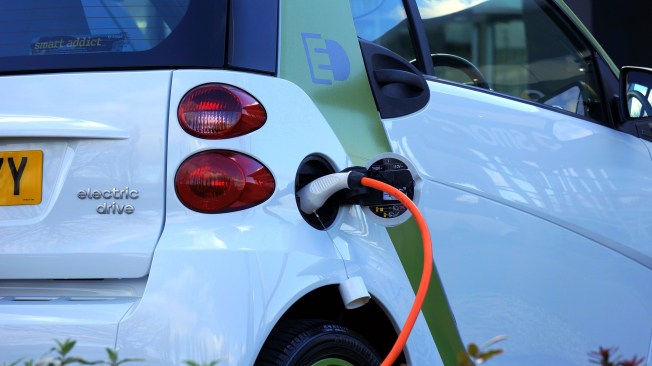
electric vehicle plugged in

Vehicle electrification gets a boost under the energy plan.

There is a lot to like in the Northam Administration’s new Virginia Energy Plan, starting with what is not in it. The plan doesn’t throw so much as a bone to the coal industry, and the only plug for fracked gas comes in the discussion of alternatives to petroleum in transportation.

The 2018 Energy Plan is all about energy efficiency, solar, onshore wind, offshore wind, clean transportation, and reducing carbon emissions. That’s a refreshing break from the “all of the above” trope that got us into the climate pickle we’re in today. Welcome to the 21stcentury, Virginia.

But speaking of climate, the Intergovernmental Panel on Climate Change (IPCC) just released a special report that makes it clear we need “rapid, far-reaching and unprecedented changes in all aspects of society” to keep warming below 1.5 degrees Celsius. That’s only half again the amount of warming that has already brought us melting glaciers, a navigable Arctic Ocean, larger and more destructive hurricanes, and here in Virginia, the swampiest summer in memory. The fact that things are guaranteed to get worse before they get better (if they get better) is not a happy thought.

Perhaps no Virginia politician today has the courage to rise to the challenge the IPCC describes. Certainly, Governor Northam shows no signs of transforming into a rapid-change kind of leader. But as we celebrate the proposals in his Energy Plan that would begin moving us away from our fossil fuel past, we also have to recognize that none of them go nearly far enough, and missed opportunities abound.

Let’s start with the high points, though. One of the plan’s strongest sections champions offshore wind energy. It calls for 2,000 megawatts (MW) of offshore wind by 2028, fulfilling the potential of the area of ocean 27 miles off Virginia Beach that the federal government leased to Dominion Energy. In the short term, the Plan pledges support for Dominion’s 12-MW pilot project slated for completion in 2020.

Other East Coast states like Massachusetts and New York have adopted more ambitious timelines for commercial-scale projects, but the economics of offshore wind favor the Northeast over the Southeast, and they aren’t saddled with a powerful gas-bloated monopoly utility.  For Virginia, a full build-out by 2028 would be a strong showing, and better by far than Dominion has actually committed to.

Another strong point is the Administration’s commitment to electric vehicles. The transportation sector is responsible for more carbon emissions even than the electric sector, and vehicle electrification is one key response.

Even better would have been a commitment to smart growth strategies to help Virginians get out of their cars. Overlooking this opportunity is a costly mistake, and not just from a climate standpoint. Today’s popular neighborhoods are the ones that are walkable and bikeable, not the ones centered on automobiles. If we want to create thriving communities that attract young workers, we need to put smart growth front and center in urban planning—and stop making suburban sprawl the cheap option for developers.

Speaking of developers, how about beefing up our substandard residential building code? Lowering energy costs and preparing for hotter summers requires better construction standards. Houses can be built today that produce as much energy as they consume, saving money over the life of a mortgage and making homes more comfortable. The only reason Virginia and other states don’t require all new homes to be built this way is that the powerful home builders’ lobby sees higher standards as a threat to profits.

The Energy Plan mentions that updated building codes were among the recommendations in the Virginia Energy Efficiency Roadmap that was developed with funding from the U.S. Department of Energy and published last spring. I hope the only reason the Energy Plan doesn’t include them among its recommendations is that the Administration is already quietly taking action.

Meanwhile, it is not reassuring to see that the section of the plan devoted to attaining Virginia’s ten percent energy efficiency goal simply describes how our utilities will be proposing more efficiency programs as a result of this year’s SB 966 (the “grid mod” bill).

States that are serious about energy efficiency don’t leave it up to companies whose profits depend on a lack of efficiency. They take the job away from the sellers of electricity and give it to people more motivated. So if the Governor’s plan is merely to leave it up to Dominion and APCo without changing their incentives, we should abandon all hope right now.

Indeed, it is strange how often the Energy Plan finishes an in-depth discussion of an issue with a shallow recommendation, and frequently one that has the distinct odor of having been vetted by Dominion.

That observation leads us straight to grid modernization. The plan opens with a very fine discussion of grid modernization, one that shows the Administration understands both the problem and the solution. It opens by declaring, “Virginia needs a coordinated distribution system planning process.” And it notes, “One important rationale for a focus on grid modernization is that the transitions in our electricity system include a shift away from large, centralized power stations to more distributed energy resources.”

Well, exactly! Moreover: “The grid transformation improvements that the Commonwealth is contemplating include a significant focus on the distribution system, but our current resource planning process (Integrated Resource Plan or IRP) does not fully evaluate the integration of these resources. One overarching focus of this Energy Plan is the development of a comprehensive analysis of distributed energy resources.”

But just when you feel sure that the plan is about to announce the administration is setting up an independent process for comprehensive grid modernization, the discussion comes to a screeching halt. The plan offers just one recommendation, which starts out well but then takes a sudden turn down a dead-end road:

To ensure that utility investments align with long-term policy objectives and market shifts, Virginia should reform its regulatory process to include distribution system level planning in Virginia’s ongoing Integrated Resource Planning requirement.

Seriously? We need regulatory reform, but we will let the utilities handle it through their IRPs? Sorry, who let Dominion write that into the plan?

It’s possible the Administration is punting here because it doesn’t want to antagonize the State Corporation Commission (SCC). The SCC pretty much hated the grid mod bill and resented the legislation’s attack on the Commission’s oversight authority. And rightly so, but let’s face it, the SCC hasn’t shown any interest in “reforming the regulatory process.”

The Energy Plan’s failure to take up this challenge is all the more discouraging in light of a just-released report from the non-profit Grid Lab that evaluates Dominion’s spending proposal under SB 966 and finds it sorely lacking. The report clearly lays out how to do grid modernization right. It’s disheartening to see the Administration on board with doing it wrong.

Dominion’s influence also hobbles the recommendations on rooftop solar and net metering. This section begins by recognizing that “Net metering is one of the primary policy drivers for the installation of distributed solar resources from residential, small business, and agricultural stakeholders.” Then it describes some of the barriers that currently restrain the market: standby charges, system size caps, the rule that prevents customers from installing more solar than necessary to meet past (but not future) demand.

But its recommendations are limited to raising the 1% aggregate cap on net metering to 5% and making third-party power purchase agreements legal statewide. These are necessary reforms, and if the Administration can achieve them, Virginia will see a lot more solar development. But why not recommend doing away with all the unnecessary policy barriers and really open up the market? The answer, surely, is that Dominion wouldn’t stand for it.

Refusing to challenge these barriers (and others—the list is a long one) is especially regrettable given that the plan goes on to recommend Dominion develop distributed generation on customer property. Dominion has tried this before through its Solar Partnership Program, and mostly proved it can’t compete with private developers. If it wants to try again, that’s great. We love competition! But you have to suspect that competition is not what this particular monopoly has in mind.

The need to expand opportunities for private investment in solar is all the more pressing in light of the slow pace of utility investment. Legislators have been congratulating themselves on declaring 5,000 megawatts (MW) of solar and wind in the public interest, and the Energy Plan calls for Dominion to develop 500 MW of solar annually. I suspect our leaders don’t realize how little that is. After ten years, 5,000 MW of solar, at a projected capacity factor of 25%, would produce less electricity than the 1,588-MW gas plant Dominion is currently building in Greensville, operating at a projected 80% capacity.

Offshore wind capacities are in the range of 40-45%, so 2,000 MW of offshore wind will produce the amount of electricity equivalent to one of Dominion’s other gas plants. It won’t quite match the 1,358-MW Brunswick Power Station, or even the 1,329-MW Warren County Power Station, but Dominion also has several smaller gas plants.

But at this point you get the picture. If all the solar and wind Virginia plans to build over ten years adds up to two gas plants, Virginia is not building enough solar and wind.

That gets us back to climate. The Administration can claim credit for following through on developing regulations to reduce carbon emissions from power plants by 30% by 2030, using the cap-and-trade program of the Regional Greenhouse Gas Initiative (RGGI) of the northeastern states. If successful, that still leaves us with 70% of the carbon emissions in 2030, when we need to be well on our way to zero. And for that, we don’t have a plan.

Of course, Ralph Northam has been Governor for only nine months. He has some solid people in place, but right now he has to work with a legislature controlled by Republicans and dominated by Dominion allies in both parties, not to mention an SCC that’s still way too fond of fossil fuels. Another blue wave in the 2019 election could sweep in enough new people to change the calculus on what is possible. In that case, we may yet see the kind of leadership we need.


This article first appeared in the Virginia Mercury on October 15, 2018.

Unknown's avatar

Does the SCC finally see the light on customer-owned solar?

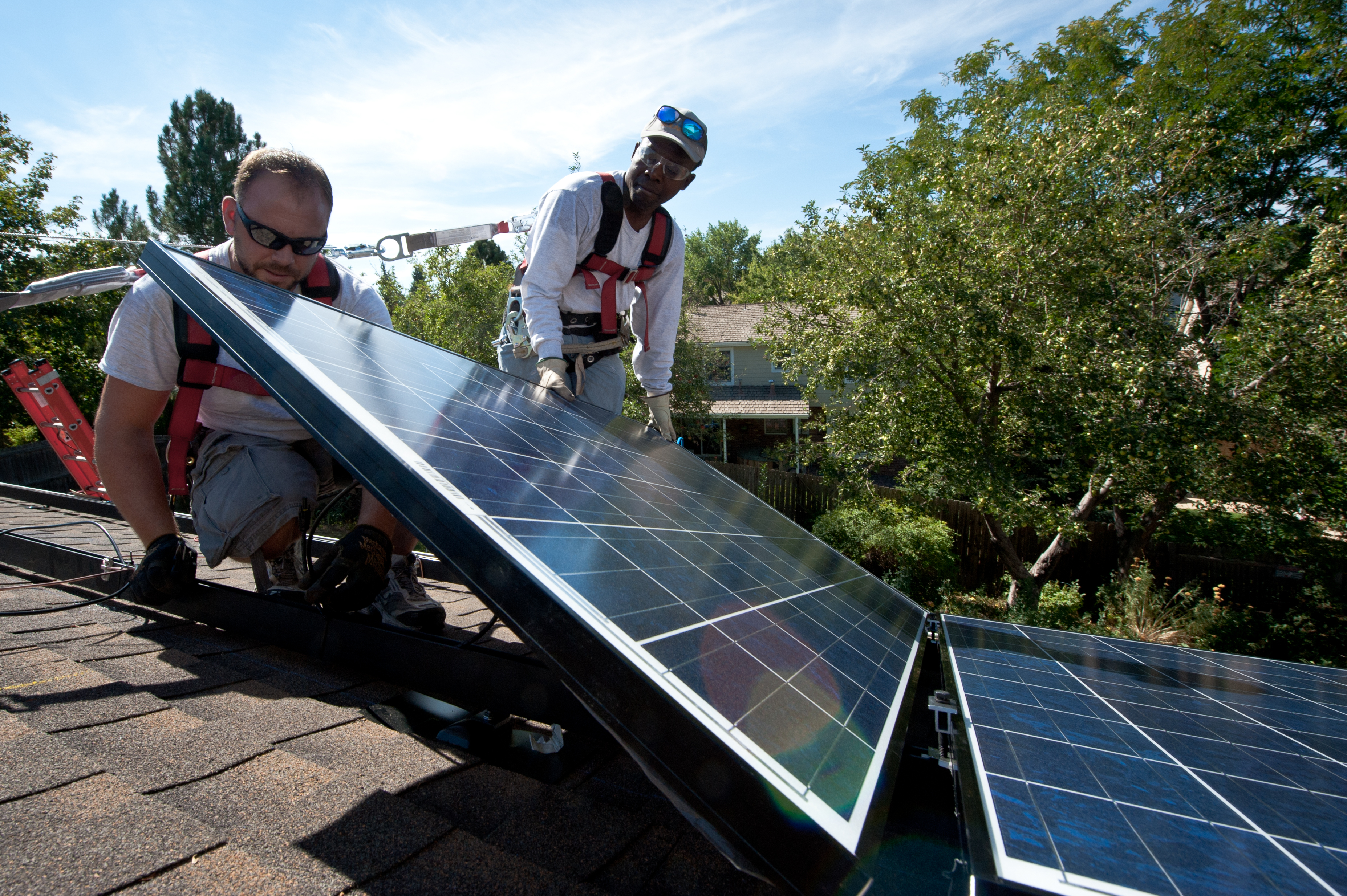
two men installing solar panels on a roof

Photo credit NREL.

Almost four years ago, Virginia’s State Corporation Commission (SCC) approved a request from Appalachian Power to impose “standby charges” on grid-connected homeowners who installed solar arrays between 10 and 20 kilowatts (kW). The approval came not long after the SCC had given the same authority to Dominion Power (now Dominion Energy Virginia).

The standby charges, dubbed a “tax on the sun,” effectively shut down the market for these larger home systems. Since then, Virginia utilities have made no bones about their desire to dismantle the rest of the Virginia law that has enabled the growth of the private solar market.

The law permits solar owners to “net meter,” giving them credit at the retail rate for the electricity they feed onto the grid on sunny days, and letting them use that credit when they draw electricity from the grid at other times.

Utilities say net metering customers don’t pay their fair share of grid costs. Solar advocates say the subsidy runs the other way: both the utility and society at large benefit when more customers install solar. Independent studies find the “value of solar” to be above the retail rate; utility-funded studies find much lower values. In Virginia, the debate continues to rage, but in 2014, at least, the SCC came down squarely on the utility’s side.

Fast forward to 2018. This year the General Assembly passed a law called the Grid Transformation and Security Act that, among other things, envisions an electric grid of the future that incorporates distributed generation like rooftop solar. And suddenly the staff of the SCC sees customer-owned solar in a new light.

Members of the Commission staff filed testimony last month in response to Dominion’s 2018 Integrated Resource Plan, which proposes large amounts of utility-built and owned solar. Associate Deputy Director Gregory Abbott devoted much of his testimony to bashing Dominion’s solar plans.

But just when a reader might have concluded that Abbott hates solar, he pivoted to the suggestion that Dominion should consider offering rebates for customers who install their own rooftop solar:

Given that the Company is developing a Grid Transformation Plan that is designed specifically to integrate customer-level DERs [distributed energy resources], and given the Company’s peak load forecast, Staff believes the Company should explore developing a rebate program to incent customer-owned rooftop solar systems. Staff believes that it is logical to incent these DERs particularly since the Company’s Grid Transformation Plan pursuant to the GTSA is designed specifically to handle these DERs. Staff also notes that such a program could be considered to be a peak shaving program and eligible for cost recovery through Rider CIA. To the extent that the program passed the economic tests, it may obviate the need for some of the more expensive capacity resources as described in the Company’s proposed build plan. Such a program would be more environmentally benign as it would take advantage of
existing brownfield sites rather than the greenfield sites required for utility-scale
 solar.

These are, of course, precisely the arguments made by advocates for distributed solar.

The support from SCC staff comes at an opportune moment, as the Northam Administration considers making distributed solar a centerpiece of its new Energy Plan. It could also complicate Dominion’s efforts to limit and penalize customer investments in solar. Last year Dominion’s opposition doomed a raft of bills intended to make it easier for customers to use Virginia’s net metering law. When solar advocates try again in the 2019 session, having the support of the SCC could change the minds of legislators who, until now, have been happy to accept Dominion’s arguments.

All this assumes the SCC commissioners agree with their staff on the value of customer-owned solar to the grid. If they do, it could signal a new day in Virginia for customer-owned solar.

This article originally appeared in the Virginia Mercury, the new, non-profit on-line news source founded by Robert Zullo, formerly a reporter for the Richmond Times-Dispatch. 

Unknown's avatar

What will it take for Virginia’s largest jurisdiction to raise the bar on energy policy?

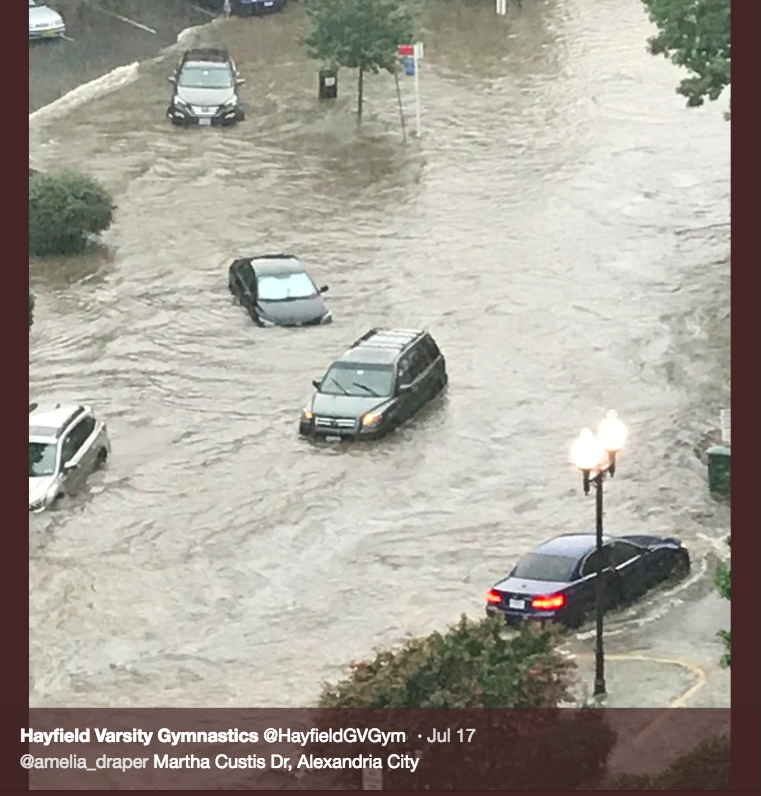
cars on a flooded roadway

Cars caught in a flash flood during Northern Virginia’s intense rainstorm on July 17. Photo courtesy of Hayfield Varsity Gymnastics, https://twitter.com/hayfieldgvgym?lang=en.

Last week, 40 drivers traveling on the George Washington Parkway had to be rescued near National Airport when a flash flood brought water up to their car doors. This week, Northern Virginia experienced a tornado, more flash flooding and road closures, more rescues and more power outages.

Extreme weather events like these are among the effects climate scientists were warning about in 2007, when Fairfax County adopted the Cool Counties Climate Stabilization Declaration. The County committed to reduce greenhouse gas (GHG) emissions by 20% below its 2005 baseline by 2020 and by 80% by 2050.

So how is the County doing with that? Not so good.

Last week, more than 10 years after its Cool Counties Declaration, the Fairfax County Board of Supervisors finally adopted what it called an Operational Energy Strategy for its own facilities, vehicles, and other operations with specific—but astonishingly weak—targets and deadlines for action. Supervisors who voted for the plan called it  “a step forward” or “a baseline.” (Watch the video here; discussion begins at 1:29:22.)

Local activists were less kind. “It may not be fiddling while Rome burns, but it comes close,” wrote the co-founder of Faith Alliance for Climate Solutions (FACS) Scott Peterson in a Washington Post op-ed.

To their credit, Supervisors John Foust (Dranesville District) and Dan Storck (Mt. Vernon District) urged their colleagues to adopt stronger measures. “We are out of the mainstream on renewable energy,” Foust told his colleagues.

“Do we really believe this effort is proportional to the challenges or the opportunities?” asked Storck. “The waters are rising, and they are rising in the Mt. Vernon District.”

The Board’s action is yet another disappointment for Fairfax residents interested in aggressive action to combat climate change and to reduce the county’s long-term energy costs. The Sierra Club, FACS and others have tried for years to get Fairfax County to live up to the commitment it made in 2007. (In those days I was part of a citizen’s group that offered advice to the County on ways to implement energy savings. Our suggestions were ignored, and in 2009 the County disbanded our group.)

The County Board is dominated by Democrats who say they care about climate change, but even meeting the County’s obligations as a member of the Metropolitan Washington Council of Governments (MWCOG) seems to lie beyond their ambitions. A chart prepared by the Sierra Club comparing Fairfax County’s climate and energy goals for its local operations to those of MWCOG and other local jurisdictions makes the County’s shortcomings clear. The most striking example: MWCOG says its members should meet 20% of their electricity needs with renewable energy by 2020. Fairfax County’s plan for renewable energy begins and ends with a single solar facility on one warehouse in Springfield.

Moreover, in sharp contrast to D.C., Arlington, and Montgomery County, Fairfax County has not implemented a community energy and climate action plan to address the 97% of GHG emissions contributed by the private sector.  In fact, the county has not even begun to develop such an action plan. The recommendations of a 2012 Private Sector Energy Task Force, initiated by the Board Chair, have languished.

Fairfax County’s inaction is as puzzling as it is disappointing. With a population of over 1.1 million, Fairfax is Virginia’s largest county as well as the second-richest county in the nation, after neighboring Loudoun. One in seven Virginians lives in Fairfax. We’ve got 414,000 homes and 116,000 businesses, including a strong tech sector that increasingly demands renewable energy—not least of all because it can save them money.

Nor is Fairfax held back by politics. The county has steadily grown more Democratic in elections. In 2017, Democrat Ralph Northam beat his Republican challenger by a whopping 36 points.

So what would it take to move Fairfax County from left-behind to leader? Advocates agree the County needs to make three big changes: commit to serious targets for renewable energy and energy efficiency in county operations; actively assist residents and businesses to save energy and go solar; and become an advocate for stronger state policies, including removing barriers to customer-sited solar.

A ten-point action plan might look like this:

1).  Ensure that County staff provides a thorough one-year review of the approach, cost savings, and GHG reductions under the County Operations Energy Strategy, including the consideration of options necessary to meet the goals of the MWCOG Climate and Energy Action Plan for 2017 to 2020.

2). Expedite the proposed Request for Proposals for Solar Purchase Power Agreements (PPA) announced on July 11th(but curiously not included in the Energy Strategy).  By late 2018, the County should finalize a PPA contract to facilitate the installation of on-site solar on county buildings.  By drafting the RFP and contract to allow the Fairfax County Public Schools and other localities to ride the contract, Fairfax County government could jumpstart solar development and jobs in Northern Virginia.

3).  Participate in a September 7 workshop at the County Government Center on budget-neutral clean energy funding alternatives (e.g., Energy Savings Performance Contracts, Solar Power Purchase Agreements, public-private partnerships).  This workshop will provide an improved understanding of the opportunities provided by these funding alternatives to support more aggressive energy and climate goals while limiting impacts on county real estate taxes. FCPS has achieved several million dollars in energy savings using ESPCs to obtain GHG reductions and can serve as a model of success.

4).  Complete its ongoing Commercial Property Assessed Clean Energy (C-PACE) initiative by enacting an ordinance necessary to support a C-PACE Program and by implementing the program by late 2019.  This action will provide critical financing to supercharge the inclusion of energy efficiency and renewable energy measures in eligible buildings, thereby supporting the County’s goals to repurpose and revitalize underutilized buildings.

5).  Develop and implement a County-wide Energy and Climate Action Plan to address GHG emissions from residents and businesses.

6).  Develop and implement an action plan to increase county resiliency in order to prepare for the impacts of climate change and help reduce the impact and costs of extreme weather events.

7).  Meet all obligations under Cool Counties and the Metropolitan Washington Council of Governments Climate Plan.

8). Support county staff by increasing staffing levels for energy and climate functions and by establishing a dedicated Energy Office reporting directly to the County Executive. Without an effective organizational structure and adequate resources, implementation of key recommendations is highly uncertain and the county is unlikely to maximize energy cost savings or meet its own climate goals.

9).  Engage in strong advocacy with the General Assembly and the Governor to promote the enactment of legislation removing barriers to customer-sited solar.  This legislation has already been endorsed by the county’s Environmental Quality Advisory Committee.  Removing these barriers would allow the County to pursue the installation of a major solar array on the Lorton Landfill.

10).  Work with the Virginia Association of Counties to enlist its support for legislation to remove barriers to on-site solar.

Given its size and resources, Fairfax County can’t continue to sit back and wait for others to do the hard work. Climate change has reached us. To paraphrase Supervisor Storck, the waters are rising, and they are rising here.


Unknown's avatar

How Virginia could build 5,000 megawatts of wind and solar, and still have no wind or solar

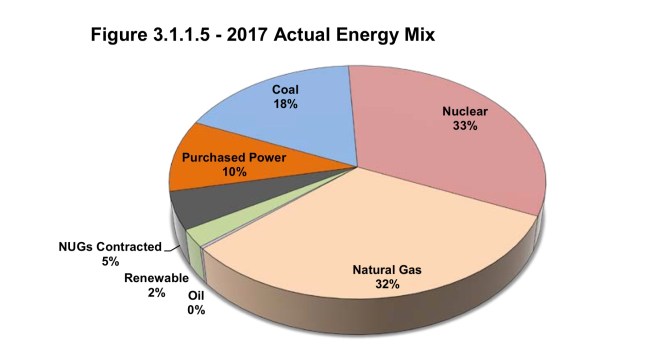
Pie graph showing Dominion Energy Virginia energy mix 2017

No amount of new solar would enlarge the sliver of renewables in Dominion’s energy mix if it sells the RECs. Graph is from Dominion Energy Virginia’s 2018 Integrated Resource Plan.

With the passage of SB 966 earlier this year, the Virginia General Assembly declared 5,000 megawatts (MW) of utility solar and wind energy in the public interest, spreading optimism that Virginia is beginning its slow transition to a clean energy economy. All indications are that Dominion Energy Virginia, the state’s largest utility, intends to make good on that number. Yet under Virginia law, as interpreted by the State Corporation Commission, Virginia utilities could build all that wind and solar and still not be able to claim it in the energy mix serving Virginia residents.

That peculiar result is possible if Dominion and other utilities sell the renewable energy certificates (RECs) associated with the electricity generated from the wind or solar project, transferring to their buyers the legal right to call it renewable energy. The likely buyers are utilities in other states that need RECs to meet mandates for renewable energy under the laws of those states. If the RECs get sold this way, Dominion Energy can build one solar farm after another in Virginia, without ever adding solar to our electricity mix.

That’s right: if you sell the RECs from a solar facility, you can’t say you are using electricity from solar.

This scenario is not just possible, but likely, based on earlier State Corporation Commission (SCC) rulings. The first time Dominion received permission to develop solar, based on a 2013 law enabling the utility to build up to 33 MW of distributed solar (dubbed the Solar Partnership Program), the SCC insisted that Dominion sell the RECs to reduce the cost of the program to ratepayers.

What about Virginia’s voluntary renewable portfolio standard (RPS), which requires participating utilities to get a portion of their electricity from renewable energy sources, including solar? Dominion continues to meet its annual targets, which gradually rise to 15% of non-nuclear electricity by 2025, measured against 2007 demand.

But here, too, the SCC does not want ratepayers to have to spend a dime more than necessary on meeting the RPS. It requires utilities to sell higher-value RECs and replace them with the cheapest RECs available that still meet the Virginia definition of renewable energy. This practice, known as REC “optimization” or arbitrage (selling high, buying low), is common in states with loose RPS laws, and is sometimes used in the private sector as well.

The use of REC optimization, paired with Virginia’s kitchen-sink approach to what qualifies as renewable energy, renders Virginia’s RPS meaningless. Making it mandatory wouldn’t make it meaningful.

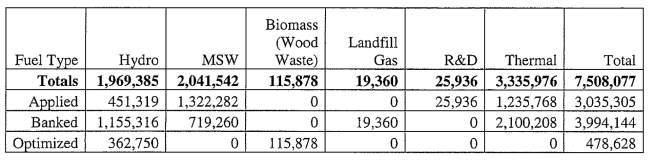
chart showing fuel types used to show RPS compliance by Dominion Energy Virginia

Fuel types used to meet compliance with Virginia RPS. From Dominion’s Annual Report to the SCC on Renewable Energy, November 2017. (MSW=municipal solid waste incineration.)

Dominion’s 2017 Annual Report to the State Corporation Commission on Renewable Energy records the company’s progress on meeting the RPS as well as describing its other renewable energy investments. The report confirms both Dominion’s ongoing use of REC optimization for the RPS and its practice of selling RECs from solar projects to reduce ratepayer costs.

Nothing in the 2018 legislation speaks to RECs generated by the 5,000 MW of utility wind and solar that are now declared to be in the public interest. One might suppose the General Assembly intends for utilities to build those projects for ratepayers, not to sell off the legal right to claim we have wind and solar in our mix. But then again, it is entirely possible most legislators never gave the topic a moment’s thought.

If one were to raise it with them now, some might even prove quite comfortable with the idea. As long as we get the jobs and economic development associated with new energy projects, and we use the clean energy to reduce the burning of fossil fuels, they might say heck yeah, let Maryland or New Jersey buy the bragging rights for their state RPS requirements and subsidize our energy costs.

If taking advantage of the flaws in other state’s laws feels like the wrong way to make progress, there is an alternative. We could reform Virginia’s RPS to make it less like corporate welfare for producers of the least valuable forms of renewable energy, and more like a transition plan to a clean energy economy. Put that together with a plan for true grid transformation, and we will have something to brag about ourselves.

Unknown's avatar

Show up and be counted

Just in case you own neither a television nor a mailbox, don’t read a newspaper, only use your computer to watch videos of a Japanese cat with a thing for boxes, and never answer a telephone call from an unfamiliar number because it might be Rachel from Cardholder Services . . .

Tomorrow is Election Day in Virginia. Judging from the ads, politicians think you are most interested in which candidate has a hidden agenda of coddling violent gang members, or which one will dramatically lower our taxes simply by cutting the waste that every one of his predecessors somehow missed.

But I’d like to put in a plug for choosing candidates who support people over corporations, the public good over special interests, the environment over polluters, and the free market over monopoly. And if the candidates you’re choosing between don’t do any of those things as well as they should, vote anyway, because only by voting do you have the right to hold elected officials accountable.

The Virginia Chapter of the Sierra Club has endorsed candidates at the state and local level whose background and responses to questionnaires and interviews show they are most likely to support the environment in office. The endorsements are made by the chapter’s Political Committee and the volunteer Executive Committee, in consultation with members most knowledgeable about the issues and the candidates. As a non-partisan organization, the Sierra Club can and does endorse Republicans as well as Democrats, but the Republican vow of ignorance on climate change tends to make it hard to find ones the Club can endorse. (The standout exception is Republican Delegate Randy Minchew of Leesburg.)

A group called Activate Virginia has also compiled a handy list of candidates who have pledged not to take contributions from the likes of Dominion Energy, which has used its remarkable influence to enrich itself at the expense of consumers and lull even otherwise savvy leaders into supporting the expansion of fossil fuel infrastructure.

Personally, I find it pretty easy to know who to vote for. No serious candidate still denies that the planet is warming or that humans are causing it. (Regrettably, we have a lot of un-serious candidates.) Governor McAuliffe finally put in motion a proposed rulemaking that would lower carbon emissions from power plants. Ralph Northam has pledged to see it through if he is elected Governor. Ed Gillespie has pledged to kill it. Northam gets my vote.

New fracked gas pipelines will raise energy prices and commit Virginia to decades more of rising greenhouse gas emissions, while crowding out cleaner and cheaper renewable energies like wind and solar. Candidate for Lieutenant Governor Justin Fairfax opposes the pipelines, while Jill Vogel repeats the mindless “all of the above” pablum so popular with politicians who aren’t troubled by the difference between a mountaintop dotted with wind turbines and one blown up for its coal. Fairfax gets my vote.

Attorney General Mark Herring has been a champion for the environment and consumers in court and before the State Corporation Commission. His challenger John Adams has a cool name. Herring gets my vote.

Unknown's avatar

A Candidate’s Guide to Clean Energy and the Pipelines

Photo courtesy of Chris Tandy.

Recently I attended a forum where a candidate for statewide office discussed his energy policies and voiced his support for wind and solar. He embraced a goal of Virginia reaching at least 30% renewable energy by 2030, which was roundly applauded. But then he added that we couldn’t get started on it without advances in battery storage, because, he said, without storage there is no way to put surplus wind and solar on the grid.

People around the room look dumbfounded. They weren’t energy experts, but they knew that was flat-out wrong. Later he made other statements that showed he misunderstood facts about energy, climate change and the grid, hadn’t questioned what he’d been told by utility lobbyists, or just hadn’t been paying much attention.

Maybe you are a candidate yourself (or you work for one), and you don’t want to embarrass yourself by saying so, but you frankly don’t understand what was wrong with that statement about wind and solar. Or perhaps you are an activist and you’d like to help your local candidate for office bone up on some of the most important issues he or she will have to vote on while in office.

Allow me to help. Here is what you need to know about the hot-button energy issues in Virginia today. I’ll also offer my opinion about where you should stand on those issues, but that part is up to you.

Solar is coming on strong—and it is the cheapest energy in Virginia today. This astounds people who don’t keep up with energy trends, but it’s what Dominion Energy Virginia’s latest integrated resource plan (IRP) reveals. Utility-scale solar farms, 20 megawatts (MW) and up, can produce electricity at a cost that beats coal, gas and nuclear. That’s why Dominion’s IRP proposes a build-out of 240 MW of solar per year. It’s why Amazon Web Services has been building 260 MW of solar in five Virginia counties to supply its data centers. It’s why, over the past year, developers have proposed more than 1,600 MW of additional solar capacity in counties across the state. It’s also why today, solar already employs more Virginians than coal.

None of the solar under development includes battery storage. It doesn’t have to, because electricity from solar all goes into one big grid.

The grid is HUGE. If you’re from around here, you probably remember the earthquake of August 2011. It was centered in Mineral, Virginia, but did damage all the way to Washington, D.C. It also caused an immediate shutdown of Dominion’s two nuclear reactors at North Anna that lasted for more than three months. That meant 1,790 megawatts (MW) of generating capacity, enough to power 750,000 homes, suddenly went offline. Do you remember what happened to your power supply at home? You probably don’t. Why not? Because your power didn’t go out.

That’s because the North Anna nuclear plants are only two out of more than 1,300 generating units (power plants) feeding a 13-state portion of the transmission grid managed by independent operator PJM Interconnection. When one unit fails, PJM calls on others. PJM’s job is to balance all this generation to meet demand reliably at the lowest cost.

The grid has no problem with solar. While solar makes up less than 1% of its electricity supply currently, a PJM study concluded the grid could handle up to 20% solar right now, without any new battery storage. Wind and solar together could make up as much as 30% of our electricity with no significant issues. The result would be less coal, less gas, and less carbon pollution—and $15.6 billion in energy savings.

Virginia already has energy storage. You could even say we are swimming in it. Bath County, Virginia is home to the world’s largest “battery” in the form of “pumped storage.” A pair of reservoirs provide over 3,000 megawatts of hydropower generating capacity that PJM uses to balance out supply and demand.

Actual batteries are also an option today, not sometime in the future. The price has dropped by half since 2014, to the point where solar-plus-storage combinations compete with new gas peaker plants. Batteries are also being paired with solar today to form microgrids that can power emergency shelters and other critical functions during widespread outages.

If Virginia goes totally gangbusters with solar, a day will come when there is so much electricity being generated from the sun in some areas that we’d need batteries. But, sadly, we aren’t anywhere near there yet.

So, you should definitely get on board with battery storage; just don’t make the mistake of thinking we can’t ramp up renewable energy today without it.

Make renewable energy your BFF. It probably polls better than you do. Renewable energy has favorability ratings most politicians only dream about. A Gallup poll last year showed 73% of Americans prefer alternative energy to oil and gas, a number that rises to 89% among Democrats. Republicans love it, too; North Carolina-based Conservatives for Clean Energy found that 79% of registered Republicans in their state are more likely to support lawmakers who back renewable energy options.

Distributed renewable energy—think rooftop solar—is especially popular with the greenies on the left and the libertarians on the right, and pretty much everyone in between. It offers benefits that utility solar does not. The policy that makes it affordable is called net metering. It gives solar owners credit for the excess solar electricity they put on the grid in the daytime, to be applied against the power they draw from the grid at night. If you want to support your constituents’ ability to power their own homes with solar, you should protect and expand their right to net meter their electricity.

People who understand Dominion’s pipeline hate Dominion’s pipeline. The proposed Atlantic Coast Pipeline would carry fracked gas 600 miles from inside West Virginia through the heart of Virginia and into North Carolina. Instead of following highways, it cuts across mountains, rivers, forests and farms, and requires land clearing 150 feet wide the whole way. Landowners along the route are furious, as are lovers of the national forests and the Appalachian Trail, people who care about water quality, people who care about climate change, and fans of caves, bats and other wildlife.

The gas it will carry is extracted from shale formations deep underground using hydraulic fracturing, or fracking, a loud, dirty and dangerous practice that doesn’t poll well in Virginia. More quietly (but in many ways worse), leaking wells, pipes, and storage reservoirs are estimated to emit enough greenhouse gases to cancel out the climate advantages of burning gas over coal, and increase smog. An analysis using industry data found that building the ACP and a second controversial pipeline project, the Mountain Valley Pipeline, would more than double the carbon footprint of Virginia’s power sector.

Sea level rise is already taking a toll in Virginia with “sunny day” flooding regularly crippling low-lying areas of Hampton Roads. If you’ve pledged to address climate change, you need to understand how building gas pipelines will undermine the very efforts to reduce such threats.

Now, if you don’t want to oppose Dominion, you might be inclined to minimize all these issues, or to tell voters the destruction of all we hold dear is just the price we pay for cheap energy. I’m sure you can phrase it better than that.

Before you do, though, you should also spend a few minutes to understand why critics say the ACP will raise energy prices, not lower them. That’s because Dominion’s gas-burning electric generating plants already have long-term contracts to use another company’s pipeline, for less money. Using the ACP instead of cheaper alternatives means raising costs to consumers.

Dominion also plans to build more gas-fired power plants so it can fill the pipeline. Gas plants are built to last 30 years or more, pipelines 50 years. Locking us into gas infrastructure for decades when solar is already cheaper than gas now is a seriously bad bet.

And if you think Dominion is going to shoulder the loss of a bad bet, better think again. That’s what its captive ratepayers are for.

Another name for those people is “voters.”

Unknown's avatar

Sen. Mark Warner’s tolerance of climate disinformation

image-2-2-17-at-5-45-pm

CREDIT: VIRGINIA STUDENT ENVIRONMENTAL ASSOCIATION


Virginia’s senior U.S. Senator Mark Warner cast a vote this week that will come back to haunt him in coming years. It will also haunt our commonwealth and nation in future decades and centuries. Warner voted to confirm President Donald Trump’s nominee, former ExxonMobil CEO Rex Tillerson, to be Secretary of State.

Tillerson, sad to say, may not be the most extreme or unqualified of President Trump’s cabinet nominees. One can hope that Senator Warner will vote against some of the worst of the worst, such as climate-science denier Scott Pruitt to head the Environmental Protection Agency. Pruitt has pledged to unravel bedrock environmental protections like the Clean Air and Clean Water Acts.

But opposing one or two other Trump nominees won’t excuse Senator Warner’s vote to make Rex Tillerson Secretary of State.

Tillerson’s former company has spent millions of dollars over recent decades to promote climate-science denial, to the detriment of many millions of vulnerable people all over the world, including many here in Virginia. ExxonMobil’s climate-denial promotion has been documented in academic studies, and Virginia Attorney General Mark Herring is investigating ExxonMobil’s role in promoting climate-science disinformation.

To his credit, Virginia’s junior U.S. Senator, Tim Kaine, brought out Tillerson’s connection to climate-science denial at Tillerson’s confirmation hearing. Tillerson dodged Kaine’s questions. Following the hearing Kaine tweeted: “It’s shameful Tillerson refused to answer my questions on his company’s role in funding phony climate science.” Kaine voted against confirming Tillerson.

By all accounts Tillerson has personal virtues. He’s an Eagle Scout who long supported and recently headed the Boy Scouts of America. He was once a good juror in a criminal case, as one of his fellow jurors recently explained in The Dallas Morning News. In many respects Tillerson is an upstanding Christian who contributes to mission work to help others.

But his former company’s longtime, immoral promotion of climate-science disinformation will harm exponentially far more people than his personal good deeds have helped.

There’s a term to explain how people like Tillerson can be good Boy Scouts, jurors, and churchgoers while also doing great harm that will cause great suffering to others. It’s called “moral disengagement.” The concept is explained in detail in a recent book by emeritus Stanford psychology professor Albert Bandura, titled Moral Disengagement: How People Do Harm and Live with Themselves. Bandura describes several mechanisms by which corporate polluters try to distance themselves from the harm they cause. They use front groups to do their dirty work with politicians. ExxonMobil and other fossil-fuel companies do that through groups like the notorious American Legislative Exchange Council (ALEC), which promotes science misinformation to state legislators.

And Bandura notes that corporate polluters themselves promote scientific disinformation as a mechanism of moral disengagement. That is precisely what ExxonMobil has been doing for years, as Senator Kaine noted at Tillerson’s confirmation hearing. These lies and half-truths have real consequences for real people, here in Virginia and around the world.

Penn State climate scientist Michael Mann (formerly of UVA) has said that history will judge harshly those who promote climate-science denial. But, Mann added, “history will be too late.”

Senator Warner hasn’t himself promoted climate-science denial, but he just voted to make someone who has our nation’s Secretary of State.

History, and (one can hope) Virginia voters as well, will judge Mark Warner harshly for that.

Seth Heald is chair of the Sierra Club’s Virginia Chapter. He expects to receive a Master of Science degree in Energy Policy and Climate from Johns Hopkins University in May, 2017. His article on climate change and moral disengagement was published in the May-June, 2016 issue of Environment: The Journal of Sustainable Development.

Unknown's avatar

Renewable energy bills begin an uncertain journey through Virginia’s general assembly

VA capital Corrina BeallThree Senate Republicans and one Democrat met on Thursday to consider the fate of many of this year’s renewable energy bills. Reported out were two bills introduced by Frank Wagner that were crafted by utilities, the solar industry trade association MDV-SEIA, and Powered by Facts (a group currently focused on farms).

Other bills were not as lucky as these two. In theory all bills get another bite at the apple in the full Senate Commerce and Labor Committee, where they are on the docket for Monday afternoon. However, expectations are that the bills voted down in subcommittee will meet the same fate in full committee.

Wagner, the chairman of the Senate committee, named himself to his subcommittee along with fellow Republicans Ben Chafin and Glen Sturtevant, and Democrat Rosalyn Dance. So it was not surprising that this hand-picked group supported his bills. More disappointing was the solid opposition to anyone else’s proposals, including ones with even better potential to improve the solar market. That opposition came not only from the Wagner, Chafin and Sturtevant, but also from MDV-SEIA.

The two Wagner bills reported out are SB 1393 (the so-called community solar program) and SB 1394 (small agricultural generators). The bills have undergone some more recent changes, which I will get to in a bit.

The committee voted down Edwards’ SB 917 (containing minor fixes to the agricultural net metering law), Edwards’ SB 918 (expanding authorized uses of third party power purchase agreements), and Wexton’s SB 1208 (a more expansive community solar bill). Following a common practice in the General Assembly, SB 1208 was “rolled into” SB 1393, which is simply a polite way of extinguishing a bill. Similarly, SB 917 was rolled into SB 1394, even though the two are only vaguely related.

Over in House Commerce and Labor, several renewable energy bills will be heard by the energy subcommittee when it meets Tuesday afternoon. These include Keam’s HB 2112, the companion to Wexton’s SB 1208, and Minchew’s HB 2303, the companion to Wagner’s SB 1394. (The text of some House bills has not yet been updated to conform to changes in the Senate bills, but this seems likely to happen.)

Two new bills on third-party power purchase agreements have been added since my initial roundup. Chairman Kilgore introduced HB 2390, a bill that would, for a narrow class of privileged customers, extend to Appalachian Power territory the PPA pilot program currently running in Dominion territory. The pilot program specifically allows certain third-party power purchase agreements while forbidding all others. In Dominion territory the program is capped at 50 MW; the bill would place a 10 MW cap on the APCo program.

The PPA pilot program has allowed customers like Albermarle County Public Schools and the University of Richmond to install solar cost-effectively, and APCo customers have been itching to join it.

But Kilgore’s bill contains a limitation that is really pretty offensive. Unlike the pilot project in Dominion territory, where participants may include any non-profit of any size, as well as commercial customers with facilities of over 50 kW, Kilgore’s bill would allow only private colleges and universities to compete for the 10 MW in APCo territory. No public colleges, no churches, no community centers or town buildings. For a guy with a folksy demeanor, Kilgore seems to be one heck of an elitist.

A better PPA bill is Toscano’s HB 1800, stating that nonresidential and agricultural customers have the right to contract with other people to own and operate renewable energy facilities on the customer’s premises. Although a hearing examiner recently agreed with the solar industry and environmentalists that this right already exists in the Virginia Code, utilities have blocked on-site PPAs. Toscano’s bill would put an end to this harassment, while giving up on residential consumer PPAs. (The concession sounds bad but isn’t; residential customers can use leases to achieve the same result that PPAs afford.)

Other House bills. Also up in the House subcommittee on Tuesday will be the three worthy energy efficiency bills from Delegate Sullivan. In addition, Villanueva’s Alternative Energy and Coastal Protection Act is back for a third year as HB 2018. It would provide money for renewables and efficiency as well as badly-needed funds to help communities adapt to consequences of climate change such as sea level rise.

Now, about those Wagner bill changes:

Following revisions, “community” solar still looks like a winner, except for the community part. SB 1393 met with support from all corners of the room at the Senate subcommittee meeting on Thursday. Everyone, it seems, wants more solar options for consumers and is excited that the utilities seem willing to move forward to meet this growing demand.

Just don’t expect community solar. As now drafted, utilities control every aspect of the program. Although third-party developers would build the solar projects, the utilities can choose to buy the electricity through a PPA or buy and own the project themselves. Also, the project size limit of 2 MW, which has a community-scale feel to it, does not apply if a utility is simply designating 2 MW of a larger project to this program. In effect, if the utility contracts for a number of large projects across the state (which Dominion is indeed doing), it can simply designate parts of each as “community solar,” and fill the program that way.

That doesn’t make it a bad bill, just not a community solar bill. And while it looks like a tariff for the sale of renewable energy to participating customers, the bill continues to state that it is not a tariff for the supply of 100% renewable electricity—language that supposedly dodges the fight about under what circumstances third parties can legally sell renewable energy in Virginia.

Even with changes, agricultural RE bill’s possible benefits for some come at a cost to others. SB 1394 was reported unanimously from the Senate subcommittee Thursday, but drew opposition from both the Sierra Club and the solar consumer group VA-SUN. The current language of the bill contains improvements over the original (discussed here), but however well intentioned, it remains a bad bill.

The legislation establishes a pilot program that allows farmers to use a portion of their land for solar and enter a buy-all, sell-all contract with the utility. They will buy their power at retail and sell at a price that might not be much more than wholesale, so whether the program pencils out for farmers is uncertain. But that’s not my beef with it.

The problem is that this program is offered as a replacement to an entirely different program, one that allows farms to attribute the power output of a single solar array or wind turbine to all the various meters on the farm under the net metering statute. That’s a valuable option for farmers who want to meet their electric needs with renewable energy. Removing this option is a backwards step for wineries, breweries, organic farms, and any other farmer for whom solar power is an important part of their branding and marketing. (Consider that this bill applies to wind as well as solar; a small farmer would likely have only one wind turbine to serve the whole farm. You can’t put a little wind turbine on every building with an electric meter.)

The date at which agricultural generators can no longer opt to use the agricultural net metering provisions has been moved to 2019 (from 2018 in the original draft legislation), and the termination of the net metering option now applies only to coop members, not customers of Dominion and APCo. Existing agricultural net metering customers can continue to use the net metering provisions for 25 years, up from 20. These are all incremental improvements but don’t change the fundamental problem that the legislation trades away the rights of some customers in an effort to help others.

There is another problem. Projects developed under the buy-all, sell-all program would count against the 1% cap on the total amount of electricity produced by net metering in a utility’s service territory. This is wrong as a matter of principle (if they aren’t net metering, it shouldn’t count against a net metering limit) and also because a few large farmers using the buy-all, sell-all program would max out the 1% and leave nothing for homeowners or other coop customers.

From the coops point of view, that’s not a bug, that’s a feature; killing net metering is precisely their goal. That’s why the buy-all, sell-all program is not being offered as an option, which would be fine, but as a replacement, which is not.

I asked Dana Sleeper, Director of MDV-SEIA, why her organization was supporting the bill. She responded:

We felt that with the changes made in committee, it was more additive (creating options) then limiting. We had some models made in order to confirm that the proposed legislation would be a viable path for businesses to pursue, and my intent is to make those models publicly available so they may be helpful to those interested in pursuing the AgGEN option, should the bill pass. 

As for why MDV-SEIA opposed other pro-solar bills like Wexton’s and Edwards’, she answered:

MDV-SEIA was a participant in the Rubin stakeholder group process over the course of many months and, along with the other stakeholders, agreed to support a slate of bills that moved the needle on solar issues in VA. As part of the group, we included professional lobbyists in order to ensure that political perspective was built in. One of the recommendations from the lobbyists was to draw clear lines around those bills coming out of our stakeholder process versus those put forward by other groups, as it would cause confusion among legislators who have a lot on their plates during a short session. 

For that reason, any bills that were seen by legislators as being duplicative were folded into the Rubin group bills. That’s not to say we don’t see the merit of them, it’s simply that there were many concerns about those proposals which were addressed by the Rubin bills. Our lobbyist, when asked, noted that while we appreciated the thought and effort put into the legislation, we recommended folding them into our bill. There were some bills that did not cover the same topics as those discussed in the working group (for example, the tax credit bill), and we supported them wholeheartedly. 

Lobby efforts underway. MDV-SEIA is inviting supporters to its second Clean Energy Lobby Day on Tuesday; register here.

Separately, Secure Futures LLC and other solar industry members are also encouraging advocates of distributed generation to attend the House subcommittee meeting on Tuesday. They urge support for HB 1800 and HB 2112, and opposition to HB 2303 and HB 2390. (Opposition to HB 2303 puts them at odds with MDV-SEIA on the agricultural solar issue.)

Unknown's avatar

Basic change in utility business and regulation is inevitable: Advanced energy is coming to all utilities, like it or not.

Photo credit: Sierra Club

Photo credit: Sierra Club

Occasionally I ask other people to write for this blog, not merely because I am lazy, but also because energy policy is such a broad topic that I sometimes overlook new developments and perspectives. This week guest blogger Jane Twitmyer takes a step back from the battle over our energy future to point out that the battlefield itself is shifting under our feet—a fact which, if ignored, could cost utility customers dearly.  –I.M.

A favorite utility narrative holds that the federal Clean Power Plan is the reason we must upgrade our electric utility system and reduce emissions from fossil fuels. Without it, we could continue to run our big coal and gas plants and leave unchanged the transmission grid that has served us so well. But the truth is, the EPA as ‘bully’ is a myth. A new report from the North American Electric Reliability Corporation (NERC) concludes “significant changes are occurring” in the way we generate and use electricity regardless of whether or not the Clean Power Plan, still under court challenge, is implemented. One change: NERC has tripled the amount of new renewable energy generation it predicts for next year.

NERC is just catching up with analysts and investment banks, who have been documenting the changes for several years. The Rocky Mountain Institute warns that grid-connected, solar-plus-battery-storage systems “will be economic within the next 10-15 years for many customers in many parts of the country,” undercutting utility sales and turning electricity markets “upside down.”

Investment analysts agree. CitiGroup predicts utilities could suffer a “50%+ decline in their addressable market.” Elon Musk, CEO of Tesla, just made an offer to buy SolarCity because he believes on-site generation will eventually supply a third of our total electricity, and will be accompanied by huge amounts of battery storage like Tesla’s Powerpack.

Musk believes electric cars will increase demand for electricity, but other analysts see energy efficiency lowering demand. Efficient buildings are given a central place in the new energy mix in the NERC report.

Using less energy, or increasing our energy intensity, will reduce demand significantly without creating the economic disaster we have been warned will occur. Minnesota found the state’s efficiency program returned $4 for every $1 invested, helping to create almost $6 billion in new economic output. One of Warren Buffet’s utilities expects to reduce demand enough to close a couple of old coal plants and still not need any new generation until 2028. The utility is financing those retrofits for its customers’ buildings.

E-Lab, a group at the Rocky Mountain Institute that works with all industry stakeholders to chart our electricity systems, also sees changes in grid management systems making delivery of electricity more efficient. Pilot projects using new technology with grid-regulating software and designed with a variety of regulatory changes and financing models are being tested all around the country.

Each kilowatt-hour supplied by a rooftop solar panel, stored in an on-site battery, or saved by an efficient building, means one less kilowatt-hour utilities must generate. This inevitable reduction in central grid demand is why the future isn’t just about switching resources, like burning gas instead of coal, or even building solar and wind farms. The future is about a re-imagined system that allows and encourages you and me and our local mall to make our own electricity on-site, feeding some of what we make into storage and some onto the grid, and allowing us to draw on the grid when we need to.

We have the technology to create the new system, and regardless of any new EPA rules, this is the right time to replace the old technology. In 2010, 70% of our coal plants and all of our nuclear facilities were more than 30 years old. Recently SNL Energy identified 21,357 MW of coal, gas and nuclear generation “at risk” of early closure through 2020, plants that are inefficient and no longer economic to run.

Here in Virginia, our utilities don’t seem to be getting the message. Dominion Virginia Power has chosen to put most of its new investment dollars into large-scale natural gas plants, not renewable energy. Five or six years ago natural gas was believed to be the ‘transition’ fuel that could take us from coal to renewables-based electricity. We now understand that methane, released when extracting and distributing gas, is 86 times more potent as a greenhouse gas than CO2 while it is in the atmosphere. In addition, methane emissions have been both underreported and inaccurately measured, raising concerns that the climate impact of natural gas may be far greater than originally thought. New methane rules are being developed that should give us a better picture of actual emission levels, but it is already clear that if natural gas is a bridge fuel, the bridge must be a short one.

With analysts predicting the transition to renewable energy will happen sooner rather than later, investing heavily in new gas plants carries a significant economic risk as well as a climate risk. Investors like UBS Bank believe too many large plants will be “structural losers,” assets whose use is diminished before they are paid for. Going forward, we will still need to use some measure of natural gas, but natural gas can no longer be labeled the ‘transition’ fuel.

Our utility systems are at a crossroad. One road requires our utilities, our regulators and our legislators to re-imagine our electricity system, rethinking the old monopoly rate regulations that reward centralized fossil fuel generation. This reimagined system will require a grid that is no longer the rigid one-directional distributer of electricity, but rather one that finds value in resources that generate and store electricity where it is used. If we fail to take that road, the alternative path will lead to ‘grid defection’: customers choosing to leave the grid and provide their own electricity by installing solar with batteries and retrofitting their buildings to use less. One thing is certain: a top down, monopolistic, state-regulated system is NOT the future.

As NERC concluded, changes to the energy mix, and to the level of demand, are happening with or without the Clean Power Plan. They are happening because it is time to rebuild our aging energy infrastructure. They are happening because the technology is now available to create an energy system that protects our air and our water as well as our atmosphere. And the changes are happening because a rebuilt system, designed as an interactive network, not a one directional, top-down grid, will actually be a cheaper system. It will be a system that is more reliable and more resilient, as well as more secure from storms and attack. That rebuilt system will serve Virginia’s electricity customers better without risk to our air, our water or our climate.

Jane Twitmyer is a renewable energy consultant and advocate.


Unknown's avatar

Only the good die young: A mid-way review of Virginia climate and energy bills

Photo credit: Corrina Beall

Photo credit: Corrina Beall

Virginia’s 2016 legislative session is only half over, but it’s already clear that the General Assembly is no more capable of dealing with climate change and a rapidly-evolving energy sector than it ever was. Republicans are stuck in denial, Democrats are divided between those who get it and those who don’t, and for most legislators in both parties, the default vote is whatever Dominion Power wants.

Republican attacks on EPA climate regulations sail through both houses, while popular RGGI legislation dies in committee.

Practically the first bills filed this session call for Virginia’s Department of Environmental Quality to submit for legislative approval any plan to comply with the EPA’s Clean Power Plan. Anxious to safeguard Virginia’s heritage of carbon pollution against the twin threats of clean energy and a more stable climate, the Republican leadership rammed through HB 2 and SB 21 on party-line votes. Governor McAuliffe has promised vetoes.

Eager as it was to defeat Obama’s approach to climate disruption, the Party of No supported no solutions of its own, even when proposed by one of its own. Virginia Beach Republican Ron Villanueva couldn’t even get a vote in subcommittee for his Virginia Alternative Energy and Coastal Protection Act, which would have had Virginia join the Regional Greenhouse Gas Initiative (RGGI). It was the only legislation introduced this year that would have lowered greenhouse gas emissions and raised money to deal with climate change. The Democratic-led Senate version also failed to move out of committee, on a party-line vote.

Republicans scoff at climate change, but they are beginning to worry about its effects. Bills have moved forward to work on coastal “resiliency” efforts and to continue studying sea level rise (referred to as “recurrent flooding,” as though it were a phenomenon unto itself and suggesting no particular reason it might get worse). The Senate passed SB 282, creating the Virginia Shoreline Resiliency Fund, and SJ 58, extending the work of the Joint Subcommittee to study recurrent flooding. The House passed HJ 84, a companion to SJ 58, and HB 903, establishing a Commonwealth Center for Recurrent Flooding Resiliency.

Bold energy efficiency measures die. Not-so-bold measures don’t do well either.

Virginia appears set to continue its woeful record on energy efficiency. Between the opposition of electric utilities and their regulators at the State Corporation Commission, bills that would have set the stage for cost-effective reductions in energy use got killed off early or watered down to nothing.

Among the latter were the fairly modest bills pushed by the Governor. They passed only when reduced to a provision for the SCC to evaluate how to measure the subject. Weirdly, even that found opposition from conservative members of the Senate and House.

The only bill to move forward more or less intact was Delegate Sullivan’s HB 1174, which requires state agencies to report on how badly the state is doing in meeting its efficiency goal. So we may not make progress, but at least we’ll have to acknowledge our failures. (Roughly the same group of conservatives didn’t think we should even go that far.)

Renewable energy bills won’t move forward this year, except the one Dominion wants.

As previously reported, the Republican chairmen of the House and Senate Commerce and Labor committees decided not to decide when it came to much-needed renewable energy reforms. Every bill to create new market opportunities for wind and solar was “carried over to 2017,” i.e., referred to a not-yet-existent subcommittee composed of unnamed people tasked with meeting at a not-yet-scheduled time, in order to do “something.”

“We do need to get moving on these solar bills faster than we have been going,” said House C&L Chairman Terry Kilgore, in explaining why his committee was not getting moving on any solar bills.

On the other hand, over in House Finance, Dominion Virginia Power’s bill to lower the taxes it pays for renewable energy property fared better. In exchange for an 80% tax exclusion for its own utility projects, Dominion offered up reductions in the tax savings currently afforded to the smaller projects being developed by independent solar companies. In an amusing sideshow, Republican leaders tried to use their support for this legislation to strong-arm liberal Democrats into supporting a bill extending coal subsidies, on the theory that passing one bill that benefits Dominion warrants passing another bill that benefits Dominion.

Given the lack of progress in opening the wind and solar markets, there is more than a little irony in the fact that legislation moved forward in both the House and Senate requiring utilities to direct customers to an SCC website with information about options for purchasing renewable energy. (Which leads to the question: if visitors to such a site encounter an error message, is it still an error?)

Coal subsidies remain everyone’s favorite waste of money.

Once again, the House and Senate passed bills extending corporate welfare for companies whose business model involves blowing up mountains and poisoning streams. Over the years legislators have spent more than half a billion dollars of taxpayer money on these giveaways, knowing full well it was money down a rat-hole. Community activists have pleaded with lawmakers to put the cash towards diversifying the coalfields economy instead, but there has never been a serious effort to redirect the subsidies to help mine workers instead of corporate executives and the utilities that buy coal.

This year the corporate handout went forward in the face of reports that one of the biggest recipients plans to pay multi-million-dollar bonuses to its executives while laying off miners and looking for ways to dodge its obligations to workers. Add to this the news that the same company owes two coalfields counties $2.4 million in unpaid taxes for last year, and you have to wonder what fairy tales legislators are hearing from lobbyists that makes them put aside common sense.

It’s not just Republicans who voted for these subsidies (though there is no excuse for them, either). Some Democrats did so, too. Governor McAuliffe has said he would veto these bills, which means senators like David Marsden, Jennifer Wexton, John Edwards and Chap Petersen will have a chance to redeem themselves by voting against an override.

Many thanks to Senators Howell, Ebbin, Favola, Locke, McEachin, McPike and Surovell for seeing through the propaganda of the coal lobby and voting no.

Dominion defeats legislation protecting the public from coal ash contamination

Senator Scott Surovell’s SB 537 would have required toxic coal ash to be disposed of in lined landfills rather than left in leaking, unlined pits and simply covered over. The bill failed in committee in spite of support from one Republican (Stanley), after Democratic Senator Roslyn Dance caved to pressure from Dominion and abstained. One might have expected more backbone from a legislator with coal ash contamination in her own district. (Nothing excuses the Republicans who voted against the public health on this, either. Last I heard, Republican babies are as vulnerable to water pollution as Democratic babies.)