Unknown's avatar

How Trump’s deal with Big Oil is raising your energy bills

smokestack
Photo credit Stiller Beobachter

There is a principle in law that says someone intends the natural result of their actions. You cannot throw me out a window and say you didn’t mean for me to get hurt. 

By the same principle, if you block new solar and wind generation, you can’t say you didn’t intend to throttle energy production. 

President Trump has made it clear he wants to kill wind and solar, and his appointees have followed through. The Department of Interior is refusing leases and permits to wind and solar projects, even as it moves ahead on lease sales for oil and gas drilling.

Interior even issued a stop-work order on an offshore wind farm that is 80% complete. The project was on track to supply enough energy for 350,000 homes in Rhode Island and Connecticut, until the Trump administration stepped in. A judge later lifted the order, but not before the company building the project saw its share price drop to a record low

Reducing the amount of low-cost, clean electricity developers can add to the grid will have an enormous impact. Clean energy is so much less expensive and faster to build than fossils fuels that renewable energy and batteries made up over 90% of the energy capacity added in the U.S. last year. 

It’s fortunate for consumers that Trump won’t be able to stop all wind and solar projects, because the small number of fossil fuel plants under development won’t fill the gap. It takes years to develop a new gas plant, and gas turbines face an order backlog of up to 7 years.

The shortfall in new generation is happening at a time when the use of electricity is surging, mainly due to demand from data centers. Other customers, including ordinary residents, now have to compete with data centers for increasingly expensive electricity. Rates are going up as a result, and grid operators warn we may soon face power shortages

Trump’s only concession to the power crunch is to order a few fossil fuel plants to stay open that their owners had planned to close for economic reasons. Ordering an uneconomic plant to stay open means someone loses money. Trump hasn’t offered federal dollars to pay the difference. The utilities that own the plants will pass the cost on to consumers.

If throttling energy production and raising energy costs is the natural result of Trump’s actions, it’s reasonable to assume that’s his intent. So many experts have pointed out the damage his policy will do that the alternative explanation – that the president is deluded and foolishly thinks his actions will somehow result in more energy production and lower costs – doesn’t hold up.

But why would the president deliberately hamstring American energy production and raise electricity costs for consumers? 

Because that’s the deal he made with oil and gas industry leaders at a closed-door fundraiser at Mar-a-Lago last year, in exchange for the more than $200 million the industry spent to get him elected. Actually, Trump asked for a billion dollars, and in return promised to dismantle environmental regulations, go after the wind industry and scrap President Biden’s policies promoting electric vehicles. 

At a later fundraiser, he also promised to approve new natural gas exports, in spite of warnings from critics that these exports would drive U.S. prices higher – which is exactly what happened.

Promises made, promises kept, as Trump’s fans like to say. Trump’s appointees have gutted environmental protections and done their best to keep wind and solar off the grid. Most people know the “One Big Beautiful Bill” revoked tax incentives for homes and businesses to install solar; less widely reported is that it included $18 billion in tax incentives for the oil and gas industry and lowered the amounts the industry must pay to lease federal lands for drilling, among other rewards. 

Less renewable energy and higher prices means more market share and higher profits for fossil fuels. The natural result is that the American consumer will have to pay through the nose for energy. 

Too bad, folks, but that was the deal.

This article was originally published in the Richmond Times-Dispatch on September 30, 2025.

Unknown's avatar

Trump’s attack on offshore wind is hurting Virginia. Why aren’t Republican leaders fighting for us?

On May 5, attorneys general from 17 states and the District of Columbia — not including Virginia, regrettably —  sued the Trump administration over its attacks on the wind industry. The lawsuit challenges an executive order, signed by President Donald J. Trump on his first day in office, stopping all approvals, permits and funding for wind projects across the country and offshore. 

Since the order was signed, the administration hasn’t just blocked new projects, it’s issued a stop-work order for one project under construction in New York and revoked a permit for another. The actions inflict enormous damage on the wind industry and on the economies of states that need the energy and jobs this industry could deliver.

One state that will lose big under Trump’s order is Virginia, which has positioned itself to be a national leader in offshore wind deployment, supply chain and manufacturing. On top of that, Virginia badly needs the electricity from offshore wind to help meet the demand from data centers; it can’t afford to have a major new source of energy strangled in its infancy. Yet Attorney General Jason Miyares did not join the lawsuit.

Sure, Miyares wants to be a good soldier in the Trump putsch. And no doubt he wouldn’t feel at home among all those Democratic AGs (there were no Republicans signing the complaint). But he could at least speak up in his state’s interest. Some well-timed advocacy would go a long way in showing the administration that wind energy is not a partisan matter. 

It doesn’t have to be just our attorney general, either. The silence from Gov. Glen Youngkin has been equally deafening. What are they afraid of? Youngkin can’t run for reelection, and Miyares has already secured his party’s nomination in his bid for reelection this fall.

Any politician who styles himself as pro-business ought to be pushing back on the Trump administration’s interference with contracts, destruction of American jobs and infliction of billions of dollars in damage to a growing domestic industry. Especially when it is happening to their own state, the big risk is in not speaking out.

And let’s face it, attacking wind energy is Trump’s own peculiar hobbyhorse, not his party’s. Though Republican support for wind energy has dropped a bit in recent years, it remains above 50%. Onshore wind is the largest source of electricity in Iowa and South Dakota and a major source in several other Republican strongholds. Wind power is responsible for billions of dollars in economic investment while keeping utility rates low in states that rely on it. 

Offshore wind is more expensive, but states have embraced it for its potential to lower electricity bills over time while relieving grid congestion, creating well-paying jobs and providing clean, zero-carbon power to East Coast cities. Thirteen states have established offshore wind development goals, totaling over 112 gigawatts (GW) by 2050. 

In Virginia, Republican leaders have been among the biggest boosters of offshore wind for more than 15 years. Legislators from both parties supported the creation of the Virginia Offshore Wind Development Authority. With a boost from then-Gov. Bob McDonnell, the Virginia Department of Energy partnered with Dominion Energy on a research project that produced the nation’s first offshore wind turbines in federal waters. Republican support also paved the way for Dominion’s development of the 2.6 GW Coastal Virginia Offshore Wind (CVOW) project, now more than halfway to completion and expected to begin delivering electricity next year. 

Nor is CVOW a one-off; the Virginia Clean Economy Act declares twice as much offshore wind power to be “in the public interest.” At the offshore wind International Partnering Forum held in Virginia Beach last month, Dominion displayed a poster of the projects it has in the works. These include a project off Kitty Hawk, North Carolina, which Dominion acquired last October, as well as a huge lease area east of CVOW, which Dominion secured in a lease auction from the federal government last August. All told, Dominion’s projects could deliver a total of 9 GW of clean, renewable power. 

A poster displaying Dominion Energy’s planned offshore wind projects.

As important as the energy itself is, Virginia leaders believe offshore wind can be a driver of economic development and job creation for the Hampton Roads area. The Virginia Economic Development Partnership touts Virginia’s strategic location, strong maritime industry and ready workforce as draws for businesses up and down the offshore wind supply chain.

Some businesses have already set up shop in Virginia to serve the industry. These include most recently a Korean subsea cable manufacturer that is investing almost $700 million for a facility in Chesapeake. Gov. Glen Youngkin was on hand for the groundbreaking last month, calling it “a proud moment for Virginia.” Attracting the company was only possible because of Virginia’s commitment to the wind industry – as well as the availability of federal tax credits that Trump also intends to eliminate. 

CVOW will likely survive Trump’s attacks (albeit at a higher cost due to his tariffs), but Virginia’s ability to develop an offshore wind workforce and supply chain are very much at risk. The Trump administration’s war on wind power already threatens developers with losses in the billions of dollars. With permitting at a halt, companies are headed for the exits instead of creating the project pipeline necessary for offshore wind to become the powerhouse industry that it is in Europe and Asia.

Trump may have planned his economic sabotage to hurt northeastern states with Democratic governors, but the collateral damage to Virginia is considerable. As it is, our economy has taken a hit from Trump’s mass firings of federal workers, thousands of whom live here. We can’t afford to lose four years of offshore wind progress for no better reason than that Trump wills it. 

Silence is not an acceptable response. Miyares and Youngkin must speak up for Virginia.

Originally published in the Virginia Mercury on May 19, 2025.

Update: On May 20 we learned Trump’s Department of the Interior rescinded its order to shut down the $5 billion Empire Wind project in New York, reportedly after Gov. Kathy Hochul agreed to reverse a decision five years ago denying a permit to a natural gas pipeline. This is being billed as a “compromise,” which is apparently what extortion is called when the Trump administration does it.

Unknown's avatar

The clean energy revolution will continue

Photo credit iid.com

Eight years ago last week, I wrote a column titled, “Why Trump won’t stop the clean energy revolution.” Calling global warming a hoax, businessman and reality TV star Donald J. Trump had just been elected with a promise to save coal jobs and pull the U.S. out of the Paris climate accord. 

Climate activists were deeply distraught then, as now. I wrote in 2016, “Reading the news Wednesday morning was like waking up from a nightmare to discover that there really is a guy coming after you with a meat cleaver.”

But as I also wrote, there is only so much damage a president can do when technology, popular opinion and – especially – economics don’t support his agenda. Trump couldn’t save the coal industry (though he tried). Instead, his administration oversaw a 24% decline in coal employment. And where coal supplied 30% of U.S. electricity in 2016, by the time Trump left office it had fallen to 20%. 

In the intervening years, Trump seems to have lost interest in coal mining, even as he continues to embrace fossil gas production. His enthusiasm for gas fracking fits with his drill-baby-drill approach to energy, but it was also intended to win over voters in Pennsylvania, a major producer of shale gas. Ironically, the gas industry insists on calling methane “clean” precisely because burning it emits less CO2 than coal. 

While coal was dying, wind and solar were well on their upswing when Trump took office in 2017, and they continued to advance through his first administration. By 2020, wind and solar had become the cheapest forms of new electric generation. Today, renewable energy supplies more than 21% of the nation’s electricity, while coal’s share has dropped further, to just 16%. Trump or no Trump, technological advances and a thirst for cleaner energy continue to drive new wind and solar generation.

Indeed, the offshore wind industry – famously reviled by Trump – wasted no time last week in congratulating its erstwhile foe on his victory and insisting, hilariously, that his election is a big win for the industry. The first Trump administration, they noted hopefully, “laid out the fundamental framework for our modern offshore wind industry.”

Well, okay. From their lips to Trump’s ears. Trump is hardly known for consistency, and it is not impossible to imagine him softening his position on an industry that is creating well-paying jobs for the blue-collar workers who make up a portion of his base. His Virginia acolyte, Republican Gov. Glenn Youngkin, boasts of overseeing the building of the nation’s largest offshore wind farm. Why shouldn’t Trump pivot? 

Early in the Republican primaries, one candidate opined that all the solar panels and batteries sold in the U.S. are made in China. That wasn’t actually true. For years one U.S. company, First Solar, has ranked among the world’s top ten solar panel manufacturers. Among the domestic manufacturers of both EVs and batteries, one of the largest is Tesla, whose CEO Elon Musk is now a Trump darling. It is going to be fascinating to find out whether Musk uses his influence to benefit the clean energy transition generally, or only himself. 

Yet the notion that China dominates solar and battery production is also not wrong. China is eating our lunch on clean energy. Chinese companies produce 80% of the world’s solar panels and more than half of its electric vehicles. Sadly, perhaps, these are not cheap imitations of superior American products. They are world-leading technology. 

Chinese dominance of the world market was a major reason that President Joe Biden’s signature climate law, the Inflation Reduction Act (IRA), put so much emphasis on supporting domestic manufacturing. Tariffs on Chinese goods, Trump’s preferred approach, help U.S. companies compete for American consumers, but they don’t support an export market when other countries produce better goods for less money. Even at home, critics note, tariffs mostly just raise prices.

Yet Trump has vowed to repeal the IRA, and given that Congress passed it without Republican support, there is certainly a danger that a Republican Congress will comply. On the other hand, observers note that 80% of the manufacturing tax credits have gone to red states, and this August, 18 House Republicans signed a letter to Speaker Mike Johnson asking to keep the credits. 

I don’t want to sound too optimistic. Wait, let me rephrase that: I don’t feel optimistic at all. We are facing headwinds today that weren’t around in 2016. At that time, gains in energy efficiency meant electricity demand was not increasing, in spite of a growing population. With wind and solar displacing coal, there was a clear pathway for CO2 emissions from the electric sector to continue falling. 

Today, however, the skyrocketing demand for electricity from data centers threatens the progress we’ve made on clean energy. It remains to be seen whether artificial intelligence will unleash efficiency gains and novel technologies that can put carbon reductions back on track. Right now, though, tech companies are so desperate for power that they will take it from wherever they can get it, and regardless of carbon content.  (I notice, though, that they still want it to be cheap and are happy to greenwash it to meet their sustainability goals). 

Perhaps the biggest change from eight years ago is simply that we are that much closer to reaching catastrophic climate tipping points. 2023 was the warmest year on record, and 2024 is on track to surpass it. The effects are evident in the number and costliness of severe weather and wildfires made worse by global warming. (Just ask insurance companies.) It is frustrating, to say the least, to contemplate losing the next four years to an administration that thinks climate change wouldn’t be an issue if we would just stop talking about it.  

Yet Americans of all political stripes continue to support renewable energy by wide margins. And apart from a small minority of vocal climate deniers, most Americans want the U.S. to take stronger action on climate. 

This election revealed deep fault lines among the American public, but one thing we all have in common is the faith that our ability to solve intractable problems is stronger even than our tendency to wish the problems away. 

That’s why, even in the face of such serious headwinds, the clean energy revolution will continue. 

This column was originally published in the Virginia Mercury on November 12, 2024.

Unknown's avatar

Is offshore wind expensive? Not compared to the alternatives

offshore wind turbines

A massive wind farm 27 miles off the coast of Virginia Beach moved one giant step closer to reality last November when Dominion Energy filed its Coastal Virginia Offshore Wind development plan with the State Corporation Commission. Dominion expects to begin construction on CVOW in 2024, and have all 2,587 megawatts of power connected to the grid in 2026.

But the wind farm’s price tag of $9.8 billion, and its $87 per megawatt hour levelized cost of electricity (LCOE), is causing heartburn over at the attorney general’s office. Scott Norwood, an expert for the Division of Consumer Counsel, criticized the project on three main grounds: that the cost of building CVOW is more than building a new nuclear reactor and 2-3 times as much as building solar facilities; that Dominion has overstated the benefits of the project; and that in any event, Dominion doesn’t need the energy before at least 2035. 

Recognizing that the General Assembly already made most of these points moot by declaring the project to be in the public interest, however, Norwood also recommended the SCC adopt consumer safeguards including periodic status reports and cost oversight. 

Anyone familiar with Dominion’s tendency to pad profits will say “Amen” to the call for strict SCC oversight. With a project this huge, the SCC must be especially vigilant.  Some of Norwood’s criticisms, however, seem more calculated for effect, while others miss the point. 

Norwood certainly knows his comment that CVOW is more expensive than nuclear is not true. The price tag of the only two nuclear reactors under development in the U.S. has ballooned so high ($30 billion and counting) that it almost makes Dominion’s former dream of a third nuclear reactor at North Anna look good. Norwood’s own devastating testimony likely helped kill the North Anna 3 project, which would have delivered electricity for $190 per megawatt-hour.

Norwood says Dominion has fudged the CVOW numbers and the project will cost customers more than the company admits, but still, Dominion would have to gold-plate every turbine before it could touch the cost of nuclear. 

This wasn’t the first time the General Assembly put its thumb on the scale for a Dominion project. The habit goes back to 2008, when a Dominion coal plant, the Virginia City Hybrid Energy Center, became the first project legislatively deemed “in the public interest.” Even back then its projected levelized cost of electricity was $93/MWh. Today, VCHEC loses so much money for customers that Dominion faces pressure at the SCC to close the plant. 

For that matter, I also see that my latest electricity bill from Dominion includes a non-bypassable charge for coal ash disposal of $5.68—an amount that exceeds the charges for participation in RGGI, new solar projects and the RPS program, combined. Pollution is also a cost of using fossil fuels, but it’s never included in the LCOE. 

Mr. Norwood did not suggest Dominion pursue new nuclear or new fossil fuel plants instead of offshore wind. If Dominion needed new generation, he says, solar is the low-cost alternative. It’s cheaper to build, and it produces electricity at a lower cost than offshore wind. He’s right: if all you cared about was LCOE, no one would build anything but solar in Virginia. 

But as critics never tire of pointing out, solar can’t provide electricity 24/7. Offshore wind has a hidden superpower: while solar production peaks in the middle of the day, the wind off our coast can produce electricity both day and night, is often strongest in the evening when demand rises, and is stronger in the winter when solar is less productive. Solar and offshore wind are complementary, and we can’t get to a carbon-free grid without both. So yes, we need CVOW.

Virginia’s leaders are also taking the long view on cost. In any new industry, early projects are more expensive than later ones. Europe’s 30 years of experience developing an offshore wind industry shows costs fall steadily as project experience and new technology enable developers to produce more energy with fewer turbines. States up and down the East Coast are pursuing offshore wind projects not only because they want clean energy, but because they expect these early investments to lead to lower-cost power as the industry achieves scale. 

State leaders also see economic development and job growth as important benefits, and those aren’t reflected in LCOE either. This is another area where SCC oversight can ensure the greatest public benefit from CVOW. Testimony filed by a Sierra Club expert urges that Dominion’s economic development plan be revised with specific metrics around the VCEA’s goals for diversity, equity and inclusion in the offshore wind workforce. Like reducing pollution, creating jobs for residents from low-income and minority communities adds to CVOW’s overall value.

Having criticized the VCEA’s overly-generous cost cap myself at the time, I agree with the AG’s office that the SCC has to keep a tight watch on expenses as Dominion moves forward with CVOW. But move forward it should, because Virginia needs offshore wind. 

This commentary originally appeared in the Virginia Mercury on April 1, 2022.

Unknown's avatar

Has the energy transition hit a roadblock in Virginia, or just a rough patch of pavement?

Photo credit: Mark Dixon from Pittsburgh, PA, CC BY 2.0 , via Wikimedia Commons

Election Day was a tough day for climate advocates. 

After two years of historic progress that included passage of the Virginia Clean Economy Act (VCEA), the centerpiece of the Commonwealth’s plan to decarbonize the electric sector by 2050, voters handed a narrow victory to its critics. Republicans will take over as governor, lieutenant governor, attorney general and, barring any surprises in two recounts, the House of Delegates.

During the campaign, former Carlyle Group CEO Glenn Youngkin criticized the VCEA for raising rates and putting “our entire energy grid at risk.”  While largely supportive of solar and wind (especially offshore wind, which he “wholly supports”), Youngkin also argued for more natural gas to feed “the rip-roaring economy that I’m going to build.” This is, essentially, the old “all of the above” strategy we hoped had been buried for good, coupled with unfounded fear-mongering about power outages. 

On the bright side, Governor-elect Youngkin has acknowledged that climate change is real and is causing damage here in Virginia. At the same time, he supposedly told a Norfolk State University audience in October that he didn’t know what is causing climate change. It seems likely this was a clumsy lie prompted by political expedience, rather than a reflection of actual ignorance. Two years ago Youngkin touted Carlyle Group’s record as “the first major private investment firm to operate on a carbon-neutral basis.” That’s not something you do just to be on trend.

So yes, Youngkin knows that increasing greenhouse gas emissions are driving the warming of the planet, and at Carlyle he was willing to do something about it. But now that he’s a politician, Youngkin is embracing natural gas in a way that suggests he’d rather ignore the truth about methane than take a stance unpopular in his party. Heck, for all we know, he may now even subscribe to the plan recently laid out by U.S. Senate Republicans to address climate change by increasing natural gas production and exports. 

Wait, you say, isn’t this also the Russian plan? Sell more gas and, if worse comes to worst, Siberia heats up enough to become a vacation destination? Let’s just say it’s not a coincidence that the senators promoting this “solution” come from North Dakota, Alaska and Wyoming—all states that are big energy exporters, but more importantly, where people think a few degrees of warming would be kind of nice. But given that the population of all three states combined is significantly less than the population of Northern Virginia alone, we probably don’t want them making policy for us.

The fact that we have no idea where Youngkin stands on the need for climate solutions is only one part of the problem facing climate activists in Virginia’s upcoming legislative session. The bigger problem is that a lot of our Republican legislators are outright hostile to climate science and Virginia’s framework for the energy transition. These folks are loaded for bear, and they will use their narrow win to flood the House with bills aimed at rolling back the energy transition. 

In addition to VCEA, the Republican hit list includes the Clean Energy and Community Preparedness Act, which directed Virginia to join the Regional Greenhouse Gas Initiative (RGGI); the Clean Car Standard, which promotes sales of electric vehicles; and the Commonwealth Clean Energy Policy, which makes the transition to a net-zero-energy economy official state policy.  

Whether these bills will pass the House is less certain, given the benefits these laws are already delivering. The VCEA spurred “incredible growth” in solar installations, making Virginia fourth in the nation for new solar generation in 2020, and the world’s biggest offshore wind blade manufacturer just announced plans for a facility in Portsmouth, Virginia. Does anyone really want to stop that momentum? Tens of millions of dollars are already flowing to climate adaptation projects in coastal areas thanks to RGGI’s carbon allowance auctions. Pulling the plug on that cash flow would hurt Republicans representing the area. 

Notwithstanding the rhetoric, the VCEA is good for business and consumers. Ratepayers will save money through the mandated closure of uneconomic coal, oil and biomass plants, and by the removal of barriers to distributed renewable energy generation. Solar’s low cost positions it to overtake fossil fuels as the go-to generation source for utilities, but the VCEA creates the market certainty that attracts investment. And offshore wind—the most expensive part of the VCEA, but the part Youngkin apparently likes—is also popular on both sides of the aisle as an engine of investment and job creation.   

That doesn’t mean anti-VCEA bills won’t pass the House; being bad policy is never enough to kill legislation, or even stop people who ought to know better from voting for it. In 2019, an anti-RGGI bill from Del. Charles Poindexter (R-Franklin) passed both the House and Senate on party-line votes. It was prevented from taking effect only thanks to a veto from Governor Northam. Today, I can count very few House Republicans who won’t toe the same party line.

With Democrats still in charge of the Senate, Youngkin isn’t likely to find a RGGI or VCEA repeal on his desk. Creating an energy transition framework was one of the Democrats’ biggest successes in the past two years, and protecting that success will be a party priority. 

But there are many ways Republicans can undercut climate action. They might attract just enough Democratic votes with bills that, for example, grant exemptions for powerful industries that have friends among Senate Democrats. They could also use the budget process to undermine the transition by starving agencies and grant programs of funding. 

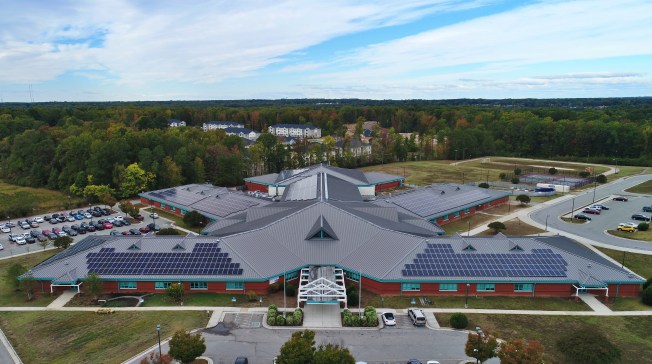
If politics doesn’t completely get in the way, though, there should be room for consensus on some new areas of progress. Highly efficient schools with solar roofs save money for taxpayers; electric school buses are good for children’s health; solar on abandoned mine sites promise employment to residents of Southwest Virginia. 

Beyond the General Assembly, executive agencies have had the job of implementing all the various parts of the RGGI program and the VCEA. And the agencies, of course, answer to the governor. The Department of Environmental Quality will have signed off—or not—on the Mountain Valley Pipeline’s permits before Younkin takes office, but after that, we can expect DEQ to return to being the easy-permitting, lax-enforcing agency it was of old.

As for the Department of Energy, that agency has been going gangbusters turning Virginia into a clean energy leader and promoting new models like brownfields redevelopment and clean energy financing. Hopefully those efforts offer so much in the way of economic opportunities that a businessman like Youngkin will want them to continue. 

But that, like so much else, remains to be seen. 

This article was originally published in the Virginia Mercury on November 16, 2021.

Unknown's avatar

How a Biden presidency will help Virginia’s energy transition

Photo credit: NREL

Immediately following the 2016 election of Donald Trump, I wrote a column titled “Why Trump won’t stop the clean energy revolution.”

If you were to read it now, you would yawn. What seemed bold back then now feels like forecasting the inevitable. Of course coal has not come back. Of course wind and solar are cheaper now than fossil fuels. Of course people agree a zero-carbon future is achievable. 

Still, few of us could have predicted how far off course Trump would try to take us. Withdrawing from the Paris climate accord was the least of it. The Washington Post tallied more than 125 rollbacks of environmental regulations and policies over the past four years. Trump’s more flamboyant acts of perfidy distracted attention away from his sustained attack, not just on climate science, but on the laws protecting America’s lands, air and water.

Really, we should be grateful Trump staffed his administration with grifters and sycophants who repeatedly bungled the details and opened their decisions to legal challenge. Incompetence is underrated. Skilled managers would have done much more damage. 

Yet the past four years have also pushed us closer to the brink of climate chaos and the collapse of ecosystems. We wasted time we did not have. 

As president, Joe Biden will be able to undo most of the environmental rollbacks with new executive orders and agency actions. Biden has also promised a long list of new initiatives, though many of them would require Democratic control of the Senate. 

Virginia and other states partially filled the four-year void with commitments to decarbonize our electricity supply and build renewable energy. But even for Virginia the path to zero-carbon would be a lot easier with federal action. Public support for climate action is strong even from Republicans, though it’s hard to imagine a really aggressive climate bill getting a floor vote in the Senate while Mitch McConnell is in charge. (In my dreams, Maine Senator Susan Collins announces she is changing her party affiliation to Independent and will caucus with Democrats to get a climate bill passed. I have really great dreams.)

Let’s assume for now, though, that Joe is on his own. What can he do through executive orders and agency actions? A lot, it turns out, so I’ll just focus on a few high-profile moves and how they might affect the energy transition here in Virginia.

Carbon emissions: a new Clean Power Plan? Recall that back in 2016, the EPA finalized regulations under the Clean Air Act designed to reduce carbon emissions from power plants with state-by-state targets. Lawsuits and backpedaling by the Trump EPA prevented the Clean Power Plan from ever taking effect, and the replacement plan was derided for its weakness

Four years later, a Biden EPA could use the same Clean Air Act authority to write new regulations. The thing is, though, the Clean Power Plan put the squeeze on coal-dependent states but would have had virtually no effect on Virginia. And that was before the Virginia Clean Economy Act set us on a path to decarbonization, putting Virginia ahead of any revamped rule that might come out of the EPA now. 

A better scenario for us would be if the threat of new climate action from EPA brought Republican senators to the table for a climate bill that would, say, impose a carbon tax (or fee-and-dividend) in return for stripping EPA of its authority to regulate carbon emissions. 

But I promised to focus on what Biden can do without Congress, so let’s get back to that. 

Coal. Among the protections Trump tried to roll back are EPA regulations like the Mercury and Air Toxics Standard and the Coal Ash Rule, both of which limit pollution caused by coal plants. While both are in litigation (see “bungling,” above), we can expect the EPA under Biden to reverse course and, if anything, tighten these protections. Virginia has already committed to closing most of its coal plants, a decision that will prove even wiser when coal plants have to meet stricter standards.  

Of course, these Trump regulatory rollbacks didn’t do the coal industry any good. Nationally, coal plants have continued to close at an even faster rate than they did during Obama’s second term. The false hopes Trump offered for a coal renaissance forestalled real efforts to help communities in Appalachia transition. 

Here in Virginia, even coalfields legislators understand the need to diversify the economy of Southwest Virginia. Biden’s election is their wake-up call to stop trying to revive a past that was never a golden era for workers anyway, however enriching it was for the coal bosses. 

Fracked gas. Biden made it clear he would not ban fracking other than on federal lands, but we can expect stronger regulations to limit the leakage of methane from wellheads, pipelines and storage infrastructure. That’s a Virginia priority, too. 

Energy efficiency. Federal efficiency requirements for products including appliances and HVAC systems have proven to be low-cost and consumer-friendly. A renewed focus on strong national standards will help reduce per-capita energy consumption and help Virginia meet its carbon reduction goals at less cost to consumers. 

Wind and solar. It would take legislation to extend federal tax credits for renewable energy, but there are other actions the Biden administration can take to support wind and solar. These include increased funding of R&D through the Department of Energy (a program that already has support in Congress), and removing tariffs on imported solar panels. 

The Federal Energy Regulatory Commission can also help wind and solar. FERC has caused its share of climate damage, most memorably for Virginians by approving the Atlantic Coast and Mountain Valley pipelines. FERC’s decisions also control the playing field for the electricity sector, including rules that currently disadvantage wind and solar in the wholesale markets. These rules could just as easily be rewritten. Although FERC is an independent agency, Biden will have an opportunity to appoint climate-friendly FERC commissioners as vacancies occur and terms expire. 

And indeed, FERC is already starting to come around. Chairman Neil Chatterjee recently hosted a technical conference and issued a proposed policy statement on carbon pricing in regional markets, an act that may have led Trump to demote him this month. 

Offshore wind. Within the Department of Interior, the Bureau of Ocean Energy Management (BOEM) issues offshore energy leases and oversees development of offshore projects, including wind farms. More than a year ago offshore wind activity at BOEM ground almost to a halt, setting back one project after another. Congress isn’t happy, and it may direct more funding to BOEM to help re-start the process. 

Biden will also direct BOEM to get out of the way of current projects and begin the process of designating new offshore lease areas for development. Both of these are critical to Virginia’s clean energy plans. (Of course, an investment tax credit for offshore wind would help, too — but there I go again, looking for legislation.)

Transportation. Until Trump came in, the auto industry was gradually improving fuel economy standards in new cars and light trucks. Biden will put that program back in place, and likely impose more stringent tailpipe emission standards. These moves will boost the transition to electric and hybrid vehicles and lead to lower carbon emissions from the transportation sector, another Virginia priority.

Declaring a national climate emergency. It’s a long shot, but Biden could use his executive authority to declare a climate emergency the way Trump declared a national emergency to redirect funds from national defense to his border fence. There are many ways this could help the Virginia transition if Biden were to go this route. 

But of course he won’t. Biden is no Trump. And for that, we should all be grateful. 

This article was originally published in the Virginia Mercury on November 12, 2020.

Unknown's avatar

With a framework for Virginia’s energy transition in place, here’s what happens next

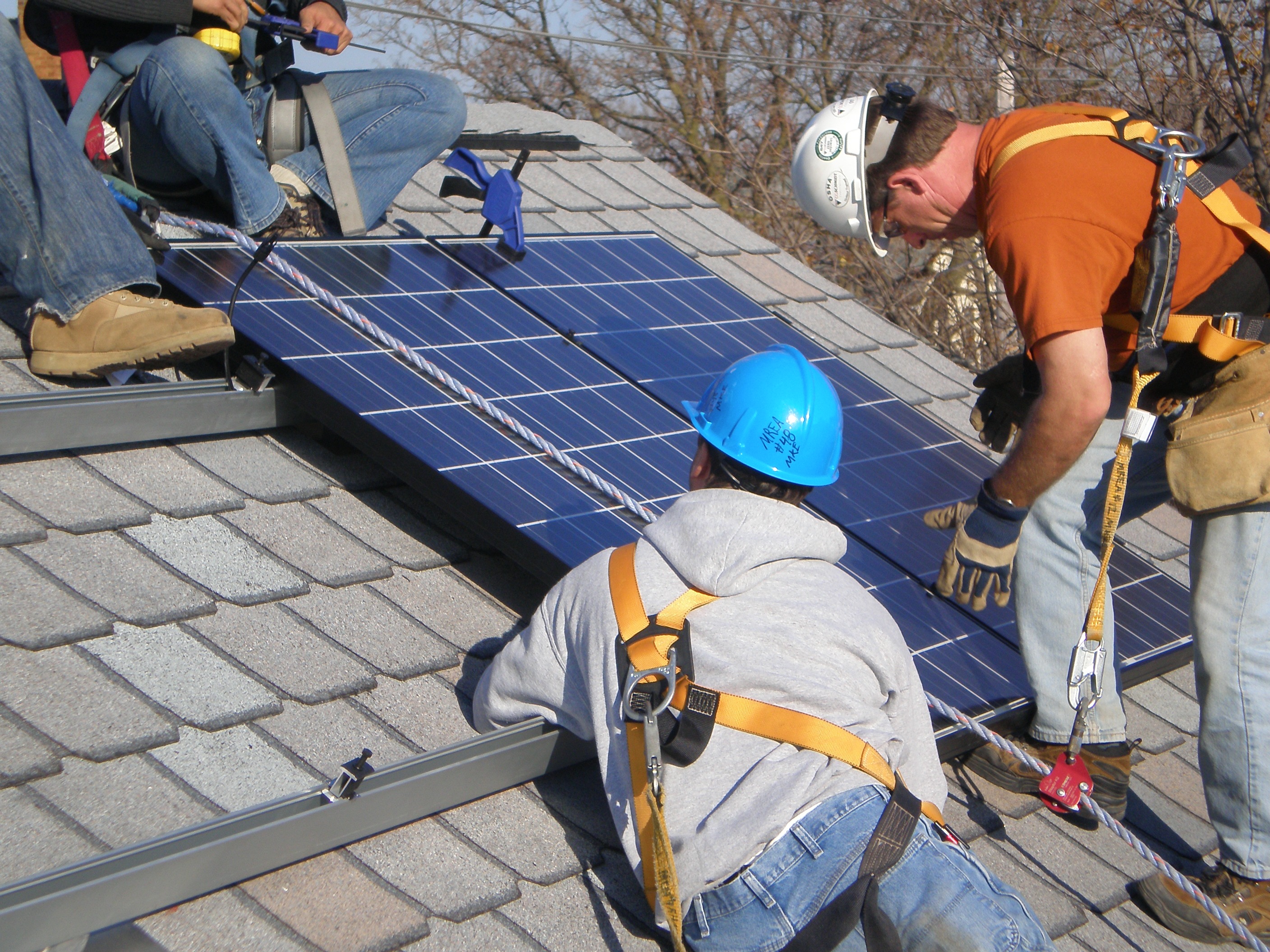
workers installing solar panels on a roof

One expected effect of the Clean Economy Act will be a boom in solar jobs across Virginia. Photo courtesy of NREL.

With Democrats in charge, Virginia passed a suite of bills that establish a sturdy framework for a transition to renewable energy in the electric sector.

At the center of this transformation are the Clean Economy Act, HB1526/SB851, and the Clean Energy and Community Flood Preparedness Act, HB981/SB1027. Other new laws direct further planning, make it easier for customers to install solar, improve the process for siting wind and solar farms, and expand financing options for energy efficiency and renewable energy.

Gov. Ralph Northam has signed some bills already, and has until April 11 to sign the others or send them back to the General Assembly with proposed amendments. Once signed, legislation takes effect on July 1.

I assume the Governor has other things on his mind right now than asking the General Assembly to tinker further with a bill like the Clean Economy Act, though bill opponents may be using the virus pandemic to argue for delay. That would be a self-defeating move; as the economy restarts, Virginia is going to need the infusion of jobs and investment that come with the build-out of clean energy. And one of the strongest arguments in support of our energy transition, after all, is that it will save money for consumers.

So what happens after July 1? How does this all work? Let’s look at the way these major pieces of legislation will change the energy landscape in Virginia.

Virginia joins RGGI, and CO2 emissions start to fall. 

Virginia’s Department of Environmental Quality has already written the regulations that call for Virginia power plants to reduce emissions by 30 percent by 2030. The mechanism for achieving this involves Virginia trading with the Regional Greenhouse Gas Initiative, a regional carbon cap and trade market.

The regulations have been on hold as the result of a budget amendment passed last year, when Republicans still ruled the General Assembly. After July 1, DEQ will be able to implement the regulations, with the commonwealth participating in carbon allowance auctions as early as the last quarter of this year or the first quarter of 2021.

In addition to joining RGGI, the Clean Energy and Community Flood Preparedness Act also allows the commonwealth to earn money from the allowance auctions. The Department of Housing and Community Development will spend 50 percent of auction proceeds on “low-income efficiency programs, including programs for eligible housing developments.”

The Department of Conservation and Recreation will get 45 percent of the auction proceeds to fund flood preparedness and climate change planning and mitigation through the Virginia Community Flood Preparedness Fund. The last 5 percent of proceeds will cover administrative costs, including those for administering the auctions.

Energy efficiency savings become mandatory, not just something to throw money at.

Two years ago, the Grid Transformation and Security Act required Dominion and Appalachian Power to propose more than a billion dollars in energy efficiency spending over 10 years, but the law didn’t say the programs had to actually be effective in lowering electricity demand.

This year that changed. For the first time, Virginia will have an energy efficiency resource standard (EERS) requiring Dominion to achieve a total of 5 percent electricity savings by 2025 (using 2019 as the baseline); APCo must achieve a total of 2 percent savings. The SCC is charged with setting new targets after 2025. At least 15 percent of the costs must go to programs benefiting low-income, elderly or disabled individuals, or veterans.

The EERS comes on top of the low-income energy efficiency spending funded by RGGI auctions.

Dominion and Appalachian Power ramp up renewables and energy storage. 

The Clean Economy Act requires Dominion to build 16,100 megawatts of onshore wind and solar energy, and APCo to build 600 megawatts. The law also contains one of the strongest energy storage mandates in the country: 2,700 MW for Dominion, 400 MW for Appalachian Power.

Beginning in 2020, Dominion and Appalachian must submit annual plans to the SCC for new wind, solar and storage resources. We’ll have a first look at Dominion’s plans just a month from now: the SCC has told the company to take account of the Clean Economy Act and other new laws when it files its 2020 Integrated Resource Plan on May 1.

The legislation provides a strangely long lead time before the utilities must request approval of specific projects: by the end of 2023 for APCo (the first 200 MW) or 2024 for Dominion (the first 3,000 MW). But the build-out then becomes rapid, and the utilities must issue requests for proposals on at least an annual basis.

In addition to the solar and land-based wind, Dominion now has the green light for up to 3,000 MW of offshore wind from the project it is developing off Virginia Beach, and which it plans to bring online beginning in 2024. All told, the Clean Economy Act proclaims up to 5,200 MW of offshore wind by 2034 to be in the public interest.

Dominion’s plans for new gas plants come to a screeching halt.

Before the 2020 legislative session, Dominion’s Integrated Resource Plan included plans for as many as 14 new gas combustion turbines to be built in pairs beginning in 2022. In December, the company announced plans to build four gas peaking units totaling nearly 1,000 MW, to come online in 2023 and 2024.

But that was then, and this is now. The Clean Economy Act prohibits the SCC from issuing a certificate of convenience and necessity for any carbon-emitting generating plant until at least January 1, 2022, when the secretaries of natural resources and commerce and trade submit a report to the General Assembly “on how to achieve 100 percent carbon-free electric energy generation by 2045 at least cost to ratepayers.”

Even with no further moratorium, Dominion will find it hard to sell the SCC on the need for new gas plants on top of all the renewable energy and energy storage mandated in the Clean Economy Act. Solar and battery storage together do the same job that a gas peaker would have done — but they are required, and the gas peaker is not. Meanwhile, the energy efficiency provisions of the act mean demand should start going down, not up.

Dominion has already signaled that it recognizes the days of new gas plants are largely over. On March 24, Dominion filed a request with the SCC to be excused from considering new fossil fuel and nuclear resources in its upcoming Integrated Resource Plan filing, arguing that “significant build-out of natural gas generation facilities is not currently viable” in light of the new legislation.

Fossil fuel and biomass plants start closing.

By 2024, the Clean Economy Act requires the closure of all Dominion or APCo-owned oil-fueled generating plants in Virginia over 500 MW and all coal units other than Dominion’s Virginia City Hybrid plant in Wise County and the Clover Station that Dominion co-owns with Old Dominion Electric Cooperative.

This mandate is less draconian than it sounds; it forces the closure of just two coal units, both at Dominion’s Chesterfield plant. Other Dominion coal plants in Virginia have already been retired or switched to using gas or biomass, and one additional coal plant in West Virginia lies beyond the reach of the legislation. Oil-fired peaking units at Yorktown and Possum Point were already slated for retirement in 2021 and 2022. APCo owns no coal or biomass plants in Virginia.

Although the exceptions might appear to swallow the rule, the truth is that coal plants are too expensive to survive much longer anyway. One indication of this is a March 24 report Dominion filed with the SCC showing its fuel generation sources for 2019: coal has now fallen to below 8 percent of generation.

By 2028, Dominion’s biomass plants must shut down, another victory for consumers. All other carbon-emitting generating units in Virginia owned by Dominion and APCo must close by 2045, including the Virginia City plant and all the gas plants.

As of 2050, no carbon allowances can be awarded to any generating units that emit carbon dioxide, including those owned by the coops and merchant generators, with an exception for units under 25 MW as well as units bigger than 25 MW (if they are owned by politically well-connected multinational paper companies with highly-paid lobbyists).

Solar on schools and other buildings becomes the new normal.

In December, Fairfax County awarded contracts for the installation of solar on up to 130 county-owned schools and other sites, one of the largest such awards in the nation. Using a financing approach called a third-party power purchase agreement (PPA), the county would get the benefits of solar without having to spend money upfront. The contracts were written to be rideable, meaning other Virginia jurisdictions could piggyback on them to achieve cost savings and lower greenhouse gas emissions.

Fairfax County’s projects, along with others across the state, hit a wall when, on Jan. 7, the SCC announced that the 50 MW program cap for PPAs in Dominion territory had been reached. But with the passage of the Clean Economy Act and Solar Freedom legislation, customers will be able to install up to 1,000 MW worth of solar PPAs in Dominion territory and 40 MW in APCo territory.

Fairfax County schools will soon join their counterparts in at least 10 other jurisdictions across the state that have already installed solar. With the PPA cap no longer a barrier, and several other barriers also removed, local governments will increasingly turn to solar to save money and shrink their carbon footprints.

Virginia agencies start working on decarbonizing the rest of the economy. 

In spite of its name, the Clean Economy Act really only tackles the electric sector, with a little spillover into home weatherization. That still leaves three-quarters of the state’s greenhouse gas emissions to be addressed in transportation, buildings, agriculture and industry. Ridding these sectors of greenhouse gas emissions requires different tools and policies.

Other legislation passed this session starts that planning process. SB94(Favola) and HB714 (Reid) establish a policy for the commonwealth to achieve net-zero emissions economy-wide by 2045 (2040 for the electric sector) and require the next Virginia Energy Plan, due in 2022, to identify actions towards achieving the goal. Depending on who the next governor is, we may see little or nothing in the way of new proposals, or we may see proposals for transportation and home electrification, deep building retrofits, net-zero homes and office buildings, carbon sequestration on farm and forest land and innovative solutions for replacing fossil fuels in industrial use.

Collateral effects will drive greenhouse gas emissions even lower.

Proposed new merchant gas plants are likely to go away. With Virginia joining RGGI and all fossil fuel generating plants required to pay for the right to spew carbon pollution, the developers of two huge new merchant gas plants proposed for Charles City County will likely take their projects to some other state, if they pursue them at all.

Neither the 1,600 MW Chickahominy Power Station and the 1,050 C4GT plant a mile away planned to sell power to Virginia utilities; their target is the regional wholesale market, which currently rewards over-building of gas plant capacity even in the absence of demand. The Chickahominy and C4GT developers sought an exemption from RGGI through legislation; the bill passed the Senate but got shot down in the House.

If the C4GT plant goes away, so too should Virginia Natural Gas’ plans for a gas pipeline and compressor stations to supply the plant, the so-called Header Improvement Project.

Other coal plants will close. Although the CEA only requires Dominion to retire two coal units at its Chesterfield Power Station, other coal plants in the state will close by the end of this decade, too. That’s because the economics are so heavily against coal these days that it was just a matter of time before their owners moved to close them.

Adding the cost of carbon allowances under RGGI will speed the process along. That includes the Clover Station, which Dominion owns in partnership with Old Dominion Electric Cooperative (ODEC), and the Virginia City Hybrid Electric plant in Wise County, Dominion’s most expensive coal plant, which should never have been built. 

The Atlantic Coast and Mountain Valley Pipelines find themselves in more trouble than ever. If I had a dollar for every time a Dominion or Mountain Valley spokesperson said, “Our customers desperately need this pipeline,” I would not be worried about the stock market right now.

The fact is that no one was ever sure who those customers might be, other than affiliates of the pipeline owners themselves—and that doesn’t exactly answer the question. With Virginia now on a path away from all fossil fuels, neither pipeline has a path to profitability inside Virginia any longer, if they ever had one.


A version of this article originally appeared in the Virginia Mercury on March 31. 

Unknown's avatar

It was a messy, chaotic General Assembly Session. It also worked out pretty well.

Solar arrays on Richmond Public Schools were some of the last projects to go forward before a statutory limit on PPAs halted similar projects across the state. Legislation this year raises the cap on PPAs. Photo credit Secure Futures.

This time last year, I didn’t have much good to say about the General Assembly session that had just concluded. This year, try as I might to be cynical and gloomy (and I do make a good effort), I see mostly blue skies. Or at worst, light gray. What follows is a brief run-down of the bills that passed.

Bills that were still alive at the time of my halftime report but that don’t appear in today’s roundup are dead for the year.

Most of these bills don’t yet have the Governor’s signature. Virginia allows the Governor to propose amendments, so what you see here may not be the final word. Bills that do get signed take effect July 1.

Energy Transition

HB1526/SB851, the Clean Economy Act, is an omnibus energy bill that contains a two-year moratorium on new fossil fuel plants, mandatory carbon reductions, mandatory energy efficiency savings, mandatory construction of wind, solar and offshore wind, mandatory energy storage acquisition targets, mandatory closures of some coal and biomass plants, and a mandatory renewable portfolio standard, along with cost recovery provisions, a new program to limit utility bills of low-income earners, and some loosening of restrictions on net metering and third-party power purchase agreements.

The bill is not perfect, and the clean energy transformation it strives for is incomplete. Its provisions mostly don’t apply to electric cooperatives, and while it forces the eventual closure of Dominion’s biomass plants, it actually requires utility customers to subsidize biomass use by paper companies. Dominion is given too free a rein on spending, the energy efficiency targets are weak, and the bill focuses on utility-scale projects to the almost total exclusion of customer-sited projects.

For all that, the legislation is groundbreaking and transformational. Advocates will be back next year with refinements to the bill and proposals to fill the gaps, but putting this necessary framework in place is a huge achievement for Virginia.

SB94 (Favola) and HB714 (Reid) rewrites the Commonwealth Energy Policy to bring it in line with Virginia’s commitment to dealing with climate change, and even to challenge leaders to do more. The bill sets a target for net-zero greenhouse gas emissions economy wide by 2045, and in the electric sector by 2040. These targets are more ambitious than what is in the Clean Economy Act; not only is the electric sector decarbonization deadline earlier (and inclusive of the coops), this is the first legislation to set a target for the economy as a whole. The Commonwealth Energy Policy is advisory and tends to be ignored in practice; however, the bill also requires that the Virginia Energy Plan, developed every four years in the first year of a new governor’s term, include actions to achieve a net-zero economy by 2045 for all sectors.

HB672 (Willett) establishes a policy “to prevent and minimize actions that contribute to the detrimental effects of anthropogenic climate change in the Commonwealth.” State agencies are directed to consider climate change in any actions involving state regulation or spending. Local and regional planning commissions are required to consider impacts from and causes of climate change in adapting comprehensive plans.

RGGI

The Democratic takeover of the General Assembly means Virginia will finally join the Regional Greenhouse Gas Initiative (RGGI). HB981 (Herring) and SB1027 (Lewis), the Clean Energy and Community Flood Preparedness Act, directs DEQ to enter the RGGI auction market. Auction allowances are directed to funds for flood preparedness, energy efficiency and climate change planning and mitigation. As with the Clean Economy Act, votes for the RGGI fell along partisan lines but for one Republican senator, Jill Vogel, who voted for both.

RPS

The Clean Economy Act contains a mandatory renewable portfolio standard (RPS) requiring utilities to include in their electricity mix a percentage of renewable energy that ratchets up over time. It’s weak, especially for distributed solar, and it allows paper company biomass to qualify—an inexcusable corporate welfare provision for politically powerful WestRock and International Paper.

Customer-sited solar/net metering

Watch this space for a post dedicated to net metering, PPAs and community solar bills. Meanwhile, here’s the short version:

Solar Freedom SB710 (McClellan), HB572 (Keam) and HB1184 (Lopez) lift barriers to customer-sited renewable energy such as rooftop solar. HB1647 (Jones) contains some of the elements of Solar Freedom, but a few provisions are in conflict. Advocates have asked the Governor to sign the first three bills but not the fourth. Some Solar Freedom provisions are also in the Clean Economy Act. The new provisions lift the net metering cap to 6% for IOUs; raise the PPA cap to 1,000 MW in Dominion territory and 40 MW in APCo territory; remove standby charges below 15 kW in Dominion territory and completely for APCo; raise the residential size cap to 25 kW and the commercial project size cap to 3 MW; allow Dominion customers to install enough solar to meet 150% of the previous year’s demand (APCo stays at 100%); allow shared solar on multifamily buildings; and enable a 5 MW landfill solar project in Fairfax County to move forward. The provisions do not apply to electric cooperatives.

HOAs HB414 (Delaney) and SB504 (Petersen) clarifies the respective rights of homeowners associations (HOAs) and residents who want to install solar. The law allows HOAs to impose “reasonable restrictions,” a term some HOAs have used to restrict solar to rear-facing roofs regardless of whether these get sunshine. The bill clarifies that HOA restrictions may not increase the cost of the solar facility by more than 5%, or decrease the expected output by more than 10%.

Community solar

SB629 (Surovell) and HB1634 (Jones) creates a program for shared-solar that allows customers to purchase subscriptions in a solar facility no greater than 5 MW.

HB573 (Keam) requires that an investor-owned utility that offers a so-called “community solar” program as authorized by 2017 legislation must include facilities in low-income communities “of which the pilot program costs equal or exceed the pilot program costs of the eligible generating facility that is located outside a low-income community.”

Offshore wind

The Clean Economy Act contains detailed provisions for the buildout and acquisition of offshore wind. SB998 (Lucas), SB860 (Mason) and HB1664 (Hayes) puts the construction or purchase of at least 5,200 MW of offshore wind in the public interest and governs cost recovery for the wind farms under development by Dominion. The bills appear to have the same language that is in the Clean Economy Act.

HB234 (Mugler) establishes a Division of Offshore Wind within the Department of Mines, Minerals and Energy. Its role is to help facilitate the Hampton Roads region as a wind industry hub, coordinate the word of state agencies, develop a stakeholder engagement strategy, and basically make sure this industry gets underway.

Nuclear

SB828 (Lewis) defines “clean” and “carbon-free” energy to include nuclear energy for purposes of the Code. SB817 (Lewis) declares that nuclear energy is considered a clean energy source for purposes of the Commonwealth Energy Policy.

HB1303 (Hurst) and SB549 (Newman) direct DMME to develop a strategic plan for the role of nuclear energy in moving toward renewable and carbon-free energy.

Energy Efficiency

HB1526/SB851, the Clean Economy Act, contains a mandatory energy efficiency resource standard (EERS) and other provisions for spending on low-income EE programs. HB1450 (Sullivan) appears to be the same as the efficiency provisions of the Clean Economy Act. A sentence added late in the process provides that the bill won’t take effect until passed again in 2021. Presumably the passage of the Clean Economy Act makes this bill moot.

HB981 (the RGGI bill) specifies that a portion of the funds raised by auctioning carbon allowances will fund efficiency programs.

HB1576 (Kilgore) makes it harder for large customers to avoid paying for utility efficiency programs. In the past, customers with over 500 kW of demand were exempt; this bill allows only customers with more than 1 MW of demand to opt out, and only if the customer demonstrates that it has implemented its own energy efficiency measures.

HB575 (Keam) beefs up the stakeholder process that Dominion and APCo engage in for the development of energy efficiency programs.

SB963 (Surovell) establishes the Commonwealth Efficient and Resilient Buildings Board to advise the Governor and state agencies about ways to reduce greenhouse gas emissions and increase resiliency. Every agency is required to designate and energy manager responsible for improving energy efficiency and reducing greenhouse gas emissions.

SB628 (Surovell) requires the residential property disclosure statement provided by the Real Estate Board on its website to include advice that purchasers should obtain a residential building energy analysis as well as a home inspection prior to settlement.

Energy storage

The Clean Economy Act requires that by 2035, Appalachian Power will construct 400 MW of energy storage and Dominion 2,700 MW. None of the projects can exceed 500 MW, except for one project of up to 800 MW for Dominion (a possible reference to the pumped storage project Dominion is reportedly considering). Projects must meet competitive procurement requirements, and at least 35% of projects must be developed by third-party developers.

SB632 (Surovell) has a fair amount of overlap with the Clean Economy Act, but the details are different, and it will be interesting to see what the Governor does about that. SB632 makes it in the public interest to develop 2,700 MW of energy storage located in Virginia by 2030. At least 65% must take the form of a “purchase by a public utility of energy storage facilities owned by persons other than a public utility or the capacity from such facilities.” Up to 25% of facilities do not have to satisfy price competitiveness criteria “if the selection of the energy storage facilities materially advances non-price criteria, including favoring geographic distribution of generating facilities, areas of higher employment, or regional economic development.” Utility Integrated Resource Plans must include the use of energy storage and must include “a long-term plan to integrate new energy storage facilities into existing generation and distribution assets to assist with grid transformation.”

SB632 also fixes a problem introduced a couple of years ago, when the ownership or operation of storage facilities was added to the definition of a utility in one chapter of the Code (§56.265.1), though not in others. With the fix, a public utility may own or operate storage, but so can third parties without them thereby becoming utilities.

HB1183 (Lopez) requires the SCC to establish a task force on bulk energy storage resources.

Siting, permitting, and other issues with utility-scale renewable energy 

HB1327 (Austin) allows localities to impose property taxes on generating equipment of electric suppliers utilizing wind turbines at a rate that exceeds the locality’s real estate tax rate by up to $0.20 per $100 of assessed value. Under current law, the tax may exceed the real estate rate but cannot exceed the general personal property tax rate in the locality.

HB656 (Heretick) and SB875 (Marsden) allow (but do not require) local governments to incorporate into their zoning ordinances national best practices standards for solar PV and batteries.

HB1131 (Jones) and SB762 (Barker) authorize localities to assess a revenue share of up to $1,400 per megawatt on solar PV projects, in exchange for which an existing tax exemption is expanded.

HB657 (Heretick) exempts solar facilities of 150 MW or less from the requirement that they be reviewed for substantial accord with local comprehensive plans, if the locality waives the requirement.

HB1434 (Jones) and SB763 (Barker) provides a step-down of the existing 80% machinery and tools tax exemption for large solar projects, and eliminates it after 2030 for projects over 5 MW.

SB870 (Marsden) authorizes local planning commissions to grant special exceptions for solar PV projects in their zoning ordinances and include certain regulations and provisions for conditional zoning for solar projects.

HB1675 (Hodges) requires anyone wanting to locate a renewable energy or storage facility in an opportunity zone to execute a siting agreement with the locality.

Grants, tax deductions, tax credits and other financing

HB654 (Guy) authorizes DMME to sponsor a statewide financing program for commercial solar, energy efficiency and stormwater investments. The effect would be to boost the availability of Commercial Property Assessed Clean Energy (C-PACE) in areas of the state where the locality has not developed a program of its own.

SB754 (Marsden) authorizes electric cooperatives to establish on-bill financing programs for energy efficiency and renewable energy.

HB1656 (O’Quinn) authorizes Dominion and APCo to design incentives for low-income people, the elderly, and disable persons to install energy efficiency and renewable energy, to be paid for by a rate adjustment clause.

HB1707 (Aird) makes changes to the Clean Energy Advisory Board, which is (already) authorized to administer public grant funding.

SB1039 (Vogel) allows a real property tax exemption for solar energy equipment to be applied retroactively if the taxpayer gets DEQ certification within a year.

SB542 (Edwards) repeals the sunset date on crowdfunding provisions and provides fixes for certain existing obstacles to this financing approach.

Customer rights to shop for renewable energy

HB868 (Bourne) allows customers to buy 100% renewable energy from any licensed supplier, regardless of whether their own utility has its own approved tariff. The Senate killed a companion bill, and Commerce and Labor passed HB868 only with an amendment that requires the bill to be reenacted in 2021. (Credit Edwards, Deeds, Ebbin and Bell for not going along with the amendment.) After Senate passage the bill went to conference, and the House conferees caved. So technically the bill passed, but it has no effect. Interesting note: 41 House Republicans still voted against it in the end.

HB 889 (Mullin) was originally broader than HB868, but after the Senate got through with it, the bill is now a pilot program for the benefit of just those large corporations that, as of February 25, 2019, had filed applications seeking to aggregate their load in order to leave Dominion and buy renewable energy elsewhere. The pilot program is capped at 200 MW, and the SCC will review it in 2022.

Other utility regulation

HB528 (Subramanyam) requires the SCC to determine the amortization period for recovery of costs due to the early retirement of generating facilities owned or operated by investor-owned utilities. In the absence of this legislation, Dominion would have been allowed to use excess earnings for immediate payoffs of the costs of early fossil fuel plant closures; this puts the SCC back in charge of the schedule. The fact that this bill passed is nothing short of miraculous. House Republicans voted against it en masse, and it made it through Senate Commerce and Labor over the objections of Dominion’s best friends from both parties (though most came around for the floor vote when it was clear it would pass).

SB731 (McClellan) affects a utility’s rate of return. The SCC determines this rate by looking first at the average returns of peer group utilities, and then often going higher. The bill lowers the maximum level that the SCC can set above the peer group average. Note that although this bill is recorded as having passed both chambers, it looks like there were amendments that do not appear on the Legislative Information Service website.

HB167 (Ware) requires an electric utility that wants to charge customers for the cost of using a new gas pipeline to prove it can’t meet its needs otherwise, and that the new pipeline provides the lowest-cost option available to it. (Note that this cost recovery review typically happens after the fact, i.e., once a pipeline has been built and placed into service.) Ware acceded to some amendments that Dominion wanted, and eventually Dominion told legislators the company was not opposed to the bill. Hence it passed both chambers unanimously. Notwithstanding Dominion’s happy talk, this bill makes cost recovery for the Atlantic Coast Pipeline much, much more difficult, one more indication that Dominion may be preparing to fold up shop on this project.

[Updated March 17 to correct an error–I had included a bill as having passed that in fact died in the House. Bummer.]

Unknown's avatar

Yeah, I’m not perfect either. Pass the Clean Economy Act.

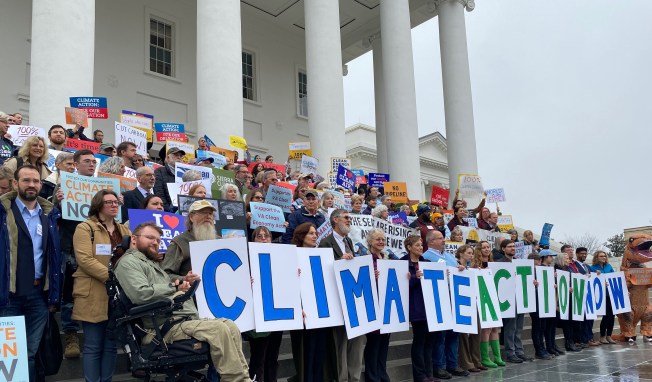
People gathered with signs supporting climate action

Grassroots activists gather at the steps of the Virginia Capital on January 14. Photo courtesy Sierra Club.

When it was first introduced, and before the utilities and special interests got their grubby little paws on it, the Clean Economy Act was an ambitious and far-reaching overhaul of Virginia energy policy that turned a little timid when it came to particulars.

Sausage-making ensued.

The bill that emerged from the grinder inevitably allows Dominion Energy to profit more than it should. (Welcome to Virginia, newcomers.) The energy efficiency provisions, which I thought weak, became even weaker, then became stronger, then ended up somewhere in the middle depending on whether you were looking at the House or Senate version. The renewable portfolio standard, complicated to begin with, is now convoluted to the point of farce — and to the extent I understand it, I’m not laughing.

Yet the bill still does what climate advocates set out to do: It creates a sturdy framework for a transition to 100% carbon-free electricity by 2045 (the House bill) or 2050 (the Senate bill).

It’s worth taking a moment to marvel at the very idea of a strong energy transition bill passing in a state that still subsidizes coal mining. Even a year ago, this would not have been possible. That we have come this far is a tribute not just to the Democrats who are making good on their pledge to tackle climate, but to the thousands of grassroots activists who worked to elect them and then stayed on the job to hold them to their promises.

The Clean Economy Act works by tackling the problem from multiple directions in a belt-and-suspenders approach:

• The legislation puts an immediate two-year moratorium on any new carbon-emitting plants. The concept came straight from the grassroots-led Green New Deal, and it creates space for the other provisions to kick in.

• It requires DEQ to implement regulations cutting carbon emissions through participation in the Regional Greenhouse Gas Initiative. RGGI uses market incentives to cut carbon emissions from power plants 30 percent by 2030. The Department of Environmental Quality will auction carbon allowances to power plant owners and use the auction money primarily for coastal resilience projects and energy efficiency projects for low-income residents. The Department of Housing and Community Development will be in charge of this efficiency spending, not Dominion.

• The Clean Economy Act takes RGGI out further, ensuring that Virginia reaches zero emissions by 2045 (House bill) or 2050 (Senate bill).

• It requires the closure of most coal plants in Virginia by the end of 2024. The newest of these, the Virginia City Hybrid coal plant, must close by the end of 2030 unless it achieves 83 percent emission reductions through carbon capture and storage, the technology it was allegedly designed for. Biomass plants have to close by the end of 2028.

• In place of fossil fuels, utilities have to build or buy thousands of megawatts of solar, on-shore wind, offshore wind and energy storage. Yearly solicitations for wind and solar will ensure sustained job creation employing thousands of workers. Thirty-five percent of all this must be competitively procured from third-party developers, a requirement that lowers costs and makes it harder for utilities to overcharge for the projects they build themselves.

• The storage requirement in particular is notable because batteries compete directly with gas combustion turbines to serve peak demand. The more storage a utility builds, the weaker its case for building new gas peakers becomes.

• For the first time, Virginia utilities will have to achieve energy efficiency savings, not just throw money at the problem. Under the stronger House bill, Dominion must achieve 5 percent cumulative energy savings by 2025. Appalachian Power must achieve 2 percent. Starting in 2026, the SCC will set efficiency goals every three years. Achieving savings ought to be easy; a new ranking of progress on efficiency puts Dominion at 50th out of 52 utilities. Low-hanging fruit, anyone? The Clean Economy Act also calls for 15 percent of efficiency spending to be allocated for programs benefiting low-income, elderly, disabled individuals and veterans.

• Also for the first time, the legislation requires the State Corporation Commission to consider the “social cost of carbon.” That puts one more thumb on the scales weighing against fossil fuels.

• If by January of 2028 we are still not on track, the House bill empowers the secretaries of natural resources and commerce and trade to put a second moratorium on new fossil fuel facilities.

One other element of the bill is worth mentioning, given the questions about how much all these new projects and programs will cost. The legislation creates a “percentage of income payment program” for low-income ratepayers to cap electricity costs at 6 percent of household income, or 10 percent if they use electric heat. The program includes provisions for home energy audits and retrofits.

As I said at the outset, the bill is not without its flaws. The cost of offshore wind energy is “capped” in the bill at 1.6 times the cost of energy from a gas peaker plant, though I’m told negotiations continue and the adder may be reduced. Regardless of the number, this makes as much sense as capping the cost of apples at some number above the cost of Cheetos. Why are we comparing a carbon-free source of energy that is getting cheaper every year with one of the dirtiest and most expensive fossil fuel sources? On behalf of the offshore wind industry: Please, I’m insulted.

Virginia will be a leader on offshore wind, but we are not the first, and we know the price of electricity from the other U.S. projects already under contract. Prices are already well below gas peaker plant levels. The CEA ought to cap the cost of the Virginia project at 10 or 20 percent above the lowest-priced comparable offshore wind project, which would allow plenty of room for differences in wind speeds, distance from shore and other variables.

On second thought, as a point of pride, Dominion should reject any adder at all, and insist on capping its costs below those of all the northeastern projects. Have some confidence in yourselves, people!

My other complaint is that the Clean Economy Act’s nearly incomprehensible renewable portfolio standard fails to deliver. Yes, other provisions of the bill require the utilities to build a lot of wind and solar. But nothing requires them to use the renewable energy certificates (RECs) associated with those facilities for the RPS.

If I totally lost you with those acronyms, it’s okay. Just know that RECs are the bragging rights associated with renewable energy, and they can be bought and sold separately from the electricity itself. If Dominion builds a solar farm in Virginia and sells the RECs to Microsoft or the good people of New Jersey, those folks have bought the right to claim the renewable energy regardless of whether they actually get their electrons straight from the solar farm. Virginia would be left with a solar farm, but legally, no solar energy.

RECs also fetch different prices according to the kind of renewable energy they represent and how many are on the market. Everyone wants solar, so solar RECs cost more. RECs from hundred-year-old hydroelectric projects are not in demand, so they are cheap.

As written now, the Clean Economy Act sets up an RPS that doesn’t require any wind or solar RECs at all (excepting a miniscule carve-out for small wind and solar that can also be met with “anaerobic digestion resources,” possibly a reference to pig manure).

The RPS can be met with RECs from several sources less desirable than solar, and therefore cheaper. These include old hydro dams, Virginia-based waste-to-energy and landfill methane facilities and biomass burned by paper companies WestRock and International Paper. As a result, utilities will buy RECs from those sources to meet the requirements.

Only once utilities run out of cheaper RECs from eligible sources will they be forced to apply RECs from any of the wind and solar they are building. Until that time, Dominion and APCo will sell the RECs from the new solar farms to the highest bidder, while Virginia customers shell out potentially hundreds of millions of dollars for RECs no one really wants.

That’s not fair to the Virginians who are paying for the wind and solar projects to be built and who have a right to expect wind and solar will be a part of their energy supply as a result. Legislators can correct this with a very simple requirement that RECs from the new facilities mandated by the law be applied to the RPS.

And, while I am telling legislators what to do, they ought to remove the eligibility of paper company biomass. This provision seems to have been added to the bill (in obscure, coded language) simply because WestRock has talented lobbyists and the political power to demand a cut of the action. But do we ratepayers want to buy their RECs? No, we do not.

WestRock is doubtless unhappy about losing the nice stream of unearned income it’s been getting from selling thermal RECs to Dominion under Virginia’s voluntary RPS. But there is no good reason for electricity customers to subsidize a Fortune 500 corporation whose CEO earned $18 million last year and whose Covington mill, according to EPA data, spews out more toxic air emissions than any other facility in Virginia including Dominion’s Chesterfield coal plant. That’s not clean energy.

Fortunately (I guess), the RPS is not the heart and soul of the Clean Economy Act. For the next several years, its slow ramp-up makes it barely even relevant, and it is the next several years that matter most in our response to the climate crisis.

Joining RGGI, cutting emissions, implementing energy efficiency, building renewable energy and storage, closing coal and biomass plants: those are the mechanisms of the Clean Economy Act that will drive Virginia’s transition to 100% clean energy.

And so, having offered my helpful suggestions to improve the nutritional content of this sausage, I will add just one more thing:

Pass the bill.

This column originally ran in the Virginia Mercury on February 24, 2020. That afternoon, the Senate Commerce and Labor committee conformed the House version of the bill to the weaker Senate version and passed it out of committee. House Labor and Commerce meets today and is expected to conform the Senate bill to the stronger House language. Assuming both chambers pass the bills without further amendments, the bills will then go to a conference committee (three senators, three delegates) to resolve the differences, and the resulting language will go to the Governor. 

Unknown's avatar

Renewable energy bills to watch

People gathered with signs supporting climate action

Grassroots activists gather at the steps of the Virginia Capital on January 14. Photo courtesy Sierra Club.

Yesterday’s post launched my annual roundup of energy and climate bills with a comparison of the two major energy transition bills filed to date, HB1526/SB851, the Clean Economy Act, and HB77, the Green New Deal Act. Today I’m covering other renewable energy bills. You will be glad to see I am addressing each only briefly, given the large number of them. Bills can still be filed as late as tomorrow evening, and there is often some lag in the Legislative Information System, which posts the bills, their summaries, their committee assignments, and what happens to them. I will add to this list once I’ve seen the rest, so check back for updates.

Most of these bills will be heard in Senate Commerce and Labor, or now in the House, Labor and Commerce, committees. Both House and Senate have established energy subcommittees. In the Senate, the subcommittee is advisory and does not have the power to kill a bill outright. The House subcommittee used to be a killing field for good bills. Hopefully this year will be different.

Bills with monetary implications typically must go to Finance or Appropriations.

As always, the action will be fast and furious, and it is already underway. Blink and you will miss it.

RPS

Both HB1526/SB851, the Clean Economy Act, and HB77, the Green New Deal Act, contain a renewable portfolio standard (RPS) requiring utilities to include in their electricity mix a percentage of renewable energy that ratchets up over time. In addition, HB1451 (Sullivan) is a stand-alone RPS bill that also includes an energy storage mandate. It applies only to IOUs but otherwise appears to be identical to the RPS and storage provisions of the CEA (of which Sullivan is also the patron).

Instead of an RPS, SB876 (Marsden) establishes a “clean energy standard” applicable to both IOUs and coops. A “clean energy resource” is defined as “any technology used to generate electricity without emitting carbon dioxide into the atmosphere,” including “(i) electric generation facilities that are powered by nuclear, solar, wind, falling water, wave motion, tides, or geothermal power; (ii) a natural gas-fired generation facility with 80 percent carbon capture; or (iii) a coal-fired generation facility with 90 percent carbon capture.” Aside from the contradiction in terms inherent in this definition, the clean energy standard also suffers from a delay in its starting point to 2030, when it begins at 30%–or about where Dominion is today with its nuclear plants. Considering only offshore wind and solar development already underway, the CES would not be a meaningful spur to new renewable energy for at least another 15 years. A couple of strong points, however: the bill also requires the closure of all coal-fired generation facilities by 2030, and requires workforce transition and community assistance plans. [Update: we’re told Senator Marsden agrees with the criticisms of this bill and does not intend to present it, at least without significant amendment.]

SB842 (Petersen) provides for all retail customers of electricity to be able to choose their supplier, and instructs the SCC to promulgate regulations for a transition to a competitive market for electricity. Existing utilities will continue to provide the distribution service. The bill also requires suppliers of electricity to obtain at least 25% of sales from renewable energy by 2025, 50% by 2030, and 100% by 2050. Renewable energy is defined to include “sustainable biomass” but not waste incineration or landfill gas.

Customer-sited solar

Solar Freedom” is back this year for another attempt to lift barriers to customer-sited renewable energy, including rooftop solar. The primary vehicles are SB710 (McClellan) and HB572 (Keam), with nearly identical versions from Lopez (HB1184) and Simon (HB912). It contains 8 provisions:

  1. Raising from 1% to 10% the cap on the total amount of solar that can be net metered in a utility territory, ensuring small-scale solar continues to grow.
  2. Making third-party financing using power purchase agreements (PPAs) legal for all customers of IOUs, removing current cap. The SCC reports the program in Dominion’s territory is now filled, putting in jeopardy Fairfax County’s ambitious solar plans. In Southwest Virginia in APCo territory, the program is even smaller and narrower, and several projects have been unable to move forward.
  3. Allowing local government entities to install solar facilities of up to 5 MW on government-owned property and use the electricity for schools or other government-owned buildings located on nearby property, even if not contiguous. This would allow Fairfax County to move forward with a planned solar facility on a closed landfill; localities with closed landfills across the state could similarly benefit.
  4. Allowing all customers to attribute output from a single solar array to multiple meters on the same or adjacent property of the same customer.
  5. Allowing the owner of a multi-family residential building to install a solar facility on the building or surrounding property and sell the electricity to tenants. This is considered especially valuable for lower-income residents, who tend to be renters.
  6. Removing the restriction on customers installing a net-metered solar facility larger than required to meet their previous 12 months’ demand. Many customers have expressed interest in installing larger facilities to serve planned home additions or purchases of electric vehicles.
  7. Raising the size cap for net metered non-residential solar facilities from 1 MW to 3 MW, a priority for commercial customers.
  8. Removing standby charges on residential facilities sized between 10-20 kW. Current charges are so onerous that few customers build solar arrays this size, hurting this market segment.

Other PPA and net metering bills

HB1647 (Jones) is similar to Solar Freedom but includes community solar and leaves out meter aggregation.

Five of the eight provisions of Solar Freedom also appear in the Clean Economy Act, omitting only numbers 3,4 and 5. SB532 (Edwards) is a stand-alone bill to make PPAs legal, using an approach similar to that of Solar Freedom and the CEA. HB1067 (Kory) deals with a specific situation where a customer has solar on one side of property divided by a public right-of-way, with the electric meter to be served by the solar array on the other side. The legislation declares the solar array to be located on the customer’s premises. (Item 4 of Solar Freedom would also solve the problem.)

Resilience hubs

HB959 (Bourne) directs DMME to establish a pilot program for resilience hubs. These are defined as a simple combination of solar panels and battery storage capable of powering a publicly-accessible building in emergency situations or severe weather events, primarily to serve vulnerable communities.

HOAs

HB414 (Delaney) and SB504 (Petersen) clarifies the respective rights of homeowners associations (HOAs) and residents who want to install solar. The law allows HOAs to impose “reasonable restrictions,” a term some HOAs have used to restrict solar to rear-facing roofs regardless of whether these get sunshine. The bill clarifies that HOA restrictions may not add more than $1,000 to the cost of solar facility, or decrease the expected output by more than 10%.

Community solar.

Three years ago legislation passed to allow utilities to set up so-called community solar programs. A couple of coops followed through, notably one from Central Virginia Electric Cooperative. Dominion received SCC approval to launch a small program back in 2018, but still hasn’t done so. That leaves a large base of potential customers—people without sunny roofs, apartment dwellers, or anyone who can’t afford to install solar—with no options.

The Clean Economy Act has detailed provisions for community solar, supported by the trade organization Community Solar Access. An alternative as a stand-alone bill is SB629 (Surovell). It creates an opportunity for subscribers in the territory of investor-owned utilities to buy from small (under 2 MW) “solar gardens” developed by third-party owners. Utilities would credit purchasers at the retail rate minus the utility’s costs. Preference would be given to solar gardens with low-income subscribers.

HB573 (Keam) does not establish a new program. It affects the utility-controlled and operated “community solar” programs required by 2017 legislation (and still not rolled out yet, though I assume the facilities have been selected). The bill requires that “an investor-owned utility shall not select an eligible generating facility that is located outside a low-income community for dedication to its pilot program unless the investor-owned utility contemporaneously selects for dedication to its pilot program one or more eligible generating facilities that are located within a low-income community and of which the pilot program costs equal or exceed the pilot program costs of the eligible generating facility that is located outside a low-income community.” I read this to mean utilities must select more expensive sites and develop more expensive programs in low-income areas than elsewhere, which seems . . . odd.

HB1634 (Jones) requires utilities to establish shared-solar programs that allows customers to purchase subscriptions in a solar facility no greater than 5 MW. (For what it’s worth, the GA passed a similar law in 2017, and we are still waiting for Dominion’s program.)

Resolving local disputes over utility-scale projects

Developers of utility-scale solar and wind sometimes face pushback at the local level. Opposition can come from residents who worry about viewsheds or who have been subjected to anti-renewables propaganda, and from local officials who want to collect tax revenue above the local real estate tax rate. Industry organizations and counties have worked to come up with a number of bills to resolve the concerns, though in some cases the counties have split on whether to support them.

HB1327 (Austin) allows localities to impose property taxes on generating equipment of electric suppliers utilizing wind turbines at a rate that exceeds the locality’s real estate tax rate by up to $0.20 per $100 of assessed value. Under current law, the tax may exceed the real estate rate but cannot exceed the general personal property tax rate in the locality. Wind developer Apex Clean Energy helped develop the bill and supports it.

Bills supported by the solar industry organization MDV-SEIA include:

  • HB656 (Heretick) and SB875 (Marsden) allow local governments to incorporate into their zoning ordinances national best practices standards for solar PV and batteries.
  • HB1131 (Jones) and SB762 (Barker) authorize localities to assess a revenue share of up to $0.55 per megawatt-hour on solar PV projects, in exchange for which an existing tax exemption is expanded.
  • HB657 (Heretick) and SB893 (Marsden) exempt solar facilities of 150 MW or less from the requirement that they be reviewed for substantial accord with local comprehensive plans.
  • HB1434 (Jones) reduces the existing 80% machinery and tools tax exemption for large solar projects.
  • SB870 (Marsden) authorizes local planning commissions to include certain regulations and provisions for conditional zoning for solar projects over 5 MW.

Other RE siting bills

HB1133 (Jones) makes it in the public interest for utilities to build or purchase, or buy the output of, wind or solar facilities located on previously developed sites.

HB1675 (Hodges) requires anyone wanting to locate a renewable energy or storage facility in an opportunity zone to execute a siting agreement with the locality.

A few bills appear designed to make wind and solar projects harder to site, or are intended to rile up sentiment against solar: HB205 (Campbell) adds unnecessary burdens to the siting of wind farms and eliminates the ability of wind and solar developers to use the DEQ permit-by-rule process for projects above 100 megawatts. HB1171 (Poindexter) is a make-work bill requiring an annual report of the acreage of utility scale solar development, as well as the acreage of public or private conservation easements. HB1636 (Campbell) prohibits the construction of any building or “structure” taller than 50 feet on a “vulnerable mountain ridge.” You can tell the bill is aimed at wind turbines because it exempts radio, TV, and telephone towers and equipment for transmission of communications and electricity.

Grants, tax deductions, tax credits and other financing

HB754 (Kilgore) establishes the Virginia Brownfield and Coal Mine Renewable Energy Grant Fund, which will support wind, solar or geothermal projects sited on formerly mined lands or brownfields. (See also Jones’ HB1133, which makes it in the public interest for utilities to build or purchase, or buy the output of, wind or solar facilities located on previously developed sites. And see Kory’s HB1306, which directs DMME to adopt regulations allowing brownfields and lands reclaimed after mining to be developed as sites for renewable energy storage projects.)

HB461 (Sullivan) establishes a tax credit of 35%, up to $15,000, for purchases of renewable energy property. It is available only to the end-user (e.g., a resident or business who installs solar or a geothermal heat pump).

HB633 (Willett) establishes a tax deduction up to $10,000 for the purchase of solar panels or Energy Star products.

HB654 (Guy) authorizes DMME to sponsor a statewide financing program for commercial solar, energy efficiency and stormwater investments. The effect would be to boost the availability of Commercial Property Assessed Clean Energy (C-PACE) in areas of the state where the locality has not developed a program of its own.

HB947 (Webert) expands the authority of localities to grant tax incentives to businesses located in green development zones that invest in “green technologies,” even if they are not themselves “green development businesses.” Green technologies are defined as “any materials, components, equipment, or practices that are used by a business to reduce negative impacts on the environment, including enhancing the energy efficiency of a building, using harvested rainwater or recycled water, or installing solar energy systems.”

SB542 (Edwards) repeals the sunset date on crowdfunding provisions and provides fixes for certain existing obstacles to this financing approach. The bill is the result of lessons learned in developing a 2019 “solar bonds” program for five commercial and non-profit customers.

SB754 (Marsden) authorizes utilities to establish on-bill financing of energy efficiency, electrification, renewable energy, EV charging, energy storage and backup generators.

HB1656 (O’Quinn) authorizes Dominion and APCo to design incentives for low-income people, the elderly, and disable persons to install energy efficiency and renewable energy, to be paid for by a rate adjustment clause.

HB1701 (Aird) authorizes the Clean Energy Advisory Board to administer public grant funding, and makes small changes to the Board.

SB634 (Surovell) establishes the Energy Efficiency Subsidy Program to fund grants to subsidize residential “efficiency” measures, interestingly defined as solar PV, solar thermal or geothermal heat pumps. It also creates a subsidy program for electric vehicles.

SB1039 (Vogel) allows a real property tax exemption for solar energy equipment to be applied retroactively if the taxpayer gets DEQ certification within a year.

SB1061 (Petersen) allows residential customers to qualify for local government Property Assessed Clean Energy (PACE) financing programs for renewable energy and energy efficiency improvements; currently the availability of this financing tool is restricted to commercial customers. Note the potential interplay with HB654, above.

Customer rights to shop for renewable energy

HB868 (Bourne) and SB376 (Suetterlein and Bell) allows customers to buy 100% renewable energy from any licensed supplier, regardless of whether their own utility has its own approved tariff.

HB 889 (Mullin) and SB 379 (McPike), the Clean Energy Choice Act, is broader than HB868. The legislation allows all customers to buy 100% renewable energy from any licensed supplier regardless of whether their utility has its own approved tariff. In addition, large customers (over 5 MW of demand) of IOUs also gain the ability to aggregate their demand from various sites in order to switch to a competitive supplier that offers a greater percentage of renewable energy than the utility is required to supply under any RPS, even if it is not 100% renewable. Large customers in IOU territory who buy from competing suppliers must give three years’ notice before returning to their utility, down from the current five years. The SCC is directed to update its consumer protection regulations.

Offshore wind

The CEA contains detailed provisions for the buildout and acquisition of offshore wind. HB234 (Mugler) directs the Secretary of Commerce and Trade to develop an offshore wind master plan.

SB860 (Mason) and HB1664 (Hayes) puts the construction or purchase of at least 5,200 MW of offshore wind in the public interest.

HB1607 (Lindsey) and SB998 (Lucas) allows Dominion to recover the costs of building offshore wind farms as long as it has a plan for the facilities to be in place before January 1, 2028 and that it has used reasonable efforts to competitively source the majority of services and equipment. All utility customers in Virginia, regardless of which utility serves them, will participate in paying for this through a non-bypassable charge. Surely this bill came straight from Dominion.