Unknown's avatar

Your 2015 legislative session cheat sheet, part 3: climate bills

Photo credit: Corrina Beall

Photo credit: Corrina Beall

Anti-Clean Power Plan bills

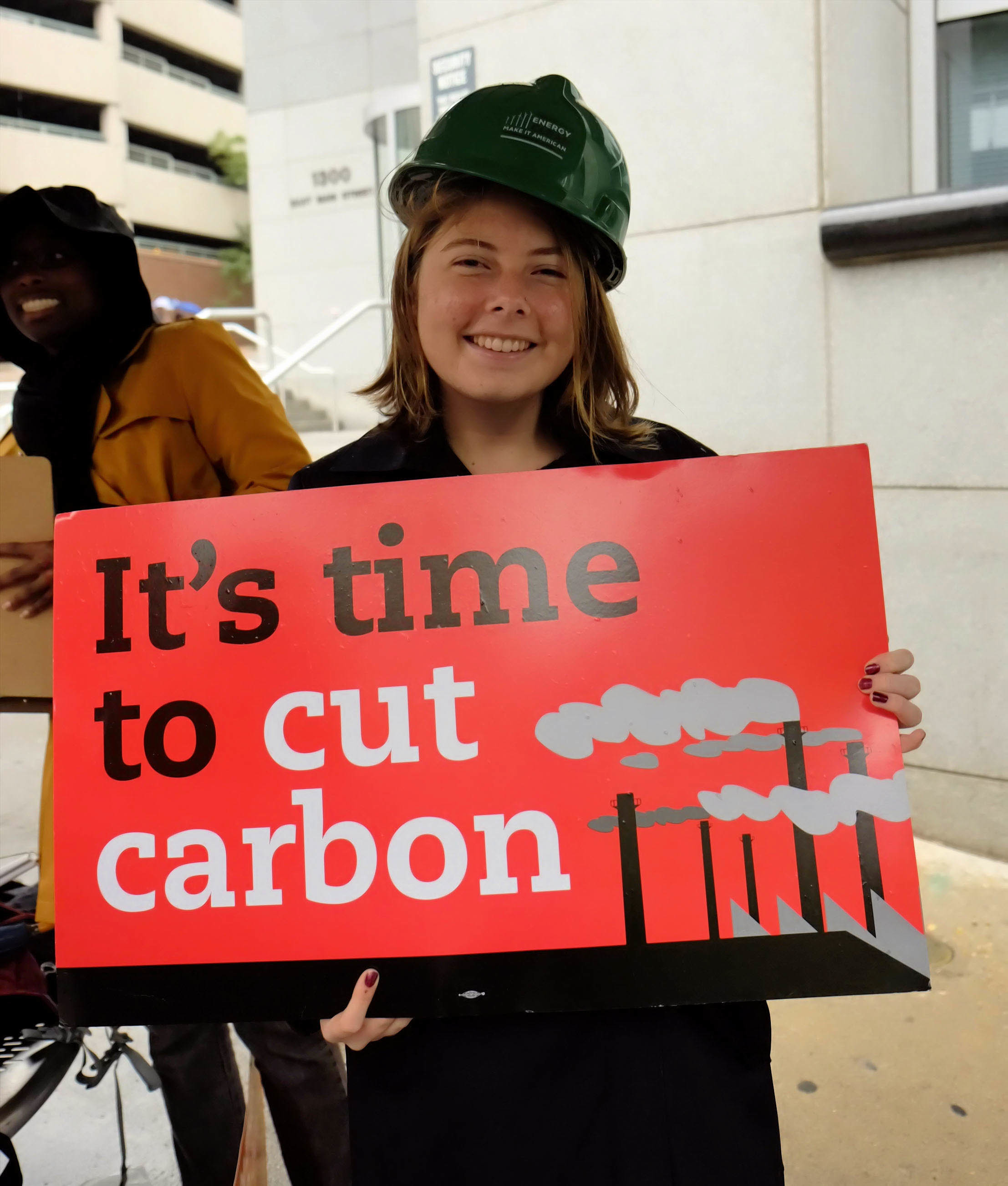
When the EPA released its Clean Power Plan last June, clean energy advocates celebrated America’s first serious response to rising carbon emissions. At hearings held across Virginia, supporters of the plan outnumbered opponents by as much as five to one, making it clear the public welcomes EPA’s plan as a way to break the rise in carbon emissions while opening the door to new economic opportunities in solar, wind, and energy efficiency.

Alas, the response of most Republican legislators was to man the barricades and protect the fossil fuel status quo. That impulse to panic translated into a spate of bills aimed at rejecting or undermining EPA authority and hobbling the ability of the state to implement the Clean Power Plan.

SB 740 (Carrico), SB 1365 (Watkins and Chaffin), and HB 2291 (O’Quinn) instruct the state Department of Environmental Quality (DEQ) to hold hearings and examine witnesses in the development of its compliance plan and take a “least-cost” approach to compliance. DEQ is also required to get approval from the General Assembly for the plan before it can submit it to the EPA for approval—and if either chamber doesn’t like it, DEQ has to do it over again, until the time allowed for state compliance runs out.

SB 1202 (Wagner) goes further. Before DEQ can even write its plan, the State Corporation Commission has to find that the EPA has made changes to the Clean Power Plan that fix all the things the SCC staff claim are wrong with it. The SCC staff have already accused the EPA of acting illegally, arbitrarily, and capriciously, so it’s safe to say that under Wagner’s bill, we’ll see pigs fly before DEQ writes a carbon plan.

HJ 608 (Kilgore) is a resolution asserting that electricity regulation is a sovereign state function and complaining that EPA is infringing on state turf. The resolution is silly on its face; Virginia’s grid is part of an interstate transmission system (PJM), our utilities operate in multiple states, much of our electricity is generated outside our borders, and all of our generating plants, transmission lines, and everything else associated with providing power in Virginia are covered by federal regulations of one sort or another. HJ 608 has nothing to do with reality. But reality is not the point. The point is that Terry Kilgore and the fossil fuel companies he represents are loaded for bear and want to prove it.

SJ 273 (Wagner) directs DEQ to study whether the health benefits of the Clean Power Plan are really any different from those already expected from compliance with other air quality regulations. The reason, according to the bill, is that “if the EPA is claiming the same health benefits under two different sets of regulations, its effort to attribute future pollution reductions to the proposed Plan amounts to ‘double counting.’” If you’re wondering how that is relevant to Virginia’s obligation to comply with the Clean Power Plan, then once again you’re missing the point. This is about posturing, not compliance.

SJ 308 (Wagner yet again!) would let the GA’s Joint Rules Committee hire its own counsel to sue the EPA to block the Clean Power Plan if the Attorney General won’t do it. HJ 529 (Bob Marshall) would have a similar effect, though his bill is more of an all-caps version aimed at anything the federal government does that he opposes.

Virginia Republicans didn’t invent the attack-challenge-delay approach that is the common theme of these bills. The strategy comes from the American Legislative Exchange Council (ALEC), the conservative “bill mill” heavily funded by fossil fuel interests, and of which Dominion Power is a member. ALEC developed a game plan for state-by-state resistance to the EPA plan.

ALEC’s model bill, called the RASP Act, forbids a governor from complying with the EPA regulations without getting approval from the legislature. Sound familiar? And yet it’s a cut-off-your-nose-to-spite-your-face reaction. The longer a state delays, the harder compliance becomes. Delay too long, and EPA writes your plan for you. That’s not a good outcome for either Virginia or the climate.

Coastal Protection Plan

The EPA Clean Power Plan allows multiple pathways to compliance. On of them is the regional compliance plan: states can band together on a market approach to reduce cost and disruption. Several northeastern states already have this cap-and-trade approach in place, known as the Regional Greenhouse Gas Initiative (RGGI). Similar regional efforts exist for some Midwestern and Western states as well. These all predate the Clean Power Plan, but a recent analysis by PJM, the regional transmission operator that runs Virginia’s grid, found that a regional cap-and-trade approach would cost 30% less than a state-by-state approach to meeting carbon regulations.

Even many Virginia Republicans have said they favor a regional approach to compliance with the Clean Power Plan, once they have done challenging everything they can about it.

One of the attractive elements of RGGI is the market mechanism. Polluters must buy carbon allowances, generating money for the state. HB 2205 (Villanueva) and SB 1428 (McEachin), the Coastal Protection Plan, would have Virginia join RGGI, and use half of the money generated to address the problems created by sea level rise. SB 1323 (Lewis) would merely have DEQ study the idea.

For a fuller explanation of the bill, see Dawone Robinson’s guest post here. The Coastal Protection Act is already picking up endorsements, from the Washington Post to the Virginia Housing Coalition and local governments including Norfolk.

The Dominion Power Ratepayer Rip-Off Act of 2015

When Dominion Virginia Power offers to do something to protect ratepayers, watch your wallet. Last year’s act of generosity cost us hundreds of millions of dollars to cover Dominion’s initial expenses for a nuclear plant it may never build.

This year it’s a bill, SB 1349 (Wagner), that would freeze rates (but notably not utility bills) until at least 2023. Like last year’s money bill, this one prevents the State Corporation Commission from requiring the utility to refund money to ratepayers and/or lower rates if the utility earns more than the law entitles it to. In other words, it lets Dominion keep the windfall.

Senator Wagner presents his bill as a protection for ratepayers in the face of the EPA’s Clean Power Plan, which he claims will be costly for ratepayers. But here’s the thing: Dominion’s obligation to its shareholders is to maximize profit. The company wouldn’t support a rate freeze if it meant losing money. Dominion’s support for Wagner’s bill can only mean the utility expects to make a lot of money at current rates, even under the EPA plan.

This makes sense to the clean energy advocates, who point to analyses showing the Clean Power Plan will benefit consumers rather than costing them more. That’s because energy efficiency—a major component of the plan—saves money. If Virginia consumers do save money under the plan, though, the Wagner bill makes sure they won’t see the benefit.

Indeed, it doesn’t even protect them from higher bills, because Dominion can still increase other charges that make up customers’ bills. The “rate freeze,” in other words, will set a floor on electric utility bills, but not a ceiling.

Unknown's avatar

Virginia regulators approve Appalachian Power’s “solar tax”

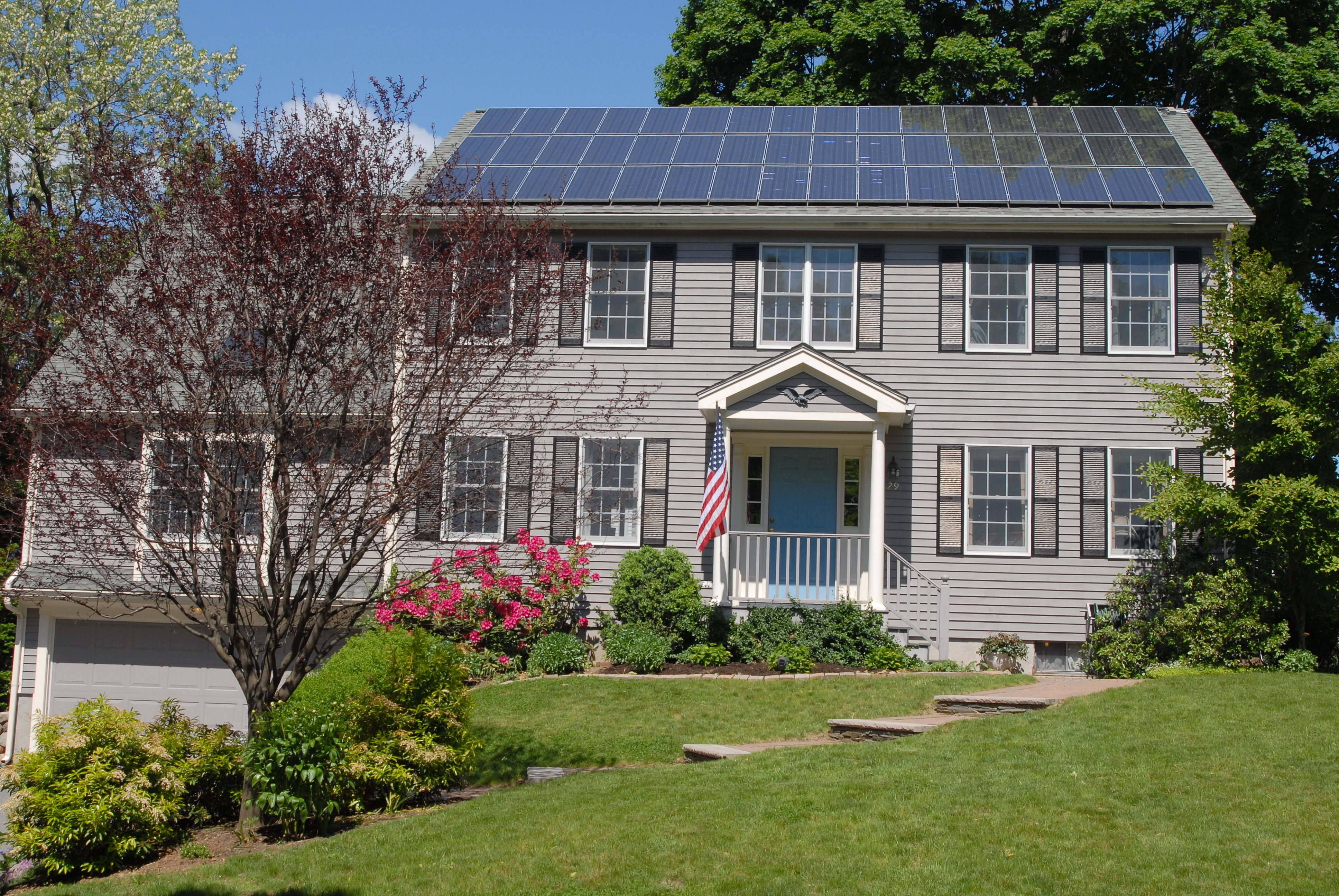
Virginia homeowners had better tell their solar installers to keep it under 10 kW. Photo credit Gray Watson

Virginia homeowners had better tell their solar installers to keep it under 10 kW. Photo credit Gray Watson

The State Corporation Commission has granted Appalachian Power Company’s request to be allowed to impose “standby” charges on residential customers with solar systems over 10 kilowatts. The charges can range up to more than $100 per month, regardless of how much electricity the homeowner actually draws from the grid.

In its Final Order in case number PUE-2014-00026, dated November 26, the SCC ruled that APCo’s standby charge complies with § 56-594 F of the Virginia Code, which provides for standby charges for net-metered residential systems between 10 and 20 kW. (The law does not allow for net metering of residential systems over 20 kW.)

Environmental groups intervened in the case and ran a grassroots campaign that generated over 1500 comments to the SCC, opposing what has been dubbed a “tax on the sun.” The result, however, was never in much doubt. The SCC has repeatedly demonstrated a willingness to accept without scrutiny utility assertions that solar customers impose costs on other customers.

Attorneys at the Southern Environmental Law Center, who argued against the standby charges on behalf of the Sierra Club and other groups, say the SCC’s reasoning is flawed. According to Cale Jaffe, Director of the SELC’s Virginia office, “Appalachian Power actually conceded during the hearing that it was ‘not in a position’ to determine whether solar customers had ‘a positive or negative impact to the distribution cost of service.’  In other words, Appalachian Power said that solar customers might be having a positive impact in helping to reduce APCo’s distribution costs, but that the power company didn’t have the data and didn’t know one way or the other.”

Jaffe added, “We saw that piece of evidence as a fatal concession, at least with respect to the distribution portion of the charge.” Yet a reading of the Final Order suggests the Commission never even considered the point.

The SCC allowed APCo, like Dominion before it, to consider only transmission and distribution costs, ignoring generation costs for now. Advocates urge that solar systems produce power at times of peak demand, reducing the need for utilities to buy expensive peak power, and therefore actually saving them money. The utilities dispute this, but it is worth noting that APCo’s most recent Integrated Resource Plan from March of this year projects that solar power will be cheaper than its avoided cost of energy by 2019. But of course, the point of standby charges isn’t about the cost of solar, but about preventing customers from generating their own power.

In spite of all the time and money APCo has spent to get approval for the standby charges, the utility has said that only five existing customers will be affected. The real impact will be to limit the number of homeowners who choose to install large solar systems going forward. The prospect of paying high standby fees will likely discourage APCo customers from buying systems over 10 kW, as has happened in Dominion’s territory after the SCC allowed Dominion Virginia Power to impose similar standby fees a year ago.

Although a 10 kW system is bigger than the average Virginia home needs by itself, people with electric cars can find their demand exceeds that limit. Moreover, Dominion Virginia Power has signaled that it would like to impose standby charges on all of its solar customers, regardless of system size.

The actions of Virginia utilities and the SCC put the commonwealth in the thick of a nationwide battle over customer-owned, “distributed” solar. While most studies analyzing the value of solar have concluded that distributed solar benefits the public and the grid, utilities fear it will eat into their profit margins. They see Virginia as a good place to establish a precedent friendly to the utility viewpoint, due to the commonwealth’s history of allowing its utilities to dictate energy policy. So far, this episode proves them right.

Unknown's avatar

Dominion ditches plans for onshore wind in Virginia, but grows bullish on solar

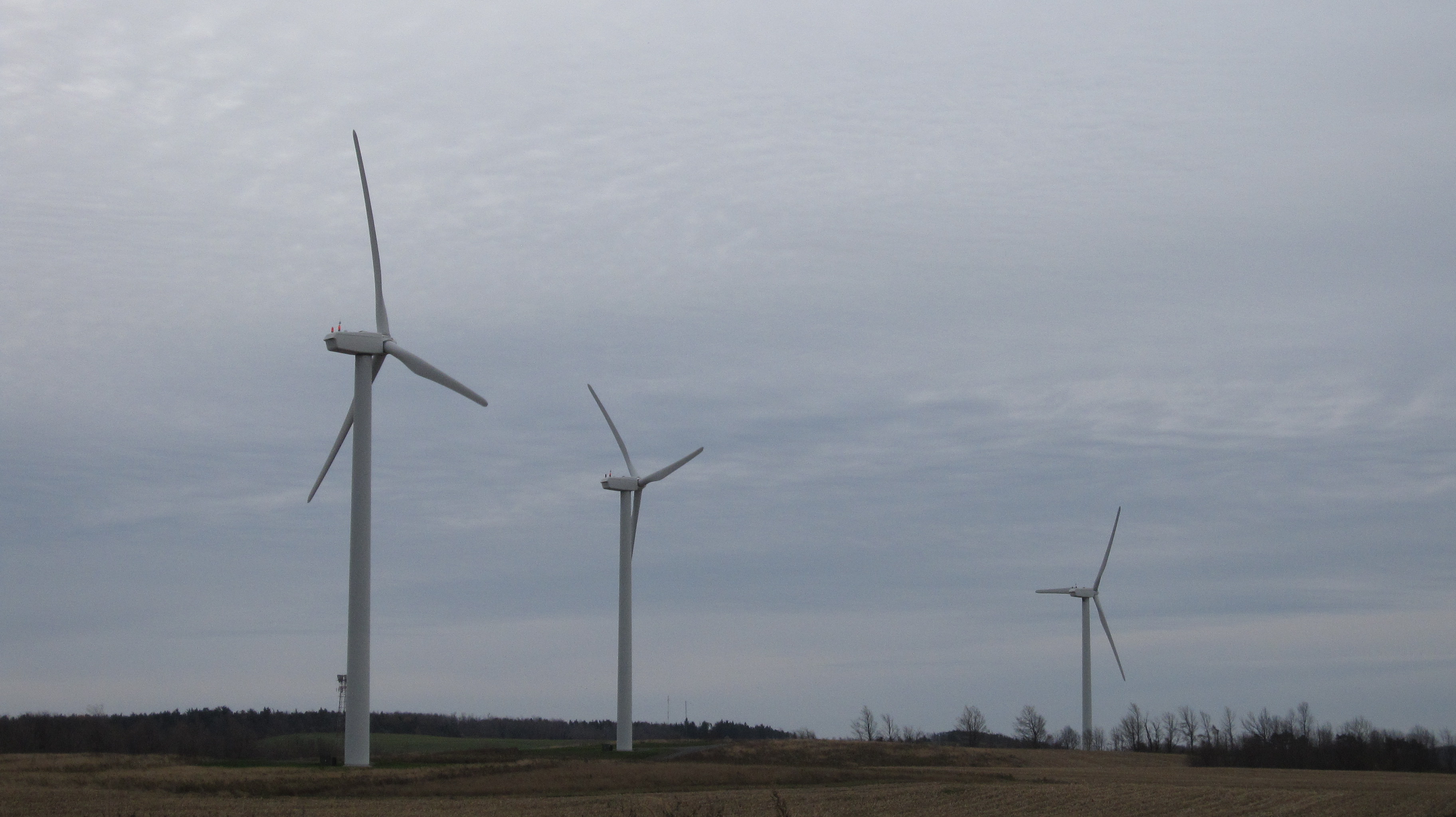
Not for you, Virginia.

Not for you, Virginia.

Well, now it’s semi-official: in spite of what it has been telling customers for years, Dominion Power is not going to build onshore wind in Virginia. Speaking at an Edison Electric Institute conference in Dallas on November 13, Dominion Resources Executive Vice President and CFO Mark Gettrick spelled it out:

“When the wind business first got started, a decade, a decade and a half ago, we built two wind projects early on [Mt. Storm, in West Virginia, and Fowler Ridge, in Indiana], and we elected not to build any more. We steered away from wind. We do not think wind would ever be a good resource on land, in Virginia anyway, and so we elected not to pursue incremental wind projects.”

Someone should probably let the rest of the company in on the secret. Dominion’s website still insists the company has three Virginia onshore wind projects in development, and it included 247 megawatts’ worth in its latest Integrated Resource Plan (IRP). But the plan reflects the company’s cooling enthusiasm for wind energy, with the projects now slated for 2022-2024.

This is disappointing news, but it certainly isn’t a surprise. Dominion proposed its Virginia wind farms back before fracking caused natural gas prices to nosedive, undercutting the economic case for wind. At that point, Virginia’s lack of a real RPS meant Dominion had no incentive to build higher-priced generation, and every reason to believe the State Corporation Commission would reject a wind project, as it did similar proposals from Appalachian Power.

But though it is abandoning wind, the company is enthusiastic about solar. Gettrick said Dominion sees “gas and solar” as the way to comply with the EPA’s Clean Power Plan, which will require states to lower their carbon emissions from electric generating plants. Gettrick said:

“We see a growing need in Virginia to install solar for native load compliance with carbon. So that’s what we’re doing . . . So watch where we go with solar. We like the technology, the cost continues to drop, and we see it as a cornerstone for future development in Virginia.”

Advocates may wonder, why solar and not wind? Wind would seem to be cheaper, after all, and a single utility-scale turbine provides more power than hundreds of home solar systems.

The IRP offers part of the answer. For a utility, not all power is equal. Dominion has plenty of power for times when demand is low; the challenge is filling in the peaks and valleys of demand above that minimum level. Dominion needs the most power on summer days when solar produces well but wind does not.

The other part of the answer is price. This will surprise people who have seen the rock-bottom prices of wind power in places like Iowa and Texas, where wind outcompetes even natural gas. But it’s cheap to build wind among cornfields or on open rangeland, where access is easy. It’s more expensive to do it in the eastern mountains, where narrow, winding roads pose logistical challenges. The result is that wind power in the Southeast will cost about double what it costs in the Plains, according to the most recent Lazard analysis.

By contrast, Lazard calculates that utility scale solar power costs only about 20% more in the Southeast than it does in the dry, sunny Southwest, where utility-scale solar has reached grid parity. So while the best wind prices are well below the best solar prices nationwide, solar may be cheaper than wind in Virginia.

Lazard’s analyses are based on actual projects, but it also makes some predictions about where prices are headed. It projects unsubsidized utility-scale solar prices of six cents per kilowatt-hour by 2017, confirming predictions of widespread grid parity made by other analysts like Citibank and Deutsche Bank.

If you’re concerned about meeting EPA carbon emissions rules, or just concerned about the environment, period–or you want a reliable and stable-priced resource to hedge gas–solar makes very good sense.

Given these price trends, Dominion’s enthusiasm is entirely understandable. But surely it has some explaining to do, after years of trashing solar to legislators and the SCC. It has gone so far as to slap standby charges on customers who generate their own solar power. And as we’ve seen, its own forays into rooftop solar can’t be counted a success.

But perhaps we could all let bygones be bygones. If Dominion would focus its efforts on utility-scale solar while allowing the removal of barriers constraining the private market for commercial and residential solar, all of us would be winners.

Unknown's avatar

Virginia’s SCC staff attacks EPA over the Clean Power Plan

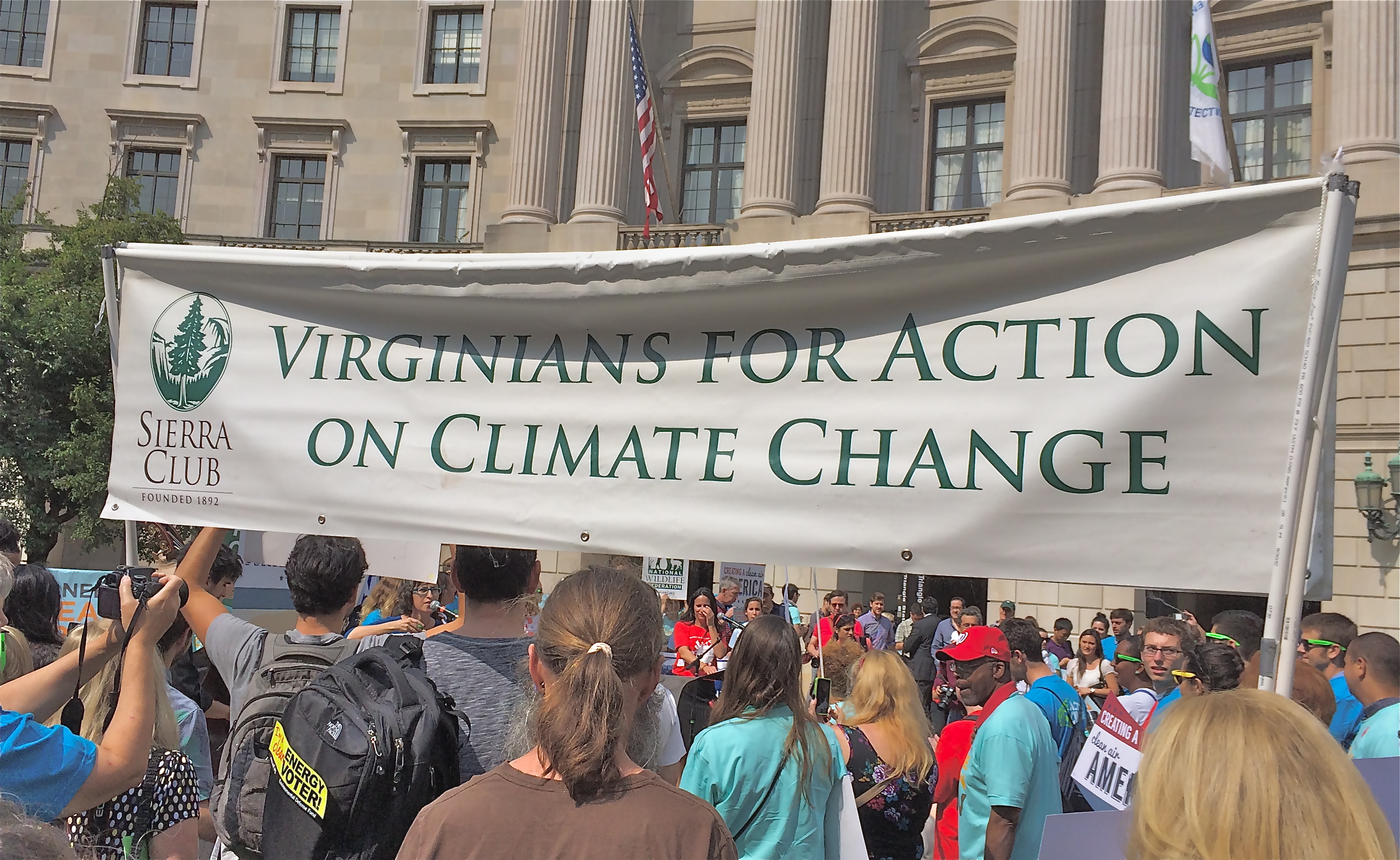
Virginians rally in front of U.S. EPA Headquarters in Washington, DC in support of the Clean Power Plan

Virginians rally in front of U.S. EPA Headquarters in Washington, DC in support of the Clean Power Plan

In recent years paleontologists have come to believe that the dinosaurs did not go extinct; they evolved into today’s chickens and other birds. It turns out, however, that some of them did not evolve. Instead, they took jobs at Virginia’s State Corporation Commission.

Now they’ve put their DNA on full display with comments they filed on the EPA’s Clean Power Plan. The proposed EPA rules, under section 111(d) of the Clean Air Act, would require states to reduce the power plant CO2 emissions driving climate change. The staffers assert primly that they “take no position on the broad policy issues,” but that they feel “compelled” to point out all the ways the plan is “arbitrary, capricious, unsupported, and unlawful.” These mostly boil down to their claims that the plan will force coal plant closures, raise rates significantly and threaten service reliability—claims experts say are badly off-base.

Note that the commissioners themselves didn’t sign onto these comments. They come from the career staff at the Energy Regulatory Division, led by Bill Stevens, the Director, and Bill Chambliss, the General Counsel. This is pretty peculiar. I can’t think of a single other agency of government where the staff would file comments on a federal rulemaking without the oversight of their bosses.

Bill and Bill acknowledge in a footnote that the staff comments represent only their own views and not those of the commissioners. But that distinction has already been lost on at least one lawmaker. Today Speaker of the House William J. Howell released a statement declaring, “The independent, nonpartisan analysis of the State Corporation Commission confirms that President Obama’s environmental policies could devastate Virginia’s economy.”

And really, “devastate”? But that’s the kind of hysteria you hear from opponents of the Clean Power Plan. While the rest of us see healthier air, huge opportunities for job growth in the clean energy sector, and the chance to avoid the worst effects of climate disruption, the Friends of Coal see only devastation. And no wonder: Howell accepted $14,000 from the coal industry just this year alone.

But back to what the Bills over at the SCC think about the Clean Power Plan. How did they arrive at their conclusion that it would raise rates? According to Cale Jaffe, a lawyer with the Southern Environmental Law Center who practices extensively before the SCC, “Staff never did an analysis of an actual plan to comply with the Clean Power Plan, which has a lot of flexibility built into it. Instead, the Staff simply took Dominion Virginia Power’s last Integrated Resource Plan from 2013 and used it as a proxy for a compliance plan. That’s a significant flaw that skews the Staff’s analysis.  The Dominion plan, after all, was released nearly a year before the EPA even announced its rule.”

Compounding the error, says Jaffe, the staff “artificially inflated the cost by assuming that the only compliance strategy would be for Dominion to build a new nuclear reactor: the most expensive resource, which is not a required compliance option.”

We can all agree with the staff that nuclear plants are appallingly expensive. That may be why the EPA doesn’t assume most states will build them as part of their compliance strategy. To the contrary, the expectation is that states will respond with energy efficiency, wind and solar—all resources that are plentiful in Virginia but largely untapped so far.

As Jaffe notes, “an independent analysis of the actual Clean Power Plan itself shows that Virginia can achieve its goals at a fraction of the cost while lowering Virginians’ bills by 8%.”

We have seen time and again that the SCC staff has never been friendly to either renewable energy or energy efficiency, so it’s no surprise that their comments dismiss them as unworkable. Indeed, it is clear from the comments they filed that their real interest is promoting an anti-EPA, pro-coal agenda. Otherwise it would be hard to understand why they would stray so far from their own area of practice to attack the very legality of the Clean Power Plan.

Jaffe lists a number of other ways the SCC staff screwed up, but you get the picture: careful, reasoned analysis wasn’t the point. Still, you’d think that if agency staffers decide to go rogue like this, they would be careful to get the facts right.

———————————

Update: I have heard from some sources that the SCC staff had the blessing of at least one commissioner in putting forth their comments, and that all three commissioners may have known. If so, that’s even worse.